What to expect
Highlights
- Temple visit at Haripad Sree Subramanya Swamy Temple
- Kerala temple architecture and rituals
- Local food, shops and pilgrim services nearby
One of Kerala’s oldest Subramanya (Murugan) temples, in the south-Alappuzha town of Haripad.
Check entry arrangements. Ask temple staff about visitor entry, dress requirements and access to the inner shrine before you travel, especially if you are visiting as a non-Hindu.
Dress respectfully and follow the institution’s admission and photography rules.
The largest Subrahmanya idol in Kerala stands about six feet tall, has four arms, and was pulled out of a lake. The temple at Haripad is known across the state as the Dakshina Palani, the Palani of the south — but where the Tamil shrine it is named against sits on a hill, everything that makes this one distinctive is to do with water.
Haripad is a small town in the Onattukara country of Alappuzha district, and its temple is the reason anybody stops. The presiding deity is Subrahmanya — Karthikeya, Murugan — in a four-armed form that is unusual in itself, standing over six feet and described in the Malayalam sources as the largest Subrahmanya image in Kerala. The figure carries a spear at the left shoulder and holds the right hand in blessing, and it is read as carrying both Shaiva and Vaishnava characteristics rather than belonging cleanly to either.
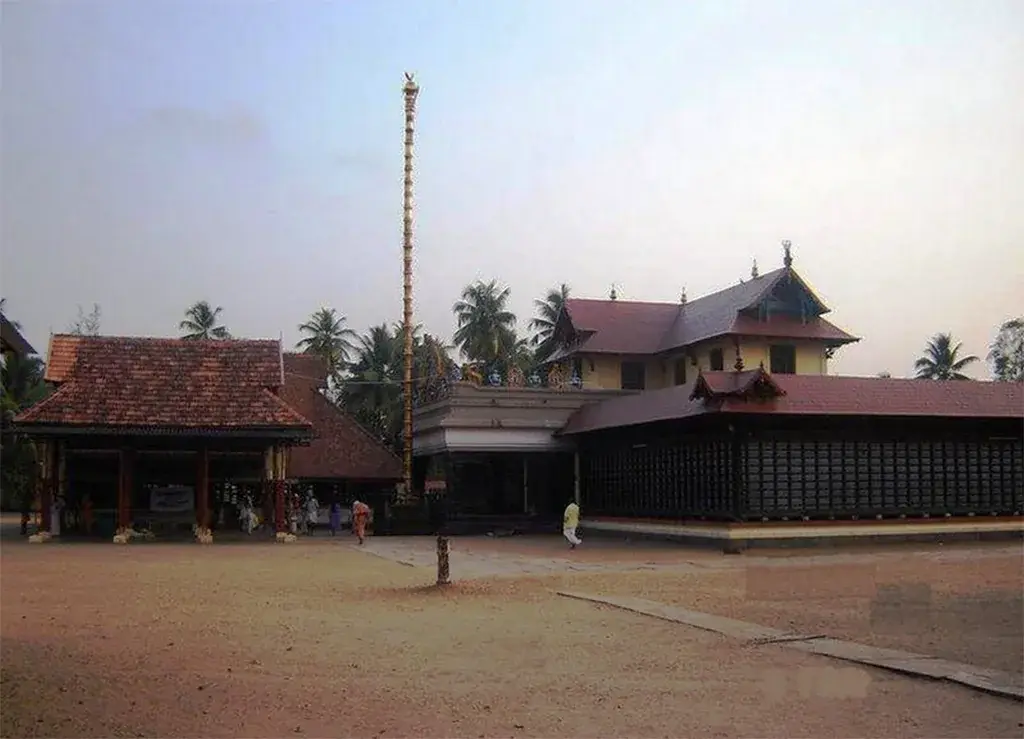
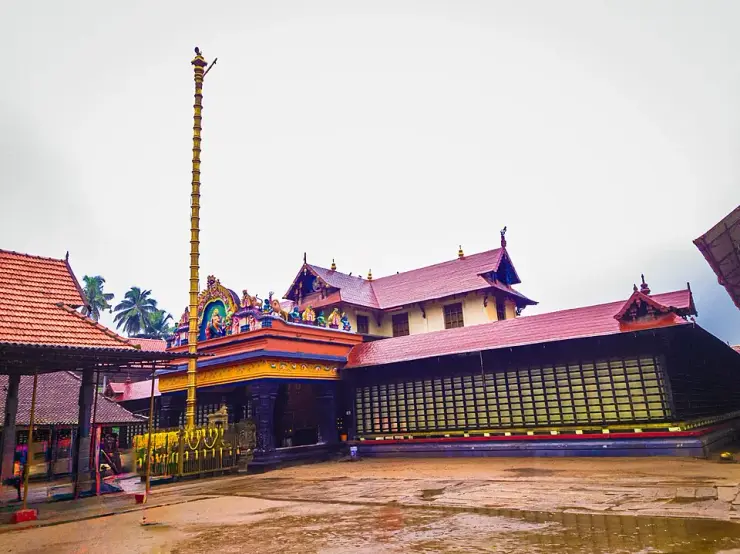
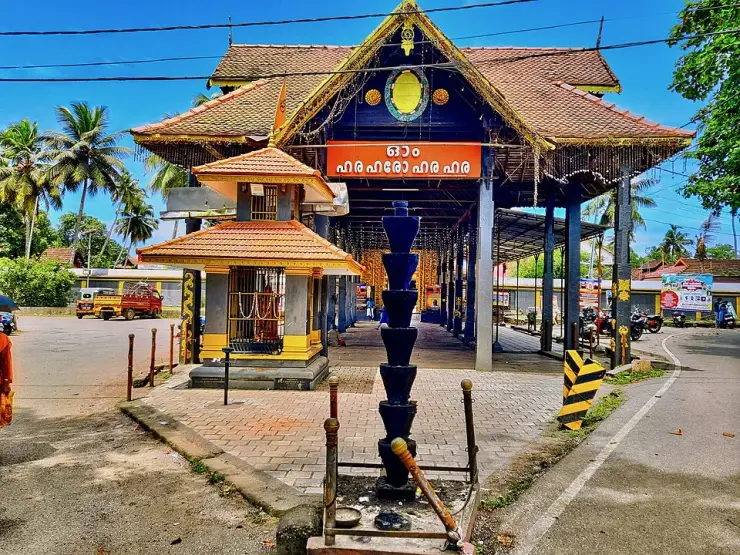
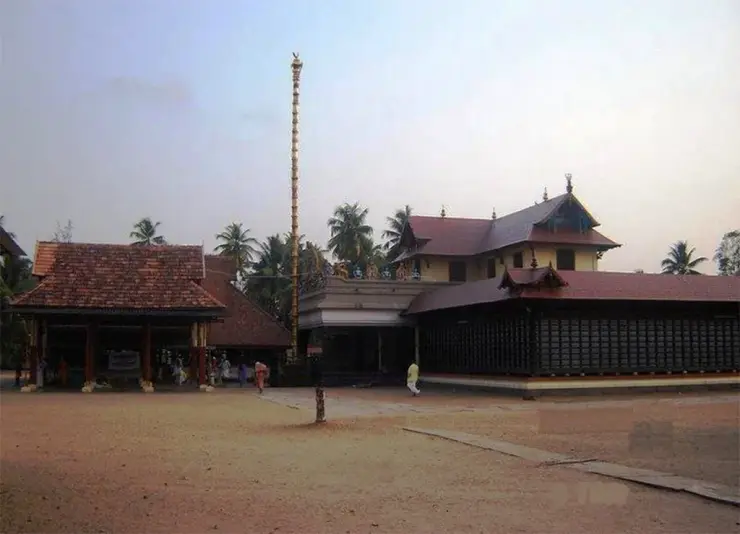
The temple is administered by the Travancore Devaswom Board and sits behind a street-front gopuram with a tall tiered stone lamp-pillar in the forecourt. Inside the compound are the things worth the visit: a gilded dhwajastambham rising against tiled roofs, a long latticed chuttambalam, and a koothambalam — the ritual theatre — that is circular, about a hundred and fifty feet in circumference, and carved with scenes from the Upanishads and the Bhagavata, including the Gajendra Moksha and the Dakshayana. It is among the largest in Kerala. You will see it described as the third largest; no source we can find actually ranks them, so we will say large and leave the ordinal alone.
North of the temple lies the Perumkulam, the great tank, at roughly five acres. It has seventeen ghats set around its four sides and, by local account, holds its water even through the dry season. A pond of that size is not decoration. It is a ritual bathing place, a water reserve, a microclimate and, in a town on the flat, the largest single piece of open water for some distance. Spend ten minutes at the Perumkulam before you go into the temple and the rest of the place makes more sense.
Two kilometres away is Mannarasala, and the two are often done in a single morning. They could not be less alike. Mannarasala is a private family temple in a closed grove where the chief priest is a woman and the subject is serpents. Haripad is a Devaswom Board temple, open, ceremonial and public, and its subject is a warrior god who arrived by water. Visiting both in one trip is a good idea precisely because they are not variations on a theme.
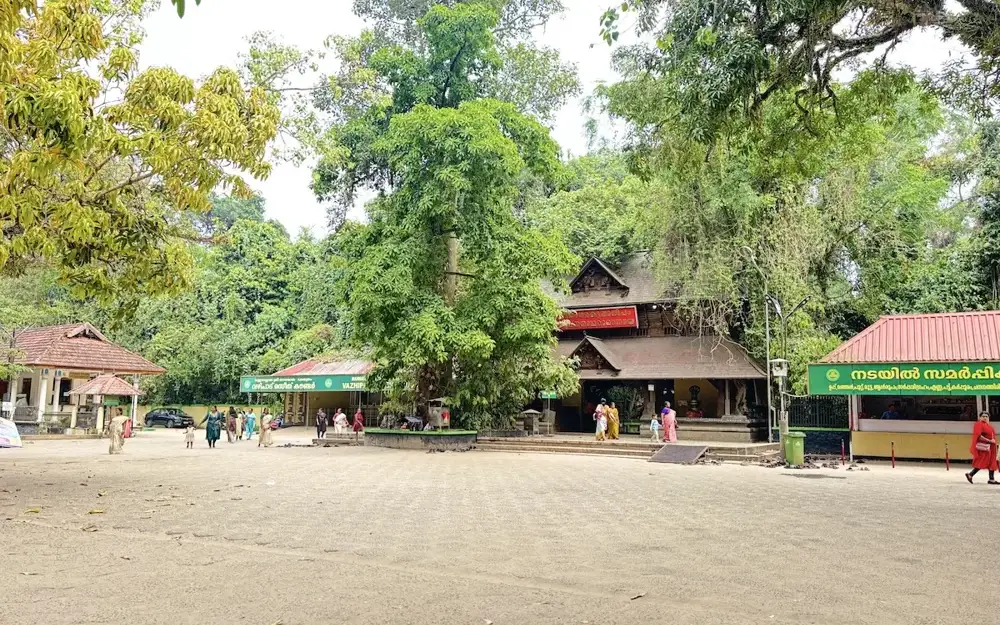
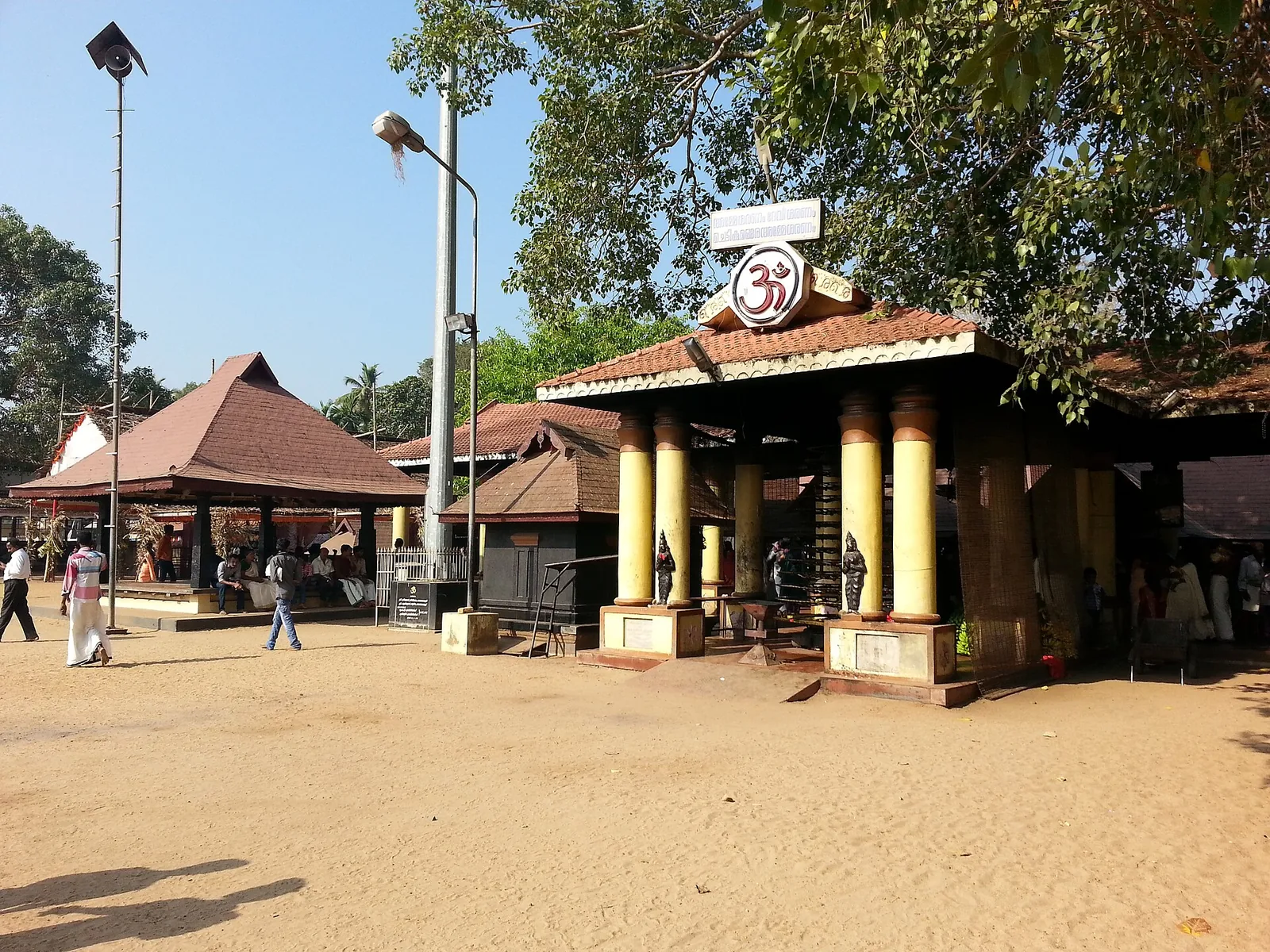
The approach tells you something before you are through the gate. The street-front entrance carries an orange board reading ഓം ഹര ഹരോ ഹര ഹര, and in the forecourt stands a tall tiered deepasthambham in black stone — a lamp pillar meant to be filled with oil and lit, so that the whole column becomes a tree of flame. There is a smaller shrine to one side and the tiled roofs step back behind. On a wet morning the courtyard holds water and the gilded flagstaff reflects in it, which is why almost every good photograph of this temple has been taken in the rain.
It is also worth knowing what Onattukara is, because the temple sits inside a distinct sub-region rather than a generic stretch of Alappuzha. This is the flat country between the Kayamkulam lake and the Achankovil, historically a separate little kingdom and still culturally its own thing, with its own festivals, its own reputation for sesame and paddy, and its own dialect inflections. Haripad is one of its principal towns, and the temple is the reason the town exists in the form it does — the market, the roads and the bus stand all orient towards it.
The festival calendar is unusually full: ten-day festivals in Medam, in Chingam and in Dhanu, each ending in the arattu; Thaipooyam in Makaram; Skanda Shashti in Thulam; and Thrikkarthika in Vrischikam, which is kept as the anniversary of the installation. ⚠ Our own logistics record listed an “Avittam” festival for years; it appears in no sourced list we could find, and it has been removed rather than repeated.
The founding legend of Haripad is a water story, and unusually for Kerala it names the places it happened in — which means you can still stand in them.
By tradition the idol is far older than the temple. It is said to have been worshipped by Parasurama himself in the Treta Yuga, and afterwards placed by him into the Kayamkulam lake, where it lay for an age. The finding is the part people tell. The devotees of the locality are said to have shared a collective dream in which the god's whereabouts were shown to them; they went down to the water, and at the place indicated they saw whirlpools turning and flowers on the surface. Diving there, they brought up the four-armed Subrahmanya. The spot where the idol was recovered took its name from the event — Kandanalloor, the place where it was found, now Kandalloor — and the idol was brought ashore at Nelpurakadavu.
That is a folk etymology fixed to a real village and a real landing place, and it is the strongest kind of local legend there is: not a story about a god in the abstract, but a claim about how two places on the map got their names.
The town's own name is where this gets interesting, because the temple's own account does not claim the legend. The devotional derivation is Hari, meaning Vishnu, plus padam, the foot: the ground where Parasurama, an avatar of Vishnu, set his foot became Harippadapuram, and in time Haripad. But the Malayalam article on the temple says plainly that the documented name is ARIPPAD — from the paddy country around it, a landscape of fields where rice ripened — and that Arippad was later Sanskritised into Haripad, or Harigeethapuram. ⚠ We give both, in that order, and we do not present the Parasurama derivation as the etymology. It is the legend; the rice fields are what the records show. This page said otherwise until August 2026.
There is a third tradition worth recording, from the town's own article rather than the temple's: that Haripad is Ekachakra, the city of the Mahabharata where the Pandavas lived in hiding and Bhima killed Bakasura. It is offered as aitihyam rather than as history, and it is a claim a great many places make. But it belongs in the record of what this town says about itself.
Tradition further holds that Parasurama appeared in person at the consecration and led the rites, and that the installation fell on the Thrikkarthika asterism in the month of Vrischikam, which is why that day is still kept as the anniversary. You will also see the temple described as predating the beginning of the Kali Yuga. That is devotional tradition and we report it as such; it is not a datable claim and should never be presented as one.
It is worth noticing what kind of legend this is, because it is not the commonest kind. A great many Kerala shrines explain themselves through a sage, a king or a grant of land. Haripad explains itself through a recovery — something lost in the water and brought back up by ordinary people acting on a dream they all had. There is no founder in the story, no royal patron, no priest. The agents are the devotees of the locality, collectively, and what they do is dive. For a temple that later became a Devaswom institution with three ten-day festivals a year, that is a notably unhierarchical account of its own beginning, and the fact that the community kept telling it that way is itself a piece of information about the place.
One caution about the Dakshina Palani epithet, because it is a trap. Haripad is called the Palani of the south, and it is tempting to reach for the great Murugan legends of Palani in Tamil Nadu to fill out the story — the fruit, the quarrel, the renunciate on the hill. Those belong to Palani and not to this shrine. What the comparison is actually pointing at is a contrast: Palani is a hill temple, and Haripad's whole tradition is aquatic — an idol from a lake, a landing place, a five-acre tank. Borrowing the Tamil legends here would flatten precisely the thing that makes Haripad itself.
The temple's antiquity is asserted rather than documented. The tradition that it predates the Kali Yuga places it beyond history altogether, and the Parasurama attribution belongs to sacred narrative rather than to a datable record. What can be said is that this has been a major Subrahmanya shrine of the Onattukara region for a very long time, that it is administered today by the Travancore Devaswom Board, and that the consecration is traditionally dated to the Thrikkarthika asterism of Vrischikam.
The best-documented event in its history is a disaster, and it carries a detail almost too neat to print. On the night of 7 December 1920 — Vrischikam 22 in the Malayalam year 1096 — at around ten o'clock, a severe fire broke out in the temple. A Pathakam recital was in progress at the time, given by a Pishārati from Peruvanam near Cherpu in Thrissur. 🔑 The subject of the recital was Hanuman's burning of Lanka.
We hesitated over that, because it is exactly the kind of coincidence a tradition invents afterwards. But it is in the Malayalam record along with the reciter's home village and the hour, which is the level of circumstantial detail that suggests contemporaneous reporting rather than later shaping. The tantri and the priests prised the idol out and carried it first to Keezhthrikkovil — the adjacent shrine inside the wall — and then to the small ootupura. The gold flagstaff, consecrated in May or June 1892, was cut down during the fire and re-erected afterwards.
⚠ The rebuilding is where the English-language sources go wrong. It is commonly stated that the temple was rebuilt during the reign of Sree Chithira Thirunal Rama Varma, who acceded in 1931. But the Malayalam account gives the reconstruction as undertaken under the patronage of Moolam Thirunal, by an architect of Idavangad, and completed with the re-consecration on 27 May 1926, on the Anizham nakshatra — five years before Chithira Thirunal came to the throne. A rebuilding finished in 1926 cannot have been carried out in a reign that began in 1931.
The point is worth dwelling on for a moment, because it cuts against the temple's own antiquity claim in an interesting way. A shrine said to predate the Kali Yuga was substantially rebuilt within the lifetime of people whose grandchildren are alive. What you look at today at Haripad is a structure of the 1920s standing on a very much older foundation of practice.
There is a second reason the 1926 date matters. A temple rebuilt in the mid-1920s was rebuilt at a particular moment in Travancore's history — under the regency that followed Moolam Thirunal's death, in a state then undertaking a great deal of public construction, and using an architect named by his place of origin rather than by a firm. That is the world the present building comes from, and it is a good deal closer to us than the Kali Yuga.
The koothambalam, the great tank with its seventeen ghats, and the layout of the compound all belong to the mature form of a Kerala Devaswom temple, and the festival calendar — three separate ten-day utsavams a year, plus Thaipooyam, Skanda Shashti and Thrikkarthika — reflects an endowment substantial enough to sustain them.
See the largest Subrahmanya idol in Kerala — four-armed, over six feet, and by tradition recovered from the bed of the Kayamkulam lake rather than carved for this shrine.
Sit at the Perumkulam, the five-acre temple tank with seventeen ghats around its four sides, which holds its water through the dry season and is the largest thing at Haripad.
Look at the koothambalam: circular, about 150 feet round, its wooden pillars carved with Upanishadic and Bhagavata scenes including the Gajendra Moksha.
Pair it with Mannarasala, 2 km away, precisely because the two are opposites — a public Devaswom temple to a warrior god beside a private family shrine to serpents with a woman as chief priest.
Time it for one of the three ten-day utsavams — Medam, Chingam or Dhanu — or for Thaipooyam in Makaram, or Thrikkarthika in Vrischikam, kept as the anniversary of the installation.
Stand at a place-name that is itself the legend: Kandalloor, where the idol is said to have been found, and Nelpurakadavu, where it came ashore.
Road km to Alappuzha; ghat roads and traffic vary — allow extra.
Morning or early evening is usually best; festival days can be powerful but crowded.
Live forecast loads in your browser.
Sun and moon are calculated for this location and shown in IST. Photography windows are the hour around sunrise and sunset; the sunset bearing is degrees clockwise from true north. Moon phase is accurate to about half a day.
Browse listed stays, food, activities, sights, shops and rentals around Haripad Sree Subramanya Swamy Temple. Check each listing’s locality and contact the business directly for current arrangements.
Resort and activity stay in Haripad and Mannarasala. Erickav, Haripad, Alappuzha, Kerala 690516 · Haripad, Erickav, Resort.
Temple guest house in Haripad and Mannarasala. Mannarasala P.O., Haripad, Alappuzha, Kerala 690514 · Contact temple guest house · Mannarasala, Guest house, Pilgrimage stay.
Book with the place itself. India’s cyber-crime coordination centre warned in April 2025 that convincing copies of hotel and pilgrimage booking sites are being pushed through sponsored search and social ads, taking payment for rooms the property never hears about. Use the contact and source details on each profile to confirm the exact business and booking channel. A directory entry or map pin alone does not establish an operator’s identity or current availability. Roampedia takes no commission and does not collect booking payments. If a booking page reached you through an ad, check the address bar against the property’s own site before you pay. Fraud can be reported on cybercrime.gov.in or on 1930.
Find food, accommodation and activities across Haripad and Mannarasala. Browse the guides for places to eat, stay and explore along your route.
3 more places around Haripad and Mannarasala. Open a guide to plan the visit and onward journey.
1.0 km · straight line
Major serpent shrine set in a sacred grove.
16.0 km · straight line
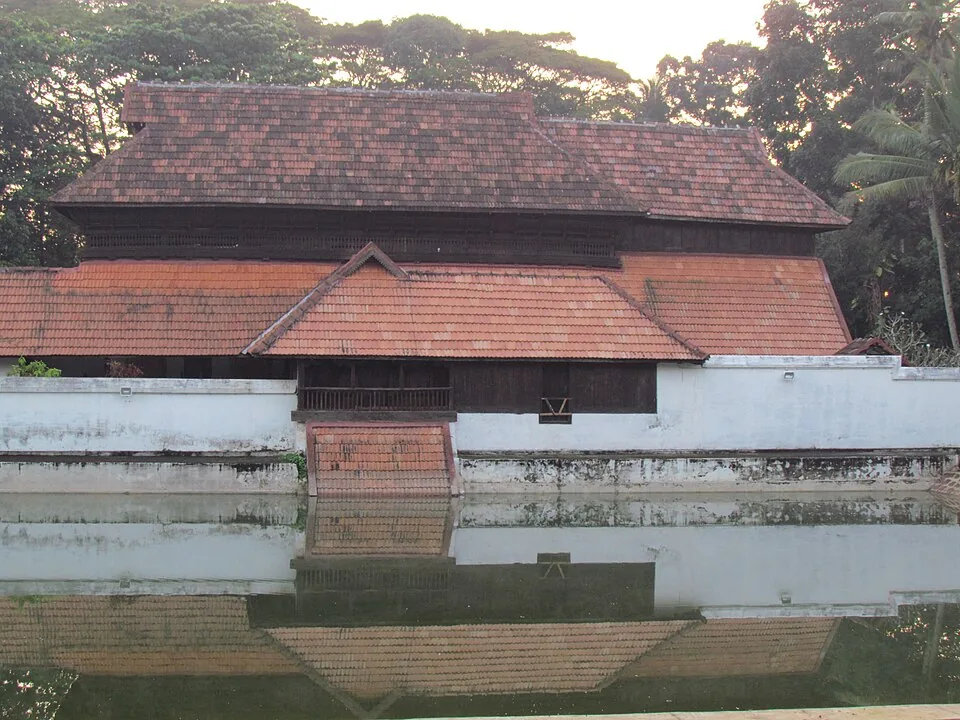
Restored 18th-century Travancore palace at Kayamkulam, home to the huge Gajendra Moksha mural.
9.5 km · straight line
Major Bhagavathy temple near Mavelikkara, famous for its Kettukazhcha and Kumbha Bharani festivals.
Roampedia is commission-free — own or know a stay, eatery, guide or shop near Haripad Sree Subramanya Swamy Temple? Submit public business details for review.
Add a nearby businessEntry: No entry fee for darshan. Individual vazhipads and offerings are paid for at the temple counter.
Dress code: Traditional attire is expected, as at other Kerala Devaswom temples — men customarily remove the shirt and wear a mundu; women wear a saree or salwar kameez. ⚠ The temple does not publish a specific dress code or entry restriction, so treat this as the regional norm rather than a stated rule, and follow signage on the day.
Photography: ⚠ No official photography policy located. Assume restrictions inside the sanctum area and follow posted signs and staff instructions.
If you are travelling by bus or ferry, check the return service with the operator before setting out. Leave time to reach the stop or jetty after your visit.
Ask at the bus stand for the time of the last service back, not the next one. If you miss it, an auto or app cab is the fallback — agree the fare before you get in.
If you need step-free access, contact the site before travelling. Ask about a level entrance, steps along the route, the nearest drop-off point, seating and accessible toilets.
Charge cap and free-transaction limits: Reserve Bank of India, ATM FAQ updated 4 July 2025; checked 4 October 2026.
These services are listed within about 1.2 km of Haripad Sree Subramanya Swamy Temple. Walking distances follow mapped routes; access and opening hours can change. Other services may be closer but are not included here.
Published emergency and visitor-assistance contacts. For an immediate emergency, call 112. Shared Kerala contact sources checked 4 October 2026; publication does not establish a tested live response.
Major serpent shrine set in a sacred grove.
1.0 km · straight line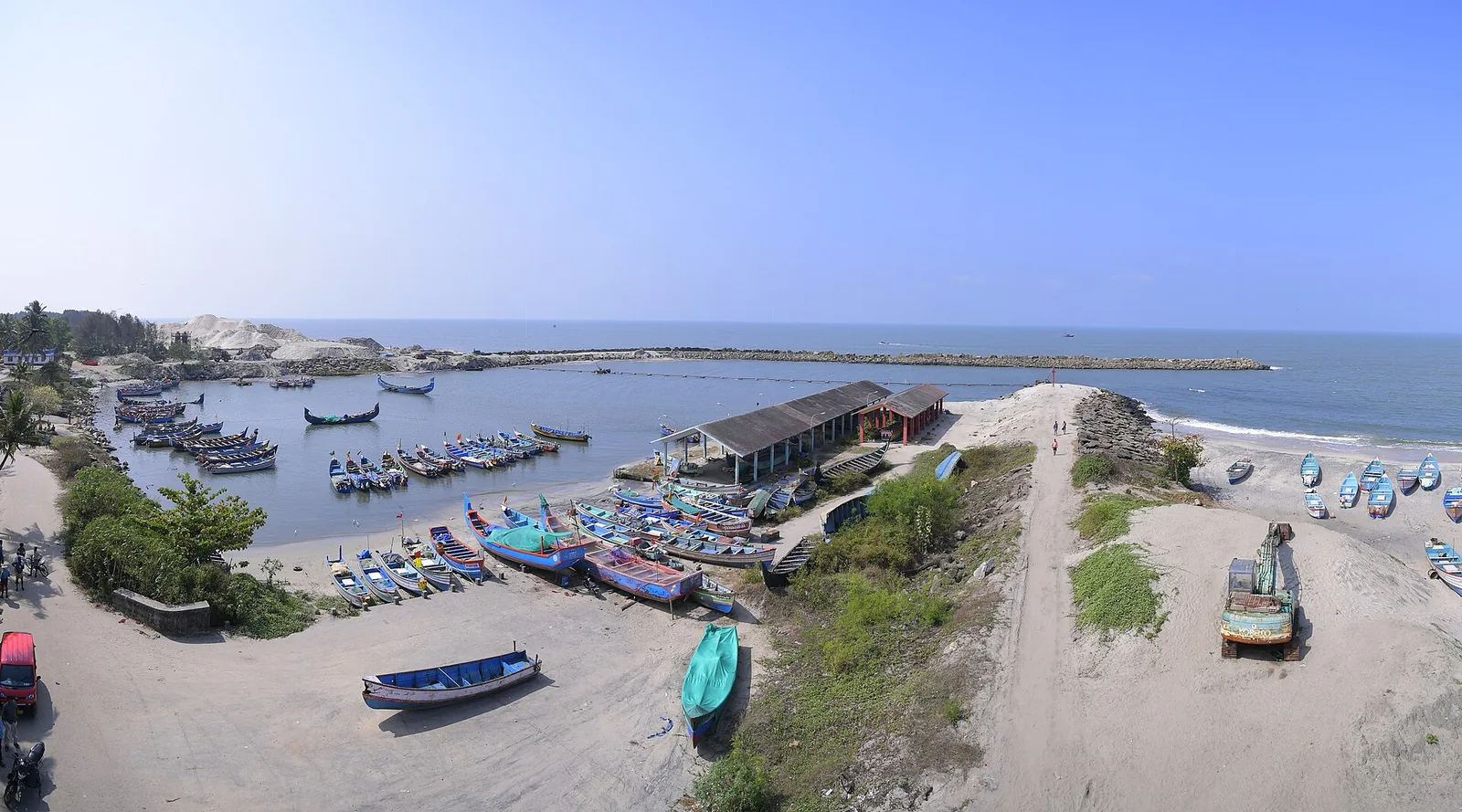
Working fishing harbour and 1955 flood spillway where the Thottappally leading channel meets the sea, south of Ambalappuzha — a painted fleet, two breakwaters and heaps of titanium-bearing black sand, rather than a quiet beach.
8.7 km · straight line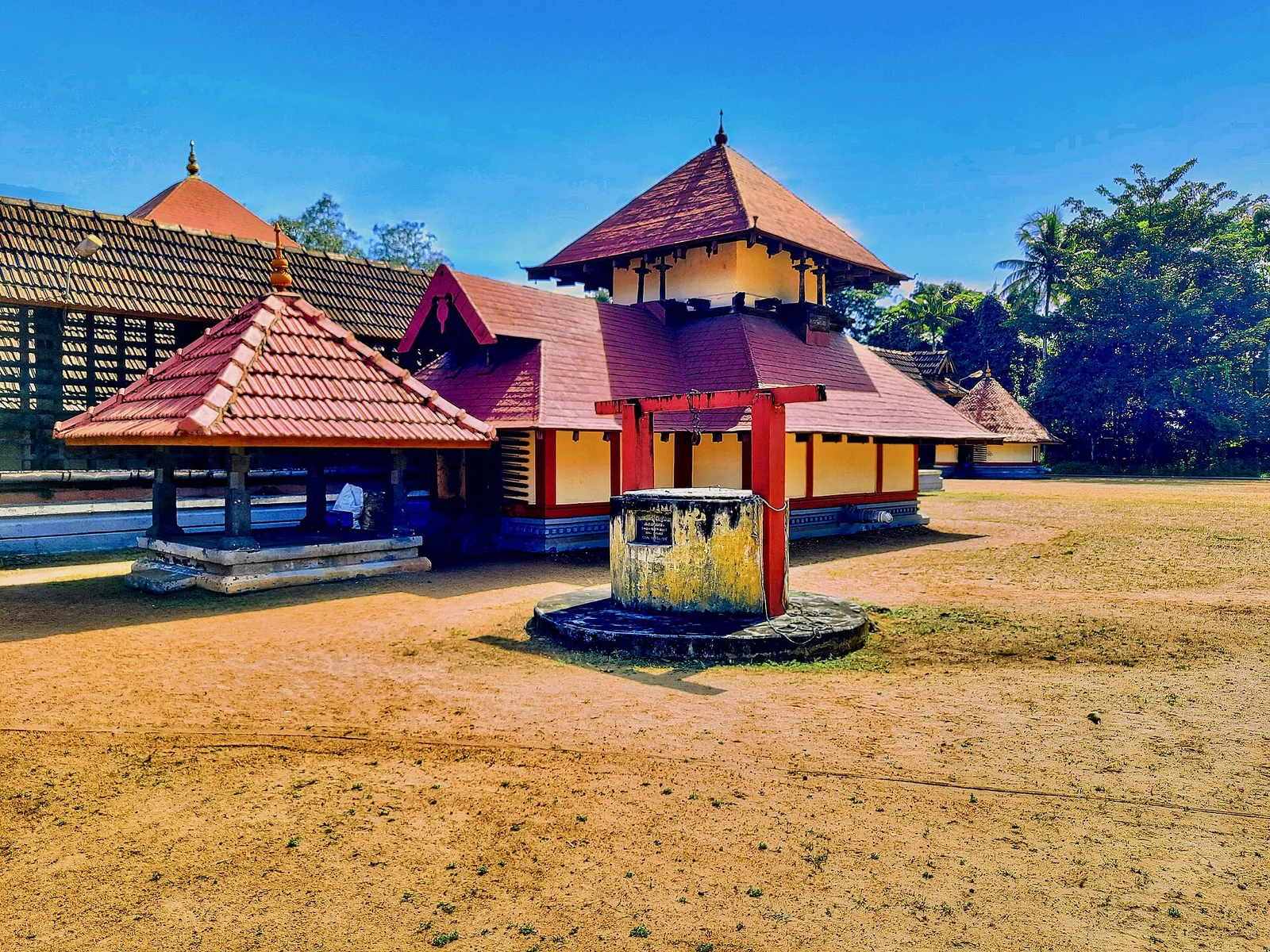
The Shiva temple west of Mavelikkara whose 823 AD epigraph makes it the earliest Kerala temple with a dated inscription about its own origin — Shiva in the kirata hunter form, once the capital shrine of Odanad, and the richest single record of devadasi authority in this region.
9.2 km · straight lineMajor Bhagavathy temple near Mavelikkara, famous for its Kettukazhcha and Kumbha Bharani festivals.
9.5 km · straight line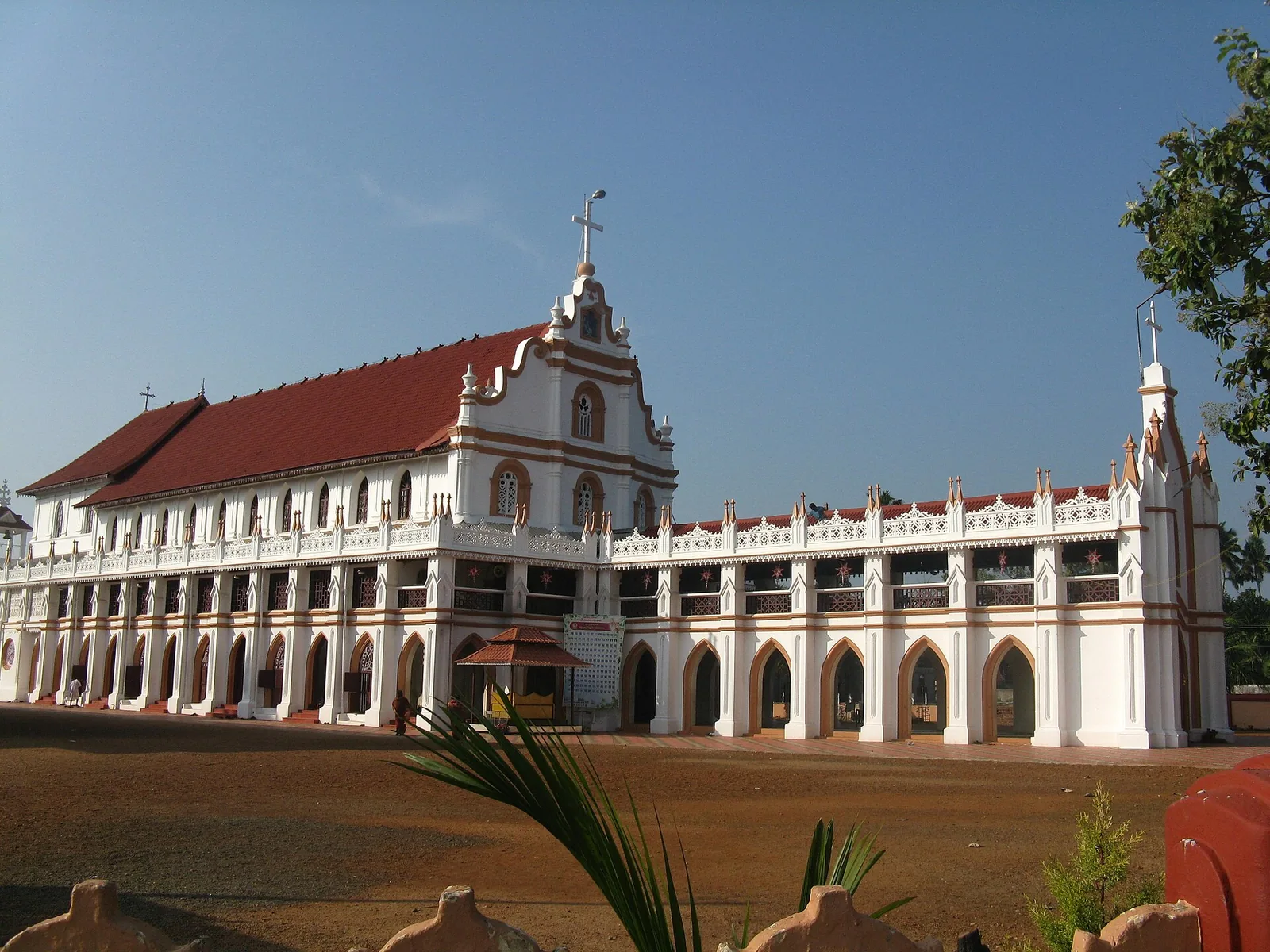
St George Forane Church at Edathua in Kuttanad, known for its large annual pilgrimage feast.
9.7 km · straight line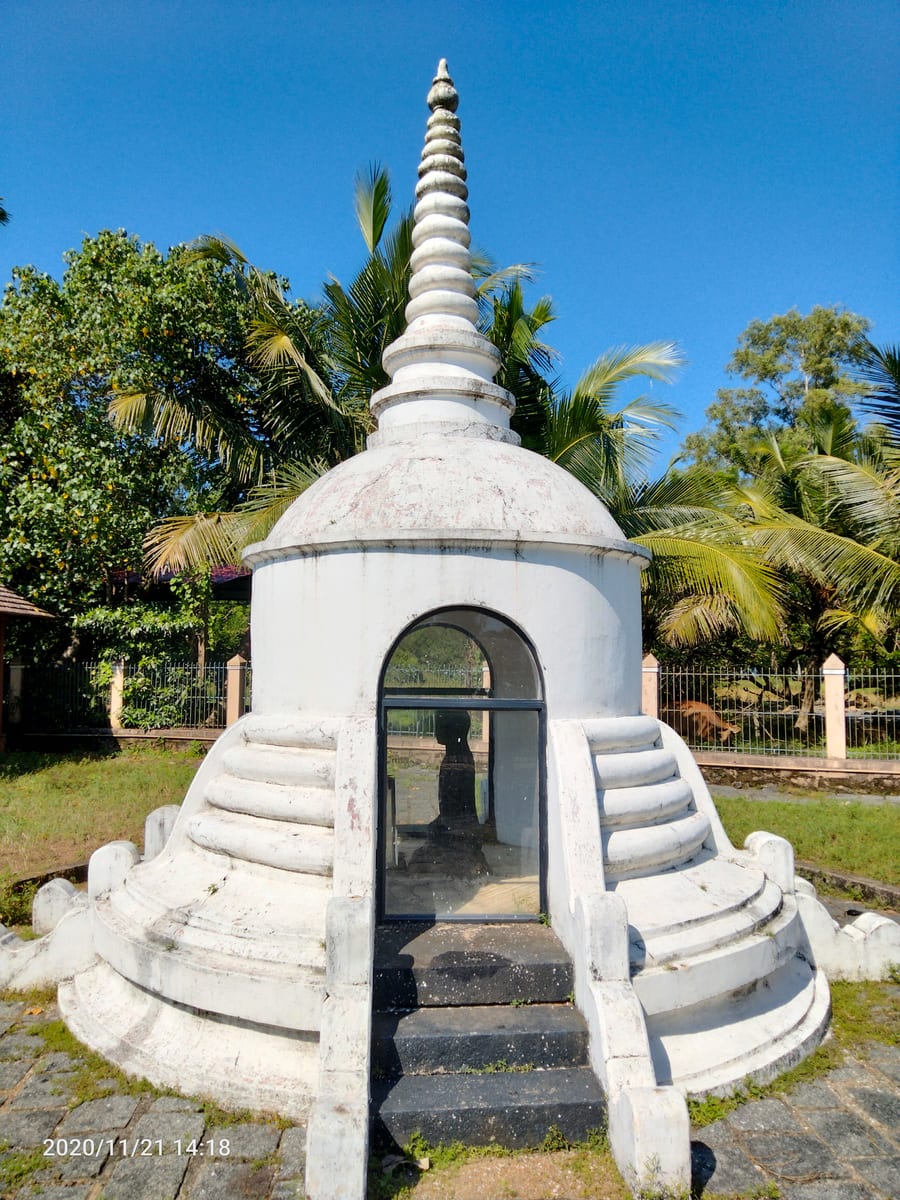
Ancient black-granite Buddha statue at Karumadi near Ambalappuzha, a relic of Kerala’s Buddhist past.
12.9 km · straight line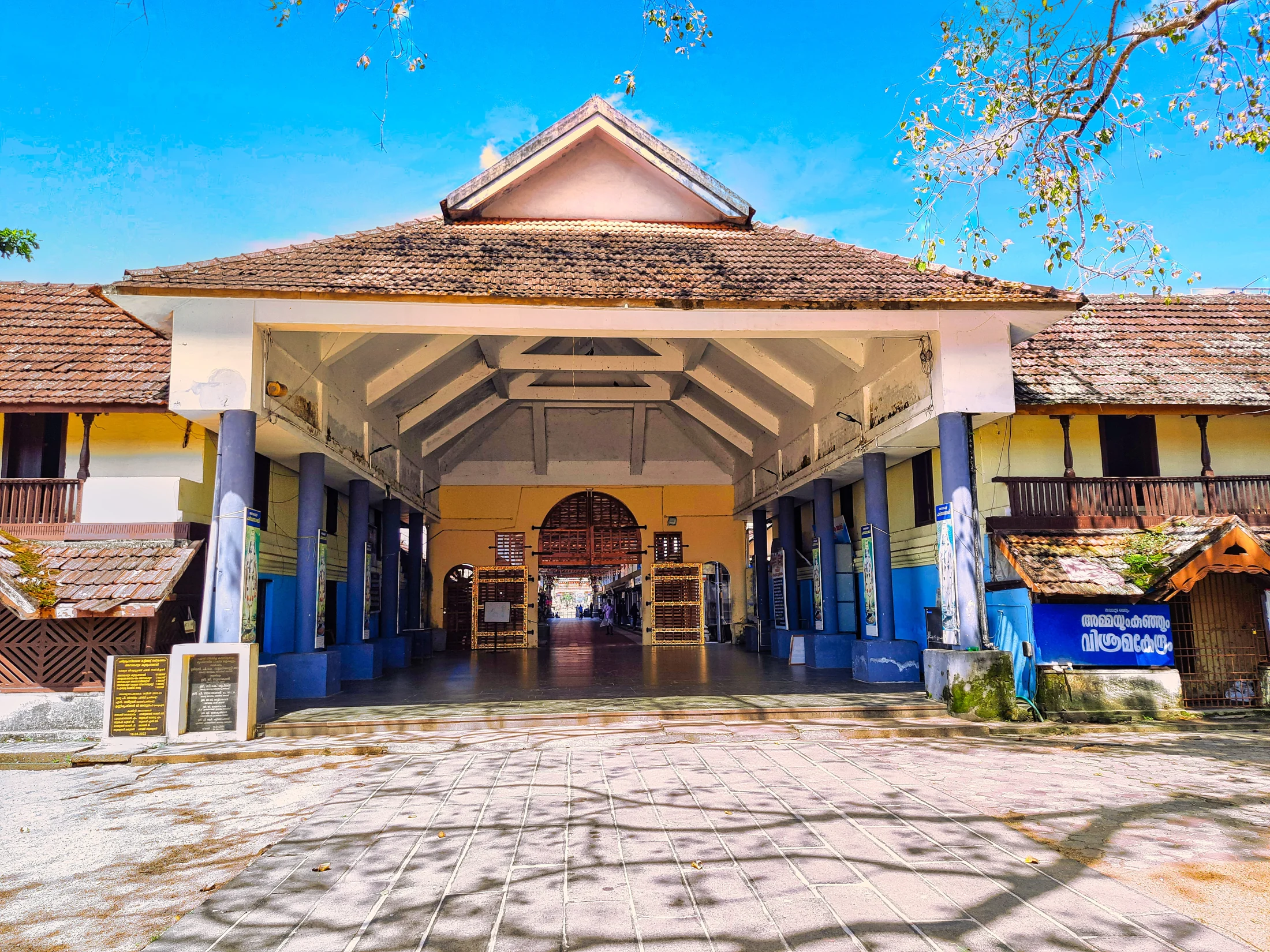
Ambalappuzha Sree Krishna Temple is an active temple in Ambalappuzha town, south of Alappuzha, administered by the Travancore Devaswom Board. Krishna is worshipped here as Parthasarathy, Arjuna’s charioteer. The temple combines a broad tank, tiled courtyards and painted ritual spaces with two enduring cultural associations: Palpayasam offered to the deity, and Kunchan Nambiar’s creation of Thullal. A visit works best when darshan, the permitted exterior spaces and any offering collection are planned around the temple’s morning or evening opening.
14.4 km · straight line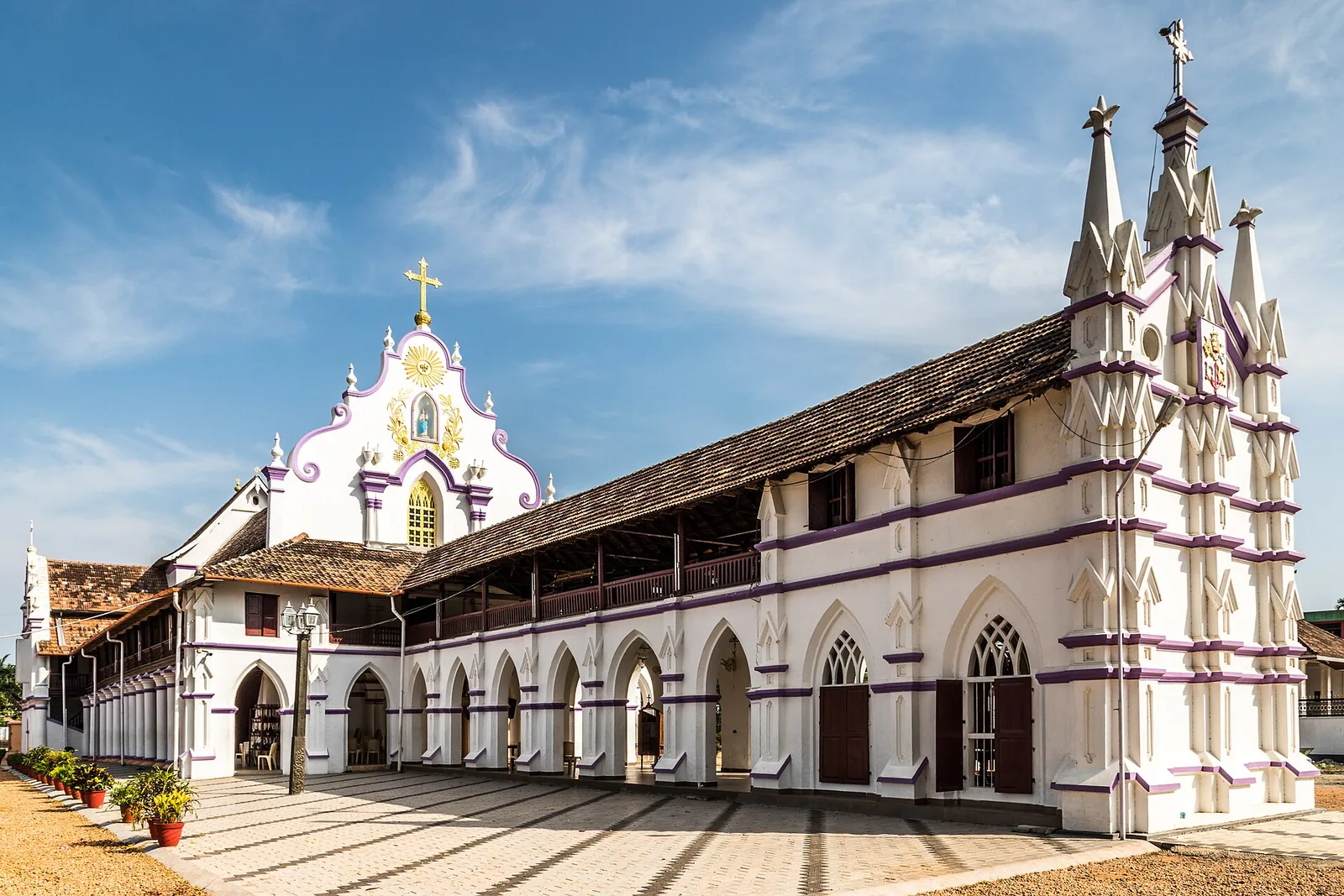
Kuttanad village on the Pamba known for the Champakulam Moolam snake-boat race and Kalloorkad St Mary’s Basilica.
14.6 km · straight lineRestored 18th-century Travancore palace at Kayamkulam, home to the huge Gajendra Moksha mural.
16.0 km · straight line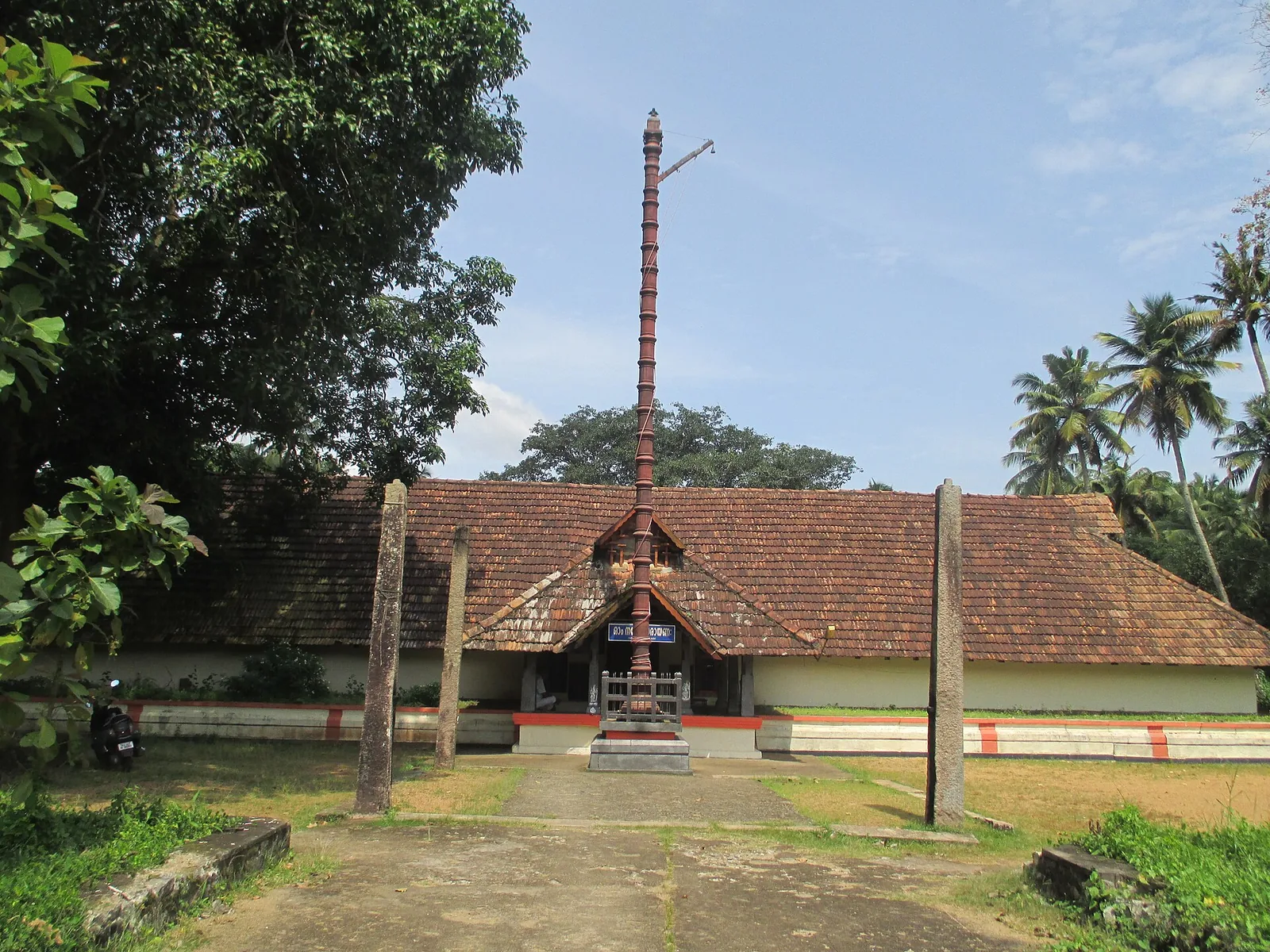
The Yudhishthira temple of the five Pancha Pandava shrines around Chengannur and one of the 108 Divya Desams, at Mundankavu — where the god is Imayavarappan, “lord of those who came before”, and darshan is held incomplete until you have also worshipped at the Shankha Theertham tank.
17.5 km · straight line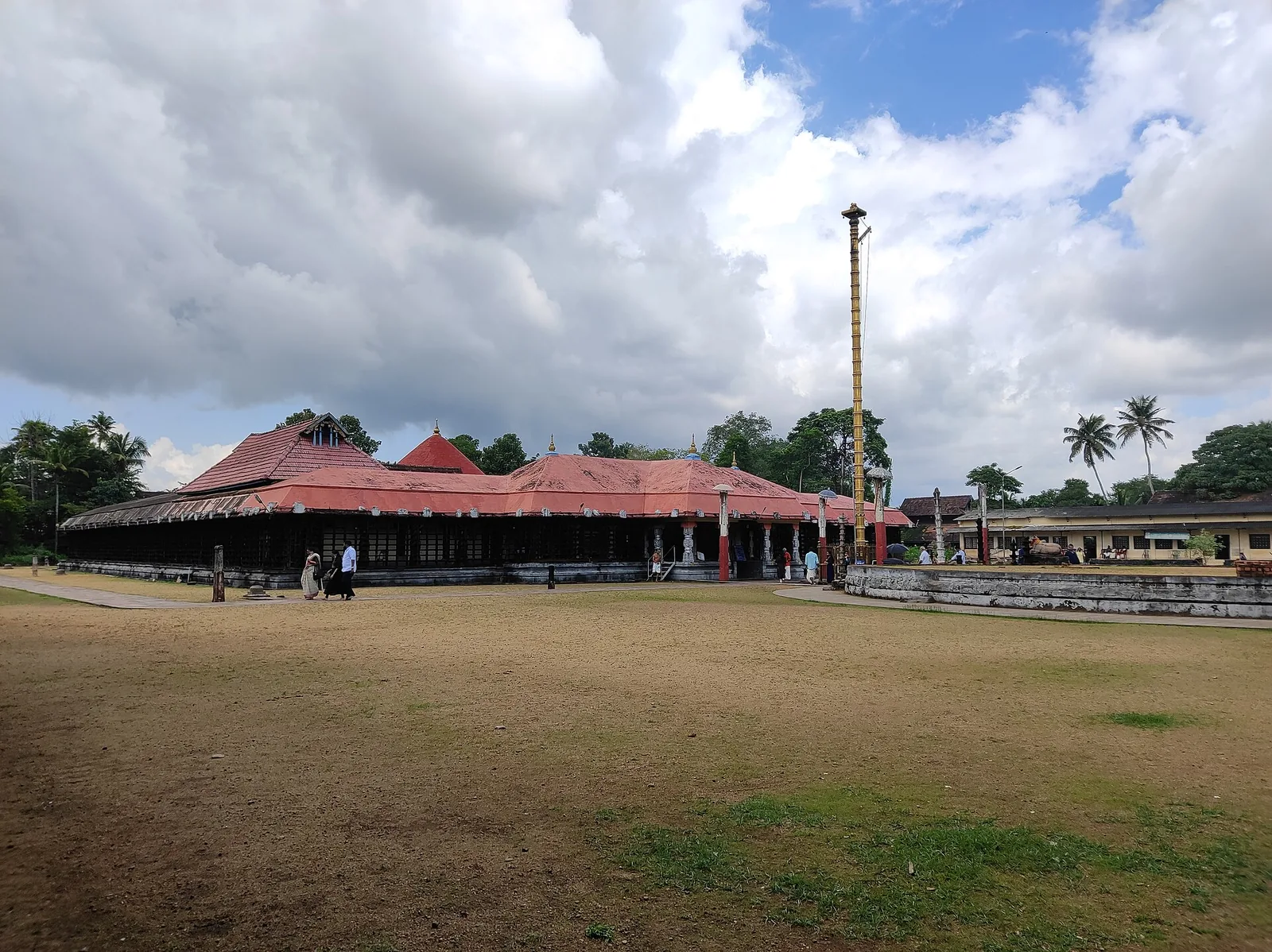
The great Shiva–Parvati temple of Chengannur, where the goddess is held to menstruate and the Thripputhaarattu is observed — one of the 108 Shivalayas, and the temple where the Thazhamon Madom tantris perform their first puja before they may officiate at Sabarimala.
18.2 km · straight line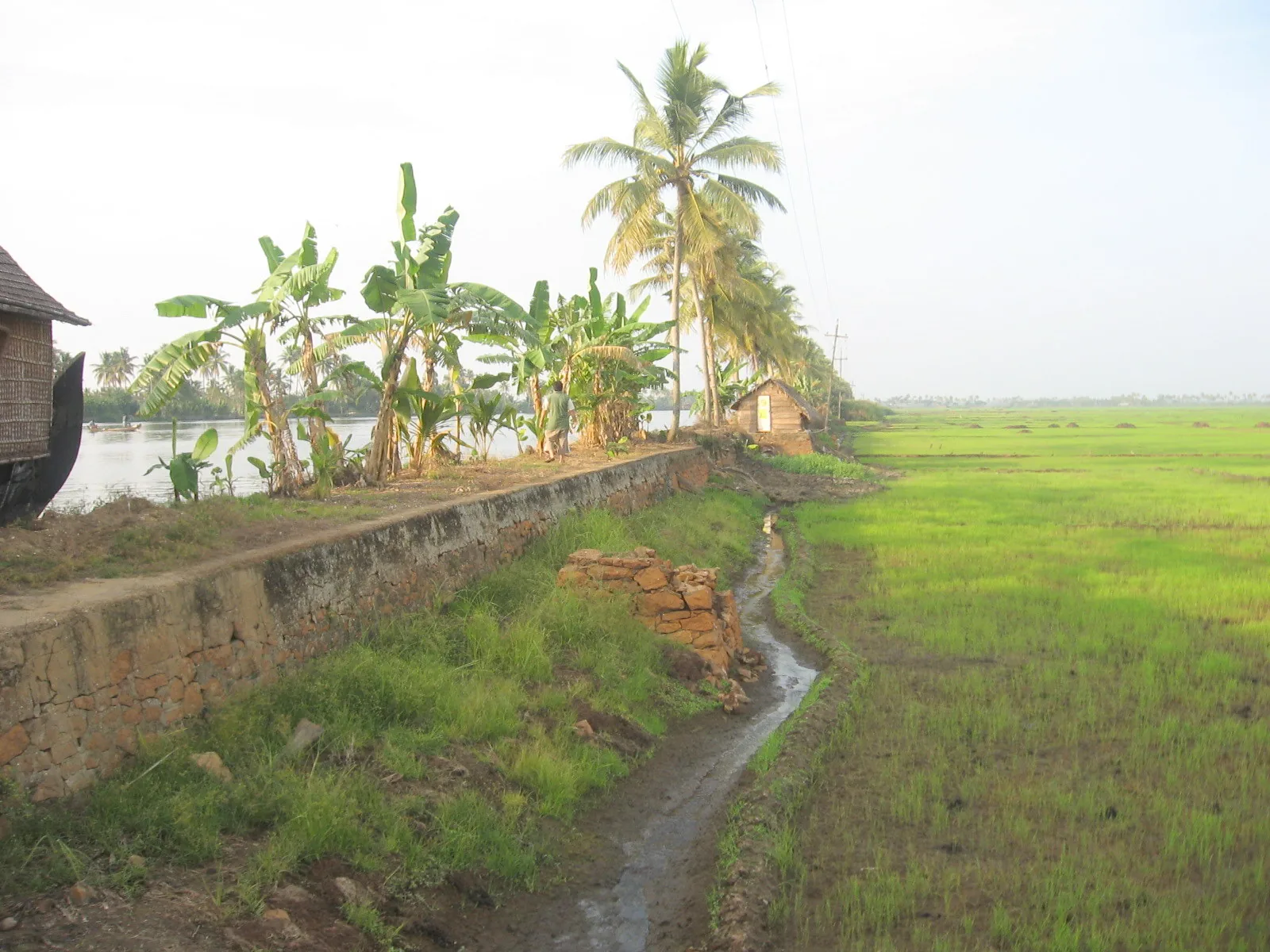
Low-lying paddy and canal region known as Kerala’s rice bowl.
18.8 km · straight lineNearby toilets, pharmacies, ATMs, seating and vets are community-mapped and may be incomplete or out of date. Map data © OpenStreetMap contributors | Walking times © openrouteservice.org by HeiGIT
It is known as Kerala Palani or Dakshina Palani — the Palani of the south — as an indication of its standing among Subrahmanya shrines. It is worth reading the comparison as a contrast rather than an equivalence: Palani in Tamil Nadu is a hill temple, while everything distinctive about Haripad is aquatic. The Palani legends belong to Palani and are not this temple's story.
By tradition it was worshipped by Parasurama in the Treta Yuga and then placed by him in the Kayamkulam lake. Devotees are said to have shared a collective dream showing where it lay; they found the spot marked by whirlpools and floating flowers, dived, and recovered the four-armed image. The place of recovery became Kandanalloor — the place where it was found — now Kandalloor, and the idol was landed at Nelpurakadavu.
Local tradition derives it from Hari, meaning Vishnu, and padam, the foot: the ground where Parasurama, an avatar of Vishnu, set his foot became Harippadapuram and in time Haripad. It is a folk etymology rather than a philological one, but it shows how completely the town explains itself through the temple's legend.
Nobody can say, and you should be wary of anyone who does. The tradition is that it predates the beginning of the Kali Yuga, which is a devotional statement rather than a date. What is documented is much more recent: a severe fire on the night of 7 December 1920 and a re-consecration on 27 May 1926.
No, and this page said so until August 2026. The Malayalam sources give the reconstruction after the 1920 fire as carried out under the patronage of Moolam Thirunal, by an architect of Idavangad, and re-consecrated on 27 May 1926 — five years before Chithira Thirunal acceded in 1931.
Three ten-day utsavams, in Medam (April–May), Chingam (August–September) and Dhanu (December–January), each ending with the arattu; plus Thaipooyam in Makaram, Skanda Shashti in Thulam, and Thrikkarthika in Vrischikam, which marks the anniversary of the installation. ⚠ An “Avittam festival” appeared in our logistics record for a long time; it is in no sourced list and has been removed.
Morning or early evening is usually best; festival days can be powerful but crowded.
Entry: No entry fee for darshan. Individual vazhipads and offerings are paid for at the temple counter. Timings: The temple does not publish a dependable visitor timetable online. Kerala Devaswom temples commonly open in early-morning and evening sessions and close around midday; obtain the current darshan hours locally or from the Travancore Devaswom Board before a time-sensitive visit.
Base yourself in Haripad and Mannarasala or a nearby town in Alappuzha, then confirm the last-mile route locally before leaving. Check temple entry customs, dress rules and festival crowd conditions before arrival. If the visit depends on forest, temple, boat, ferry, weather or seasonal access, check the official/local rule on the day before travel.
45 minutes to 2 hours, longer during festival or queue periods.
Nearby you can pair Mannarasala Sree Nagaraja Temple (1.0 km, approximate straight-line separation), Thottappally Beach (8.7 km, approximate straight-line separation), Kandiyoor Sree Mahadeva Temple (9.2 km, approximate straight-line separation), Chettikulangara Devi Temple (9.5 km, approximate straight-line separation).
Use official counters for offerings/tickets where applicable. Keep footwear and valuables secure in crowded areas.
Written about Haripad Sree Subramanya Swamy Temple itself — its history, its legends and the arguments about them.
Route-level itineraries and practical guides for the rest of Kerala.
Photographs: RajeshUnuppally (CC BY-SA 3.0), RajeshUnuppally at Malayalam Wikipedia (CC BY-SA 3.0), Ms Sarah Welch (CC0), Krissubh (CC BY-SA 4.0). Wikimedia Commons.