Mararikulam is a name that no single body in Kerala actually holds. The Mahadeva temple it is named after stands on the boundary line: north of it is Mararikulam North grama panchayat, in Cherthala taluk under Kanjikuzhy block; south of it is Mararikulam South, in Ambalappuzha taluk under Aryad block. The one unit that did carry the whole name — the Mararikulam assembly constituency, created in 1957 — was abolished by the 2008 delimitation and vanished at the 2011 election. What survives the name is a railway station, a PIN code, a beach that half the world knows as Marari, and two pieces of modern history that happened here and nowhere else: the 1,965-vote defeat that kept V. S. Achuthanandan out of the chief minister’s chair for ten years, and a women-owned cooperative economy that its own planners called the Mararikulam Experiment.
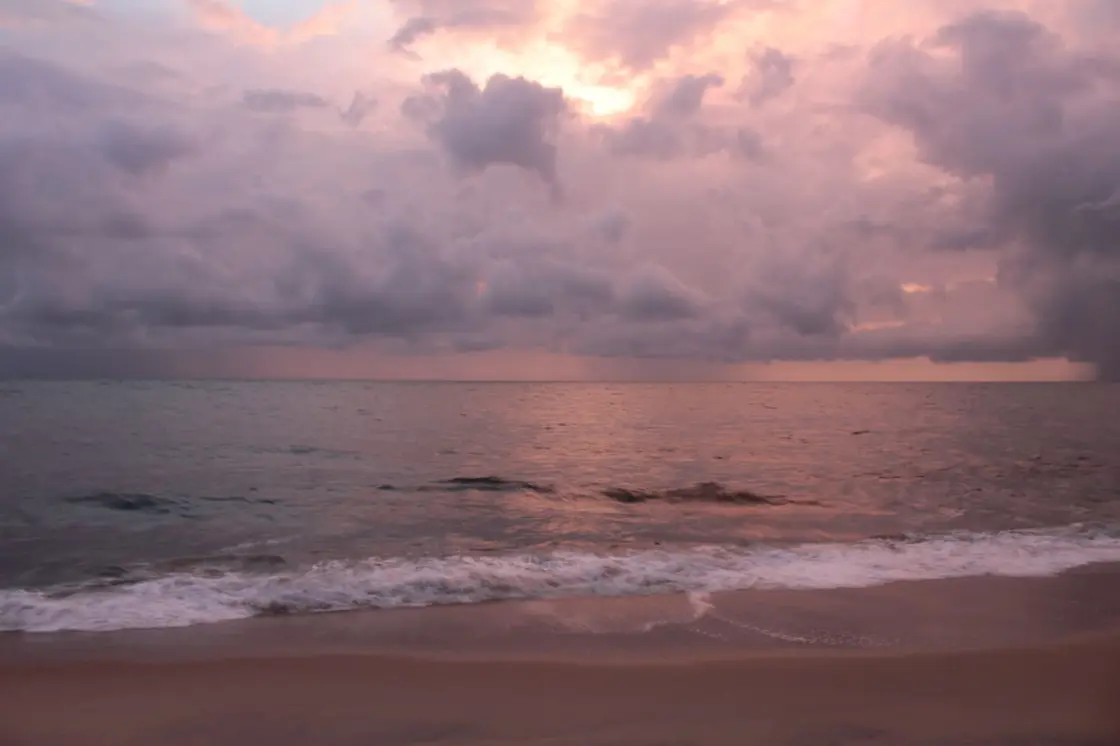
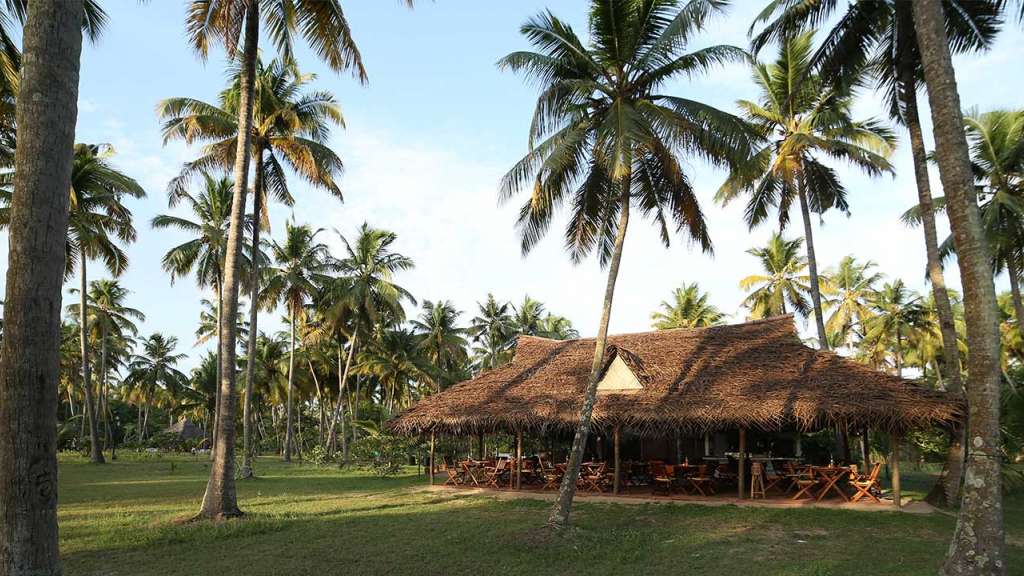
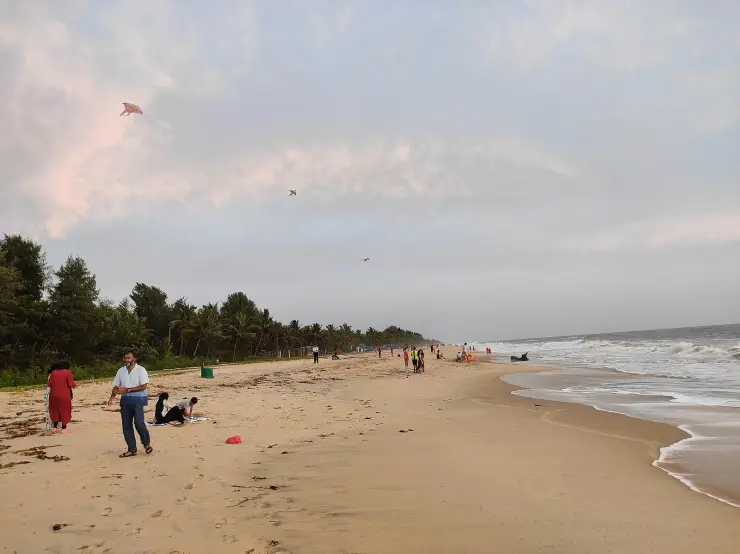
Start with the geography, because everything administrative here follows from it. Mararikulam is a coastal belt roughly eleven to fifteen kilometres north of Alappuzha town, flat and sandy, coconut over most of it, the Arabian Sea on the west and National Highway 66 running north–south a little inland. The Ernakulam–Kayamkulam coastal railway crosses it with a small two-platform station, code MAKM. Malayalam Wikipedia’s account of the Mahadeva temple places it half a kilometre west of the highway and two kilometres east of the sea, which is a useful way to picture the whole settlement: a strip of village between a road and a shore, with the temple in the middle of it.
The middle is where the lines meet. The temple stands, in the words of that same Malayalam article, on the boundary of the Ambalappuzha and Cherthala taluks and of the Mararikulam North and Mararikulam South grama panchayats. That is not a quirk of one source. Mararikulam North is administered under Kanjikuzhy block in Cherthala taluk; Mararikulam South sits under Aryad block in Ambalappuzha taluk, with the panchayat code 1611002003. Two taluks, two block panchayats, two development plans, two sets of ward numbers — and one name, sitting on the seam. If you have ever wondered why a Kerala place can feel administratively slippery, this is the mechanism.
The 2011 Census counted 31,322 people in Mararikkulam North village — 15,257 men and 16,065 women in 7,747 households — with a literacy rate of 96.22 per cent. ⚠ We were not able to source a comparable standalone figure for Mararikulam South and we are not going to estimate one; what we can say is that it is the grama panchayat covering Kalavoor village and the coastal settlement at Kattoor, and that it belongs to Ambalappuzha taluk, whose 2011 population was 454,864.
For fifty-four years the whole name did have one owner. The Mararikulam assembly constituency was created in 1957 and returned, in order, C. G. Sadasivan (CPI, 1957), S. Kumaran (CPI, 1960), Susheela Gopalan (CPI(M), 1965), S. Damodaran twice (CPI(M), 1967 and 1970), A. V. Thamarakshan twice for the Revolutionary Socialist Party (1977 and 1982), T. J. Anjalose (CPI(M), 1987), V. S. Achuthanandan (CPI(M), 1991), P. J. Francis (Congress, 1996) and T. M. Thomas Isaac twice (CPI(M), 2001 and 2006). Eleven of the twelve terms went to the Left. In 2006 the roll held 141,433 electors and the seat was unreserved.
The one Congress win is the reason people outside Kerala have heard of the place. In 1996 the Left Democratic Front took the state comfortably and V. S. Achuthanandan, the sitting member here and the man widely expected to become chief minister, lost his own seat to P. J. Francis by 1,965 votes — 49.3 per cent against 47.9. The front formed the government; E. K. Nayanar took the chief minister’s office; Achuthanandan did not enter the assembly at all. He became chief minister only in 2006, and from Malampuzha, not from here. Francis was called the giant-killer for the rest of his life. The result was also litigated: an election petition ran on under the name V. S. Achuthanandan versus P. J. Francis and reached judgment in January 2001.
Five years after that defeat the seat acquired a second kind of fame, and this one was deliberate. T. M. Thomas Isaac — economist, later the state’s finance minister — contested Mararikulam in 2001 and won by 17,679 votes, having chosen the constituency because of what it was rather than in spite of it. Richard W. Franke, the Montclair State anthropologist who co-wrote the standard account of Kerala’s People’s Campaign with Isaac, described the area as eight villages and two towns, a population of 272,000, and 60 per cent of households below a locally set poverty line of ₹23,000 a year — the poorest assembly area in Kerala. In the same breath he recorded literacy above 90 per cent, infant mortality below 20 per thousand and life expectancy above 70. That combination — destitute and highly developed at once — is the Kerala paradox in a single constituency, and it is why this became a laboratory.
What was built here was called the Mararikulam Experiment, and its arithmetic is worth stating because it is unusually well recorded. Around 1,500 neighbourhood groups, or NHGs, of twenty to forty women each had formed during the 1996–2001 People’s Campaign for Decentralised Planning; they met weekly, generally on Sunday afternoons, with attendance averaging above 90 per cent, and began collecting thrift — tiny weekly deposits. A 2001 survey of 798 groups found 17,000 women holding a pool of ₹5.4 million. A year later, across 1,137 groups, the pool was ₹15 million, and with links to local cooperative banks the groups could reach ₹27 million. Sixteen NHGs, two per village, were selected by the village assemblies to become soap-making cooperatives; the Integrated Rural Technology Centre supplied the technology kits and the training; by May 2002 all sixteen were producing. Kerala uses more soap per head than the rest of India and most of it is coconut oil, which is the one raw material this coast has in quantity. Each unit was designed to make about 600 bars a day. Notebooks, school kits and umbrellas were to follow, then processed vegetables and fish.
The most extraordinary thing about it happened on 11 May 2002, when 30,000 women assembled on the football ground at St Michael’s College and took the Mari Soap Pledge — a public undertaking to buy only the soap their neighbours made, led by the novelist Sara Joseph and framed explicitly as resistance to corporate globalisation and as an invocation of Gandhian self-reliance. ⚠ We must be equally plain about what we could not establish. Franke’s project site, mararidevelopment.org, no longer resolves at all; we could find no reliable later account, in English, of how many of the sixteen units survived, whether Mari soap is still made, or what happened to the cluster centres and the artificial reefs that were planned. We are recording what was documented at the time and attributing it, not claiming it is still running.
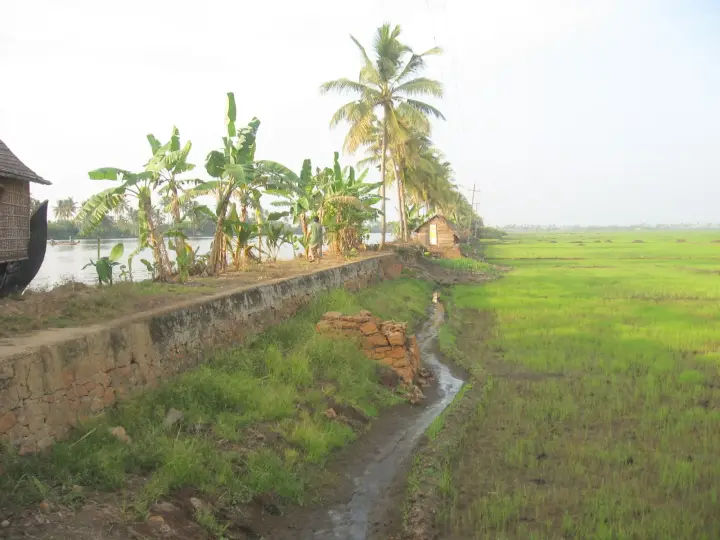
Alongside the politics there is an ordinary and rather good local economy, and it is visible from the road. This is sandy soil, and sandy soil grows vegetables and melons — watermelons stacked on a tarpaulin beside a lane in March is an entirely typical Mararikulam sight. The neighbouring panchayat in the same block, Kanjikuzhi, took that further than anyone: from 1994 it built itself into what is widely reported as Kerala’s first chemical-free, vegetable-self-sufficient panchayat, with free seeds and saplings raised in Kudumbashree greenhouses and surplus sold into Kochi, Kottayam and Alappuzha. That is Kanjikuzhi’s achievement and not Mararikulam’s, and we say so; but it is the same block, the same soil and the same decade of decentralised planning, and it is the best evidence going that the ideas tried here were not merely theoretical.
Legend & myth
There are two founding legends on this small stretch of coast and both of them are about water. One belongs to the Shiva temple that gave Mararikulam its name; the other belongs to the goddess a few kilometres north. Only one of them is ours to tell here.
🚫 The first we are deliberately leaving alone. The story of the Pulaya woman who sharpened her sickle on a stone and made it bleed, the self-manifested linga that was found there, the śaiśyam payasam still offered because of it, the Dhanvantari shrine that stood on the ground first, and the two rival readings of the name — Maran-ari-kalam, the land of the slayer of Kama, against the plainer reading in which the second half is simply a pond — are all told in full on our Marari Beach page, together with the procession that carries the deity two kilometres west to the sea. Retelling it here would be padding. Read it there.
🚫 We are also not borrowing from the neighbours, and the temptation on this coast is a real one. Seven kilometres north at Arthunkal there is Veluthachan, the fair father, the Sabarimala pilgrims who come to remove the mala, the eagles said to circle the January procession — one of the richest devotional traditions in Kerala. It is not Mararikulam’s. It has its own page and it stays there.
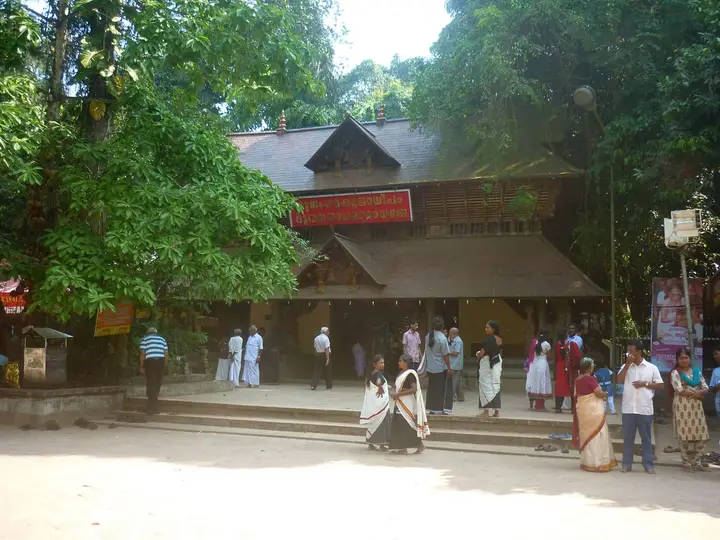
What does belong here is Kanichukulangara. Malayalam Wikipedia places the Kanichukulangara Sree Devi temple squarely in Mararikkulam North village, Cherthala taluk, Alappuzha district, and its presiding deity is Bhadrakali — Jagadeeshwari, Adiparashakti, shown with eight arms and known to everyone simply as Kanichukulangara Amma. ⚠ Sources do not fully agree on the local body: the Malayalam article says Mararikulam North village, while some directory listings file the hamlet under Cherthala South panchayat, and English Wikipedia dodges the question by saying only that the temple is 7.5 km from Cherthala and 17 km from Alappuzha. We print the disagreement rather than picking a winner; on any reading it sits within a couple of kilometres of the Mararikulam North boundary.
The legend is a small, domestic and rather lovely piece of folk etymology. The Devi, the tradition says, came here to play and to bathe — kaḷichu, kuḷichu — and so the place was called Kaḷichukulangara, the bank of the pond where she played, which wore down over time into Kanichukulangara. That is the whole story: no demon, no king, no battle. A goddess stopped at a pond, and the village is named for what she was doing when she stopped.
The practice built on top of it is not small at all. The festival runs twenty-one days in the Malayalam month of Kumbham, ending on Thiruvonam and generally falling around Shivaratri, and the vows made here are unusually physical. Chikkara is the best known: children are brought for ritual bathing across the twenty-one days, an offering made for healthy children and against disease. Arikkooth is the other famous vazhipadu. In the seven days after the festival comes puzhukku, in which devotees model human figures — or the particular limb or organ that is troubling them — out of ground rice and turmeric, steam them, and offer them for healing. The last nights end in the kampakkettu, a fireworks display that runs beyond two hours. Stand in the courtyard on an ordinary morning and the machinery of all this is still there in plain sight: the brass-clad flagstaff, the small railed shrine under the peepal, and a thulabharam balance hanging under its own signboard, waiting for the next person who has promised to be weighed against what they can afford to give.
Notice what both names have in common, because it is the most Mararikulam thing about them. Mararikulam ends in a pond — kulam. Kanichukulangara ends in the bank of a pond — kulangara. Chettikulangara, Kottankulangara, Kanichukulangara: the ending runs right along this coast, and both of the origin stories told about this village turn on water standing in a hollow rather than on a battle or a king. The reason is not poetic. This is a sand barrier a few metres above the sea with a shallow, salt-threatened water table, and the household pond — dug for watering the coconut palms — is the fundamental unit of the landscape. When the Mararikulam Experiment’s planners went looking for somewhere to farm fish in the early 2000s, they counted more than 5,000 such ponds already in existence across the area. The legends of this coast attach themselves to ponds because the ponds are what there is.
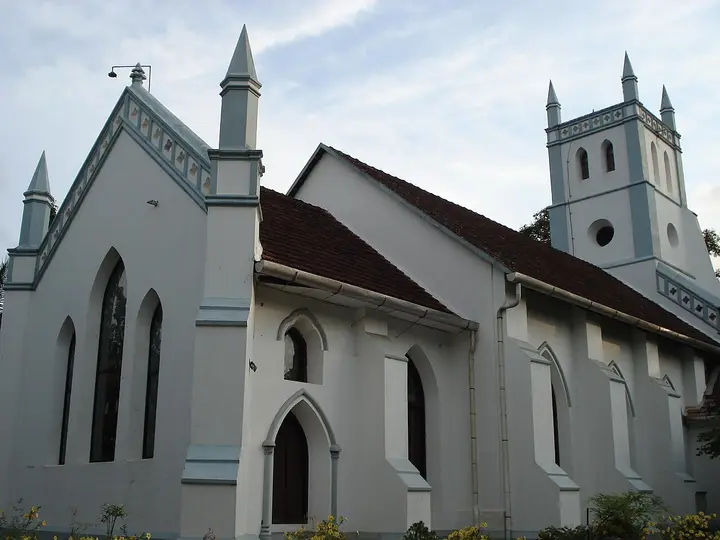
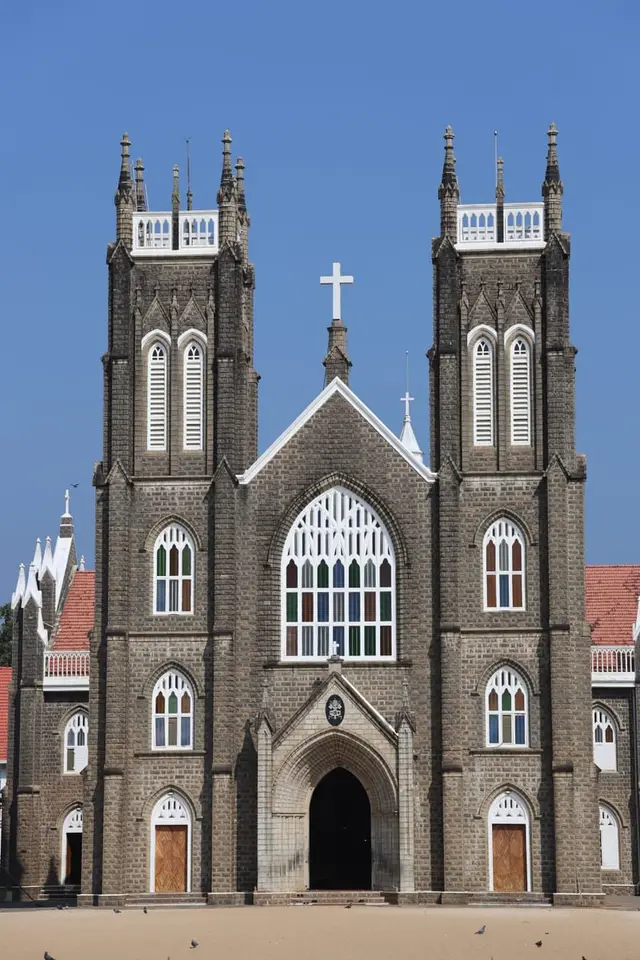
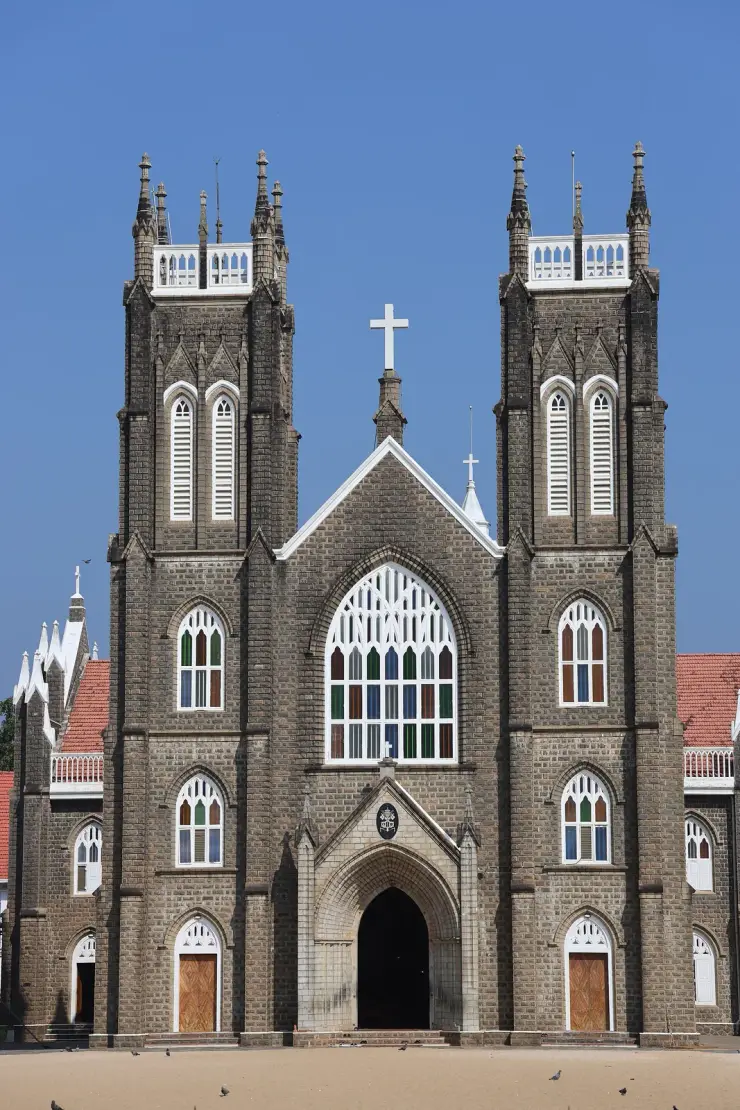
The other half of the village prays in a different building and has done for a century and a half. St Augustine’s Church at Mararikulam was built in 1877 and belongs to the Latin-rite Diocese of Alleppey; something like 1,200 Catholic families are attached to it, along with St Augustine’s High School and four small chapels — St Sebastian’s, St Mary’s, St Anthony’s and St George’s. Its feast, the Chingam Thirunaal, falls in the Malayalam month of Chingam, in August or early September, which is unusual on a coast whose big Christian festivals cluster in January. Its most characteristic devotion, though, is the October one: from 30 September to 1 November a statue of Mary travels from parishioner’s house to parishioner’s house, and the rosary is said wherever it has stopped. It is a procession that never happens all at once and has no crowd, and for a month it makes the whole parish the route.
There is one more collective vow in Mararikulam’s record and we are going to name it without pretending it is a legend. On 11 May 2002 thirty thousand women stood on a college football ground and swore to buy soap made by their neighbours. It has the shape of the older thing — an oath, a crowd, a named leader, a promise about how to live — and it is the only mass vow taken here that we can date to the day. It is not a myth. But it is what this village does instead of one.
More about Mararikulam
History
Mararikulam’s older history is the ordinary history of the Alappuzha coast: fishing from the beach, coconut on the sandy ground behind it, and coir. The coir workers who retted the husk, spun the yarn and wove it into matting supplied a trade that had sold ropes and doormats into international markets for two centuries out of Alleppey port, a few kilometres south — and they were among the worst-paid workers in Kerala, which is the single most important fact in the political history that follows. Mararikulam was never a trading town. It supplied one.
The Christian settlement is documented from the nineteenth century: St Augustine’s Church was built in 1877, and when the Latin-rite Diocese of Alleppey was erected in 1952 it took in this ribbon of coast. The Hindu institutional history is harder to date. The Mararikulam Mahadeva temple is administered not by a Devaswom board but by a private arrangement — the Malayalam article names the elders of a Vaikom house as the owners, with the melshanthi and kezhshanthi appointed by a temple committee. ⚠ That article’s only citation, mararikulammahadeva.org, has expired. As of 19 August 2026 the domain returns HTTP 200, but what it serves is a domain-sale lander offering the name for $195 — a live status code is not a live source. Nothing that rests on that citation alone is asserted as fact here.
The modern transport map arrived late and changed the place. The coastal railway from Ernakulam South to Alappuzha opened on 16 October 1989 and was extended to Kayamkulam in 1992, giving Mararikulam a station of its own — two platforms, two tracks, electrified, categorised NSG-5. The trunk road along the eastern edge was National Highway 47 when the Mararikulam Experiment’s planners wrote about siting seafood restaurants along it; in the 2010 national renumbering that stretch became NH 66, which is the number on the boards today. Both facts describe the same road.
Politically the constituency was created in 1957, with the first Kerala assembly, and it behaved as a Communist seat for almost its entire life — CPI, then CPI(M), with two terms for the Revolutionary Socialist Party in 1977 and 1982 and exactly one Congress win, in 1996. The 2008 delimitation abolished it; its last member, T. M. Thomas Isaac, served until the 2011 election, when the seat no longer existed. Its territory now votes in the neighbouring constituencies, and the name Mararikulam survives on the panchayat boards, the station and the postmark rather than on the electoral map.
The last chapter is the deliberate one. Kerala’s People’s Campaign for Decentralised Planning, launched in 1996, devolved a large share of plan funds to local bodies and organised neighbourhood groups to decide how they were spent; in the adjoining Kanjikuzhi panchayat the same decade produced, from 1994 onwards, what is widely described as Kerala’s first chemical-free and vegetable-self-sufficient local body. From 2001 Mararikulam took the next step, turning credit associations into worker-owned production cooperatives, starting with soap. Whether the experiment endured is a question we cannot answer from the sources available to us — its own website is gone — but that it was attempted here, and documented in detail while it was happening, is why this village has a bibliography.
Why visit
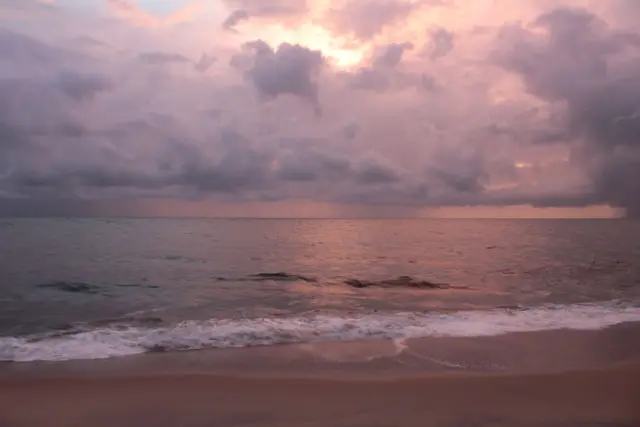
It is the quiet coastal hinterland behind Marari Beach — the same fifteen minutes from Alappuzha, without the seafront.
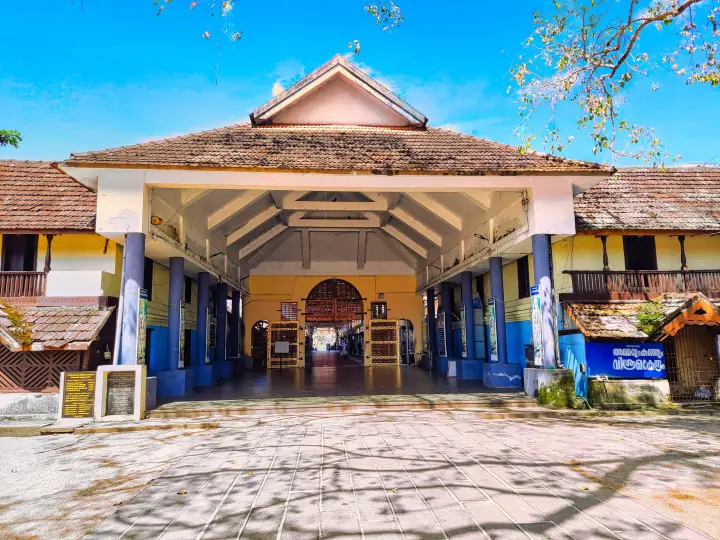
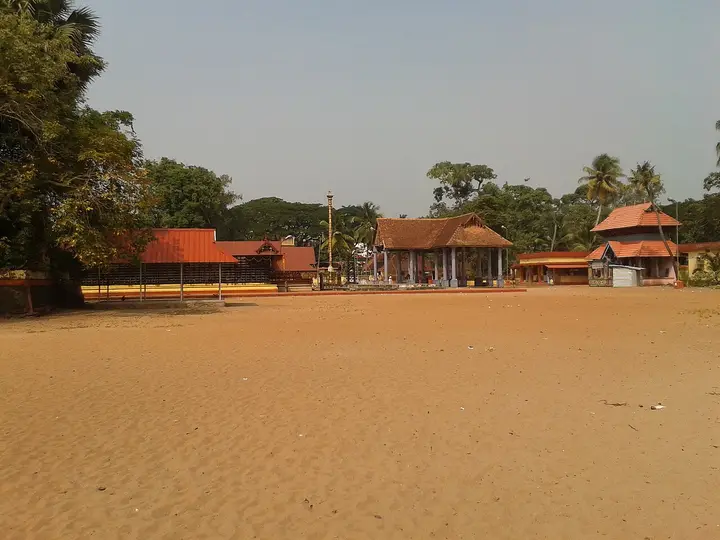
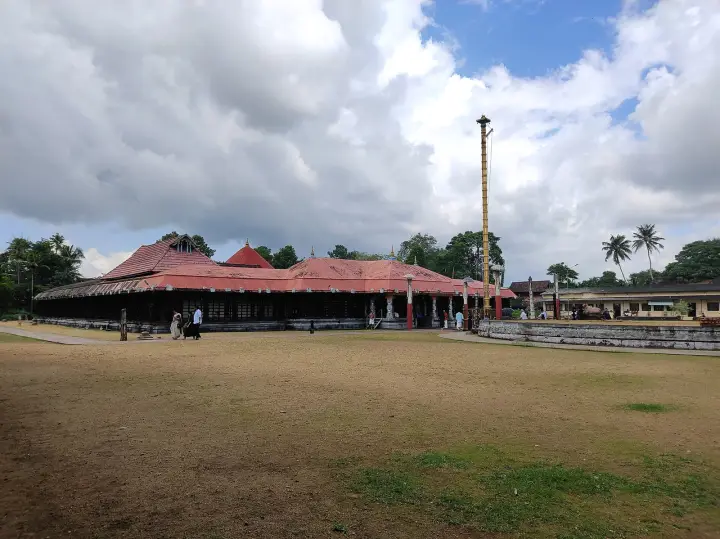
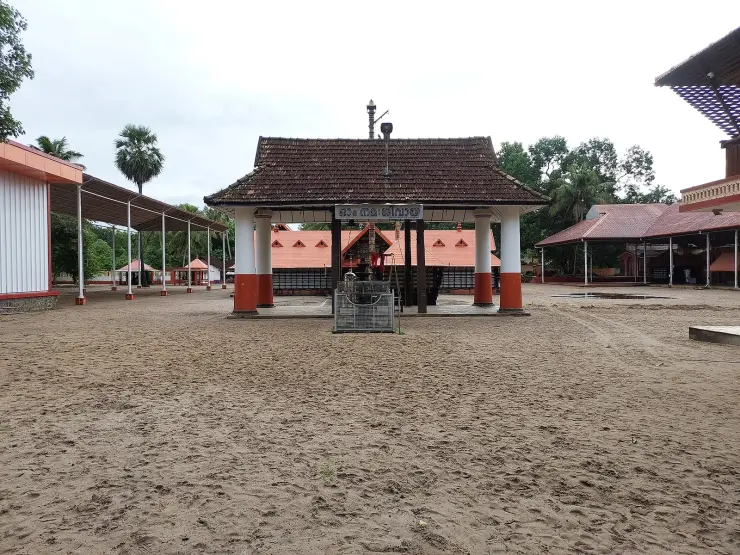
The Mahadeva temple sits half a kilometre off NH 66 with a wide sand courtyard and is the reason the place has its name.
Kanichukulangara Devi temple, a few kilometres north, is a working Bhagavathy shrine with a twenty-one-day Kumbham festival and its own rituals.
St Augustine’s Church of 1877 gives the village its second, older-than-it-looks half.
Sandy-soil market gardening is on open display along the lanes — melons, gourds and greens sold from the roadside in season.
It is one of the very few Indian villages whose recent economic history has been written up in book form, which makes an ordinary walk here unusually legible.