Highlights
- Kerala's first bird sanctuary and a major birding base east of Kochi.
- Periyar river landscape, lowland forest and strong guide-led birdwatching value.
- What there is locally: birding guides, homestays, drivers and nature camps.
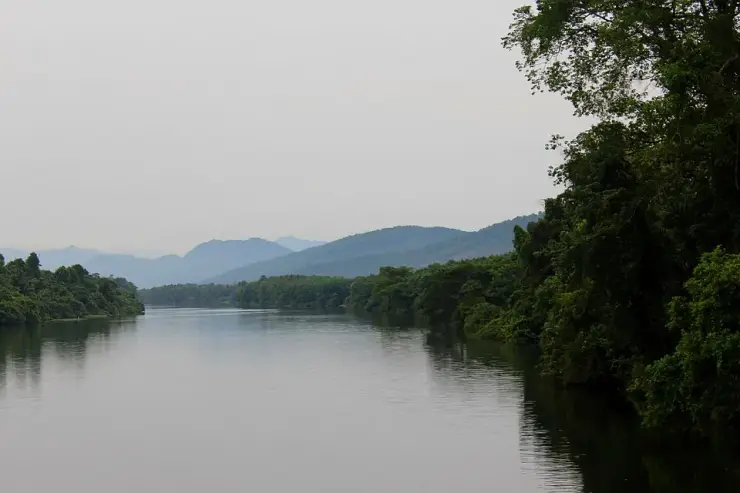
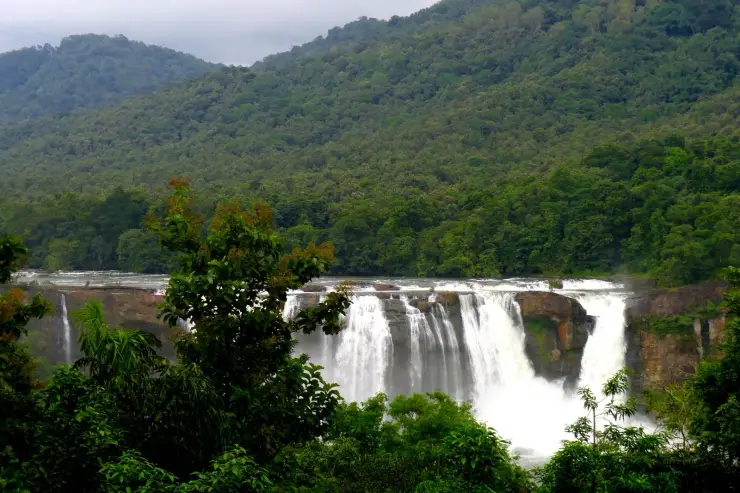
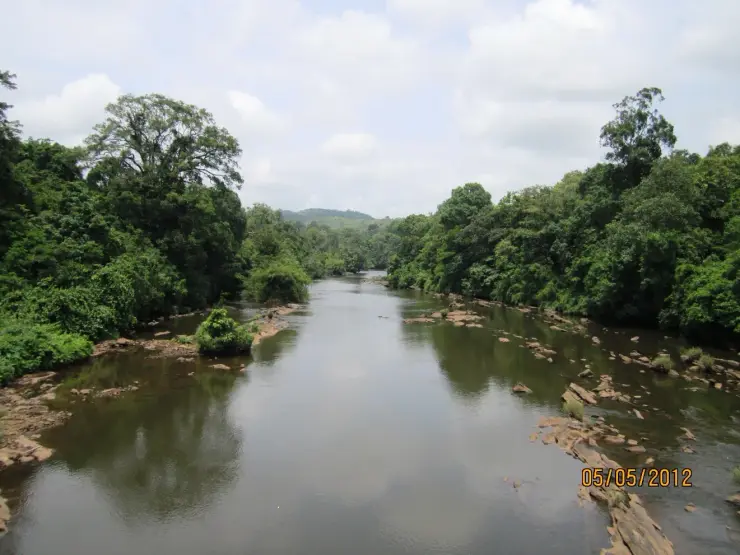
Thattekkad Bird Sanctuary, also known as Dr. Salim Ali Bird Sanctuary, is Kerala's first bird sanctuary and one of the most important birding landscapes near Kochi. It sits near the Periyar river and Kothamangalam forest-edge belt.

It should be planned as a focused birding/nature visit, not a general zoo-style attraction. The best guide experience depends on early timing, quiet movement, responsible guides and realistic species expectations.
In 1933 Salim Ali surveyed the birds of Travancore and Cochin, stood in this patch of woodland on the north bank of the Periyar, and called it the richest bird habitat in peninsular India — comparable, he said, only with the eastern Himalayas. He recommended it be protected. Kerala made it a sanctuary in 1983, fifty years later. It was the state’s first, it carries his name, and its 25.16 square kilometres still hold over 270 bird species by the sanctuary’s own count — past 300 if you go by birders’ cumulative lists.
This is a birding site first and a sightseeing site a distant second. There is no big animal spectacle and no viewpoint to drive to: the experience is walking quietly in low-elevation evergreen and deciduous woodland, early, with someone who knows what they are listening to.
That last part is not optional if you want the birds. The local guides at Thattekkad are unusually good — many grew up here and bird by ear — and the difference between a guided dawn walk and a solo wander is the difference between thirty species and five.
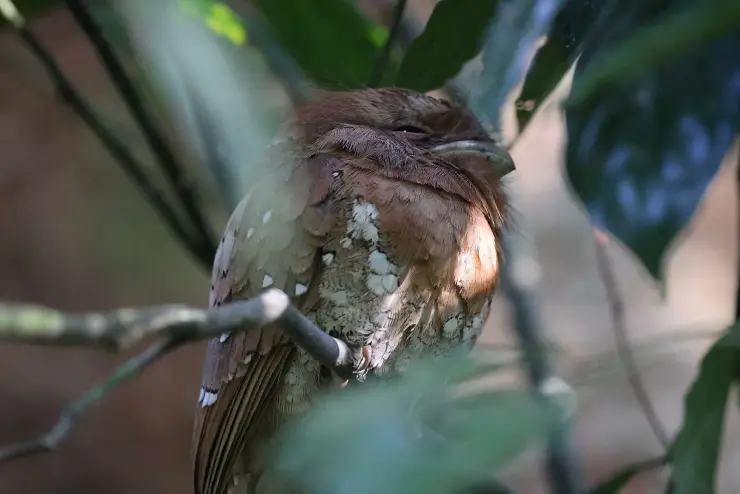
The species that brings people from abroad is the Sri Lanka (Ceylon) Frogmouth, a small, preposterous, wide-mouthed nocturnal bird that sits motionless on a branch pretending to be a broken stick. Thattekkad is one of its last strongholds and it has been studied here. Guides usually know current roosts; you do not find it by wandering.
Beyond that the list runs long — Malabar grey hornbill, Indian pitta, various trogons, woodpeckers, owls and a strong cast of Western Ghats endemics. The sanctuary’s own figure is over 270 bird species; birders’ cumulative lists run past 300.
Start at first light. Birds are active early and the place goes quiet by mid-morning; a visit that begins at ten o’clock is a walk in the woods, not a birding trip. Sanctuary hours run from around 6:00am, with guided Salim Ali Trail sessions from about 7:00am.
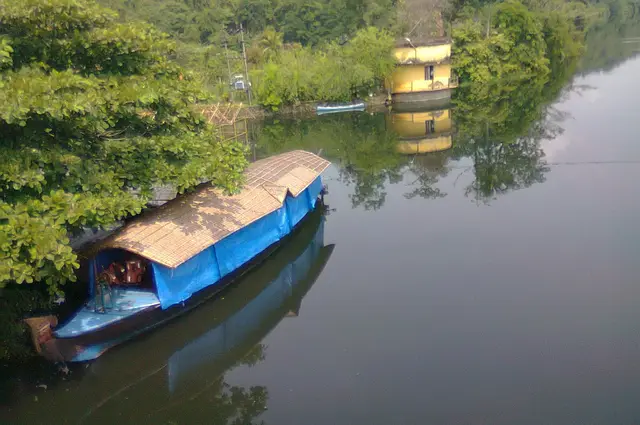
It sits on the northern bank of the Periyar in Kothamangalam taluk, and pairs easily with Bhoothathankettu just up the road — which is worth doing in that order, and not only for the driving. The reservoir you look at from Bhoothathankettu is the reason the trees here stop where they do. Seeing the water first and the woodland second makes the shape of the sanctuary legible in a way no board at the gate manages.
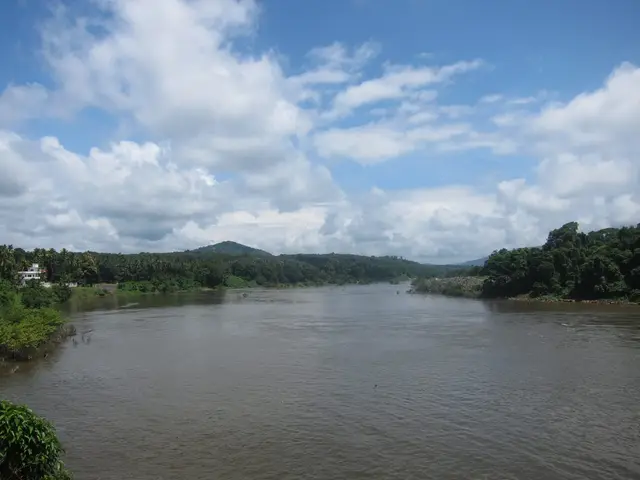
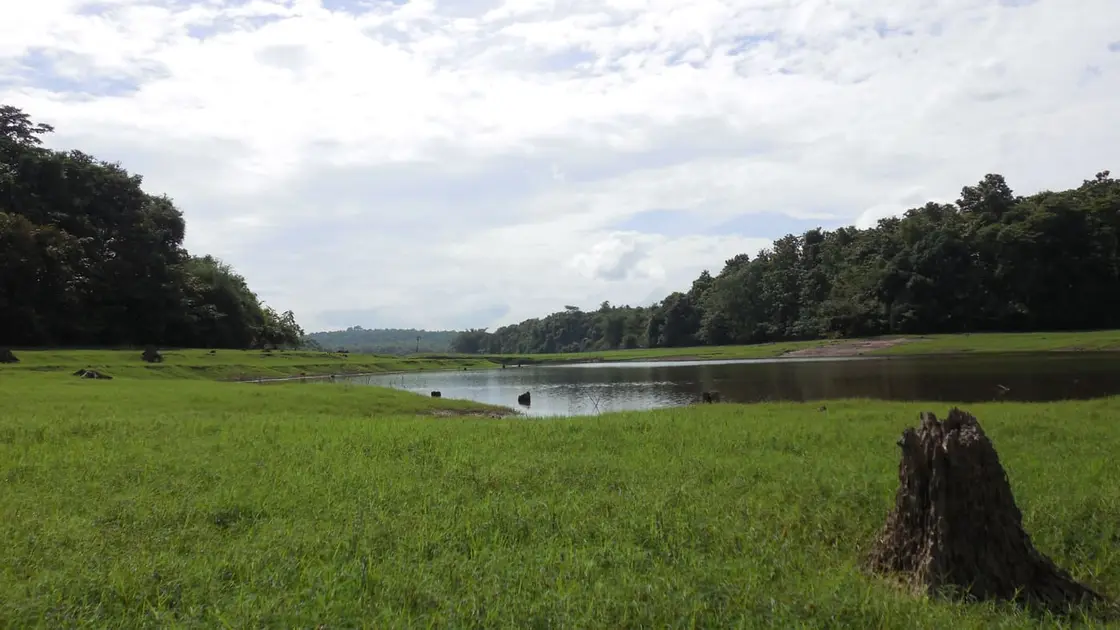
The name is usually read as thattu-kaadu, flat forest, and the reading fits: about 25 square kilometres of low, moist, deciduous and evergreen woodland folded into the branches of the Periyar, dropping to around 35 metres above sea level at its lowest and rising to a little over 500 at its highest. It is not a mountain reserve and it does not pretend to be. The flatness is the point: it is what makes a morning here a walk rather than a climb, and it is why a sanctuary this small can be worked properly on foot.
⚠ That is not the only account. The village’s own tradition, recorded in Malayalam, derives the name from Thattaiyur — a settlement said to have stood here in Chera times and to have been ended by repeated floods and by the Periyar changing course, growing over until Thattaikkad and then Thattekkad were what was left. We have found no excavation behind it and present it as tradition rather than as archaeology; the town hub for Thattekkad carries both readings in full.
There is no folk legend attached to this place, and it would be dishonest to manufacture one. What Thattekkad has instead is an origin story about a person.
The persistent misconception worth correcting is that the sanctuary was created because Salim Ali asked for it. He did ask — in the 1930s — and nothing happened for half a century. The protection came in 1983, sixteen years before his death but a very long way from his survey. The lesson visitors take from the plaque is usually “great man recommends, state acts”; the truth is closer to “great man recommends, and the woodland survives long enough for someone to get round to it”.
The other common slip is the name. It is the Salim Ali Bird Sanctuary and also the Thattekkad Bird Sanctuary — the same place, not two.
What it does have, and generously, is bird folklore — not attached to the place but carried into it by everyone who lives here.
The clearest example is the chembothu, or uppan, the greater coucal: a large glossy-black bird with chestnut wings that crashes about in low scrub and flies badly. It is among the commonest birds you will see here, and in Kerala the sighting of one, especially on setting out, is straightforwardly auspicious. The folklore behind that luck is unusually specific. The chembothu is said to be the one creature that knows where to find a root that will cure any illness — and to know of a second root that disintegrates iron by mere contact.
No such root has ever been produced. Where the belief probably comes from is visible in five minutes of watching: the coucal forages low and slow in dense undergrowth, turning leaves and poking into root tangles, and keeps emerging with something long and stringy in its beak. A big, unmistakable, faintly ominous bird that spends its life pulling things out of the ground is exactly the bird a forest culture decides knows something about roots.
It is also, despite the English name crow pheasant, a cuckoo — one of the few in that family that raises its own young instead of parasitising other nests. Which fits: one stretch of this sanctuary is known locally as Cuckoo Paradise for the number of cuckoo-family species recorded in it. Ask your guide what a bird is called in Malayalam and whether anyone says anything about it. You will usually get a better story than the field guide has, and it turns a species list into a place.
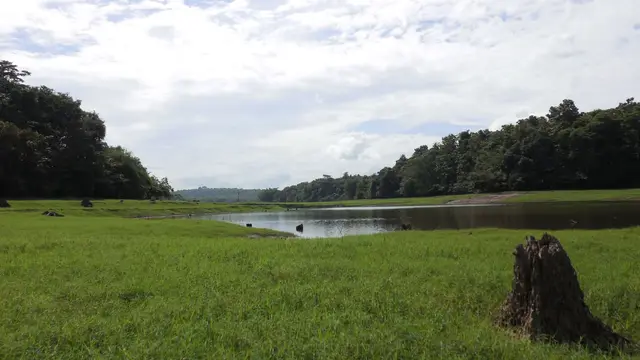
There is one more correction to make, and it is to our own earlier wording on this page. We wrote that Salim Ali's verdict has broadly held up for ninety years, as though the forest he praised is the forest you walk in. It is not, and the Kerala Forest Department says so in its own description of the sanctuary. In 1964 the Bhoothathankettu barrage was built on the Periyar just upstream, and the reservoir behind it raised the water along this bank by something like six to ten metres. The department's account is blunt: the impoundment destroyed almost all of the luxuriant riverine forest that had stood along the river here. That was thirty-one years after Salim Ali's survey and nineteen years before anyone protected what was left. The richest bird habitat in peninsular India was drowned in its best part first, and declared a sanctuary afterwards.
Which makes the reputation more interesting, not less. What survives is a diminished fragment that still turns in a bird list long enough to bring people here from other continents — and that is a statement about how extraordinary the original must have been, and about how much a low-elevation river forest can carry even after it has lost its riverbank.
The last thing worth straightening is the species number, because you will see two of them and both are printed with confidence. The sanctuary's own literature and the Kerala government figures say over 270 bird species, alongside 34 mammals, 30 reptiles, 15 amphibians and 47 fish. Tour operators and birding sites routinely say over 300. Neither is invented. The lower figure comes from formal survey work inside the notified 25.16 square kilometres; the higher one comes from cumulative sighting lists that keep growing every time a visiting birder logs something new, and that tend to draw a wider circle around the sanctuary than the notification does. Read 270-odd as the census and 300-plus as the tally.
In 1933 the ornithologist Salim Ali carried out bird surveys across the then princely states of Travancore and Cochin. At Thattekkad he found a density and variety of birds that led him to describe it as the richest bird habitat in peninsular India, comparable only with the eastern Himalayas, and he recommended it be made a sanctuary.
That recommendation was acted on in 1983, when Thattekkad was notified as Kerala’s first bird sanctuary, covering roughly 25 square kilometres on the northern bank of the Periyar in Kothamangalam taluk, Ernakulam district.
The sanctuary is named for him — the Salim Ali Bird Sanctuary — and has since recorded over 270 bird species on official counts, with a strong representation of Western Ghats endemics, alongside 34 mammals, 30 reptiles, 15 amphibians and 47 fish.
It is one of the last strongholds of the Sri Lanka Frogmouth, which has been the subject of study here, and the low-elevation riverine forest it protects is the same increasingly rare habitat type that makes the Athirappilly–Vazhachal stretch downstream so contested.
A local guiding tradition has grown up around the sanctuary, and it is now one of the few places in India where a visitor’s birding success depends less on luck than on who walks with them.
Two dams frame that history and neither is incidental to it. Bhoothathankettu, built on the Periyar just upstream in 1964, raised water levels along this bank by roughly six to ten metres and, in the Forest Department’s own words, destroyed almost all the riverine forest that had lined the river. The Idamalayar dam followed further east. What was notified in 1983, in other words, was the surviving inland remnant of a much larger river-edge forest, which is why the sanctuary’s vegetation reads today as a patchwork — partly disturbed evergreen and semi-evergreen, moist deciduous, stands of eeta reed, and old plantation ground — rather than as a single intact block.
The recovery of the sanctuary’s flagship bird is the clearest measure of what protection actually did. The reed here is eeta, Ochlandra travancorica, and it was cut commercially for decades; bamboo was worked alongside it. R. Sugathan surveyed frogmouth populations across the Western Ghats in 1979 and reported the bird as rare. After 1984, once the notified area came properly under the Wildlife Protection Act and reed and bamboo cutting stopped, the undergrowth grew back — and the Sri Lanka Frogmouth, which roosts low in exactly that kind of dense understorey, increased. The bird that draws visitors from abroad is not a survival from Salim Ali’s forest so much as a result of one specific industry being shut down forty years ago.
Because a serious ornithologist called it the best bird habitat in peninsular India, and even after a dam drowned its riverbank the remnant still holds a list long enough to justify the trip.
Because the Sri Lanka Frogmouth is here, and there are very few places where you have a real chance of seeing one.
Because the local guides are genuinely expert, and a dawn walk with one is among the best-value few hours in Kerala.
Because it is Kerala’s first bird sanctuary and small enough to see properly rather than drive through.
And because it is an easy pairing with Bhoothathankettu and the Periyar, making a full and unhurried day from Kochi.
Road km to Ernakulam; ghat roads and traffic vary — allow extra.
November to February is comfortable and strong for birding, though serious birders may plan by species season.
Live forecast loads in your browser.
Check the official alert before you travel. Kerala’s beaches, waterfalls and trekking routes close at short notice during heavy rain, and district alert levels change day to day. We do not publish an alert level of our own — read it from the state authority: Kerala State Disaster Management Authority, or the district control room on 1077.
Sun and moon are calculated for this location and shown in IST. Photography windows are the hour around sunrise and sunset; the sunset bearing is degrees clockwise from true north. Moon phase is accurate to about half a day.
These are official or public-sector eco offerings that match this place, town or forest destination. Confirm availability, permits, tariffs and reporting times with the official operator before travel.

Dam, forest and river landscape east of Kochi, listed by Kerala Tourism as an ecotourism destination and programme.
Official source →
Rocky Periyar river landscape and forest-edge destination that needs careful seasonal safety checks.
Official source →
One of Kerala’s key birding landscapes on the Periyar river, east of Kochi.
Official source →Verified hotels, homestays, restaurants, experiences, sights, shops and rentals around Thattekkad Bird Sanctuary — commission-free, with direct contact. Filter by what you need.

Kerala’s first bird sanctuary — Salim Ali’s “richest bird habitat in peninsular India.”

A Periyar reservoir and barrage near Thattekkad — river boating, forest walks and a children’s park.

The barrage and DTPC boat jetty at Bhoothathankettu on the Periyar.
Thattekkad Birding Guide Walk is a sourced birding walk record for the thattekkad guide. Thattekkad Bird Sanctuary, Ernakulam district, Kerala · Contact direct / check current rules · thattekkad, do, Birding walk.

Thattekkad birding resort listed by Kerala Tourism with direct contact evidence. Thattekkadu P.O., Palamattam, Kothamangalam, Ernakulam, Kerala 686691 · Contact direct · Thattekkad, Birding, Resort.

Kerala Tourism-listed Thattekkad camp at Palamattom with direct contacts. Contact direct · Thattekkad, Birding, Nature camp.
Book with the place itself. India’s cyber-crime coordination centre warned in April 2025 that convincing copies of hotel and pilgrimage booking sites are being pushed through sponsored search and social ads, taking payment for rooms the property never hears about. Every listing here links to the business’s own contact details and its own Google or Bing profile — we take no commission and sit in nobody’s payment path. If a booking page reached you through an ad, check the address bar against the property’s own site before you pay. Fraud can be reported on cybercrime.gov.in or on 1930.
Thattekkad Bird Sanctuary sits in Thattekkad, and these rank everything verified across the town rather than this one spot — built from the same listings shown above, ordered by the strength of the source evidence behind each entry rather than by anyone's star score. Every card shows how many places are really on it. Nobody pays to appear.
8 more places around Thattekkad, each worth a day of its own.
A pedestrian suspension bridge across the Periyar near Kothamangalam, used for river and forest-edge views without treating the structure as an adventure ride.

A Bhagavathy shrine enclosed by a rare sacred grove near Perumbavoor, where worship etiquette and protection of the forest floor take precedence over recreation.

26.6 km · 36 min drive
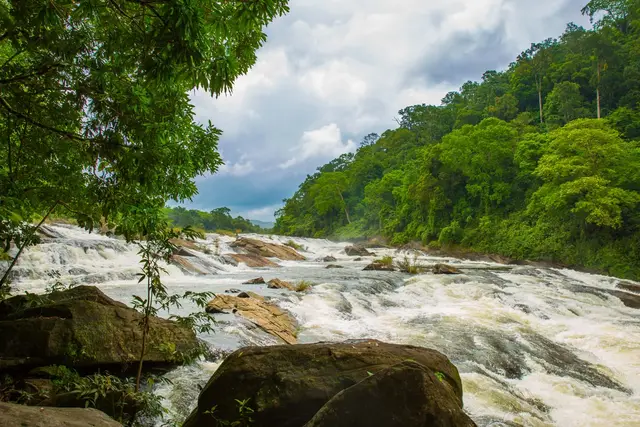
A rocky eco-tourism stretch of rapids and evergreen forest on the Periyar river near Perumbavoor in eastern Ernakulam, with riverside forest trekking along the falls.

54.3 km · 82 min drive
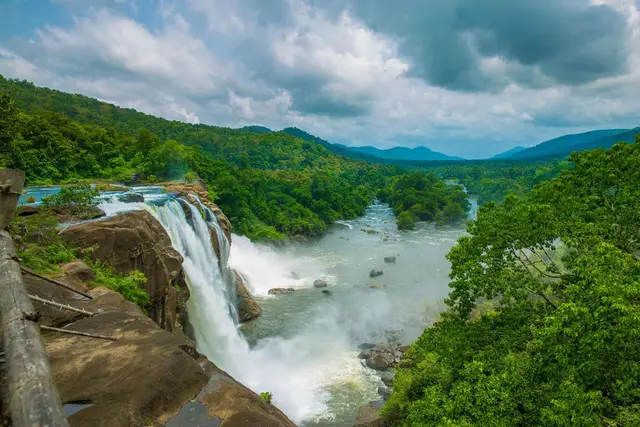
Major waterfall often visited from Kochi, on the Chalakudy river side.

78.6 km · 88 min drive
A forest waterfall on the Chalakudy river just above Athirappilly, on the Sholayar forest road — often visited on the same Kochi day trip.

8.2 km · 9 min drive
A reservoir and dam at the confluence of the Periyar’s tributaries near Kothamangalam, on the edge of the Thattekkad forests, with forest-and-reservoir trekking around the barrage and a DTPC boat jetty.

14.1 km · 15 min drive
A historic Shiva temple at Kothamangalam near the Thattekkad forests, one of the important ancient temples of the old Kochi region.

56.1 km · 62 min drive
A riverside nature village on the Chalakudy river near Mattoor, with a bamboo forest walk and gentle river bathing spots, on the Athirappilly day-trip side.
Roampedia is commission-free — own or know a stay, eatery, guide or shop near Thattekkad Bird Sanctuary? List it and it appears here once verified.
Add a nearby businessEntry: Around ₹40 (Indian adult) / ₹35 (child) / ₹180 (foreigner). Guided birding trails around ₹500 per person.
~50–65 km from Kochi via Kothamangalam. Sanctuary office: 0485-2588302.
Work out your return before you settle in for the sunset. Public transport here thins out sharply in the evening, and Thattekkad Bird Sanctuary is easier to reach than to leave. We do not publish departure times: there is no official live feed we are permitted to republish, and a wrong time here would strand you. Check the operator directly on the day.
Ask at the bus stand for the time of the last service back, not the next one. If you miss it, an auto or app cab is the fallback — agree the fare before you get in.
We have not assessed physical access at this place yet. Across India, step-free routes, handrails and accessible toilets are the exception rather than the rule, and pavements are often interrupted — if step-free access matters to you, contact the site or a local operator before committing to the trip.
Emergency numbers are verified against official government and state tourism sources. 112 works anywhere in India.

A reservoir and dam at the confluence of the Periyar’s tributaries near Kothamangalam, on the edge of the Thattekkad forests, with forest-and-reservoir trekking around the barrage and a DTPC boat jetty.
8.2 km · 9 min drive
A historic Shiva temple at Kothamangalam near the Thattekkad forests, one of the important ancient temples of the old Kochi region.
14.1 km · 15 min drive
The St Thomas hilltop pilgrimage church near Kalady, a major Christian pilgrimage site drawing large Malayattoor Perunnal crowds.
23.2 km · ~39 min by cab · straight line
An ancient Orthodox church east of Kochi linked to the legend of the sorcerer-priest Kadamattathu Kathanar, drawing large crowds at its annual feast.
26.5 km · ~44 min by cab · straight line
A rocky eco-tourism stretch of rapids and evergreen forest on the Periyar river near Perumbavoor in eastern Ernakulam, with riverside forest trekking along the falls.
26.6 km · 36 min drive
Adi Shankara’s family temple at Kalady, west of the Sringeri Math birthplace complex — the shrine at the centre of the story that gave the village its name.
28.9 km · ~48 min by cab · straight line
The Manickamangalam Devi temple north of Kalady, remembered as the shrine where Adi Shankara’s father Sivaguru served — the family connection, rather than the building, is why pilgrims come.
29.4 km · ~49 min by cab · straight line
An eight-storey octagonal memorial tower to the philosopher Adi Shankaracharya at his birthplace, Kalady, on the Periyar river, dedicated in 1978 and run by the Kanchi Kamakoti Peetham.
30.0 km · ~50 min by cab · straight line
Kerala’s longest river, and the reason Kalady stands where it does — the Adi Shankara traditions of the crocodile and of the river changing course both belong to this water. Ghats and quiet riverside walks beside the birthplace complex.
30.2 km · ~50 min by cab · straight line
Major waterfall often visited from Kochi, on the Chalakudy river side.
54.3 km · 82 min drive
A riverside nature village on the Chalakudy river near Mattoor, with a bamboo forest walk and gentle river bathing spots, on the Athirappilly day-trip side.
56.1 km · 62 min drive
A forest waterfall on the Chalakudy river just above Athirappilly, on the Sholayar forest road — often visited on the same Kochi day trip.
78.6 km · 88 min driveWalking and driving times are real routed distances, except the few marked “straight line”, which are direct-line estimates and will read short. Fare figures are estimates from Kerala’s notified auto/taxi tariff and exclude waiting and night charges. Routing: © openrouteservice.org by HeiGIT | Map data © OpenStreetMap contributors
Practically, yes. The local guides bird by ear, know current frogmouth and owl roosts, and will turn a five-species walk into a thirty-species one. Engage an authorised guide at the sanctuary office.
First light. The sanctuary opens around 6:00am and guided Salim Ali Trail sessions run from about 7:00am. Birds go quiet by mid-morning, so a late start largely wastes the trip.
November to February is the peak, with the dry months generally good. Avoid heavy-rain days.
The Sri Lanka (Ceylon) Frogmouth above all — Thattekkad is one of its last strongholds. Also Malabar grey hornbill, Indian pitta, trogons, woodpeckers, owls and a long list of Western Ghats endemics, from over 300 species recorded.
Yes — one place, two names. It is named after the ornithologist who surveyed it in 1933 and recommended its protection.
Salim Ali made the recommendation in the 1930s; Kerala notified the sanctuary in 1983, roughly fifty years later. It became the state's first bird sanctuary.
25.16 sq km on the northern bank of the Periyar river in Kothamangalam taluk, Ernakulam district — east of Kochi, close to Bhoothathankettu. Elevation runs from about 35 m at the river to a little over 500 m at the highest point.
Only partly, and the Forest Department says so itself. In 1964 the Bhoothathankettu barrage upstream raised the water along this bank by roughly six to ten metres and destroyed almost all of the riverine forest that had lined the Periyar here — thirty-one years after Salim Ali's survey and nineteen years before the sanctuary was notified. What is protected is the surviving inland remnant. That it still produces a bird list of this length is a measure of how rich the original must have been.
Both figures are in print and neither is invented. The sanctuary's own literature and Kerala government figures say over 270 bird species, alongside 34 mammals, 30 reptiles, 15 amphibians and 47 fish. Tour operators and birding sites usually say over 300. The lower number comes from formal survey work inside the notified area; the higher one is a cumulative sighting tally that grows with every visiting birder and tends to draw a wider circle than the notification does.
Because a reed industry stopped. The understorey reed here is eeta, Ochlandra travancorica, cut commercially for decades alongside bamboo. R. Sugathan's 1979 Western Ghats survey reported the Sri Lanka Frogmouth as rare. After 1984, when the notified area came properly under the Wildlife Protection Act and reed and bamboo cutting ceased, the dense low undergrowth the bird roosts in grew back and numbers rose. You still need a guide who knows the current roosts, but the habitat is doing the heavy lifting.
November to February is comfortable and strong for birding, though serious birders may plan by species season.
Entry: Around ₹40 (Indian adult) / ₹35 (child) / ₹180 (foreigner). Guided birding trails around ₹500 per person.. Timings: 6:00am–6:00pm daily; arrive before 4:00pm. Guided Salim Ali Trail sessions from ~7:00am.
Base in Thattekkad, Kothamangalam or Kochi depending on whether birding is the main focus. Start early with a local birding guide if species identification matters. Pair with Bhoothathankettu or forest-edge stays only after checking current access.
Half day minimum; overnight for dawn birding.
Nearby you can pair Bhoothathankettu Dam (8.2 km), Thrikkariyoor Temple (14.1 km), Malayattoor Church (23.2 km), Kadamattom Church (26.5 km).
Stay on permitted paths and follow sanctuary rules. Do not play loud calls, feed wildlife or litter. Avoid forest-edge movement in poor weather or after dark without authorised support.
Written about Thattekkad Bird Sanctuary itself — its history, its legends and the arguments about them.


Thattekkad Bird Sanctuary sits in Thattekkad, so these cover the streets, buildings and surroundings around it.


Route-level itineraries and practical guides for the rest of Kerala.
Photographs: Dil Shad Roshan (CC BY-SA 3.0), Smitha Raj Nair (CC BY-SA 4.0), Renjusplace (CC BY-SA 4.0), Gannu03 (CC BY-SA 4.0), PP Yoonus (CC BY-SA 3.0), Vinayaraj (CC BY-SA 4.0), CookBooc (CC BY-SA 4.0). Wikimedia Commons.