Places to Visit in Kanhangad

Hosdurg town on the Kasaragod coast, holding two separate ashrams a few kilometres apart — the hand-cut Nityananda caves and Anandashram — plus a Keladi Nayaka fort and a quiet shore.

Kanhangad
Practical guide

Plan Kanhangad

Who's going?Tailor Kanhangad to your trip
DistrictKasaragod
RoleFort and ashram base
Time neededHalf a day to see both ashrams properly
Places to visit4Listed businesses6

Kanhangad — Hosdurg in its older administrative name — is a working town on the Kasaragod coast that holds two entirely separate ashrams founded within about a decade of each other: the hillside cave complex associated with Bhagawan Nityananda, who cut the chambers by hand out of a single mass of laterite, and Anandashram, opened in May 1931 by Swami Ramdas and Mother Krishnabai.

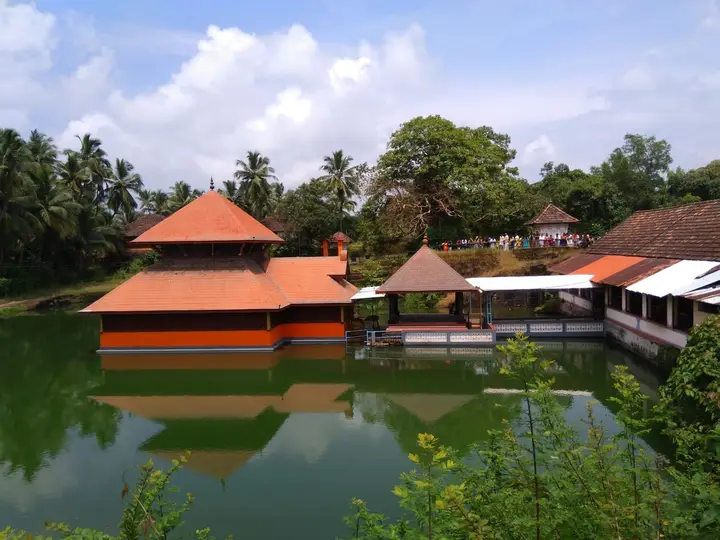
They are not versions of the same story, and confusing them is the commonest mistake here. Half a day sees both properly; a full day adds the Keladi Nayaka fort above the town, the quiet shore at Hosdurg Kadappuram and the Ananthapura lake temple inland. Time the day rather than the season — the ashrams keep devotional hours and the middle of the day is the wrong time to arrive.

What to expect

Highlights

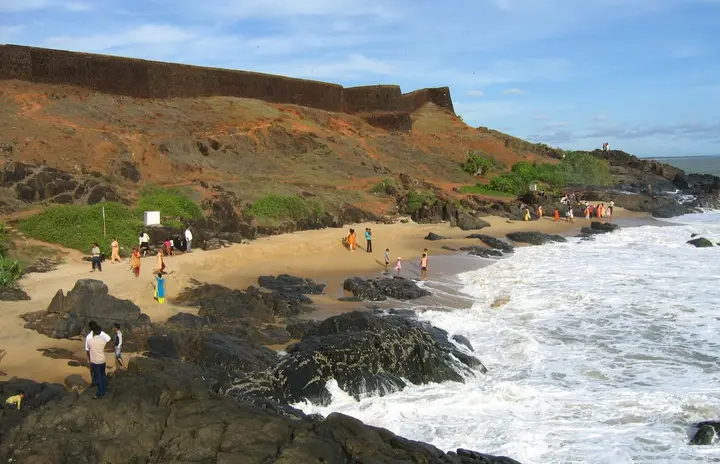
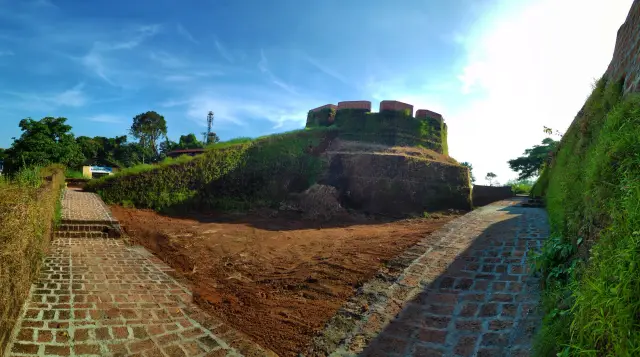
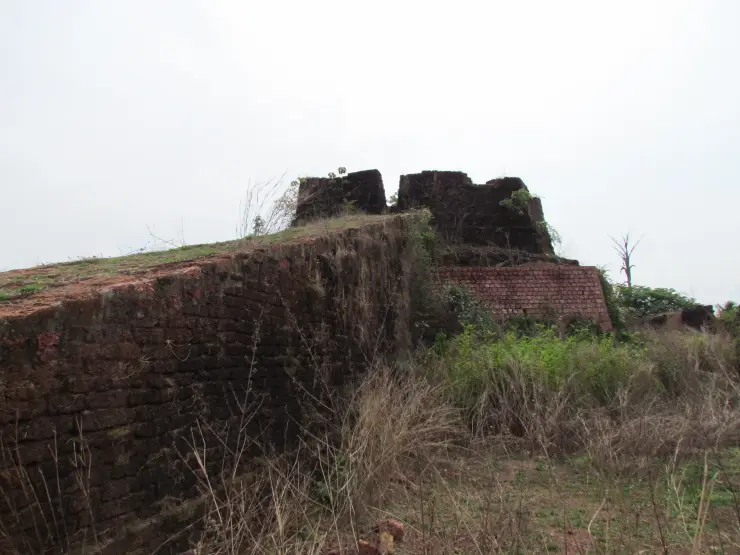
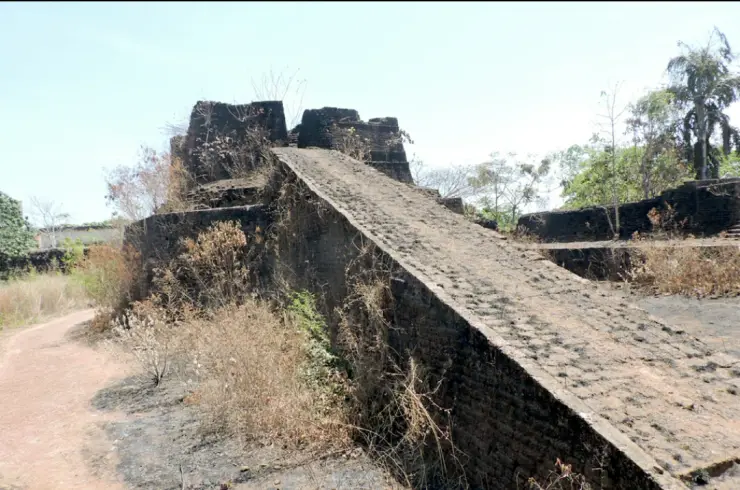
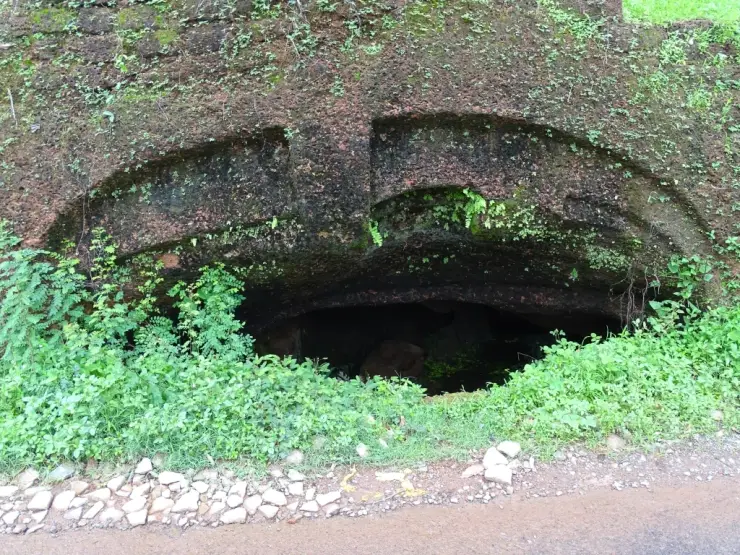
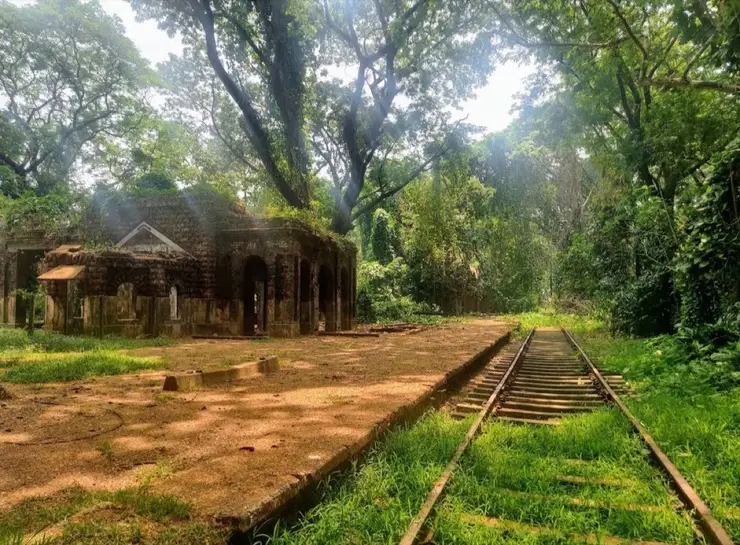
  • Hosdurg Fort — A round-bastioned fort at Kanhangad built by the Keladi Nayakas, beside the Nithyanandashram cave-temple complex founded by Bhagawan Nityananda — 43 caves by the ashram’s own account, though tourism sources often say 45.
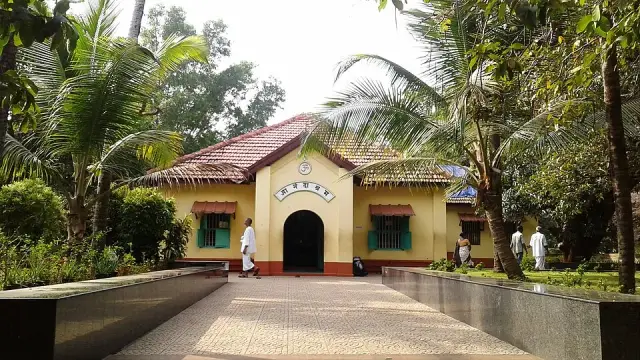
  • Anandashram — A tranquil spiritual retreat at Kanhangad founded in 1931 by Swami Ramdas (Papa) and Mother Krishnabai, set in quiet wooded grounds; open to visitors of every faith under its motto of “universal love and service”.
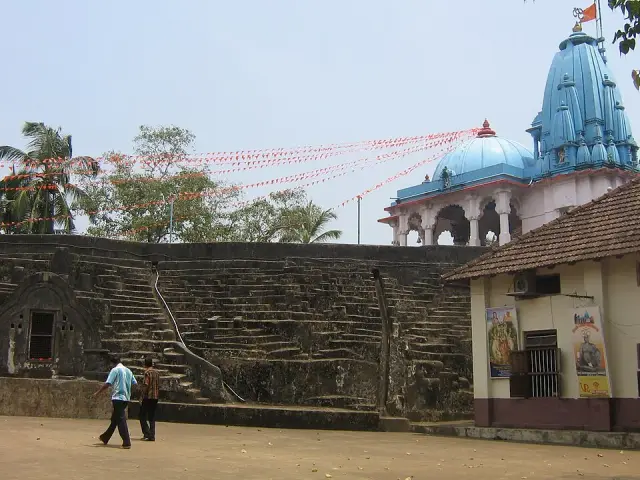
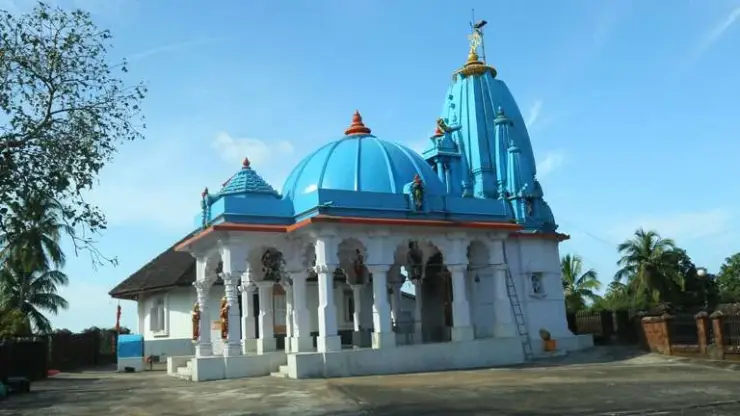
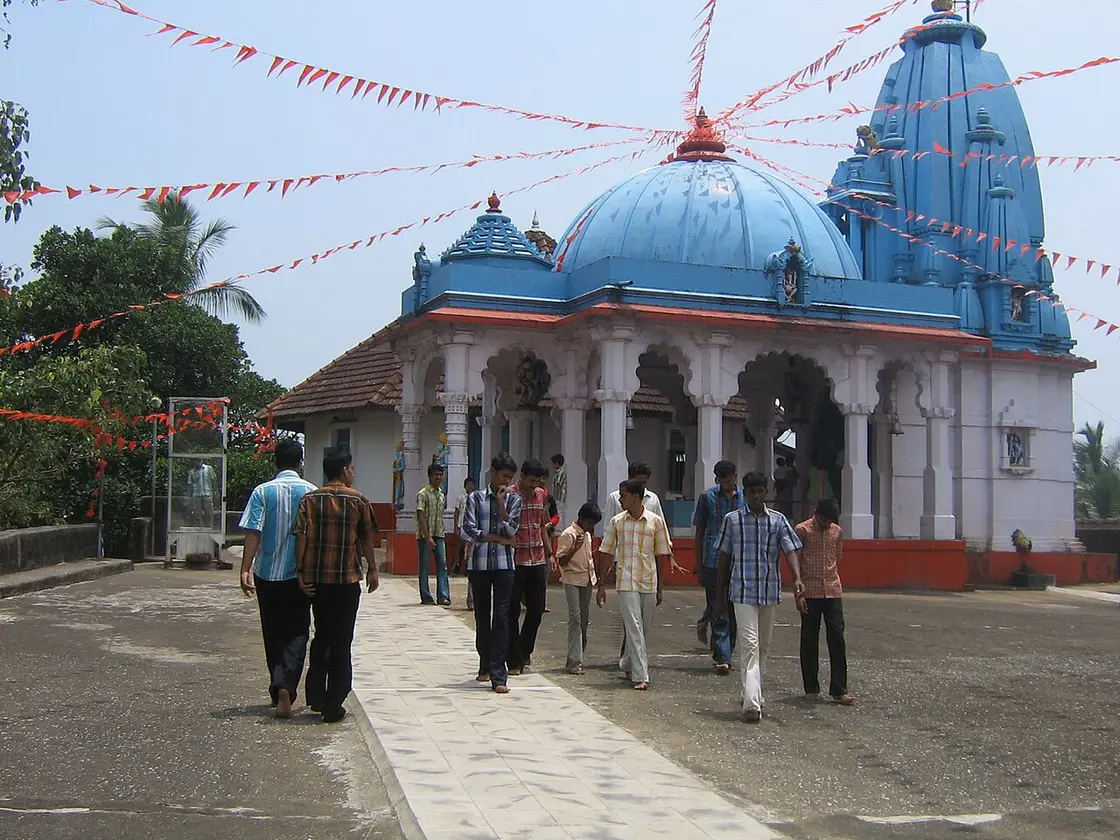
  • Nithyanandashram — The hillside cave complex at Hosdurg where Bhagawan Nityananda cut meditation chambers by hand out of a single mass of laterite — 43 by the ashram’s own account — with the Nithyananda Temple built above them in 1963. Mobile phones are prohibited in the caves.
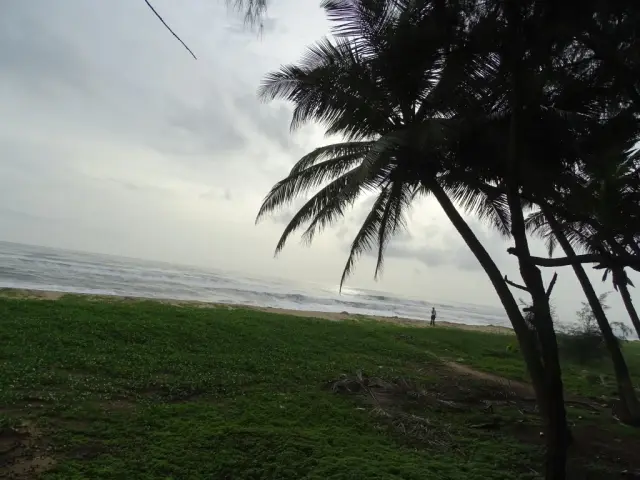
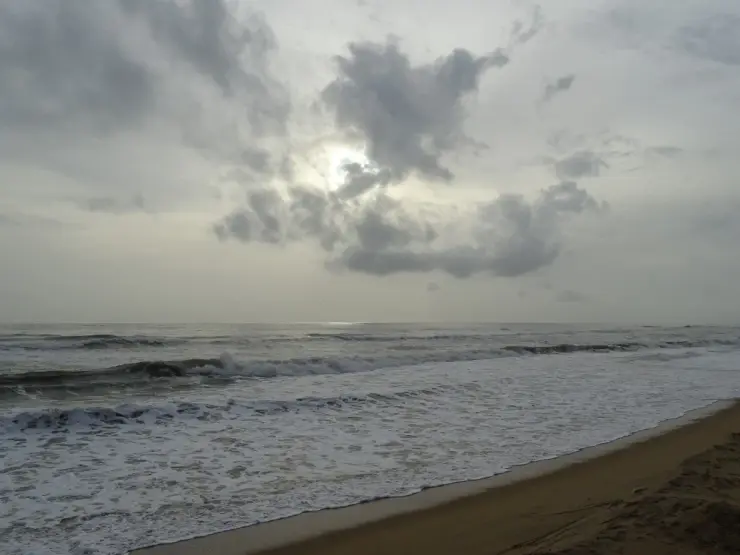
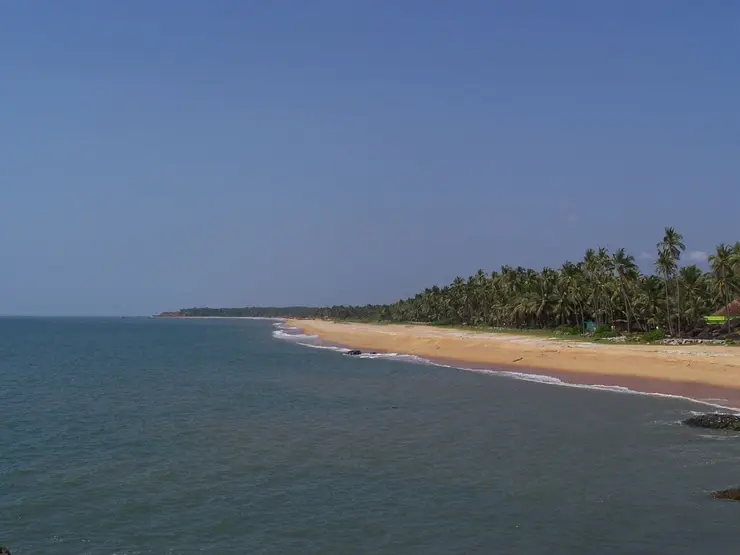
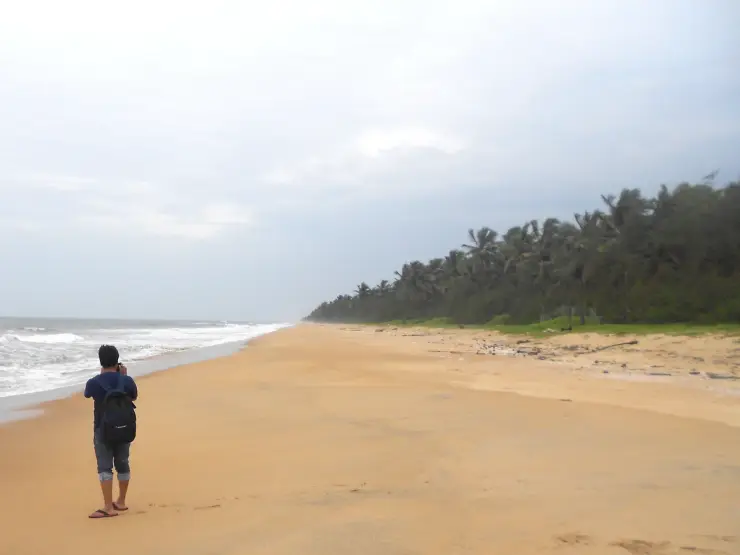
  • Kanhangad beach — The shore at Hosdurg Kadappuram, about 1.8 km west of Kanhangad town — a quiet, coconut-backed working strand reached off the Hosdurg Beach Road, with no promenade, no stalls and no lifeguard. ⚠ Widely repeated online as an olive ridley nesting beach; we found only aggregator sources for that and do not assert it.
Getting there

How to visit

  • Nearest airport: Kannur (CNN), ~85–95 km; Mangalore (IXE), ~60–70 km
  • Rail gateway: Kasaragod (KGQ) or Kanhangad (KZE)
Timing

Best time to visit Kanhangad

October to February for comfortable coastal weather. The ashrams are working religious institutions year-round rather than seasonal sights.

Weather in KanhangadSeasonal guide

Live forecast loads in your browser.

Today at Kanhangad
Sunrise6:19 am
Sunset6:43 pm
Golden hour best light5:43 pm–6:43 pm
Blue hour after sunset6:43 pm–7:08 pm
Sun sets toward compass bearingW · 280°
Moon tonight🌖 Waning gibbous · 97%

Sunset is in about 3 hours.

South-west monsoon. June to September is the south-west monsoon in Kerala. Expect heavy showers, mostly in bursts rather than all day — carry rain cover, allow extra time for getting around, and note that ferries and open-air sites are the first things affected.

Sun and moon are calculated for this location and shown in IST. Photography windows are the hour around sunrise and sunset; the sunset bearing is degrees clockwise from true north. Moon phase is accurate to about half a day.

The story

The story of Kanhangad

Kanhangad — Hosdurg, in its older administrative name — is a working town on the Kasaragod coast that happens to be one of the more remarkable spiritual addresses in south India. Within a few kilometres of each other are two entirely separate ashrams founded within roughly a decade of one another: Anandashram, opened in May 1931 by Swami Ramdas and Mother Krishnabai around the ceaseless chanting of the name of Ram, and the cave complex of Bhagawan Nityananda, who cut dozens of chambers by hand out of a single mass of laterite before leaving Kerala for Maharashtra. They are not versions of the same story, and the town is worth understanding as the place that held both.

Kanhangad sits between the Bekal coast and the laterite uplands, and its skyline is marked by the rounded turrets of Hosdurg Fort — which has its own page here and is not re-described on this one. What the fort does explain is the town's older name: Hosdurg, the ‘new fort’, still the name of the taluk.

The first thing to get straight about Kanhangad is that its two famous ashrams are genuinely two, and confusing them is the standard mistake. Anandashram lies near Manjapati hill; Nithyanandashram is on a hillock roughly half a kilometre south of the Hosdurg taluk office. Different founders, different sites, different practice.

Anandashram was opened on 15 May 1931 by Swami Ramdas, universally called Papa, together with Mother Krishnabai. Ramdas had been born Vittal Rao, renounced ordinary life in 1922 and spent years wandering as a mendicant across India and the Himalayas with the name of Ram continuously on his tongue. He settled first at a small ashram in the Kasaragod area, where Krishnabai came to him and gave her life to his service. That first ashram had to be abandoned after Mataji was physically attacked, and it was while they were staying at Kanhangad that friends and devotees proposed a new site near Manjapati hill. The practice there has always been the same and is unusually simple: the continuous chanting of Ram Nam, and a teaching of universal love and selfless service.

The ashram's reach became international in a way few Kerala institutions have. Papa and Mataji travelled abroad, reaching San Francisco on a world tour in 1954. Ramdas died in 1963, and Krishnabai led Anandashram until her own death in 1989.

The Nityananda story is stranger and more physical. Bhagawan Nityananda arrived in this area early in the twentieth century and spent something in the order of twenty-five years here before moving on to Maharashtra. What he left behind is a hillside of caves — chambers hewn out of a single body of laterite, dark and cool, made for long meditation. Sources disagree on how many there are: forty-three, forty-four and forty-five all appear in print, and the figure of forty-five is sometimes given a symbolic reading. We give the range rather than pick one.

Before the caves there was Guruvanam, about five kilometres away — a rocky hillock in some forty acres of forest, where he is said to have meditated first, and where a stream of water is held by tradition to have appeared through his meditation and to be holy. The ashram that grew around the caves also holds a temple said to be modelled on Somnath in Gujarat, and a life-size seated figure of Nityananda in panchaloha.

The cave ashram has grown into a full complex around the rock. Alongside the chambers there is a temple said to be modelled on Somnath in Gujarat — an unusual reference point for a Kerala shrine, and a reminder that this foundation always faced outward, towards a pan-Indian devotional world rather than a local one — and a life-size seated figure of Nityananda cast in panchaloha, the five-metal alloy used for temple bronzes. The caves themselves remain the reason to come: cut from one body of laterite, they hold their cool even at the height of the coastal heat, which is exactly the property that made them useful for sitting still in for hours.

As a town, Kanhangad is the headquarters of Hosdurg taluk and a stop on the Mangaluru–Kannur railway, which makes it markedly easier to reach than its low profile suggests. It is a place of ordinary working streets rather than a resort, and that is much of its appeal: the Bekal coast a short way north has been developed for tourism in a way Kanhangad has not, so the town keeps a plain daily life alongside two institutions that draw visitors from well outside India (indicative — confirm current services and access locally).

Beyond the ashrams, Kanhangad is simply a good, unglamorous base: a coast that has not been developed the way Bekal a few kilometres north has, a beach of its own, and the Ananthapura lake temple within easy reach inland.

Legend & myth

Both of Kanhangad's ashrams rest on a story about a person rather than a deity, which makes this town's sacred material unusual in Kerala: it is hagiography, recent enough that the dates are known, and still being told by people whose parents met the subjects.

The Nityananda tradition begins with an origin that reads exactly like an older myth. He was not, by these accounts, born into a family in any ordinary sense — he is said to have been found as an infant by a woman named Uniamma, in Tuneri village in Kerala, and even in childhood to have appeared to be in an unusually advanced spiritual state. From that grew the belief, still central to how he is spoken of, that he was born enlightened rather than having attained anything by effort. It is the classic shape of an avadhuta story: the holy person who arrives already complete, unattached to lineage, household or instruction.

What he then did at Kanhangad gives the belief a very concrete form. He became a wandering yogi, lived in remote forest, and was known for severe austerities — the accounts describe him lying on a great rock in deep samadhi under the hot sun. And he cut caves. Not commissioned them: the tradition is emphatic that he spent long days working the rock himself, opening chamber after chamber in the laterite so that others could sit in the dark and meditate. A hillside of hand-cut cells is an unusual kind of relic, because it is simultaneously a spiritual claim and a physical fact you can walk into and touch. Whatever a visitor believes about the man, the caves are indisputably there and somebody made them.

The Guruvanam water carries the same double quality. The tradition holds that the stream in that patch of forest appeared through his meditation, and it is treated as holy. It is the oldest kind of story attached to a place — a saint arrives, water comes — told here about a man who died in 1961.

The Anandashram tradition is built on something even simpler, and in its way more radical: a name. Papa Ramdas's whole practice was Ram Nam, the unbroken repetition of the name of Ram, carried through years of wandering as a penniless mendicant across India and the Himalayas. The teaching that grew out of it did not add much: universal love, selfless service, and the name. There is no elaborate theology to summarise here, and that is precisely the point of it. Devotees describe an atmosphere at Anandashram of continuous chanting, and the chant is the institution.

Mother Krishnabai's part is the other half and is not decorative. She came to Ramdas, completed her own sadhana, was attacked severely enough that their first ashram had to be given up, and after his death in 1963 led Anandashram for another twenty-six years until 1989. In a tradition that usually narrows to a single male figure, the Kanhangad story keeps two names joined throughout, and the ashram's own account of its founding names them together.

Set side by side, the two foundations make an unusually clean contrast for one small town: one man alone in the dark of hand-cut rock, and a community holding a single name aloud without stopping. Both arrived here within about a decade. Neither is a version of the other.

More about Kanhangad

History

Kanhangad's older name, Hosdurg — the ‘new fort’ — is still the name of the taluk, and the fort on its laterite rise is dealt with on its own page.

Bhagawan Nityananda, born around 1897, came to this area early in the twentieth century and spent roughly twenty-five years here. ⚠ The dating of his ashram is not consistent across sources: it is commonly given as founded in 1931, while accounts of his life describe him building an ashram at Kanhangad in the 1920s. He established his later and better-known ashram at Ganeshpuri in Maharashtra in 1936, and died on 8 August 1961.

🔴 He should not be confused with any later public figure using a similar name. The Nityananda of these caves is the Ganeshpuri saint who briefly encountered, and much later formally initiated, the man who became Swami Muktananda — a connection through which this hillside in Kasaragod feeds directly into one of the most widely travelled Indian spiritual lineages of the twentieth century.

Anandashram's history is precisely dated: opened 15 May 1931 by Swami Ramdas (1884–1963) and Mother Krishnabai, after their earlier ashram was abandoned following an attack on her. The two travelled internationally, reaching San Francisco in 1954. Krishnabai directed the ashram from Ramdas's death in 1963 until her own in 1989.

That both foundations belong to the same short window — the 1920s and early 1930s — is the genuinely notable historical fact about Kanhangad, and it is not obviously explained by anything about the town itself.

Why visit

For two entirely separate ashrams within a few kilometres, founded within about a decade of each other, with nothing in common but the ground they stand on.

For the caves: dozens of chambers cut by hand from a single mass of laterite, cool and dark, made for meditation and open to be walked into.

For Anandashram's atmosphere of continuous Ram Nam chanting — a practice stripped down to a single repeated name.

For Guruvanam, the forested hillock about five kilometres out with the stream tradition holds to have appeared through meditation.

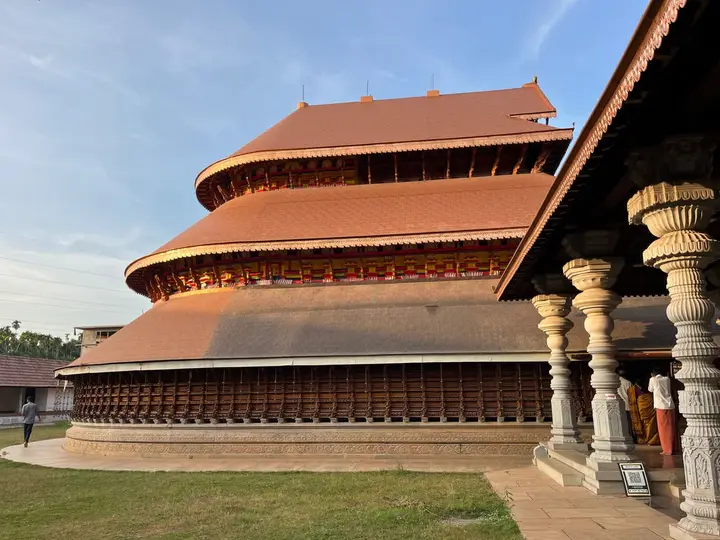
As an unshowy base for this coast: Hosdurg Fort above the town, a beach of its own, Bekal just north and the Ananthapura lake temple inland.
Before you go

Kanhangad — at a glance

HoursAshrams keep devotional hours, with chanting and worship at set times — arrive in the morning or the evening rather than the middle of the day, and confirm before travelling.

Entry: Both ashrams are open to visitors without charge; offerings are voluntary. Hosdurg Fort has its own page and its own arrangements.

Getting here

How to reach Kanhangad

Kanhangad is the headquarters of Hosdurg taluk with its own station on the Mangaluru–Kannur railway line. Mangaluru is the nearest major airport. Bekal lies a short way north.

Getting back

Work out your return before you settle into the day. Services in Kerala thin out sharply in the evening, and Kanhangad is easier to reach than to leave once the last long-distance bus has gone. We do not publish departure times: there is no official live feed we are permitted to republish, and a wrong time here would strand you. Check the operator directly on the day.

Ask at the jetty or the stand for the time of the last service back, not the next one. If you miss it, an auto or a taxi is the fallback — agree the fare before you get in.

Plan

Good to know

  • Anandashram and Nithyanandashram are TWO DIFFERENT PLACES with different founders and different sites — do not go looking for one expecting the other.
  • These are working ashrams and places of practice, not monuments. Dress modestly, keep quiet in the meditation caves and around the chanting hall, and ask before photographing anyone.
  • The Nityananda associated with these caves is Bhagawan Nityananda (c.1897–1961), later of Ganeshpuri and guru of Swami Muktananda — not any later public figure using a similar name.
Getting around Kanhangad

We have not assessed physical access at this place yet. Across India, step-free routes, handrails and accessible toilets are the exception rather than the rule, and pavements are often interrupted — if step-free access matters to you, contact the site or a local operator before committing to the trip.

Practical things near Kanhangad
Bus stopsBus stop 143 m · 2 min walkMapped May 2020DirectionsTaxi & auto standsKanhangad Auto Stand 1.2 km · 15 min walkMapped Feb 2022DirectionsPharmacyMangalore Homeopathic Pharmacy Pharmacy513 m · 6 min walkMapped May 2020DirectionsHospitalGovernment Women and Children Hospital 236 m · 3 min walkMapped Feb 2021DirectionsClinicSree Shivanandha Ayurveda Eye Clinic 1.0 km · 13 min walkMapped Jun 2022DirectionsPolice stationPolice Station, Hosdurg 235 m · 3 min walkMapped Jun 2022DirectionsATMATM 118 m · 1 min walkSurveyed May 2025DirectionsBankHosdurg Service Co-Operative Bank 86 m · 1 min walkMapped Nov 2021DirectionsWater & snacksMaveli Store 129 m · 2 min walkMapped Sept 2022DirectionsGroceries & bakeryFruit Stall Greengrocer449 m · 5 min walkMapped Feb 2023DirectionsBarber & salonHairdresser 648 m · 8 min walkMapped May 2020DirectionsBookshopHaritham Books Bookshop1.1 km · 13 min walkMapped Apr 2023DirectionsSomewhere to praySri Vishnu Dhoomavathi Temple 316 m · 4 min walkMapped Oct 2020DirectionsPark or gardenKerala Tourism KDP Heritage Park Kanjangad 416 m · 5 min walkMapped Sept 2022Directions
What the cash actually costs
  • Withdrawing from a bank that is not your own is free for a set number of times a month, then costs up to ₹23 plus GST — about ₹27 a withdrawal. This is not one of the RBI’s six metro centres, so the allowance here is the higher one: at least five free other-bank withdrawals a month, and at least five at your own bank.
  • That free allowance belongs to Indian bank accounts. On a card issued abroad your own bank’s international withdrawal and exchange charges apply instead. If the machine offers to bill you in your home currency, choose rupees — the conversion rate on that offer is set by the machine, not by your bank.
  • Given a choice, use an ATM inside or attached to a branch: it sits in view of staff and cameras, and there is someone to ask if the machine keeps your card. A machine standing alone on a tourist street is the one to be wary of. Banks are listed here alongside the ATMs, but the map data does not record which ATMs sit inside a branch — check when you get there.

Charge cap and free-transaction limits: Reserve Bank of India, in force since 1 May 2025.

Mapped within about 1.2 km of Kanhangad, with real walking routes rather than straight-line distances. Community-mapped data: opening hours are shown only where they are recorded, and this is not a complete list — something unmapped may well be closer. Please confirm on the ground.

In the district

Where Kanhangad sits in Kasaragod district

Nearest airportKannur (CNN), ~85–95 km; Mangalore (IXE), ~60–70 km
Rail gatewayKasaragod (KGQ) or Kanhangad (KZE)
District HQKasaragod
LandscapeNorthern Kerala coast, rivers, forts, hills and backwaters

Kasaragod district is known for: Bekal Fort and beach, Valiyaparamba backwaters, Ranipuram hills and north-Kerala temple traditions.

Bekal Fort & BeachValiyaparamba BackwatersRanipuram hill station
Stay · eat · do · rent · see · shop

Places in Kanhangad

Every verified place in Kanhangad — filter by what you’re after.

1 place to eat in Kanhangad

O
Oryx Village
Where to eat
Top pick
Restaurant · Kanhangad
Oryx Village
Multi-cuisine / Malabar

Multi-cuisine restaurant at Kanhangad South junction on the NH-66. Serves Malabar, Arabian, North Indian, Chinese and continental dishes.

Commission-freeView details

Book with the place itself. India’s cyber-crime coordination centre warned in April 2025 that convincing copies of hotel and pilgrimage booking sites are being pushed through sponsored search and social ads, taking payment for rooms the property never hears about. Every listing here links to the business’s own contact details and its own Google or Bing profile — we take no commission and sit in nobody’s payment path. If a booking page reached you through an ad, check the address bar against the property’s own site before you pay. Fraud can be reported on cybercrime.gov.in or on 1930.

For hotels, homestays and local businesses

Get listed in Kanhangad for free

Roampedia is commission-free. Travellers discover your business, book directly and contact you through official details. Basic listings are free, while Gold and Platinum package upgrades can be requested from the owner dashboard after approval.

List your business — free
Read before you go

Kanhangad guides, stories & itineraries

Stories & history of Kanhangad

Written about Kanhangad itself — its history, its legends and the arguments about them.

Nearby in Kasaragod

Wider reading from Kasaragod. The stories about Kanhangad itself are above.

Planning a trip to Kanhangad

The practical half — what is actually here, in what order to see it, and how to arrive.

Kerala-wide guides & itineraries

Route-level itineraries and practical guides for the rest of the state.

See all 14 Kasaragod guides & stories →

Image credits
Map

Where things are in Kanhangad

FAQ

Kanhangad travel FAQs

Are Anandashram and Nithyanandashram the same place?

No, and this is the commonest confusion about Kanhangad. They are two separate institutions with different founders, different sites and different practices. Anandashram is near Manjapati hill, founded by Swami Ramdas and Mother Krishnabai and centred on the chanting of Ram Nam. Nithyanandashram is the cave complex on a hillock about half a kilometre south of the Hosdurg taluk office, associated with Bhagawan Nityananda.

Which Nityananda is the cave ashram associated with?

Bhagawan Nityananda, born around 1897 and died on 8 August 1961 — the saint who later founded the ashram at Ganeshpuri in Maharashtra and was the guru of Swami Muktananda. He is not connected with any later public figure using a similar name, and the two should not be confused.

How many caves are there?

Sources do not agree: 43, 44 and 45 all appear, with 45 sometimes given a symbolic reading. We give the range rather than assert a figure. They are cut from a single mass of laterite and were made for long meditation.

When was Anandashram founded?

It opened on 15 May 1931, established by Swami Ramdas (1884–1963), known as Papa, and Mother Krishnabai. Their earlier ashram in the Kasaragod area had to be abandoned after Mataji was physically attacked, and the new site near Manjapati hill was proposed while they were staying at Kanhangad.

What is Guruvanam?

A rocky, forested hillock about five kilometres from the main cave ashram, in some forty acres of forest, where Nityananda is said to have meditated before the caves. Tradition holds that a stream of water appeared there through his meditation and that it is holy.

Why is Kanhangad also called Hosdurg?

Hosdurg means the 'new fort', after the fort on the laterite rise above the town, and it remains the name of the taluk. The fort itself has its own page on this site.

What is there to see at the cave ashram besides the caves?

A temple said to be modelled on Somnath in Gujarat — an unusual reference for a Kerala shrine — and a life-size seated figure of Nityananda cast in panchaloha, the five-metal alloy used for temple bronzes. The caves remain the main reason to visit: hewn from a single mass of laterite, they stay cool through the coastal heat.

Is Kanhangad easy to reach?

Yes, more easily than its low profile suggests. It is the headquarters of Hosdurg taluk and has its own station on the Mangaluru–Kannur railway line. Mangaluru is the nearest major airport for this corner of Kerala (indicative — confirm current services locally).

What is the connection to Swami Muktananda?

Bhagawan Nityananda first encountered the young man who would become Swami Muktananda while he was still in Kerala, and years later gave him a powerful initiation at Ganeshpuri. Through that link this hillside in Kasaragod feeds into one of the most widely travelled Indian spiritual lineages of the twentieth century.

Is it a good base for Bekal?

Yes. Kanhangad is a short way south of the Bekal coast and is considerably less developed, with its own beach, and the Ananthapura lake temple within easy reach inland.

What are the best places to visit in Kanhangad?

Top places to visit in Kanhangad include Nithyanandashram, Anandashram, Hosdurg Fort, Kanhangad beach — each has a full guide with how to reach it and what to see nearby on this page.

What is the best time to visit Kanhangad?

October to March is the driest and most comfortable season to visit Kanhangad and the rest of Kerala. The June–September monsoon is lush and green but wet, and often brings lower low-season prices.