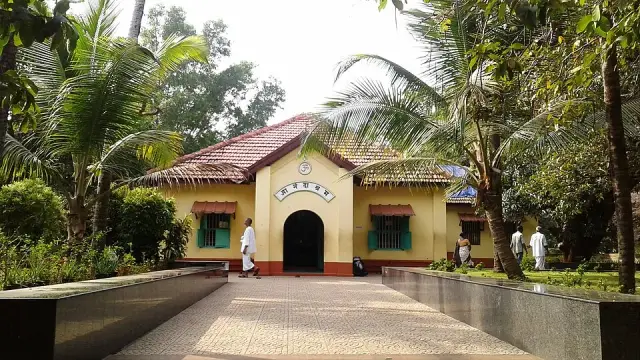
Kanhangad — Hosdurg, in its older administrative name — is a working town on the Kasaragod coast that happens to be one of the more remarkable spiritual addresses in south India. Within a few kilometres of each other are two entirely separate ashrams founded within roughly a decade of one another: Anandashram, opened in May 1931 by Swami Ramdas and Mother Krishnabai around the ceaseless chanting of the name of Ram, and the cave complex of Bhagawan Nityananda, who cut dozens of chambers by hand out of a single mass of laterite before leaving Kerala for Maharashtra. They are not versions of the same story, and the town is worth understanding as the place that held both.
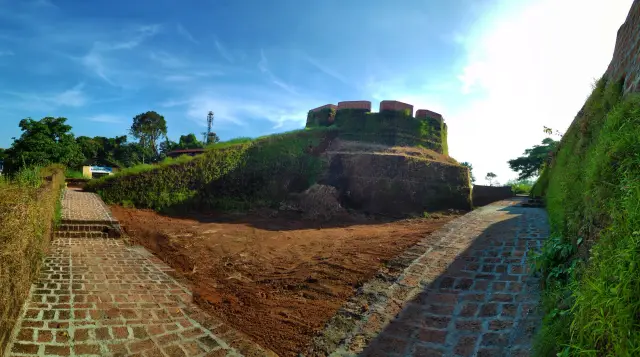
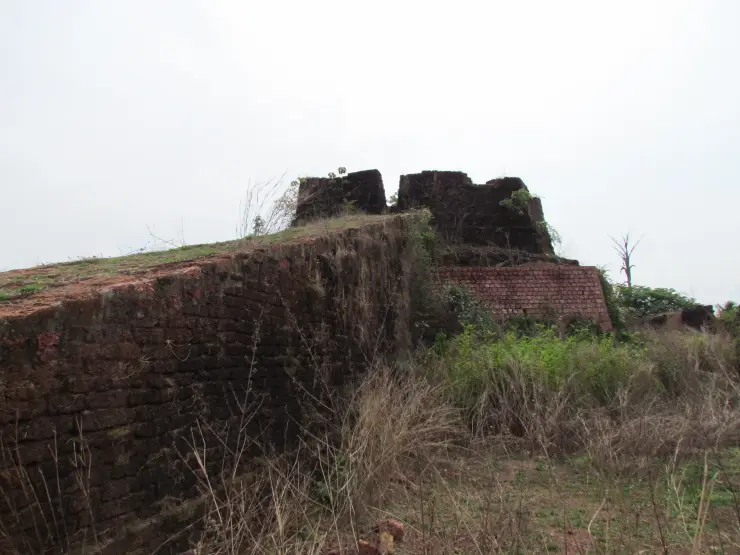
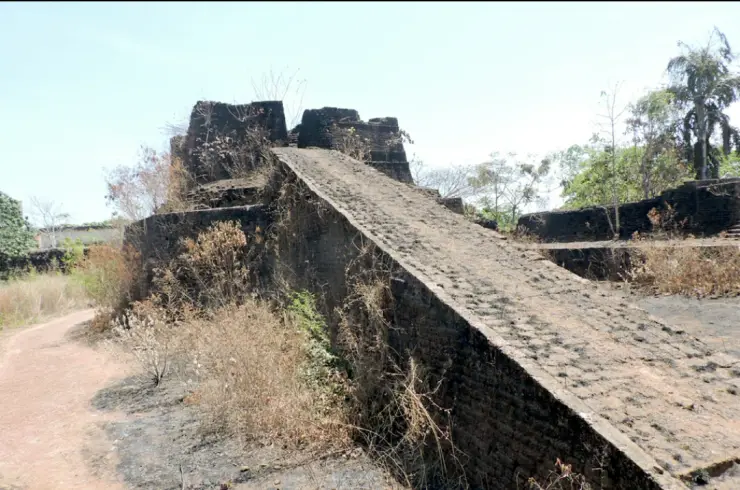
Kanhangad sits between the Bekal coast and the laterite uplands, and its skyline is marked by the rounded turrets of Hosdurg Fort — which has its own page here and is not re-described on this one. What the fort does explain is the town's older name: Hosdurg, the ‘new fort’, still the name of the taluk.
The first thing to get straight about Kanhangad is that its two famous ashrams are genuinely two, and confusing them is the standard mistake. Anandashram lies near Manjapati hill; Nithyanandashram is on a hillock roughly half a kilometre south of the Hosdurg taluk office. Different founders, different sites, different practice.
Anandashram was opened on 15 May 1931 by Swami Ramdas, universally called Papa, together with Mother Krishnabai. Ramdas had been born Vittal Rao, renounced ordinary life in 1922 and spent years wandering as a mendicant across India and the Himalayas with the name of Ram continuously on his tongue. He settled first at a small ashram in the Kasaragod area, where Krishnabai came to him and gave her life to his service. That first ashram had to be abandoned after Mataji was physically attacked, and it was while they were staying at Kanhangad that friends and devotees proposed a new site near Manjapati hill. The practice there has always been the same and is unusually simple: the continuous chanting of Ram Nam, and a teaching of universal love and selfless service.
The ashram's reach became international in a way few Kerala institutions have. Papa and Mataji travelled abroad, reaching San Francisco on a world tour in 1954. Ramdas died in 1963, and Krishnabai led Anandashram until her own death in 1989.
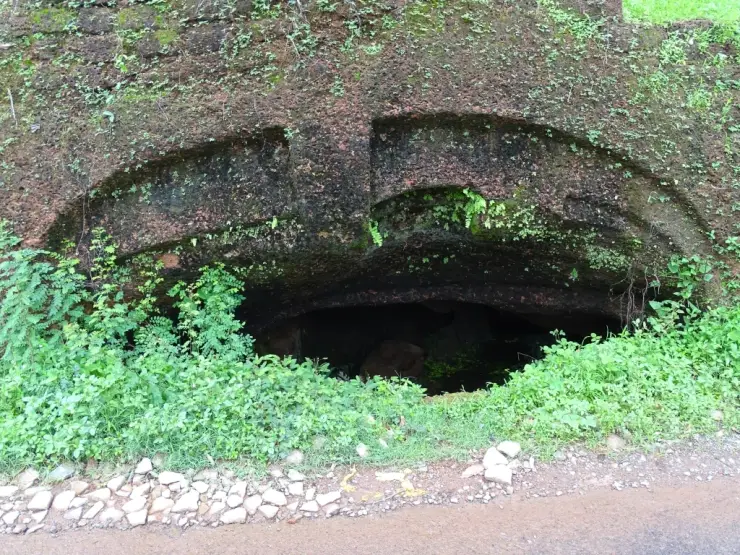
The Nityananda story is stranger and more physical. Bhagawan Nityananda arrived in this area early in the twentieth century and spent something in the order of twenty-five years here before moving on to Maharashtra. What he left behind is a hillside of caves — chambers hewn out of a single body of laterite, dark and cool, made for long meditation. Sources disagree on how many there are: forty-three, forty-four and forty-five all appear in print, and the figure of forty-five is sometimes given a symbolic reading. We give the range rather than pick one.
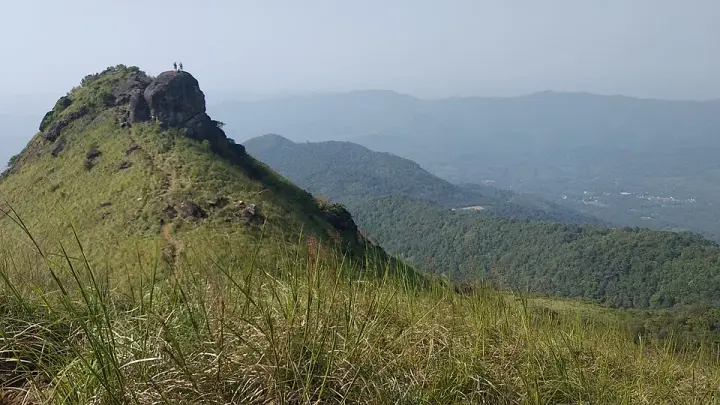
Before the caves there was Guruvanam, about five kilometres away — a rocky hillock in some forty acres of forest, where he is said to have meditated first, and where a stream of water is held by tradition to have appeared through his meditation and to be holy. The ashram that grew around the caves also holds a temple said to be modelled on Somnath in Gujarat, and a life-size seated figure of Nityananda in panchaloha.
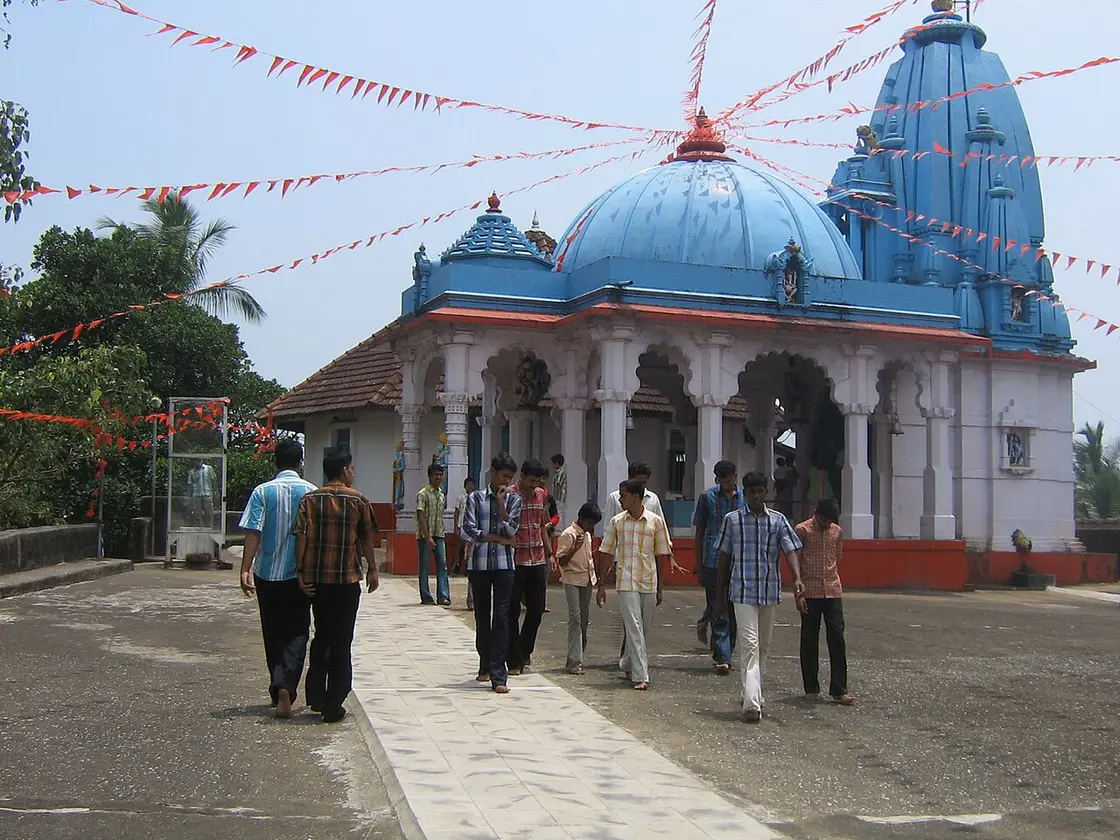
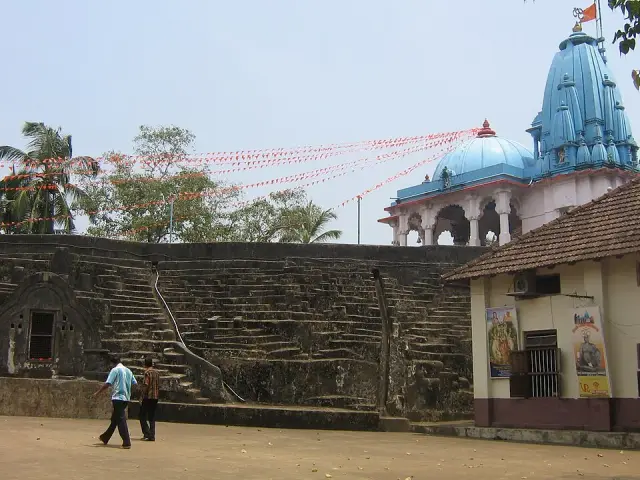
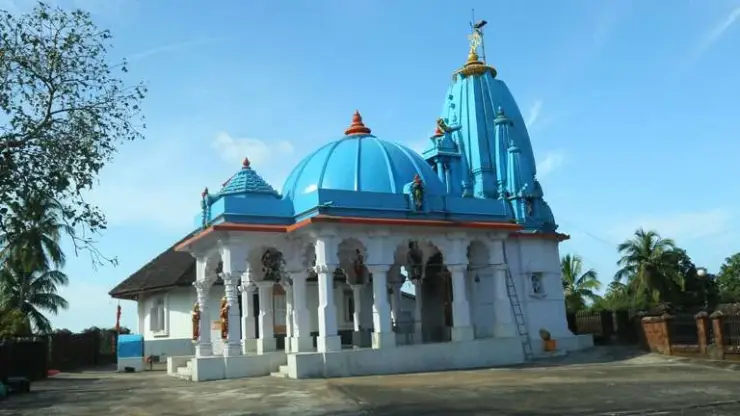
The cave ashram has grown into a full complex around the rock. Alongside the chambers there is a temple said to be modelled on Somnath in Gujarat — an unusual reference point for a Kerala shrine, and a reminder that this foundation always faced outward, towards a pan-Indian devotional world rather than a local one — and a life-size seated figure of Nityananda cast in panchaloha, the five-metal alloy used for temple bronzes. The caves themselves remain the reason to come: cut from one body of laterite, they hold their cool even at the height of the coastal heat, which is exactly the property that made them useful for sitting still in for hours.
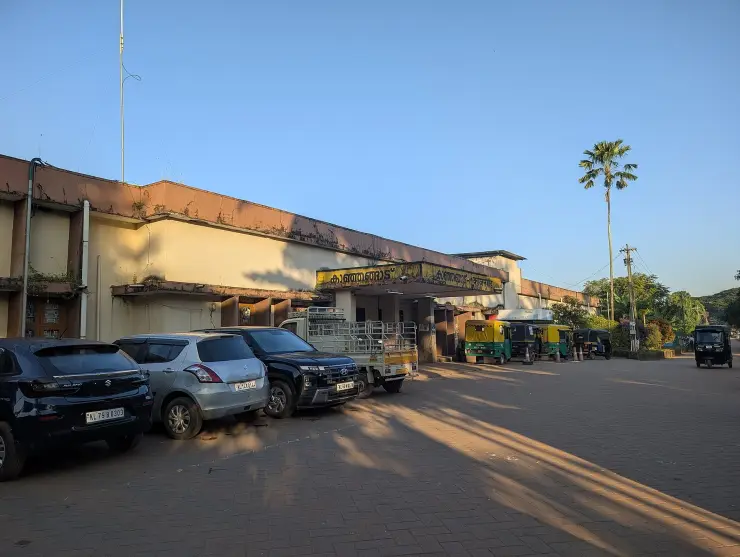
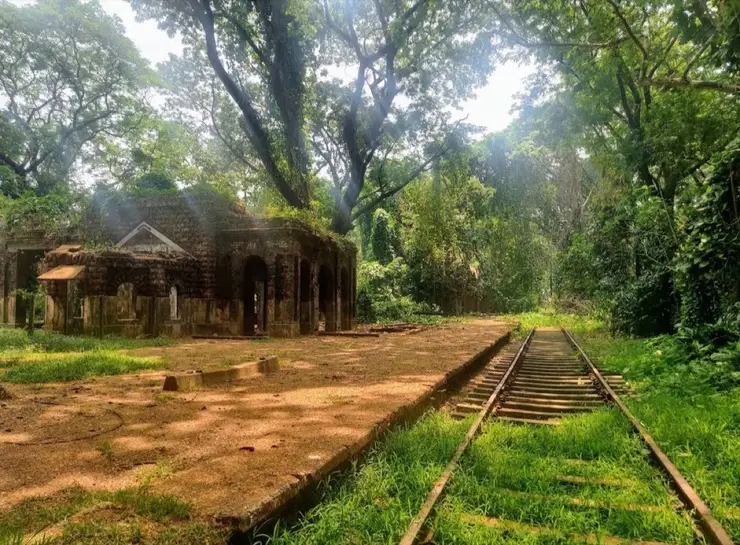
As a town, Kanhangad is the headquarters of Hosdurg taluk and a stop on the Mangaluru–Kannur railway, which makes it markedly easier to reach than its low profile suggests. It is a place of ordinary working streets rather than a resort, and that is much of its appeal: the Bekal coast a short way north has been developed for tourism in a way Kanhangad has not, so the town keeps a plain daily life alongside two institutions that draw visitors from well outside India.
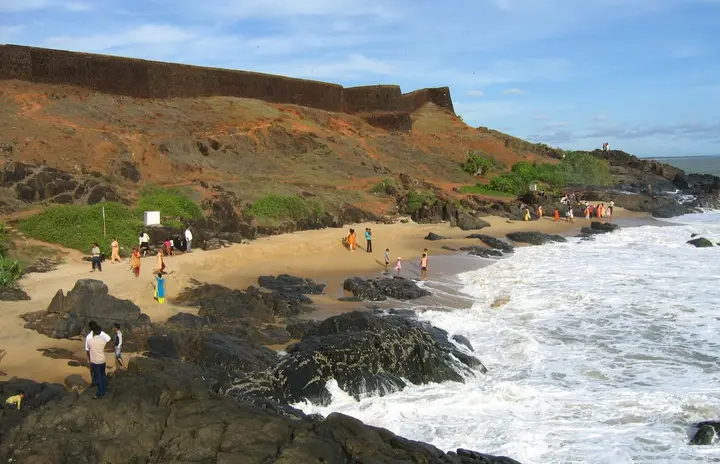
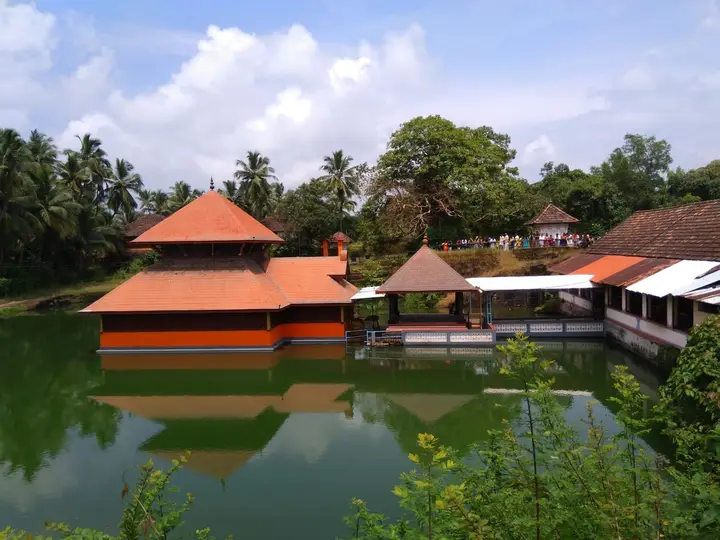
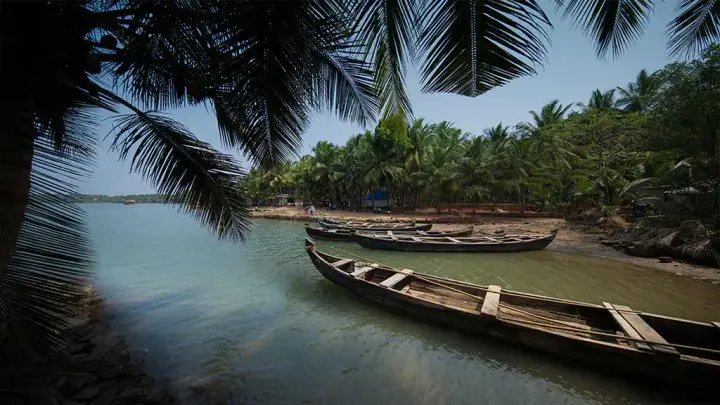
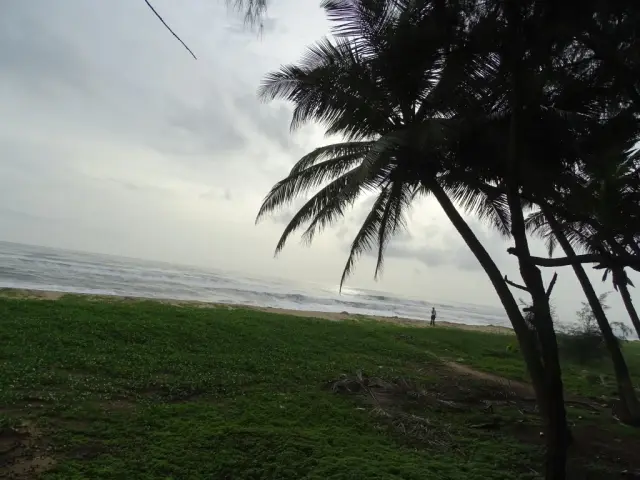
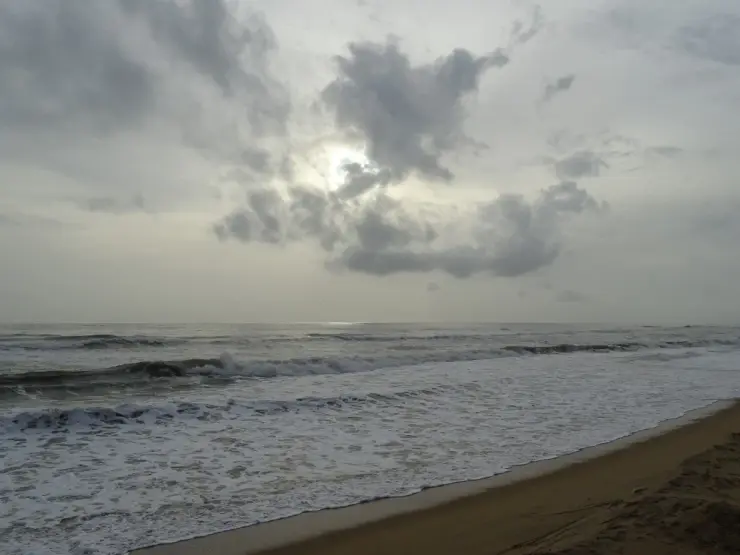
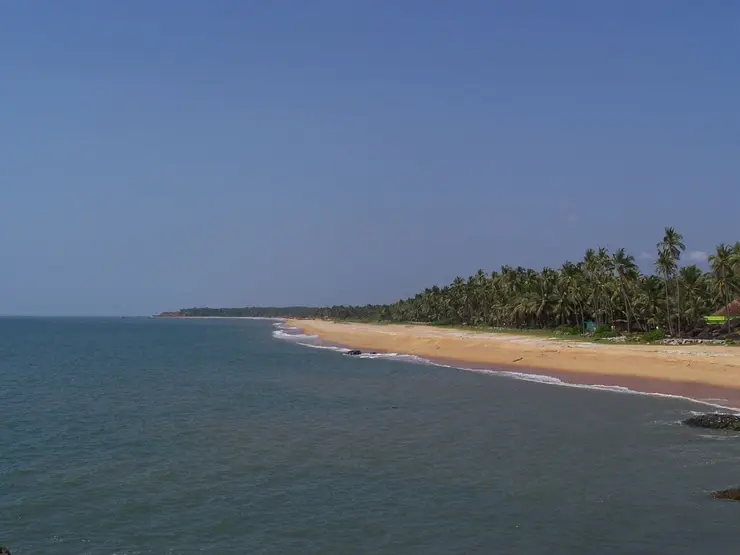
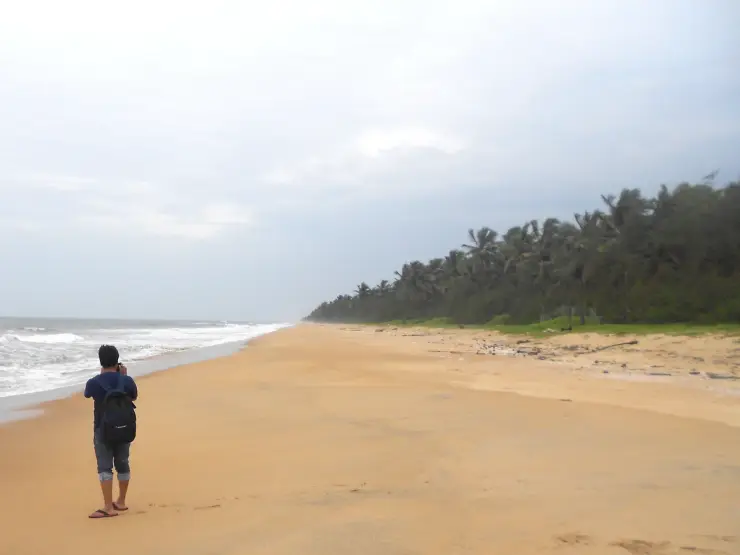
Beyond the ashrams, Kanhangad is simply a good, unglamorous base: a coast that has not been developed the way Bekal a few kilometres north has, a beach of its own, and the Ananthapura lake temple within easy reach inland.
Legend & myth
Both of Kanhangad's ashrams rest on a story about a person rather than a deity, which makes this town's sacred material unusual in Kerala: it is hagiography, recent enough that the dates are known, and still being told by people whose parents met the subjects.
The Nityananda tradition begins with an origin that reads exactly like an older myth. He was not, by these accounts, born into a family in any ordinary sense — he is said to have been found as an infant by a woman named Uniamma, in Tuneri village in Kerala, and even in childhood to have appeared to be in an unusually advanced spiritual state. From that grew the belief, still central to how he is spoken of, that he was born enlightened rather than having attained anything by effort. It is the classic shape of an avadhuta story: the holy person who arrives already complete, unattached to lineage, household or instruction.
What he then did at Kanhangad gives the belief a very concrete form. He became a wandering yogi, lived in remote forest, and was known for severe austerities — the accounts describe him lying on a great rock in deep samadhi under the hot sun. And he cut caves. Not commissioned them: the tradition is emphatic that he spent long days working the rock himself, opening chamber after chamber in the laterite so that others could sit in the dark and meditate. A hillside of hand-cut cells is an unusual kind of relic, because it is simultaneously a spiritual claim and a physical fact you can walk into and touch. Whatever a visitor believes about the man, the caves are indisputably there and somebody made them.
The Guruvanam water carries the same double quality. The tradition holds that the stream in that patch of forest appeared through his meditation, and it is treated as holy. It is the oldest kind of story attached to a place — a saint arrives, water comes — told here about a man who died in 1961.
The Anandashram tradition is built on something even simpler, and in its way more radical: a name. Papa Ramdas's whole practice was Ram Nam, the unbroken repetition of the name of Ram, carried through years of wandering as a penniless mendicant across India and the Himalayas. The teaching that grew out of it did not add much: universal love, selfless service, and the name. There is no elaborate theology to summarise here, and that is precisely the point of it. Devotees describe an atmosphere at Anandashram of continuous chanting, and the chant is the institution.
Mother Krishnabai's part is the other half and is not decorative. She came to Ramdas, completed her own sadhana, was attacked severely enough that their first ashram had to be given up, and after his death in 1963 led Anandashram for another twenty-six years until 1989. In a tradition that usually narrows to a single male figure, the Kanhangad story keeps two names joined throughout, and the ashram's own account of its founding names them together.
Set side by side, the two foundations make an unusually clean contrast for one small town: one man alone in the dark of hand-cut rock, and a community holding a single name aloud without stopping. Both arrived here within about a decade. Neither is a version of the other.
More about Kanhangad
History
Kanhangad's older name, Hosdurg — the ‘new fort’ — is still the name of the taluk, and the fort on its laterite rise is dealt with on its own page.
Bhagawan Nityananda, born around 1897, came to this area early in the twentieth century and spent roughly twenty-five years here. ⚠ The dating of his ashram is not consistent across sources: it is commonly given as founded in 1931, while accounts of his life describe him building an ashram at Kanhangad in the 1920s. He established his later and better-known ashram at Ganeshpuri in Maharashtra in 1936, and died on 8 August 1961.
🔴 He should not be confused with any later public figure using a similar name. The Nityananda of these caves is the Ganeshpuri saint who briefly encountered, and much later formally initiated, the man who became Swami Muktananda — a connection through which this hillside in Kasaragod feeds directly into one of the most widely travelled Indian spiritual lineages of the twentieth century.
Anandashram's history is precisely dated: opened 15 May 1931 by Swami Ramdas (1884–1963) and Mother Krishnabai, after their earlier ashram was abandoned following an attack on her. The two travelled internationally, reaching San Francisco in 1954. Krishnabai directed the ashram from Ramdas's death in 1963 until her own in 1989.
That both foundations belong to the same short window — the 1920s and early 1930s — is the genuinely notable historical fact about Kanhangad, and it is not obviously explained by anything about the town itself.
Why visit
For two entirely separate ashrams within a few kilometres, founded within about a decade of each other, with nothing in common but the ground they stand on.
For the caves: dozens of chambers cut by hand from a single mass of laterite, cool and dark, made for meditation and open to be walked into.
For Anandashram's atmosphere of continuous Ram Nam chanting — a practice stripped down to a single repeated name.
For Guruvanam, the forested hillock about five kilometres out with the stream tradition holds to have appeared through meditation.
As an unshowy base for this coast: Hosdurg Fort above the town, a beach of its own, Bekal just north and the Ananthapura lake temple inland.