Places to Visit in Achankovil

Remote Achankovil river valley on the road to the Chenkottai gap — forest waterfalls and the Sastha temple where the god is a householder and a physician.

Achankovil
Practical guide

Plan Achankovil

Who's going?Tailor Achankovil to your trip
DistrictKollam
RoleForest and pilgrimage base
Time neededA full day from any lowland base
Places to visit2Listed businesses3

Achankovil is the most remote inhabited place we cover in Kerala: a forest Sastha temple, a river, a two-tier waterfall and a road through reserved forest, at the head of the Achankovil valley on one of the few motorable passes into Tamil Nadu. The drive is genuinely the experience, and it takes a full day from any lowland base.

Plan it as forest travel rather than sightseeing. This is elephant range, the forest stretch should not be driven after dark, and there is almost no accommodation, food or fuel in the valley — provision, fuel up and carry cash before you set out.

What to expect

Highlights

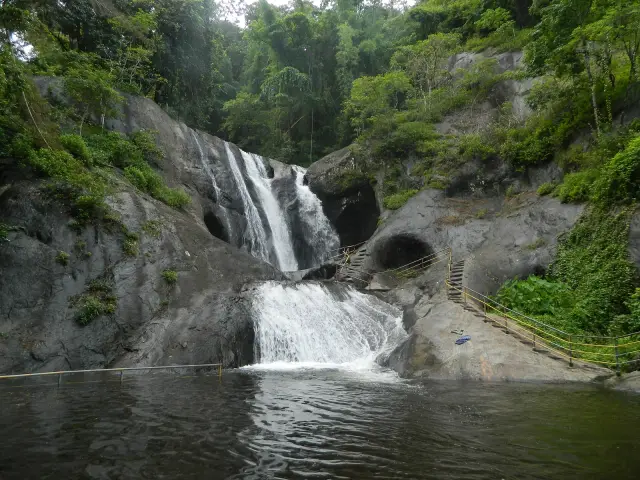
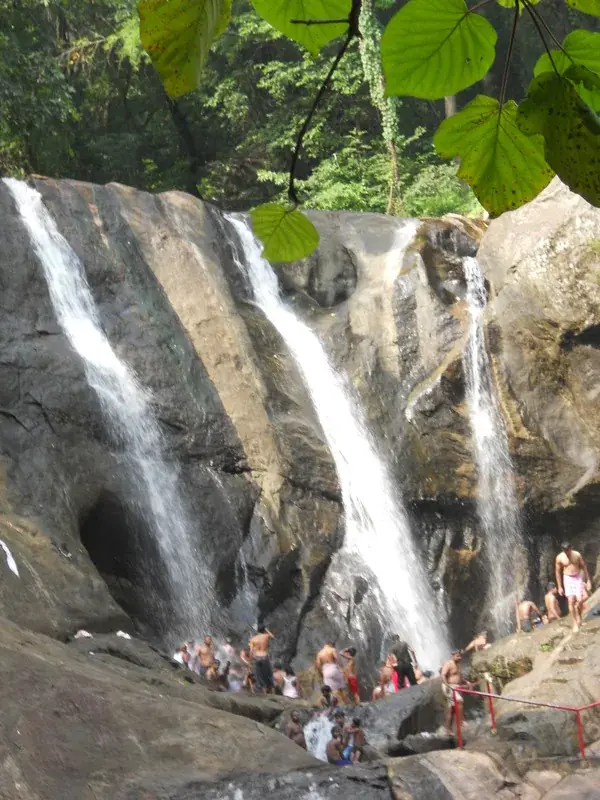
  • Kumbhavurutty Waterfalls — A two-tier waterfall on the Achankovil river, with steps cut into the rock beside the cascade, run by a village forest-protection committee under the Achenkovil Forest Division. Published heights range from 70 ft to 250 ft and none is a measurement.
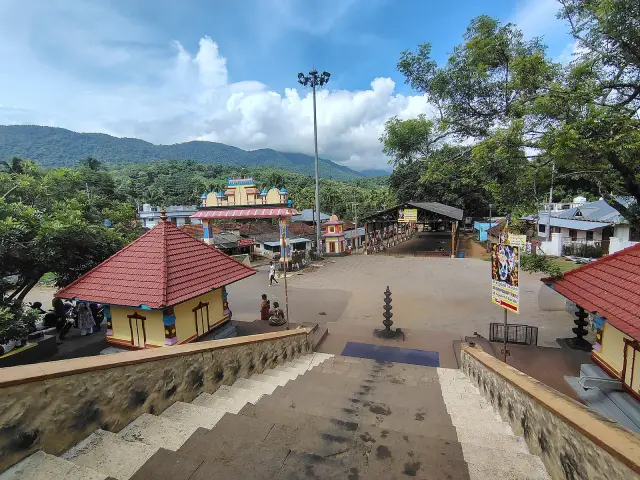
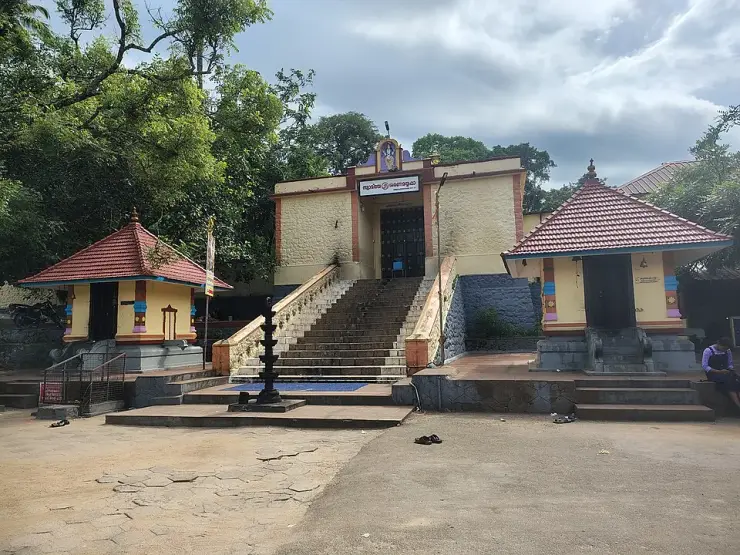
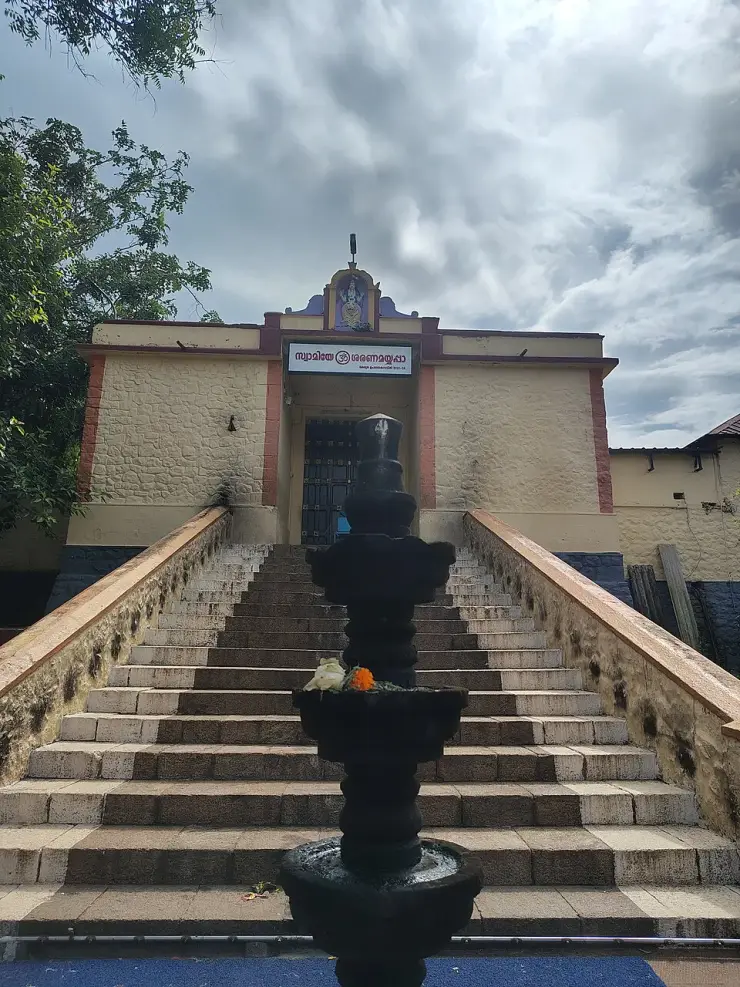
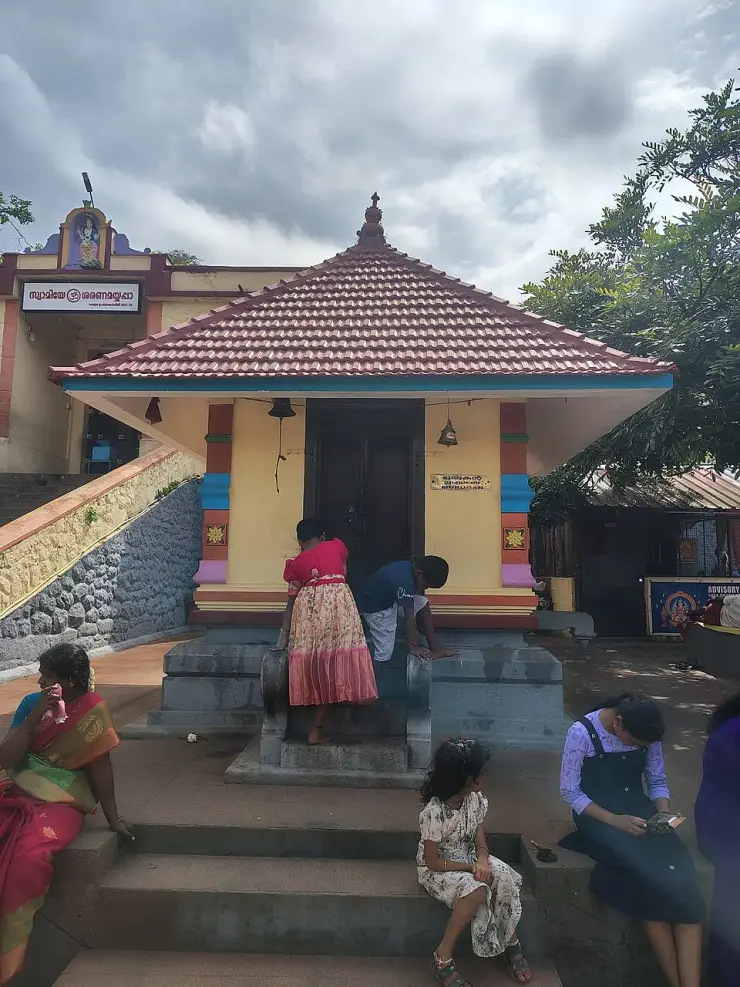
  • Achankovil Sastha Temple — A forest Sastha temple on the Achankovil river where Ayyappa presides as a married householder with two consorts, Poorna and Pushkala — and where the deity is Maha Vaidya, the great physician: the bell may be rung at any hour for a snakebite and the shrine opens at night. ⚠ No timings are published by anyone. 🛑 It has no eighteen holy steps; that is Sabarimala’s.
Getting there

How to visit

  • Nearest airport: Trivandrum (TRV), ~69 km
  • Rail gateway: Kollam Junction (QLN)
Timing

Best time to visit Achankovil

October–February. Avoid the heaviest monsoon weeks — this is a forest road and rain affects it. Pilgrimage season brings the settlement to life and everything else to a standstill.

Weather in AchankovilSeasonal guide

Live forecast loads in your browser.

Today at Achankovil
Sunrise6:10 am
Sunset6:13 pm
Golden hour best light5:13 pm–6:13 pm
Blue hour after sunset6:13 pm–6:38 pm
Sun sets toward compass bearingW · 267°
Moon tonight🌖 Waning gibbous · 87%
South-west monsoon. June to September is the south-west monsoon in Kerala. Expect heavy showers, mostly in bursts rather than all day — carry rain cover, allow extra time for getting around, and note that ferries and open-air sites are the first things affected.

Sun and moon are calculated for this location and shown in IST. Photography windows are the hour around sunrise and sunset; the sunset bearing is degrees clockwise from true north. Moon phase is accurate to about half a day.

The story

The story of Achankovil

A small forest settlement in the eastern hills of Kollam district, at the head of the Achankovil river and on one of the few motorable passes through the Western Ghats into Tamil Nadu. It is one of the most remote inhabited places we cover in Kerala: a temple, a river, a road through reserved forest, and very little else.

Achankovil is not a town in any ordinary sense. It is a settlement in reserved forest in the far east of Kollam district, near the Tamil Nadu border, reached by a road that spends most of its length inside the trees. The scale of the place is a temple, a scatter of houses, forest department presence and the river. What makes it worth a page is where it sits.

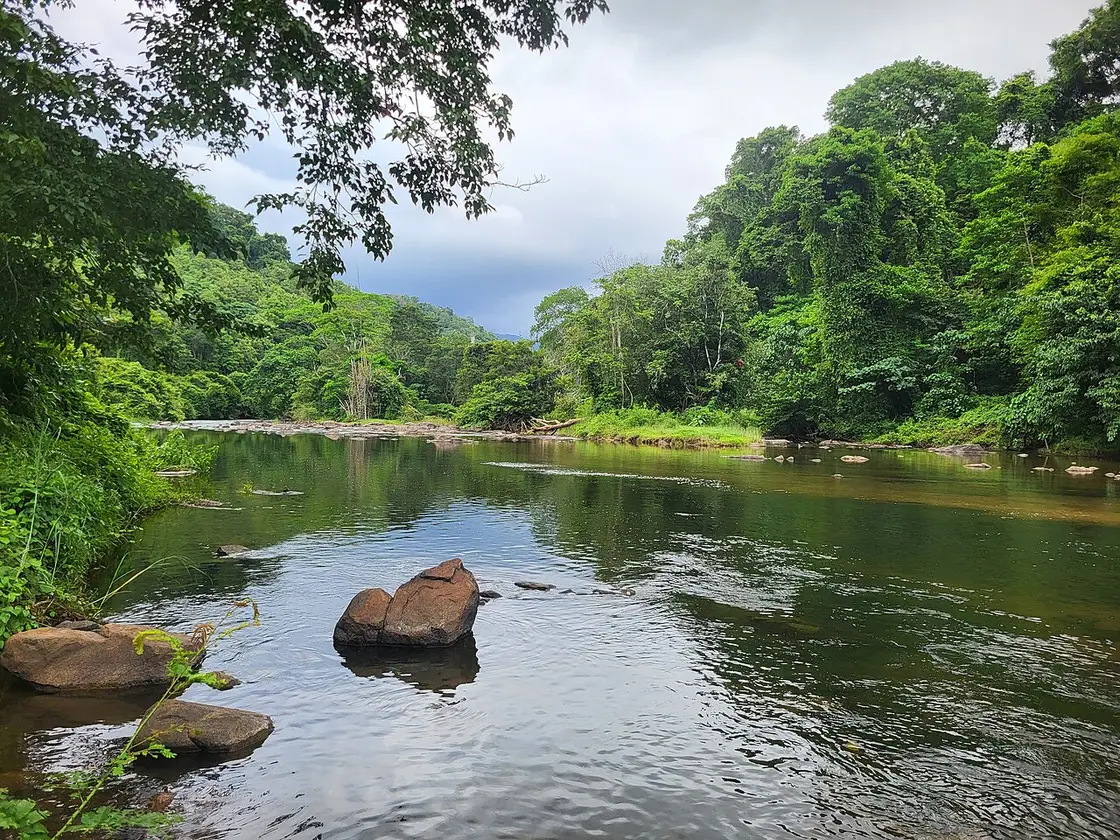
It sits at the head of a river. The Achankovil runs 128 kilometres west from here, through Kollam, Pathanamthitta and Alappuzha districts, to join the backwater system down on the coast — the same river that passes Konni, and that reaches Mavelikkara and the Onattukara country far downstream. It is formed near here by the meeting of three streams, recorded as the Rishimala, the Pasukidamettu and the Ramakkaltheri, rising off Devarmalai in the Western Ghats. Standing at Achankovil you are at the top of a system that shapes three districts.

It also sits on a pass. The road from Mekkarai on the Tamil Nadu side runs about sixteen kilometres to Achankovil, and from Achankovil it continues down to Konni — some eighty kilometres in all, almost entirely through forest. Passes through this section of the Ghats are rare, and this one has the particular quality of being little used: it is not the Kollam–Sengottai route and not the Kumily road, and it carries a fraction of their traffic.

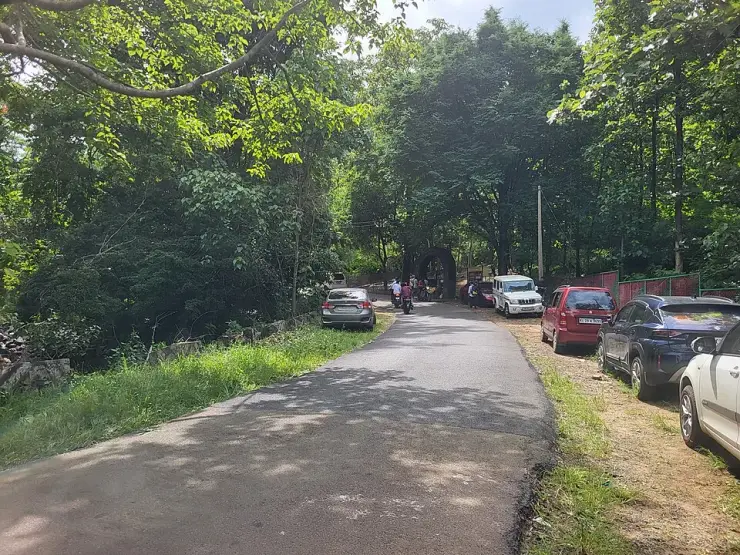
That is the reason people who know it come. The road is a corridor of reserved forest with a genuine wildlife presence — elephants, peacocks and Malabar giant squirrels are the animals most consistently reported along it, and the elephants are not a novelty; this is working elephant country and the road passes through their range rather than beside it. Reed grows thickly along the river on the Konni side.

The settlement's reason for existing is the Achankovil Sree Dharma Sastha Temple, one of the major Sastha shrines of the region and a destination in its own right, which we cover on its own page. A forest shrine that draws pilgrims is how a place this remote comes to have a road at all, and the seasonal rhythm of the settlement follows the temple's.

Downstream on the same river, Kumbhavurutty Waterfalls is the other established stop on this route, and between them they are most of the reason a traveller comes this way rather than taking a main road.

What Achankovil offers, honestly stated, is remoteness and a drive. There is no market, no accommodation strip, no viewpoint infrastructure. The interest is the forest itself, the river at its source, the near-total absence of the built landscape that covers almost all of lowland Kerala, and the fact that you can cross a state border here through trees rather than through towns.

It is also worth saying that this is not a place to arrive at casually. It is remote, forested, and served by a road that weather can affect; the practical advice section covers what that means. The reward is a stretch of Kerala that looks the way most of it looked before the coconut and the rubber.

Legend & myth

The first thing to be clear about is what Achankovil is, because the word does at least three jobs and travel writing slides between them constantly. There is Achankovil the settlement, in Kollam district, in the eastern forest. There is the Achankovil river, 128 kilometres long, which starts near the settlement and runs west through Kollam, Pathanamthitta and Alappuzha. And there is the Achankovil road or pass, the forest route from Mekkarai in Tamil Nadu through Achankovil and on to Konni. A page about "Achankovil" may be about any of the three, and a reader planning a trip needs to know which.

That confusion has a district consequence that is worth stating plainly, because it looks like an error and is not. The village of Achankovil is in Kollam district. A great deal of writing about the Achankovil river — its backwaters, the elephant camp, the reed beds — is filed under Pathanamthitta, and specifically around Konni. Both are correct: the river rises in Kollam district and flows through Pathanamthitta. If you meet the two attributions side by side, neither needs correcting; they are describing different stretches of the same water.

The second is the source, where the honest position is that we are repeating a formula. The river is described as formed by the convergence of three streams — the Rishimala, the Pasukidamettu and the Ramakkaltheri — rising from Devarmalai in the Western Ghats. That description recurs almost word for word across sources, which usually means a single origin repeated rather than several independent observations. We have no reason to doubt it and no independent confirmation of it, and a reader should treat named tributaries in Ghats headwaters as approximate: these are small forest streams whose names and courses are recorded inconsistently.

The third is distance, and it matters because it determines whether you should set out. The Mekkarai to Achankovil leg is given as about sixteen kilometres, and the full Mekkarai–Achankovil–Konni run as roughly eighty. Those are forest kilometres. They are not covered at lowland speeds, the surface is variable, and the useful planning number is hours rather than kilometres. Anything that presents this as a short hop between two points on a map is misleading by omission.

The fourth is wildlife, and here the risk runs the other way — of understating it. The elephants along this road are not an attraction laid on for visitors. This is elephant country and the road runs through their range. Peacocks and Malabar giant squirrels are the other animals consistently reported. The correct posture is the one the forest department asks for: do not stop where you are told not to, do not approach, do not travel the forest stretch after dark, and treat the possibility of an elephant on the road as the ordinary condition of this route rather than a lucky sighting.

The fifth is expectation. Achankovil has a major temple and almost no visitor infrastructure. There is no reliable strip of hotels or restaurants, and services that exist may be seasonal and tied to pilgrimage. Anyone treating this as a day's outing with facilities at the end will be disappointed; anyone treating it as a forest drive to a remote shrine, provisioned accordingly, will not.

The sixth is a note on why so little is written about the place. Remote forest settlements inside reserved land do not generate the documentation that towns do, and much of what circulates about Achankovil online is copied between listings sites rather than observed. Where we have not been able to verify something we have left it out, which is why this page is shorter on specifics than our pages for places a tenth as interesting.

More about Achankovil

History

Achankovil is a settlement in reserved forest in the eastern hills of Kollam district, close to the Tamil Nadu border, in the belt of the Western Ghats that separates the Kerala lowlands from the Tamil plains.

It stands at the head of the Achankovil river, a west-flowing river of about 128 kilometres which passes through Kollam, Pathanamthitta and Alappuzha districts before joining the backwater system near the coast. The river is described as formed by the convergence of three streams — the Rishimala, the Pasukidamettu and the Ramakkaltheri — which rise from Devarmalai in the Western Ghats.

The settlement lies on one of the few motorable forest routes across this section of the Ghats. The road runs from Mekkarai on the Tamil Nadu side about sixteen kilometres to Achankovil, and continues from there to Konni, a total of roughly eighty kilometres largely through forest. Elephants, peacocks and Malabar giant squirrels are characteristic of the route, and reed grows along the river on the Konni side.

The settlement's focus is the Achankovil Sree Dharma Sastha Temple, a major forest shrine whose pilgrimage traffic is the main reason for the road and for the seasonal rhythm of the place. Kumbhavurutty Waterfalls, downstream on the same river system, is the other established stop on this route.

The wider Konni area downstream is known for its forests, plantations and elephant training centre, and the Achankovil river is the feature that brought that stretch onto the tourist map. Achankovil itself has remained a small forest settlement without significant visitor development.

Why visit

For one of the few motorable forest passes between Kerala and Tamil Nadu — Mekkarai to Achankovil and on to Konni, roughly 80 km almost entirely through reserved forest, and far quieter than the Sengottai or Kumily routes.

To stand at the head of the Achankovil river, which runs 128 km west from here through three districts to the backwaters.

For the Achankovil Sree Dharma Sastha Temple, a major forest Sastha shrine and the reason the settlement exists.

For genuine forest wildlife along the road — elephants above all, with peacocks and Malabar giant squirrels — encountered in their range rather than at a viewing point.

For Kumbhavurutty Waterfalls on the same route, the other established stop between here and the lowlands.

For a part of Kerala that looks the way the state looked before coconut and rubber covered the lowlands — remote, forested and almost entirely unbuilt.
Before you go

Achankovil — at a glance

Getting here

How to reach Achankovil

  • ✈︎ By air Trivandrum international airport is the nearest usable airport, but this is a long inland drive from anywhere.
  • 🚆︎ By train Punalur is the nearest railhead of any use; Kollam is the main one.
  • 🚗︎ By road By forest road from Konni (roughly 80 km via the full route) or from Mekkarai on the Tamil Nadu side, about 16 km. Plan in hours, not kilometres.
  • 🚌︎ By bus Limited services, and heavily tied to the temple season. Do not rely on them for a same-day return.
Getting back

Check your return bus or ferry with the operator before setting out. Leave time to reach the stop or jetty after your visit, and arrange a return vehicle in advance for a remote outing.

Ask at the jetty or the stand for the time of the last service back, not the next one. If you miss it, an auto or a taxi is the fallback — agree the fare before you get in.

Getting around Achankovil

If you need step-free access, contact the site before travelling. Ask about a level entrance, steps along the route, the nearest drop-off point, seating and accessible toilets.

Practical things near Achankovil

These services are listed within about 1.2 km of Achankovil. Walking distances follow mapped routes; access and opening hours can change. Other services may be closer but are not included here.

Nearby bases

Where to go from Achankovil

Kollam town, Kollam townBackwater and coast base
Town / base

Kollam town

Ashtamudi Lake, beach, lighthouse and ferry base.

Ashtamudi LakeThangassery LighthouseKollam BeachThevally Palace
Open Kollam town guide →
Munroe Island, Munroe IslandCanal village base
Town / base

Munroe Island

Quiet island area for canoe rides and village walks.

Munroe canalsKallada riverCoir villagesAshtamudi backwater viewpoints
Open Munroe Island guide →
Thenmala, ThenmalaEco-tourism base
Town / base

Thenmala

Forest, dam and adventure activity base in the southern ghats, with two of the Pancha Sastha temples on the road towards the Tamil border.

Thenmala DamPalaruvi WaterfallsAryankavuShendurney Wildlife Sanctuary
Open Thenmala guide →
Chadayamangalam, ChadayamangalamViewpoint base
Town / base

Chadayamangalam

Hill and sculpture park stop between Kollam and Thiruvananthapuram, with an unstaffed river shelf on the Ithikkara 4 km away.

Jatayu Earth’s CenterChadayamangalam hill viewsLocal temple trailsVattathil Waterfalls
Open Chadayamangalam guide →
Karunagappally, KarunagappallyCoastal north base
Town / base

Karunagappally

Backwater-and-highway town in Kollam’s northern taluk, on the Alappuzha seam. Four singular places ring it — two shrines with no idol, the Chamayavilakku temple, and the Alumkadavu boatyards on Kayamkulam Kayal.

Oachira Parabrahma TemplePoruvazhy Peruviruthy MalanadaKottankulangara Devi TempleAlumkadavu
Open Karunagappally guide →
Kottarakkara, KottarakkaraInland temple and arts base
Town / base

Kottarakkara

Taluk town on the MC Road north-east of Kollam — the Mahaganapathi temple, its tank, and the memorial to the Thampuran credited with Ramanattam.

Kottarakkara Sree Mahaganapathi Temple
Open Kottarakkara guide →
In the district

Where Achankovil sits in Kollam district

District HQKollam
LandscapeCoast, Ashtamudi backwaters and southern ghats

Kollam district is known for: Ashtamudi Lake, Munroe Island, Thenmala eco-tourism and the Kollam coast.

Ashtamudi Lake backwatersMunroe Island canoe tripsThenmala and Palaruvi Waterfalls
Stay · eat · do · rent · see · shop

Places in Achankovil

Every verified place in Achankovil — filter by what you’re after.

4 things to do in Achankovil

Tour operator · Achankovil
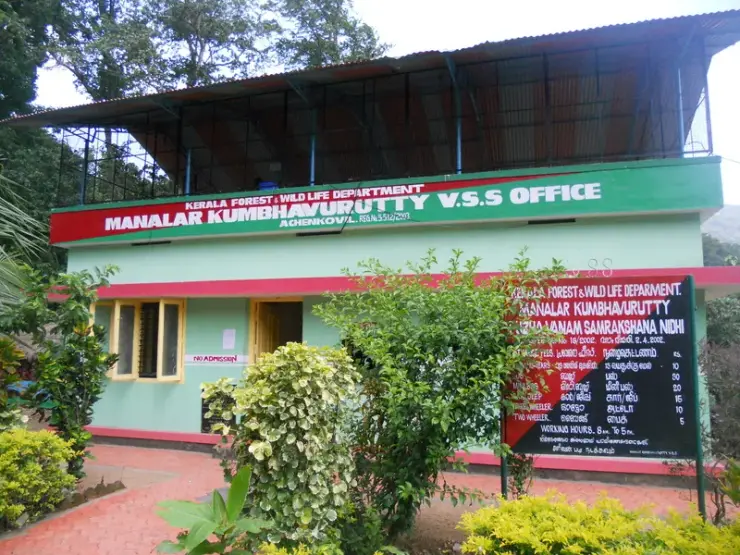
Manalar-Kumbhavurutty Eco-Contact Centre

Forest Department eco-contact centre for the Kumbhavurutty and Manalar falls, run with the local Vana Samrakshana Samithy; open 8.00 am to 4.30 pm.

Directions Commission-freeView details
Top pick
Attraction · Achankovil
Divisional Forest Office, Achencoil Forest Division

Headquarters of the Kerala Forest Department's Achencoil Forest Division, the office that controls access to the Achankovil forests.

Directions Commission-freeView details
Top pick
Travel Agency · Achankovil
KSRTC Achankovil Bus Service

Kerala State Road Transport Corporation buses link Achankovil with Punalur, the nearest depot, by two different routes.

Directions Commission-freeView details
Top pick
Post office · Achankovil
Achencoil Post Office

India Post branch office serving Achankovil village, PIN 689696, in Pathanapuram block of Kollam district.

Directions Commission-freeView details

Book with the place itself. India’s cyber-crime coordination centre warned in April 2025 that convincing copies of hotel and pilgrimage booking sites are being pushed through sponsored search and social ads, taking payment for rooms the property never hears about. Every listing here links to the business’s own contact details and its own Google or Bing profile — we take no commission and sit in nobody’s payment path. If a booking page reached you through an ad, check the address bar against the property’s own site before you pay. Fraud can be reported on cybercrime.gov.in or on 1930.

For hotels, homestays and local businesses

Get listed in Achankovil for free

Roampedia is commission-free. Travellers discover your business, book directly and contact you through official details. Basic listings are free, while Gold and Platinum package upgrades can be requested from the owner dashboard after approval.

List your business — free
Read before you go

Achankovil guides, stories & itineraries

Stories & history of Achankovil

Written about Achankovil itself — its history, its legends and the arguments about them.

Around Achankovil

These are written about individual places you can reach from Achankovil, rather than about the town as a whole.

Planning a trip to Achankovil

The practical half — what is actually here, in what order to see it, and how to arrive.

More from Kollam

Wider guides to Kollam — its coast, its culture and the routes through it.

See all 129 Kollam guides & stories →

Map

Where things are in Achankovil

FAQ

Achankovil travel FAQs

Which district is Achankovil in?

The village of Achankovil is in Kollam district. The Achankovil river, however, flows on through Pathanamthitta and Alappuzha, and much writing about the river — the Konni stretch, the backwaters, the elephant camp — is filed under Pathanamthitta. Both attributions are correct for different stretches of the same river.

How long is the Achankovil forest road?

The route from Mekkarai in Tamil Nadu to Achankovil is about 16 km, and continuing from Achankovil down to Konni makes roughly 80 km in total, almost entirely through forest. Plan it in hours rather than kilometres — the surface is variable and these are not lowland driving speeds.

Are there elephants on the Achankovil road?

Yes. This is elephant country and the road passes through their range; peacocks and Malabar giant squirrels are also characteristic. Treat an elephant on the road as an ordinary possibility rather than a lucky sighting: follow forest department instructions, do not approach or stop where told not to, and avoid the forest stretch after dark.

Where does the Achankovil river start?

Near Achankovil, from the convergence of three streams recorded as the Rishimala, the Pasukidamettu and the Ramakkaltheri, which rise from Devarmalai in the Western Ghats. It then runs about 128 km west through Kollam, Pathanamthitta and Alappuzha districts.

Is there anywhere to stay or eat at Achankovil?

Very little. This is a small forest settlement with a major temple and almost no visitor infrastructure; what exists may be seasonal and tied to pilgrimage. Provision yourself before setting out and plan to stay in a larger centre such as Konni, Punalur or Kollam.

What else is on this route?

Kumbhavurutty Waterfalls, downstream on the same river system, is the established second stop. Further down, the Konni area is known for its forests, plantations and elephant training centre.

What are the best places to visit in Achankovil?

Top places to visit in Achankovil include Kumbhavurutty Waterfalls, Achankovil Sastha Temple — each has a full guide with how to reach it and what to see nearby on this page.

How do I reach Achankovil?

The nearest airport to Achankovil is Trivandrum (TRV), ~69 km. The rail gateway is Kollam Junction (QLN).

What is the best time to visit Achankovil?

October to March is the driest and most comfortable season to visit Achankovil and the rest of Kerala. The June–September monsoon is lush and green but wet, and often brings lower low-season prices.

Photographs: Athulvis (CC BY-SA 4.0), Manukrishnan80 (CC BY-SA 4.0), Stephen Samuel (CC BY 3.0). Wikimedia Commons.

Image credits