What to expect
Highlights
- Temple visit at Kottankulangara Devi Temple
- Kerala temple architecture and rituals
- Local food, shops and pilgrim services nearby
A Devi temple at Chavara north of Kollam, known across Kerala for Chamayavilakku — the two nights in Meenam when men and boys dress in saris and carry lamps in procession to the goddess, re-enacting the cowherd boys of its founding legend.
Check entry arrangements. Ask temple staff about visitor entry, dress requirements and access to the inner shrine before you travel, especially if you are visiting as a non-Hindu.
Dress respectfully and follow the institution’s admission and photography rules.
A Devi temple at Chavara, about 20 km north of Kollam, where on two nights each March or April thousands of men and boys dress in saris, take up a lamp and walk in procession to the goddess. Chamayavilakku is one of the most striking festivals in Kerala, and the temple's own founding legend — cowherd boys playing at being girls before a stone that answered them — is the reason it happens.
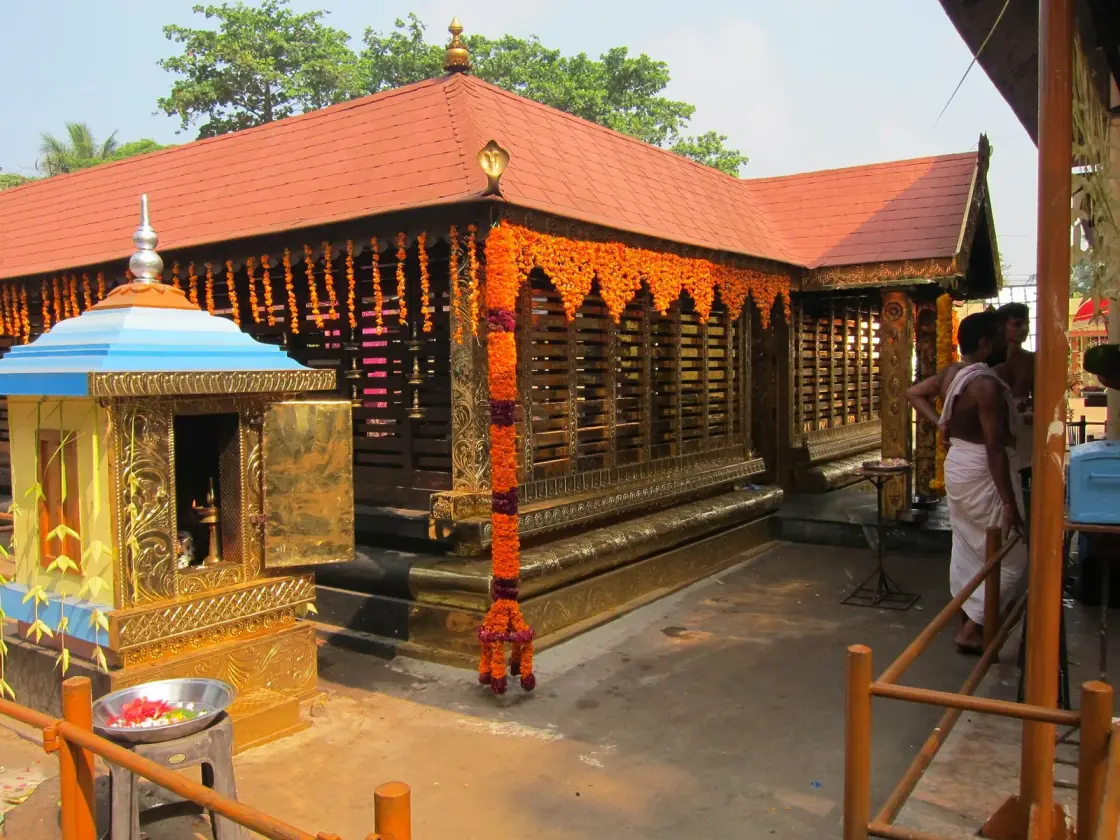
The temple is a working neighbourhood Devi shrine in Chavara, on the belt of land between the sea and the backwater north of Kollam. The goddess is Durga Bhagavathy, addressed also as Aadi Shakthi, the supreme mother of power. On an ordinary day it is a quiet compound: a tile-roofed shrine with timber-slatted walls, its gable clad in beaten metal worked into scrollwork and figures, brass at the base, marigold garlands strung along the eaves, a small gilded subsidiary shrine in the forecourt.
For two nights a year it is something else entirely.
Chamayavilakku falls on the tenth and eleventh of the Malayalam month of Meenam, which puts it in March or early April. On those nights men and boys — from the neighbourhood, from across Kerala, and now from outside the state — put on women's clothes, take up a traditional lamp, and go in procession to the Devi. The attire is not a costume issued by anybody; accounts describe the set sari, the pattu sari, the half sari, and dance costumes, chosen by the person wearing it. Then the lamps are lit and carried through the dark.
The name says what it is. Chamayam is adornment — being dressed and made up — and vilakku is the lamp. The festival is the adorned lamp-bearer, and the two halves of the word are the two halves of the ritual.
It is worth being plain about how to understand this, because it is exactly the sort of thing that gets written up badly. This is not a carnival, an inversion-for-a-night, or a spectacle staged for onlookers. It is a vow made to a goddess and discharged in the form she is said to have asked for. Men who do it are generally fulfilling a specific promise, and the dressing is the offering. The right posture for a visitor is the one you would bring to any other act of devotion.
Which brings us to why the form is what it is, and here the temple's own account is far better than the one in general circulation.
In the temple's telling, this place began with boys. A group of cowherds, at play, used to act as shy girls and offer flowers and a kottan — a coconut dish — to a stone. It is a children's game: dressing up, playing at being someone else, making pretend offerings. And then, in the story, the game was answered. One of the boys received a divine response from the Devi. A temple without an outer wall was raised over the stone, and the ritual of men dressed as women offering prayers to the goddess began there and has not stopped.
Read the festival back through that and it stops being strange. The men in saris are not doing something transgressive on a holy night. They are doing exactly what the boys were doing when the goddess first answered. The ritual is a re-enactment of the moment of the temple's founding, and the costume is not incidental to the worship — it is the worship, in the only form this deity is said to have accepted.
The other founding story you will meet does not do any of that work. In it, cowherds struck a coconut against a stone to husk it and found blood dripping from the stone; an astrologer pronounced the stone to hold supernatural power, and a shrine was built. It is a perfectly good sacred-stone legend, of a kind Kerala has many of, and it explains the shrine. It contains no boys playing at being girls and it explains nothing whatever about the festival. When two legends are in circulation and only one accounts for the practice, that is worth noticing rather than smoothing over.
The temple keeps other rituals that point the same way. A Kuruthola Pandal is put up annually — a model of the ancient temple, built in the old manner from poles and the tender leaves of the coconut palm. A shrine that reconstructs its own first, temporary form once a year, in leaves, is a shrine unusually conscious of how it began. There is also Jeevatha Ezhunnallathu, a step-dance procession in traditional dress.
Go on a normal day and you will see a well-kept Kerala shrine and very little to explain any of this. Go on the tenth or eleventh of Meenam and you will see several thousand men in saris carrying lamps through the dark to a goddess who, they hold, asked for precisely that.
Plan a Chamayavilakku visit around the temple’s confirmed programme, rather than a reusable Gregorian date. Kerala Tourism places the principal lamp observances on the tenth and eleventh of Meenam and explicitly asks visitors to reconfirm festival dates with the local authorities. An ordinary temple visit and a night of lamp-bearing require different transport plans: arrange where your driver will wait and how you will leave before joining the crowd.
The lamps and the people carrying them are the focus of worship. If you want a portrait, ask the participant directly and accept a refusal without interrupting their progress. For a quieter look at the shrine’s architecture, make a separate daytime visit; a photograph of a festival procession does not describe what you will find on every day of the year.
The first correction is a claim we would have repeated ourselves if we had not opened the photographs, and it is comprehensively wrong. You will read — very widely — that Kottankulangara is unique in Kerala for having no roof over its sanctum. It fails three separate ways.
It fails on the pictures. The principal shrine in the available photographs carries a substantial tiled hipped roof with a gilded finial, over timber-slatted walls; another frame is a close study of a metal-clad gable end with the tiles running away behind it. Whatever else is true of this temple, its shrine is roofed, and you can see that it is.
It fails on the temple's own words. The temple's website does not say the sanctum has no roof. It says the shrine raised over the stone was a temple without an outer wall. That is a different architectural claim about a different part of the building, and the widely circulated version looks like a garbling of it — a wall becoming a roof somewhere in the retelling.
And the word only fails regardless, on evidence already published on this site. The Oachira Parabrahma temple, about twenty kilometres up the same coast, is famous precisely for having no idol, no image and no roofed sanctum. At Thirumandhamkunnu in Malappuram the Sreemoolasthanam, the original sanctum, by custom stands open to the sky without a roof. And Poruvazhy Peruviruthy Malanada, in this same district, has no sanctum at all — only a raised platform under an open mandapam. Two of those three are in Kollam district. A claim of uniqueness that our own pages refute twice over is not a claim we are going to print.
The second correction is the numbers, and the gap is large enough that we will not pick between them. Chamayavilakku is routinely described with attendance figures upward of twenty-five thousand. The temple's own website, describing its 2011 festival, says around four thousand people participated. That is a difference of about six times. Some of it is probably the difference between participants — men who dress and carry a lamp — and the far larger crowd that comes to watch, and some of it is probably the ordinary inflation of festival numbers. We give both figures with their sources and neither as the answer.
The third is a date, and it is the same discipline we applied elsewhere in this district. Chamayavilakku falls on the tenth and eleventh of the Malayalam month of Meenam, which lands in March or early April. We do not print a Gregorian date, because a specific date captured once and left in place goes stale within a year and is then copied for a decade. Check the year you are travelling in against a current Malayalam calendar, or ask at the shrine.
The fourth is about the two origin legends, and rather than choose we would point out what distinguishes them. The temple's own account has cowherd boys at play acting as shy girls and offering flowers and a kottan to a stone, one of them receiving a divine response, and the ritual of men dressing as women beginning from that. The other widely repeated account has cowherds striking a coconut on a stone to husk it and blood dripping out, with an astrologer pronouncing the stone powerful. Only the first explains the festival. A legend that accounts for the practice and a legend that does not are not equally serviceable, whatever their relative age.
The fifth is a matter of framing rather than fact, and we think it matters more than any of the above. Chamayavilakku is a devotional vow, not a spectacle and not a carnival of inversion. The men taking part are generally discharging a specific promise to the goddess, in the form the tradition holds she accepted. Writing it up as Kerala's festival where men dress as women, with the emphasis on the oddity, misses that the costume is the offering — and that, on the temple's own account, it is a re-enactment of how the place was founded.
The sixth is practical and image-related. There is no photograph of Chamayavilakku on this page and there will not be one until a properly licensed image exists. The only festival photograph we could find anywhere carries a non-commercial licence we cannot use. Every image here is of the temple on an ordinary day, and none of them should be read as showing the festival.
The temple stands at Chavara, in Karunagappally taluk, on the strip of land between the Arabian Sea and the backwater about twenty kilometres north of Kollam. The deity is Durga Bhagavathy, also addressed as Aadi Shakthi.
Two origin legends are in circulation. The temple's own account holds that a group of cowherd boys, at play, used to act as shy girls and offer flowers and a kottan — a coconut dish — to a stone; that one of them received a divine response from the Devi; and that a temple without an outer wall was then constructed, with the ritual of men dressed as women offering prayers beginning at that point. A second widely repeated account has cowherds striking a coconut against a stone to remove its husk and finding blood dripping from it, after which an astrologer declared the stone to possess supernatural power and worship began. Only the first accounts for the festival the temple is known for.
The name of the place is generally connected with the kottan of that first legend — the coconut dish offered to the stone — together with kulangara, the pond side, which is the ordinary Kerala place-name element for a shrine beside water.
Chamayavilakku, the temple's principal festival, falls on the tenth and eleventh of the Malayalam month of Meenam, in March or early April. Men and boys dress in women's attire of their own choosing — the set sari, the pattu sari, the half sari, dance costumes — and walk in procession by night to the temple carrying traditional lamps. Chamayam is adornment and vilakku is the lamp. Participation is drawn from the neighbourhood, from across Kerala and increasingly from outside the state; figures in circulation range from around four thousand participants, on the temple's own account of its 2011 festival, to attendance claims upward of twenty-five thousand.
Other observances include the Kuruthola Pandal, an annual reconstruction in the old manner — poles and the tender leaves of the coconut palm — of the temple's original temporary form, and Jeevatha Ezhunnallathu, a step-dance procession in traditional dress.
Chamayavilakku, on the tenth and eleventh of Meenam — thousands of men and boys in saris carrying lamps in procession to the goddess by night, one of the most striking festivals in Kerala.
A founding legend that actually explains its own ritual: cowherd boys playing at being girls before a stone that answered them, re-enacted every year since.
The Kuruthola Pandal, an annual rebuilding of the temple's first temporary form in poles and tender coconut leaves — a shrine that reconstructs its own beginning.
Fine metalwork on an ordinary day: a repoussé-clad gable of scrollwork and figures, brass at the shrine base, timber-slatted walls under a tiled roof.
Twenty-odd kilometres from Oachira, which pairs with it better than anything — the other great Kollam shrine that does without the usual apparatus of a sanctum.
A working neighbourhood Devi temple rather than a monument, which is a different and quieter kind of visit outside the festival.
Road km to Kollam; ghat roads and traffic vary — allow extra.
Morning or early evening is usually best; festival days can be powerful but crowded.
Live forecast loads in your browser.
Sun and moon are calculated for this location and shown in IST. Photography windows are the hour around sunrise and sunset; the sunset bearing is degrees clockwise from true north. Moon phase is accurate to about half a day.
Verified hotels, homestays, restaurants, experiences, sights, shops and rentals around Kottankulangara Devi Temple — commission-free, with direct contact. Filter by what you need.
The Mata Amritanandamayi Math at Amritapuri, which takes visitor bookings for simple ashram rooms.
Nalla Bhoomi at High School Junction in Karunagappally focuses on Kerala coastal and Kuttanad cooking. Its menu includes banana-leaf kizhi biriyani, duck mappas and karimeen pollichathu. This is an NH66-side meal stop north of Kollam; check dish availability before making a special journey.
Highway hotel off the NH near Karunagappally town centre, with A/C and non-A/C rooms and the Galaxy restaurant.
Karunagappally town’s principal Shiva shrine, on the Pallikkal river. It is administered by the Travancore Devaswom Board.
The samadhi ashram of Chattampi Swamikal at Panmana, open 8.30am to 6pm daily. Panmana Asramam, Panmana P.O., Kollam, Kerala.
Teaching Ayurveda hospital of the Amrita School of Ayurveda at Vallikavu, with public OP booking.
Karunagappally’s state bus depot on the national highway, run by an Assistant Transport Officer and the practical hub for buses along this coast.
Station KPY at Edakkulangara, the nearest railway station to Amritapuri.
Karunagappally hotel with deluxe, executive and step-free rooms, plus a bar and restaurant.
Malabar Gold & Diamonds showroom opposite the Government Boys High School, Karunagappally.
Ten-storey shopping mall at Lalaji Junction, Karunagappally, with a cinema and 25-plus stores.
The municipal office for Karunagappally town, handling certificates, licences and permits. Karunagappally Municipality, Karunagappally P.O., Kollam, Kerala 690518.
Book with the place itself. India’s cyber-crime coordination centre warned in April 2025 that convincing copies of hotel and pilgrimage booking sites are being pushed through sponsored search and social ads, taking payment for rooms the property never hears about. Every listing here links to the business’s own contact details and its own Google or Bing profile — we take no commission and sit in nobody’s payment path. If a booking page reached you through an ad, check the address bar against the property’s own site before you pay. Fraud can be reported on cybercrime.gov.in or on 1930.
Find food, accommodation and activities across Karunagappally. Browse the guides for places to eat, stay and explore along your route.
4 more places around Karunagappally. Open a guide to plan the visit and onward journey.
A coastal temple destination in the Cheriazheekal–Alumkadavu belt, visited as a living place of worship rather than a generic beach-side landmark.
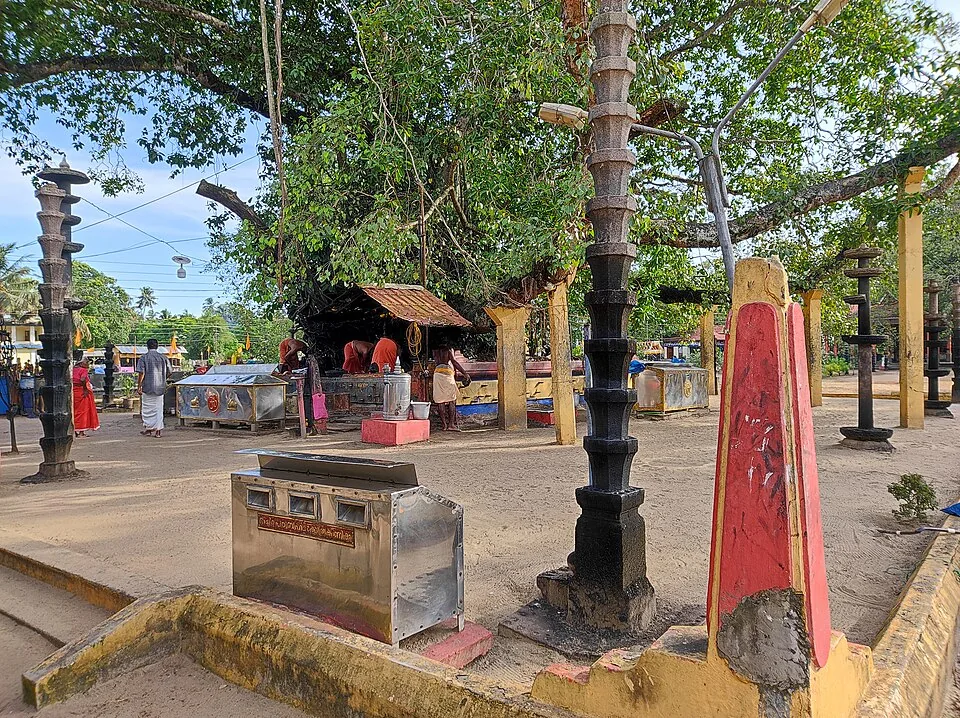
An unusual temple with no idol or building over the deity, set in an open grove; famous for the Oachira Kali festival.
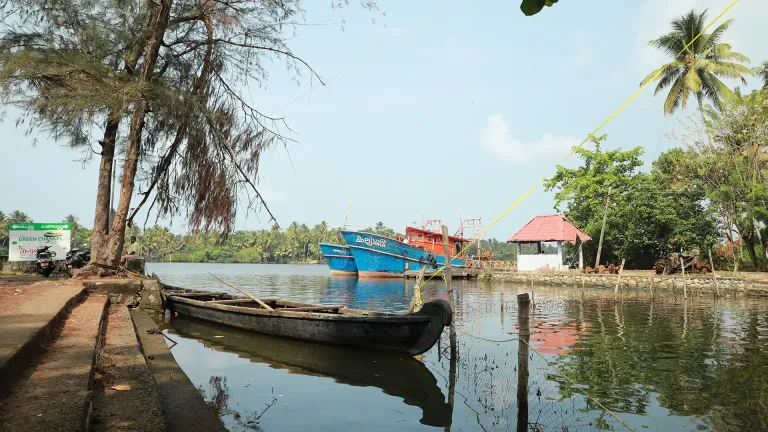
9.3 km · ~15 min by cab
The boatyard village on Kayamkulam Kayal where the first Kerala houseboat was designed in 1991 — hulls of anjili wood drawn together with coir on an open bank, three kilometres west of Karunagappally. ⚠ Kerala Tourism places it on Ashtamudi Lake and calls it the birthplace of India’s houseboats; it is on Kayamkulam, and Srinagar’s date from the 1880s. These are private working yards, not a ticketed site — ask before you walk in.
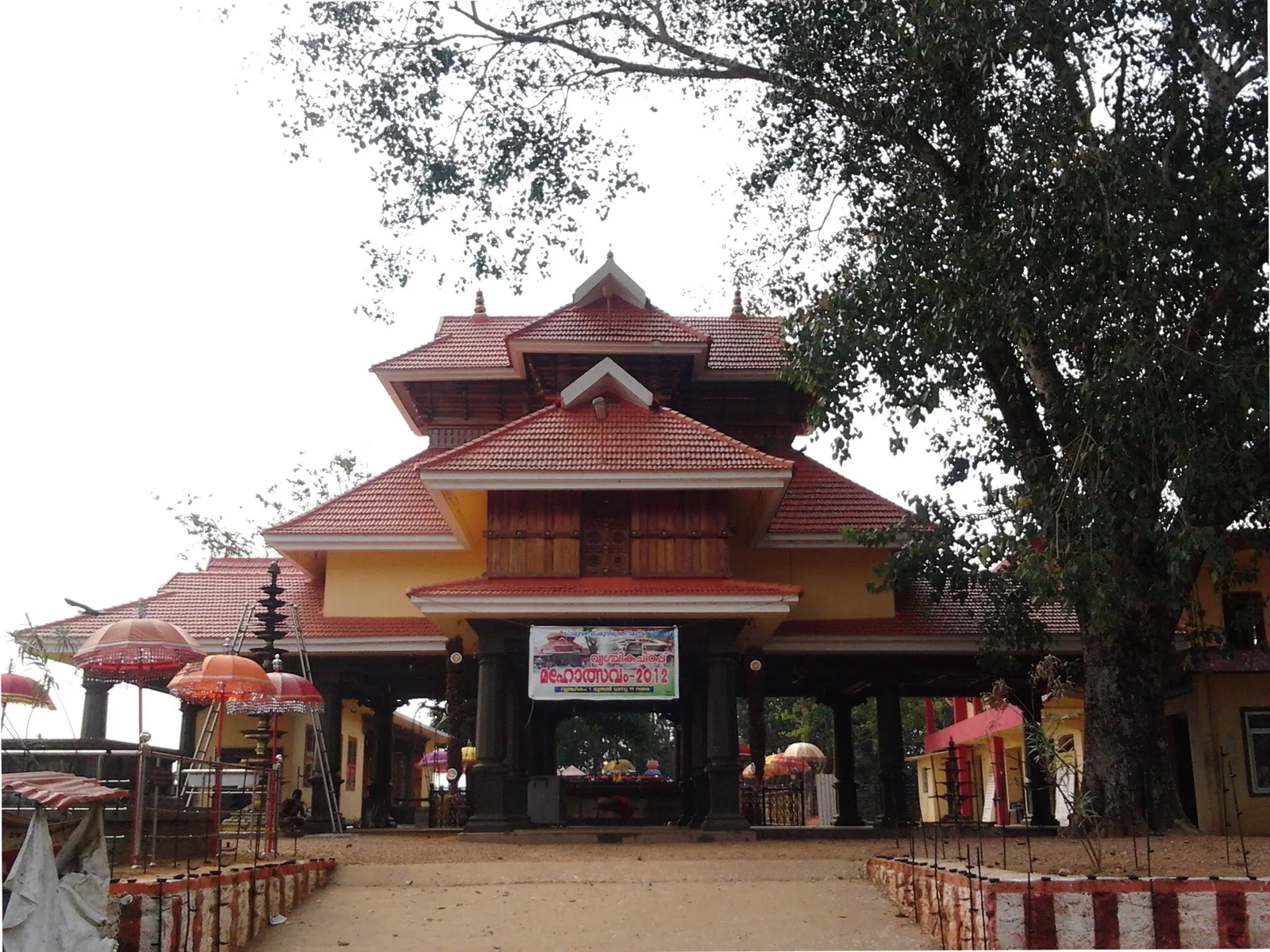
A temple with no idol and no sanctum — an open pillared mandapam over a raised platform, worshipped by sankalpam. The presiding figure is Mala Appooppan, the grandfather of the hill, conceived in the form of Duryodhana; the priest is the Oorali rather than a Brahmin, and toddy is the traditional offering.
Roampedia is commission-free — own or know a stay, eatery, guide or shop near Kottankulangara Devi Temple? List it and it appears here once verified.
Add a nearby businessEntry: Darshan is free; vazhipadu offerings at posted rates at the counter.
Dress code: Traditional temple attire is expected, as at Kerala temples generally — men customarily in mundu with the upper body bare or modestly covered, women in saree or salwar. Follow the notices at the entrance.
Festivals: Chamayavilakku on the 10th and 11th of Meenam: men and boys dress in women's attire of their own choosing — set sari, pattu sari, half sari, dance costumes — and process by night to the temple carrying traditional lamps. ⚠ Participation figures disagree by roughly six times: the temple's own site says around 4,000 participated in 2011, while attendance claims upward of 25,000 are widely repeated. Also observed: the Kuruthola Pandal, an annual rebuilding of the temple's original form in poles and tender coconut leaves, and Jeevatha Ezhunnallathu.
Photography: Photography is generally restricted inside the sanctum. 🛑 On festival nights, think before you raise a camera. Chamayavilakku is the discharge of a devotional vow, not a spectacle staged for visitors; participants are identifiable individuals, and consent matters more here than the picture does.
If you are travelling by bus or ferry, check the return service with the operator before setting out. Leave time to reach the stop or jetty after your visit.
Ask at the bus stand for the time of the last service back, not the next one. If you miss it, an auto or app cab is the fallback — agree the fare before you get in.
If you need step-free access, contact the site before travelling. Ask about a level entrance, steps along the route, the nearest drop-off point, seating and accessible toilets.
Charge cap and free-transaction limits: Reserve Bank of India, in force since 1 May 2025.
These services are listed within about 1.2 km of Kottankulangara Devi Temple. Walking distances follow mapped routes; access and opening hours can change. Other services may be closer but are not included here.
Emergency numbers are verified against official government and state tourism sources. 112 works anywhere in India.
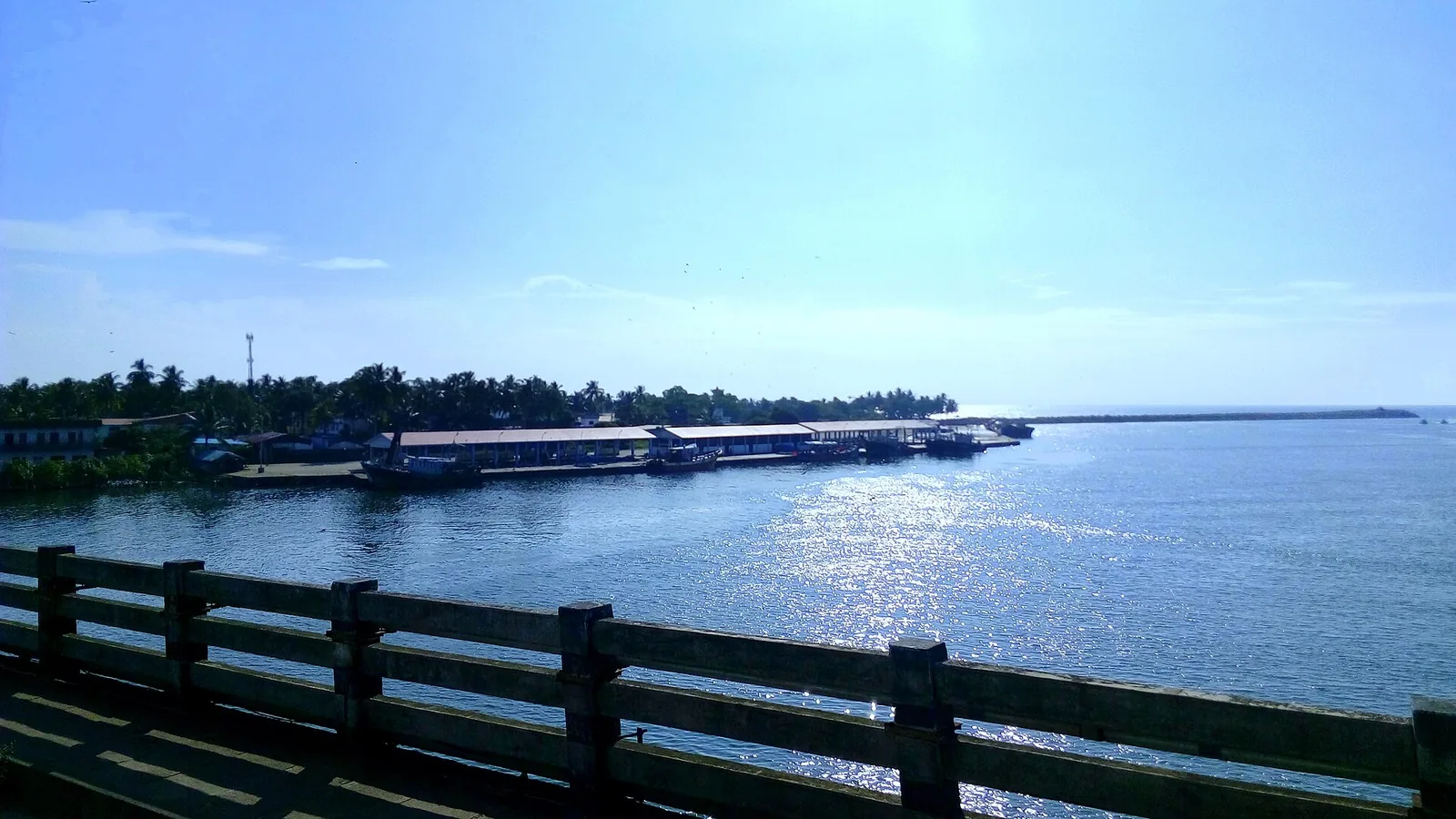
By most accounts Kerala’s largest fishing harbour, at the mouth of Ashtamudi Lake about 9 km from Kollam town, and where Indian fishing was mechanised; two bridges cross the confluence and the early-morning auction is the sight to catch.
4.7 km · ~12 min by auto · straight line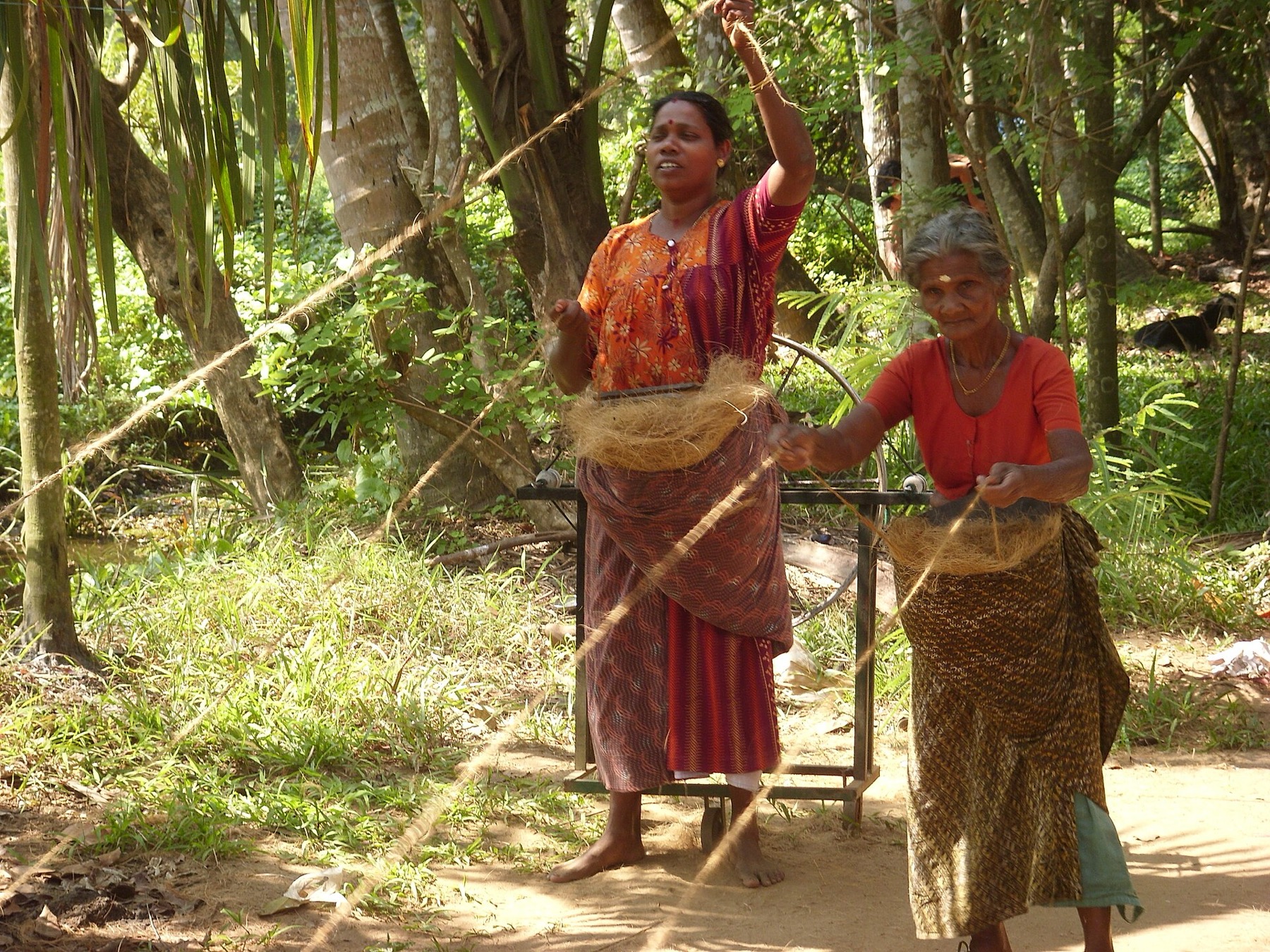
The coir-working settlements of Munroe Island, where coconut husk is retted in the backwater and spun into yarn — a working craft economy on the canal banks rather than a demonstration laid on for visitors.
8.0 km · ~20 min by auto · straight line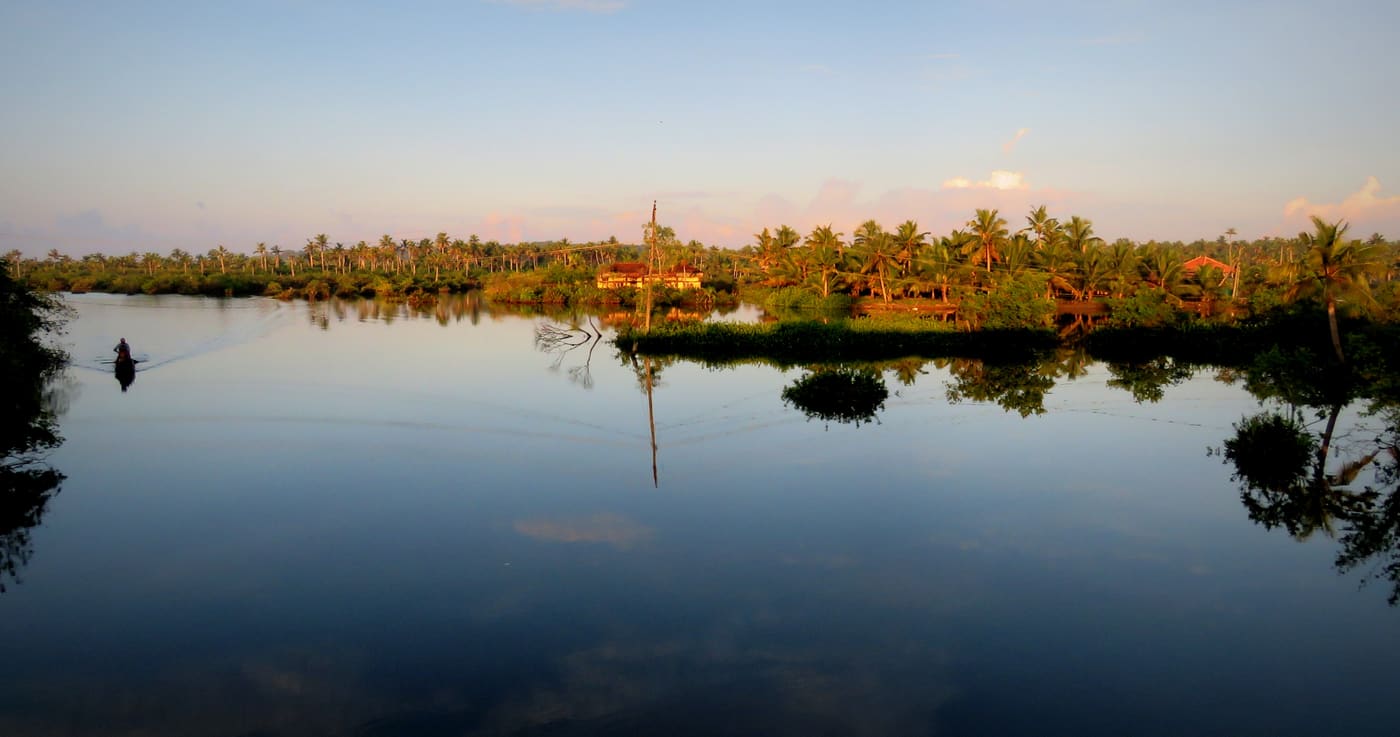
Canal village island known for canoe trips, coir work and slow backwater life.
8.8 km · ~15 min by cab · straight line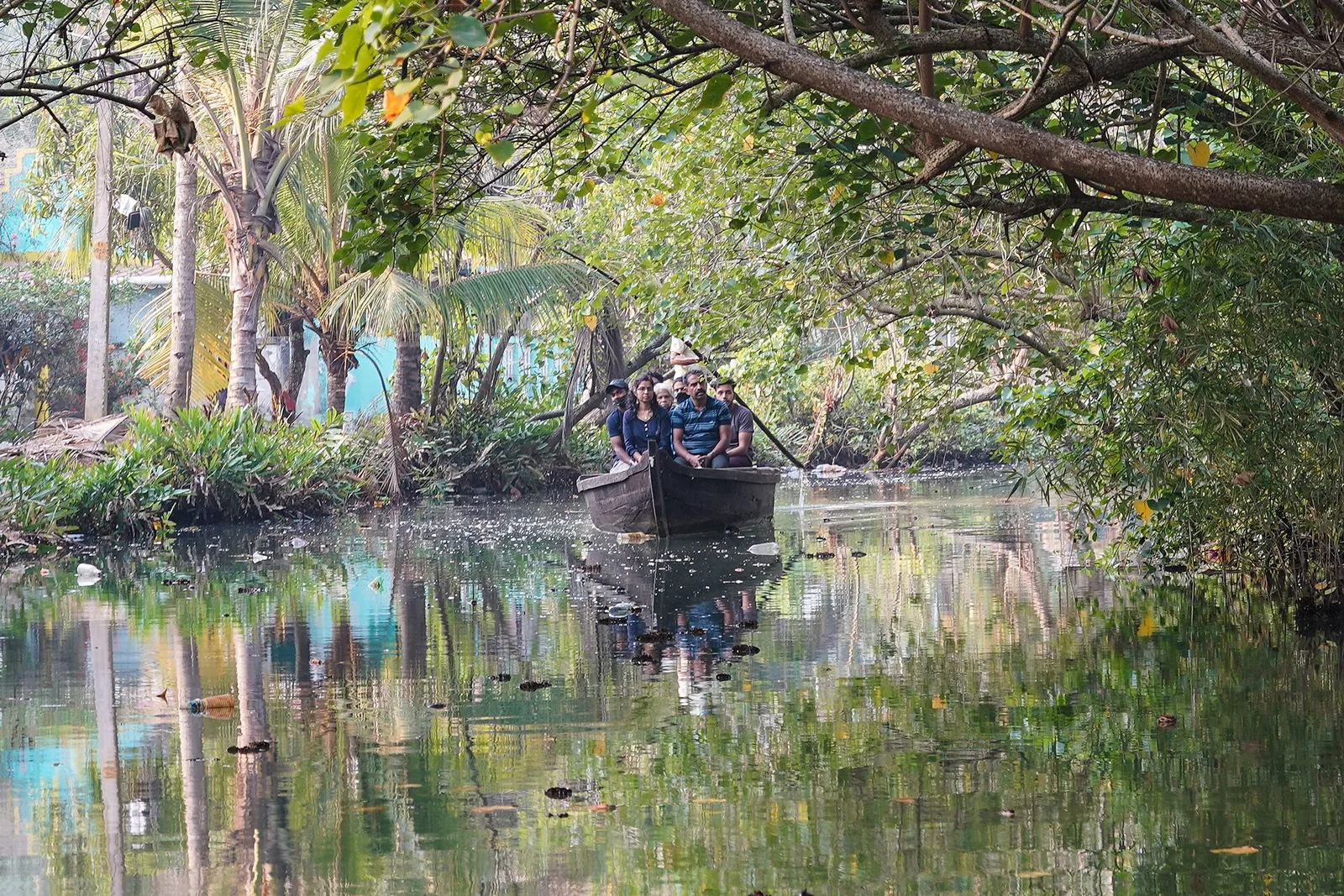
The narrow inland canal network threading Munroe Island, navigable only by small country canoe — the reason the island is visited at all, and a different waterway entirely from the open Ashtamudi lake.
8.8 km · ~15 min by cab · straight line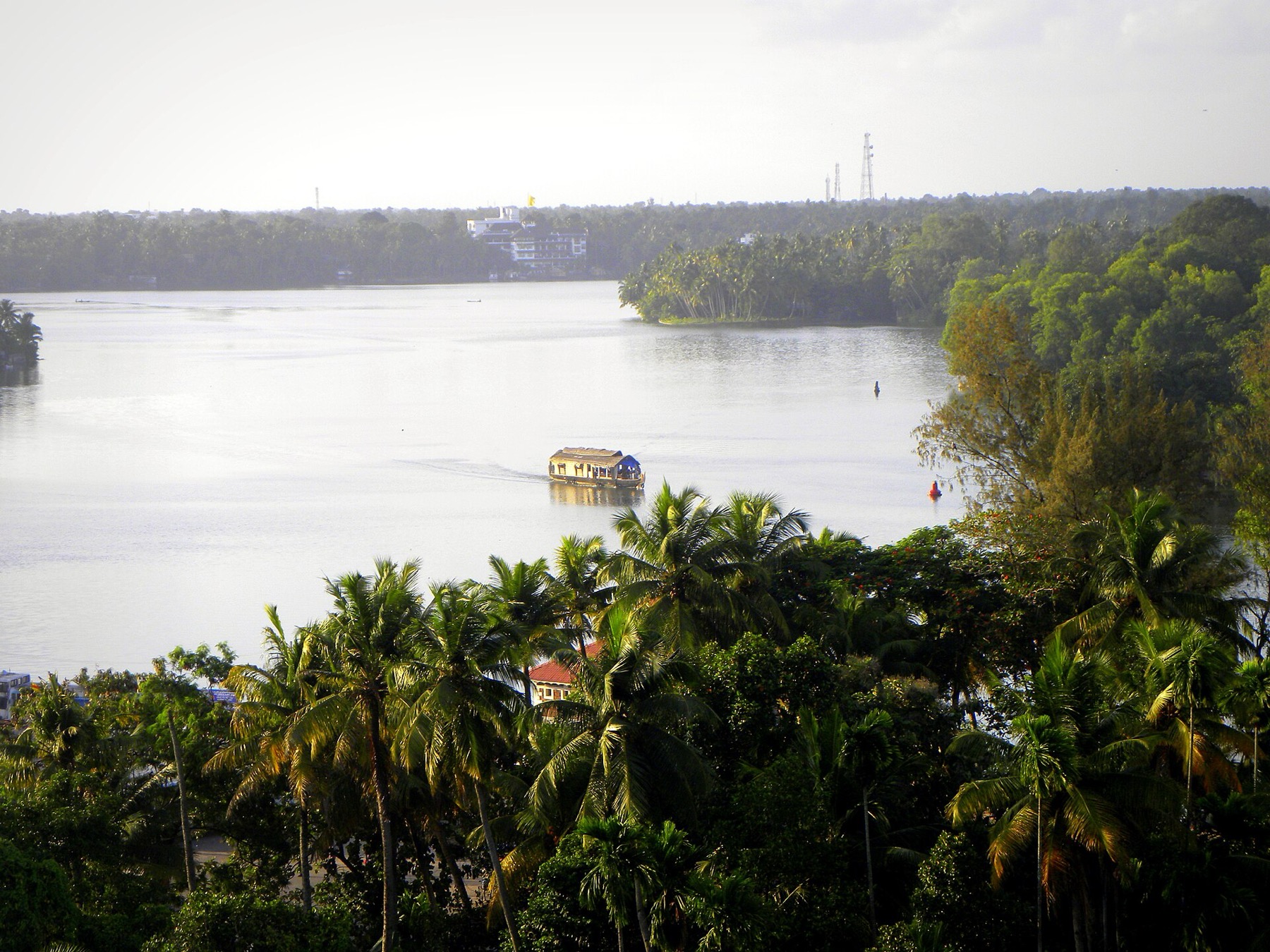
The open-water outlooks on the Munroe Island and Perumon side of Ashtamudi, where the lake widens out — the wide views the canal trips themselves do not give you.
9.1 km · ~15 min by cab · straight line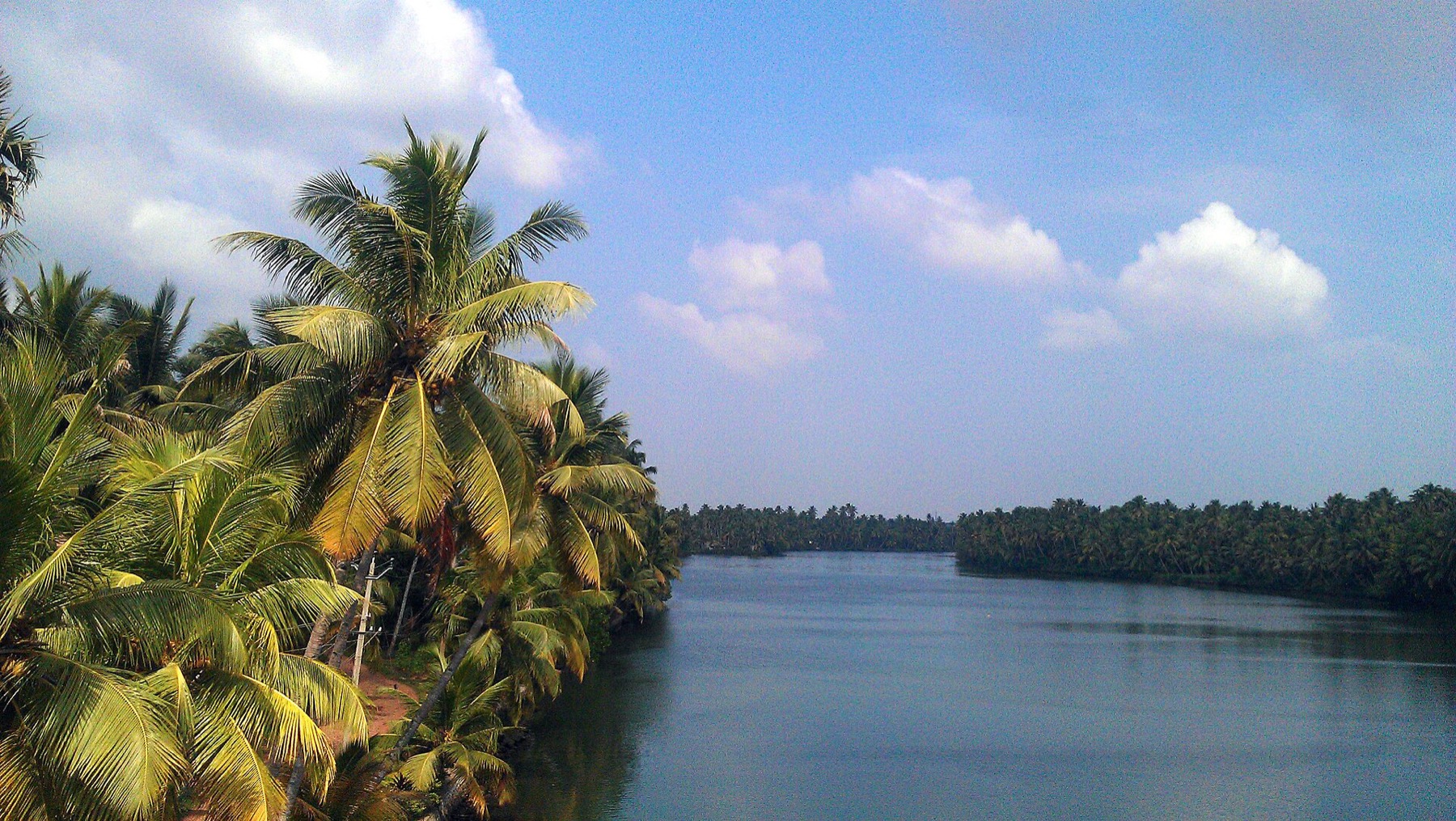
The river that rises in the Western Ghats behind Thenmala, is impounded at the Parappar dam, and reaches the sea through Ashtamudi past Munroe Island — the thread that connects the east of this district to the west.
9.1 km · ~15 min by cab · straight lineThe boatyard village on Kayamkulam Kayal where the first Kerala houseboat was designed in 1991 — hulls of anjili wood drawn together with coir on an open bank, three kilometres west of Karunagappally. ⚠ Kerala Tourism places it on Ashtamudi Lake and calls it the birthplace of India’s houseboats; it is on Kayamkulam, and Srinagar’s date from the 1880s. These are private working yards, not a ticketed site — ask before you walk in.
9.3 km · ~15 min by cab · straight line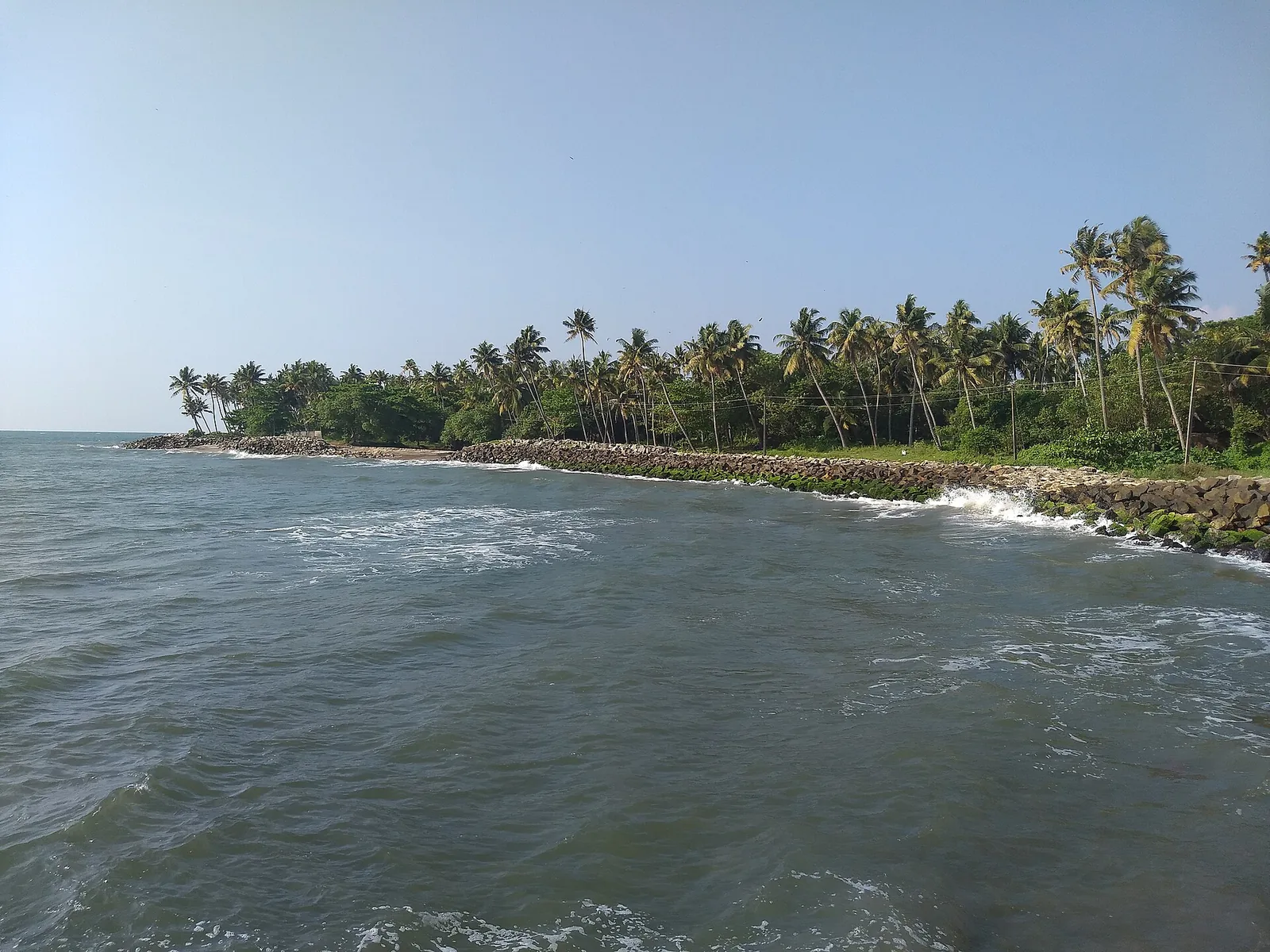
A quiet, curved bay beach west of Kollam town, calmer than the city beach and good for a relaxed evening.
9.7 km · ~16 min by cab · straight line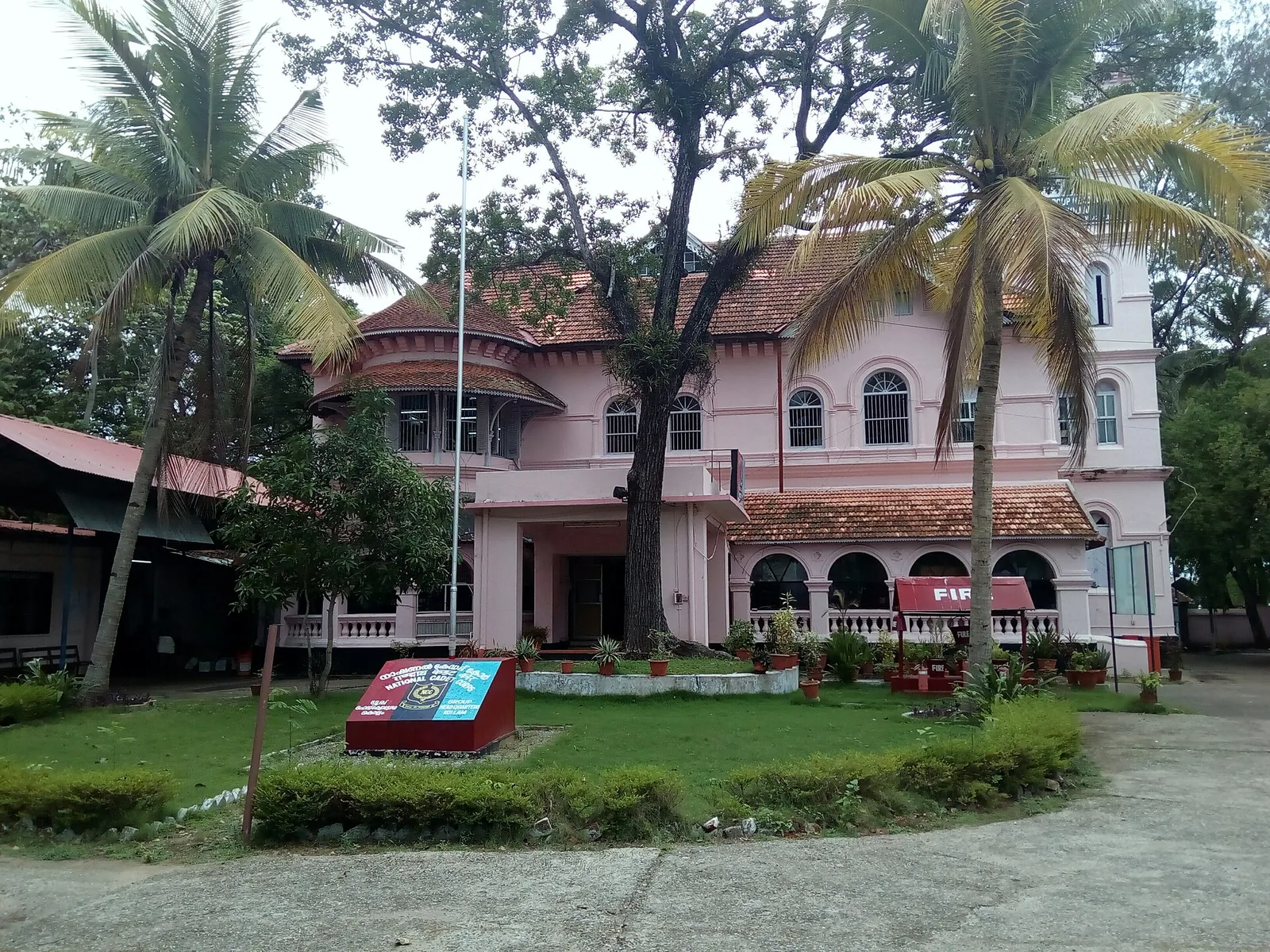
A Travancore royal residence on the Ashtamudi shore in Kollam, built to be arrived at by boat and now a working NCC establishment — viewed from outside or from the water.
9.9 km · ~16 min by cab · straight line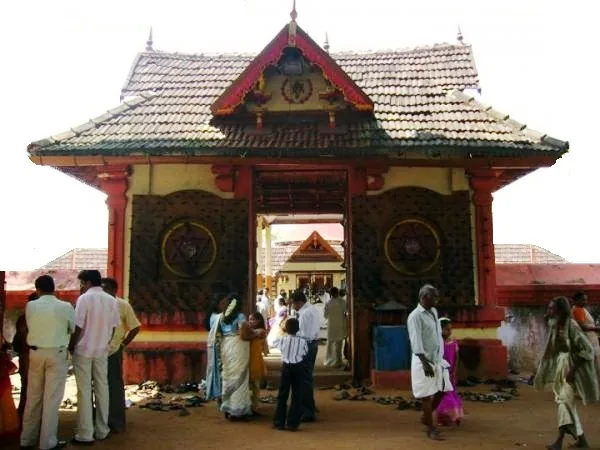
Anandavalleeswaram is an active Shiva temple in Kollam, with an Anandavally shrine and a ten-day annual festival in March or April. Ritual processions and cultural performances bring another dimension to the temple visit. Follow its worship session, admission and photography rules.
10.4 km · ~17 min by cab · straight line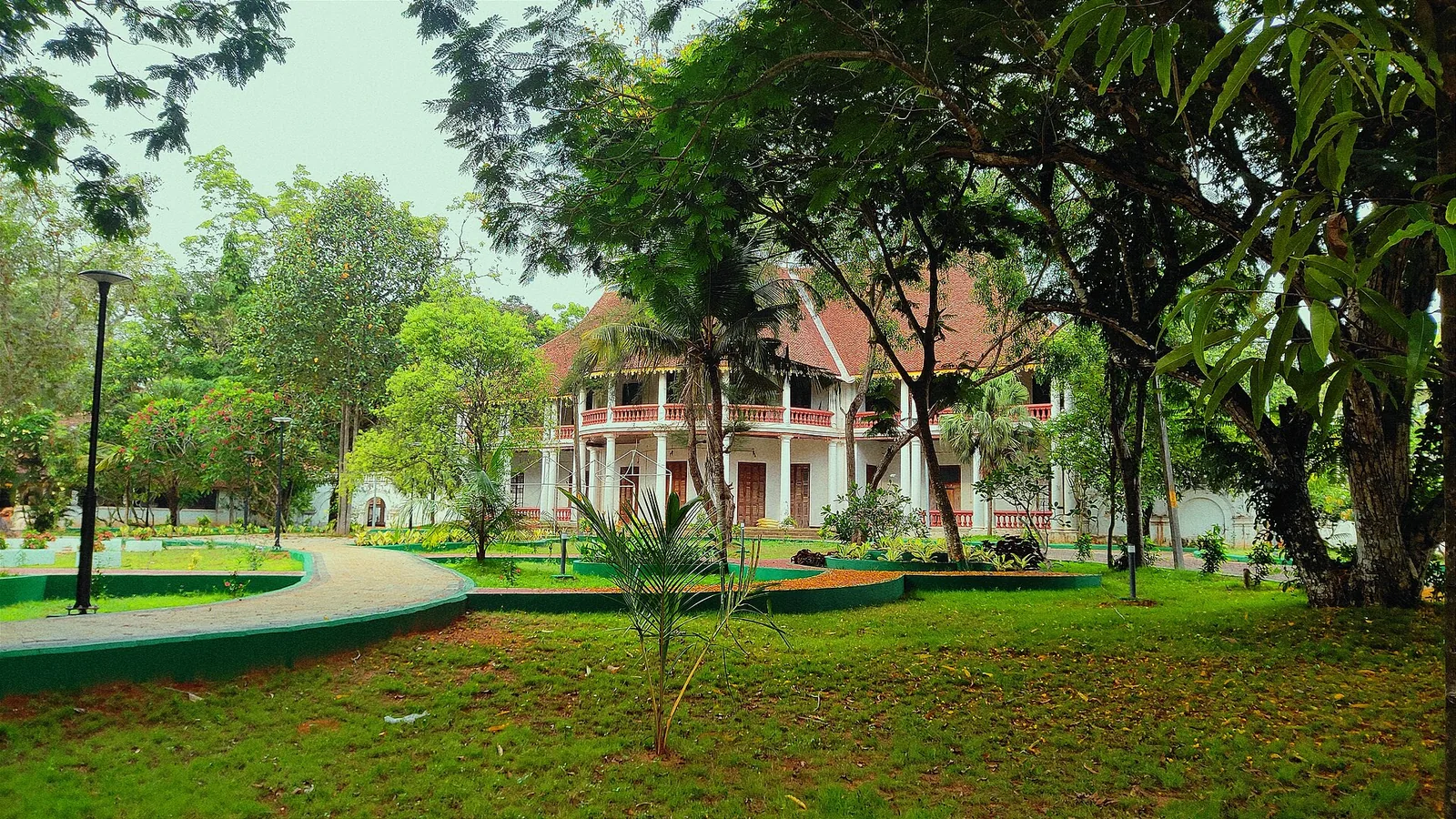
The former British Residency at Asramam survives as a government guest house beside Kollam’s backwater landscape. Its architecture is the attraction, with access governed by its working use.
10.7 km · ~18 min by cab · straight line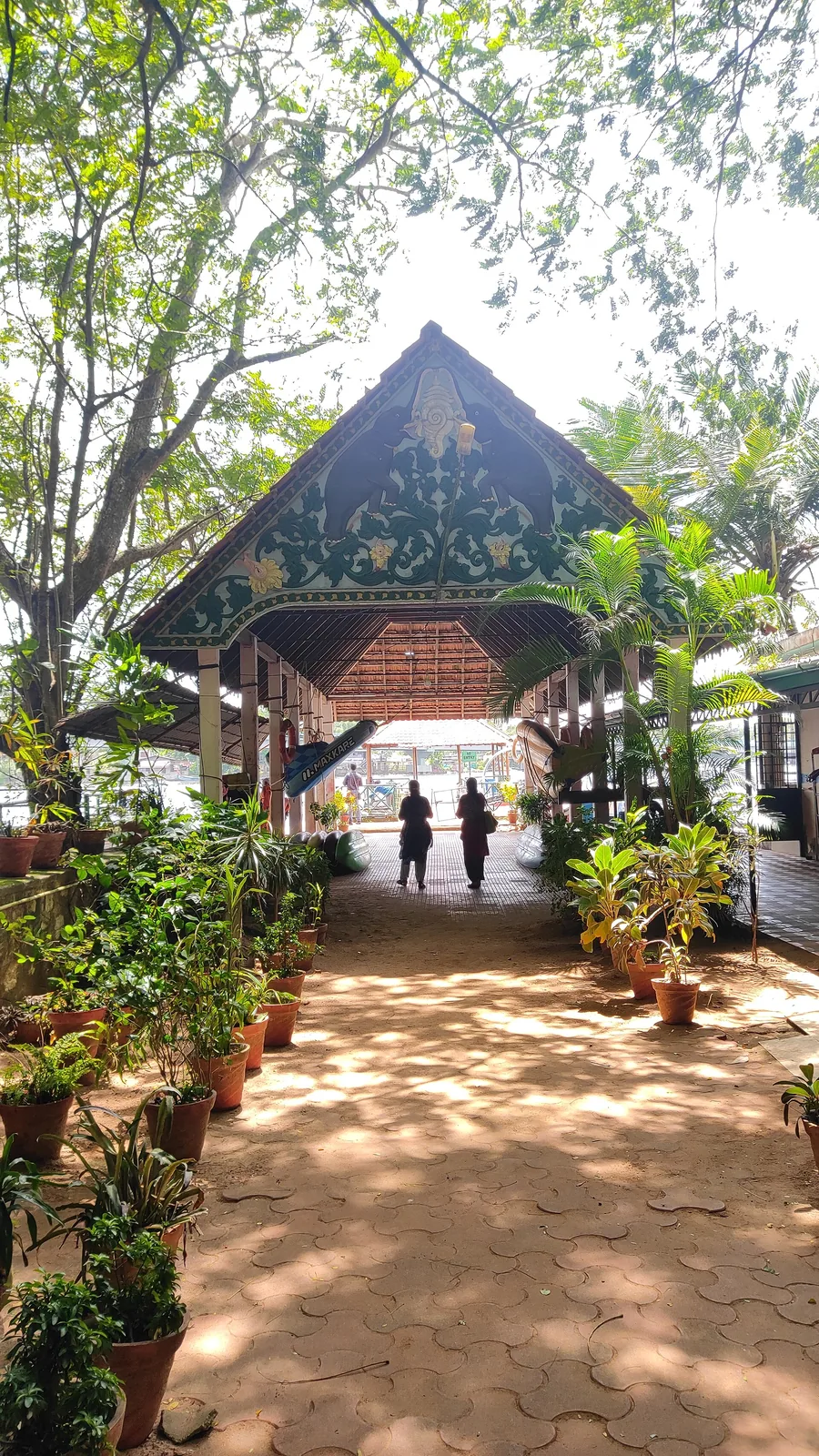
Forty-eight acres of municipal park on the Ashtamudi shore in the middle of Kollam, run by the DTPC — boating and kayaking off a painted jetty, ziplines and rope courses, a heritage walkway of terracotta reliefs, contemporary sculpture left behind by a 2012 festival, and a mangrove wetland with a state biodiversity heritage tag.
10.8 km · ~18 min by cab · straight lineNearby toilets, pharmacies, ATMs, seating and vets are community-mapped and may be incomplete or out of date. Map data © OpenStreetMap contributors | Walking times © openrouteservice.org by HeiGIT
The temple's principal festival, on the tenth and eleventh of the Malayalam month of Meenam — March or early April. Men and boys dress in women's attire of their own choosing and walk in procession by night to the temple carrying traditional lamps. Chamayam is adornment, vilakku is the lamp.
On the temple's own account, because that is how the goddess first answered. The founding legend has cowherd boys at play acting as shy girls and offering flowers and a kottan to a stone, one of them receiving a divine response, and the ritual beginning from there. The costume is the offering, and the festival re-enacts the temple's founding rather than inverting anything.
No, and the claim fails three ways. The photographs show a substantial tiled roof with a gilded finial over the principal shrine. The temple's own site says something different — a temple without an outer wall, not without a roof. And "only in Kerala" fails regardless: Oachira has no roofed sanctum, Thirumandhamkunnu's Sreemoolasthanam stands open to the sky, and Poruvazhy Malanada has no sanctum at all.
The figures disagree by about six times and we will not choose between them. The temple's own website says around four thousand participated in its 2011 festival; attendance claims upward of twenty-five thousand are widely repeated. Part of the gap is probably participants versus the much larger watching crowd.
The tenth and eleventh of the Malayalam month of Meenam, falling in March or early April. We deliberately do not print a Gregorian date — a date captured once goes stale in a year and is then copied for a decade. Check a current Malayalam calendar, or ask on site.
Participation is drawn from the neighbourhood, from across Kerala and increasingly from beyond it, and it is a devotional act — generally the discharge of a specific vow to the Devi, not a spectacle. If you are considering taking part rather than watching, ask at the temple; if you are visiting, bring the manner you would bring to any other act of worship.
An annual reconstruction, in the old manner from poles and the tender leaves of the coconut palm, of the temple's original temporary form — a shrine that rebuilds a model of its own beginning once a year.
A well-kept working Devi temple with good metalwork — a repoussé-clad gable of scrollwork and figures, brass at the shrine base, timber-slatted walls under a tiled roof. It is quiet, and it explains very little of the festival on its own, which is part of the interest.
Morning or early evening is usually best; festival days can be powerful but crowded.
Entry: Darshan is free; vazhipadu offerings at posted rates at the counter. Timings: Morning and evening darshan sessions with the sanctum closed through the middle of the day, as at most Kerala temples; we could not find timings published by the temple itself. Festival nights run late and are a different proposition entirely.
Base yourself in Karunagappally or a nearby town in Kollam, then confirm the last-mile route locally before leaving. Check temple entry customs, dress rules and festival crowd conditions before arrival. If the visit depends on forest, temple, boat, ferry, weather or seasonal access, check the official/local rule on the day before travel.
45 minutes to 2 hours, longer during festival or queue periods.
Nearby you can pair Neendakara (4.7 km), Coir villages (8.0 km), Munroe Island (8.8 km), Munroe canals (8.8 km).
Use official counters for offerings/tickets where applicable. Keep footwear and valuables secure in crowded areas.
Written about Kottankulangara Devi Temple itself — its history, its legends and the arguments about them.


These guides explore Karunagappally and the surrounding area. Choose a visit that fits your interests, allowing separately for travel between stops.


Route-level itineraries and practical guides for the rest of Kerala.
Photographs: Gangadharan Pillai (CC BY-SA 3.0). Wikimedia Commons.