What to expect
Highlights
- Temple visit at Oachira Parabrahma Temple
- Kerala temple architecture and rituals
- Local food, shops and pilgrim services nearby
An unusual temple with no idol or building over the deity, set in an open grove; famous for the Oachira Kali festival.
Check entry arrangements. Ask temple staff about visitor entry, dress requirements and access to the inner shrine before you travel, especially if you are visiting as a non-Hindu.
Dress respectfully and follow the institution’s admission and photography rules.
In the north of Kollam district, hard by National Highway 66, lies one of Kerala’s strangest and most stirring shrines — a temple that is, in the ordinary sense, no temple at all. Oachira Parabrahma Temple has no sreekovil, no consecrated idol and no named presiding deity. Worship is offered instead to the formless Parabrahma, the universal Absolute, beneath ancient banyan trees on an open thirty-six-acre ground. Devotees call it the “temple without a temple”, and locally it is honoured as Dakshina Kashi, the Kashi of the South.
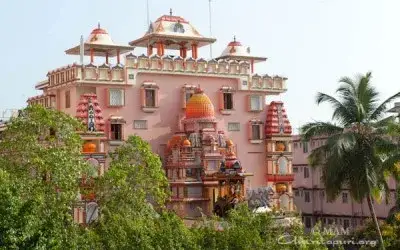
One correction first, because it is repeated everywhere including on this page until recently: Oachira does have gate towers. Two of them stand on the ground, brightly painted — the taller a full tiered gopuram with sculpted figures and a barrel-vaulted crest of kalasams, the other a shorter arched gateway with its own turret and gold finial. So do not go expecting a shrine with no architecture at all. What Oachira genuinely lacks is the thing behind the gate: there is no sreekovil, no consecrated idol and no named presiding deity. The gateway is conventional. There is simply nothing at the end of it in the usual sense.
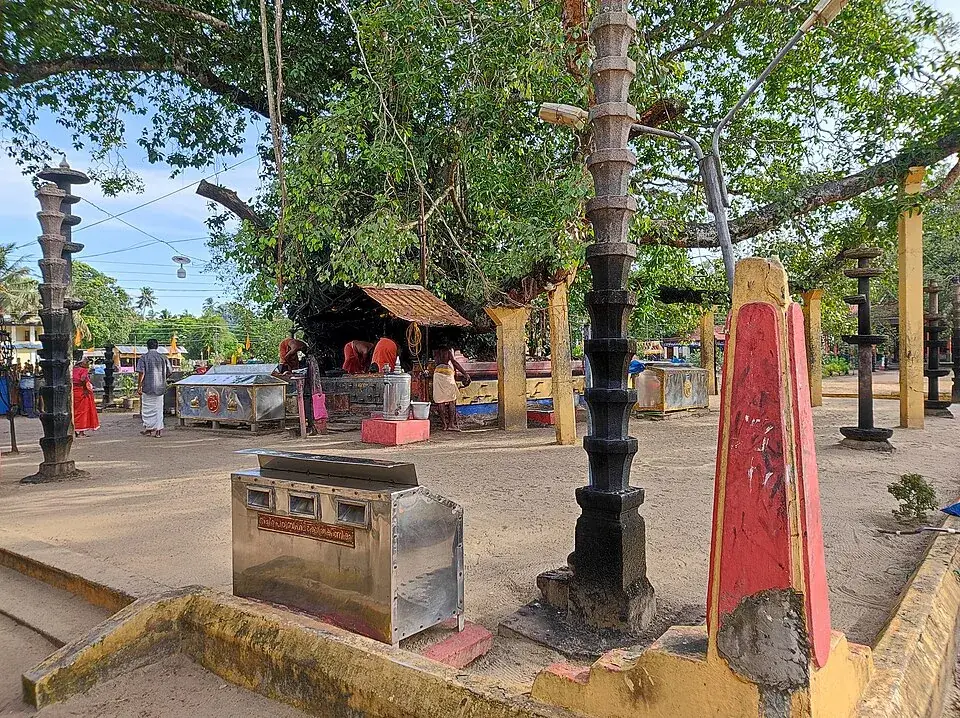
That is what a visitor actually meets. You pass under the towers and find a wide green common shaded by old banyan and peepal trees. There is no walled shrine to circle, no image to garland, no closed sanctum whose doors open only at the priest’s hour. The ground itself is the sanctuary, and the object of worship is the formless, attributeless Parabrahma — the Absolute that the Upanishads describe as being beyond name, shape and image.
This is what makes Oachira so quietly radical. In a land dense with elaborately iconographic temples, here is a major pilgrimage centre built entirely around the idea that the divine cannot be housed or carved. Pilgrims fold their hands towards the open sky and the sheltering trees, meditating on Om and the idea of a single, indivisible reality behind all the named gods. Many texts link this Absolute loosely to Shiva, yet the whole spirit of the place resists pinning the divine to any one face.
The temple grounds comprise 21.25 acres — the figure the Supreme Court of India recorded in December 2024, and the one the mapped boundary agrees with, against the thirty-six acres printed almost everywhere else. It is still an unusually large and open sacred space. Rather than a compact walled compound, you find shaded avenues, a central reservoir, community halls and clearings where rituals unfold in the open air. The adjoining paddy flat — the Padanilam, literally the “battlefield” — is where the temple’s most famous festival is staged, so the geography of the site is bound up with its living traditions.
Because there is no idol and no sanctum queue, the rhythm of a visit here is different from a conventional darshan. There is nothing to jostle towards and no single focal image; the experience is more contemplative and diffuse, a matter of walking the grounds, sitting under the trees and absorbing an atmosphere of stripped-back devotion. For many visitors that absence is precisely the point — the mind is thrown back on the formless idea rather than a comforting picture.
Oachira has long carried an egalitarian reputation. With no sanctum to gate-keep and no idol whose access might be ranked, the open ground has historically welcomed people across castes and communities, drawing farmers, pilgrims and traders alike. The great festivals fold worship together with cattle fairs, agricultural trade and folk performance, so the shrine has always been as much a gathering place of ordinary Kerala life as a site of abstract philosophy.
The result is a place that rewards curiosity rather than spectacle. First-time visitors sometimes leave puzzled, half-expecting a “real” temple somewhere behind the trees. Those who understand what they are looking at, though, find Oachira one of the most thought-provoking stops in southern Kerala — a shrine that turns the very idea of a temple inside out and asks you to worship an emptiness that is meant to be a fullness.
By tradition — and it should be read as tradition rather than documented fact — Oachira’s open-air, image-less worship is bound up with the conviction that the Supreme is Parabrahma, the formless Absolute that can be neither carved nor confined. The legend holds that the sacred ground here was consecrated to that attributeless reality, which is why no one ever raised an idol or a sanctum; to enclose the boundless, the story goes, would be to diminish it. Devotees say the banyan trees themselves stand as living pillars of this open temple.
The most vivid legend attaches to the festival of Oachira Kali, and the confusion around it is best introduced by watching an official source contradict itself. Kerala Tourism’s own event page says the ritual “commemorates a historic conflict between the Kayamkulam and Ambalapuzha kingdoms” and then, a few lines further down the same page, calls it “the historical battle fought between the Maharaja of Travancore, Marthanda Varma, and the Raja of Kayamkulam.” Those are not the same war. Ambalappuzha is not Travancore. The second version is the one Wikipedia carries alone, and it is the one that survives scrutiny, because in the eighteenth century Kayamkulam and Ambalappuzha were allies against Travancore rather than enemies of each other — Ambalappuzha sheltered the Kayamkulam ruler after Marthanda Varma took his country.
Two further things point the same way, and both are on the ground rather than in the legend. The first is the name. Oachira is read as a worn-down form of Onattuchira — the chira, the reservoir, belonging to the Kayamkulam Raja. The battlefield is named for one side of the war. The second is the early nineteenth-century Travancore survey of Ward and Conner, which recorded a damaged temple structure beside the padanilam and a large central reservoir, and noted what the reservoir was used for: soldiers bathing, and horses being watered. That is a documentary record of a working military ground, made by surveyors with no stake in anybody’s legend. Read the ground rather than the story and the ritual stops being folklore about a feud and becomes the residue of a muster.
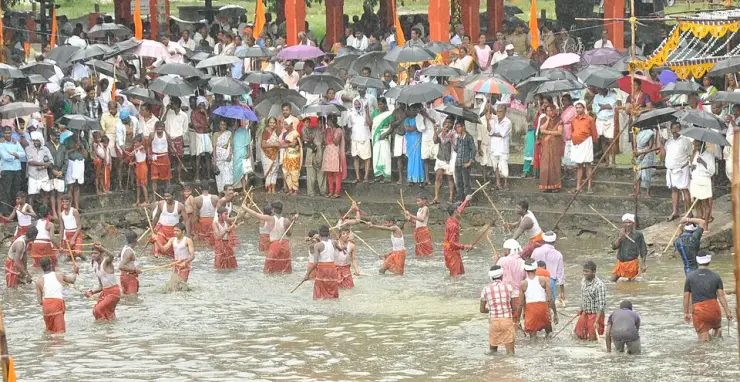
Out of that remembered conflict grew a ritual rather than a grudge. Each year, framed purely as tradition, men and boys divide into two “armies”, wade into the muddy paddy flat and stage a mock battle — brandishing sticks in place of swords, splashing water and charging to the thunder of drums. It is theatre and homage, not enmity: a stylised replay of an old story, offered on sacred ground as a form of worship and remembrance. The legend, in other words, survives as performance.
A second correction, and this one is simply a wrong number. Almost every account of this temple — tourism sites, aggregators, encyclopaedias and this page until now — says the grounds cover thirty-six acres. They do not. The Supreme Court of India recorded the extent as 21.25 acres in its judgment of 3 December 2024, and the mapped boundary computes to about the same. The thirty-six-acre figure appears to have been copied outward from a single source and never checked against anything. It is a useful tell: a site that prints thirty-six acres is copying, not reporting, which is worth remembering when the same sites also print opening hours.
The last one is uncomfortable and matters more than either. Oachira is widely described as a place where worship was open to all irrespective of caste long before Travancore’s Temple Entry Proclamation of 1936 — one official account goes as far as calling it the only such place in Hinduism, which is an unprovable superlative about an entire religion and should not be repeated. The early tradition of open worship appears to be real, and a shrine with no sanctum has no door at which to turn anyone away. But the modern institution allocates the seats on its own governing committee by community percentage under its own rules — 40 per cent Ezhava, 40 per cent Nair, 10 per cent Dhivara, 10 per cent other Hindus — and in March 2023 a sub-committee formed to assist the court-appointed receiver left the Ezhava community out entirely, drawing a protest on the temple ground reported at around ten thousand people. The honest sentence is not that the caste-blind story is false. It is that both things are true at once: a temple can have no door and still have a gate.
Oachira is an old sacred site whose origins reach back beyond reliable record. It is remembered as an ancient pilgrimage centre and is spoken of in Puranic and devotional tradition, though — as with many temples of great antiquity — the precise dates of its founding are not documented and should be treated as tradition rather than fixed history.
One relatively firm reference comes from the early nineteenth century, when the British surveyors Ward and Conner, mapping Travancore, recorded the site and noted an old and damaged temple structure on the eastern side of the Padanilam together with a large reservoir at the centre of the grounds. Their survey gives a rare documentary anchor for a place otherwise known chiefly through oral and ritual memory.
The martial character of the site has deep roots. The Oachira Kali is understood to have originated as an annual war exercise associated with the soldiers of the Kayamkulam Raja, at a time when the surrounding region supported a dense network of kalaris — martial-arts schools said to have numbered in the region of a hundred or more until the twentieth century. As the old political and military world faded, the exercise survived as ritual performance rather than preparation for war.
Over the centuries Oachira grew into a broad centre of regional life, earning the epithet Dakshina Kashi, the Kashi of the South, and drawing pilgrims across caste lines to its open ground. Its great annual gatherings became fixtures not only of worship but of trade — famous especially for cattle fairs and agricultural markets — so the shrine’s history is as much economic and social as it is religious.
Today the temple is administered as a well-known Kerala pilgrimage centre and remains, unusually, faithful to its founding idea: even as facilities and crowds have grown, no idol has been installed and no sanctum built. That continuity — a major, living temple that has never abandoned its formless, open-air worship — is itself the most remarkable fact of Oachira’s history.
It is genuinely one of a kind: a major Hindu temple with no sreekovil, no consecrated idol and no named presiding deity, where worship is directed at the formless Parabrahma under open sky and old banyan trees. It has gate towers, one of them a full tiered gopuram — and then nothing behind them, which is far stranger than having no gate at all.
The philosophy is the attraction. Oachira makes tangible the Upanishadic idea of an attributeless Absolute — a rare chance to encounter, on the ground, a form of devotion built around emptiness and Om rather than image and iconography.
The setting is unexpectedly peaceful — a wide, tree-shaded common of 21.25 acres rather than a cramped compound, giving space to walk, sit and reflect in a way few busy temples allow.
The festivals are extraordinary theatre. The Oachira Kali mock battle in the muddy Padanilam, with its stick-wielding “armies” and drum-driven charges, is one of the most dramatic ritual spectacles in Kerala, and the twelve-day Panthrandu Vilakku transforms the grounds into a blaze of lamps, fairs and performance.
There is a strong egalitarian, folk-life character to the place — cattle fairs, agricultural markets and community meals fold worship together with everyday Kerala life, so a visit is as much cultural immersion as pilgrimage.
It is exceptionally easy to reach — right beside National Highway 66 with its own railway station on the main coastal line — making it a rewarding, offbeat stop between Kollam and Alappuzha for travellers curious about the road less taken.
Road km to Kollam; ghat roads and traffic vary — allow extra.
Morning or early evening is usually best; festival days can be powerful but crowded.
Live forecast loads in your browser.
Sun and moon are calculated for this location and shown in IST. Photography windows are the hour around sunrise and sunset; the sunset bearing is degrees clockwise from true north. Moon phase is accurate to about half a day.
Verified hotels, homestays, restaurants, experiences, sights, shops and rentals around Oachira Parabrahma Temple — commission-free, with direct contact. Filter by what you need.
The Mata Amritanandamayi Math at Amritapuri, which takes visitor bookings for simple ashram rooms.
Nalla Bhoomi at High School Junction in Karunagappally focuses on Kerala coastal and Kuttanad cooking. Its menu includes banana-leaf kizhi biriyani, duck mappas and karimeen pollichathu. This is an NH66-side meal stop north of Kollam; check dish availability before making a special journey.
Highway hotel off the NH near Karunagappally town centre, with A/C and non-A/C rooms and the Galaxy restaurant.
Karunagappally town’s principal Shiva shrine, on the Pallikkal river. It is administered by the Travancore Devaswom Board.
The samadhi ashram of Chattampi Swamikal at Panmana, open 8.30am to 6pm daily. Panmana Asramam, Panmana P.O., Kollam, Kerala.
Teaching Ayurveda hospital of the Amrita School of Ayurveda at Vallikavu, with public OP booking.
Karunagappally’s state bus depot on the national highway, run by an Assistant Transport Officer and the practical hub for buses along this coast.
Station KPY at Edakkulangara, the nearest railway station to Amritapuri.
Karunagappally hotel with deluxe, executive and step-free rooms, plus a bar and restaurant.
Malabar Gold & Diamonds showroom opposite the Government Boys High School, Karunagappally.
Ten-storey shopping mall at Lalaji Junction, Karunagappally, with a cinema and 25-plus stores.
The municipal office for Karunagappally town, handling certificates, licences and permits. Karunagappally Municipality, Karunagappally P.O., Kollam, Kerala 690518.
Book with the place itself. India’s cyber-crime coordination centre warned in April 2025 that convincing copies of hotel and pilgrimage booking sites are being pushed through sponsored search and social ads, taking payment for rooms the property never hears about. Every listing here links to the business’s own contact details and its own Google or Bing profile — we take no commission and sit in nobody’s payment path. If a booking page reached you through an ad, check the address bar against the property’s own site before you pay. Fraud can be reported on cybercrime.gov.in or on 1930.
Find food, accommodation and activities across Karunagappally. Browse the guides for places to eat, stay and explore along your route.
4 more places around Karunagappally. Open a guide to plan the visit and onward journey.
A coastal temple destination in the Cheriazheekal–Alumkadavu belt, visited as a living place of worship rather than a generic beach-side landmark.
8.7 km · ~14 min by cab
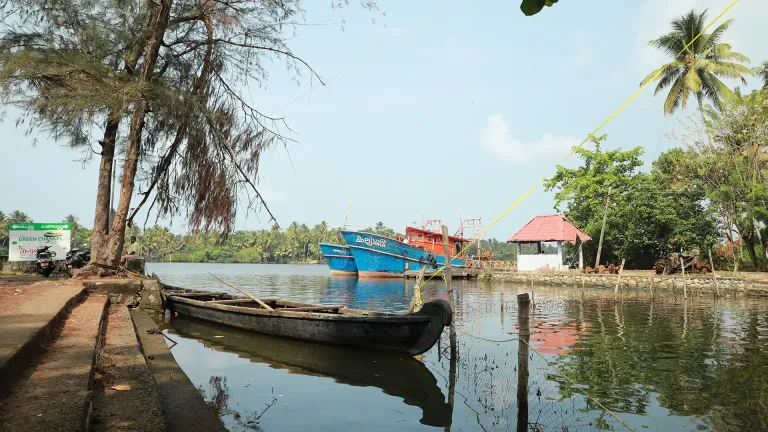
The boatyard village on Kayamkulam Kayal where the first Kerala houseboat was designed in 1991 — hulls of anjili wood drawn together with coir on an open bank, three kilometres west of Karunagappally. ⚠ Kerala Tourism places it on Ashtamudi Lake and calls it the birthplace of India’s houseboats; it is on Kayamkulam, and Srinagar’s date from the 1880s. These are private working yards, not a ticketed site — ask before you walk in.
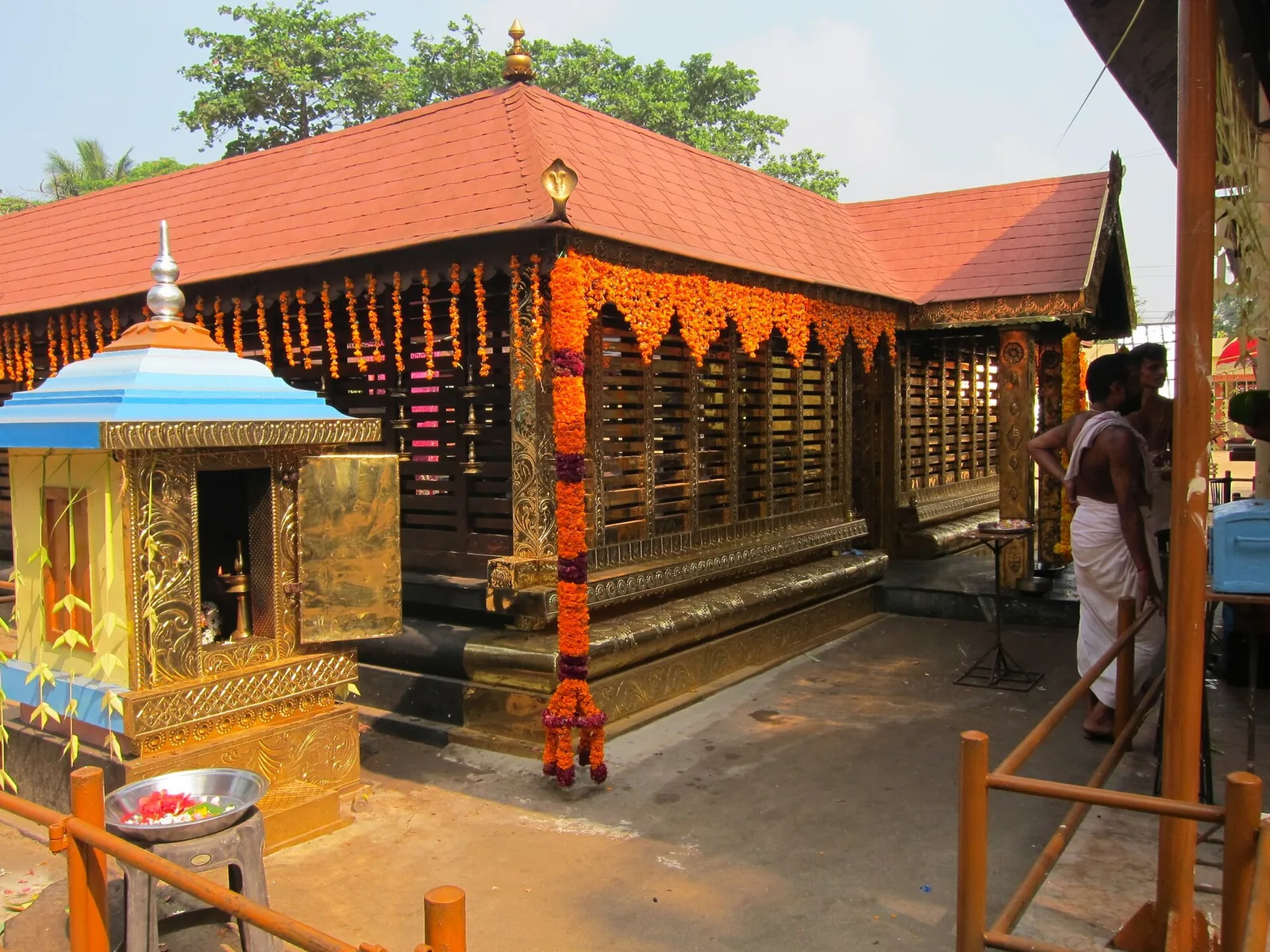
17.6 km · ~29 min by cab
A Devi temple at Chavara north of Kollam, known across Kerala for Chamayavilakku — the two nights in Meenam when men and boys dress in saris and carry lamps in procession to the goddess, re-enacting the cowherd boys of its founding legend.
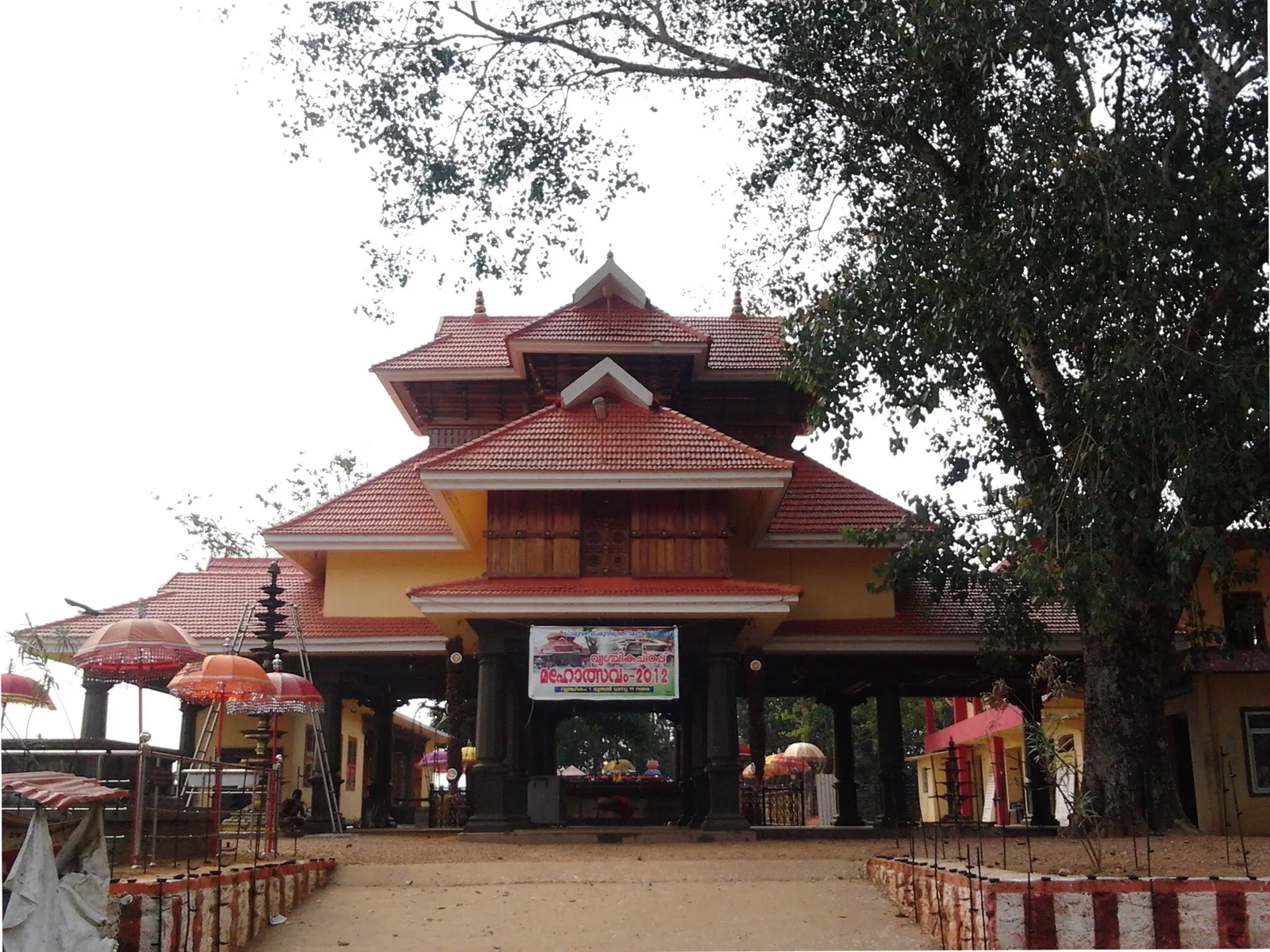
16.6 km · ~28 min by cab
A temple with no idol and no sanctum — an open pillared mandapam over a raised platform, worshipped by sankalpam. The presiding figure is Mala Appooppan, the grandfather of the hill, conceived in the form of Duryodhana; the priest is the Oorali rather than a Brahmin, and toddy is the traditional offering.
Roampedia is commission-free — own or know a stay, eatery, guide or shop near Oachira Parabrahma Temple? List it and it appears here once verified.
Add a nearby businessEntry: Free. There is no gate and no ticket counter.
Dress code: Dress modestly and respectfully, as at any Kerala temple — covered shoulders and legs are wise. In keeping with the shrine’s open, egalitarian character there is no walled sanctum with strict access, but the ground is sacred, so behave and dress as you would at a place of worship.
Festivals: Oachira Kali — a ritual mock battle in the water-logged Padanilam, held on the first days of the Malayalam month of Mithunam, around mid-June. Panthrandu Vilakku (“Twelve Lamps”) — a twelve-day festival in Vrishchikam, roughly November–December, with lamps, cultural performances, community meals and a large cattle and agricultural fair. Irupathettam Onam, the “28th Onam” cattle festival featuring large ceremonial bull effigies, is also associated with the grounds. All dates shift with the Malayalam calendar.
Photography: Photography of the open grounds and trees is generally fine, and the festivals — especially the muddy drama of Oachira Kali and the lamps of Panthrandu Vilakku — are wonderfully photogenic. Be respectful around worshippers and rituals, and check for any local restrictions before photographing ceremonies.
If you are travelling by bus or ferry, check the return service with the operator before setting out. Leave time to reach the stop or jetty after your visit.
Ask at the bus stand for the time of the last service back, not the next one. If you miss it, an auto or app cab is the fallback — agree the fare before you get in.
If you need step-free access, contact the site before travelling. Ask about a level entrance, steps along the route, the nearest drop-off point, seating and accessible toilets.
Charge cap and free-transaction limits: Reserve Bank of India, in force since 1 May 2025.
These services are listed within about 1.2 km of Oachira Parabrahma Temple. Walking distances follow mapped routes; access and opening hours can change. Other services may be closer but are not included here.
Emergency numbers are verified against official government and state tourism sources. 112 works anywhere in India.
The boatyard village on Kayamkulam Kayal where the first Kerala houseboat was designed in 1991 — hulls of anjili wood drawn together with coir on an open bank, three kilometres west of Karunagappally. ⚠ Kerala Tourism places it on Ashtamudi Lake and calls it the birthplace of India’s houseboats; it is on Kayamkulam, and Srinagar’s date from the 1880s. These are private working yards, not a ticketed site — ask before you walk in.
8.7 km · ~14 min by cab · straight lineA temple with no idol and no sanctum — an open pillared mandapam over a raised platform, worshipped by sankalpam. The presiding figure is Mala Appooppan, the grandfather of the hill, conceived in the form of Duryodhana; the priest is the Oorali rather than a Brahmin, and toddy is the traditional offering.
16.6 km · ~28 min by cab · straight lineA Devi temple at Chavara north of Kollam, known across Kerala for Chamayavilakku — the two nights in Meenam when men and boys dress in saris and carry lamps in procession to the goddess, re-enacting the cowherd boys of its founding legend.
17.6 km · ~29 min by cab · straight line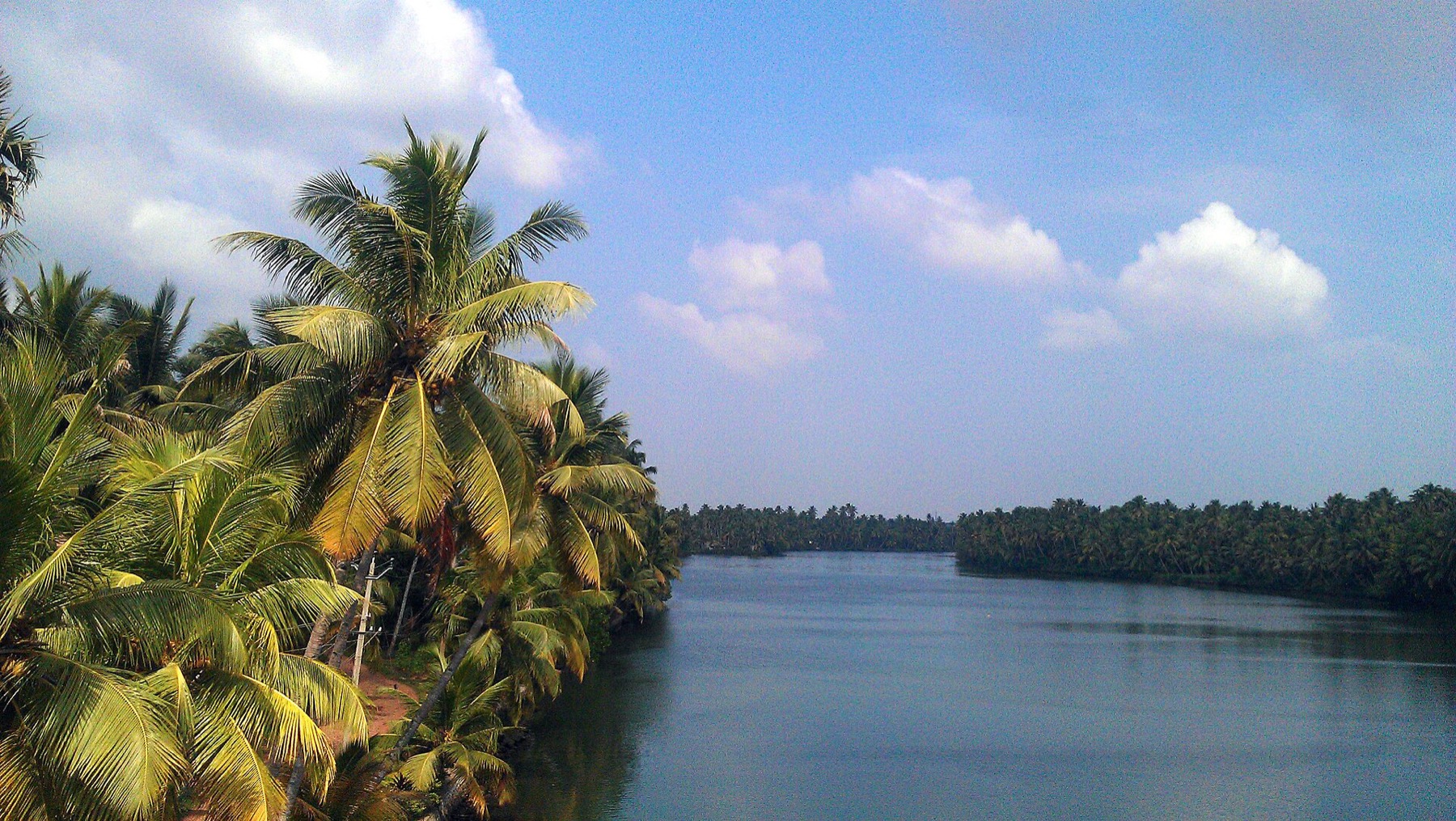
The river that rises in the Western Ghats behind Thenmala, is impounded at the Parappar dam, and reaches the sea through Ashtamudi past Munroe Island — the thread that connects the east of this district to the west.
19.0 km · ~32 min by cab · straight line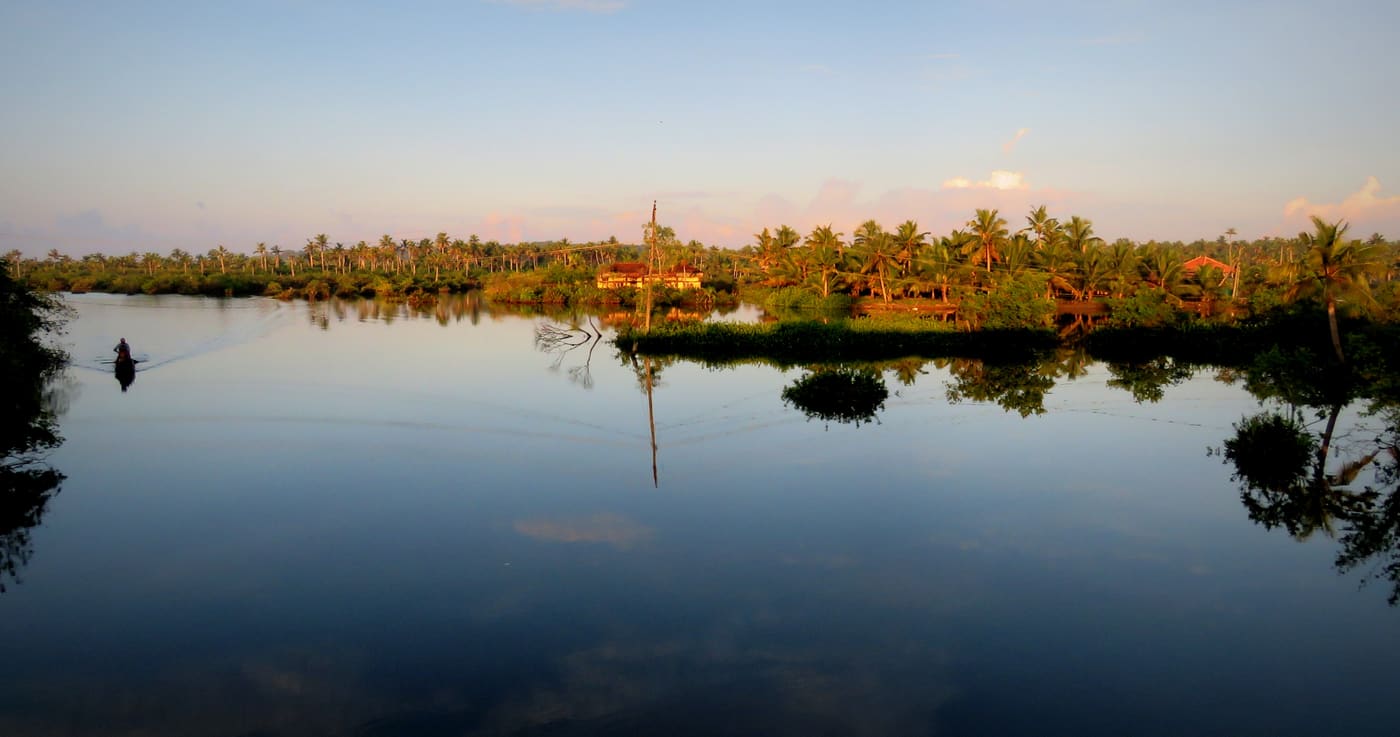
Canal village island known for canoe trips, coir work and slow backwater life.
19.4 km · ~32 min by cab · straight line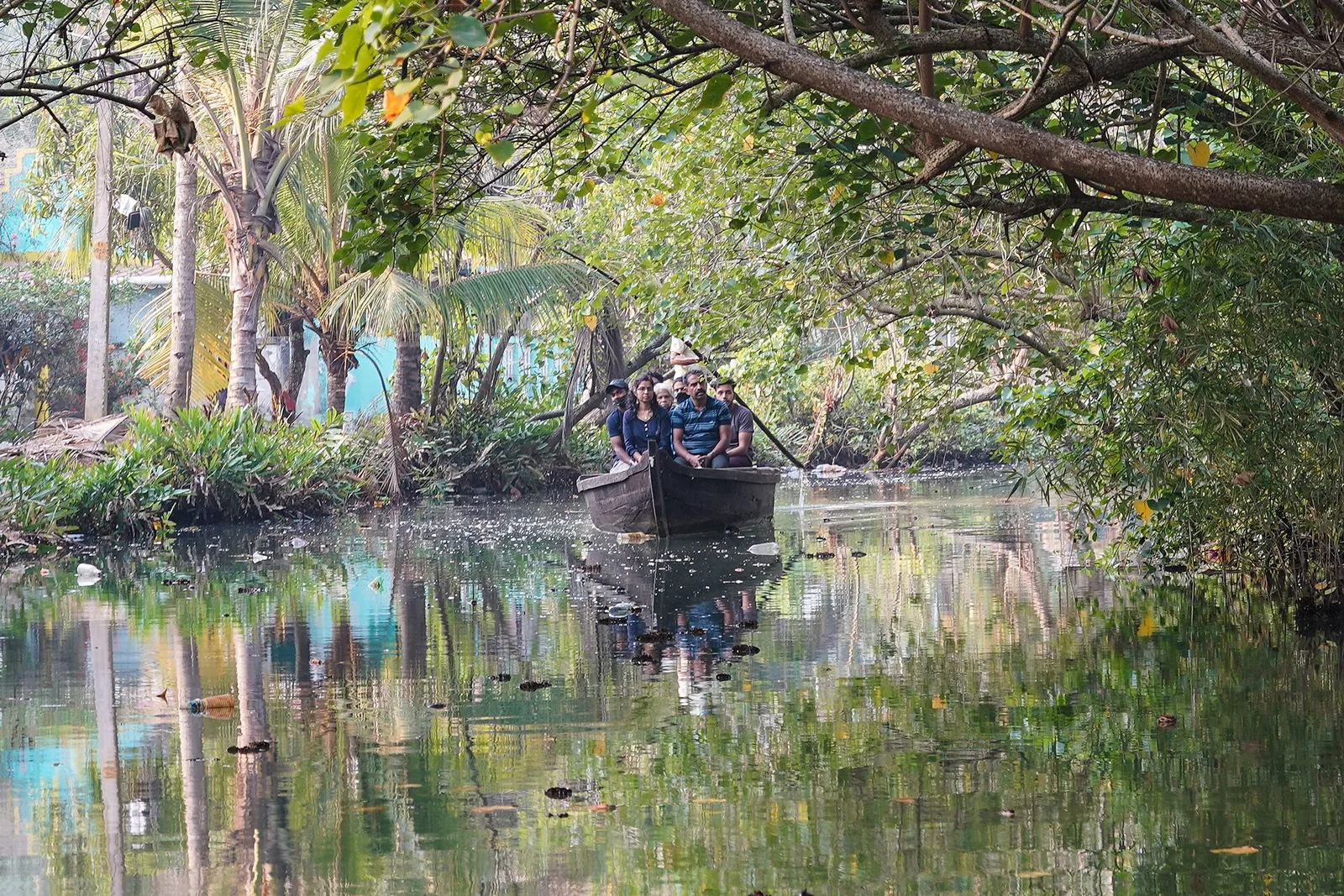
The narrow inland canal network threading Munroe Island, navigable only by small country canoe — the reason the island is visited at all, and a different waterway entirely from the open Ashtamudi lake.
19.4 km · ~32 min by cab · straight line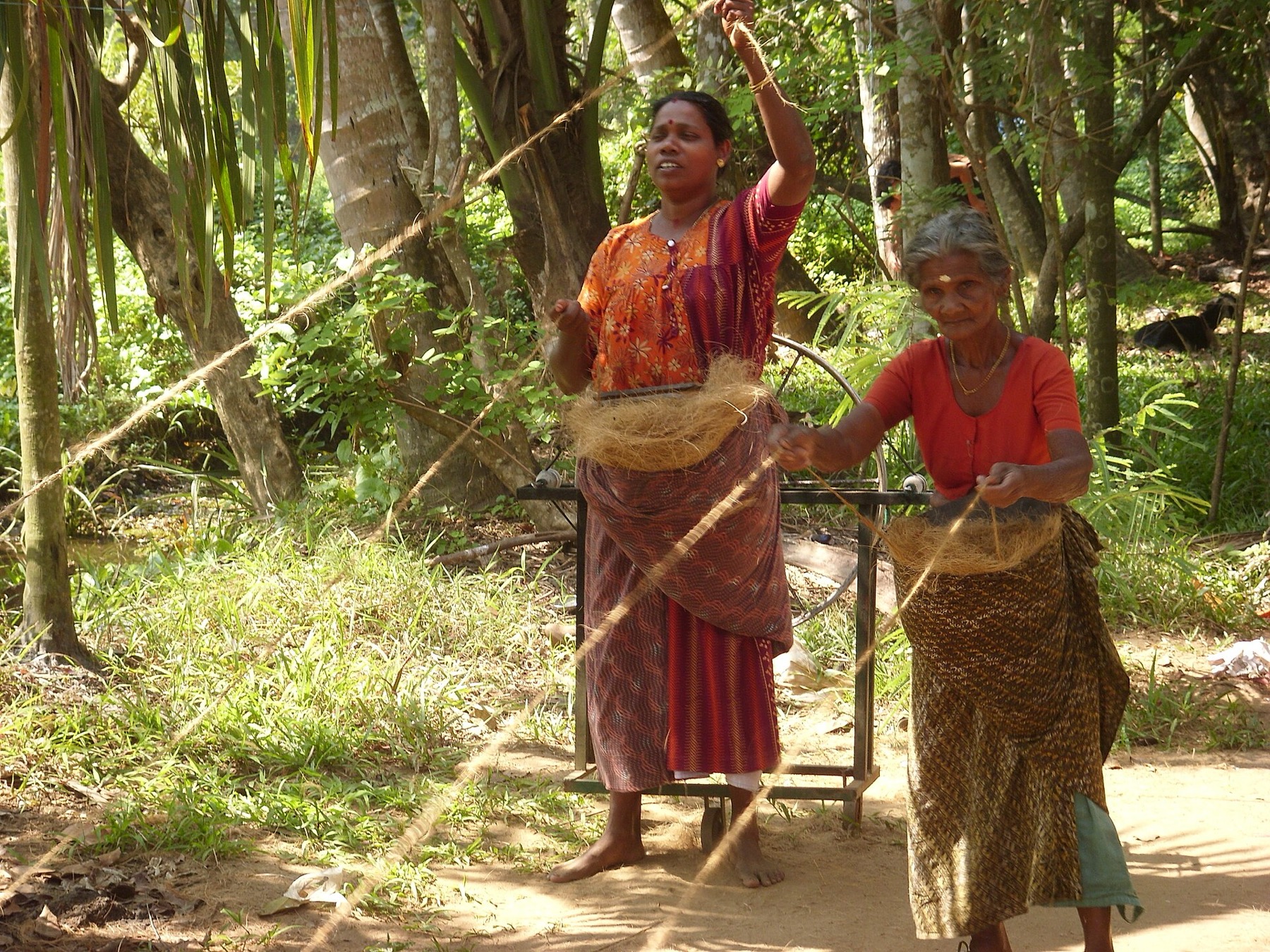
The coir-working settlements of Munroe Island, where coconut husk is retted in the backwater and spun into yarn — a working craft economy on the canal banks rather than a demonstration laid on for visitors.
20.2 km · ~34 min by cab · straight line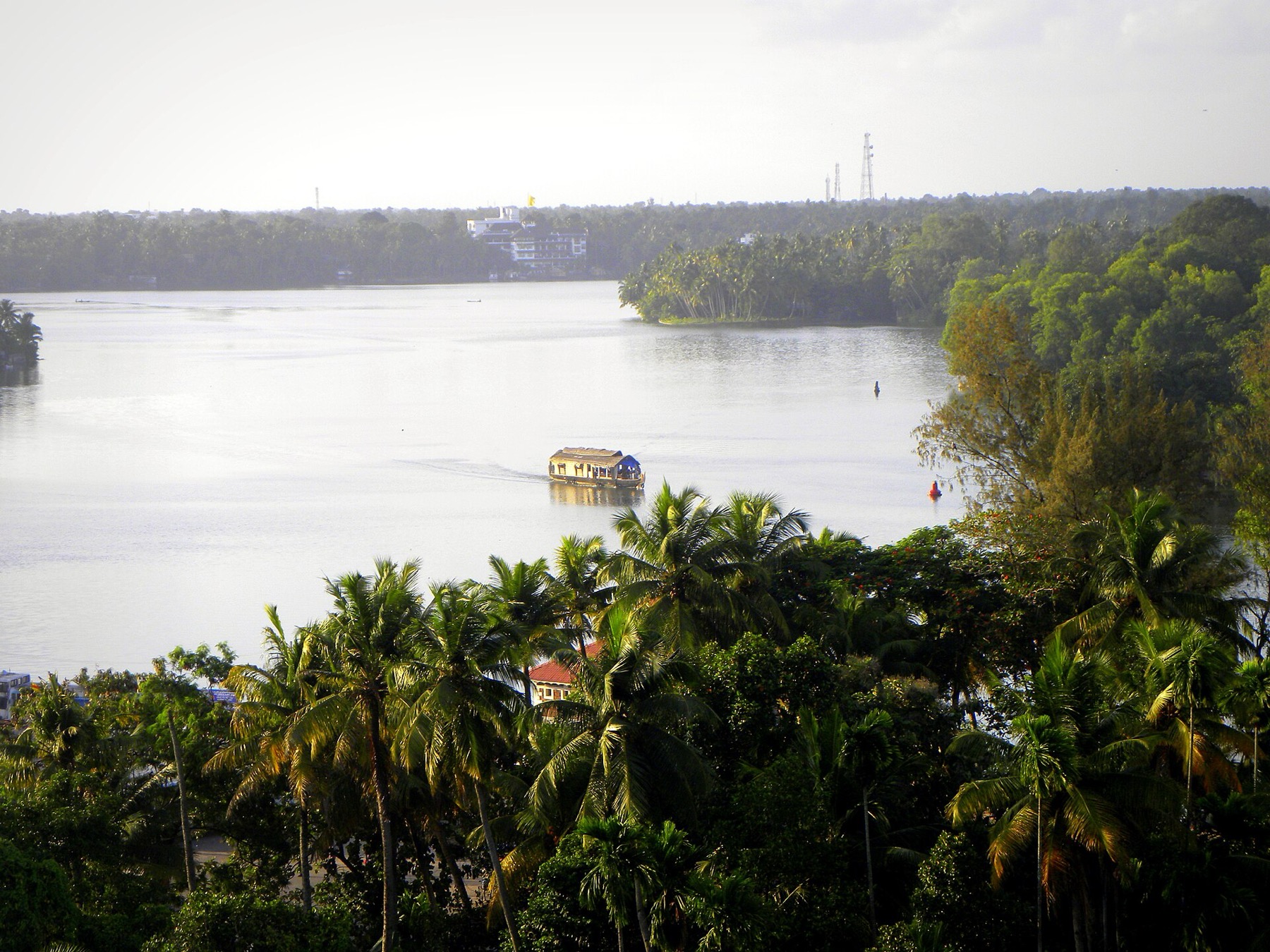
The open-water outlooks on the Munroe Island and Perumon side of Ashtamudi, where the lake widens out — the wide views the canal trips themselves do not give you.
23.1 km · ~38 min by cab · straight line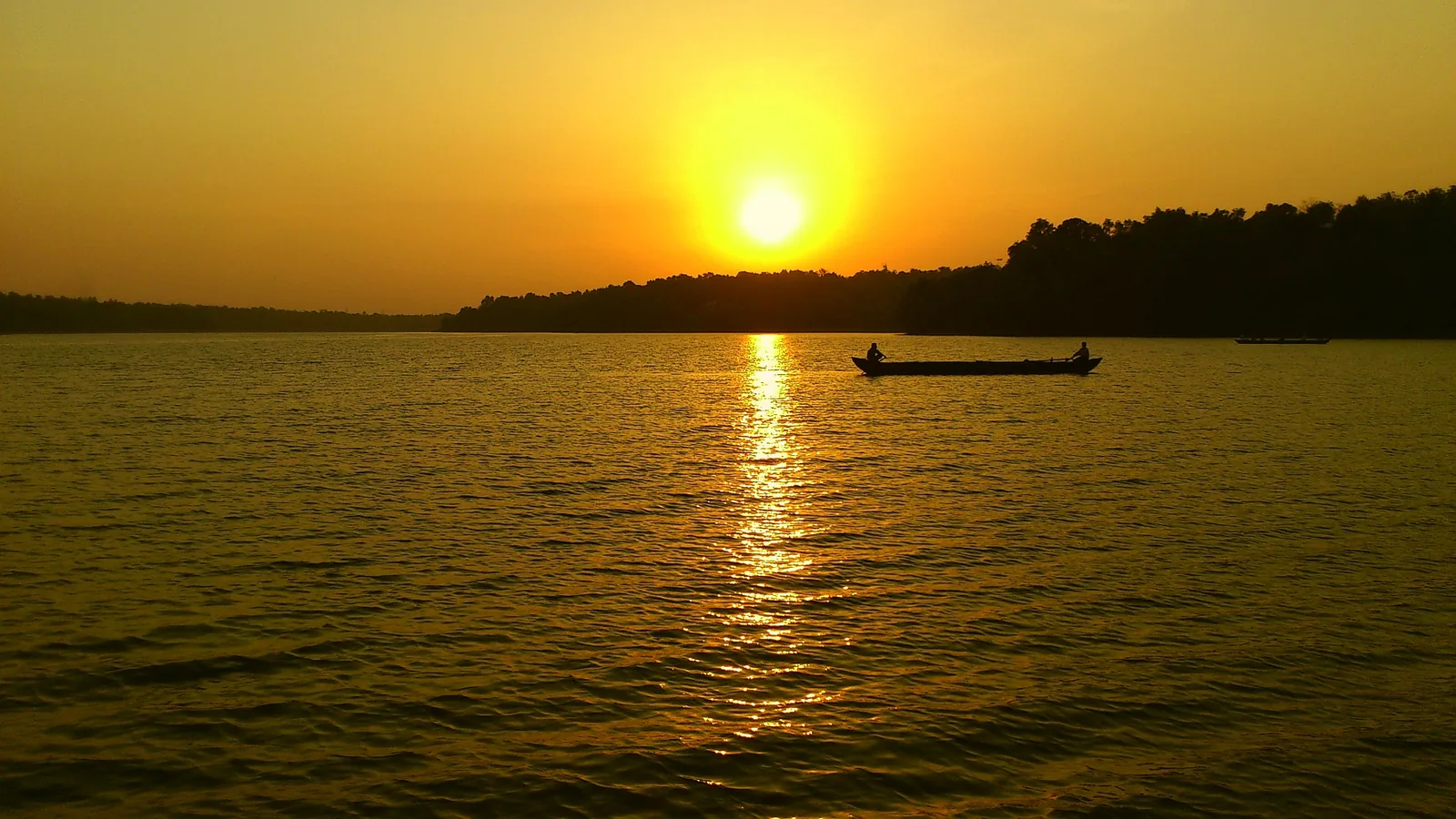
Kerala’s largest freshwater lake, a Ramsar wetland ringed by hills and a Sastha temple, north of Kollam.
24.4 km · 26 min drive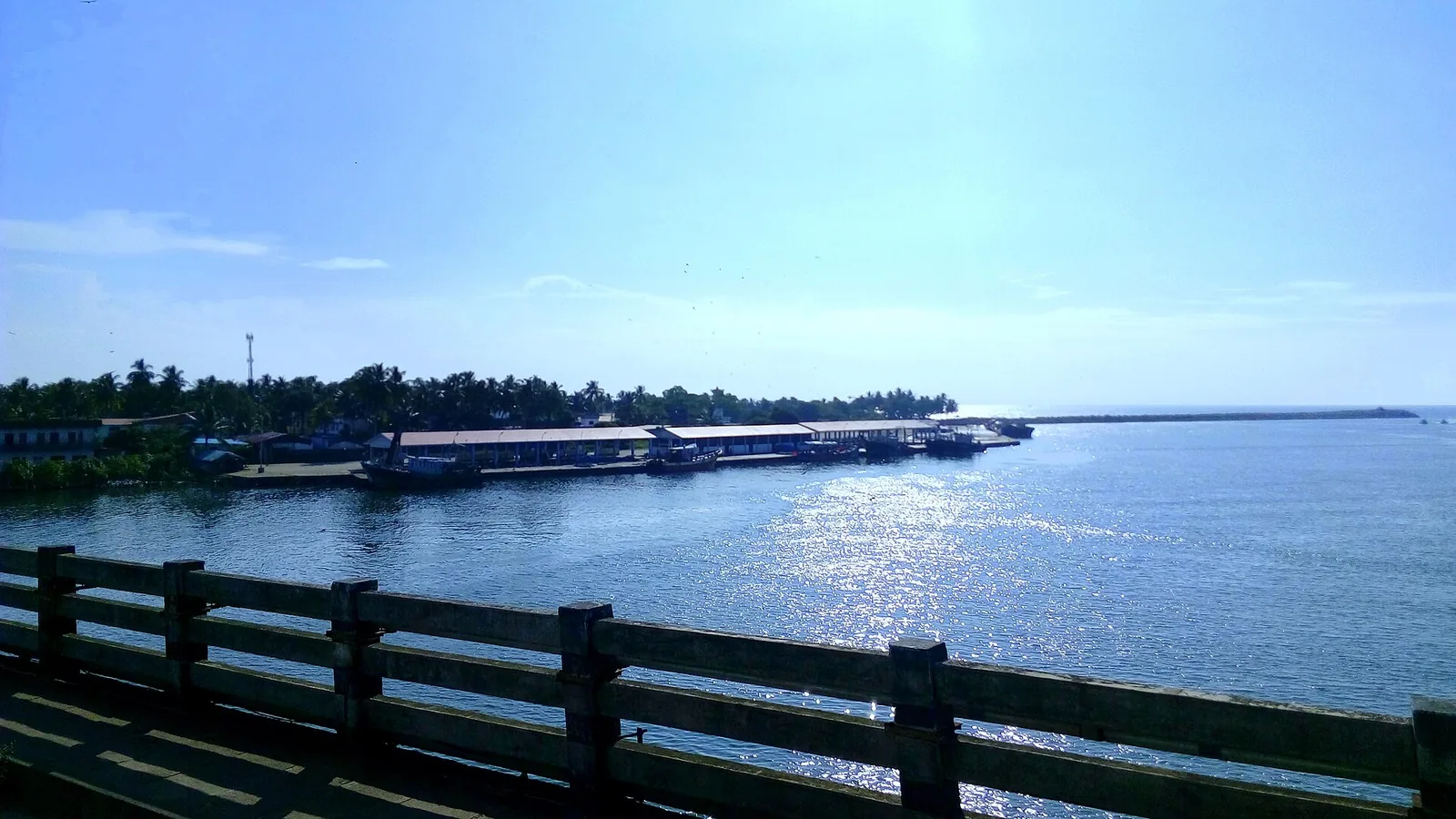
By most accounts Kerala’s largest fishing harbour, at the mouth of Ashtamudi Lake about 9 km from Kollam town, and where Indian fishing was mechanised; two bridges cross the confluence and the early-morning auction is the sight to catch.
25.8 km · 28 min drive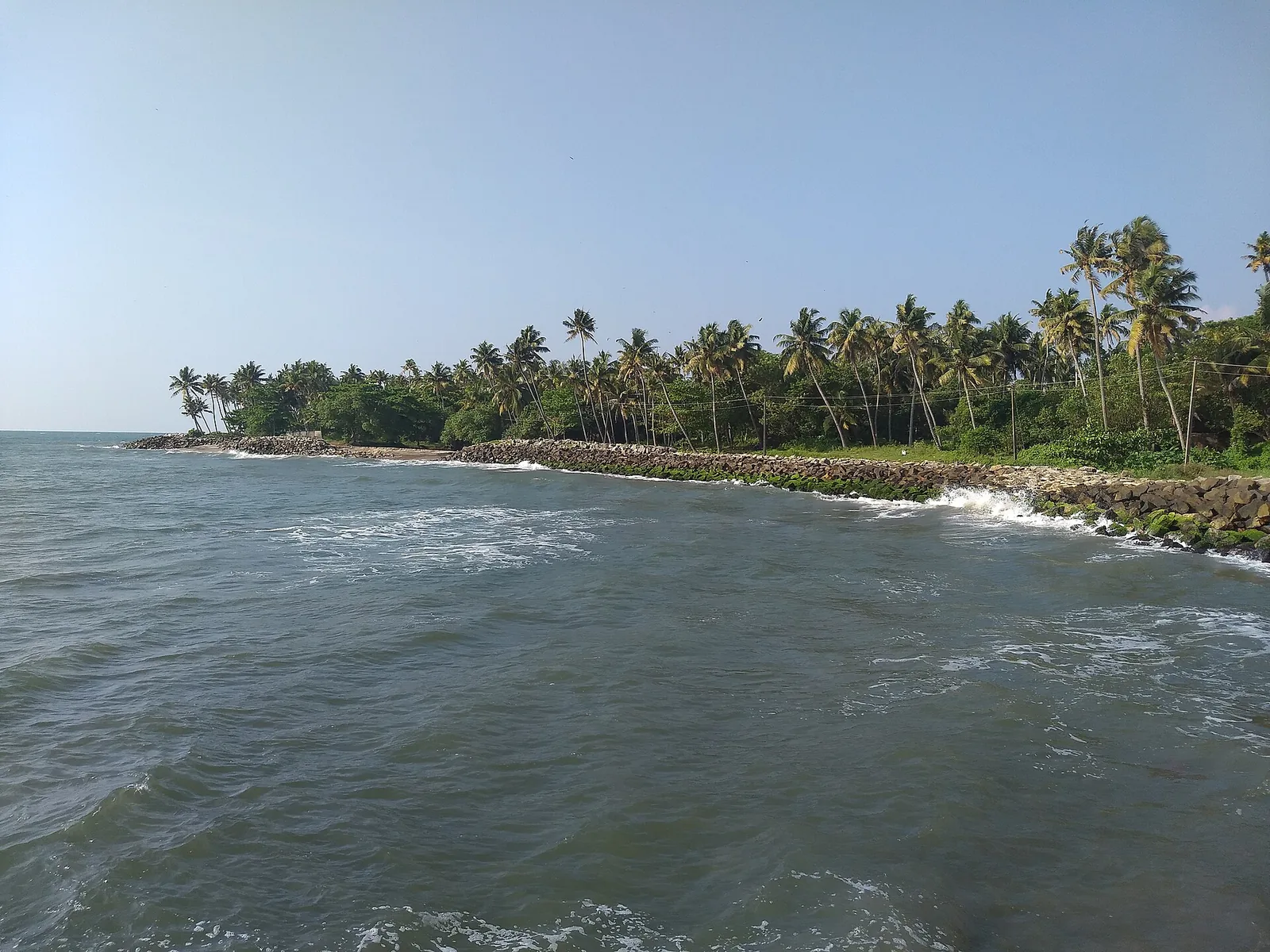
A quiet, curved bay beach west of Kollam town, calmer than the city beach and good for a relaxed evening.
32.2 km · 35 min drive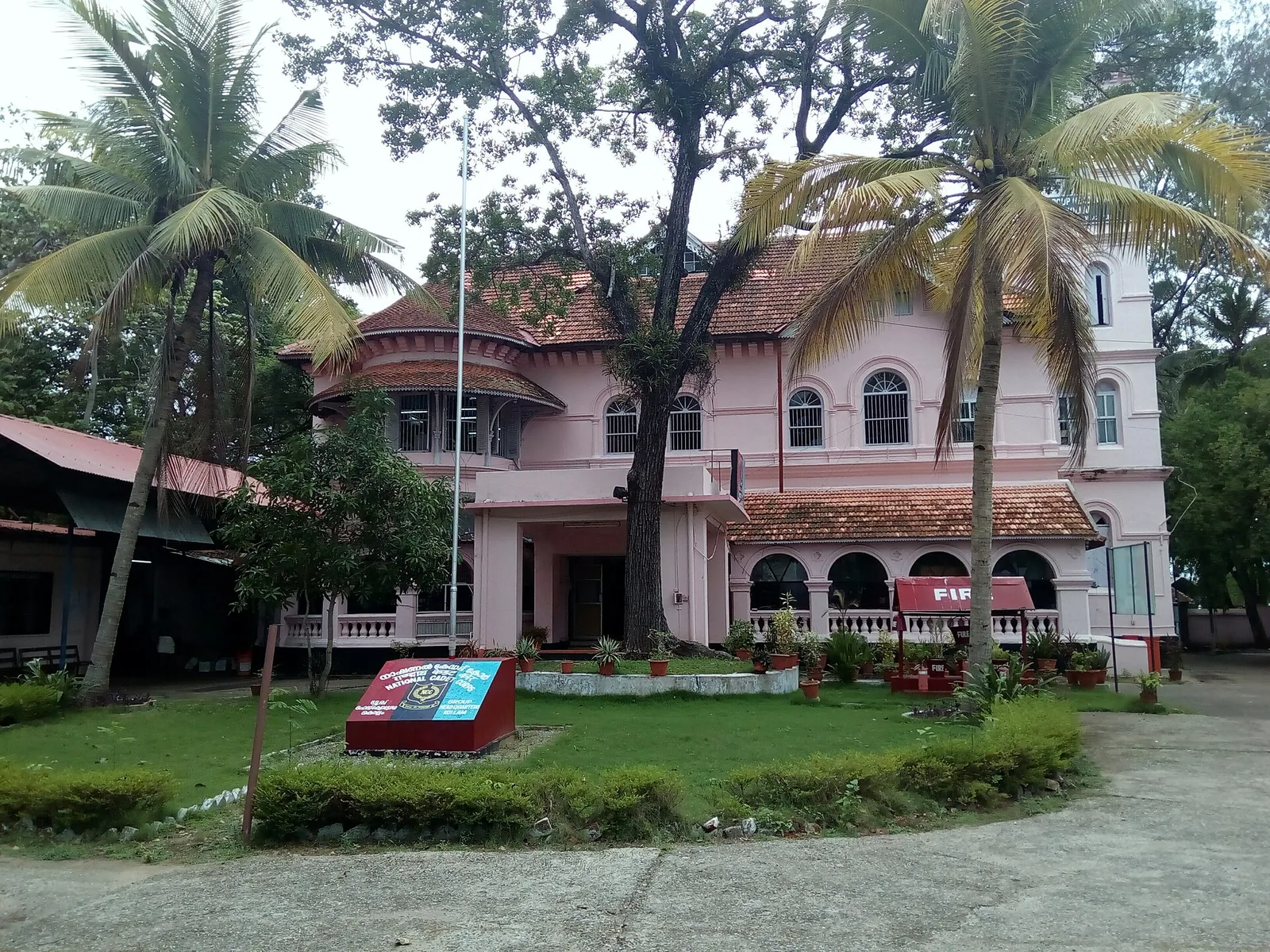
A Travancore royal residence on the Ashtamudi shore in Kollam, built to be arrived at by boat and now a working NCC establishment — viewed from outside or from the water.
35.3 km · 35 min driveWalking and driving times are real routed distances, except the few marked “straight line”, which are direct-line estimates and will read short. Fare figures are estimates from Kerala’s notified auto/taxi tariff and exclude waiting and night charges. Routing: © openrouteservice.org by HeiGIT | Map data © OpenStreetMap contributors
Nearby toilets, pharmacies, ATMs, seating and vets are community-mapped and may be incomplete or out of date. Map data © OpenStreetMap contributors | Walking times © openrouteservice.org by HeiGIT
Yes. Oachira is famous precisely for having no idol, no image and no roofed sanctum, and no single named presiding god. Worship is directed at the formless Parabrahma — the universal Absolute, associated with Om — beneath ancient banyan trees on open ground. This is why it is called the “temple without a temple”.
Oachira Kali is a ritual mock battle staged in the water-logged paddy field (the Padanilam) beside the temple. Men and boys split into two “armies” and, to the beat of drums, wade in and stage a stylised fight with sticks in place of swords. By tradition it commemorates an old battle between the Kayamkulam and Ambalappuzha kingdoms — though that attribution should be held loosely, since in the eighteenth century those two were allies against Travancore rather than enemies of each other. It is framed today purely as remembrance and performance, and falls in the Malayalam month of Mithunam, around mid-June.
Panthrandu Vilakku means “Twelve Lamps”. It is a twelve-day festival held in the Malayalam month of Vrishchikam, roughly November–December, during which pilgrims stay on the grounds and the site fills with rituals, cultural performances, community meals and a large cattle fair and agricultural market.
Entry is generally free. As an open ground rather than a sanctum-based temple, the site is broadly accessible through the day; there is no idol darshan queue with fixed opening and closing of sanctum doors in the usual sense, though specific ritual and office hours can vary — confirm locally before planning around a particular time.
The temple sits right beside National Highway 66 in the north of Kollam district. Oachira has its own railway station on the main coastal line between Thiruvananthapuram and Ernakulam, and frequent buses stop on the highway. The nearest airport is Thiruvananthapuram, roughly 100 km south.
There are gate towers — two of them, painted, one a full tiered gopuram — so the approach looks conventional. What is missing is everything behind it: no sreekovil, no consecrated idol, no image to garland, just a large tree-shaded common where you fold your hands towards the open sky. The experience is contemplative rather than spectacular, unless you time your visit for Oachira Kali or Panthrandu Vilakku, when the grounds come alive with ritual, fairs and crowds.
Morning or early evening is usually best; festival days can be powerful but crowded.
Entry: Free. There is no gate and no ticket counter. Timings: As an open, un-walled ground rather than a sanctum-based shrine, the site is generally accessible through the day; there is no conventional idol-darshan queue with fixed sanctum opening and closing. Specific ritual and office hours can vary, so check locally if you want to catch a particular ceremony.
45 minutes to 2 hours, longer during festival or queue periods.
Nearby you can pair Alumkadavu (8.7 km), Poruvazhy Peruviruthy Malanada (16.6 km), Kottankulangara Devi Temple (17.6 km), Kallada river (19.0 km).
Use official counters for offerings/tickets where applicable. Keep footwear and valuables secure in crowded areas.
Written about Oachira Parabrahma Temple itself — its history, its legends and the arguments about them.
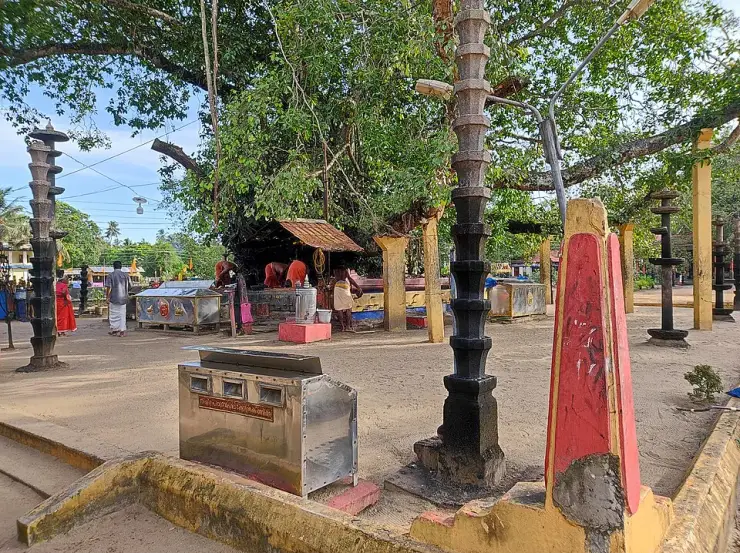
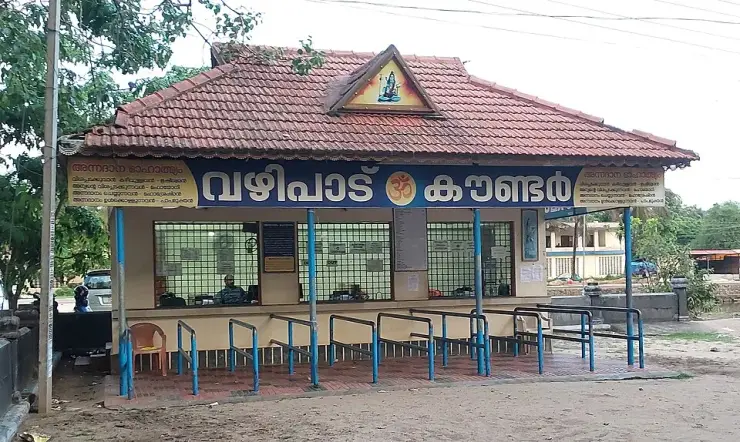
These guides explore Karunagappally and the surrounding area. Choose a visit that fits your interests, allowing separately for travel between stops.


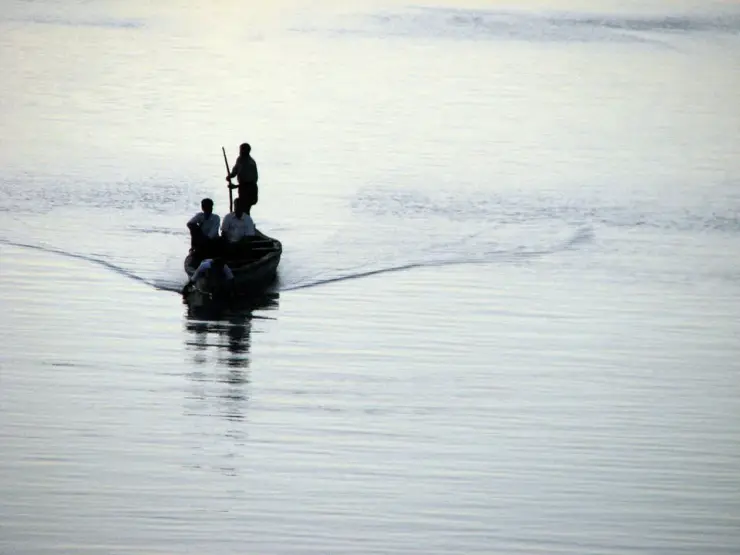
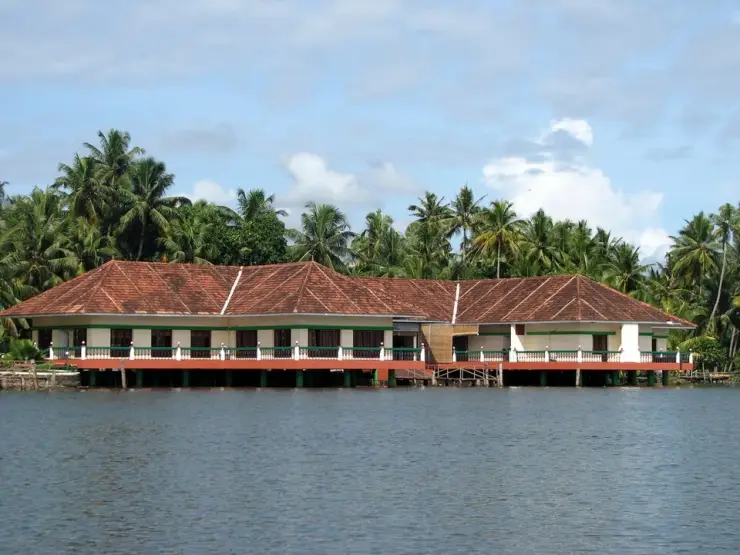
Route-level itineraries and practical guides for the rest of Kerala.
Photographs: Akhilan (CC BY-SA 4.0), Vis M (CC0), Kannan Shanmugam (Fotokannan) (CC BY-SA 3.0), Manuspanicker (CC0), Neon at Malayalam Wikipedia (CC BY-SA 3.0). Wikimedia Commons.