What to expect
Highlights
- Temple visit at Poruvazhy Peruviruthy Malanada
- Kerala temple architecture and rituals
- Local food, shops and pilgrim services nearby
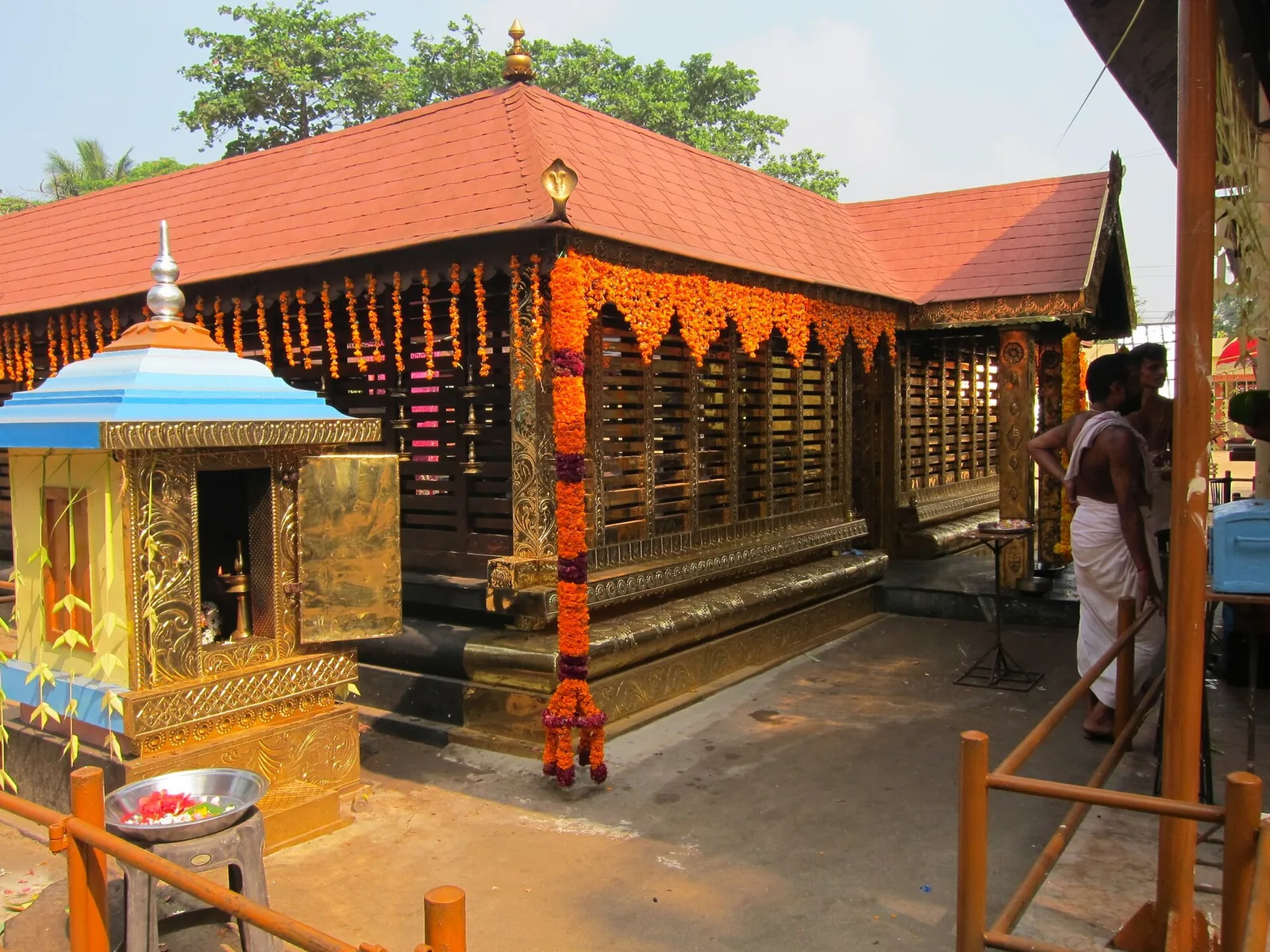
A temple with no idol and no sanctum — an open pillared mandapam over a raised platform, worshipped by sankalpam. The presiding figure is Mala Appooppan, the grandfather of the hill, conceived in the form of Duryodhana; the priest is the Oorali rather than a Brahmin, and toddy is the traditional offering.
Check entry arrangements. Ask temple staff about visitor entry, dress requirements and access to the inner shrine before you travel, especially if you are visiting as a non-Hindu.
Dress respectfully and follow the institution’s admission and photography rules.
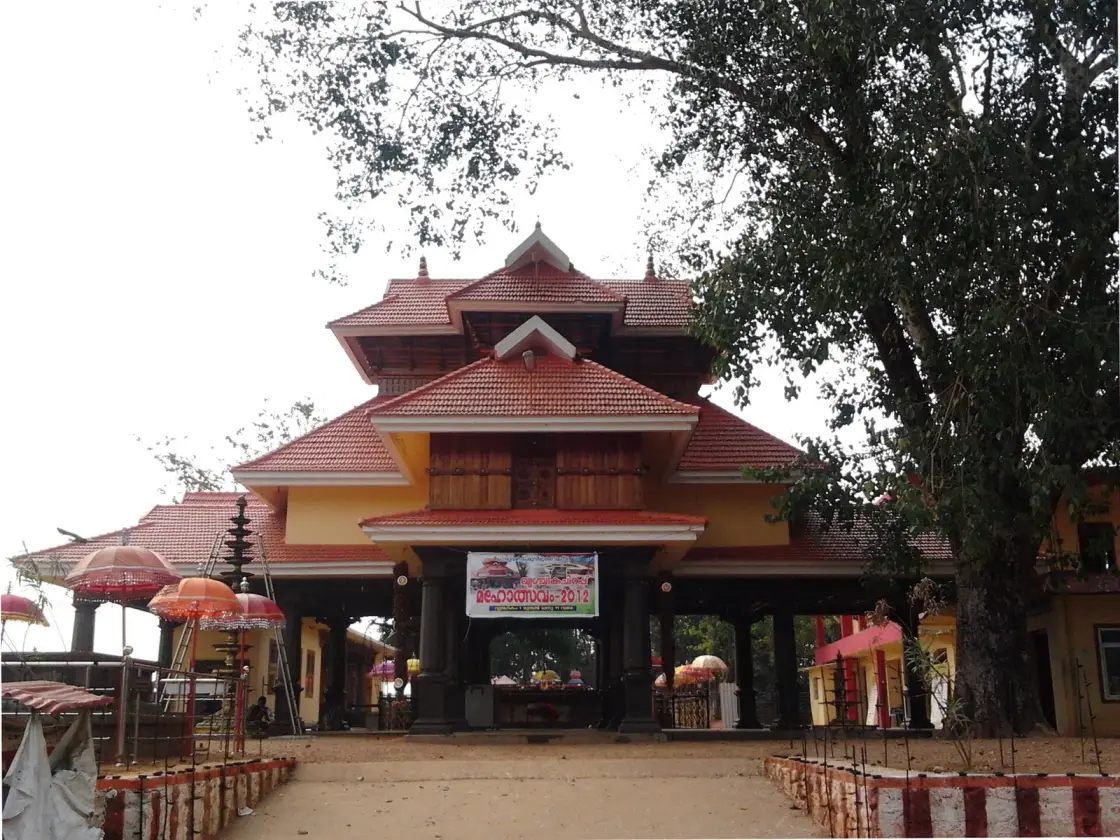
A temple in Poruvazhy village, Kunnathoor taluk, with no idol and no sanctum — only a raised platform under an open pillared roof, worshipped by sankalpam, the deliberate holding of a form in the mind. The presiding figure is Mala Appooppan, the grandfather of the hill, and the form he is held in is Duryodhana. The priest is the Oorali, not a Brahmin; the traditional offering is toddy; and the land tax on its fields is reported to be levied in Duryodhana's name to this day.
Walk up to it and the first thing you notice is that you can see straight through the building. There is a tiered tiled roof on granite pillars, deep and handsome, and underneath it there is no wall, no door, no dark chamber. Where a Kerala temple would have its sreekovil there is an althara — a raised platform — and beyond it, framed by the pillars, the trees on the far side of the compound.
That absence is the whole theology of the place. With no idol to look at, worship here is by sankalpam: the worshipper holds the form in the mind and submits to it. It is not an impoverished version of image-worship. It is a deliberate alternative to it, and Kerala has a small number of shrines that work this way — our page on the Oachira Parabrahma temple, thirty-odd kilometres west, describes another, where devotion is directed at the formless under old trees with no roofed sanctum at all.
The second thing is who the god is. This is very widely called India's only Duryodhana temple, and Duryodhana is the antagonist of the Mahabharata — the eldest Kaurava, the man whose refusal to yield five villages brings on the war that empties the world. Kerala's own performing tradition classifies him precisely: in Kathakali he is a kathi role, the knife, green-faced with an upturned moustache and a knife-shaped mark, which marks the grand villain — magnificent rather than merely wicked. That is the register in which he is taken seriously here.
But the local formulation is more careful than the headline, and it is worth adopting. The presiding figure is Mala Appooppan, the grandfather of the hill — a hill deity, in a landscape full of them. Duryodhana is the sankalpa moorthy, the form in which that presence is conceived. The distinction matters because it explains how a Mahabharata villain came to be venerated at all: he was not imported as a god, he was recognised in one.
The story of how goes like this. Duryodhana came through this country searching for the Pandavas, who were somewhere in exile. He was thirsty and asked an elderly woman for water, and she gave him toddy instead, as a mark of respect — toddy being what there was, and what was offered to someone honoured.
Only after drinking did he take in her dress and her ornaments and realise she was of the Kurava caste, then held to be untouchable. And the point of the story is what he did not do. He did not recoil, purify himself or punish anyone. He accepted what he had been given, worshipped Shiva on that spot, and granted hundreds of acres of paddy and garden land in freehold to the devasthanam.
Whatever one thinks of the historicity, that is a pointed thing for a community to have chosen to remember, and it is not accidental. The priesthood here is not Brahmin. The priest is the Oorali, and members of the Kurava caste serve as poojaris — the same community as the woman in the story. A shrine whose founding legend turns on a caste boundary being ignored, staffed in perpetuity by the community on the wrong side of that boundary, is making an argument, not just telling a tale.
The most extraordinary detail is administrative rather than devotional. The land Duryodhana is said to have granted is reported to be taxed, still, in his name — the revenue records carrying "Duryodhanan" as the party liable. We give that as reported rather than as verified, because we have not seen the record itself and no source we found quotes its exact wording. But if it is right, it is a remarkable thing: a mythological figure holding a live entry in a modern land-revenue system.
The year here turns on Malakkuda, the annual festival, held in the second half of March — the second Friday of the Malayalam month of Meenam. The name is literal and tells you where the emphasis lies: mala, the hill and its shrine, and kuda, the ornamental ceremonial umbrella carried by the Oorali. The festival is named after the priest's umbrella. There is kettukazhcha, the great built pageantry-effigies that Kerala's central belt does better than anywhere, and Kathakali — traditionally including Nizhalkuthu, which is a Kaurava story.
And then, once every twelve years, there is Pallipaana: eleven days, eighteen ceremonial acts. It was performed from 24 February to 7 March 2023. The next is due in 2035. If you happen to be in Kerala in that year it is worth arranging a trip around, because there will not be another until 2047.
It also keeps a Swarna Kodi, a gold flag, held as a symbol of authority under lock and brought out only on auspicious occasions. It is not something to expect to see.
One last thing, and it changes how you should read the place. This is not a lone curiosity. About five kilometres away at Sooranad North, in the same taluk, stands Ennasheri Malanada — dedicated to Dussasana, Duryodhana's brother, and built to the same pattern: no sreekovil, no idol, an althara, worship by sankalpam, and Kurava families holding standing in its administration. The legend itself says Duryodhana had further places of worship established nearby with Kurava priests. What exists in Kunnathoor taluk is not one strange shrine. It is a Kaurava landscape.
The first correction is the one its own vocabulary makes, and almost every outside account drops it. The presiding deity here is Mala Appooppan — the grandfather of the hill. Duryodhana is the sankalpa moorthy, the form in which that presence is conceived and held. "A Duryodhana temple" is a serviceable shorthand and we use it too, but it inverts the actual structure of the belief: a hill deity understood as Duryodhana, rather than Duryodhana installed as a god.
The second is the uniqueness claim, which does not survive contact with the neighbourhood. You will read that this is India's only Duryodhana temple; its own site says the one and only Duryodhana temple in South India, which is a different and smaller claim. Five kilometres away at Sooranad North, in the same taluk, Ennasheri Malanada is dedicated to Dussasana — Duryodhana's brother — and has the same form: no sreekovil, no idol, an althara, sankalpam worship, and Kurava families with standing in its administration. So the narrow claim about Duryodhana specifically may hold. The broader impression that this is a unique, isolated, idol-less Kaurava shrine does not. There is a cluster of them here, which is exactly what the legend says there should be.
The third is a date, and it is the round-nine signboard problem in a new form. The English Wikipedia article carries a line giving the next festival as 28 March 2025 — a date that is now in the past, captured once and left to go stale. We are not going to print a next-festival date at all. What is durable is the rule: Malakkuda falls on the second Friday of the Malayalam month of Meenam, in the second half of March. Check the year you are travelling in against a current Malayalam calendar, or ask at the shrine.
The fourth is a sourcing caution we would rather state than bury. English Wikipedia's article on it has carried a flag since August 2012 saying it relies excessively on primary sources, and a great deal of the circulating detail — the legend, the land grant, the tax, the ritual counts — traces back to the shrine's own website. That does not make any of it false; a shrine is a reasonable authority on its own ritual calendar. It does mean this page is largely built on what the institution says about itself, and the land-tax claim in particular is given here as reported rather than verified, because we have not seen a revenue record and no source we found quotes its wording.
The fifth is a word that means two different things in our own pages, and it would be easy to conflate them. The Oorali here is a priestly office — the officiant here, the man who carries the ceremonial umbrella the festival is named after. Elsewhere on this site, in our Idukki and Wayanad records, Oorali refers to a tribal community — a distinct one, not the Malayarayan, who are a separate community of the same district — in an entirely different sense. Same word, different meaning, different part of Kerala. They should not be run together.
The sixth is about tone, and it is the correction we would most like readers to take away. Duryodhana is not worshipped here in spite of being the Mahabharata's antagonist, and this is not a curiosity about villain-worship. Kerala's own classical tradition already reads him as a kathi role — the grand villain, magnificent rather than merely evil — and the local legend gives him a specific virtue: he accepted toddy from a woman of a community held to be untouchable, and did not repent of it. Presenting this as "Kerala's weird temple to the bad guy" misses that the story is about caste, and that the priesthood proves the story was meant seriously.
The seventh is practical. There is no idol and no sanctum, which means the visual expectations you bring from other Kerala temples do not apply. There is nothing to queue for and nothing to glimpse. The building is open on all sides and the platform is the point. Visitors who arrive looking for a shrine interior sometimes conclude that it is shut.
It stands in Poruvazhy village, in the Edakkad area of Kunnathoor taluk, on the northern edge of Kollam district where it meets Alappuzha and Pathanamthitta. Its form is its most distinctive feature: in place of a sreekovil and an image there is an althara, a raised platform, under an open pillared mandapam, and worship is by sankalpam — the holding of the divine form in the mind rather than the viewing of it.
The presiding figure is Mala Appooppan, the grandfather of the hill, conceived in the form of Duryodhana, the eldest of the Kauravas. The foundational legend has Duryodhana passing through this country in search of the exiled Pandavas, asking an elderly woman for water and being given toddy as a mark of respect; realising from her dress and ornaments that she belonged to the Kurava caste, then held untouchable, and accepting the offering regardless; worshipping Shiva on the spot; and granting hundreds of acres of paddy and garden land in freehold to the devasthanam. The land tax on that property is reported to be levied in the name of Duryodhanan to this day, though we have not seen the record and give it as reported.
The priesthood reflects the legend. The officiant is the Oorali rather than a Brahmin priest, and members of the Kurava caste serve as poojaris. Thookkam, the hook-swinging ritual tradition associated with the shrine, is reserved to the Gurukkalsserial family. Administration involves representatives of taluk-level community organisations, including the Kunnathoor Taluk NSS Union and the SNDP side, which is itself a record of how it has been held in common rather than by a single lineage.
The annual festival is Malakkuda, in the second half of March, falling on the second Friday of the Malayalam month of Meenam. The name combines mala — the hill and its shrine — with kuda, the ornamental ceremonial umbrella used by the Oorali, so the festival is named for the priest's umbrella. It features kettukazhcha pageantry and Kathakali, traditionally including Nizhalkuthu. A Swarna Kodi, a gold flag held as a symbol of authority, is kept here, displayed only on auspicious occasions.
Once every twelve years Pallipaana is performed here, a ritual of eleven days and eighteen ceremonial acts. The most recent was held from 24 February to 7 March 2023, and the next is due in 2035.
It is not isolated in its type. Ennasheri Malanada at Sooranad North, in the same taluk, is dedicated to Dussasana and is built to the same pattern — althara rather than sreekovil, no idol, sankalpam worship, and Kurava and Ezhava family bodies holding recognised standing in its administration. The legend here explicitly describes further places of worship established nearby with Kurava priests, so the cluster is part of the tradition rather than a coincidence.
A temple with no idol and no sanctum — an open pillared mandapam over a raised platform, where worship is by sankalpam, holding the form in the mind.
India's best-known shrine where the presiding form is Duryodhana, the Mahabharata's antagonist, taken entirely seriously rather than as a curiosity.
A priesthood that is not Brahmin: the Oorali officiates and Kurava-caste poojaris serve, which is the founding legend's point rather than an incidental detail.
Toddy as the traditional offering, for the reason the legend gives — it is what was offered to an honoured traveller, and what he accepted.
Malakkuda in the second half of March, named for the ceremonial umbrella the priest carries, with kettukazhcha pageantry and Kathakali.
Pallipaana once every twelve years — eleven days and eighteen ceremonial acts, last held in 2023 and next due in 2035.
A quiet visit and the Kettukazhcha festival reveal very different sides of Malanada. Come on an ordinary day to understand the local Duryodhana tradition; choose the announced festival programme if your interest is the large carried structures and processions. The hospitality story belongs to local devotional tradition. Ask about the present-day rituals without treating every detail of an epic narrative as a dated historical event.
Road km to Kollam; ghat roads and traffic vary — allow extra.
Morning or early evening is usually best; festival days can be powerful but crowded.
Live forecast loads in your browser.
Sun and moon are calculated for this location and shown in IST. Photography windows are the hour around sunrise and sunset; the sunset bearing is degrees clockwise from true north. Moon phase is accurate to about half a day.
Verified hotels, homestays, restaurants, experiences, sights, shops and rentals around Poruvazhy Peruviruthy Malanada — commission-free, with direct contact. Filter by what you need.
Teaching Ayurveda hospital of the Amrita School of Ayurveda at Vallikavu, with public OP booking.
Karunagappally’s state bus depot on the national highway, run by an Assistant Transport Officer and the practical hub for buses along this coast.
Station KPY at Edakkulangara, the nearest railway station to Amritapuri.
The municipal office for Karunagappally town, handling certificates, licences and permits. Karunagappally Municipality, Karunagappally P.O., Kollam, Kerala 690518.
Book with the place itself. India’s cyber-crime coordination centre warned in April 2025 that convincing copies of hotel and pilgrimage booking sites are being pushed through sponsored search and social ads, taking payment for rooms the property never hears about. Every listing here links to the business’s own contact details and its own Google or Bing profile — we take no commission and sit in nobody’s payment path. If a booking page reached you through an ad, check the address bar against the property’s own site before you pay. Fraud can be reported on cybercrime.gov.in or on 1930.
Find food, accommodation and activities across Karunagappally. Browse the guides for places to eat, stay and explore along your route.
4 more places around Karunagappally. Open a guide to plan the visit and onward journey.
A coastal temple destination in the Cheriazheekal–Alumkadavu belt, visited as a living place of worship rather than a generic beach-side landmark.
16.6 km · ~28 min by cab
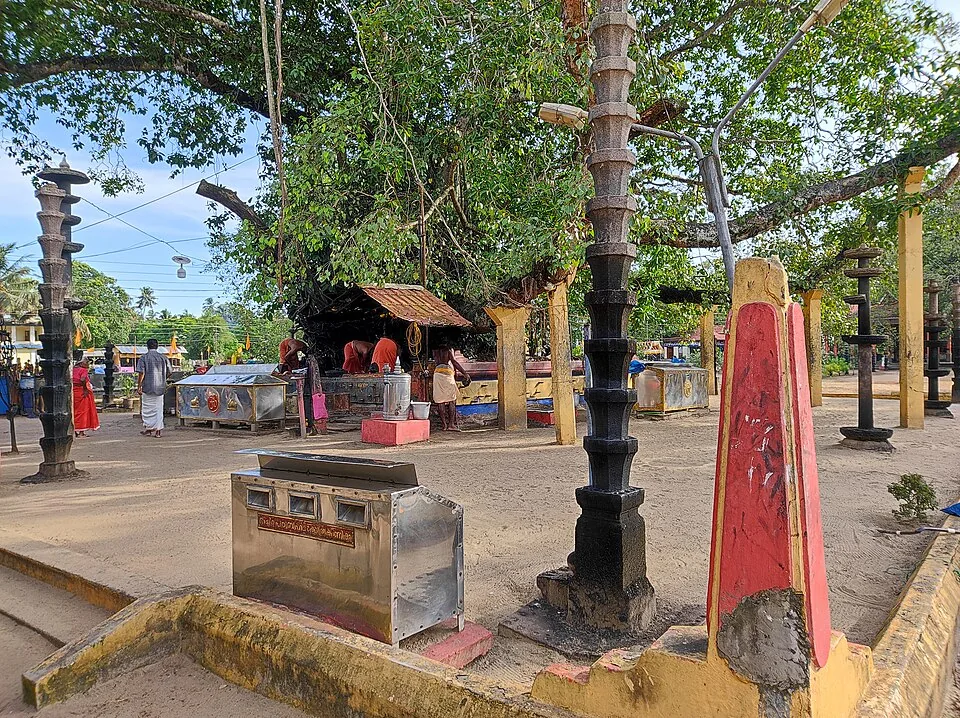
An unusual temple with no idol or building over the deity, set in an open grove; famous for the Oachira Kali festival.
17.4 km · ~29 min by cab
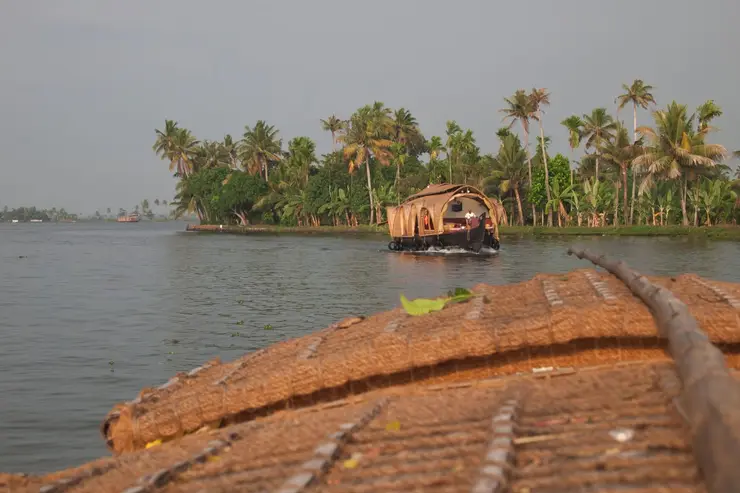
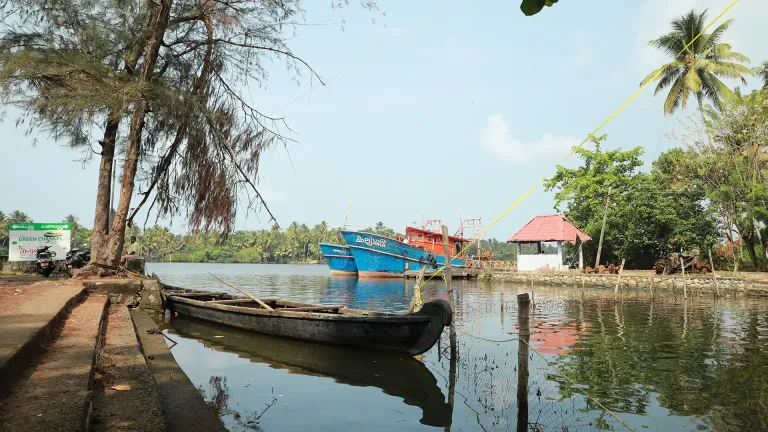
The boatyard village on Kayamkulam Kayal where the first Kerala houseboat was designed in 1991 — hulls of anjili wood drawn together with coir on an open bank, three kilometres west of Karunagappally. ⚠ Kerala Tourism places it on Ashtamudi Lake and calls it the birthplace of India’s houseboats; it is on Kayamkulam, and Srinagar’s date from the 1880s. These are private working yards, not a ticketed site — ask before you walk in.
19.2 km · ~32 min by cab
A Devi temple at Chavara north of Kollam, known across Kerala for Chamayavilakku — the two nights in Meenam when men and boys dress in saris and carry lamps in procession to the goddess, re-enacting the cowherd boys of its founding legend.
Roampedia is commission-free — own or know a stay, eatery, guide or shop near Poruvazhy Peruviruthy Malanada? List it and it appears here once verified.
Add a nearby businessEntry: None. Darshan is free; vazhipadu offerings are paid at posted rates.
Dress code: Traditional temple attire is expected, as at Kerala temples generally — men customarily in mundu with the upper body bare or modestly covered, women in saree or salwar. Follow the notices at the entrance.
Photography: Photography of the mandapam and grounds is generally unproblematic; ask before photographing ritual, the Oorali, or the Swarna Kodi if it is out.
If you are travelling by bus or ferry, check the return service with the operator before setting out. Leave time to reach the stop or jetty after your visit.
Ask at the bus stand for the time of the last service back, not the next one. If you miss it, an auto or app cab is the fallback — agree the fare before you get in.
If you need step-free access, contact the site before travelling. Ask about a level entrance, steps along the route, the nearest drop-off point, seating and accessible toilets.
These services are listed within about 1.2 km of Poruvazhy Peruviruthy Malanada. Walking distances follow mapped routes; access and opening hours can change. Other services may be closer but are not included here.
Emergency numbers are verified against official government and state tourism sources. 112 works anywhere in India.
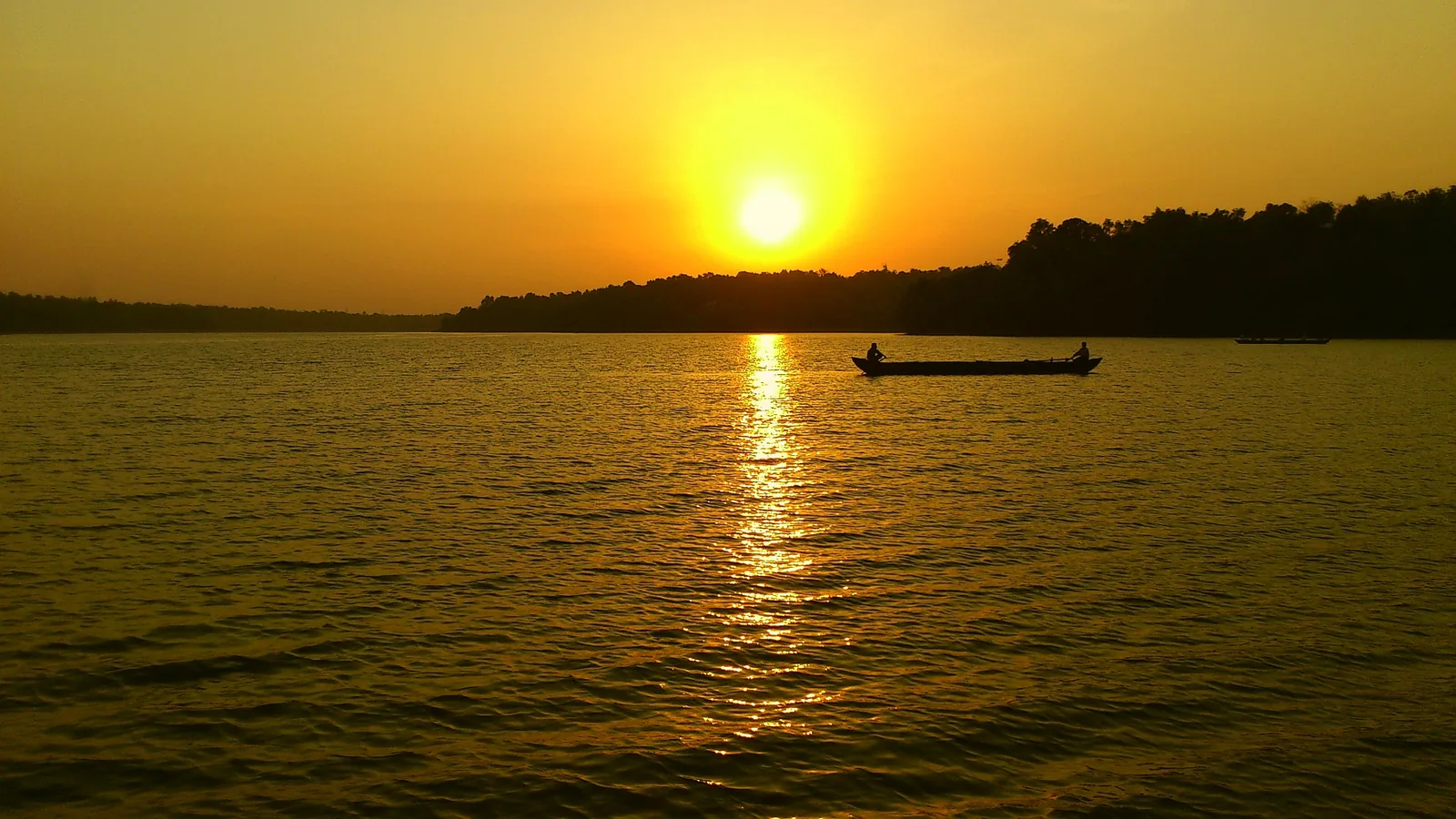
Kerala’s largest freshwater lake, a Ramsar wetland ringed by hills and a Sastha temple, north of Kollam.
7.8 km · ~19 min by auto · straight line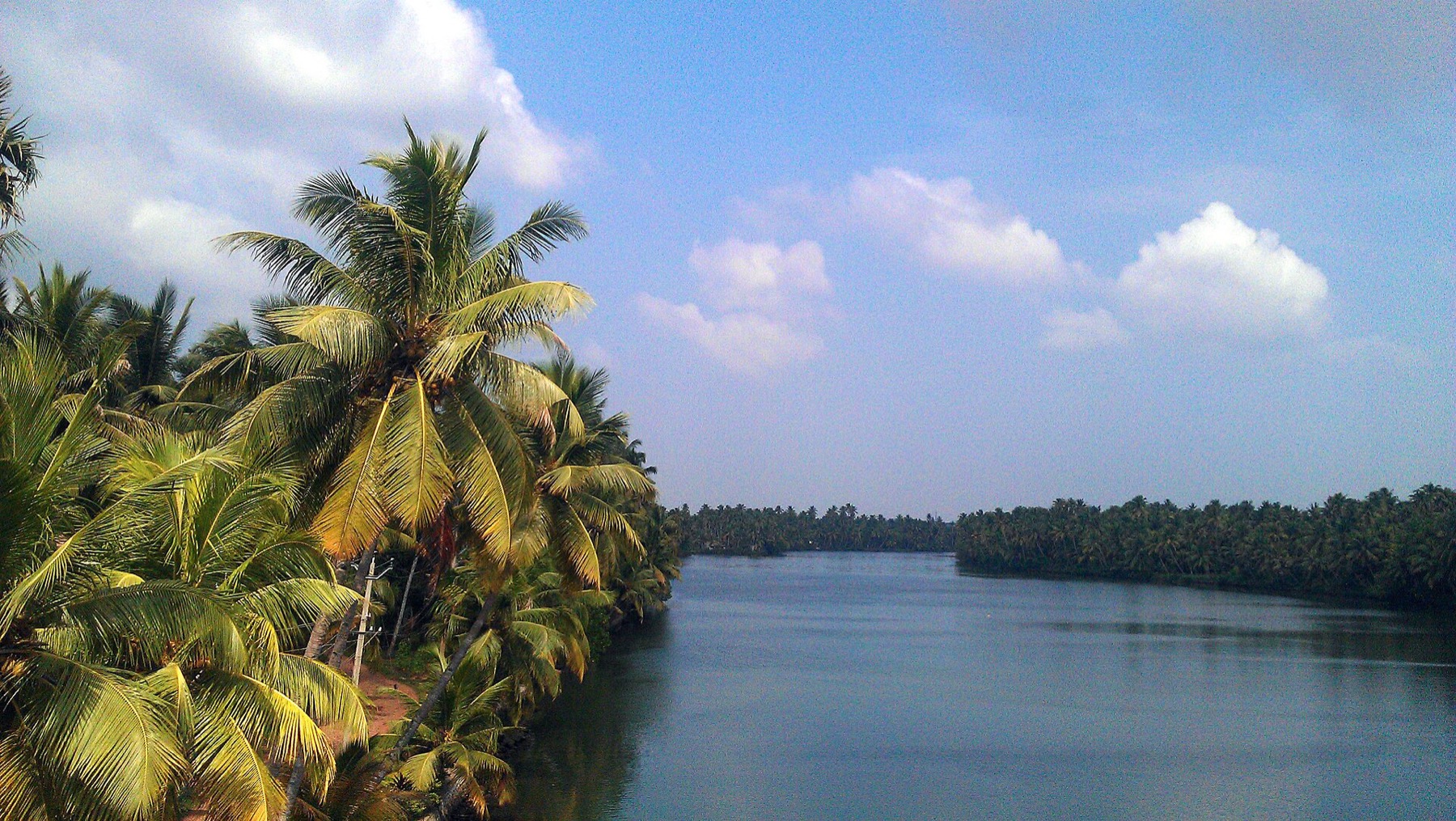
The river that rises in the Western Ghats behind Thenmala, is impounded at the Parappar dam, and reaches the sea through Ashtamudi past Munroe Island — the thread that connects the east of this district to the west.
12.3 km · ~21 min by cab · straight line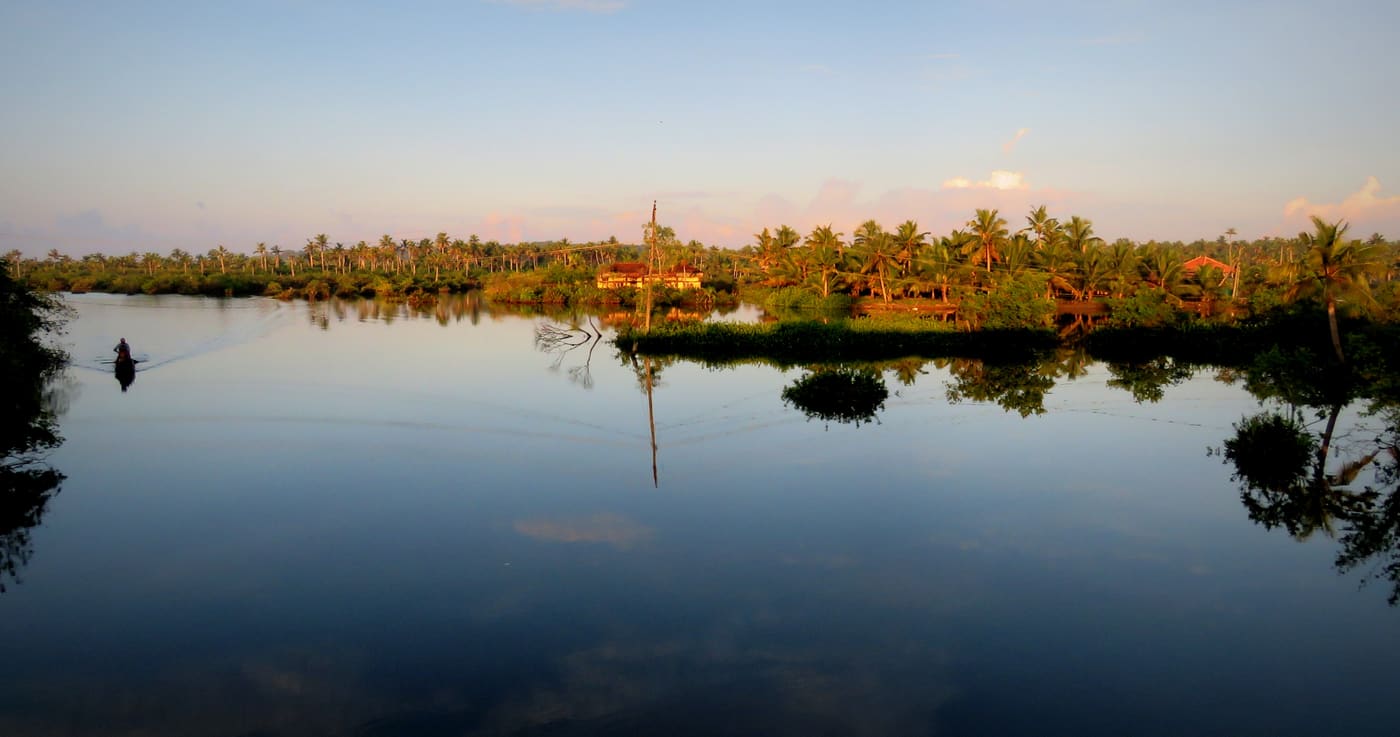
Canal village island known for canoe trips, coir work and slow backwater life.
12.9 km · ~22 min by cab · straight line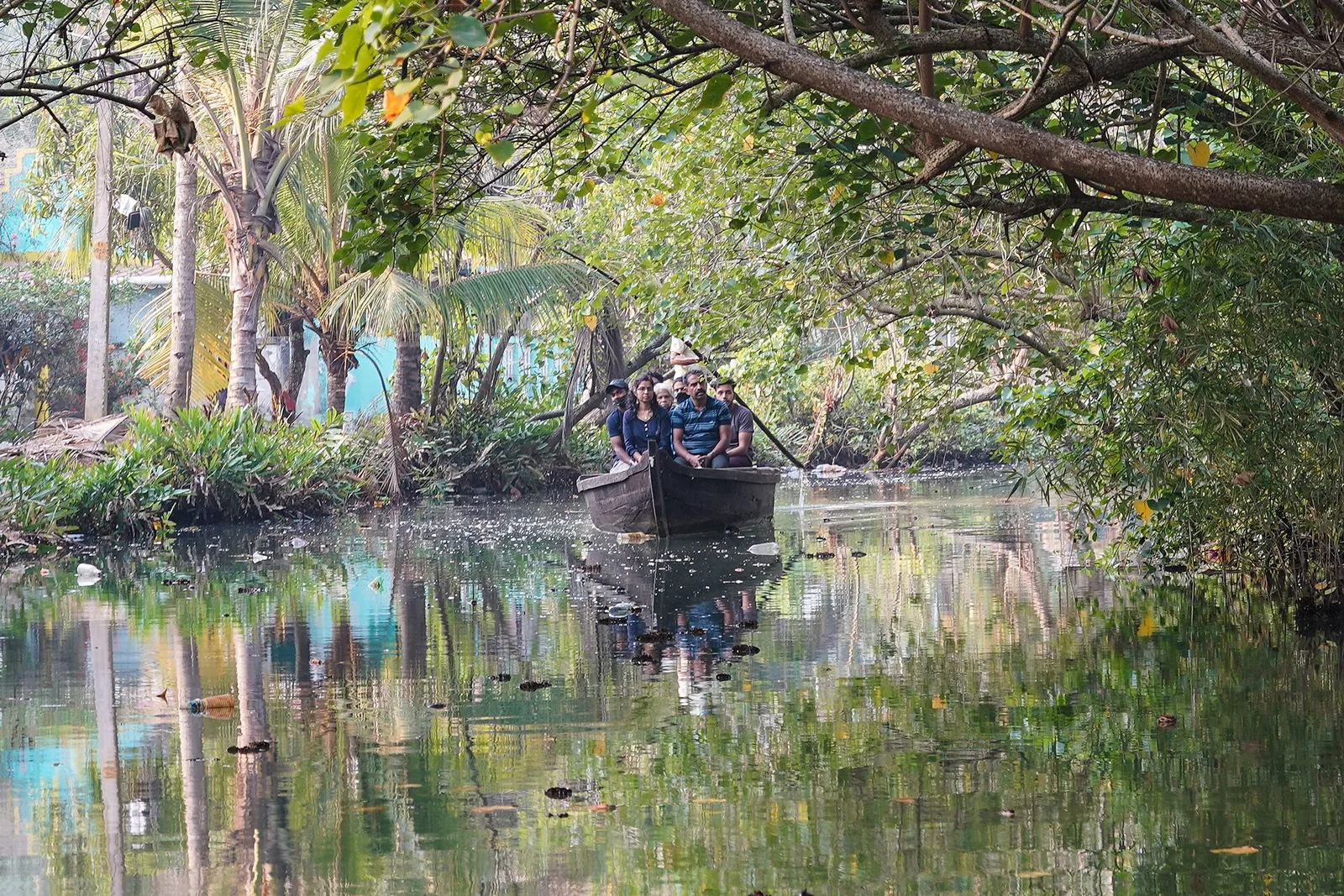
The narrow inland canal network threading Munroe Island, navigable only by small country canoe — the reason the island is visited at all, and a different waterway entirely from the open Ashtamudi lake.
12.9 km · ~22 min by cab · straight line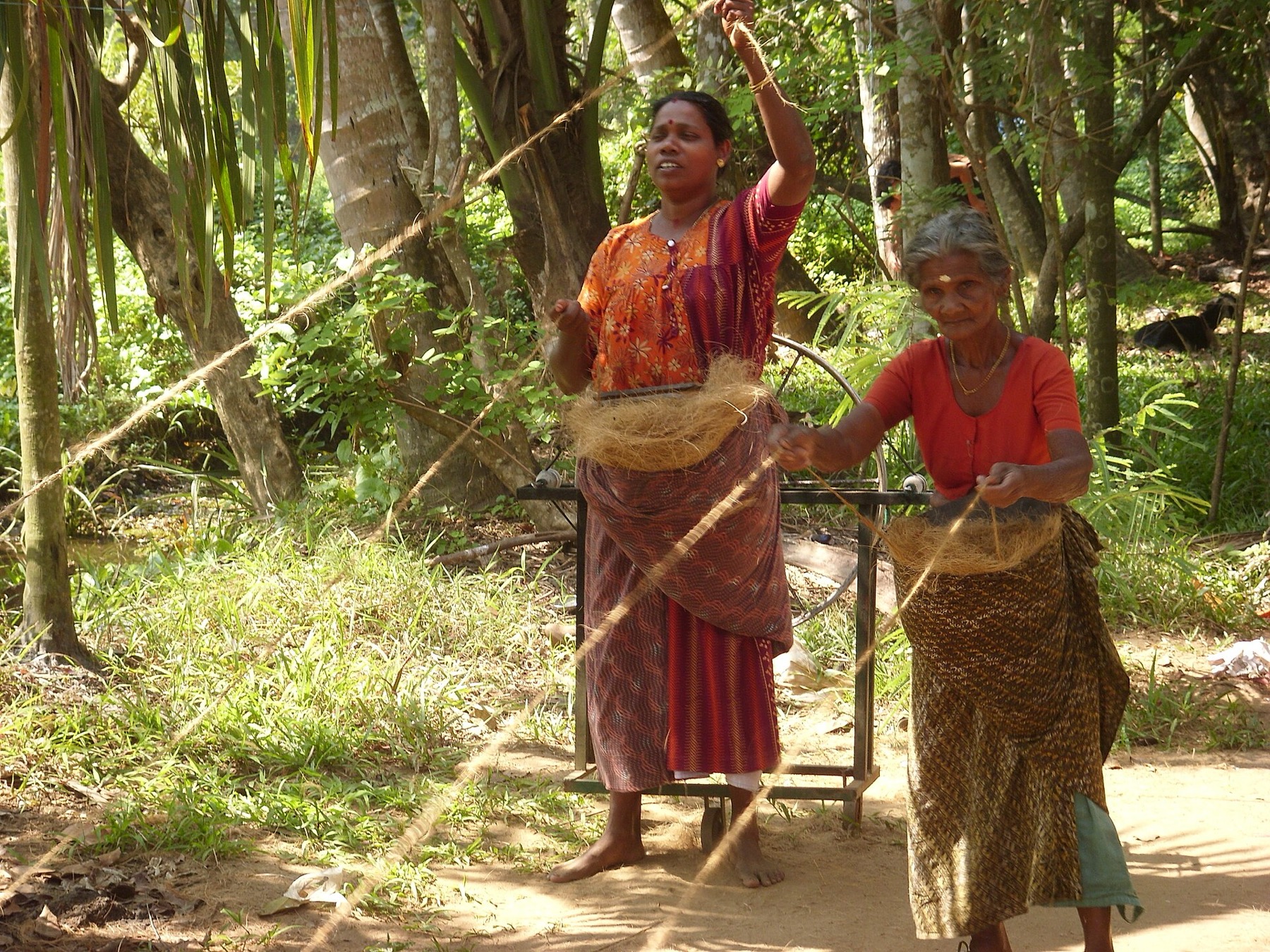
The coir-working settlements of Munroe Island, where coconut husk is retted in the backwater and spun into yarn — a working craft economy on the canal banks rather than a demonstration laid on for visitors.
14.6 km · ~24 min by cab · straight lineAn unusual temple with no idol or building over the deity, set in an open grove; famous for the Oachira Kali festival.
16.6 km · ~28 min by cab · straight line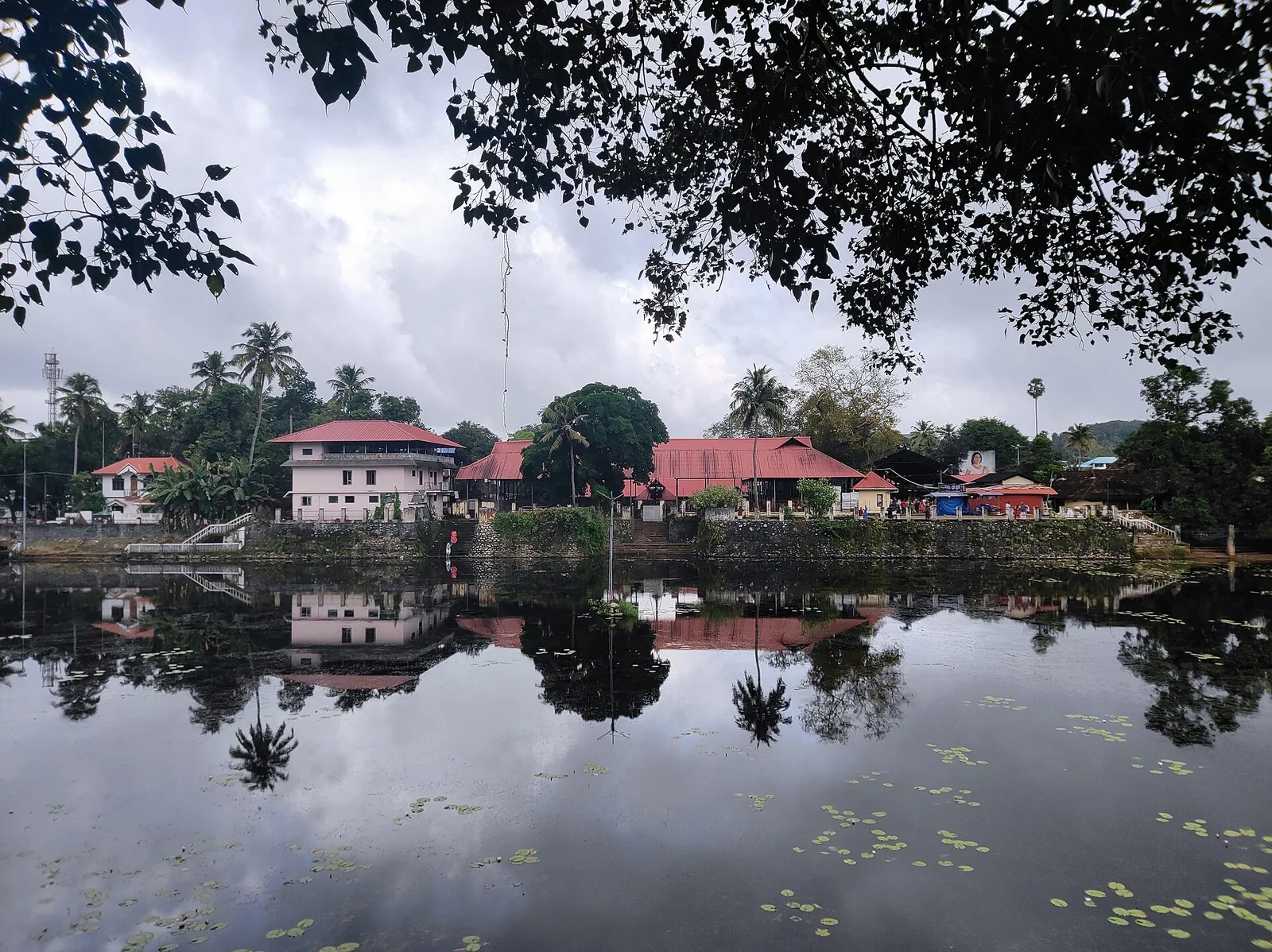
A large temple beside its own tank at Kottarakkara, where the central deity is Shiva but the sub-shrine to his son gives the place its name and its fame; the offering is unniyappam. The Kottarakkara Thampuran credited with Ramanattam, the immediate ancestor of Kathakali, is memorialised in the same town.
16.7 km · ~28 min by cab · straight line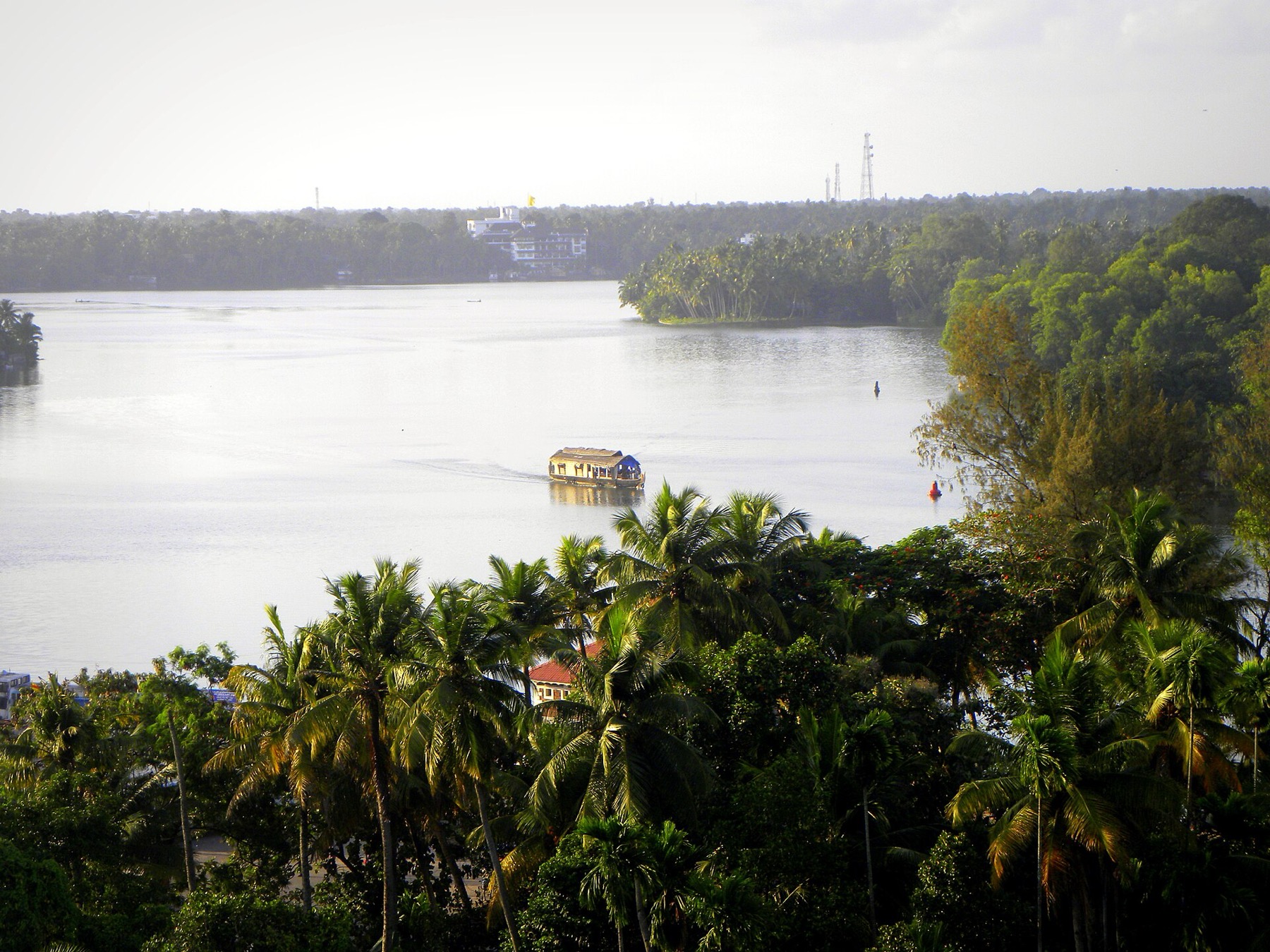
The open-water outlooks on the Munroe Island and Perumon side of Ashtamudi, where the lake widens out — the wide views the canal trips themselves do not give you.
17.0 km · ~28 min by cab · straight lineThe boatyard village on Kayamkulam Kayal where the first Kerala houseboat was designed in 1991 — hulls of anjili wood drawn together with coir on an open bank, three kilometres west of Karunagappally. ⚠ Kerala Tourism places it on Ashtamudi Lake and calls it the birthplace of India’s houseboats; it is on Kayamkulam, and Srinagar’s date from the 1880s. These are private working yards, not a ticketed site — ask before you walk in.
17.4 km · ~29 min by cab · straight lineA Devi temple at Chavara north of Kollam, known across Kerala for Chamayavilakku — the two nights in Meenam when men and boys dress in saris and carry lamps in procession to the goddess, re-enacting the cowherd boys of its founding legend.
19.2 km · ~32 min by cab · straight line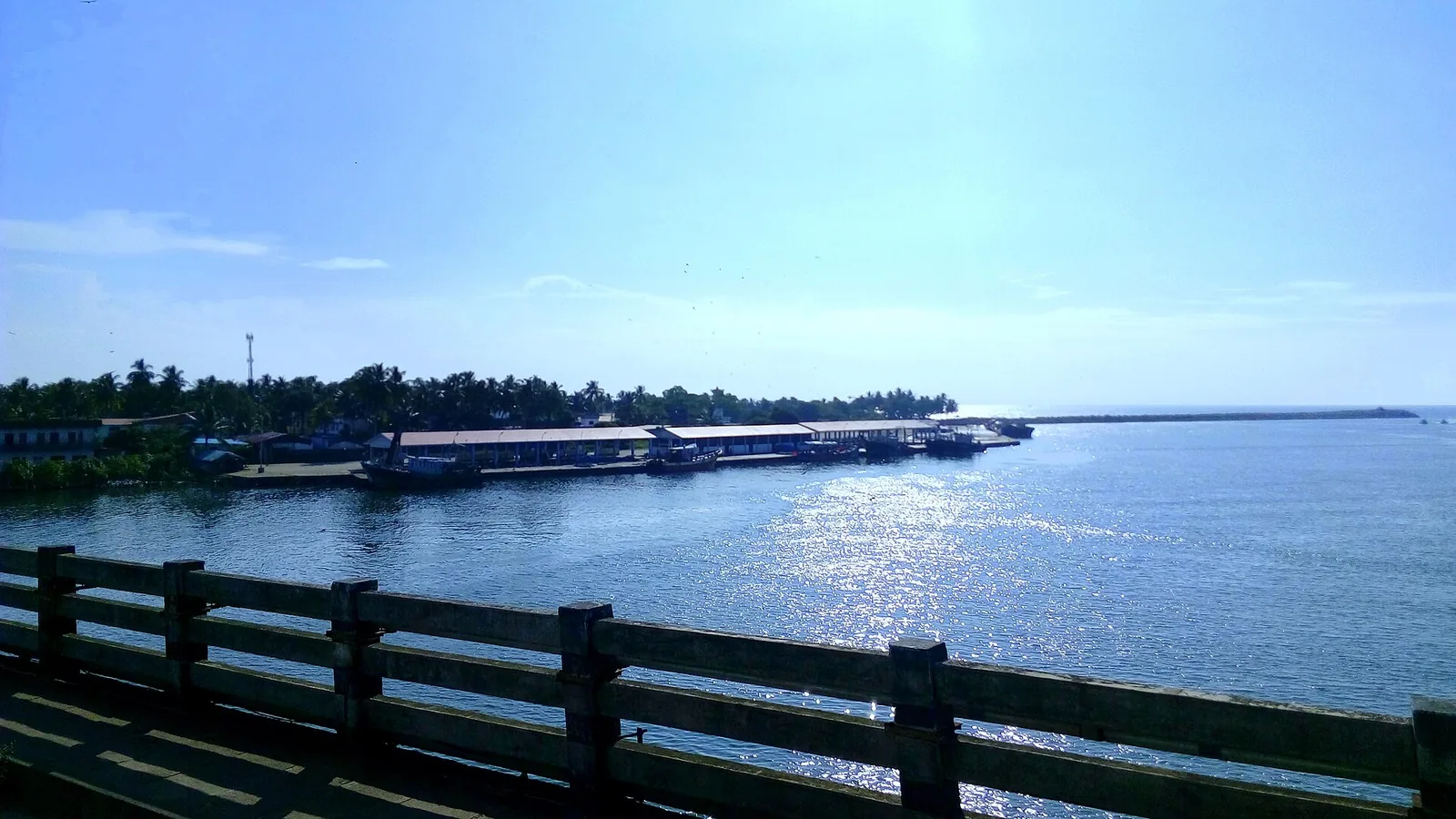
By most accounts Kerala’s largest fishing harbour, at the mouth of Ashtamudi Lake about 9 km from Kollam town, and where Indian fishing was mechanised; two bridges cross the confluence and the early-morning auction is the sight to catch.
22.5 km · ~38 min by cab · straight line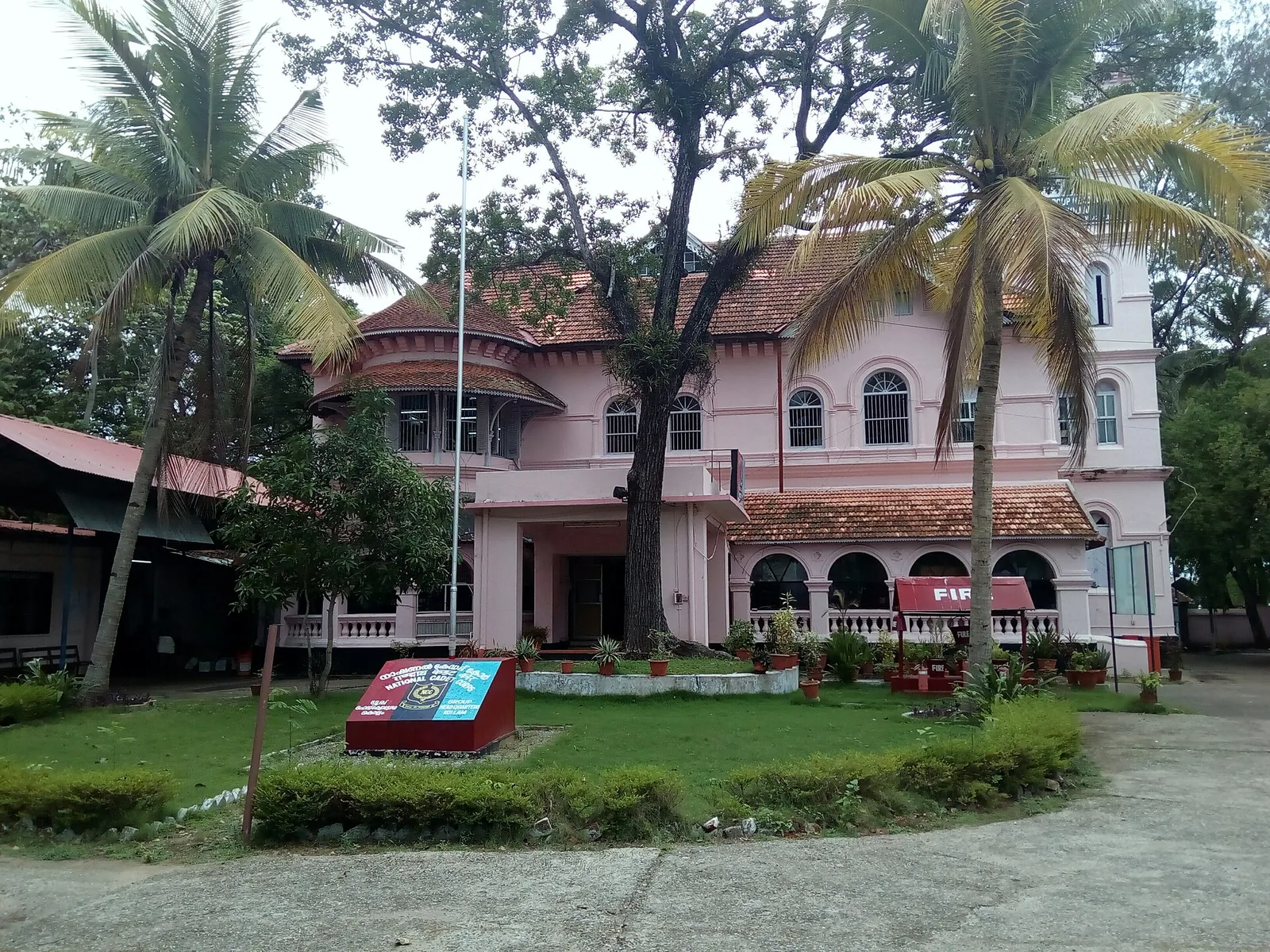
A Travancore royal residence on the Ashtamudi shore in Kollam, built to be arrived at by boat and now a working NCC establishment — viewed from outside or from the water.
23.9 km · ~40 min by cab · straight lineNearby toilets, pharmacies, ATMs, seating and vets are community-mapped and may be incomplete or out of date. Map data © OpenStreetMap contributors | Walking times © openrouteservice.org by HeiGIT
Yes, with a nuance the local vocabulary keeps and most outside accounts drop. The presiding deity is Mala Appooppan, the grandfather of the hill; Duryodhana is the sankalpa moorthy, the form in which that presence is conceived. So it is a hill deity understood as Duryodhana, rather than Duryodhana installed as a god.
The claim disagrees with itself in the sources — English Wikipedia says India's only, the temple's own site says the only one in South India. And it is certainly not an isolated idol-less Kaurava shrine: Ennasheri Malanada, five kilometres away in the same taluk, is dedicated to Dussasana and has the same form. There is a cluster of these here, which the legend itself describes.
By design. In place of a sreekovil and an image there is an althara, a raised platform, under an open pillared roof, and worship is by sankalpam — holding the divine form in the mind. It is a deliberate alternative to image-worship, not a lack. The Oachira Parabrahma temple, west of here, works on a related principle.
The officiant is the Oorali, not a Brahmin, and members of the Kurava caste serve as poojaris — the same community as the woman in the founding legend. Thookkam is reserved to the Gurukkalsserial family. ⚠ Note that Oorali here means a priestly office; elsewhere in Kerala the same word names a tribal community.
It is the traditional offering, and the legend explains why: an elderly woman gave Duryodhana toddy when he asked for water, as a mark of respect, and he accepted it. Confirm current practice on site rather than assuming.
Malakkuda falls on the second Friday of the Malayalam month of Meenam, in the second half of March. We deliberately do not print a specific next date — one widely copied source still gives a date from a year already past. Check a current Malayalam calendar, or ask on site.
A ritual performed once every twelve years, over eleven days and comprising eighteen ceremonial acts. The last was held from 24 February to 7 March 2023, and the next is due in 2035.
That is what is reported, and it is repeated consistently: the hundreds of acres said to have been granted by Duryodhana are recorded as taxed in his name. We give it as reported rather than verified — we have not seen the revenue record and no source we found quotes its exact wording.
Morning or early evening is usually best; festival days can be powerful but crowded.
Entry: None. Darshan is free; vazhipadu offerings are paid at posted rates. Timings: ⚠ No timings published by the temple that we could verify. The structure is an open pillared mandapam with no sanctum to open or close, so the usual Kerala morning/evening darshan pattern applies loosely at best. Assume a morning and an evening presence and confirm locally.
Base yourself in Karunagappally or a nearby town in Kollam, then confirm the last-mile route locally before leaving. Check temple entry customs, dress rules and festival crowd conditions before arrival. If the visit depends on forest, temple, boat, ferry, weather or seasonal access, check the official/local rule on the day before travel.
45 minutes to 2 hours, longer during festival or queue periods.
Nearby you can pair Sasthamcotta Lake (7.8 km), Kallada river (12.3 km), Munroe Island (12.9 km), Munroe canals (12.9 km).
Use official counters for offerings/tickets where applicable. Keep footwear and valuables secure in crowded areas.
Written about Poruvazhy Peruviruthy Malanada itself — its history, its legends and the arguments about them.


These guides explore Karunagappally and the surrounding area. Choose a visit that fits your interests, allowing separately for travel between stops.


Route-level itineraries and practical guides for the rest of Kerala.
Photographs: Akhilan (CC BY-SA 3.0), Kerala Tourism (© Kerala Tourism; externally hosted official photograph). Wikimedia Commons.