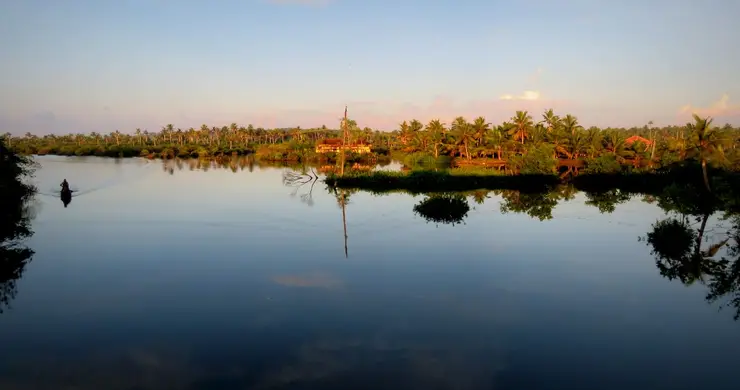
What to expect
Highlights
- Temple visit at Anandavalleeswaram Temple
- Kerala temple architecture and rituals
- Local food, shops and pilgrim services nearby
Anandavalleeswaram is an active Shiva temple in Kollam, with an Anandavally shrine and a ten-day annual festival in March or April. Ritual processions and cultural performances bring another dimension to the temple visit. Follow its worship session, admission and photography rules.
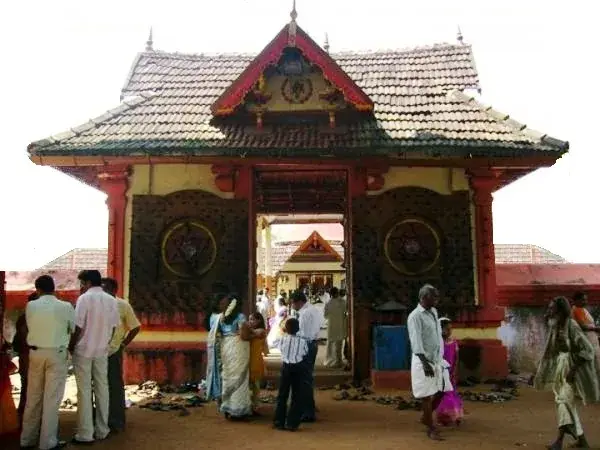
Check entry arrangements. Ask temple staff about visitor entry, dress requirements and access to the inner shrine before you travel, especially if you are visiting as a non-Hindu.
Dress respectfully and follow the institution’s admission and photography rules.
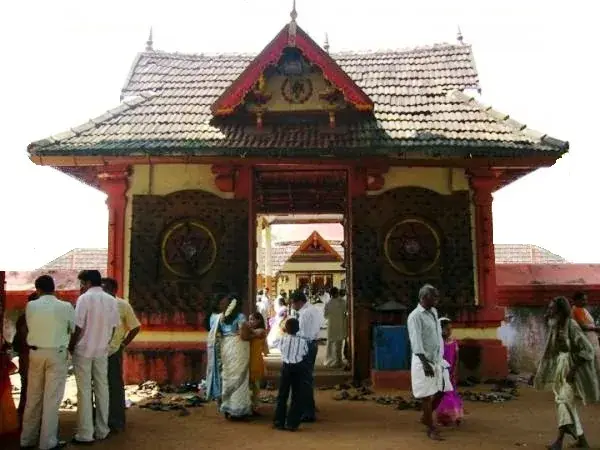
A Shiva temple on the old highway a couple of kilometres out of Kollam Junction, with a tiled gate-house, a teak sanctum and an unusually crowded theology: Shiva faces west here and Parvati faces east, and the shrine keeps Krishna, Vishnu, Lakshmi and Bhudevi as well. Kerala Tourism calls that combination the only one of its kind in India; one temple website has already promoted it to the only one in the world. The temple's age is given as 1,200 years by some sources, 1,100 by others, and the eleventh century by the infobox of the same article that says 1,200 — and the most honest published sentence about it is that no document establishes its origin at all. What is documented is smaller and stranger: it was damaged in a war against the British, and the British government paid to repair it.
Start with the name, because it is doing two jobs. Anandavalleeswaram is both the temple and the surrounding Kollam neighbourhood. Their map markers use the same Malayalam spelling and sit only about twenty metres apart. When navigating, choose the temple result rather than the locality; a Kollam address containing Anandavalleeswaram may refer to the neighbourhood rather than the shrine.
The name itself unpacks neatly. Anandam is bliss in Malayalam; Anandavally is the local name of the goddess; Eeswaram is the lord. The tradition holds that Shiva is worshipped here as Ananda Swaroopan, the embodiment of bliss, and Parvati as Swayamvara Parvathy — the goddess in the moment of choosing her husband, or immediately after it. This is a temple to a married couple in the first happiness of the marriage, and everything about the naming is built on that.
The physical arrangement is the part worth walking around. The god faces west and the goddess faces east, which is not the usual configuration, and it means the two principal deities of a single sanctum look away from one another in opposite directions. Around and within the same structure are Ganapathy, Murugan, Krishna, Hanuman, Ayyappan, Maha Vishnu, Lakshmi Devi, Bhoomi Devi and the naga deities — a Shaiva temple that keeps a substantial Vaishnava household inside it.
That last point is where the temple's most-repeated claim comes from, and it needs handling carefully. Kerala Tourism's own temple page states that this sreekovil is the only Hindu shrine in India with the idols of Krishna, Vishnu, Bhoomi Devi and Lakshmi Devi installed under a single roof; the Wikipedia article repeats the wording almost exactly; and one popular Kerala temple site has upgraded it to the sole temple of its kind in the world. That escalation, with no new authority appearing at any step, is a familiar pattern. We could not find a source behind the claim, and we could not disprove it either — there is no national inventory of sanctum arrangements to check it against. So it is on this page as a claim that is widely printed rather than as a fact we are asserting, which is the honest position and not a hedge.
The age is a similar problem with a sharper edge. The main sreekovil is built of teak, and its age is given as approximately 1,200 years by Kerala Tourism's sources, by Wikipedia's prose and by most of the listing sites. Wikipedia's own infobox on the same page, however, gives the construction as eleventh century — a gap of two hundred years or more — and another family of listings says 1,100 years. It is worth noticing that 1,200 years before now lands within a year or two of AD 825, the epoch of the Kollam Era and the conventional founding of the city itself, which is exactly the kind of round number that gets borrowed. The most useful published sentence on the subject is the blunt one: no historical document establishes the antiquity or the origin of this temple. Ancient, then, and undated.
What is dated is the nineteenth century, and it is a better story than the millennium. In 1806 the temple was renovated and a new idol cast in panchaloha, the five-metal alloy of iron, copper, tin, silver and gold. Two years later Travancore went to war with the East India Company. Velu Thampi Dalawa, the Diwan, raised the country against the Company in 1808–09 and issued the proclamation now remembered by the name of Kundara, a town in this district. The rising was crushed. And Anandavalleeswaram, standing on the road out of Kollam, was damaged in the fighting — then repaired, in 1823, at the expense of the British government that had beaten it.
That sequence is worth sitting with. Colonel John Munro arrived as Resident of Travancore in 1810, in the immediate aftermath of the rebellion, and went on to hold the Residency and the office of Diwan simultaneously — our page on the British Residency at Asramam, four kilometres north of here, is about that man and that arrangement. The temple repairs of 1823 belong to the same administrative moment: a colonial government, having put down a revolt, spending money on the shrines of the people it had defeated. Whether you read that as restitution, as policy or as public relations is up to you, but it is the one piece of this temple's history that carries a date you can hold.
The founding story here is Parashurama's, and it is a founding story Kerala tells about a great many places. The axe-bearing avatar is said to have raised the whole coast out of the sea and then studded it with shrines, and the consecration of the Shiva idol at Anandavalleeswaram is attributed to him by Kerala Tourism, by Wikipedia and by every temple listing that mentions an origin. It is recorded on this page as belief, which is what it is; the same tradition is attached to the Achankovil Sastha, to temples across our Kollam and Pathanamthitta pages, and to a good proportion of the 108.
Which brings us to the 108 itself. Anandavalleeswaram is counted among the 108 Shivalayas of Kerala, and it is one of three in Kollam city that appear in the Shivalaya Stotram — the other two being Kollam Rameswaram and Thrikkadavoor. It is worth being clear about what that membership means, because temple websites tend to present it as a rank. It is not. Being one of the 108 is a place in a statewide network rather than a local distinction: the set belongs to the same Parashurama tradition that raised the coast, and it maps a devotional geography across the whole state. Three of them in one small city is genuinely notable. Any one of them being in the list is not.
The goddess is the more interesting theology. Parvati here is Swayamvara Parvathy, and the swayamvara is the moment of choice — the bride selecting her husband — so the form is the goddess at or just after her marriage, and the god beside her is Ananda Swaroopan, bliss embodied. Kerala's Shiva temples are frequently temples of the ascetic, the destroyer or the linga in its abstraction. This one is a temple of the honeymoon, and the entire name of the place is built out of that: ananda, bliss; valli, the goddess; eeswaram, the lord. When people come here for marriage-related vows, they are reading the iconography correctly.
Then there are the two builders, and they cannot both be right. One tradition holds that the temple was built by Sri Lankan merchants who traded with Kollam. The other says it was built by Navakody Narayana Chettiar, an industrialist from Thanjavur who settled in the city. We are not going to pick, because there is nothing to pick with — no inscription, no grant, no dated record has been produced for either — but it is worth noticing that both traditions are saying the same thing about Kollam, in different accents. They both say the temple was built by outsiders who came here to trade and stayed.
That is not a small claim, and it fits everything else known about this coast. Kollam was the port of Venad and one of the great emporia of the medieval Indian Ocean — the city whose seabed has produced Chinese coins, whose founding in AD 825 starts the Malayalam calendar, and which sat on the sea road between the Gulf and the Straits. A merchant community from the Coromandel, or one from across the Palk Strait, endowing a temple in the city where it did business, is exactly the kind of thing that happened here constantly and left very little paper. The two rival origin stories may be less a contradiction than two memories of the same ordinary process.
One thing we will not do is turn the temple's mixed pantheon into a mystery. A Shaiva shrine housing Vishnu, Krishna, Lakshmi and Bhudevi is unusual enough to be worth pointing at, and it is emphatically not evidence of some lost syncretic cult — Kerala temples accumulate. Sub-shrines are added by donors, by families, by circumstance and by the movement of communities across centuries, and a sanctum with a crowded roll is usually a record of who worshipped there rather than a doctrinal statement. The claim that no other shrine in India arrived at this particular combination is the sort of thing that would need a survey nobody has done.
The setting explains more than the temple's own records do. Kollam was the headquarters of Venad before the seat moved to Thiruvananthapuram, and the town's conventional founding in AD 825 is the event the Malayalam calendar counts from — the Kollam Era. A temple of any antiquity in this city is therefore standing in what was, for centuries, the political and commercial centre of southern Kerala rather than a provincial town. Tradition holds that the temple was later taken over by the rulers of Venad, which is the ordinary trajectory of an important shrine in a capital.
The first date anyone gives with confidence is 1806, when the temple was renovated and a new idol cast in panchaloha — the alloy of iron, copper, tin, silver and gold used for the metal images that are carried in procession. Two years later the political ground gave way. Velu Thampi Dalawa, Diwan of Travancore, moved against the East India Company in 1808 and issued his call to arms in 1809; the proclamation is remembered by the name of Kundara, which is in this district. The revolt failed within months and Velu Thampi died in March 1809.
Anandavalleeswaram was damaged in that conflict. It was repaired in 1823, and the accounts say the repairs were paid for by the British government — the same government whose forces had done the damage. Colonel John Munro had arrived as Resident in 1810, in the wake of the rebellion, and held the Residency and the Diwanship of Travancore at once for part of the following decade; the 1823 repairs sit squarely inside the settlement that followed the war. ⚠ The date and the funding are printed consistently across temple listings but we could not trace them to an archival citation, so they are recorded here as the temple's own account.
The modern record is thinner and more ordinary. The annual festival runs ten days in the Malayalam month of Meenam, March into April, opening with the Thrikodiyettu flag-hoisting and closing with the usual programme of music, drama and fireworks; Shivaratri, Navaratri and Mandala Makaravilakku are observed. In August 2015 a panchaloha Krishna idol was stolen from the temple and recovered nine days later at Pothencode, near Thiruvananthapuram — a reminder that the metal images at a shrine like this are both devotional objects and, to somebody, portable bullion.
It is the easiest serious temple to reach in Kollam: roughly 2.5 km from Kollam Junction, on the main road, so it fits inside a train connection with time to spare.
The iconography is genuinely unusual. Shiva facing west and Parvati facing east in one sanctum, worshipped as bliss embodied and as the bride at her swayamvara, is not the register most Kerala Shiva temples work in.
It is one of three temples in this one city named in the 108 Shivalaya tradition — a concentration that says something real about Kollam's importance, even if membership of the 108 is a network rather than a rank.
There is a dateable piece of history attached to it that almost no other temple in the district can offer: damaged in the war against the East India Company in 1808–09, repaired in 1823 at the expense of the government that had defeated it.
It pairs with Thevally Palace, about 1.2 km away on the Ashtamudi shore, and with the British Residency at Asramam — three buildings from the same decades of Travancore history, of which this is the one still doing its original job.
And it is a working neighbourhood temple rather than a monument: the festival in Meenam and the evening deeparadhana are the times to see it as itself.
For a visit centred on the annual temple festival, check the current programme rather than arriving on the strength of a broad March–April description. The opening flag-hoisting and later processions are different moments in a multi-day observance. On an ordinary day, leave time to understand the relationship between the Shiva and Anandavally shrines while following the access rules given by temple staff.
Road km to Kollam; ghat roads and traffic vary — allow extra.
Morning or early evening is usually best; festival days can be powerful but crowded.
Live forecast loads in your browser.
Sun and moon are calculated for this location and shown in IST. Photography windows are the hour around sunrise and sunset; the sunset bearing is degrees clockwise from true north. Moon phase is accurate to about half a day.
Verified hotels, homestays, restaurants, experiences, sights, shops and rentals around Anandavalleeswaram Temple — commission-free, with direct contact. Filter by what you need.
Seafood restaurant at the five-star Quilon Beach Hotel. It plates the day's catch beside panoramic Arabian Sea views.
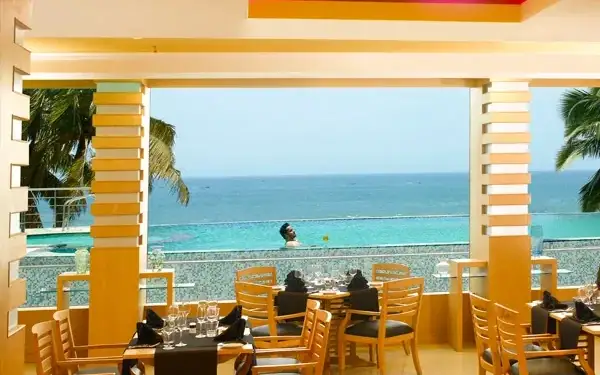
Poolside multi-cuisine restaurant at The Quilon Beach Hotel. Open-air dining right on Kollam beach. Beach Road, Kollam - 691006, Kerala.
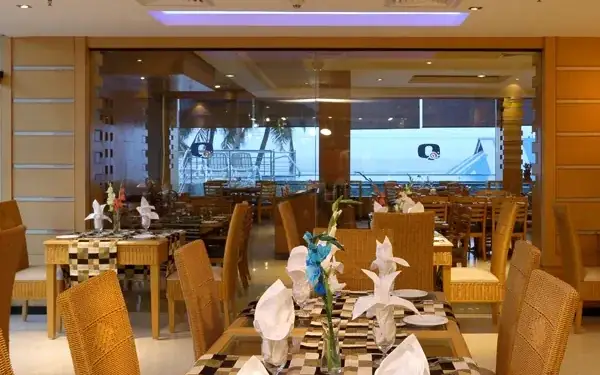
The 24-hour coffee shop at The Quilon Beach Hotel. All-day light meals and beverages beside the sea.
Multi-cuisine restaurant in the Bishop Jerome complex, Chinnakada. Blends Kerala spice with Chinese woks and North Indian tandoor.
Supreme UpperCrust is a restaurant at Kadappakkada in Kollam. Use the branch’s menu and contact to choose a lunch or dinner stop during a city outing.
Supreme AllSpice is a restaurant at Kadappakkada in Kollam. Check the branch’s menu when arranging a meal, takeaway or group enquiry.
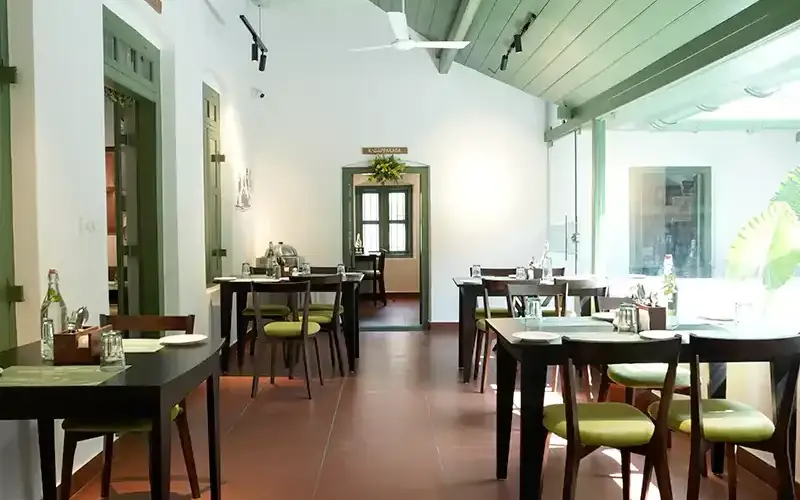
Frankztreat is a restaurant option at Karicode–Peroor in Kollam, with a menu spanning snacks and meals. Check the location and current menu before adding it to a city dining outing.
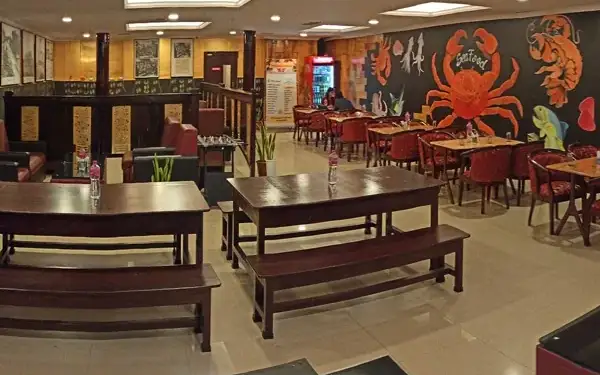
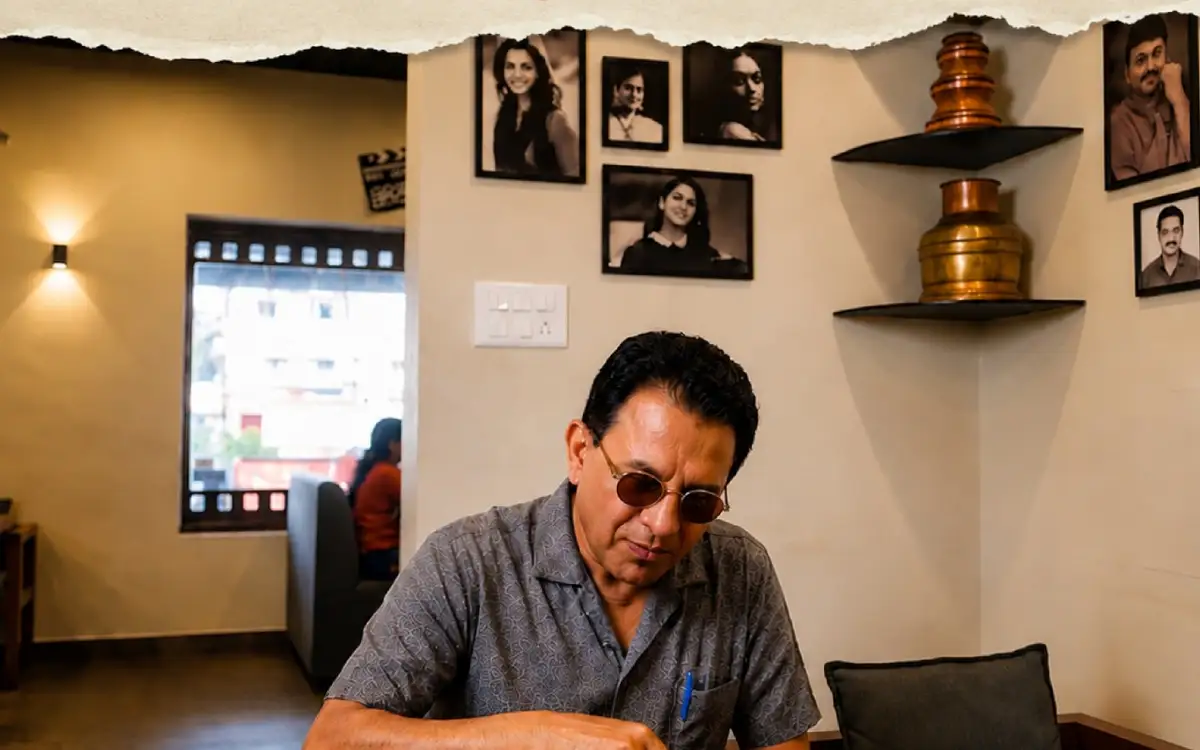
Javees Cinema Restaurant brings a film-themed setting to a meal in Kollam. Choose it when the atmosphere is part of your outing, and check the current menu before arranging a group dinner. Contact the restaurant for table availability rather than assuming a walk-in will accommodate everyone.
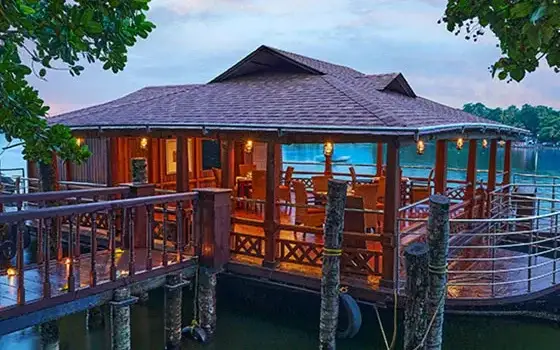
Floating seafood restaurant at The Leela Ashtamudi. Choose it for a lakeside meal and confirm the current menu and table reservation directly.
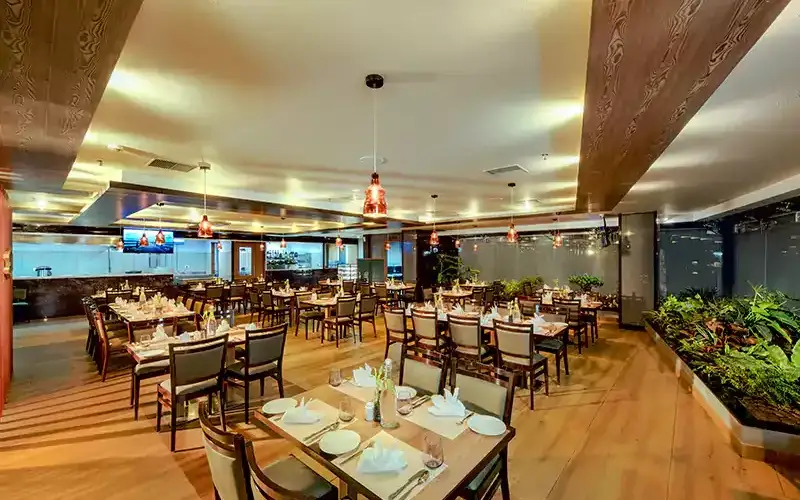
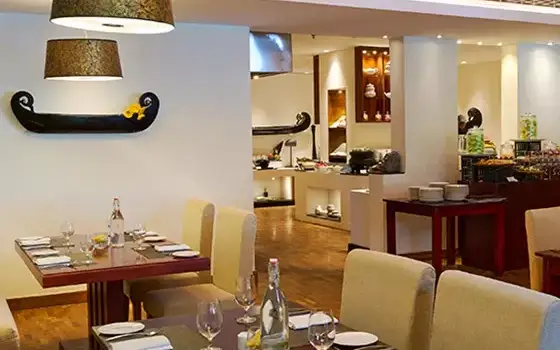
Lobby-level all-day restaurant at The Leela Ashtamudi, with lake views and Indian and international dishes. Confirm the current service and table directly.
Lobby-level café at The Leela Ashtamudi for coffee or a light bite with lake views. Check the current service before visiting.
Restaurant at Hotel Nani opposite the Kollam Clock Tower in Chinnakada. Serves Indian, Chinese, Continental and Mediterranean fare.
Artisan bakery and cafe at Kallumthazham, Kollam, serving French, Asian and fast-food fare alongside coffee.
Cafe at Sarathy Junction, Kollam, serving Chinese and Continental food in a book-and-play themed setting.
Vegetarian South Indian cafe at Kappalandimukku, Kollam, popular for affordable dosas and traditional meals.
Restaurant (chicken) on Kottarakara - Kollam road in Kollam Town.
Cafe Kudumbashree at Panmana is a restaurant option in the wider Kollam district. Check the address before adding a meal stop; Panmana is a separate journey from the city waterfront.
Book with the place itself. India’s cyber-crime coordination centre warned in April 2025 that convincing copies of hotel and pilgrimage booking sites are being pushed through sponsored search and social ads, taking payment for rooms the property never hears about. Every listing here links to the business’s own contact details and its own Google or Bing profile — we take no commission and sit in nobody’s payment path. If a booking page reached you through an ad, check the address bar against the property’s own site before you pay. Fraud can be reported on cybercrime.gov.in or on 1930.
Find food, accommodation and activities across Kollam town. Browse the guides for places to eat, stay and explore along your route.
13 more places around Kollam town. Open a guide to plan the visit and onward journey.
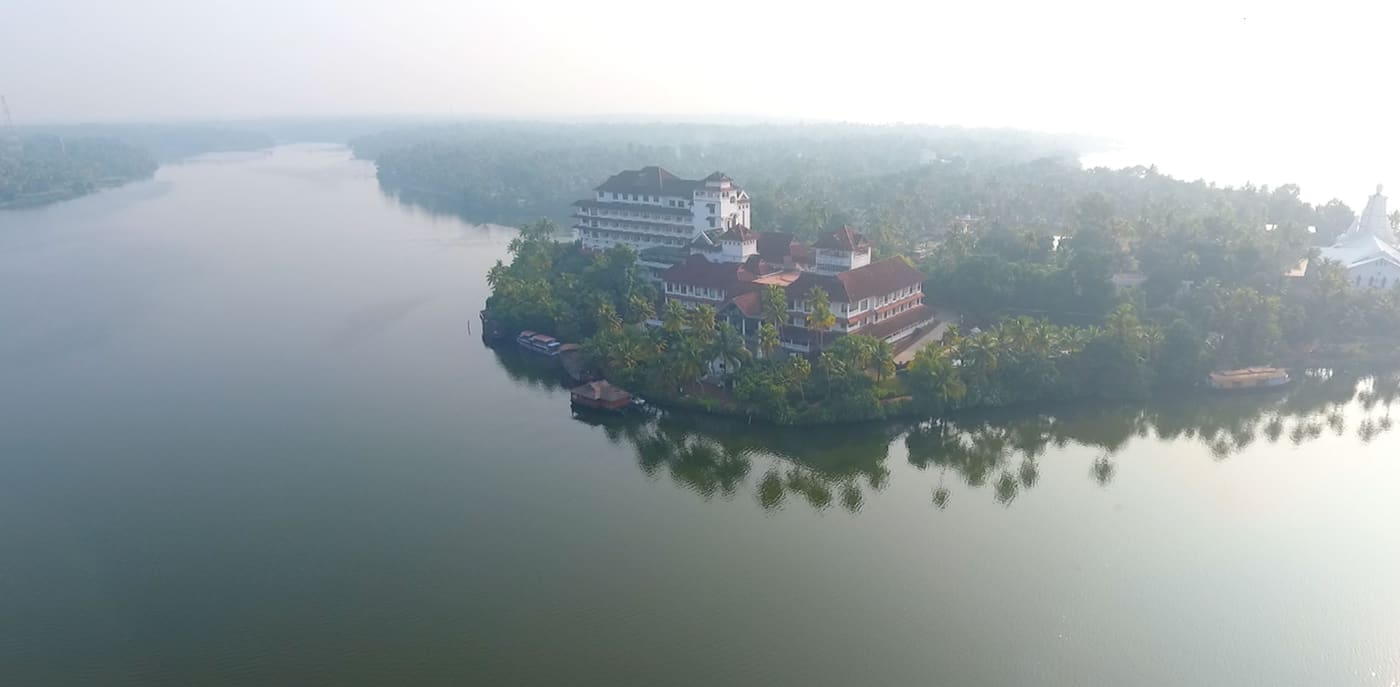
1.4 km · 17 min walk
Large palm-fringed backwater system and houseboat base around Kollam.
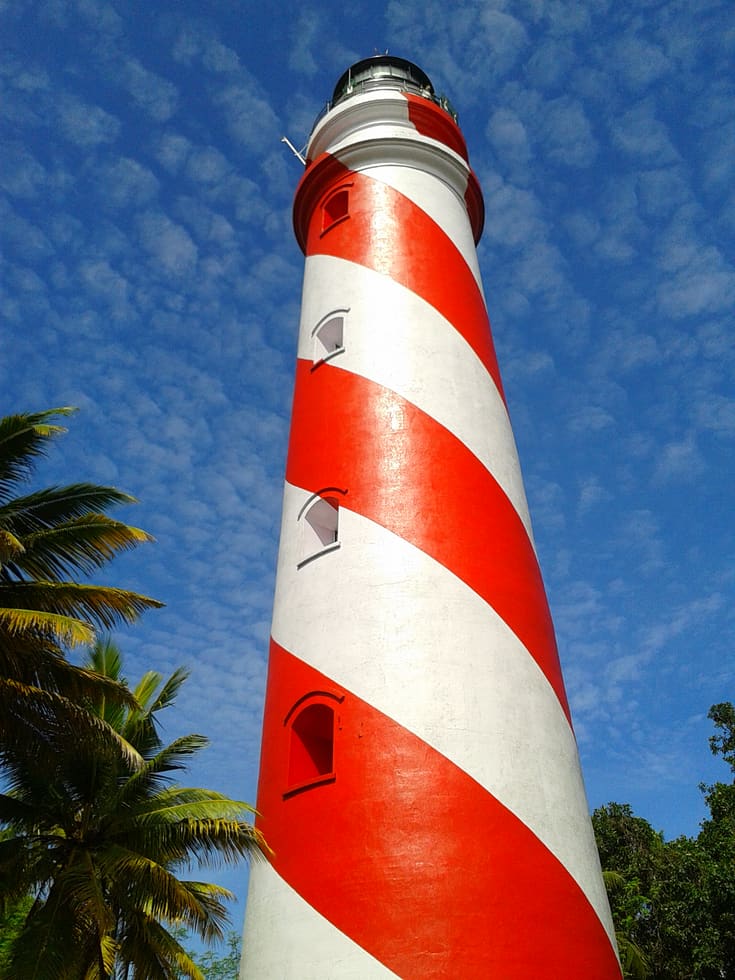
1.6 km · 20 min walk
Thangassery Lighthouse raises Kollam’s sea view above a historic coastal neighbourhood. The red-and-white tower is a working navigation landmark with a separate visitor session.
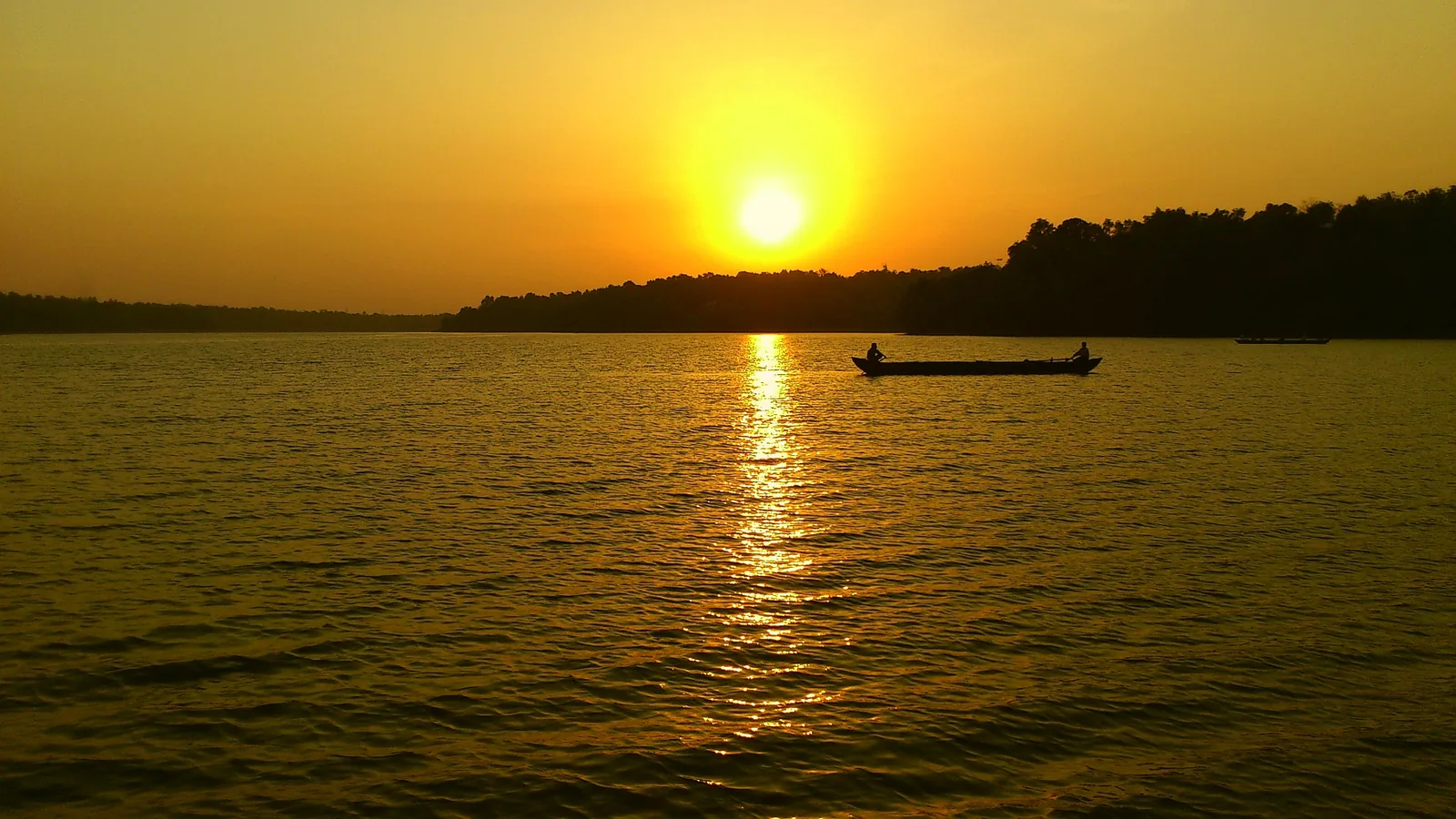
Kerala’s largest freshwater lake, a Ramsar wetland ringed by hills and a Sastha temple, north of Kollam.
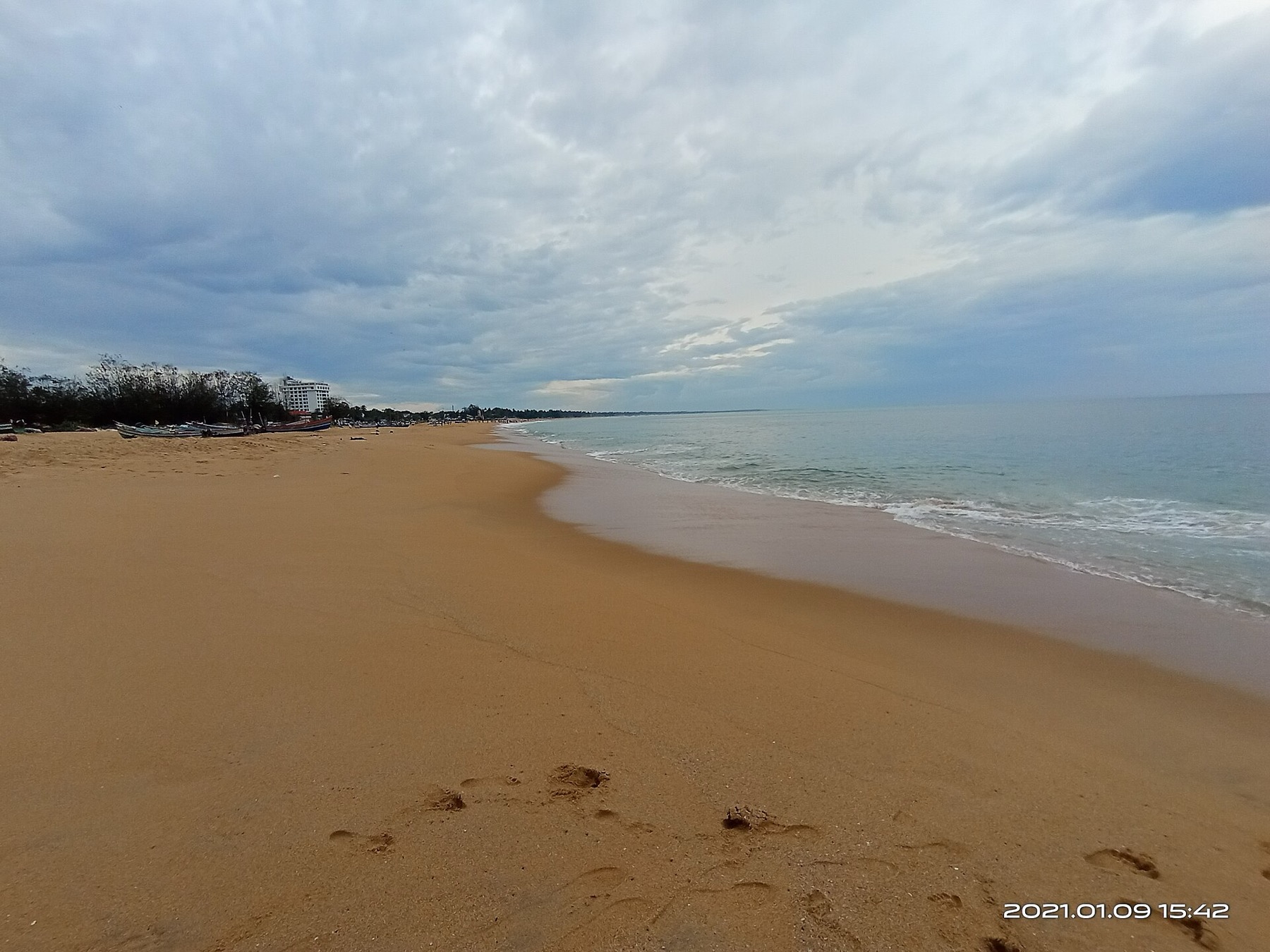
3.0 km · ~7 min by auto
The city’s Mahatma Gandhi beach and park on the Arabian Sea, a popular evening spot near Kollam town.
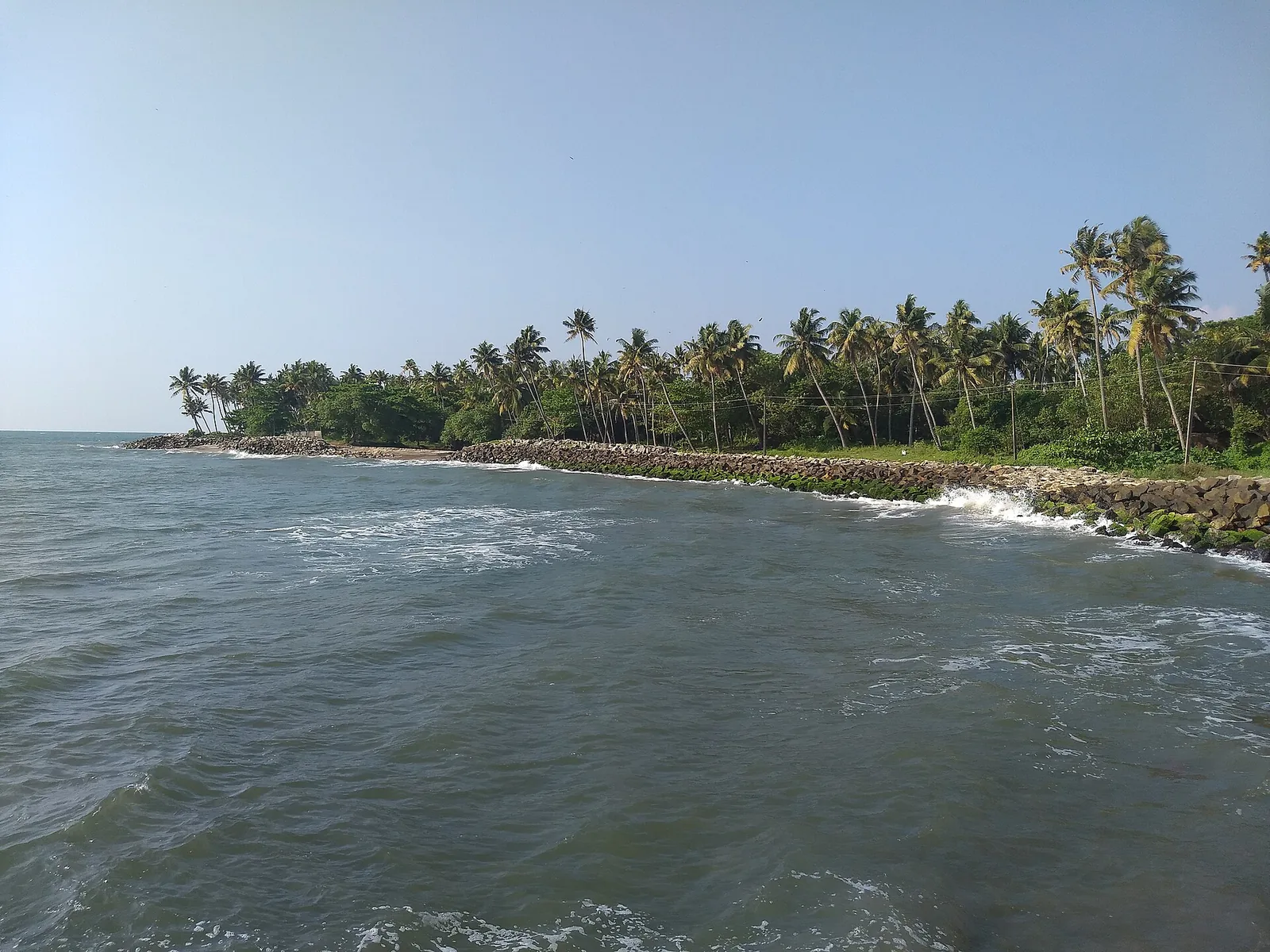
2.1 km · 26 min walk
A quiet, curved bay beach west of Kollam town, calmer than the city beach and good for a relaxed evening.
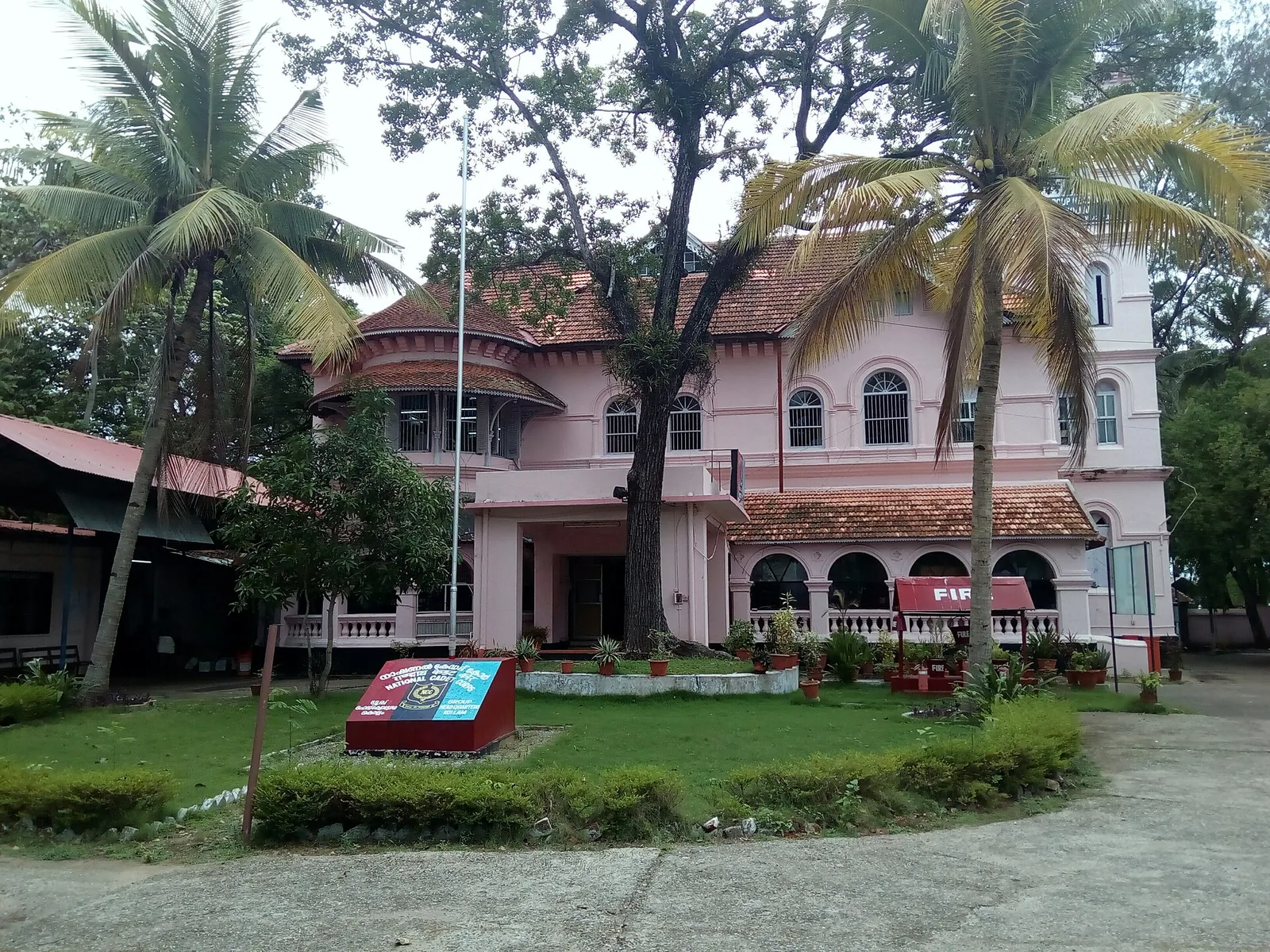
1.3 km · 16 min walk
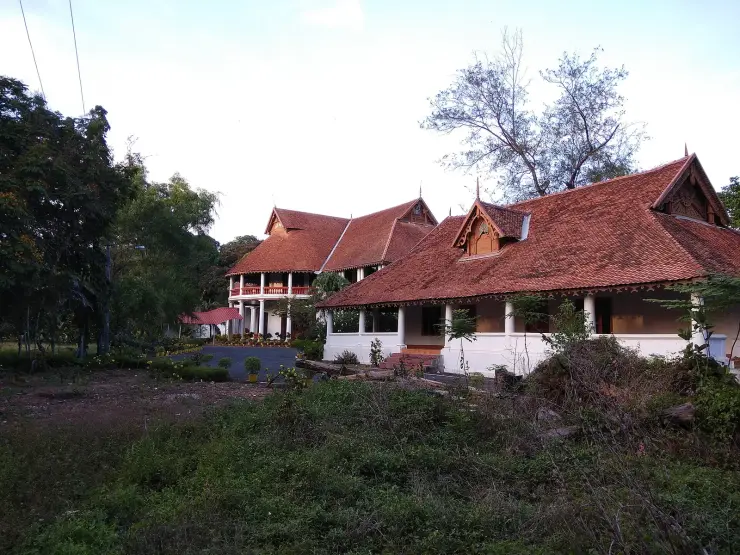
A Travancore royal residence on the Ashtamudi shore in Kollam, built to be arrived at by boat and now a working NCC establishment — viewed from outside or from the water.
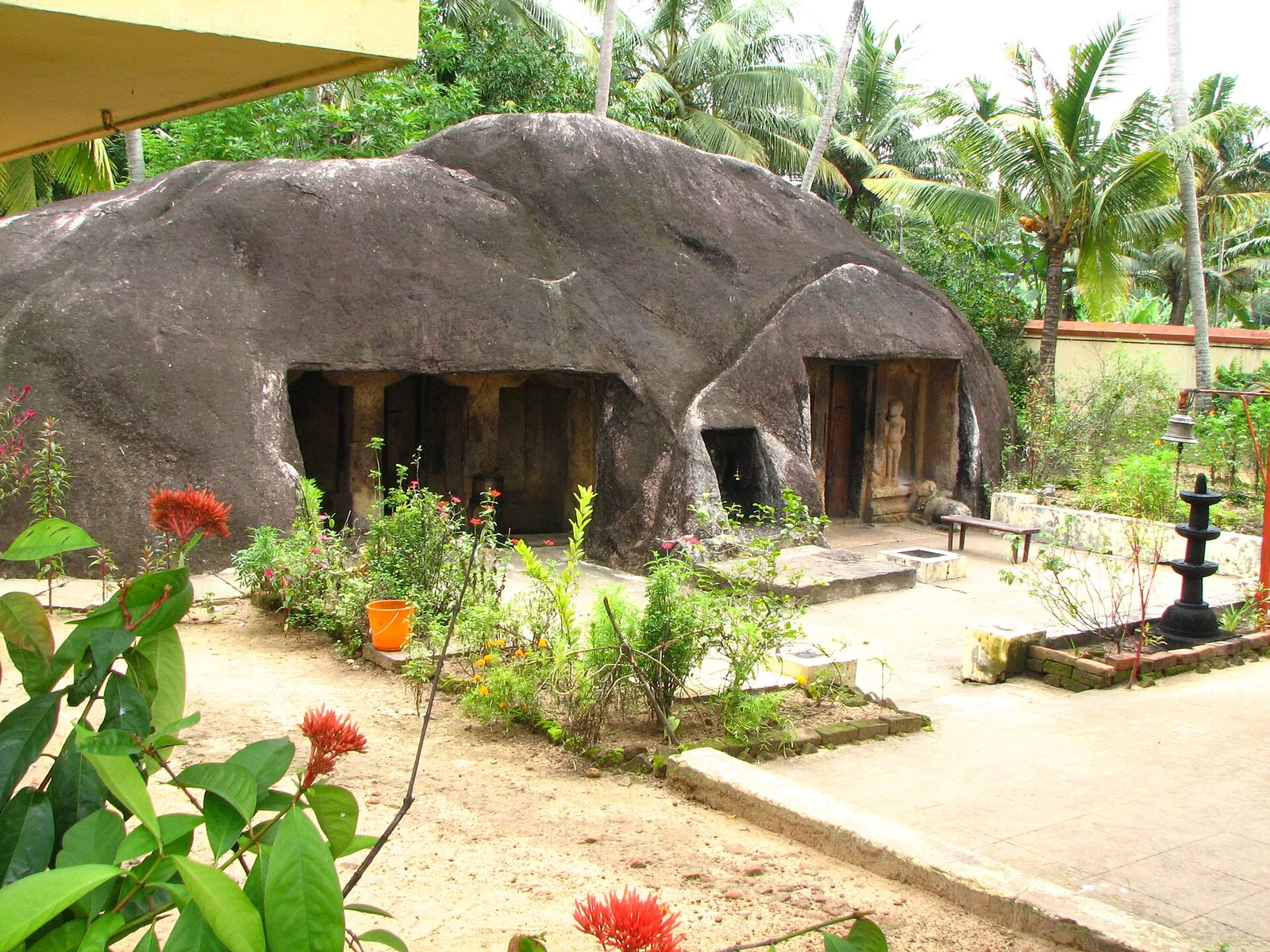
A monolithic rock-cut cave temple near Anchal/Kadakkal in south Kollam, carved with a Shiva shrine.
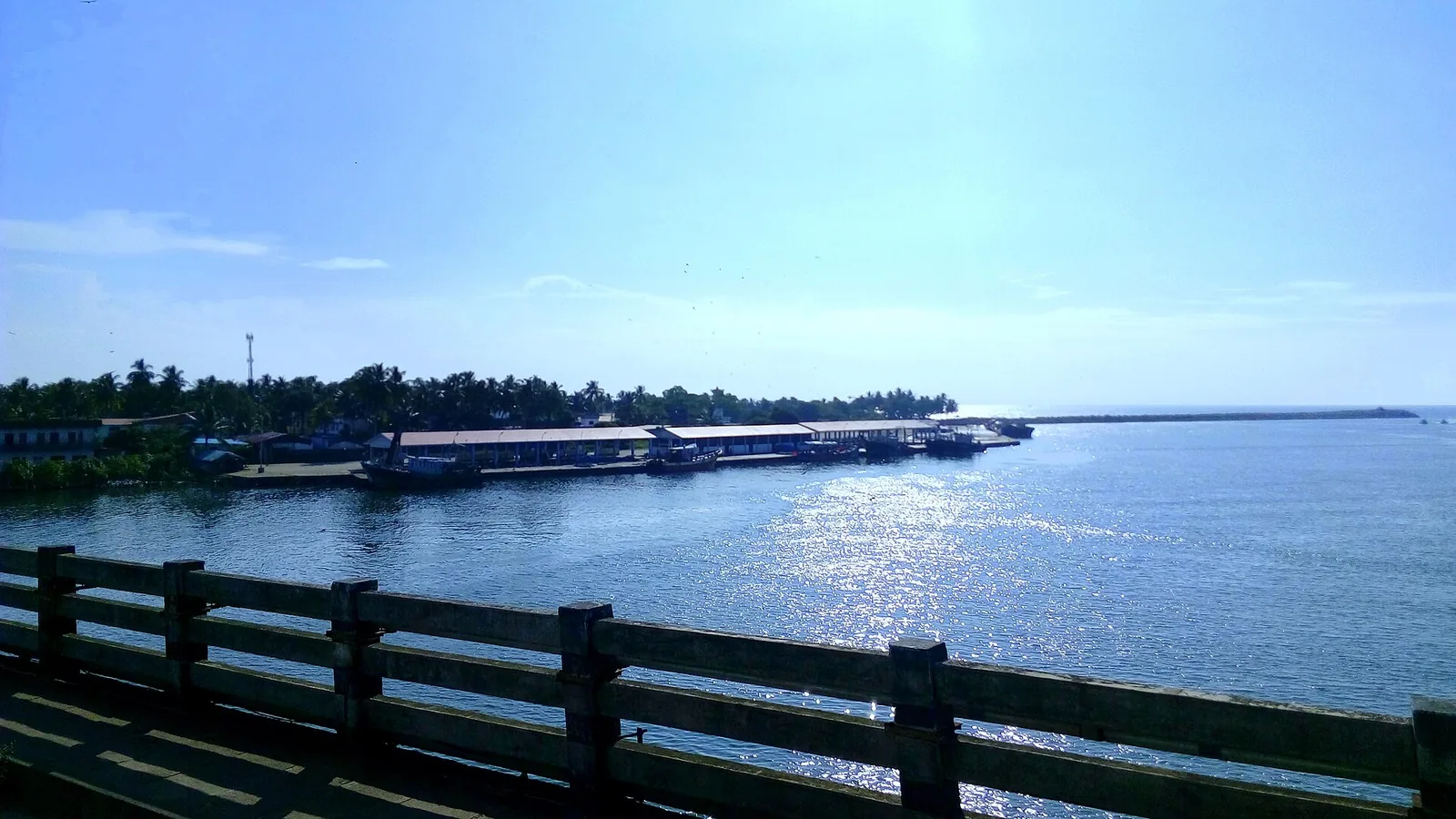
6.2 km · ~15 min by auto
By most accounts Kerala’s largest fishing harbour, at the mouth of Ashtamudi Lake about 9 km from Kollam town, and where Indian fishing was mechanised; two bridges cross the confluence and the early-morning auction is the sight to catch.
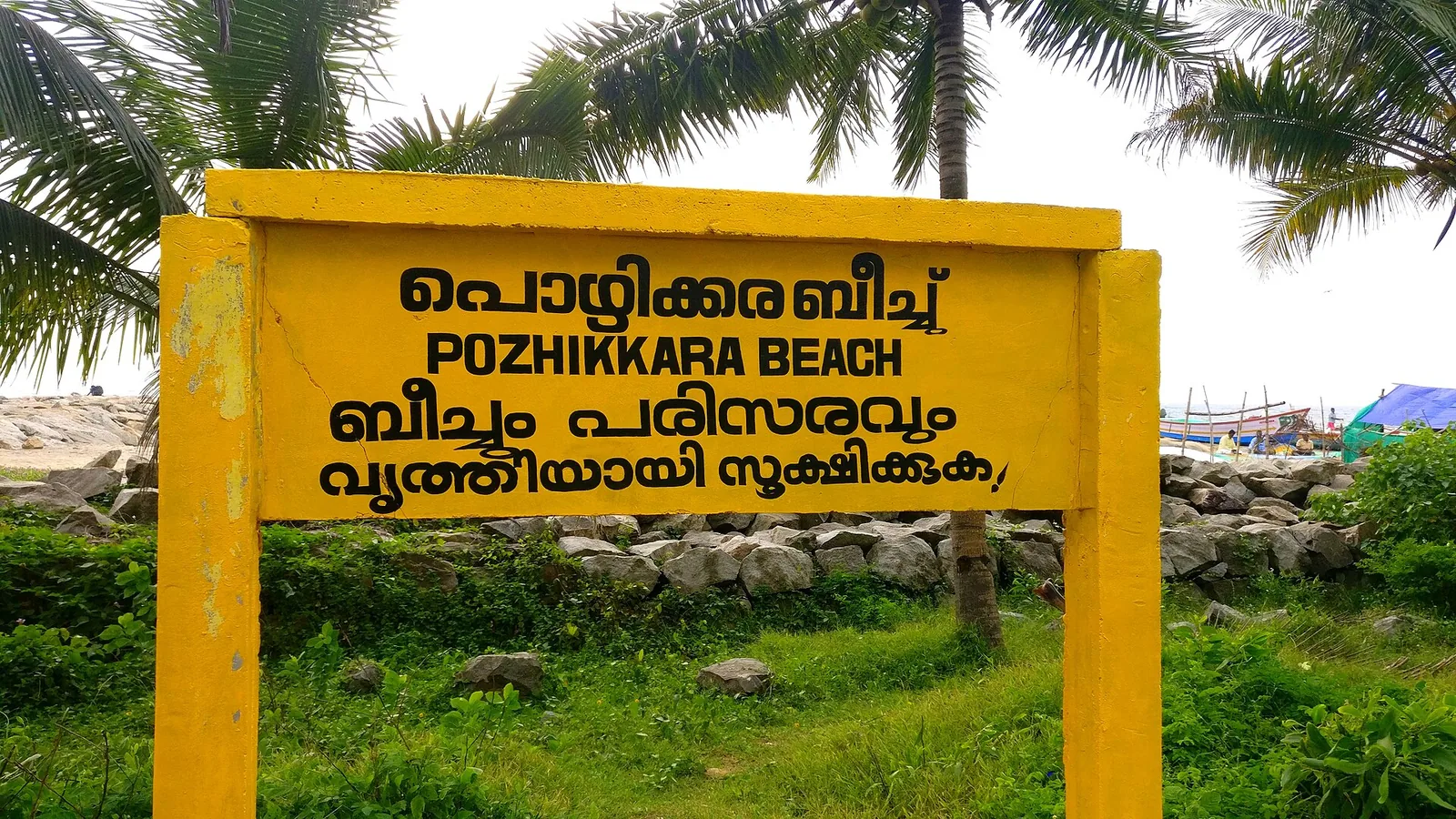
The estuary and beach at Paravur south-east of Kollam, where the Paravur backwaters meet the sea across a sandbar — a quiet spot known for its regulator bridge, the TS Canal and calm backwater-and-sea scenery.
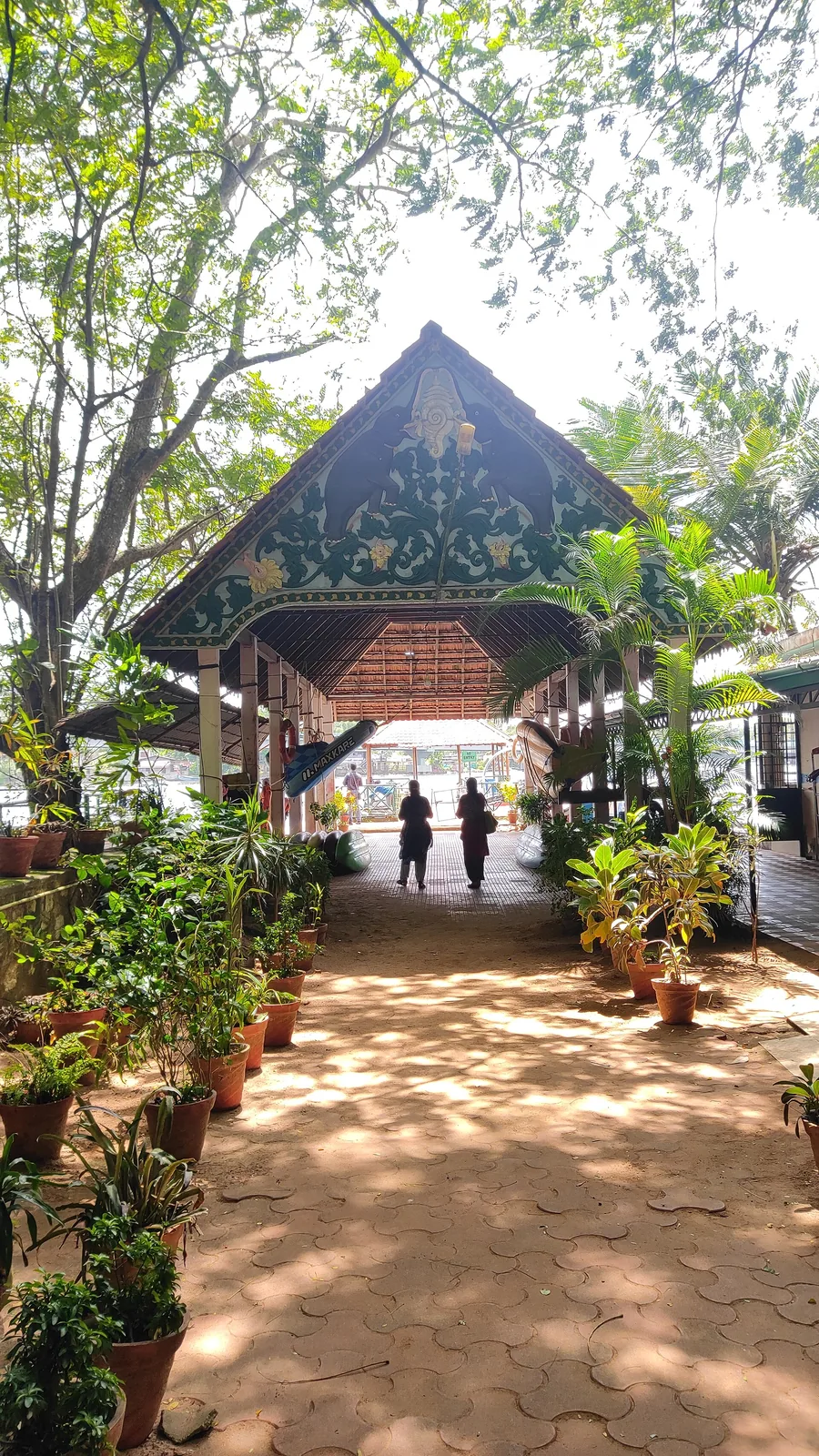
1.4 km · 18 min walk
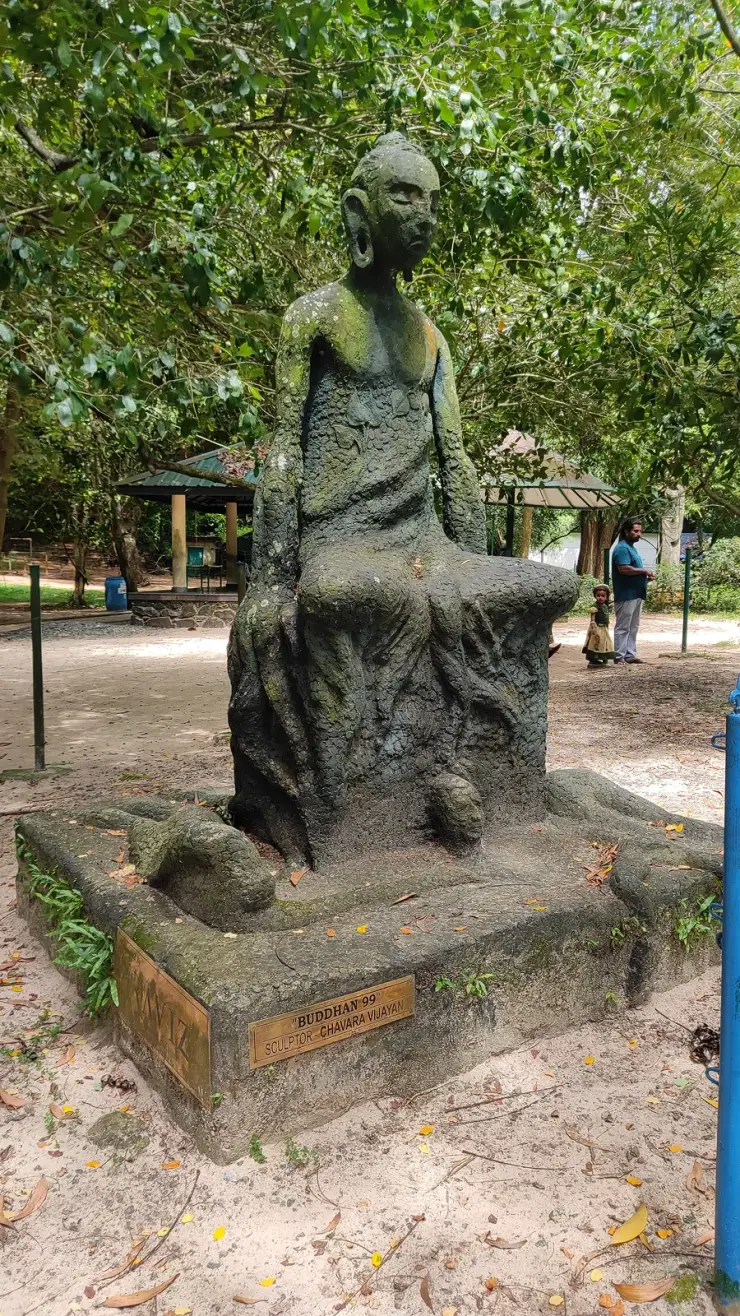
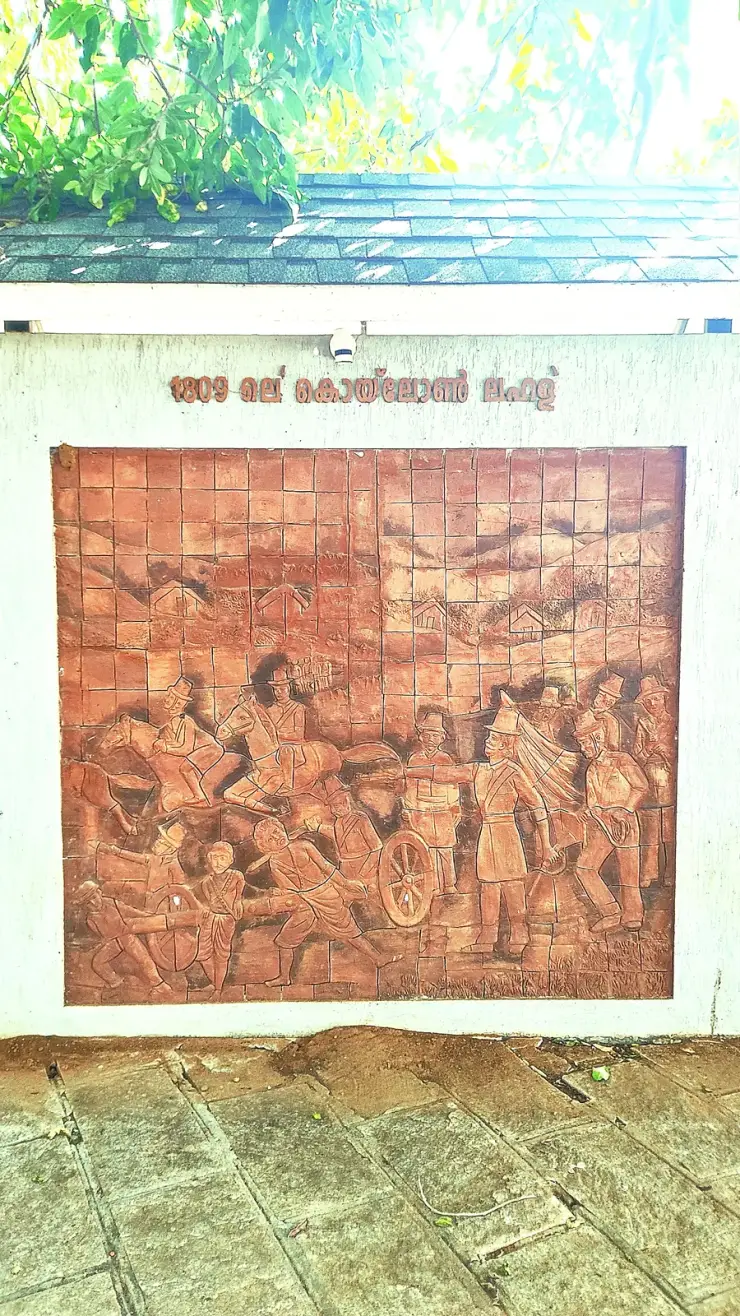
Forty-eight acres of municipal park on the Ashtamudi shore in the middle of Kollam, run by the DTPC — boating and kayaking off a painted jetty, ziplines and rope courses, a heritage walkway of terracotta reliefs, contemporary sculpture left behind by a 2012 festival, and a mangrove wetland with a state biodiversity heritage tag.
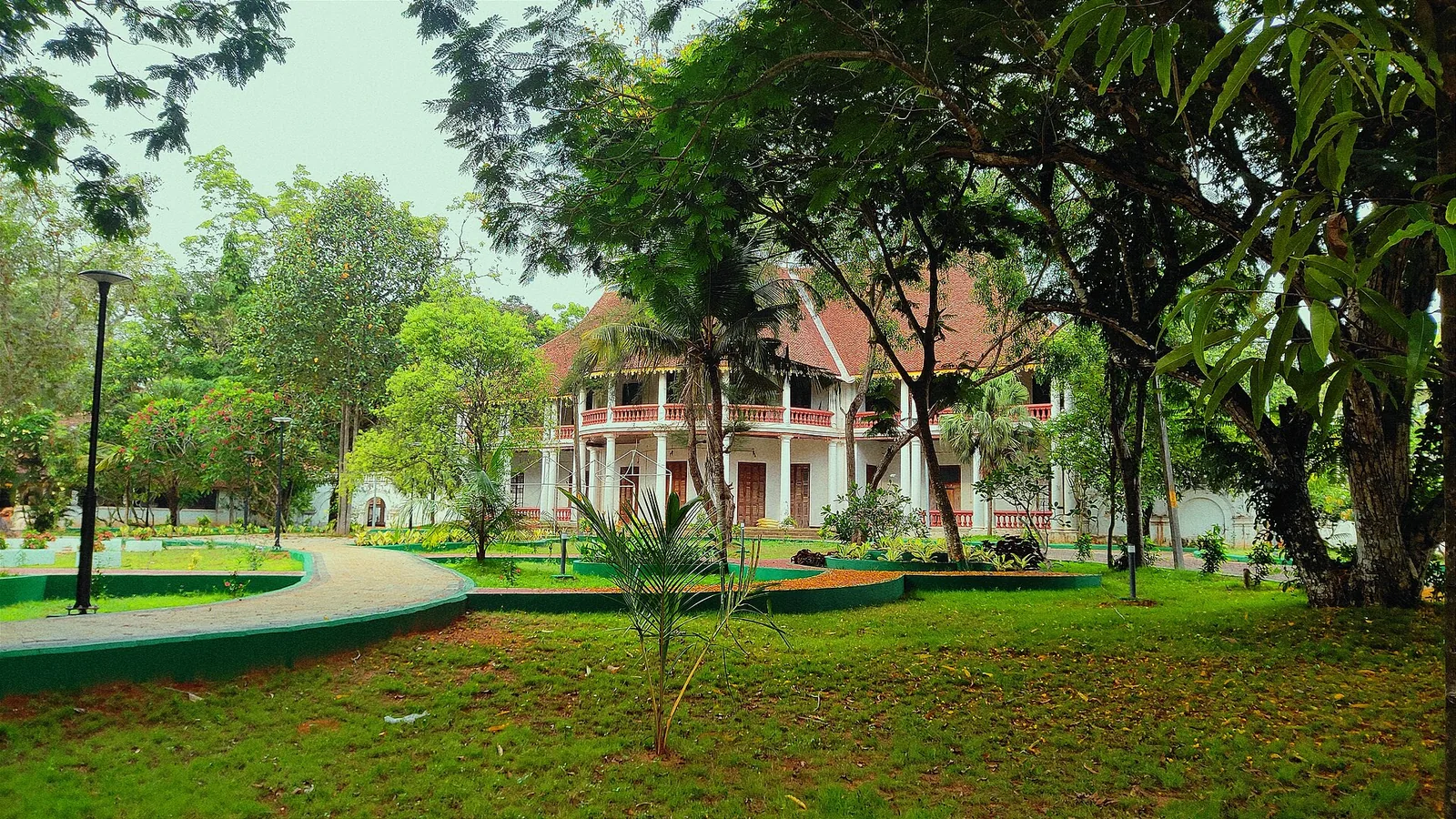
1.6 km · 20 min walk
The former British Residency at Asramam survives as a government guest house beside Kollam’s backwater landscape. Its architecture is the attraction, with access governed by its working use.
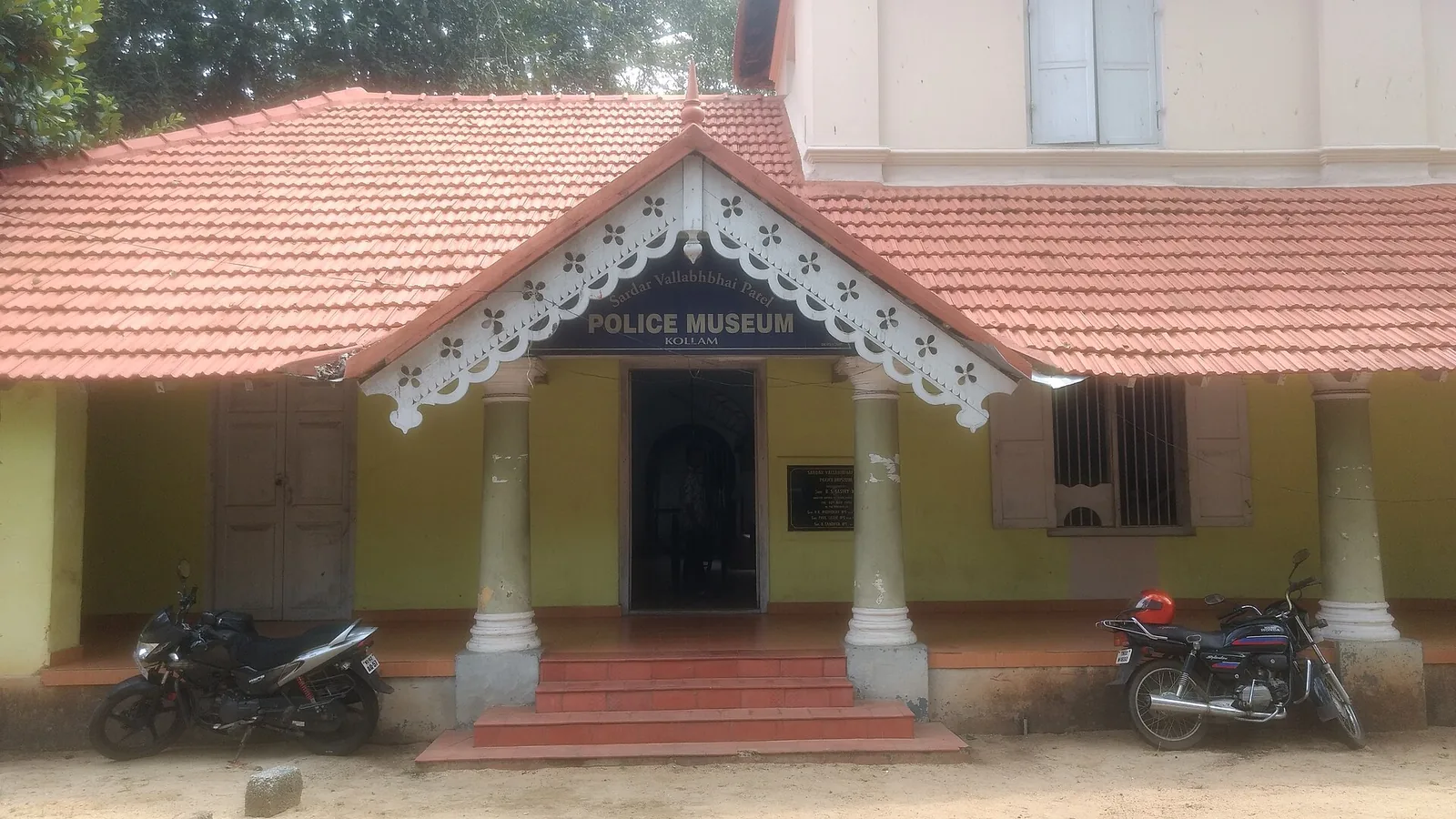
2.5 km · ~6 min by auto
Kollam’s Sardar Vallabhbhai Patel Police Museum introduces the history of policing through arms, equipment and investigation displays. It offers an indoor history stop during a city outing. Check the museum’s session before choosing your day, and leave time to read the displays.
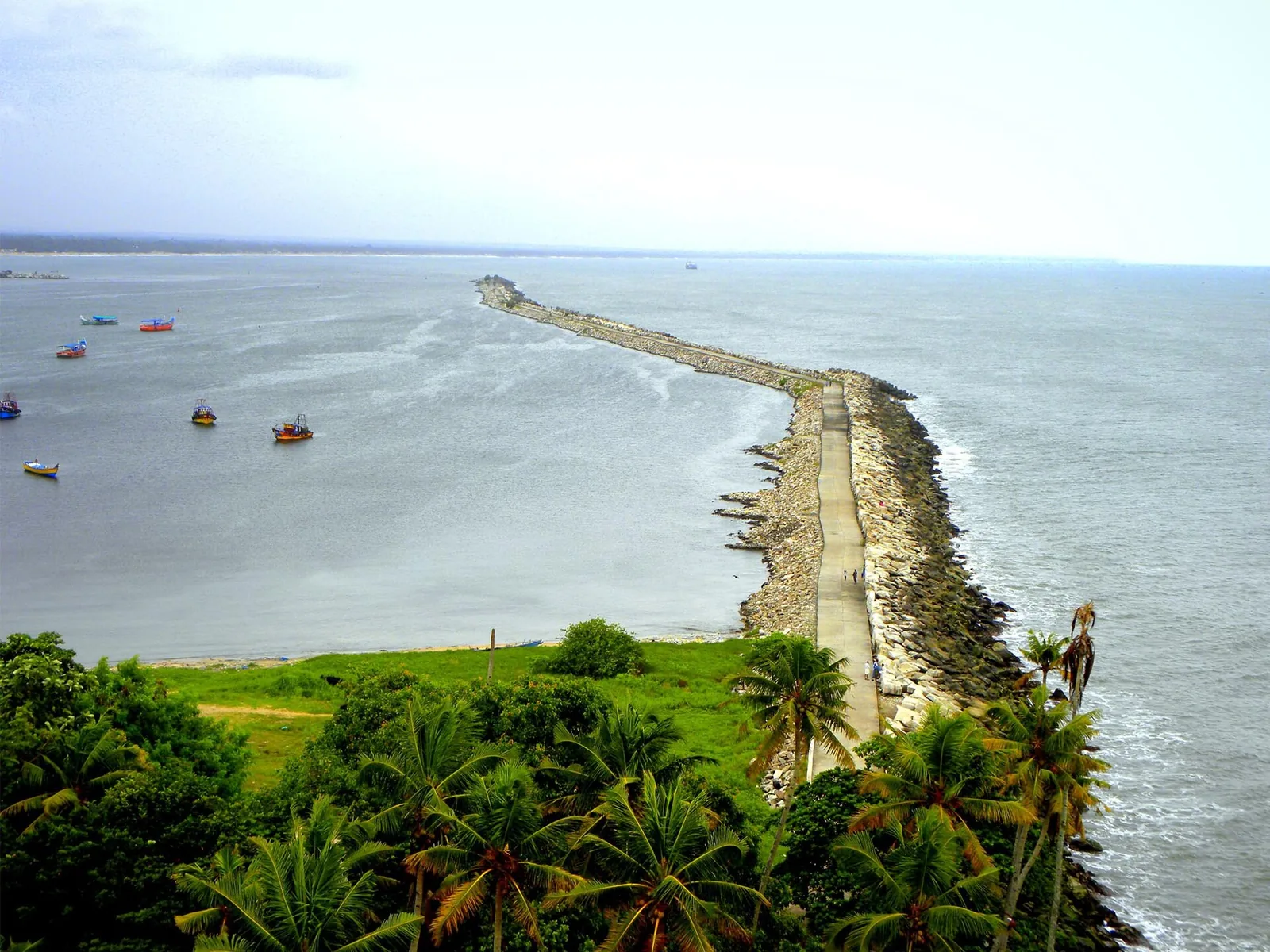
2.1 km · 26 min walk
The working wharf and breakwater at Thangassery, conventionally founded in AD 825 — the event the Malayalam calendar counts from. A short cargo quay and a long public breakwater walk, above a seabed that has produced Tang and Song coins and Lower Palaeolithic tools.
Roampedia is commission-free — own or know a stay, eatery, guide or shop near Anandavalleeswaram Temple? List it and it appears here once verified.
Add a nearby businessEntry: Free. Darshan carries no charge; vazhipadu offerings are at posted rates at the counter.
If you are travelling by bus or ferry, check the return service with the operator before setting out. Leave time to reach the stop or jetty after your visit.
Ask at the bus stand for the time of the last service back, not the next one. If you miss it, an auto or app cab is the fallback — agree the fare before you get in.
If you need step-free access, contact the site before travelling. Ask about a level entrance, steps along the route, the nearest drop-off point, seating and accessible toilets.
Charge cap and free-transaction limits: Reserve Bank of India, in force since 1 May 2025.
These services are listed within about 1.2 km of Anandavalleeswaram Temple. Walking distances follow mapped routes; access and opening hours can change. Other services may be closer but are not included here.
Emergency numbers are verified against official government and state tourism sources. 112 works anywhere in India.
A Travancore royal residence on the Ashtamudi shore in Kollam, built to be arrived at by boat and now a working NCC establishment — viewed from outside or from the water.
1.3 km · 16 min walk · straight lineLarge palm-fringed backwater system and houseboat base around Kollam.
1.4 km · 17 min walk · straight lineForty-eight acres of municipal park on the Ashtamudi shore in the middle of Kollam, run by the DTPC — boating and kayaking off a painted jetty, ziplines and rope courses, a heritage walkway of terracotta reliefs, contemporary sculpture left behind by a 2012 festival, and a mangrove wetland with a state biodiversity heritage tag.
1.4 km · 18 min walk · straight lineThangassery Lighthouse raises Kollam’s sea view above a historic coastal neighbourhood. The red-and-white tower is a working navigation landmark with a separate visitor session.
1.6 km · 20 min walk · straight lineThe former British Residency at Asramam survives as a government guest house beside Kollam’s backwater landscape. Its architecture is the attraction, with access governed by its working use.
1.6 km · 20 min walk · straight lineA quiet, curved bay beach west of Kollam town, calmer than the city beach and good for a relaxed evening.
2.1 km · 26 min walk · straight lineThe working wharf and breakwater at Thangassery, conventionally founded in AD 825 — the event the Malayalam calendar counts from. A short cargo quay and a long public breakwater walk, above a seabed that has produced Tang and Song coins and Lower Palaeolithic tools.
2.1 km · 26 min walk · straight lineKollam’s Sardar Vallabhbhai Patel Police Museum introduces the history of policing through arms, equipment and investigation displays. It offers an indoor history stop during a city outing. Check the museum’s session before choosing your day, and leave time to read the displays.
2.5 km · ~6 min by auto · straight lineThe city’s Mahatma Gandhi beach and park on the Arabian Sea, a popular evening spot near Kollam town.
3.0 km · ~7 min by auto · straight lineBy most accounts Kerala’s largest fishing harbour, at the mouth of Ashtamudi Lake about 9 km from Kollam town, and where Indian fishing was mechanised; two bridges cross the confluence and the early-morning auction is the sight to catch.
6.2 km · ~15 min by auto · straight line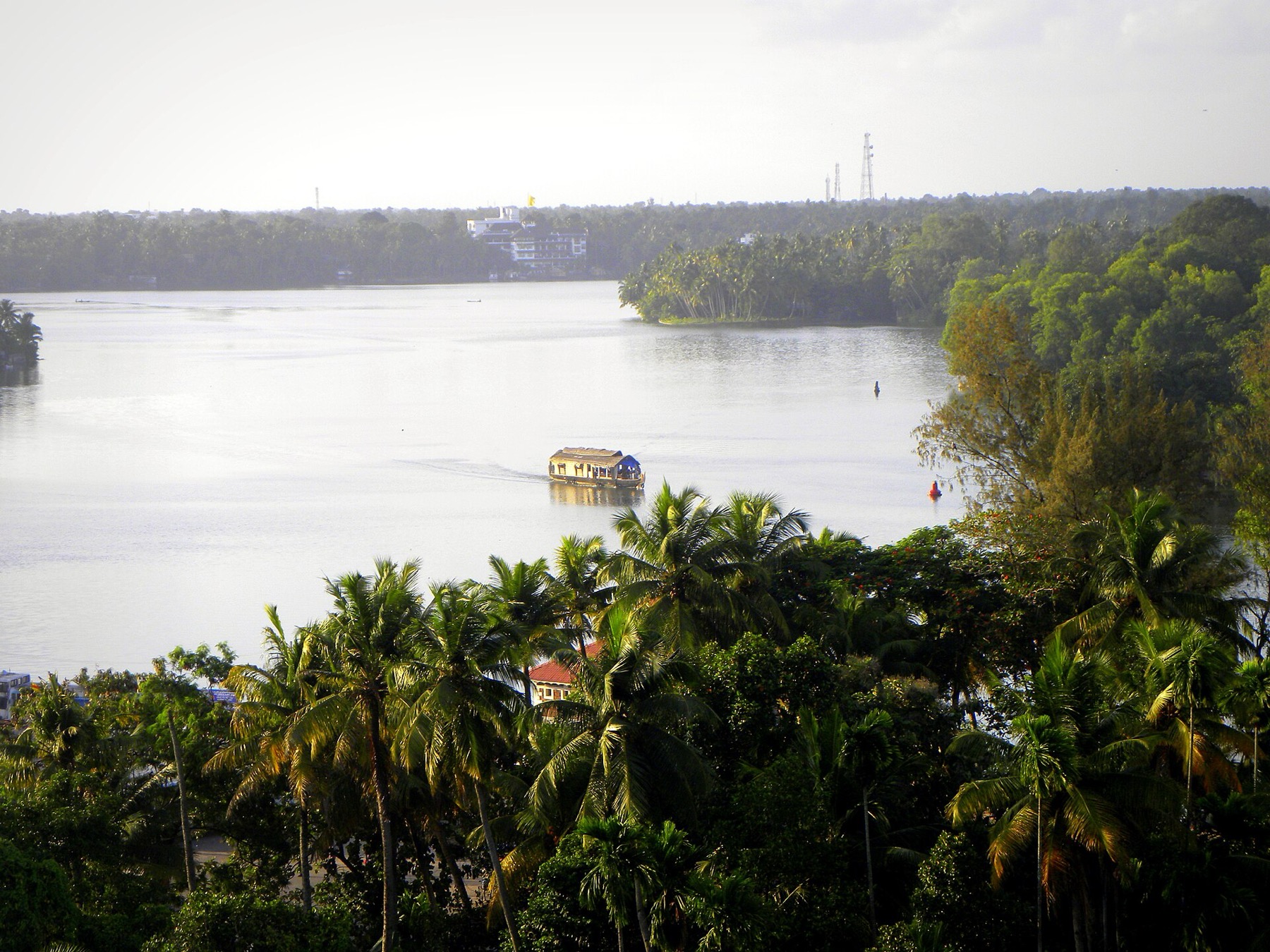
The open-water outlooks on the Munroe Island and Perumon side of Ashtamudi, where the lake widens out — the wide views the canal trips themselves do not give you.
8.3 km · ~14 min by cab · straight line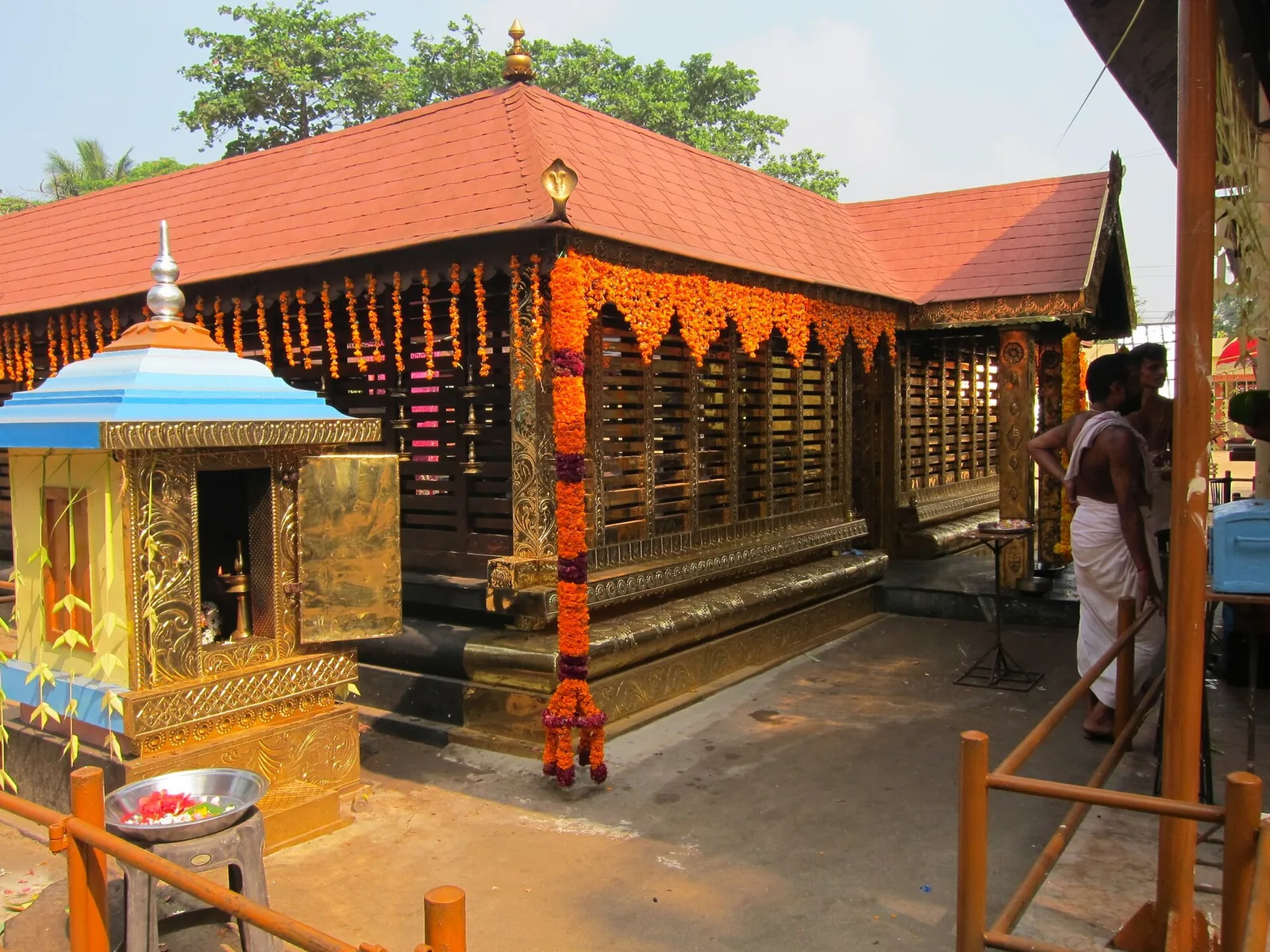
A Devi temple at Chavara north of Kollam, known across Kerala for Chamayavilakku — the two nights in Meenam when men and boys dress in saris and carry lamps in procession to the goddess, re-enacting the cowherd boys of its founding legend.
10.4 km · ~17 min by cab · straight lineNearby toilets, pharmacies, ATMs, seating and vets are community-mapped and may be incomplete or out of date. Map data © OpenStreetMap contributors | Walking times © openrouteservice.org by HeiGIT
Nobody knows, and the published figures disagree badly. The teak sreekovil is said to be about 1,200 years old by Kerala Tourism's sources and by Wikipedia's prose; Wikipedia's own infobox on the same article dates the construction to the eleventh century; and another set of listings says 1,100 years. Note that 1,200 years lands almost exactly on AD 825, the founding date of Kollam itself and the epoch of the Malayalam calendar — a suspiciously convenient round number. The most honest published line is that no historical document establishes the temple's antiquity or origin.
That is what Kerala Tourism says, and Wikipedia repeats the wording; one popular Kerala temple site has already upgraded it to the only one in the world. No authority is cited for any version, and the claim escalated without a new source appearing, which is usually a warning sign. We could not find a source behind it and we could not produce a clean counterexample either — so it is on this page as a widely printed claim rather than as a fact.
Shiva, worshipped here as Ananda Swaroopan — bliss embodied — with Parvati as Swayamvara Parvathy, the goddess at her own choosing of a husband. Ananda is bliss, Anandavally is the goddess's local name, and Eeswaram is the lord. Shiva faces west and the goddess faces east. Sub-shrines include Ganapathy, Murugan, Krishna, Hanuman, Ayyappan, Maha Vishnu, Lakshmi Devi, Bhoomi Devi and the naga deities.
Published pooja times run from nada thurakkal at about 05:00, with usha pooja around 06:30 and ucha pooja around 10:30 in the morning, then deeparadhana about 18:30 and athazha pooja about 19:30, closing around 20:00. ⚠ These come from a temple-listing site rather than from the temple, and Kerala Tourism publishes no timings at all — treat them as indicative and confirm locally, especially in festival season.
The annual festival runs for ten days in the Malayalam month of Meenam, which falls in March or early April, opening with the Thrikodiyettu flag-hoisting and closing with cultural programmes and fireworks. 🛑 We do not print a Gregorian date, because it moves with the Malayalam calendar — check a current panchangam or ask at the temple. Shivaratri, Navaratri and Mandala Makaravilakku are also observed.
It is about 2.5 km from Kollam Junction railway station, on the main highway through the city, and Thiruvananthapuram International Airport is about 68 km away by Kerala Tourism's figure (one listing says 76 km). Any auto in Kollam will know it. ⚠ Two PIN codes are in circulation for the address — 691013 and 691007 — so if you are sending post, ask rather than guess.
Both. The temple and neighbourhood map markers use the same Malayalam name and sit about twenty metres apart. Choose the temple result when navigating; Kollam addresses containing the word may refer to the locality rather than the shrine.
The temple was damaged during the conflict between Velu Thampi Dalawa, Diwan of Travancore, and the East India Company in 1808–09 — the rising associated with the Kundara proclamation, Kundara being in this district — and was repaired in 1823 at the expense of the British government. ⚠ That account is printed consistently across temple listings but we could not trace it to an archival source, so it is recorded as the temple's own history rather than as an established fact.
Morning or early evening is usually best; festival days can be powerful but crowded.
Entry: Free. Darshan carries no charge; vazhipadu offerings are at posted rates at the counter. Timings: Published pooja times run roughly 05:00 to 11:00 in the morning — nada thurakkal about 05:00, usha pooja about 06:30, ucha pooja about 10:30 — and about 18:30 to 20:00 in the evening, with deeparadhana around 18:30 and athazha pooja around 19:30. ⚠ These come from a temple-listing site, not from the temple, and Kerala Tourism publishes no timings at all. Treat as indicative and confirm locally, especially during the Meenam festival.
Base yourself in Kollam town or a nearby town in Kollam, then confirm the last-mile route locally before leaving. Check temple entry customs, dress rules and festival crowd conditions before arrival. If the visit depends on forest, temple, boat, ferry, weather or seasonal access, check the official/local rule on the day before travel.
45 minutes to 2 hours, longer during festival or queue periods.
Nearby you can pair Thevally Palace (1.3 km), Ashtamudi Lake (1.4 km), Asramam Adventure Park (1.4 km), Thangassery Lighthouse (1.6 km).
Use official counters for offerings/tickets where applicable. Keep footwear and valuables secure in crowded areas.
Written about Anandavalleeswaram Temple itself — its history, its legends and the arguments about them.
These guides explore Kollam town and the surrounding area. Choose a visit that fits your interests, allowing separately for travel between stops.
Route-level itineraries and practical guides for the rest of Kerala.
Photographs: RajeshUnuppally (CC BY-SA 3.0), Kerala Tourism (© Kerala Tourism; externally hosted official photograph). Wikimedia Commons.