What to expect
Highlights
- Heritage experience at Asramam Adventure Park
- Architecture, local stories and old trade/cultural routes
- Good fit for guided walks and nearby cafes/shops
Forty-eight acres of municipal park on the Ashtamudi shore in the middle of Kollam, run by the DTPC — boating and kayaking off a painted jetty, ziplines and rope courses, a heritage walkway of terracotta reliefs, contemporary sculpture left behind by a 2012 festival, and a mangrove wetland with a state biodiversity heritage tag.
Forty-eight acres of public park on the Ashtamudi shore at Asramam, in the middle of Kollam — boating and kayaking off a painted jetty, a zipline and rope courses, a heritage walkway of terracotta panels telling the district's own history, a set of contemporary sculptures left behind by a 2012 festival, and a mangrove wetland behind it carrying a state biodiversity heritage tag. The British Residency stands at the lake end of the same grounds.
The best way to understand Asramam is that it is not really one attraction. It is a large piece of open ground on the edge of a lake, in the middle of a city, onto which about six different civic ideas have been laid over four decades, and most of them have stuck.
The park proper covers about forty-eight acres — nineteen hectares — and opened to the public after 1980. It is owned by the Kollam Municipal Corporation and operated by the District Tourism Promotion Council, which is the arrangement that explains its character: municipal ground with a tourism department running the activities on it.
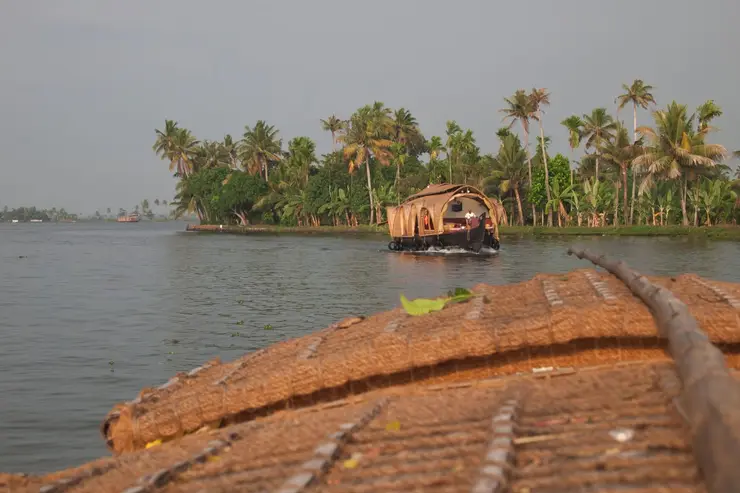
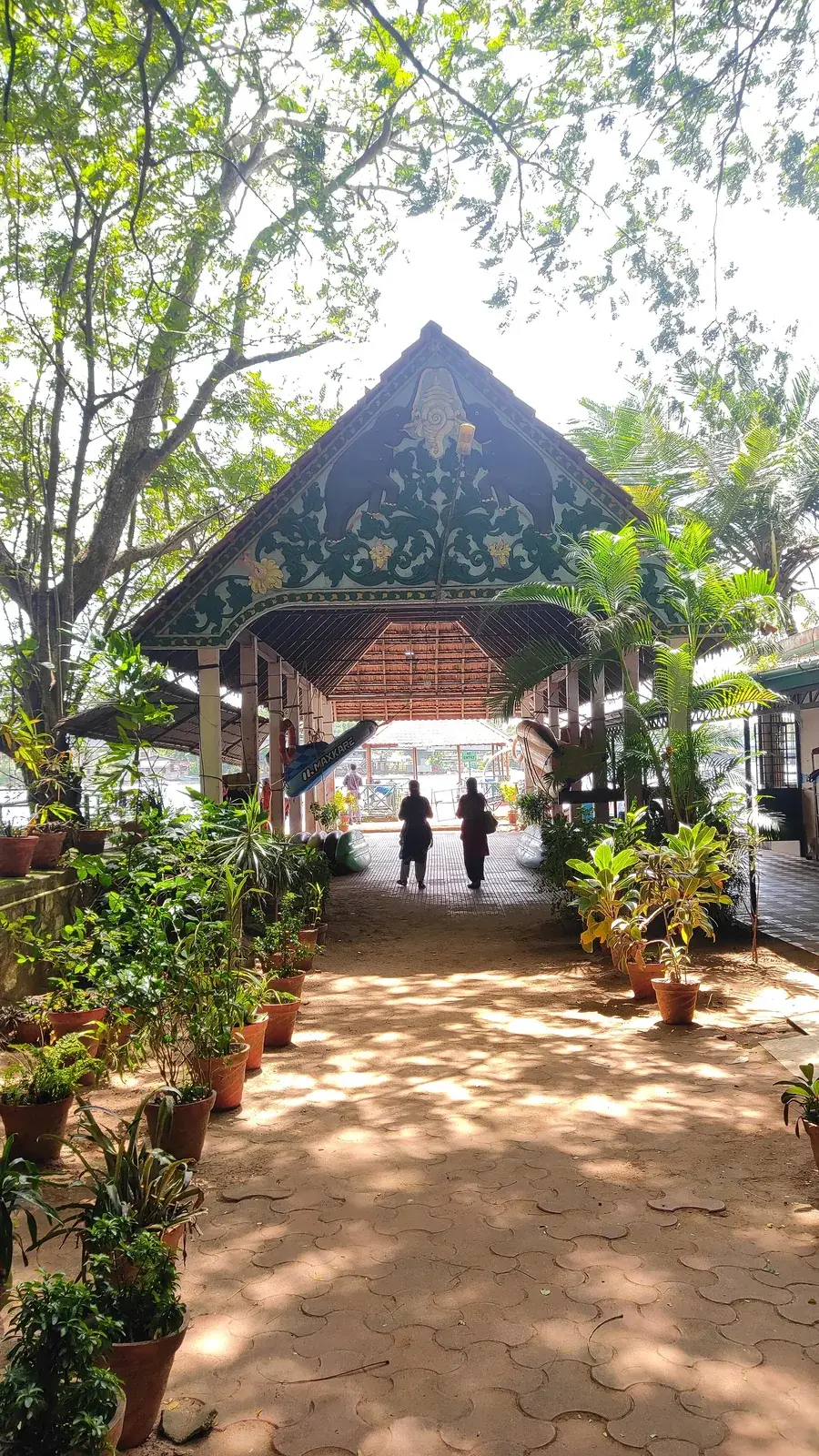
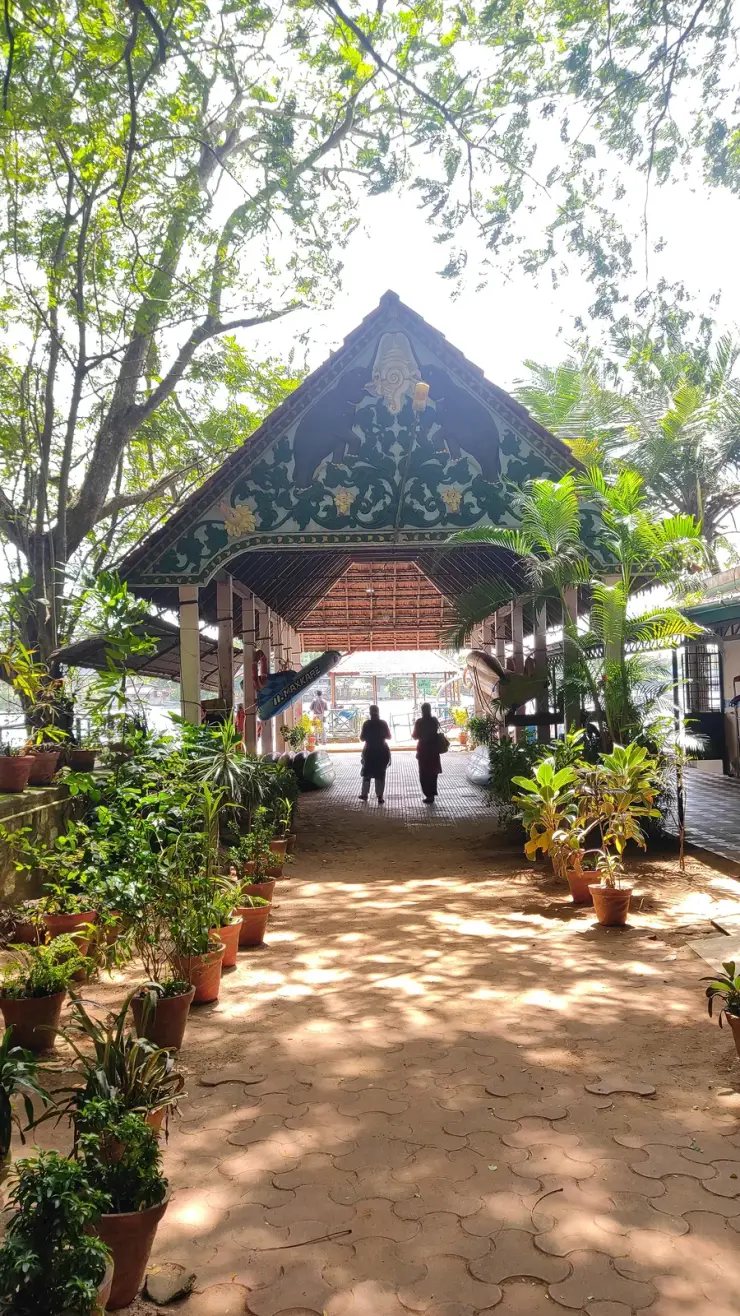
Start at the water, because that is what the place is for. The boat jetty sits under a pavilion with a beautifully painted gable — deep green, scrolled foliage, a carved face at the apex — with kayaks racked along the side and the lake opening out beyond. From here the DTPC runs backwater cruises in houseboats, luxury boats and speedboats, and there is kayaking and parasailing. Ashtamudi is eight arms of navigable water converging on a single outlet, and this is one of the easiest public places in Kollam to get onto it.
Then the dry-land adventure half, which is what gives the park its name: aerial net walking, rope climbing, a zipline, a children's play area. And an open gym of nineteen pieces of fitness equipment, installed at a cost of about fifteen lakh rupees, described as the first open gym in the state. That is the genuine state first here, and it is worth saying because a different superlative usually gets attached to the water sports instead.
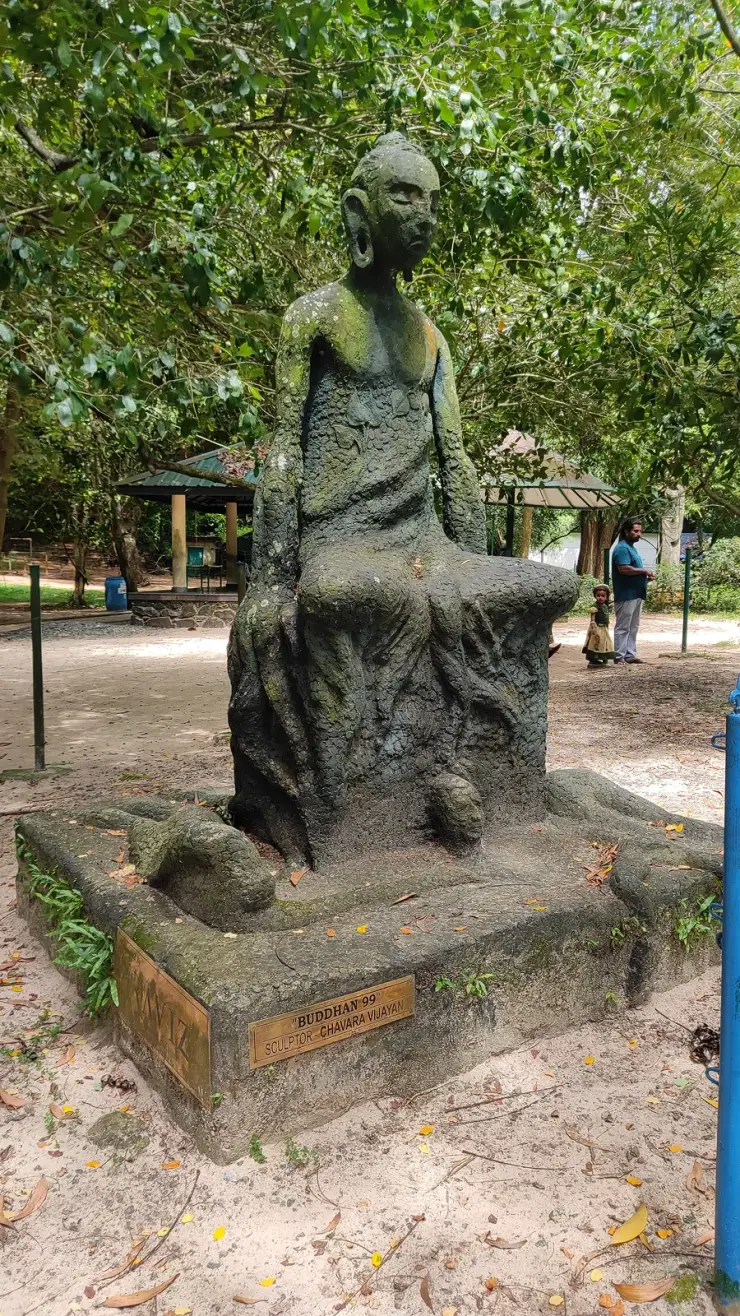
The strangest and best thing in the park is the sculpture. In 2012 a Monsoon Sculptures festival brought ten sculptors here, and the works stayed. They are scattered through the grounds with no particular ceremony — you come round a path and there is one. The titles are as good as the objects: Meditation, Story Teller, Do not disturb, She, Love without heart and brain, Buddha 99, Victim, Descent, Winter Morning, Imagining Humanness, From the Margins, Adimakuthirakal, Nature of My Mother, Kuravanum Kurathiyum.
A municipal park that quietly became a permanent open-air contemporary sculpture collection, because a festival packed up and left its work behind, is a much rarer thing than a zipline. Nobody signposts it as a sculpture park. It simply is one.
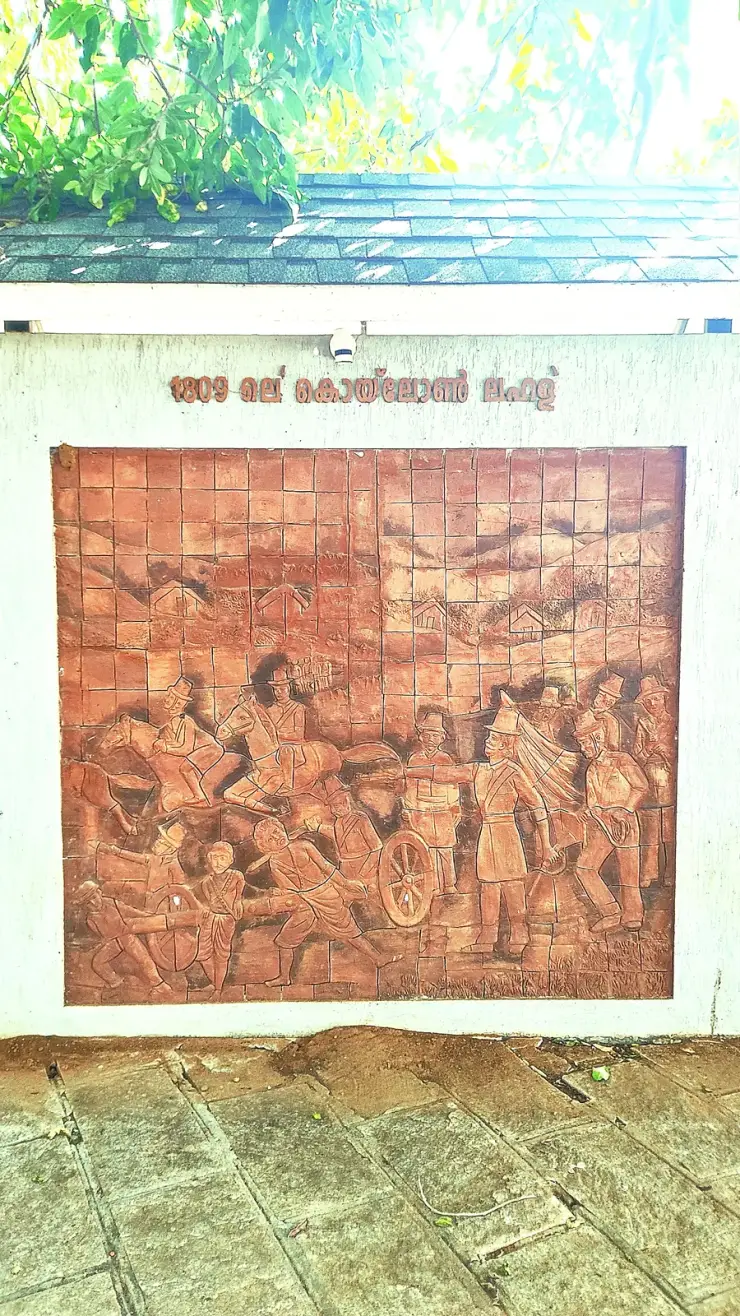
Along another edge runs the Paithruka Veedhi — the heritage way — a walkway lined with terracotta relief panels on the history of this district. They are worth slowing down for, because they are not decorative filler; each one is captioned and each one is about something specific. One shows the 1809 Quilon revolt, its Malayalam label reading plainly enough for anyone: a scene of cavalry, sepoys with muskets and a field gun being hauled by hand. Others take the port of Kollam, the old cashew processing that employed this city for a century, the Punalur suspension bridge upriver, the Seethakali festival.
That first panel deserves a moment, because it explains the building at the other end of the park. The rising of 1809 is what brought the East India Company down hard on Travancore, and it is why Colonel John Munro arrived as Resident in 1810 — the man for whom the British Residency at the lake end of these grounds was built. The park has a relief of the war on one path and the house that the war produced at the end of another. Neither is labelled as having anything to do with the other.
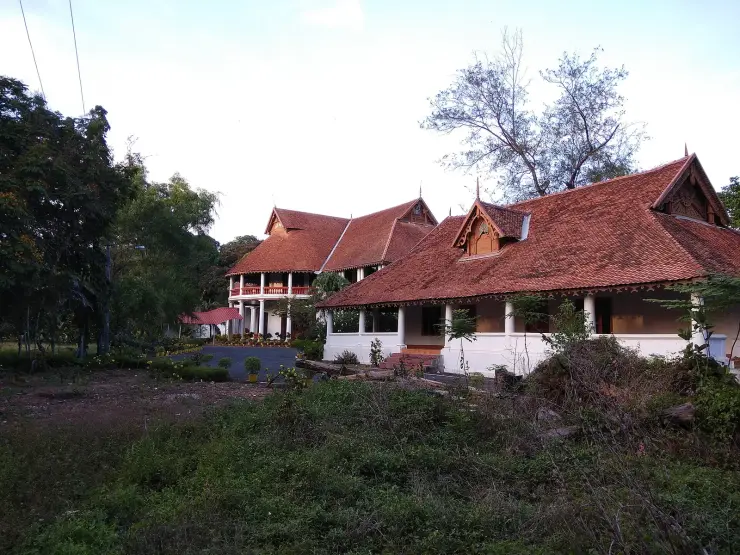
The Residency itself we have written about separately, because it is a substantial thing in its own right and because most of what is printed about it is wrong. It is still in official use as the Government Guest House and its interior is not open, but it is visible from these grounds and it is the reason the grounds are laid out the way they are — this was a Residency park before it was a municipal one.
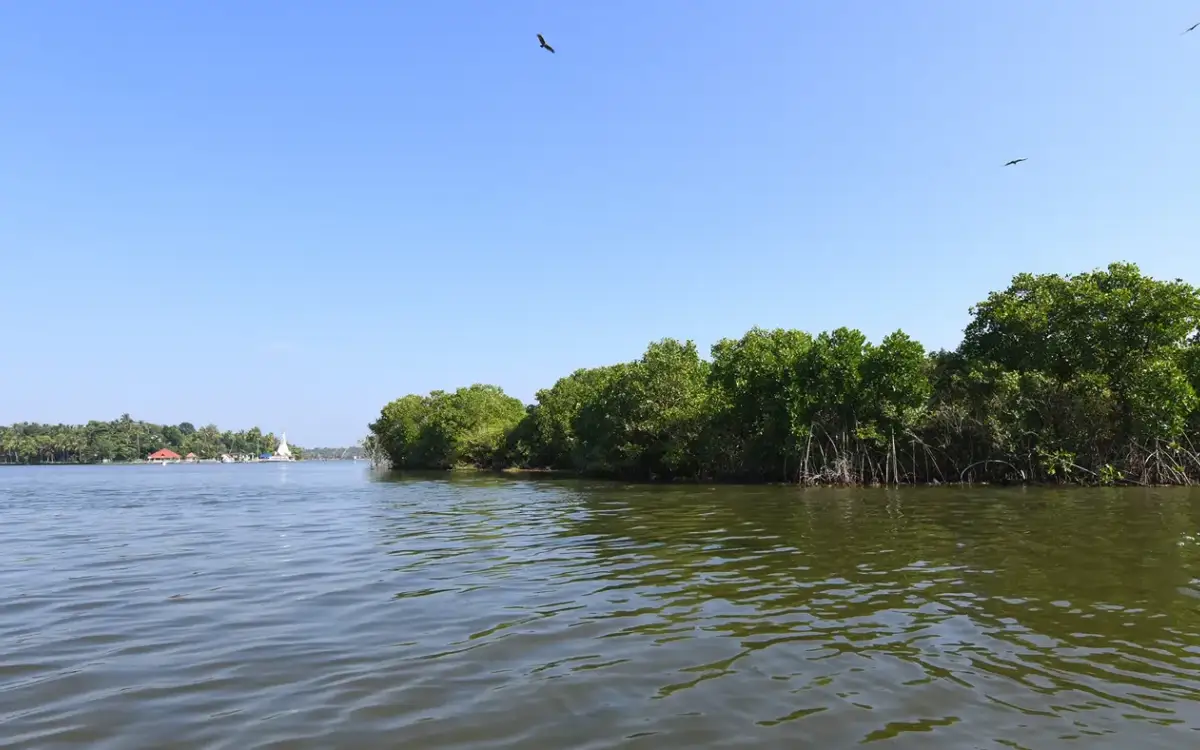
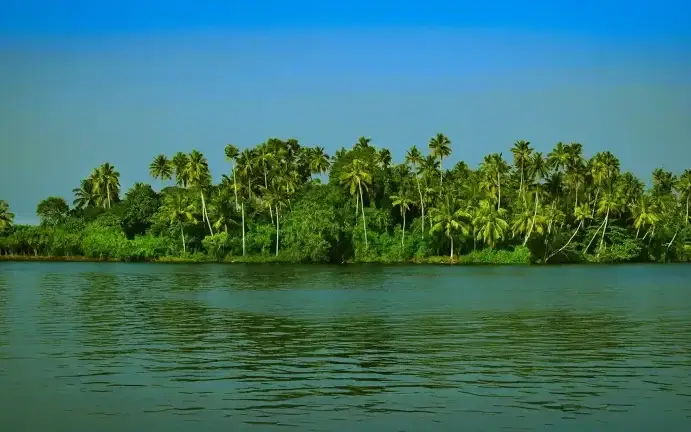
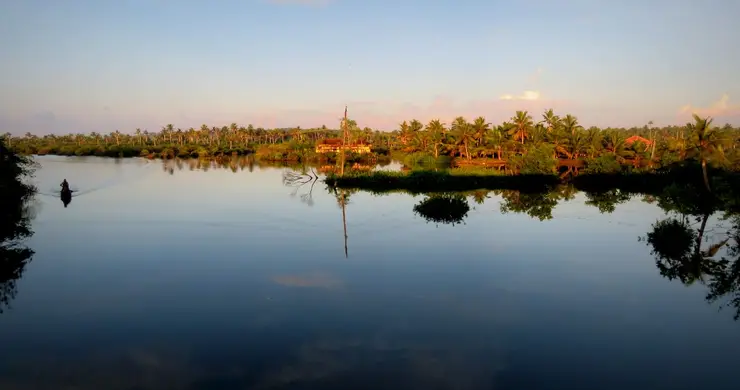
Behind all of it is the part that will outlast the ziplines. The Asramam mangrove wetland on the Kollam waterfront has been given a biodiversity heritage tag by the Kerala State Biodiversity Board, and it is habitat for Syzygium travancoricum, an endangered tree. Over fifty hectares of grounds, mangrove and creek produce the most reliable bird counts anywhere on Ashtamudi. There is also a Miyawaki plantation in the park — dense, fast-grown native woodland of the kind Kerala's municipalities have been planting through the 2020s.
And there is more civic furniture besides: an open-air theatre, a cultural complex, a walkway arch, a museum of the painter A. Ramachandran mapped in the same grounds. It is a lot for one park. The honest description is that Asramam is Kollam's front garden, and that almost everything the city has wanted to say about itself in the last forty years has been built here.
The first correction is one we had to make to our own working notes, and it concerns where this park actually is. The coordinate we had inherited for Asramam Adventure Park was derived rather than surveyed, and it lands about three hundred and seventy metres south-east of the park — next to the Payment Subtreasury and the traffic police office, which is a fair distance from a zipline. The pin on this page is now the centre of the mapped park polygon itself. If a route ever drops you outside a government office, that is why.
The second is a superlative on the wrong facility. You will read that the park offers aqua parasailing, the first in Kerala. Parasailing is certainly offered here. But the state first we can actually put a source under is the open gym — nineteen pieces of outdoor fitness equipment installed for about fifteen lakh rupees and described as the first open gym in Kerala. We print that one and leave the parasailing as parasailing.
The third is a museum that we could not find. The park is often credited with a Paramparya Museum, and no source we searched supports a museum of that name. What does exist, and is well documented, is the Paithruka Veedhi — the heritage way, the walkway of terracotta relief panels — and, separately, a museum of the painter A. Ramachandran mapped within the same grounds. Paramparya and Paithrukam both mean roughly heritage, and the likeliest explanation is that a walkway has been promoted into a museum somewhere in the retelling. We describe the walkway, which is real and good.
The fourth is small and is about the sculptures, and we raise it only because a list looks authoritative once printed. The titles of the 2012 Monsoon Sculptures works are not consistent between sources — one list gives Bundle of slogans where the photographic record gives Bundle of Thoughts. We name works that can be tied to a photograph or a source, and we do not present a canonical set.
The fifth is about the Residency, and it is a correction we make at length on its own page rather than here. English Wikipedia's article about this park repeats the standard line that the British Residency was built by Colonel John Munro during 1811 and 1819. Those dates are Munro's tenure — he took charge in October 1810 and resigned in 1819 — not a documented construction period, and the version that adds Maharani Gowri Parvati Bayi is chronologically impossible, since she became Regent only in 1815 at the age of thirteen. This page does not repeat it.
The sixth is a claim we are deliberately not carrying, and the source that prints it agrees with us. A line in wide circulation says that most of a well-known Malayalam film was shot at the British Residency in these grounds. The encyclopaedia article that carries that line flags it as uncited, and we could not put anything better under it. We are not going to name a film on the strength of a claim its own publisher marks as unsupported, and a park does not need a filming credit to be worth an afternoon.
The seventh is a caution about what kind of place this is, because listings can make it sound like a theme park. It is a municipal park with tourism-department activities on it: entry is a modest ticket, commonly quoted at around ninety-five rupees with hours of roughly ten to six, though we would confirm both on the day rather than trust an aggregator. The rides are rope courses and a zipline rather than engineered attractions, and the best things in the park — the sculptures, the relief panels, the mangroves, the lake — are free of any of that.
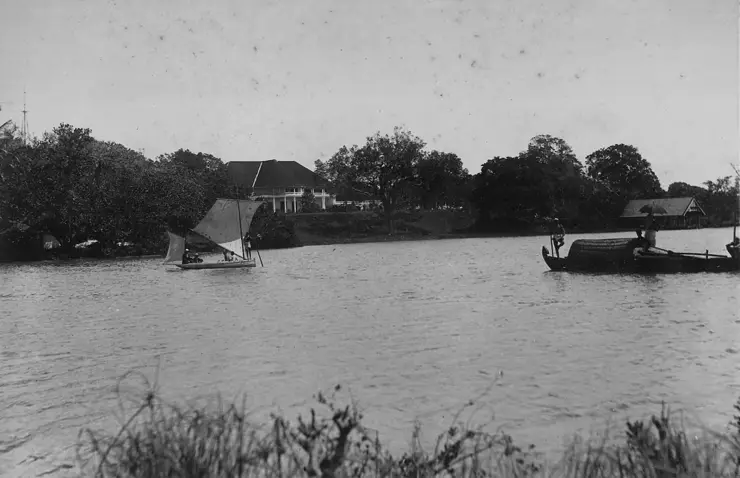
Asramam is a large area of open ground on the Ashtamudi shore in the middle of Kollam, and it was public land in a colonial sense long before it was a public park: the British Residency, built for Colonel John Munro during his residency of 1810 to 1819, stands at the lake end of the same grounds, and the park-like setting around it is described in a nineteenth-century account by Captain Heber Drury.
The modern park opened to the public after 1980 and covers about forty-eight acres, roughly nineteen hectares. It is owned by the Kollam Municipal Corporation and operated by the District Tourism Promotion Council, Kollam, which runs the boating and the adventure activities.
Water activities operate from the boat club and jetty on the lake edge — backwater cruises in houseboats, luxury boats and speedboats, with kayaking and parasailing available. On land the park offers aerial net walking, rope climbing, a zipline and a children's play area, together with an open gym of nineteen pieces of equipment installed at a cost of about fifteen lakh rupees and described as the first open gym in the state.
In 2012 a Monsoon Sculptures festival brought ten sculptors to the park and the works remained in place, giving Asramam a permanent open-air collection of contemporary sculpture — among them Meditation, Story Teller, Do not disturb, She, Love without heart and brain, Buddha 99, Victim, Descent, Winter Morning, Imagining Humanness, From the Margins and Kuravanum Kurathiyum. Titles vary slightly between sources and no canonical list is printed here.
A heritage walkway, the Paithruka Veedhi, runs through part of the grounds, lined with captioned terracotta relief panels on the district's history — the Quilon revolt of 1809, the port of Kollam, traditional cashew processing, the Punalur suspension bridge and the Seethakali festival among them. The park also holds an open-air theatre, a cultural complex and a Miyawaki plantation.
The Asramam mangrove wetland on the Kollam waterfront has been given a biodiversity heritage tag by the Kerala State Biodiversity Board and is habitat for the endangered Syzygium travancoricum; over fifty hectares of grounds, mangrove and creek here produce the most reliable bird counts on Ashtamudi.
Getting onto Ashtamudi easily and publicly — a painted boat jetty with kayaks, speedboats, cruise boats and parasailing run by the DTPC.
An accidental sculpture park: ten sculptors came for a festival in 2012 and the works stayed, scattered through the grounds with no signposting at all.
The Paithruka Veedhi heritage walkway — captioned terracotta reliefs of the 1809 Quilon revolt, the port, cashew processing and the Punalur bridge.
Rope courses, aerial net walking and a zipline, plus what is described as the first open gym in Kerala — nineteen machines out in the open.
The Asramam mangroves behind it, carrying a state biodiversity heritage tag, habitat for the endangered Syzygium travancoricum and the best bird counts on the lake.
The British Residency at the lake end of the same grounds — visible from the park, and the reason the park is shaped the way it is.
Road km to Kollam; ghat roads and traffic vary — allow extra.
November to February and early mornings are best for walking; avoid midday heat where possible.
Live forecast loads in your browser.
Sun and moon are calculated for this location and shown in IST. Photography windows are the hour around sunrise and sunset; the sunset bearing is degrees clockwise from true north. Moon phase is accurate to about half a day.
Verified hotels, homestays, restaurants, experiences, sights, shops and rentals around Asramam Adventure Park — commission-free, with direct contact. Filter by what you need.
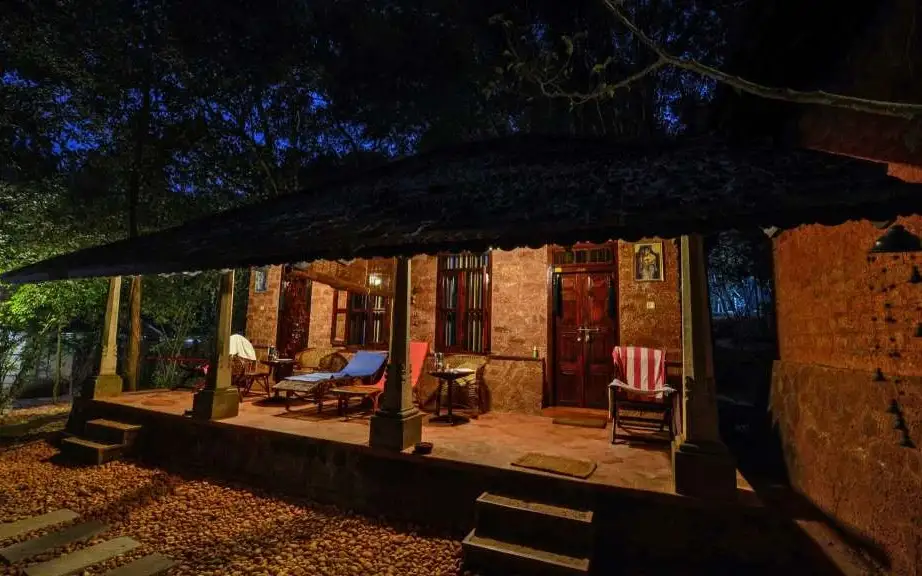
Kerala Tourism-classified Ayurveda centre on the banks of Ashtamudi Lake at Ashtamudi, on the backwater edge of Kollam. It runs residential Ayurveda and Panchakarma programmes in rustic laterite cottages beside the water, focused on treatment stays rather than casual spa visits.
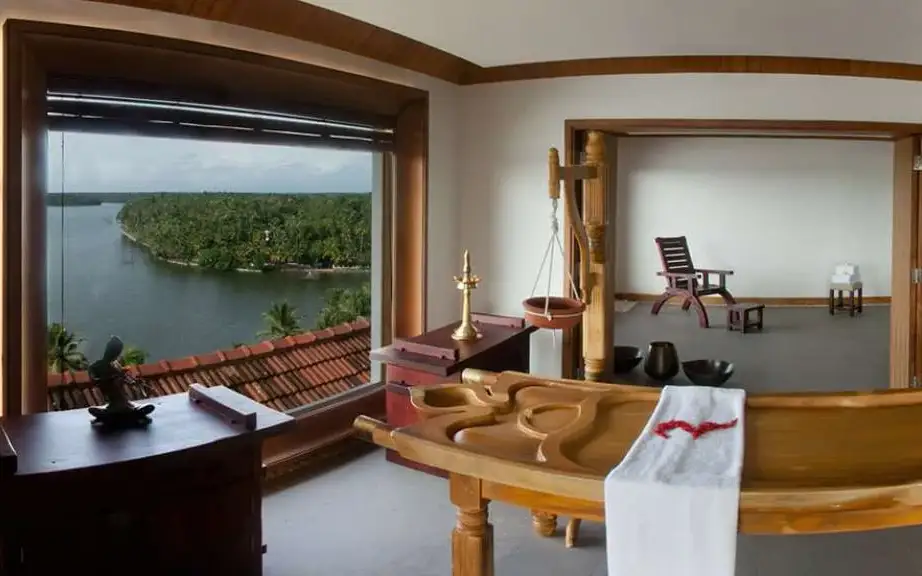
Kerala Tourism Green Leaf-classified Ayurveda and spa centre at The Leela Ashtamudi (Raviz), Thevally, overlooking Ashtamudi Lake in Kollam. Its therapy rooms offer classical Kerala Ayurveda treatments and rejuvenation packages with backwater views, run to the Green Leaf standard rather than as a generic hotel spa.
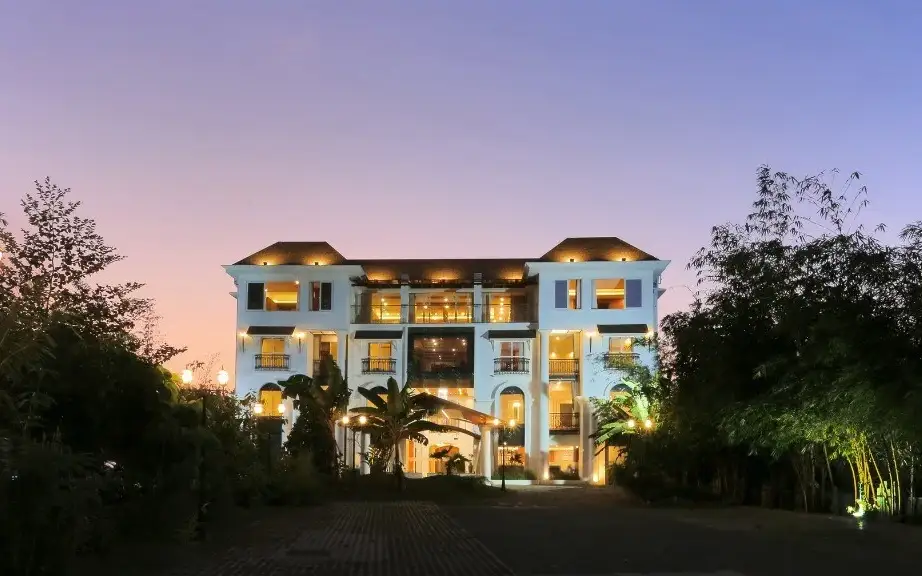
Kerala Tourism Ayur Diamond-classified Ayurveda resort at Thangassery near the Kollam lighthouse, on the seafront edge of Kollam town. It offers doctor-supervised classical Ayurveda and Panchakarma treatments alongside resort rooms, run by the D-Fort group as a dedicated wellness retreat.
Kollam Taxi Services arranges city, airport and district journeys. Request a total covering stops, waiting and return when combining lake-side stays with city sights.
DTPC Kollam online-ticketing source for Sambranikodi boating in the Ashtamudi backwaters. Book via DTPC · Sambranikodi, Ashtamudi, DTPC Kollam.
DTPC Kollam is the official first check for Ashtamudi backwater cruise packages, houseboat options, current tariffs and Kollam lake logistics. Check DTPC tariffs · Ashtamudi, DTPC Kollam, Houseboats.
Book with the place itself. India’s cyber-crime coordination centre warned in April 2025 that convincing copies of hotel and pilgrimage booking sites are being pushed through sponsored search and social ads, taking payment for rooms the property never hears about. Every listing here links to the business’s own contact details and its own Google or Bing profile — we take no commission and sit in nobody’s payment path. If a booking page reached you through an ad, check the address bar against the property’s own site before you pay. Fraud can be reported on cybercrime.gov.in or on 1930.
Find food, accommodation and activities across Kollam town. Browse the guides for places to eat, stay and explore along your route.
13 more places around Kollam town. Open a guide to plan the visit and onward journey.
400 m · 5 min walk
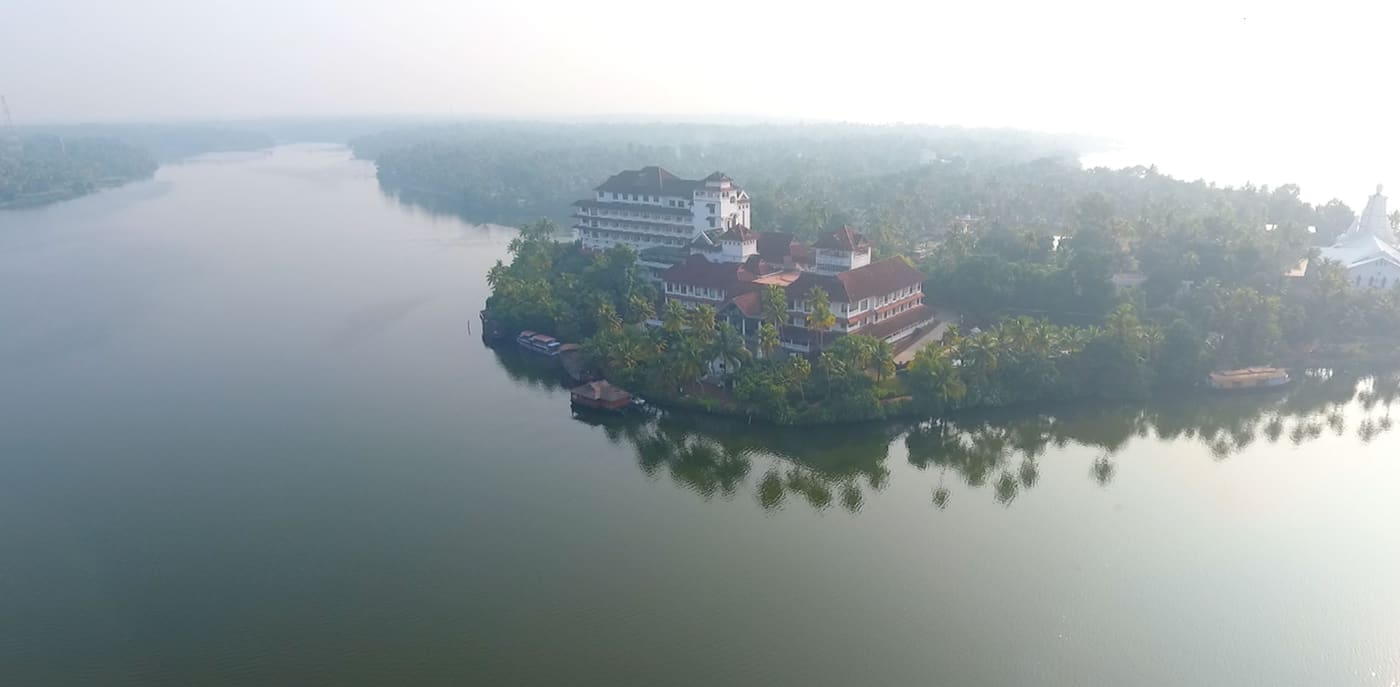
Large palm-fringed backwater system and houseboat base around Kollam.
2.8 km · ~7 min by auto
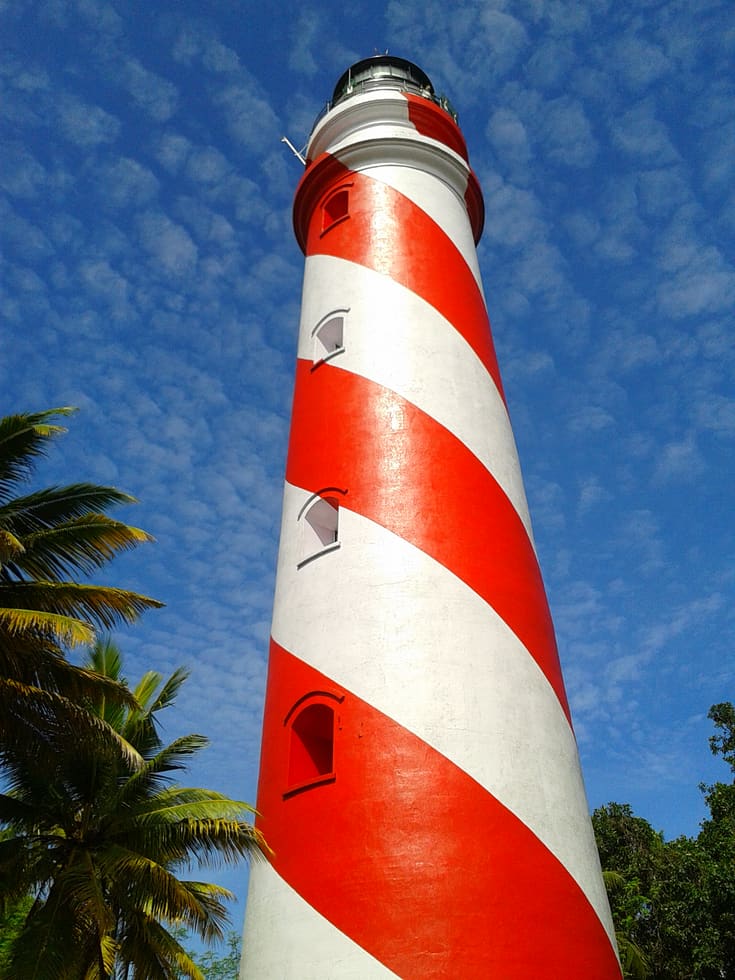
Thangassery Lighthouse raises Kollam’s sea view above a historic coastal neighbourhood. The red-and-white tower is a working navigation landmark with a separate visitor session.
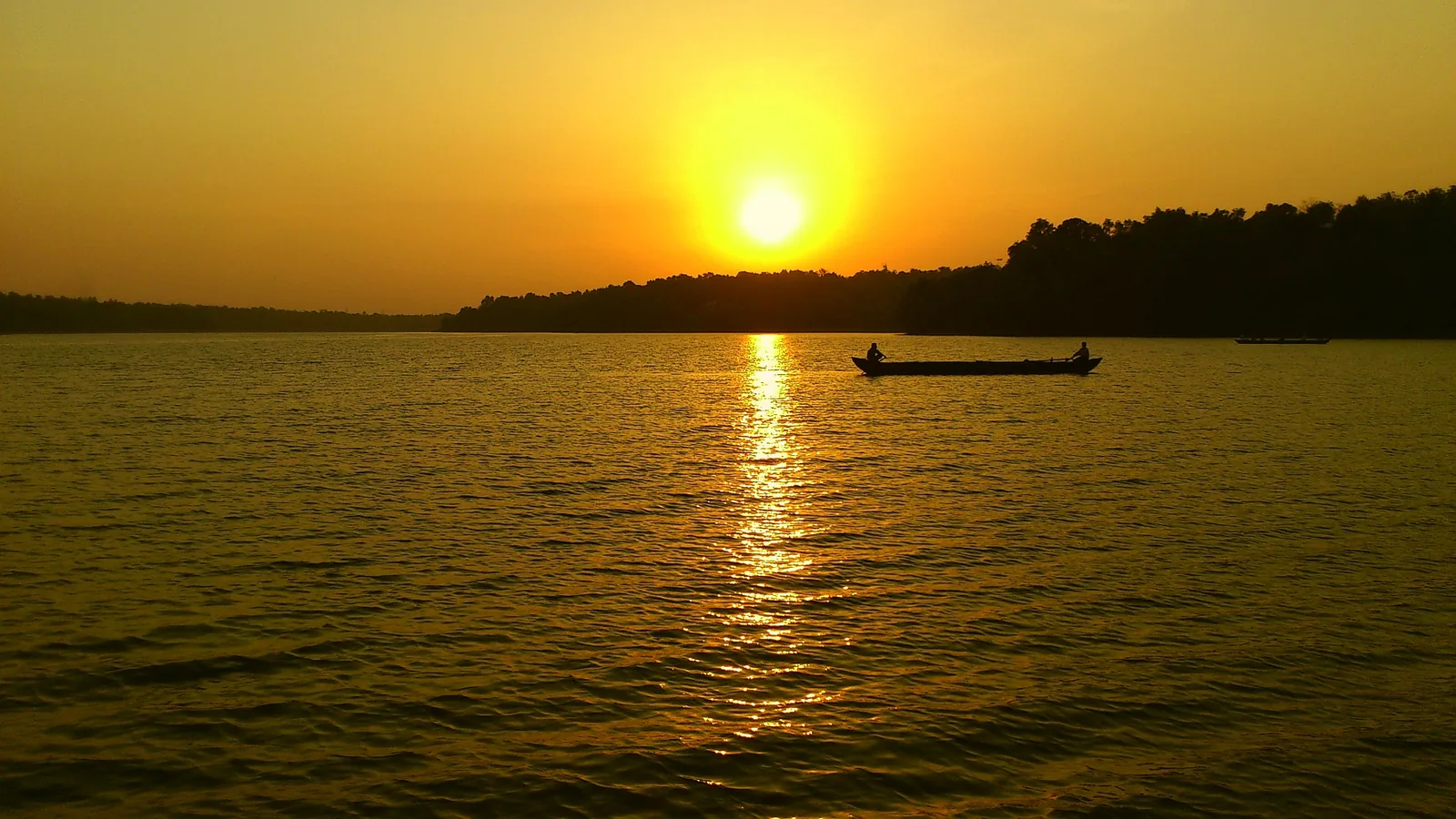
Kerala’s largest freshwater lake, a Ramsar wetland ringed by hills and a Sastha temple, north of Kollam.
2.6 km · ~6 min by auto
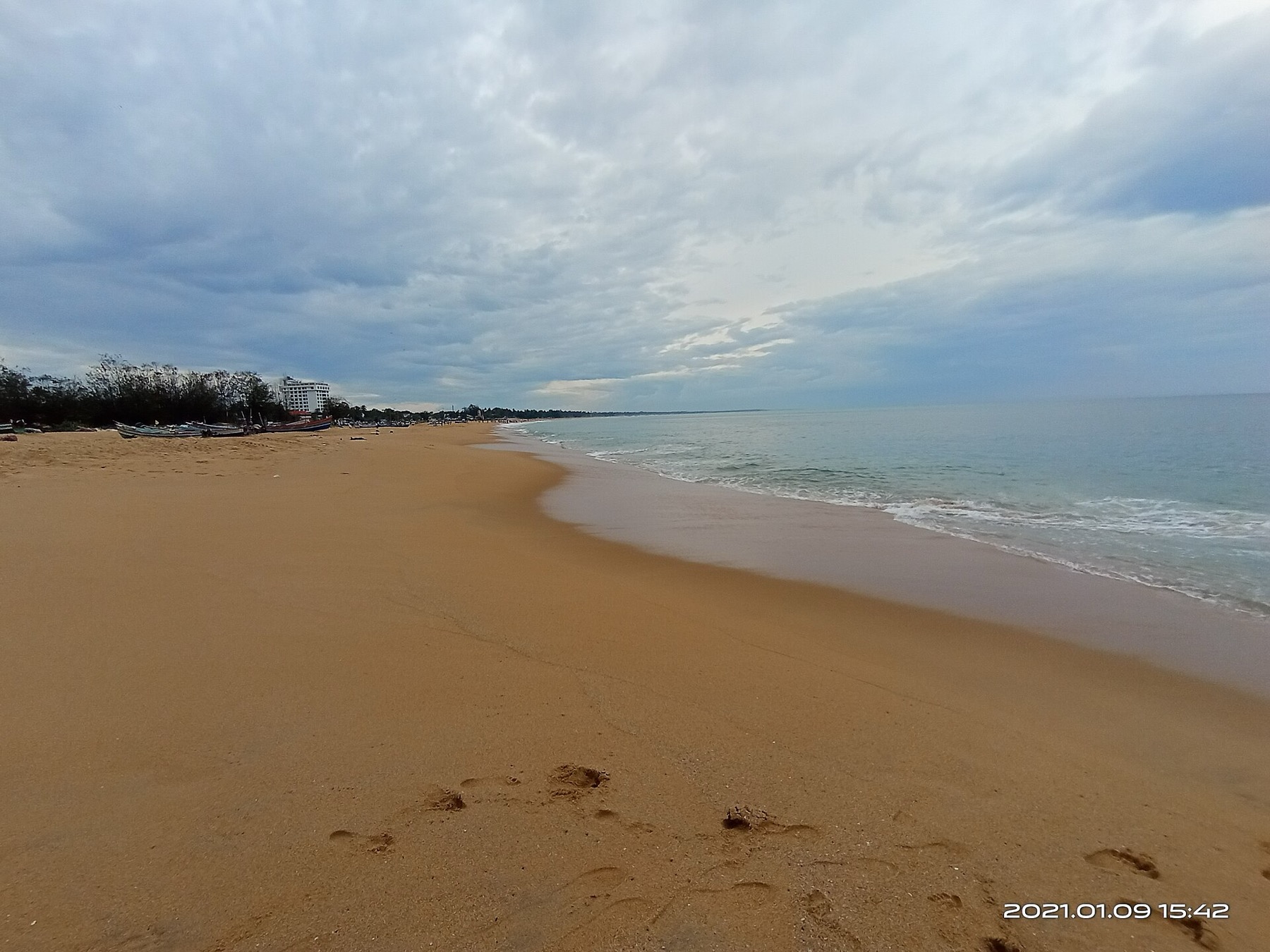
The city’s Mahatma Gandhi beach and park on the Arabian Sea, a popular evening spot near Kollam town.
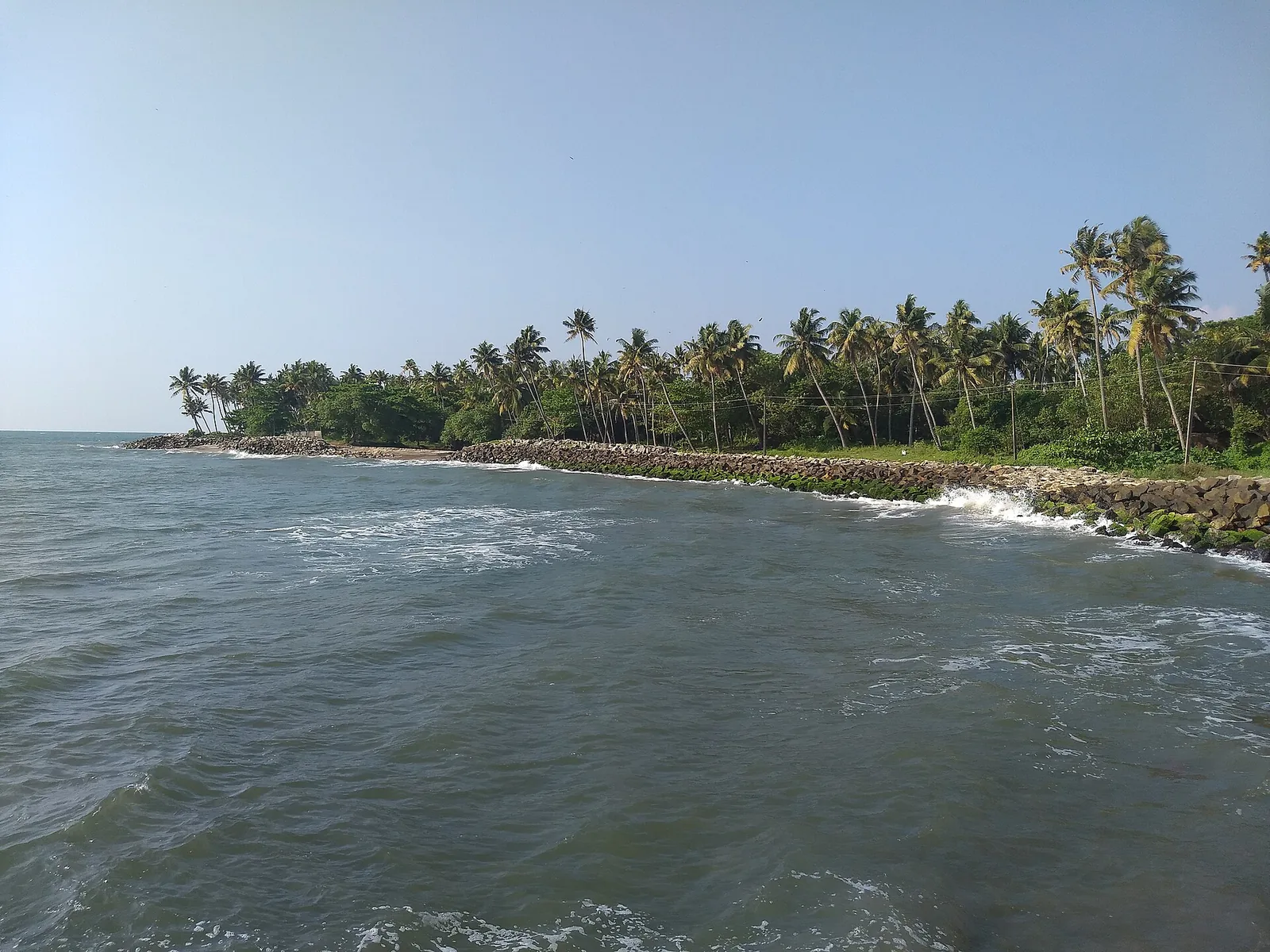
3.5 km · ~9 min by auto
A quiet, curved bay beach west of Kollam town, calmer than the city beach and good for a relaxed evening.
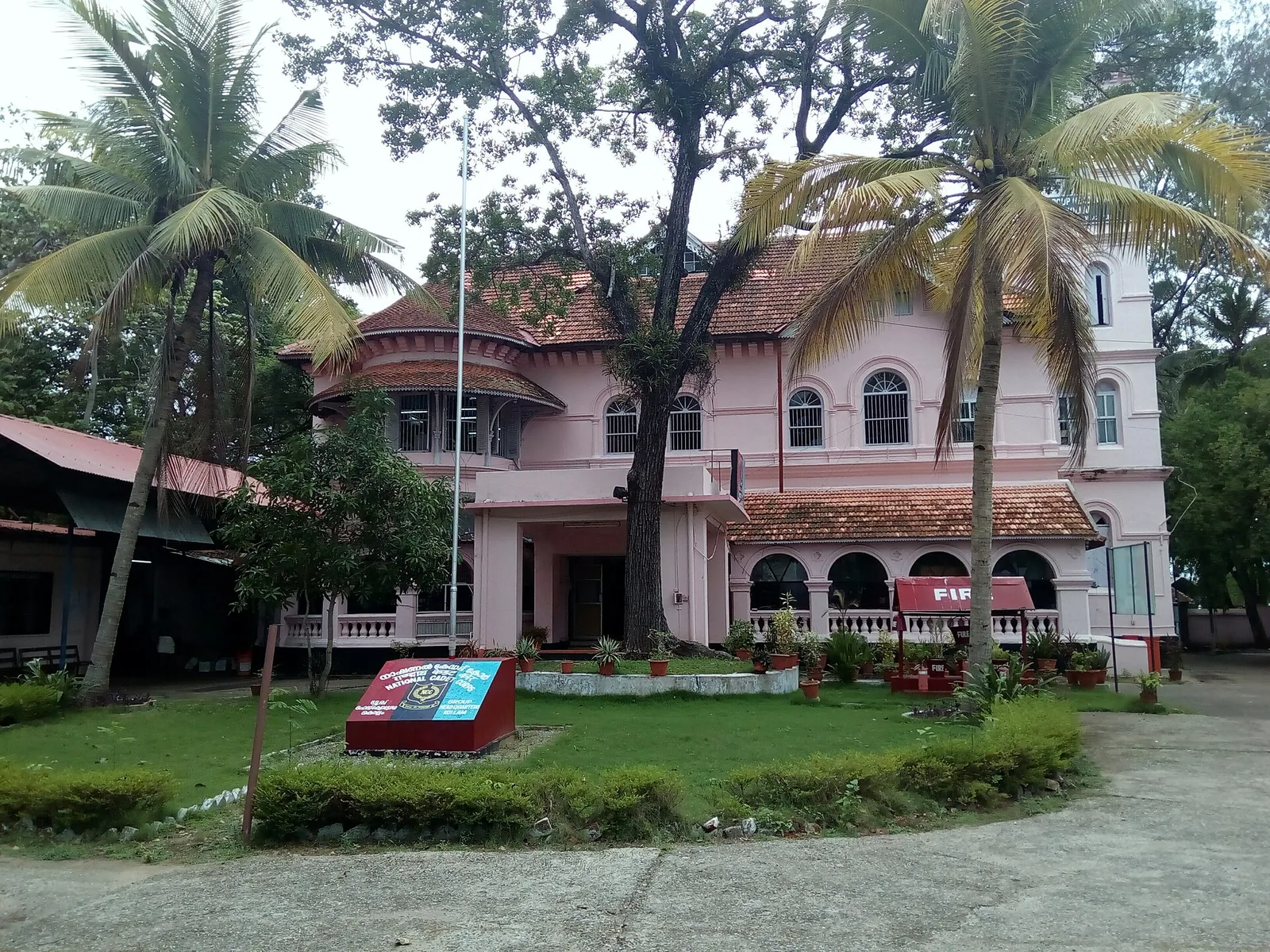
890 m · 11 min walk
A Travancore royal residence on the Ashtamudi shore in Kollam, built to be arrived at by boat and now a working NCC establishment — viewed from outside or from the water.
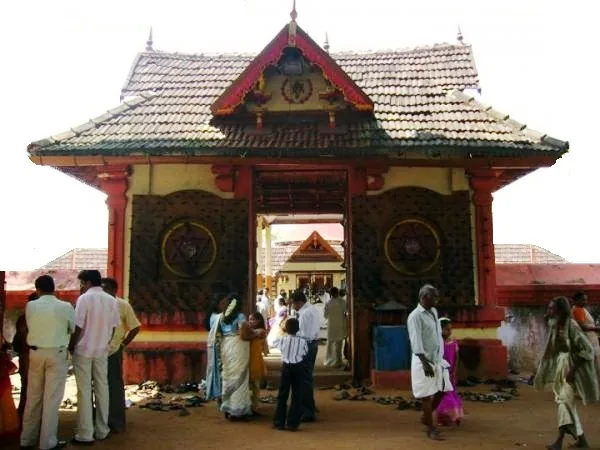
1.4 km · 18 min walk
Anandavalleeswaram is an active Shiva temple in Kollam, with an Anandavally shrine and a ten-day annual festival in March or April. Ritual processions and cultural performances bring another dimension to the temple visit. Follow its worship session, admission and photography rules.
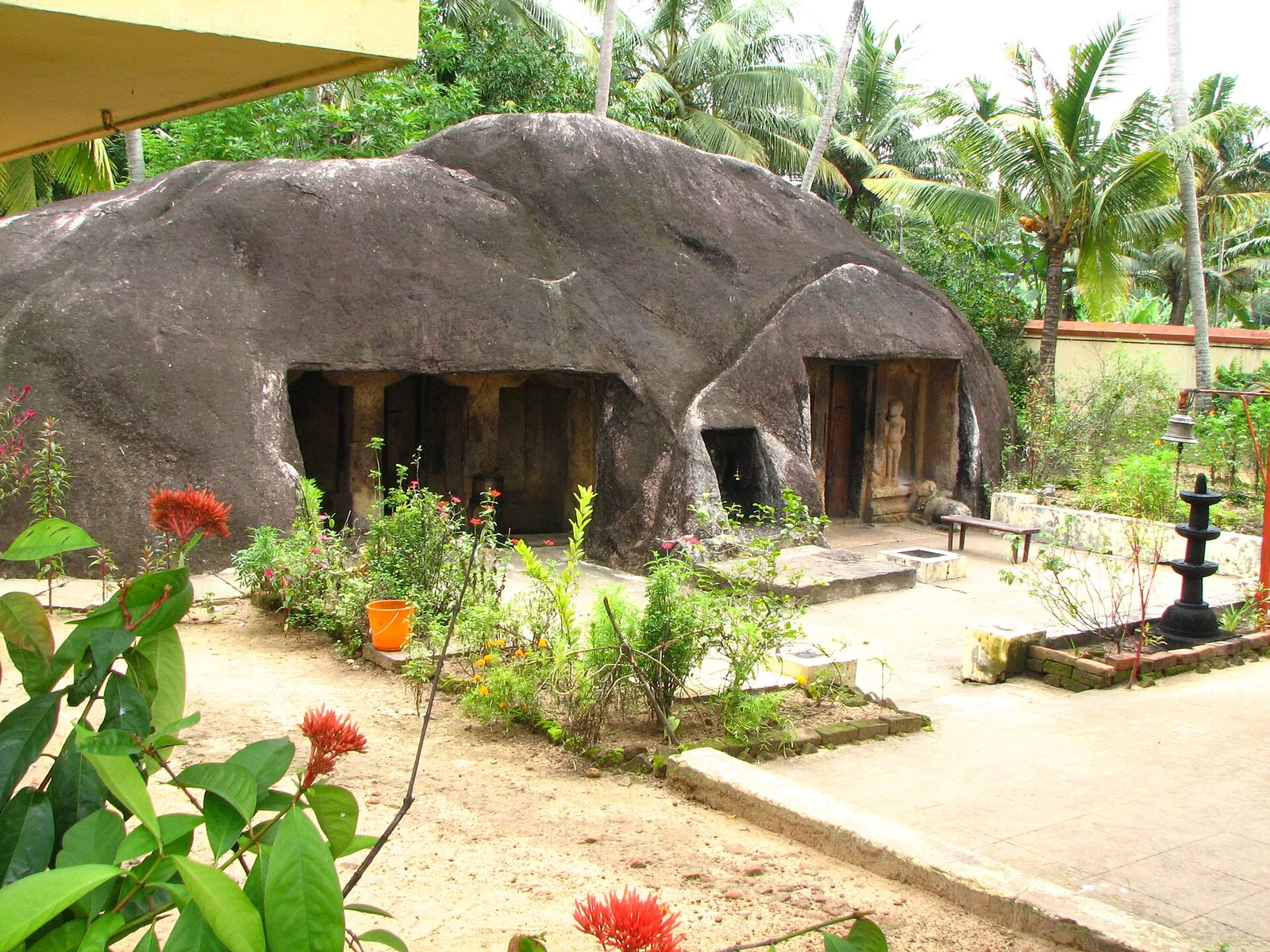
A monolithic rock-cut cave temple near Anchal/Kadakkal in south Kollam, carved with a Shiva shrine.
6.9 km · ~17 min by auto
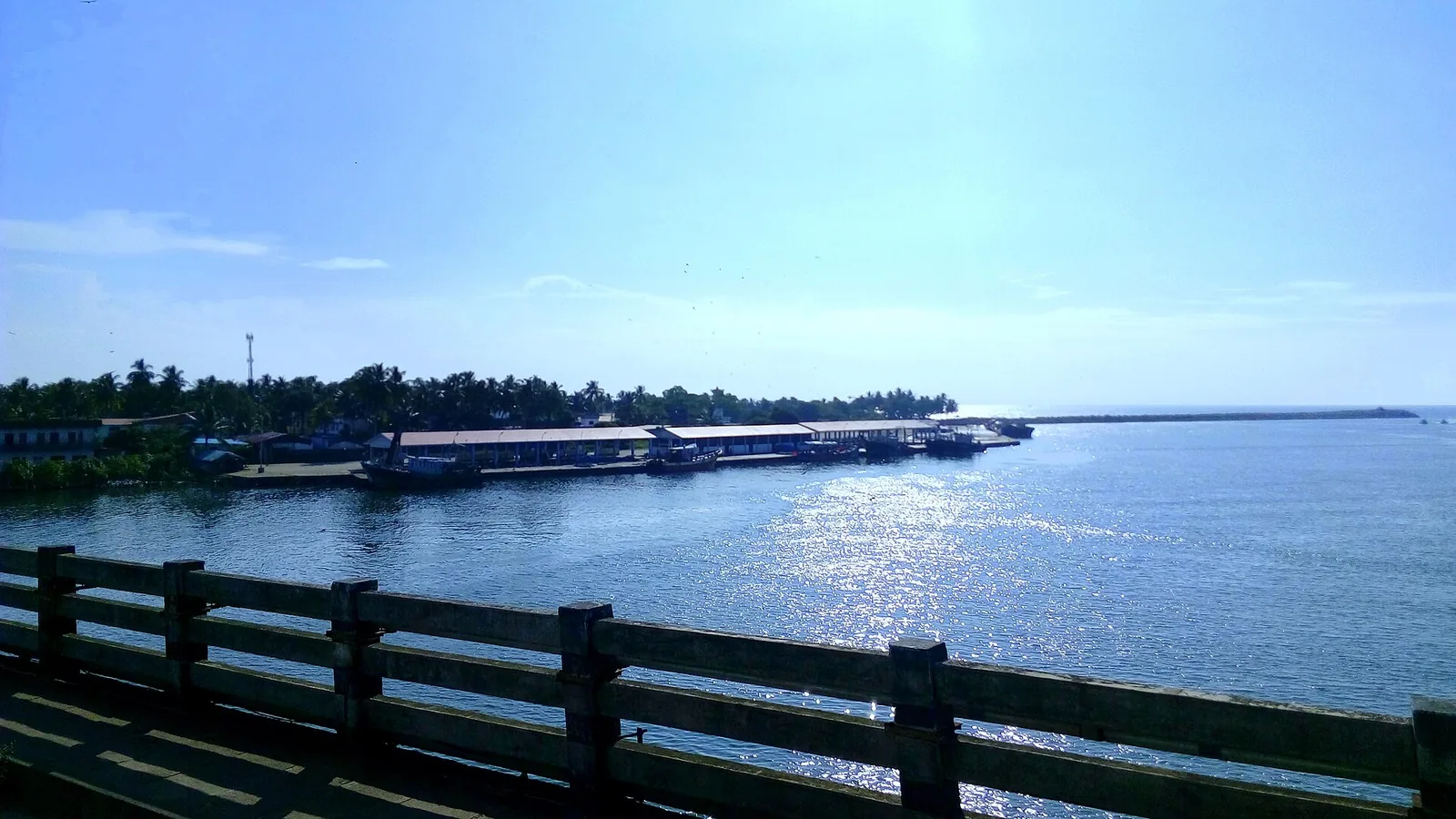
By most accounts Kerala’s largest fishing harbour, at the mouth of Ashtamudi Lake about 9 km from Kollam town, and where Indian fishing was mechanised; two bridges cross the confluence and the early-morning auction is the sight to catch.
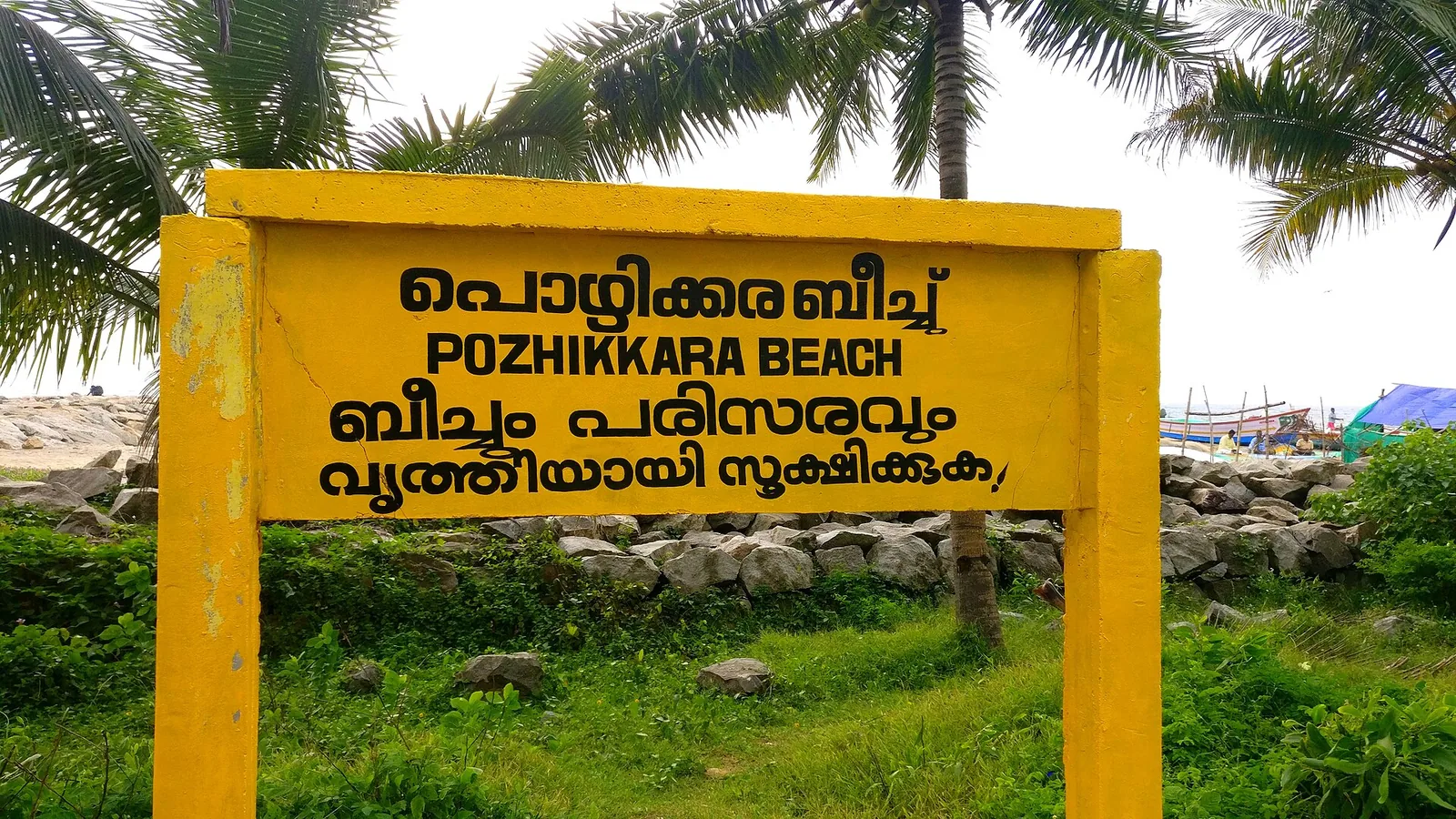
The estuary and beach at Paravur south-east of Kollam, where the Paravur backwaters meet the sea across a sandbar — a quiet spot known for its regulator bridge, the TS Canal and calm backwater-and-sea scenery.
180 m · 2 min walk
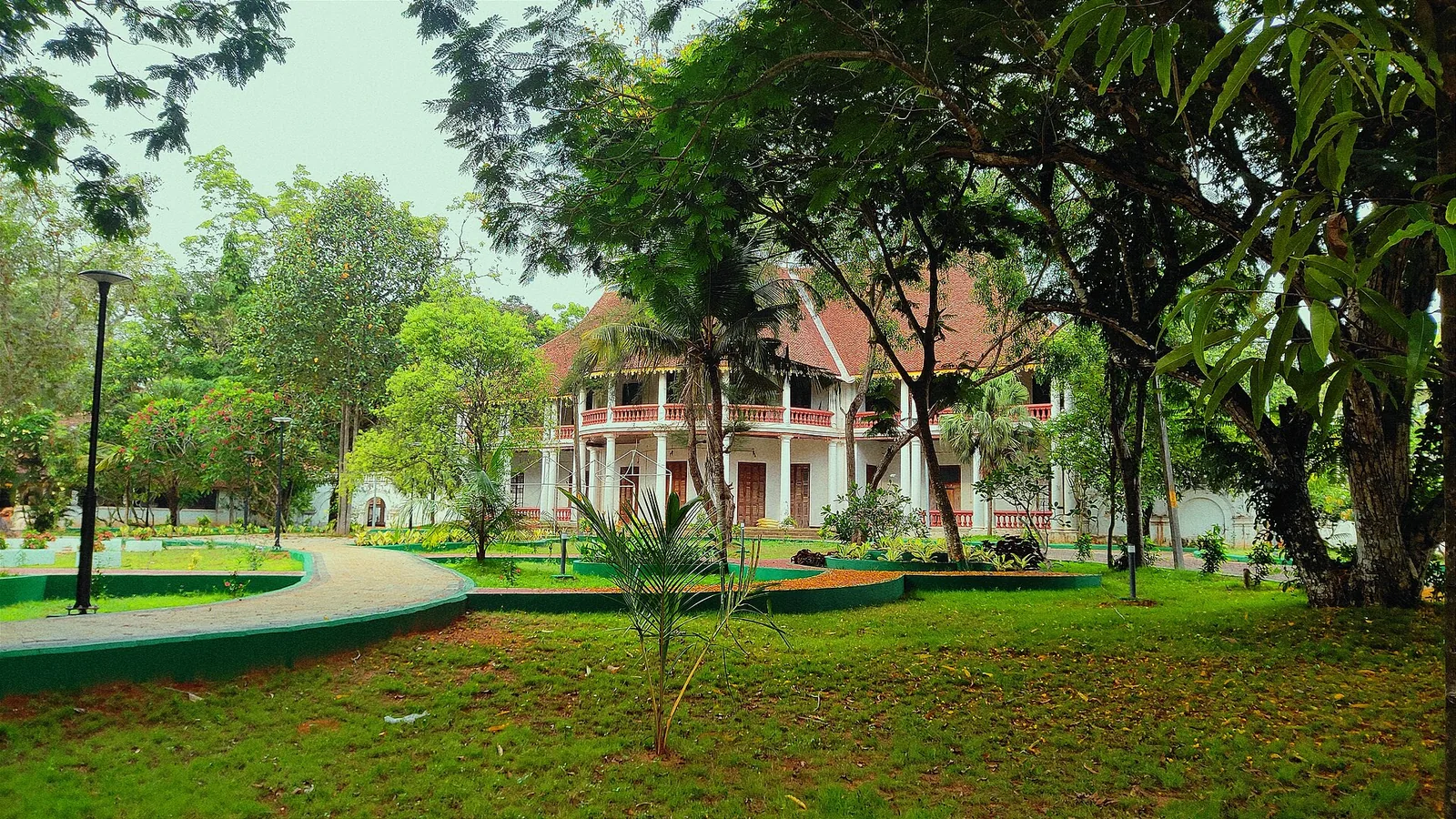
The former British Residency at Asramam survives as a government guest house beside Kollam’s backwater landscape. Its architecture is the attraction, with access governed by its working use.
1.6 km · 20 min walk
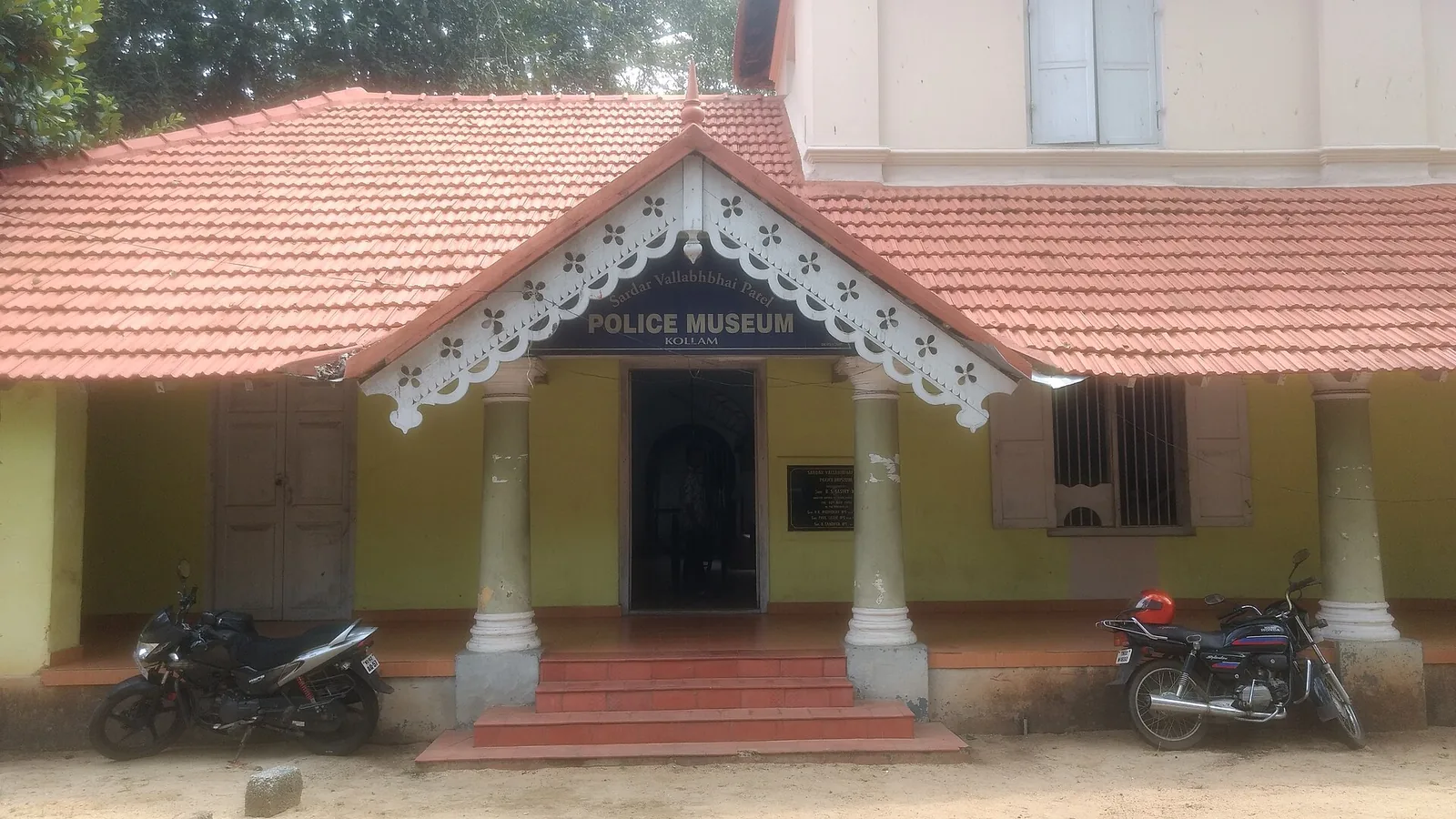
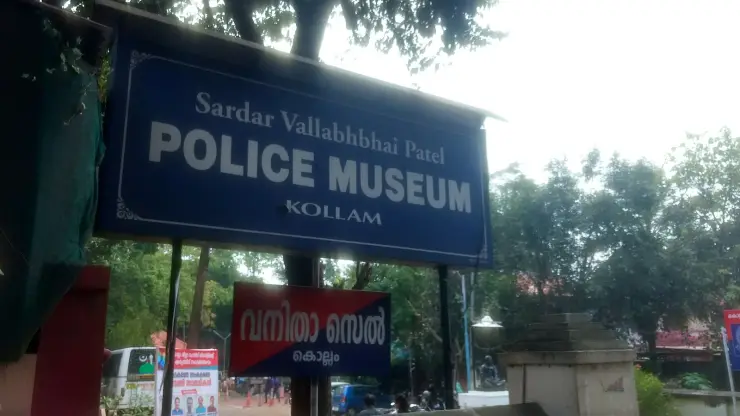
Kollam’s Sardar Vallabhbhai Patel Police Museum introduces the history of policing through arms, equipment and investigation displays. It offers an indoor history stop during a city outing. Check the museum’s session before choosing your day, and leave time to read the displays.
2.1 km · 27 min walk
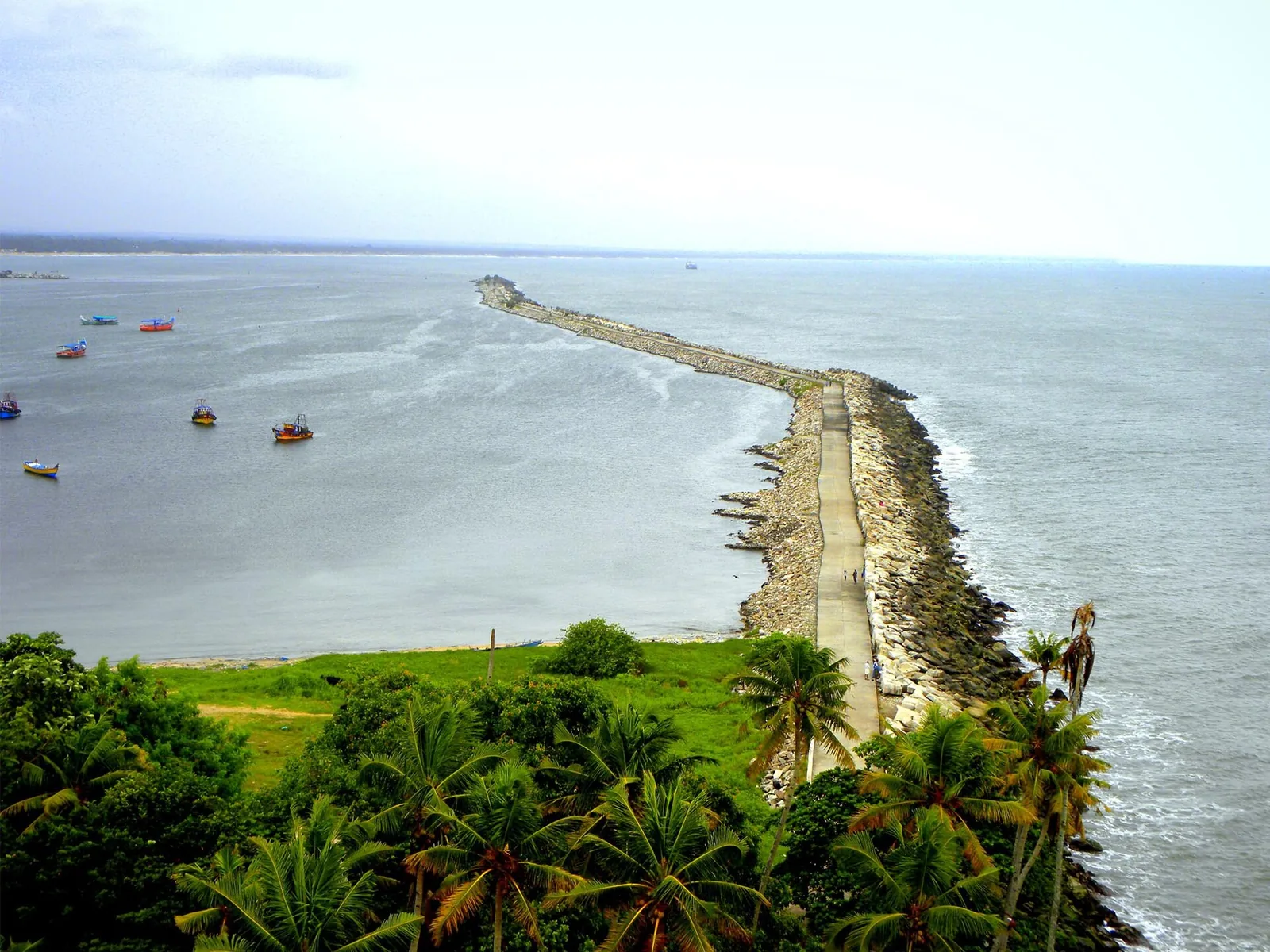
The working wharf and breakwater at Thangassery, conventionally founded in AD 825 — the event the Malayalam calendar counts from. A short cargo quay and a long public breakwater walk, above a seabed that has produced Tang and Song coins and Lower Palaeolithic tools.
Roampedia is commission-free — own or know a stay, eatery, guide or shop near Asramam Adventure Park? List it and it appears here once verified.
Add a nearby businessFees change without notice. Check the current rate at the counter.
Entry: A modest park ticket, commonly quoted at around ₹95, with boating, parasailing and the adventure activities charged separately. ⚠ Aggregator figure, not an operator source — confirm at the counter.
Dress code: None. Shoes you can walk in; the adventure activities have their own requirements and safety briefings.
Photography: No restriction in the park. ⚠ The British Residency at the lake end is an occupied government building — photograph it from the public grounds, not from inside its compound.
If you are travelling by bus or ferry, check the return service with the operator before setting out. Leave time to reach the stop or jetty after your visit.
Ask at the bus stand for the time of the last service back, not the next one. If you miss it, an auto or app cab is the fallback — agree the fare before you get in.
If you need step-free access, contact the site before travelling. Ask about a level entrance, steps along the route, the nearest drop-off point, seating and accessible toilets.
Charge cap and free-transaction limits: Reserve Bank of India, in force since 1 May 2025.
These services are listed within about 1.2 km of Asramam Adventure Park. Walking distances follow mapped routes; access and opening hours can change. Other services may be closer but are not included here.
Emergency numbers are verified against official government and state tourism sources. 112 works anywhere in India.
The former British Residency at Asramam survives as a government guest house beside Kollam’s backwater landscape. Its architecture is the attraction, with access governed by its working use.
180 m · 2 min walk · straight lineLarge palm-fringed backwater system and houseboat base around Kollam.
400 m · 5 min walk · straight lineA Travancore royal residence on the Ashtamudi shore in Kollam, built to be arrived at by boat and now a working NCC establishment — viewed from outside or from the water.
890 m · 11 min walk · straight lineAnandavalleeswaram is an active Shiva temple in Kollam, with an Anandavally shrine and a ten-day annual festival in March or April. Ritual processions and cultural performances bring another dimension to the temple visit. Follow its worship session, admission and photography rules.
1.4 km · 18 min walk · straight lineKollam’s Sardar Vallabhbhai Patel Police Museum introduces the history of policing through arms, equipment and investigation displays. It offers an indoor history stop during a city outing. Check the museum’s session before choosing your day, and leave time to read the displays.
1.6 km · 20 min walk · straight lineThe working wharf and breakwater at Thangassery, conventionally founded in AD 825 — the event the Malayalam calendar counts from. A short cargo quay and a long public breakwater walk, above a seabed that has produced Tang and Song coins and Lower Palaeolithic tools.
2.1 km · 27 min walk · straight lineThe city’s Mahatma Gandhi beach and park on the Arabian Sea, a popular evening spot near Kollam town.
2.6 km · ~6 min by auto · straight lineThangassery Lighthouse raises Kollam’s sea view above a historic coastal neighbourhood. The red-and-white tower is a working navigation landmark with a separate visitor session.
2.8 km · ~7 min by auto · straight lineA quiet, curved bay beach west of Kollam town, calmer than the city beach and good for a relaxed evening.
3.5 km · ~9 min by auto · straight lineBy most accounts Kerala’s largest fishing harbour, at the mouth of Ashtamudi Lake about 9 km from Kollam town, and where Indian fishing was mechanised; two bridges cross the confluence and the early-morning auction is the sight to catch.
6.9 km · ~17 min by auto · straight line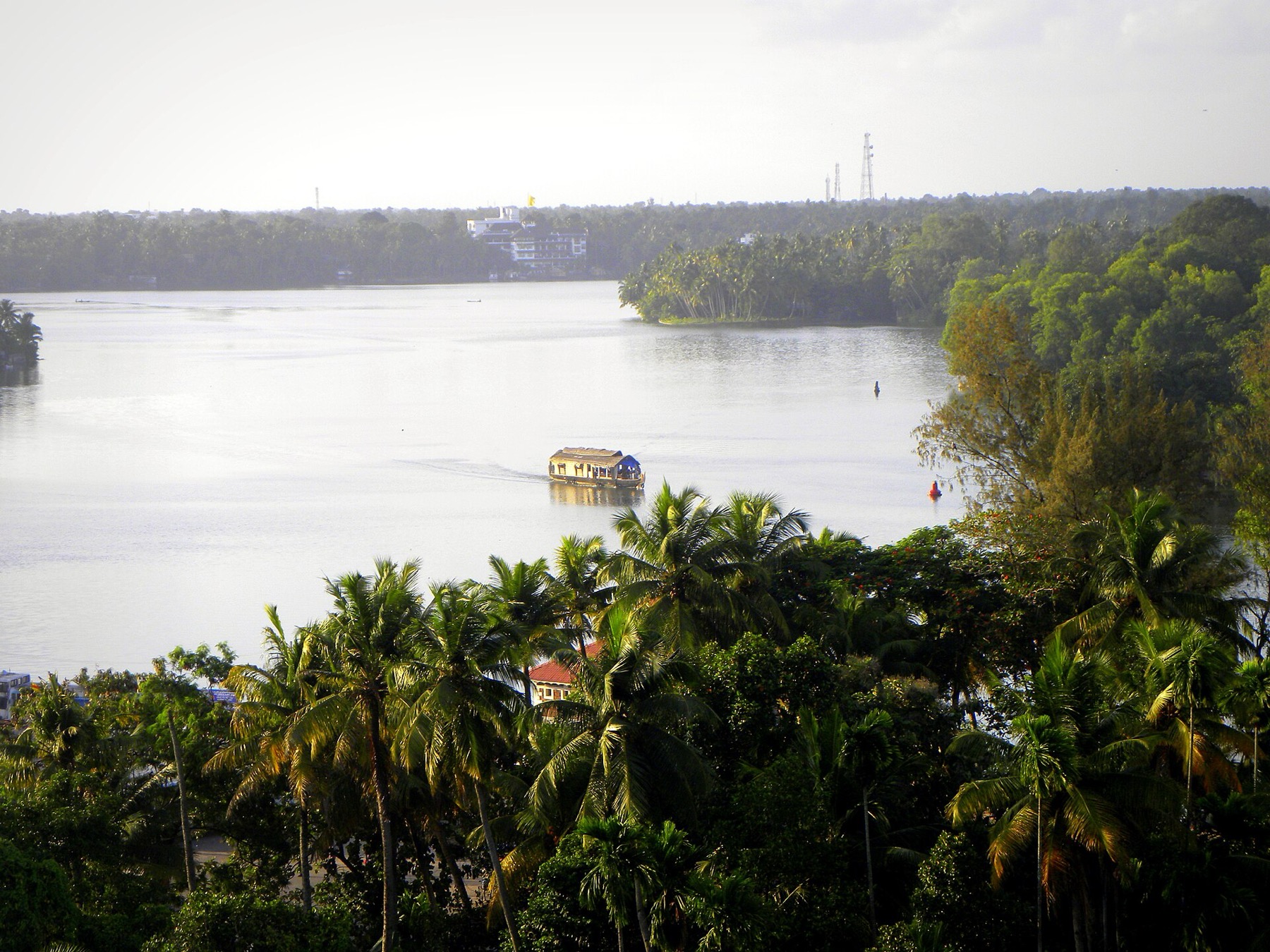
The open-water outlooks on the Munroe Island and Perumon side of Ashtamudi, where the lake widens out — the wide views the canal trips themselves do not give you.
7.3 km · ~18 min by auto · straight line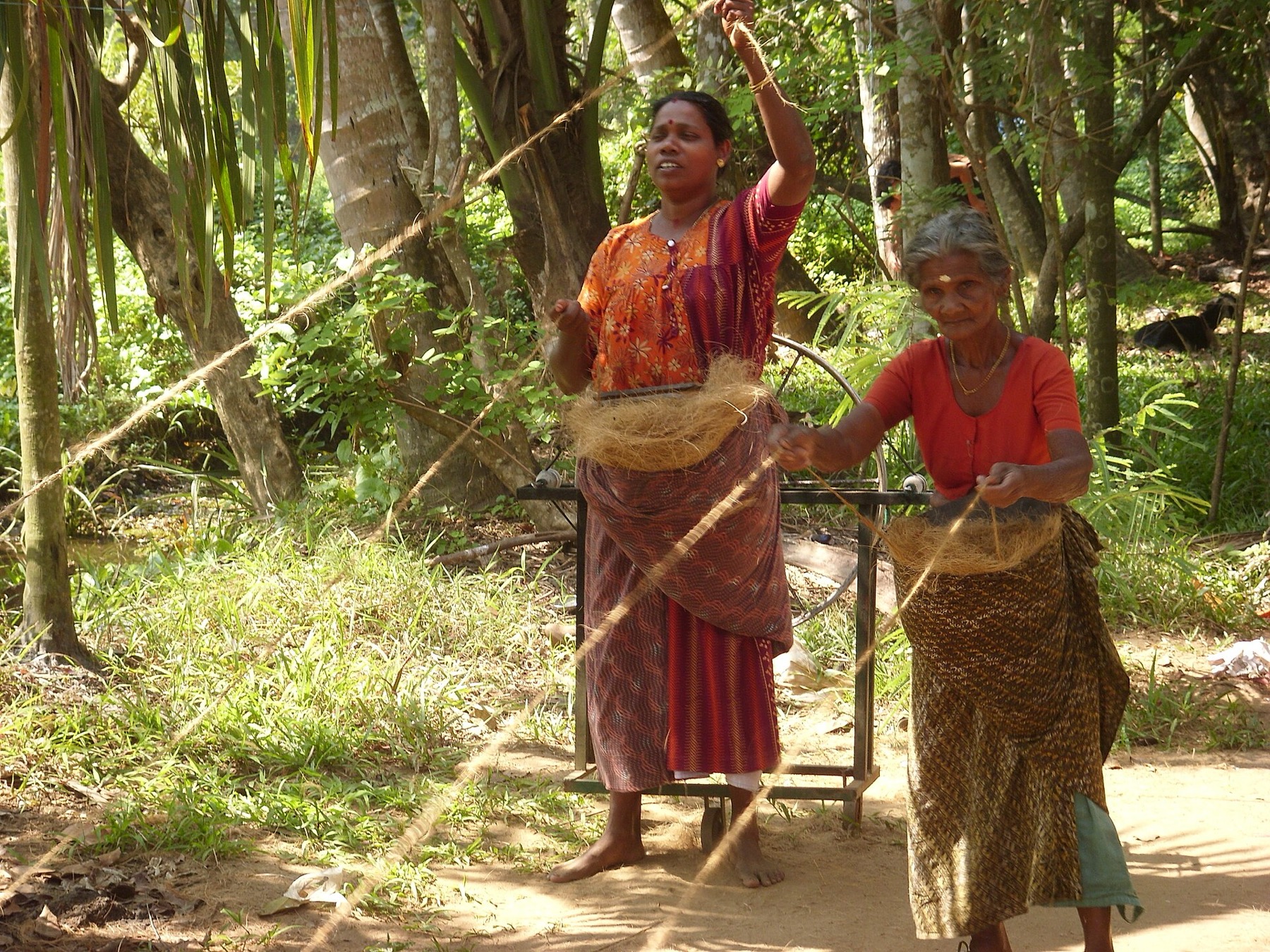
The coir-working settlements of Munroe Island, where coconut husk is retted in the backwater and spun into yarn — a working craft economy on the canal banks rather than a demonstration laid on for visitors.
9.7 km · ~16 min by cab · straight lineNearby toilets, pharmacies, ATMs, seating and vets are community-mapped and may be incomplete or out of date. Map data © OpenStreetMap contributors | Walking times © openrouteservice.org by HeiGIT
Boating on Ashtamudi from the jetty — cruises, speedboats, kayaking and parasailing run by the DTPC — plus land activities including aerial net walking, rope climbing, a zipline, a children's play area and an open gym. Free of charge alongside all that: the 2012 sculptures, the heritage walkway of terracotta reliefs, and the mangroves.
A modest ticket, commonly quoted at around ₹95, with hours of roughly 10am to 6pm. Both figures come from aggregators rather than the operator, so confirm on the day. Individual activities are charged separately.
It is owned by the Kollam Municipal Corporation and operated by the District Tourism Promotion Council, Kollam. That split is why it feels like municipal ground with tourism activities on it rather than a commercial attraction.
Yes, and almost nobody advertises it. A Monsoon Sculptures festival in 2012 brought ten sculptors to the park and the works stayed — Meditation, Story Teller, Do not disturb, She, Love without heart and brain, Buddha 99, Victim, Descent and others, standing about the grounds unsignposted. Titles vary between sources, so we do not print a canonical list.
Not one called the Paramparya Museum, which is often credited to it and which we could not source. What exists is the Paithruka Veedhi heritage walkway of terracotta relief panels, and separately a museum of the painter A. Ramachandran mapped in the same grounds.
It stands at the lake end of the same grounds and is visible from the park, but it is an occupied Government Guest House and the interior is not open to visitors. We cover the building, and correct the dates usually printed for it, on its own page.
The Asramam mangrove wetland on the Kollam waterfront, carrying a biodiversity heritage tag from the Kerala State Biodiversity Board. It is habitat for the endangered Syzygium travancoricum, and over fifty hectares of grounds, mangrove and creek here produce the most reliable bird counts anywhere on Ashtamudi.
November to February and early mornings are best for walking; avoid midday heat where possible.
Entry: A modest park ticket, commonly quoted at around ₹95, with boating, parasailing and the adventure activities charged separately. ⚠ Aggregator figure, not an operator source — confirm at the counter. Timings: Commonly quoted as about 10:00 to 18:00. ⚠ That figure comes from aggregator listings rather than from the Kollam Municipal Corporation or the DTPC, so confirm on the day; individual activities may close earlier than the park. The rupee figure quoted is the Indian adult rate.
Base yourself in Kollam town or a nearby town in Kollam, then confirm the last-mile route locally before leaving. Walkable heritage areas are best done slowly; combine nearby streets, museums, markets and food stops. If the visit depends on forest, temple, boat, ferry, weather or seasonal access, check the official/local rule on the day before travel.
1 to 3 hours.
Nearby you can pair British Residency, Asramam (180 m), Ashtamudi Lake (400 m), Thevally Palace (890 m), Anandavalleeswaram Temple (1.4 km).
Watch traffic on narrow heritage streets. Keep valuables close in crowded markets.
Written about Asramam Adventure Park itself — its history, its legends and the arguments about them.
These guides explore Kollam town and the surrounding area. Choose a visit that fits your interests, allowing separately for travel between stops.
Route-level itineraries and practical guides for the rest of Kerala.
Photographs: Akhilan (CC BY-SA 4.0). Wikimedia Commons.