A woodland park on the Kollam–Shencottah road, built quite deliberately to keep you out of the sanctuary behind it. Once you know that, the walkway, the sculptures and the fountain stop looking like a slightly plasticky day out and start looking like one of the more radical pieces of tourism planning in India.
Thenmala sits about 66 km east of Kollam, at the meeting point of the Kollam–Shencottah road and the Trivandrum–Shencottah road, in the foothills of the Western Ghats near the Tamil Nadu border. The Kerala district administration gives that 66 km itself; the figure of about 72 km from Thiruvananthapuram is widely printed but we could not find it in any government source, so treat it as approximate and allow two to two and a half hours, with the last stretch on ghat road.
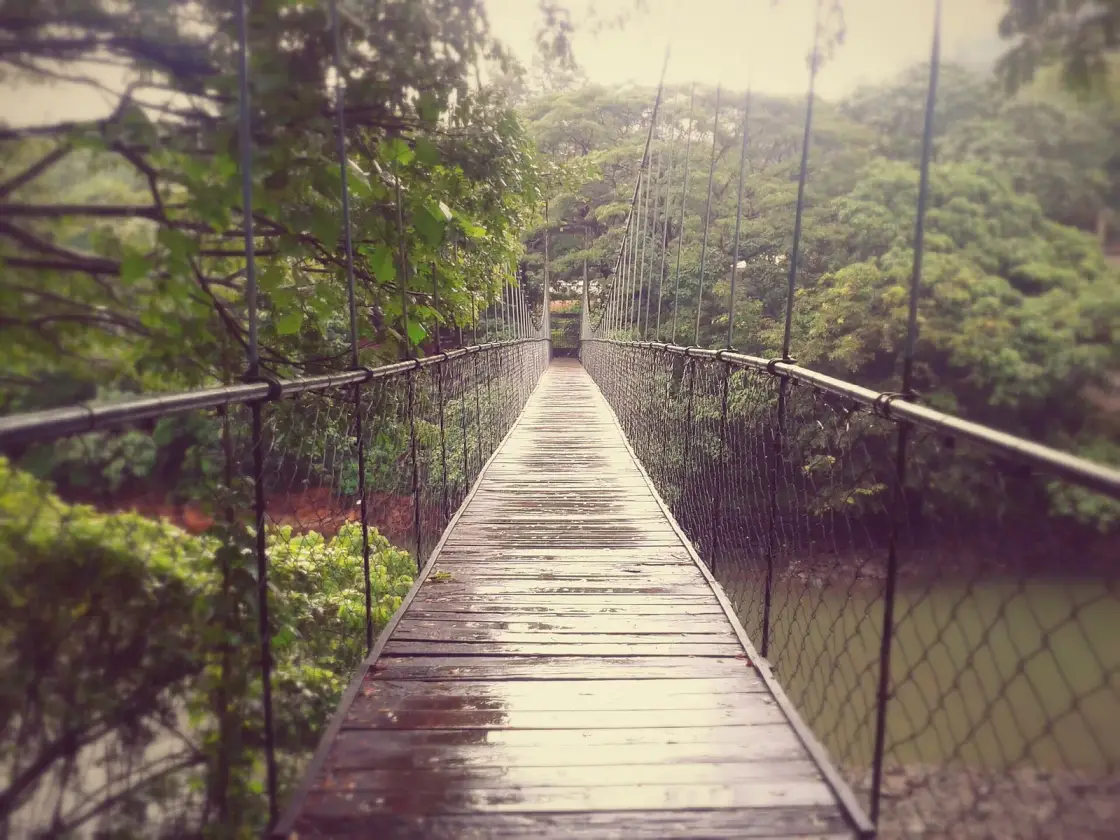
What a day visitor does here is walk. There is an elevated walkway through the canopy in the Adventure Zone, a timber-decked suspension bridge that sways as you cross it, a riverside boardwalk, a sculpture garden of twenty-three or twenty-four stone works on the theme of Man and Nature, a deer rehabilitation enclosure, a butterfly area, a children's park and, after dark, a musical dancing fountain. Boating runs on the water below the dam. It is a good day out and it is well made.
The thing almost nobody tells you is why any of it is here. The operator, the Thenmala Ecotourism Promotion Society, says it plainly on its own website: the park was built on degraded ground at the outskirts of Shenduruney Wildlife Sanctuary, as what it calls a familiarization zone, in a deliberate strategy to control mass tourism within the outer limits of the sanctuary. In its own words, eco-friendly general tourism is planned in the periphery of the sanctuary so that pressure of tourism will not affect the sanctuary; the real ecotourism is to take place in the sanctuary, and only ecotourists are encouraged for that. The walkway and the fountain are the decoy.
That is also why the taxonomy is odd once you notice it. TEPS says it offers two kinds of product — ecotourism, and eco-friendly general tourism — and assigns the Leisure Zone, the Adventure Zone, the butterfly safari, the children's park, the deer centre, the reservoir boating and the fountain to the second category. Almost nothing a day visitor pays for at Thenmala is, by the operator's own definition, ecotourism. The genuine article is the permit-and-guide programme inside Shenduruney, and it is deliberately rationed.
The three-zone framing you will see everywhere — Culture, Leisure, Adventure — is worth holding loosely. TEPS's own current website navigation lists no Culture Zone page at all, and its tariff table has no Culture Zone line; the attractions are priced individually. Nothing has closed, and the ticket counter, restaurant, amphitheatre and fountain are all still there, in what everyone still calls the Culture Zone. But the two Government of Kerala sources do not even agree on where the sculpture garden is: TEPS puts it in the Leisure Zone with the suspension bridge and boardwalk, and Kerala Tourism's destination page puts it in the Culture Zone. Ask by attraction, not by zone, and you will not be misdirected.
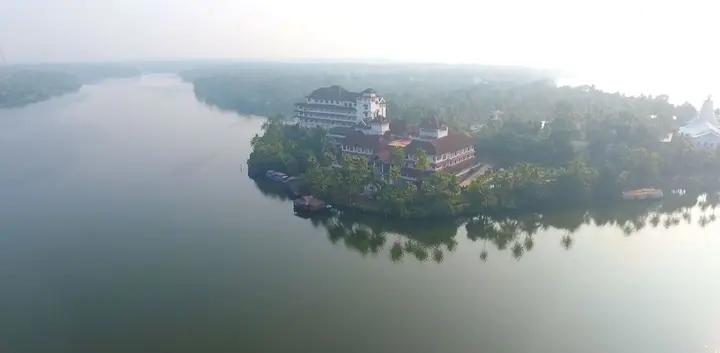
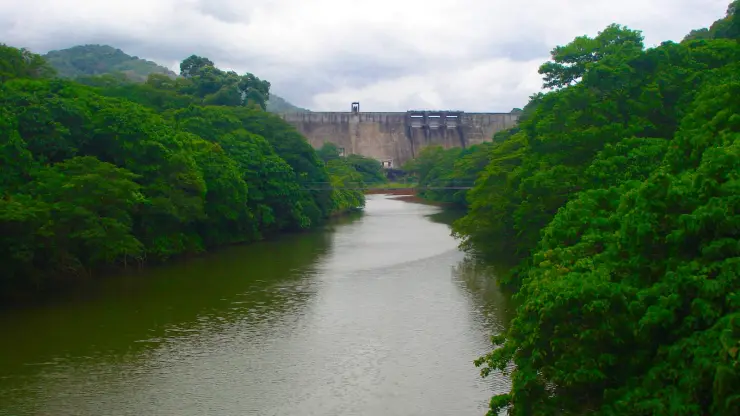
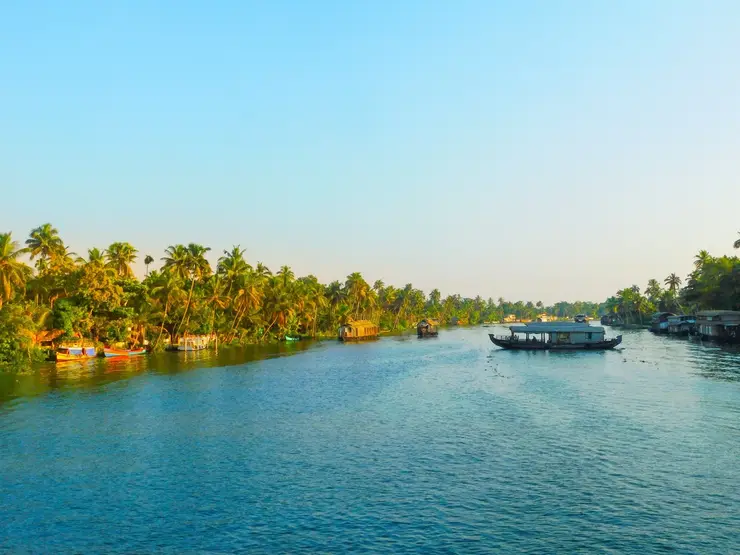
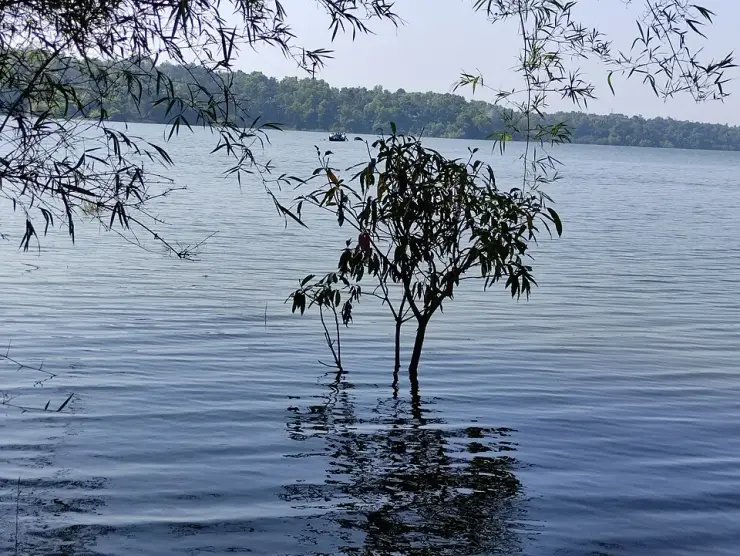
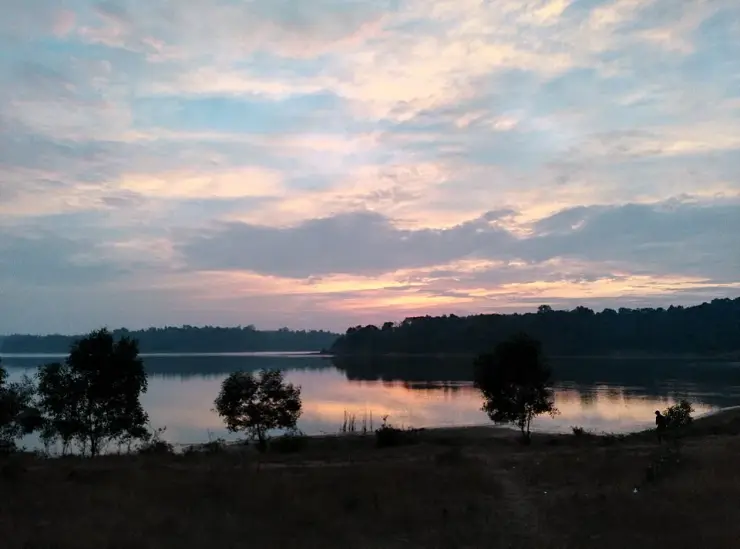
The water underneath all of this is the Parappar dam on the Kallada, commissioned in 1986 and dedicated to the nation in 1994 — fifteen years before the ecotourism park opened around it. It is the headworks of the largest irrigation project in Kerala, and the small hydro station attached to it generates from water released for farms 80 km downstream. That matters to a visitor for one unromantic reason: the reservoir level is an irrigation decision, not a weather report. Late in the dry season it can be startlingly low. On 26 April 2026 it stood at 98.46 m against a full level of 115.82 m — about 34 per cent — with the site's public washrooms closed for want of water, while the boating carried on.
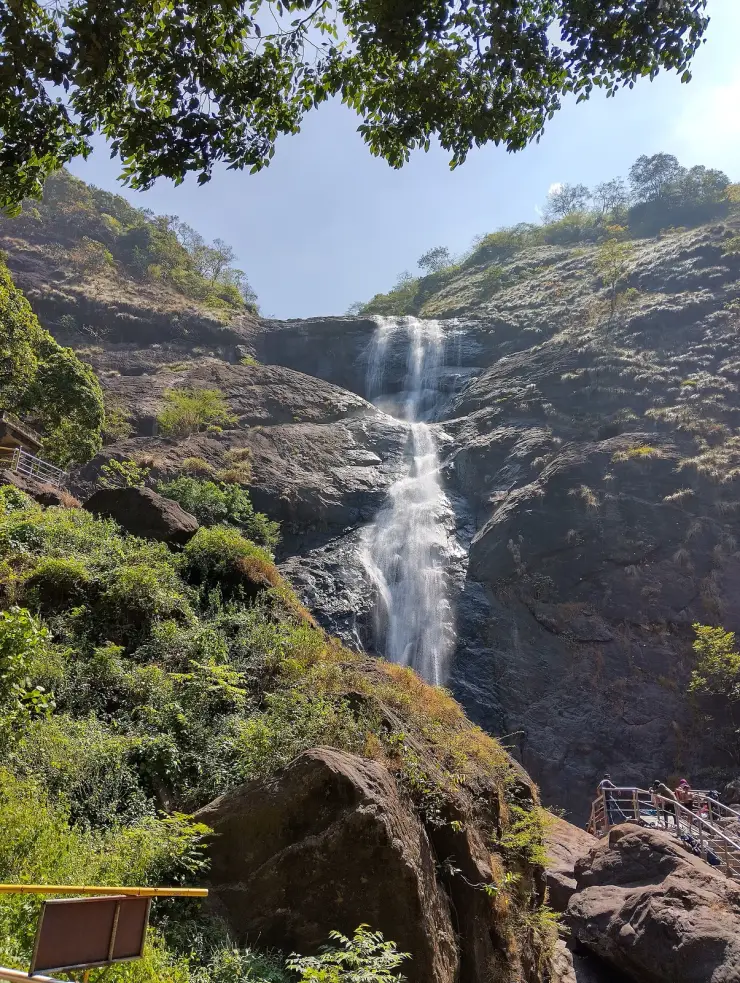
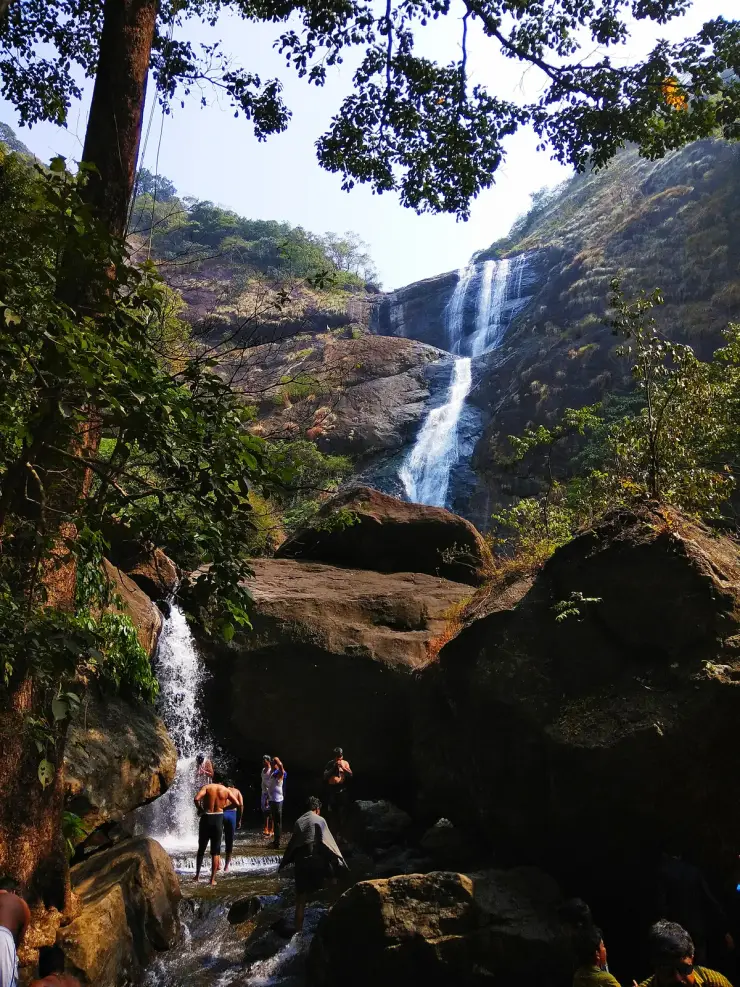
Behind the park is Shenduruney Wildlife Sanctuary, evergreen Western Ghats country named for the chenkurinji tree, and behind that the pilgrim country of the Kollam–Shencottah road: the Aryankavu Sastha temple, which appears on every version of the Sastha circuit anyone publishes, is a short way east and has its own page here. Palaruvi falls and the Rosemala and Shendurney treks are all reached from this junction. Thenmala is the hinge for the whole of eastern Kollam, which is the real reason to base a day here.
Legend & myth
The Government of Kerala's own Kollam district administration website, on its official Thenmala page, tells you this: Thenmala is India's first planned eco-tourism destination, located in the foothills of the Western Ghats, in Kerala's Kollam district — and Thenmala is also a UNESCO World Heritage Site.
It is not, and never has been. There is no UNESCO inscription in the name Thenmala. What is inscribed is the Western Ghats, listed in 2012 as a serial natural property of thirty-nine component sites, nineteen of them in Kerala. One of those components is Shenduruney Wildlife Sanctuary, in the Agasthyamalai sub-cluster — the protected tract whose boundary begins east of the park gate.
So the World Heritage site is next door. And the reason that gap is interesting rather than a gotcha is that the whole point of Thenmala is to be next door.
TEPS's founding statement is unusually candid about this. When the idea was mooted seriously in 1996, it says, it was decided to develop the site as an ecotourism destination by keeping the degraded ground, in the outskirts of the sanctuary, as a familiarization zone — a strategy to control mass tourism within the outer limits of the sanctuary. Visitors would get small nature trails, an elevated walkway through the canopy, mountain biking; this would give them a feeling of what awaits as ecotourism in the sanctuary area, for which they have to wait since it is supply driven. No permanent construction was to go inside the reserve, and accommodation was to be built outside it, at a distance.
Read the district government's sentence against that, and it becomes a strange kind of compliment. The buffer built to protect the World Heritage site has been credited with being it. The correction and the compliment are the same sentence.
There is a second layer, and it is the phrase that appears in our own guide title, on Kerala Tourism, on the district site and physically on the TEPS signboards in the park. India's first planned ecotourism destination is a self-description, not an award. TEPS's own prose is carefully hedged — Thenmala Ecotourism has been conceived as a first planned ecotourism destination in India — and there is no register, certification or ministry order behind it. Conceived as.
The claim is not confined to brochures either — it is on the furniture. The TEPS logo lockup printed on the interpretive signboards inside the park, including the rock-climbing sign that gives the crag as 35 metres, reads: Thenmala Ecotourism, India's First Planned Ecotourism Destination. A visitor standing in front of it has no way of knowing that the line beneath the logo is the organisation describing itself rather than a designation it was given.
What Thenmala actually did win, and what almost nobody quotes, is a National Tourism Award from the Union Ministry of Tourism for 2003–04 in the category Best Ecotourism Practices in India: a real, dated, federally conferred award for practice rather than for precedence. An unaudited superlative about being first has quietly displaced it in every retelling.
One more thing you can check for yourself, and should before you type a card number. The official site — thenmalaecotourism.com — has been serving an expired TLS certificate since 9 July 2025, so browsers throw a full security interstitial and ordinary tools refuse to fetch it. A separate look-alike domain ending .org ranks alongside it in search, is not TEPS, and is linked from no government page. For over a year the only authoritative source of tariffs, timings and booking details for India's self-declared first planned ecotourism destination has sat behind a security warning.
More about Thenmala
History
Thenmala fuses the Malayalam then, honey, with mala, hill, and the honey hills reading is the traditional one, remembered in the wild combs of these ridges and the hill people who gathered them. We should say honestly that we found no philological or gazetteer source attesting it — only tourism copy — and that then can also carry the sense of south. Indian Railways spells the station Tenmalai.
The railway came first. The Kollam–Sengottai line was surveyed from 1888, built from 1900, and opened to metre-gauge passenger traffic from Kollam on 1 July 1904, the first train flagged off by Maharajah Moolam Thirunal of Travancore with a twenty-one-gun salute; the Punalur–Sengottai section that Thenmala sits on opened on 26 November 1904. It carried teak and hardwood down to the port of Kollam and made this a timber town long before it was a tourism one.
Water came next. The Parappar dam across the Kallada is a straight gravity masonry dam, 335 m long and 85.35 m high from its deepest foundation, built in twelve blocks with a three-bay gated spillway and a separate earthen dam alongside. It is the headworks of the Kallada Irrigation and Tree Crop Development Scheme, described by the Irrigation Department as the largest irrigation project in the State of Kerala, with four main and branch canals running a combined 235 km. It was commissioned in 1986 and dedicated to the nation on 5 January 1994. The attached Kallada hydro station, 15 MW in two units, was the first in Kerala to generate from water released for irrigation.
The ecotourism project is younger than both. The idea was mooted seriously in 1996; the Thenmala Ecotourism Promotion Society was registered on 15 July 1998; the foundation stone was laid in 1999, when the deer rehabilitation centre and reservoir boating also opened; and the destination itself was inaugurated in 2001 by the Chief Minister, E. K. Nayanar, with the Ministers for Tourism, Forests and Irrigation all on the dais. That guest list is the architecture of the place: the land is Forest Department, the water is Irrigation Department, the visitor is Tourism Department, and TEPS exists as a registered society to sit across all three.
An environmental impact assessment was commissioned from the Kerala Forest Research Institute, and on its recommendations TEPS amended the activities to reduce the project's negative impacts — a tourism project that shortened its own menu on a research institute's say-so. Trekking and bird-watching trails are run through local Vana Samrakshana Samithi committees rather than by the society directly.
Since then: the National Tourism Award for 2003–04; trekking and camping in Shenduruney and the Nakshatravanam star garden in 2007; the Honey Comb, the Nest, the children's park and a zero-waste programme in 2013. TEPS is now the nodal ecotourism agency for Thiruvananthapuram, Kollam and Pathanamthitta, and at its annual general meeting in August 2025 it resolved to seek approval to go statewide. A society constituted to keep one sanctuary quiet is proposing to run the model across Kerala.
Why visit
The elevated canopy walkway and the timber suspension bridge — the two things everyone comes for, and both genuinely good.
A sculpture garden of twenty-three or twenty-four stone works on the theme of Man and Nature, still standing beside its original interpretive plaques.
The most honest piece of tourism planning you will read this year, printed on the operator's own website: a park built as a decoy to keep crowds out of a sanctuary that is now World Heritage.
One base for the whole of eastern Kollam — Palaruvi, Aryankavu, Shendurney and the Rosemala trek all start from this junction.
A working railway on one of the most spectacular mountain lines in south India, a kilometre from the town, that almost nobody uses.
The deer rehabilitation centre and butterfly area, which are the gentlest hour on the site and the best of it with children.