What to expect
Highlights
- Temple visit at Thali Temple
- Kerala temple architecture and rituals
- Local food, shops and pilgrim services nearby
One of Kozhikode’s oldest temples, a laterite-and-timber Shiva shrine near Mananchira long patronised by the Zamorins.
Check entry arrangements. Ask temple staff about visitor entry, dress requirements and access to the inner shrine before you travel, especially if you are visiting as a non-Hindu.
Dress respectfully and follow the institution’s admission and photography rules.
In the beating heart of old Kozhikode, a chariot-shaped sanctum crowned with gleaming copper stands where the Zamorins once crowned scholars in gold — the Thali Shiva Temple, the royal shrine of Calicut and home of the centuries-old Revathi Pattathanam contest of learning.
Walk a kilometre east of Kozhikode railway station, past the bustle of Mananchira and the shops, and the city suddenly quietens into a walled temple compound. This is Thali Mahakshetram — the Thali Shiva Temple — one of the oldest and most revered shrines in the Malabar region and, for centuries, the tutelary temple of the Zamorins (Samoothiris), the medieval rulers of Calicut. It sits within what was once the royal palace precinct, a reminder that here temple and throne were intertwined.
The presiding deity is Shiva, worshipped (by tradition) in the benevolent form of Uma Maheswara, the lord seated with his consort. Yet Thali is unusual in that Vishnu is also venerated within the same complex, so devotees of both the Saivite and Vaishnavite traditions find a home here. Local tradition holds that the sage Parasurama — himself counted an incarnation of Vishnu — worshipped Shiva at this very spot in a distant age, a legend that binds the two deities together in the temple imagination (recounted as tradition — confirm devotional details locally).
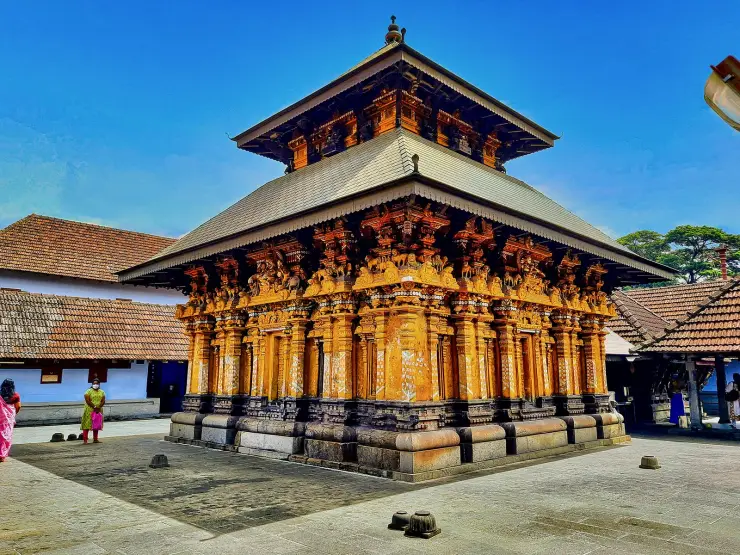
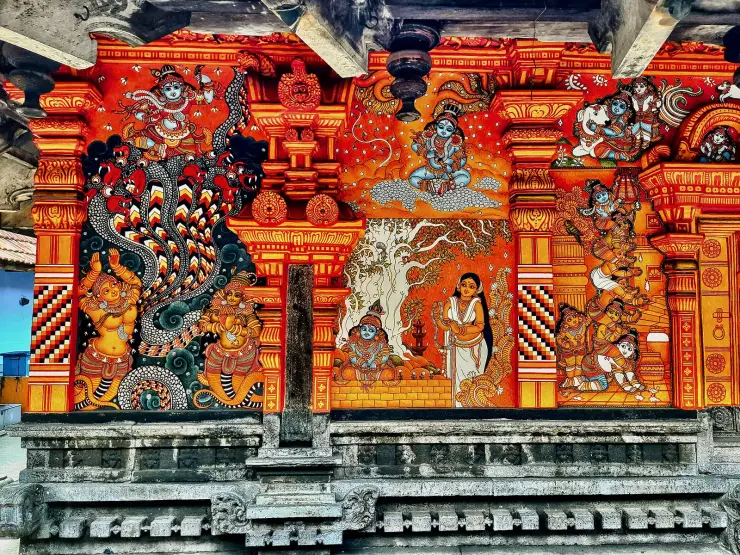
Architecturally, Thali is a textbook of the Kerala temple idiom. The two-storeyed sanctum sanctorum is often likened to a majestic chariot, its steep wooden roof sheathed in copper and brass and finished with fine metal relief. Inside and around the shrine, granite sculpture and old mural paintings depict Shiva and his divine retinue, the pigments and carved timber speaking of generations of craftsmen. The harmony of laterite, carved wood and metal roofing is exactly what students of Kerala architecture come to see.
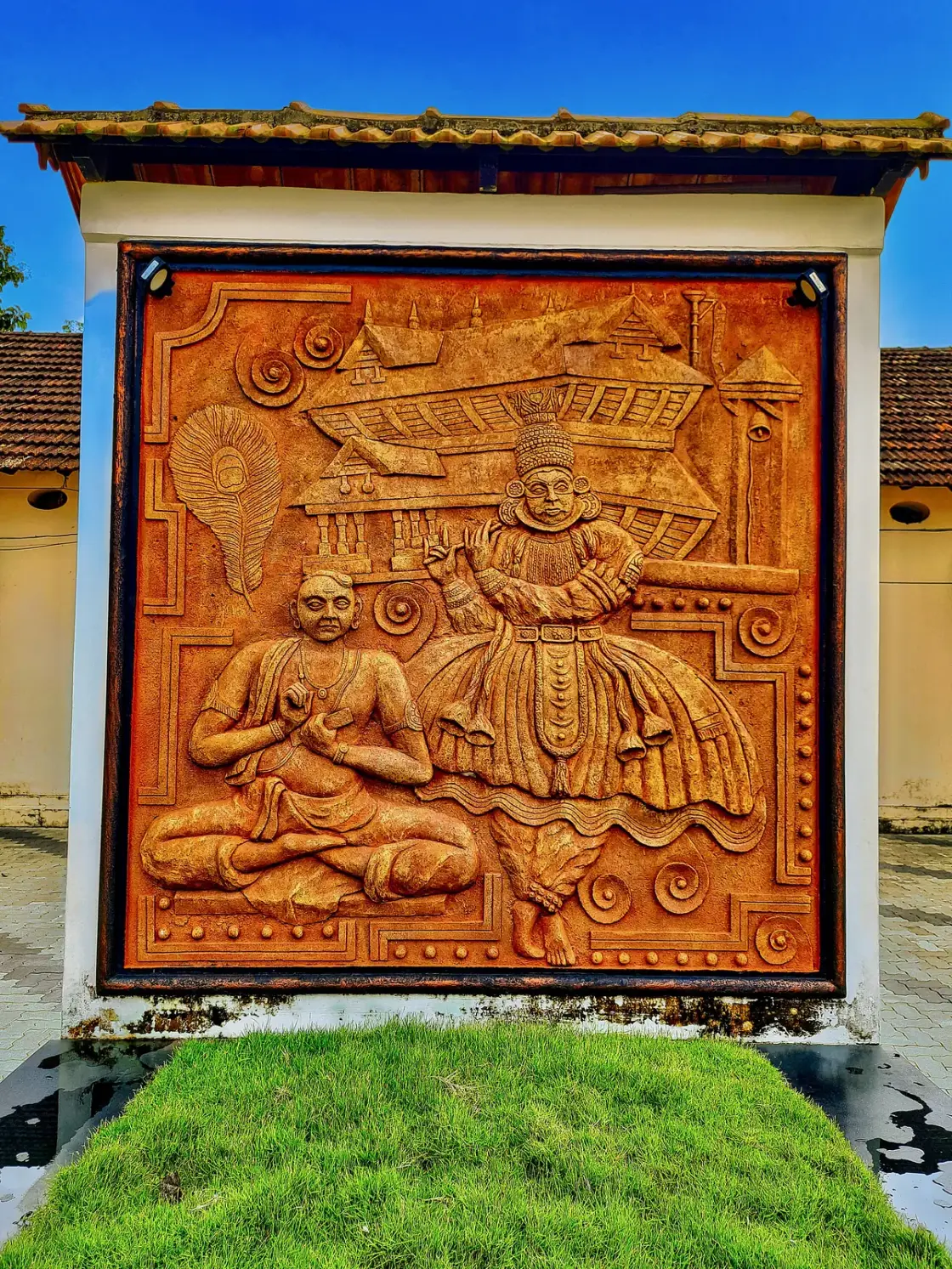
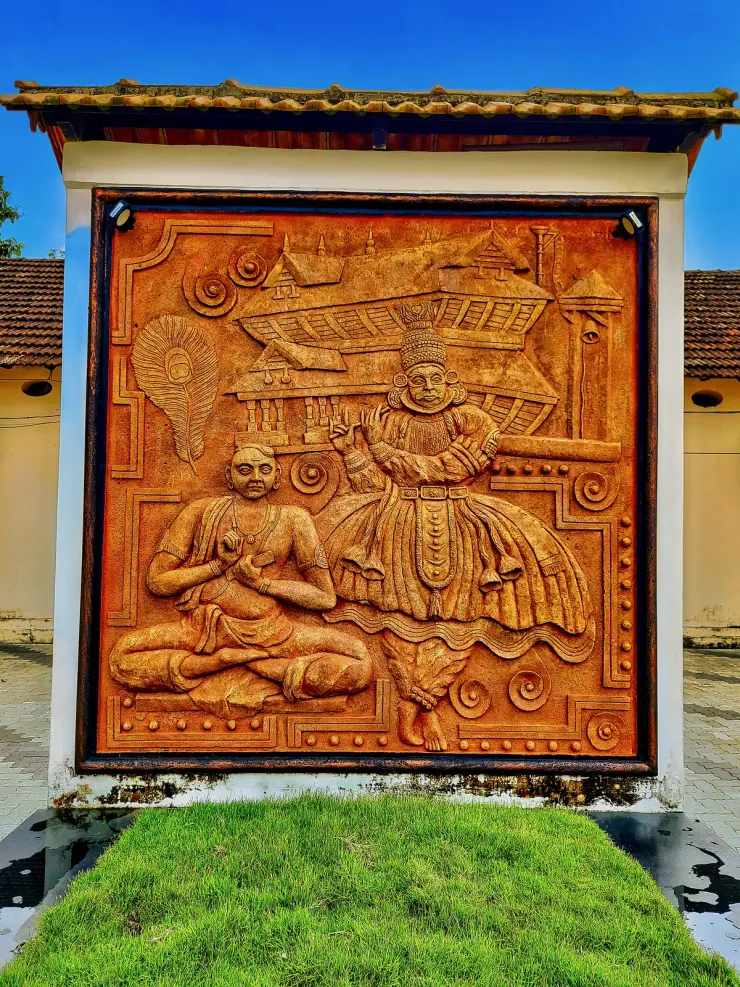
But Thali is famous above all for something you cannot see in stone: an idea. For centuries the temple was the stage for the Revathi Pattathanam, an annual assembly and contest of Vedic, Vedantic and Sastraic scholarship. Learned men gathered over several days each autumn to debate the great disciplines — logic, grammar, ritual philosophy and Vedanta — and the finest among them were honoured before the Zamorin with the title of Bhatta and with purses of gold coin. In its heyday this was among the most prestigious intellectual gatherings in southern India.
The temple has weathered the storms of Malabar history. It rose to prominence under the Zamorins, suffered damage during the campaigns of Tipu Sultan in the late eighteenth century, and was repaired in the twentieth (a restoration is commonly dated to 1964). Through it all the shrine has remained a living place of worship and, remarkably, the Revathi Pattathanam tradition has been revived and continues to be observed, keeping alive a thread of scholarship that reaches back some six centuries.
For the visitor, Thali offers two temples in one: a serene, still-active shrine of daily devotion, and an open-air monument to a lost world of royal patronage and learned debate. Come at dawn when the lamps are lit and the copper roof catches the first light, or during the Thulam festival season when the courtyard fills with scholars and devotees, and you sense why the people of Kozhikode still speak of this temple with pride.
If you can time a visit to the Malayalam month of Thulam, in October or November, you will catch the temple doing the thing it is famous for. The Revathi Pattathanam runs seven days, and it is not a performance staged for visitors — it is a working assembly, conducted largely in Sanskrit, in which scholars are examined across Vedic, Vedantic and Sastraic learning by other scholars. Much of it will be incomprehensible unless you have the languages, and that is rather the point: you are watching an examination system older than every university in India that is still teaching. The atmosphere is closer to a courtroom than to a festival, and the final day, when the titles and the purses are given out, is the one to aim for.
The temple carries a striking origin-tradition tied to the Zamorin himself. As the story is told, when the Zamorin took control of the Thali shrine he came into conflict with its Brahmin trustees, and the resulting bloodshed was believed to have brought a curse or spiritual stain upon the ruler. A saint — remembered in tradition as Kolkunnattu Savankal — is said to have counselled the Zamorin to atone by instituting an annual gathering of Brahmin scholars on his own birth star, the Revathi asterism, and to honour learning with gold. Thus, legend holds, the Revathi Pattathanam was born as an act of penance (prayaschitta), turning guilt into a lasting celebration of knowledge (recounted as tradition — details vary between sources).
A second, older legend reaches further back in time: that Parasurama, the axe-wielding sage and an incarnation of Vishnu who by myth reclaimed Kerala from the sea, worshipped Shiva here and installed the lingam. This tale is offered to explain why both Shiva and Vishnu are revered at Thali. It is devotional lore rather than dated history, and is best received in that spirit.
There is also a piece of received wisdom worth correcting, because almost every account treats “Thali” as though it were simply this temple’s name. It is not a name at all — it is a category. In early Kerala, certain temples known as thalis functioned as centres of administration as well as worship, and the word denotes a class of ancient royal Shiva shrines rather than one particular building. Tali at Kozhikode is counted as one of four thali temples among Kerala’s traditional 108 Shiva temples, alongside Keezhtali at Kodungallur and two others in the Kottayam country. To say “the Thali temple”, then, is closer to saying “the state temple” — a description of what the place did, not a label anyone invented for it.
The word Pattathanam repays the same attention. It comes from Bhattadanam, the awarding of the Bhatta — the title conferred on the scholars who prevailed in the assembly — and the winners received a panakizhi, a purse, with accounts describing kizhis of a hundred and one panam apiece. But the detail that has survived best is the one hardest to imagine now: the Zamorin, the most powerful ruler on the Malabar coast, would prostrate himself before the winning scholars to ask their blessing. A king face-down on the floor before a man he had just paid. For a festival that tradition says was founded as penance for the killing of Brahmins, that gesture is not ceremonial decoration — it is the entire meaning of the thing.
It is worth holding tradition and record slightly apart here. The fourteenth-century foundation under the Zamorins rests on reasonably firm ground. The claim that the site rose to prominence some fifteen centuries ago, and the attribution of its origin to Parasurama, belong to sacred tradition rather than to dated history. The same caution applies to the widely repeated statement that Tipu Sultan’s campaigns damaged the temple: it is standard in Malabar temple accounts and entirely plausible for the period, but the specifics shift from telling to telling.
Thali temple is generally dated to around the fourteenth century, though its roots may be older. Tradition attributes its building or consecration to a reigning Zamorin — often named in accounts as Swami Thirumulpad — who is said to have raised the shrine within the royal palace complex at Calicut (this attribution and dating are traditional; treat the ~14th-century date as attribution rather than fixed record).
Older accounts describe a small original shrine at Thali associated with a community of Namboothiri (Kerala Brahmin) families who served as its trustees. As the Zamorins consolidated power over the region, control of the temple passed to the ruling house — a transition remembered in tradition as violent — and thereafter Thali functioned effectively as the state temple of the Zamorins of Calicut, with the shrine remaining under the trusteeship of the Zamorin to this day.
The temple is inseparable from the Revathi Pattathanam, a documented tradition of scholarly assembly held under Zamorin patronage. Conducted over about seven days beginning on the Revathi star in the Malayalam month of Thulam (October–November), it brought together scholars in disciplines such as Tarka (logic), Vyakarana (grammar), Mimamsa (ritual exegesis) and Vedanta. Winners were conferred the honorific Bhatta and rewarded with purses of coin, and platforms for the debates were set up at the temple's entrance hall (dates and rewards per tradition — confirm current arrangements locally).
The gathering drew celebrated intellects of the Malayalam world; the polymath Melpathur Narayana Bhattathiri, author of the devotional classic Narayaneeyam, is remembered among those honoured in connection with the assembly. Over the centuries the Pattathanam became a marker of Calicut's stature as a seat not only of trade and power but of learning.
Like much of Malabar, the temple suffered during the military campaigns of Tipu Sultan in the later eighteenth century and sustained damage; later repairs and restoration followed, with a notable restoration commonly dated to 1964. Today Thali continues as an active temple, and the Revathi Pattathanam has been revived as an annual cultural and scholarly event, sustaining one of Kerala's longest-running intellectual traditions.
The mechanics of the assembly are documented in unusual detail for a tradition of this age. It was convened on the Zamorin’s birth asterism, Revathi, and ran across seven days, with the Mangat Achan — one of the great hereditary officers of the Calicut state — charged with announcing the list of winners on the final day. That a named minister of the kingdom held a formal role in a scholarly prize-giving says a good deal about where learning sat in the Zamorin’s order of business: not as a royal hobby or an act of pious sponsorship, but as an affair of state, administered by the same machinery that ran the port and the army.
See the royal temple of the Zamorins — the historic state shrine at the heart of old Calicut.
Admire classic Kerala temple architecture: the chariot-like two-storeyed sanctum with copper-and-brass roofing, carved wood, granite sculpture and old murals.
Connect with the Revathi Pattathanam, a six-century tradition of Vedic and Vedantic scholarship revived each Thulam (Oct–Nov).
Worship at a rare shrine where both Shiva and Vishnu are venerated.
Soak in the calm of a living temple set in the busy city, minutes from Mananchira and SM Street.
Feel the layered history — royal patronage, penance-born scholarship, and survival through Malabar's turbulent centuries.
Road km to Kozhikode; ghat roads and traffic vary — allow extra.
Morning or early evening is usually best; festival days can be powerful but crowded.
Live forecast loads in your browser.
Sun and moon are calculated for this location and shown in IST. Photography windows are the hour around sunrise and sunset; the sunset bearing is degrees clockwise from true north. Moon phase is accurate to about half a day.
Browse listed stays, food, activities, sights, shops and rentals around Thali Temple. Check each listing’s locality and contact the business directly for current arrangements.
Kerala Tourism-classified Ayurveda and panchakarma hospital at Azhiyur in Kozhikode district, with 16 treatment rooms and full-time physicians. It runs panchakarma, classical treatments and Ayurveda, yoga and marma study courses over more than two decades.
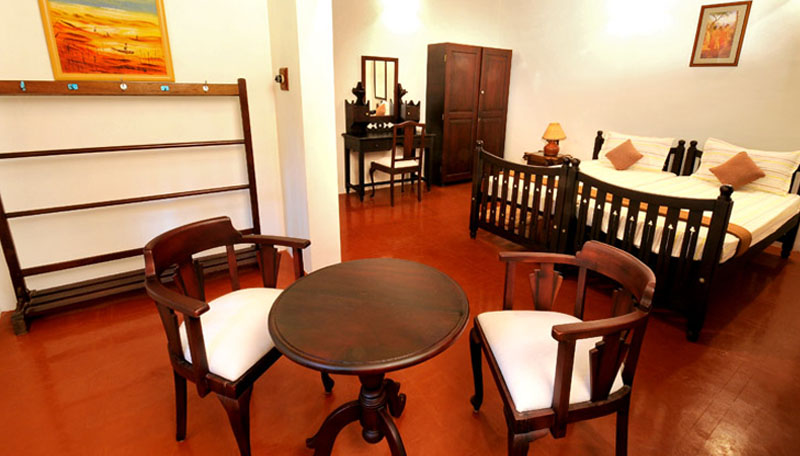
Green Leaf-accredited Ayurveda and yoga retreat set in a 170-year-old heritage homestead at Bilathikkulam in Kozhikode. It offers physician-led panchakarma, classical treatments and yoga in a family-run heritage setting rather than a hotel spa.
Calicut taxi provider with direct address, phones and email. Bank Road, Calicut Town, Kerala 673006 · Calicut taxi, Airport transfer, Outstation cab.
Kerala Tourism-listed Kalaripayattu and Ayurveda centre at Puthiyara. Kalaripayattu, Hindustan Kalari, Puthiyara.
Kerala Tourism-listed Kalaripayattu training and Kalari Marma centre in Nadakkavu. Kalaripayattu, CVN Kalari, Nadakkavu.
Mayukaha Taxi Calicut Cabs is a local Kozhikode taxi service for airport, railway and city pickups, useful as a direct-contact transport option when app cabs are not enough. Kozhikode taxi, Calicut cabs, Airport taxi.
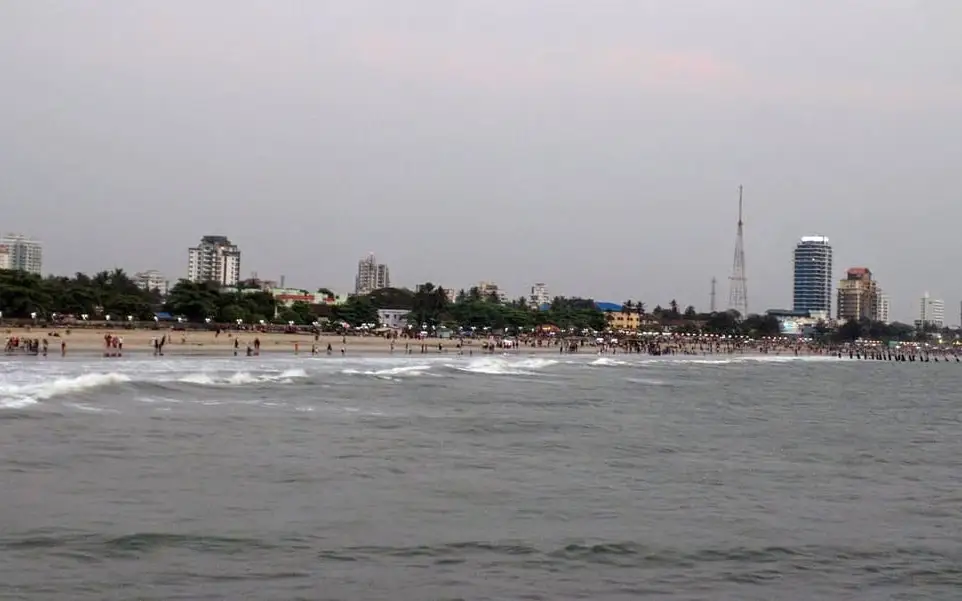
Kozhikode Beach is the city seafront and sunset-food anchor, best planned with old pier context, evening crowds and nearby SM Street or city food stops. Public beach; check current facilities · Kozhikode Beach, Calicut Beach, Sunset.
Official DTPC Kozhikode contact anchor for district visitor planning. Public information · DTPC Kozhikode, Tourist information, District planning.
Green Leaf-certified Ayurvedic nursing home in Kozhikode offering classical panchakarma and physician-led treatment. It is one of the Malabar city’s established Ayurveda centres, with direct clinic phone and email contacts for consultations.
Kerala Tourism-listed Kozhikode tour operator on Mavoor Road. Alhind, Tour operator, Mavoor Road.
Greenwood Holidays is a Kozhikode-based travel agency and tour operator for packages, hotels, transportation and sightseeing support. Tour operator, Travel agency, Mankave.
Responsible Tourism Mission Kozhikode is the official contact for village-life and community experience enquiries, including crafts, food, backwater and local livelihood experiences. Responsible Tourism, Kozhikode experiences, Village life.
Book with the place itself. India’s cyber-crime coordination centre warned in April 2025 that convincing copies of hotel and pilgrimage booking sites are being pushed through sponsored search and social ads, taking payment for rooms the property never hears about. Use the contact and source details on each profile to confirm the exact business and booking channel. A directory entry or map pin alone does not establish an operator’s identity or current availability. Roampedia takes no commission and does not collect booking payments. If a booking page reached you through an ad, check the address bar against the property’s own site before you pay. Fraud can be reported on cybercrime.gov.in or on 1930.
Find food, accommodation and activities across Kozhikode city. Browse the guides for places to eat, stay and explore along your route.
9 more places around Kozhikode city. Open a guide to plan the visit and onward journey.
A small historic mosque in Kuttichira with an important early Malayalam-Arabic inscription, distinct from the nearby and much larger Mishkal Mosque.
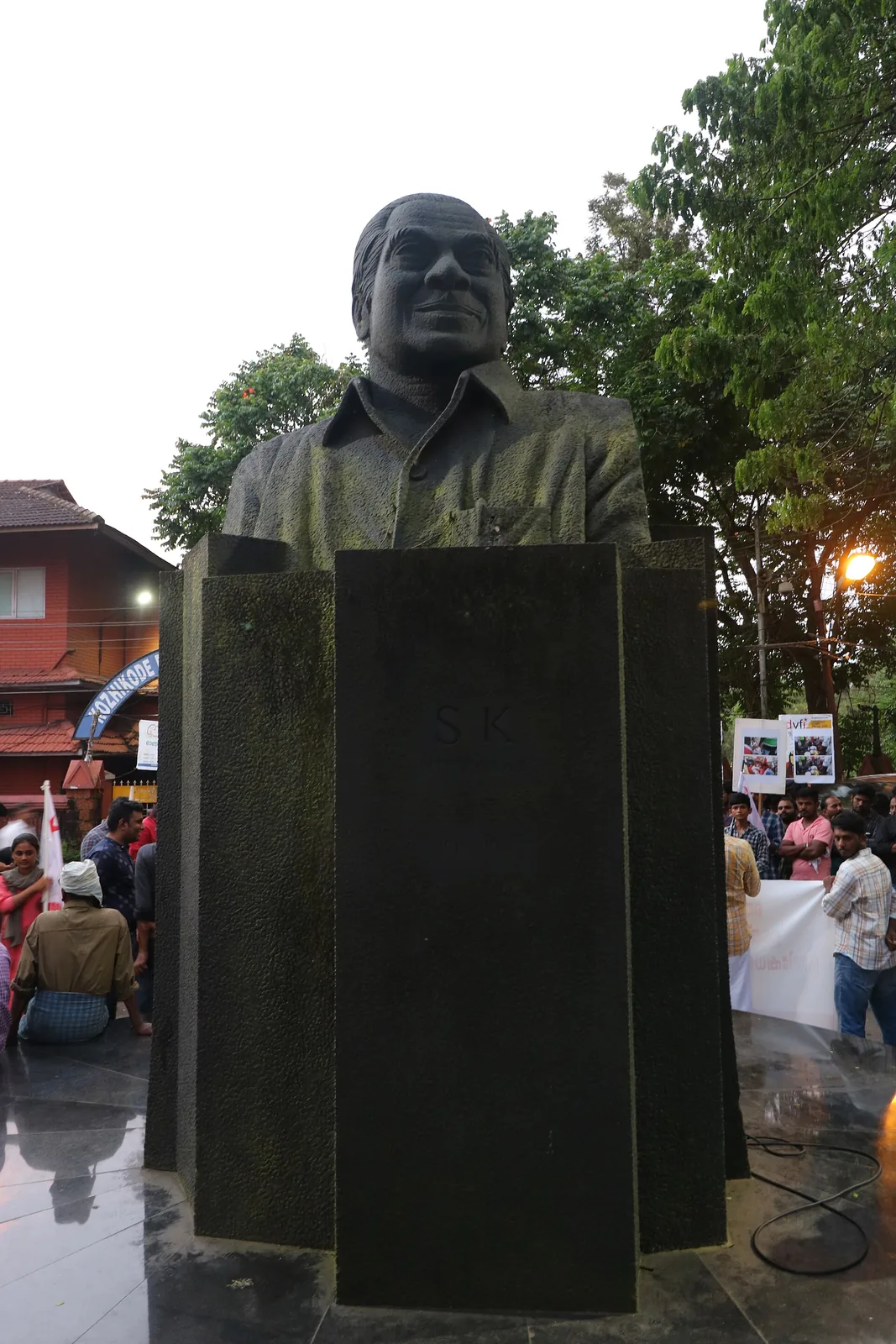
780 m · straight line
Historic shopping street and sweet-stall area in Kozhikode city.
1.0 km · straight line
Landmark park in the city centre on the old Zamorin palace grounds, around the Mananchira tank, with a musical fountain.
1.2 km · straight line
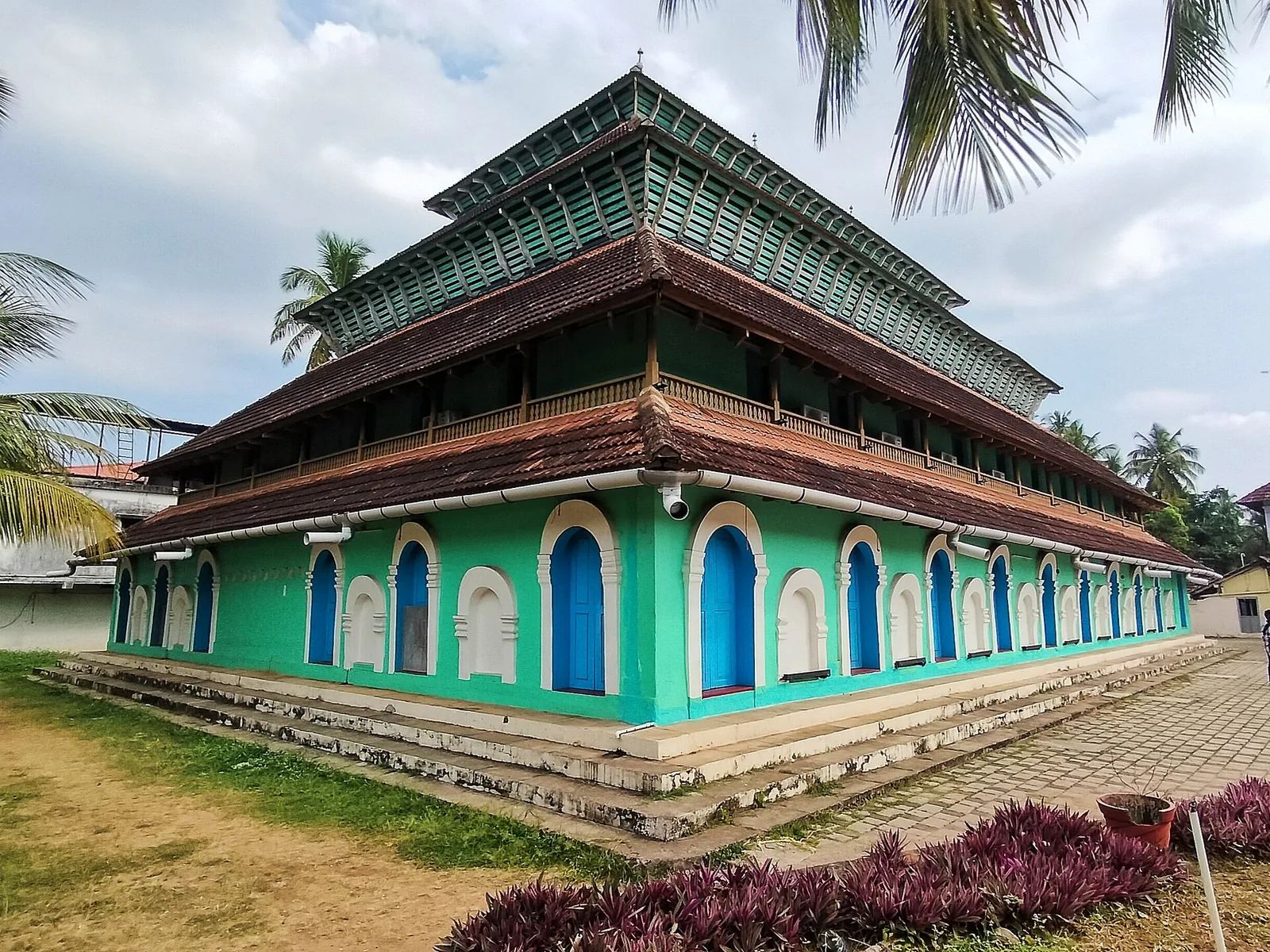
Historic timber mosque at Kuttichira built by a 14th-century Yemeni trader, once five storeys, burned by the Portuguese in 1510 and rebuilt.
1.6 km · straight line
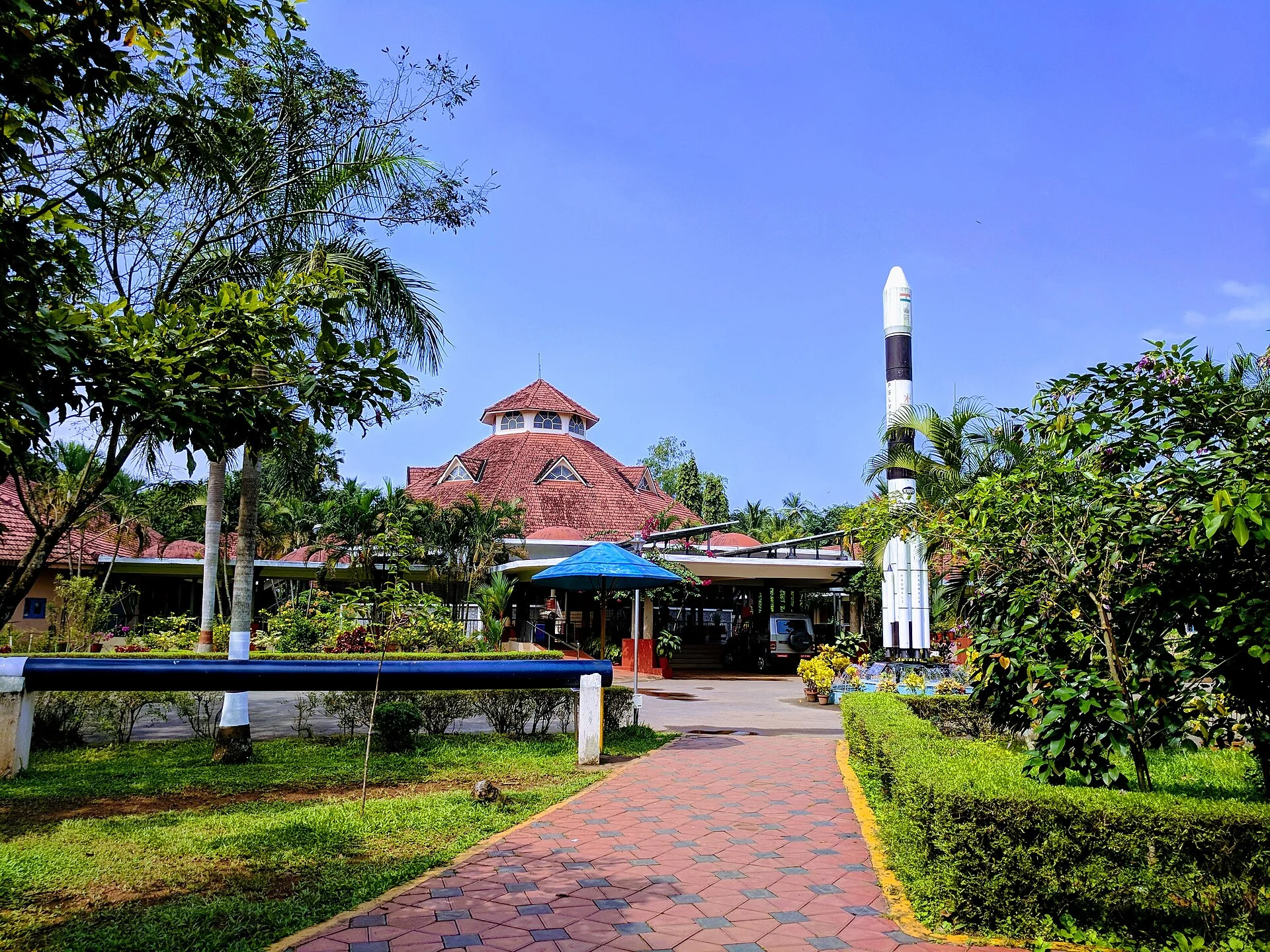
Check the planetarium before you plan an afternoon around it: it has been shut since 13 July 2026 for a full projector replacement and no reopening date has been announced. The rest of the centre — a National Council of Science Museums site in central Kozhikode — is working: five galleries, a 3D theatre and an outdoor science park that is the real draw for children.
2.3 km · straight line
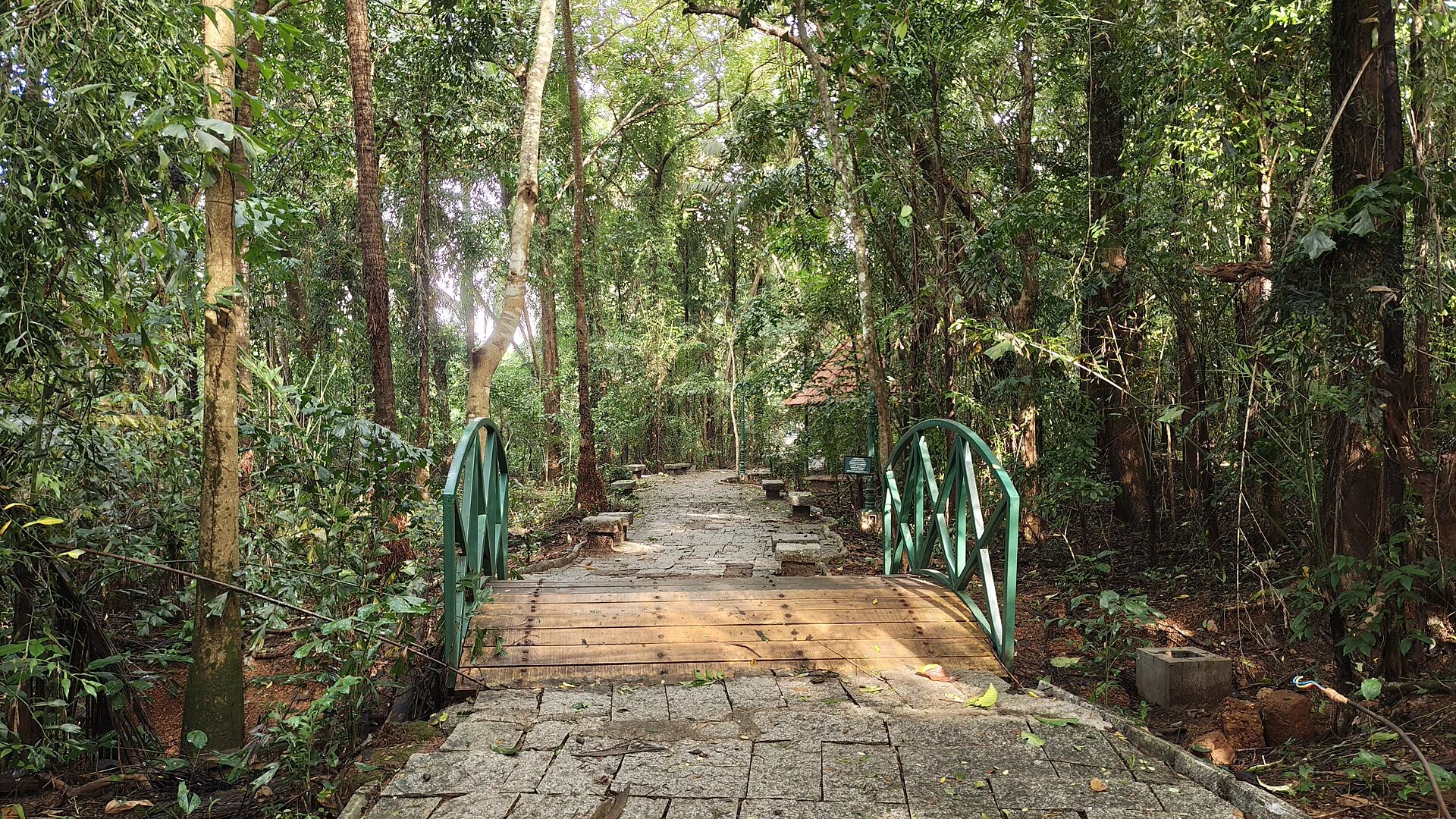
A 98-acre public eco-park on the Conolly Canal in central Kozhikode, the developed part of the Kottooli wetland — mature urban woodland and mangrove-fringed water, mid-renovation and partly not operating.
1.3 km · straight line
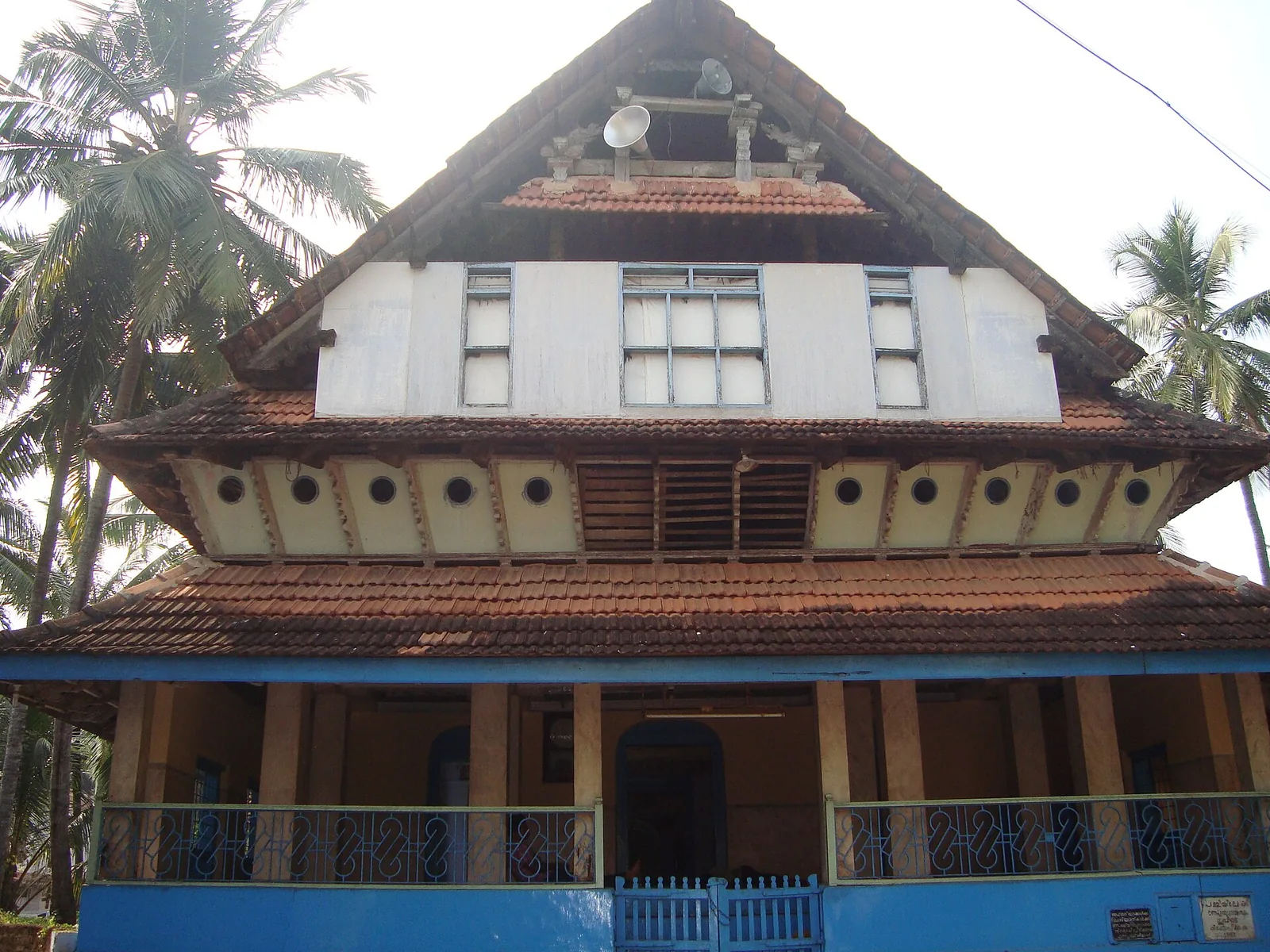
Kuttichira mosque built by a freed slave and endowed by the Zamorin, holding a 13th-century bilingual Vattezhuthu–Arabic inscription; it has no minbar and holds no Friday prayers.
5.0 km · straight line
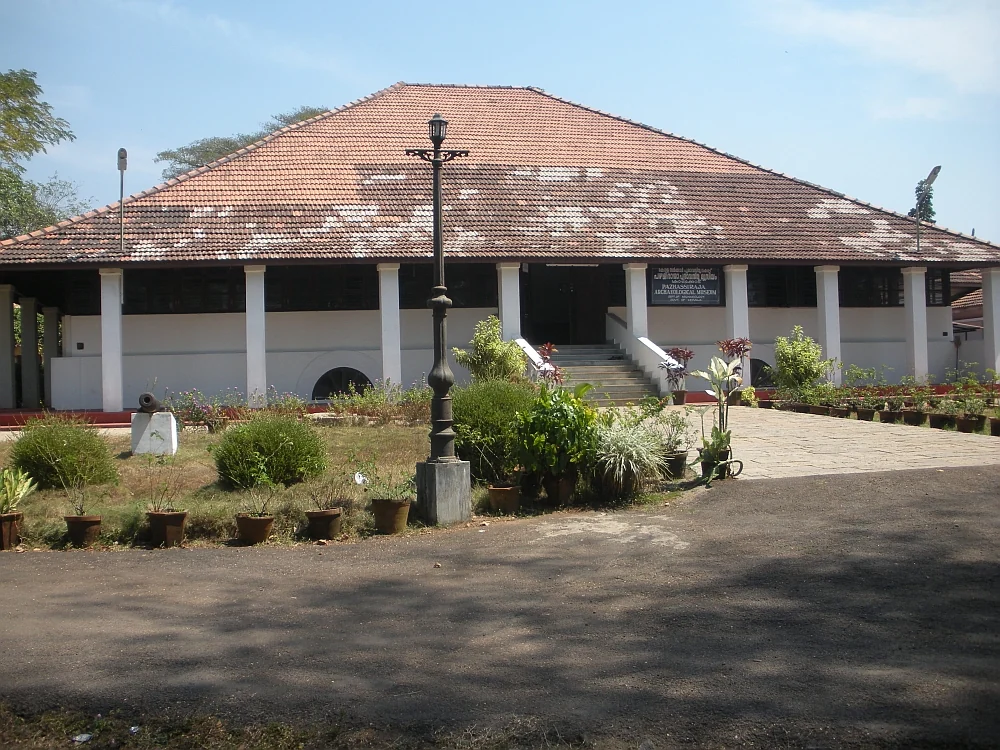
State archaeology museum at East Hill in an 1812 bungalow, with murals, bronzes, coins and megalithic monuments.
Roampedia is commission-free — own or know a stay, eatery, guide or shop near Thali Temple? Submit public business details for review.
Add a nearby businessEntry: Darshan is generally free; specific poojas, offerings or vazhipadu are ticketed at the temple counter.
Dress code: Traditional temple attire is expected — men often bare-chested with a mundu; women in saree or salwar. Avoid shorts, sleeveless tops and revealing clothing.
Festivals: The Revathi Pattathanam scholarly assembly in Thulam (October–November), culminating on the Revathi star, is the signature event; Maha Shivaratri (Feb–Mar) and other Shaivite observances are also marked (dates vary yearly — confirm locally).
Photography: Photography is usually restricted inside the sanctum and may be limited within the temple generally; ask permission before shooting and respect any signage or staff instructions.
If you are travelling by bus or ferry, check the return service with the operator before setting out. Leave time to reach the stop or jetty after your visit.
Ask at the bus stand for the time of the last service back, not the next one. If you miss it, an auto or app cab is the fallback — agree the fare before you get in.
If you need step-free access, contact the site before travelling. Ask about a level entrance, steps along the route, the nearest drop-off point, seating and accessible toilets.
Charge cap and free-transaction limits: Reserve Bank of India, ATM FAQ updated 4 July 2025; checked 4 October 2026.
These services are listed within about 1.2 km of Thali Temple. Walking distances follow mapped routes; access and opening hours can change. Other services may be closer but are not included here.
Published emergency and visitor-assistance contacts. For an immediate emergency, call 112. Shared Kerala contact sources checked 4 October 2026; publication does not establish a tested live response.
Historic shopping street and sweet-stall area in Kozhikode city.
780 m · straight lineLandmark park in the city centre on the old Zamorin palace grounds, around the Mananchira tank, with a musical fountain.
1.0 km · straight lineHistoric timber mosque at Kuttichira built by a 14th-century Yemeni trader, once five storeys, burned by the Portuguese in 1510 and rebuilt.
1.2 km · straight lineKuttichira mosque built by a freed slave and endowed by the Zamorin, holding a 13th-century bilingual Vattezhuthu–Arabic inscription; it has no minbar and holds no Friday prayers.
1.3 km · straight lineA National Council of Science Museums centre in central Kozhikode — five galleries, a 3D theatre and an outdoor science park. ⚠ Its planetarium has been closed for a projector replacement since 13 July 2026 with no announced reopening date.
1.6 km · straight lineA 98-acre public eco-park on the Conolly Canal in central Kozhikode, the developed part of the Kottooli wetland — mature urban woodland and mangrove-fringed water, mid-renovation and partly not operating.
2.3 km · straight lineState archaeology museum at East Hill in an 1812 bungalow, with murals, bronzes, coins and megalithic monuments.
5.0 km · straight line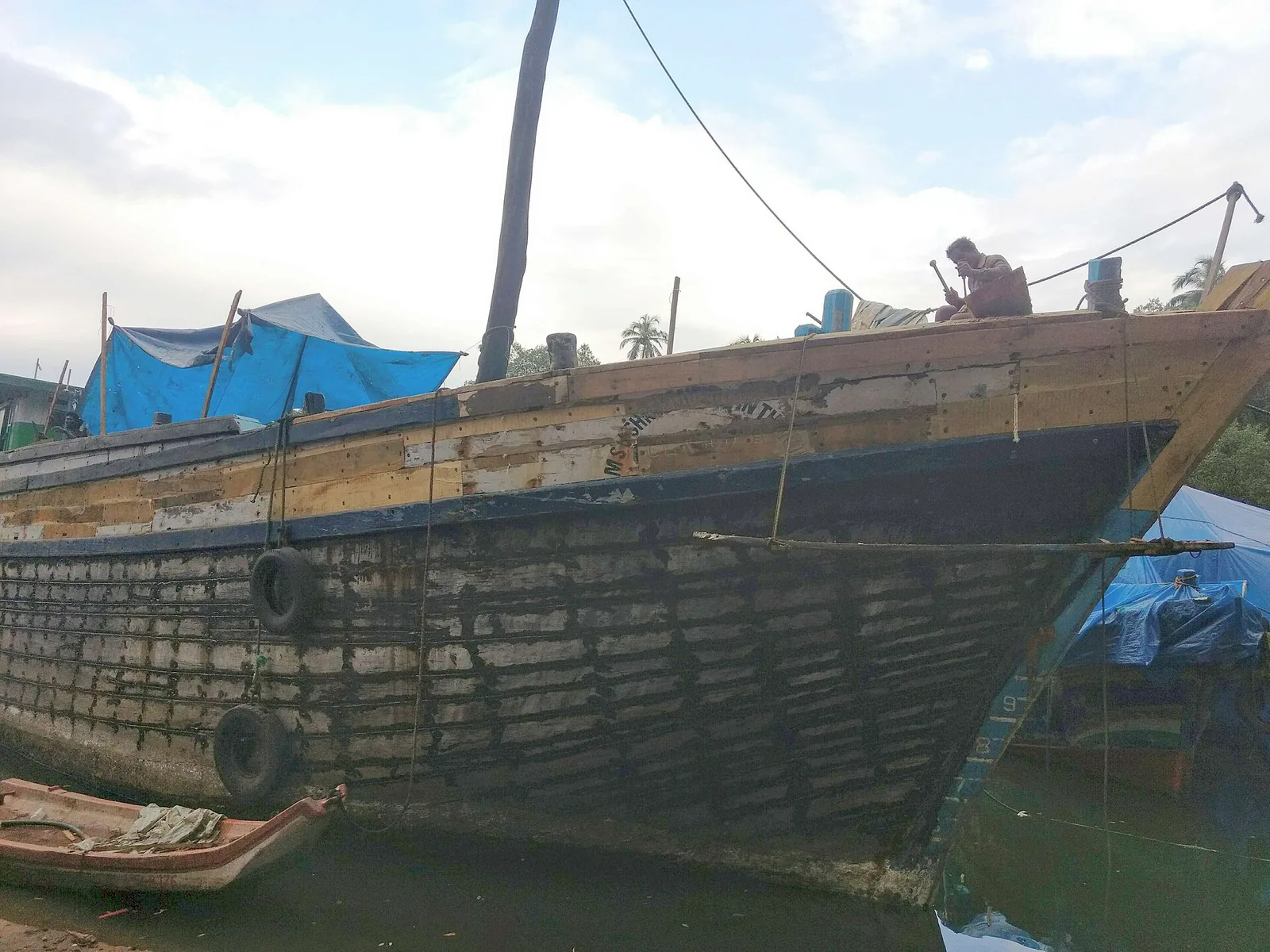
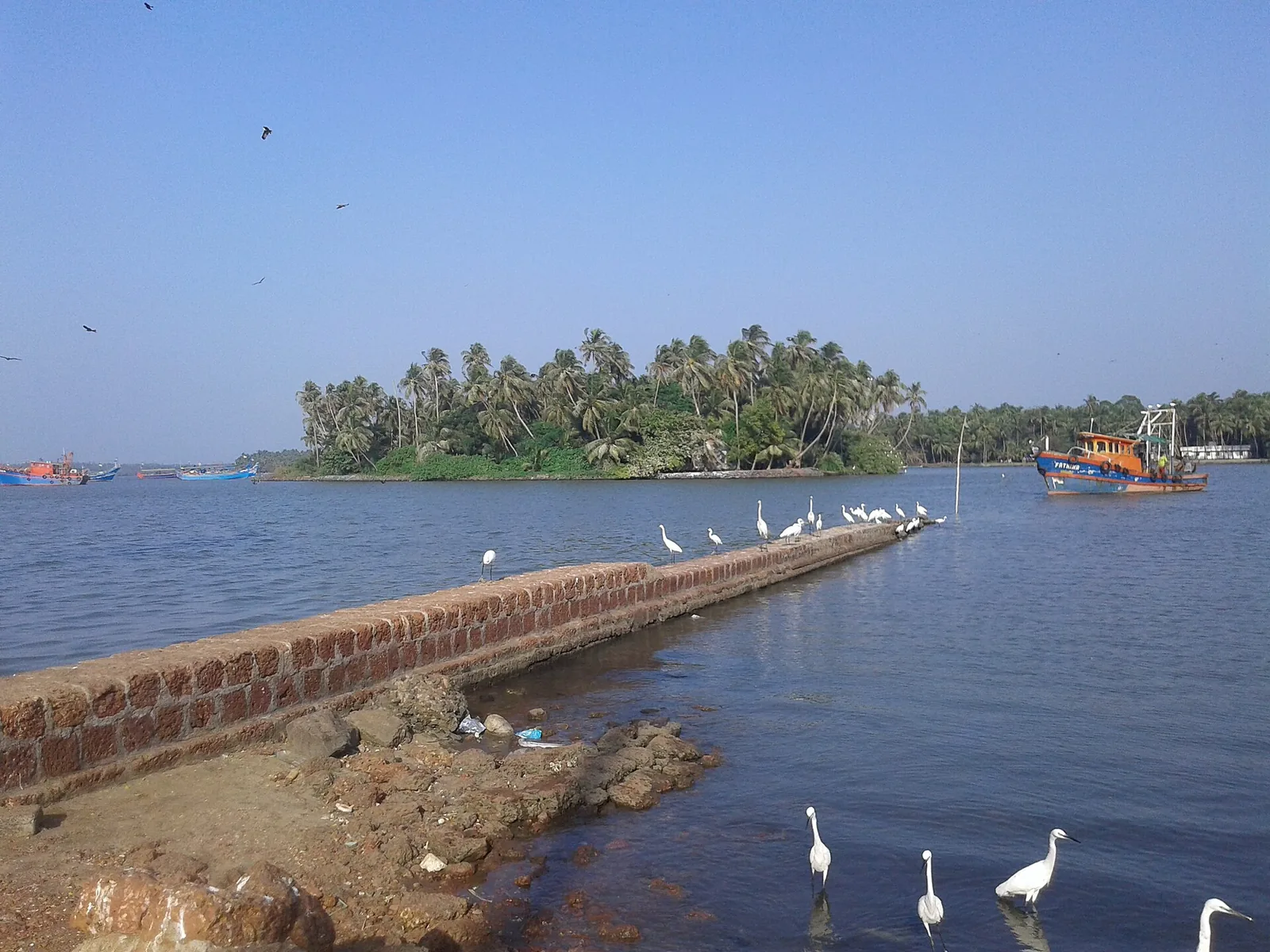
The south bank of the Chaliyar mouth, opposite Beypore — site of Kerala’s first railway terminus (1861) and of the Portuguese fort of 1532, both of which were demolished and carted to Kozhikode. One well and some laterite courses on the beach are what is left.
10.2 km · straight line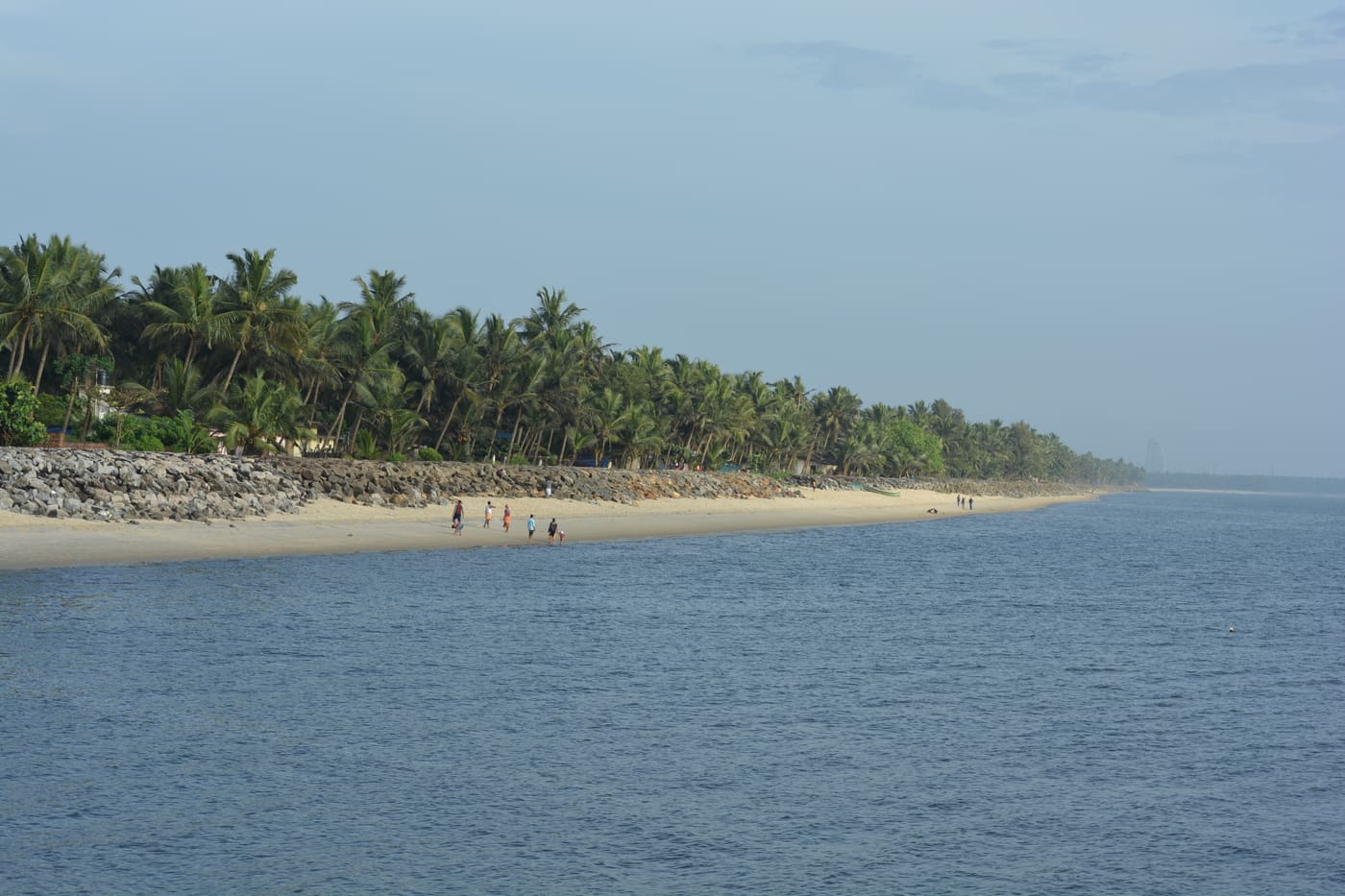
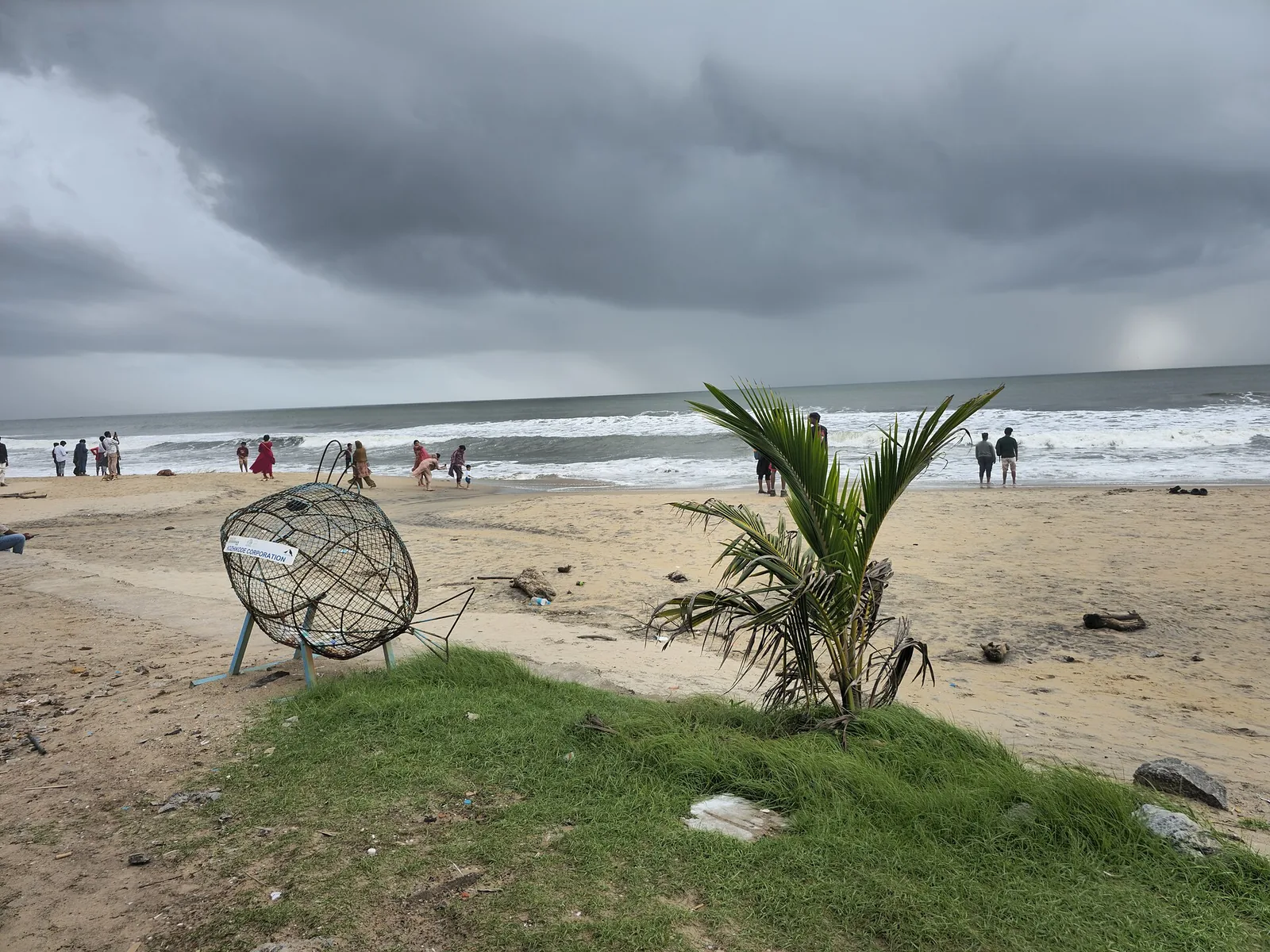
Historic beach associated with Vasco da Gama’s arrival on the Malabar coast.
17.0 km · straight line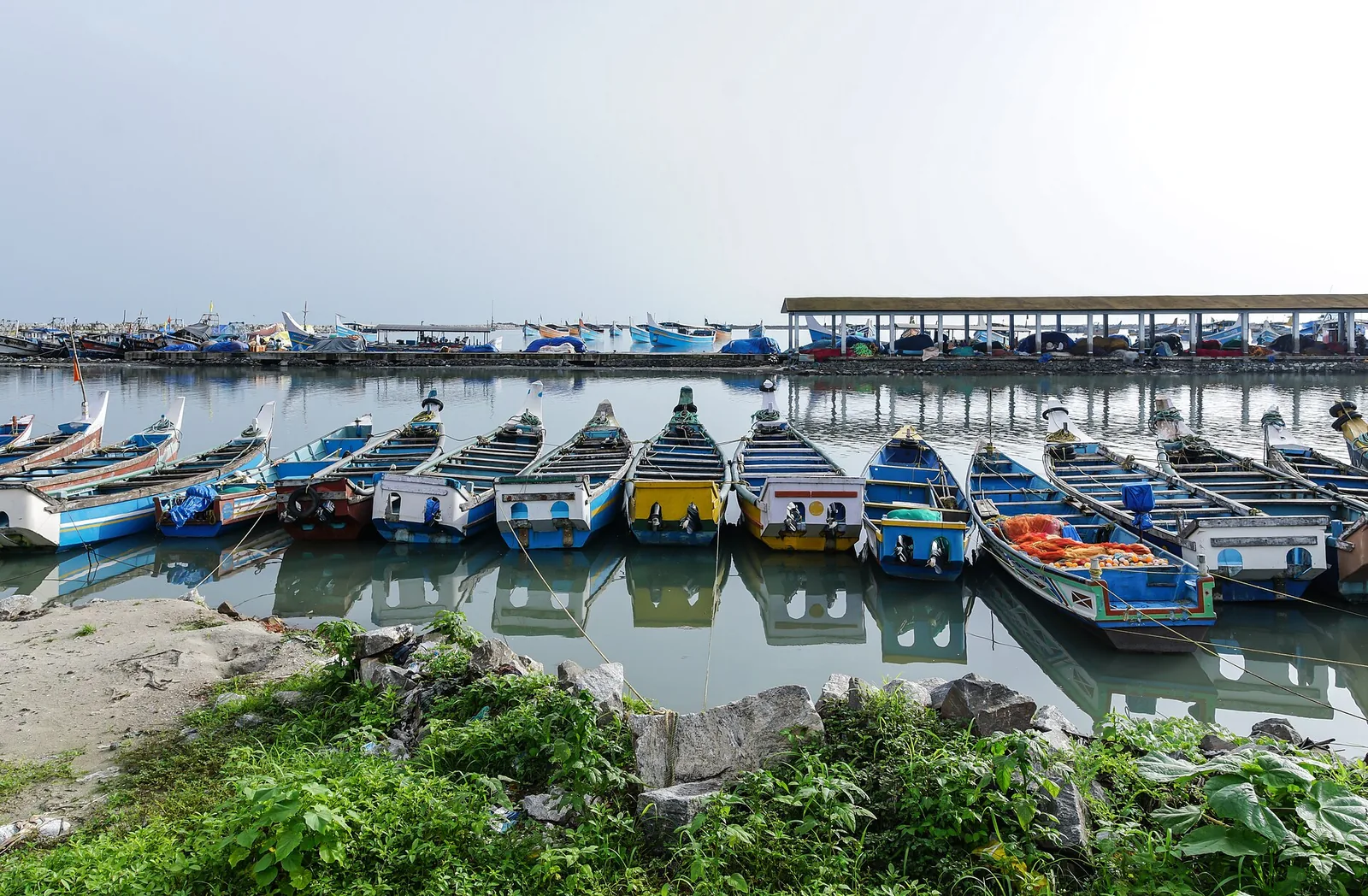
The medieval port of Panthalayani Kollam — Ibn Battuta’s Fandarayna, where Chinese junks wintered, and the anchorage where da Gama’s fleet lay 88 days in 1498. Nothing of the port survives above ground; the working fishing harbour is what you come for.
23.1 km · straight lineNearby toilets, pharmacies, ATMs, seating and vets are community-mapped and may be incomplete or out of date. Map data © OpenStreetMap contributors | Walking times © openrouteservice.org by HeiGIT
The centrepiece is the two-storeyed sanctum, whose profile is traditionally likened to a chariot and which carries roofing in copper and brass that catches the light at either end of the day. Around it, look for the granite sculpture and the carved woodwork of the mandapams, and for mural painting drawn from Puranic episodes — Kerala temple murals use a restricted earth palette and reward a slow, close look rather than a glance. The whole complex is a compact textbook of the Kerala temple idiom: steeply pitched tiled roofs, deep eaves, timber over stone, and a plan that turns inward around the shrine rather than presenting a facade to the street.
Because “thali” is not a personal name but an old Kerala term for a class of temple that served as a centre of administration as well as worship. Tali at Kozhikode is counted among four thali temples in the traditional list of 108 Shiva shrines, along with Keezhtali at Kodungallur and two in the Kottayam country, so the name describes the institution rather than identifying this one building.
The assembly is held over seven days in the Malayalam month of Thulam, which falls in October or November, and it is a genuine scholarly examination conducted largely in Sanskrit rather than a show put on for an audience. Visitors are generally able to observe, subject to the temple’s usual entry rules and dress code, and the final day — when the Bhatta titles and the panakizhi purses are conferred — is the most rewarding to attend. Confirm dates locally, as they move with the Malayalam calendar.
The presiding deity is Shiva, worshipped by tradition in the form of Uma Maheswara. Unusually, Vishnu is also venerated within the same complex, so the temple serves devotees of both traditions.
It is a centuries-old annual assembly and contest of Vedic, Vedantic and Sastraic scholarship, held under Zamorin patronage over about seven days beginning on the Revathi star in the month of Thulam (Oct–Nov). Winning scholars were honoured with the title Bhatta and rewarded with gold. It has been revived and is still observed (confirm dates locally).
Tradition attributes it to a reigning Zamorin of Calicut — often named as Swami Thirumulpad — around the fourteenth century, built within the royal palace complex. The dating and attribution are traditional rather than firmly documented.
Many active Kerala temples restrict the inner shrine to Hindus and enforce a traditional dress code, and Thali is a functioning place of worship. Norms can change, so it is best to check current access rules at the temple before visiting.
Traditional temple dress is expected. In many Kerala Shiva temples men remove their shirts (bare-chested) and wear a mundu, and women wear a saree or salwar; avoid shorts and revealing clothing. Confirm the exact requirements at the entrance.
It sits in the heart of Kozhikode city, roughly a kilometre east of Kozhikode railway station and near Mananchira. The nearest airport is Kozhikode (Karipur) International Airport. Autos, buses and taxis reach the area easily.
Morning or early evening is usually best; festival days can be powerful but crowded.
Entry: Darshan is generally free; specific poojas, offerings or vazhipadu are ticketed at the temple counter. Timings: Typically open for darshan in the early morning and again in the evening, with a midday closure — commonly around 5.00–11.00 am and 5.00–8.00 pm.
45 minutes to 2 hours, longer during festival or queue periods.
Nearby you can pair SM Street / Mittayi Theruvu (780 m, approximate straight-line separation), Mananchira Square (1.0 km, approximate straight-line separation), Mishkal Mosque (1.2 km, approximate straight-line separation), Muchundi Mosque (1.3 km, approximate straight-line separation).
Use official counters for offerings/tickets where applicable. Keep footwear and valuables secure in crowded areas.
Written about Thali Temple itself — its history, its legends and the arguments about them.
Route-level itineraries and practical guides for the rest of Kerala.
Photographs: Ms Sarah Welch (CC0). Wikimedia Commons.