What to expect
Highlights
- Temple visit at Lokanarkavu Temple
- Kerala temple architecture and rituals
- Local food, shops and pilgrim services nearby
Ancient Durga/Bhagavathy temple at Vadakara, celebrated in the Vadakkan Pattukal and linked to the Kalaripayattu hero Thacholi Othenan.
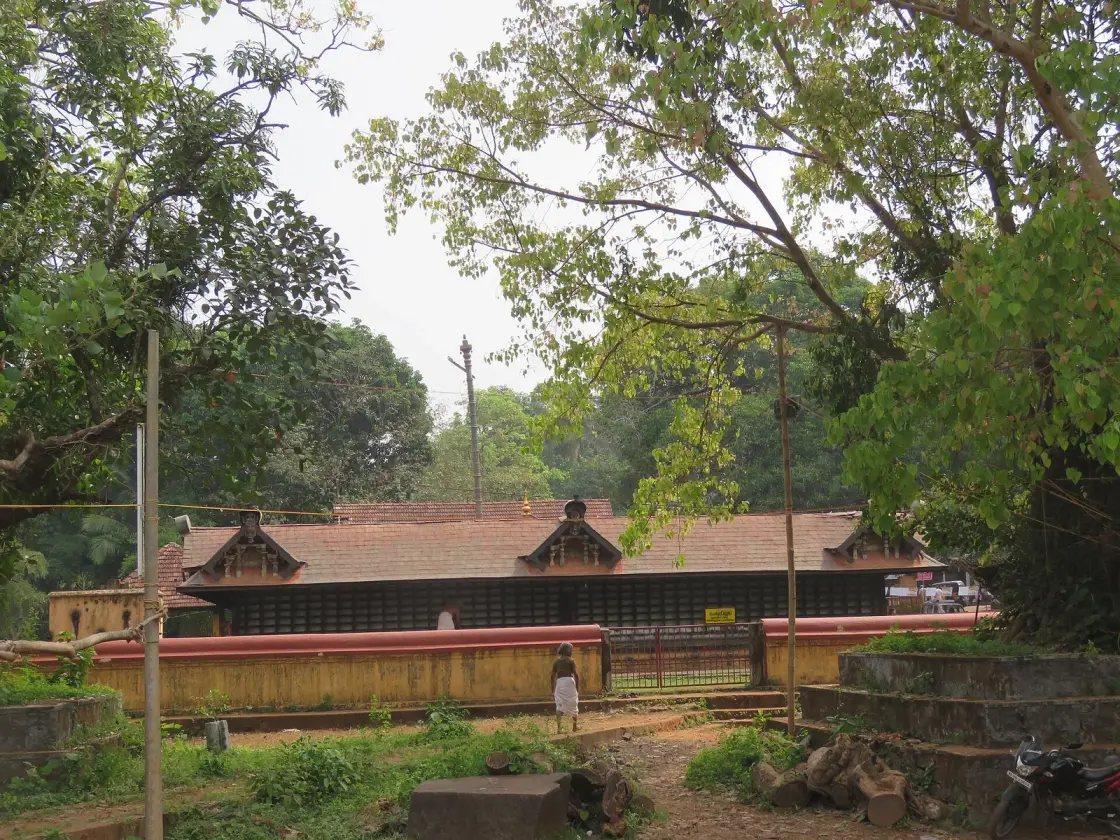
Check entry arrangements. Ask temple staff about visitor entry, dress requirements and access to the inner shrine before you travel, especially if you are visiting as a non-Hindu.
Dress respectfully and follow the institution’s admission and photography rules.
A grove-shrouded Bhagavathy shrine at Memunda near Vadakara where the war-goddess of North Malabar and the sword-heroes of the Vadakkan Pattukal ballads still seem to breathe the same air.
Lokanarkavu Temple, more fully the Lokanarkavu Bhagavathy Temple, sits in the village of Memunda a few kilometres inland from the coastal town of Vadakara, in Kozhikode district of Kerala’s North Malabar. The presiding deity is the Goddess Durga in her fierce and protective Bhagavathy form, worshipped here with deep affection as Lokanarkavilamma — the mother of Lokanarkavu. For the people of the old Kadathanad country this is not merely one shrine among many; it is a tutelary mother whose name is braided into the region’s martial memory.
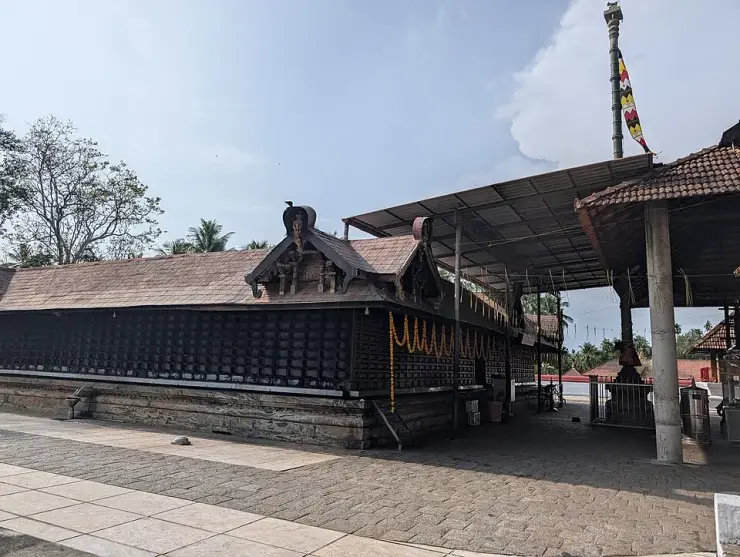
The temple is not a single sanctum but a small complex. Alongside the central Durga shrine stand separate shrines to Lord Vishnu and Lord Shiva, so that a single visit moves the devotee through the goddess, the preserver and the destroyer in turn. Local tradition assigns each shrine a different antiquity — the Vishnu shrine spoken of as the oldest, the Bhagavathy sanctum reckoned at roughly fifteen centuries, and the Shiva shrine as comparatively later (traditional figures — treat as devotional lore rather than dated fact).
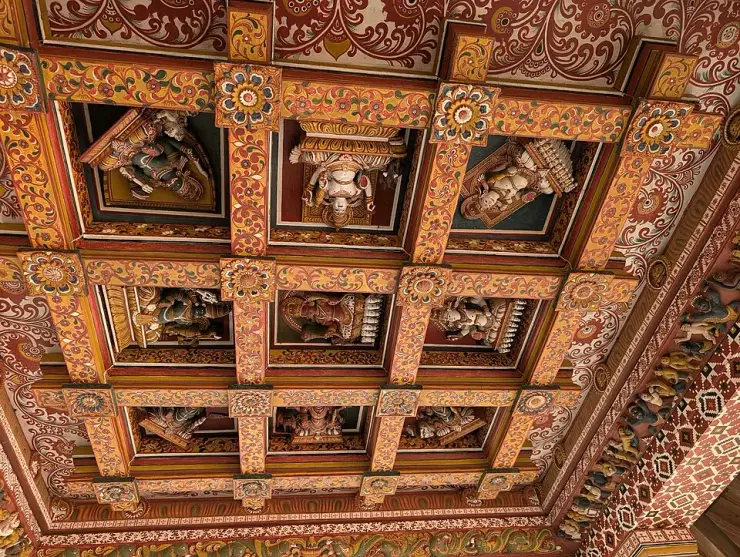
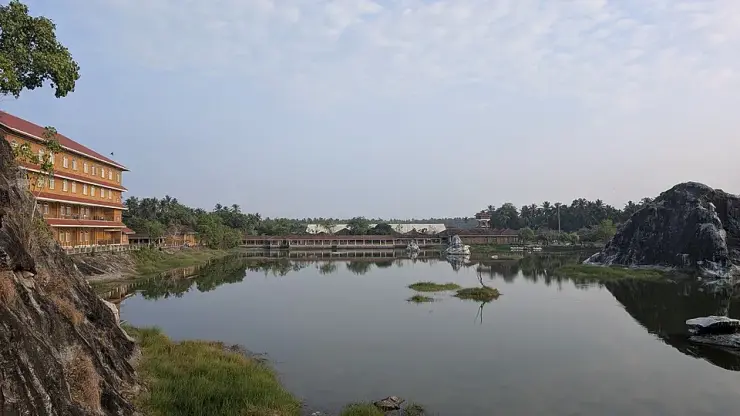
What sets Lokanarkavu apart from the usual Kerala kavu is its rock and its paint. The site includes rock-cut caves cut into the hillside, and older accounts describe faded murals and carvings within — the kind of early temple art that hints at how long worship has continued here. Weather, time and restoration have taken their toll, so what a visitor sees today is a mingling of the very old and the more recently renewed (condition varies — confirm on site).
The temple’s enduring fame flows from the Vadakkan Pattukal, the Northern Ballads sung across Malabar. These heroic songs remember warriors such as Thacholi Othenan of Kadathanad and the Puthooram family — Aromal Chekavar, his sister Unniyarcha, and their kin, Thiyya (Ezhava) masters of the sword. In the ballad tradition Lokanarkavilamma is the family goddess these heroes turned to, seeking her blessing before feud, duel and battle. Whether one takes the songs as history, legend or a bit of both, the temple is inseparable from them.
That warrior aura is tightly bound to kalaripayattu, Kerala’s ancient martial art. Vadakara and its surrounding villages are heartland country for the kalari tradition, and Lokanarkavu is remembered as the goddess before whom fighters sought protection. Even now the temple is closely associated with martial-arts heritage, and practitioners are said to seek the deity’s blessing at the start of their journey — a living thread connecting the ballads to the present day (as recounted locally).
During festival season the temple courtyard fills with lamps and performance. The forty-one-day Mandala season lights the outer walls with rows of oil lamps, and folk performances such as Thacholikali — a dance that mimics the stances and clash of kalaripayattu — re-enact the exploits the ballads sing about. To stand in the grove at Lokanarkavu is to feel a place where devotion, martial pride and story have never quite come apart.
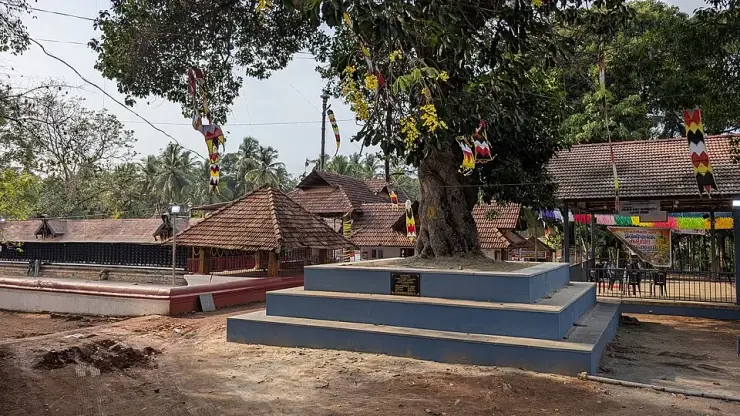
For a visitor, the practical shape of a trip is simple. The temple sits at Memunda, a few kilometres inland from Vadakara, in a grove rather than on a street, and the change of atmosphere as you come off the road into the trees is a large part of the experience. Allow an hour. Look for the separate shrines within the one precinct, the rock-cut caves and what survives of the old mural work and carving, and give yourself time simply to stand in the grove, which is the point of a kavu and cannot be hurried. Ordinary Kerala temple etiquette applies: modest dress, footwear off, and the inner shrine restricted to Hindus at many active temples, so ask rather than assume.
By devotional tradition Lokanarkavilamma is Durga-Bhagavathy, the mother-goddess who both nurtures and destroys — the divine force that a warrior culture naturally set at the centre of its worship. The very name is explained as a compression of Lokamalayarkavu, read as a world (lokam) shaped of mountain (mala), river (aaru) and sacred grove (kavu), so that the goddess is imagined as the presiding spirit of an entire living landscape (folk etymology).
The temple’s best-loved legends belong to the Vadakkan Pattukal, the ballads of North Malabar, and should be enjoyed as folklore rather than documented history. In these songs Lokanarkavilamma is the household deity of the heroes — Thacholi Othenan, and the Puthooram warriors Aromal Chekavar and Unniyarcha among them. Before a duel or a feud the heroes are pictured coming to the goddess for her blessing, offering worship at the grove so that her power might guard the edge of their sword.
One strand of the tradition ties the goddess herself to the region’s martial arenas — the ankathattu, raised platforms on which formal duels of the ballad age were fought, remembered in association with temple courtyards such as this. Whether the heroes were flesh-and-blood fighters, poetic inventions, or magnified memories of real clans, the ballads have fused them forever with Lokanarkavilamma; to hear their names is to hear hers.
There is a further twist that catches out almost everyone, and it is worth knowing before you stand in the courtyard hearing these names. What most Malayalis today believe about the ballad heroes — and in particular about Chandu, the figure at the centre of the most famous of the stories — does not come from the ballads at all. It comes from a film released on 14 April 1989.
In the Vadakkan Pattukal as they were transmitted, Chandu is a cheat and a traitor, the man whose treachery brings down the hero Aromal Chekavar. That is his role, and it had been his role for centuries. Then M. T. Vasudevan Nair wrote the screenplay for Oru Vadakkan Veeragatha, directed by Hariharan, which retold the whole episode from Chandu’s point of view and presented him not as a villain but as a wronged and misunderstood man. The film won four National Film Awards, including Best Screenplay for Nair and Best Actor for Mammootty, along with eight Kerala State Film Awards.
The rehabilitation was total. A twentieth-century screenwriter reversed the moral verdict of a medieval oral tradition, and the reversal took. Ask around Kerala today and the sympathetic Chandu is the one people describe — the version that is roughly thirty-five years old, not the one that was sung here for centuries. It is one of the cleanest examples anywhere of popular cinema overwriting folk memory, and it happened well within living recollection.
None of which is an argument against the ballads or the temple. It is an argument for holding the whole tradition a little more loosely than the signage encourages. The Vadakkan Pattukal are oral folk poetry of the medieval period, transmitted by singing communities and written down comparatively late; whether Othenan, Unniyarcha, Aromal and the rest were real fighters, poetic inventions, or compressed memories of actual warrior clans is genuinely unsettled, and confident biographical claims about them should be treated with caution.
What is not in doubt is the social world the ballads describe, and this is where the temple’s martial reputation stops being decorative. Feudal North Malabar really did settle territorial disputes through ankam — formal, regulated duels, fought by contracted champions on raised platforms, frequently staged near temples such as this one. The kalari tradition that trained those fighters is still practised in this district. The goddess of a shrine standing beside the duelling ground was not a bystander to that system; she was part of its machinery, and that is why the heroes keep arriving at her door in the songs.
Lokanarkavu is counted among the ancient shrines of North Malabar, with local reckoning placing the Bhagavathy sanctum at roughly fifteen hundred years old; some accounts push parts of the complex older still (traditional dating — not independently fixed, treat as approximate). Whatever the exact age, its long continuity of worship is well attested by the layered shrines and the survival of early temple art on the site.
The complex is genuinely multi-shrine, gathering Durga, Vishnu and Shiva within one sacred precinct. This arrangement — a dominant goddess flanked by shrines to the great male deities — is characteristic of Kerala’s older Bhagavathy kavus, where a fierce mother-goddess is the centre of gravity and the puranic gods stand alongside her.
The rock-cut caves are among the temple’s most historically striking features. Cut into the hill and associated with old murals and carvings, they point to an early phase of rock-shelter worship of the kind found at a handful of North Kerala sites. The paintings have suffered from age and exposure, and successive care and restoration mean their present state differs from early descriptions (confirm condition locally).
Historically the temple’s significance is inseparable from the martial society of the old Kadathanad chieftaincy and its kalaripayattu tradition. As the goddess of a warrior region it drew fighters and clans into its orbit, and it is this social world — of gymnasium-kalaris, feuds and duels — that the Vadakkan Pattukal preserve in song. The temple is thus a rare case where a place of worship doubles as an anchor for an entire oral-heroic literature.
That ballad association keeps the temple culturally alive today. Festival performances such as Thacholikali and the martial-flavoured folk dances re-enact the heroes’ exploits, and kalaripayattu practitioners continue to link their art to the goddess. Managed now with modern amenities for pilgrims, Lokanarkavu remains both an active Bhagavathy temple and a living monument to Malabar’s warrior heritage.
The ankam system that the ballads describe was a formal institution rather than a matter of private brawling. Territorial and honour disputes between chieftaincies could be referred to a regulated duel, fought by contracted champions drawn from the martial communities of the region — the Chekavar warrior families among them — under agreed rules and before witnesses, on a raised platform built for the purpose. Payment, terms and the consequences of the outcome were settled in advance. Understood this way the ballads are not simply adventure stories; they are the surviving literature of a specific legal and military arrangement in feudal North Malabar, and the temples beside which these duels were staged were part of its setting.
Worship at one of North Malabar’s most storied Bhagavathy shrines, home of the goddess Lokanarkavilamma.
See a genuine three-in-one complex with Durga, Vishnu and Shiva shrines in a single grove.
Explore the rock-cut caves and the traces of old murals and carvings — early temple art in a natural setting.
Stand where the Vadakkan Pattukal heroes — Thacholi Othenan and the Puthooram warriors — are said to have sought the goddess’s blessing.
Feel the living link to kalaripayattu, whose practitioners still connect their art to this temple.
Time a visit to the Mandala lamp season or Pooram to catch Thacholikali and the martial folk performances.
Road km to Kozhikode; ghat roads and traffic vary — allow extra.
Morning or early evening is usually best; festival days can be powerful but crowded.
Live forecast loads in your browser.
Sunset is in about 3 hours.
Sun and moon are calculated for this location and shown in IST. Photography windows are the hour around sunrise and sunset; the sunset bearing is degrees clockwise from true north. Moon phase is accurate to about half a day.
Browse listed stays, food, activities, sights, shops and rentals around Lokanarkavu Temple. Check each listing’s locality and contact the business directly for current arrangements.
Four-star hotel in central Vadakara with 18 rooms and the SAMRAT multi-cuisine restaurant. It sits by the Kannur-Calicut bypass, steps from the town bus terminal.
Four-star business hotel at the heart of Vadakara near the NH bypass. It sits close to the Arabian Sea shoreline with an infinity pool, gym and banquet halls.
Kerala Tourism accredited hotel at Link Road Junction, beside the national highway through Vadakara.
Kerala Tourism accredited tourist home beside Vadakara's old bus stand, walkable to the town centre.
Kerala Tourism accredited hotel at Vadakara's new bus stand, the easiest base if you arrive by bus.
Book with the place itself. India’s cyber-crime coordination centre warned in April 2025 that convincing copies of hotel and pilgrimage booking sites are being pushed through sponsored search and social ads, taking payment for rooms the property never hears about. Use the contact and source details on each profile to confirm the exact business and booking channel. A directory entry or map pin alone does not establish an operator’s identity or current availability. Roampedia takes no commission and does not collect booking payments. If a booking page reached you through an ad, check the address bar against the property’s own site before you pay. Fraud can be reported on cybercrime.gov.in or on 1930.
Find food, accommodation and activities across Vadakara. Browse the guides for places to eat, stay and explore along your route.
4 more places around Vadakara. Open a guide to plan the visit and onward journey.
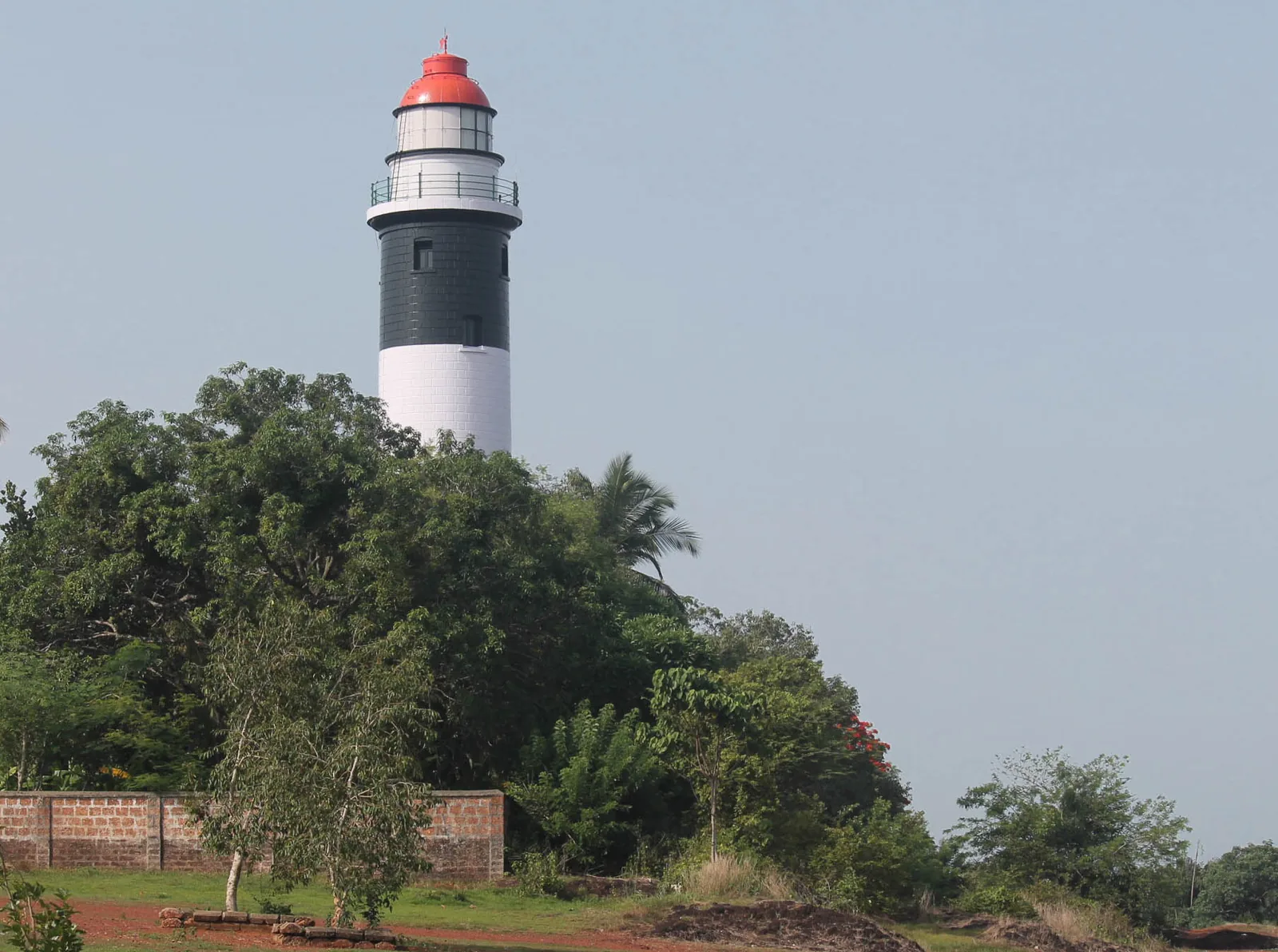
14.5 km · straight line
A 1909 lighthouse on the laterite headland at Kadalur Point, built to mark the submerged Sacrifice Rock eight kilometres offshore.
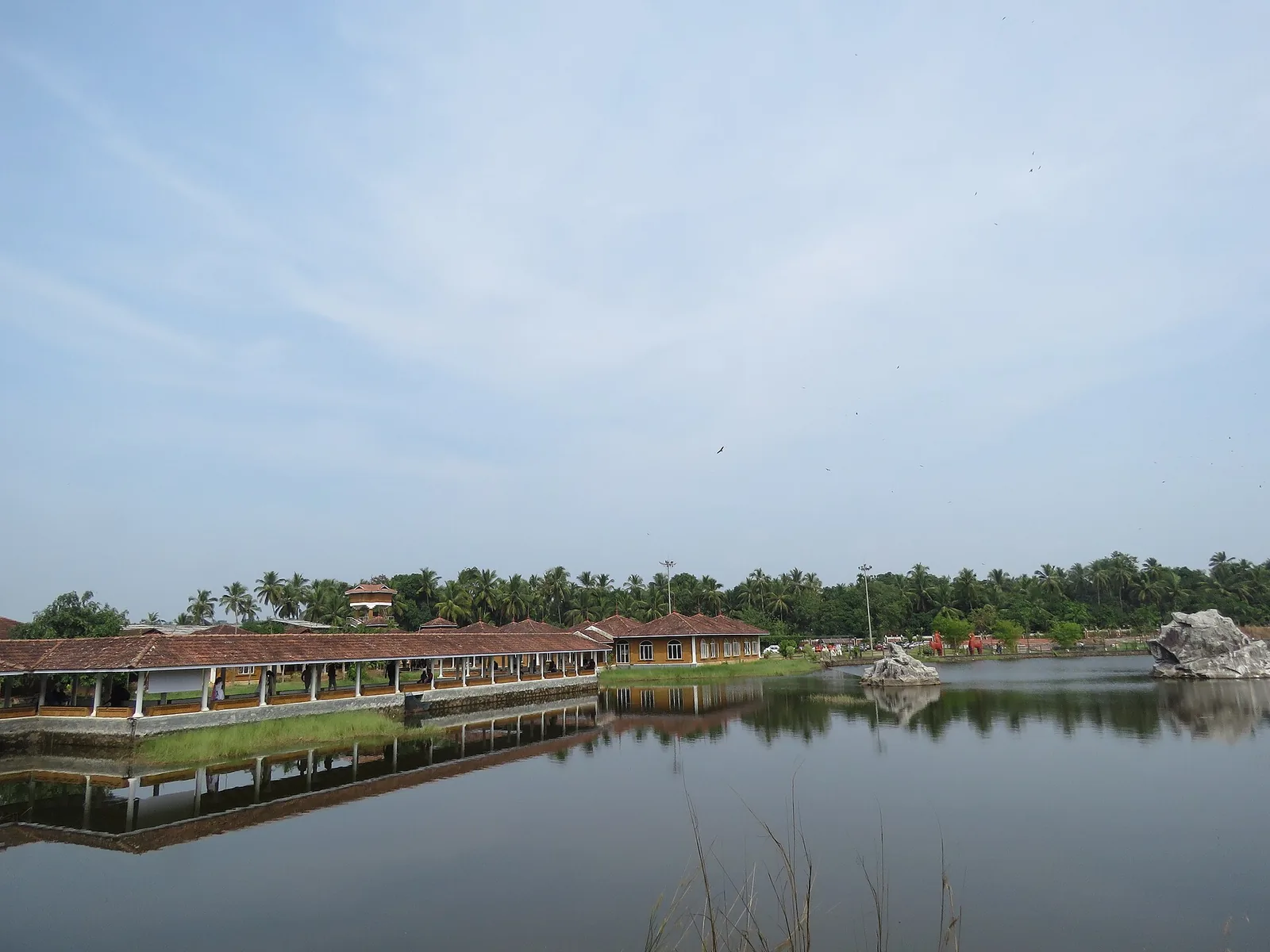
4.5 km · straight line
Kerala Arts & Crafts Village at Iringal near Vadakara — a riverside campus of working artisans and crafts pavilions.
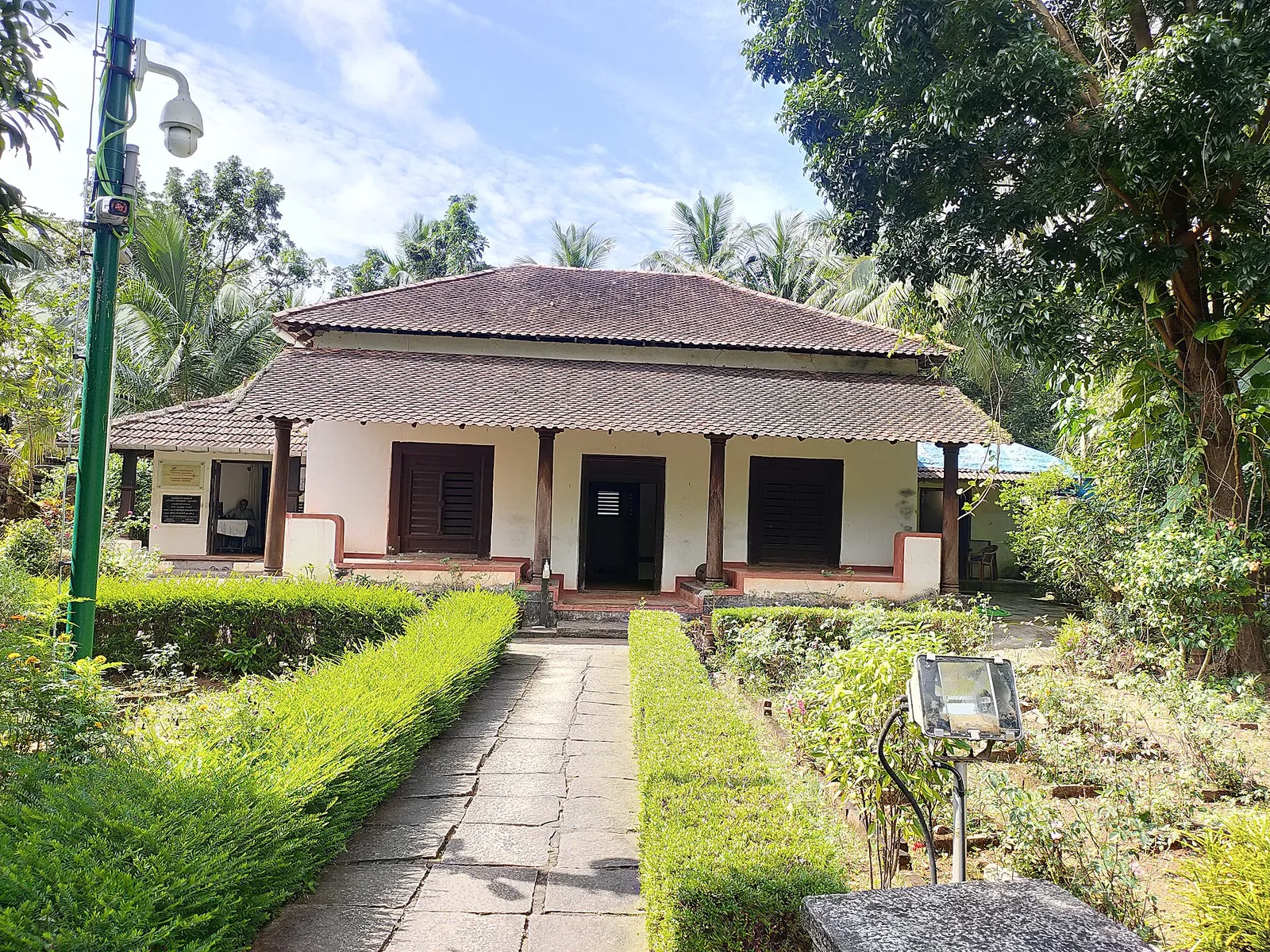
4.7 km · straight line
The Kerala Archaeology Department’s museum in the surviving part of the Marakkar family house at Kottakkal, Iringal — three rooms and a vestibule holding swords, stone shot and megalithic finds, with an Indian Navy obelisk in the garden. Not the fort: that was razed in 1600.
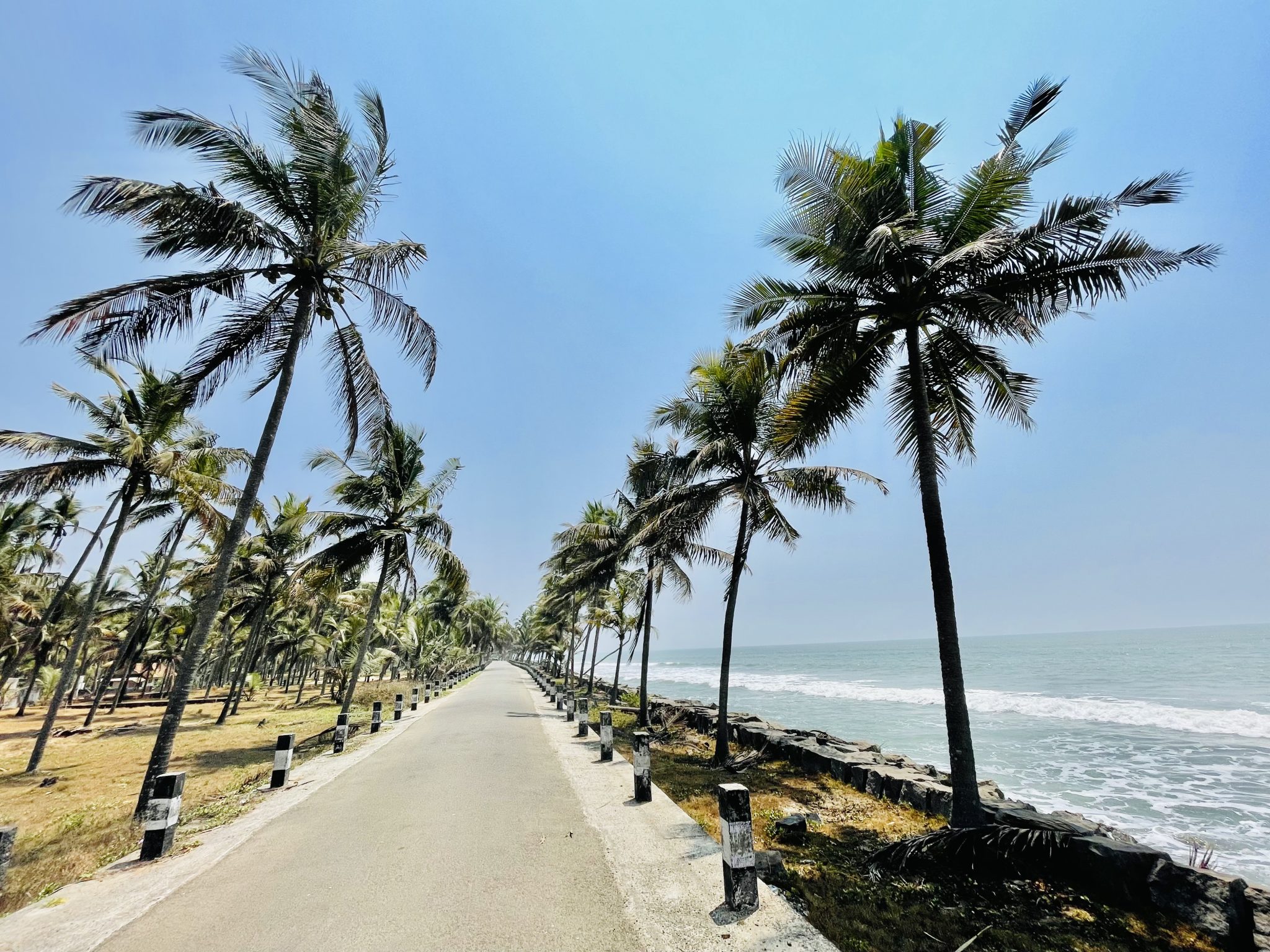
6.2 km · straight line
An 8 km olive ridley nesting shore at Iringal, protected since 1992 by a village committee of twelve — and now largely armoured with seawalls, with seven nesting females recorded across the four seasons to 2023.
Roampedia is commission-free — own or know a stay, eatery, guide or shop near Lokanarkavu Temple? Submit public business details for review.
Add a nearby businessEntry: Darshan is generally free; specific poojas, vazhipadu offerings and sevas are paid at posted rates at the temple counter.
Dress code: Traditional temple attire is expected — men often in mundu with the upper body customarily bare or modestly covered, women in saree or salwar; dress modestly and follow the norms displayed at the entrance.
Festivals: The forty-one-day Mandala Utsavam / Mandalavilakku lamp festival in Vrischikam (about mid-November to mid-December), Pooram in Meenam (March–April) concluding with Kaliyattam, and Navaratri; folk performances such as Thacholikali feature during the celebrations (dates shift yearly — confirm locally).
Photography: Photography is generally restricted inside the sanctum and may be limited elsewhere in the temple; ask temple staff and respect any signage before taking pictures.
If you are travelling by bus or ferry, check the return service with the operator before setting out. Leave time to reach the stop or jetty after your visit.
Ask at the bus stand for the time of the last service back, not the next one. If you miss it, an auto or app cab is the fallback — agree the fare before you get in.
If you need step-free access, contact the site before travelling. Ask about a level entrance, steps along the route, the nearest drop-off point, seating and accessible toilets.
Published emergency and visitor-assistance contacts. For an immediate emergency, call 112. Shared Kerala contact sources checked 4 October 2026; publication does not establish a tested live response.
Kerala Arts & Crafts Village at Iringal near Vadakara — a riverside campus of working artisans and crafts pavilions.
4.5 km · straight lineThe Kerala Archaeology Department’s museum in the surviving part of the Marakkar family house at Kottakkal, Iringal — three rooms and a vestibule holding swords, stone shot and megalithic finds, with an Indian Navy obelisk in the garden. Not the fort: that was razed in 1600.
4.7 km · straight lineAn 8 km olive ridley nesting shore at Iringal, protected since 1992 by a village committee of twelve — and now largely armoured with seawalls, with seven nesting females recorded across the four seasons to 2023.
6.2 km · straight lineA 1909 lighthouse on the laterite headland at Kadalur Point, built to mark the submerged Sacrifice Rock eight kilometres offshore.
14.5 km · straight line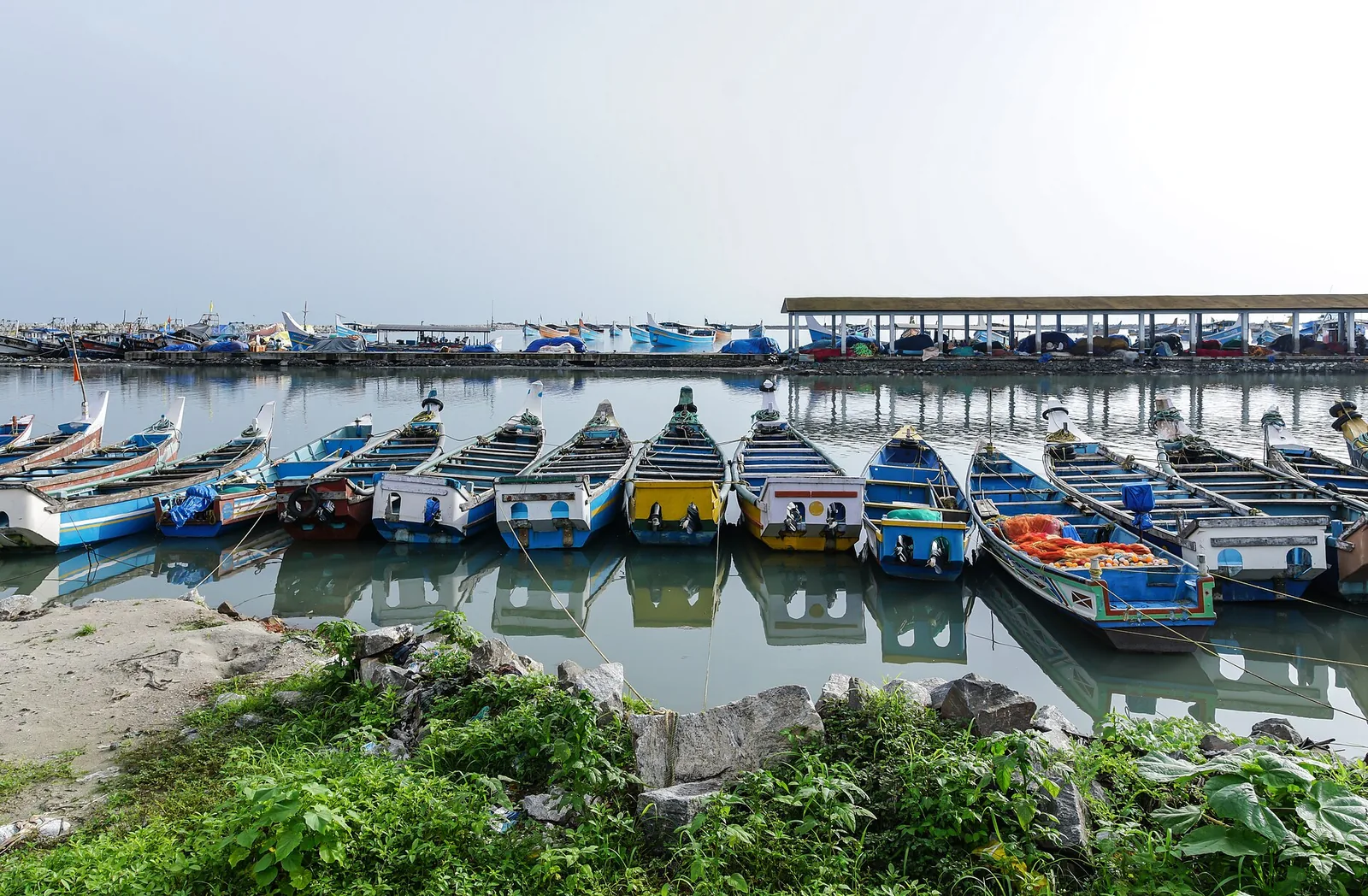
The medieval port of Panthalayani Kollam — Ibn Battuta’s Fandarayna, where Chinese junks wintered, and the anchorage where da Gama’s fleet lay 88 days in 1498. Nothing of the port survives above ground; the working fishing harbour is what you come for.
19.8 km · straight line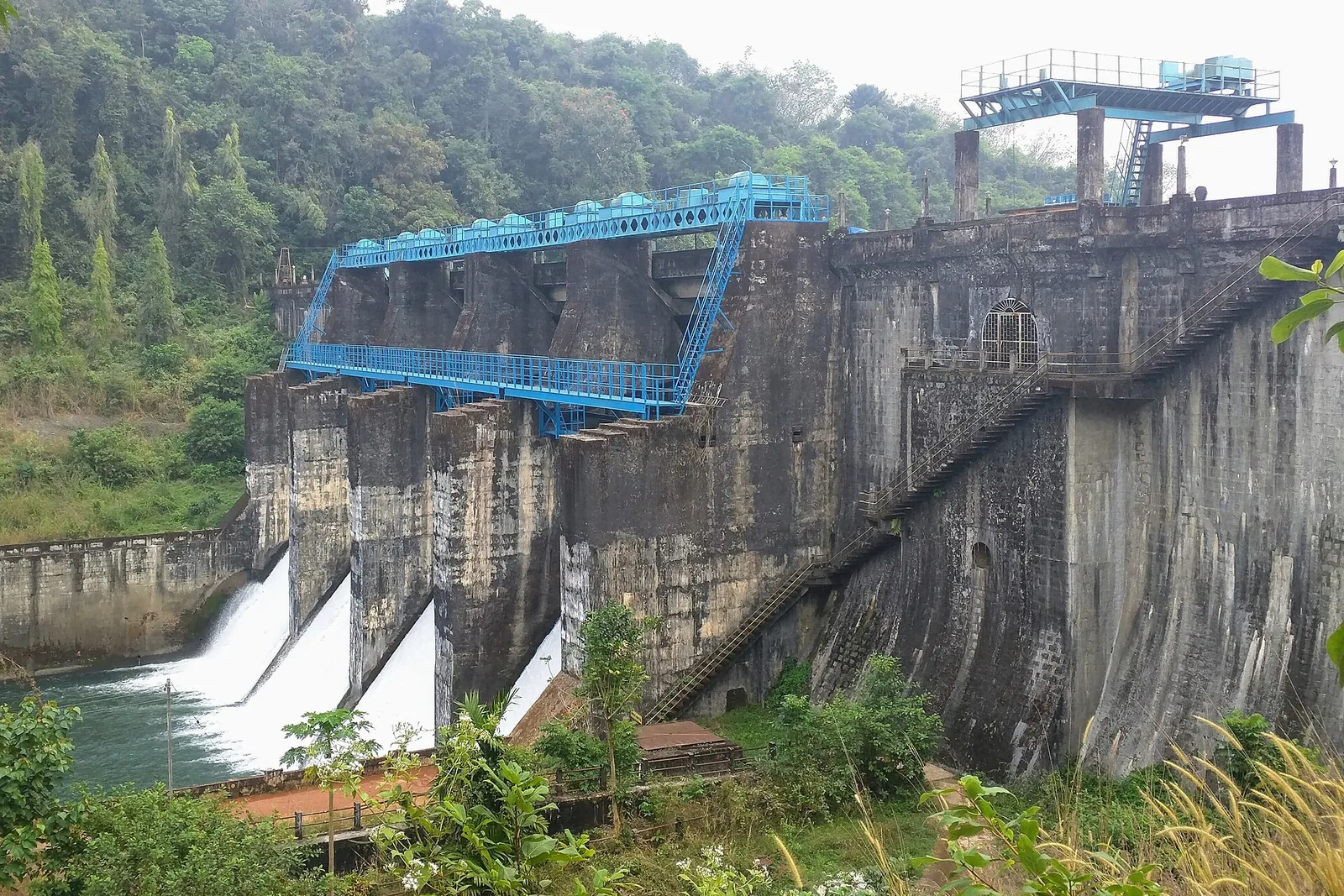
Irrigation reservoir and boating spot in the Kozhikode high ranges, with a 1977 government crocodile breeding centre on the shore.
22.2 km · straight line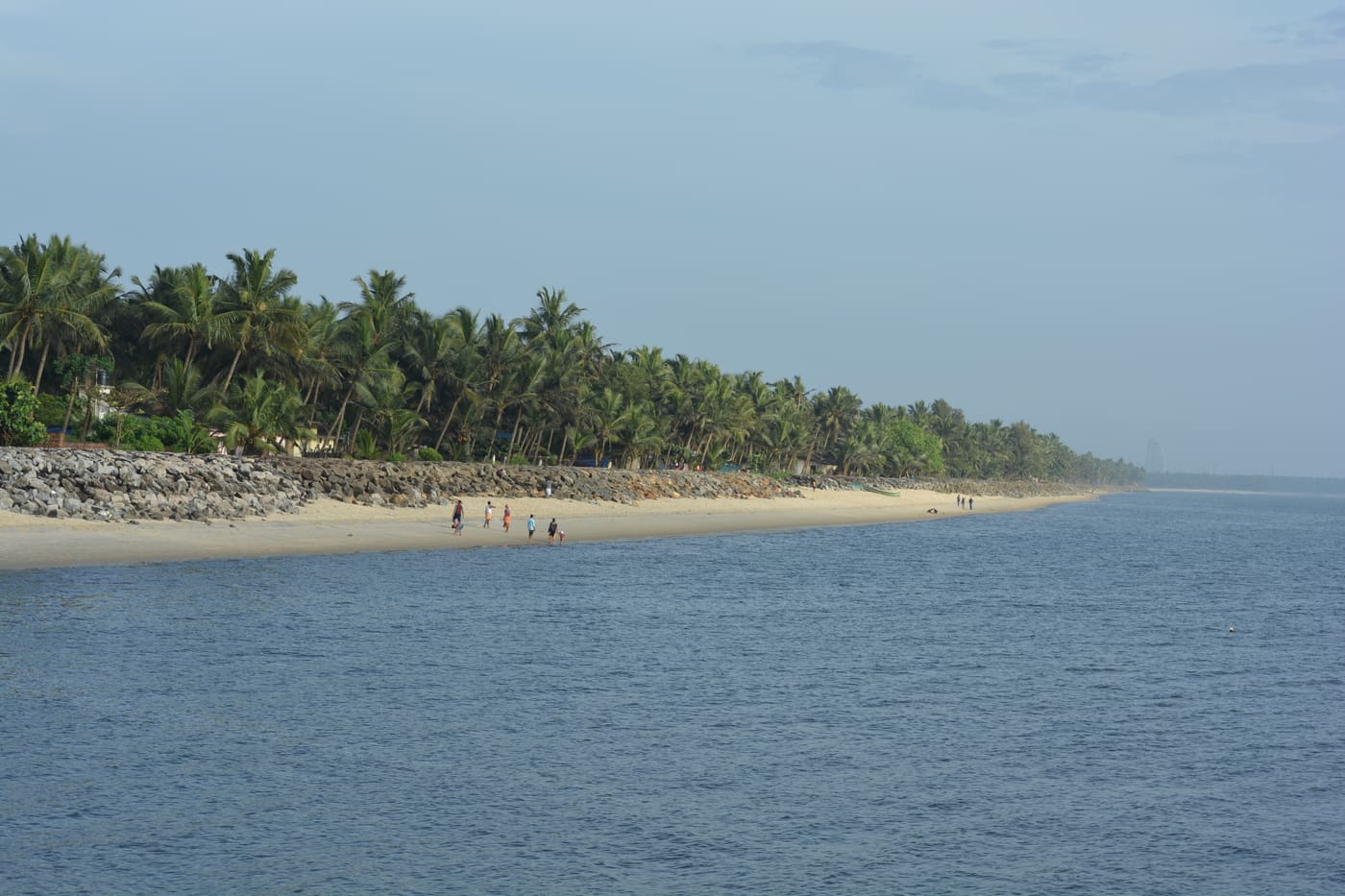
Historic beach associated with Vasco da Gama’s arrival on the Malabar coast.
26.0 km · straight line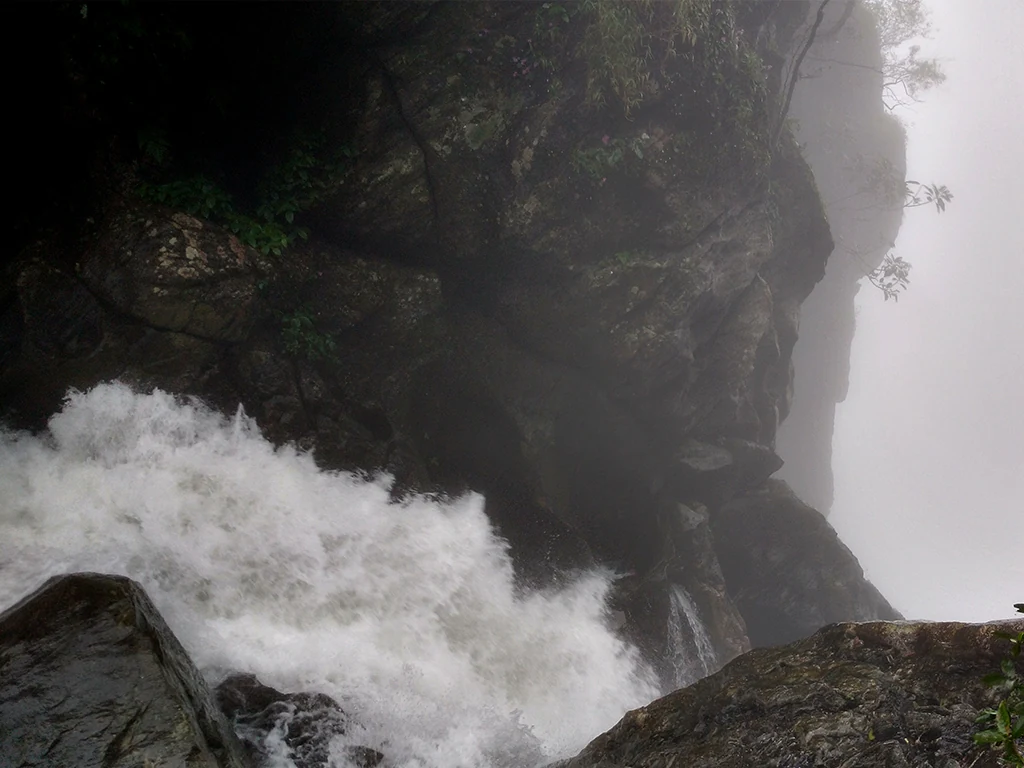
The managed forest outing towards Urakkuzhi Falls above Kakkayam, distinct from reservoir boating. Confirm the admitted route with the forest counter: recent reports describe restrictions at the waterfall viewpoint and Shankaranpuzha.
30.5 km · straight line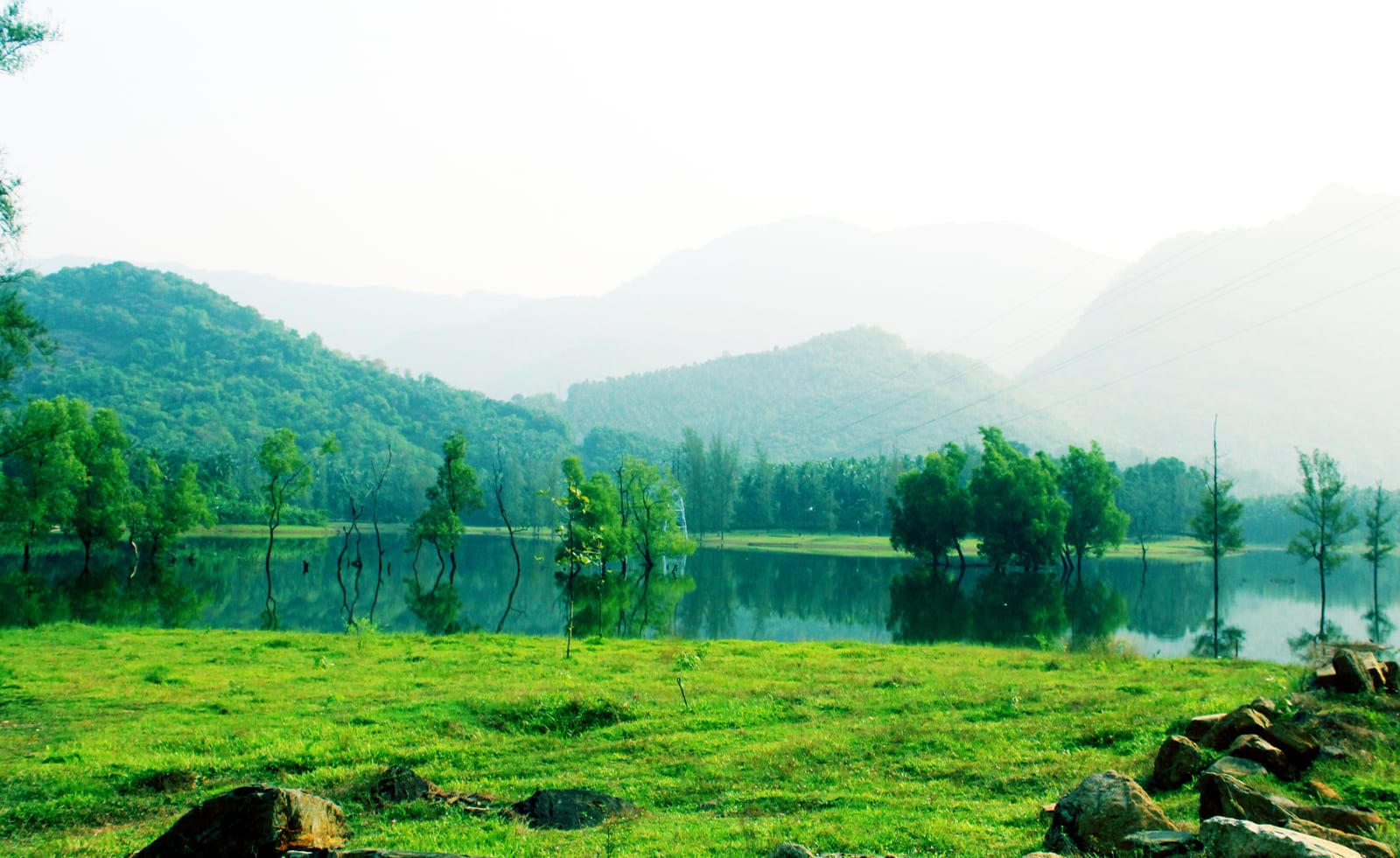
A ticketed riverside bathing and picnic centre on Irrigation Department land where the Kuttiyadi runs over a bedrock sheet into the head of the Peruvannamuzhi backwater — at 57 m, with no drop and no forest permit, but a serious drowning history.
30.7 km · straight line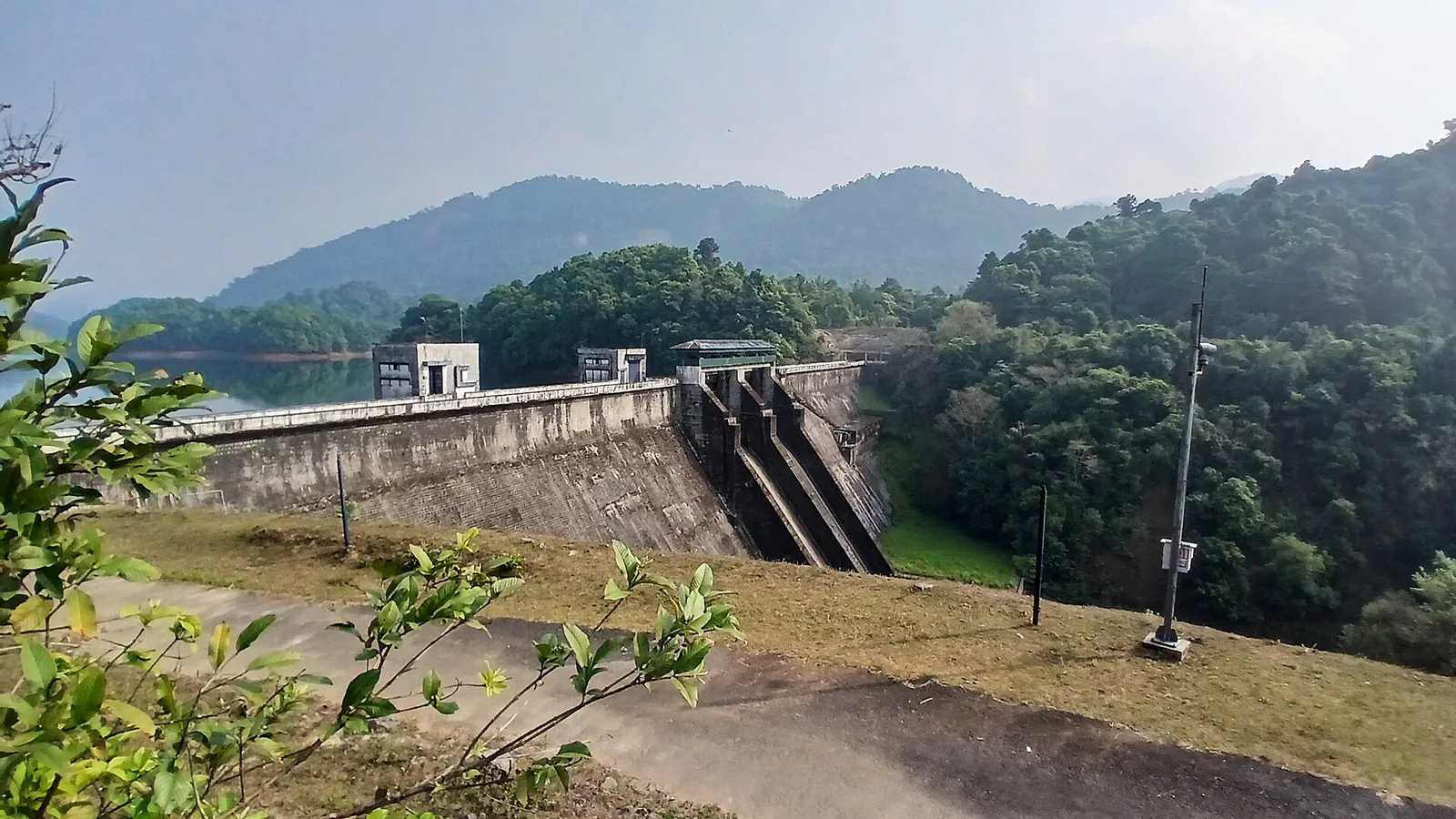
Reservoir and forested day-trip area in the Western Ghats foothills.
33.6 km · straight line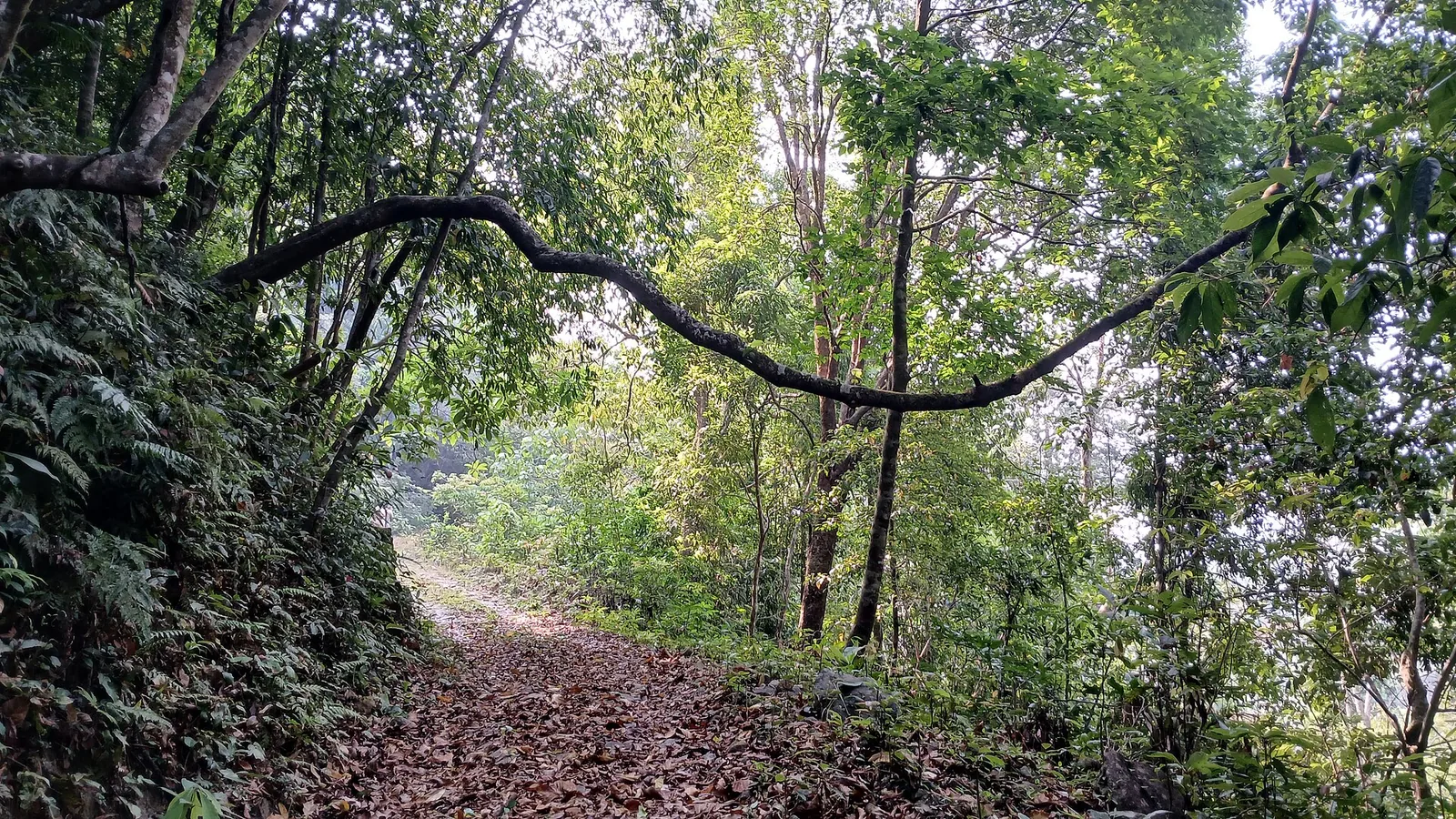
Kozhikode’s last evergreen forest block, notified in 2009 under section 18(1) as a declaration of intention and never finally declared — there is no gate, no permit and no wildlife programme, and you cannot go in.
37.9 km · straight line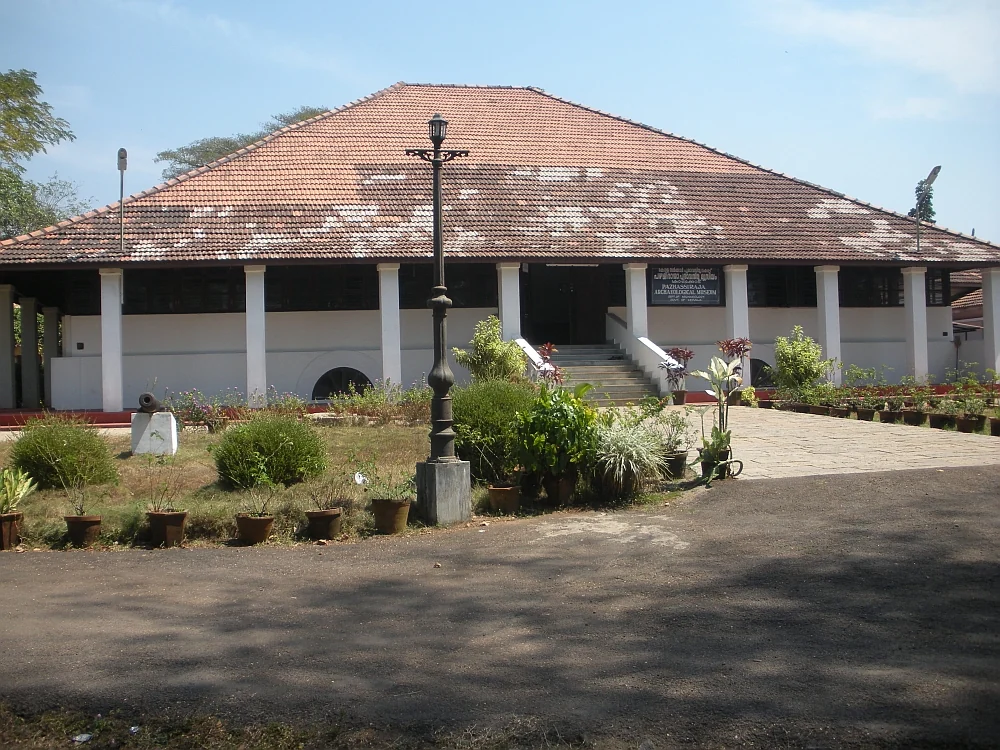
State archaeology museum at East Hill in an 1812 bungalow, with murals, bronzes, coins and megalithic monuments.
38.1 km · straight lineThe temple is at Memunda, a few kilometres inland from Vadakara town in northern Kozhikode district, and is easiest reached by road from Vadakara, which is on the main coastal rail and highway route. Allow about an hour at the site itself. It stands in a grove rather than on a street, so the approach through the trees is part of the visit, and the separate shrines, the rock-cut caves and the surviving mural and carving work all repay unhurried looking.
It is genuinely uncertain, and confident biographical claims should be treated with caution. The Vadakkan Pattukal are oral folk ballads of the medieval period, transmitted by singing communities over centuries and written down comparatively late. Whether their heroes were actual fighters, poetic inventions, or compressed memories of real warrior clans is unsettled. What is well attested is the social world the ballads describe — the ankam duelling system and the kalari martial tradition of North Malabar, which is still practised in this district.
No, and this surprises many visitors. In the ballads Chandu is a traitor whose treachery destroys the hero Aromal Chekavar. The sympathetic Chandu that most people know today comes from the 1989 film Oru Vadakkan Veeragatha, with a screenplay by M. T. Vasudevan Nair and directed by Hariharan, which retold the episode from Chandu’s perspective and presented him as a wronged man. It won four National Film Awards, and its version has substantially displaced the older one in popular memory.
The presiding deity is Goddess Durga in her Bhagavathy form, worshipped affectionately as Lokanarkavilamma. Separate shrines to Vishnu and Shiva stand within the same complex.
In the Northern Ballads of Malabar, Lokanarkavilamma is remembered as the family goddess of heroes such as Thacholi Othenan and the Puthooram warriors Aromal Chekavar and Unniyarcha, who are said to have sought her blessing before battle. These stories are folklore and heroic ballad, best enjoyed as legend rather than documented history.
The temple lies in the heartland of Kerala’s martial art, kalaripayattu, and is closely tied to its heritage; practitioners are traditionally said to seek the goddess’s blessing. Festival dances such as Thacholikali mimic kalaripayattu movements (as recounted locally).
It is understood as a short form of Lokamalayarkavu, read in folk etymology as a world (lokam) made of mountain (mala), river (aaru) and sacred grove (kavu) — the goddess seen as presiding over a whole landscape.
Yes — the site includes rock-cut caves associated with old murals and carvings, one of its most distinctive historic features. Their present condition varies with age and restoration, so confirm access on site.
The forty-one-day Mandala lamp season falls in the Malayalam month of Vrischikam (about mid-November to mid-December), while Pooram is celebrated around Meenam (March–April). Exact dates shift each year — confirm locally.
Morning or early evening is usually best; festival days can be powerful but crowded.
Entry: Darshan is generally free; specific poojas, vazhipadu offerings and sevas are paid at posted rates at the temple counter. Timings: Darshan is typically offered in a morning session from around early morning to late morning and again in the evening, with the sanctum closed midday, as at most Kerala temples.
Base yourself in Vadakara or a nearby town in Kozhikode, then confirm the last-mile route locally before leaving. Check temple entry customs, dress rules and festival crowd conditions before arrival. If the visit depends on forest, temple, boat, ferry, weather or seasonal access, check the official/local rule on the day before travel.
45 minutes to 2 hours, longer during festival or queue periods.
Nearby you can pair Iringal Sargaalaya (4.5 km, approximate straight-line separation), Kunjali Marakkar Museum (4.7 km, approximate straight-line separation), Kolavipalam Beach (6.2 km, approximate straight-line separation), Thikkoti Lighthouse (14.5 km, approximate straight-line separation).
Use official counters for offerings/tickets where applicable. Keep footwear and valuables secure in crowded areas.
Written about Lokanarkavu Temple itself — its history, its legends and the arguments about them.
These guides explore Vadakara and the surrounding area. Choose a visit that fits your interests, allowing separately for travel between stops.
Route-level itineraries and practical guides for the rest of Kerala.
Photographs: Vinayaraj (CC BY-SA 4.0), Vijayanrajapuram (CC BY-SA 4.0). Wikimedia Commons.


