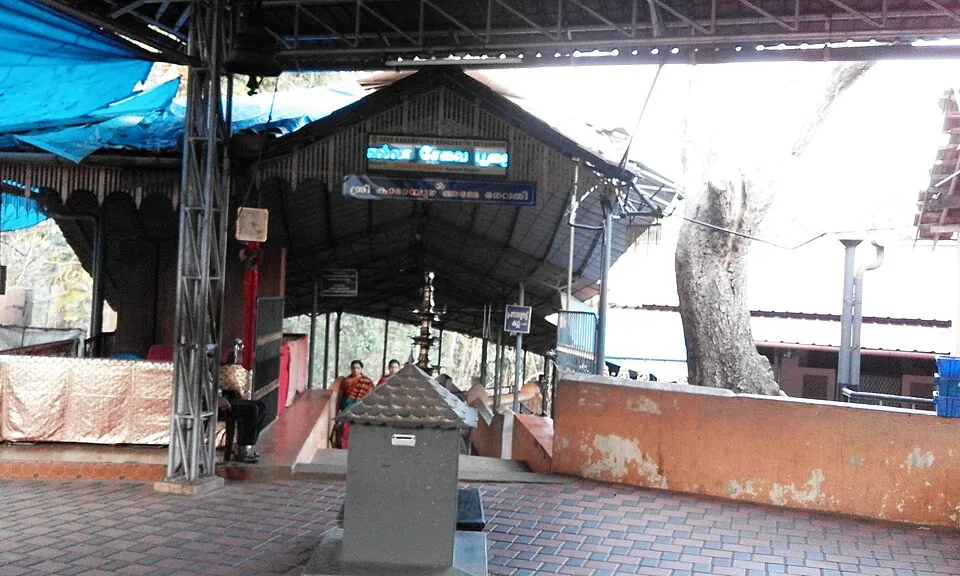
Set on a low green rise between the Bharathappuzha and the Ponnani river, a short drive from Tirur in Malappuram, the Alathiyur Perumthrikkovil is one of Kerala’s most storied Rama shrines — yet almost everyone calls it a Hanuman temple. That paradox is the whole point. The presiding deity in the sanctum is Sri Rama, but the figure who draws the crowds, the flowers and the beaten rice is Hanuman, carved standing just outside Rama’s shrine, head tilted, caught forever in the instant he is being sent across the sea to find Sita. Few temples in Kerala freeze a single Ramayana moment so vividly, and fewer still turn that moment into a living ritual you can walk through.
The story of Alathiyur Hanuman Temple
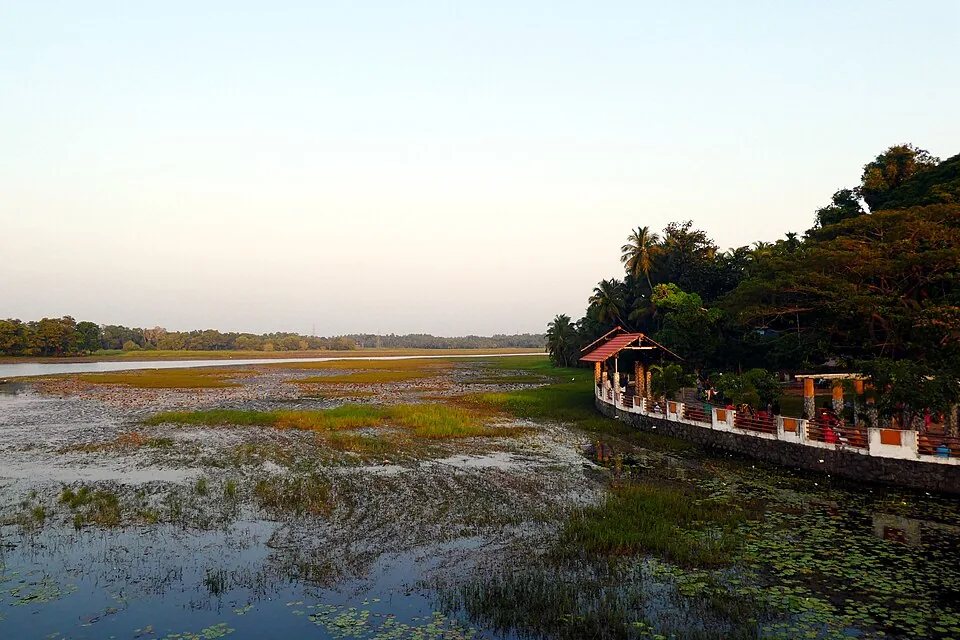
The temple sits at Alathiyur, roughly on the flank of Tirur town, in a belt of Malappuram where two great rivers braid towards the Arabian Sea. Approach on foot through the outer wall and the layout tells its own story before any priest speaks. Sri Rama occupies the srikovil (sanctum), traditionally described as a tall four-armed image in dark stone sheathed in panchaloha alloy, facing east — imposing, still, alone. There is no Sita beside him here, and that absence is deliberate: this is Rama at the anxious hinge of the epic, when Sita has been carried off to Lanka and no one yet knows where she is.
Step out and to the side and you meet Hanuman — smaller, about waist-to-chest height on most accounts, standing slightly angled and leaning as if straining to catch every word. Devotees read the posture as Hanuman listening to Rama’s final instructions before he leaps the ocean. In that reading the two shrines are in conversation: Rama speaking, Hanuman attending. It is an arrangement that turns a piece of architecture into a scene, and it is why regulars say you should greet Rama first and only then turn to Hanuman, following the order of the story itself.
Look for Lakshmana, and you find him placed apart, outside the main cluster of the Naalambalam rather than flanking his brother as he does in most temples. The local explanation is charming and very human: the shrine is set at a remove so that Rama and Hanuman could speak in private about the secret sign — the token by which Hanuman would prove to Sita that he truly came from Rama. Whether you take it as theology or as folklore, it is a lovely instance of a temple plan being narrated as a moment of confidence between a king and his most trusted messenger.
The offerings carry the same logic. Hanuman’s beloved prasadam here is avil — flattened, beaten rice, often served moist and sweetened (kuzhacha avil) — along with kadali plantains, while Rama is honoured with payasam. Many devotees offer a vada mala, a long garland of fried vadas looped around Hanuman, a classic Hanuman offering across South India and a striking sight when a large one is draped over the idol. Portions of avil and payasam are traditionally counted in the old nazhi measure, so you may hear people book offerings by number rather than weight.
Beyond the sanctum lies the temple’s most kinetic feature: a raised platform said to commemorate Hanuman’s mighty leap to Lanka, with a long granite stone laid at one end to stand for the sea. Devotees take a short run-up and jump clear over the stone, a small physical enactment of the leap that is believed to bring health, courage and good fortune, and is especially associated with the wellbeing of children. It is one of the few Kerala temples where worship is something you do with your whole body rather than only your folded hands.
A temple tank lies to the north of the gopuram, used for the ritual bath before entering, and the mood across the year swings with the Malayalam calendar. In Karkidakam (roughly mid-July to mid-August), the so-called Ramayana month, the reading of the epic fills the air and footfall swells; at the annual Thiruvona festival in Thulam the shrine wakes into full ceremonial colour. Come on an ordinary Tuesday or Saturday morning, though, and you will still find a steady, unhurried devotion — parents with small children, travellers about to set out, people quietly asking Hanuman to clear whatever obstacle stands in their way.
Legend & myth
The legend that governs everything here is drawn straight from the Sundara Kanda of the Ramayana. Sita has been abducted by Ravana and hidden in Lanka; Rama, unable to cross the ocean himself, entrusts the search to Hanuman, the mightiest and most devoted of the vanara warriors. Tradition holds that this shrine marks — symbolically — the very moment of that briefing: Rama telling Hanuman how to find Sita, how to recognise her, and how to convince her he is a true envoy and not another of Ravana’s tricks. That is why Hanuman stands outside the sanctum in a listening attitude, and why Rama stands alone, still parted from his wife.
Devotees add a tender detail: Rama is said to have given Hanuman a secret sign or token — in the epic, the ring and the recollection of an intimate episode by which Sita would know the message was genuine. The placing of Lakshmana’s shrine at a distance is folk-explained as giving the two space for this private counsel. Framed as legend, it recasts Hanuman not merely as a strongman but as the perfect messenger — faithful, discreet and utterly reliable — which is precisely why people bring him their journeys, their stalled plans and their worries about their children.
From this story flows the temple’s reputation. Because Hanuman is remembered here at the threshold of an impossible mission, he is invoked as the remover of obstacles and the guardian of safe passage; because he is the devoted servant who never fails his lord, he is believed to watch over children and to keep away fear and bad dreams. A well-loved verse taught to Kerala children asks Hanuman to guard their sleep. All of this is devotional belief rather than documented fact, but it is the belief that gives the leap-over-the-stone ritual and the avil offerings their meaning.
The offerings divide the way the temple does. Palpayasam, the slow-cooked milk and rice, goes to Rama in the sanctum. Aval — flattened rice, the plainest food in a Kerala kitchen — goes to Hanuman outside it, and so do the garlands of vada that hang at every Hanuman shrine in south India. It is a neat division: the king gets the sweet, the messenger gets what you can carry.
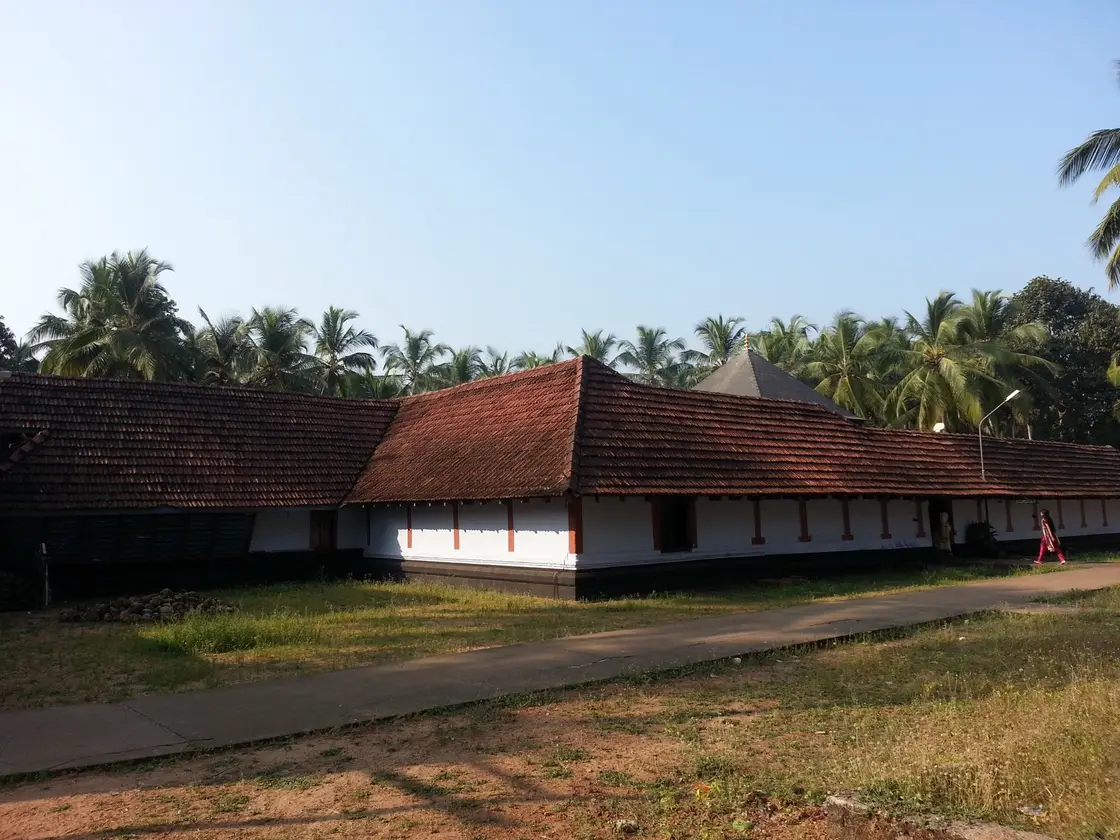
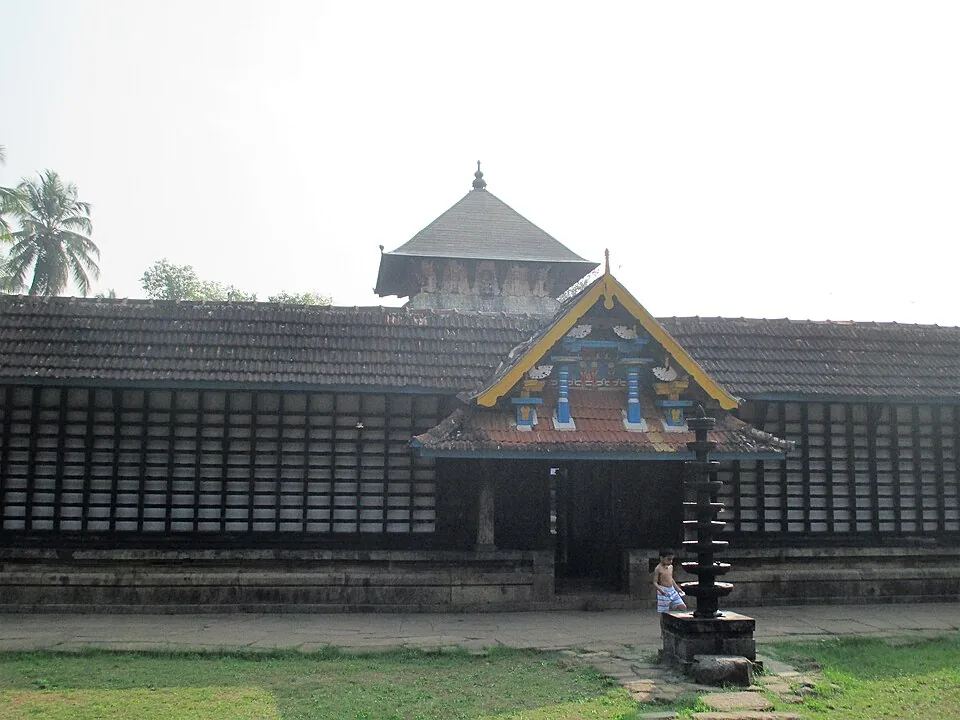
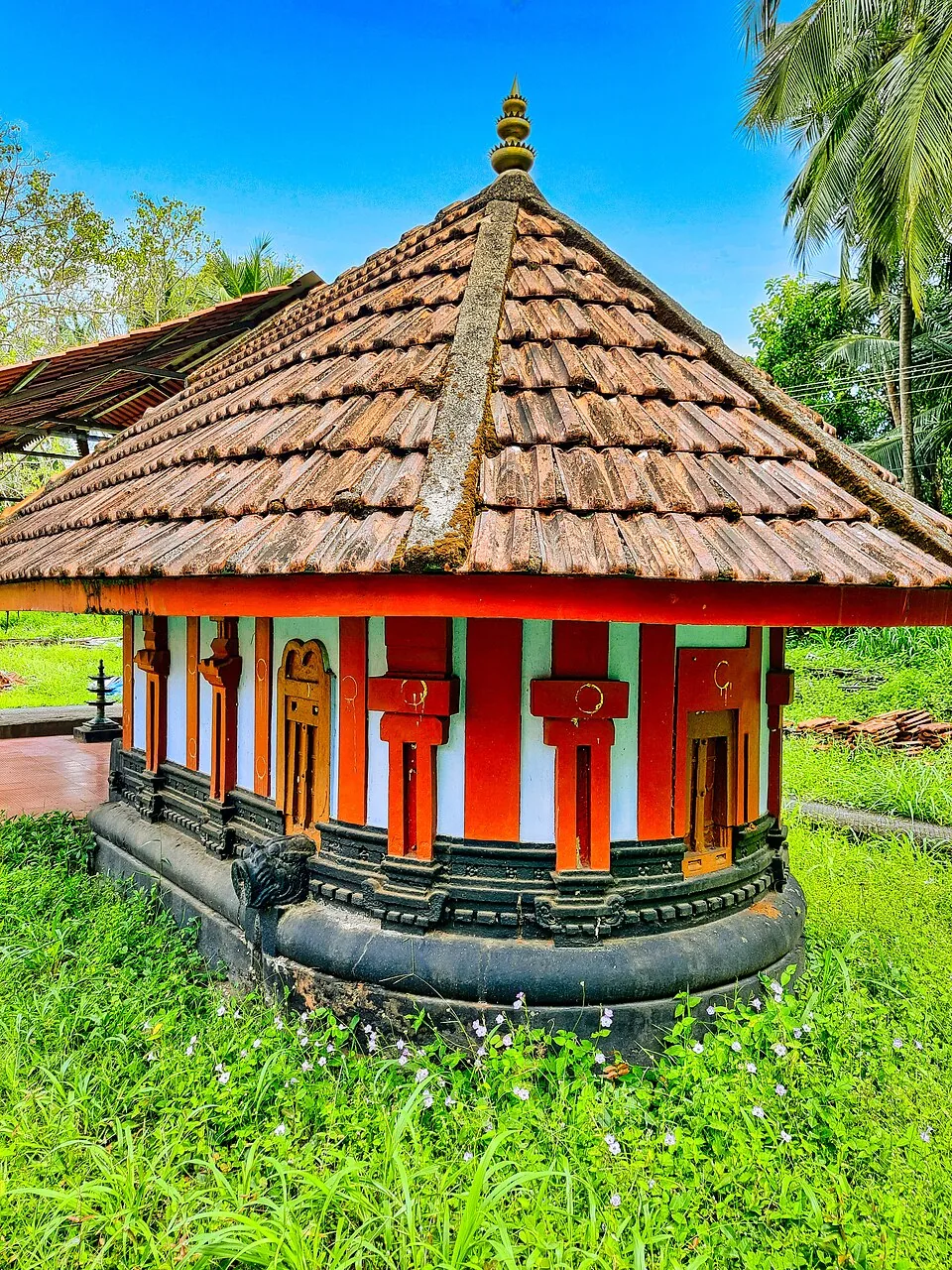
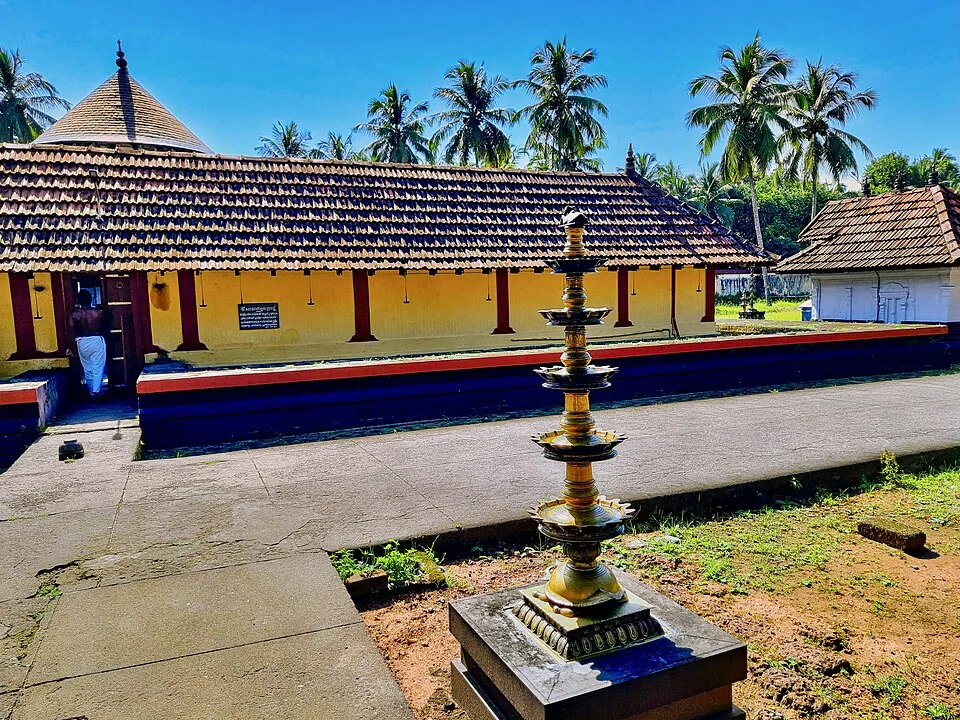
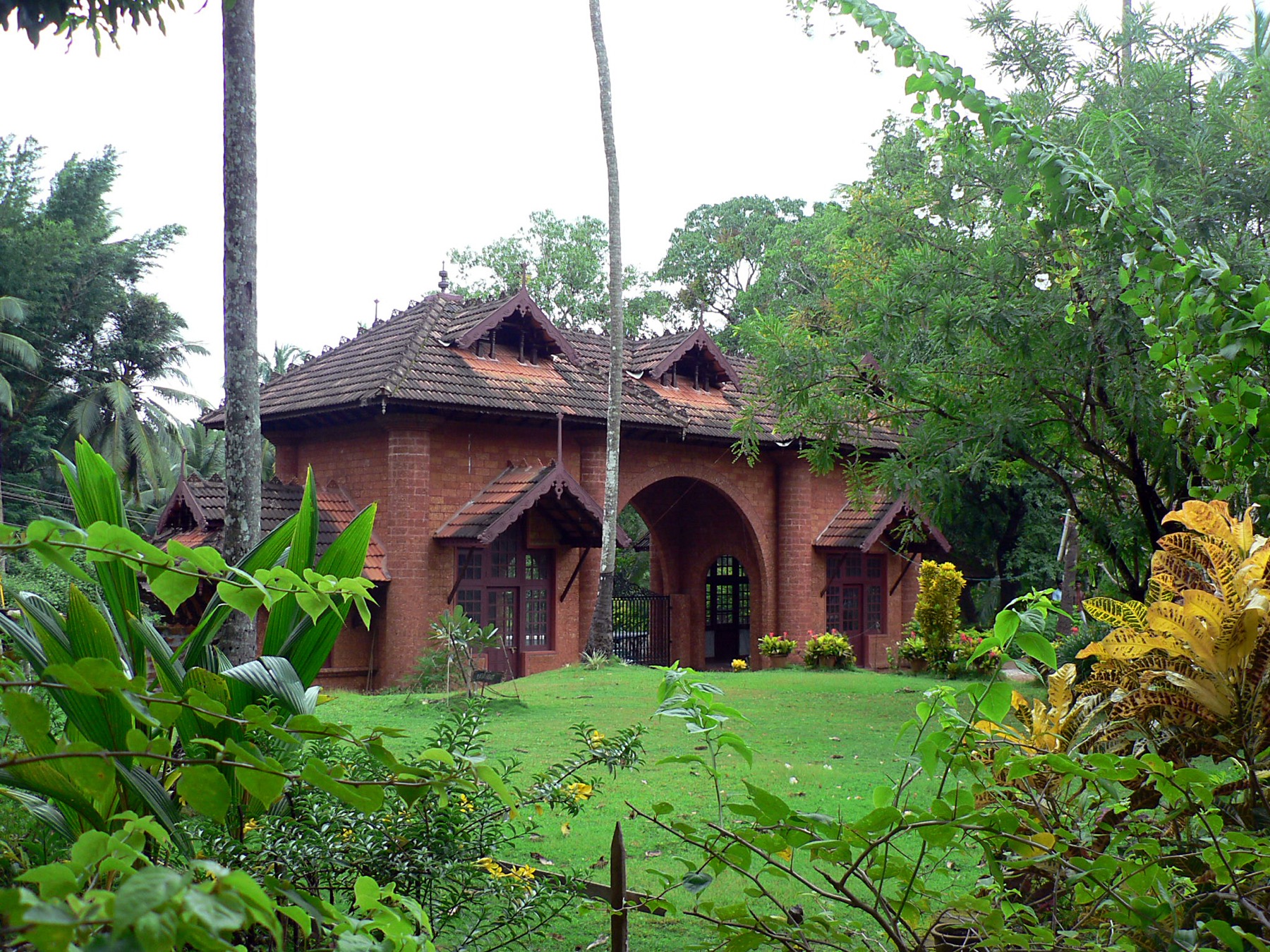
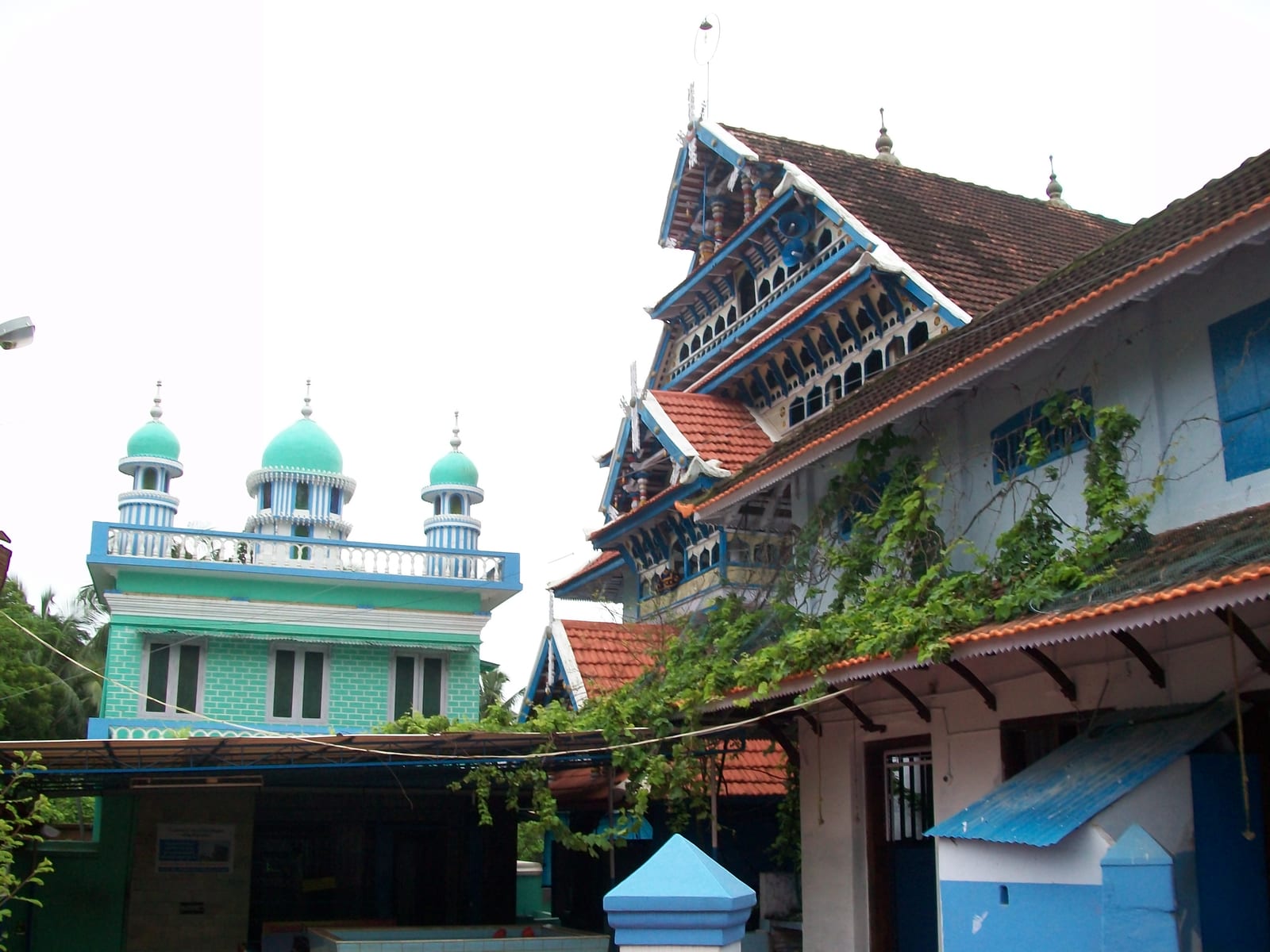
The enclosure is bigger and plainer than the reputation suggests. Long ranges of tiled roof on white walls run round a broad open court, with a line of red timber posts holding up the eaves; the ground inside is sand, and in the monsoon a good deal of it is water. Two small open pavilions of black stone stand at the edge under separate roofs. There is nothing ornate about any of it, which is normal for a kavu — a shrine that grew out of a sacred grove rather than being founded as a monument.
Karkidakam is the month that changes the place. It runs from about mid-July to mid-August, it is the wettest and traditionally the leanest month of the Kerala year, and it is when the Ramayana is read aloud daily in households and temples across the state. At a Rama temple whose Hanuman is caught in the middle of the Ramayana's central errand, that recitation has an obvious home, and the temple is at its fullest and its least comfortable — heavy rain, full courtyards, and the epic being read somewhere within earshot all day.
Read the full history of Alathiyur Hanuman Temple 599 more words
History
Alathiyur is one of the four villages the standard accounts name as the actual ground of the Kerala school of astronomy and mathematics. The house of one of its mathematicians is recorded as having stood within sight of these fields; who the men were and what they worked out belongs to Tirur's own page.
The temple is administered by a trust under the Malabar Devaswom Board, with the Samuthiri — the Zamorin of Calicut — as chief trustee, which is the same arrangement that governs the Trikkandiyoor temple north of here and the ordinary end-point of Malabar temple administration after the eighteenth century.
Firm documentary history for Alathiyur is thin, as it is for many of Kerala’s older kavus, and much of what is repeated is tradition rather than dated record. The most widely cited claim is that the Hanuman idol — and by some accounts the shrine itself — was consecrated by Sage Vasishtha, one of the Saptarishis, said to be around 3,000 years ago. This should be read as sacred tradition rather than established chronology (legendary — treat the dating as devotional lore, not verified history).
What is clearer is the temple’s type and setting. It is a classic Malabar kavu-turned-kshetram in the Kerala idiom — an east-facing srikovil, an enclosing Naalambalam, a gopuram and a temple tank — planted in the fertile riverine country near Tirur, a town with deep cultural weight in Malayalam history. The dark stone Rama image clad in panchaloha, and the separate Hanuman and Lakshmana shrines, reflect long-standing Kerala temple craft and iconographic convention rather than any single modern rebuild.
For centuries the temple functioned within the local ritual and agrarian rhythm of the region, its calendar tuned to the Malayalam months, its offerings drawn from the rice and plantain of the surrounding land. The prominence of the Karkidakam Ramayana readings — the month when Kerala households recite the Adhyatma Ramayana of Thunchath Ezhuthachan, himself associated with nearby Tirur — ties the shrine into the wider devotional literature of the area.
In recent decades Alathiyur has grown from a locally revered kavu into a regional pilgrimage draw, helped by its Ramayana association, the distinctive listening-Hanuman iconography, and the crowd-pleasing leap ritual. The temple now offers online booking of poojas for devotees abroad, and features on Kerala Tourism’s temple listings, marking its shift from a quiet village shrine to a recognised stop on the Malappuram devotional map (details of administration and current management should be confirmed on site).
Why visit
It is one of the very few temples anywhere that stages a single, specific Ramayana moment in stone — Rama briefing Hanuman before the leap to Lanka — so a visit is less like viewing idols and more like stepping into a scene from the epic.
The listening-Hanuman posture, angled and leaning towards Rama, is considered distinctive to Alathiyur, giving the shrine genuine iconographic interest beyond ordinary Hanuman temples.
The leap-over-the-granite-stone ritual on the commemorative platform is unusual and memorable — a rare temple where devotion is physically enacted, and one particularly sought out by families praying for their children.
The avil and vada-mala offerings to Hanuman are simple, inexpensive and deeply traditional, so even a short visit lets you take part rather than merely watch.
The riverine setting near Tirur — between the Bharathappuzha and the Ponnani — is quietly beautiful, and the temple tank and green surrounds make for a calm, uncommercialised atmosphere on ordinary days.
For anyone touring Malappuram’s Ramayana and Ezhuthachan heritage, especially in the Karkidakam month, Alathiyur is a natural and rewarding anchor point, easy to reach from Tirur town.