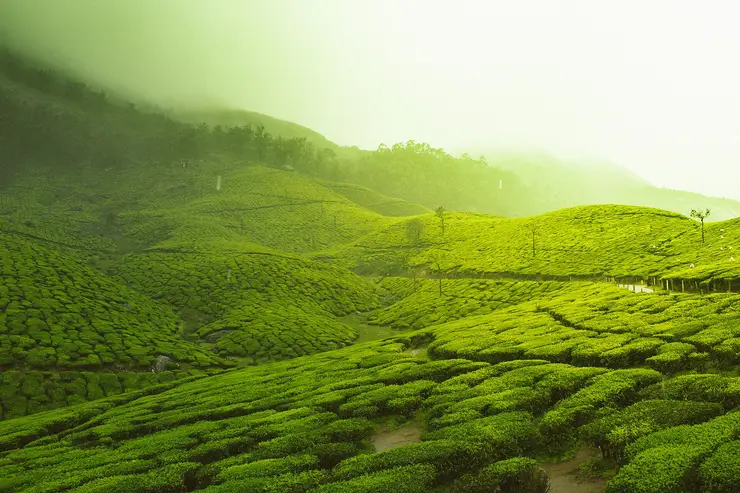
Ponmudi — the name means ‘golden peak’ or ‘golden crown’ in Malayalam — is a misty little hill station roughly 1,100 metres up in the Western Ghats, about an hour and a half northeast of Thiruvananthapuram. Reached by a slim ghat road that coils through 22 hairpin bends, it is a place of tea-clad slopes, grassy meadows, cool clean air and the clear Kallar stream, all wrapped in the great Agasthyamala forests that spill over the hill’s edges.
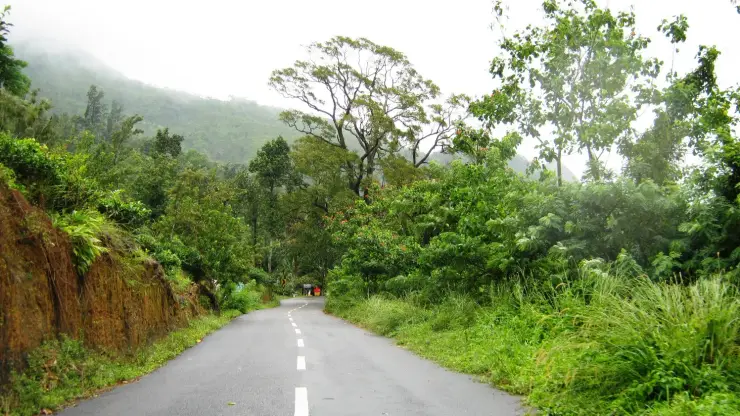
The drive is half the pleasure. From the plains you climb through Vithura and cross the Kallar, and then the road begins to fold back on itself — 22 numbered hairpin bends stitched into the hillside, each one lifting you a little higher into cooler air. Rubber and forest give way to tea gardens and the world seems to tilt; on a clear morning the valley falls away below in soft blue folds, and on a misty one the bends simply vanish into cloud a few metres ahead. It is a slow, deliberate ascent — better savoured than hurried — and the narrow single-lane stretches reward an unhurried driver.
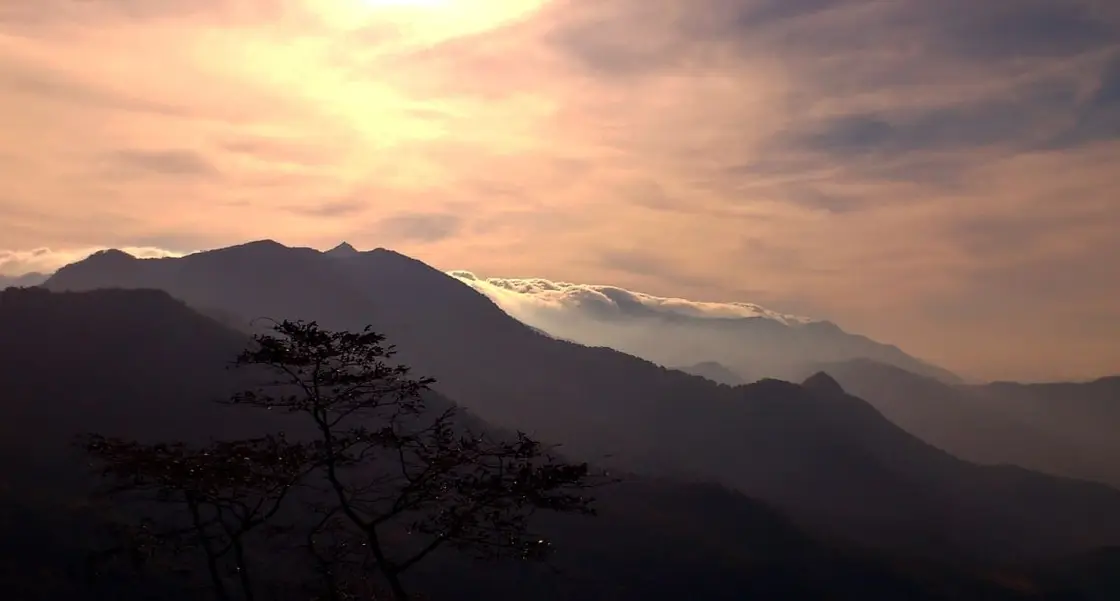
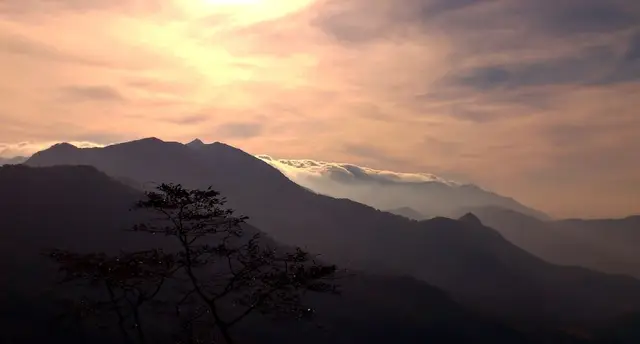
At the top the light changes. Mist drifts in and out through the day, thickening in the late afternoon until the tea slopes seem to float, then lifting to reveal ridge upon ridge of the Ghats marching south towards Agasthyamala. It is this play of low sun on damp green — the way the hills catch a gold-tinged glow at dawn and dusk — that is said to have earned Ponmudi its ‘golden crown’ of a name. The manicured tea bushes climb the shoulders of the hill in neat contour lines, and among them narrow paths lead the curious out onto grassy shelves with long views over the plains.
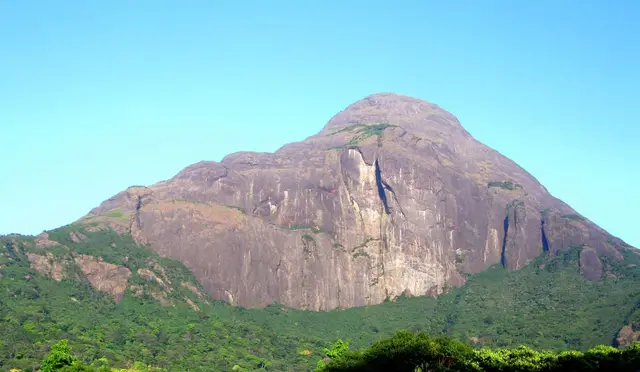
Below the peak lies Golden Valley, strung along the banks of the Kallar. Here the river runs clear and shallow over golden-brown sand and smooth boulders, cold with the memory of the high forest it was born in. Visitors wade in the shallows, picnic among the rocks and listen to the water braid its way downhill; it is one of Ponmudi’s most-loved corners, a green pocket at the foot of the climb where the stream and the forest meet. The Kallar itself rises high on Agasthyakoodam, at 1,868 m the great peak of southern Kerala, and carries that mountain’s chill down through the hills.
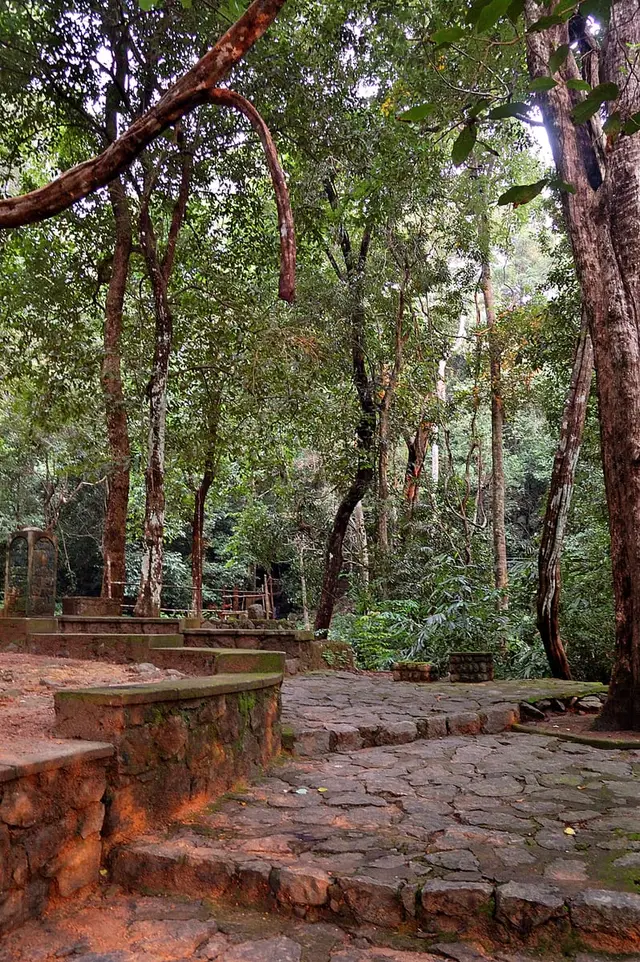
Above the tea, the hilltop opens into rolling meadows and short walking trails. Signposted routes lead through eco-tourism country towards viewpoints and, for the properly permitted and guided, deeper into the reserve; gentler strolls simply thread the grasslands to a ridge where the whole southern sweep of the Ghats lays itself out. This is walking country rather than adrenaline country — a place for a slow ramble, a flask of tea and a long look at the horizon.
The forests here are alive in a quiet way. Herds of deer are often seen grazing the slopes in the cool of the morning, and the surrounding Agasthyamala country shelters a rich cast of Western Ghats birds, butterflies and wildflowers. Because Ponmudi sits at the fringe of a protected biosphere, much of that wildness presses right up to the road and the tea gardens, and part of the pleasure is how close the untamed hill feels to the little cluster of cottages and viewpoints at the top.
Above all Ponmudi is calm and cool. Where the plains around Thiruvananthapuram swelter, the hilltop stays fresh and often cloud-wrapped, a small, unhurried retreat rather than a busy resort town. Days here are for wandering the tea slopes, dipping toes in the Kallar, watching the mist come and go and letting the temperature — and the pace — drop. It is best treated as a slow, weather-led escape: a place that rewards patience, warm layers and a willingness to let the hill set the mood.
Legend & myth
The name is where this page has been repeating the tourist-brochure answer as though it were the only one. Ponmudi is Malayalam for golden peak or golden crown — pon is gold, mudi is a peak or crest — and that much is not in dispute. What is presented everywhere as settled, here included, is the explanation: that the hill is named for the gilded light that washes the slopes at sunrise and sunset. It is a pleasant account and it may well be right. It is not the only one, and it is not the local one.
The Kani, who are indigenous to these hills and whose settlements lie through this forest, give a different origin. In their telling the gods who guard the mountains hid their gold in the crest of the hills, and it is that buried gold, not the evening light, that the name records. Set beside the sunrise explanation, this is the older kind of story — an account of what the mountain contains rather than of how it looks to somebody arriving from the plains — and it is conspicuously absent from almost every published description of Ponmudi, including, until now, ours.
It is worth being clear about what we are and are not claiming. We are not asserting that the Kani account is the true etymology and the light one false; neither is documented in a way that would settle it, and pon and mudi are ordinary enough words that both readings are available to anyone. What is correctable is the confidence. Presenting the sunrise-glow story as the origin, full stop, is the error — it quietly promotes a visitor’s impression over the account held by the people who have lived on this hill longest.
That pattern is worth noticing because it runs through the naming of this whole landscape. Kallar below is stone river, flatly descriptive. Meenmutty upstream is the point where fish are stopped, equally flat. Golden Valley on the Kallar takes its name from the sand in its bed rather than from Ponmudi above it, which is the assumption most people make. These hills mostly name themselves after what is physically there, which is part of why a legend about hidden gold in the crest stands out rather than blending in.
One further correction while we are on Ponmudi’s reputation. The hill is routinely described as a colonial creation, a British hill station in the manner of Munnar or Ooty. Its development as a highland retreat within reach of the Travancore capital is real, but the framing flattens the fact that this is Agasthyamala country — forest with a very long association with the Agastya traditions, and with the Kani living in it — long before anyone laid out a tea slope or a road with twenty-two bends in it. The hill station is a recent layer on the hill, not the beginning of it, and the Kani account of the name is a useful reminder of which layer came first and which one the guidebooks chose to describe when they quietly settled on the sunrise story as the only one worth telling.
More about Ponmudi
History
Ponmudi’s modern story is a colonial-era one. Sitting at a cool 1,100 metres within easy reach of the Travancore capital, the hill was developed as a highland retreat — a place for the region’s rulers and, later, British administrators to escape the heat of the plains, in the same tradition that produced hill stations across the Ghats. That legacy of Ponmudi as a summer refuge still shapes how it is used today.
The name is descriptive and old. ‘Ponmudi’ is Malayalam for ‘golden peak’ or ‘golden crown’ — ‘pon’ meaning gold and ‘mudi’ a peak or crown. Why gold is less settled than most accounts allow: the usual explanation is the warm, gilded light that washes the hills at sunrise and sunset, while the Kani, indigenous to these hills, hold that the gods guarding the mountains hid their gold in the crest. Both readings are available and neither is documented well enough to close the question — see the myths section.
In the tourism era the hilltop was opened up with cottages, a guest house and viewpoint infrastructure, with the Kerala Tourism Development Corporation (KTDC) associated with accommodation and facilities on the peak. This development turned a quiet Travancore-era retreat into an accessible day-trip and overnight destination for travellers based in Thiruvananthapuram.
Geographically and ecologically, Ponmudi belongs to the Agasthyamala country. It lies on the northern approaches to Agasthyakoodam, at 1,868 m the highest summit in the far south and the source of the Kallar river, within the wider Agasthyamala Biosphere Reserve — a UNESCO-recognised biosphere celebrated for its exceptional Western Ghats biodiversity and its long association with the sage-linked traditions of the Agastya hills.
That protected status matters for visitors. Because Ponmudi sits at the edge of a sensitive reserve, access to the deeper forest and to the Agasthyakoodam trek is controlled — trails inside the reserve require permits and authorised guides, and the ghat road up to the hill station itself operates within posted daytime entry timings. It is wise to check current timings, permit rules and road conditions before setting out.
Why visit
The famous climb — 22 hairpin bends winding up through rubber, forest and tea to the 1,100-metre peak, one of Kerala’s most memorable mountain drives.
Golden Valley on the Kallar, a green riverside pocket of clear water, golden sand and smooth boulders, perfect for a paddle and a picnic.
Cool, mist-wrapped tea slopes and grassy meadows with long, layered views over the Western Ghats — an easy escape from the heat of the Trivandrum plains.
Gentle walking and eco-tourism trails to viewpoints, with deer often grazing the hillsides in the early morning.
The Agasthyamala setting — Ponmudi is the accessible gateway to a UNESCO biosphere and the northern approaches to Agasthyakoodam, the dominant summit of the far south.
An unhurried, uncommercial mood — a small, calm hill retreat rather than a crowded resort, well suited to a slow overnight or a leisurely day trip.