The old laterite core is low and unassuming beneath its broad tiled roof. Around it, the museum gives the memorial a larger frame: a conflict over power and revenue, the people who sustained resistance, and the everyday objects through which Wayanad’s past can be understood.
The story of Pazhassi Smarakam
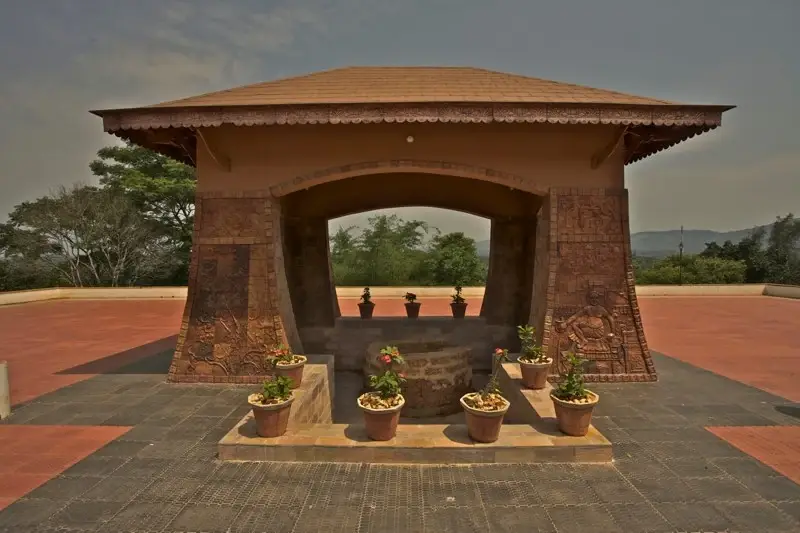
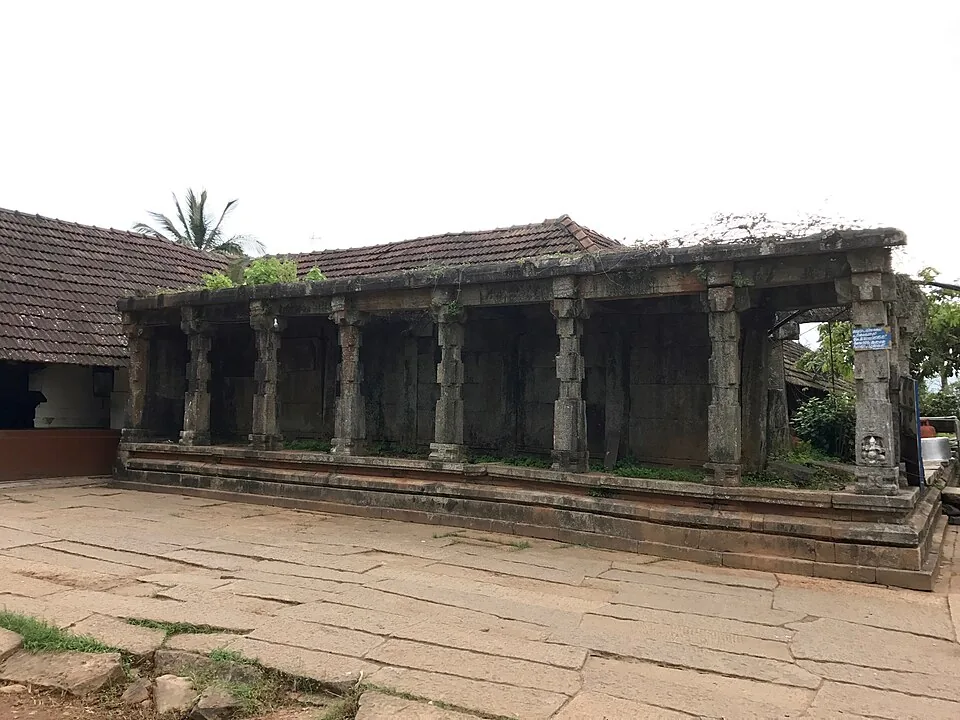
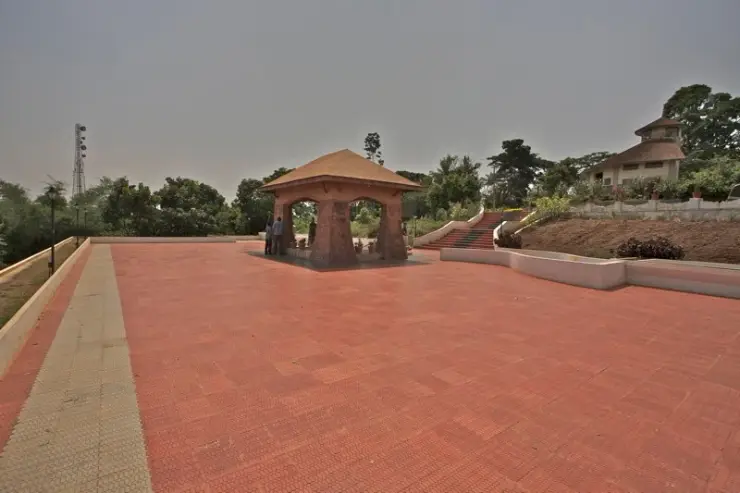
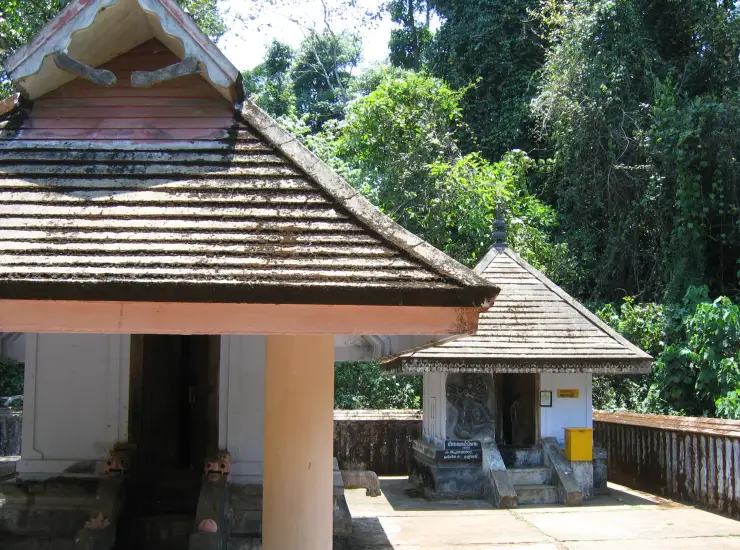
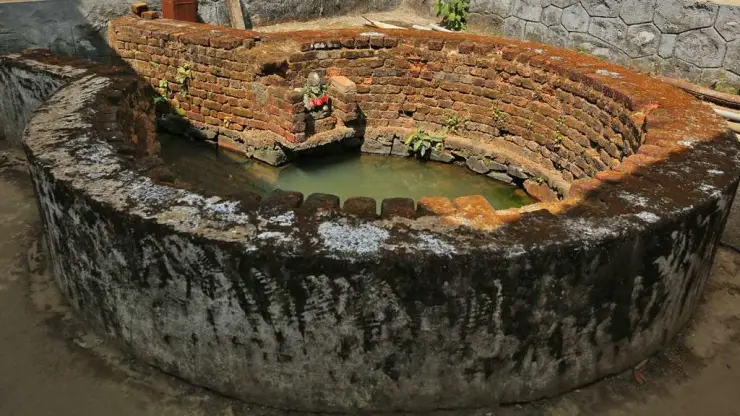
The monument works at two scales. Seen across the paved court, the pavilion is a recognisable landmark with a hipped roof and substantial decorated piers. Closer to it, the eye is drawn down to the circular laterite remains. The small conserved core and the much larger shelter belong to different moments in the site’s life. Reading them separately prevents the entire visible building from being assigned an early nineteenth-century date.
A photograph from inside the pavilion shows steps beside the old stonework and a low enclosing wall. The tomb is therefore not a freestanding sculpture to be circled at arm’s length on level ground. It is a recessed feature whose setting asks the visitor to look down and pause. The surrounding flowerpots and paving belong to the maintained memorial landscape, while the rough laterite gives the older centre a different texture.
The museum changes the emphasis from looking to reading. Document facsimiles can carry a different kind of evidence from a commemorative portrait: they were written for specific administrative or political purposes, and their language reflects those purposes. A proclamation describing resistance from the Company’s position should be read as the voice of an authority facing opposition. The museum setting allows that language to be placed beside the memory of the people it sought to control.
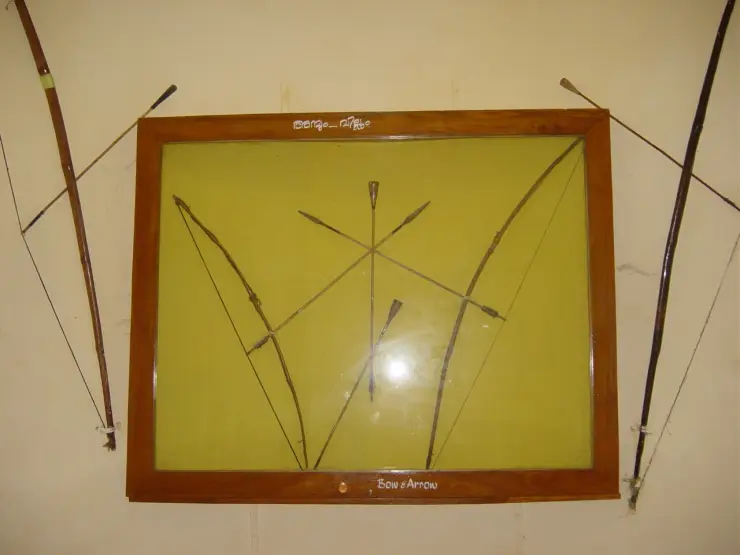
Weapons need equally careful attention. A bow-and-arrow display helps a visitor consider the equipment used in forested terrain, but a museum association alone does not make every object the ruler’s personal possession. Start with the label’s stated origin and attribution. The history becomes more interesting when the object is allowed its own identity, instead of being turned into an unsupported relic of one famous person.
The Tribal Gallery shifts attention towards work, domestic life and cultural practice. Agricultural implements and musical instruments belong to a wider account of Wayanad’s communities than a battlefield narrative can provide. They offer a useful counterweight to a visit that might otherwise move directly from a heroic image to a weapon. The district was inhabited, cultivated and culturally diverse before, during and after the resistance associated with Pazhassi.
The Heritage Gallery asks visitors to change the timescale again. Archaeological material and references to rock art, Jain sites and funerary traditions place the district’s history well beyond the late eighteenth and early nineteenth centuries. These are distinct kinds of evidence. A burial urn, an inscribed surface and a later political document should not be made to tell one uninterrupted story simply because they share a museum building.
Coins bring another change of scale: a small object can point to authority, circulation and exchange across a much wider region. The rewarding approach is to compare the labels and visible designs, rather than treating the case as a row of precious objects. A ruler’s name, an emblem or a change of issuing authority can be more informative than the metal’s appearance. Avoid identifying a coin from a distant photograph when the display label is available in person.
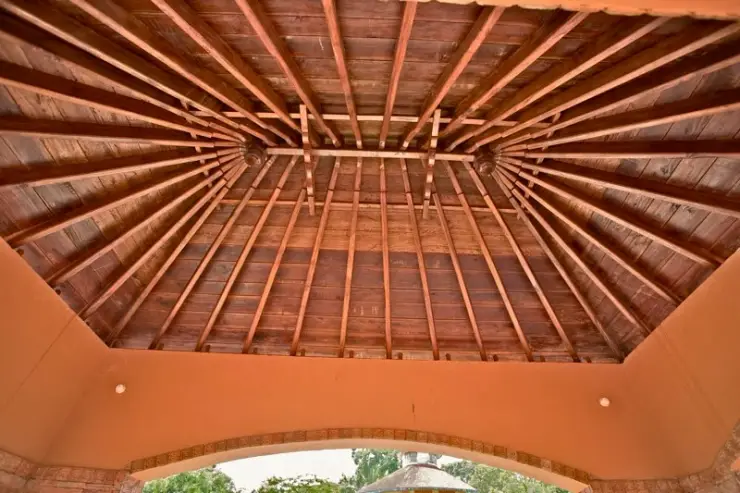
The pavilion’s timber roof is worth a separate look from an allowed viewing position. Rafters converge towards the corners and run in repeated lines beneath the tiles. The underside gives the shelter a visible construction logic that disappears in a frontal photograph. This architectural observation concerns the present memorial building; it is not proof that the same roof stood over the tomb in 1805.
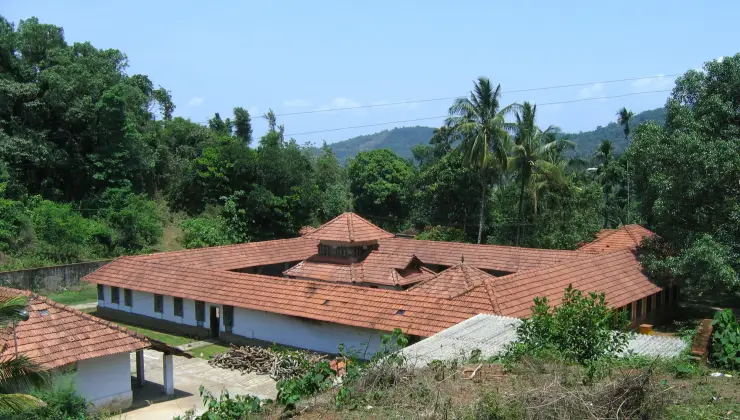
The courtyard also gives the site room for remembrance. Its broad paved surface, low walls and steps connect the central monument with the buildings above it. A wide view shows that the visitor is moving through an arranged memorial complex within a town, rather than finding an isolated grave in an untouched forest. That setting is part of the experience and should remain visible in the way the place is photographed.
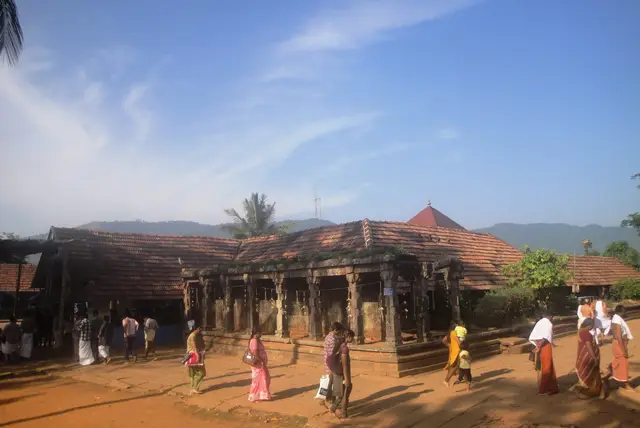
Mananthavady supplies a useful practical contrast with the forest locations encountered in the history. The memorial can be visited from the town’s transport and food services, while Mavilamthod belongs to a separate journey. Someone interested in both should plan two distinct stops. The museum is a good place to establish that geography before attempting to connect every Pazhassi-associated place on the same day.
Read the full history of Pazhassi Smarakam 275 more words
History
Kerala Varma Pazhassi Raja belonged to the Kottayam royal house of northern Malabar. The Archaeology Department’s monument account places the conflict in the revenue arrangements following the Company’s acquisition of authority in the region in 1792. Its account records a settlement with the Kurumbranad ruler that marginalised Pazhassi’s claim, followed by resistance and a temporary agreement in 1797.
The defeat of Mysore in 1799 changed the political balance again. Resistance resumed in Wayanad and involved local supporters from several communities. The monument account names Nayars, Mappilas, Kurichyas and Kurumbas among the people associated with the struggle. Remembering those participants keeps the history from becoming the biography of a ruler acting alone.
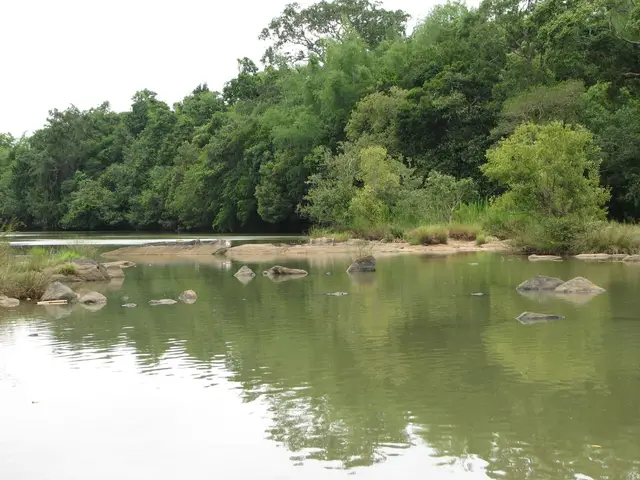
Pazhassi died on 30 November 1805 in an encounter at Mavilamthod near Pulpalli. His remains were brought to Mananthavady and cremated at Hospital Hill, the location commemorated by this memorial. The place of death and the place of remembrance are different sites within Wayanad.
The Archaeology Department records the museum’s opening in 1996 and its expansion and inauguration in 2008. Those dates concern the museum’s public history, not the age of the tomb. The present visit combines the conserved monument with a later institution created to explain the district’s history through objects and displays.
Why visit
Visit for the combination of a conserved memorial and a museum that gives Wayanad’s history several different scales.
The document displays offer a way to consider how colonial authority described resistance, alongside later public remembrance.
The tribal and archaeological collections widen the subject beyond the ruler and the military conflict.
The pavilion, recessed tomb and courtyard form a compact architectural subject that rewards attention to materials and changes of level.