Places to Visit in Alappuzha town

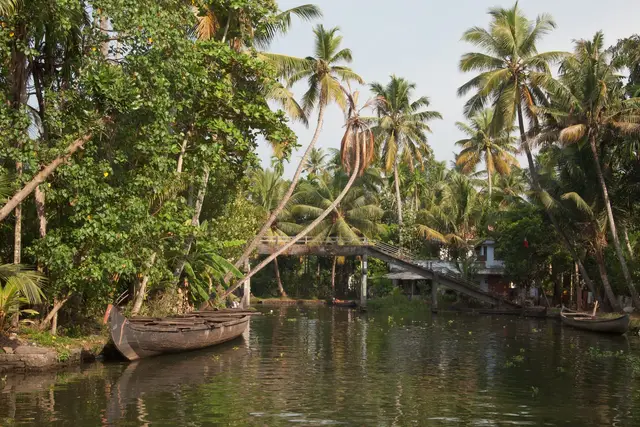
Canals, beach, lighthouse and main houseboat departure point.

Alappuzha town
Practical guide

Plan Alappuzha town

Who's going?Tailor Alappuzha town to your trip
DistrictAlappuzha
RoleHouseboat base
Time neededHalf a day on foot for the merchant-town…
Places to visit4Listed businesses37
What to expect

Highlights

  • Alappuzha / Alleppey town — Backwater and houseboat hub with canals, beach, lighthouse and Finishing Point jetty.
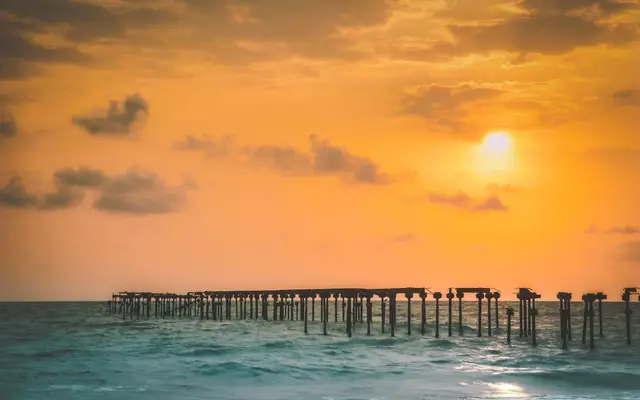
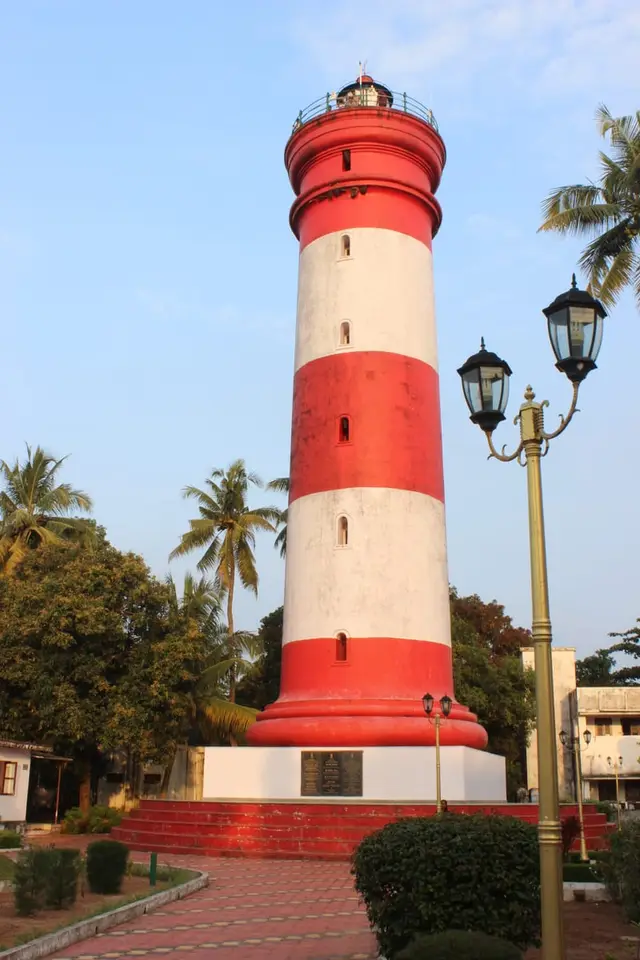
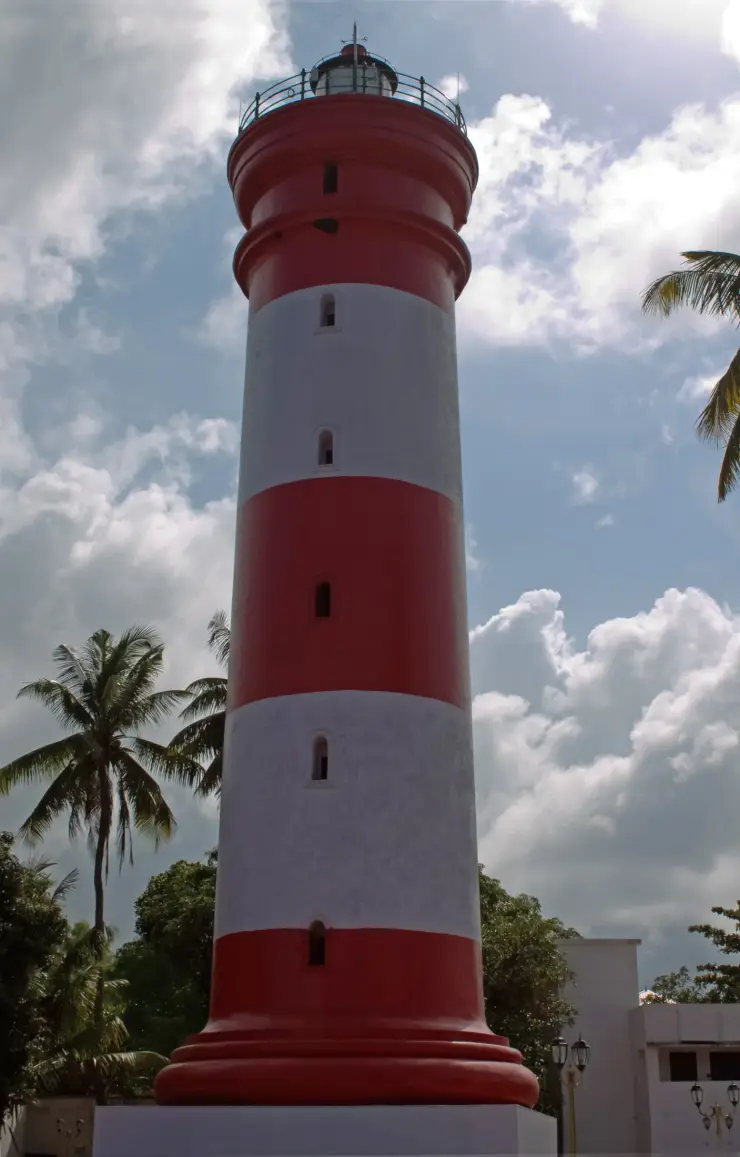
  • Alappuzha Beach & Lighthouse — Pair Alappuzha’s broad town beach and old pier remains with the red-and-white lighthouse on C.C.S.B. Road, commissioned in 1862 and still maintained as a navigational light.
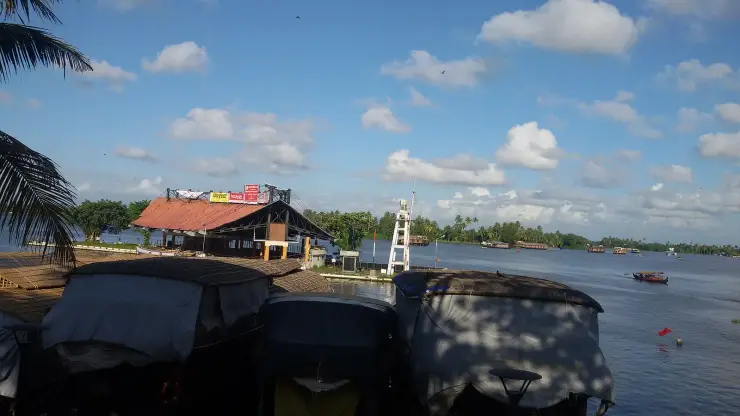
  • Punnamada Lake — Finishing-point lake of the Nehru Trophy Boat Race and the main houseboat cruising water off Alappuzha.
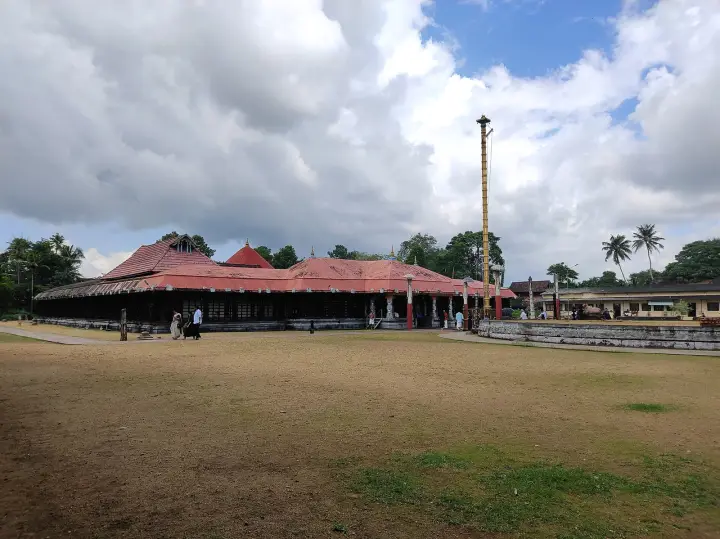
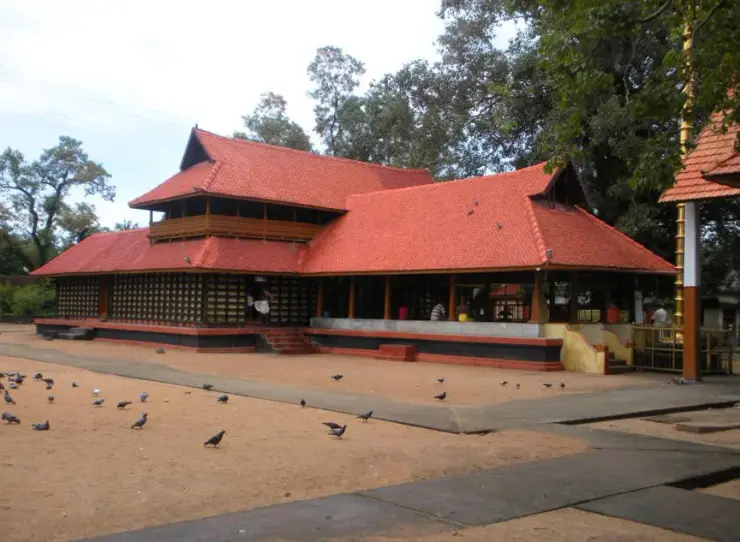
  • Mullakkal Temple — Central Alappuzha town temple (Mullakkal Rajarajeswari) famous for the annual Mullackal Chirappu festival.
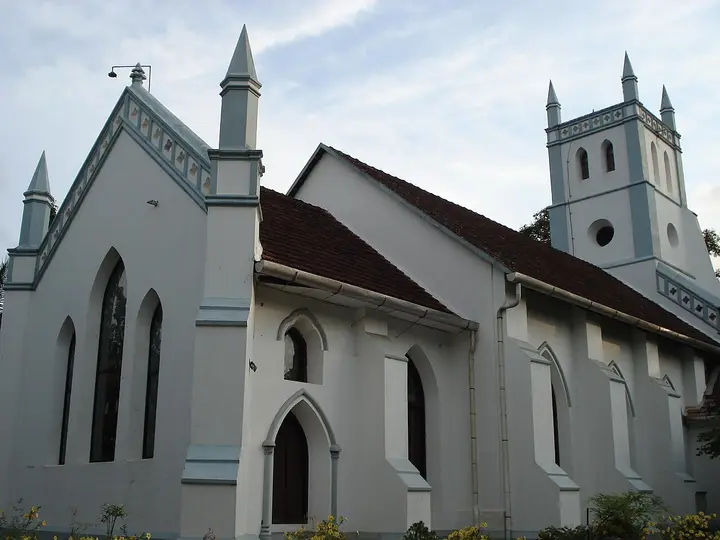
  • Our Lady of Mount Carmel Cathedral — Landmark 19th-century cathedral of the Alappuzha diocese near the town centre.
  • Revi Karunakaran Museum — Private memorial museum in Thathampally with a large collection of paintings, ivory, crystal and antiques.
Getting there

How to visit

  • Nearest airport: Cochin (COK), ~86 km
  • Rail gateway: Alappuzha (coastal line)

Distance by road

  • Kochi54 km
  • Thiruvananthapuram154 km
  • Coimbatore234 km
  • Kozhikode242 km
  • Madurai281 km
  • Mysuru393 km

Road distances measured on real routed roads to Alappuzha town itself, not to the district headquarters, on 22 August 2026. Driving time is deliberately not published: free-flow routing badly understates a Kerala ghat road, so allow more than the distance suggests.

Timing

Best time to visit Alappuzha town

November to February for walking the canal frontages and Beach Road. March to May is hot and exposed; June to September brings heavy rain that waterlogs the low streets.

Weather in Alappuzha townSeasonal guide

Live forecast loads in your browser.

Today at Alappuzha town
Sunrise6:14 am
Sunset6:23 pm
Golden hour best light5:23 pm–6:23 pm
Blue hour after sunset6:23 pm–6:48 pm
Sun sets toward compass bearingW · 272°
Moon tonight🌓 First quarter · 52%
South-west monsoon. June to September is the south-west monsoon in Kerala. Expect heavy showers, mostly in bursts rather than all day — carry rain cover, allow extra time for getting around, and note that ferries and open-air sites are the first things affected.

Sun and moon are calculated for this location and shown in IST. Photography windows are the hour around sunrise and sunset; the sunset bearing is degrees clockwise from true north. Moon phase is accurate to about half a day.

Visitor notes

  • The KSRTC stand is 3.2 km from the centre and the private stand 1.6 km, with a third stand at the railway station. Three different places called the bus stand; ask which.
  • Alappuzha is two halves — the water and the town — and each deserves a day. The town half is the one people skip, and it is the one that makes the trip.
  • The Jain temple, the two heritage mosques and the churches are working places of worship. Visit outside prayer and puja times and ask before photographing.
The story

The story of Alappuzha town

A plan is the easy half of a town. Raja Kesavadas could cut canals and lay out streets, but a port opened in 1762 has no merchants in it, and Alappuzha’s second act was a recruitment. He offered land and terms to trading families from Surat, Bombay and Kutch, and they came — Gujarati, Rajasthani, Tamil and Halai Memon houses, alongside Konkani families already moving south from Goa. What they built is easier to read than the canal grid, because it does not look like Kerala: a white marble Jain temple with marble elephants at the step, a Gujarati Street on the western side of town, a mosque raised on ground the Diwan himself donated, and a long line of godowns carrying Swiss and English names. Since 2016 those buildings have been the material of the Alappuzha Heritage Project, which is turning the town’s commercial wreckage into its museums.

It is worth starting with the fact that the man who built this merchant town began his working life keeping a merchant’s books. Raja Kesavadas was born at Kunnathur on 17 March 1745 — English Wikipedia records the birth name as Kesavan Raman Pillai, the Malayalam article as Raman Kesava Pilla, and we print both because the order genuinely differs between them. His first employment was as an accountant to a trader the Malayalam record names as Poovat Pokumoos Marakkar. He went from that desk into royal service, rose through the offices of samprati and sarvadhikaryakkar, and was made Dewan on 22 September 1789. Whatever else Alappuzha is, it was laid out by someone who had sat on the other side of a merchant’s ledger, and the terms he offered incoming traders read like it.

The port was not merely a convenience, either. The conservation architect Benny Kuriakose, whose practice has surveyed more of this town’s fabric than anyone, puts the purpose bluntly: Alappuzha was conceived to beat the European maritime powers with their own weapons, built by Travancore specifically to break the Dutch blockade of the coast and the Dutch monopoly on its produce. Read that way, the invitation to foreign and out-of-state merchants was not hospitality. It was the instrument. A harbour without traders exports nothing, and Travancore needed traders who were not answerable to the Company.

So who actually came? The district administration’s own history says only that Kesavadas gave every facility to merchants and traders from far and near, which is the polite version. The specific version, repeated by English and Malayalam Wikipedia and by Kuriakose alike, is Surat, Bombay and Kutch; Kuriakose’s team, writing up their site survey, add Rajasthanis and Tamils to the list. Konkani families were arriving on a separate current — driven south from Goa by the Portuguese and Dutch through the sixteenth to eighteenth centuries, settling at Thuravoor and Cherthala, and, as English Wikipedia puts it, a majority of them settling at Alappuzha. Kesavadas also built them somewhere to trade: the Malayalam record names his market Chalakkampolam.

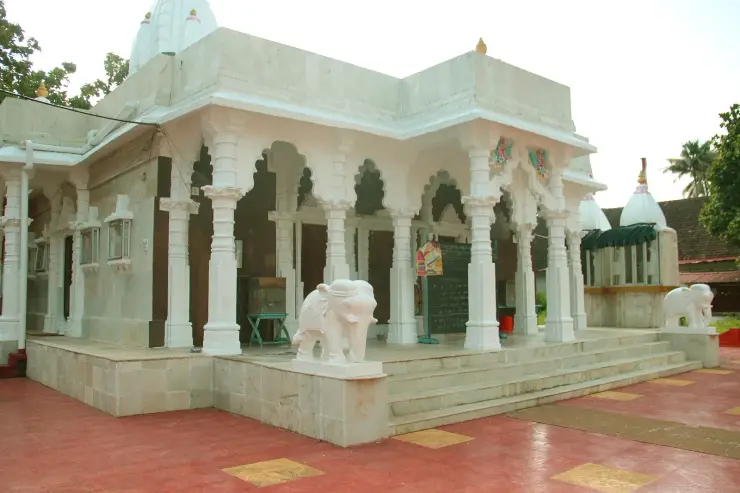
The Jain temple in Alappuzha is white marble, with cusped arches, shikhara domes and marble elephants flanking the steps—a north Indian idiom set within a district of laterite walls and Mangalore tiles. Malayalam Wikipedia records Gujarati Street on the town’s western side, together with a Gujarati mosque and a merchants’ hall called Vallabhadas. Because no second source cited here establishes the hall, treat that name as a reported local detail.

The town’s two heritage mosques belong to the same story. The Saukar Masjid was built by Halai Memons, a trading community out of Gujarat who were coming to Kerala on business during Dharma Raja Karthika Thirunal’s reign, and the ground it stands on was donated by Kesavadas himself — a detail that says exactly how deliberate the recruitment was. The Maqam Juma Masjid, on the Commercial Canal, is described by its conservators as one of the oldest in the region and a significant pilgrimage destination for Kerala Muslims; its architecture blends Kerala building with Islamic form, in timber and lime mortar. Both were conserved in 2021.

There was a price for all this, and it is the part the brochures leave out. As Alleppey succeeded, the stagnant lagoons around it were filled with the coconut husks the coir trade needed. The mosquito population went up accordingly, and Kuriakose’s account is unsparing: people were infected with elephantiasis, which was known locally as Cochin leg. A planned town is planned by someone, and the consequences of the plan landed on the people who worked in it.

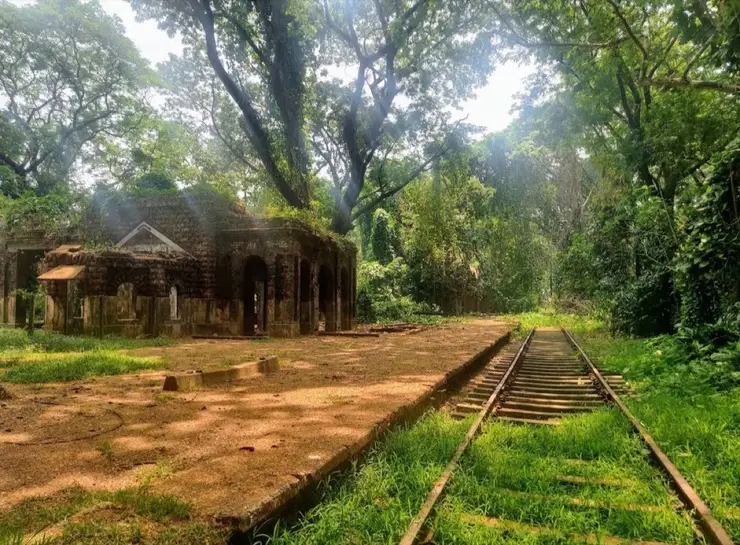
The nineteenth century filled the waterfront with firms, and it is their premises rather than their profits that matter here. Volkart Brothers — founded in 1851 by Salomon and J. G. Volkart, operating from Switzerland and Bombay — ran factories and godowns here. So did the Bombay Company, whose building later passed to the New Model Co-operative Society. So did Darragh Smail. Alongside them the town accumulated a customs office, a port office, a sea pier and a set of rail tracks that ran from the pier along Beach Road to the godowns, and those tracks are still in the ground.

Then it stopped. When Cochin port rose, Alappuzha port lost its traffic, and the port buildings, the pier and the tracks were simply left. Many of the warehouses were converted into coir and copra factories, which kept the fabric in use for another few decades; labour disputes eventually closed most of those too. The result, by the 2010s, was a town centre made largely of locked buildings — bungalows ignored, factories along the canals shut or closing, a few premises reopened as restaurants, and, in Kuriakose’s team’s phrase, more than half the present population unfamiliar with the heritage around them.

The Alappuzha Heritage Project is the response, and it is unusually large: around twenty museums, eleven memorials and five other public spaces, which its architects describe as first of its kind in India. The Port Museum is going into the Port Office Complex of the 1762 port itself, planned as a two-storey museum of seven gallery blocks on a ten-acre plot with a Miyawaki forest. The New Model Co-operative Society building — the old Bombay Company premises — is being restored as a Museum of the Labour Movement, with a working coir museum, a library and a café in the complex. The Kerala State Coir Corporation building, formerly the Volkart Brothers factory, is to house a Coir History Museum. The two mosques were done in 2021.

⚠ A caution before you plan around any of this. The conservators’ own pages are written in the future and the continuous present — being restored, will soon host — and are dated 2021. Some components are open, some are not, and we have not been able to establish a current opening date for each museum from a source we trust. Treat the museum cluster as a reason to check before you travel rather than a fixed itinerary, and treat the walk itself — the canal frontages, the godown facades, the marble temple, the two mosques, the rail tracks on Beach Road — as the thing that is reliably there.

Legend & myth

The founding myth of Alappuzha is not a legend about a goddess or a king. It is a sentence about emptiness: that before Kesavadas there was nothing here — uninhabitable forest, in the Malayalam phrasing — and that a Dewan conjured a town out of it in 1762. It is a flattering story and an administratively convenient one, and it is the thing most worth testing on this page, because a town that believes it began from nothing has a particular relationship with whatever was here first.

The first objection stands in the middle of the town and we are not going to retell it, because it belongs to another page. The Devi temple at Mullakkal sits inside the 1762 plan and remembers itself as very much older, in four separate and mutually contradictory accounts. Those legends, the arguments about which king and which century, and the awkwardness of a planned town with an older sanctuary at its centre, are set out in full on the temple’s own record. What matters at the scale of the town is only that the emptiness claim has a large, busy, well-attested counter-example at its exact centre.

The second objection is older and far stranger, and nothing on this site has ever mentioned it. This coast held a Buddhist monastery of international standing called Srimulavasam — ശ്രീമൂലവാസം, also given as Tirumulavata — and it is gone. It was patronised by the Ay dynasty: the Paliyam copper plates of Vikramaditya Varaguna endowed it with a great tract of land, and the record opens with three Sanskrit verses praising the Buddha, the Dharmasangha and Avalokitesvara. ⚠ The plates are dated 898 CE by English Wikipedia and 946 CE by the Malayalam article; the two disagree and we print both rather than choose. The eleventh-century Mushika Vamsa Kavya says the Ezhimala prince Vikrama Rama saved the shrine from the sea by piling up large blocks of stone, and a Kolathiri ruler named Valabhan is recorded visiting it to honour the Buddha. The stones did not hold. Sculptures have been found in the water off Thrikkunnappuzha, which is what local tradition says happened: the sea took it.

🔑 Two things make that worth more than a curiosity here. The first is that Srimulavasam was known a very long way from Kerala — a Buddha image surfacing near Kandahar in Afghanistan carries the inscription ദക്ഷിണാപഥേ മൂലവാസ ലോകനാഥ, the Lord of Mulavasa in the southern country. A monastery on this coast was a name in Afghanistan a thousand years before Kesavadas invited anyone from Kutch, which is a considerable thing to say about a shore that supposedly had nothing on it. The second is the honest qualification, and we would rather give it than let the story drift: **Srimulavasam was not in Alappuzha town.** Scholars place it on the coast between Ambalappuzha and Thrikkunnappuzha, some tens of kilometres south. It is this coast’s deep layer, not this town’s, and we are claiming it as context, not as a local monument.

The name argues the same way. Alappuzha is read as ala plus puzha, and Hermann Gundert’s gloss — ala as broad, puzha as river, so the broad river — is the citable one and is the reading our sibling page leads with. But the Malayalam article offers a different first element: ആൽ, the sacred fig, giving a river of peepal trees, and it links that reading directly to the ancient viharas for which the tree was sacred. A third reading takes ആഴം, depth, for a land of deep rivers. We are not going to pretend the fig reading is settled etymology; it may well be folk etymology. It is, though, a folk etymology that remembers a Buddhist coast, which is precisely what the emptiness story forgets.

One of our merchant buildings has a dating problem worth printing rather than smoothing. The conservators who restored the Saukar Masjid describe it as roughly 250 years old, one of Alappuzha’s oldest mosques, on land donated by Raja Kesavadas during Dharma Raja’s reign — which puts it somewhere around the 1770s. English Wikipedia gives the mosque as built in 1850. Those cannot both be right: Kesavadas died in 1799 and cannot have donated land for a building of 1850. We print both figures, note that the two are irreconcilable rather than approximate, and lean to neither.

🚫 And we are declining to borrow, because the temptations here are unusually strong. The four origin legends at Mullakkal are the temple’s. The snake-boat origin story of Devanarayana and Chembakassery belongs to Ambalappuzha, and the Nehru Trophy’s own founding scene belongs to Punnamada.

🔑 The sharpest temptation is a different city, and it is worth naming precisely, because the two stories look identical at a glance and are not. Kochi has a Gujarati Street, a Kutchi and Konkani and Jain merchant population, white marble Jain architecture set down in a Kerala street, and godowns that emptied when the trade left. So does Alappuzha. The difference is how the people got there. Kochi’s merchant communities arrived under their own steam, over centuries, at a harbour that already existed — Gowda Saraswat Brahmins coming down from Goa in the sixteenth century to escape the Inquisition, Jain families from Kutch and Saurashtra following the pepper, each community traceable to a commodity and a decade. Alappuzha’s were recruited. There was no harbour until 1762, no town to arrive at, and no reason to come; a named official offered land and terms until enough of them did. One quarter accreted and the other was staffed, and that is not a small distinction — it is the difference between a trading city and an instrument of state policy that happened to need traders in it.

The trades differ too, and so do the endings. Kochi’s quarter was built on pepper and spices and contracted when that trade globalised; Alappuzha’s was built on coir, copra and yarn and stopped when the port lost its traffic to Kochi — which is to say the city that ended Alappuzha’s merchant era is the same city whose merchant quarter this one is most often confused with. The connection is real rather than invented: our own account of the Dharmanath temple at Mattancherry records that Jain families from Kutch and Saurashtra had traded into Cochin, Kozhikode and Alappuzha for generations. But a shared community is not a shared story, and we have not given Alappuzha a single date, founder or legend that belongs to Kochi.

What stands in place of a founding legend, then, is a recruitment drive with receipts, and one genuinely tragic ending. The man who invited the merchants was declared a traitor after Dharma Raja’s death, put under house arrest, stripped of his property and poisoned on 21 April 1799, allegedly at the hand of Jayanthan Sankaran Namboodiri. The town he populated outlived him by two centuries and is only now digging its own warehouses out. There is a better epithet for the result than the Italian one everybody uses: the academician Kalleli Raghavan Pillai called Alappuzha Mini India, and for a town assembled deliberately out of Gujaratis, Memons, Konkanis, Rajasthanis, Tamils and Malayalis, that is the more accurate description of the two.

More about Alappuzha town

History

Raja Kesavadas was born at Kunnathur on 17 March 1745 — as Kesavan Raman Pillai per English Wikipedia, as Raman Kesava Pilla per the Malayalam article. His father, Marthandan Tampi, held the military office of valiya yajamanan. He worked first as an accountant to a merchant, entered royal service under Karthika Thirunal Rama Varma, served as samprati and then sarvadhikaryakkar, and was appointed Dewan on 22 September 1789; the Malayalam record calls him Travancore’s first Dewan. As army commandant he repulsed Tipu Sultan’s invasion at the Nedumkotta lines in 1789, having bought the Kodungallur and Ayakotta forts from the Dutch and repaired the defences.

The title Raja was conferred by the British Governor Mornington in recognition of his administration — he is said to have preferred the form Raja Dasan, servant of the king, from which Raja Kesavadas comes, and the town called him Valiya Diwanji, the great Dewan. ⚠ Lord Mornington took office in 1798 and Kesavadas died in April 1799, placing the honour in the last months of his life if both accounts are read together; the cited sources do not give a precise conferment date.

The port was opened in 1762 to export coir matting and yarn. Kesavadas laid out roads and canals, built warehouses, established the market recorded in Malayalam as Chalakkampolam, and offered infrastructure and terms to merchants from Surat, Bombay and Kutch. Konkani families displaced southwards from Goa during the Portuguese and Dutch periods settled here in numbers over the same broad span. Halai Memon traders from Gujarat built the Saukar Masjid on ground Kesavadas donated.

The scale of the nineteenth-century trade can be given precisely for one window. Citing Olga Nieuwenhuys’s Children’s Lifeworlds: Gender, Welfare and Labour in the Developing World, the total value of yarn exports from Travancore rose from 92,472 rupees to 5,93,925 rupees between 1854 and 1862, and yarn’s share of total export value rose from 7.4 to 17 per cent. Volkart Brothers, founded in 1851 by Salomon and J. G. Volkart in Switzerland and Bombay, was among the firms that established factories and godowns in the town.

Kesavadas himself did not survive the succession. After Dharma Raja’s death he was proclaimed a traitor by the new regent, Jayanthan Sankaran Namboodiri, held under house arrest, his assets confiscated, and poisoned on 21 April 1799.

The port declined once Cochin rose; the pier, the port buildings and the Beach Road rail tracks were abandoned, and the warehouses were reused as coir and copra factories until labour disputes closed most of them. The Alappuzha Heritage Project, running since the later 2010s, is restoring the surviving fabric: the 1762 Port Office Complex as the Port Museum, the New Model Co-operative Society building — formerly the Bombay Company’s — as a Museum of the Labour Movement with a living coir museum, and the Kerala State Coir Corporation building, formerly Volkart Brothers, as a Coir History Museum. The Saukar and Maqam masjids were conserved in 2021.

Why visit

Because the imported half of the town is visible on foot: a white marble Jain temple with marble elephants, a Gujarati Street on the west side, and two heritage mosques, all within a compact centre.

For the Saukar Masjid in particular — a Gujarati Halai Memon mosque standing on ground the Dewan of Travancore personally donated, which is what deliberate town-building actually looks like.

For the godown facades along the canals, which still carry the shapes of the Volkart Brothers, Bombay Company and Darragh Smail premises.

For the rail tracks still set in Beach Road, running from the old sea pier to the warehouses — the most easily missed piece of industrial evidence in the town.

Because the Alappuzha Heritage Project is converting those buildings into a museum cluster of a size unmatched in India, and it is worth seeing mid-transformation.

For a town that is a better example of assembled plurality than of Italian canals, and was called Mini India by the academician Kalleli Raghavan Pillai for exactly that reason.
Before you go

Alappuzha town — at a glance

HoursOpen town, any hour. The Jain temple and the two heritage mosques are working places of worship — visit outside prayer and puja times and ask before entering or photographing.

Entry: No ticket — the merchant town is a street walk. Individual museums under the Alappuzha Heritage Project set their own charges; confirm on arrival.

Getting here

How to reach Alappuzha town

  • ✈︎ By air Cochin International (COK) is 86 km north, about ninety minutes on the measured routed road, and is the airport for Alappuzha. Thiruvananthapuram International (TRV) is 151 km south and is only worth it on fare.
  • 🚆︎ By train Alappuzha (station code ALLP) is 1.5 km from the centre, on the coastal line, and Ernakulam to Alappuzha runs in roughly fifty minutes. Mararikulam (MAKM) at 12.8 km, Ambalappuzha (AMPA) at 14 km and Cherthala (SRTL) at 22.8 km are halts along the same line, not alternatives.
  • 🚗︎ By road Kochi is 54 km on NH 66, about an hour and a half in ordinary traffic; Thiruvananthapuram is 154 km. Both are measured routed distances. The merchant-town circuit — Mullakkal, Gujarati Street, the canal godowns and Beach Road — is walkable end to end and is better walked.
  • 🚌︎ By bus The KSRTC stand is 3.2 km from the centre, the private stand 1.6 km and there is a further stand at the railway station 1.5 km out. They are three different places; confirm which one a ticket or a driver means before you plan the last leg on foot.
  • ⛴︎ By boat This is a town you can genuinely arrive at by water. The Bus Stand boat jetty is 3.1 km from the centre and is the southern end of the long backwater service towards Kollam; the Nehru Trophy ferry station is 3.8 km, on Punnamada, and is where the snake-boat race is run. Bharghavan jetty and Zero jetty are 4.7 and 4.9 km out on the same network. We publish no ferry timings — there is no feed we are permitted to republish — so ask at the jetty for the last service, not the next.
Getting around

Getting around Alappuzha town

The town core is compact — the beach, the Mullackal bazaar, the boat jetty and the KSRTC stand sit within an easy walk of each other, jetty and bus stand about 220 m apart. Autos are the dependable local mode, metered and easy to find at the jetty, the stand and the station, and the SWTD public ferries from the jetty are everyday backwater transport, not a cruise.

  • 🚕︎ Online taxis Unreliable for local trips — do not count on Uber or Ola inside Alappuzha the way you would in Kochi. Ola sometimes finds an auto, and a pre-booked app car handles the intercity run well enough, but for moving around town the metered auto is the plan, not the fallback. Where the apps respond, prices are set in-app; we print no fares.

Full guide: Getting around Alleppey — ferries, autos and a frank note on the apps, with download links.

Getting back

Check your return bus or ferry with the operator before setting out. Leave time to reach the stop or jetty after your visit, and arrange a return vehicle in advance for a remote outing.

Ask at the jetty or the stand for the time of the last service back, not the next one. If you miss it, an auto or a taxi is the fallback — agree the fare before you get in.

Do

Things to do in Alappuzha town

  • Walk the merchant-town circuit on foot: Mullakkal, Gujarati Street, the canal godowns and Beach Road, which is the whole of the old port in about two hours.
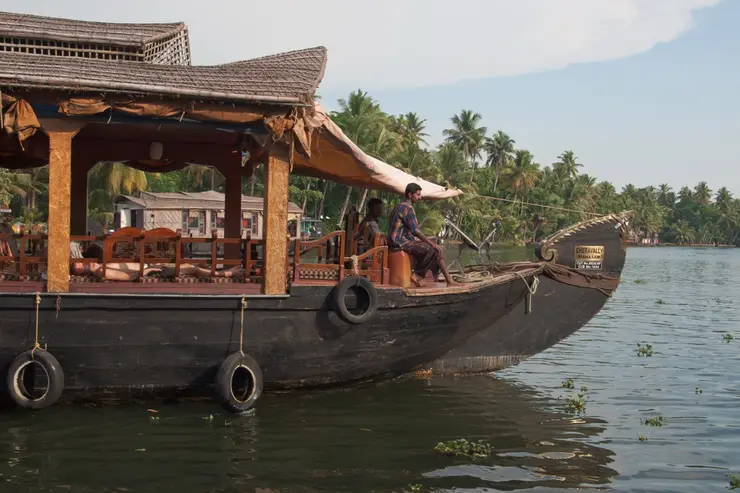
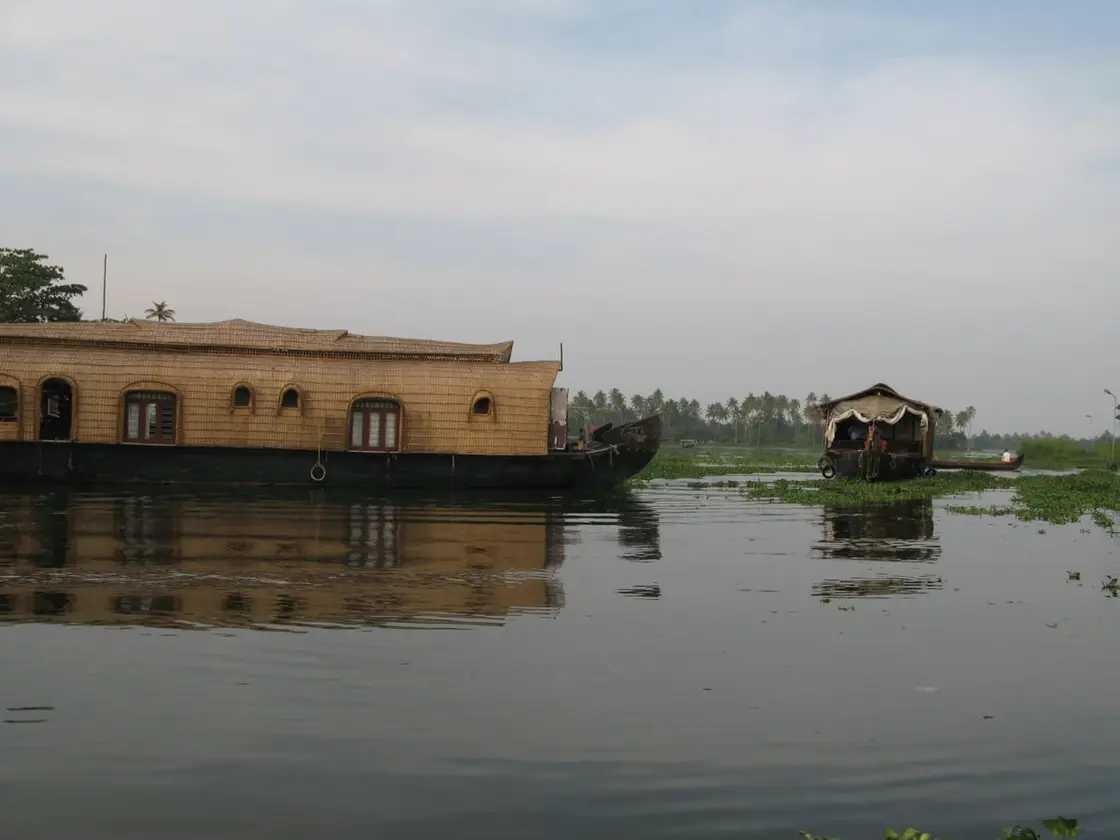
  • Go out onto the backwaters — a shikara for a few hours or a kettuvallam overnight; this is the town those boats were built for.
  • Look at the Jain temple on Gujarati Street — white Rajasthani marble with marble elephants, built without a dome or iron by the Kutchi families Raja Kesavadas invited in — with a Kerala tiled roof directly behind it: the town's history in one view.
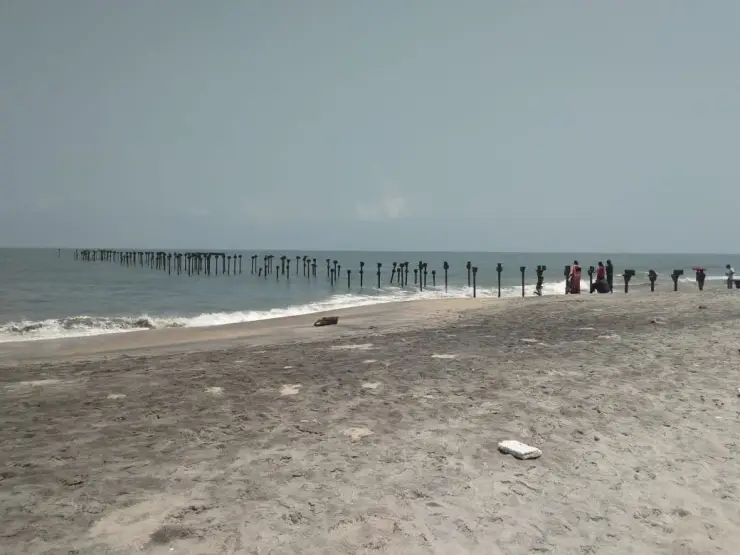
  • Stand on the Alappuzha pier at Beach Road, the sea-facing half of a port whose other half faced the canals.
  • Ride out to the International Coir Museum, 8 km, for the industry itself — then the Revi Karunakaran museum in town for what the coir money actually bought.
  • Take the public ferry at least once. The State Water Transport boats are the backwaters as infrastructure — people going to work and to school, on a timetable, for a few rupees — and the long service to Kollam is most of a day on the water and one of the genuine bargains of Indian travel.
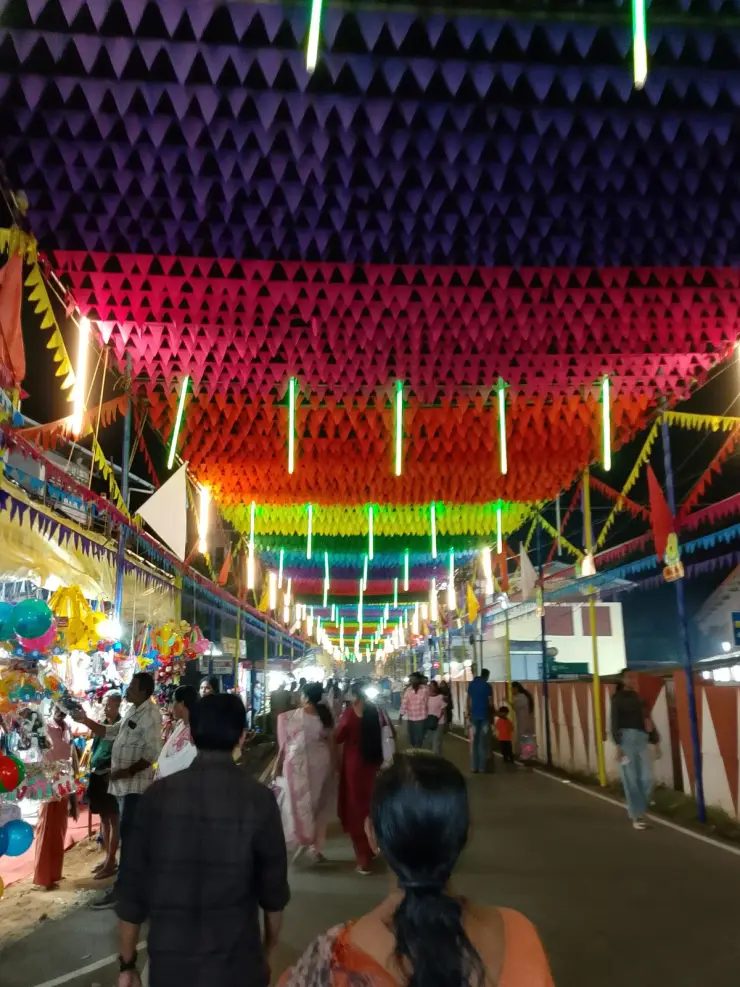
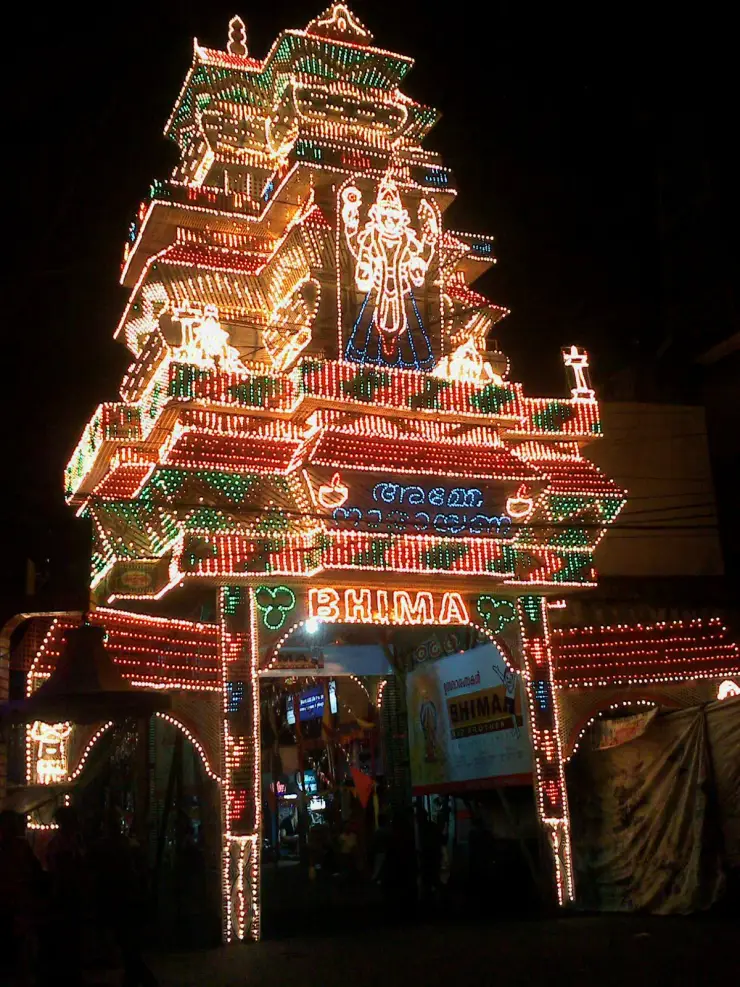
  • Walk into Mullakkal for the temple that anchors the town's calendar — and if you are here in December, the Chirappu: forty-one days of observance, of which the last eleven take over the whole canopied, lit shopping street.
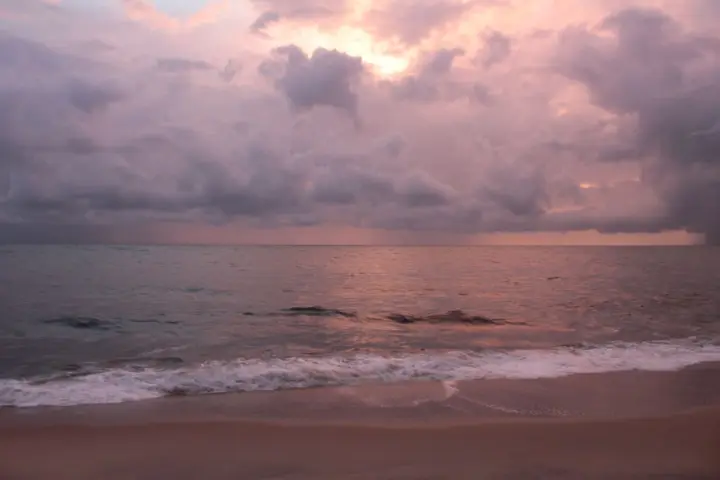
  • Give the beach the evening: a long grey working shore with the ruined piers on it, pleasant at sunset and not a resort beach, with the lighthouse standing behind it.
  • Come for the Nehru Trophy snake-boat race on Punnamada if the date fits, and arrive early if it does.
  • Go south to Ambalappuzha and Karumadi, or east into Kuttanad, where the rice that built this port actually grows.
Plan

Good to know

  • Look down on Beach Road. The rail tracks that carried cargo from the sea pier to the godowns are still set in the surface, and they are the easiest piece of the working port to walk past without noticing.
  • The town behind the jetty was laid out on purpose in 1762 as a trading port, and it is one of the few places in India where a planned eighteenth-century commercial town is still doing recognisably the same job. The canals are the street plan, the warehouses are the reason the canals are there, and the merchant streets are who was recruited to fill them.
  • Houseboat rates are quoted per boat per night and move with the season, the bedrooms, the air-conditioning and the meals. Get the inclusions in writing before a deposit, and be specific about whether the boat cruises or moors after dark — many moor, and that is not a complaint if you knew.
  • About six hundred houseboats work these waters and only around a hundred can prove they treat their sewage. Ask for the Pollution Control Certificate before you book — the certificate, not the assurance.
  • The Heritage Project museums are described in the future tense on project pages dated 2021. Confirm a specific museum has opened before you build a day around it — this is the single thing most likely to waste your morning here.
  • The Nehru Trophy runs on Punnamada on the second Saturday of August — and it moves when it must: the 2024 edition was deferred to 28 September after the Wayanad landslides. Check the current year before you plan around it.
  • Kochi is 54 km on the measured road, about an hour and a half. Alappuzha works as a day trip from Kochi and as a base for the backwaters, and it is a better base than day trip.
  • If you want the backwaters without the industry around them, Kumarakom is calmer and Kollam is quieter and cheaper than either. Alappuzha's own argument is the town.
  • What the town lacks, plainly: no hill and no forest — the Ghats are two or three hours east — no fort or palace, and no airport. The centre is congested and in stretches shabby, with handsome old buildings shut and unrestored, which is exactly what the heritage project exists to address.
  • The two days that work: day one on the water — out early by shikara into the canals the big boats cannot enter, back for the middle of the day, a public ferry in the afternoon; day two on foot — the godown facades and canals in the morning, Mullakkal and Gujarati Street before lunch, the beach and the old pier for sunset.
  • The lighthouse is one of the cheapest climbs in Kerala — the DTPC fee was ₹10 for adults and ₹3 for children at last check; confirm at the gate.
  • The old Customs Office on Beach Road sits below the present road level, because the road has been built up over time and the building's main entrance is now stranded above it. It is a small thing that tells you how long the port has been out of use.
Facilities

On site

  • The canal frontages, Mullakkal, Gujarati Street and Beach Road are open streets with no ticket. Individual Heritage Project museums set their own charges, and every houseboat and backwater trip is a private arrangement priced by the operator.
  • The practical-things list further down this page is OpenStreetMap data routed on foot from the town centre — what is mapped, not a survey. Absence there means nobody has mapped it.
  • Not verified and deliberately not guessed: houseboat and shikara rates, ferry departure times, parking charges and auto fares. Houseboat pricing here moves with the season and the day, and a figure on this page would be out of date before you read it.
  • We have not re-surveyed step-free access in the town or at any jetty. Any step-free figure below is routed over OpenStreetMap’s sparse Kerala network and is not a claim that a route is usable in a wheelchair.
Stay safe

Safety

  • The backwater boats are working transport and private hire, not a regulated attraction. Check that life jackets are actually on board before you board a small craft, and do not take an unlicensed boat because it is cheaper.
  • Alappuzha Beach is an open Arabian Sea shore with no verified lifeguard cover. Treat it as unpatrolled; the pier area in particular has current around it.
  • The town is low and flat and June to September floods the streets nearest the canals. In 2018 this went well beyond inconvenience — check conditions rather than assume a booked houseboat will run.
  • Snake-boat race days fill the Punnamada bank with very large crowds and close roads across the town. That is the point of going, and it is also the reason to arrive early rather than at the start.
Getting around Alappuzha town

If you need step-free access, contact the site before travelling. Ask about a level entrance, steps along the route, the nearest drop-off point, seating and accessible toilets.

Practical things near Alappuzha town
ToiletsPublic toilet 1.1 km · 13 min walkMapped Oct 2022DirectionsDrinking waterFree RO Water Drinking water171 m · 2 min walkMapped Feb 2016DirectionsBus stopsCollectorate Bus stop14 m · under a minute walkMapped Jun 2024DirectionsTaxi & auto standsTaxi / auto stand 838 m · 10 min walkMapped Apr 2021DirectionsParkingRaiban Parking 1.1 km · 13 min walkMapped Jan 2024DirectionsFuelBharat Petroleum Fuel station1.3 km · 16 min walkMapped Mar 2021DirectionsPharmacyShaheen Medicals Pharmacy402 m · 5 min walkMapped Mar 2024DirectionsHospitalMathery Trust Hospital 1.2 km · 14 min walkMapped Jul 2020DirectionsClinicDr. Shamina Rasheed's Clinic 725 m · 9 min walkMapped Jul 2020DirectionsPolice stationTraffic Police Station , Alappuzha 291 m · 3 min walkMapped Jun 2022DirectionsATMSBI e-corner ATM54 m · 1 min walkMapped Feb 2026DirectionsBankSouth Indian Bank 682 m · 8 min walkMapped May 2020DirectionsWater & snacksRation Shop-29, Allissery 236 m · 3 min walkMapped Dec 2021DirectionsGroceries & bakeryKoya's vegitable store 507 m · 6 min walkMapped May 2022DirectionsBarber & salonSaudi Saloon 129 m · 2 min walkMapped Jan 2016DirectionsPost officeAlappuzha Bazar Post Office 1.0 km · 13 min walkMapped Apr 2024DirectionsSomewhere to prayAnna Kamakshi Amma Temple 96 m · 1 min walkMapped Feb 2016DirectionsPublic art & memorialsJanab Abdula Sahib Memorial Memorial516 m · 6 min walkMapped Feb 2016Directions
What the cash actually costs
  • Withdrawing from a bank that is not your own is free for a set number of times a month, then costs up to ₹23 plus GST — about ₹27 a withdrawal. This is not one of the RBI’s six metro centres, so the allowance here is the higher one: at least five free other-bank withdrawals a month, and at least five at your own bank.
  • That free allowance belongs to Indian bank accounts. On a card issued abroad your own bank’s international withdrawal and exchange charges apply instead. If the machine offers to bill you in your home currency, choose rupees — the conversion rate on that offer is set by the machine, not by your bank.
  • Choose a well-lit ATM, preferably at a bank branch. Shield your PIN, avoid help from strangers and use your bank’s support number if a withdrawal fails or the machine retains your card.

Charge cap and free-transaction limits: Reserve Bank of India, in force since 1 May 2025.

These services are listed within about 1.2 km of Alappuzha town. Walking distances follow mapped routes; access and opening hours can change. Other services may be closer but are not included here.

Nearby bases

Where to go from Alappuzha town

Kuttanad, KuttanadBackwater village base
Town / base

Kuttanad

Low-lying paddy and canal region for slow village travel.

Kuttanad canalsPaddy fieldsChampakulamNedumudy
Open Kuttanad guide →
Mararikulam, MararikulamBeach base
Town / base

Mararikulam

Quiet beach belt north of Alappuzha town.

Marari BeachFishing villagesArthunkal Church
Open Mararikulam guide →
Ambalappuzha, AmbalappuzhaTemple base
Town / base

Ambalappuzha

Historic Krishna temple town south of Alappuzha.

Ambalappuzha Sree Krishna TempleKarumadikuttanPunnapra beach belt
Open Ambalappuzha guide →
Haripad and Mannarasala, Haripad and MannarasalaTemple base
Town / base

Haripad and Mannarasala

Serpent shrine and temple circuit in south Alappuzha.

Mannarasala TempleHaripad templesKayamkulam lake side
Open Haripad and Mannarasala guide →
Cherthala, CherthalaCoastal taluk-town base
Town / base

Cherthala

Taluk town on NH-66 between Alappuzha and Kochi — the Karthyayani temple at its centre, the Cherthala Pooram and its padayanis, and the lagoon-and-coast country north of Alappuzha.

Cherthala Karthyayani TempleKakkathuruthu
Open Cherthala guide →
Chengannur, ChengannurPampa-side temple base
Town / base

Chengannur

Rail and pilgrim town on the Pampa in eastern Alappuzha, carrying two crowds. It starts the Pancha Pandava circuit of five Divya Desams, and it is the railhead most Sabarimala pilgrims arrive at.

Chengannur Mahadeva TempleThrichittatt Maha Vishnu TempleChakkulathukavu Bhagavathy Temple
Open Chengannur guide →
Mavelikkara, MavelikkaraOnattukara temple town
Town / base

Mavelikkara

Market and temple town on the Achankovil in eastern Alappuzha — Kandiyoor’s 823 AD epigraph, the Buddha at Buddha Junction, and the Onattukara country of Chettikulangara’s kettukazhcha.

Kandiyoor Sree Mahadeva Temple
Open Mavelikkara guide →
In the district

Where Alappuzha town sits in Alappuzha district

District HQAlappuzha
LandscapeBackwaters & coastal Kuttanad

Alappuzha district is known for: The Alleppey backwaters, houseboats and the Nehru Trophy Boat Race.

Houseboat cruisesAlleppey Beach & pierKuttanad — farming below sea level
Stay · eat · do · rent · see · shop

Places in Alappuzha town

Every verified place in Alappuzha town — filter by what you’re after.

21 places to stay in Alappuzha town

M
Matthews Palmy Residency
Place to stay
Hotel · Alappuzha Town
Matthews Palmy Residency

Matthews Palmy Residency is a budget guesthouse near Finishing Point Road in Alleppey, a short ride from the Boat Jetty. Its six air-conditioned rooms come with Wi-Fi and 24-hour front-desk help at value tariffs.

Directions Commission-freeView details
L
Lake Canopy Luxury Resort
Place to stay
Hotel · Alappuzha Town
Lake Canopy Luxury Resort

Backwater resort with cottages, pool villas and jacuzzi rooms on the banks of Punnamada Lake, North Aryad, Alappuzha.

Directions Commission-freeView details
P
Palmgrove Lake Resort
Place to stay
Hotel · Alappuzha Town
Palmgrove Lake Resort

Lakeside resort with heritage-style villas on the banks of Punnamada Lake, Alappuzha. It sits in the Nehru Trophy ward of Punnamada, on the Vembanad backwater fringe.

Directions Commission-freeView details
P
Pagoda Resorts
Place to stay
Hotel · Alappuzha Town
Pagoda Resorts

Backwater resort with pagoda-style cottages and an indoor pool at Chungam, Mullackal, Alappuzha town.

Directions Commission-freeView details
V
Vembanad Village Backwater Resort
Place to stay
Hotel · Alappuzha Town
Vembanad Village Backwater Resort

Lakefront backwater resort run by EGH Resorts, with lake-view rooms and cottages near North Aryad, Alappuzha. The property faces Vembanad Lake on the northern edge of the district.

Directions Commission-freeView details
L
Lakes & Lagoons Tour Company
Place to stay
Hotel · Alappuzha Town
Lakes & Lagoons Tour Company

ISO-certified houseboat cruise operator running a fleet of luxury kettuvallams in the Alleppey backwaters. It is based at the DTPC building, Sanathanapuram, Pallathuruthy, Alappuzha.

Directions Commission-freeView details
K
Keralan Homestays
Place to stay
Homestay · Alappuzha Town
Keralan Homestays

Keralan Homestays is a valid Alappuzha homestay record and should not be removed only because its original source was an OTA link. Current evidence places it around Sreevalsam Inn / Punnamada Finishing Point Road in Alappuzha, useful for travellers needing a small stay near the backwater-boat zone while a direct owner site is still being searched. WiFi.

Directions Commission-freeView details
R
Rainbow Cruises
Place to stay
Verified
Houseboat operator · Alappuzha Town
Rainbow Cruises

Houseboat operator running a large fleet of Gold-Star kettuvallams in the Alleppey backwaters, Avalookunnu, Alappuzha.

Directions Commission-freeView details
K
Kerala Houseboat
Place to stay
Verified
Houseboat operator · Alappuzha Town
Kerala Houseboat

Alleppey houseboat operator near Finishing Point with direct phone, mobile and booking contacts. Houseboat, Finishing Point, Alleppey.

Directions Commission-freeView details
S
Spice Routes Luxury Cruises
Place to stay
Verified
Houseboat operator · Alappuzha Town
Spice Routes Luxury Cruises

Ultra-luxury houseboat operator running spice-named kettuvallams through the Alleppey backwaters, based at Chennamkary, Alappuzha.

Directions Commission-freeView details
L
Lake Palace Resort
Place to stay
Verified
Resort · Alappuzha Town
Lake Palace Resort

Backwater resort near the Nehru Trophy finishing point and Vembanad Lake. Thirumala Ward, Chungam, Alleppey, Alappuzha, Kerala 688011 · Backwater resort, Vembanad Lake, Nehru Trophy area.

Directions Commission-freeView details
U
Uday Backwater Resort
Place to stay
Verified
Resort · Alappuzha Town
Uday Backwater Resort

Backwater resort on the shores of Vembanad Lake at Kottankulangara, Punnamada, Alappuzha. Punnamada, Backwater resort, UDS Hotels.

Directions Commission-freeView details
X
Xandari Riverscapes
Place to stay
Verified
Houseboat stay · Alappuzha Town
Xandari Riverscapes

Fleet of luxury air-conditioned kettuvallam houseboats cruising the Alleppey backwaters, based near Pallathuruthy Bridge, Alappuzha.

Directions Commission-freeView details
P
Punnamada Resort
Place to stay
Verified
Resort · Alappuzha Town
Punnamada Resort

Backwater resort with heritage villas and houseboats overlooking Punnamada Lake at Kottankulangara, Alappuzha.

Directions Commission-freeView details
R
Ramada by Wyndham Alleppey
Place to stay
Verified
Hotel · Alappuzha Town
Ramada by Wyndham Alleppey

Large Ramada by Wyndham hotel facing Punnamada backwaters at the Nehru Trophy Boat Race finishing point, Alappuzha.

Directions Commission-freeView details
R
Raheem Residency
Place to stay
Hotel · Alappuzha Town
Raheem Residency

Raheem Residency is a restored 1868 heritage mansion on Alleppey beach, run as a boutique luxury hotel with an infinity pool, antique-furnished rooms and an acclaimed restaurant. It is regularly ranked among Kerala's finest heritage boutique stays and draws an international clientele to the Alappuzha seafront.

Directions Commission-freeView details
R
Royal Park
Place to stay
Hotel · Alappuzha Town
Royal Park

Hotel Royale Park is a long-running three-star hotel in central Alleppey with a banquet hall, restaurant and air-conditioned rooms. It sits close to the Boat Jetty and railway station, making it convenient for backwater day trips.

Directions Commission-freeView details
H
Hotel AJ Park
Place to stay
Hotel · Alappuzha Town
Hotel AJ Park

Hotel AJ Park is a budget hotel about 1.5 km from Mullackal Temple in Alleppey, with a garden, restaurant and free parking. It offers value-priced air-conditioned rooms with a 24-hour front desk and room service.

Directions Commission-freeView details
P
Palm beach resort
Place to stay
Hotel · Alappuzha Town
Palm beach resort

Palm Beach Resort is a three-star property near Alappuzha Beach with a swimming pool, restaurant and sea-facing rooms. Its mid-range rooms suit travellers who want a comfortable base for houseboat cruises and Ayurveda sessions.

Directions Commission-freeView details
C
Cherukara Nest
Place to stay
Hotel · Alappuzha Town
Cherukara Nest

Cherukara Nest is a family-run budget heritage guesthouse about a kilometre from central Alleppey. It offers simple air-conditioned and non-AC rooms with home-cooked meals on request at value tariffs.

Directions Commission-freeView details
A
Arcadia Regency
Place to stay
Hotel · Alappuzha Town
Arcadia Regency

Contemporary town hotel with an indoor pool near Iron Bridge and Mullackal temple, central Alappuzha.

Directions Commission-freeView details

Book with the place itself. India’s cyber-crime coordination centre warned in April 2025 that convincing copies of hotel and pilgrimage booking sites are being pushed through sponsored search and social ads, taking payment for rooms the property never hears about. Every listing here links to the business’s own contact details and its own Google or Bing profile — we take no commission and sit in nobody’s payment path. If a booking page reached you through an ad, check the address bar against the property’s own site before you pay. Fraud can be reported on cybercrime.gov.in or on 1930.

Ranked

The best of Alappuzha town, ranked

Nearest to the centre of Alappuzha town, on foot

Ordered by a real routed walk from the town centre — a different question, and the one that decides what you can do before lunch. Straight-line distance understates a real walk by about half again, so these are walking-network figures, not lines on a map.

Everything around Alappuzha town, by distance

Every place we hold for Alappuzha town, ordered by a real routed drive from the town centre. Times are free-flow and a real road rarely is, so read them as the floor rather than the estimate — anything that routed over ninety minutes is left out rather than published as a number we do not trust.

The full guide

Planning a trip to Alappuzha town?

This page lists the places. The Alappuzha town travel guide covers the rest — what to eat, festivals, how safe it is, what it costs and how to get around.

Places to visit

The places themselves, around Alappuzha town

The best tourist places to visit in Alappuzha town — temples, viewpoints, lakes, heritage and nature, each with a full guide, how to reach it and what to see nearby.

Alappuzha Beach, Alappuzha town
PlaceAlappuzha Beach

The thing worth walking to is the wreck of the pier. A thousand feet of iron sea bridge was built out into the surf in 1862 under Captain Hugh Crawford so that ships could load coir without a harbour; what is left is a line of pillars and some railing, worn by the sea and knocked about further by the 2004 tsunami. It is the clearest surviving evidence that this beach town was once an industrial port.

Open guide →
Alappuzha Lighthouse, Alappuzha town
PlaceAlappuzha Lighthouse

One of the oldest lights on the south-west coast, and its dates are unusually well recorded: the first stone laid on 26 April 1860 by the wife of the port officer Hugh Crawford, and the light commissioned on 28 March 1862 with a first-order Chance Brothers optic burning coconut oil on a double wick. It is built of laterite and teak, with a teak spiral stair inside; the lighthouse authority gives the tower as about 28 m and the focal plane as about 33 m.

Open guide →
Finishing Point, Alappuzha town
PlaceFinishing Point

The finish of the Nehru Trophy course on Punnamada, with the pavilion the crowd fills on the second Saturday of August — the 2026 race is the seventy-second. For the rest of the year it is a working stretch of water where houseboats moor and the chundan vallams are not in it, so come for the setting and the water rather than expecting the race. If you want the race, book the pavilion seats early; they sell out.

Open guide →
Canal walks, Alappuzha town
PlaceCanal walks

The canals are the reason the town exists and they are, slowly, being repaired. Vadai canal, the Commercial canal and the links between them are the backbone; a state project through KIIDC, funded by KIIFB, covers nine major canals and two sub-canals — about 23 km — for dewatering, deepening and bank work, at roughly ₹42.85 crore. Alongside it Canalpy, a KILA-funded study with IIT Bombay and NEERI, has been working out how to restore them without evicting anybody. Walk them to see what a canal town looks like mid-repair.

Open guide →
For hotels, homestays and local businesses

Get listed in Alappuzha town for free

Roampedia is commission-free. Travellers discover your business, book directly and contact you through official details. Basic listings are free, while Gold and Platinum package upgrades can be requested from the owner dashboard after approval.

List your business — free
Read before you go

Alappuzha town guides, stories & itineraries

Stories & history of Alappuzha town

Written about Alappuzha town itself — its history, its legends and the arguments about them.

Around Alappuzha town

These are written about individual places you can reach from Alappuzha town, rather than about the town as a whole.

Alappuzha Lighthouse in 1862: the tower behind the stripes
Read before you go
Alappuzha Lighthouse in 1862: the tower behind the stripes

Read the shape, scale and documented beginnings of Alappuzha’s working lighthouse before climbing it.

3 min read · Read →
Alappuzha Lighthouse Museum: how a lamp became a sea signal
Read before you go
Alappuzha Lighthouse Museum: how a lamp became a sea signal

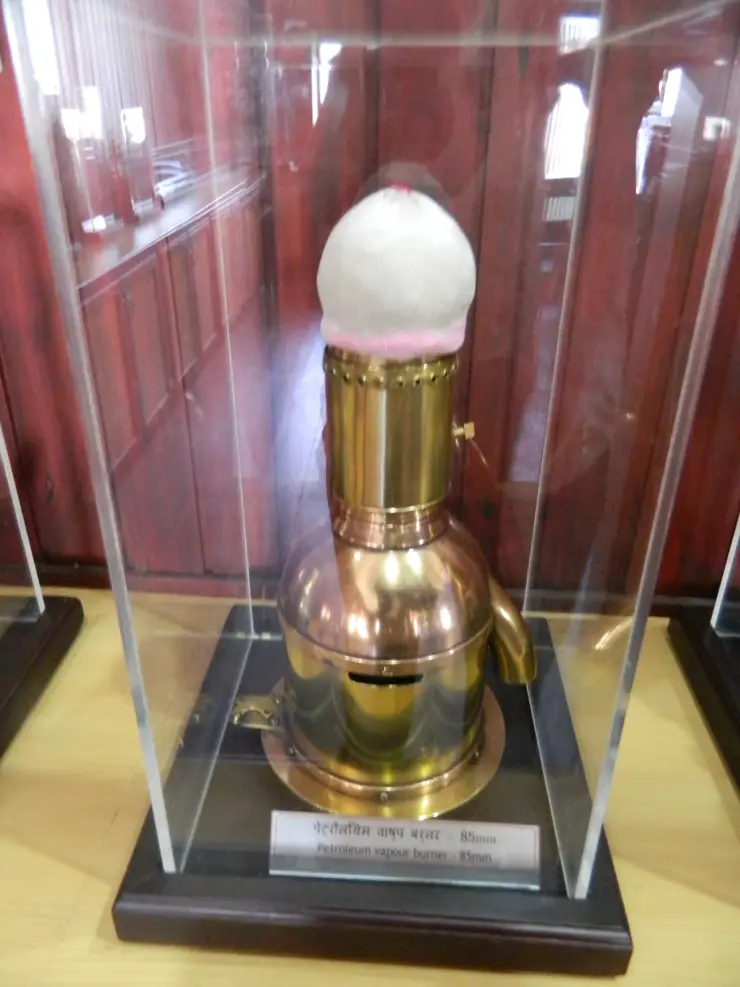
Use the museum’s historic lamps and optical equipment to understand the work hidden inside a lighthouse lantern.

3 min read · Read →
The view inland from Alappuzha Lighthouse: railway, roofs and sea
Read before you go
The view inland from Alappuzha Lighthouse: railway, roofs and sea

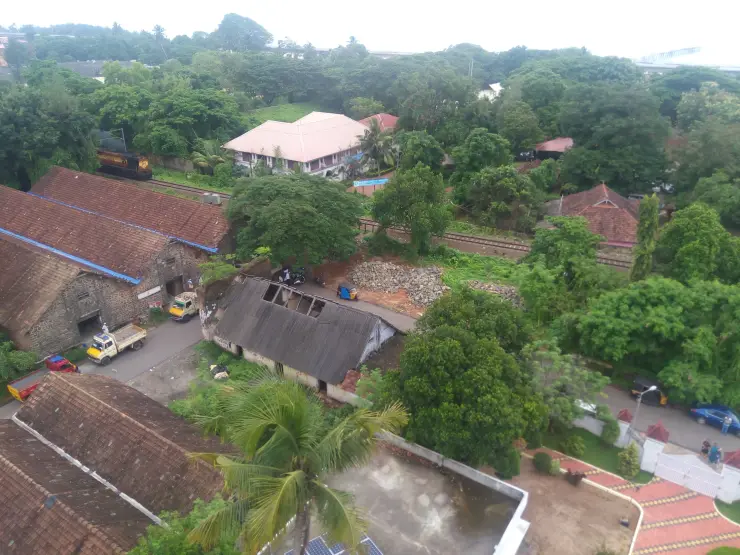
Look beyond the horizon to understand how the lighthouse sits within Alappuzha’s transport and waterfront landscape.

3 min read · Read →
The goddess who was replaced: Mullakkal, 1961 and 1962
Story
The goddess who was replaced: Mullakkal, 1961 and 1962

A Kerala temple does not ordinarily change its principal deity. Mullakkal did, within living memory, and we know the date — 16 July 1962. We do not know the name of the man whose embrace began it, and the only unbroken link to the goddess he touched is an evening offering of vada.

8 min read · Read →
Chirappu belongs to the street: Alappuzha’s festival of lit arches
Story
Chirappu belongs to the street: Alappuzha’s festival of lit arches

Alappuzha’s biggest festival has its centre of gravity in the wrong place, and that is what makes it interesting. The arches are not on temple ground. They are over a commercial street, and the name spelt across them in lights belongs to a shop you can walk into.

8 min read · Read →
The Prime Minister who jumped into the winning boat
Story
The Prime Minister who jumped into the winning boat

Most trophies are commissioned. This one was a thank-you note. Nehru went home to Delhi, had a snake boat made in silver, signed it, and posted it back to the lake where he had misbehaved.

8 min read · Read →

Planning a trip to Alappuzha town

The practical half — what is actually here, in what order to see it, and how to arrive.

Kerala-wide guides & itineraries

Route-level itineraries and practical guides for the rest of the state.

See all 100 Alappuzha guides & stories →

Map

Where things are in Alappuzha town

FAQ

Alappuzha town travel FAQs

Which trading communities settled in Alappuzha, and why?

Raja Kesavadas opened the port in 1762 and then recruited merchants to fill it, offering land and infrastructure to trading families from Surat, Bombay and Kutch. Gujarati, Rajasthani, Tamil and Halai Memon houses came on those terms; Konkani families were arriving separately, pushed south from Goa during the Portuguese and Dutch periods, and English Wikipedia records that a majority of them settled at Alappuzha. The purpose was commercial warfare rather than hospitality — Travancore needed traders who were not answerable to the Dutch.

Is there a Jain temple in Alappuzha?

Yes, and it is the clearest surviving marker of the Gujarati merchant settlement. It is built in white marble with cusped arches, shikhara domes and marble elephants at the steps — a north Indian idiom, visibly unlike the laterite and tiled-roof building around it.

How old is the Saukar Masjid?

⚠ The sources disagree irreconcilably. The conservation architects who restored it describe it as about 250 years old, built by Gujarati Halai Memons on land donated by Raja Kesavadas during Dharma Raja’s reign, which points to roughly the 1770s. English Wikipedia gives the build date as 1850. Kesavadas died in 1799 and cannot have donated land for an 1850 building, so one of these is wrong; we print both and lean to neither. It was conserved in 2021 under the Alappuzha Heritage Project.

What is the Alappuzha Heritage Project?

A large conservation programme, described by its architects as the first of its kind in India, covering around twenty museums, eleven memorials and five other public spaces in the old port town. Its components include the Port Museum in the 1762 Port Office Complex, a Museum of the Labour Movement in the former Bombay Company building, a Coir History Museum in the former Volkart Brothers factory, and the 2021 conservation of the Saukar and Maqam masjids. ⚠ Several components are still described in the future tense by their own conservators — check what is actually open before planning around it.

Was there anything here before 1762?

Yes, and the emptiness story is the town’s real founding myth. The Devi temple at Mullakkal stands inside the 1762 plan and remembers itself as centuries older. Further out, this coast held Srimulavasam, a Buddhist monastery endowed by the Ay dynasty and known as far away as Afghanistan, which tradition and offshore finds agree was lost to the sea. ⚠ Srimulavasam was not in the town — it is placed between Ambalappuzha and Thrikkunnappuzha, some way down the coast.

Did the trade have a cost for the town?

It did, and it is rarely mentioned. As the coir business grew, the stagnant lagoons around Alappuzha were filled with the coconut husks the industry needed. Mosquito numbers rose with them, and the conservation record for the town states plainly that people were infected with elephantiasis, known locally as Cochin leg.

What happened to Raja Kesavadas?

After Dharma Raja’s death he was declared a traitor by the incoming regent, Jayanthan Sankaran Namboodiri, placed under house arrest and stripped of his assets, and poisoned on 21 April 1799. He had been made Dewan on 22 September 1789 and was given the title Raja by the British Governor Mornington; Alappuzha called him Valiya Diwanji.

What are the best places to visit in Alappuzha town?

Top places to visit in Alappuzha town include Alappuzha Beach, Alappuzha Lighthouse, Finishing Point, Canal walks — each has a full guide with how to reach it and what to see nearby on this page.

How do I reach Alappuzha town?

The nearest airport to Alappuzha town is Cochin (COK), ~86 km. The rail gateway is Alappuzha (coastal line).

What is the best time to visit Alappuzha town?

October to March is the driest and most comfortable season to visit Alappuzha town and the rest of Kerala. The June–September monsoon is lush and green but wet, and often brings lower low-season prices.

Photographs: Zacharias D’Cruz (Public domain), Pradeep717 (CC BY-SA 4.0), Jaisonll799 (CC0). Wikimedia Commons.

Image credits