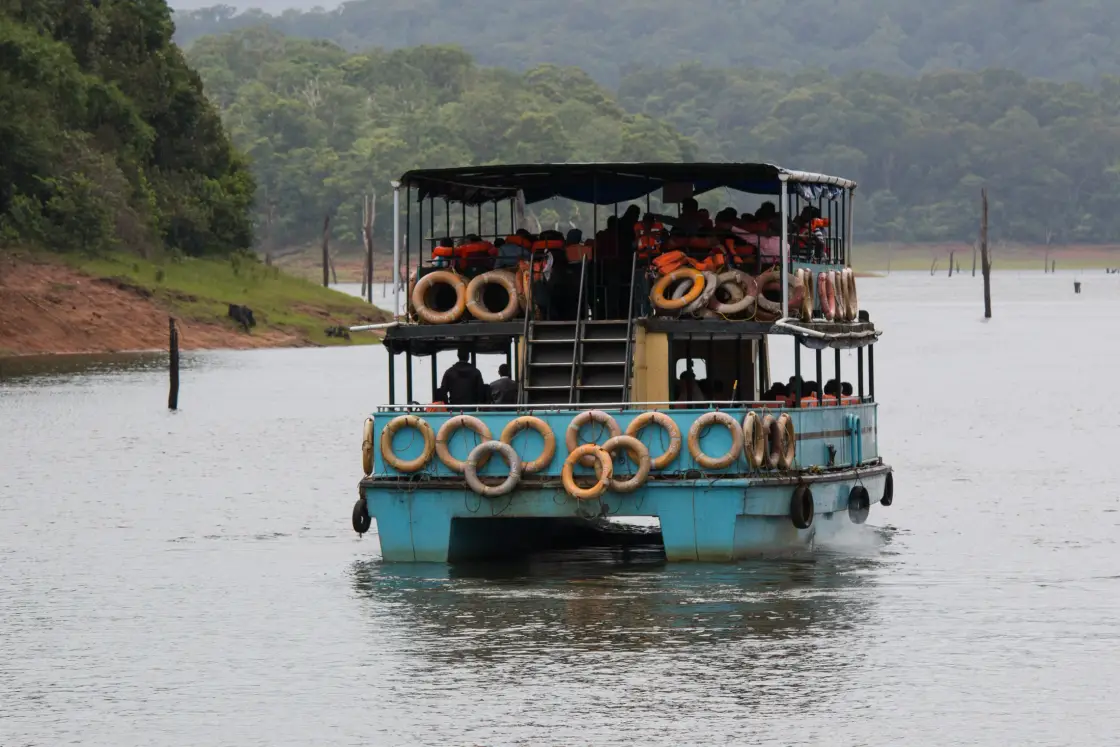
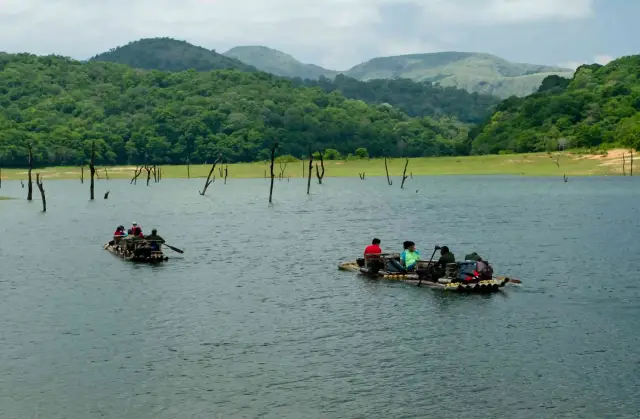
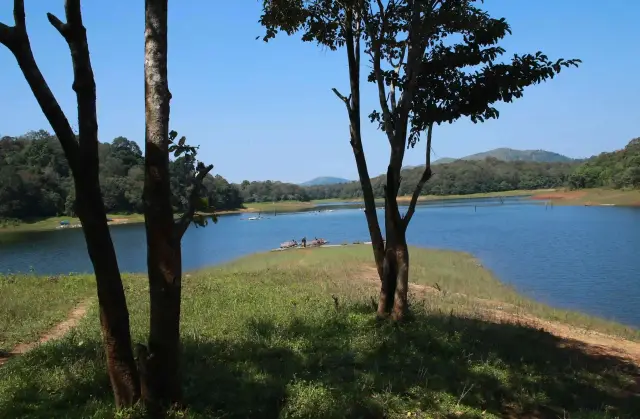
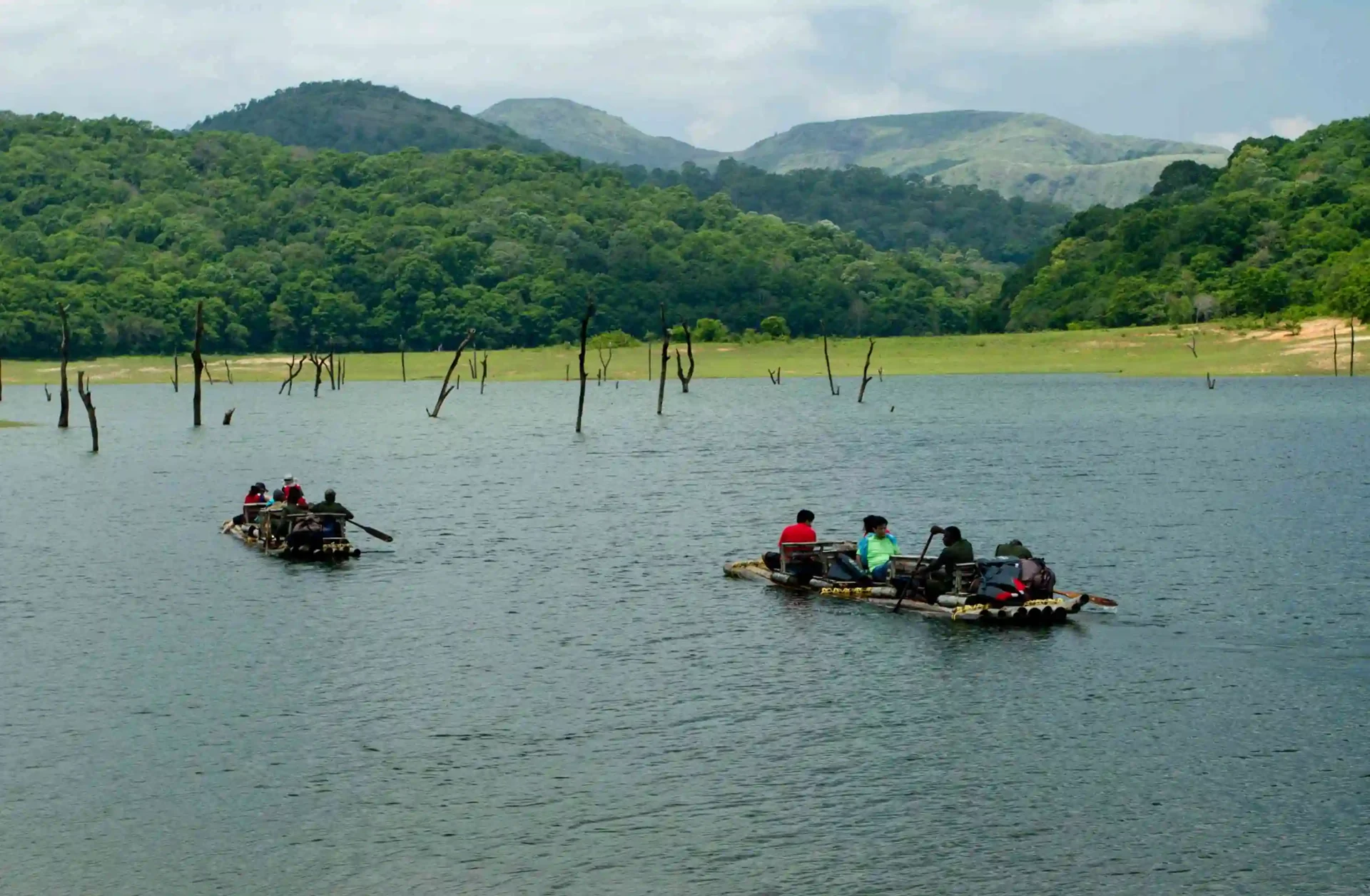
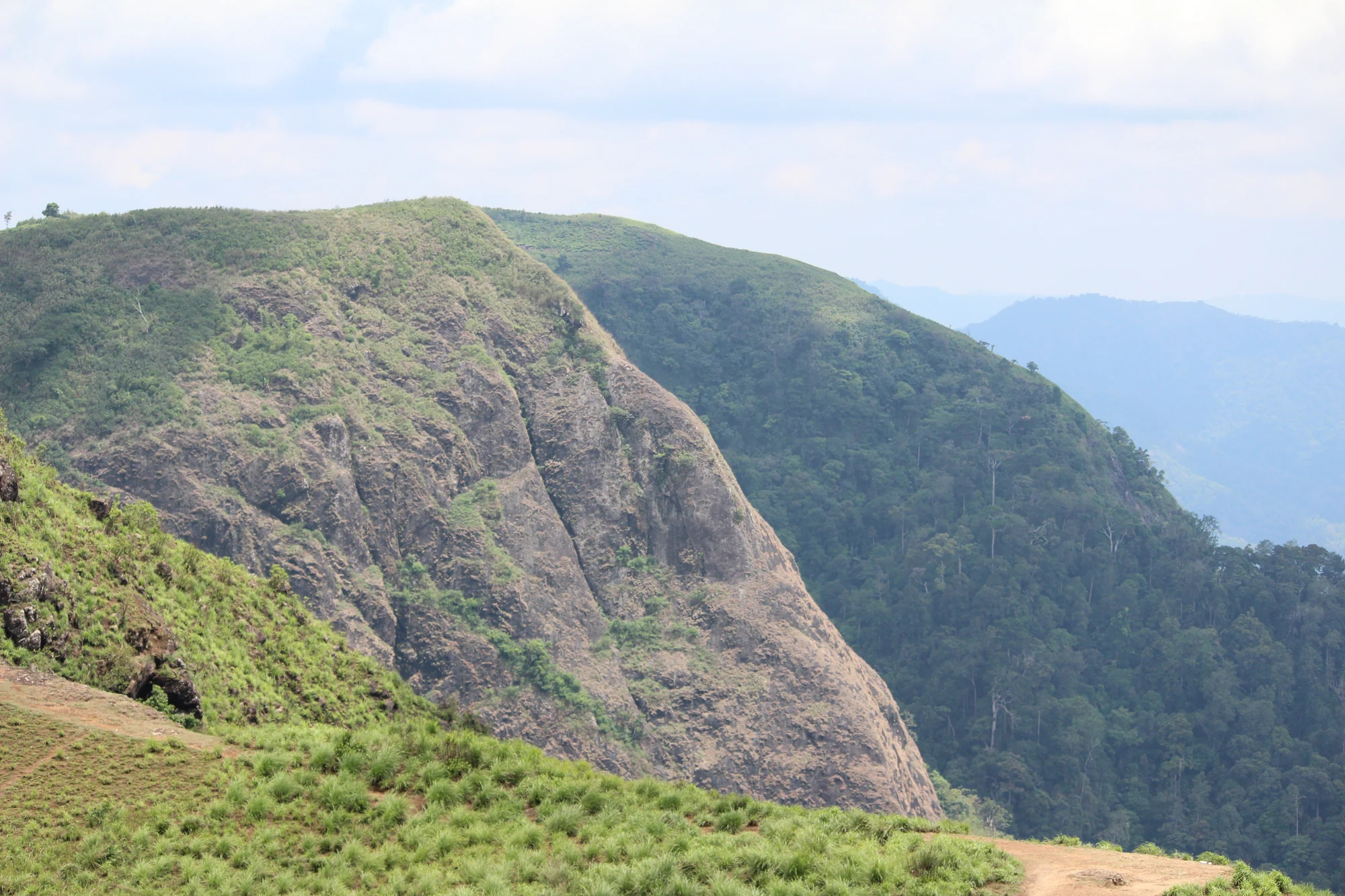
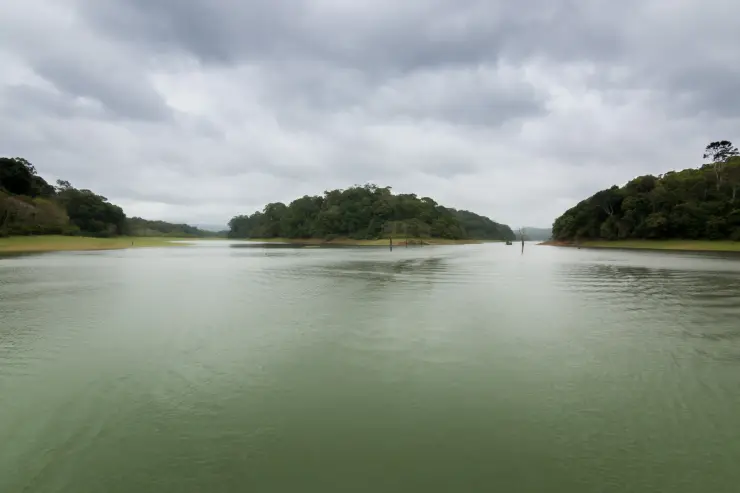
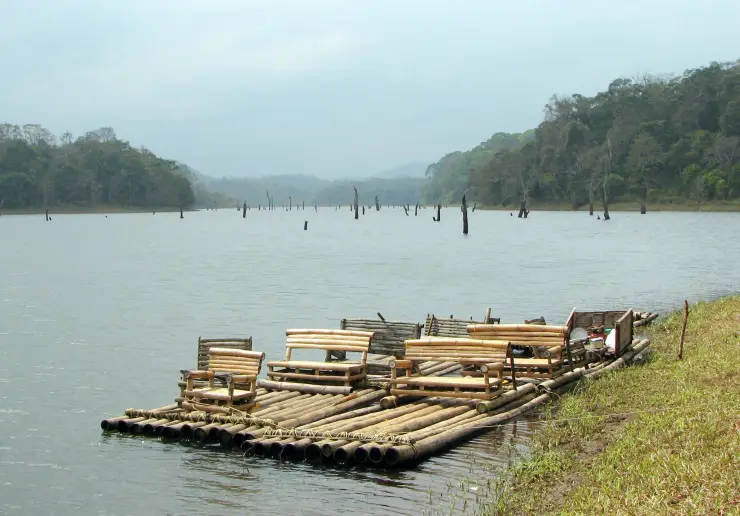
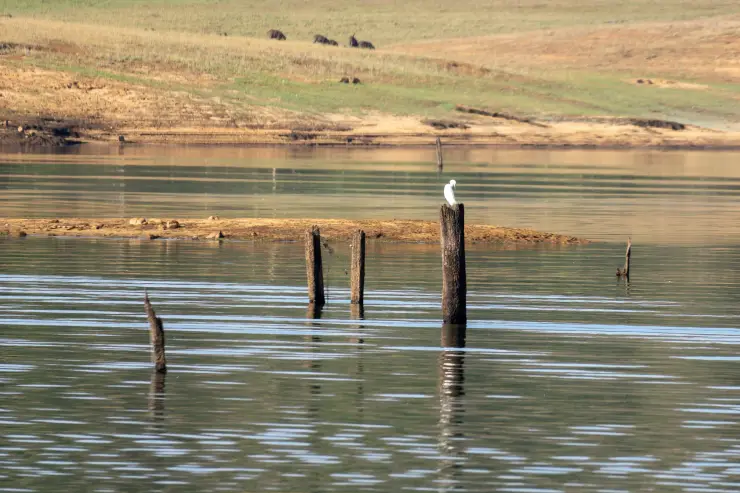
A dark trunk standing alone in open water is one of Periyar’s most recognisable details. Behind it, forest follows the curve of a hill; below it, the reflection breaks as a boat passes. The scene joins the history of a flooded valley with the present life of a protected landscape.
The story of Periyar boat safari
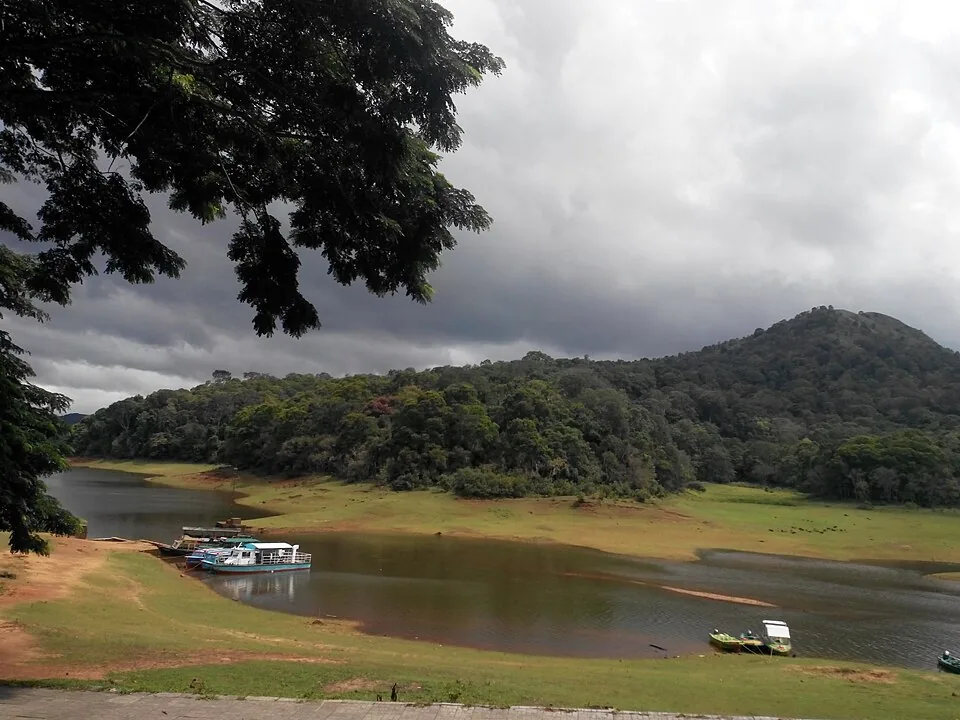
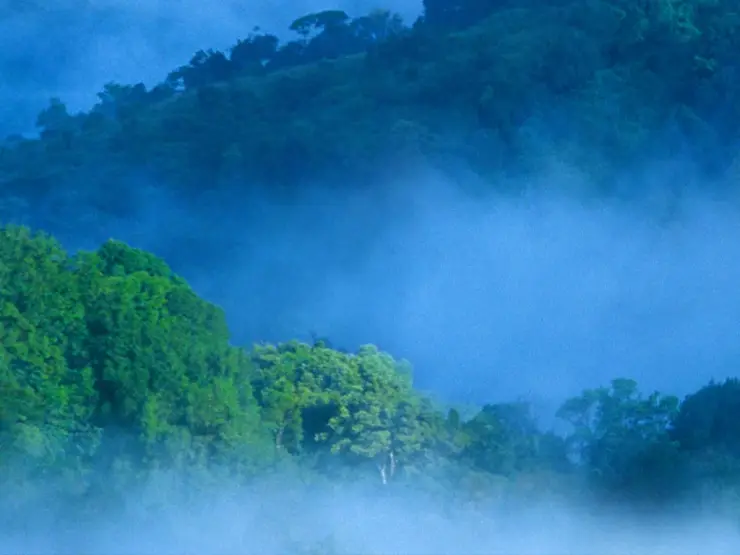
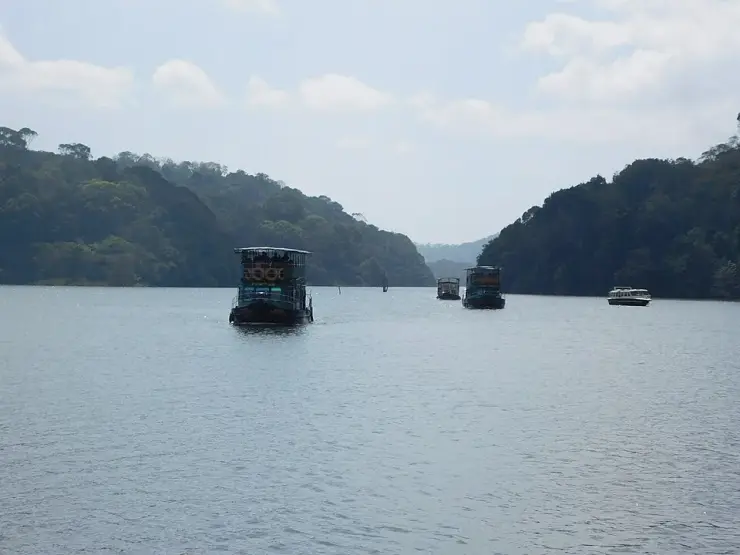
From a moving boat, the lake is not one unchanging panorama. A wooded point blocks the view, the next bend opens another reach, and a grassy margin appears between water and trees. Watching those transitions gives the trip a rhythm even before an animal is seen. The shoreline becomes the place where several different habitats meet.
The water itself belongs to a human-made reservoir. Kerala Tourism’s history connects its formation with completion of the Mullaperiyar dam in 1895. The standing trunks visible above the surface help make that altered landscape legible. The visitor sees the lake as it is now, while those vertical remnants suggest an earlier ground surface beneath it.
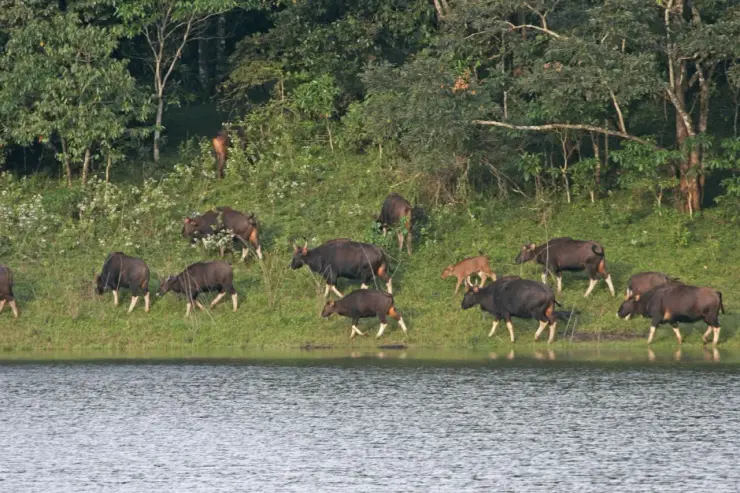
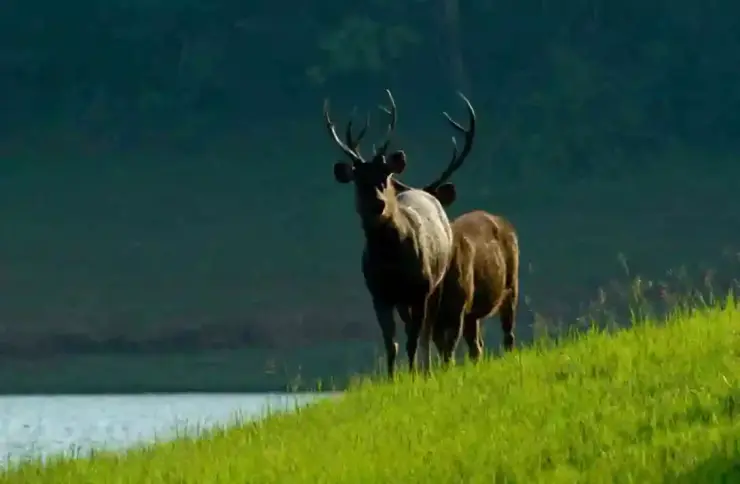
That history does not make the wildlife artificial. The reserve’s animals use the surrounding forest and open margins according to their own movements. A herd seen at the water’s edge may be far from the boat, partly hidden or present for only a short part of the sailing. The experience rewards attention to distance and context rather than a checklist of animals supposedly included in the fare.
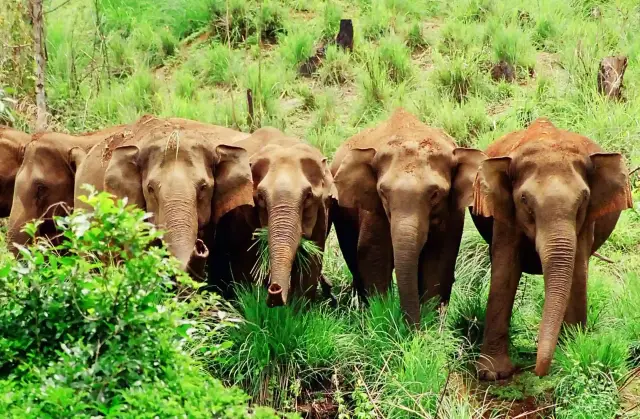
A photograph of gaur illustrates this well: the animals occupy a strip of green above the water, with dense vegetation rising behind them. The pale lower legs and heavy bodies help separate the animals from the darker background. In a wider view, the same herd can become a small detail in a large wooded inlet. Both views describe the encounter honestly, but they create very different expectations.
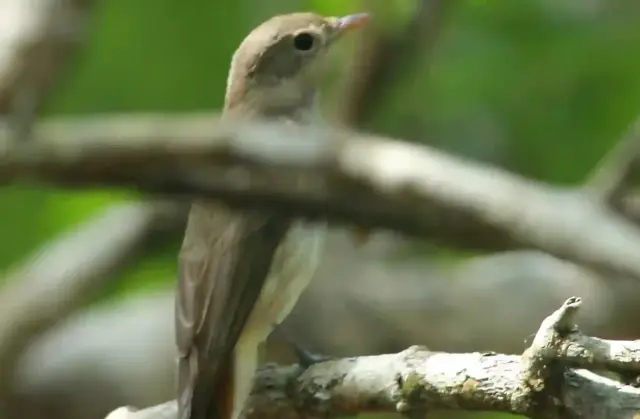
Birds give the trunks another role. The reserve’s boating account mentions darters, egrets and kingfishers around the lake, and its conservation material discusses water birds using the aquatic landscape. A bare snag may be a perch rather than empty scenery. Scan the tops and side branches, then look back to the water and bank; movement may be easier to notice than a still outline.
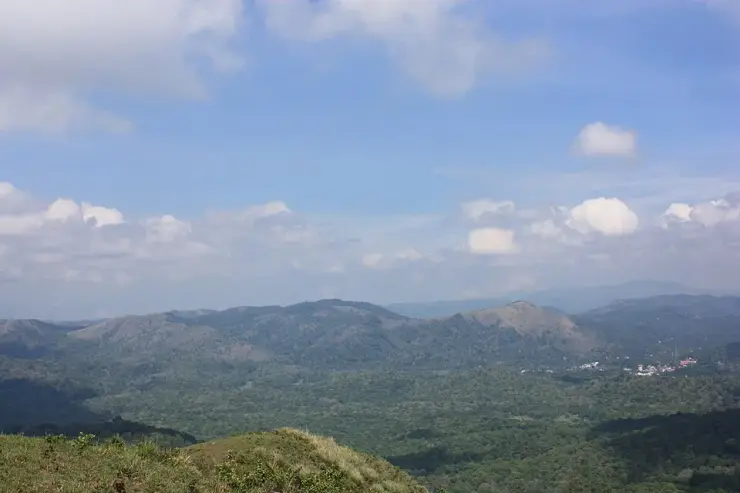
Water level affects the visual relationship between these features. A wider exposed bank changes the distance between forest and water, while a higher edge can bring the surface nearer the trees. This is one reason photographs taken in different seasons can look like different routes. Avoid treating the width of grass in an old image as a condition that will be repeated on a booked day.
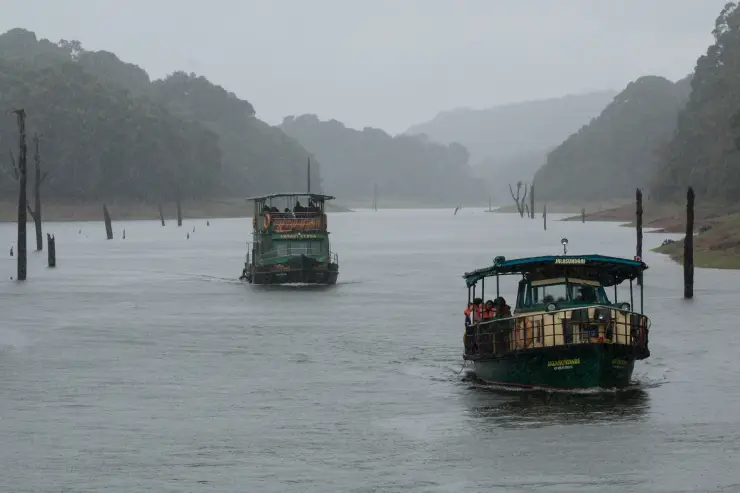
The boats remain inside a managed visitor programme. A lake-facing photograph can hide the practical sequence that makes the ride possible: town arrival, the Anavachal counter, a reserve bus, the landing and boarding. Understanding that sequence removes the temptation to rush into the forest road late or mistake the lake marker for somewhere a private vehicle can simply drive.
The most rewarding way to finish the trip is to remember a relationship rather than only a sighting: birds on exposed timber, a herd between grass and trees, or rain softening successive wooded points. Periyar’s value from the water lies in seeing these features together. A tiger-reserve name sets the conservation context; it does not turn a passenger-boat ride into a promised tiger encounter.