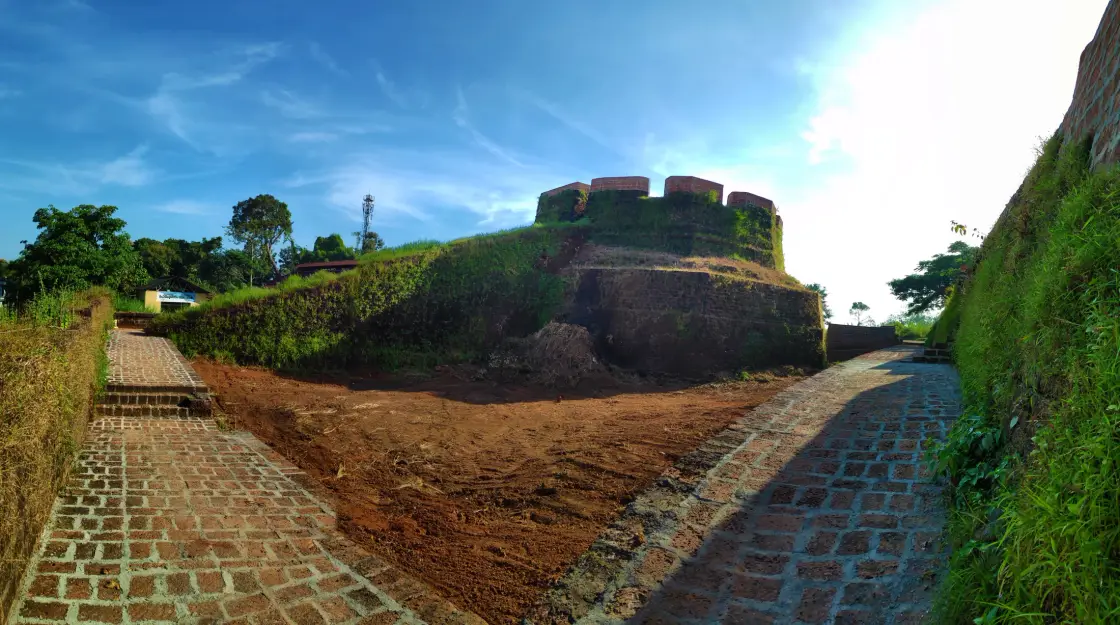
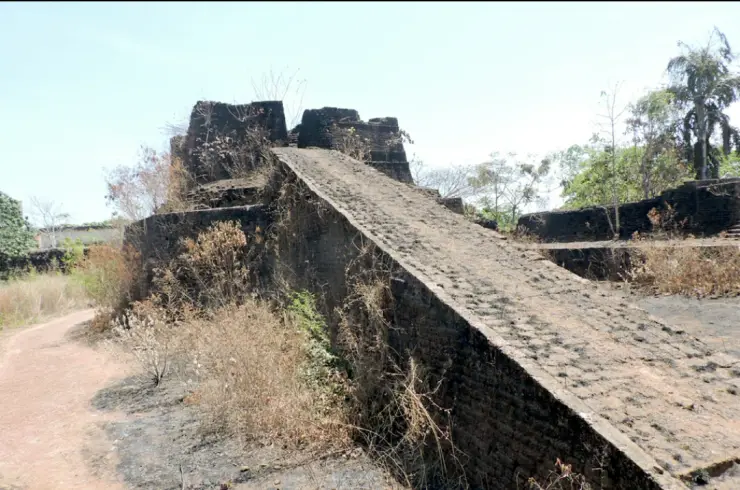
Hosdurg’s surviving fort is a study in mass and approach. A broad ramp leads towards a raised bastion, while the curved walls hold their shape above the lower ground. Around them, Kanhangad continues its everyday life. The fort’s interest lies in that meeting of old defensive construction and the modern town.
The story of Hosdurg Fort
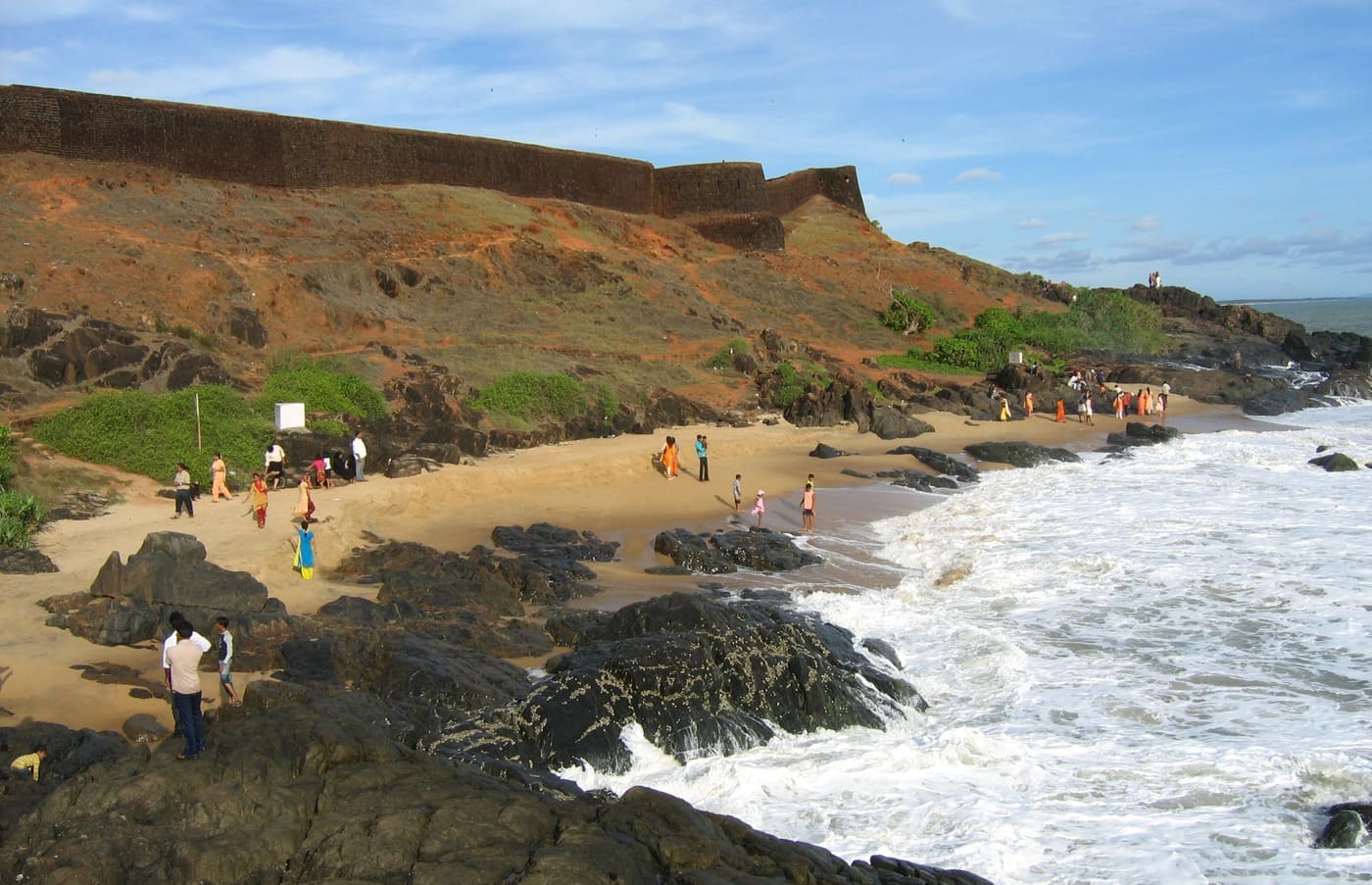
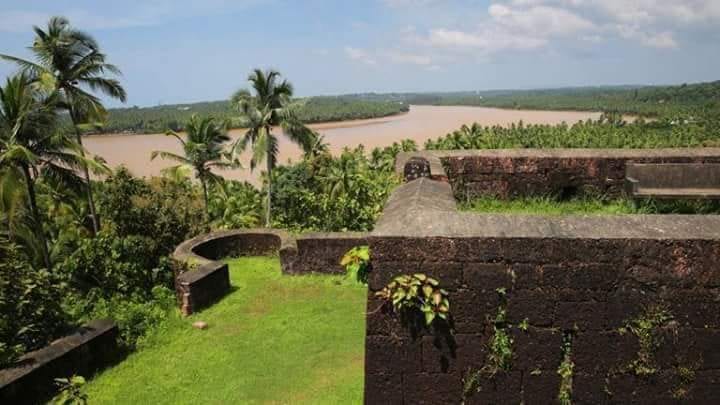
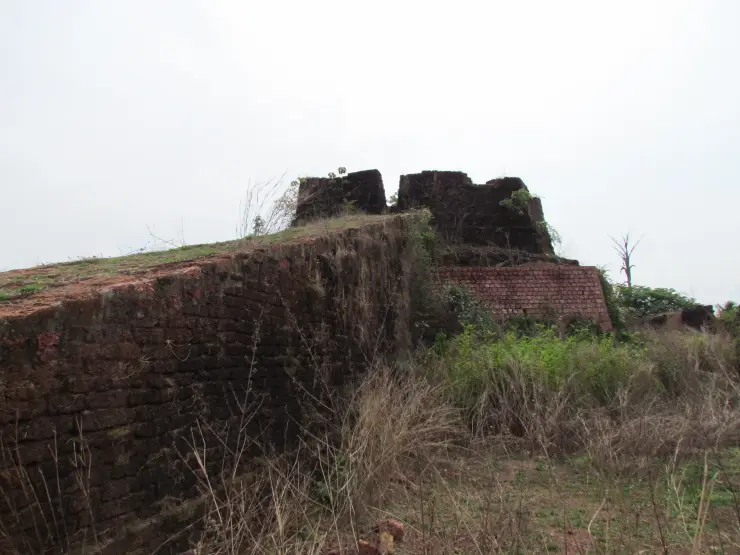
The most distinctive view begins below the bastion. Its lower mass spreads out before the upper wall rises above it, giving the structure a stepped profile. Red-toned blocks along the top contrast with darker, vegetation-covered surfaces below. The form is easier to understand when the whole rise is visible than from a close view of one wall alone.
The ramp supplies a different geometry. It runs towards the raised structure in a straight, broad line, connecting lower ground with the upper level. In older photographs, individual stones and weathered edges are exposed; in greener views, grass partly conceals them. These changes affect the visitor’s view and footing without changing the ramp’s role in the overall composition.
Hosdurg belongs to the fort-building history associated with the Ikkeri or Keladi Nayakas. Kasaragod district administration names Somashekara Nayak as its builder, while Kerala Tourism places the fort within the period of Nayaka expansion into northern Kerala. The surviving structure gives that regional history a physical presence in Kanhangad.
The name offers another entry into the story. Kerala Tourism translates Hosdurg as new fort, and the government’s monument lists use Puthiya Kotta. A visitor can encounter both names on the way here. They refer to the same historic site rather than two forts that need to be added separately to an itinerary.
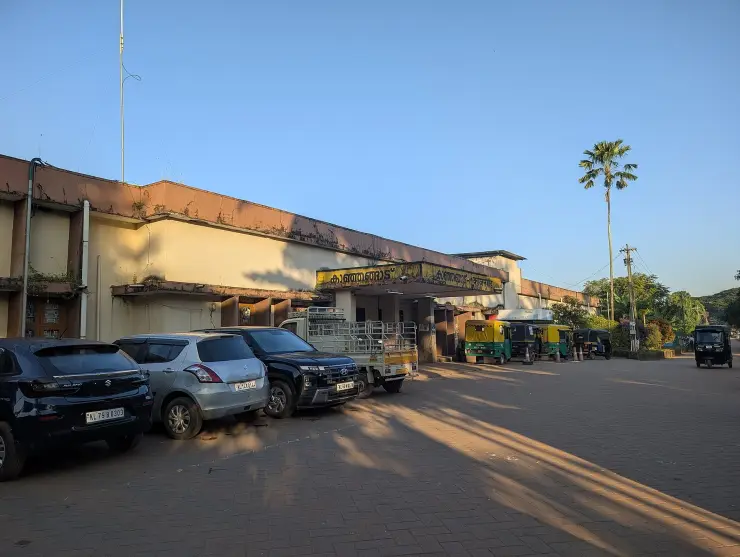
The fort is now part of a town setting. Buildings and roads appear close to the surviving walls, and a sign beside one approach directs people to the Hosdurg crematorium. This proximity calls for a different visiting manner from a large enclosed monument park. Photography and stopping places must leave local activity undisturbed.
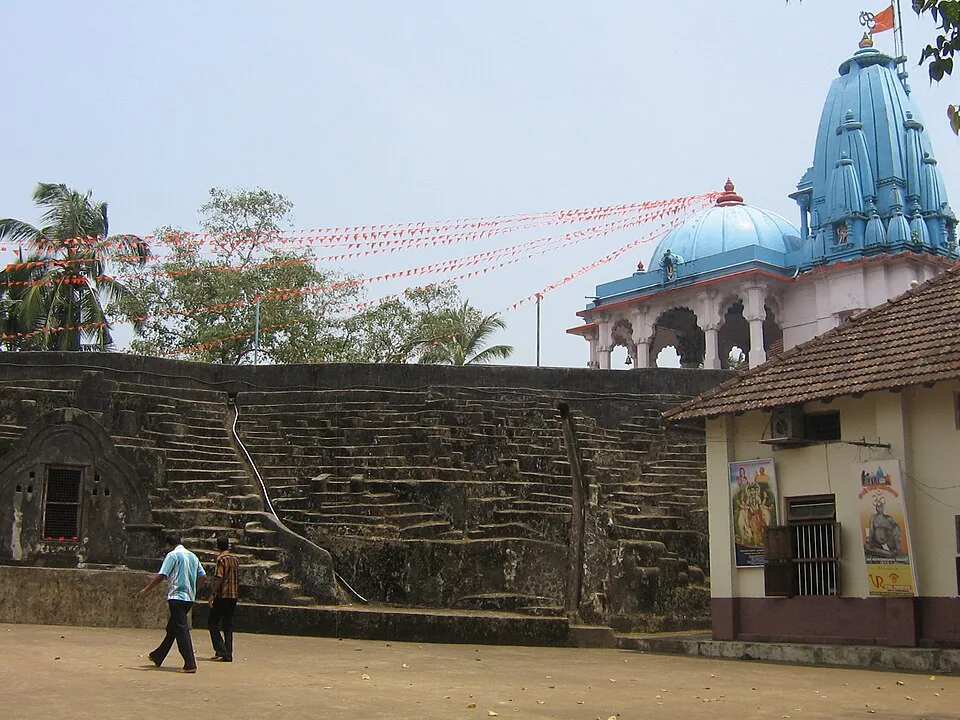
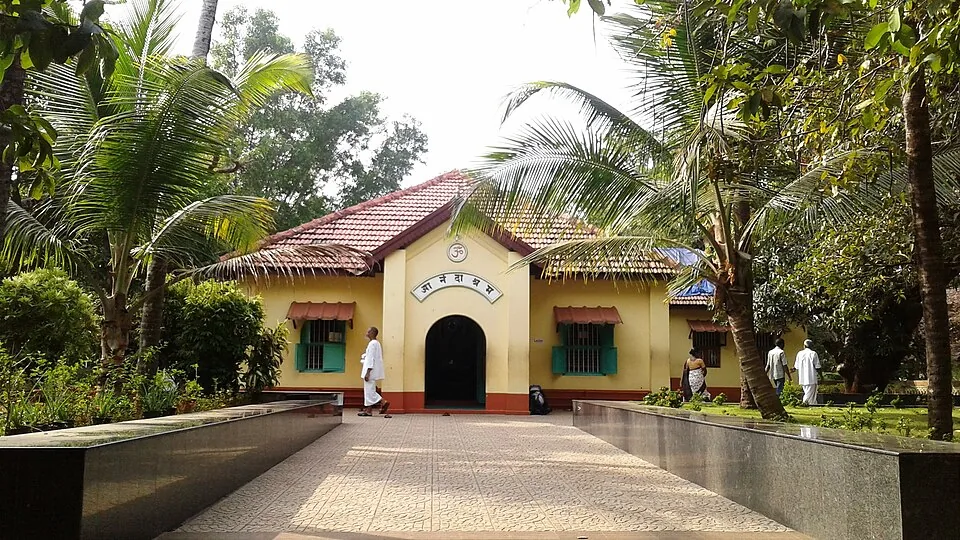
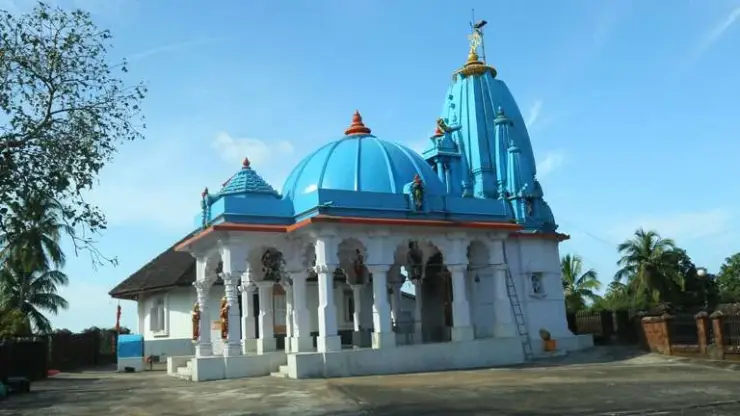
The nearby religious institutions add layers to the locality without becoming interchangeable with the fort. Kerala Tourism identifies the Poonkavanam Karpooreswara Temple to the southwest and associates it with the Nayakas. Nithyananda Ashram belongs to a separate spiritual history. Its presence should not cause the fort’s masonry to be described as an ashram building or every cave to be presented as a military tunnel.
A comparison with Bekal can be useful if it stays specific. The region contains several Nayaka-associated forts, and Kerala Tourism notes similarities in bastions and elevated observation structures. Hosdurg, however, is experienced through a smaller surviving group within Kanhangad. Bekal has its own sea-edge setting and visitor circuit.
Look at the joints and surfaces as well as the outline. Some blocks are plainly visible, while others are hidden by moss or vegetation. Light can reveal the curve of a wall or flatten it into a dark shape. Moving to a different safe position on the established approach can explain more than climbing onto an uncertain edge.
The value of a short Hosdurg visit is therefore concentrated. One can understand a ramp, a bastion, a name and a surviving piece of regional history in relation to the town around it. There is no need to invent a complete palace interior or a long tunnel route to make those remains worth attention.
The regional names in Hosdurg’s history describe a dynasty operating across a wider area than modern Kerala. Ikkeri, Keladi and Bednur appear in accounts of the Nayakas and their centres of rule. Kerala Tourism places the fort’s construction after the region’s earlier control by Kolathiri chiefs and associates the expansion with Sivappa and Somasekhara Nayaka. Reading the names together is more useful than treating each spelling as evidence for a different builder of the same bastion.
The fort’s low hillock also deserves attention. It gives the surviving structure an elevated position within the town, while the rounded bastion concentrates the visual mass at the edge. The ramp connects that upper level with the approach below. From a safe position at the base, one can read how height and projection work together without needing to climb onto the outer wall to appreciate the site’s former defensive character.
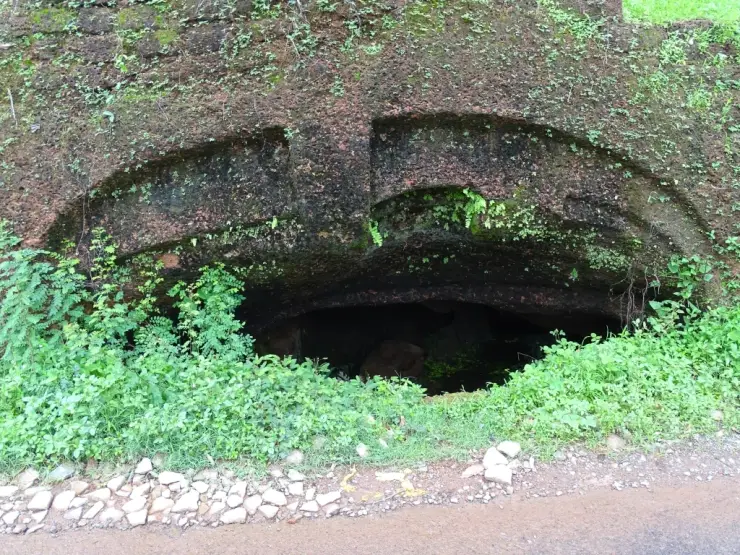
Kerala Tourism’s architectural account identifies wall walkways and caves cut into lateritic formations below the southwestern bastion. These are descriptions of features in the fort’s historical landscape. The caves associated with nearby Nithyananda Ashram have their own institutional identity and devotional use. A visitor interested in both should arrange two distinct stops, using the authorised approach to each rather than looking for a continuous underground route between them.
The town setting is visible in photographs made from different sides. A broad view from below includes modern buildings beyond the masonry, while a closer image concentrates on stone courses, grass and the top of the bastion. Together they explain why Hosdurg can be both a historical monument and a familiar local landmark. Leave room for residents and people using the neighbouring facilities, particularly where an approach road serves more than the fort.
The railway photograph in the gallery belongs to that present-day town context. It shows Kanhangad’s platforms and tracks, the rail gateway from which a separate road transfer reaches the fort. It does not depict a station inside the historical enclosure. For a short stop between trains, establish the return pickup and the actual departure before beginning the visit; the fort’s compact surviving form makes a focused inspection possible, but the station connection still needs its own time.
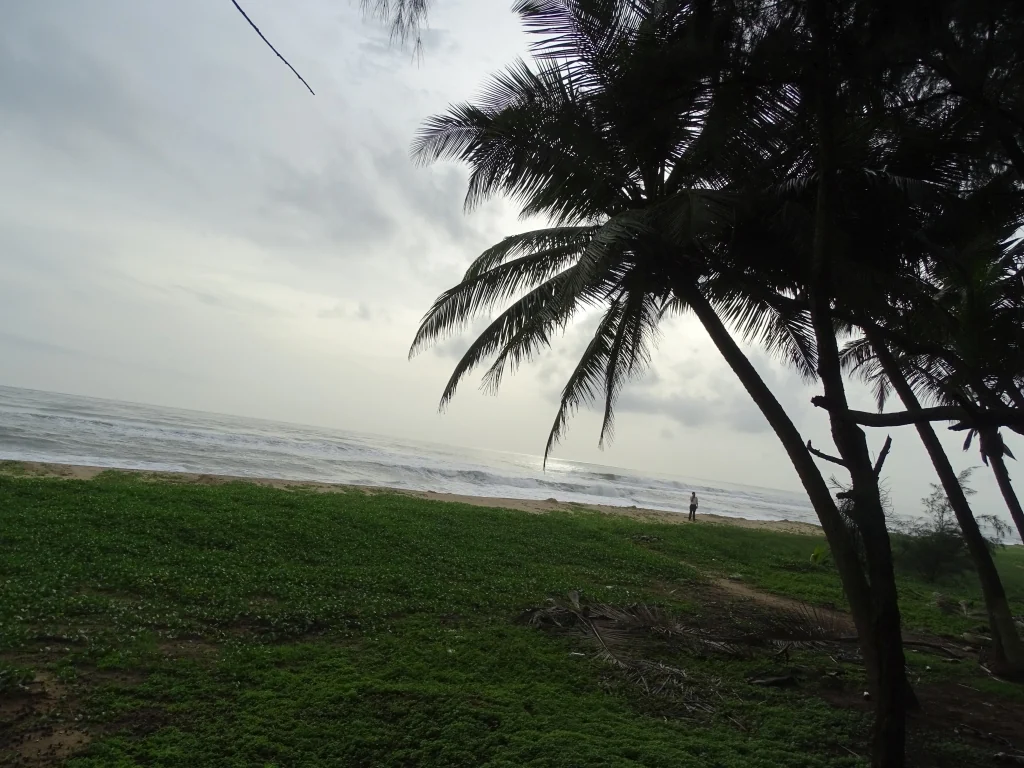
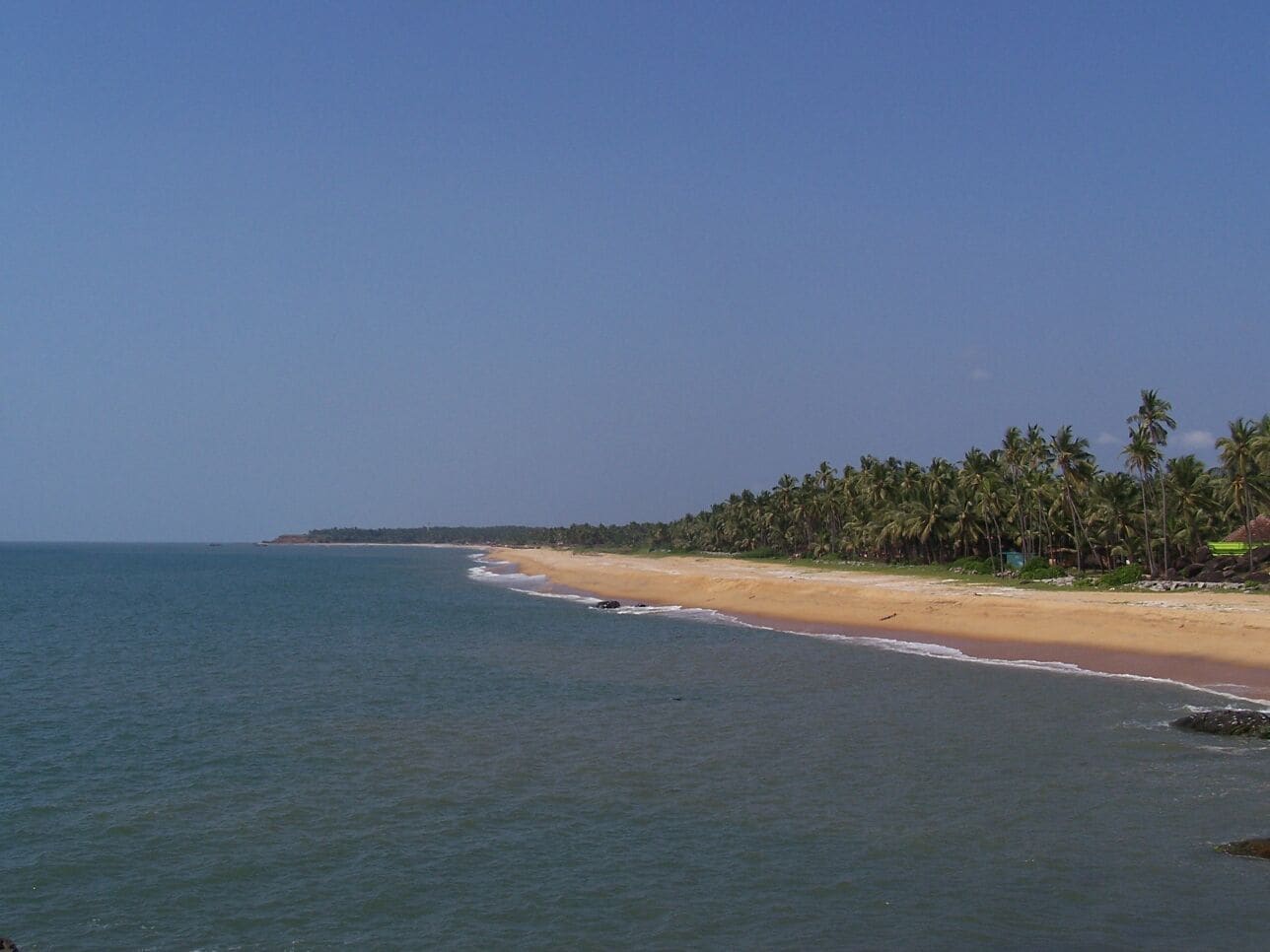
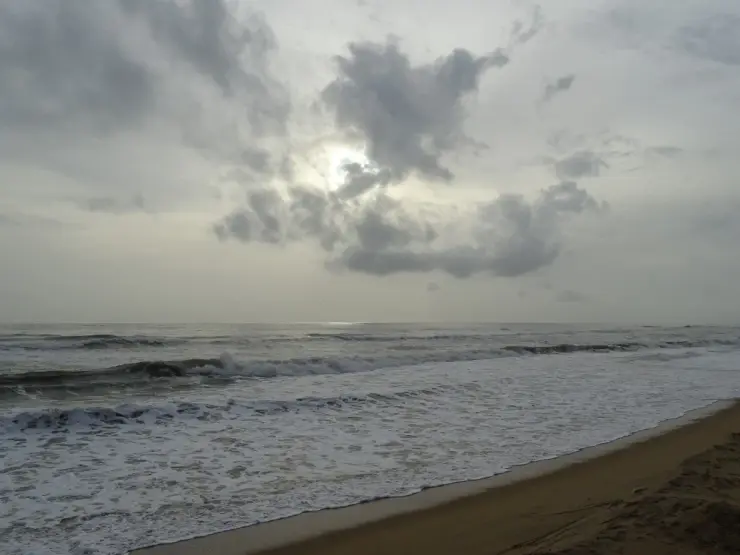
A visit to Hosdurg can be paired with its coastal counterpart in Kanhangad without repeating the same experience. At the fort, the main subjects are the rise of the ramp, the curve of the bastion and the relationship of old masonry to the modern town. At the beach, the subjects are the open shore and fishing activity. Travel between their named approaches by road, and let each place retain its own geography rather than assuming that the fort’s historical coastal role puts its gate directly on the sand.
For someone who prefers to remain on lower ground, the frontal view is especially informative. The spreading base, upper red-toned blocks and changing vegetation can be seen together. A companion exploring farther along an open path should agree to return to that same landward meeting point. The interest of the fort lies in understanding the surviving structure, so a visit does not have to depend on gaining the highest available position.
Puthiya Kotta also appears in the Department of Archaeology's monument list reproduced in Kerala's Economic Review. The entry names Hosdurg in Kasaragod, connecting the local place-name to the state's record of protected heritage. This is a different kind of recognition from a tourism description of an impressive bastion. It treats the surviving fabric as historical evidence whose value continues even where a building is incomplete or a visitor route is modest.
That perspective changes how weathered masonry is viewed. An irregular edge can preserve the shape of an earlier wall; a joint can show how separate blocks meet; a change of level can clarify the relationship between the ramp and the raised structure. These details are easier to study from a stable position than while trying to balance on the wall itself. Leave loose stones and vegetation management to the responsible authority, rather than tidying a small area to make a photograph look more complete.
The Revenue Department's Hosdurg village account places the fort beside the town's administrative life. It identifies the village headquarters around Puthiyakotta and notes nearby government offices and a school. The old fort name therefore remains part of an everyday civic address, not only a label on a historical attraction. This makes the approach more intelligible: roads serving local offices and residents also bring a visitor towards the monument, and those uses continue during sightseeing.
A useful way to finish the visit is to hold the two scales together. From farther back, the rounded mass makes a recognisable landmark within Kanhangad. From the admitted approach, individual blocks and the broad ramp explain how that mass is constructed. The town beyond it shows the continued use of the locality, while the protected remains preserve an earlier layer. Hosdurg does not need a reconstructed court scene or an invented tunnel adventure to make that relationship visible; its surviving form and present setting already provide the substance of the visit.