What to expect
Highlights
- Temple visit at Kulathupuzha Sastha Temple
- Kerala temple architecture and rituals
- Local food, shops and pilgrim services nearby
The Sastha temple on the Kollam–Shencottai road where the god is Bala Sastha, the child, and the river alongside is full of protected fish the devotees call Thirumakkal — the sacred children of the lord. Feeding them puffed rice, meenoottu, is the temple’s characteristic offering and fishing is prohibited outright; one of the two species present, Hypselobarbus thomassi, is critically endangered and endemic to the Western Ghats. Named in every published version of the Pancha Sastha. Three 15th-century sculptures from here are in the Napier Museum, Thiruvananthapuram.
Check entry arrangements. Ask temple staff about visitor entry, dress requirements and access to the inner shrine before you travel, especially if you are visiting as a non-Hindu.
Dress respectfully and follow the institution’s admission and photography rules.
A low tiled temple in an open sand courtyard where the Kollam road climbs towards the Tamil border, and a river running past it full of fish that nobody is allowed to catch. The Sastha here is Bala Sastha, the god as a child, and the temple’s signature offering is not a lamp or a garland but a handful of puffed rice thrown into the water: meenoottu, the feeding of the fish, which devotees call Thirumakkal — the sacred children of the lord. One of the two species in that river is critically endangered and endemic to these hills. Whatever else it is, a fishing prohibition maintained by belief rather than by a warden is a conservation measure, and it is the only one on this stretch of water that has never needed enforcing.
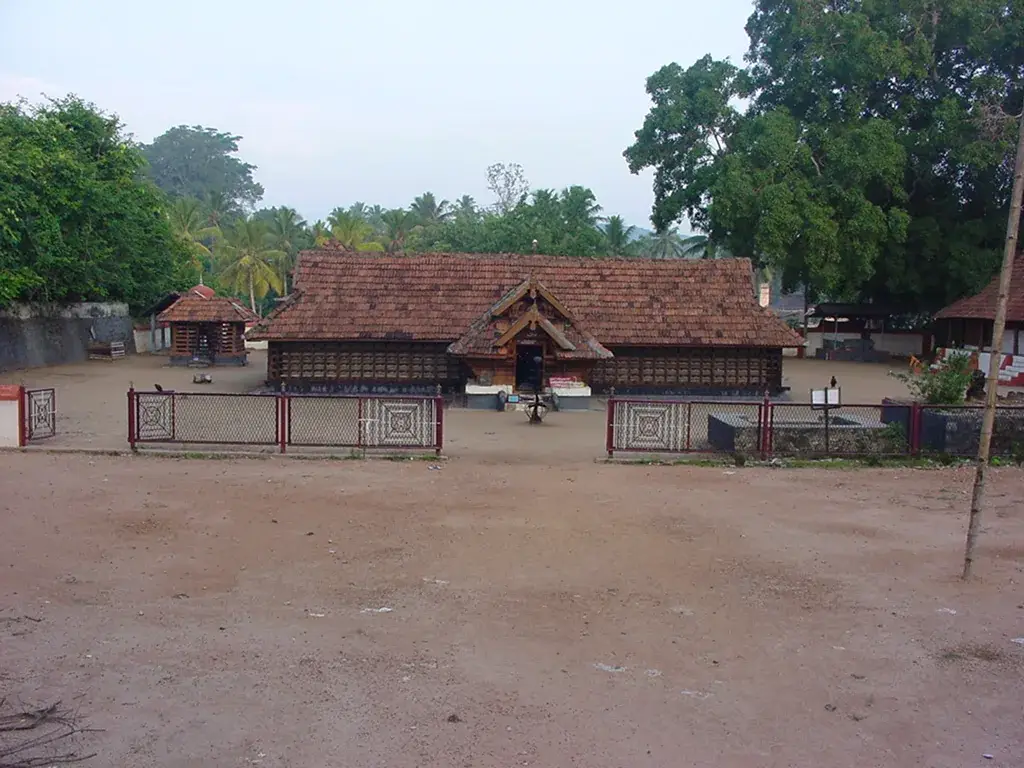
The temple stands on the bank of the Kulathupuzha, in Pathanapuram taluk, on the road that connects Kollam with Shencottai across the ghat. It is a Kerala temple of the plainest and best kind: a long low nalambalam under a tiled roof, timber lattice walls, a gabled porch over the entrance, a smaller shrine standing separately to one side, and a wide open sand courtyard around the whole thing with forest closing in behind. There is no gopuram and no ornament visible from outside. The Travancore Devaswom Board runs it.
The deity is Ayyappa in the form of Bala Sastha — the child. The Kerala government’s own account adds a detail that most travel writing leaves out: he is understood here in a fierce aspect as well as an auspicious one, ugramoorthi as much as mangalapradayakan, which is a more complicated thing than a simple child-god. Around him are Shiva, Vishnu, Ganapathi, Yakshi, Boothathan, the naga deities — and Karuppaswami, a guardian deity of the Tamil country, which is the kind of detail that tells you exactly how close the border is.
Kulathupuzha is one of the names that appears in every version of the Pancha Sastha, the old Sastha circuit of this region, alongside Aryankavu and Achankovil. That is worth stating carefully, because no two published lists of the five agree: the Travancore Devaswom Board’s own circuit runs Pandalam, Kulathupuzha, Aryankavu, Achankovil and Erumeli, devotional accounts commonly give Kulathupuzha, Aryankavu, Achankovil, Sabarimala and Kanthamala, and other lists differ again. Only three names survive every version, and this is one of them. In the circuit’s age-sequence the Sastha appears at a different stage of one life at each temple, and here he is at the beginning of it — our page on the Achankovil Sastha sets that sequence out properly and there is no sense in writing it twice.
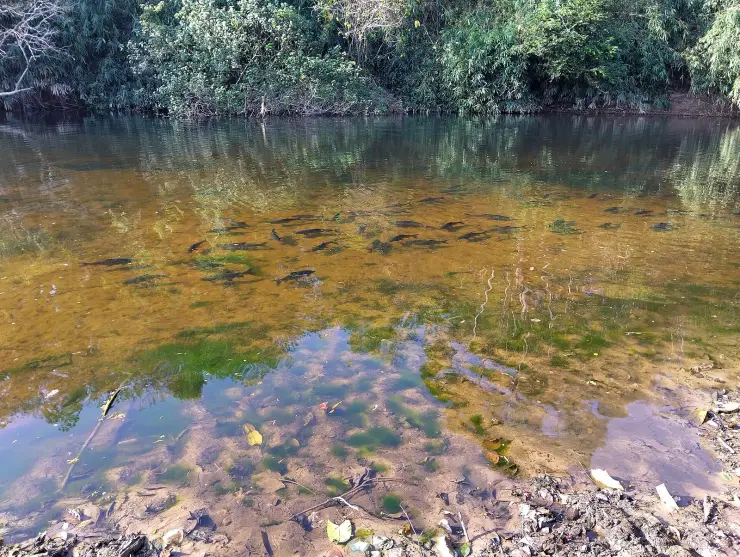
What belongs to Kulathupuzha and to nowhere else is the river. The Kulathupuzha runs past the temple carrying a large and visible population of fish, and they are not ordinary fish. Devotees call them Thirumakkal, the sacred children of the lord. Fishing is prohibited — not discouraged, prohibited — because the fish are held to be dear to the deity. And the temple’s characteristic vazhipadu is meenoottu, the feeding of the fish: you buy puffed rice, or roasted peanuts, and you throw it into the water, and the shoal comes up for it. It is offered particularly for skin complaints, and warts specifically.
You do not need to believe any of that to find it remarkable. The two species that dominate the water here are Tor khudree, the Deccan mahseer, and Hypselobarbus thomassi, the red canarese barb — and the second of those is listed by the IUCN as critically endangered, endemic to the Western Ghats of Kerala and Karnataka, and capable of reaching a metre in length. ⚠ The claim you will read, that both are endangered, is not right: Tor khudree is Least Concern and has in fact been spread across India by large-scale stocking of hatchery-bred fish. But one genuinely threatened endemic, in a stretch of river where nobody has been permitted to fish for as long as anybody can remember, is not a small thing.
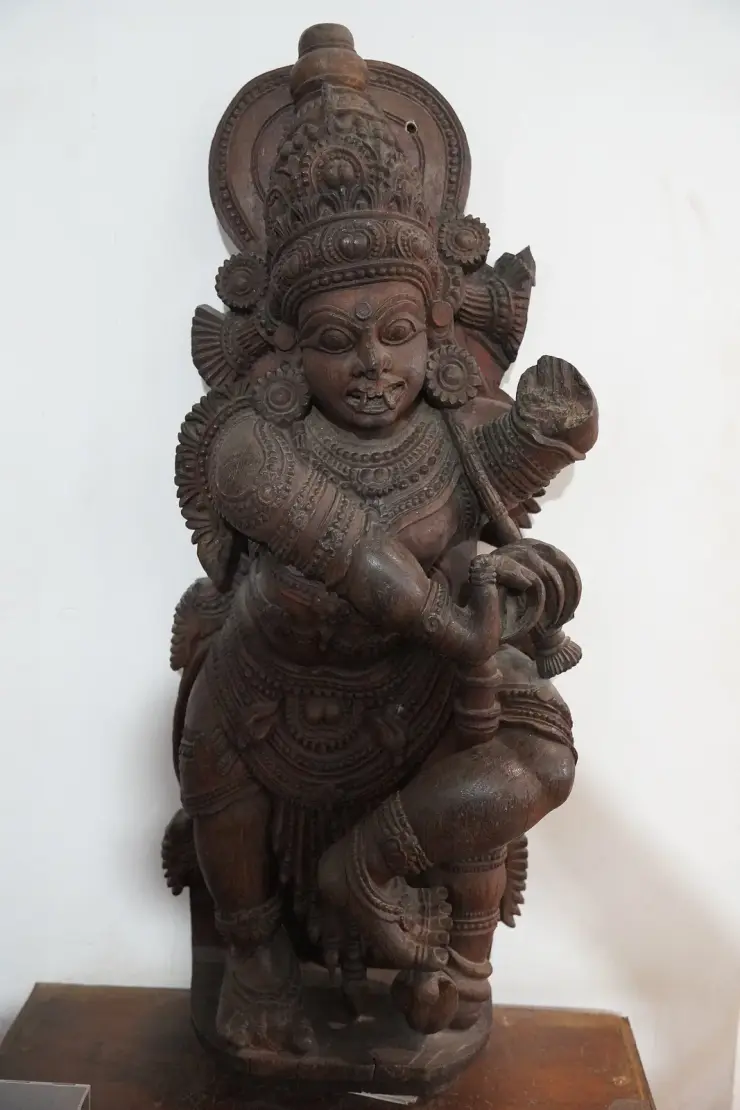
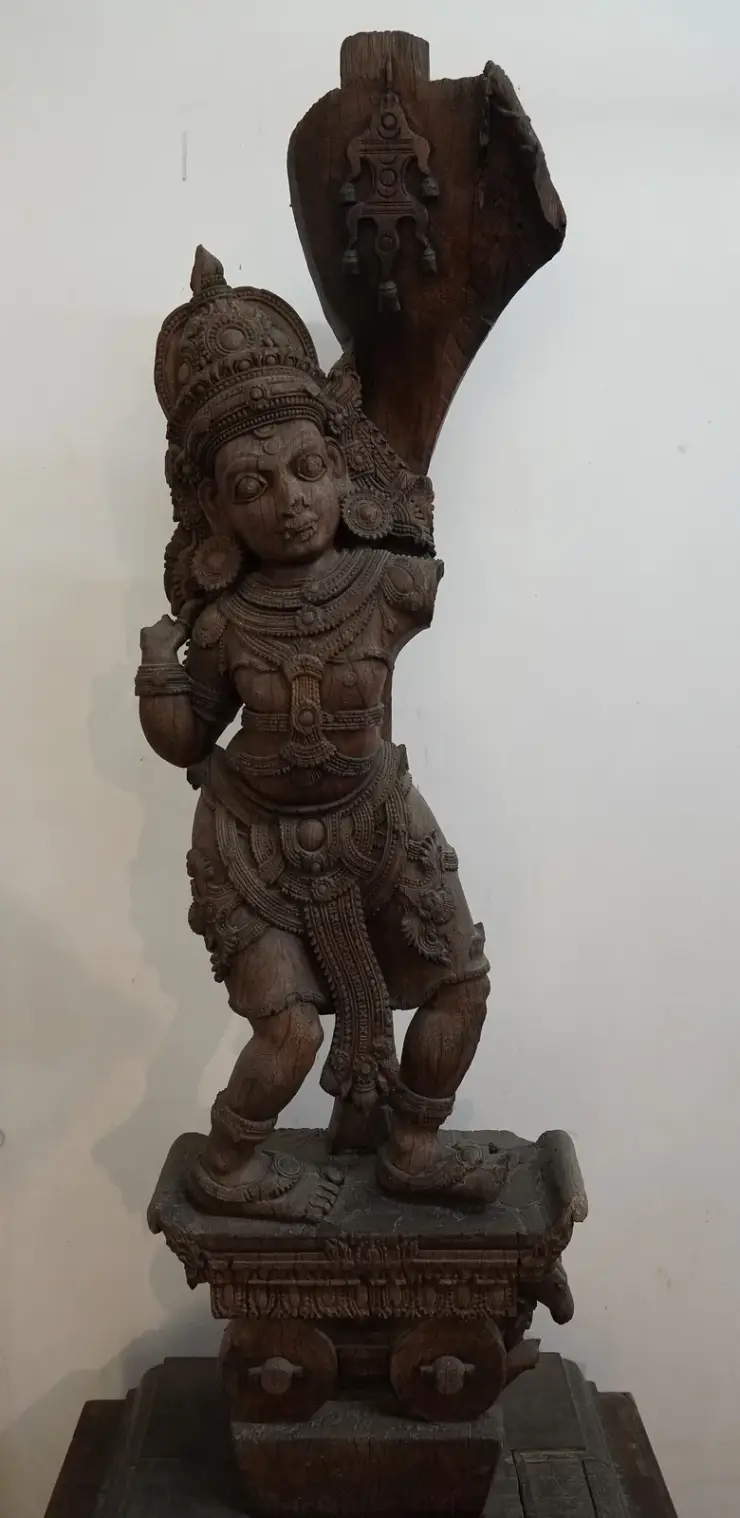
The dating of the temple is the other surprise, and it does not come from any travel source. Three sculptures from Kulathupuzha are in the Napier Museum in Thiruvananthapuram, catalogued to the fifteenth century CE: a Dwarapalaka, a door guardian, carved in wood and standing about the height of a person; a Thripuranthaka Murthi, Shiva with the bow that destroyed the three cities; and a panel of Rama with Hanuman. Carved wood surviving five and a half centuries in this climate is unusual on its own. What it settles is that there was a shrine here worth carving for in the fifteenth century — which is more than can be said with confidence about the age of most temples on this coast.
The written history is a chain of custody rather than a founding date. The Kerala government’s account says the temple was founded by the Raja of Pandalam and the idol installed by a Brahmin from Kottarakkara, with the temple under the Kottarakkara raja before passing to the Travancore Devaswom Board — and, in the devotional register, that the idol itself was installed by Parashurama. The Pandalam connection matters: Pandalam is the royal house of the Ayyappa story, and it is the first name on the Devaswom Board’s own version of the Pancha Sastha circuit.
One practical note that the guidebooks get tangled. Kulathupuzha is also the name of the river and of the panchayat, and the river is one of the three headstreams of the Kallada — it meets the Chenthurunipuzha and the Kalthuruthy in the Parappar reservoir at Thenmala, and our pages on the Kallada, on Thenmala and on Shendurney are about that water rather than this shrine. If you are searching for Kulathupuzha you will mostly find the river. The temple is the thing on the bank.
The legend here is a love story and it ends underwater, which is not how these usually go.
A Jala Kanyaka — a water nymph, a spirit of the river — is said to have fallen in love with the Sastha. He is a child at this temple and a celibate at Sabarimala, so the story has nowhere to go in the ordinary direction, and the resolution is the interesting part: out of compassion rather than reciprocation, the god allowed her to remain near him, living in the temple’s water in the form of a fish. That is the account attached to the fish of Kulathupuzha, and it is why they are not merely protected but related to the deity.
From that comes the name they are given. The fish are Thirumakkal — thiru, the sacred honorific; makkal, children. The sacred children of the lord. At a temple whose god is himself a child, the shoal in the river is family, and the word is doing a good deal of work: it converts a fishing ban into a kinship claim. You do not catch a fish here for the same reason you do not catch a cousin.
And from the kinship comes the ritual. Meenoottu, the feeding of the fish, is a formal vazhipadu at this temple in the way that a lamp offering or an archana is elsewhere — you buy puffed rice or roasted peanuts at the temple and scatter it on the water, and the offering is made to the fish rather than through them. It is prescribed particularly for diseases of the skin, and the sources are consistent and specific about warts. The logic, if you want one, is not hard to reconstruct: skin is what water touches, the fish are the water’s children, and the god who is a child is the one you ask.
It is worth resisting the temptation to explain this away as folk ecology invented for the purpose, because there is no evidence anybody designed it. What there is instead is an accidental outcome, and the accident is a good one. Hypselobarbus thomassi is critically endangered across its entire Western Ghats range, which runs from Karnataka down through Kerala. In most of that range the pressures are the ordinary ones — fishing, dams, siltation, sand mining. In the stretch of the Kulathupuzha that runs past this temple, the fish have been under a religious prohibition for centuries, enforced by nothing more than the belief that they are the lord’s children.
That is a genuinely unusual conservation instrument and it is not unique to here — sacred groves, temple tanks and river reaches across India have preserved species by exactly this route — but it is unusually visible at Kulathupuzha, because the protected animals are large, numerous, and swim up to be fed by anyone who buys a packet of puffed rice.
We should say plainly what we did not find. There is no origin legend for the temple building itself, no story of a stone that would not be moved, no vision in the forest. The Parashurama installation is recorded as belief by the Kerala government’s own account, as it is at a great many Kerala temples. Nothing in the record explains why the shrine is at this particular bend of this particular river rather than another, and we are not going to supply a reason. The Jala Kanyaka and the Thirumakkal are the tradition here; they are attached to this water and to no other; and one legend that explains the actual behaviour of actual people at an actual place is worth a dozen borrowed ones.
The oldest thing that can be dated at Kulathupuzha is not at Kulathupuzha. Three sculptures from here are in the collection of the Napier Museum in Thiruvananthapuram, catalogued to the fifteenth century CE: a wooden Dwarapalaka — the door guardian, crowned, wide-eyed, club in hand, carved in the round; a Thripuranthaka Murthi, the form of Shiva with the bow, associated with the destruction of the three cities of the asuras; and Rama with Hanuman. Carved timber that has survived five and a half centuries in this climate is remarkable in itself, and the group establishes something no travel description does: that in the fifteenth century there was a shrine at Kulathupuzha substantial enough to commission serious sculpture.
For the temple’s own history the record is a chain of custody rather than a founding. The Kerala government’s account is that the temple was founded by the Raja of Pandalam and the idol of the Sastha installed by a Brahmin from Kottarakkara; that it stood under the Kottarakkara raja; and that it later passed to the Travancore Devaswom Board, which administers it now. In the devotional register the idol is Parashurama’s, as it is at many temples on this coast, and that is recorded here as belief rather than as history.
The Pandalam link is not decorative. Pandalam is the royal house at the centre of the Ayyappa narrative, and it is the first name on the Travancore Devaswom Board’s own version of the Pancha Sastha circuit — Pandalam, Kulathupuzha, Aryankavu, Achankovil, Erumeli. Kottarakkara, the other name in the chain, is the market town down the road that gives its name to a taluk and to the Kathakali tradition of the Kottarakkara Thampuran. Both are the ordinary machinery of Travancore religious administration, and both put this forest shrine inside a network rather than out on its own.
The modern setting is a forest one and it is administered as such. The Kulathupuzha Reserve is the ground on which the Shendurney Wildlife Sanctuary was notified in 1984, and the village today has a Kerala Forest Department Forest Museum a short way from the temple, with thatched pavilions, interpretive panels and a life-size tiger on a rock at the gate. The temple, the reserve and the museum are three institutions on the same few hundred metres of river, and all three are, in their different registers, in the business of not letting things be killed.
The fish. This is the only temple on the Sastha circuit where the characteristic offering is a handful of puffed rice thrown into a river, and where the shoal comes up to take it. Meenoottu is worth doing even if you do it as a visitor rather than a devotee.
It is the child at the start of the sequence. Kulathupuzha is one of only three names that appear in every published version of the Pancha Sastha, and the age-form here — Bala Sastha, the god as a boy — is where the circuit begins.
There is a real conservation story attached, and it is not manufactured. One of the two species in this water, Hypselobarbus thomassi, is critically endangered and endemic to the Western Ghats; it survives here under a religious fishing ban that predates conservation as an idea.
The building is the plain, beautiful Kerala kind — tiled roofs, timber lattice, an open sand courtyard, forest behind — with no gopuram and no ornament competing for attention.
The Forest Museum a short walk away is a genuine and recent addition that almost nothing published mentions: Kerala Forest Department, thatched pavilions, a tiger sculpture at the entrance, and a good hour if you have children with you.
And it makes a proper circuit. Aryankavu is up the same road towards the Tamil border and Achankovil is over the hills to the north — three of the Pancha Sastha in one long day, and our pages on the other two are written to be read against this one rather than to repeat it.
Road km to Kollam; ghat roads and traffic vary — allow extra.
Morning or early evening is usually best; festival days can be powerful but crowded.
Live forecast loads in your browser.
Sun and moon are calculated for this location and shown in IST. Photography windows are the hour around sunrise and sunset; the sunset bearing is degrees clockwise from true north. Moon phase is accurate to about half a day.
These are official or public-sector eco offerings that match this place, town or forest destination. Confirm availability, permits, tariffs and reporting times with the official operator before travel.

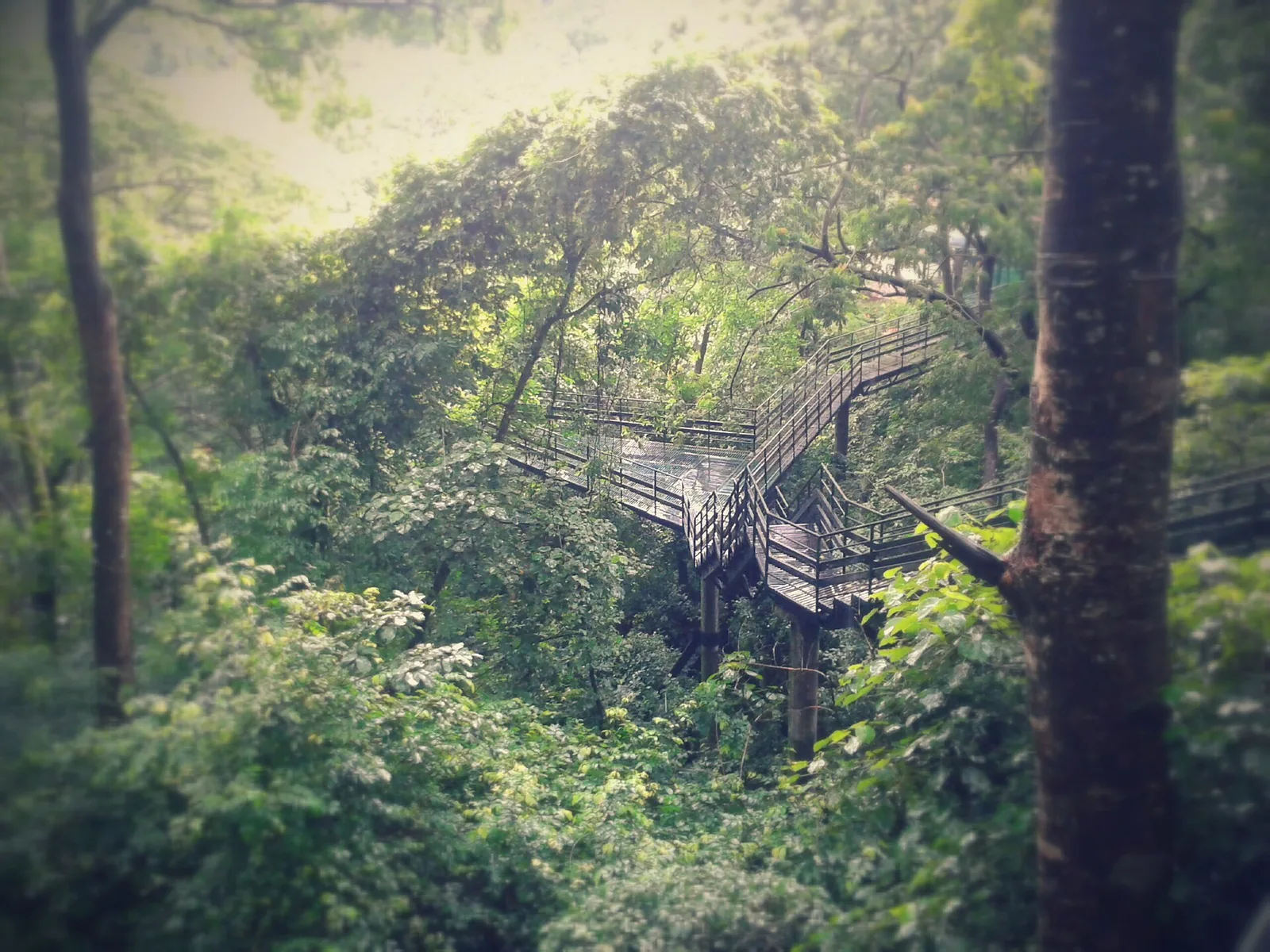
Billed as India’s first planned ecotourism destination — the operator’s own phrase, not an award — with adventure activities, nature trails, an elevated walkway and riverine paths.
Official source →Swiss-cottage style tented camping near the Thenmala forest setting, listed by Kerala Tourism’s ecotourism programme page.
Official source →Tented stay along the Kallada River near Parappar Dam, positioned as a forest-edge camping option.
Official source →Simple official tourist-home accommodation at Thenmala for travellers using the ecotourism zones.
Official source →Dormitory accommodation at Thenmala, useful for budget groups and activity-focused travellers.
Official source →
Guided trekking and boating access into the Shendurney forest landscape from the Thenmala Deep Woods zone.
Official source →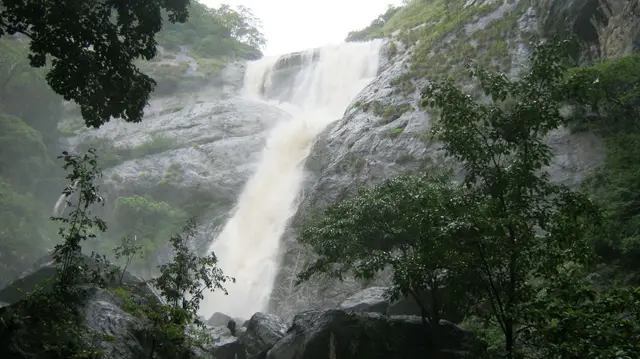
Forest waterfall visit near Aryankavu/Thenmala, listed by Kerala Tourism among ecotourism programmes.
Official source →Birding-focused forest landscape listed by Kerala Tourism as an ecotourism destination and programme.
Official source →Verified hotels, homestays, restaurants, experiences, sights, shops and rentals around Kulathupuzha Sastha Temple — commission-free, with direct contact. Filter by what you need.
Garden Restaurant is a meal-stop option in Thenmala’s ecotourism circuit. Ask about service during your visit, especially if spending the day across several zones.
Book with the place itself. India’s cyber-crime coordination centre warned in April 2025 that convincing copies of hotel and pilgrimage booking sites are being pushed through sponsored search and social ads, taking payment for rooms the property never hears about. Every listing here links to the business’s own contact details and its own Google or Bing profile — we take no commission and sit in nobody’s payment path. If a booking page reached you through an ad, check the address bar against the property’s own site before you pay. Fraud can be reported on cybercrime.gov.in or on 1930.
Find food, accommodation and activities across Thenmala. Browse the guides for places to eat, stay and explore along your route.
10 more places around Thenmala. Open a guide to plan the visit and onward journey.
7.9 km · ~20 min by auto
A community-linked forest and wetland visitor area near Madathara, used for guided birding and nature walks rather than an unrestricted independent forest excursion.
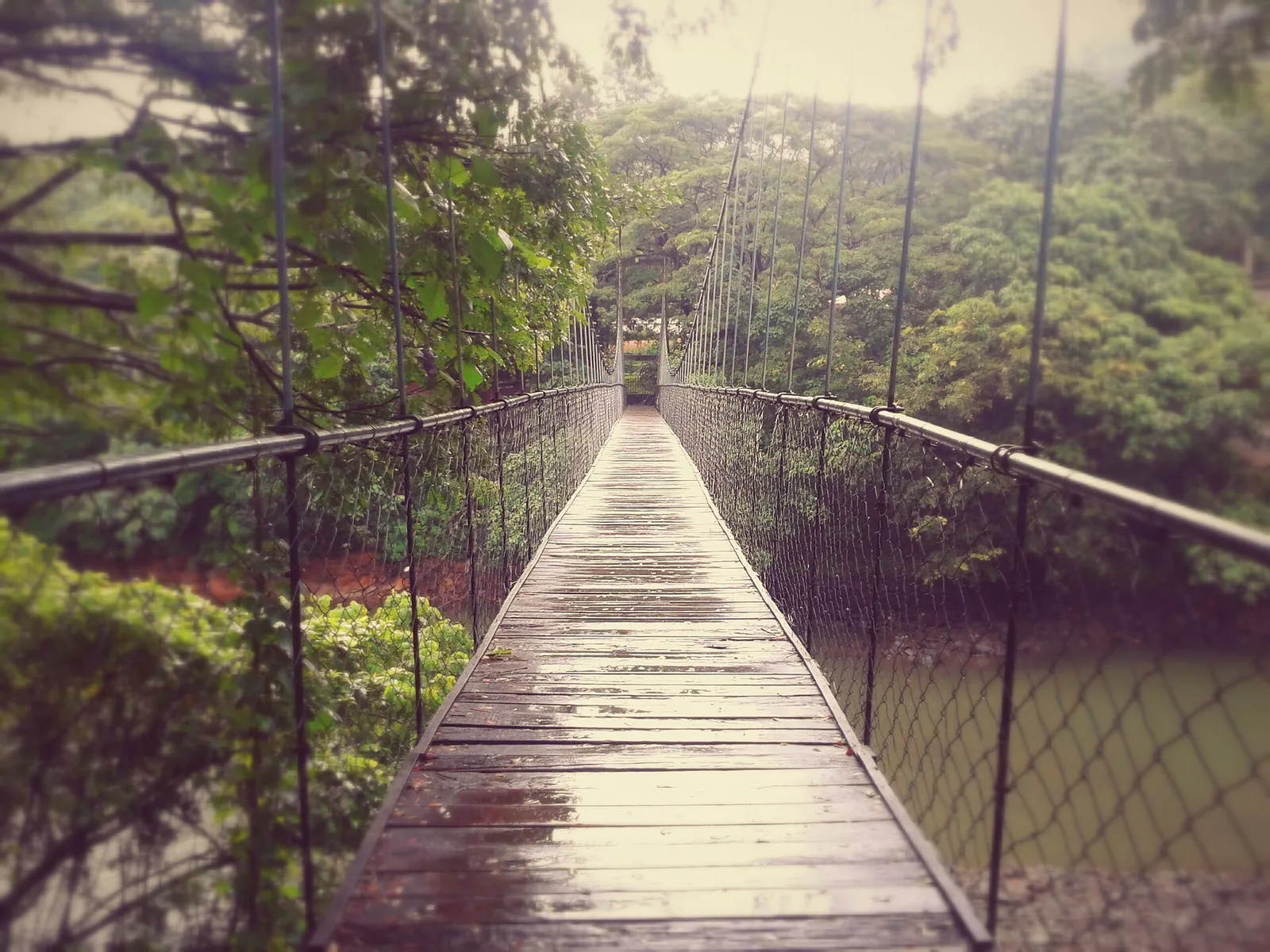
6.6 km · ~17 min by auto
Eco-tourism area with forest walks, dam views and adventure activities.
6.7 km · ~17 min by auto
Twenty Forest Department programmes in the Shendurney Wildlife Sanctuary — walks of one to six hours, a dawn birding trail, boat and vehicle safaris and four camps — booked at the wildlife office at Thenmala. Rates are per group and include 18% GST.
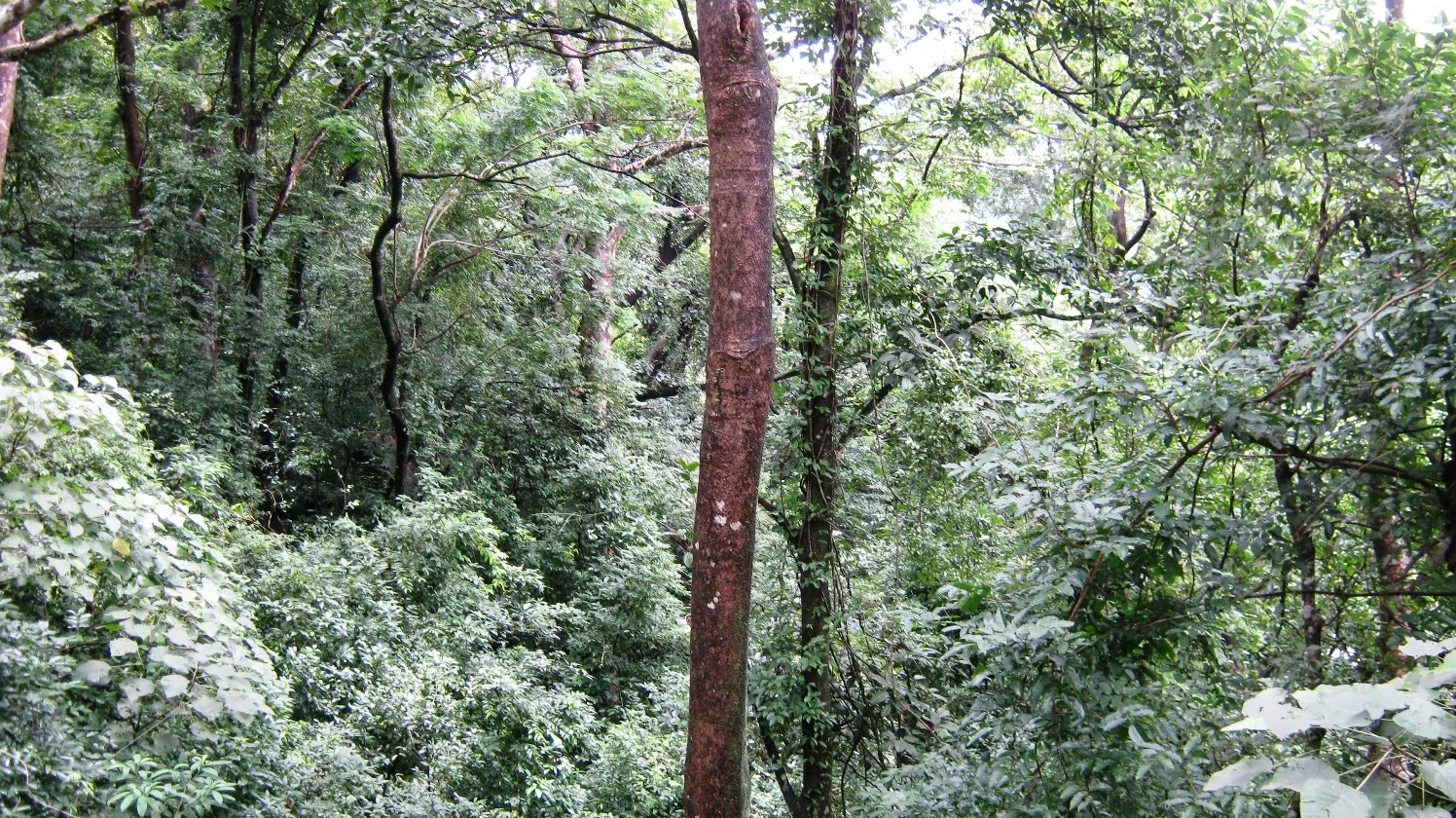
6.6 km · ~16 min by auto
Guided trekking trails at Thenmala, billed as India’s first planned eco-tourism destination, through the Shendurney forests and dam catchment in Kollam.
13.0 km · ~22 min by cab
A valley settlement inside Shenduruney Wildlife Sanctuary, reached by 11–15 km of forest road from Aryankavu, with a ticketed Forest Department viewpoint, a departmental safari and guided walks beyond the village.
6.1 km · ~15 min by auto
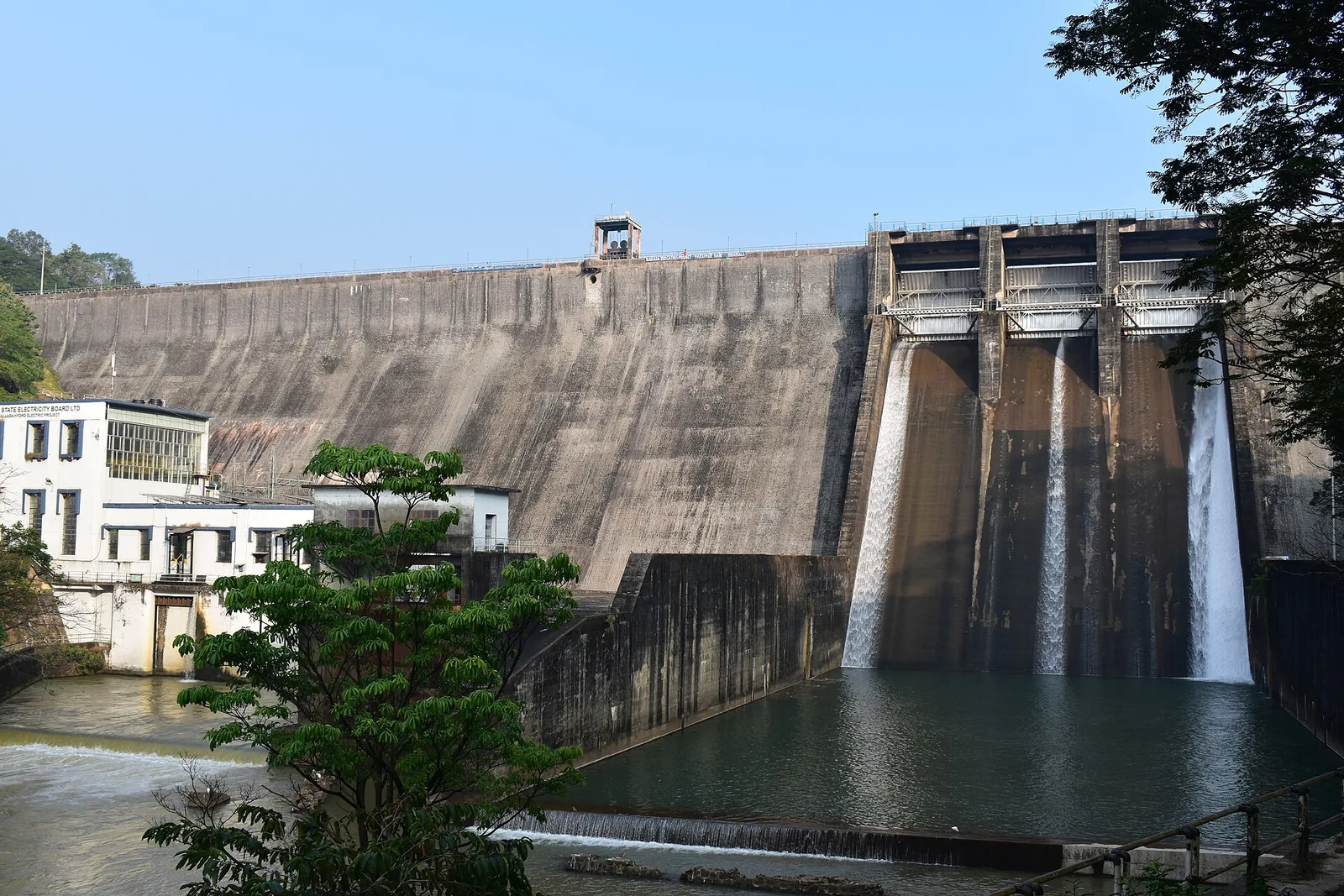
The Parappar dam across the Kallada river at Thenmala, built for irrigation — the reservoir behind it is the water the eco-tourism area is built around, and the catchment upstream is Shendurney sanctuary.
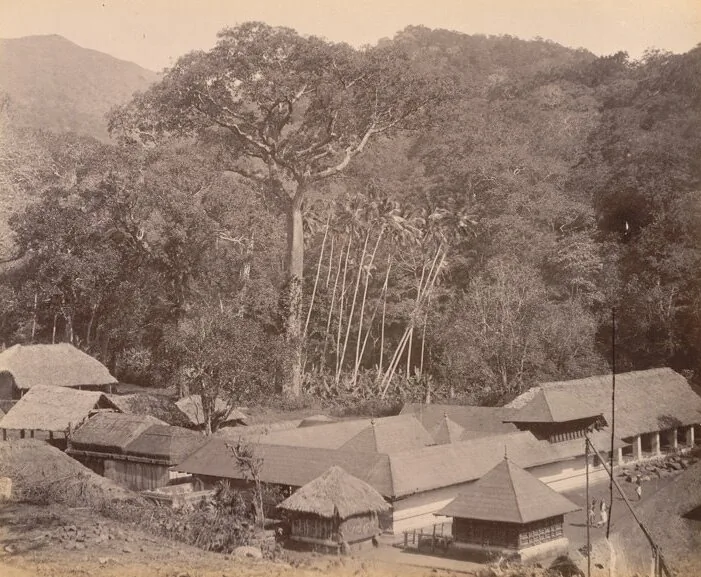
13.2 km · ~22 min by cab
The Sastha temple on the old Kollam–Sengottai road and rail route into Tamil Nadu, where Ayyappa is worshipped married to Pushkaladevi rather than celibate — with a forest village, a railway pass and the Palaruvi road around it.
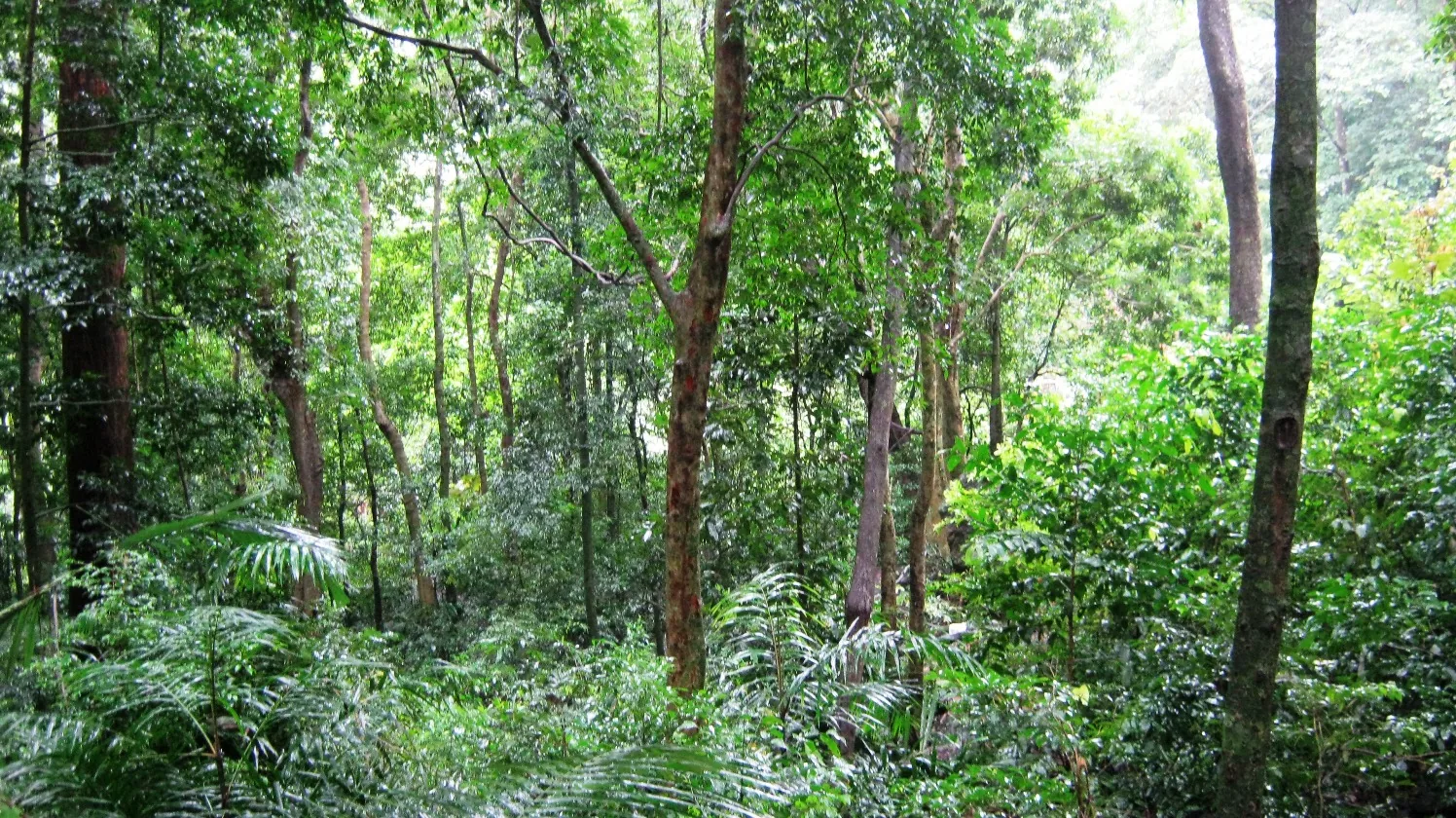
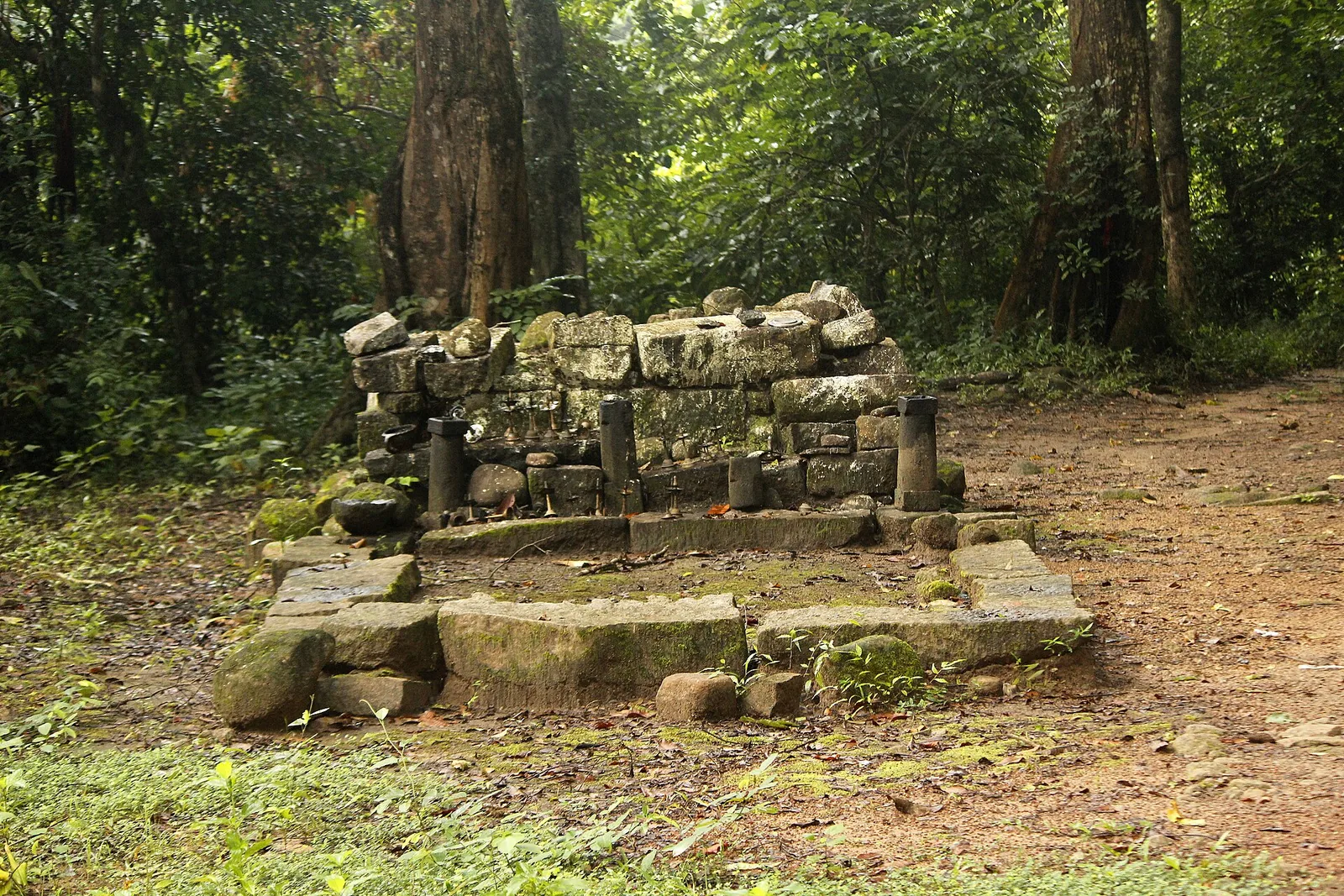
6.7 km · ~17 min by auto
A protected evergreen forest in the Agasthyamalai Biosphere Reserve east of Thenmala, named for the Chenkurinji tree and centred on the Parappar reservoir.
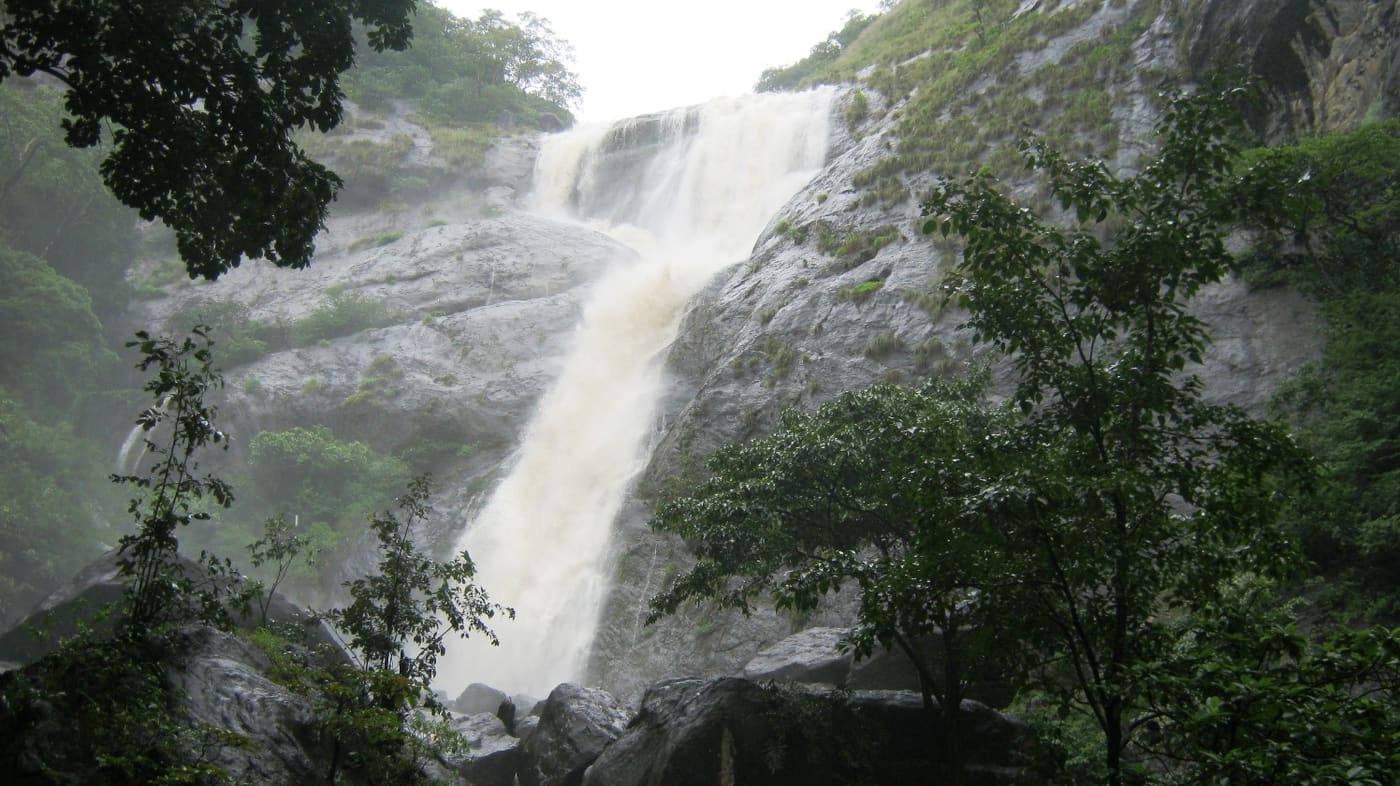
12.5 km · ~21 min by cab
Tall forest waterfall near the Aryankavu side of the Western Ghats, reached by forest shuttle from the highway.
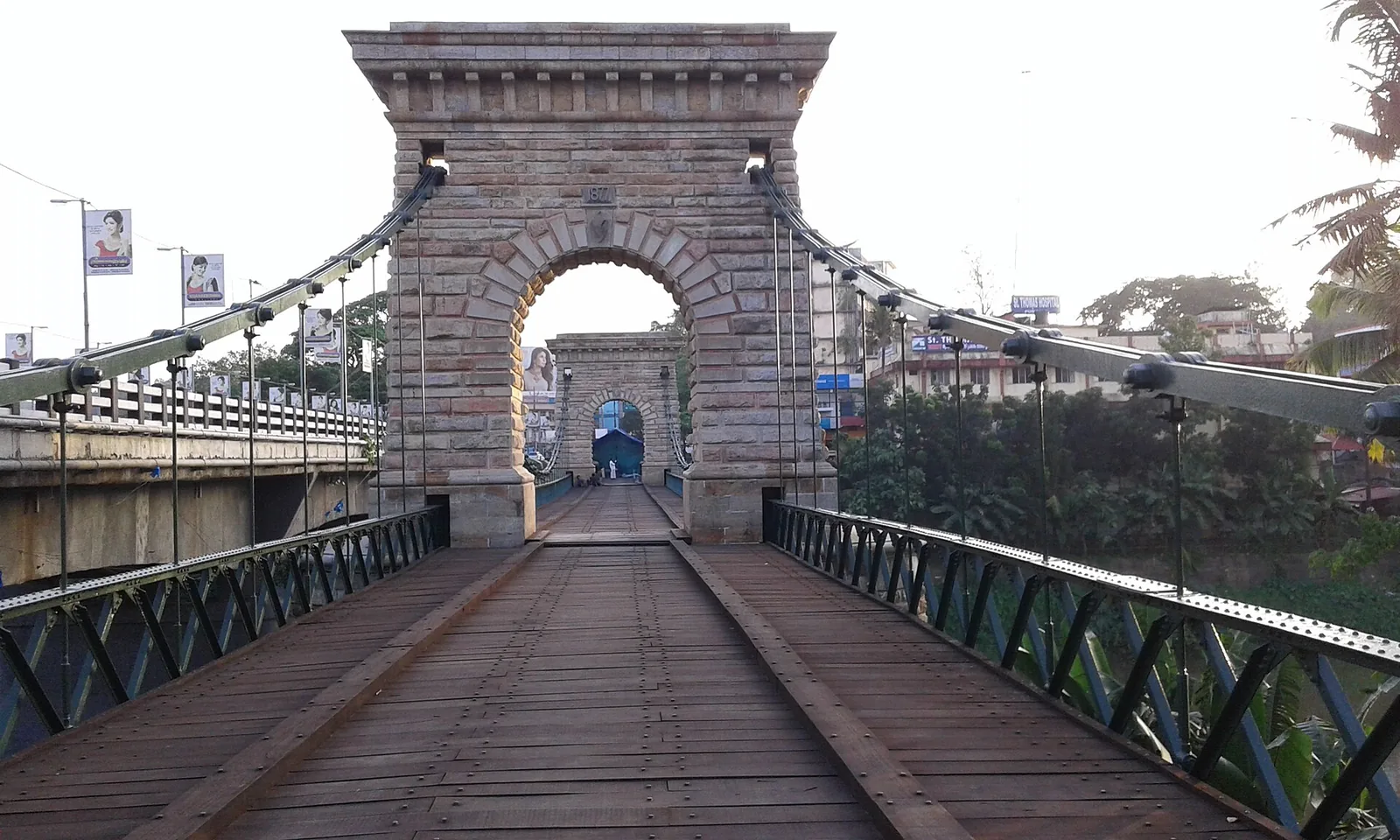
19.5 km · ~32 min by cab
A rare 1877 Travancore-government suspension bridge over the Kallada river at Punalur, in east Kollam on the way to the ghats.
Roampedia is commission-free — own or know a stay, eatery, guide or shop near Kulathupuzha Sastha Temple? List it and it appears here once verified.
Add a nearby businessEntry: Darshan is free. Meenoottu — the fish-feeding offering that is this temple's speciality — and other vazhipadu are at posted rates at the counter, where the puffed rice and roasted peanuts are also sold.
If you are travelling by bus or ferry, check the return service with the operator before setting out. Leave time to reach the stop or jetty after your visit.
Ask at the bus stand for the time of the last service back, not the next one. If you miss it, an auto or app cab is the fallback — agree the fare before you get in.
If you need step-free access, contact the site before travelling. Ask about a level entrance, steps along the route, the nearest drop-off point, seating and accessible toilets.
Charge cap and free-transaction limits: Reserve Bank of India, in force since 1 May 2025.
These services are listed within about 1.2 km of Kulathupuzha Sastha Temple. Walking distances follow mapped routes; access and opening hours can change. Other services may be closer but are not included here.
Emergency numbers are verified against official government and state tourism sources. 112 works anywhere in India.
The Parappar dam across the Kallada river at Thenmala, built for irrigation — the reservoir behind it is the water the eco-tourism area is built around, and the catchment upstream is Shendurney sanctuary.
6.1 km · ~15 min by auto · straight lineGuided trekking trails at Thenmala, billed as India’s first planned eco-tourism destination, through the Shendurney forests and dam catchment in Kollam.
6.6 km · ~16 min by auto · straight lineEco-tourism area with forest walks, dam views and adventure activities.
6.6 km · ~17 min by auto · straight lineTwenty Forest Department programmes in the Shendurney Wildlife Sanctuary — walks of one to six hours, a dawn birding trail, boat and vehicle safaris and four camps — booked at the wildlife office at Thenmala. Rates are per group and include 18% GST.
6.7 km · ~17 min by auto · straight lineA protected evergreen forest in the Agasthyamalai Biosphere Reserve east of Thenmala, named for the Chenkurinji tree and centred on the Parappar reservoir.
6.7 km · ~17 min by auto · straight lineA community-linked forest and wetland visitor area near Madathara, used for guided birding and nature walks rather than an unrestricted independent forest excursion.
7.9 km · ~20 min by auto · straight lineTall forest waterfall near the Aryankavu side of the Western Ghats, reached by forest shuttle from the highway.
12.5 km · ~21 min by cab · straight lineA valley settlement inside Shenduruney Wildlife Sanctuary, reached by 11–15 km of forest road from Aryankavu, with a ticketed Forest Department viewpoint, a departmental safari and guided walks beyond the village.
13.0 km · ~22 min by cab · straight lineThe Sastha temple on the old Kollam–Sengottai road and rail route into Tamil Nadu, where Ayyappa is worshipped married to Pushkaladevi rather than celibate — with a forest village, a railway pass and the Palaruvi road around it.
13.2 km · ~22 min by cab · straight line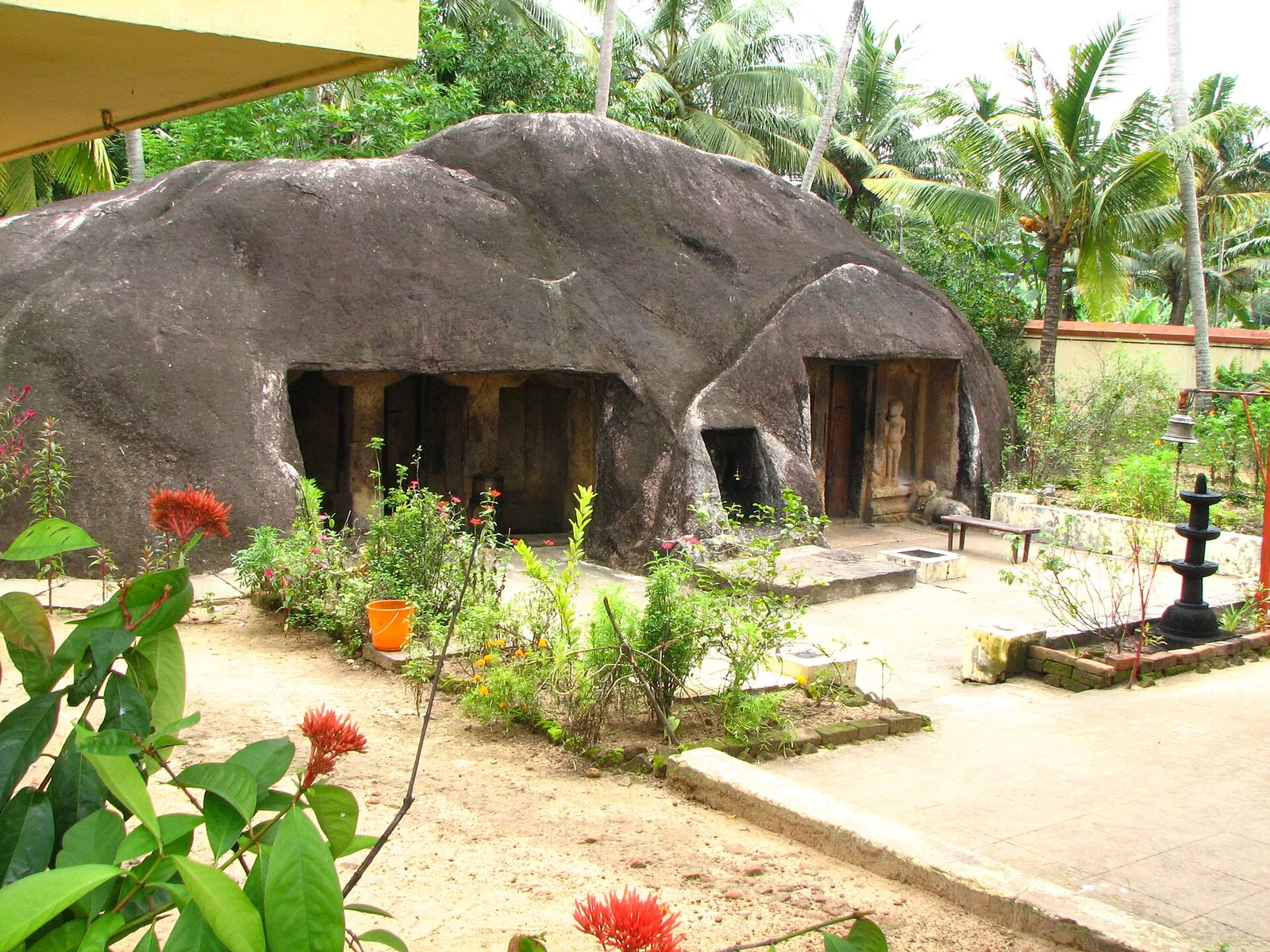
A monolithic rock-cut cave temple near Anchal/Kadakkal in south Kollam, carved with a Shiva shrine.
16.9 km · ~28 min by cab · straight lineA rare 1877 Travancore-government suspension bridge over the Kallada river at Punalur, in east Kollam on the way to the ghats.
19.5 km · ~32 min by cab · straight line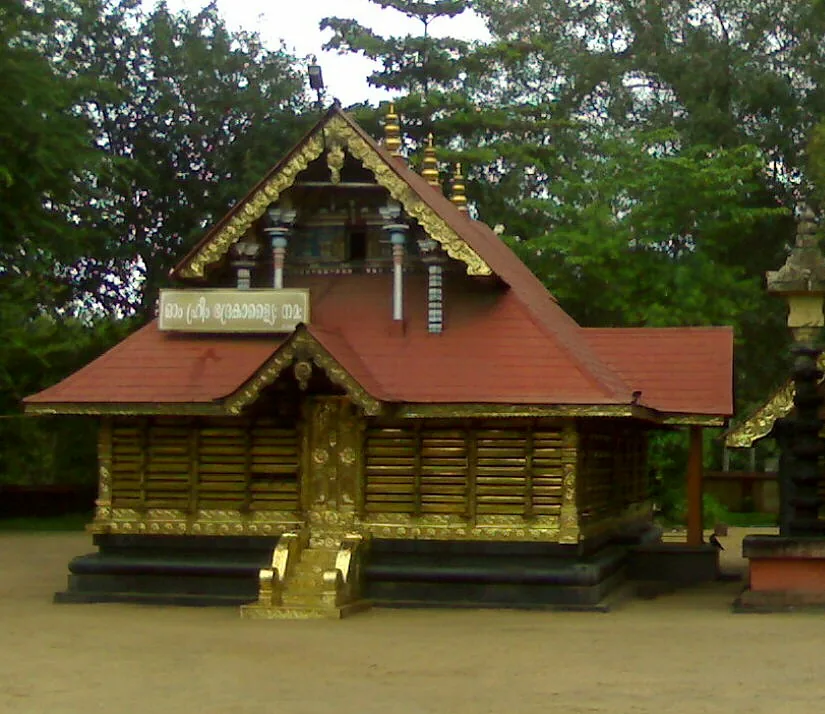
A short drive linking the named temples around Chadayamangalam: the Kottukkal rock-cut cave, the four-temple complex around one pond at Kadakkal, and the sacred groves, serpent shrine and kalari shrine of the surrounding belt.
21.1 km · ~35 min by cab · straight lineNearby toilets, pharmacies, ATMs, seating and vets are community-mapped and may be incomplete or out of date. Map data © OpenStreetMap contributors | Walking times © openrouteservice.org by HeiGIT
Meenoottu is the feeding of the fish, and it is the temple’s characteristic offering — a formal vazhipadu here in the way a lamp offering is elsewhere. You buy puffed rice or roasted peanuts at the temple and scatter it on the water for the fish, which devotees call Thirumakkal, the sacred children of the lord. It is offered particularly for skin complaints, and warts specifically. Anyone may do it. Fishing, on the other hand, is prohibited outright.
One of the two species is, and rather seriously. Hypselobarbus thomassi, the red canarese barb, is listed by the IUCN as critically endangered, is endemic to the Western Ghats of Kerala and Karnataka, and can grow to a metre. ⚠ The other, Tor khudree, the Deccan mahseer, is Least Concern and has been spread across India by large-scale stocking of hatchery-bred fish — so the widely repeated claim that both are endangered is not correct. The conservation point stands on the first species.
Bala Sastha — Ayyappa as a child. The Kerala government’s account adds that he is understood in a fierce aspect (ugramoorthi) as well as an auspicious one (mangalapradayakan). Sub-deities include Shiva, Vishnu, Ganapathi, Yakshi, Boothathan, the nagas, and Karuppaswami, a guardian deity of the Tamil country — a reminder of how close the border is.
Yes, and it is one of the three that survive every version of the list. No two published accounts of the five agree: the Travancore Devaswom Board’s own circuit runs Pandalam, Kulathupuzha, Aryankavu, Achankovil and Erumeli; devotional accounts commonly give Kulathupuzha, Aryankavu, Achankovil, Sabarimala and Kanthamala; others differ again. Only Kulathupuzha, Aryankavu and Achankovil are named in all of them. It is also counted among the 108 Sastha shrines of Kerala — a different set from the 108 Shivalayas.
DTPC Kollam gives 05:00–12:00 and 17:00–20:00 daily. Darshan carries no charge; meenoottu and other vazhipadu are at posted rates at the counter. ⚠ Timings at Kerala temples shift during festivals — confirm locally if you are travelling far for a particular hour.
The Kerala government gives the Tiruvutsavam as the 5th to the 14th of the Malayalam month of Medam, with the Vishu Mahotsavam — around the Malayalam new year in April — as the major celebration, including a procession that draws large crowds to the village. 🛑 We do not print a Gregorian date; Medam moves against the Gregorian calendar. ⚠ DTPC Kollam’s page writes “Vishnu Mahotsavam”; the Kerala government writes “Vishu”, and Vishu is what is meant.
DTPC Kollam gives 60.9 km from Kollam bus stand, 58.8 km from Kollam railway station and 73.7 km from Thiruvananthapuram airport. ⚠ The Kerala government’s page gives the nearest railway station as Thenmala, about 10 km — both are right, in that Thenmala is nearer and Kollam is the useful railhead. The temple is on the Kollam–Shencottai road, in Pathanapuram taluk.
No founding date exists, but there is unusually hard evidence for the fifteenth century: three sculptures from Kulathupuzha are in the Napier Museum in Thiruvananthapuram, catalogued to the 15th century CE — a wooden Dwarapalaka, a Thripuranthaka Murthi and a panel of Rama with Hanuman. Carved timber surviving that long in this climate is rare, and it establishes that there was a shrine here worth commissioning sculpture for. The written account gives a chain of custody rather than a date: founded by the Raja of Pandalam, the idol installed by a Brahmin from Kottarakkara, held under the Kottarakkara raja, and now with the Travancore Devaswom Board.
Yes, and it is barely mentioned anywhere: the Kerala Forest Department runs a Forest Museum in the village, with thatched pavilions, interpretive panels and a life-size tiger sculpture on a rock at the entrance. It is worth an hour, particularly with children. Kulathupuzha is also the name of the river — one of the three headstreams of the Kallada — and of the panchayat, which is why most searches for the name return water rather than this shrine.
Morning or early evening is usually best; festival days can be powerful but crowded.
Entry: Darshan is free. Meenoottu — the fish-feeding offering that is this temple's speciality — and other vazhipadu are at posted rates at the counter, where the puffed rice and roasted peanuts are also sold. Timings: 05:00–12:00 and 17:00–20:00 daily (DTPC Kollam). ⚠ Kerala temple timings shift during festivals and on special days; confirm locally if you are travelling far for a particular hour.
Base yourself in Thenmala or a nearby town in Kollam, then confirm the last-mile route locally before leaving. Check temple entry customs, dress rules and festival crowd conditions before arrival. If the visit depends on forest, temple, boat, ferry, weather or seasonal access, check the official/local rule on the day before travel.
45 minutes to 2 hours, longer during festival or queue periods.
Nearby you can pair Thenmala Dam (6.1 km), Thenmala trekking (6.6 km), Thenmala (6.6 km), Shendurney trek (6.7 km).
Use official counters for offerings/tickets where applicable. Keep footwear and valuables secure in crowded areas.
Written about Kulathupuzha Sastha Temple itself — its history, its legends and the arguments about them.
These guides explore Thenmala and the surrounding area. Choose a visit that fits your interests, allowing separately for travel between stops.


Route-level itineraries and practical guides for the rest of Kerala.
Photographs: Binupotti (CC BY-SA 3.0), Shajinss (CC BY-SA 4.0), BhagyaMohan (CC BY-SA 4.0), Haravinth rajan (CC BY-SA 4.0), Jaseem Hamza (CC BY 3.0). Wikimedia Commons.