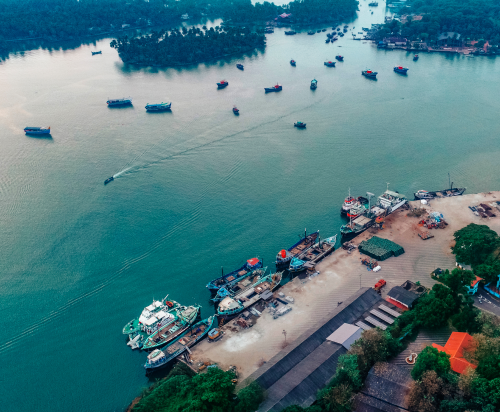
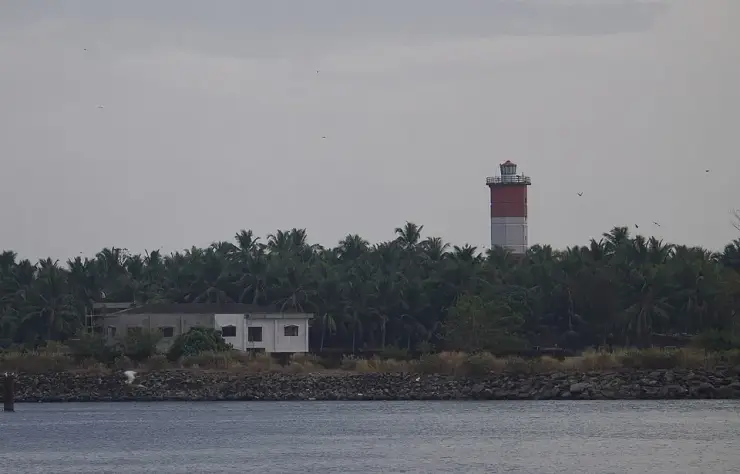
Where the Chaliyar river empties into the Arabian Sea, about 10 km south of Kozhikode, sits Beypore — a working port older than most nations, where giant wooden ships are still built entirely by hand and by eye. For more than a thousand years its shipwrights have shaped the uru, the ocean-going dhow that once carried Malabar pepper and Nilambur teak to Arabia, and Beypore remains one of the last places on earth where these vessels are still born, plank by plank, on an open riverbank.
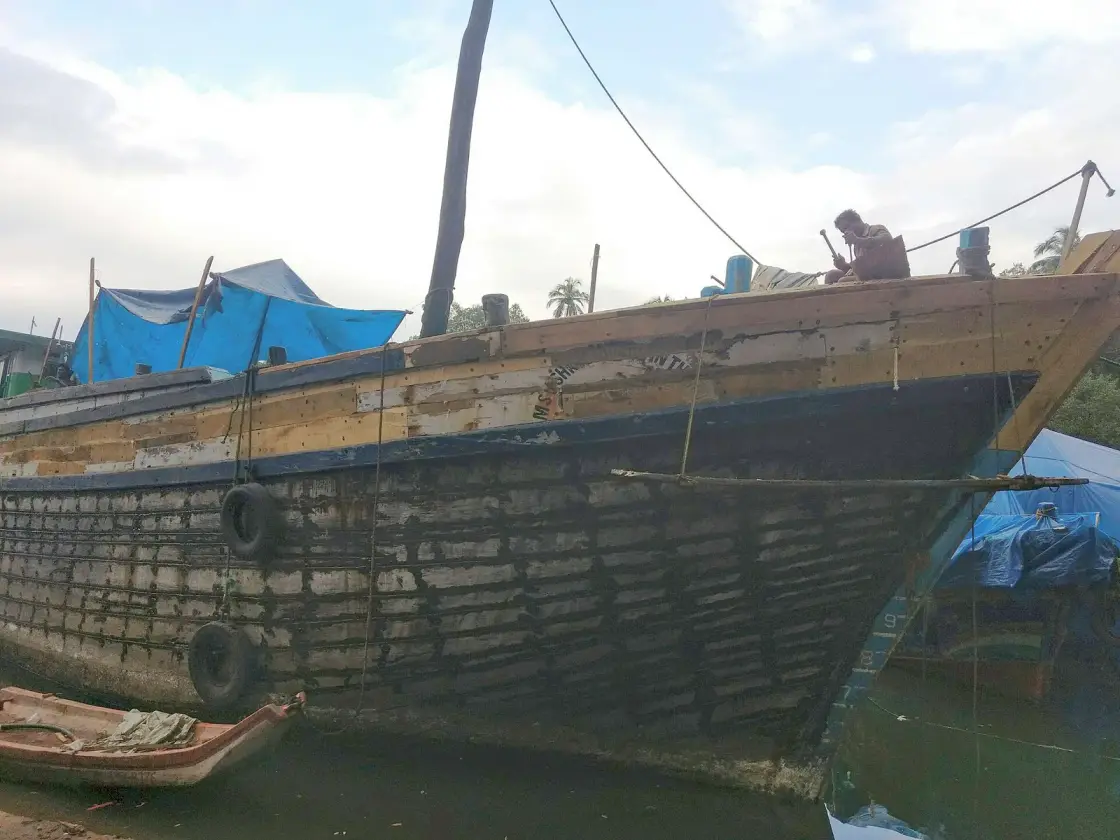
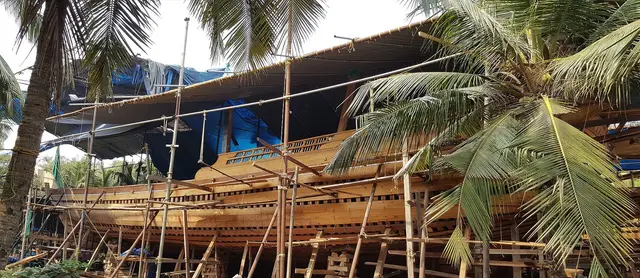
The heart of Beypore is not a monument but a craft — the building of the uru, the great wooden trading dhow. Walk along the riverbank yards and you will see the ribbed skeleton of a ship rising like the fossil of a whale. The line usually printed about these vessels, that they are built without any drawing at all, is not quite true today and is worth stating accurately, because the truth is more interesting. Work now typically begins with a scaled sketch or a small wooden model, and marine engineers or architects are often brought in at the client's request; the model is then worked up into digital drawings for approval. What has not changed is the order of things. The model comes first and the blueprint is derived from it, which is the reverse of how a steel ship is designed — and the hull itself is still shaped by eye, by a master carpenter holding the curve of the keel, the pitch of the planks and the set of the mast in his head rather than on paper.
Doing the heavy lifting — quite literally — are the Khalasis, a local Muslim community of riggers and haulers famous across India for moving impossible weights with nothing but coir ropes, timber levers, wooden pulleys and coordinated human muscle. When a finished uru, weighing hundreds of tonnes, must be eased down the sloping bank and launched into the Chaliyar, it is the Khalasis who sing, heave and roll it into the water inch by inch. Their skill is so respected that they are called in to raise fallen bridges, lorries and machinery far beyond the shipyard, but Beypore is where the tradition was forged.
An uru is not built quickly. A single vessel can take several years and the sustained effort of dozens of craftsmen, and the timber has always been teak — but not, any longer, the teak this town is famous for. Nilambur timber floated down the Chaliyar built the historic urus; forest protection ended that supply, and the wood arriving at the yards today is largely imported plantation teak, much of it Malaysian, worked alongside karumaruthu and vaka. The wood is shaped, joined and caulked plank over plank, the hull darkened with oils and the whole ship rising slowly from a bare frame into a seagoing giant. What makes Beypore extraordinary is that this is not a museum re-enactment: living, breathing orders still arrive from the Gulf, and the finished dhows sail away to new owners in Arabia.
The most recent commission is a good measure of what that means in practice. In November 2024 two urus built at Beypore sailed for Qatar, ordered by the Qatari businessman Yusuf Mohammed Mulla and built by Zayous Wood Works — the yard's tenth vessel — under the master craftsman Edathodi Sathyan, who has been at this for more than thirty-five years. They measured 150 by 34 by 13 feet and 140 by 33 by 12.5 feet, cost in the region of ₹3.5 crore each, and took five years against a plan of eighteen months, the delay a compound of Covid and floods. A team of twenty-five worked them. Qatar has been the anchor market since 2011, and orders spiked around the 2022 World Cup.
For centuries the buyers have come from across the sea. Arab merchants from Yemen, Oman and the ports of the Persian Gulf commissioned Beypore urus for pearling, trade and pleasure, and that thread has never quite snapped — modern Gulf clients still order handmade urus here, now often as luxury vessels, floating restaurants or heritage yachts rather than cargo ships. To stand in a Beypore yard is to watch a direct, unbroken conversation between the Malabar coast and Arabia that has been running for well over a millennium.
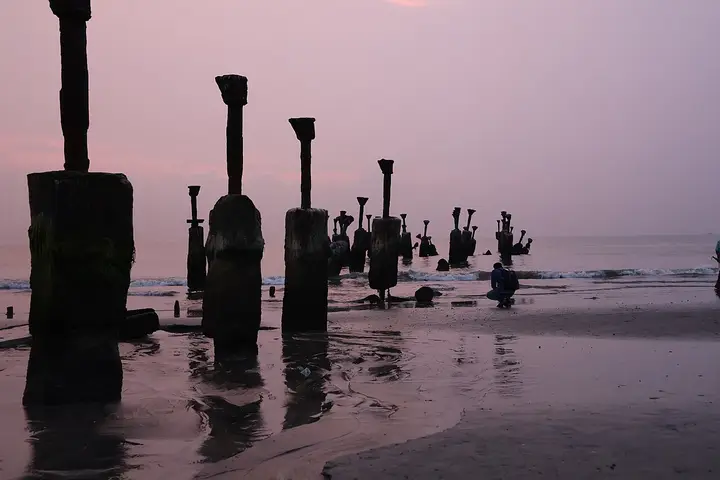
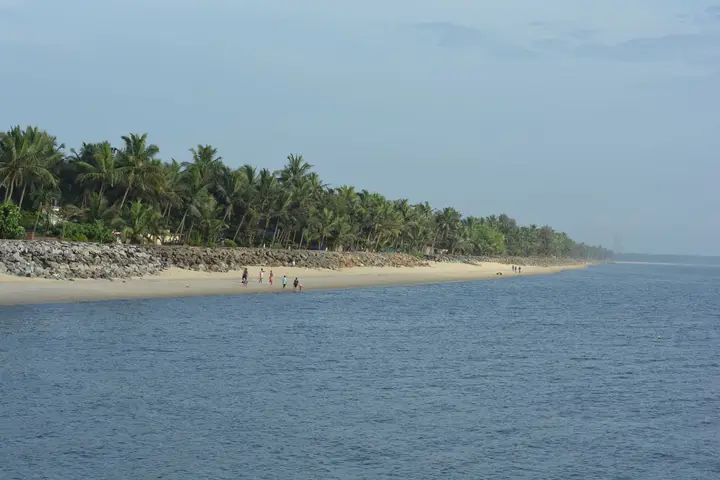
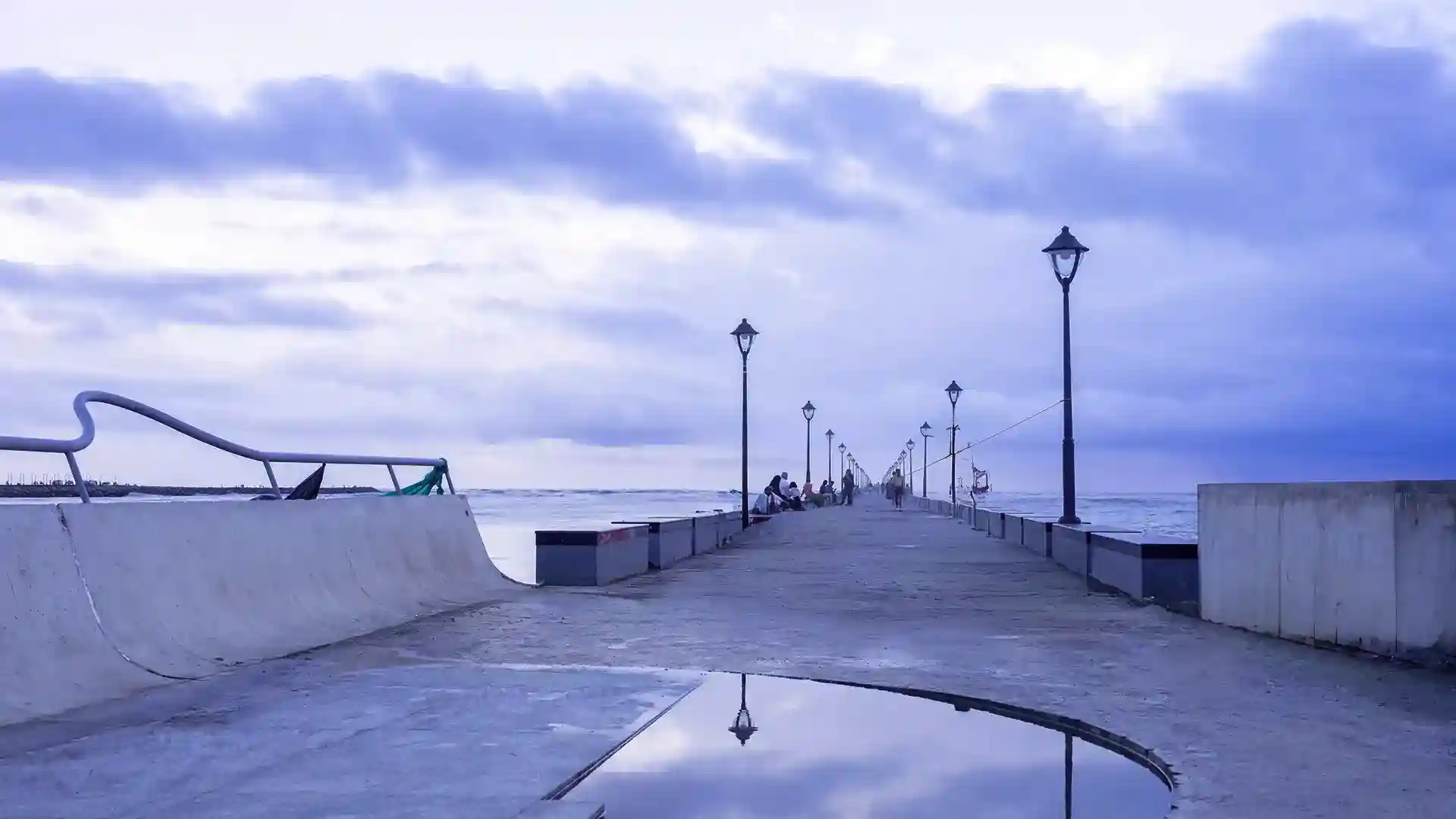
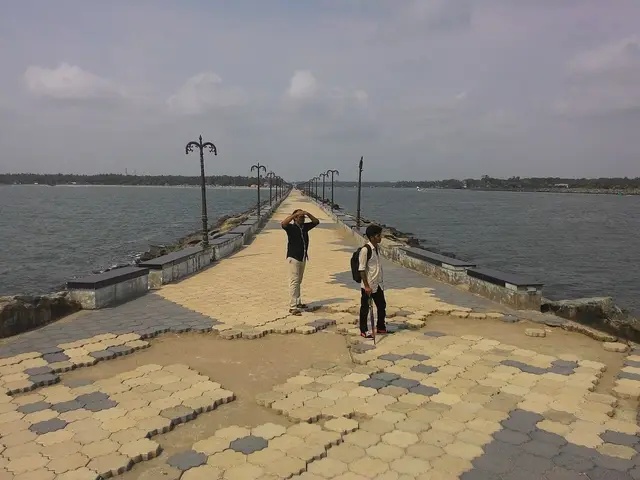
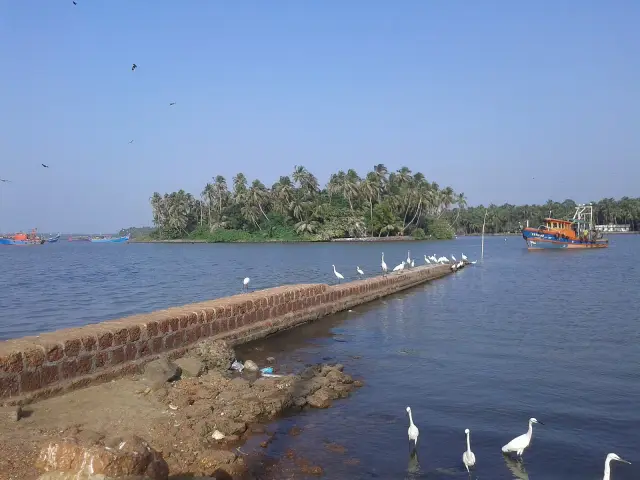
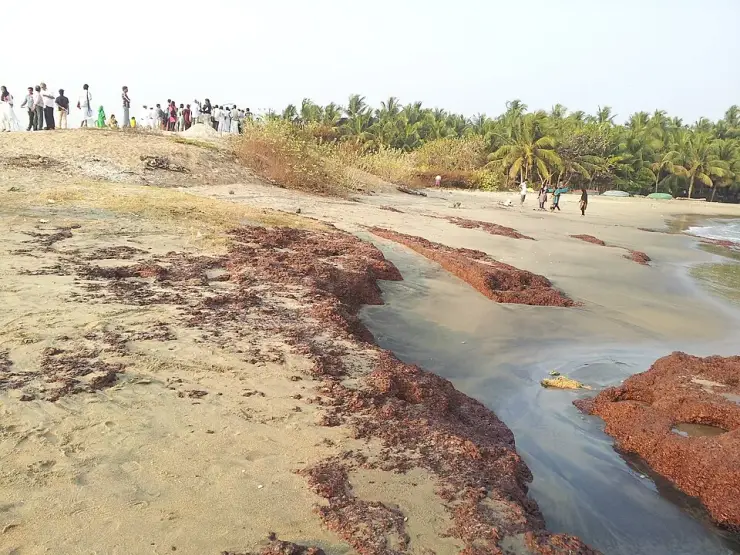
Beyond the yards, Beypore is also simply a lovely stretch of coast to slow down in. The long stone breakwater known as the Pulimutt reaches far out into the Arabian Sea, a favourite evening walk where families, couples and fishermen gather to watch the sun sink into the water. The beach behind it, the fishing harbour with its returning boats and the salt-and-timber smell of a genuine working port give Beypore a texture that polished tourist beaches simply do not have.
One correction is worth carrying with you, because it appears in a great deal of published material about Beypore, including — until this rewrite — ours. The URU Art Harbour is not here. It is in Mattancherry in Kochi, roughly 200 km south in Ernakulam district, founded in 2016 by the artist Riyas Komu of the Kochi-Muziris Biennale, and it is named after the Beypore uru as a metaphor. That is almost certainly how it migrated onto Beypore's itineraries. What Beypore actually has is a privately managed Dhow Museum in the town, a larger interpretation centre proposed under Swadesh Darshan 2.0 but not built, and the Beypore International Water Fest each December on the Chaliyar and at Marina Beach, with a responsible-tourism fest, a textile and art fest and a flea market at the Nallur Mini Stadium. The town's responsible-tourism project took an ICRT Gold Award in 2024.
Together with the yards, the breakwater and the harbour, that makes Beypore a place you visit not to tick off a sight but to feel a way of life — one where the sea, the river and the slow art of building ships by hand still shape everyday rhythms.
Legend & myth
Kerala's first railway station was not in Beypore, and it does not exist any more. Both halves of that sentence are usually wrong in print, and the second one is wrong in an unusually complete way: the building was not demolished and left, it was dismantled and rebuilt as something else.
The claim as everyone states it is nearly right. The first railway line in what is now Kerala ran from Tirur to Beypore and opened in 1861. The date is exact — 12 March 1861. The operator is right, the Madras Railway Company, chartered in 1845. The line was about nineteen miles, roughly 30.5 kilometres, single track on the 5 ft 6 in broad gauge, calling at Tanur, Parappanangadi, Vallikkunnu and Kadalundi. Everything checks out except the one word people care about.
The station called Beypore was physically at Chaliyam, on the south bank of the Chaliyar. Wikipedia's article on Chaliyam puts it flatly: the name Beypore was technically incorrect for this location. The river at its mouth is wide and deep and there was no bridge. Kerala's first railway terminated within sight of Beypore and could not reach it. Freight and passengers finished the last few hundred metres by boat — and the jankar, the vehicle ferry that still shuttles between Chaliyam and Beypore today, is the direct descendant of that gap. You can pay a few rupees and cross the hole in the network yourself.
Why there at all? Chaliyam beat Ponnani and Calicut on engineering rather than commerce. It offered safer anchorage, a natural reef that acted as a breakwater, and — decisively — the Chaliyar, navigable inland towards the Wayanad and Nilambur timber country. This line existed to move teak. It joins directly onto the other correction on this page: the plantations begun in 1842 and 1844, raised by Chathu Menon under Collector H. V. Conolly, were the supply, and this railway was the export route. Conolly himself was murdered on 11 September 1855 and was six years dead before the first train ran.
It did not work. Loading over an open roadstead was miserable in practice, and the commercial centre of the coast was Calicut, not Beypore. The Madras Railway spent nearly three decades running a terminus at the wrong end of a ferry crossing before it gave up and did the obvious thing. Kozhikode station opened on 2 January 1888, with new stations at Kadalundi, Feroke and Kallayi and new bridges including an eight-span crossing of the Beypore river.
The erasure happened on the same day. The old Beypore station and about a mile and a half of track running from the Kadalundi bridge were abandoned when Kozhikode opened. The buildings were not left to decay in the way that would have given north Kerala a photogenic ruin. They were stripped, and the material was carted up to Kozhikode and built back into the railway there. English-language accounts, following the most careful of them, say it went into an engine shed; local Malayalam accounts say it went into the first Kozhikode station itself. Either way, Kerala's first railway terminus was recycled into the station that replaced it.
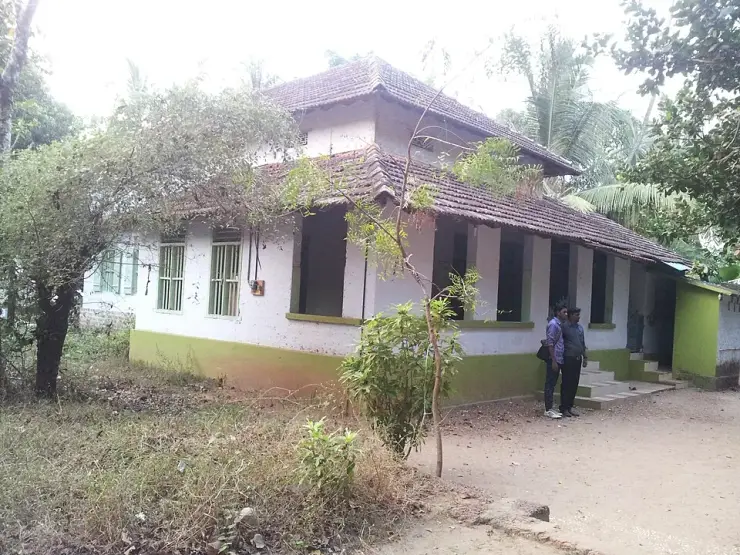
What is left at Chaliyam is one well. Local Malayalam calls it the vandi kinar, the engine well — dug to fill the locomotives with water and to serve the turning of engines and bogies, which is the working heart of any steam terminus — and it still stands, walled around and marked as a historical landmark. Surviving foundations are often mentioned alongside it, but the only source for them hedges the claim, and no surviving station masonry is documented anywhere. There is also one photograph: a two-storeyed brick building with verandahs and platforms, filed on Wikimedia Commons under Kerala in the 1860s, its author unknown and its date given only as before 1951. It is the sole surviving image of Kerala's first railway station, and it is captioned, correctly, Chaliyam.
None of which takes anything away from Beypore. It just relocates a fact by about eight hundred metres of water — which, when you think about it, is precisely the distance that made the whole enterprise fail.
More about Beypore
History
Beypore's story is a maritime one that reaches back deep into antiquity. Sitting at the mouth of the Chaliyar, it was a natural harbour on the Malabar coast and became a key node on the ancient Arabia–India trade route, exchanging pepper, spices and above all teak timber for goods from West Asia. Long before European powers arrived, Arab traders had settled and intermarried along this coast, and Beypore served both as a trading port and as a stopover on the sea route used by Haj pilgrims heading west.
The uru shipbuilding tradition is usually dated back well over a thousand years, with some accounts stretching the maritime heritage of the wider region back around two millennia. What is beyond doubt is that the demand came largely from Arab seafarers, and that Beypore, with skilled carpenters, the muscle of the Khalasis and easy access to Nilambur teak floated downriver, was ideally placed to meet it. The romance of Sindbad-era Arab sailors and the Indian Ocean dhow trade is not mere legend here; it is the commercial reality that built the town.
British Malabar left its own strong mark, and the dates matter more than they might seem to. Henry Valentine Conolly (1806–1855) was Collector of Malabar from 1841 until 1855, and the Nilambur teak plantation began under him in 1842, when seed was first broadcast, with the first nursery-raised pre-treated seedlings following in 1844. Not the 1850s, as this page and a good deal of other copy used to say — and the planting was not really his work. The man who solved the germination problem, and without whom there would have been no plantation, was Chathu Menon, Sub-Conservator of Forests, who is buried at the site beside Kannimari, a surviving tree from the 1840s. Conolly was murdered at the West Hill bungalow in Calicut on the night of 11 September 1855. His direct connection to Beypore is, honestly, slight: the canal that bears his name is the Kallayi–Elathur cut at Kozhikode, planned in 1848. What tied him to this town was the timber, and the timber's export route.
Beypore's other famous historical claim is the railway, and it is true in date and false in place: the first line in what is now Kerala opened on 12 March 1861 and its western terminus was called Beypore, but the station stood at Chaliyam on the far bank of the river. That story is worth telling properly and it is told in full below. What belongs here is why the line was built at all. It ran to move teak — the plantations Chathu Menon raised from 1842 were the supply and the railway was the export route, and Conolly, murdered in 1855, was dead six years before the first train ran.
The town's own antiquity is older than either. Kadalundi, Chaliyam and Beypore together form one of the proposed identifications for Tyndis, the emporium named in the Periplus of the Erythraean Sea and by Ptolemy in the first and second centuries CE, trading between the Cheras and Rome. No source we can find ranks the candidates, and no archaeological evidence of Tyndis has ever been found — Ponnani and Panthalayini Kollam (Koyilandy) are proposed just as seriously. Our own Koyilandy page already says the question is unproven, and this page must not contradict it. Under the Zamorins, Beypore ran as a virtually duty-free port; Tipu Sultan renamed it Sultan Pattanam. That is the claim worth making about a thousand years and more of history here — it belongs to the harbour, which is well evidenced, rather than to the shipbuilding craft, for which the published figures range from 1,500 to 2,000 years with no supporting record, and where documented family lineages run back a century to a century and a half.
Today Beypore is a heritage port that has outlived its own golden age of cargo dhows yet kept the craft alive. The volume of trade has shrunk and steel and engines long ago replaced sail for commerce, but the yards still receive genuine commissions, the Khalasis still practise their rigging art, and state tourism has embraced the town as a living showcase of Kerala's maritime past rather than a relic of it.
Why visit
You can watch a giant wooden ship being built by hand — one of the very few places left on the planet where the uru dhow is still assembled on an open riverbank, its hull shaped by a master carpenter's eye rather than by a lines plan. For anyone drawn to craft, history or the sea, it is genuinely unforgettable.
The Pulimutt breakwater is one of the most atmospheric sunset spots in north Kerala. Walking far out along the stone pier with the Arabian Sea on one side and the Chaliyar river mouth on the other, then watching the sun drop into the water, is the kind of simple, unhurried experience that stays with you.
It is a rare, authentic working port rather than a manufactured attraction. The fishing harbour, the returning boats, the smell of timber and salt, and the everyday life of shipwrights and fishermen give Beypore a lived-in texture that heavily commercialised beaches lack.
The living heritage of the Khalasi riggers and the Arab-Malabar trade connection make Beypore a deeply storied place. You are standing at one end of a maritime relationship with Arabia that has run, more or less unbroken, for over a thousand years — and it is still generating real orders today.
It pairs beautifully with a Kozhikode (Calicut) trip. Only around 10 km from the city, Beypore adds beach, breakwater, shipyards, the fishing harbour and the jankar crossing to Chaliyam to a Malabar itinerary already rich in food, history and coastline, making it an easy and rewarding half-day escape.
For photographers, families and slow travellers alike, Beypore offers variety in a compact area — the dramatic skeletal hulls of the yards, the long geometric line of the Pulimutt, the beach, and the harbour bustle — all within a short, walkable stretch of coast.