What to expect
Highlights
- Temple visit at Thirunavaya Nava Mukunda Temple
- Kerala temple architecture and rituals
- Local food, shops and pilgrim services nearby
An ancient Vishnu temple on the Bharathapuzha at Thirunavaya, near the historic Mamankam fair-ground and a major venue for ancestral (bali/shraddha) rites.
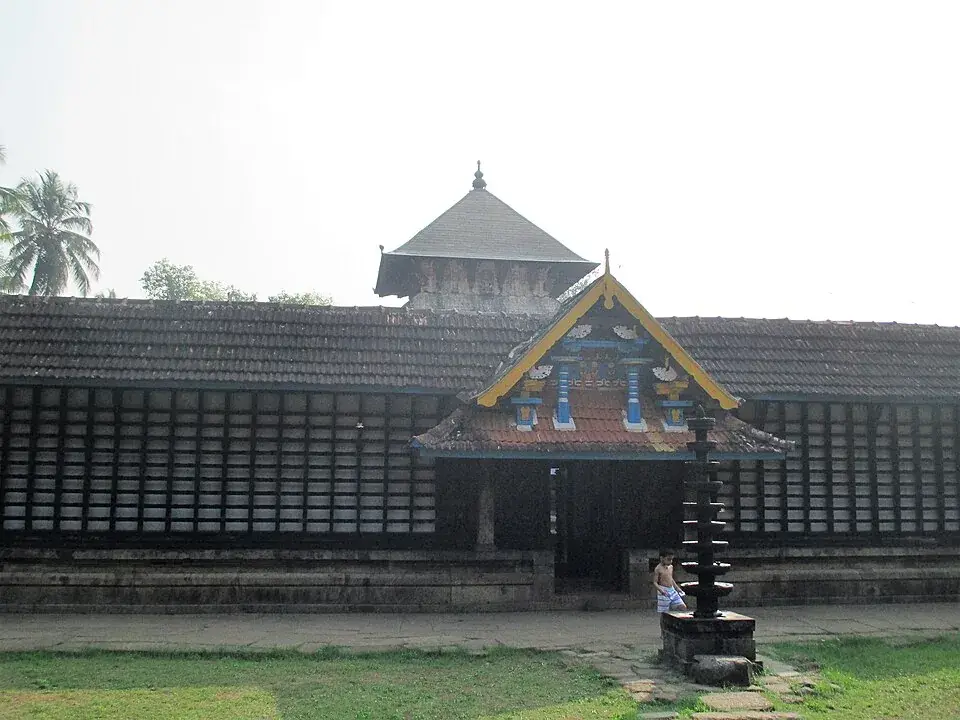
Check entry arrangements. Ask temple staff about visitor entry, dress requirements and access to the inner shrine before you travel, especially if you are visiting as a non-Hindu.
Dress respectfully and follow the institution’s admission and photography rules.
On the sacred north bank of the Bharathapuzha, where nine sages are said to have installed the ninth Mukunda into ground that would swallow the first eight, stands one of Kerala’s most ancient Vishnu shrines — a temple where the living gather in their thousands to feed water and rice to the dead.
Thirunavaya Nava Mukunda Temple sits on the northern bank of the Bharathapuzha (the Nila, also called the Ponnani river) near Tirur in Malappuram district, and is counted among the oldest Vishnu temples in Kerala. The presiding deity is Vishnu worshipped here as Navamukunda Perumal — Narayana in a benevolent, boon-granting form — and the shrine draws two very different streams of pilgrims: Vaishnava devotees tracing the trail of the Tamil Alvar saints, and Hindu families of all backgrounds who come to perform rites for their ancestors.
The murti stands facing east, said to be roughly six feet tall, carved in stone and clad in panchaloha (the five-metal alloy). Strikingly, only the body above the knees is visible for darshan; the legs below the knee are traditionally held to be concealed underground, a detail bound up with the temple’s founding legend of the nine yogis. The Lord is shown bearing the conch (shankha) and discus (chakra) in the upper hands and the mace (gada) and lotus (padma) in the lower — the classical four-armed iconography of Maha Vishnu.
Uniquely for a Narayana shrine of this region, the goddess Lakshmi — here honoured as Malarmangai Nachiyar (also called Sirudevi) — is enshrined in her own separate sannidhi rather than beside the Lord. Local Vaishnava tradition holds this to be the only Divya Desam in the old Malai Nadu (Kerala) where the Thayar has an independent shrine. Subsidiary deities including Ganesha and Ayyappa are also worshipped within the temple complex.
The temple is inseparable from its river. The Bharathapuzha here is regarded as intensely holy — folk tradition even likens the spot to Kashi (Varanasi) — and it is this sanctity of the sands and the flowing water that has made Thirunavaya one of Kerala’s foremost centres for pitru karma, the rites for departed souls. On ordinary days the riverbank is quiet; on the new-moon day of the month of Karkidakam it becomes a sea of white-clad mourners performing Bali Tharpanam shoulder to shoulder.
Thirunavaya also carries a second, thunderous layer of memory. These same sands were the stage of the Mamankam, the grand twelve-yearly assembly of Kerala presided over by the Zamorin of Kozhikode — part festival, part trade fair, part contested claim to sovereignty. It was here that the Chaver, the suicide-warriors of Valluvanad, made their legendary bids to cut down the Zamorin, and the surviving Mamankam monuments still dot the landscape around the temple.
Together these threads — the Divya Desam antiquity, the trinity of shrines strung along the Nila, the ancestral rites, and the blood-soaked pageantry of the Mamankam — make Thirunavaya far more than a single temple. It is a riverside sthala where devotion, death-ritual and history converge, and it remains a living, actively worshipped shrine rather than a monument frozen for tourists.
The temple’s name and its half-buried idol come from the legend of the Navayogis — nine sage-brothers (Navayogis) who wandered the land installing images of Vishnu. As legend has it, at Thirunavaya each of the first eight idols they consecrated sank into the earth the moment it was set down. The ninth began to sink likewise but was halted by force at knee level — and so it stands to this day, its lower legs hidden underground, worshipped as the ‘ninth Mukunda’, the Nava Mukunda who grants moksha. The youngest brother, Karabhajanan, is said to have realised the earlier idols had sunk because the proper consecration rites had not been performed, and it was he who finally installed the Salagrama form correctly with all the ritual due. Because the exact spots where the eight earlier idols descended are unknown, some devotees are said to circumambulate the shrine on their knees, lest they tread upon a sunken god. Thirunavaya is remembered as the ‘Navayogi Sthala’ in honour of these nine.
A second, gentler legend links the shrine to the great Puranic story of Gajendra Moksha. It is told that both the goddess Lakshmi and the devout elephant Gajendra came here to worship the Lord, each offering lotus blooms plucked from the same nearby pond. As the flowers grew scarce with two great devotees drawing from one source, Gajendra appealed to Vishnu — and the Lord, pleased with both, is said to have seated Lakshmi beside him upon the same throne while graciously accepting the elephant’s worship. These accounts are devotional legend, cherished by pilgrims rather than offered as history.
Thirunavaya is glorified as one of the 108 Divya Desams — the abodes of Vishnu sung by the Tamil Vaishnava poet-saints, the Alvars, in the Nalayira Divya Prabandham. Tradition attributes its mangalasasanam (hymnal glorification) chiefly to Nammalvar, with additional verses linked to Thirumangai Alvar. It is often described as one of the very few Divya Desams in Kerala’s Malabar region, which draws Sri Vaishnava pilgrims from Tamil Nadu who know it by its Tamil name, Thiru Naavaay, and the Lord as Naavaay Mugundha Perumal.
One of the temple’s most distinctive traditions is that of the river-trinity. On the north bank stands the Vishnu (Navamukunda) temple; close by is a Brahma shrine; and across the Bharathapuzha, on the southern side near Tavanur, is a Shiva temple — the three said to face one another across the Nila so that Brahma, Vishnu and Shiva form a Trimurti sangama along a single stretch of river. Pilgrims regard darshan of all three as completing the sanctity of the site.
Above all, Thirunavaya is renowned across Kerala for Bali Tharpanam — the offering of pinda (rice balls with sesame) and water to nourish and liberate the souls of the ancestors. On Karkidaka Vavu, the new-moon (Amavasya) day of the Malayalam month of Karkidakam (roughly July–August; date shifts yearly — confirm locally), tens of thousands of devotees descend on the riverbank to perform these rites en masse. Alongside Thirunelli in Wayanad, Thirunavaya is regarded as one of the pre-eminent sites in Kerala for pitru rites, and the images of white-clad crowds on its sands are among the most recognisable of the Karkidakam season.
The sands of Thirunavaya were also the arena of the Mamankam (Mamangam), a grand assembly and festival held once every twelve years — by some accounts for as long as twenty-eight days, doubling as a vast trade fair — presided over by the Zamorin of Kozhikode. The rival rulers of Valluvanad, who claimed the older right to preside, are said to have dispatched Chaver squads — hereditary warriors sworn to a suicide mission — to fight their way through the Zamorin’s guards toward the royal platform, the Nilapaduthara. The Mamankam is documented regional history: it was held for the last time in 1755 CE, and the last festival is remembered for a teenage Chaver, Chandunni (Chanthunni) Panicker of Valluvanad, who advanced almost to the platform before being cut down.
In later centuries the temple suffered in the region’s upheavals — it is recorded as having been attacked during Tipu Sultan’s 18th-century campaigns in Malabar, and again disturbed during the 1921 Malabar (Mappila) Rebellion. Local tradition also credits earlier renovation to the Vettath Raja. Through it all the shrine has remained in continuous worship, and today it is administered as an active temple drawing both Divya Desam pilgrims and ancestral-rite worshippers year round.
Darshan at one of Kerala’s oldest Vishnu temples and one of the very few Divya Desams in Malabar, glorified in the Tamil Alvar hymns.
The extraordinary half-sunken Nava Mukunda idol, visible only above the knees, tied to the vivid legend of the nine yogis.
The river-trinity tradition — Vishnu and Brahma on the north bank, Shiva across the Nila — a rare Trimurti alignment along one river.
One of Kerala’s most important sites for ancestral rites (Bali Tharpanam), especially the vast Karkidaka Vavu gathering on the riverbank.
Standing on the historic Mamankam grounds, where the Zamorin held court and the Chaver warriors of Valluvanad made their legendary last charges.
The serene, storied setting on the sacred sands of the Bharathapuzha (Nila), Kerala’s great river of poets and pilgrims.
Road km to Malappuram; ghat roads and traffic vary — allow extra.
Morning or early evening is usually best; festival days can be powerful but crowded.
Live forecast loads in your browser.
Sun and moon are calculated for this location and shown in IST. Photography windows are the hour around sunrise and sunset; the sunset bearing is degrees clockwise from true north. Moon phase is accurate to about half a day.
Browse listed stays, food, activities, sights, shops and rentals around Thirunavaya Nava Mukunda Temple. Check each listing’s locality and contact the business directly for current arrangements.
A budget-friendly hotel in the heart of Tirur town with AC suites and deluxe rooms. It sits within walking distance of Thunchan Parambu.
A contemporary hotel at B.P Angadi in central Tirur with suites and a party hall. Its kitchen serves regional and global cuisine, plus spa services.
Book with the place itself. India’s cyber-crime coordination centre warned in April 2025 that convincing copies of hotel and pilgrimage booking sites are being pushed through sponsored search and social ads, taking payment for rooms the property never hears about. Use the contact and source details on each profile to confirm the exact business and booking channel. A directory entry or map pin alone does not establish an operator’s identity or current availability. Roampedia takes no commission and does not collect booking payments. If a booking page reached you through an ad, check the address bar against the property’s own site before you pay. Fraud can be reported on cybercrime.gov.in or on 1930.
Find food, accommodation and activities across Tirur. Browse the guides for places to eat, stay and explore along your route.
7 more places around Tirur. Open a guide to plan the visit and onward journey.
The rare Garuda shrine in the Triprangode temple landscape near Tirur, visited as a living place of worship with local ritual rules respected.
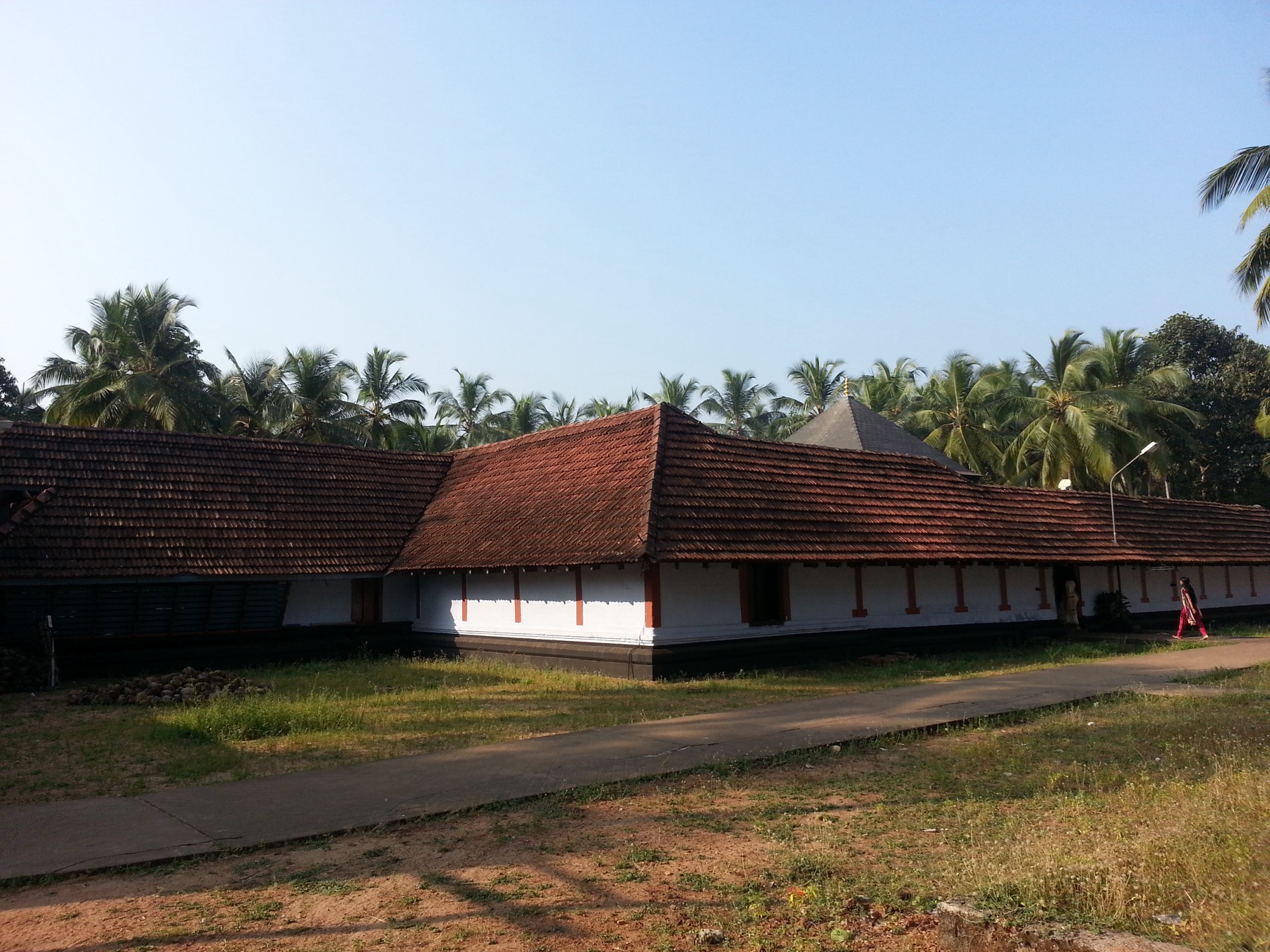
5.6 km · straight line
The Alathiyur Perumthrikkovil near Tirur, where the sanctum holds Sri Rama alone and the Hanuman carved outside it — leaning, caught in the act of listening to his orders — is the figure the crowds come for.
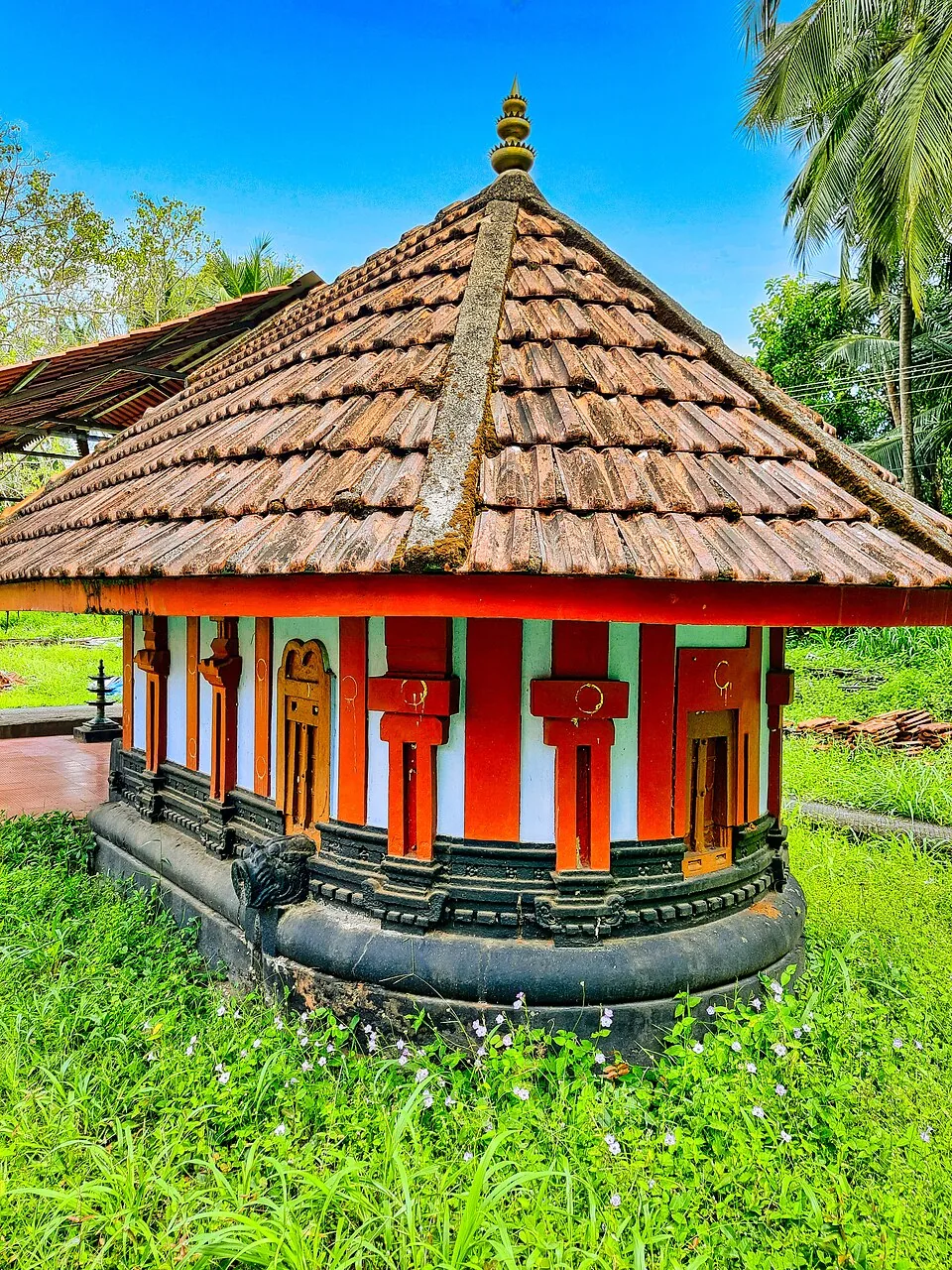
7.2 km · straight line
One of the hundred and eight Shiva temples of Kerala, a kilometre from Thunchan Parambu — an apsidal ninth-century shrine that opens at half past two in the morning because the god here was installed at dusk.
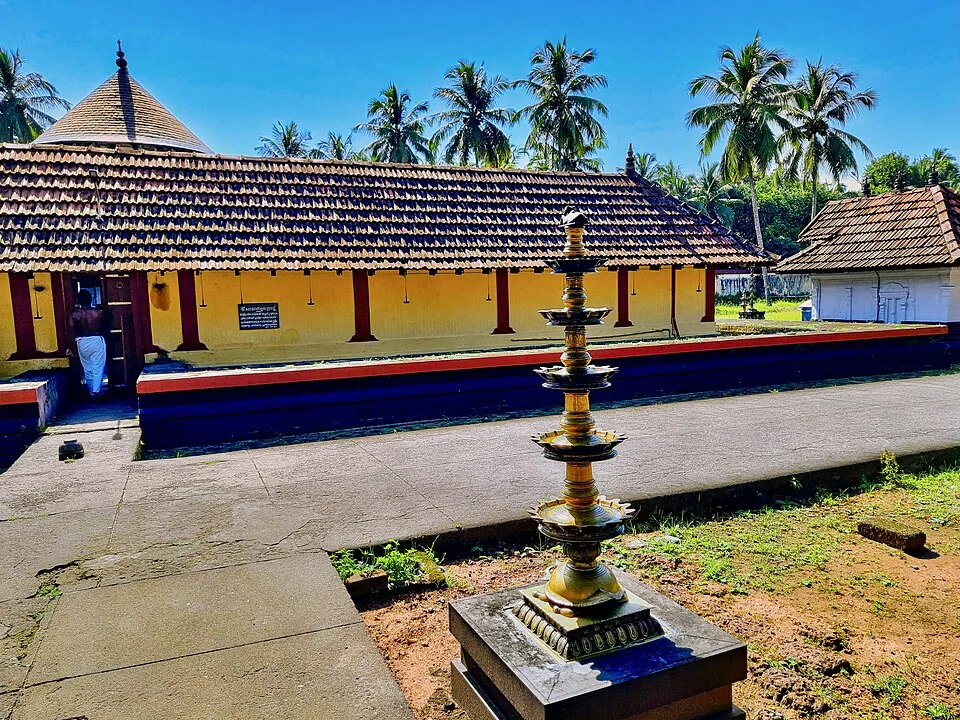
5.7 km · straight line
A west-facing Shiva temple south of Tirur, nine shrines inside six acres, built around the moment Shiva came out of the linga to stop Death taking the boy Markandeya.
7.8 km · straight line
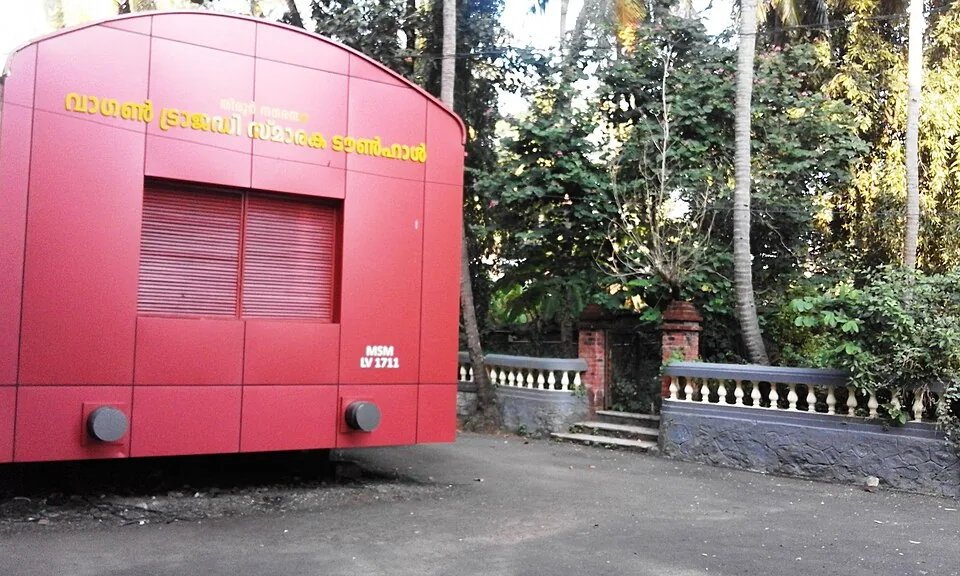
Tirur's town hall, built as a full-size railway goods wagon in signal red and lettered MSM LV 1711 — the memorial to the hundred prisoners shut into wagon 1711 at the station down the road on 19 November 1921.
10.1 km · straight line
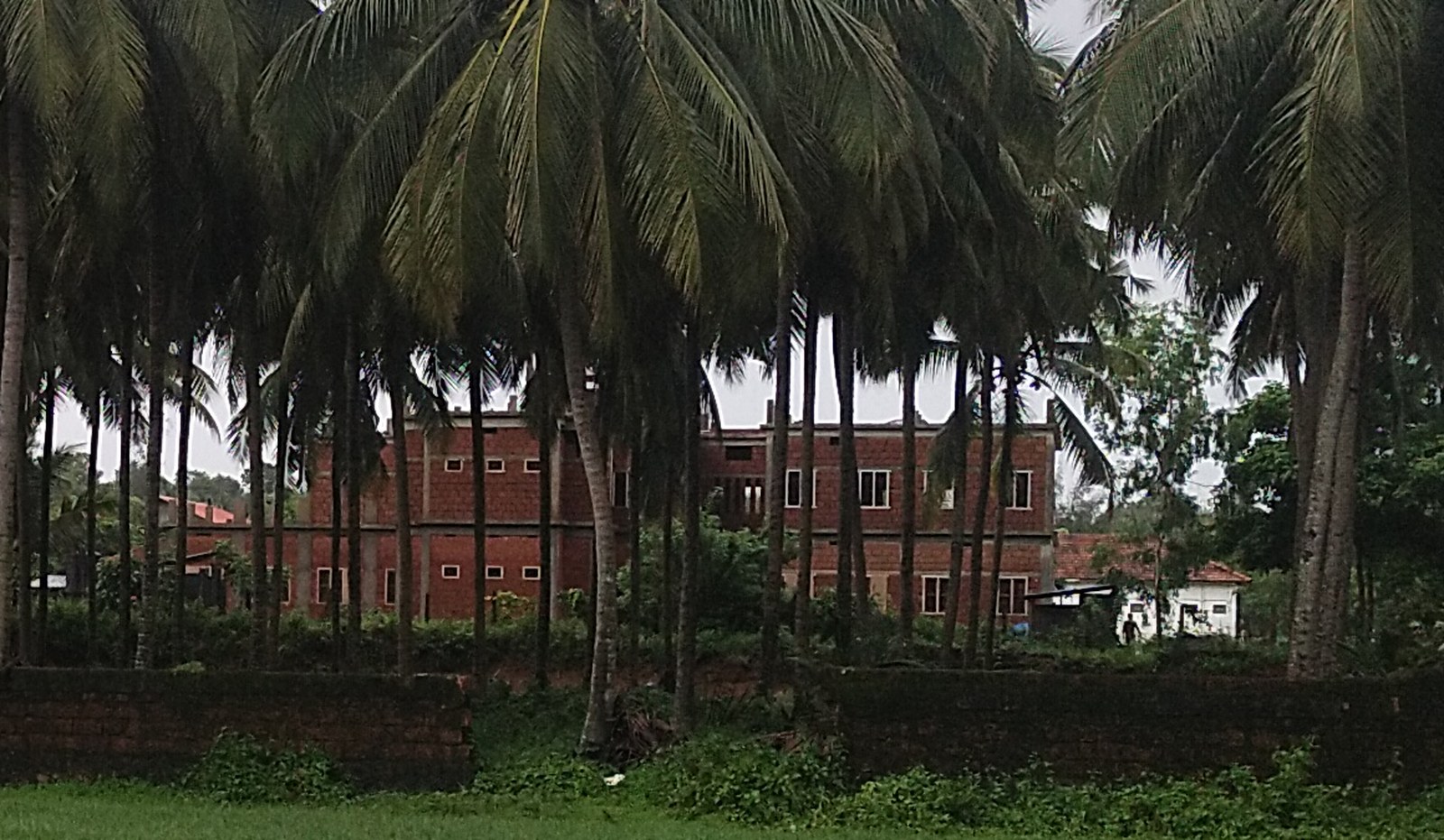
The state university at Vakkad, four kilometres west of Thunchan Parambu, founded in 2012 to teach the humanities and social sciences through Malayalam rather than English.
8.1 km · straight line
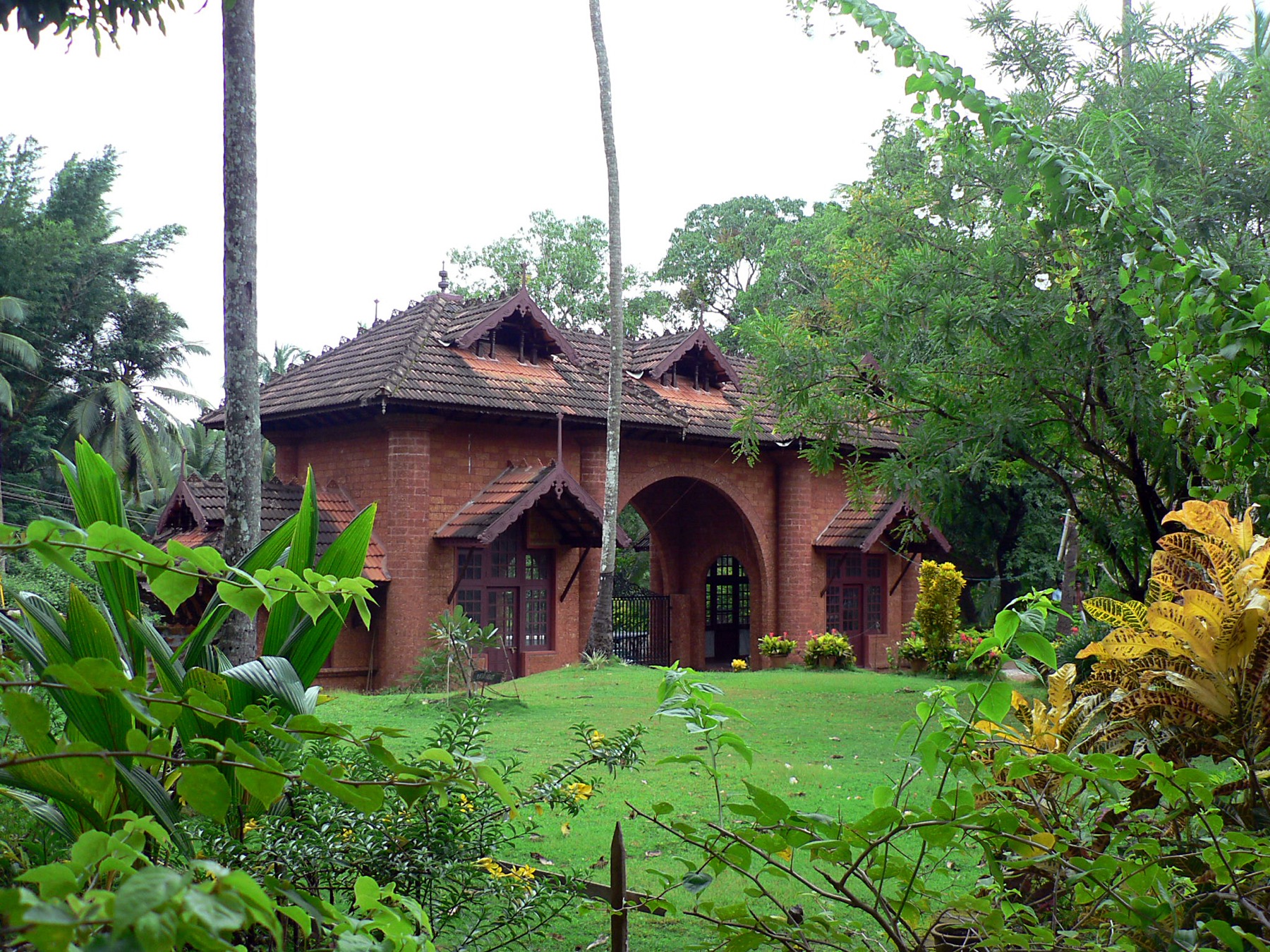
At Tirur, the ground of Thunchath Ezhuthachan, the “father of the Malayalam language” — a working literary institution with a museum, a manuscript library and the Vidyarambham first-letters tradition at Vijayadashami.
Roampedia is commission-free — own or know a stay, eatery, guide or shop near Thirunavaya Nava Mukunda Temple? Submit public business details for review.
Add a nearby businessEntry: Darshan is free. Specific rituals — particularly Bali Tharpanam and other offerings — are arranged through the temple priests for a customary fee or dakshina.
Dress code: Traditional temple dress is expected — men often remove the upper garment and wear a mundu/dhoti, and women wear a saree or other modest traditional attire. Norms follow those of Kerala Vishnu temples; confirm current requirements locally before visiting.
Festivals: The Karkidaka Vavu Bali (new-moon day of Karkidakam, roughly July–August) is the biggest gathering, when thousands perform ancestral rites on the riverbank. The temple also observes an annual festival and the usual Vaishnava observances (exact dates shift yearly — confirm locally).
Photography: Photography is generally restricted or prohibited inside the sanctum and worship areas, as at most Kerala temples; the riverbank and exterior may be more relaxed. Always check and follow the temple’s current rules and priests’ instructions.
If you are travelling by bus or ferry, check the return service with the operator before setting out. Leave time to reach the stop or jetty after your visit.
Ask at the bus stand for the time of the last service back, not the next one. If you miss it, an auto or app cab is the fallback — agree the fare before you get in.
If you need step-free access, contact the site before travelling. Ask about a level entrance, steps along the route, the nearest drop-off point, seating and accessible toilets.
Published emergency and visitor-assistance contacts. For an immediate emergency, call 112. Shared Kerala contact sources checked 4 October 2026; publication does not establish a tested live response.
The Alathiyur Perumthrikkovil near Tirur, where the sanctum holds Sri Rama alone and the Hanuman carved outside it — leaning, caught in the act of listening to his orders — is the figure the crowds come for.
5.6 km · straight lineA west-facing Shiva temple south of Tirur, nine shrines inside six acres, built around the moment Shiva came out of the linga to stop Death taking the boy Markandeya.
5.7 km · straight lineOne of the hundred and eight Shiva temples of Kerala, a kilometre from Thunchan Parambu — an apsidal ninth-century shrine that opens at half past two in the morning because the god here was installed at dusk.
7.2 km · straight lineTirur's town hall, built as a full-size railway goods wagon in signal red and lettered MSM LV 1711 — the memorial to the hundred prisoners shut into wagon 1711 at the station down the road on 19 November 1921.
7.8 km · straight lineAt Tirur, the ground of Thunchath Ezhuthachan, the “father of the Malayalam language” — a working literary institution with a museum, a manuscript library and the Vidyarambham first-letters tradition at Vijayadashami.
8.1 km · straight line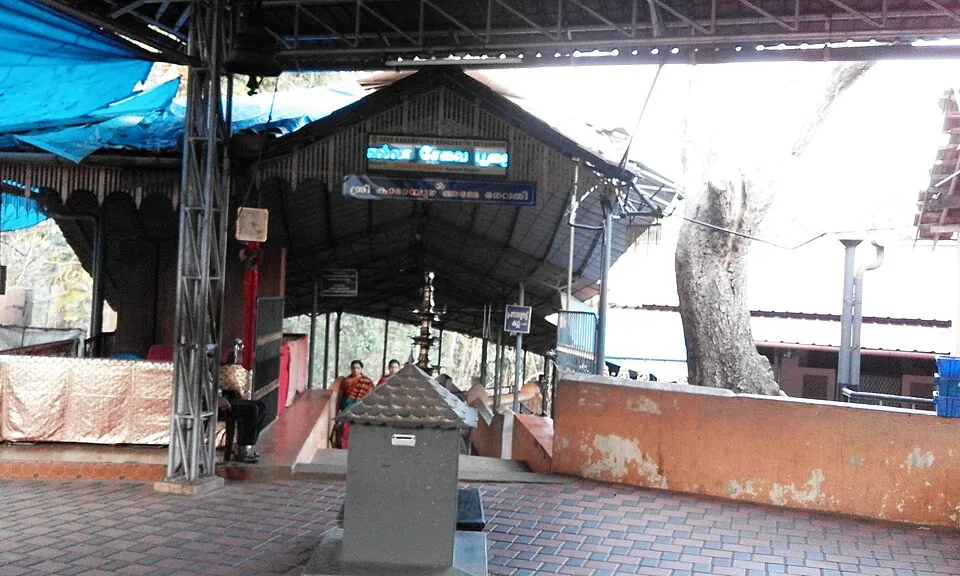
A revered Devi temple near Vettichira with no idol — the goddess is worshipped in a natural rock fissure; devotees offer the poomoodal and muri-pooja. Founded by legend of Adi Shankara.
8.7 km · straight lineThe state university at Vakkad, four kilometres west of Thunchan Parambu, founded in 2012 to teach the humanities and social sciences through Malayalam rather than English.
10.1 km · straight line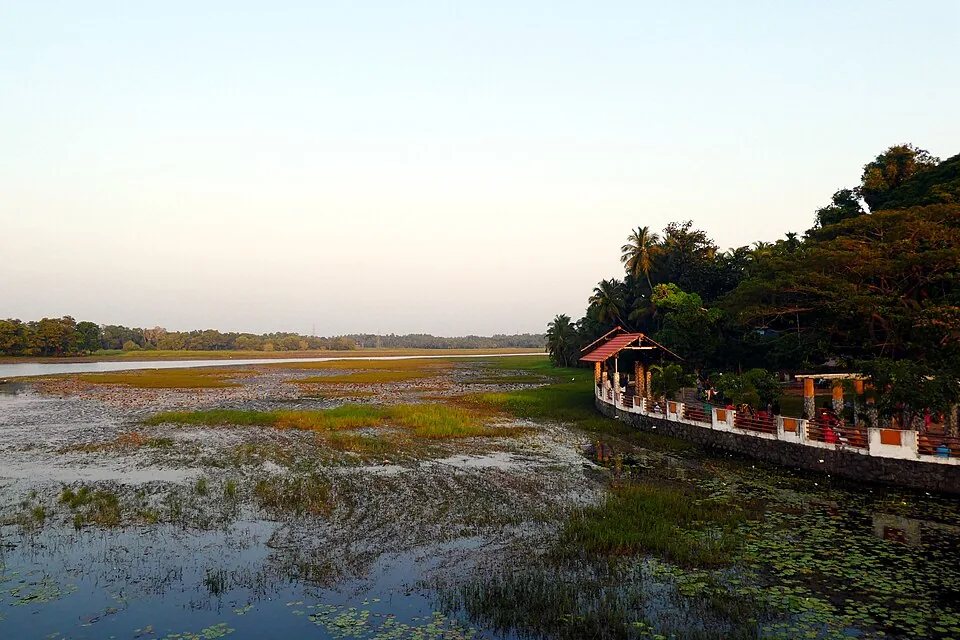
A calm coconut-fringed backwater and park near Ponnani, with boating and kayaking — a quieter, lesser-known alternative to the Alappuzha backwaters.
11.7 km · straight line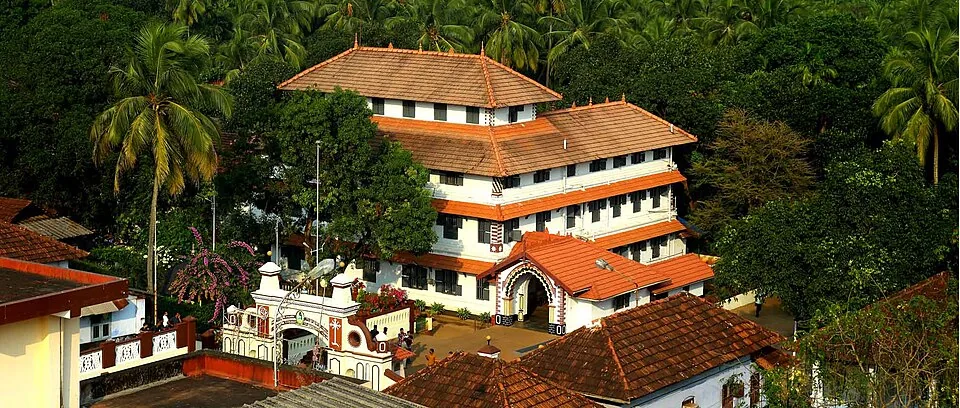
The famous Ayurveda institution at Kottakkal, founded in 1902 by Vaidyaratnam P.S. Varier — hospital, medicine-making, herb gardens and the PSV Natyasangham Kathakali academy.
12.3 km · straight line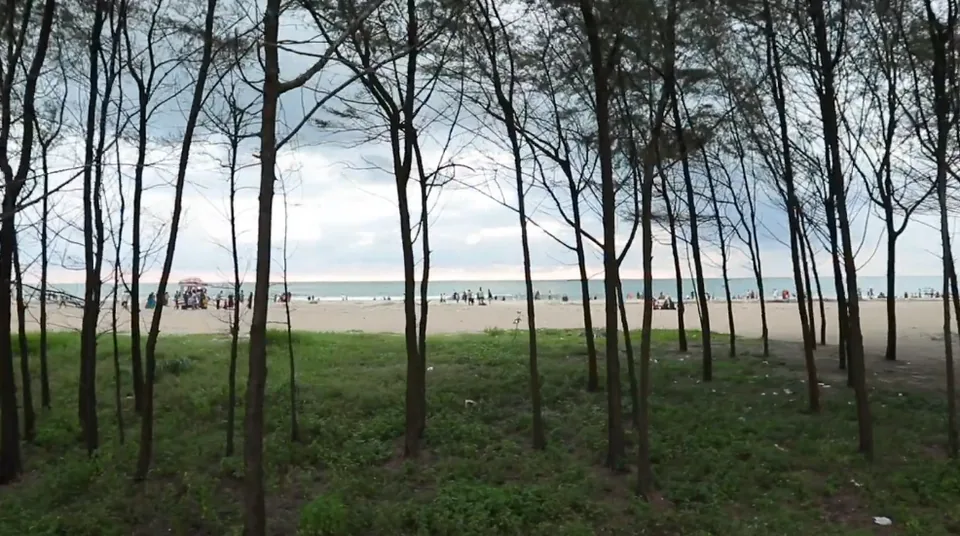
The sea-facing beach on the Padinjarekkara sandspit, with a casuarina belt behind the sand and a government park at the end of Tipu Sultan Road.
13.6 km · straight line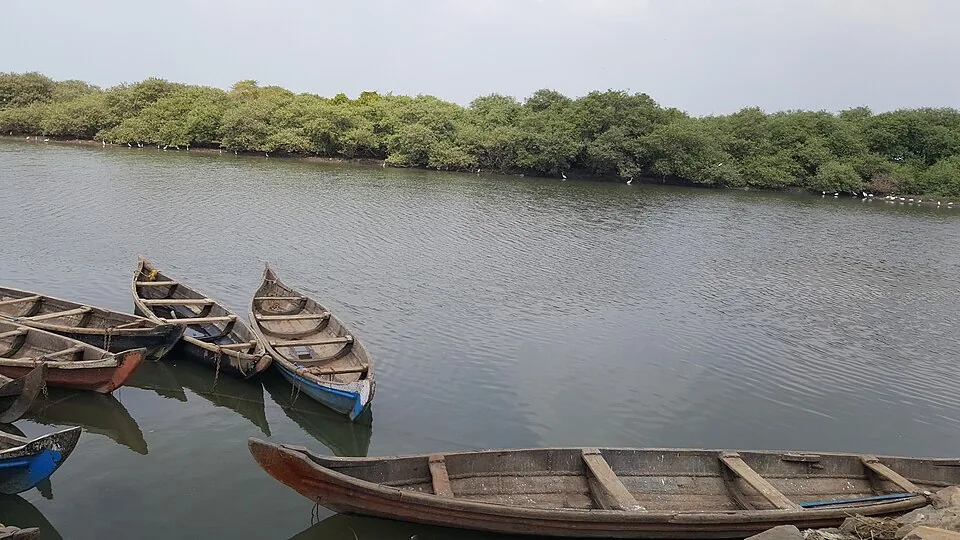
The mouth of the Bharathapuzha (Nila), Kerala’s second-longest river — which reaches the sea here together with the Tirur Puzha, between Ponnani on the south bank and Padinjarekkara on the north.
14.0 km · straight line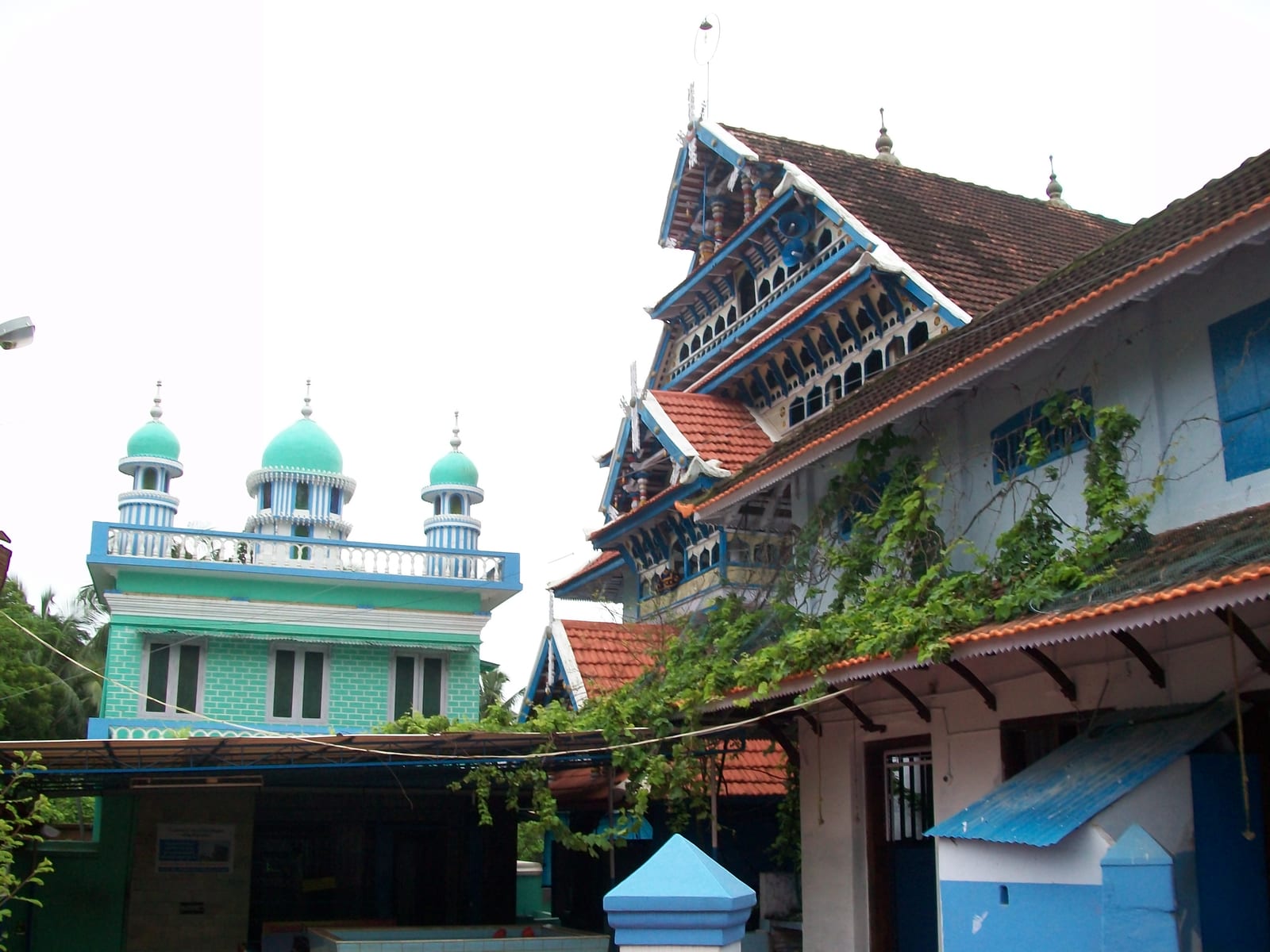
The great Juma Masjid of Ponnani, a centuries-old centre of Islamic learning on the Malabar coast, long called the “Mecca of Malabar”.
14.0 km · straight lineBy tradition the presiding idol is the ninth Vishnu image (Mukunda) installed here. Legend holds that nine sages, the Navayogis, each set down a form of the Lord; the first eight sank into the earth and the ninth sank only to its knees before being stopped — hence Nava (nine) Mukunda, and the town’s name as ‘Navayogi Sthala’. This is devotional legend.
Two things above all. Religiously, it is a renowned centre for Bali Tharpanam — rites for departed ancestors — drawing enormous crowds on Karkidaka Vavu. Historically, it was the site of the Mamankam, the great twelve-yearly assembly on the Bharathapuzha presided over by the Zamorin, famed for the Chaver suicide-warriors.
Yes — Thirunavaya (Tamil: Thiru Naavaay) is traditionally counted among the 108 Divya Desams, the abodes of Vishnu praised by the Alvar saints in the Nalayira Divya Prabandham, with its glorification attributed chiefly to Nammalvar. It is often described as one of only a handful of Divya Desams in Kerala’s Malabar region.
On the new-moon (Amavasya) day of the Malayalam month of Karkidakam, which usually falls in July or August. The exact date shifts every year with the lunar calendar, so confirm the current year’s date locally before travelling — the crowds on that day are very large.
Bali Tharpanam is generally performed on the riverbank with the guidance of priests, and families of many backgrounds come to do so, especially on Karkidaka Vavu. Arrangements, timings and any customs are best confirmed with the temple or the officiating priests in advance.
No. While it is one of Kerala’s foremost sites for ancestral rites, it is first and foremost a living Vishnu temple with daily worship, a Divya Desam pilgrimage identity, the Lakshmi (Malarmangai Nachiyar) shrine, and deep historical fame through the Mamankam. Visitors come for darshan and heritage as much as for pitru rites.
Morning or early evening is usually best; festival days can be powerful but crowded.
Entry: Darshan is free. Specific rituals — particularly Bali Tharpanam and other offerings — are arranged through the temple priests for a customary fee or dakshina. Timings: Typically open in the early morning and again in the evening — often cited as around 5:00 am to 10:00 am and 4:00 pm to 7:00 pm.
Base yourself in Tirur or a nearby town in Malappuram, then confirm the last-mile route locally before leaving. Check temple entry customs, dress rules and festival crowd conditions before arrival. If the visit depends on forest, temple, boat, ferry, weather or seasonal access, check the official/local rule on the day before travel.
45 minutes to 2 hours, longer during festival or queue periods.
Nearby you can pair Alathiyur Hanuman Temple (5.6 km, approximate straight-line separation), Triprangode Maha Shiva Temple (5.7 km, approximate straight-line separation), Trikkandiyoor Mahadeva Temple (7.2 km, approximate straight-line separation), Wagon Tragedy Memorial (7.8 km, approximate straight-line separation).
Use official counters for offerings/tickets where applicable. Keep footwear and valuables secure in crowded areas.
We have not published a story about Thirunavaya Nava Mukunda Temple itself yet. These cover Tirur and the wider district, with separate journeys between stops.
These guides explore Tirur and the surrounding area. Choose a visit that fits your interests, allowing separately for travel between stops.


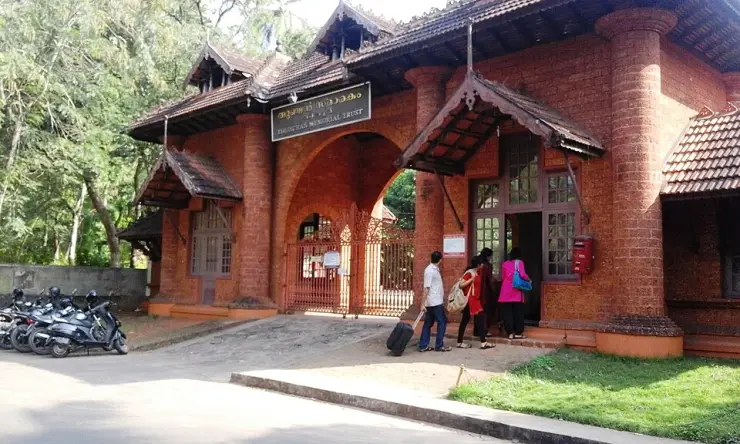
Written about Tirur as a whole rather than about Thirunavaya Nava Mukunda Temple — its history, its streets, and how to spend a day in it.


Route-level itineraries and practical guides for the rest of Kerala.
Photographs: Ssriram mt (CC BY-SA 4.0), RajeshUnuppally at Malayalam Wikipedia (CC BY-SA 3.0). Wikimedia Commons.