What to expect
Highlights
- Heritage experience at Kollengode
- Architecture, local stories and old trade/cultural routes
- Good fit for guided walks and nearby cafes/shops
A rural village ~19 km south of Palakkad below the Nelliampathy hills, known for its palace, the Vishnu temple, paddy landscapes and old Tamil-Brahmin heritage.
Kollengode is a heritage village on the eastern edge of Palakkad district, where the flatness of Kerala’s rice country runs straight up against the blue wall of the Nelliyampathy hills. It is a quiet place of paddy fields, old temples, tiled family houses and the memory of a small princely line — the Rajas of Kollengode — whose palace, arts patronage and Raja Ravi Varma connection give the village a cultural weight far larger than its size.
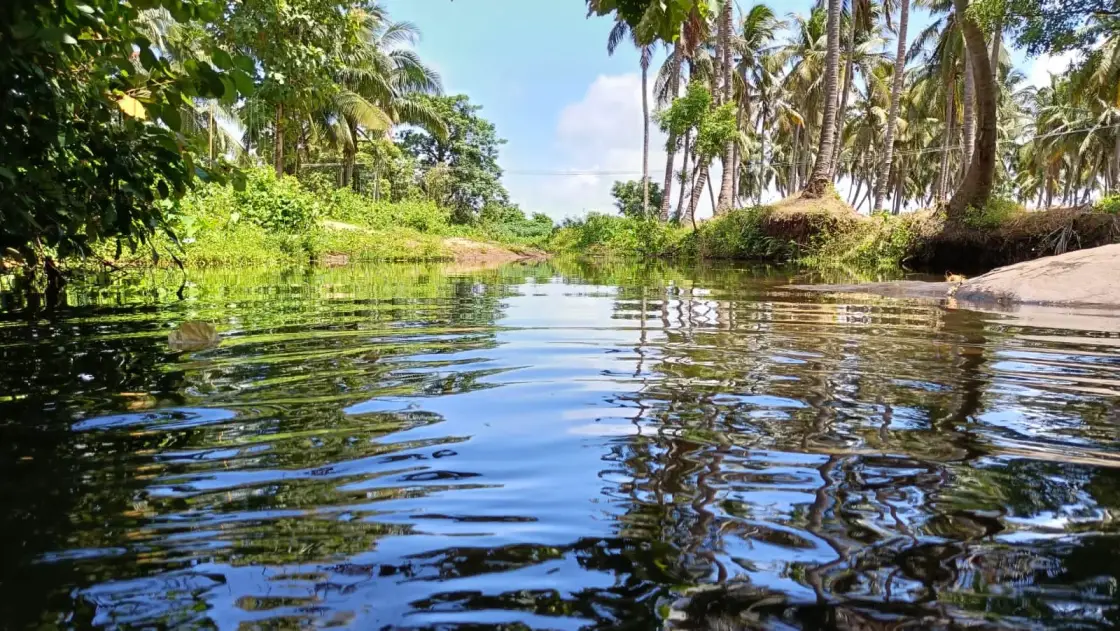
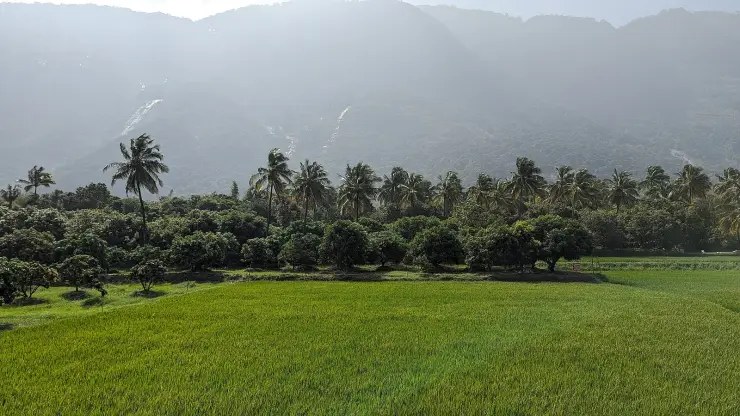
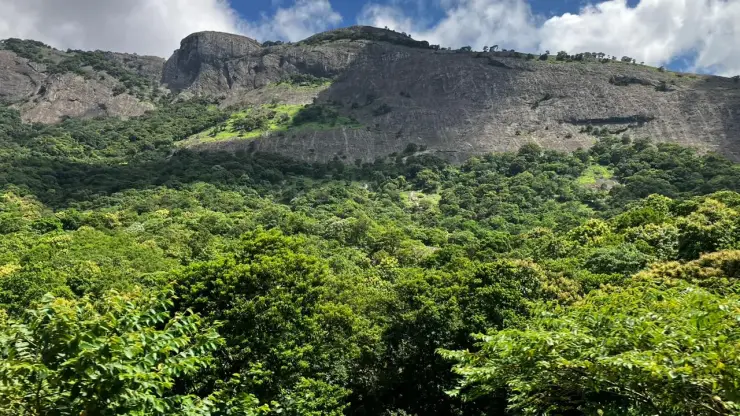
The first thing Kollengode gives you is its horizon. The village sits in one of the broadest sweeps of paddy land in Palakkad, and in the growing season the fields run flat and luminous green until they simply stop at the foot of the Nelliyampathy ranges, which rise as a long blue-grey rampart along the southern sky. Locals point out the peaks of Nelliyampathy and the shape of Seetharkund from the edge of the fields; the same view is famously framed by the pond of the Kachamkurissi temple, where hills, water and rice terrace stack up into one long postcard of the Western Ghats meeting the plain.
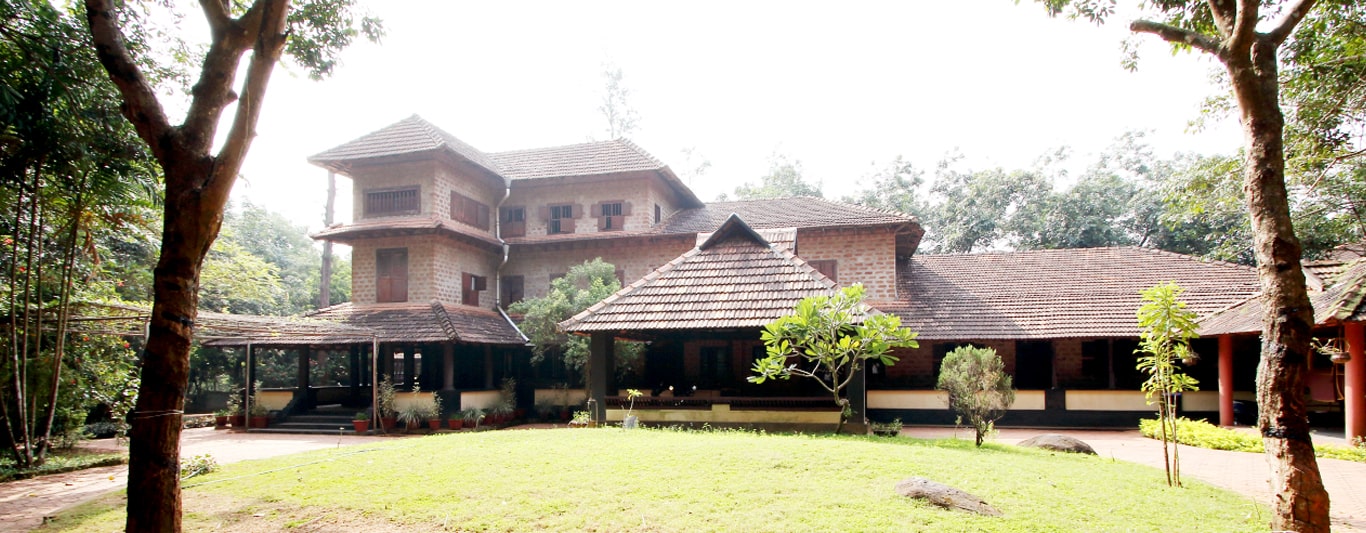
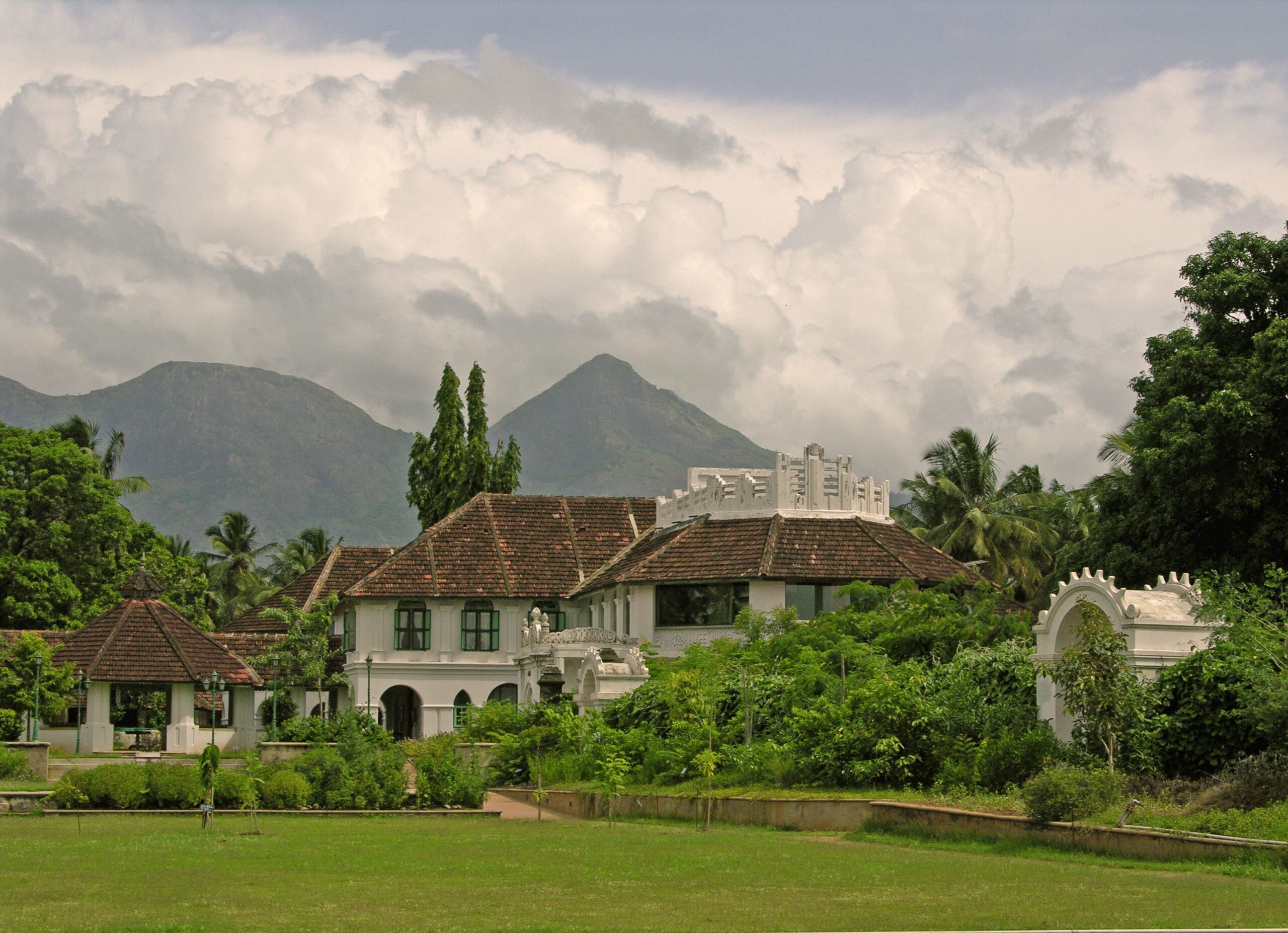
At the heart of the village stands its old royal seat, the Kollengode Kovilakam. This 19th-century palace — the Kalari Kovilakom, built around 1890 — was the residence of the chieftains of Vengunad, and an older palace nearby served as the ladies’ quarters. Long verandas, sloping tiled roofs, courtyards and dark timber halls speak of a Malabar aristocracy that lived modestly by the standards of larger kingdoms but kept a real sense of ceremony. The building today operates as an exclusive Ayurveda retreat rather than a public monument, so it is best appreciated for its setting and story; access to the interiors is limited or by arrangement only.
Kollengode keeps the unhurried rhythm of a temple-town. Mornings begin with lamps and bells at the Kachamkurissi Perumal shrine and the smaller neighbourhood temples; bullock-cart lanes give way to cycles and the odd bus; farmers move out to the fields and back. The village’s big communal event is its vela — the caparisoned-elephant, drum and firework temple festival that the harvested paddy fields of this belt are made for. The most celebrated of the region’s velas, the Nenmara–Vallanghy Vela, is staged nearby, and Kollengode has its own temple-festival traditions tied to Kachamkurissi.
For its size, Kollengode carries an unusually rich arts heritage. The ruling family were active patrons of painting, music and scholarship, and the great Travancore artist Raja Ravi Varma was a guest of the palace — a link that puts this small village on the map of Indian art history. The Rajas also endowed schools and supported musicians and Sanskrit scholars, so the place has long thought of itself as cultured rather than merely rural. That self-image survives in its well-kept temples, its music-and-festival calendar, and the pride locals take in the palace’s story.
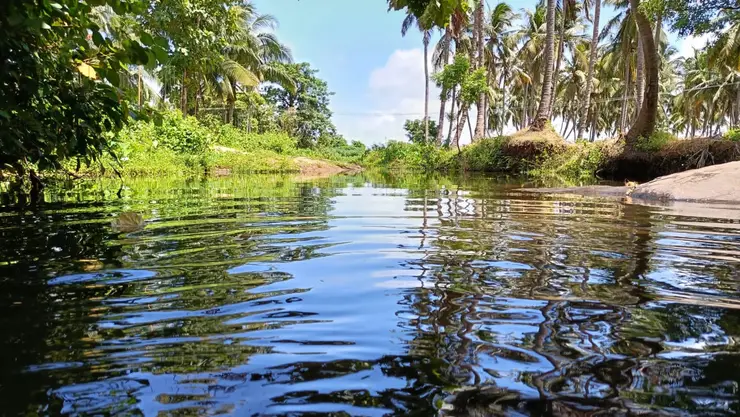
Away from the temple and the kovilakam, Kollengode is simply a lovely piece of rural Kerala to move slowly through. Narrow roads run between coconut groves, tanks and paddy bunds; egrets work the flooded fields; the light in the late afternoon turns the hills violet. It is the kind of landscape that has quietly built a reputation among travellers looking for the ‘real’ Palakkad — unpolished, green and framed by mountains — and it has been singled out by well-known admirers of Kerala’s countryside as a place worth the detour.
Kollengode also sits at a crossroads of geography and culture. It lies close to the Kerala–Tamil Nadu border and the Palakkad Gap, so the village mixes Malayali temple culture with the drier, breezier feel of the plains that open toward Coimbatore. Nelliyampathy’s tea estates, viewpoints and waterfalls are within a short drive for those who want to climb into the hills, while the paddy plains, temples and palace give the low country its own gentle draw. It rewards the traveller who is happy to wander, sit by a temple tank and watch the fields rather than tick off attractions.
The village’s best-loved legend belongs to the Kachamkurissi Perumal temple, one of the oldest Vishnu shrines in the area. As the story is told, the name Kachamkurissi comes from ‘Kashyapan-Kurissi’ — the hill of the sage Kashyapa — because it was here, in this quiet green fold below the hills, that Kashyapa is said to have sat in long meditation.
Legend holds that Lord Vishnu, pleased by the sage’s devotion, appeared before him, and that Kashyapa begged the Lord to stay in this tranquil land for ever. Vishnu is said to have granted the wish, and the sage himself is believed to have consecrated the idol of Mahavishnu now worshipped as Perumal. This is a devotional legend rather than documented history, but it is the story villagers will tell you to explain both the temple’s antiquity and its unusually serene, hill-framed setting.
Such origin legends — a wandering sage, a granted boon, a self-installed deity — are common to many old Kerala shrines, and at Kachamkurissi the tale is woven tightly into the landscape: the pond that mirrors the Nelliyampathy peaks is treated as part of the sacred scene rather than mere scenery. Take it as living folklore that gives the place its meaning, not as an established chronicle.
Kollengode was the seat of a small chiefly line, the Vengunad (Venganad) Nambidis — sometimes called the Vengandu Swaroopam — who governed a cluster of desams on the eastern side of Palakkad. Their territory, Vengunad, is traditionally glossed as ‘the land of vengu trees’ in the foothills below the Anamalai–Nelliyampathy ranges. In the older Malabar order the Nambidis held a recognised, if modest, rank and were connected to the wider network of Zamorin-era chieftaincies before that power waned.
The chiefs came to be styled the Rajas of Kollengode. Accounts of exactly how the ‘Raja’ title was conferred differ — some trace it to the era of Mysore’s incursions under Hyder Ali and Tipu Sultan, others to recognition by the British colonial administration in the aftermath of those wars — so the honour is best described as dating to the late 18th- to 19th-century upheavals in Malabar rather than pinned to a single grant.
The most prominent figure in the family’s recorded history is Vasudeva Raja, active around the turn of the 20th century, remembered as a moderniser and public man. He is credited with founding a high school and improving the locality, sat in the Madras legislative assembly, served as a vice-president of the Malabar Jenmi Sabha (the landlords’ association), and received the Kaiser-i-Hind honour. He also built the well-known Kollengode Palace at Chembukkavu in Thrissur — a separate building from the Palakkad kovilakam — reportedly around 1904 as a gift connected to his daughter’s marriage; that Thrissur house later became a museum.
Kollengode’s brightest thread in Indian cultural history is its Raja Ravi Varma connection. The celebrated painter and his brother, C. Raja Raja Varma, were guests of the Kollengode palace, and in January 1903 they painted a portrait of Vasudeva Raja’s mother, Dhatri Tampuratti (Rani Dhatri). The picture is noted as one of the rare works carrying both brothers’ signatures and is dated 1-1-1903; it is reported to have remained in the family’s own collection. During her son’s minority, Dhatri Tampuratti is remembered for managing the family estates with notable ability.
The physical legacy of all this is the Kollengode Kovilakam itself: an older palace that served as the ladies’ quarters and the later reception palace of about 1890, now run as the Kalari Kovilakom Ayurveda retreat. The family were remembered as patrons of the arts, education and scholarship, endowing schools and supporting artists and musicians, even as their direct political authority faded through the 20th century. Together the palace, the portrait and the temples make Kollengode a small place with a long cultural memory.
The landscape: some of the widest, most photogenic paddy fields in Palakkad, running flat and green straight up to the blue wall of the Nelliyampathy hills.
A genuine princely heritage — the Kollengode Kovilakam and the story of the Vengunad Rajas — giving a quiet village real historical depth (note the palace now runs as a private retreat, so plan around limited access).
The Kachamkurissi Perumal temple, an ancient Vishnu shrine with a sage-and-boon origin legend and a famous view of the hills mirrored in its temple pond.
A rare Raja Ravi Varma connection: the master painter and his brother were guests here and painted the Rani of Kollengode, linking the village to the story of modern Indian art.
The unhurried, unpolished feel of rural Kerala — coconut groves, temple tanks, bullock lanes and mountain light — ideal for slow, camera-in-hand wandering.
A handy base for the Nelliyampathy hills (tea estates, viewpoints, waterfalls) and for experiencing the region’s spectacular post-harvest velas with their elephants and fireworks.
Road km to Palakkad; ghat roads and traffic vary — allow extra.
November to February and early mornings are best for walking; avoid midday heat where possible.
Live forecast loads in your browser.
Sun and moon are calculated for this location and shown in IST. Photography windows are the hour around sunrise and sunset; the sunset bearing is degrees clockwise from true north. Moon phase is accurate to about half a day.
These are official or public-sector eco offerings that match this place, town or forest destination. Confirm availability, permits, tariffs and reporting times with the official operator before travel.

Popular guided waterfall trek near Palakkad, listed by Kerala Tourism’s ecotourism programme pages.
Official source →Browse listed stays, food, activities, sights, shops and rentals around Kollengode. Check each listing’s locality and contact the business directly for current arrangements.
Rajah Healthy Acres is a Palakkad district Ayurveda hospital and treatment-stay centre at Perumanoor, Chalissery, useful for wellness itineraries that need explicit medical-treatment context. Ayurveda, Chalissery, Treatment stay.
CGH Earth Ayurveda hospital at Kollengode with direct admissions evidence. Ayurveda, Kollengode, CGH Earth.
Kerala Tourism-listed Ayur Diamond wellness retreat at Olassery, Kodumbu. Ayurveda, Wellness, Olassery.
Palakkad district administration source for Palakkad Fort contact and visitor context. Palakkad Fort, Tipu Fort, Heritage.
Taxi service in Palakkad town. Palakkad, Kerala · Taxi, Royal Travels, Outstation cab.
Anand Travels Palakkad is a local taxi and travel agency for railway-station pickups, airport transfers, intercity cabs and Palakkad local sightseeing routes. Taxi, Palakkad transfers, Railway station.
Palakkad taxi and tour operator with direct contact and office address. Palakkad taxi, Transport, English Church Road.
Book with the place itself. India’s cyber-crime coordination centre warned in April 2025 that convincing copies of hotel and pilgrimage booking sites are being pushed through sponsored search and social ads, taking payment for rooms the property never hears about. Use the contact and source details on each profile to confirm the exact business and booking channel. A directory entry or map pin alone does not establish an operator’s identity or current availability. Roampedia takes no commission and does not collect booking payments. If a booking page reached you through an ad, check the address bar against the property’s own site before you pay. Fraud can be reported on cybercrime.gov.in or on 1930.
Find food, accommodation and activities across Palakkad town. Browse the guides for places to eat, stay and explore along your route.
13 more places around Palakkad town. Open a guide to plan the visit and onward journey.
A colonial-era masonry aqueduct and river crossing near Karingarapully, read as working water-history infrastructure rather than a conventional staffed monument.
The memorial and cultural centre at the birthplace associated with Kunchan Nambiar, presenting the poet and the Ottan Thullal performance tradition.
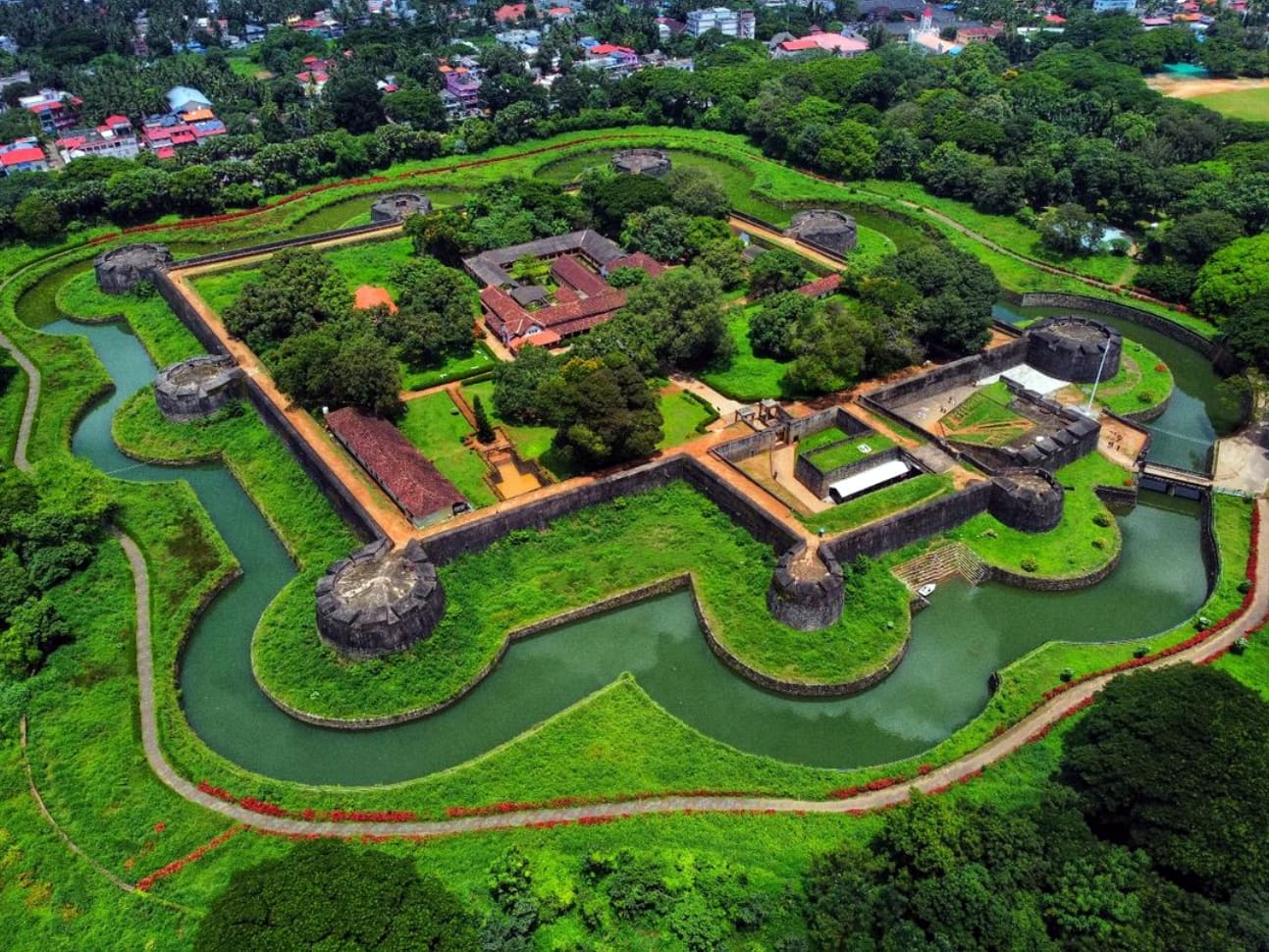
17.7 km · straight line
Well-preserved fort in Palakkad town, associated with Hyder Ali and Tipu Sultan.
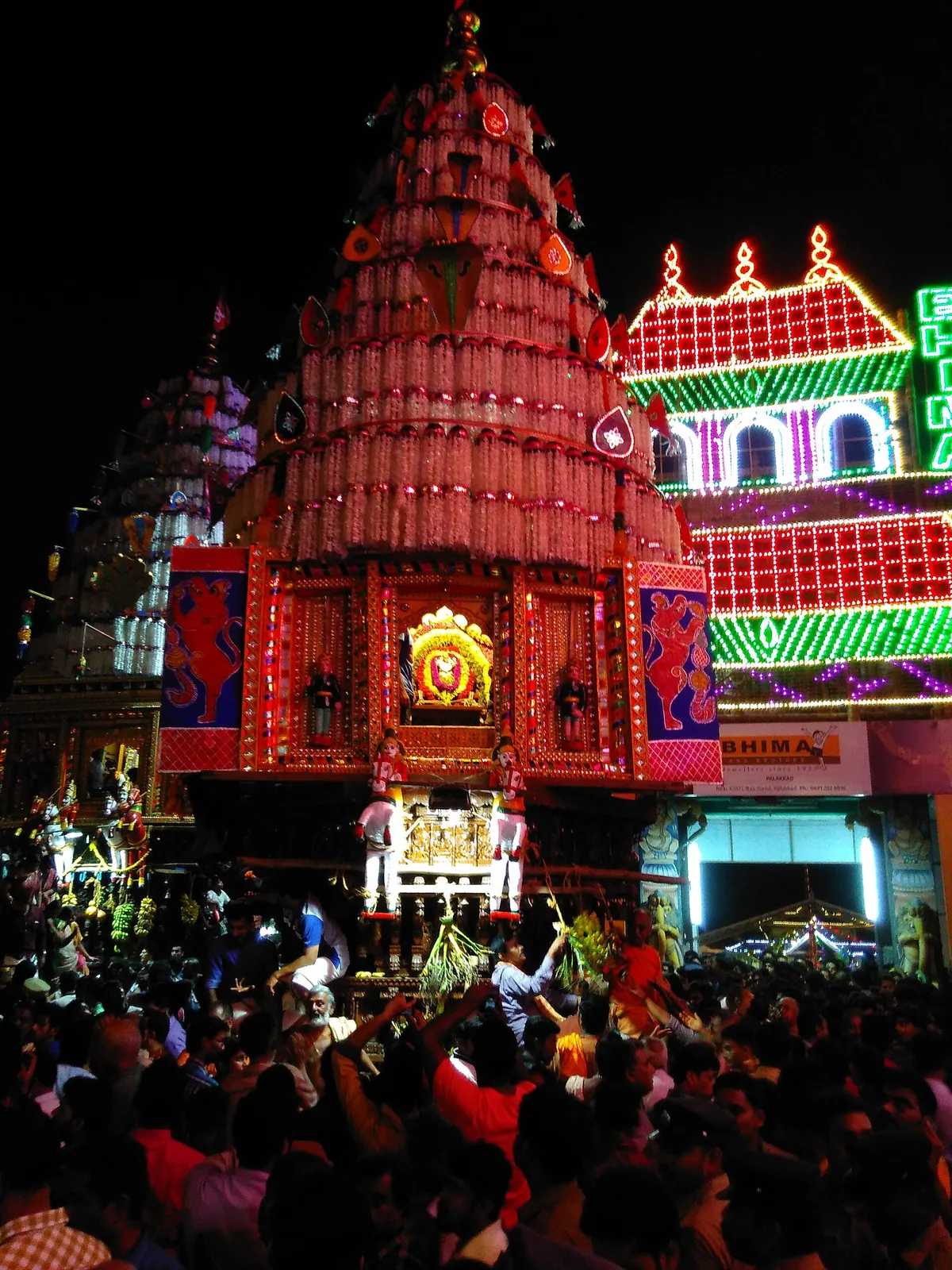
Kerala’s first heritage village, ~3 km from Palakkad town, built around the Sri Viswanatha Swamy temple on the Kalpathy river — a Tamil-Brahmin agraharam known as the “Kashi of the South” and for its November Ratholsavam chariot festival.
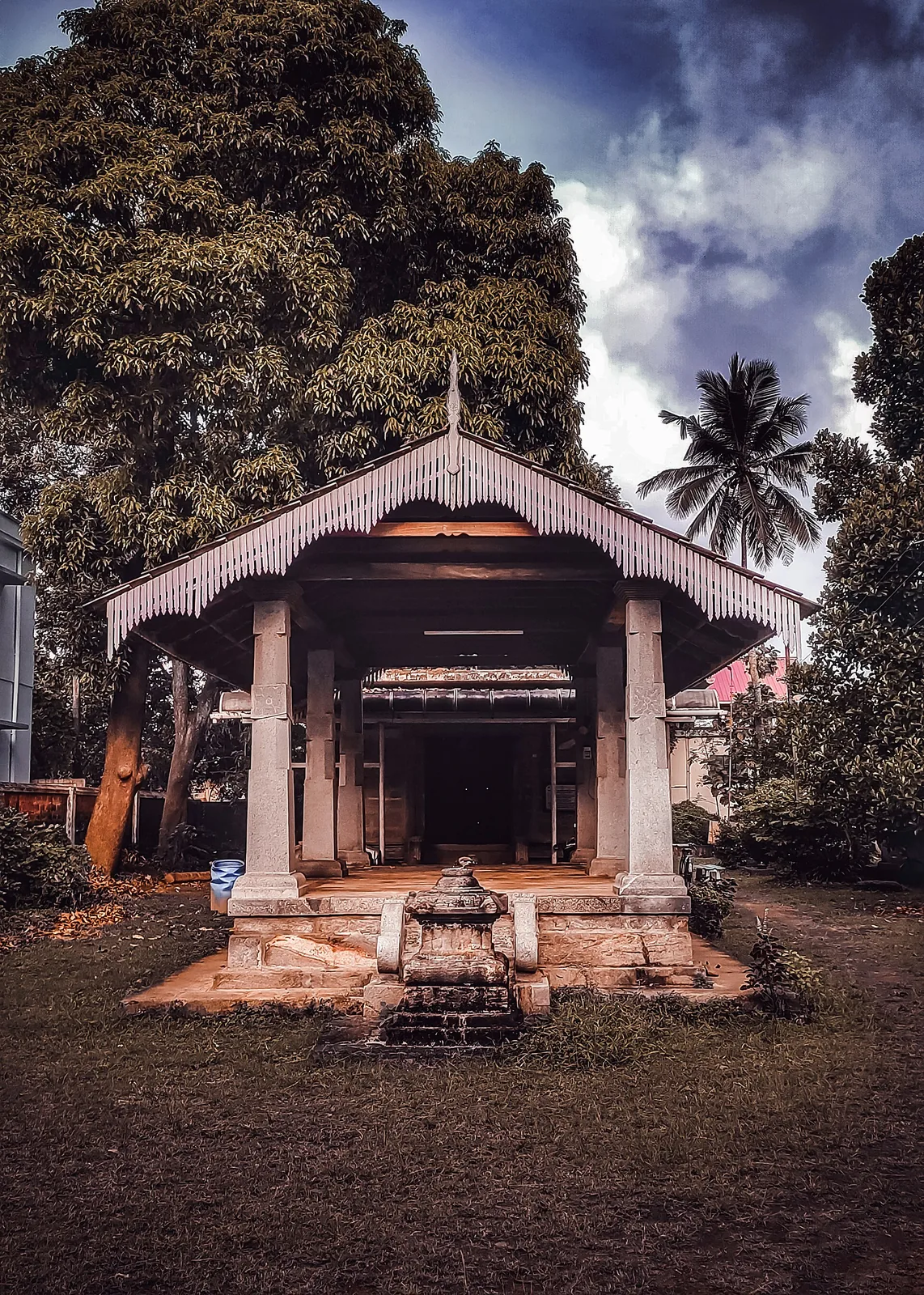
20.2 km · straight line
A ~15th-century Jain temple on the western edge of Palakkad town, one of the few surviving traces of Jainism in Kerala, with images of the Thirthankaras and Yakshinis.
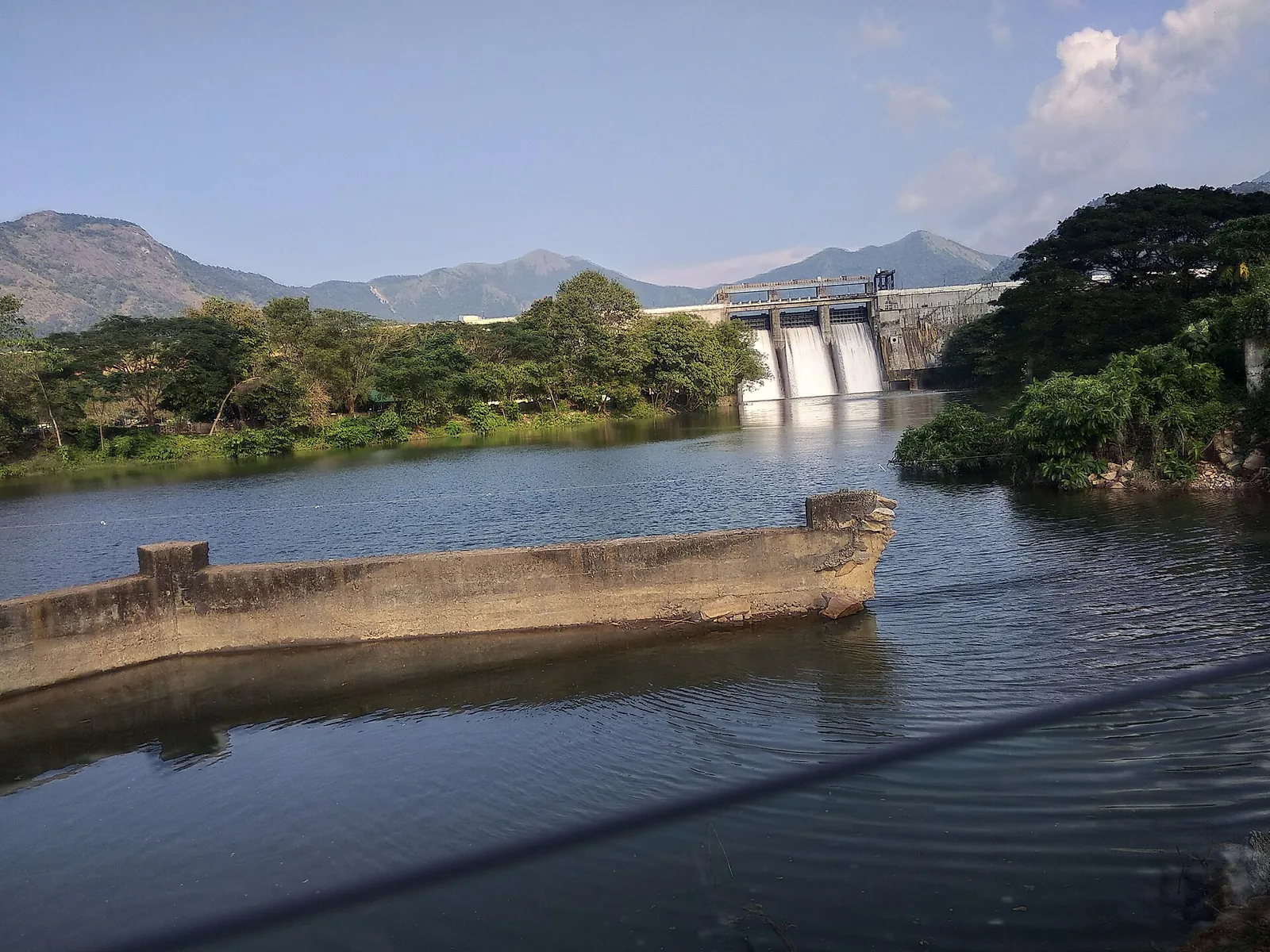
A calm reservoir and garden set among hills in the Mannarkkad side of Palakkad, a quieter alternative to Malampuzha.
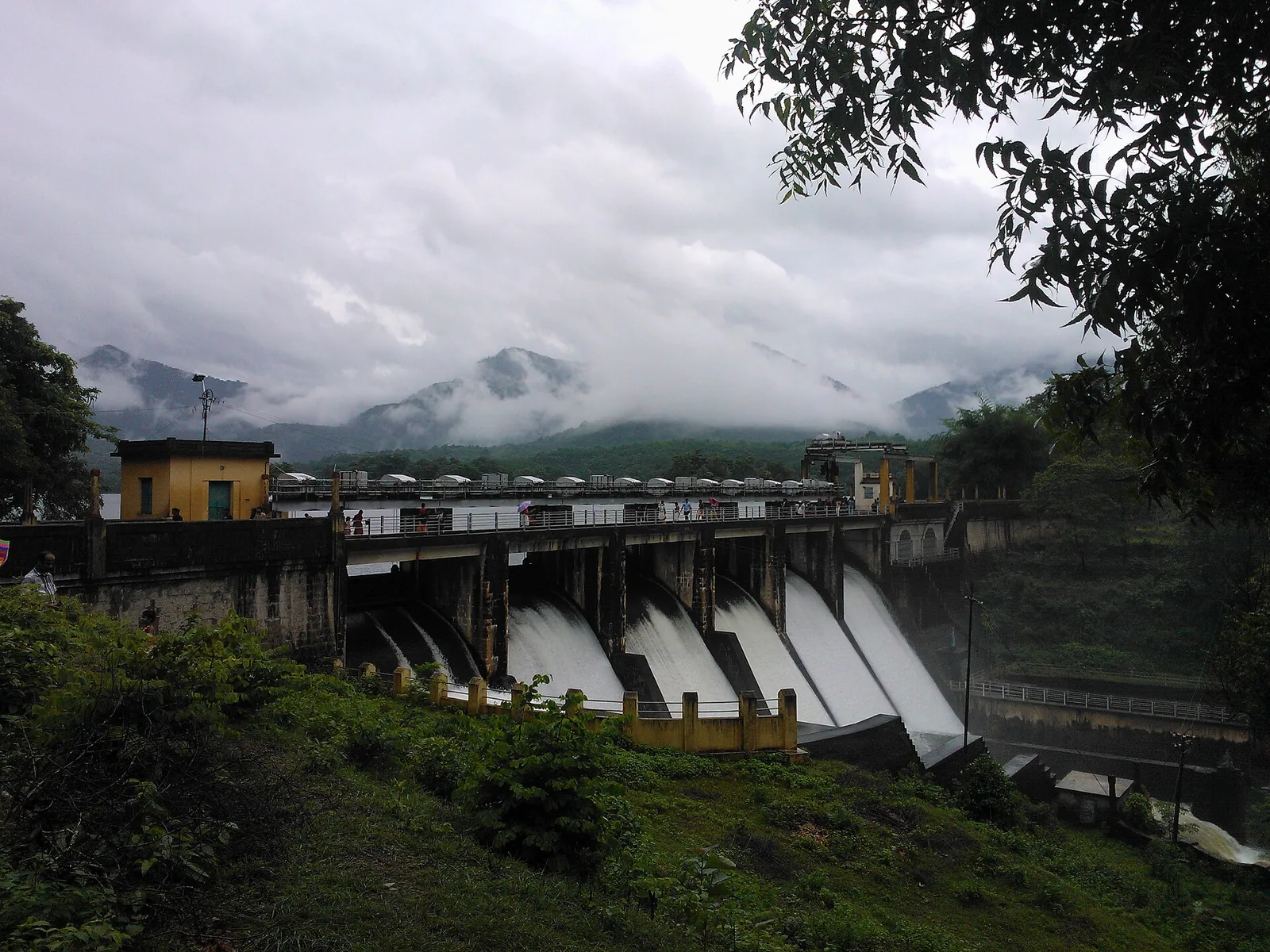
21.6 km · straight line
A quiet reservoir among wooded hills near Alathur, south-west of Palakkad town — good for a peaceful drive and picnic.
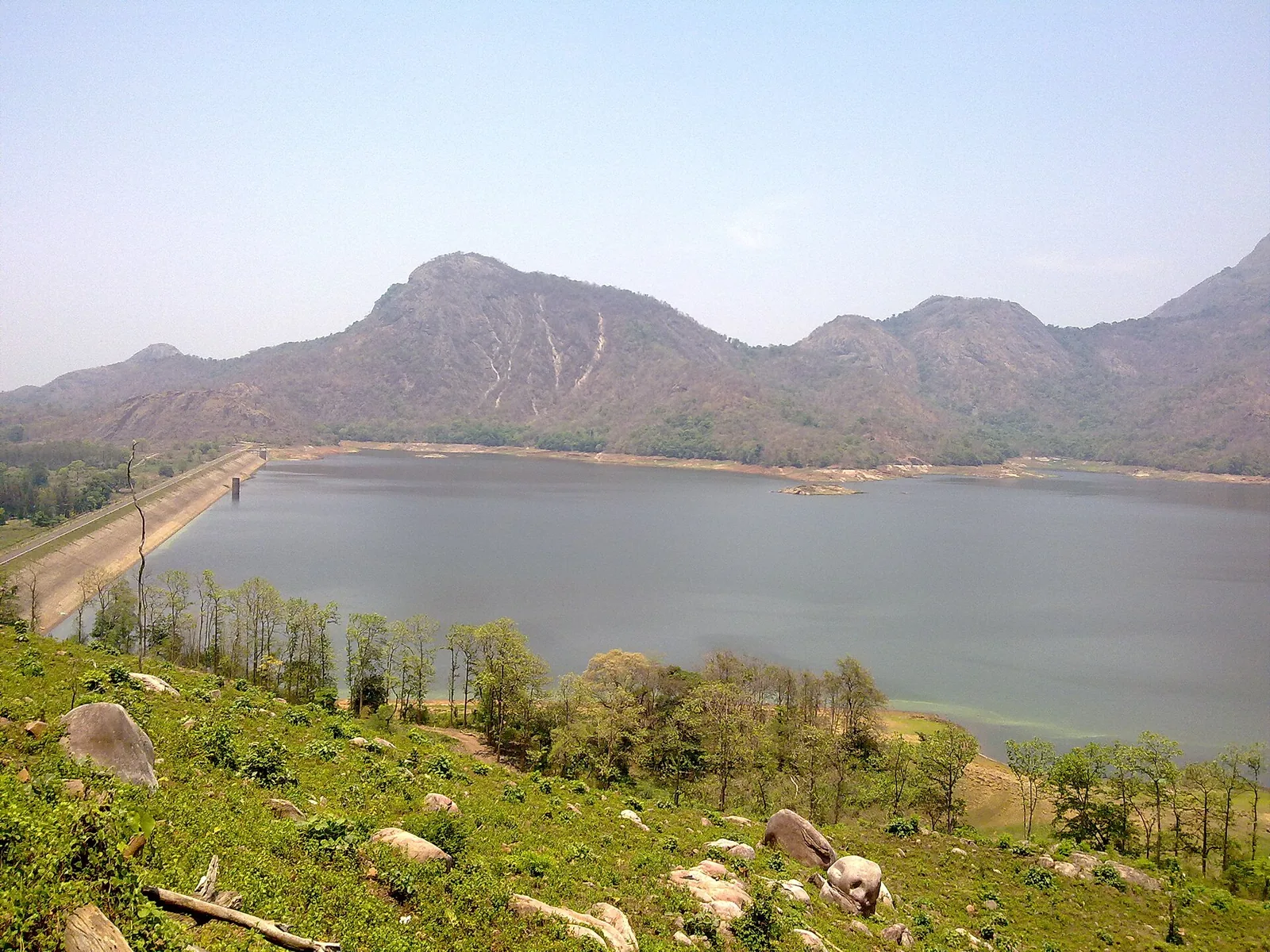
10.3 km · straight line
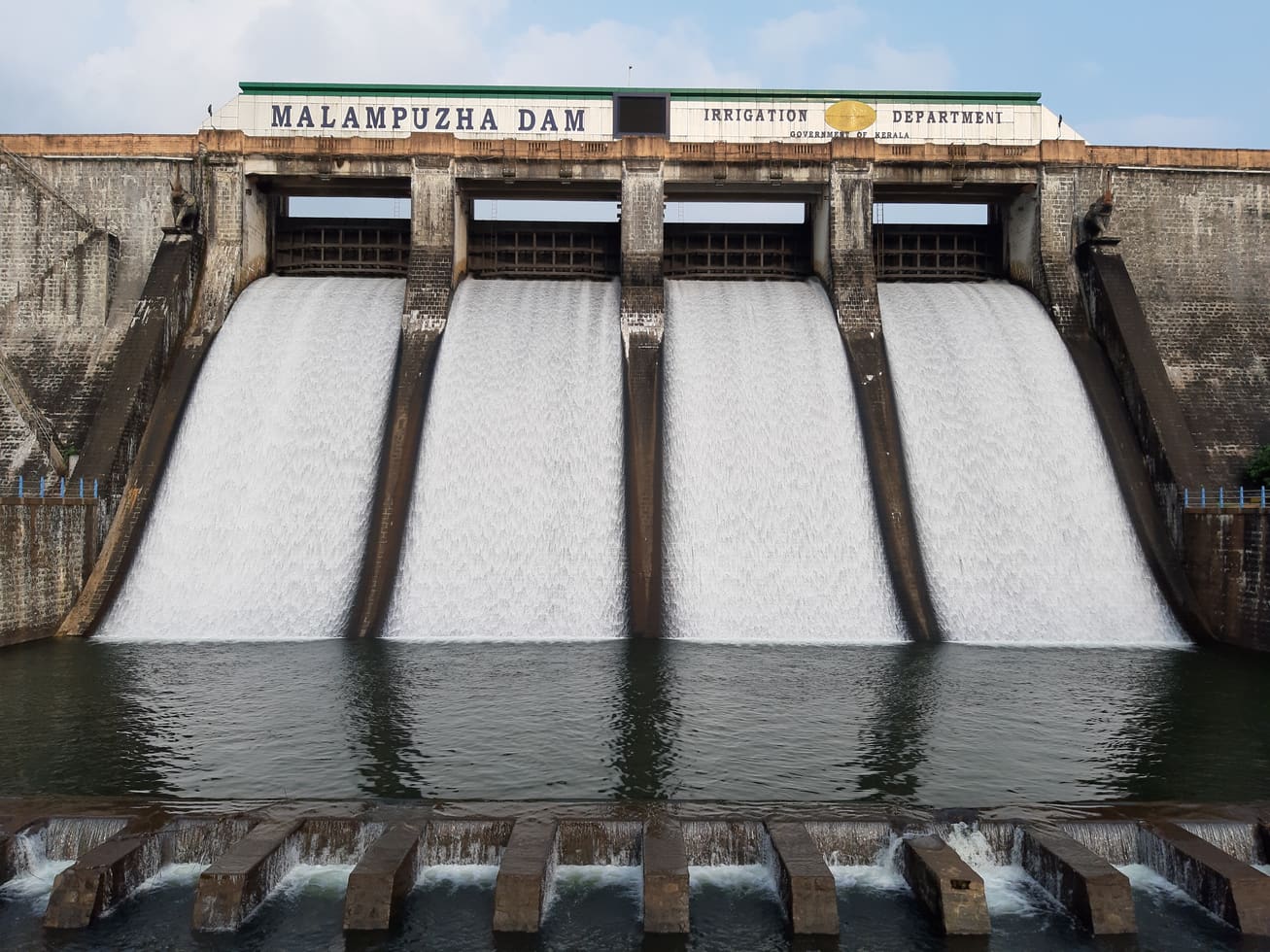
A 19th-century irrigation dam near Nemmara — one of the oldest in India, its core wall built with a jaggery-and-lime mix — with a scenic reservoir, gardens and boating.
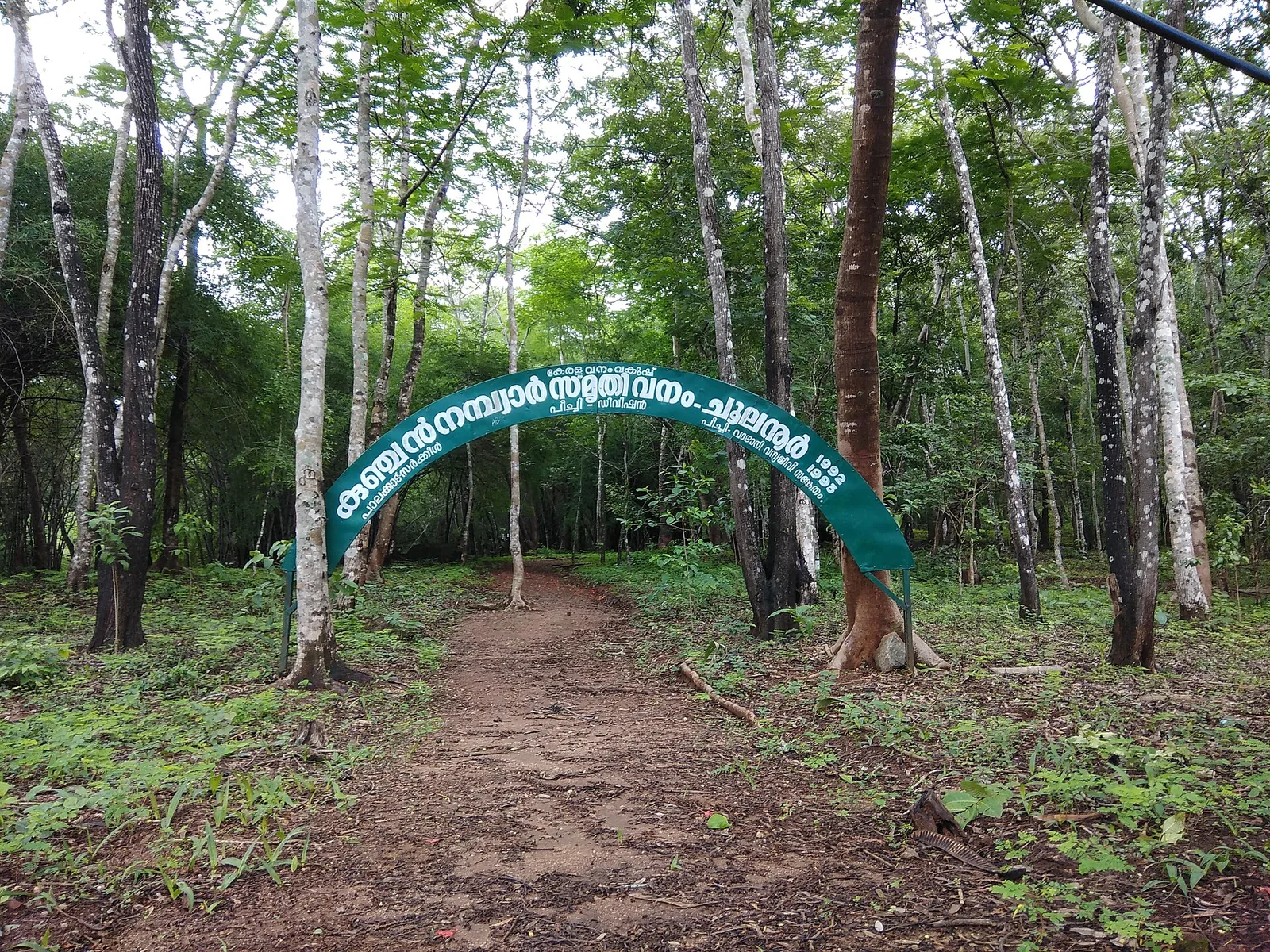
A peafowl sanctuary at Mayiladumpara (“the rock where peacocks dance”) near Alathur, home to 200-plus free-roaming peacocks and over 100 bird species; best at dawn and dusk.
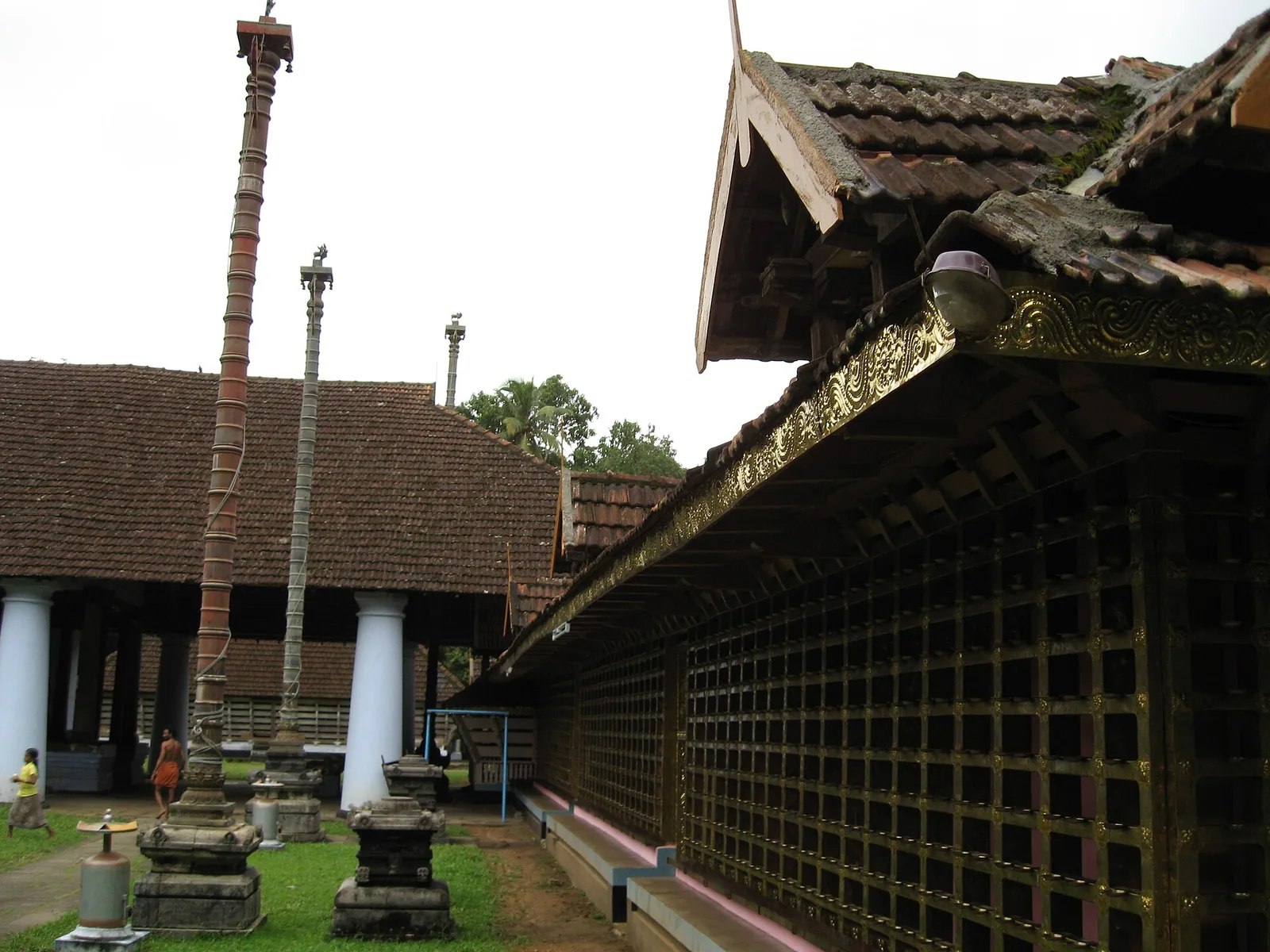
The Thiruvegappura Sankaranarayana Temple near Ottapalam, admired for its Kerala architecture, a fine 15th–16th-century Koothambalam (temple theatre) and three sreekovils with separate flag masts.
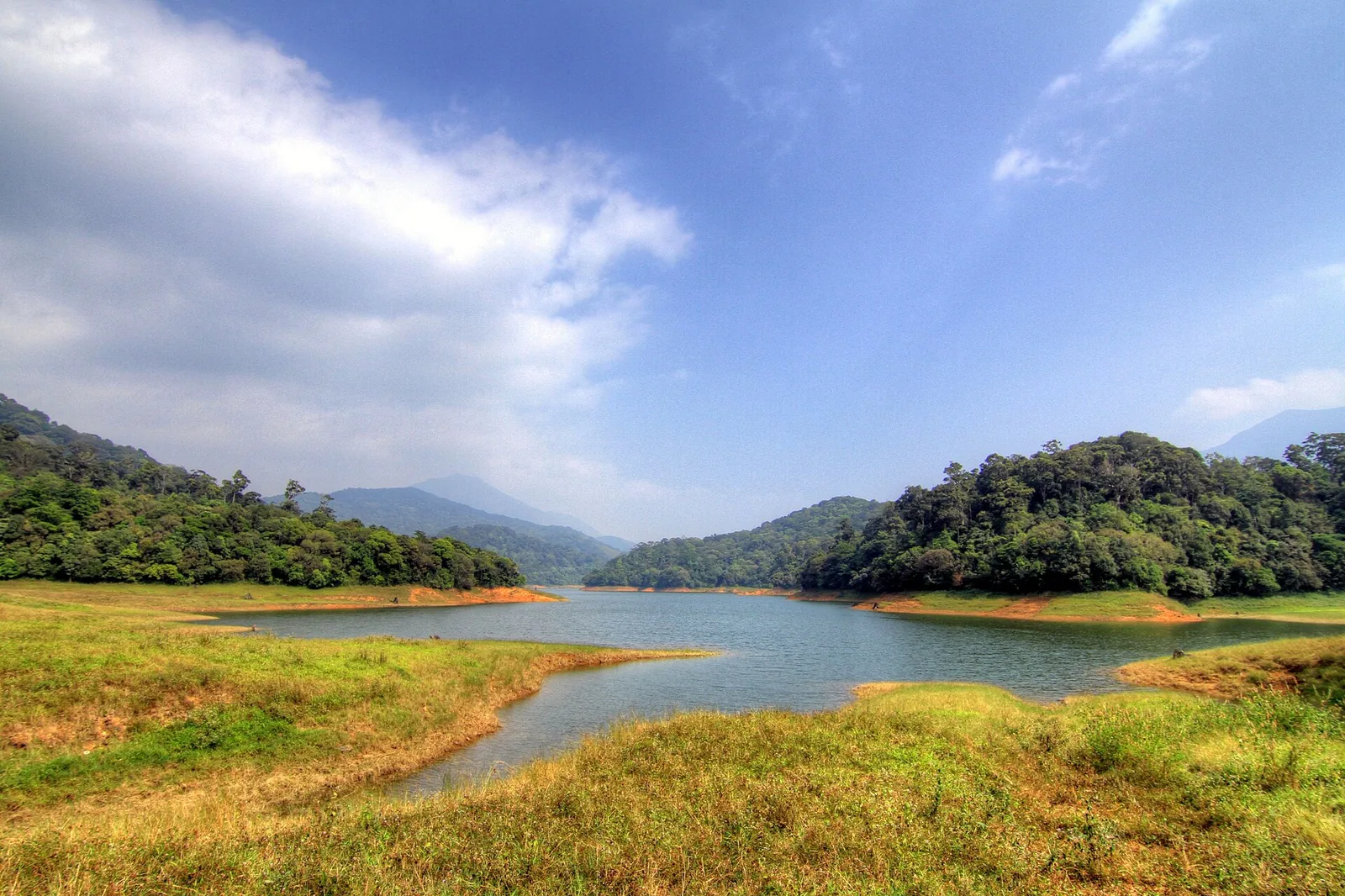
A Forest Department safari and walk into the closed Siruvani reserve, starting at the Inchikunnu check post: about 10 km of escorted rainforest road to the dam that supplies Coimbatore’s drinking water, then an hour on foot up to the Keralamedu grasslands on the Kerala–Tamil Nadu border.
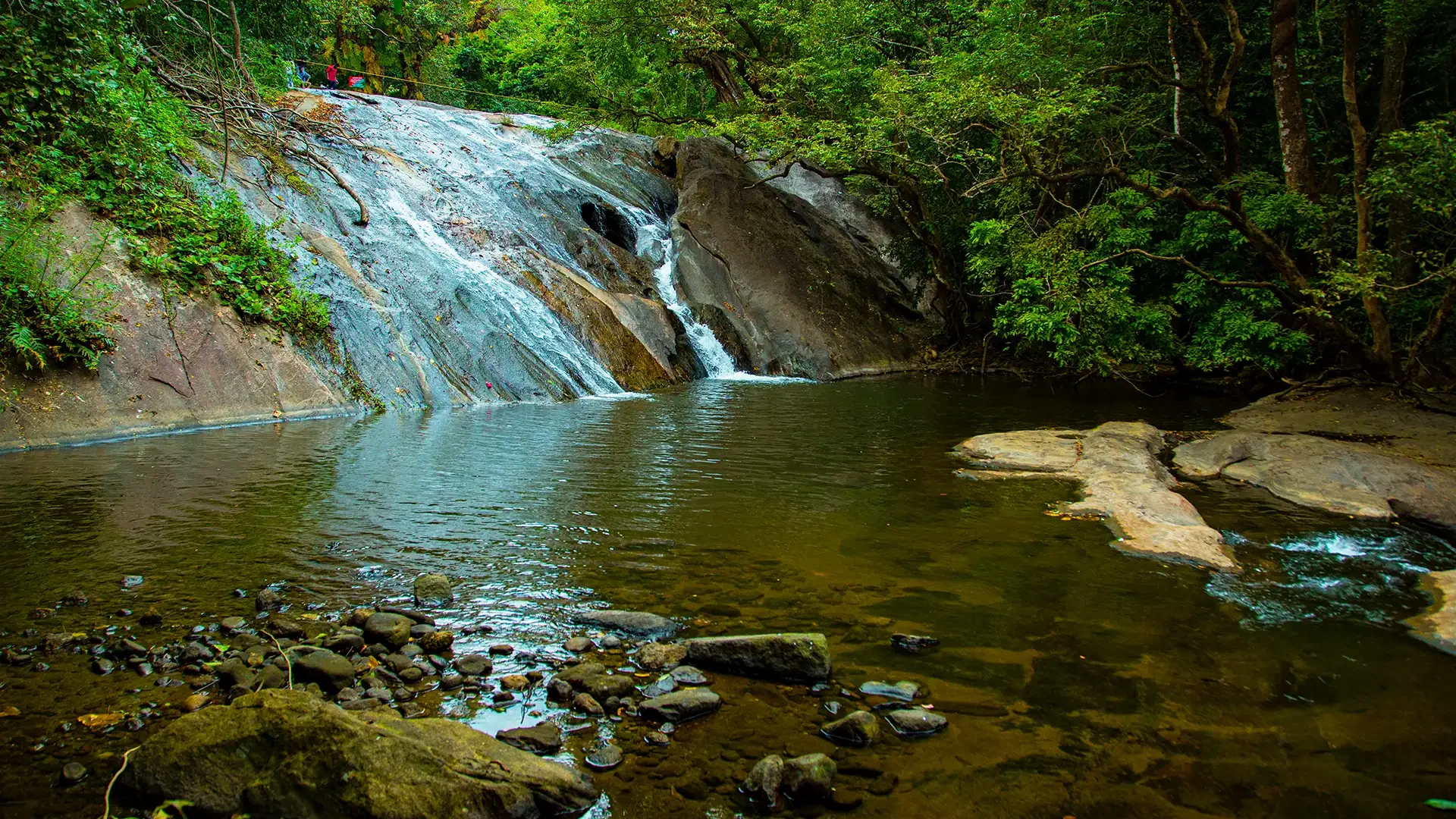
A Forest Department controlled walk from Dhoni’s forest-office base to a cascade in the Palakkad foothills, with offline admission and a Monday closure.
Roampedia is commission-free — own or know a stay, eatery, guide or shop near Kollengode? Submit public business details for review.
Add a nearby businessEntry: The village, paddy fields and viewpoints are free to enjoy; temples are generally free (donations welcome), and the Kovilakam estate is largely private with limited or no public entry — verify any charges on site
Dress code: Modest, traditional dress is expected inside temples; some Kerala shrines require men to remove upper garments and may restrict entry to non-Hindus — check at each temple
Festivals: The Thiru Kachamkurissi Perumal temple festival falls in Vaisakham (around April–May) with elephant processions and sheeveli; the celebrated Nenmara–Vallanghy Vela, a post-harvest festival famed for caparisoned elephants and fireworks, is held nearby in early April
Photography: A dream for photographers — golden-hour light over paddy fields with the Nelliyampathy ridge behind, palace and temple architecture, and hilltop panoramas from the Vamala temple. Avoid photographing inside temple sanctums and during rituals unless permitted, and always ask before shooting people
If you are travelling by bus or ferry, check the return service with the operator before setting out. Leave time to reach the stop or jetty after your visit.
Ask at the bus stand for the time of the last service back, not the next one. If you miss it, an auto or app cab is the fallback — agree the fare before you get in.
If you need step-free access, contact the site before travelling. Ask about a level entrance, steps along the route, the nearest drop-off point, seating and accessible toilets.
Charge cap and free-transaction limits: Reserve Bank of India, ATM FAQ updated 4 July 2025; checked 4 October 2026.
These services are listed within about 1.2 km of Kollengode. Walking distances follow mapped routes; access and opening hours can change. Other services may be closer but are not included here.
Published emergency and visitor-assistance contacts. For an immediate emergency, call 112. Shared Kerala contact sources checked 4 October 2026; publication does not establish a tested live response.
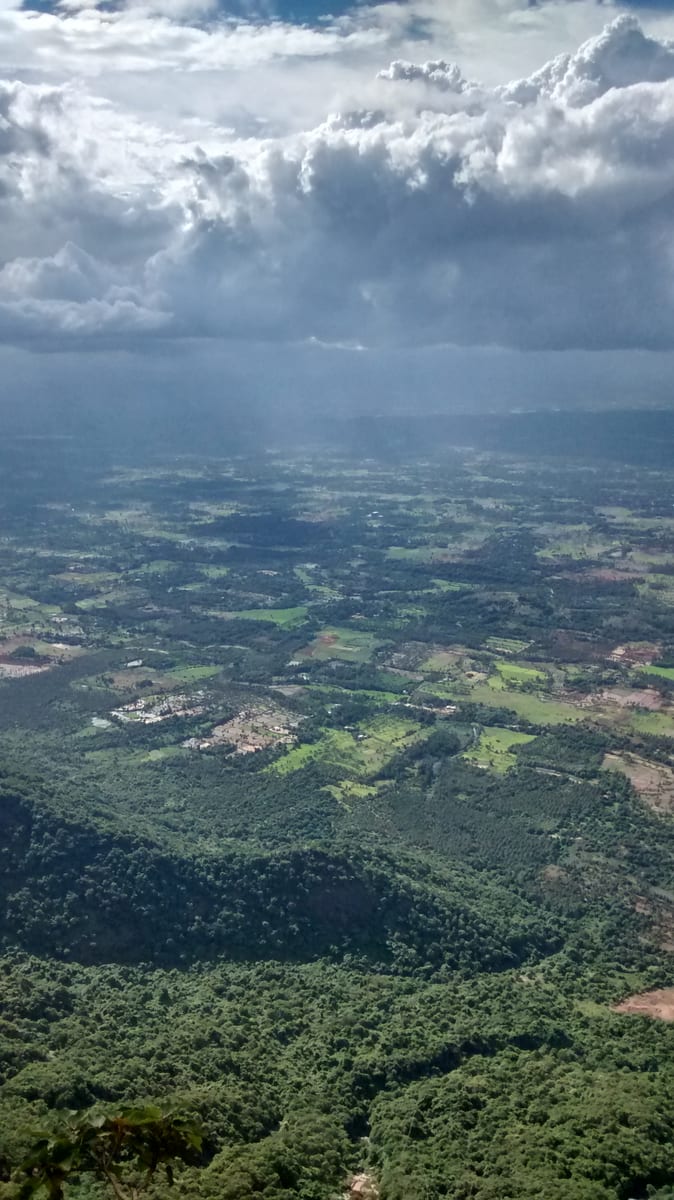
The edge of the Nelliyampathy escarpment, where the plateau stops and the Palakkad plain opens out a thousand metres below — a place you drive to and stand at, with a seasonal waterfall below the lip and a car park full of bold macaques.
6.6 km · straight line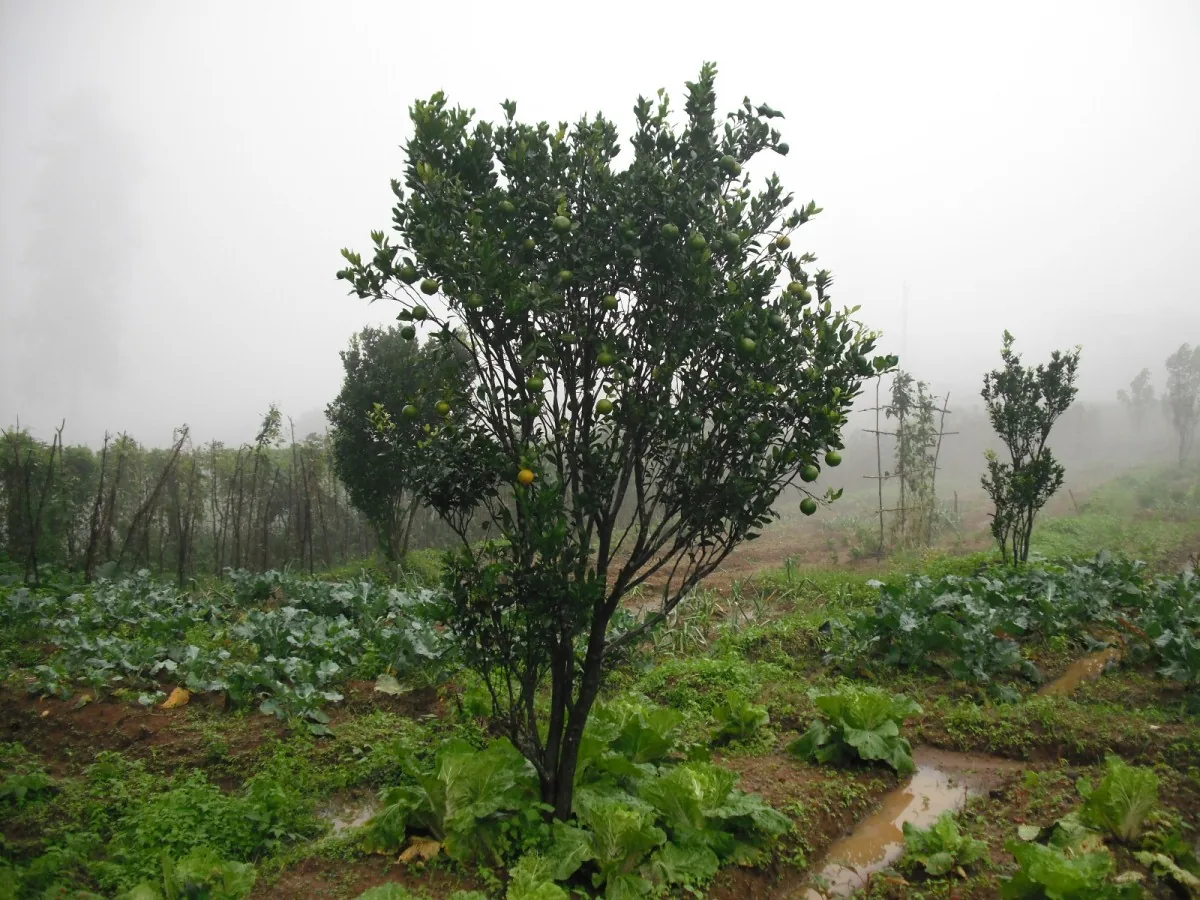
A state farm at Kaikatty growing mandarin oranges, winter vegetables and a fruit forest of fifty varieties on the Nelliyampathy plateau — the Kingdom of Cochin's Poliya estate, a farm since 1943 and an orange and vegetable farm since 1956, with a passion-fruit processing unit and a published ticket.
8.5 km · straight line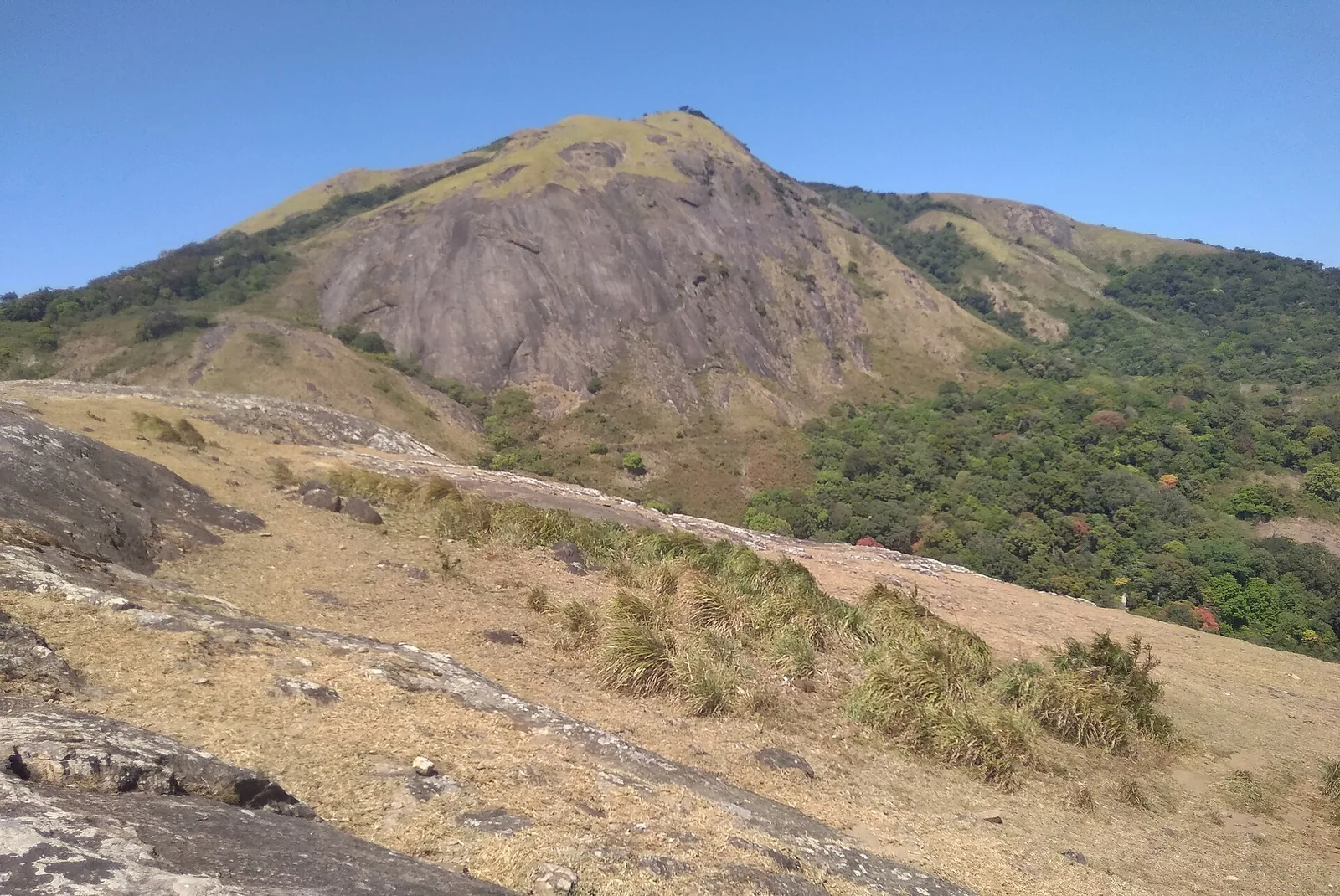
Walking routes off the Nelliyampathy plantation plateau: an evergreen-forest footpath to the bare granite of Kesavan Para, longer forest-division routes to Hill Top, Karassuri and over the ridge to Parambikulam, and a four-wheel-drive climb to Manpara and the ruined Victoria Church.
8.5 km · straight line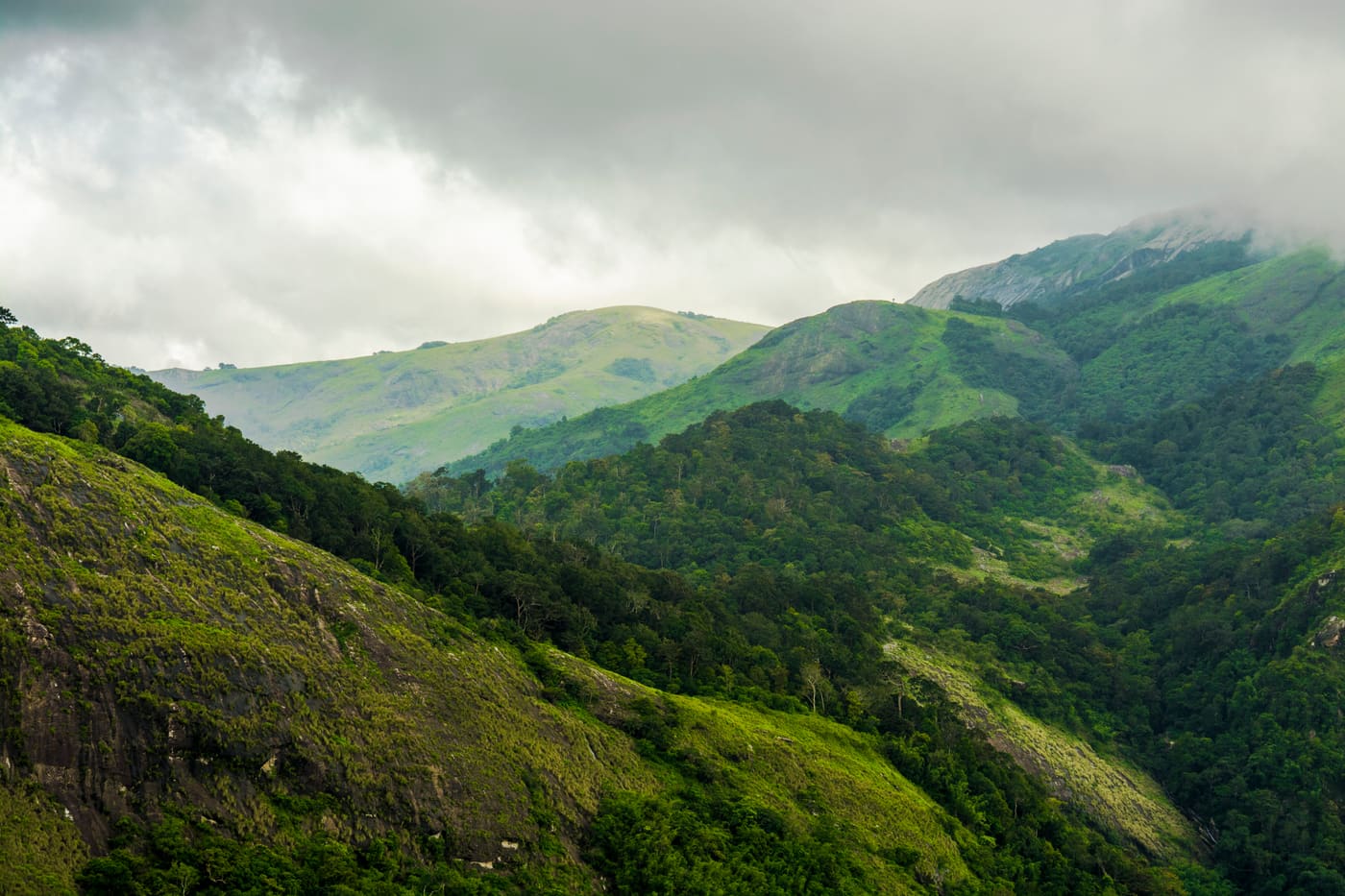
Tea and orange-garden hill station reached through forested ghat roads.
9.3 km · straight line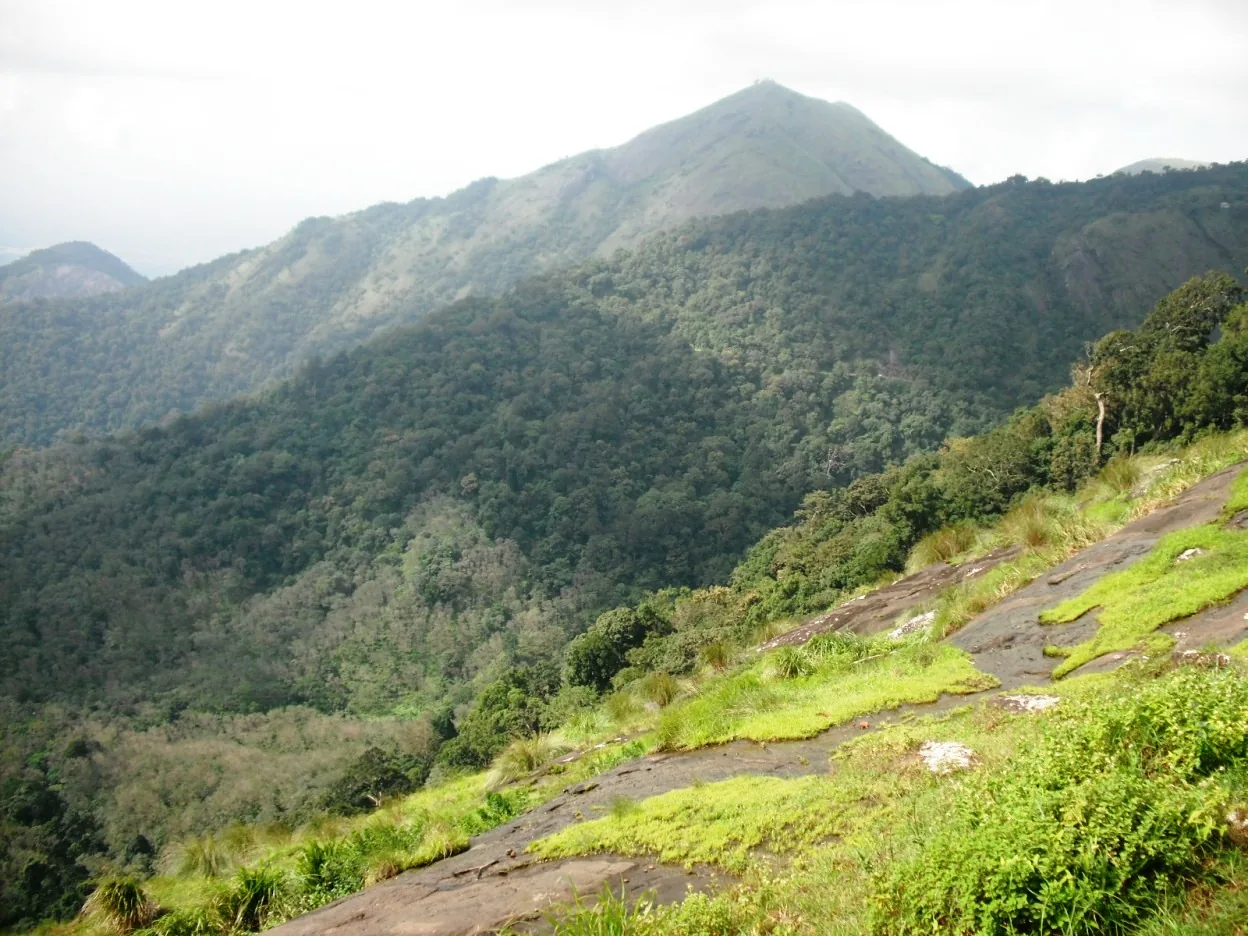
A rock shoulder on the Kaikatty-Nooradi road looking across an unbroken fold of evergreen forest to a conical peak — the nearest thing on the plateau to a viewpoint you can have to yourself.
9.9 km · straight lineA 19th-century irrigation dam near Nemmara — one of the oldest in India, its core wall built with a jaggery-and-lime mix — with a scenic reservoir, gardens and boating.
10.3 km · straight line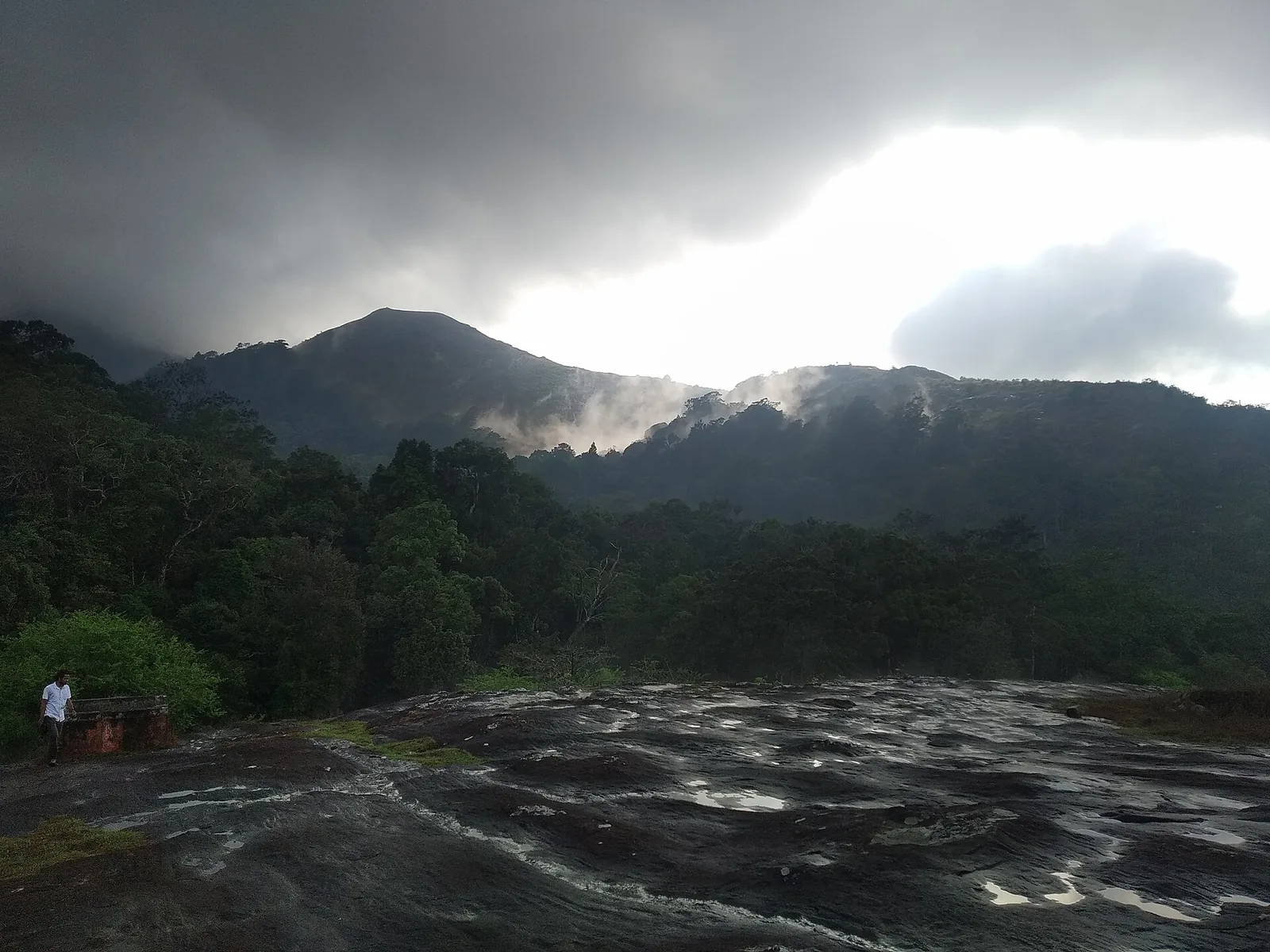
A great sheet of bare granite tilted out over the valley at the end of a red-earth path through wet evergreen forest — the one walk on the Nelliyampathy plateau that anyone reasonably fit can do without the Forest Division's permission.
10.3 km · straight line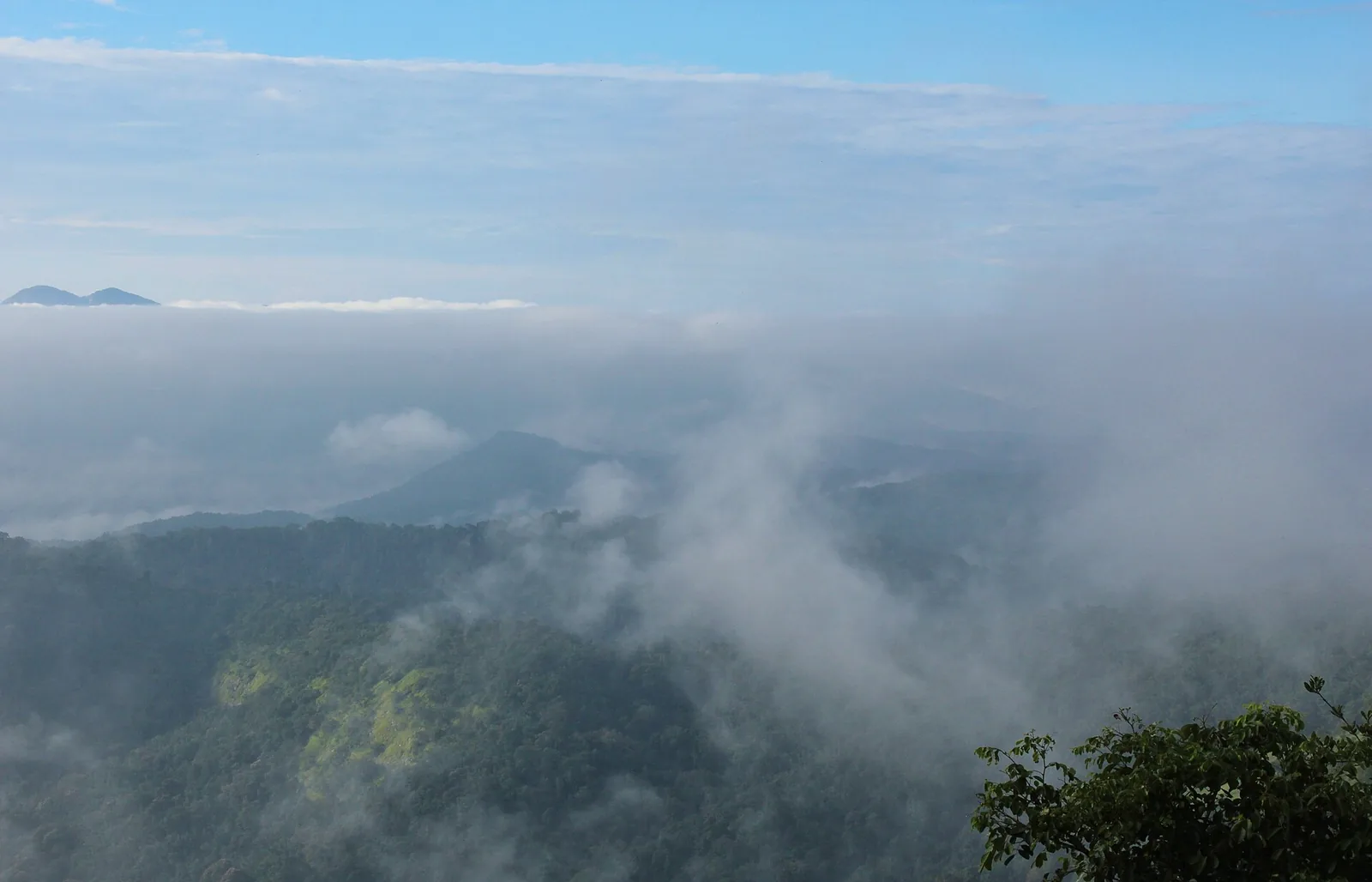
A working plantation on the southern shoulder of the Nelliyampathy plateau with a grass-and-rock top point above it, named by Kerala Tourism as a trekking destination and reached by estate track rather than by road.
10.7 km · straight lineWell-preserved fort in Palakkad town, associated with Hyder Ali and Tipu Sultan.
17.7 km · straight line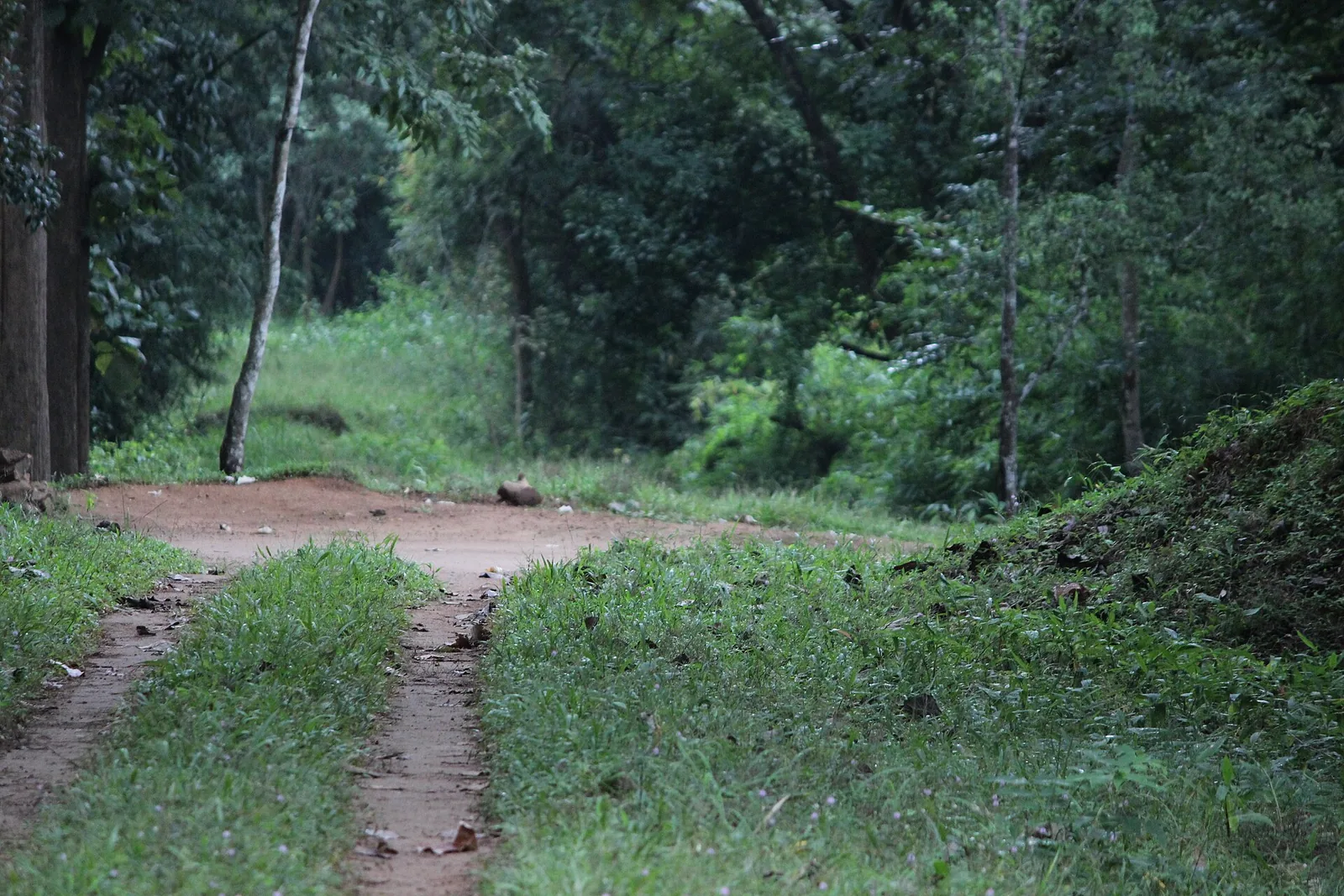
Four separate Forest Department trails from the Anappady information centre and other named starts: the 4 km Bear Path and Elephant Song walks, the 6 km Kariyanshola route with bamboo rafting, and the longer 10 km Pugmark trail from Peruvaripallam.
18.1 km · straight lineA ~15th-century Jain temple on the western edge of Palakkad town, one of the few surviving traces of Jainism in Kerala, with images of the Thirthankaras and Yakshinis.
20.2 km · straight lineA quiet reservoir among wooded hills near Alathur, south-west of Palakkad town — good for a peaceful drive and picnic.
21.6 km · straight lineNearby toilets, pharmacies, ATMs, seating and vets are community-mapped and may be incomplete or out of date. Map data © OpenStreetMap contributors | Walking times © openrouteservice.org by HeiGIT
Kollengode is a heritage village in Palakkad known for its vast paddy fields set against the Nelliyampathy hills, the old Kollengode Kovilakam (palace of the Vengunad Rajas), the ancient Kachamkurissi Perumal Vishnu temple, and its historical link to the painter Raja Ravi Varma, who was a guest of the royal family.
The main 19th-century palace at Kollengode now operates as an exclusive Ayurveda retreat (Kalari Kovilakom) rather than a public monument, so interior access is limited or by arrangement only. You can still enjoy its setting and story from the village. A separate Kollengode Palace built by the family in Thrissur later became a museum — a different building from the Palakkad kovilakam.
By legend the temple’s name comes from ‘Kashyapan-Kurissi’, the hill of the sage Kashyapa, who is said to have meditated here. Pleased with his devotion, Lord Vishnu is believed to have appeared and agreed to remain in the land for ever, with the sage himself consecrating the idol of Mahavishnu. It is a devotional legend rather than documented history.
Raja Ravi Varma and his brother C. Raja Raja Varma were guests of the Kollengode royal family. In January 1903 they painted a portrait of Dhatri Tampuratti (Rani Dhatri), the mother of Vasudeva Raja. The painting is notable for carrying both brothers’ signatures and the date 1-1-1903, and is reported to have stayed in the family’s collection.
The cooler, drier months of roughly October to March are generally the most comfortable for the plains and for pairing a visit with the Nelliyampathy hills. The paddy fields look their greenest during and just after the monsoon, and the region’s big temple velas typically fall around March–April after the harvest.
Kollengode lies roughly 25–30 km (about 45–60 minutes) from Palakkad town by road. The nearest major railhead is Palakkad Junction (Olavakkode), and the closest airport is Coimbatore (about 55–65 km), with Cochin International another option. Local buses and taxis connect it with Palakkad and Nenmara.
November to February and early mornings are best for walking; avoid midday heat where possible.
Entry: The village, paddy fields and viewpoints are free to enjoy; temples are generally free (donations welcome), and the Kovilakam estate is largely private with limited or no public entry — verify any charges on site. Timings: Kollengode is an open village you can explore any time; individual temple and palace-estate timings vary and often follow morning and evening darshan hours.
Base yourself in Palakkad town or a nearby town in Palakkad, then confirm the last-mile route locally before leaving. Walkable heritage areas are best done slowly; combine nearby streets, museums, markets and food stops. If the visit depends on forest, temple, boat, ferry, weather or seasonal access, check the official/local rule on the day before travel.
1 to 3 hours.
Nearby you can pair Seetharkundu viewpoint (6.6 km, approximate straight-line separation), Government Orange and Vegetable Farm (8.5 km, approximate straight-line separation), Nelliyampathy trek (8.5 km, approximate straight-line separation), Nelliyampathy (9.3 km, approximate straight-line separation).
Watch traffic on narrow heritage streets. Keep valuables close in crowded markets.
Written about Kollengode itself — its history, its legends and the arguments about them.
These guides explore Palakkad town and the surrounding area. Choose a visit that fits your interests, allowing separately for travel between stops.


Route-level itineraries and practical guides for the rest of Kerala.


Photographs: Em Sufyan (CC BY-SA 4.0), Prof tpms (CC BY-SA 4.0), Abhishek Jacob (CC BY-SA 3.0). Wikimedia Commons.