What to expect
Highlights
- Church visit at Muringoor Divine Retreat Centre
- Pilgrimage, architecture or local Christian heritage
- Nearby town food and stays
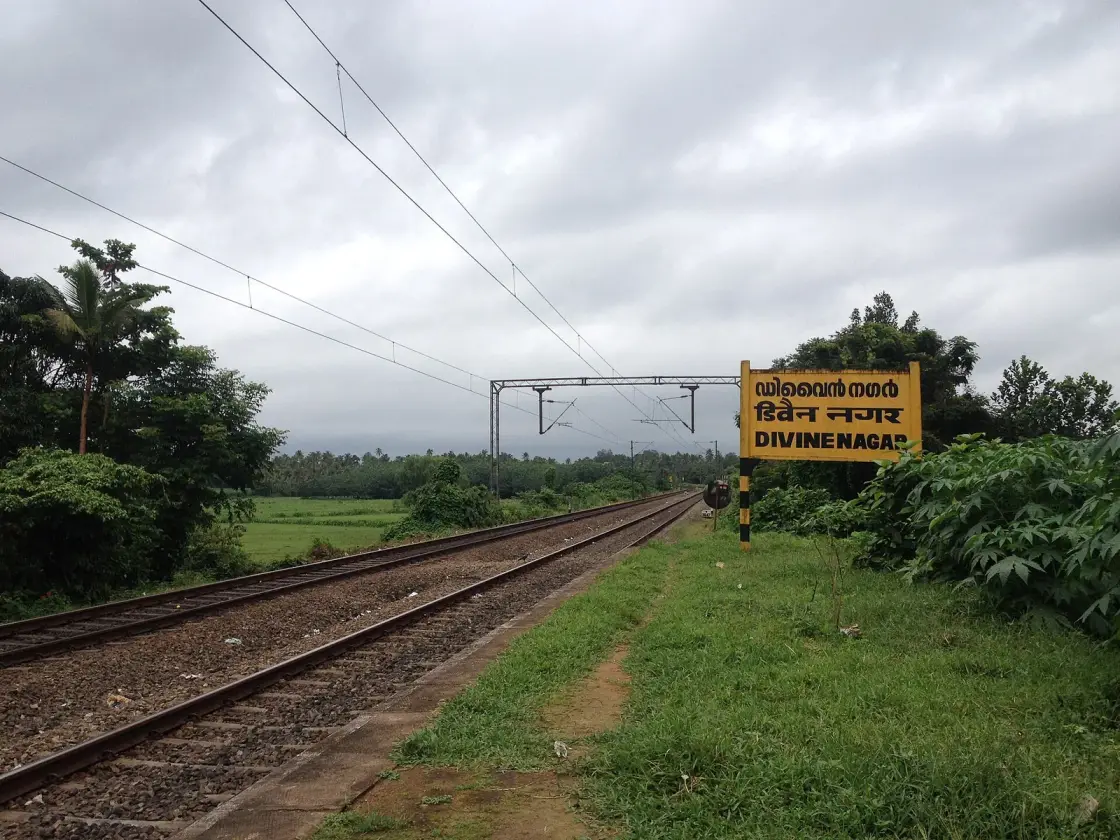
The Vincentian Congregation’s residential retreat centre on NH 544 at Muringoor, which by its own account takes about five thousand people a week for a six-day retreat in seven languages and houses two thousand more in five charitable homes — on volume, the largest organised draw in Chalakkudy taluk after the falls. Indian Railways opened a halt called Divine Nagar for it in 1996.
Check entry arrangements. Ask the church about visiting times around services and any dress or photography rules. During worship, keep voices low and follow staff directions.
Dress respectfully and follow the institution’s admission and photography rules.
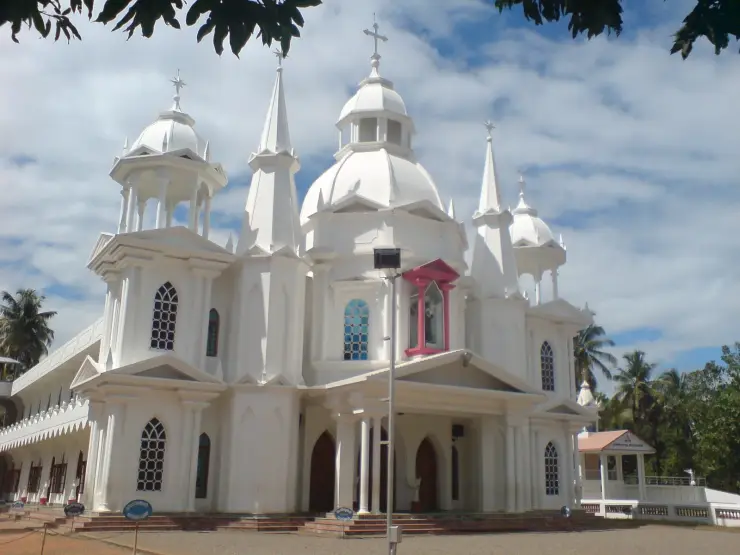
The Divine Retreat Centre stands at Muringoor, on the bank of the Chalakudy river about two kilometres south of Chalakkudy town, with National Highway 544 running between its two campuses. It is a Catholic retreat house run by the Mary Matha Province of the Vincentian Congregation, and it is very large: by its own published account it receives about five thousand retreatants a week, runs six-day residential retreats in seven languages in separate halls, and houses more than two thousand permanent residents in five charitable homes on the same ground. Locally and in the press it is still called the Potta ashram, because the ministry began at Potta five kilometres north in 1977 and the name travelled south with it when this campus opened in 1989. Potta Ashram is a separate, older Vincentian house and it is still working.
Start with the shape of it, because the shape explains almost everything else. The centre occupies two campuses on opposite sides of NH 544 at Muringoor, between Chalakkudy and Koratty, on ground that slopes to the Chalakudy river. One campus runs the Malayalam retreats; the other runs the English retreats and the other five languages. They are not overflow of one another — they keep different weekly clocks, which is the plainest evidence that this is two parallel operations sharing a name and a kitchen rather than one hall used twice.
The clocks are worth writing down, because nothing else about the place is as concrete. The centre states that retreats on the English campus “begin every week on Sunday at 10 am and conclude on Friday at 2 pm”, and that the Malayalam campus retreats “begin every Sunday at 2 pm and end on Friday at 8 am”. Its own home page gives the English cycle slightly differently, as Sunday 10 am to Friday 1 pm. Both figures come from the same website and we print both rather than choose. Either way it is a six-day residential commitment, not a visit.
Seven languages are held at once, in separate halls: English, Malayalam, Konkani, Hindi, Kannada, Tamil and Telugu. That list is the reach of the place stated in the most factual way available. Malayalam Wikipedia’s article on Chalakkudy records that people come to the Potta and Muringoor retreat centres not only from across India but from neighbouring countries; the language list is what that sentence looks like in timetable form. Konkani and Telugu in a Thrissur village are not a local congregation — they are Goa, coastal Karnataka and the Andhra country arriving by train.
What the six days contain, in the centre’s own description, is a fixed daily round: the Eucharist, Eucharistic adoration, preaching, testimony, praise and worship, availability of confession, and personal spiritual counselling. That is the whole programme. There are no excursions, no sightseeing and no free afternoons in the published shape of it, and a visitor who arrives expecting a retreat in the wellness sense — a quiet room and a walk by the river — has misread the place completely. This is six days of large-hall preaching and liturgy, in company, from morning to night.
Accommodation and dining are provided on campus for participants, and the centre says that special accommodation will be provided for the bedridden if it is told in advance, and that medical facilities including an ambulance service are available on request. That last detail is not incidental. A significant share of the people who come here are ill, or are bringing someone ill, and the buildings and the staffing are organised around that fact in a way that few religious buildings anywhere are.
Alongside the ordinary weekly cycle the centre runs a published calendar of specialised retreats — Inner Healing, Couples, Family Healing, a long Lenten series through February and March, a Passover retreat around Holy Week, Divine Mercy, Pentecost, Eucharistic Healing, a National Youth Retreat and an International Youth Retreat, a retreat for priests, religious and lay leaders, and an International Bishops, Priests and Religious Retreat in October. On the Malayalam campus a children’s retreat, the Jesteen, runs every week. The calendar is published on the centre’s site and the dates move each year.
Now the numbers, and a warning about them. The centre states that it receives “an average of 5000 retreatants every week”, that “over 10 million pilgrims from all over the world have attended retreats here”, that it runs “5 charitable homes with over 2000 residents”, and that it feeds “over 3000 residents of the Retreat Centre and its charitable homes”. Every one of those figures is the institution’s own and we could find no independent audit of any of them. We print them because the scale is the single most important thing about the place and because a refusal to print any figure would understate it more badly than the figures overstate it. Treat them as the institution’s claim, which is exactly what they are.
The charitable homes are the part of the operation a visitor is least likely to have heard of and the part that is easiest to check on the ground. They are named as the Divine Mercy Home for the aged; St Mary’s Home for destitute women, which also runs a crèche for abandoned children; the Samaritan Home for school-going children aged three to seventeen; the Shantipuram Care Centre for the mentally ill, begun in 2001; a de-addiction centre; and St Vincent Aids Home. That is a residential social-care establishment of some size that happens to share a campus with a preaching ministry.
The centre is known above all for healing — that is why most people come, and it would be dishonest to write the place up without saying so. What we can report is what the institution and its retreatants say: that people come ill and expect to be healed, that testimony of healing is a scheduled part of every retreat, and that the daily services are broadcast on Catholic television channels including Divine TV and Goodness TV. We do not repeat any healing claim as established fact, and we are not in a position to assess any of them. Readers who want to understand the place should understand that this expectation is the engine of the whole operation, and that it is held sincerely by very large numbers of people.
For a traveller who is not here for a retreat, the honest position is that there is not much to do. This is not a monument, a shrine with an art-historical interest, or a landscape. It is a working residential institution with a gate, and the interesting thing about it is the logistics of five thousand people arriving and leaving on the same two days of the week. The best hour to understand it is Sunday morning or Friday midday at Divine Nagar halt or on the NH 544 shoulder, when the buses and the trains do the work. Dress as you would for any Kerala church, ask before photographing anyone, and do not wander into the charitable homes.
There is no folklore attached to the Divine Retreat Centre, and there should not be. The institution was founded in living memory — the Muringoor property was acquired in 1989, the ministry it grew out of began at Potta in January 1987, and the house that ran that ministry dates only to 1977. Nothing here is old enough to have acquired a legend, and inventing one would be both easy and contemptible. Here is exactly what we searched before publishing that blank: on Malayalam Wikipedia, ധ്യാനകേന്ദ്രം, മുരിങ്ങൂർ, പോട്ട, ഡിവൈൻ ധ്യാനകേന്ദ്രം, പോട്ട ആശ്രമം and വിൻസെൻഷ്യൻ സഭ, and the full text of the ചാലക്കുടി, മുരിങ്ങൂർ, കോട്ടമുറി, മേലൂർ ഗ്രാമപഞ്ചായത്ത് and നെടുംകോട്ട articles; on English Wikipedia, Divine Retreat Centre, Potta Ashram, Potta, Muringoor, Vincentian Congregation, Varkey Kattarath and George Panackal. Not one of them offers a legend of the centre. The blank is real.
The ground under it is a different matter entirely, and this is the part almost no visitor to the retreat knows. Muringoor is where the Nedumkotta was broken. The hamlet immediately beside the highway is called കോട്ടമുറി — Kottamuri, “the cut in the fort” — and Malayalam Wikipedia is explicit about why: the wall that stood in the way of Tipu Sultan’s advance was breached by him at the place in Muringoor known as Kottamuri, and the site is now under the protection of the State Archaeology Department. The name is the memory. Nobody had to write it down for it to survive; it is simply what the place is called.
The Nedumkotta — the Travancore Lines — was a rampart of earth and stone thrown across central Kerala in the reign of Dharma Raja Karthika Thirunal Rama Varma, running from the sea in the west to the Anamalai hills of the Western Ghats in the east. The Cochin government’s archaeologist P. Anujan Achan walked its full length in five days in 1926 and measured it at thirty-five miles, about 56 km. It stood forty to fifty feet high, with a ditch along its northern face sixteen feet wide and twenty feet deep, thorn scrub and bamboo planted beyond the ditch as a second obstacle, wells sunk at intervals for the garrison’s water, powder magazines built against the wall at the tactical points, round forts at spaced intervals, over sixty encampments, and a cave in which more than a hundred soldiers could lie hidden at once. Malayalam sources credit the design and construction to the Dutch engineer Captain De Lannoy, built to a European pattern.
The thing that happened here happened on the night of 28 December 1789. Tipu had camped on the 24th at Thazhekkad, near what is now Kallettumkara, and set about emplacing his heavy guns. On the night of the 28th he moved with fourteen thousand infantry and five hundred pioneers by a roundabout track towards the right of the wall at a place the Malayalam account calls Cheruputhumala, shown the way by a local man. By nine on the morning of the 29th he was inside the line. The Travancore troops had been falling back as he came on — and then a party of them, hidden in a section of the wall, let the Mysore musketeers get well inside and opened fire on them from behind. Malayalam Wikipedia records, in a parenthesis, that the spot where this happened, in Muringoor village, is called വെടിമറപ്പറമ്പ് — Vedimarapparambu, the field of the gunnery screen — to this day.
What followed was a rout in a confined space. Tipu’s commander was killed. The retreating army found the way back too narrow, men were crushed and many fell into the ditch and died there, and when the palanquin bearers went down the Sultan himself fell into the ditch and got out somehow. About two thousand Mysore soldiers died against roughly two hundred on the Travancore side, and a handful of prisoners were taken including five of Tipu’s European officers. By January 1790 he had withdrawn completely. Two claims commonly attached to that night need marking carefully. The first is that Tipu was left with a limp by the fall — Malayalam Wikipedia reports this as something “some historians believe”, and we repeat it on exactly that footing and no firmer. The second is that it was after this night that he gave the Nedumkotta its famous nickname, ഹലാക്കിന്റെ കോട്ട, the fort of ruin. That is a tradition about a name, not a documented utterance.
He came back, of course, and in the spring of 1790 the line was breached — and that breach is the one that named Kottamuri. What the visitor sees now is the least dramatic thing imaginable: a laterite bank beside a lane with a small marker on top, and a stretch of national highway that runs through the gap where a fifty-foot wall used to be. It is, in its way, the honest monument. The wall was a border, the border failed, and the road that replaced it now carries five thousand people a week to a retreat house built two hundred years later on the same ground.
Two stories that circle this place belong somewhere else and we are refusing both by name. The first is Sampaloor, also called Ambazhakad, a few kilometres west across the Chalakudy river — the Jesuit seminary where Arnos Pathiri was ordained and the site associated with early printing in Kerala. Malayalam Wikipedia’s Muringoor article claims for Muringoor only that it is the gateway to Ambazhakad; that is a junction, not a connection, and Sampaloor’s story is its own and much older. The second is Pottan Theyyam, which despite the name has nothing whatever to do with Potta in Thrissur — it is a North Malabar ritual of Kannur and Kasaragod, told on our Kannur pages, and the resemblance is a coincidence of spelling. The war narrative itself — the Dutch sale of the forts, the ultimatum, the fall of Cranganur, the Periyar flooded at Bhoothathankettu to stop the advance — belongs to Pallipuram Fort, where we tell it properly. Muringoor’s share of it is one night, one ambush and one place-name, and that is enough for any village.
The congregation that runs the centre is older than any of it. The Vincentian Congregation was founded in Kerala on 20 November 1904 by Varkey Kattarath, a Syro-Malabar diocesan priest born at Poonjar on 13 October 1851, who had served parishes at Thathampally, Kanjirapally, Angamaly, Ollur and Vaikom before asking to become a religious. Three other diocesan priests joined him at Thottakam near Vaikom and Louis Pazheparambil suggested they follow the rule of Vincent de Paul. The first attempt did not hold and the community dispersed in 1915; it was revived in July 1927 when Archbishop Augustine Kandathil granted three priests permission to live religious life in the same house at Thottakam, and Kattarath rejoined them that October. He took his first vows on 20 July 1929 and perpetual vows on 19 July 1931, and died on 24 October 1931. He was declared a Servant of God on 5 February 2020.
From 1950 the Indian Vincentians were preaching what they called Popular Mission retreats in Kerala parishes — travelling preaching, done in the parish, not in a retreat house. In 1977 the Potta Ashram was set up as the place to direct and co-ordinate that work, and it functioned as the headquarters and the residence of the directors, among them Fr George Panackal and Fr Romulus Nedumchalil, who preached and made their visitations from there. It was an administrative base for a mobile ministry, not a destination.
It turned into a destination by accident. Fr Mathew Naickomparambil, who had been drawn into the Catholic Charismatic Renewal — a movement that began at Duquesne University in Pittsburgh in 1966 and reached India in February 1972 — was transferred to Potta, and his preaching pulled crowds. In January 1987, by the centre’s own account, the daily ministry of preaching and healing services began at Potta, with Fr Panackal coordinating. A three-storey building was put up to hold the people who were now coming to the ashram itself rather than waiting for the mission to reach their parish, and it was quickly inadequate.
In 1989, under a new director, Fr George Vempilly, a large property was acquired at Muringoor on the bank of the Chalakudy river, and Fr Jacob Athickal was given the job of building the new campus. It was named the Divine Retreat Centre. Fr Augustine Vallooran was assigned to the English retreats in 1990 and regular weekly English retreats began in 1991; the other languages followed. The Divine Youth wing was inaugurated in 1995 with a first National Youth Retreat that drew over five hundred young people, television work began in 2002, and the first International Youth Conference was held in 2005.
One date needs printing twice, because the sources disagree. English Wikipedia says the Divine Retreat Centre “was inaugurated in 1987”; the centre’s own timeline puts the Muringoor acquisition and naming in 1989 and dates January 1987 to the start of the daily ministry at Potta. The likeliest reading is that 1987 is the ministry’s date and 1989 is the campus’s, and that the two have been conflated — but we have not been able to settle it from a source independent of either, so we print both.
The place has also acquired its own infrastructure, which is a rare thing for a religious institution to manage. Indian Railways opened a halt called Divine Nagar on the Shoranur–Cochin Harbour line, between Chalakudi and Koratty stations, in 1996; English Wikipedia notes that the station “is cared for by a divine retreat center”, that it is an HG-1 class station in the Thiruvananthapuram division, and that one pair of express trains — the Netravati Express — stops there on Fridays, Saturdays and Sundays specifically for the convenience of people travelling to the retreat centre. In 2018, during the Kerala floods, the centre and its charitable homes were, by its own account, overrun by the Chalakudy river.
To see, honestly reported, one of the largest organised religious gatherings in Kerala: about five thousand people a week, on the institution’s own figures.
For the seven-language timetable — English, Malayalam, Konkani, Hindi, Kannada, Tamil and Telugu, run simultaneously in separate halls on two campuses.
For Divine Nagar, a railway halt on the Shoranur–Cochin Harbour line opened in 1996 and effectively built around the arrival and departure of retreatants.
For Kottamuri, a few hundred metres away, where Tipu Sultan’s army breached the Nedumkotta in 1790 and gave the hamlet its name — “the cut in the fort”.
For Vedimarapparambu, the field in Muringoor still named after the ambush of 29 December 1789 that broke the first Mysore assault on the Travancore Lines.
For the plain fact that the biggest thing in this taluk after the waterfalls is a place almost no guidebook to Kerala mentions.
Road km to Thrissur; ghat roads and traffic vary — allow extra.
Morning or late afternoon for quieter visits and better light.
Live forecast loads in your browser.
Sun and moon are calculated for this location and shown in IST. Photography windows are the hour around sunrise and sunset; the sunset bearing is degrees clockwise from true north. Moon phase is accurate to about half a day.
Verified hotels, homestays, restaurants, experiences, sights, shops and rentals around Muringoor Divine Retreat Centre — commission-free, with direct contact. Filter by what you need.
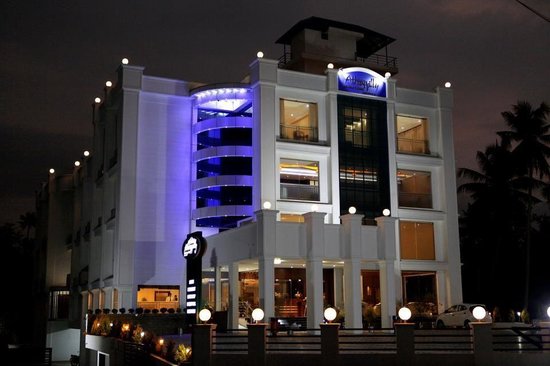
Hotel restaurant in Chalakkudy. Athirappilly Residency, Chalakkudy, Thrissur district, Kerala · Hotel restaurant.
Book with the place itself. India’s cyber-crime coordination centre warned in April 2025 that convincing copies of hotel and pilgrimage booking sites are being pushed through sponsored search and social ads, taking payment for rooms the property never hears about. Every listing here links to the business’s own contact details and its own Google or Bing profile — we take no commission and sit in nobody’s payment path. If a booking page reached you through an ad, check the address bar against the property’s own site before you pay. Fraud can be reported on cybercrime.gov.in or on 1930.
Find food, accommodation and activities across Chalakkudy. Browse the guides for places to eat, stay and explore along your route.
5 more places around Chalakkudy. Open a guide to plan the visit and onward journey.
A major Marian pilgrimage church at Koratty, widely known as Koratty Muthy, with ordinary visits requiring different planning from the October feast.
1.7 km · 21 min walk
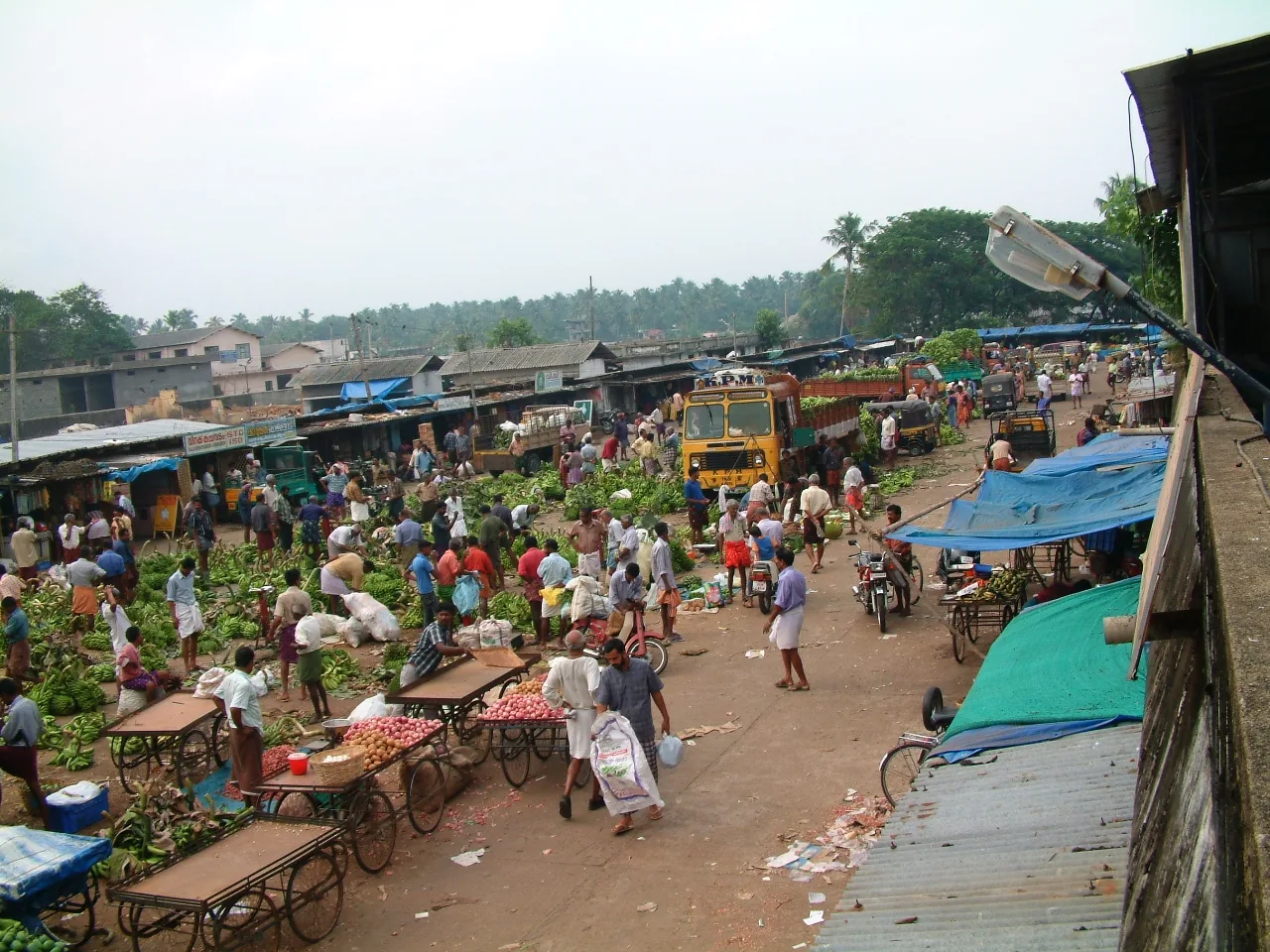
The town’s wholesale produce yard on Market Road, the oldest continuously working institution in Chalakkudy — a Sakthan Thampuran-era pandikasala that still holds its traditional Tuesday and Friday markets and takes hill produce down State Highway 21.
2.2 km · 28 min walk
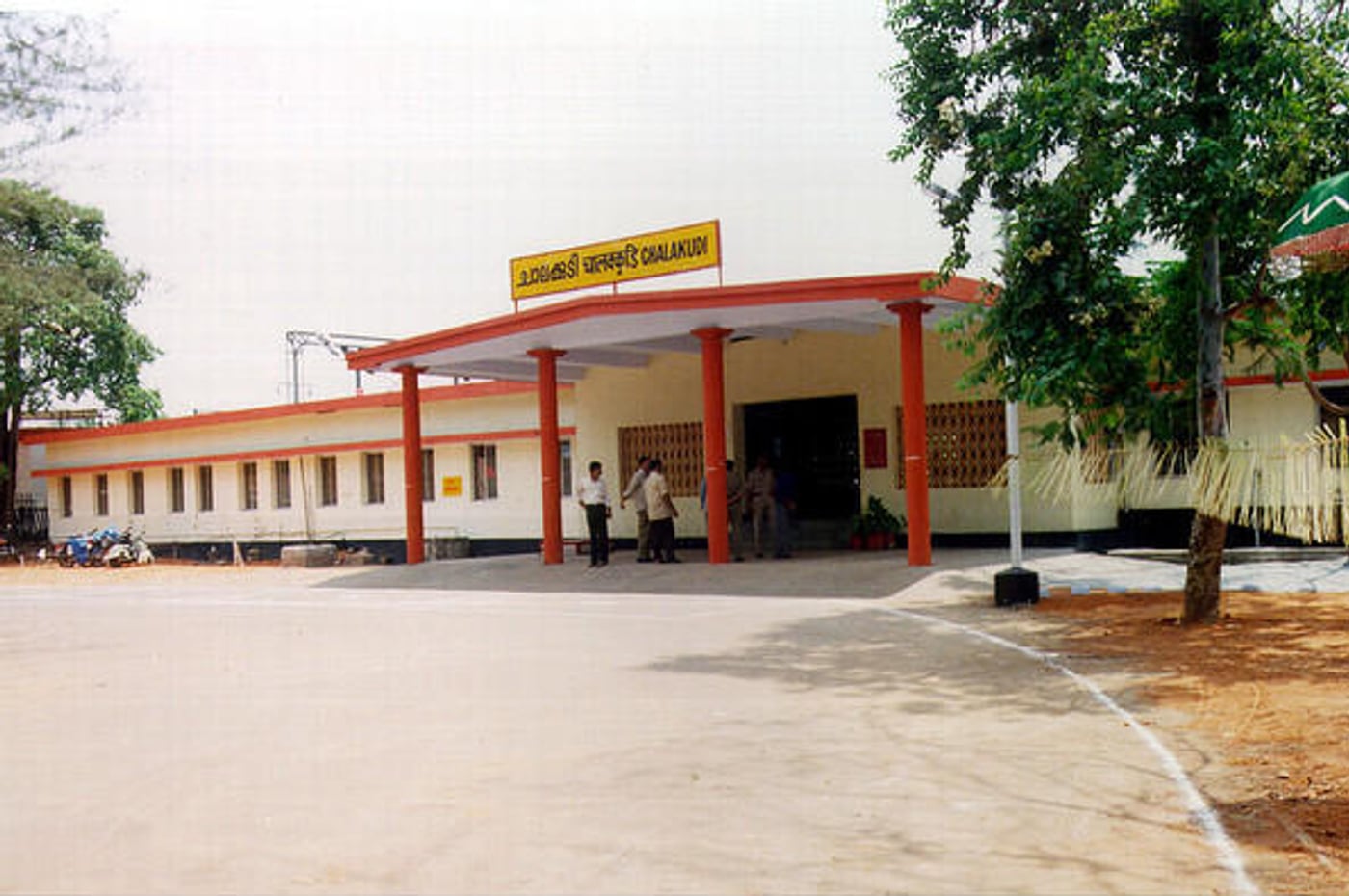
Chalakudi station, code CKI, on the Shoranur–Cochin Harbour section — the railhead the Cochin State Forest Tramway was extended to reach, and the transfer point for Athirappilly. About 1.4 km west of the highway, which catches most visitors out.
1.3 km · 17 min walk
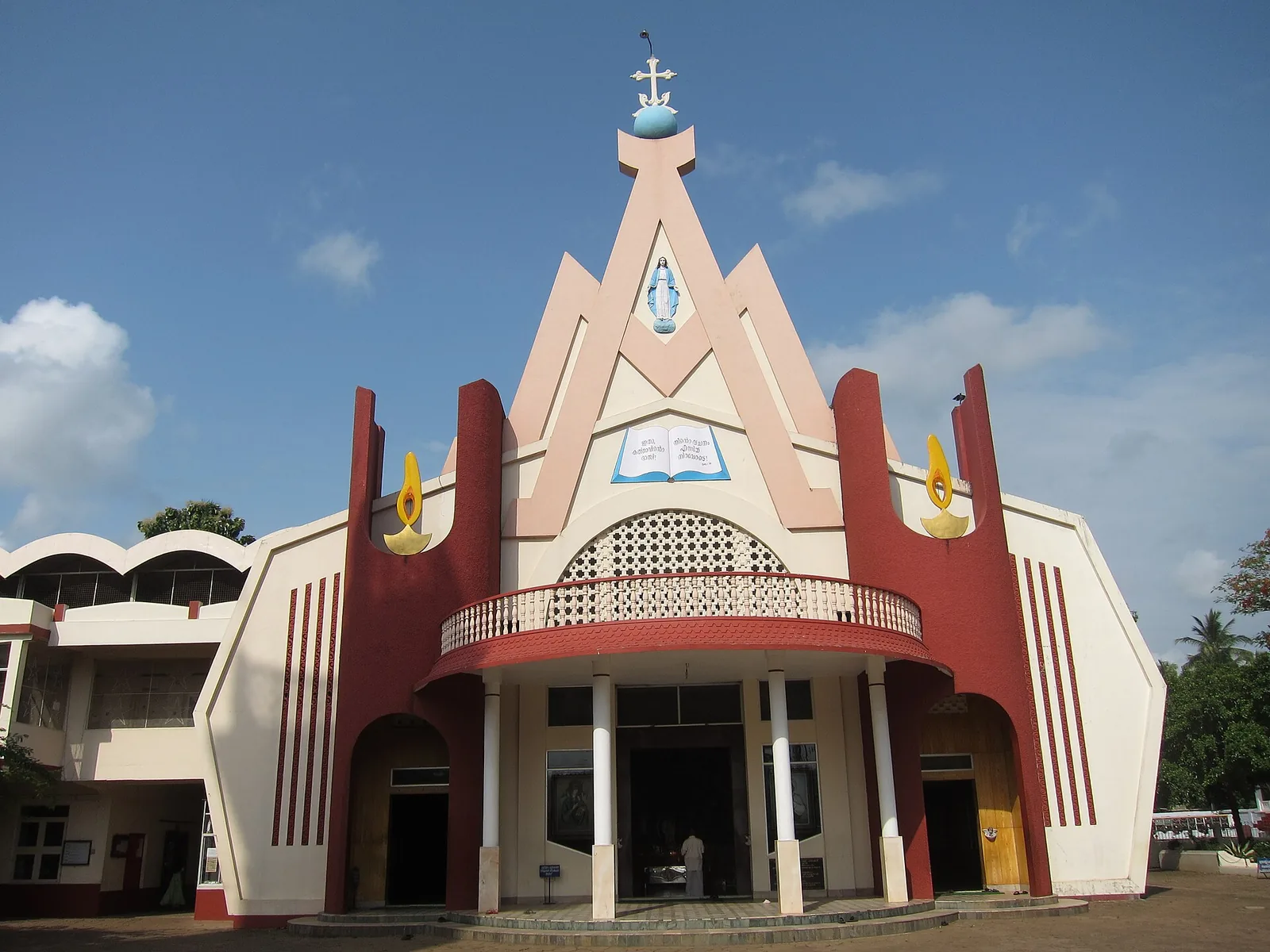
St Mary’s Forane Church on Church Road, the Syro-Malabar forane that governs seventeen daughter parishes across the Chalakkudy countryside and keeps the ambu perunnal, the arrow feast the town observes across community lines. The present building was rebuilt in 1987; the belfry is 1913 and the bell 1887.
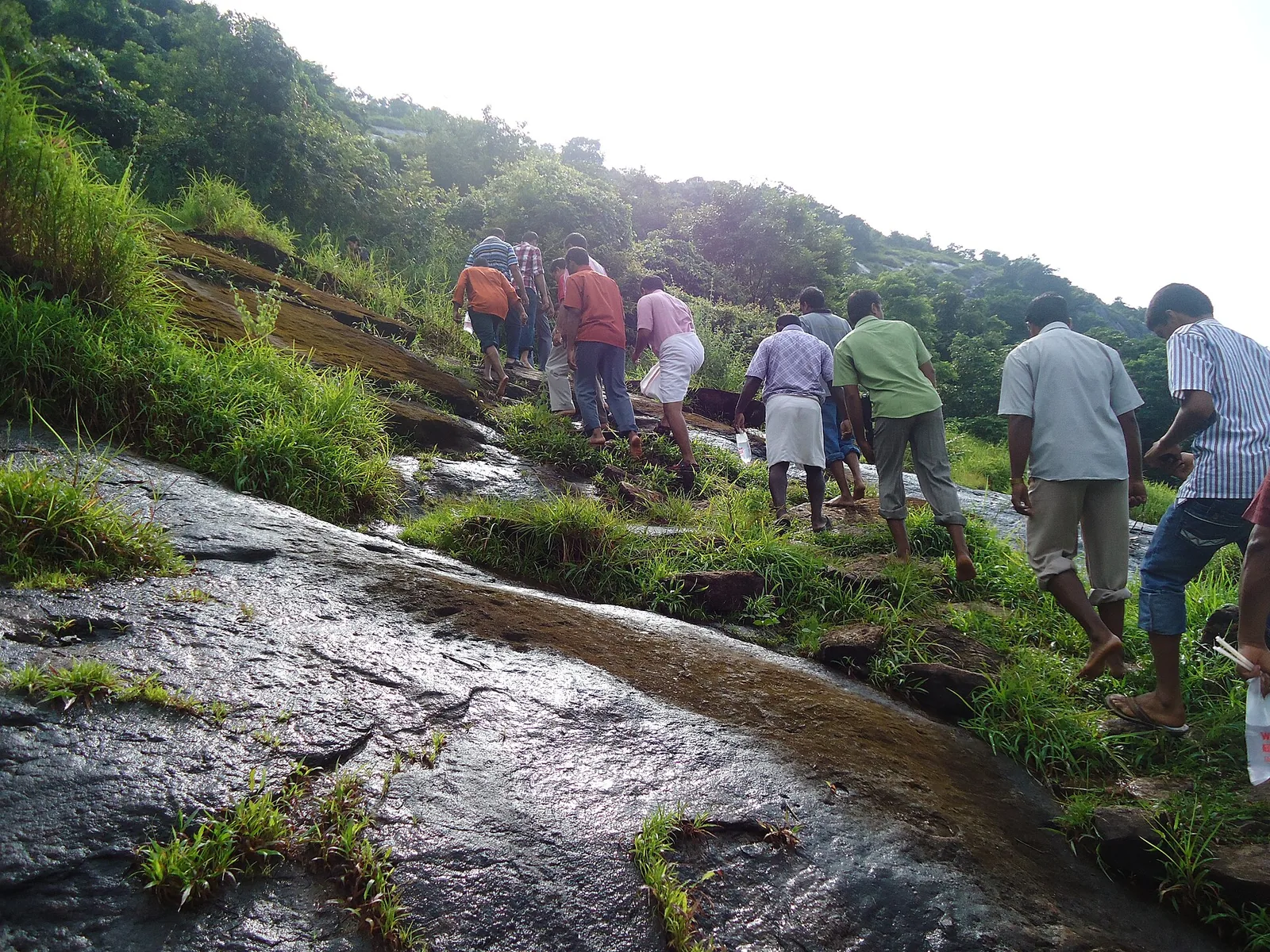
7.6 km · ~19 min by auto
A hill of crosses about 5 km north of Chalakkudy that local devotion ranks with Malayattoor — fourteen crosses up a kilometre of bare sheet rock to a hilltop shrine at about 310 m. The pilgrimage was begun in 1940 by the vicar of Perambra after a dream; April is its busiest month.
Roampedia is commission-free — own or know a stay, eatery, guide or shop near Muringoor Divine Retreat Centre? List it and it appears here once verified.
Add a nearby businessEntry: No admission ticket to the campus. The centre publishes no retreat fee anywhere on its website — accommodation and dining are stated as provided on campus, and an online donation facility exists, but no rate is given. Ask when you register.
On NH 544 at Muringoor, between Chalakkudy and Koratty, with the two campuses on opposite sides of the highway; the centre gives its distance as about 2 km from Chalakkudy town. Divine Nagar halt (code DINR), on the Shoranur–Cochin Harbour line between Chalakudi and Koratty, is adjacent — two pairs of passenger trains and two pairs of MEMUs stop daily, and the Netravati Express stops on Fridays, Saturdays and Sundays for retreatants. Chalakudi (CKI) is the main station nearby. Cochin International Airport at Nedumbassery is about 18 km away.
If you are travelling by bus or ferry, check the return service with the operator before setting out. Leave time to reach the stop or jetty after your visit.
Ask at the bus stand for the time of the last service back, not the next one. If you miss it, an auto or app cab is the fallback — agree the fare before you get in.
If you need step-free access, contact the site before travelling. Ask about a level entrance, steps along the route, the nearest drop-off point, seating and accessible toilets.
Charge cap and free-transaction limits: Reserve Bank of India, in force since 1 May 2025.
These services are listed within about 1.2 km of Muringoor Divine Retreat Centre. Walking distances follow mapped routes; access and opening hours can change. Other services may be closer but are not included here.
Emergency numbers are verified against official government and state tourism sources. 112 works anywhere in India.
St Mary’s Forane Church on Church Road, the Syro-Malabar forane that governs seventeen daughter parishes across the Chalakkudy countryside and keeps the ambu perunnal, the arrow feast the town observes across community lines. The present building was rebuilt in 1987; the belfry is 1913 and the bell 1887.
1.3 km · 17 min walk · straight lineThe town’s wholesale produce yard on Market Road, the oldest continuously working institution in Chalakkudy — a Sakthan Thampuran-era pandikasala that still holds its traditional Tuesday and Friday markets and takes hill produce down State Highway 21.
1.7 km · 21 min walk · straight lineChalakudi station, code CKI, on the Shoranur–Cochin Harbour section — the railhead the Cochin State Forest Tramway was extended to reach, and the transfer point for Athirappilly. About 1.4 km west of the highway, which catches most visitors out.
2.2 km · 28 min walk · straight lineA hill of crosses about 5 km north of Chalakkudy that local devotion ranks with Malayattoor — fourteen crosses up a kilometre of bare sheet rock to a hilltop shrine at about 310 m. The pilgrimage was begun in 1940 by the vicar of Perambra after a dream; April is its busiest month.
7.6 km · ~19 min by auto · straight line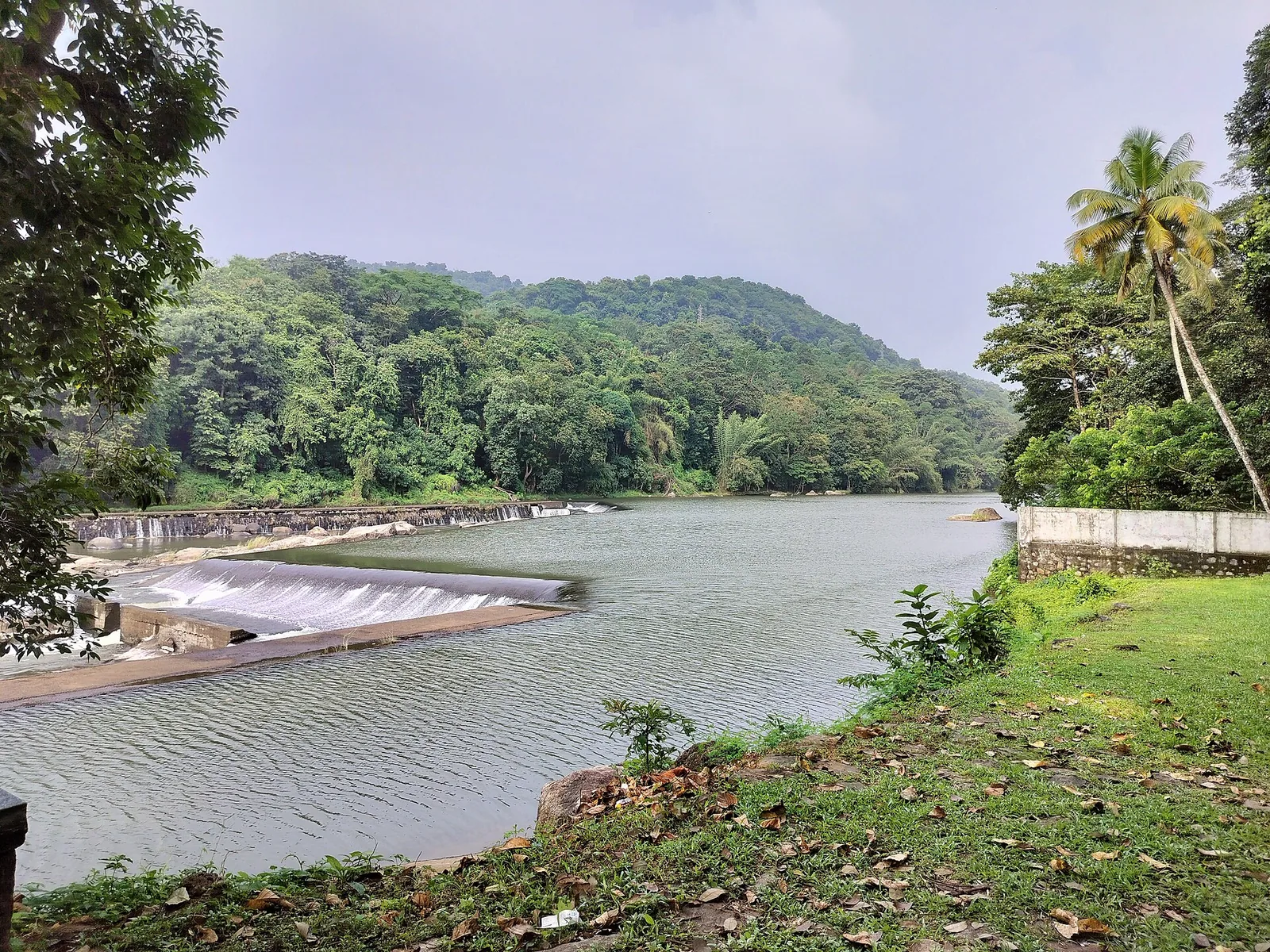
A check dam, hanging garden and butterfly garden on the Chalakudy river near Athirappilly, a popular picnic and day-trip stop.
12.5 km · ~21 min by cab · straight lineA longstanding Catholic pilgrimage church at Mapranam associated with the Holy Cross and annual feast observances.
15.7 km · ~26 min by cab · straight line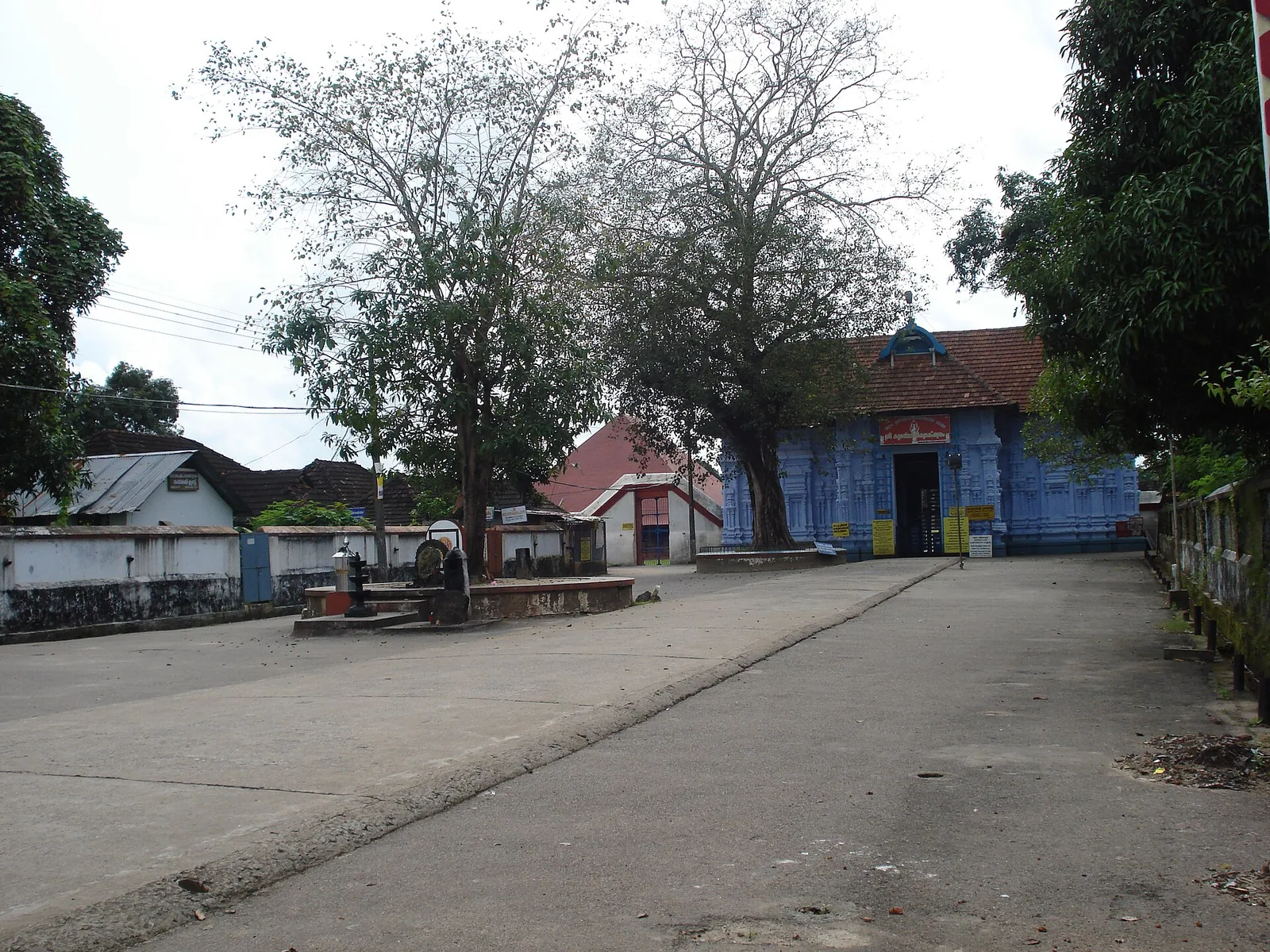
Rare temple at Irinjalakuda dedicated to Bharata, one of the Nalambalam (four-temple) Rama circuit shrines.
16.0 km · ~27 min by cab · straight line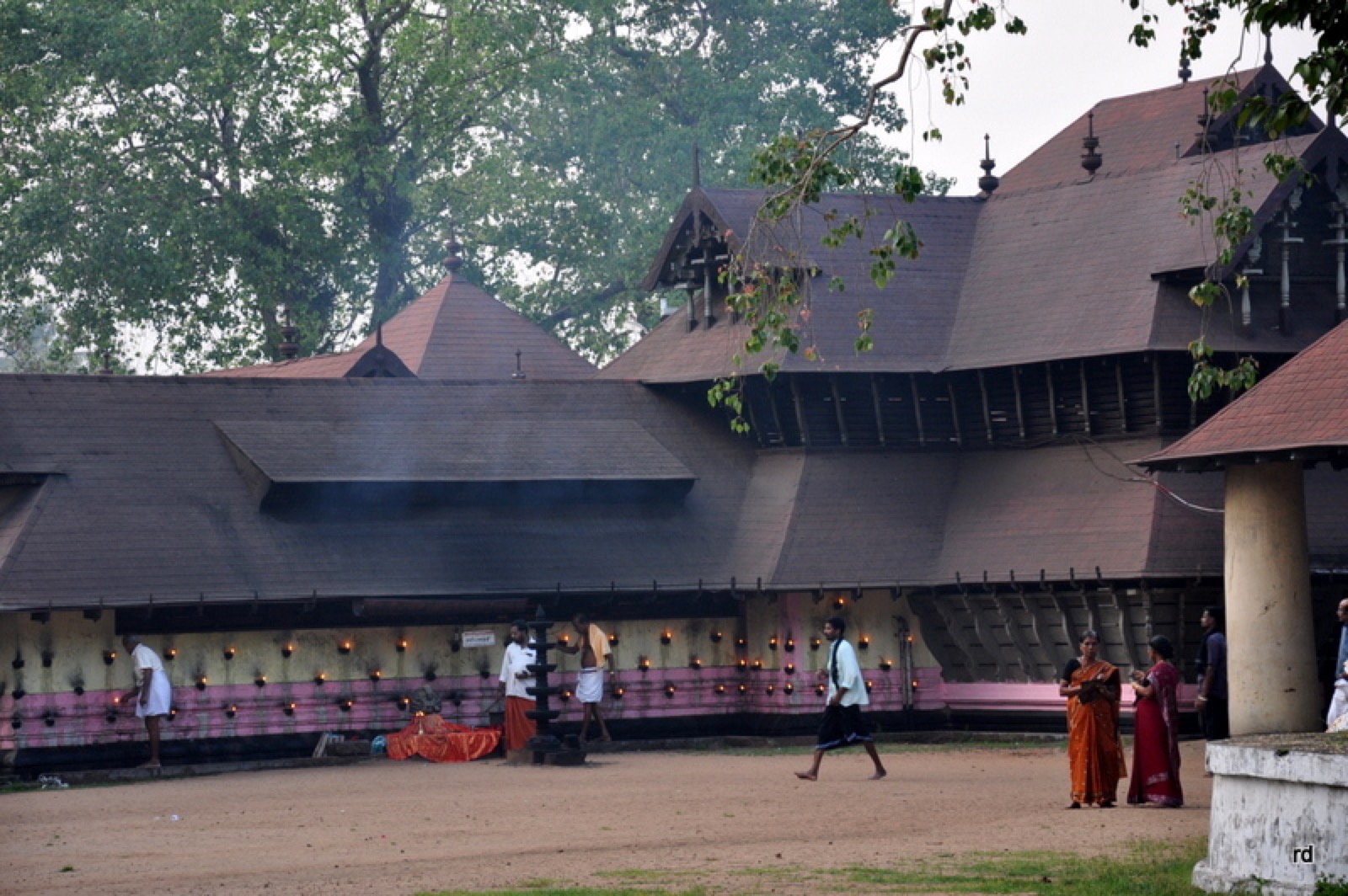
The Sree Kurumba (Bhagavathy) temple at Kodungallur, an ancient and powerful Devi shrine associated with the Bharani festival.
16.8 km · ~28 min by cab · straight line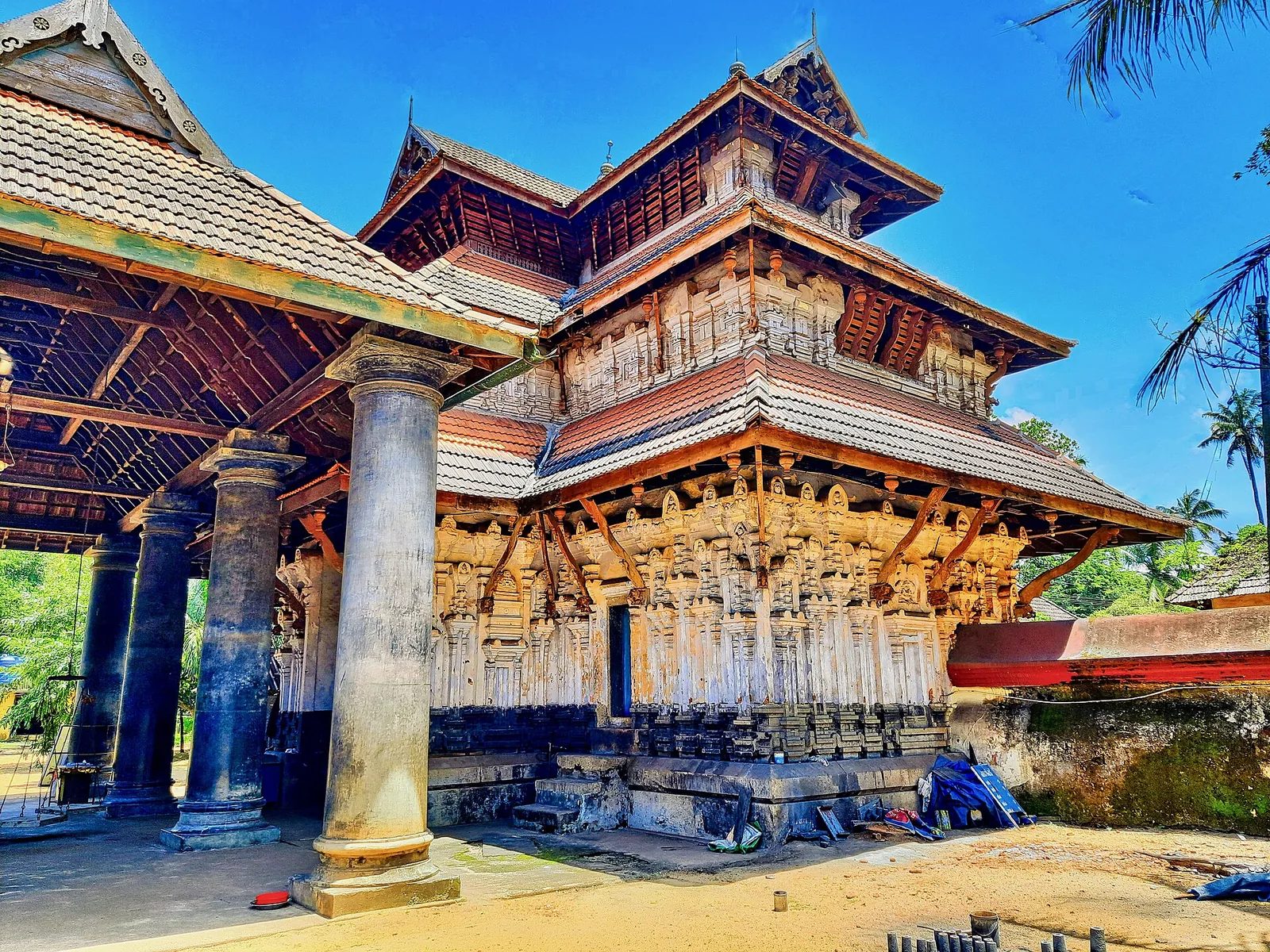
Ancient Shiva temple at Kodungallur linked with the old Chera capital of Mahodayapuram.
16.9 km · ~28 min by cab · straight line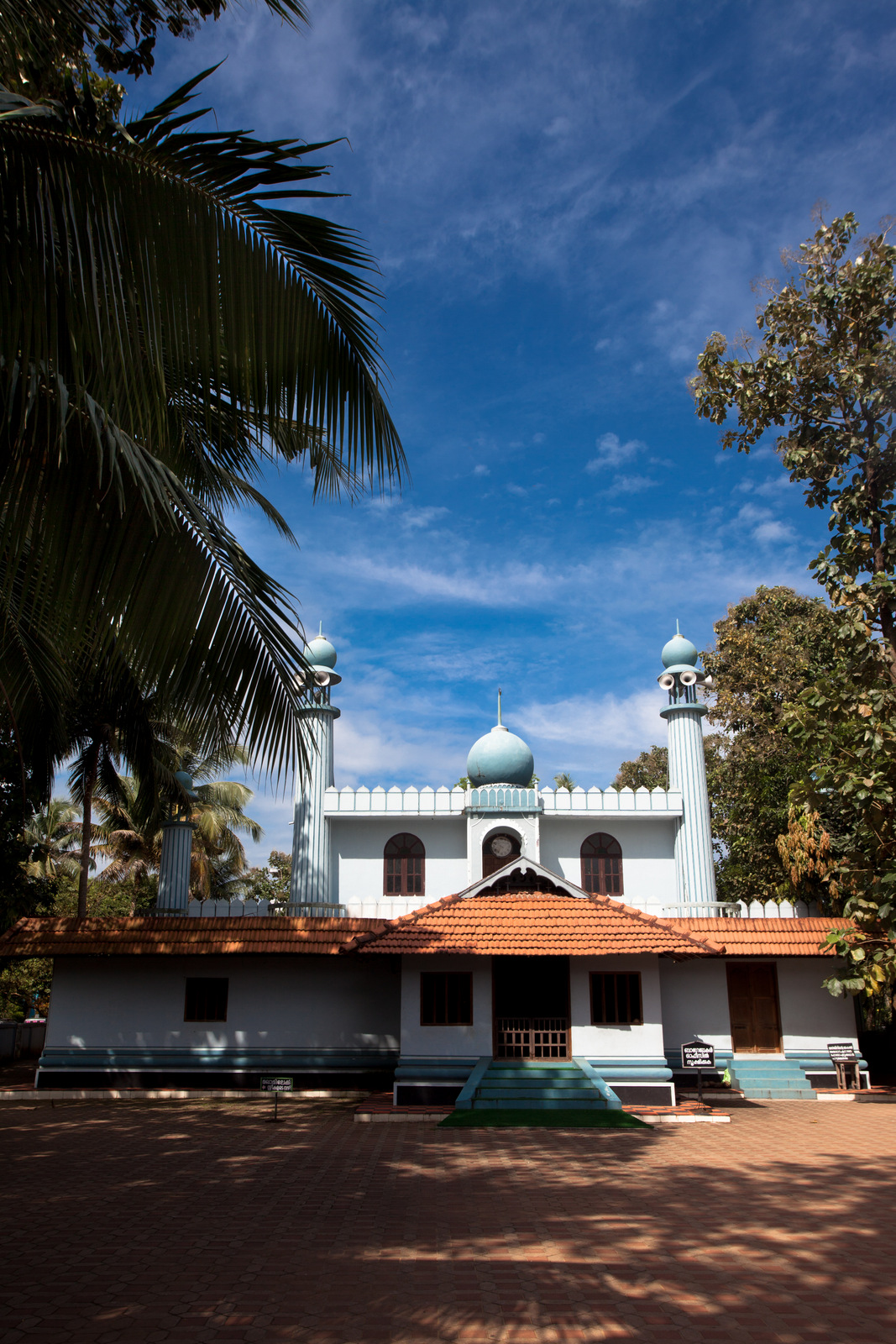
At Kodungallur, held by tradition to be the oldest mosque in the Indian subcontinent (7th century).
17.2 km · ~29 min by cab · straight line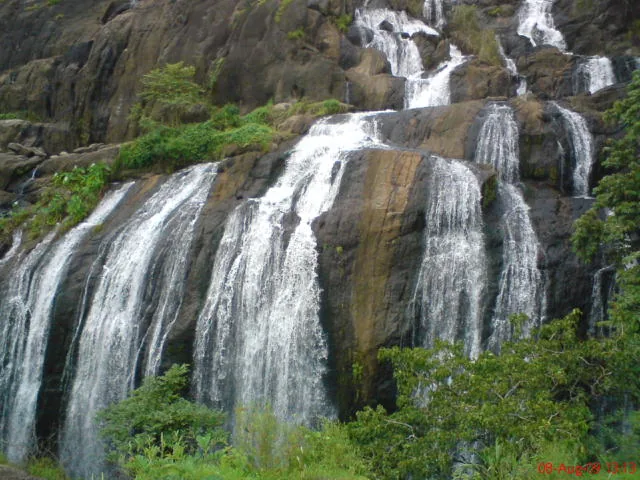
A forest waterfall and fish sanctuary near Marottichal in the hills east of Thrissur, reached by a short walk.
21.1 km · ~35 min by cab · straight line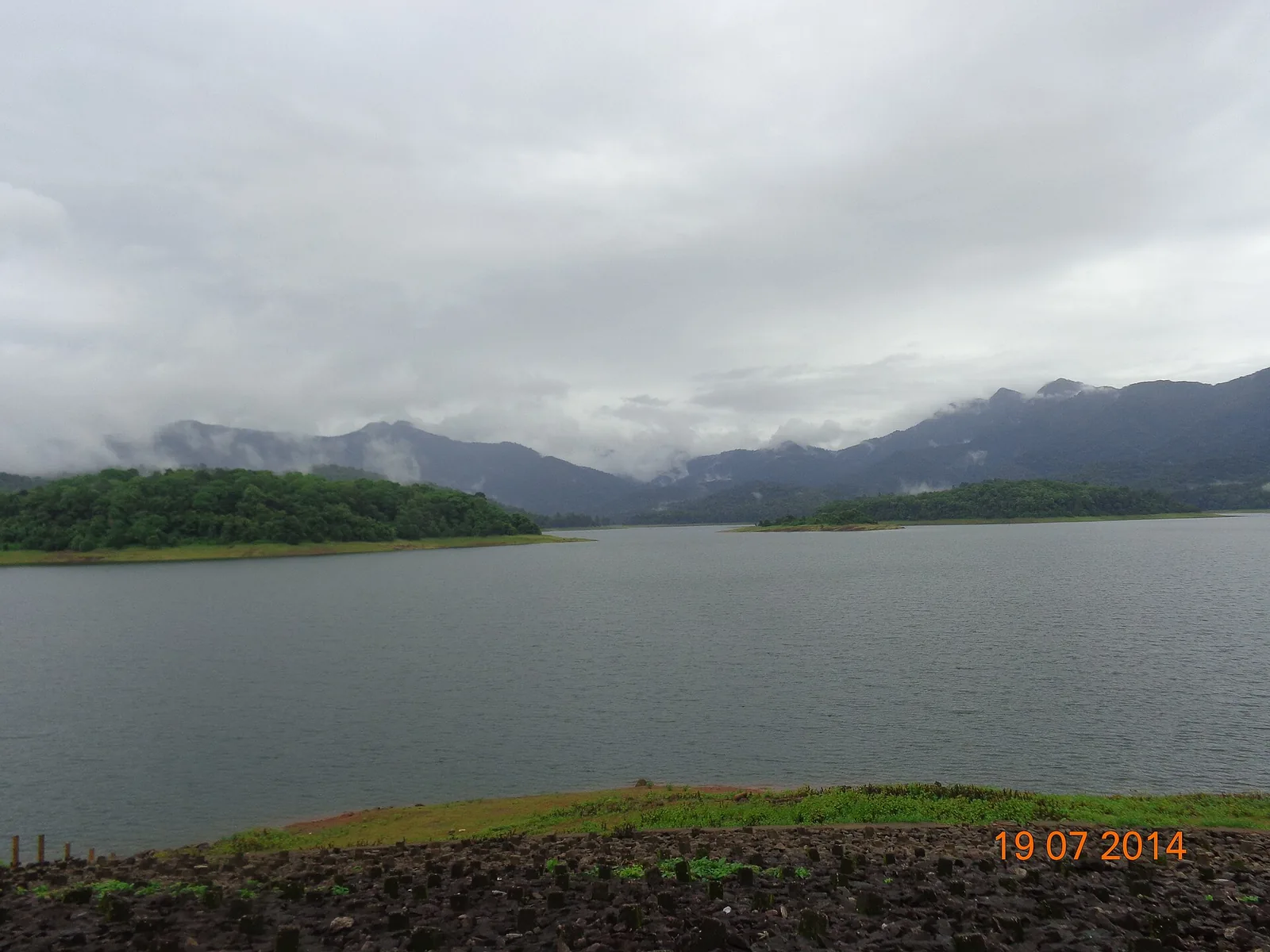
A reservoir and eco-tourism spot at the edge of the Chimmony Wildlife Sanctuary east of Thrissur, with boating and forest views.
21.2 km · ~35 min by cab · straight lineNearby toilets, pharmacies, ATMs, seating and vets are community-mapped and may be incomplete or out of date. Map data © OpenStreetMap contributors | Walking times © openrouteservice.org by HeiGIT
Not quite, and the distinction matters. Potta Ashram was set up in 1977 at Potta, about 5 km north on NH 544, to coordinate the Vincentians’ parish mission retreats, and the daily preaching and healing ministry began there in January 1987. The Muringoor property was acquired in 1989 and named the Divine Retreat Centre. The popular name “Potta” travelled south with the ministry and is still used for the Muringoor centre — but Potta Ashram is a separate, older house and it is still working, with daily Mass and its own day conventions.
Six days, residential. The centre states that English-campus retreats begin Sunday at 10 am and end Friday at 2 pm, while its home page gives Friday 1 pm; the Malayalam campus states Sunday 2 pm to Friday 8 am. Use the time on the registration confirmation.
Seven, held simultaneously in separate halls: English, Malayalam, Konkani, Hindi, Kannada, Tamil and Telugu. The Malayalam campus also runs a weekly children’s retreat called the Jesteen.
The centre states an average of 5,000 retreatants a week, and over 10 million since it opened. Those are the institution’s own figures and we could find no independent audit of them, so treat them as its claim rather than a verified count. They are the best figures that exist.
We could not source one. The centre publishes accommodation and dining on campus, and an online donation facility, but no retreat rate appears anywhere on its website — so we give no figure rather than guess at one. There is no admission ticket to the campus. Ask when you register.
There is a working gate and you can see the campus, but there is very little for a sightseer: this is a residential institution, not a monument. The charitable homes are people’s homes and should not be wandered into. Dress as for any Kerala church and ask before photographing anyone.
The hamlet immediately beside the retreat centre on NH 544. The name means “the cut in the fort” and records the point at which Tipu Sultan’s army breached the Nedumkotta, the Travancore Lines, in 1790. The remains are under the State Archaeology Department. A field nearby in Muringoor is still called Vedimarapparambu after the ambush that broke his first assault on the night of 29 December 1789.
Morning or late afternoon for quieter visits and better light.
Entry: No admission ticket to the campus. The centre publishes no retreat fee anywhere on its website — accommodation and dining are stated as provided on campus, and an online donation facility exists, but no rate is given. Ask when you register. Timings: Residential retreats run Sunday to Friday. The English campus states Sunday 10:00 to Friday 14:00, while its home page says Friday 13:00; the Malayalam campus states Sunday 14:00 to Friday 08:00. Use the time printed on the registration confirmation.
Base yourself in Chalakkudy or a nearby town in Thrissur, then confirm the last-mile route locally before leaving. Check mass/prayer timings if visiting for worship; otherwise visit outside service rush. If the visit depends on forest, temple, boat, ferry, weather or seasonal access, check the official/local rule on the day before travel.
30 minutes to 1.5 hours.
Nearby you can pair Chalakkudy Forane Church (1.3 km), Chalakudy Market (1.7 km), Chalakkudy railway station (2.2 km), Kanakamala Kurishumudi (7.6 km).
Expect crowds on feast days and Sundays. Use marked parking and official entry points.
Written about Muringoor Divine Retreat Centre itself — its history, its legends and the arguments about them.


These guides explore Chalakkudy and the surrounding area. Choose a visit that fits your interests, allowing separately for travel between stops.


Route-level itineraries and practical guides for the rest of Kerala.
Photographs: Trinidade (CC BY-SA 4.0), Challiyan (Public domain), Jan J George (CC BY-SA 4.0), Johan Gerard van Angelbeek (Public domain). Wikimedia Commons.