What to expect
Highlights
- Museum visit at Revi Karunakaran Museum
- Indoor cultural or historical context
- Easy pairing with nearby food and heritage stops
Private memorial museum in Thathampally with a large collection of paintings, ivory, crystal and antiques.
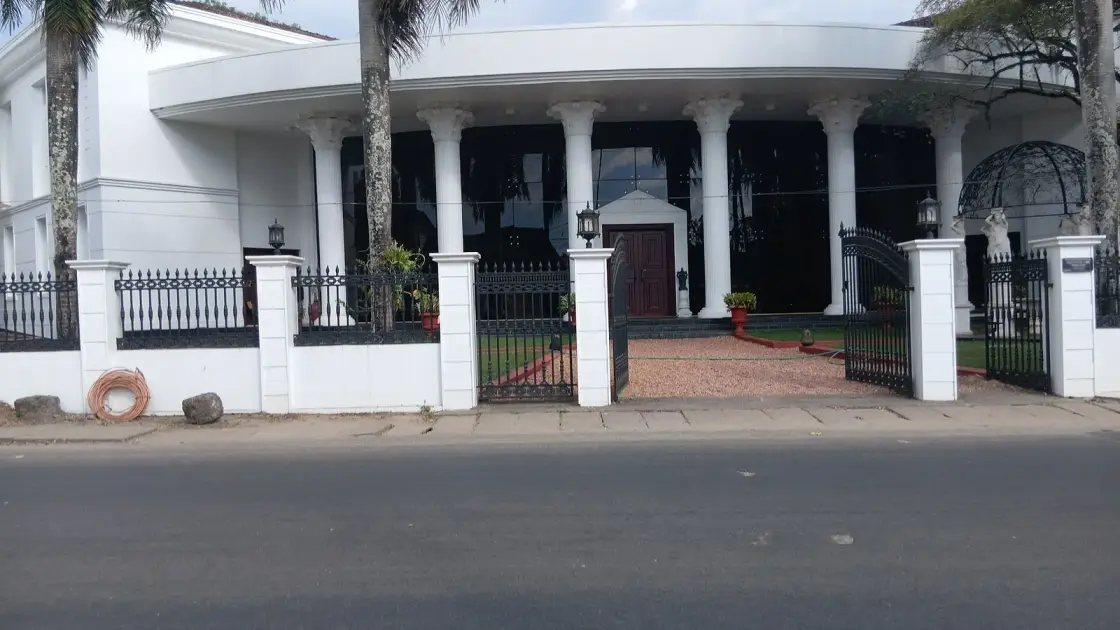
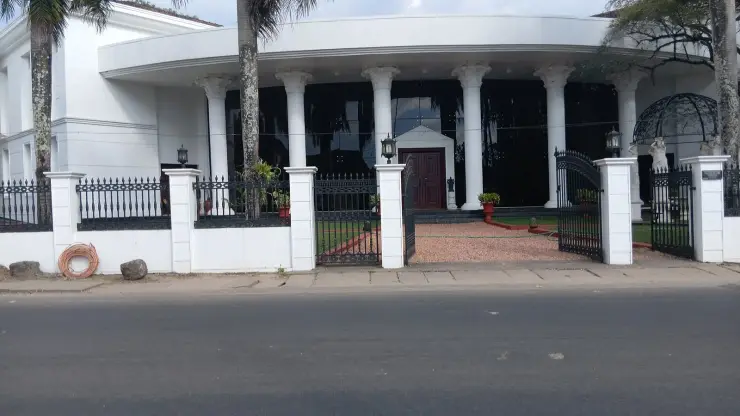
A widow began building this museum in the year her husband died, and opened it to the public on what would have been his seventy-fifth birthday. Revi Karunakaran was a coir exporter — the third generation of a family credited with breaking the European monopoly on the trade that built Alappuzha — and the 28,000 square feet of Greco-Roman colonnade his wife raised at Thathampally holds crystal, ivory, porcelain, jade and Tanjore paintings rather than coir. A former President of Sri Lanka, opening its third phase, is reported to have called it Betty's Taj Mahal. Betty Karunakaran died in October 2025, so the memorial now commemorates two people.
⚠ First, the name, because we have it wrong and would rather say so. The man and the museum are Revi Karunakaran — that is the spelling used by Kerala Tourism, by Wikipedia and by the family. Ravi, with an A, is the form used by OpenStreetMap and by the Government of India's own Incredible India portal, and it is how this page's web address was built before we knew better. The text uses the correct spelling and the address keeps the older one, because changing it would break a live link for anyone who has saved or shared it. Revi is correct.
The family story is the reason this museum matters more than its contents suggest. Revi Karunakaran's grandfather, Krishnan Muthalaly — recorded by some sources as Aandiyara Krishnan — is credited as India's first native coir exporter. That is a pointed claim in this town. The coir export trade here was built from 1859 by James Darragh and the European firms that followed him, and for decades the profitable end of it, the exporting, was theirs. Breaking into it from the Kerala side was the achievement.
The generation between was cosmopolitan by any standard. Revi's father, K. C. Karunakaran, studied at Heidelberg; his mother was German. Revi himself, born in Alleppey on 22 November 1931, was educated in Surrey, then at Lausanne, and took a business degree at Babson College in Massachusetts. He is reported to have spoken seven languages.
He inherited early and heavily. His father died in 1952 and Revi took over the Karan Group at the age of twenty. The group controlled Kerala Balers, the Alleppey Company and William Goodacre & Sons — and that last name is worth pausing on, because it is the strongest link between two museums eight kilometres apart. William Goodacre & Sons is listed on the International Coir Museum's own History of Coir Factories panel as one of the European firms that followed Darragh into Alappuzha. Within a lifetime, one of those European houses was under the control of a Kerala family. He went on to represent India at the FAO and UNCTAD and served as an FAO consultant on hard fibres.
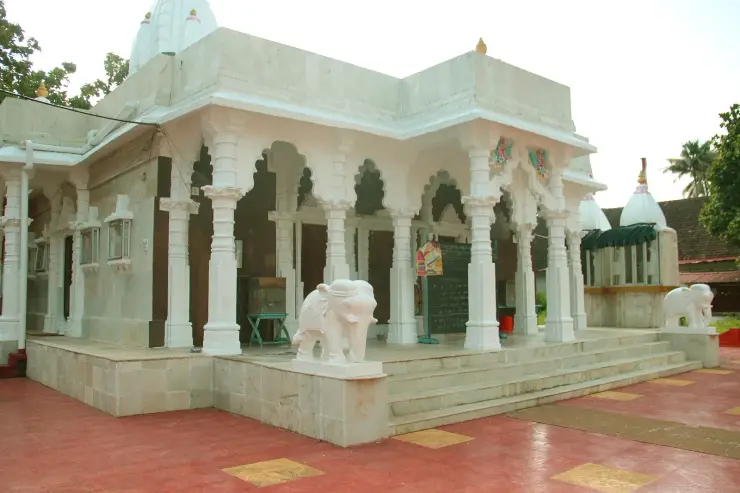
Revi Karunakaran died at Ernakulam on 25 November 2003. His widow, Betty Karunakaran, began building this museum that same year as a memorial to him, to a design by the architect Lalichan Zachariah — 28,000 square feet behind a Greco-Roman colonnade with Greek mythological detailing, which is not a Kerala idiom and is not pretending to be. It opened to the public on 22 November 2006, deliberately chosen: it would have been his seventy-fifth birthday. Sir M. M. Jacob, a former Governor of Meghalaya, inaugurated it.
A third phase was opened in 2015 by Chandrika Bandaranaike Kumaratunga, the former President of Sri Lanka, who is reported to have described the building as Betty's Taj Mahal. ⚠ That 2015 date is why Incredible India lists the museum as opening in 2015; it is the phase-three date, not the museum's, which is 2006.
What is inside is a private collection rather than a curated argument, and it is best approached that way. The headline holding is crystal — ancient and contemporary, blown, hand-cut, machine-cut and moulded — with a substantial Swarovski collection including named rare pieces, a Coffee Bean Grinding Mill and a Crane. There is carved ivory, including a Dashavatharam of the ten avatars of Vishnu, Virgin Mary figurines and animal carvings; reporting on the museum stresses that these are legally registered pieces of pre-ban provenance. Porcelain runs to Noritake, Armani, Lladró and Meissen. There is jade, furniture, Tanjore paintings and Kerala antiquities, a life-size bronze called The Prodigal Son by the Israeli artist Sam Philipe, a 200-square-foot mural of Indian cultural heritage executed in vegetable dyes, a Kerala Room with a terracotta-tiled floor and a hand-carved teak ceiling, a 1948 Buick, and a twenty-four-carat gold-plated tea service.
A word about seeing it, because the collection is the kind that rewards knowing what you are looking at. There is no interpretive programme here of the sort a public museum would run, and no catalogue we can point you to. What is on display is one family's taste across three generations of unusual wealth, arranged by the person who loved the man it commemorates. Approached as a national collection it will disappoint; approached as a portrait of a household, it is unusually revealing.
One organising idea does run through it: four faiths — Buddhism, Christianity, Hinduism and Islam — are given equal prominence in the murals and sculpture. In a private memorial museum built by one family, that is a deliberate choice rather than an accident of collecting.
Betty Karunakaran died in October 2025. The building she raised for her husband is now, unavoidably, a memorial to her as well, and the phrase a visiting head of state used about it has turned out to be more exact than it was probably meant to be.
There is no folklore here, and the reason is the simplest one on this site: the building is younger than most of the people who visit it. Construction began in 2003 and it opened in 2006. Nothing legendary has had time to attach itself, and nothing has.
We say that having looked, but we want to be precise about how much weight the search carries. For an old grove, a tank, a coastal village or a temple, an empty result means our search has failed, and we treat it that way — the Malayalam record is usually richer than the English one, and village lore is often held one administrative level up. For a private museum opened in 2006 on a national highway, an empty result probably means the thing is simply true. Those are different situations and we would rather not pretend otherwise.
There is one line about this building that circulates the way a legend circulates, and it deserves careful handling rather than repetition. When Chandrika Bandaranaike Kumaratunga, the former President of Sri Lanka, opened the museum's third phase in 2015, she is reported to have called it Betty's Taj Mahal.
That phrase has since travelled well beyond its source, which is exactly how folklore is made. But it is not folklore — it is a quotation, attributed to a named person, on a recorded occasion. We print it as reportage, with the attribution attached, and we would rather it did not detach itself and float free.
It is also, as comparisons go, both apt and slightly wrong in an interesting way. The Taj Mahal was built by a husband for a wife. This was built by a wife for a husband, which is the far rarer direction for a grand memorial to run and is genuinely the most unusual fact about the place. Betty Karunakaran began it in the year Revi died and opened it on the date of his birthday. The inversion is the point, and the comparison slightly obscures it.
What stands in place of legend here is a documented family sequence, and it is a better story than an invented one. A grandfather, Krishnan Muthalaly, credited as the first native Indian coir exporter, breaking into a trade the European houses had held since 1859. A father educated at Heidelberg who married a German woman. A son schooled in Surrey, Lausanne and Massachusetts, speaking seven languages, inheriting the business at twenty, and ending up in control of William Goodacre & Sons — a firm named on the Coir Museum's wall panel as one of the Europeans who came in after Darragh. Then a memorial in a Greco-Roman idiom on the Alappuzha bypass, filled with Swarovski crystal, Meissen porcelain, a Dashavatharam in ivory and a 1948 Buick.
There is a second thing worth saying about the absence, because it is specific to this kind of building. A private memorial museum is not trying to accumulate stories; it is trying to fix one. Everything about the place — the birthday chosen as an opening date, the four faiths given equal wall space, the Kerala Room set among the Meissen and the Swarovski — is somebody deciding, deliberately and in advance, what will be remembered and in what proportion. Folklore works the other way round: it accretes, it contradicts itself, and nobody controls it. A museum like this one is the opposite of a legend by design, and that is a more interesting reason for the blank than simply saying the building is new.
Three generations from breaking a colonial trading monopoly to a private museum of European decorative art. Nobody needs to invent anything about this place; the actual shape of it is strange enough, and every step is on the record.
Revi Karunakaran was born at Alleppey on 22 November 1931 and died at Ernakulam on 25 November 2003. He was a coir exporter and industrialist, the third generation of a coir-export family; his grandfather Krishnan Muthalaly is credited as India's first native coir exporter.
He took control of the Karan Group in 1952, at the age of twenty, on his father's death. The group's holdings included Kerala Balers, the Alleppey Company and William Goodacre & Sons. He represented India at the FAO and UNCTAD and acted as an FAO consultant on hard fibres.
The museum was built by his widow, Betty Karunakaran, as a memorial. Construction began in 2003, the year of his death, to a design by the architect Lalichan Zachariah: 28,000 square feet behind a Greco-Roman colonnade. It opened to the public on 22 November 2006, which would have been Revi Karunakaran's seventy-fifth birthday, and was inaugurated by Sir M. M. Jacob, a former Governor of Meghalaya.
A third phase was inaugurated in 2015 by Chandrika Bandaranaike Kumaratunga, former President of Sri Lanka. ⚠ Incredible India records the museum's opening as 22 November 2015; that is the phase-three date. The museum opened in 2006.
Betty Karunakaran died in October 2025.
For a private collection of a kind that is genuinely rare in Kerala — crystal including a substantial Swarovski holding, Meissen and Lladró porcelain, jade, Tanjore paintings and carved ivory.
Because of why it exists. It was built by a widow for her husband, begun in the year he died and opened on his birthday, which is the far rarer direction for a grand memorial to run.
For the coir connection that the collection never mentions. The family broke into an export trade the European houses had held since 1859, and ended up controlling one of those very firms.
For the four-faiths idea running through the murals and sculpture — Buddhism, Christianity, Hinduism and Islam given equal prominence, which in a private family museum is a deliberate statement.
For the oddities: a 1948 Buick, a 24-carat gold-plated tea service, a 200-square-foot mural in vegetable dyes, and a Kerala Room with a hand-carved teak ceiling.
Because it pairs naturally with the International Coir Museum eight kilometres north — the public, industrial account of the trade, and the private one it made possible.
The collection offers two ways of looking: internationally collected crystal and porcelain, and the Kerala Room’s local materials and craftsmanship. Choose a few objects to examine closely instead of treating the museum as a checklist. Use the museum’s published open-day and camera notice when fitting it between a train and a backwater departure.
Road km to Alappuzha; ghat roads and traffic vary — allow extra.
Midday works well for museums, especially when outdoor heat is high.
Live forecast loads in your browser.
Sun and moon are calculated for this location and shown in IST. Photography windows are the hour around sunrise and sunset; the sunset bearing is degrees clockwise from true north. Moon phase is accurate to about half a day.
Verified hotels, homestays, restaurants, experiences, sights, shops and rentals around Revi Karunakaran Museum — commission-free, with direct contact. Filter by what you need.
Backwater resort with cottages, pool villas and jacuzzi rooms on the banks of Punnamada Lake, North Aryad, Alappuzha.
Lakeside resort with heritage-style villas on the banks of Punnamada Lake, Alappuzha. It sits in the Nehru Trophy ward of Punnamada, on the Vembanad backwater fringe.
Backwater resort with pagoda-style cottages and an indoor pool at Chungam, Mullackal, Alappuzha town.
Lakefront backwater resort run by EGH Resorts, with lake-view rooms and cottages near North Aryad, Alappuzha. The property faces Vembanad Lake on the northern edge of the district.
Houseboat operator running a large fleet of Gold-Star kettuvallams in the Alleppey backwaters, Avalookunnu, Alappuzha.
Alleppey houseboat operator near Finishing Point with direct phone, mobile and booking contacts. Houseboat, Finishing Point, Alleppey.
Ultra-luxury houseboat operator running spice-named kettuvallams through the Alleppey backwaters, based at Chennamkary, Alappuzha.
Backwater resort near the Nehru Trophy finishing point and Vembanad Lake. Thirumala Ward, Chungam, Alleppey, Alappuzha, Kerala 688011 · Backwater resort, Vembanad Lake, Nehru Trophy area.
Backwater resort on the shores of Vembanad Lake at Kottankulangara, Punnamada, Alappuzha. Punnamada, Backwater resort, UDS Hotels.
Fleet of luxury air-conditioned kettuvallam houseboats cruising the Alleppey backwaters, based near Pallathuruthy Bridge, Alappuzha.
Large Ramada by Wyndham hotel facing Punnamada backwaters at the Nehru Trophy Boat Race finishing point, Alappuzha.
Contemporary town hotel with an indoor pool near Iron Bridge and Mullackal temple, central Alappuzha.
Matthews Palmy Residency is listed off Finishing Point Road in Alappuzha. Confirm the exact location, available room category and arrival time directly before booking. Ask for an itemised quote and the facilities included in that room; the listing does not establish a current room count or tariff.
ISO-certified houseboat cruise operator running a fleet of luxury kettuvallams in the Alleppey backwaters. It is based at the DTPC building, Sanathanapuram, Pallathuruthy, Alappuzha.
Homestay in Alappuzha Town, Alappuzha, Kerala, India. Keralan Homestay, Sreevalsam Inn, Punnamada Finishing Point Road, Alappuzha, Kerala 688013 · WiFi.
Backwater resort with heritage villas and houseboats overlooking Punnamada Lake at Kottankulangara, Alappuzha.
Raheem Residency is a restored 1868 heritage mansion on Alleppey beach, run as a boutique luxury hotel with an infinity pool, antique-furnished rooms and an acclaimed restaurant. It is regularly ranked among Kerala's finest heritage boutique stays and draws an international clientele to the Alappuzha seafront.
Hotel Royale Park is a long-running three-star hotel in central Alleppey with a banquet hall, restaurant and air-conditioned rooms. It sits close to the Boat Jetty and railway station, making it convenient for backwater day trips.
Hotel AJ Park is a budget hotel about 1.5 km from Mullackal Temple in Alleppey, with a garden, restaurant and free parking. It offers value-priced air-conditioned rooms with a 24-hour front desk and room service.
Palm Beach Resort is a three-star property near Alappuzha Beach with a swimming pool, restaurant and sea-facing rooms. Its mid-range rooms suit travellers who want a comfortable base for houseboat cruises and Ayurveda sessions.
Cherukara Nest is a family-run budget heritage guesthouse about a kilometre from central Alleppey. It offers simple air-conditioned and non-AC rooms with home-cooked meals on request at value tariffs.
Book with the place itself. India’s cyber-crime coordination centre warned in April 2025 that convincing copies of hotel and pilgrimage booking sites are being pushed through sponsored search and social ads, taking payment for rooms the property never hears about. Every listing here links to the business’s own contact details and its own Google or Bing profile — we take no commission and sit in nobody’s payment path. If a booking page reached you through an ad, check the address bar against the property’s own site before you pay. Fraud can be reported on cybercrime.gov.in or on 1930.
Browse food, accommodation and activities across Alappuzha town. Check each address and journey before adding it to your day; these selections are not all beside Revi Karunakaran Museum.
6 more places around Alappuzha town. Open a guide to plan the visit and onward journey.
1.1 km · 14 min walk
Backwater and houseboat hub with canals, beach, lighthouse and Finishing Point jetty.
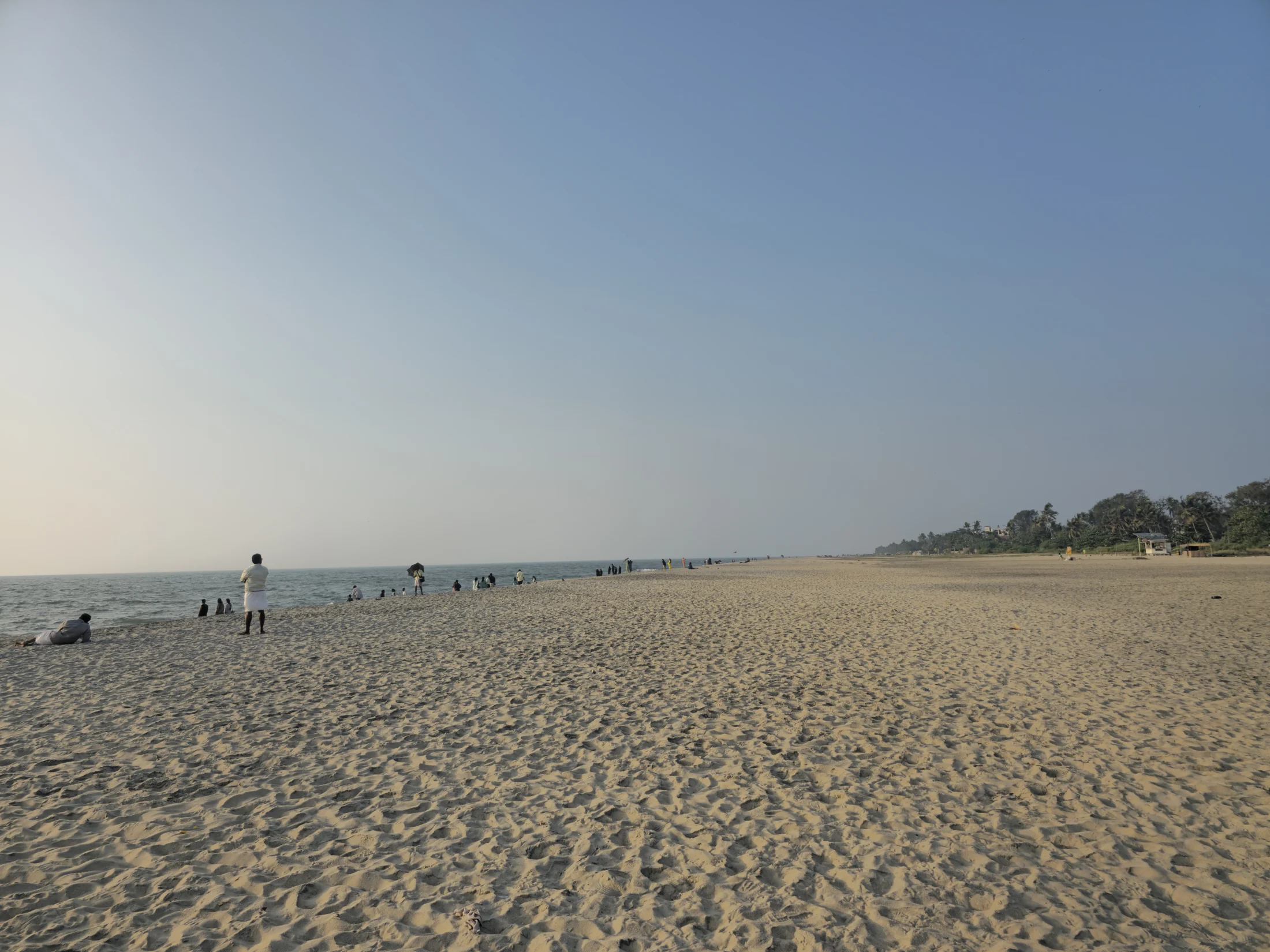
1.1 km · 13 min walk
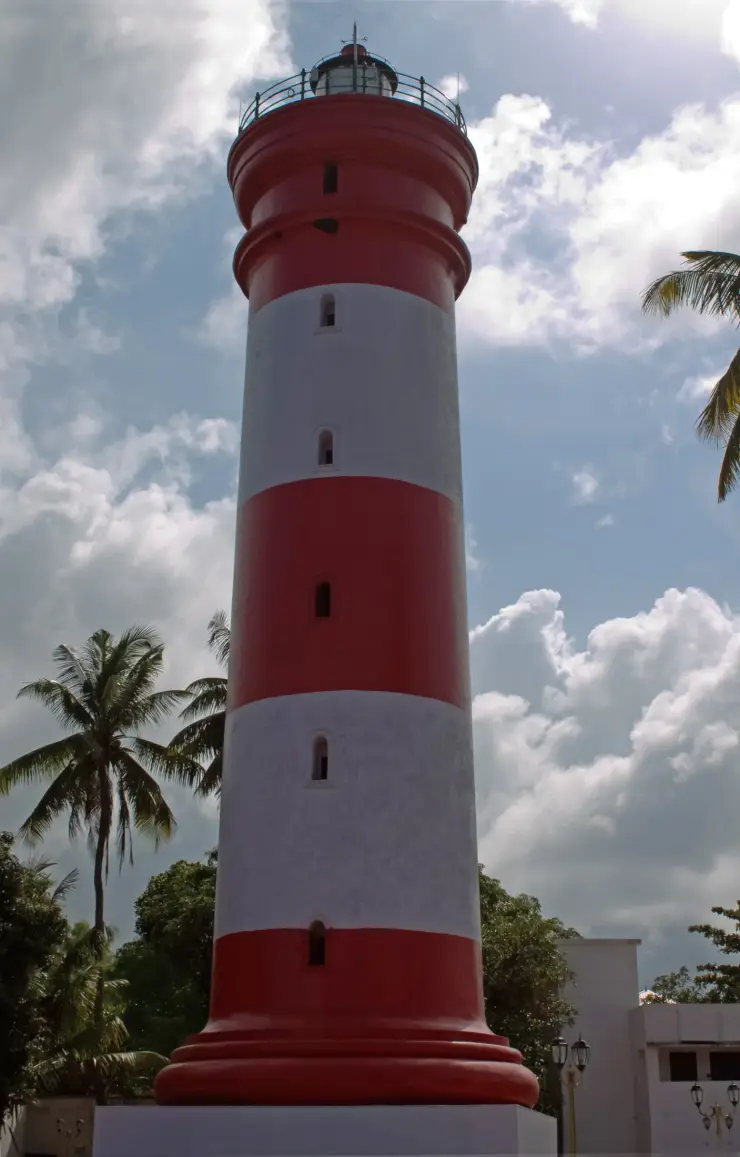
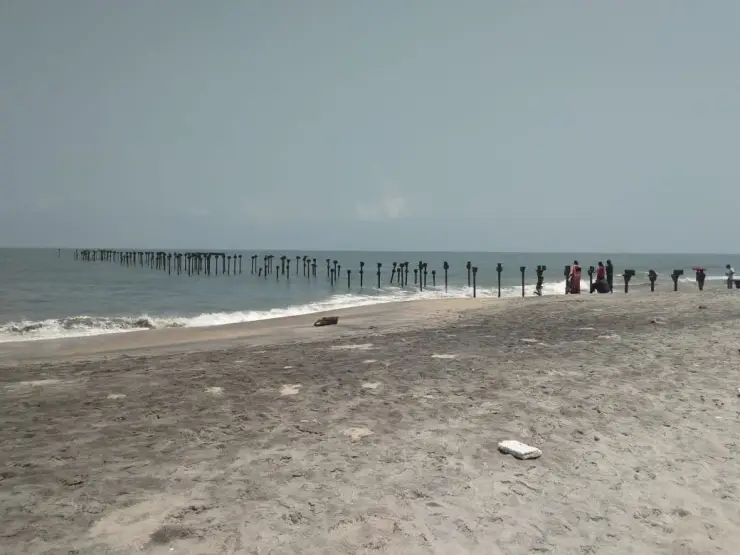
Pair Alappuzha’s broad town beach and old pier remains with the red-and-white lighthouse on C.C.S.B. Road, commissioned in 1862 and still maintained as a navigational light.
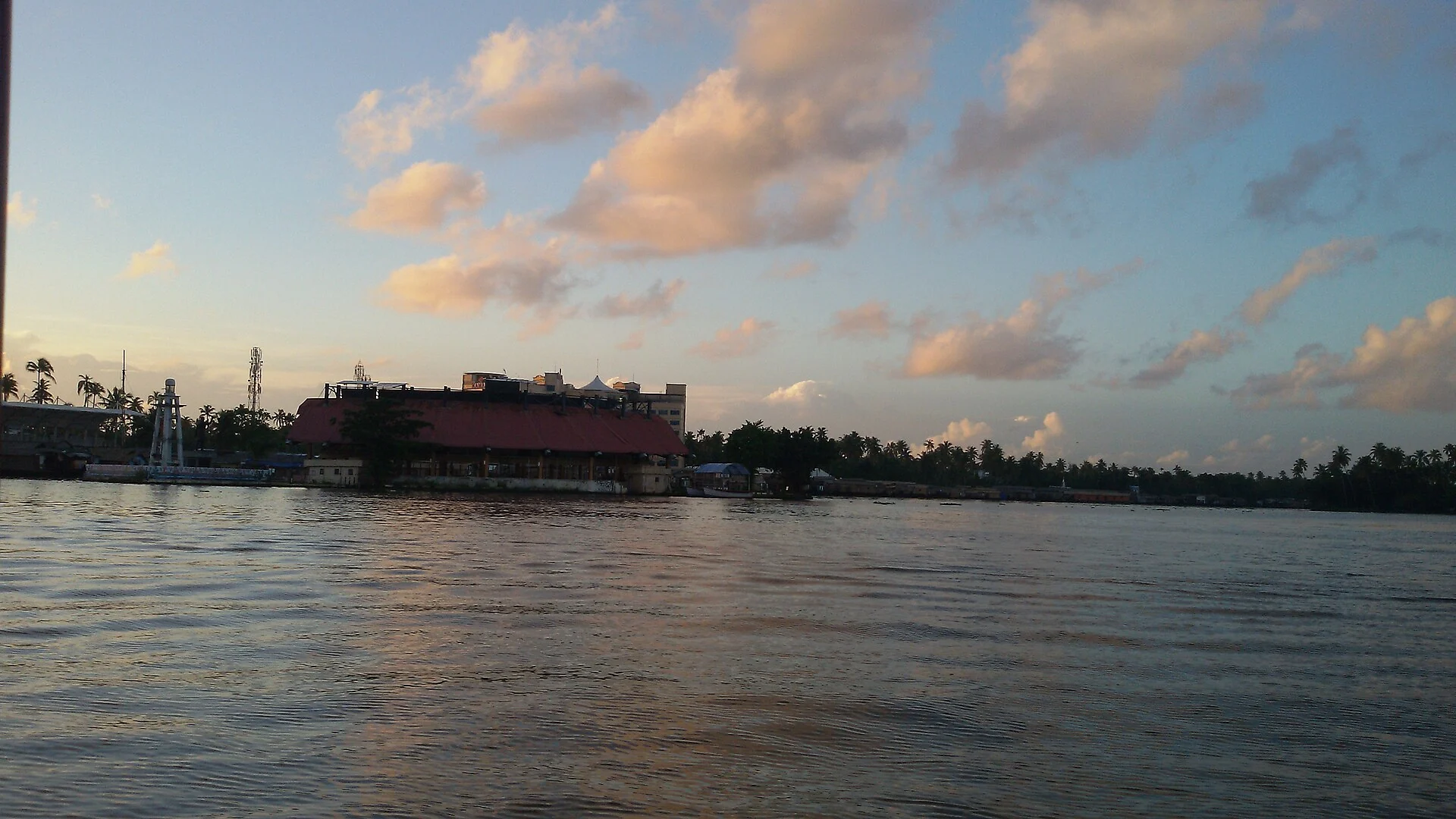
2.8 km · ~7 min by auto
Finishing-point lake of the Nehru Trophy Boat Race and the main houseboat cruising water off Alappuzha.
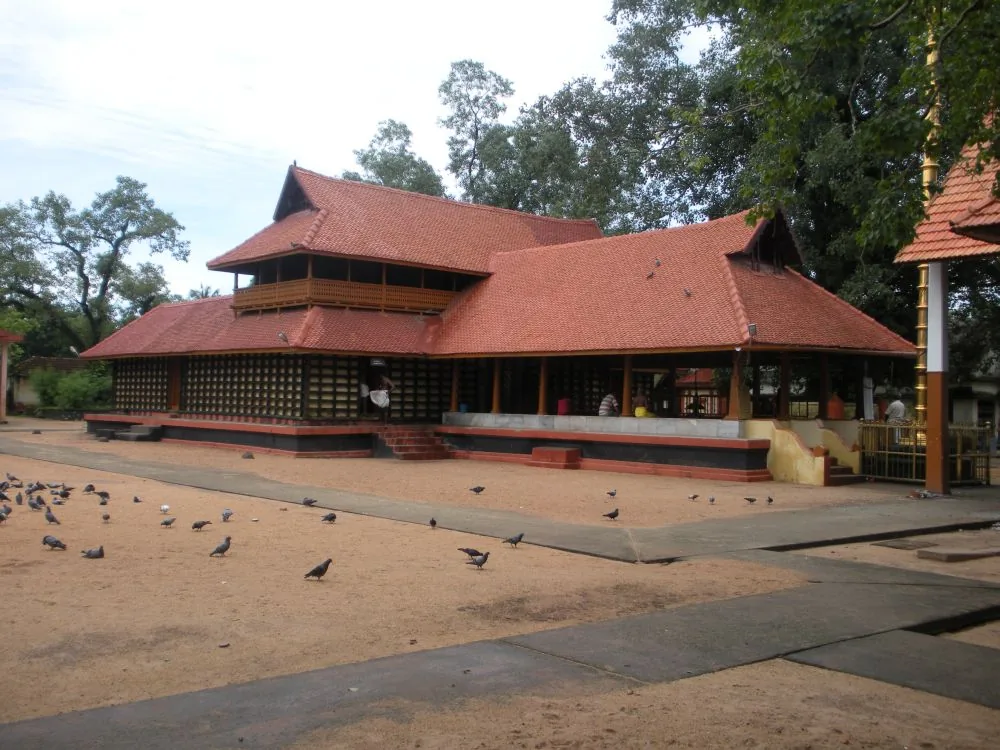
1.6 km · 20 min walk
Central Alappuzha town temple (Mullakkal Rajarajeswari) famous for the annual Mullackal Chirappu festival.
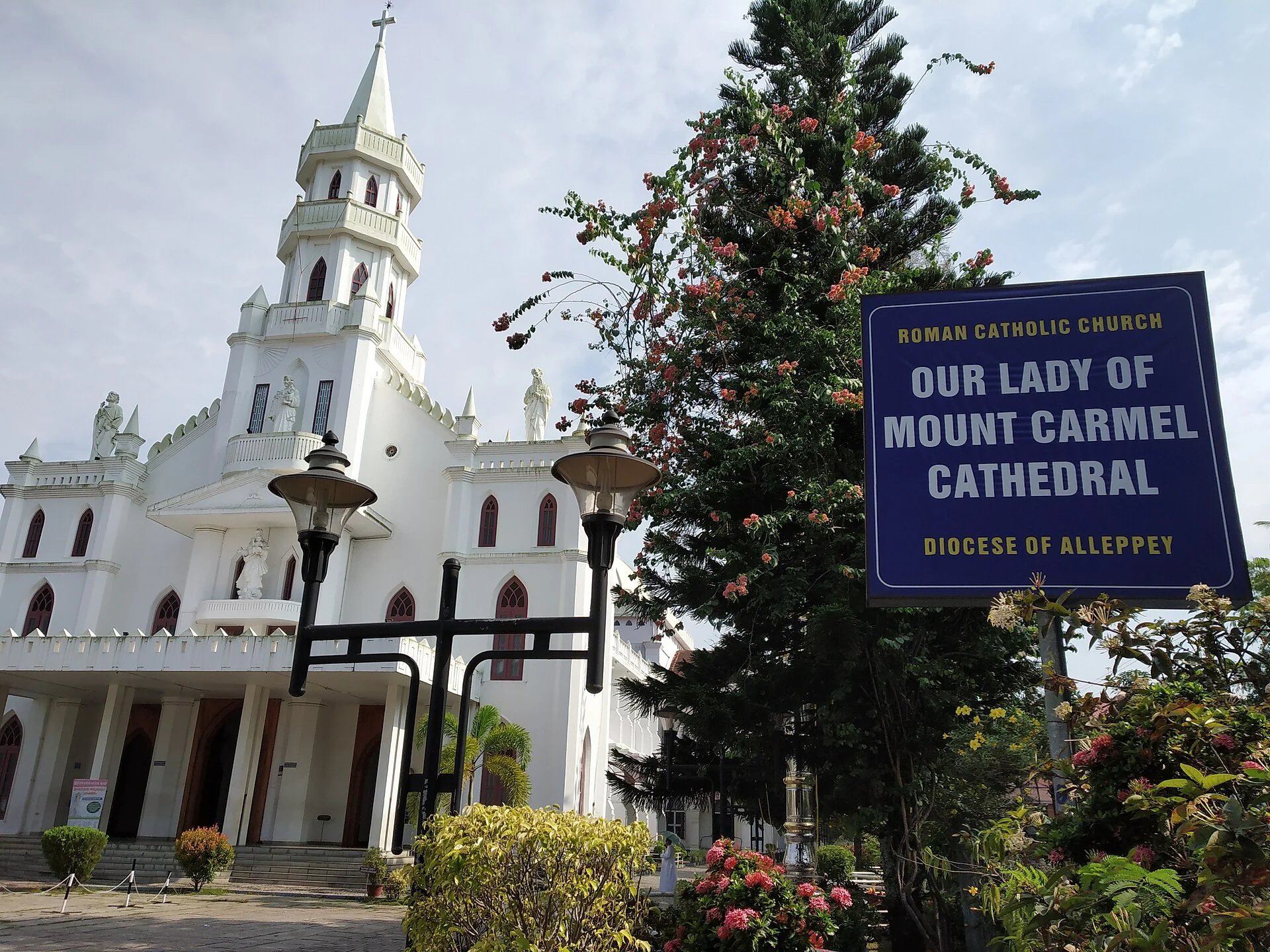
290 m · 4 min walk
Landmark 19th-century cathedral of the Alappuzha diocese near the town centre.
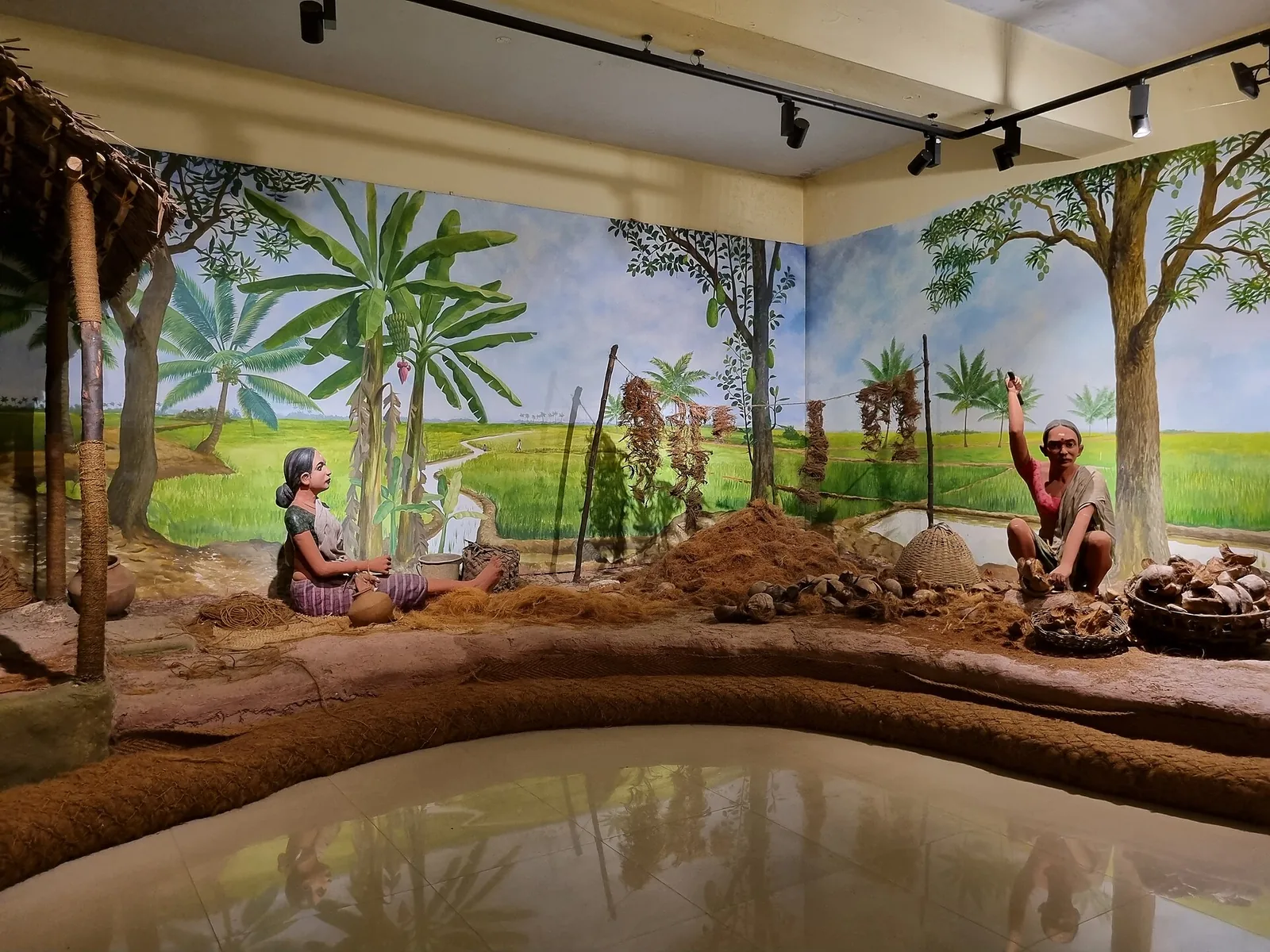
7.1 km · ~18 min by auto
Museum on Kerala’s coir (coconut-fibre) heritage — the craft Alappuzha built its trade on.
Roampedia is commission-free — own or know a stay, eatery, guide or shop near Revi Karunakaran Museum? List it and it appears here once verified.
Add a nearby businessGovernment monuments, museums and forest reserves in India often charge foreign visitors more. We have not verified whether this site does — ask at the counter.
Fees change without notice. Check the current rate at the counter.
Entry: Widely reported as ₹150 per person, though no government source publishes a figure — treat it as indicative and confirm at the desk.
Dress code: No dress code; ordinary comfortable clothing. The galleries are indoors and air-conditioned in parts.
Festivals: None of its own. ⚠ Two dates matter to the building rather than to visitors: 22 November, Revi Karunakaran's birthday and the day the museum opened in 2006, and 25 November, the day he died in 2003.
Photography: ⚠ Assume photography is restricted inside and ask at the desk before taking any. This is a private collection of crystal, ivory and porcelain, and the near-total absence of interior photographs anywhere online is consistent with a firm policy rather than with a lack of interest.
If you are travelling by bus or ferry, check the return service with the operator before setting out. Leave time to reach the stop or jetty after your visit.
Ask at the bus stand for the time of the last service back, not the next one. If you miss it, an auto or app cab is the fallback — agree the fare before you get in.
If you need step-free access, contact the site before travelling. Ask about a level entrance, steps along the route, the nearest drop-off point, seating and accessible toilets.
Charge cap and free-transaction limits: Reserve Bank of India, in force since 1 May 2025.
These services are listed within about 1.2 km of Revi Karunakaran Museum. Walking distances follow mapped routes; access and opening hours can change. Other services may be closer but are not included here.
Emergency numbers are verified against official government and state tourism sources. 112 works anywhere in India.
Landmark 19th-century cathedral of the Alappuzha diocese near the town centre.
290 m · 4 min walk · straight linePair Alappuzha’s broad town beach and old pier remains with the red-and-white lighthouse on C.C.S.B. Road, commissioned in 1862 and still maintained as a navigational light.
1.1 km · 13 min walk · straight lineBackwater and houseboat hub with canals, beach, lighthouse and Finishing Point jetty.
1.1 km · 14 min walk · straight lineCentral Alappuzha town temple (Mullakkal Rajarajeswari) famous for the annual Mullackal Chirappu festival.
1.6 km · 20 min walk · straight line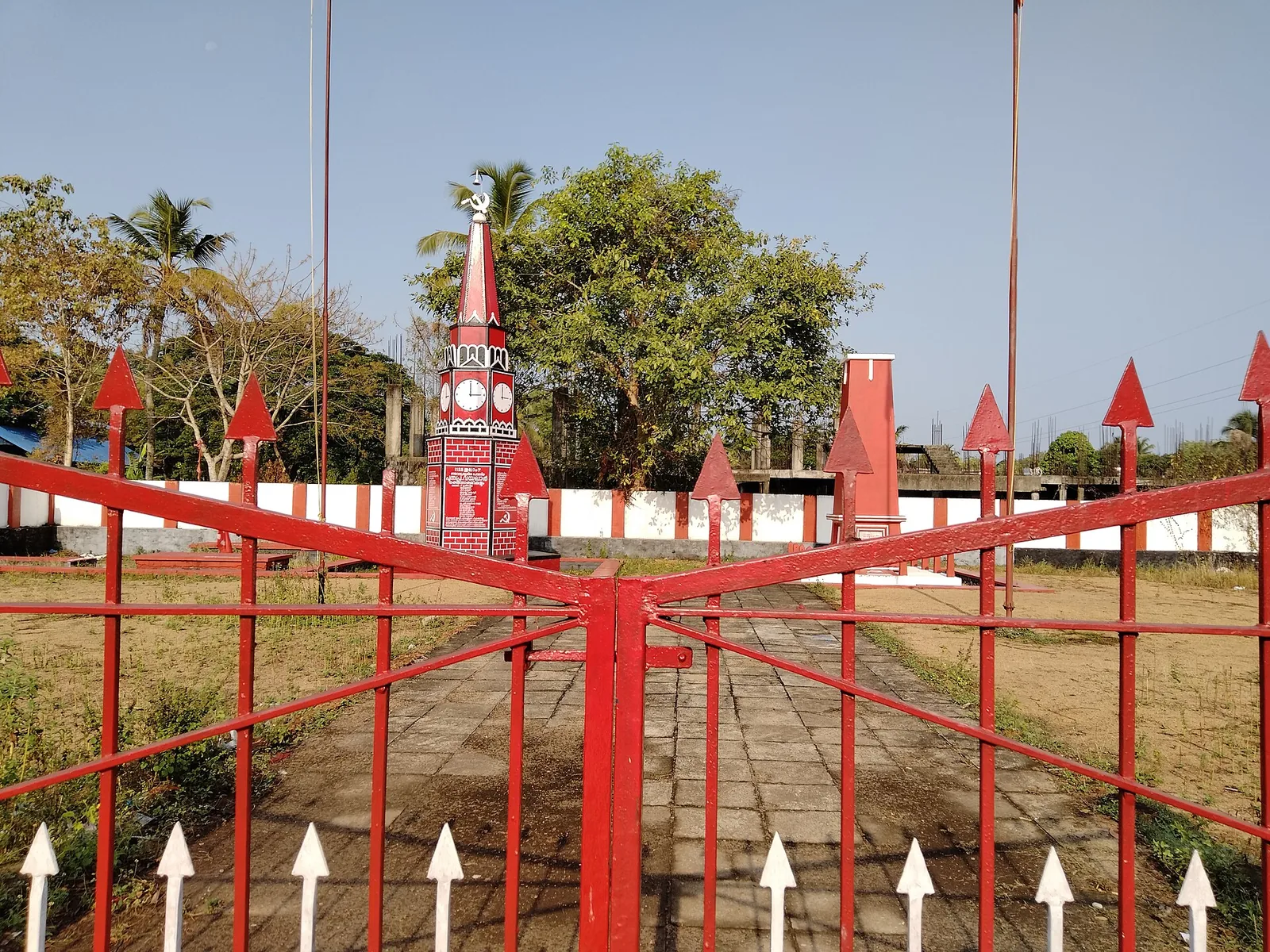
Martyrs’ memorial (Rakthasakshi Mandapam) to the 1946 Punnapra–Vayalar uprising, on the coastal belt north of Punnapra on the Alappuzha side.
2.7 km · ~7 min by auto · straight lineFinishing-point lake of the Nehru Trophy Boat Race and the main houseboat cruising water off Alappuzha.
2.8 km · ~7 min by auto · straight line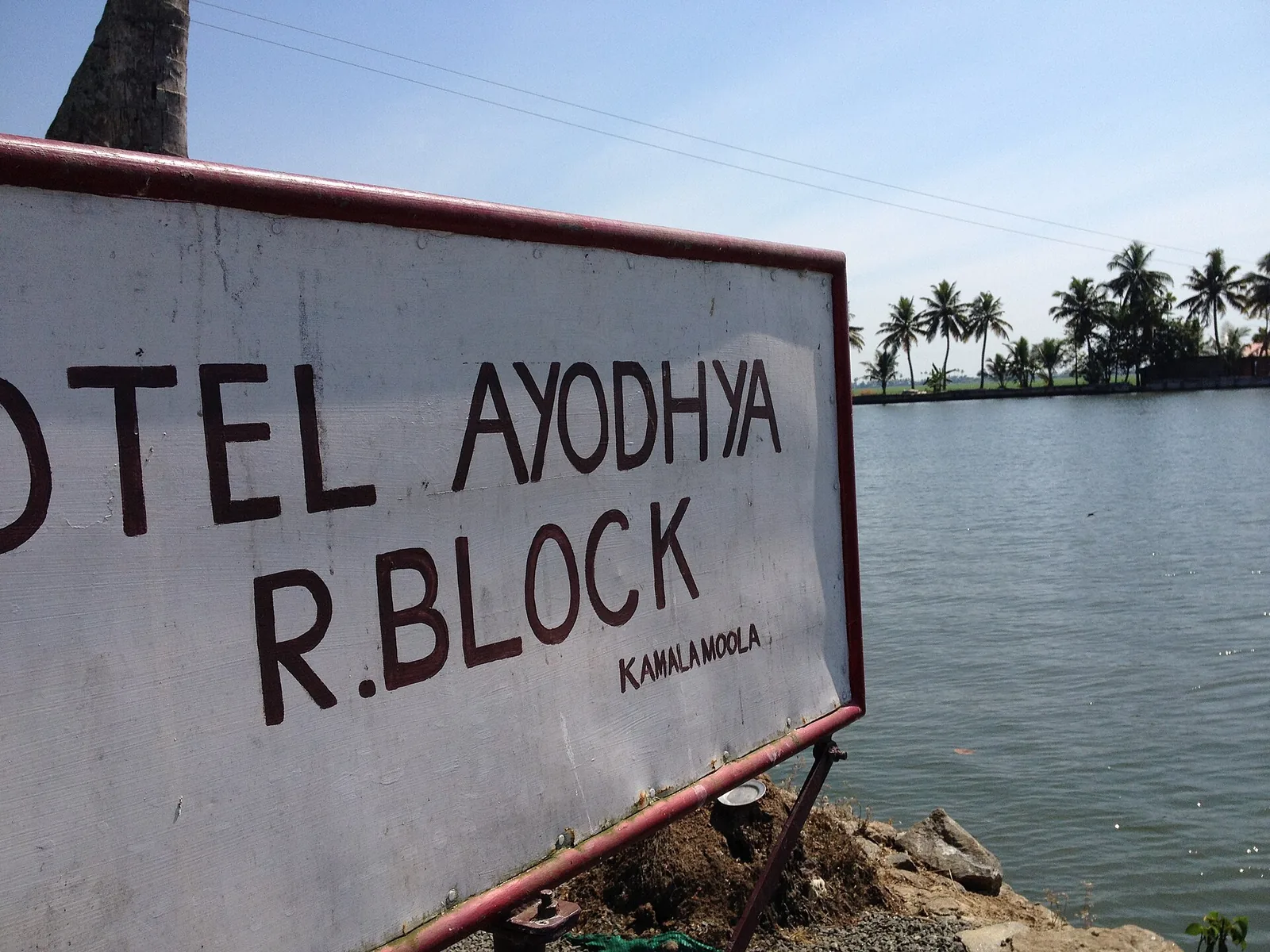
Iconic below-sea-level reclaimed farmland at Kainakary, ringed by bunds with the canal water sitting higher than the paddy fields.
7.0 km · ~17 min by auto · straight lineMuseum on Kerala’s coir (coconut-fibre) heritage — the craft Alappuzha built its trade on.
7.1 km · ~18 min by auto · straight line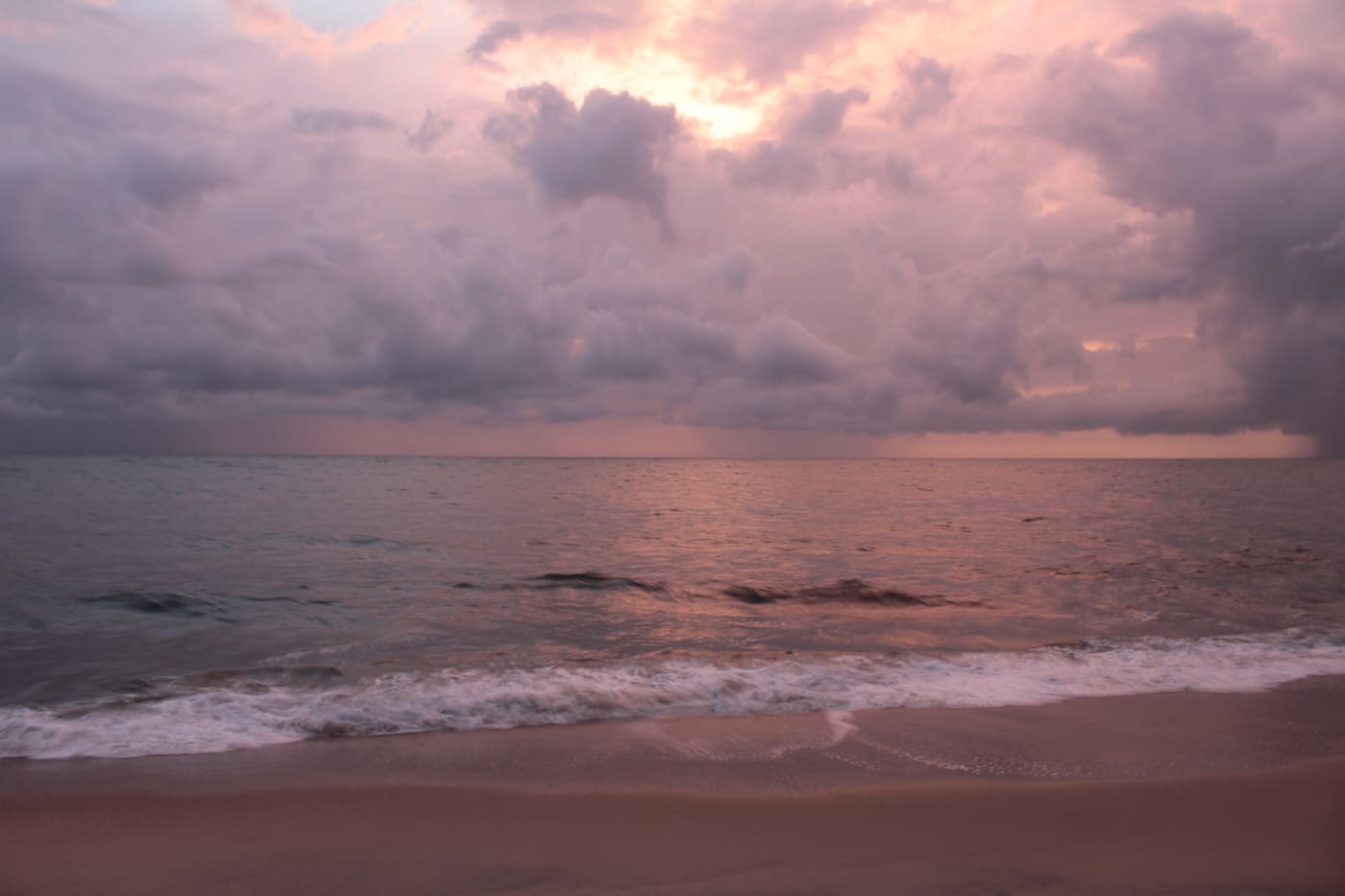
Quiet beach belt north of Alappuzha, popular for relaxed stays.
11.5 km · ~19 min by cab · straight line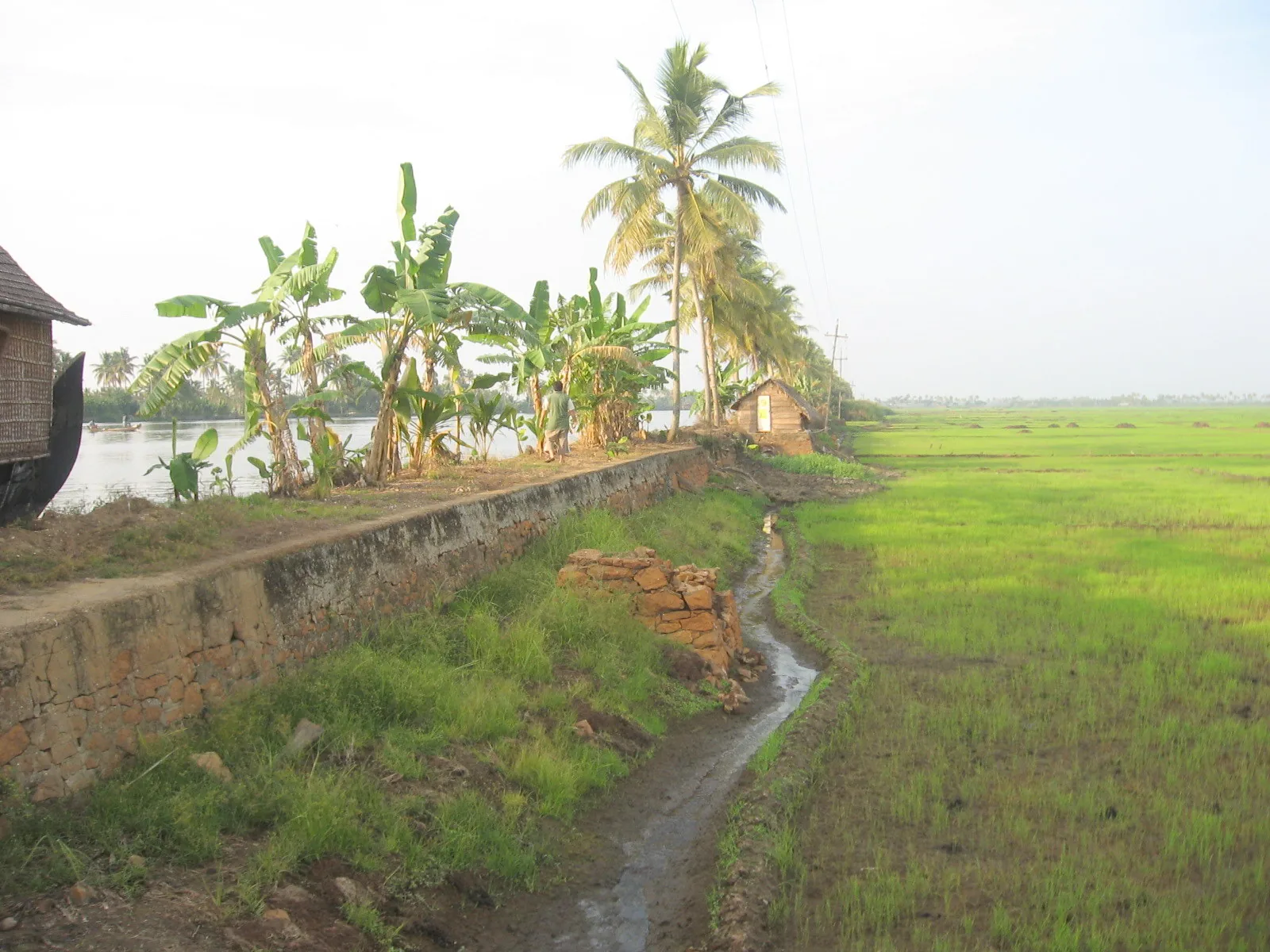
Low-lying paddy and canal region known as Kerala’s rice bowl.
12.4 km · ~21 min by cab · straight line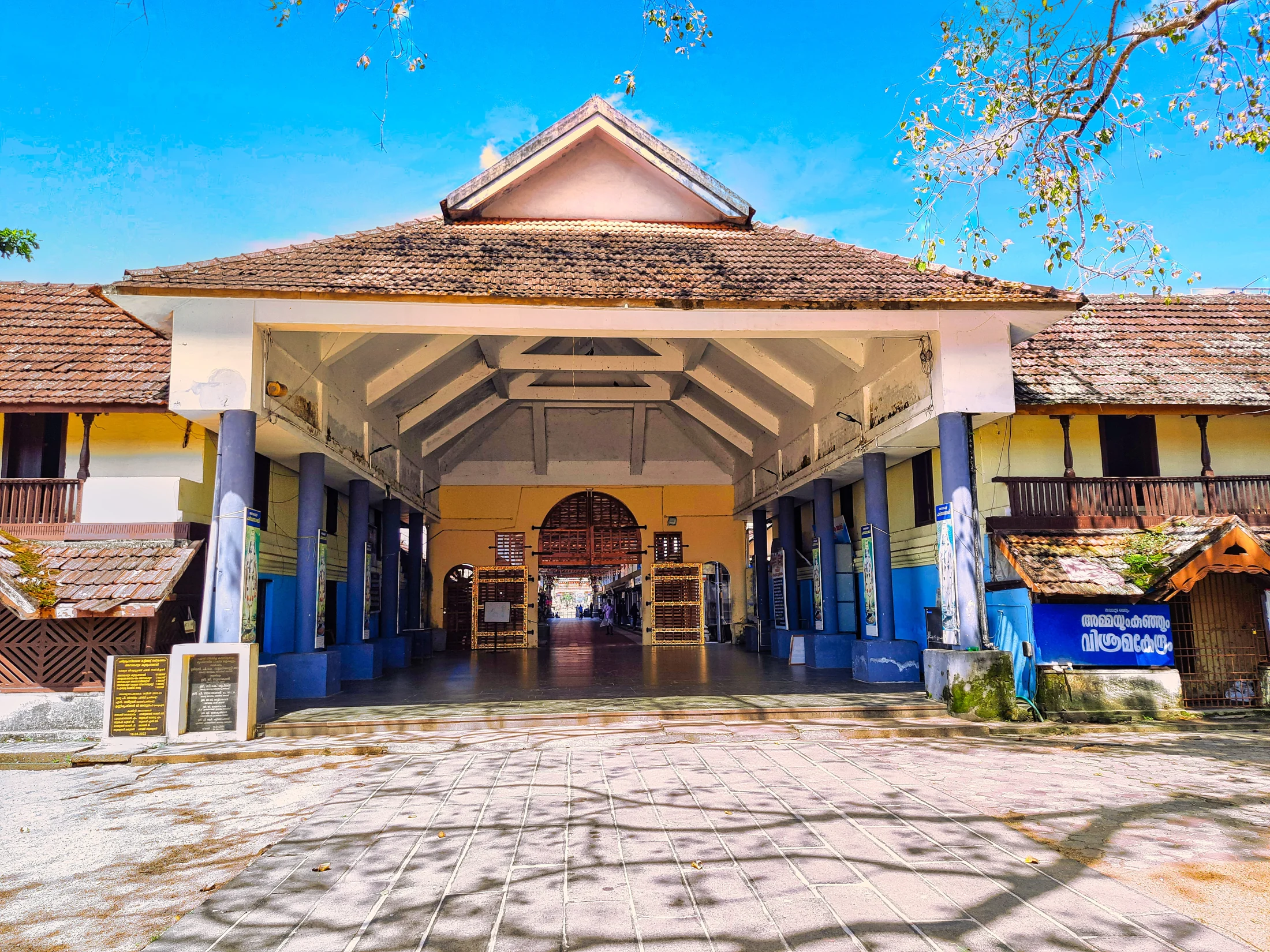
Ambalappuzha Sree Krishna Temple is an active temple in Ambalappuzha town, south of Alappuzha, administered by the Travancore Devaswom Board. Krishna is worshipped here as Parthasarathy, Arjuna’s charioteer. The temple combines a broad tank, tiled courtyards and painted ritual spaces with two enduring cultural associations: Palpayasam offered to the deity, and Kunchan Nambiar’s creation of Thullal. A visit works best when darshan, the permitted exterior spaces and any offering collection are planned around the temple’s morning or evening opening.
13.6 km · ~23 min by cab · straight line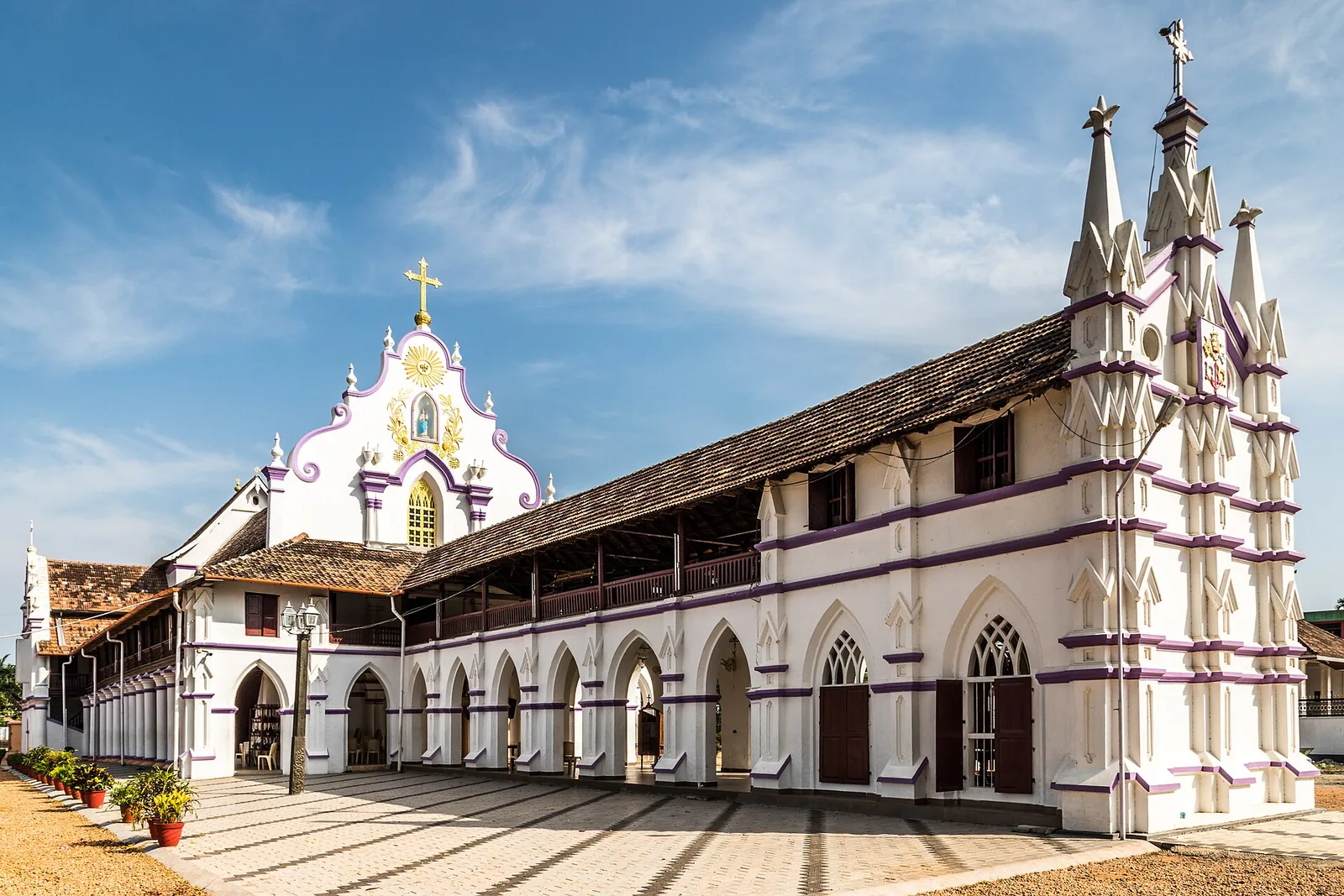
Kuttanad village on the Pamba known for the Champakulam Moolam snake-boat race and Kalloorkad St Mary’s Basilica.
13.6 km · ~23 min by cab · straight lineNearby toilets, pharmacies, ATMs, seating and vets are community-mapped and may be incomplete or out of date. Map data © OpenStreetMap contributors | Walking times © openrouteservice.org by HeiGIT
Revi. That is the spelling used by Kerala Tourism, Wikipedia and the family. Ravi is used by OpenStreetMap and by the Government of India's Incredible India portal, and it is the form this page's web address was built on — the text uses the fuller spelling and the link keeps the shorter one, so saved and shared URLs keep working.
Betty Karunakaran built it as a memorial to her husband, the coir exporter Revi Karunakaran, who died on 25 November 2003. Construction began that year and it opened to the public on 22 November 2006 — what would have been his 75th birthday. Betty Karunakaran died in October 2025.
22 November 2006, inaugurated by Sir M. M. Jacob, former Governor of Meghalaya. ⚠ Incredible India gives 22 November 2015, but that is the date of the museum's third phase, opened by former Sri Lankan President Chandrika Bandaranaike Kumaratunga — not the founding.
Crystal — ancient and contemporary, including a substantial Swarovski holding with named rare pieces — plus carved ivory (a Dashavatharam among them, reported as legally registered pre-ban pieces), porcelain by Noritake, Armani, Lladró and Meissen, jade, furniture, Tanjore paintings, Kerala antiquities, a Sam Philipe bronze called The Prodigal Son, a 200 sq ft vegetable-dye mural, a Kerala Room, a 1948 Buick and a gold-plated tea service.
⚠ Sources conflict on hours: Incredible India gives 09:00–14:00 while most travel listings give 09:00–17:00. Both agree it is closed on Mondays and public holidays. Entry is widely reported as ₹150 per head, but no government source publishes a figure. Confirm locally. 🔴 There is no working official website — rkmmuseum.com does not resolve.
Directly. Revi Karunakaran's grandfather is credited as India's first native coir exporter, and the Karan Group that Revi ran at twenty controlled Kerala Balers, the Alleppey Company and William Goodacre & Sons — a firm named on the International Coir Museum's own History of Coir Factories panel as one of the European houses that followed James Darragh into Alappuzha from 1859.
Midday works well for museums, especially when outdoor heat is high.
Entry: Widely reported as ₹150 per person, though no government source publishes a figure — treat it as indicative and confirm at the desk. Timings: ⚠ Sources conflict and we have not been able to resolve it: the Government of India's Incredible India portal gives 09:00 to 14:00, while most travel listings give 09:00 to 17:00. Both agree the museum is closed on Mondays and on public and national holidays. Treat the shorter hours as the safer assumption and confirm before travelling. The rupee figure quoted is the Indian adult rate. Government monuments, museums and forest reserves in India often charge foreign visitors more, and we have not verified whether this site does.
Base yourself in Alappuzha town or a nearby town in Alappuzha, then confirm the last-mile route locally before leaving. Check weekly closure day and ticket counter timings before going. If the visit depends on forest, temple, boat, ferry, weather or seasonal access, check the official/local rule on the day before travel.
1 to 2 hours.
Nearby you can pair Our Lady of Mount Carmel Cathedral (290 m), Alappuzha Beach & Lighthouse (1.1 km), Alappuzha / Alleppey town (1.1 km), Mullakkal Temple (1.6 km).
Use official ticket counters and cloakroom rules. Keep bags and cameras within permitted areas.
Written about Revi Karunakaran Museum itself — its history, its legends and the arguments about them.
These guides explore Alappuzha town and the surrounding area. Choose a visit that fits your interests, allowing separately for travel between stops.
Written about Alappuzha town as a whole rather than about Revi Karunakaran Museum — its history, its streets, and how to spend a day in it.
Route-level itineraries and practical guides for the rest of Kerala.
Photographs: Wikimedia Commons contributor (CC0), Kerala Tourism (© Kerala Tourism; externally hosted official photograph). Wikimedia Commons.