What to expect
Highlights
- Temple visit at Thrichittatt Maha Vishnu Temple
- Kerala temple architecture and rituals
- Local food, shops and pilgrim services nearby
The Yudhishthira temple of the five Pancha Pandava shrines around Chengannur and one of the 108 Divya Desams, at Mundankavu — where the god is Imayavarappan, “lord of those who came before”, and darshan is held incomplete until you have also worshipped at the Shankha Theertham tank.
Check entry arrangements. Ask temple staff about visitor entry, dress requirements and access to the inner shrine before you travel, especially if you are visiting as a non-Hindu.
Dress respectfully and follow the institution’s admission and photography rules.
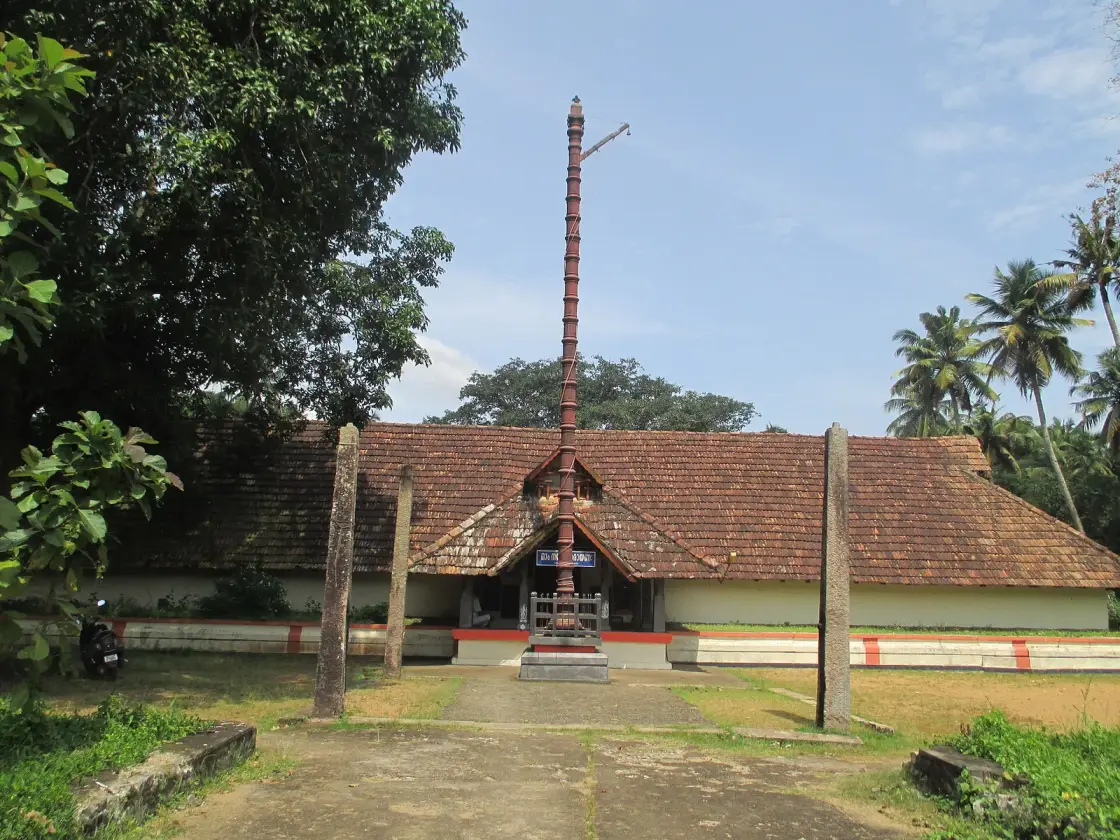
A kilometre north of Chengannur station, on the west side of the road at Mundankavu, stands a temple that legend calls the first of five. Thrichittatt Maha Vishnu Temple is where Yudhishthira, eldest of the Pandavas, is said to have done penance for the one lie he told in his life — and it is one of the 108 Divya Desams, sung by Nammalvar around 800 CE. What is striking is how little it announces itself. Where the Mahadeva temple down the road has a gold-clad flagstaff and a street full of pilgrim traffic, Thrichittatt is a low sweep of tiled roof over ochre walls, with grass coming up through the paving and a plain timber flagstaff, and its temple tank is a working village pond. For a shrine that its own tradition ranks first among the five, it is remarkably quiet.
The temple sits at Mundankavu, about a kilometre north of Chengannur town, on the western side of the MC Road running towards Thiruvalla. Its own gateway carries the name in full — THRICHITTATTU PANCHAPANDAVA MAHAVISHNU TEMPLE, MUNDANCAVU, CHENGANNUR — painted in Malayalam and English across a blue board slung under a red-and-cream arch with lamps, peacocks and a small Ayyappa panel worked into the plaster. Through it, a path runs between two tall granite pillars to the eastern front of the temple, and the whole thing opens out into a sandy, tree-shaded compound that feels a long way from a town centre it is barely a kilometre from.
The god here is Vishnu, worshipped as Imayavarappan — a name the tradition explains rather than translates. The devas, the imayavar, are held to have come to this spot and worshipped before Yudhishthira ever arrived, so the deity is the lord of those who came first. The image faces east and stands, with four arms: the Panchajanya conch in the upper right hand, the Sudarshana discus in the upper left, a lotus in the lower right — and the lower left hand empty, where a Vishnu image would usually carry the Kaumodaki mace. Our English and Malayalam sources agree on the conch and the discus, and it is the reverse of the arrangement most often described for Vishnu; the empty lower hand is noted explicitly by the English source. We do not print the claim, common on temple sites, that this makes the image unique — no source we can check supports it.
Thrichittatt's standing rests on the Alvars. It is one of the 108 Divya Desams, the abodes of Vishnu praised in the Tamil hymns of the twelve Alvar saints, and the hymn here is Nammalvar's, composed around 800 CE — the earliest reference to the temple that exists. Within that 108 it belongs to a smaller set: the thirteen Malanattu Vaishnava Thiruppathikal, the Divya Desams of the Malayalam country. The temple has put the full list on a board on its own wall, and it is a genuinely useful thing to read, because it gives each shrine, its deity and its distance from the nearest railway station. Thrichittatt appears on it as Sri Imayavarayappan, Thricchittattu, one kilometre from Chengannur Railway Station.
That board is also the clearest statement of how tightly this cluster sits together. Four of the thirteen are within a short ride of the same station: Thripuliyoor (Sri Mayapiran) at 5 km, Thiruvanvandoor at 6 km, Thiruvaranmula — Aranmula — at 11 km, and Thrichittatt itself at 1 km, with Thrikkodithanam listed 3 km from Changanacherry. Those five are the Pancha Pandava temples, and pilgrims do them as a set. The Malayalam sources add a sixth stop that almost nothing in English mentions: Pandavarkavu near Muthukulam, where Kunti, the Pandavas' mother, is said to have worshipped. Doing all six in a single day is held to be meritorious.
The temple tank matters more here than at most temples, and the reason is in the legend rather than the architecture. It carries two names — Amrutha Pushkarani and Shankha Theertham — and worship there is held to be the equal of worship in the sanctum, so that a darshan at Thrichittatt is not complete until you have been to both. Go and look at it and you will find something unglamorous: a broad green pond with earth banks, a house or two on the far side and a boundary wall carrying painted slogans. It is a working village tank that happens to be, by tradition, half of the temple.
Practically, it is an easy visit and a short one. The temple opens roughly 5 am to 11 am and 5 pm to 8 pm and is administered by the Travancore Devaswom Board. The annual festival falls in Meenam (March–April), with the flag hoisted on the Atham asterism and ten days following. There is no ticket. Half an hour covers the compound, the front, the pillars and the tank — and the sensible way to do it is not as a stop on its own but as the first of the five, with Thripuliyoor and Thiruvanvandoor after it and the Mahadeva temple in the town on the same trip.
The story attached to Thrichittatt is about a lie. In the Kurukshetra war the Pandavas could not defeat their own teacher Drona while he held his weapons, and the way through was to make him believe his son Ashwatthama was dead. The words had to come from Yudhishthira, because Yudhishthira had never in his life told an untruth and Drona would believe him. He said them. Drona laid down his arms and was killed. The tradition here holds that Yudhishthira, the eldest of the five and the one whose whole identity rested on never having lied, came south afterwards to expiate that single sentence, and did his penance at this temple until the sin left him. The belief attached to it is generous and very specific: that to come here, look at the tank and bow to the god is to be freed of the lies you have told and the wrongs you have done up to that moment.
The name of the god belongs to the same story from the other end. The imayavar — the devas — are said to have reached this spot and worshipped here before Yudhishthira did, and so the deity is Imayavarappan, the lord of those who came before. One account goes further and says the temple was raised by the devas themselves on the bank of the Chittar, a tributary of the Pampa, before mankind existed, and that what Yudhishthira did in the Dvapara Yuga was not to build it but to restore it.
The tank has its own piece of the legend, and it explains both of its names. Yudhishthira, having bathed, is said to have immersed the image in the pond before installing it, and to have filled his conch with the pond's water for the first puja after the installation. From the immersion the pond is Amrutha Pushkarani; from the filling of the conch it is Shankha Theertham. That is why worship at the water is reckoned equal to worship at the sanctum, and why the tradition insists a darshan here is only finished when you have done both.
Where the Pandavas were living while all this happened is where the sources part company, and it is worth setting the versions side by side rather than picking one. The Malayalam account puts it in the agnjatavasa, the year of concealment during the exile: the five lived on a hill near Chengannur called Pandavan Para, and from there each went to worship at a different nearby temple — Yudhishthira at Thrichittatt, Bhima at Thripuliyoor, Arjuna at Aranmula, Nakula at Thiruvanvandoor, Sahadeva at Thrikodithanam. The English account puts it much later: the Pandavas, having crowned Parikshit at Hastinapura, left on pilgrimage, reached the banks of the Pampa and each installed an image there. A third version in the same English article says they worshipped the images during their reign and only installed them at the end of it, and a fourth has the sage Bhrigu persuading them, after Krishna's death, to consecrate temples nearby so that daily offerings could be made to the god who had guided them — not only by the brothers but by the people who had sheltered them in exile.
What no source we checked disagrees about is which brother goes with which temple. The round-21 brief warned that the attribution is disputed; en.wikipedia states it identically in all three of the temple articles, ml.wikipedia states the same, and it matches what this site has published on the Aranmula page for several rounds. We looked for the disagreement, did not find it, and are not going to invent one to be even-handed. The disagreement is real, but it is about the occasion, not the roll-call.
One more shrine belongs to the story and is almost always left out. Beyond the five brothers, the Malayalam tradition gives Kunti her own place of worship at Pandavarkavu, near Muthukulam, and treats a single day taking in all six — the five sons and the mother — as the complete circuit. It is the sort of detail that survives in the local language and quietly disappears in translation.
There is no record of when this temple was built, and the honest version of its history begins by saying so. What can be dated is the poetry. The earliest reference to Thrichittatt is a hymn by Nammalvar, greatest of the Alvar saint-poets, composed around 800 CE, which places worship at the site firmly in the early medieval period and secures its inclusion among the 108 Divya Desams. Stone inscriptions in the temple carry it into the Second Chera Empire, conventionally dated 800 to 1102 CE. Beyond that, the record runs out, and the legend of a temple raised by the devas before mankind fills the space where a founding date would be.
The temple appears under more than one name, and the variants are informative rather than confusing. It is Thrichittatt or Thricchittattu; it is the Imayavarappan temple after its deity; and it is also Thiruchenkundrur. That last is the same name-shape as Chengannur itself — the chen-kunnu, the red hill, that the Malayalam tradition derives Chengannur's own name from. The form turns up in three independent places around this town: in the temple tradition here, in the Tamil hagiography that names Viralminda Nayanar's birthplace Sengunru, and in the Sanskrit Shonadri of the Mahadeva temple's legend. None of that settles the etymology, which ml.wikipedia flags as unsourced in its own text, but it does show the name-shape is old rather than modern.
The temple's later history ties it to the same landholding house as its great neighbour. The Malayalam account records that Thrichittatt formerly belonged to Vanjippuzha Madom — the family seated at Chengannur that also built and held the Mahadeva temple — which puts the two shrines under one hand for a stretch of their history despite their very different characters today. In modern times Thrichittatt is administered by the Travancore Devaswom Board.
It is also worth being clear about what the “first of five” claim does and does not mean. English sources call Thrichittatt the primary temple among the five Mahavishnu shrines built by the Pandavas, and the temple's own noticeboard lists it seventh of the thirteen Malanattu Divya Desams, ahead of Thripuliyoor, Aranmula and Thiruvanvandoor in the sequence. That is a statement about the legend's internal order — Yudhishthira was the eldest — and about the list's geography. It is not a statement that the building is older than the others, and no source we can check makes that claim.
Finally, the modest condition of the place is part of its interest rather than a defect to be apologised for. Aranmula, the Arjuna temple of the same five, is nationally known for its metal mirrors and its snake-boat regatta and draws crowds accordingly. Thrichittatt, ranked first in the same legend and carrying an Alvar hymn a thousand-odd years old, has grass in its paving and a green pond with a slogan-painted wall behind it. Both things are true at once, and travellers who like the second kind of temple should know this one is there.
Because it is the first of the Pancha Pandava temples, and the only one of the five where the legend is about guilt. Yudhishthira's single lie, told to kill his own teacher, and the penance he did here for it, is a stranger and better story than most temple foundations offer.
For the Divya Desam standing. This is one of the 108 shrines of the Alvar canon and one of the thirteen Malanattu Vaishnava Thiruppathikal, with a hymn by Nammalvar from around 800 CE — a documented antiquity that very few temples of this size can show.
For the noticeboard, genuinely. The temple's own board lists all thirteen Malanadu Divya Desams with their deities and their distances from the nearest railway station, which is the best planning document you will find for the circuit and is sitting on a wall.
For the tank. Amrutha Pushkarani, also called Shankha Theertham, where Yudhishthira is said to have immersed the image and filled his conch — and where worship is held equal to worship in the sanctum, so that a darshan is incomplete without it.
Because it is quiet. A low tiled roof, ochre walls, granite pillars, a plain flagstaff and grass in the paving, a kilometre from a busy station. If the Mahadeva temple in the town shows you Chengannur at full volume, this shows you the other register.
Because it is the natural first stop on a circuit. Thripuliyoor is 5 km away, Thiruvanvandoor 6 km and Aranmula 11 km, all by the temple's own board — and the Malayalam tradition adds Kunti's shrine at Pandavarkavu to make a six-temple day.
Road km to Alappuzha; ghat roads and traffic vary — allow extra.
Morning or early evening is usually best; festival days can be powerful but crowded.
Live forecast loads in your browser.
Sun and moon are calculated for this location and shown in IST. Photography windows are the hour around sunrise and sunset; the sunset bearing is degrees clockwise from true north. Moon phase is accurate to about half a day.
Verified hotels, homestays, restaurants, experiences, sights, shops and rentals around Thrichittatt Maha Vishnu Temple — commission-free, with direct contact. Filter by what you need.
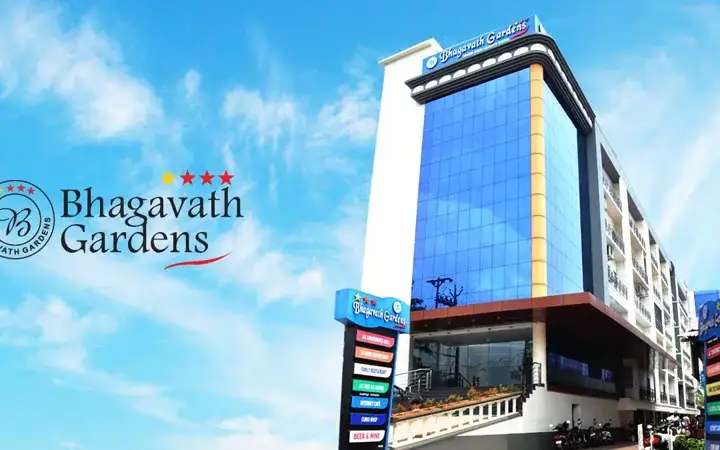
A Market Road hotel in Chengannur town, with restaurants and meeting spaces described in its property listing. Its town location is the main reason to compare it with a more distant resort. Confirm the room category, current dining service and your arrival arrangements directly.
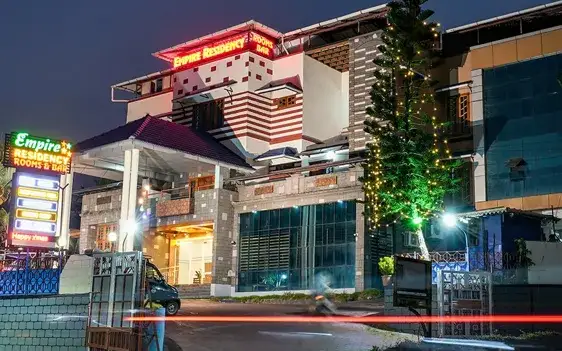
Empire Residency is at Angadikkal, Puthenkavu, in Chengannur. Use its actual address when comparing it with hotels on Market Road or near the railway station. Before reserving, request the room category, meal plan and travel time to your next Chengannur stop.
Two-star hotel near the Head Post Office, working since 1981. Near Head Post Office, Chengannur, Kerala 689121.
Book with the place itself. India’s cyber-crime coordination centre warned in April 2025 that convincing copies of hotel and pilgrimage booking sites are being pushed through sponsored search and social ads, taking payment for rooms the property never hears about. Every listing here links to the business’s own contact details and its own Google or Bing profile — we take no commission and sit in nobody’s payment path. If a booking page reached you through an ad, check the address bar against the property’s own site before you pay. Fraud can be reported on cybercrime.gov.in or on 1930.
Find food, accommodation and activities across Chengannur. Browse the guides for places to eat, stay and explore along your route.
2 more places around Chengannur. Open a guide to plan the visit and onward journey.
A prominent Bhagavathy pilgrimage temple at Neerattupuram, especially associated with the women-led Pongala; ordinary worship and festival-day planning differ substantially.
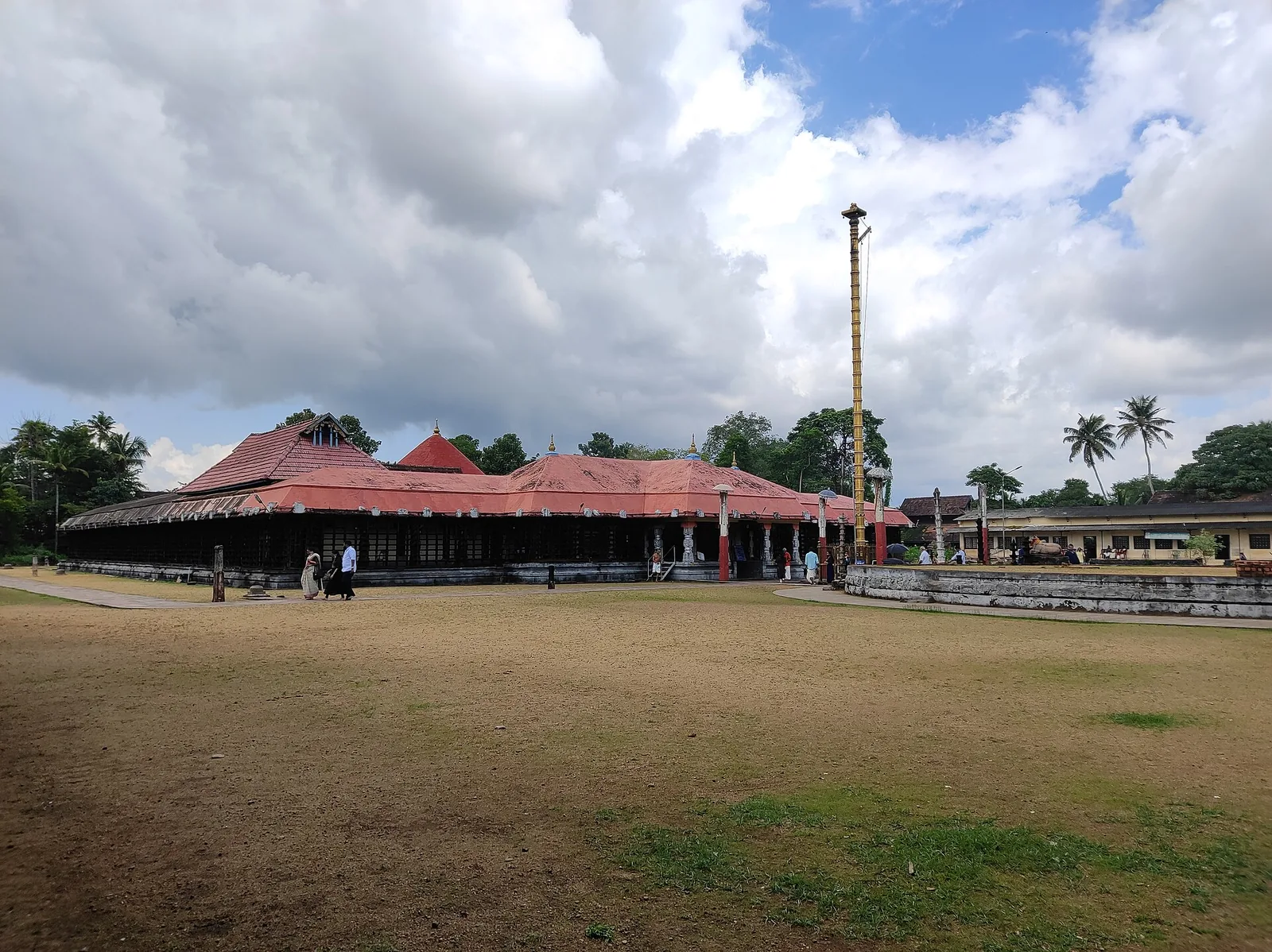
820 m · 10 min walk
The great Shiva–Parvati temple of Chengannur, where the goddess is held to menstruate and the Thripputhaarattu is observed — one of the 108 Shivalayas, and the temple where the Thazhamon Madom tantris perform their first puja before they may officiate at Sabarimala.
Roampedia is commission-free — own or know a stay, eatery, guide or shop near Thrichittatt Maha Vishnu Temple? List it and it appears here once verified.
Add a nearby businessEntry: No ticket. Offerings and vazhipadus are paid at the counter.
Dress code: The usual Travancore Devaswom Board convention: mundu or dhoti for men, who remove their shirts inside; saree, set-mundu or long skirt and blouse for women. Entry to the temple proper follows the standard Kerala practice.
Festivals: The ten-day Meenam utsavam, hoisted on Atham. ⚠ Note this is a different month from the Chengannur Mahadeva temple's 28-day festival, which runs Dhanu to Makaram — the two do not coincide.
Photography: Devaswom rules apply around the sanctum; ask rather than assume. The gateway board, the granite pillars, the flagstaff and the tank are the frames people actually get.
If you are travelling by bus or ferry, check the return service with the operator before setting out. Leave time to reach the stop or jetty after your visit.
Ask at the bus stand for the time of the last service back, not the next one. If you miss it, an auto or app cab is the fallback — agree the fare before you get in.
If you need step-free access, contact the site before travelling. Ask about a level entrance, steps along the route, the nearest drop-off point, seating and accessible toilets.
Charge cap and free-transaction limits: Reserve Bank of India, in force since 1 May 2025.
These services are listed within about 1.2 km of Thrichittatt Maha Vishnu Temple. Walking distances follow mapped routes; access and opening hours can change. Other services may be closer but are not included here.
Emergency numbers are verified against official government and state tourism sources. 112 works anywhere in India.
The great Shiva–Parvati temple of Chengannur, where the goddess is held to menstruate and the Thripputhaarattu is observed — one of the 108 Shivalayas, and the temple where the Thazhamon Madom tantris perform their first puja before they may officiate at Sabarimala.
820 m · 10 min walk · straight line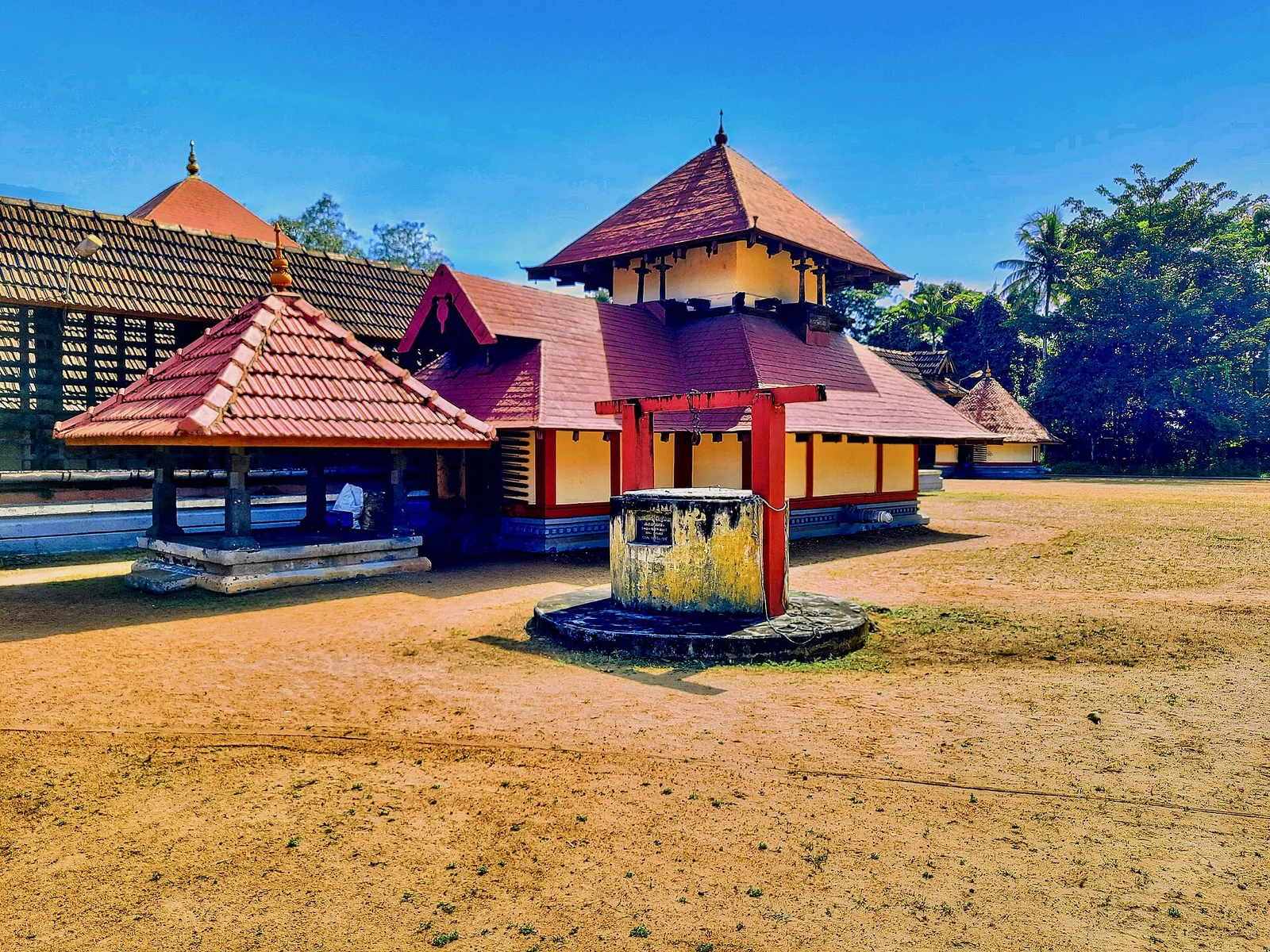
The Shiva temple west of Mavelikkara whose 823 AD epigraph makes it the earliest Kerala temple with a dated inscription about its own origin — Shiva in the kirata hunter form, once the capital shrine of Odanad, and the richest single record of devadasi authority in this region.
11.6 km · ~19 min by cab · straight line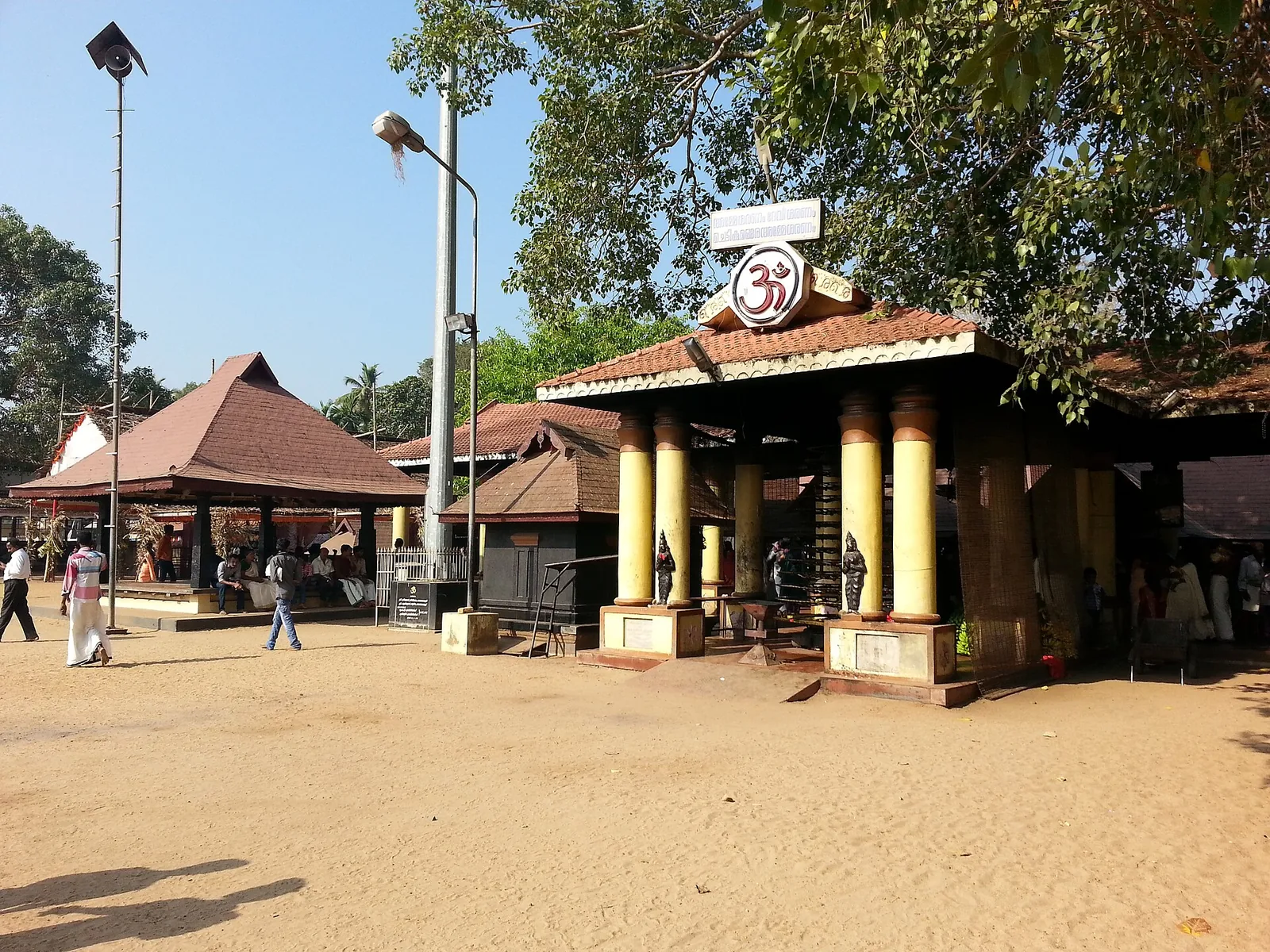
Major Bhagavathy temple near Mavelikkara, famous for its Kettukazhcha and Kumbha Bharani festivals.
14.6 km · ~24 min by cab · straight line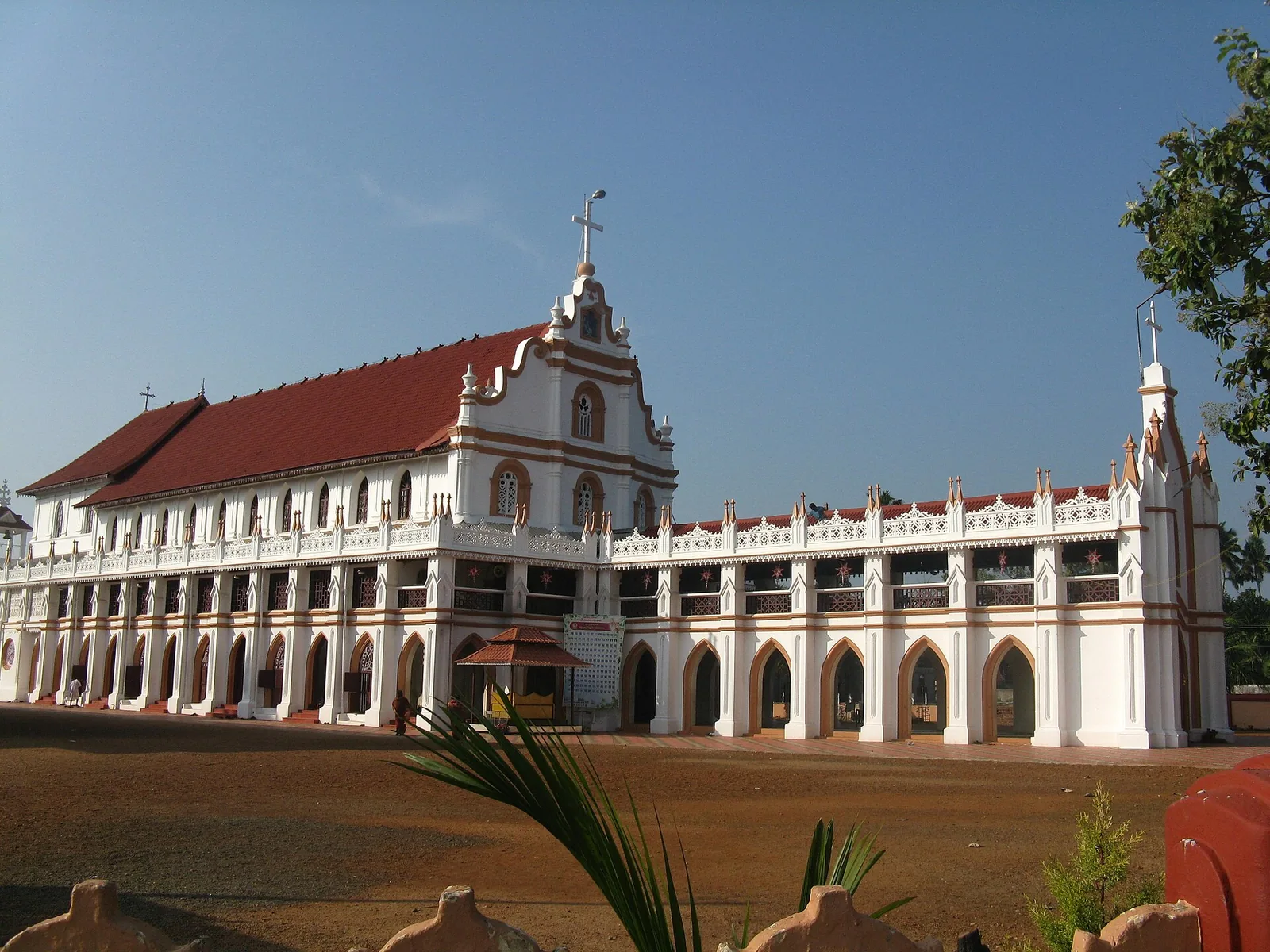
St George Forane Church at Edathua in Kuttanad, known for its large annual pilgrimage feast.
14.9 km · ~25 min by cab · straight line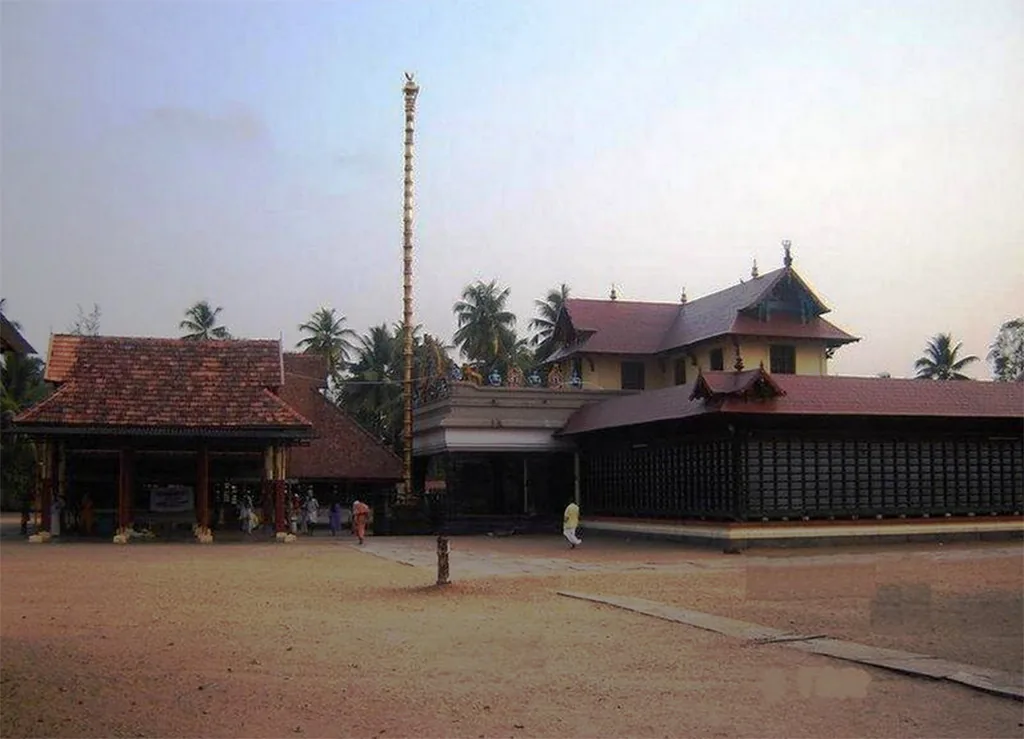
One of Kerala’s oldest Subramanya (Murugan) temples, in the south-Alappuzha town of Haripad.
17.5 km · ~29 min by cab · straight line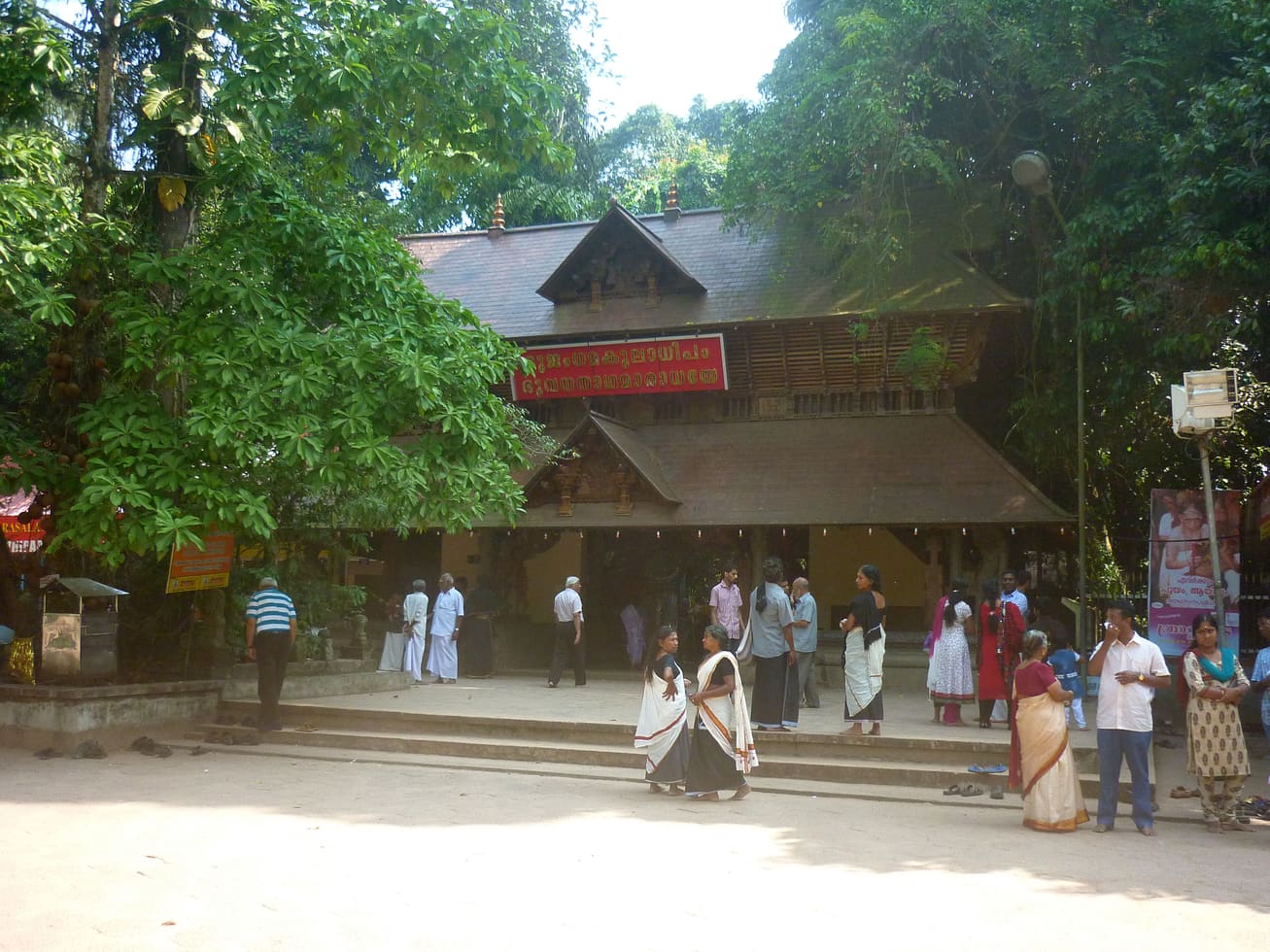
Major serpent shrine set in a sacred grove.
17.9 km · ~30 min by cab · straight line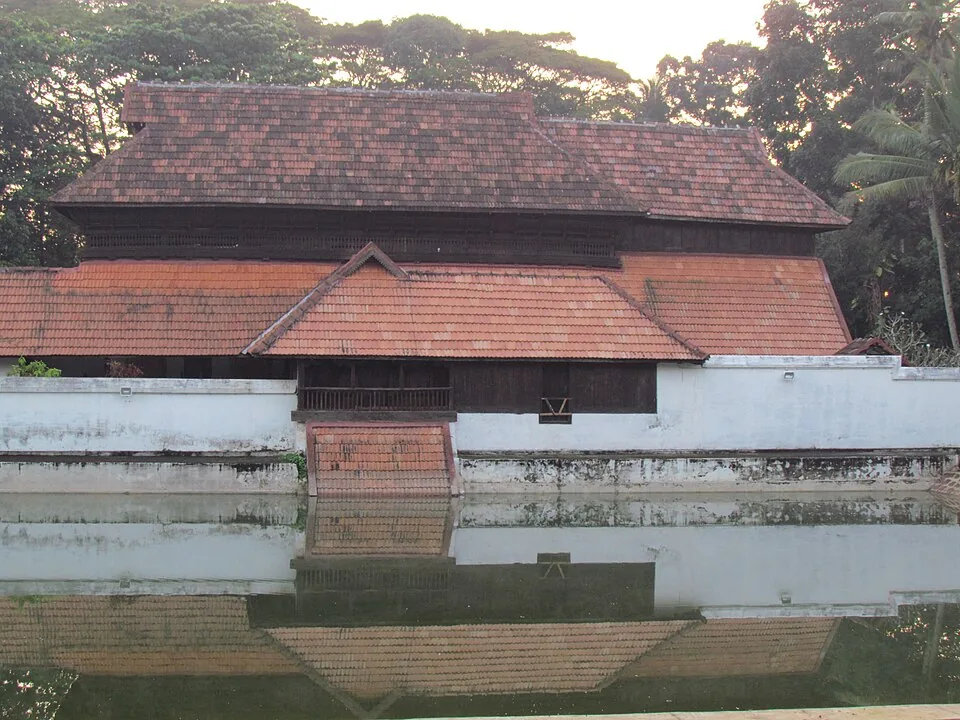
Restored 18th-century Travancore palace at Kayamkulam, home to the huge Gajendra Moksha mural.
22.2 km · ~37 min by cab · straight line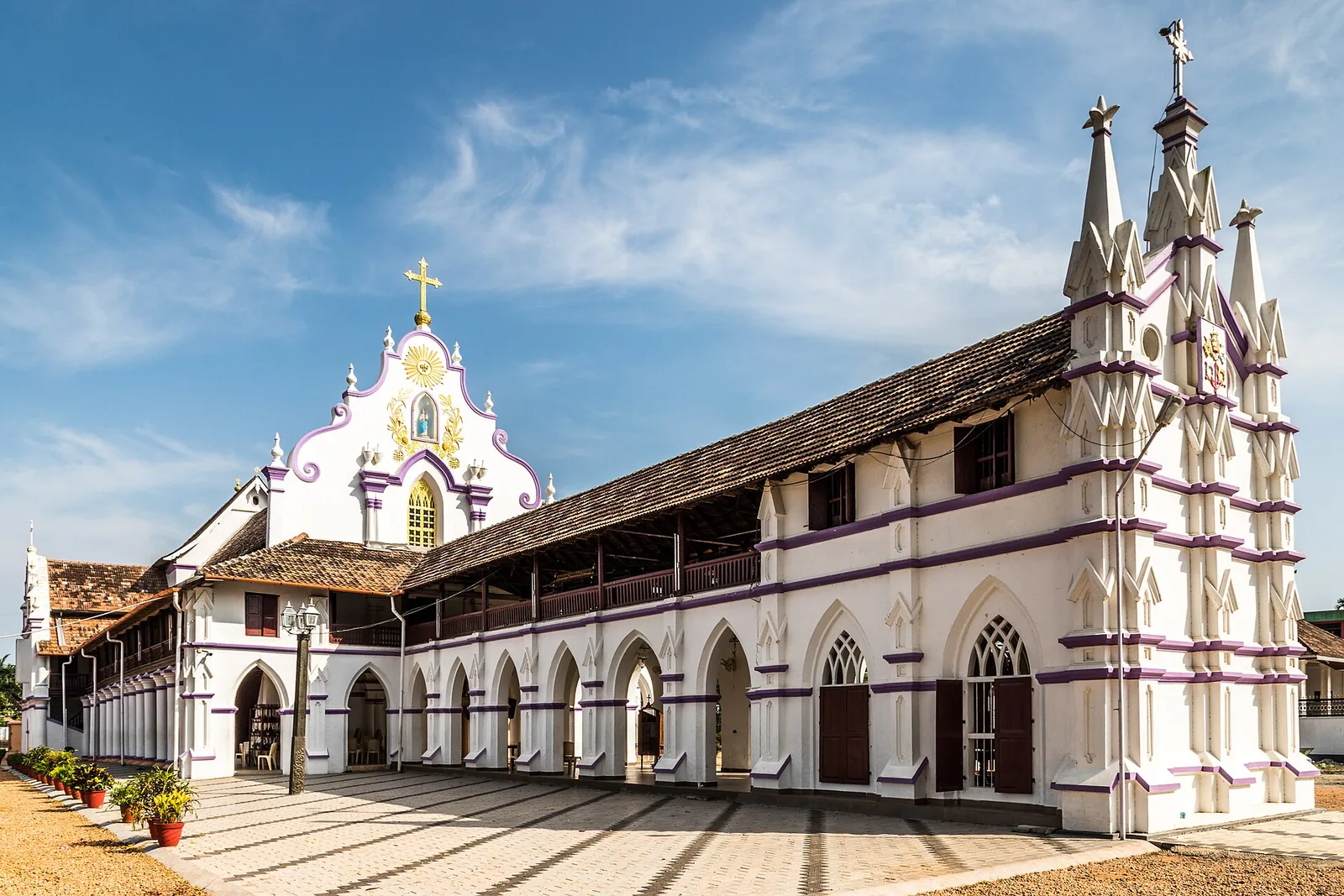
Kuttanad village on the Pamba known for the Champakulam Moolam snake-boat race and Kalloorkad St Mary’s Basilica.
23.0 km · ~38 min by cab · straight line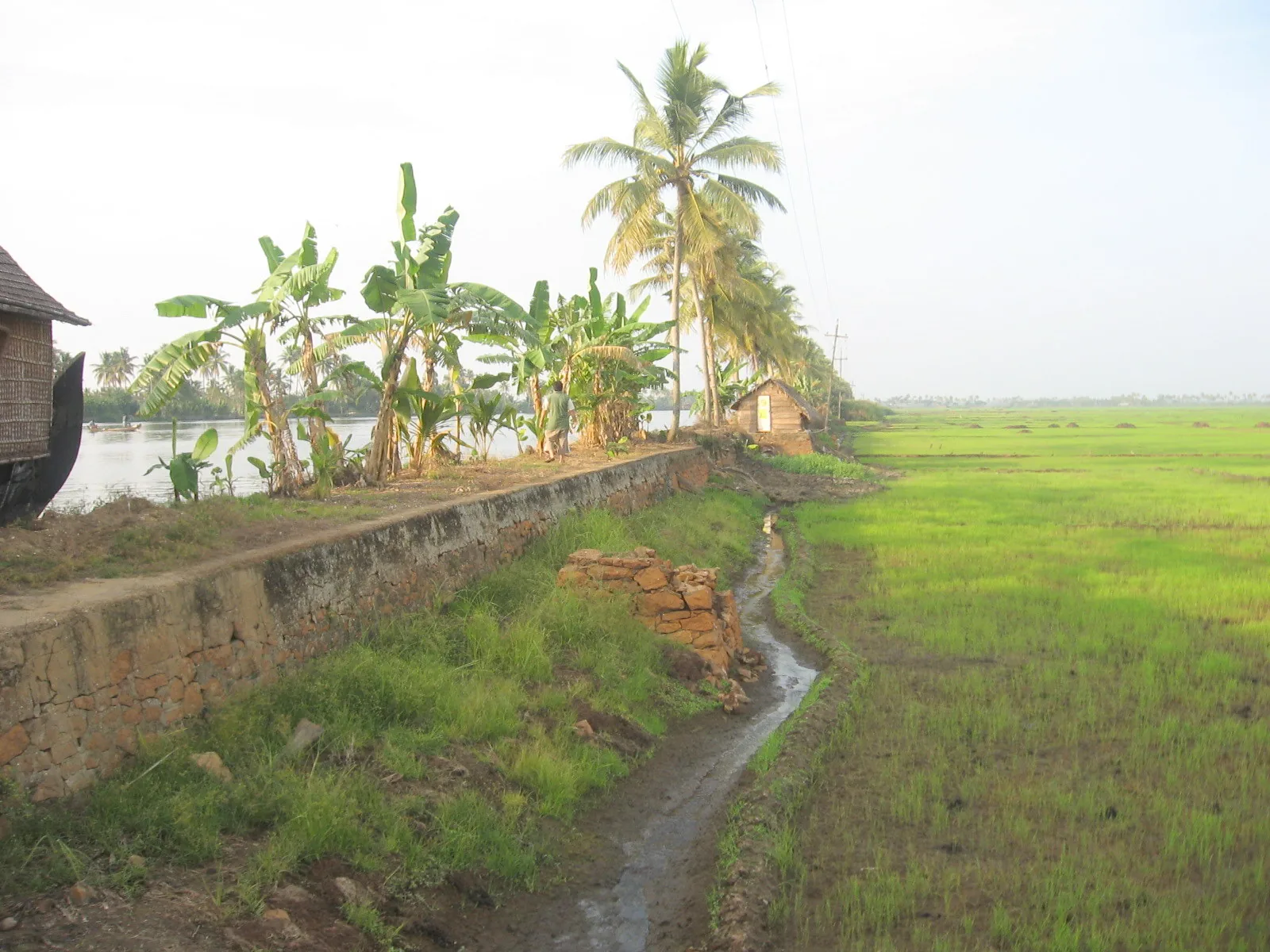
Low-lying paddy and canal region known as Kerala’s rice bowl.
23.5 km · ~39 min by cab · straight line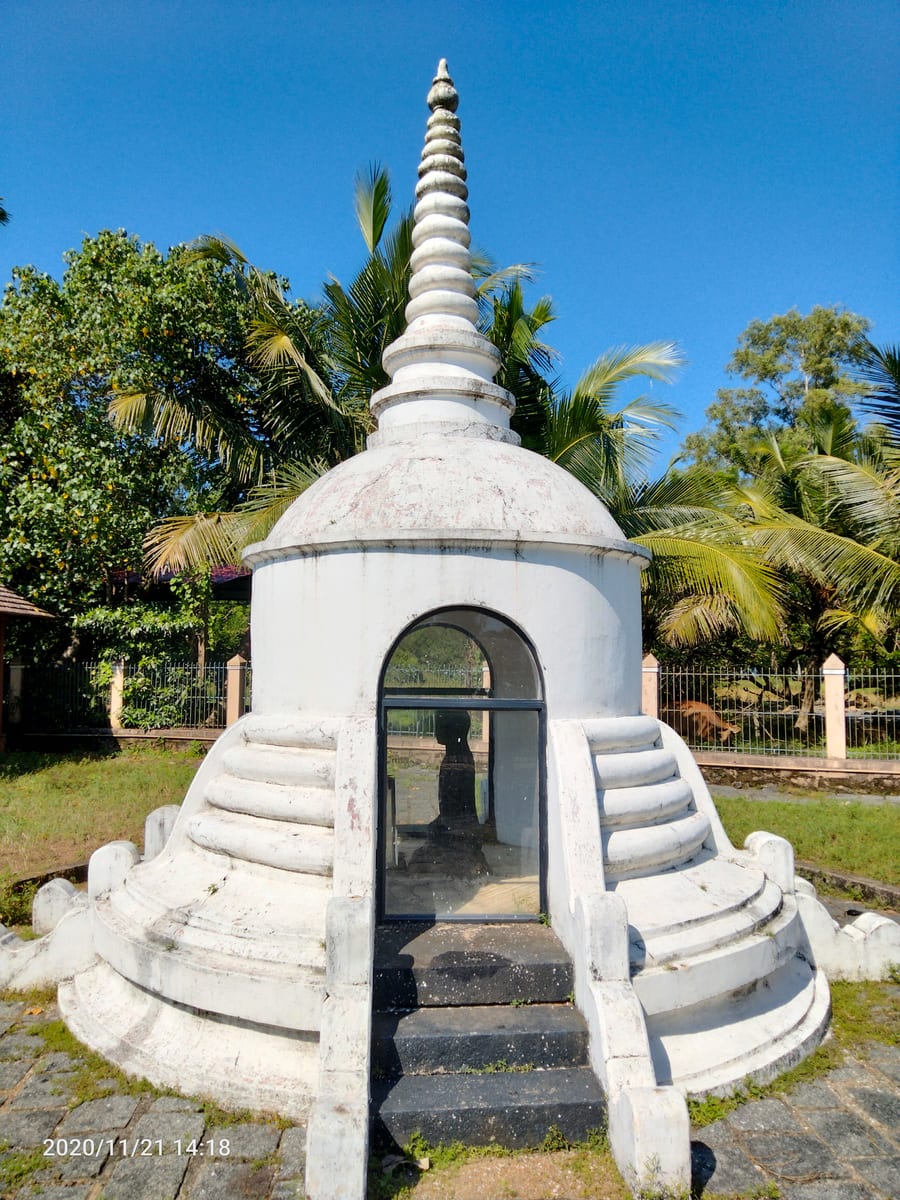
Ancient black-granite Buddha statue at Karumadi near Ambalappuzha, a relic of Kerala’s Buddhist past.
24.6 km · ~41 min by cab · straight line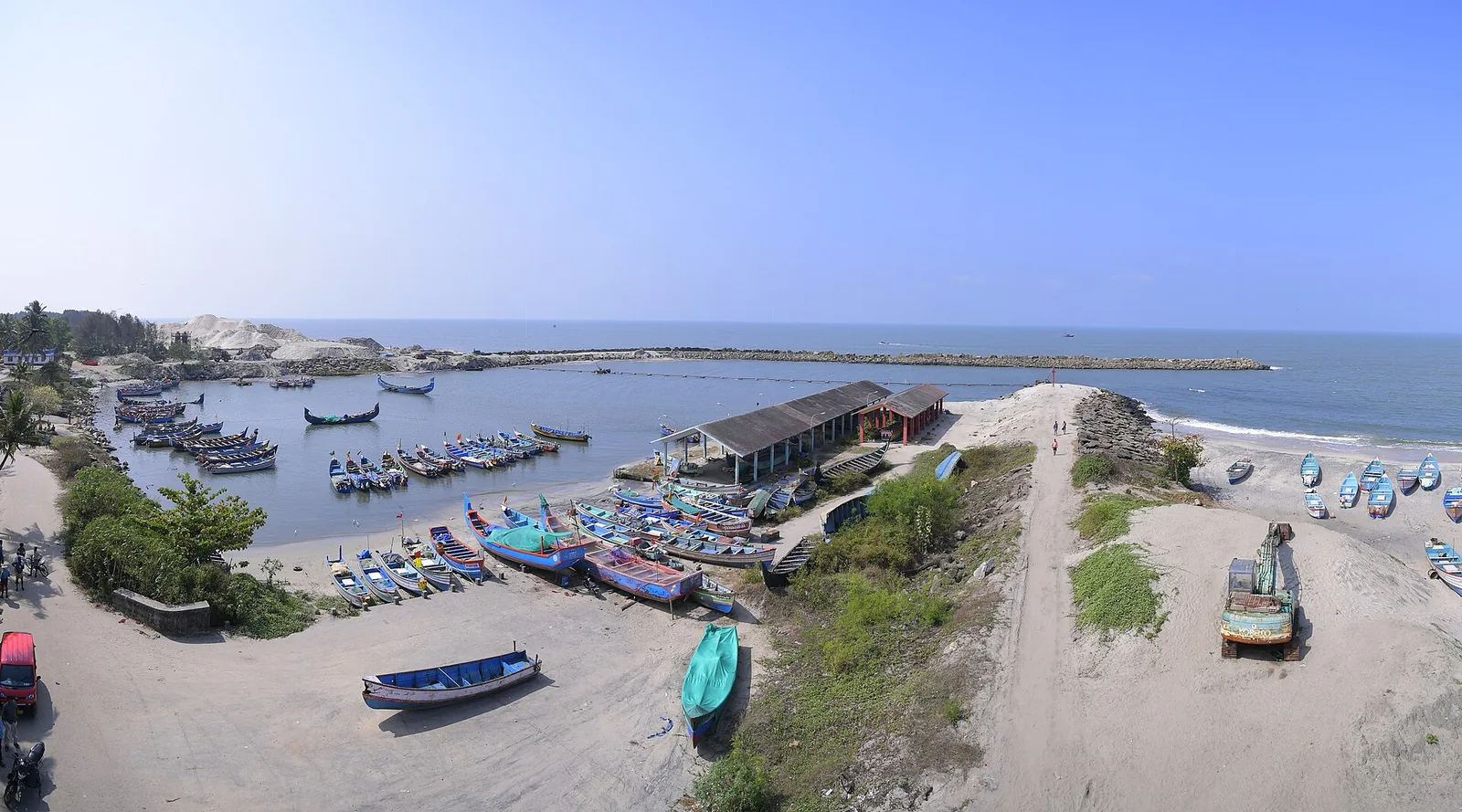
Working fishing harbour and 1955 flood spillway where the Thottappally leading channel meets the sea, south of Ambalappuzha — a painted fleet, two breakwaters and heaps of titanium-bearing black sand, rather than a quiet beach.
24.7 km · ~41 min by cab · straight line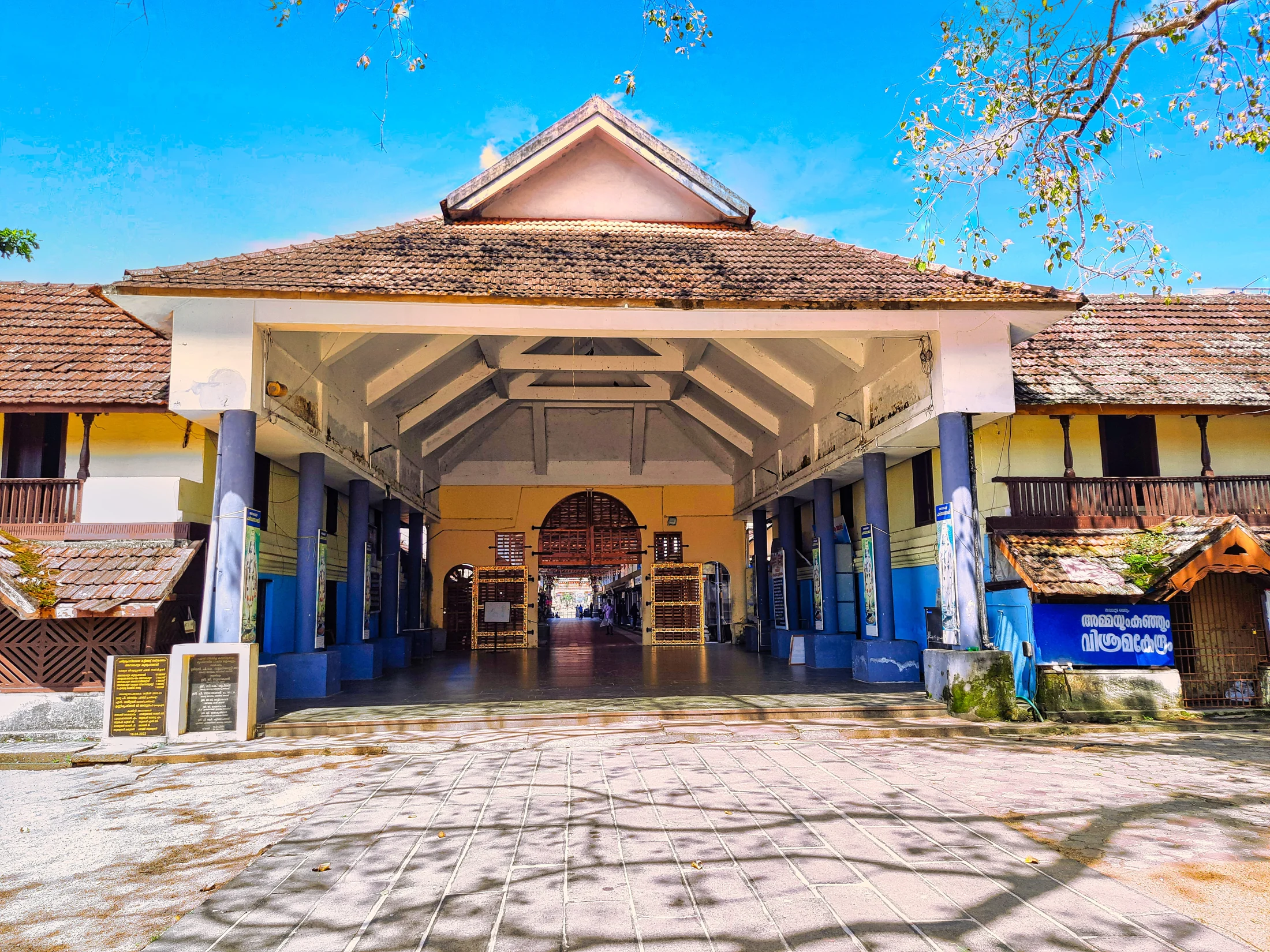
Ambalappuzha Sree Krishna Temple is an active temple in Ambalappuzha town, south of Alappuzha, administered by the Travancore Devaswom Board. Krishna is worshipped here as Parthasarathy, Arjuna’s charioteer. The temple combines a broad tank, tiled courtyards and painted ritual spaces with two enduring cultural associations: Palpayasam offered to the deity, and Kunchan Nambiar’s creation of Thullal. A visit works best when darshan, the permitted exterior spaces and any offering collection are planned around the temple’s morning or evening opening.
26.6 km · ~44 min by cab · straight lineNearby toilets, pharmacies, ATMs, seating and vets are community-mapped and may be incomplete or out of date. Map data © OpenStreetMap contributors | Walking times © openrouteservice.org by HeiGIT
Yudhishthira, the eldest. The five are consistently given as Thrichittatt by Yudhishthira, Thripuliyoor by Bhima, Aranmula by Arjuna, Thiruvanvandoor by Nakula and Thrikodithanam by Sahadeva. We checked this against both the English and Malayalam sources because our brief said the attribution was disputed; both give the same list, and so does our own Aranmula page.
Because the devas — the imayavar — are held to have reached this place and worshipped here before Yudhishthira did, making the deity the lord of those who came before. The temple also appears under the names Thrichittattu, Thricchittattu and Thiruchenkundrur.
It has two names — Amrutha Pushkarani, from the immersion of the image in it, and Shankha Theertham, from Yudhishthira filling his conch with its water for the first puja. Worship at the water is reckoned equal to worship in the sanctum, and tradition holds that darshan here is complete only when both have been done. In appearance it is a plain village pond, so do not go expecting a monument.
Roughly 5 am to 11 am and 5 pm to 8 pm, with no ticket; the temple is administered by the Travancore Devaswom Board and the usual Kerala dress code and entry convention apply. The annual festival is in Meenam, March–April, with the flag hoisted on Atham and ten days following.
It is about a kilometre north of the town at Mundankavu, on the west side of the MC Road towards Thiruvalla — roughly 1.3 km from Chengannur by that road, and the temple's own board gives it as 1 km from Chengannur Railway Station. Autos run from the station and the KSRTC stand. It is walkable if you do not mind roadside walking.
Yes, and pilgrims do. By the temple's own noticeboard, Thripuliyoor is 5 km from Chengannur station, Thiruvanvandoor 6 km and Aranmula 11 km, with Thrikodithanam 3 km from Changanacherry — so the five span Alappuzha, Pathanamthitta and Kottayam districts but sit within a comfortable day by car. The Malayalam tradition adds Kunti's shrine at Pandavarkavu near Muthukulam as a sixth.
Morning or early evening is usually best; festival days can be powerful but crowded.
Entry: No ticket. Offerings and vazhipadus are paid at the counter. Timings: Roughly 5 am to 11 am and 5 pm to 8 pm. Festival days differ.
Base yourself in Chengannur or a nearby town in Alappuzha, then confirm the last-mile route locally before leaving. Check temple entry customs, dress rules and festival crowd conditions before arrival. If the visit depends on forest, temple, boat, ferry, weather or seasonal access, check the official/local rule on the day before travel.
45 minutes to 2 hours, longer during festival or queue periods.
Nearby you can pair Chengannur Mahadeva Temple (820 m), Kandiyoor Sree Mahadeva Temple (11.6 km), Chettikulangara Devi Temple (14.6 km), Edathua Church (14.9 km).
Use official counters for offerings/tickets where applicable. Keep footwear and valuables secure in crowded areas.
Written about Thrichittatt Maha Vishnu Temple itself — its history, its legends and the arguments about them.


These guides explore Chengannur and the surrounding area. Choose a visit that fits your interests, allowing separately for travel between stops.


Route-level itineraries and practical guides for the rest of Kerala.
Photographs: Ssriram mt (CC BY-SA 4.0), Dvellakat (CC BY-SA 3.0), Dvellakat, CC BY-SA 3.0, via Wikimedia Commons (CC BY-SA 3.0). Wikimedia Commons.