What to expect
Highlights
- Heritage experience at Adi Shankara Keerthi Sthambha Mandapam
- Architecture, local stories and old trade/cultural routes
- Good fit for guided walks and nearby cafes/shops
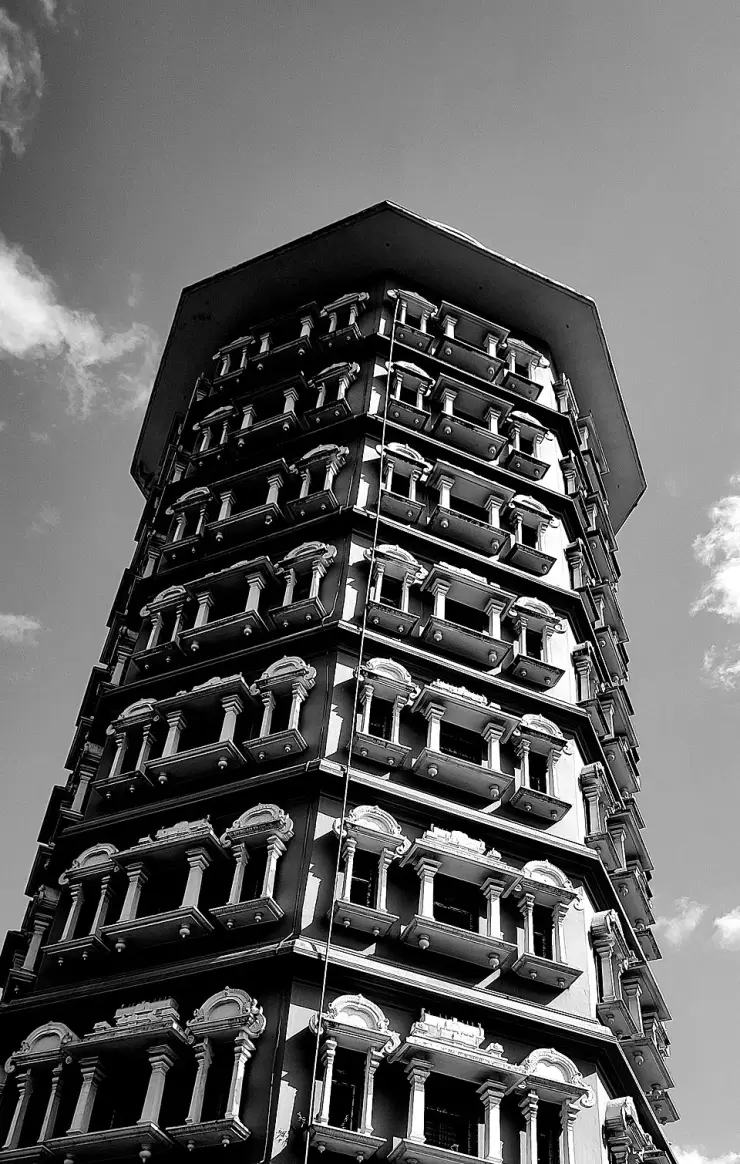
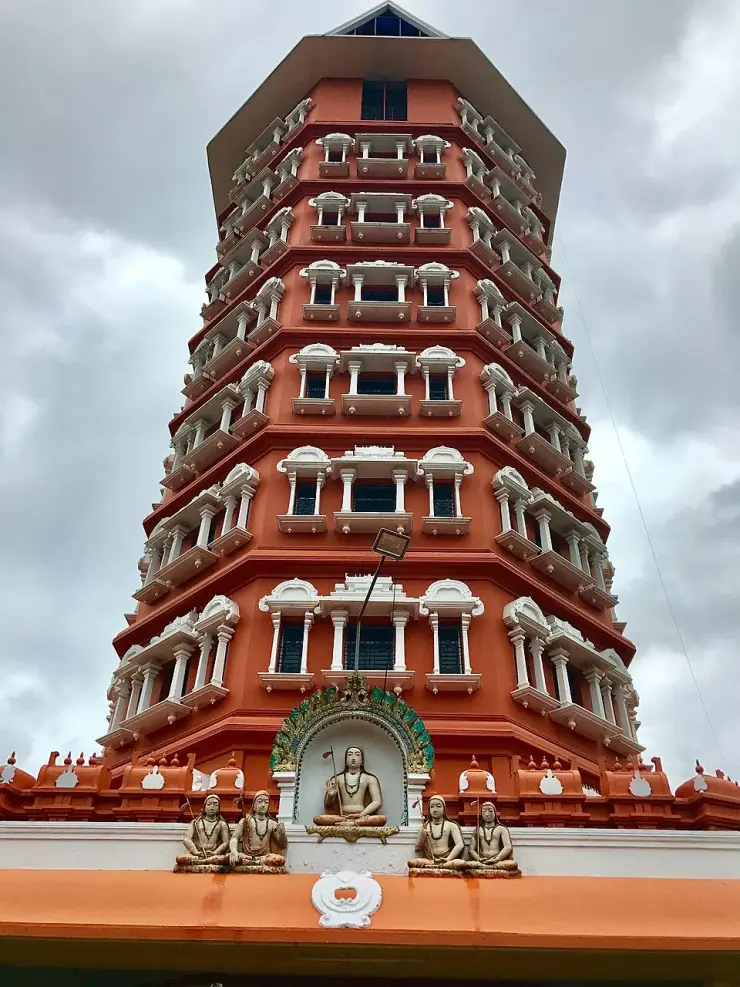
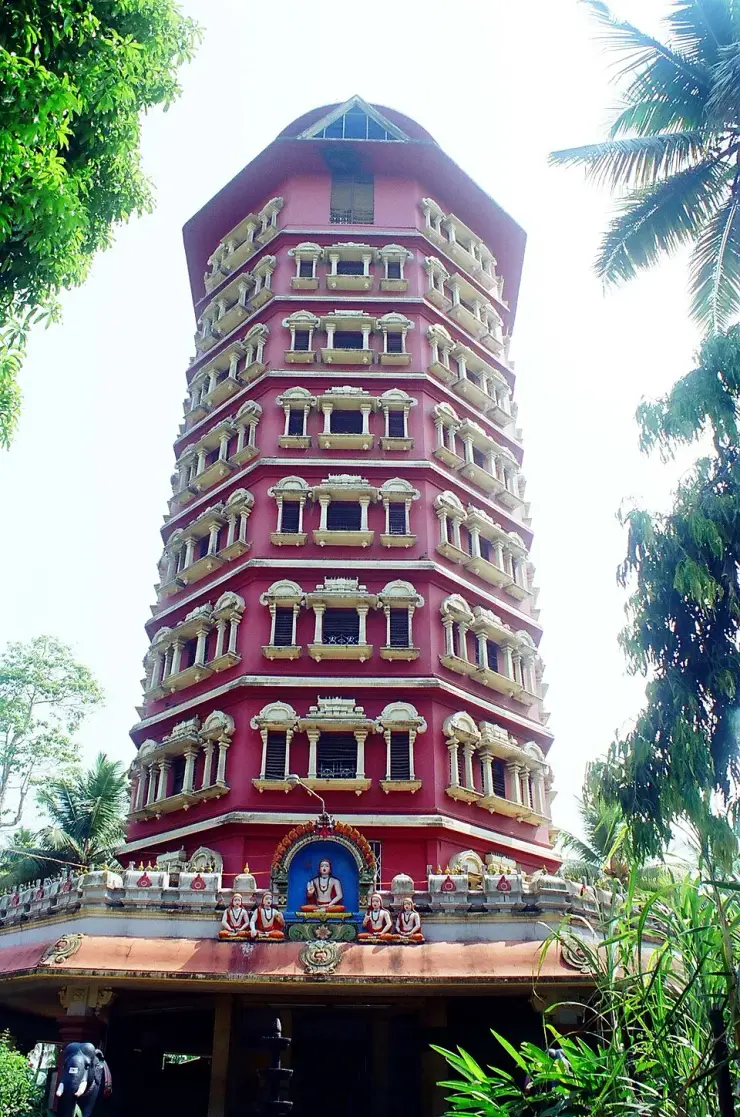
An eight-storey octagonal memorial tower to the philosopher Adi Shankaracharya at his birthplace, Kalady, on the Periyar river, dedicated in 1978 and run by the Kanchi Kamakoti Peetham.
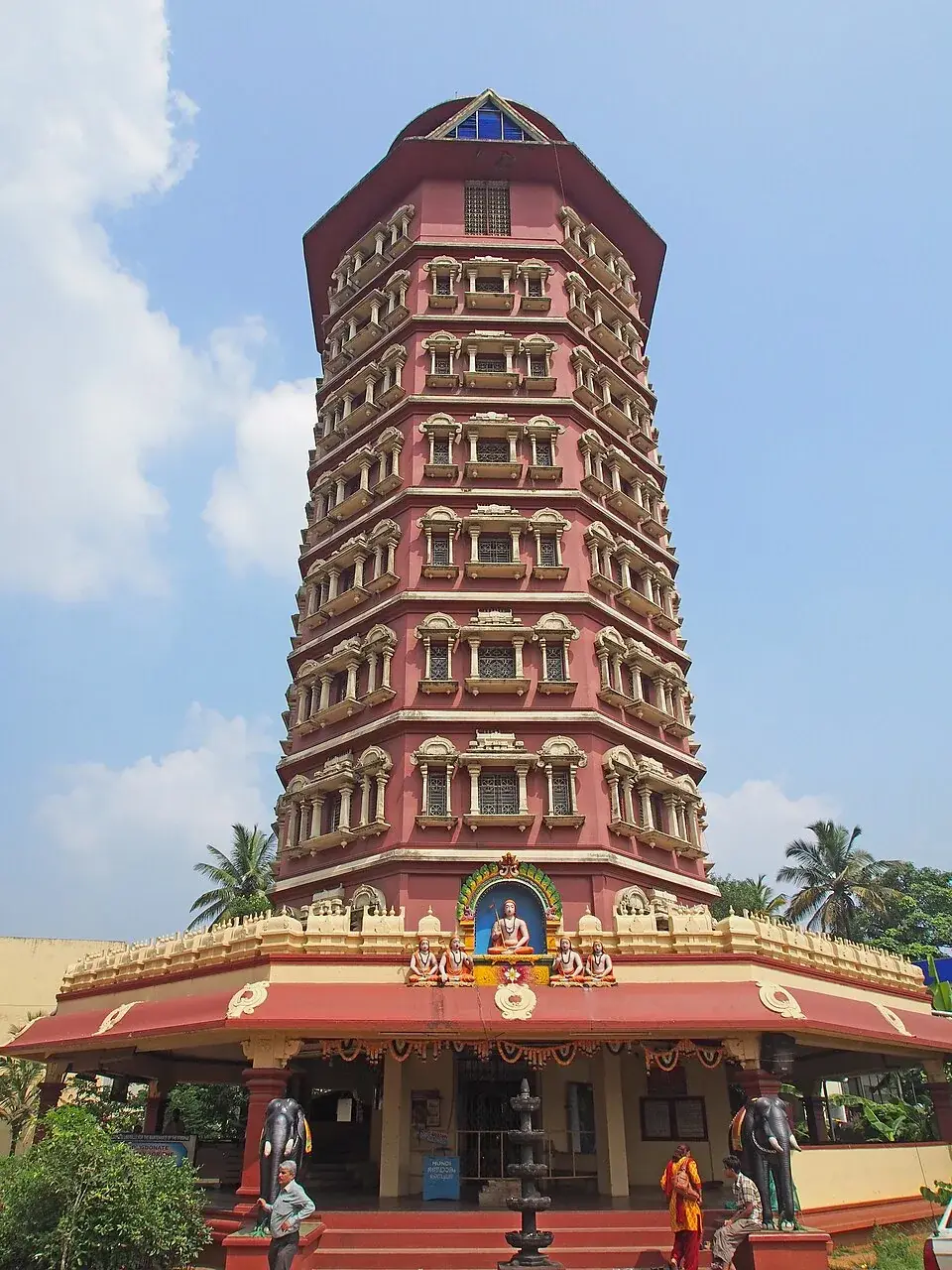
An eight-storey octagonal tower on the bank of the Periyar, built to mark the birthplace of the man who reorganised Hindu thought. Adi Shankara was born at Kalady, left it as a boy after an encounter with a crocodile in this river, and spent a short life — by tradition thirty-two years — walking India arguing for Advaita, non-duality. The Keerthi Sthambham, the Pillar of Fame, was dedicated in 1978. You climb it from the inside, past painted panels of his life, and come out at the top looking over the river he is said to have made change course for his mother.
The tower is the landmark, but Kalady is really a small pilgrimage town and the monument is one stop in it. The Sthambham stands on MC Road by the Periyar — here often called by its older name, the Purna — a short walk from the temple complex that marks the birthplace itself.
Climbing it is the visit. The interior stair winds up past a sequence of panels illustrating Shankara's life and teaching, and his four principal disciples, so the ascent is meant to be read rather than merely endured. Eight storeys is a real climb in Kerala heat; go early, and take the top slowly, because the view over the Periyar and the surrounding coconut country is the reward.
One distinction confuses almost every visitor, so it is worth getting straight before you arrive. Two different monastic institutions, both founded in Shankara's own tradition, maintain sites at Kalady. This tower was built by the Kanchi Kamakoti Peetham. The Adi Shankara Janma Bhoomi Kshetram — the birthplace temple complex nearby, with its shrines to Shankara and to the goddess Sharada — is run by the Sringeri Sharada Peetham. They are separate places under separate management, and people routinely arrive expecting one and describe the other.
Kalady is an easy day trip from Kochi and sits close to Cochin International Airport, which makes it a genuinely practical first or last stop on a Kerala trip — an hour here on the way to a flight is a much better use of the time than the airport lounge.
As at any active pilgrimage site, dress modestly, remove footwear where required, and expect the temple complex to follow the usual Kerala conventions on entry and photography.
The crocodile is the story that matters, because it is the hinge of Shankara's life. As it is told: the boy, bathing in the Purna, was seized by a crocodile. He called to his widowed mother Aryamba on the bank that the creature would not release him unless she consented, there and then, to let him take sannyasa — renunciation — which she had until then refused. She consented. The crocodile let him go. He left home a monk.
Read as biography it is a miracle story. Read as anything else it is a rather sharp account of how a determined child got his way with a grieving parent, and Hindu tradition has never been embarrassed by that reading.
The second legend explains the town's name. Kalady is glossed as “kal-adi”, footprint. The story goes that Shankara, returning as a monk, found his aged mother unable to walk far enough to reach the river to bathe, and caused the Purna to change its course and flow past the house — the new channel following the line of his footsteps.
A third tradition completes the pair: that he promised Aryamba he would return to perform her funeral rites despite being a renunciant forbidden to do so, and did, and was ostracised by the local orthodoxy for it. Kalady shows a spot associated with the cremation.
These are traditional accounts, told as such. The firm biographical facts about Shankara are thin — even his dates are disputed by centuries — and Kalady's identification as his birthplace rests on tradition maintained by the monastic institutions rather than on independent evidence.
The building itself is not entirely agreed upon, which is a small comedy given how recent it is. The Kanchi Kamakoti Peetham, which built it, describes the Keerthi Sthambham on its own pages as an imposing eight-storey structure, and eight is the figure you will see almost everywhere. At least one description calls it an eleven-storeyed octagonal shafted concrete structure standing on eight concrete pillars. We follow the builder. But it is worth noticing that a monument put up in the 1970s, by a living institution, on a public road, has already acquired a disputed dimension — which is a useful thing to remember two hundred metres away, where a birthplace is being asserted for a man whose century is argued over.
The most loaded object in the tower is not a painting. It is a pair of sandals. The Paduka Mandapam enshrines the padukas of Adi Shankara, and padukas are not relics in the Christian sense; they are a stand-in for the teacher himself. The idea has deep purchase in Indian tradition — Bharata rules Ayodhya from the foot of Rama's sandals rather than from the throne, governing in the name of an absent authority — and in the guru lineages it does the same work. The sandals mean the master is present and the seat is not vacant. For a tradition organised around an unbroken succession of teachers, that is the whole theology of the object in one image.
And the site quietly carries an institutional argument, which nobody explains to visitors and which explains the layout. Two monastic institutions founded in Shankara's own tradition maintain sites at Kalady within a few minutes' walk of one another. This tower belongs to the Kanchi Kamakoti Peetham. The Adi Shankara Janma Bhoomi Kshetram, the birthplace temple complex, belongs to the Sringeri Sharada Peetham. Both are legitimate heirs of the same teacher; both maintain their own account of his life, and — famously — their own dating for it, separated by more than a thousand years. Visitors routinely assume the two are one attraction with two entrances. They are not, and the reason is a very old disagreement about who speaks for Shankara.
The dates of the building, unlike the dates of the man, are firm. The Keerthi Sthambham was begun under the guidance of Jagadguru Sri Chandrasekharendra Saraswathi Swamigal of the Kanchi Kamakoti Peetham — the Paramacharya — and consecrated by his successor, Jayendra Saraswathi Swamigal, in 1978. The stoopi was dedicated to the nation by Neelam Sanjeeva Reddy, President of India, on 12 May 1978.
What that sequence records is a twentieth-century decision to make Kalady legible. For most of its history the birthplace was a tradition maintained by monastic institutions rather than a destination with monuments on it. The tower, the temple complex and the marked spots along the river are the physical form that tradition was given, largely within the last century, and mostly by two maths working in parallel rather than together.
The building is straightforward once you are inside it. Two elephant statues flank the entrance. The Paduka Mandapam, where Adi Shankara's sandals are enshrined, sits at the base. A spiral staircase runs up through the storeys past paintings and statues depicting episodes from his life and teaching, together with his four principal disciples, so the climb is designed to be read on the way up rather than merely survived. There is no lift; eight floors in Kerala heat is a real climb, and the sensible plan is to go early and take the last flight slowly.
Adi Shankara is held by tradition to have been born at Kalady and to have died at thirty-two, having travelled the subcontinent debating, writing commentaries on the Upanishads, the Bhagavad Gita and the Brahma Sutras, and establishing monastic centres that survive as the principal Shankaracharya lineages. His dates are contested, with proposed periods differing by several centuries.
Kalady's modern identity as a pilgrimage centre is comparatively recent: the site's association was revived and formalised by the Shankara monastic institutions, which established the birthplace temple complex and later the memorial tower.
The Keerthi Sthambha Mandapam was conceived by Jagadguru Sri Chandrasekharendra Saraswathi Swamigal of the Kanchi Kamakoti Peetham — the Paramacharya — and built under his guidance.
It was consecrated by his successor, Jagadguru Sri Jayendra Saraswathi Swamigal, in 1978, and dedicated to the nation by the President of India, Neelam Sanjiva Reddy, on 12 May 1978.
The tower rises eight storeys, its interior carrying painted panels depicting episodes from Shankara's life and his four chief disciples — Padmapada, Sureshwara, Hastamalaka and Totaka — so that the climb functions as a narrative.
Because the climb is designed to be read: eight floors of paintings and statues taking you through Shankara's life and his four principal disciples, ending with a view over the Periyar.
Because the padukas at the base explain, in one object, how a guru lineage understands succession — the sandals stand in for the teacher, and the seat is never empty.
And because Kalady is ten minutes from Cochin International Airport, which makes an hour here a far better use of a long layover than the departure lounge.
Because it marks the birthplace of one of the most consequential thinkers in Indian history, and does it with a monument you can climb rather than merely photograph.
Because the interior panels turn eight flights of stairs into a walk through Shankara's life and his four disciples.
Because the top gives a wide view over the Periyar and the coconut country of central Kerala.
Because Kalady is a short drive from Cochin International Airport, which makes it the rare pilgrimage town you can genuinely fit around a flight.
And because the crocodile story is attached to the actual river you are standing above, which is a much stranger feeling than reading it in a book.
Road km to Ernakulam; ghat roads and traffic vary — allow extra.
November to February and early mornings are best for walking; avoid midday heat where possible.
Live forecast loads in your browser.
Sun and moon are calculated for this location and shown in IST. Photography windows are the hour around sunrise and sunset; the sunset bearing is degrees clockwise from true north. Moon phase is accurate to about half a day.
Verified hotels, homestays, restaurants, experiences, sights, shops and rentals around Adi Shankara Keerthi Sthambha Mandapam — commission-free, with direct contact. Filter by what you need.
Kerala's state Sanskrit university, built on the ground where Adi Shankara was born. Sree Sankaracharya University of Sanskrit, Kalady, Ernakulam District, Kerala 683574.
The Sringeri Math's Kalady branch, holding the Sharadamba and Adi Shankara shrines consecrated in 1910.
A nine-storey memorial tower to Adi Shankaracharya at his Kalady birthplace.
Kerala Tourism accredited hotel at Marottichuvadu, the nearest classified stay to Kalady.
Kerala Tourism accredited tourist home at Chandrapura, along the Kalady-Manjapra road.
Worker-cooperative coffee house at Kolenchery Tower, Mattoor, between Kalady and Angamaly.
Multi-cuisine restaurant and bar inside Kadambari Regency at Marottichuvadu, Kalady.
Book with the place itself. India’s cyber-crime coordination centre warned in April 2025 that convincing copies of hotel and pilgrimage booking sites are being pushed through sponsored search and social ads, taking payment for rooms the property never hears about. Every listing here links to the business’s own contact details and its own Google or Bing profile — we take no commission and sit in nobody’s payment path. If a booking page reached you through an ad, check the address bar against the property’s own site before you pay. Fraud can be reported on cybercrime.gov.in or on 1930.
Find food, accommodation and activities across Kalady. Browse the guides for places to eat, stay and explore along your route.
Walking routes start at Adi Shankara Keerthi Sthambha Mandapam. Check the route and access before setting out, especially where a road, gate or waterway separates the stops.
6 more places around Kalady. Open a guide to plan the visit and onward journey.
A family boating and waterside recreation centre on the Kadambrayar near Kakkanad; boat availability, operating hours and water conditions should be checked directly.
A historic mosque and pilgrimage centre near the Vembanad backwater belt, known for the Kodikuthu festival and visited with ordinary mosque etiquette.
240 m · 3 min walk
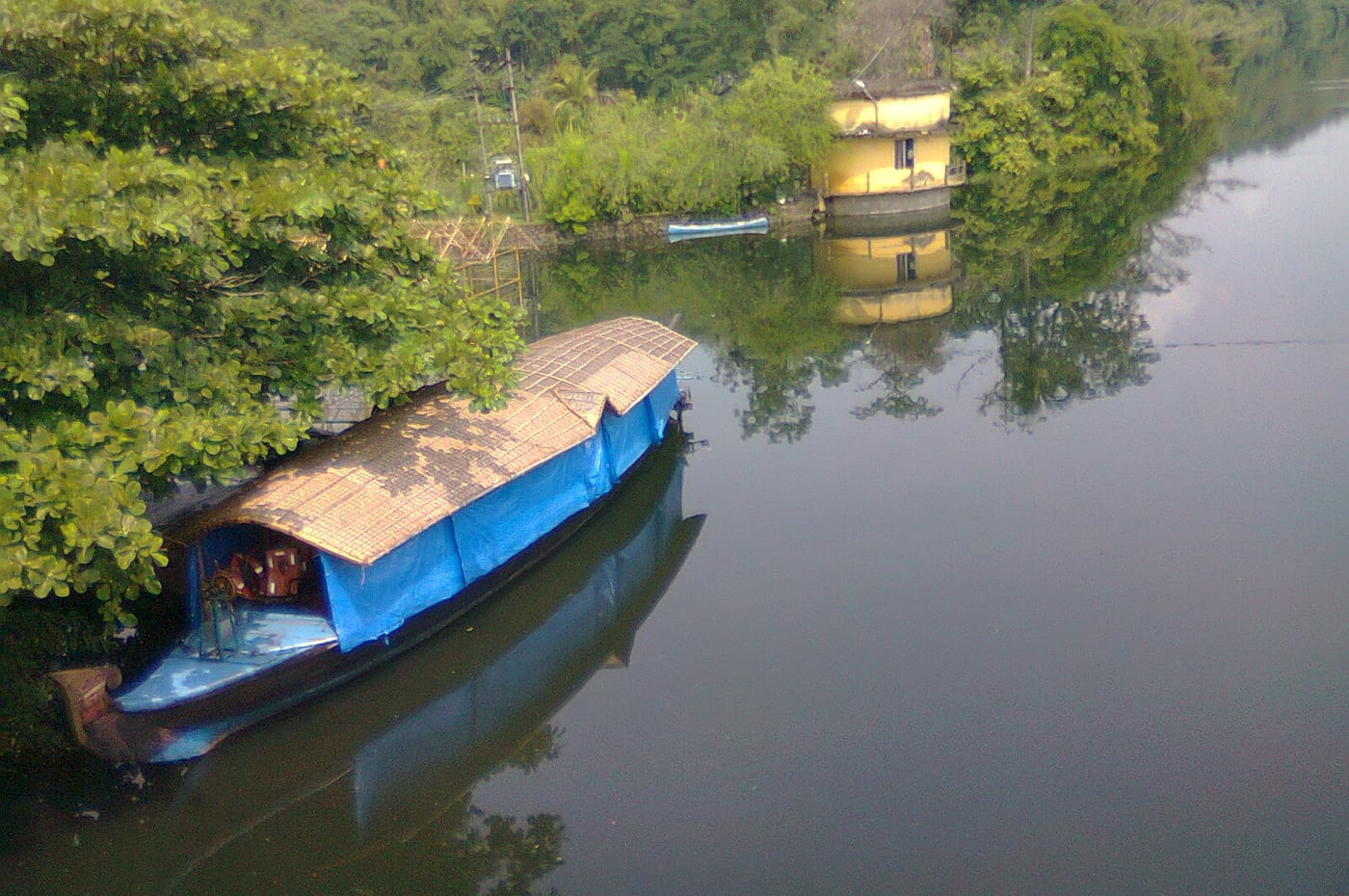
Kerala’s longest river, and the reason Kalady stands where it does — the Adi Shankara traditions of the crocodile and of the river changing course both belong to this water. Ghats and quiet riverside walks beside the birthplace complex.
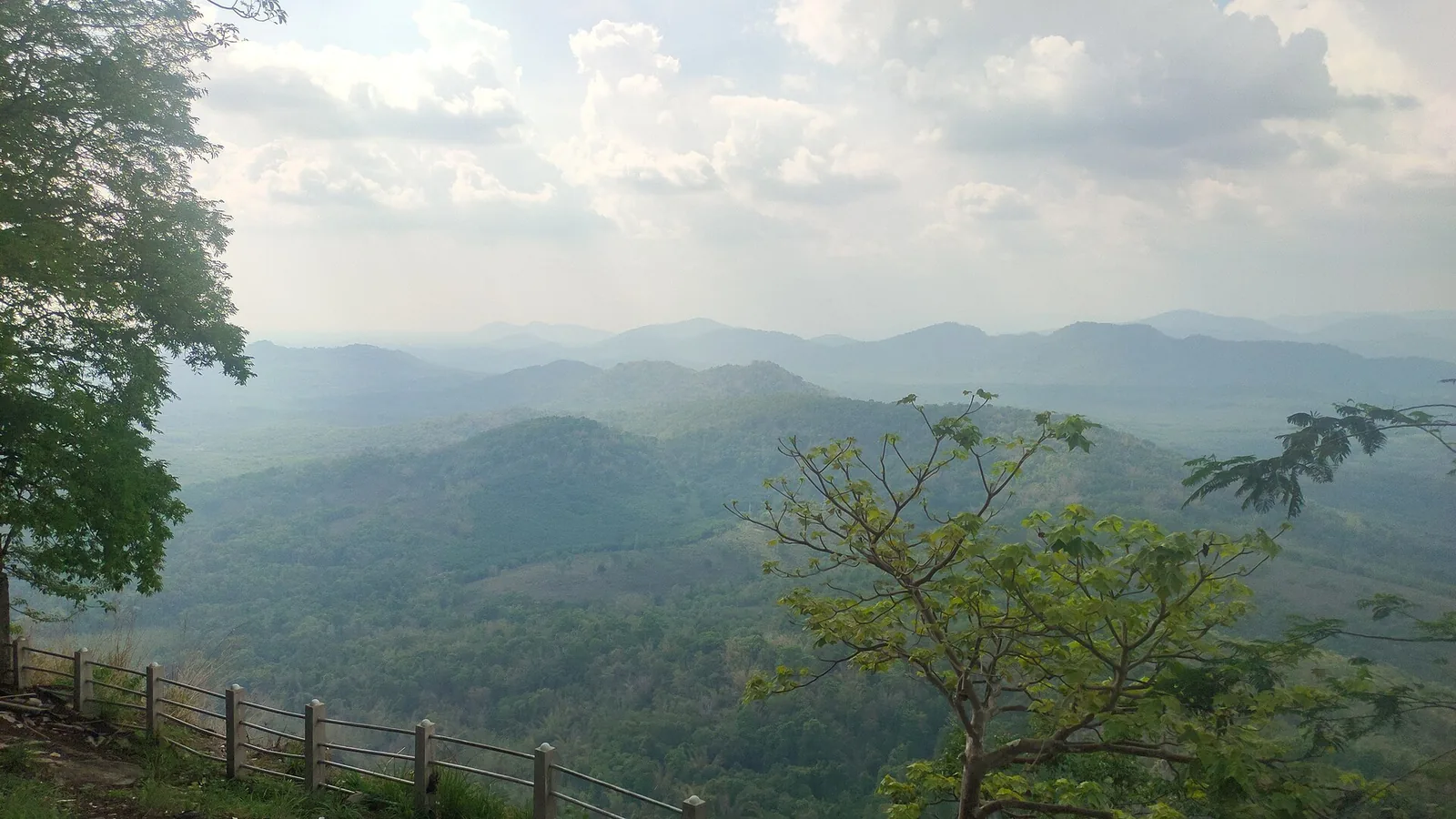
8.8 km · 10 min drive
The St Thomas hilltop pilgrimage church near Kalady, a major Christian pilgrimage site drawing large Malayattoor Perunnal crowds.
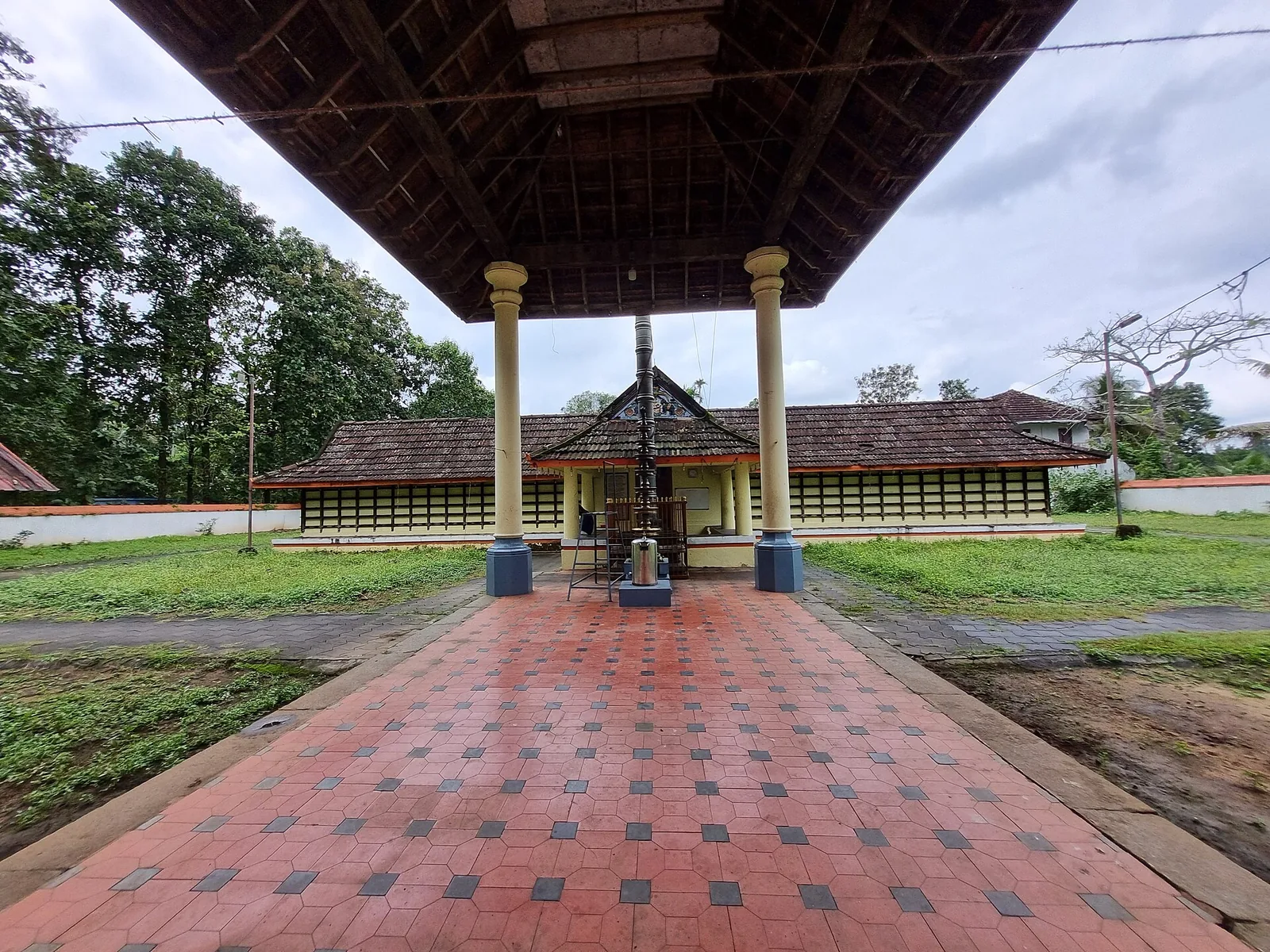
2.4 km · 3 min drive
The Manickamangalam Devi temple north of Kalady, remembered as the shrine where Adi Shankara’s father Sivaguru served — the family connection, rather than the building, is why pilgrims come.
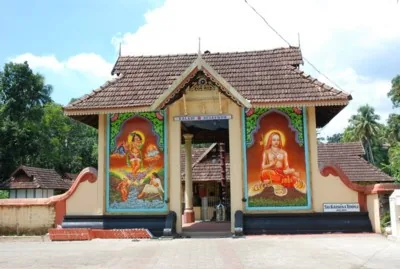
1.4 km · 17 min walk
Adi Shankara’s family temple at Kalady, west of the Sringeri Math birthplace complex — the shrine at the centre of the story that gave the village its name.
Roampedia is commission-free — own or know a stay, eatery, guide or shop near Adi Shankara Keerthi Sthambha Mandapam? List it and it appears here once verified.
Add a nearby businessGovernment monuments, museums and forest reserves in India often charge foreign visitors more. We have not verified whether this site does — ask at the counter.
Fees change without notice. Check the current rate at the counter.
Entry: A nominal ticket of around ₹5 per person to climb the tower. The Janma Bhoomi Kshetram birthplace complex nearby is free.
Dress code: Modest dress. There is a shrine inside — the Paduka Mandapam, where Adi Shankara’s sandals are consecrated and worship is offered — so footwear comes off and the usual temple courtesies apply.
Photography: Photography of the tower and the view from the top is generally fine; the Paduka Mandapam shrine inside is a place of worship, so ask before photographing there.
If you are travelling by bus or ferry, check the return service with the operator before setting out. Leave time to reach the stop or jetty after your visit.
Ask at the bus stand for the time of the last service back, not the next one. If you miss it, an auto or app cab is the fallback — agree the fare before you get in.
If you need step-free access, contact the site before travelling. Ask about a level entrance, steps along the route, the nearest drop-off point, seating and accessible toilets.
Charge cap and free-transaction limits: Reserve Bank of India, in force since 1 May 2025.
These services are listed within about 1.2 km of Adi Shankara Keerthi Sthambha Mandapam. Walking distances follow mapped routes; access and opening hours can change. Other services may be closer but are not included here.
Emergency numbers are verified against official government and state tourism sources. 112 works anywhere in India.
Kerala’s longest river, and the reason Kalady stands where it does — the Adi Shankara traditions of the crocodile and of the river changing course both belong to this water. Ghats and quiet riverside walks beside the birthplace complex.
240 m · 3 min walkAdi Shankara’s family temple at Kalady, west of the Sringeri Math birthplace complex — the shrine at the centre of the story that gave the village its name.
1.4 km · 17 min walkThe Manickamangalam Devi temple north of Kalady, remembered as the shrine where Adi Shankara’s father Sivaguru served — the family connection, rather than the building, is why pilgrims come.
2.4 km · 3 min driveThe St Thomas hilltop pilgrimage church near Kalady, a major Christian pilgrimage site drawing large Malayattoor Perunnal crowds.
8.8 km · 10 min drive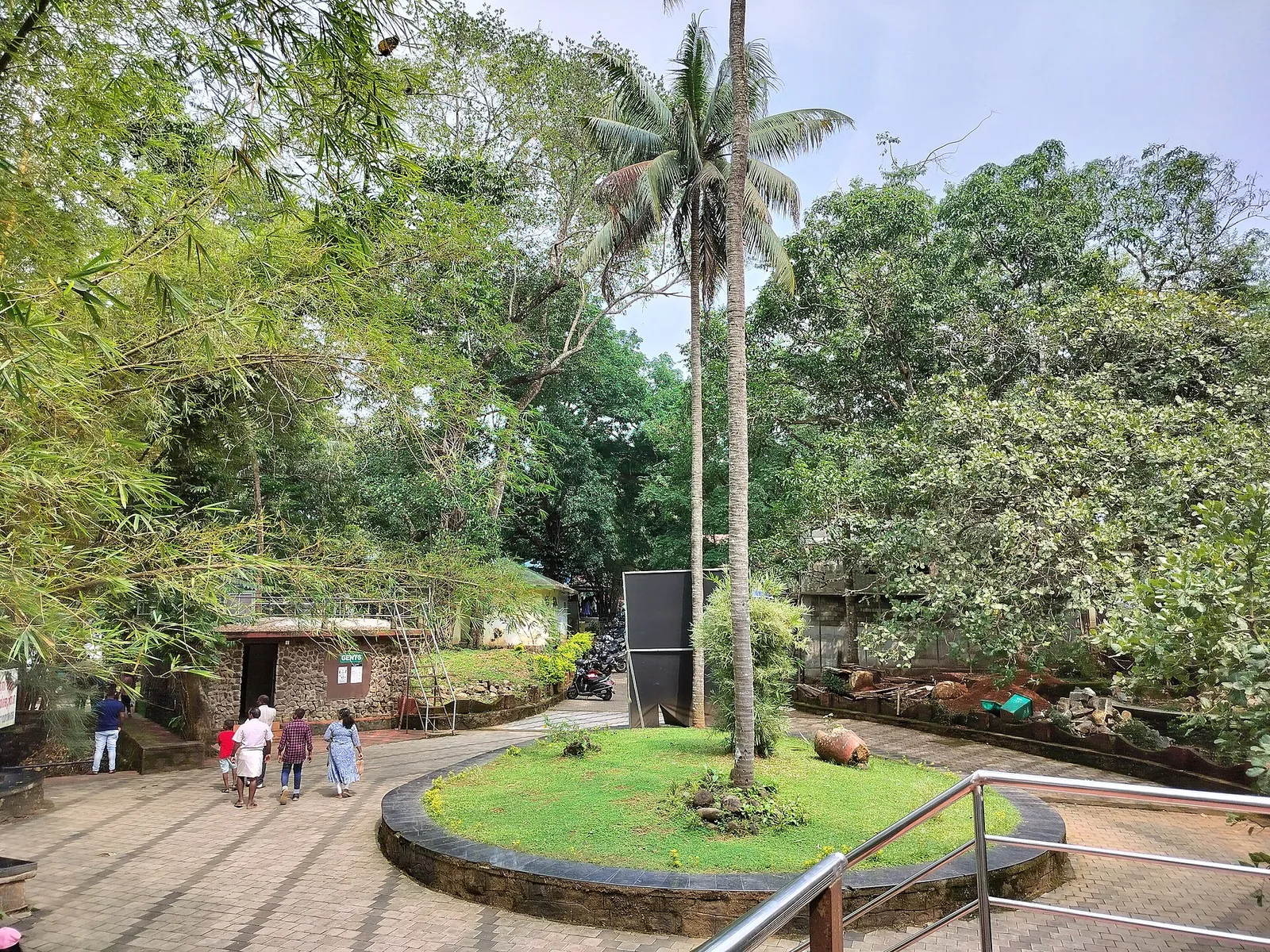
A riverside nature village on the Chalakudy river near Mattoor, with a bamboo forest walk and gentle river bathing spots, on the Athirappilly day-trip side.
13.1 km · ~22 min by cab · straight line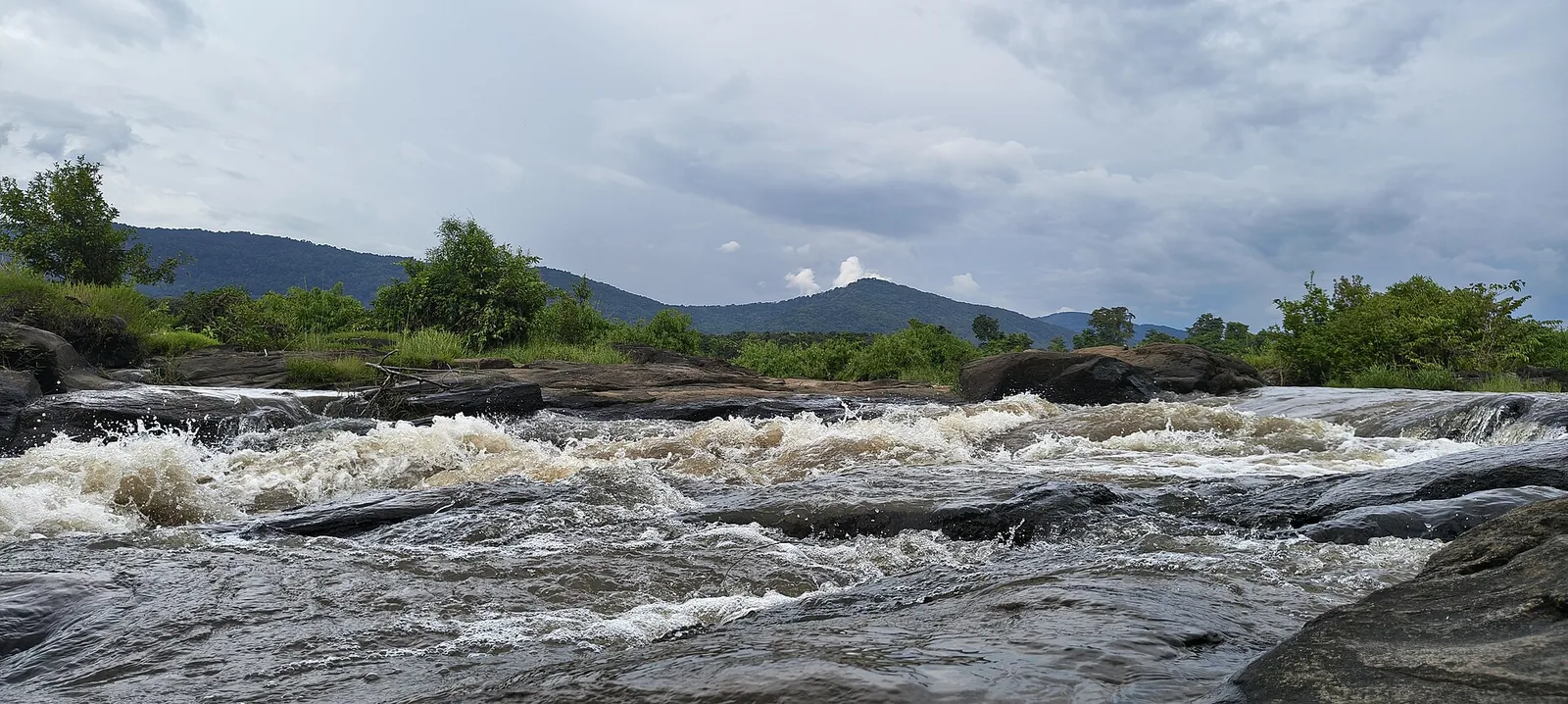
A rocky eco-tourism stretch of rapids and evergreen forest on the Periyar river near Perumbavoor in eastern Ernakulam, with riverside forest trekking along the falls.
17.4 km · ~29 min by cab · straight line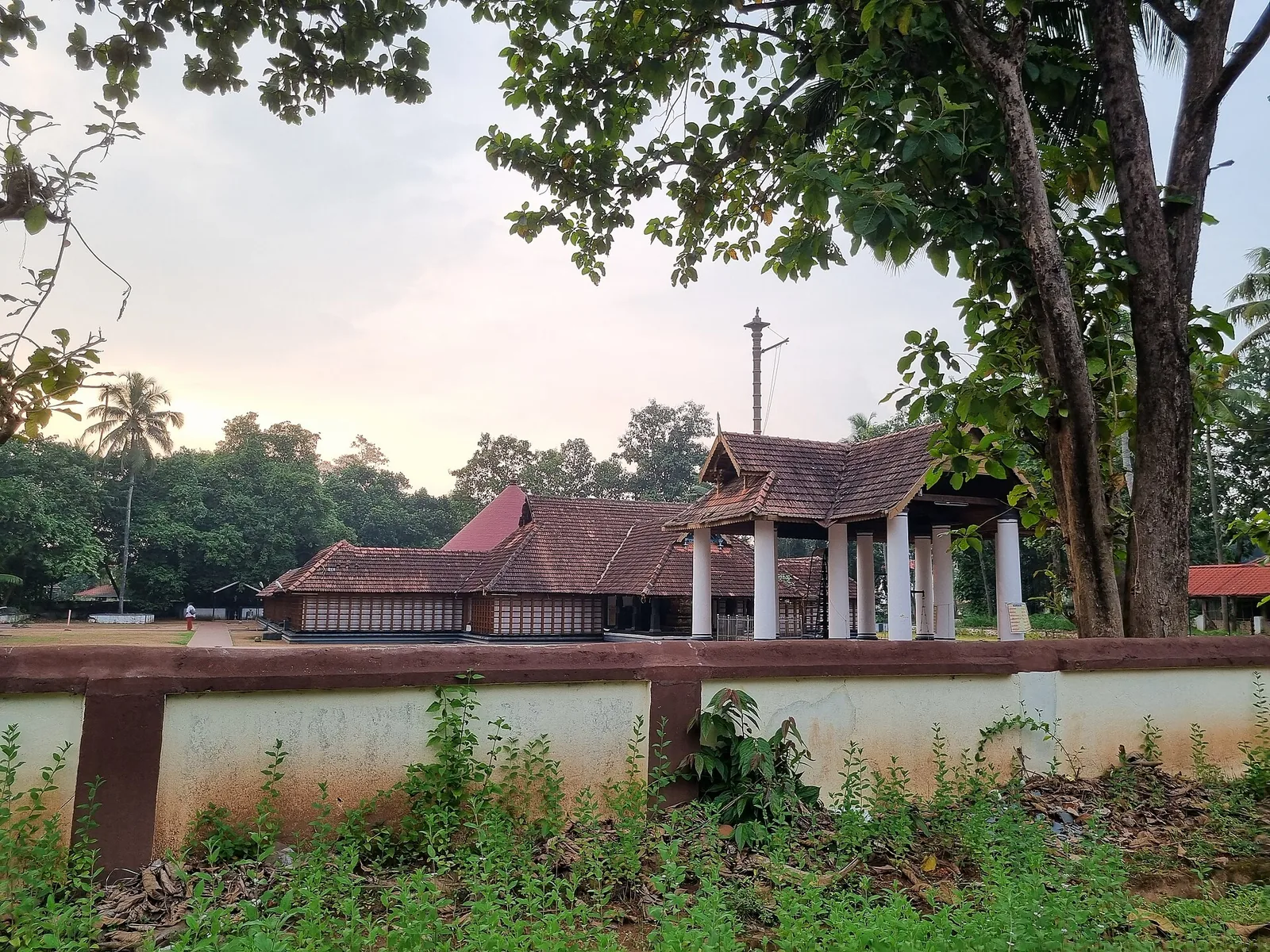
The only major temple to Vamana in Kerala, at Thrikkakara near Kakkanad — traditionally regarded as the origin place of the Onam festival.
18.8 km · ~31 min by cab · straight line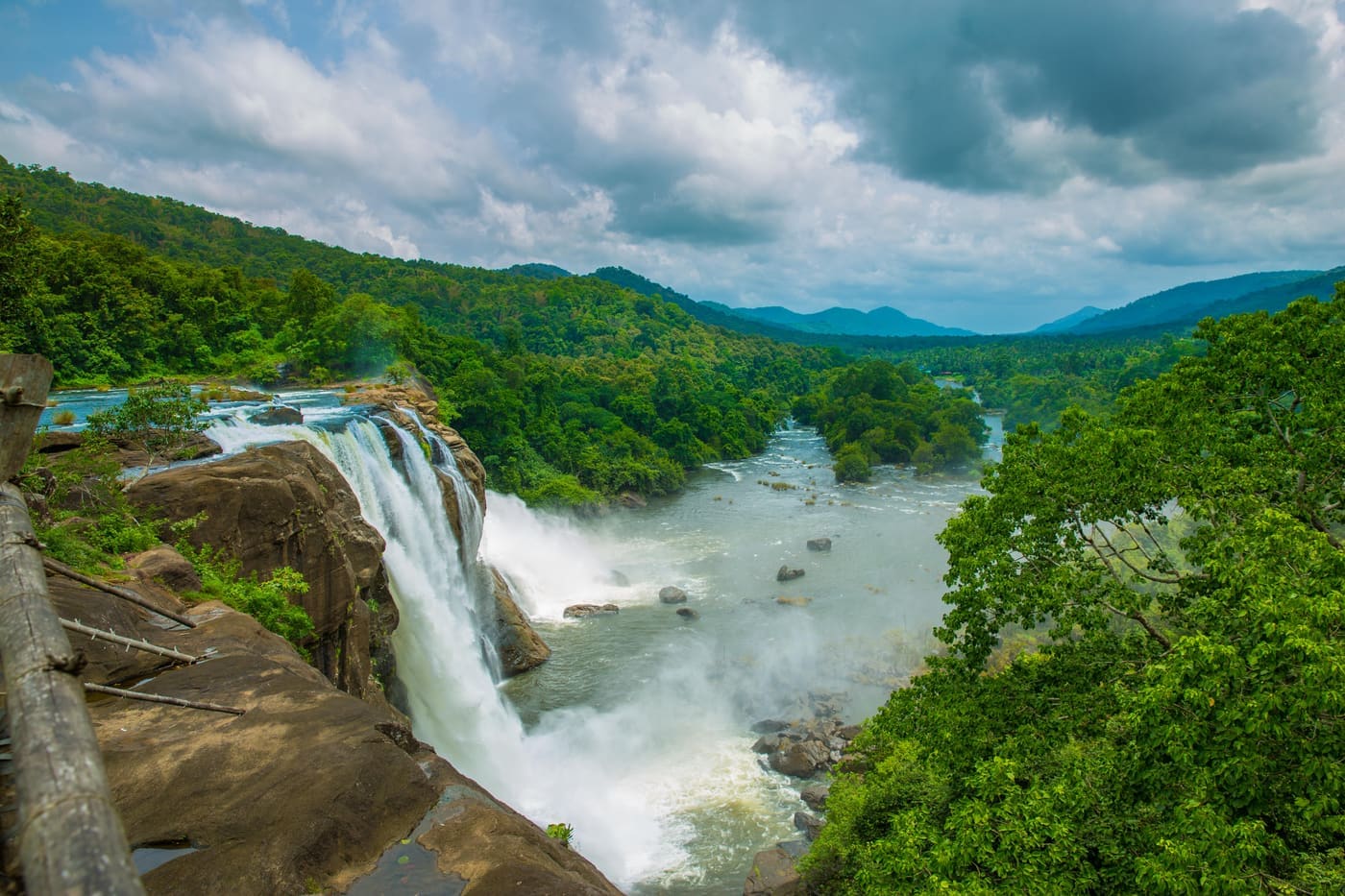
Major waterfall often visited from Kochi, on the Chalakudy river side.
19.5 km · ~32 min by cab · straight line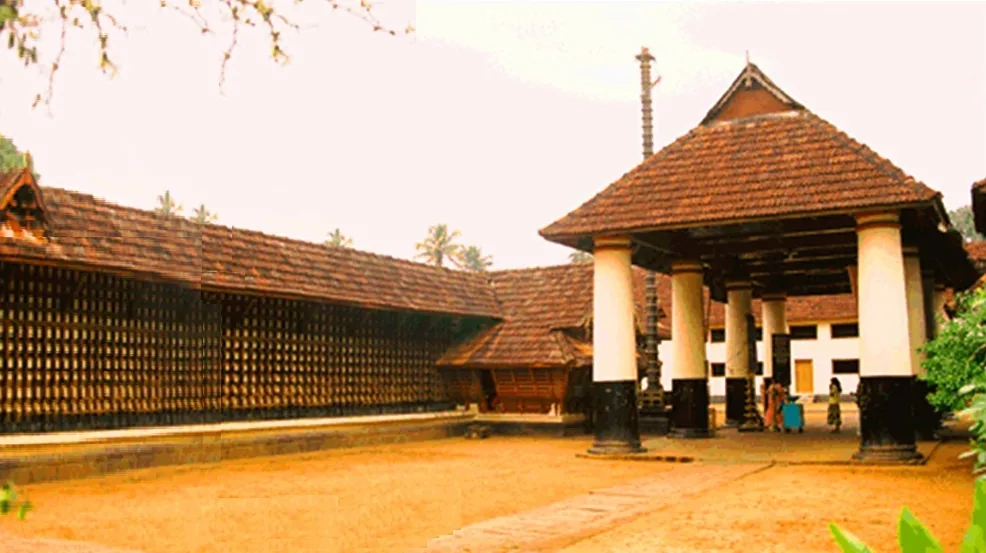
A historic Shiva temple at Kothamangalam near the Thattekkad forests, one of the important ancient temples of the old Kochi region.
21.3 km · ~36 min by cab · straight line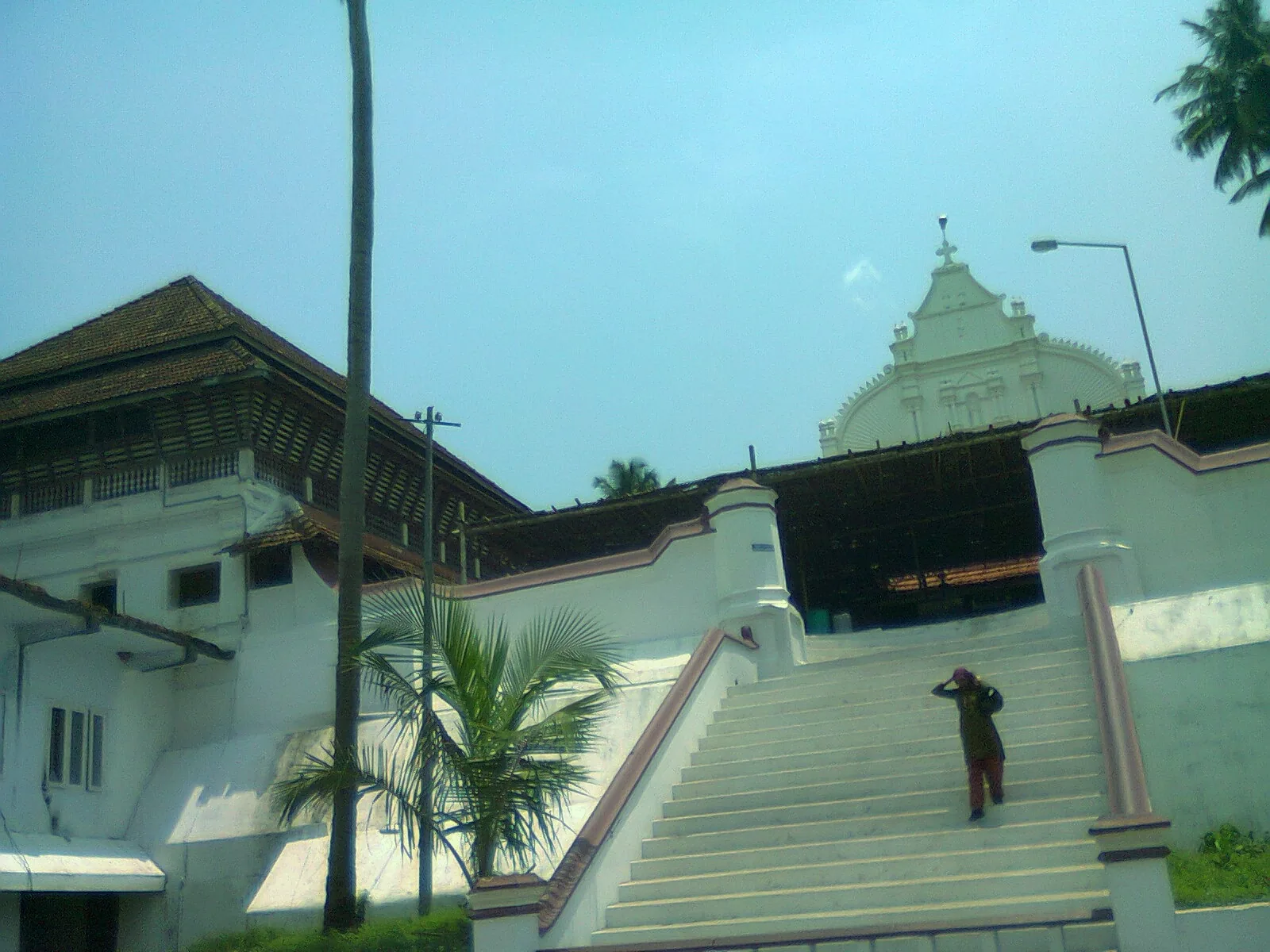
An ancient Orthodox church east of Kochi linked to the legend of the sorcerer-priest Kadamattathu Kathanar, drawing large crowds at its annual feast.
22.2 km · ~37 min by cab · straight line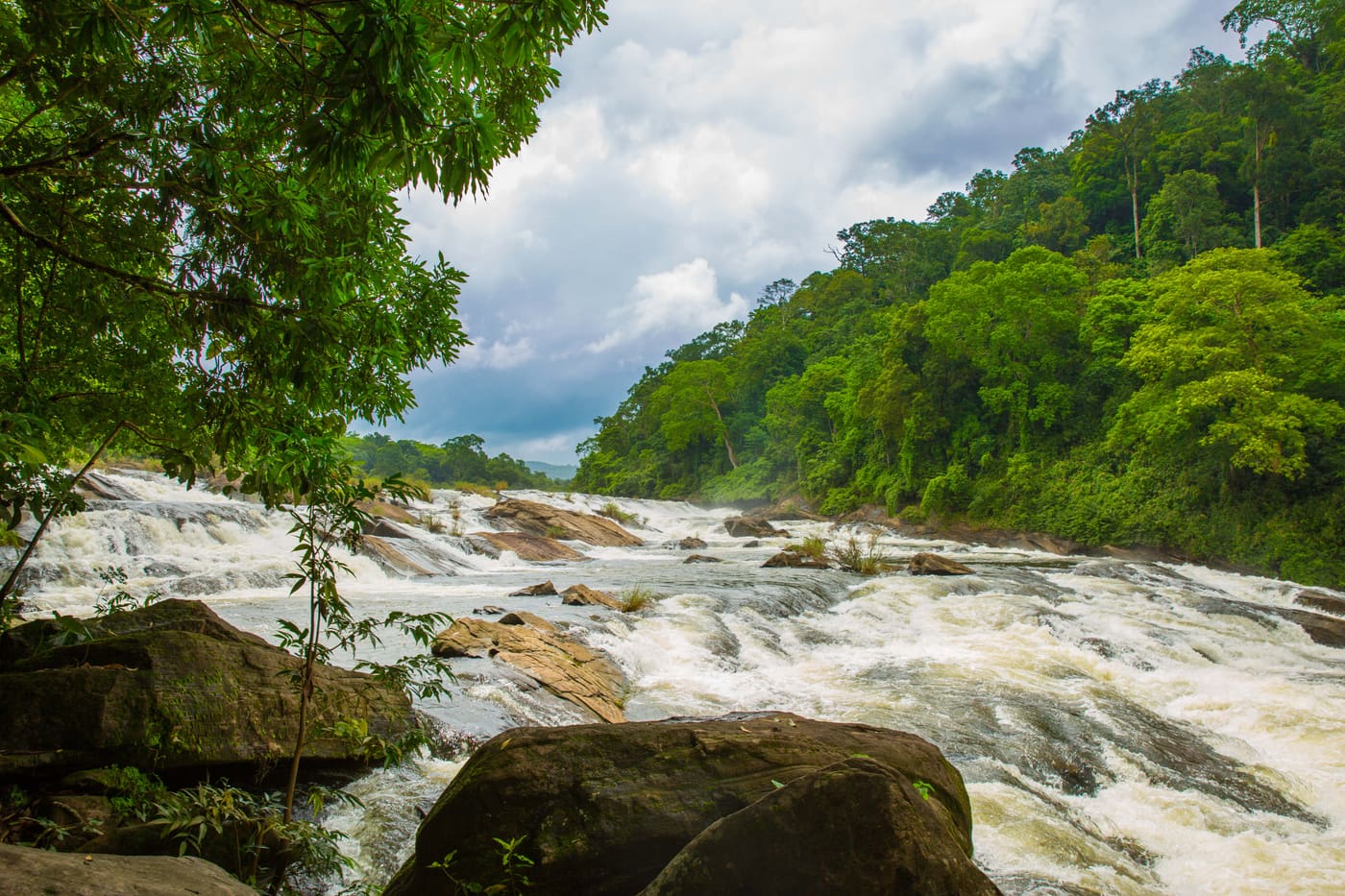
A forest waterfall on the Chalakudy river just above Athirappilly, on the Sholayar forest road — often visited on the same Kochi day trip.
22.5 km · ~38 min by cab · straight line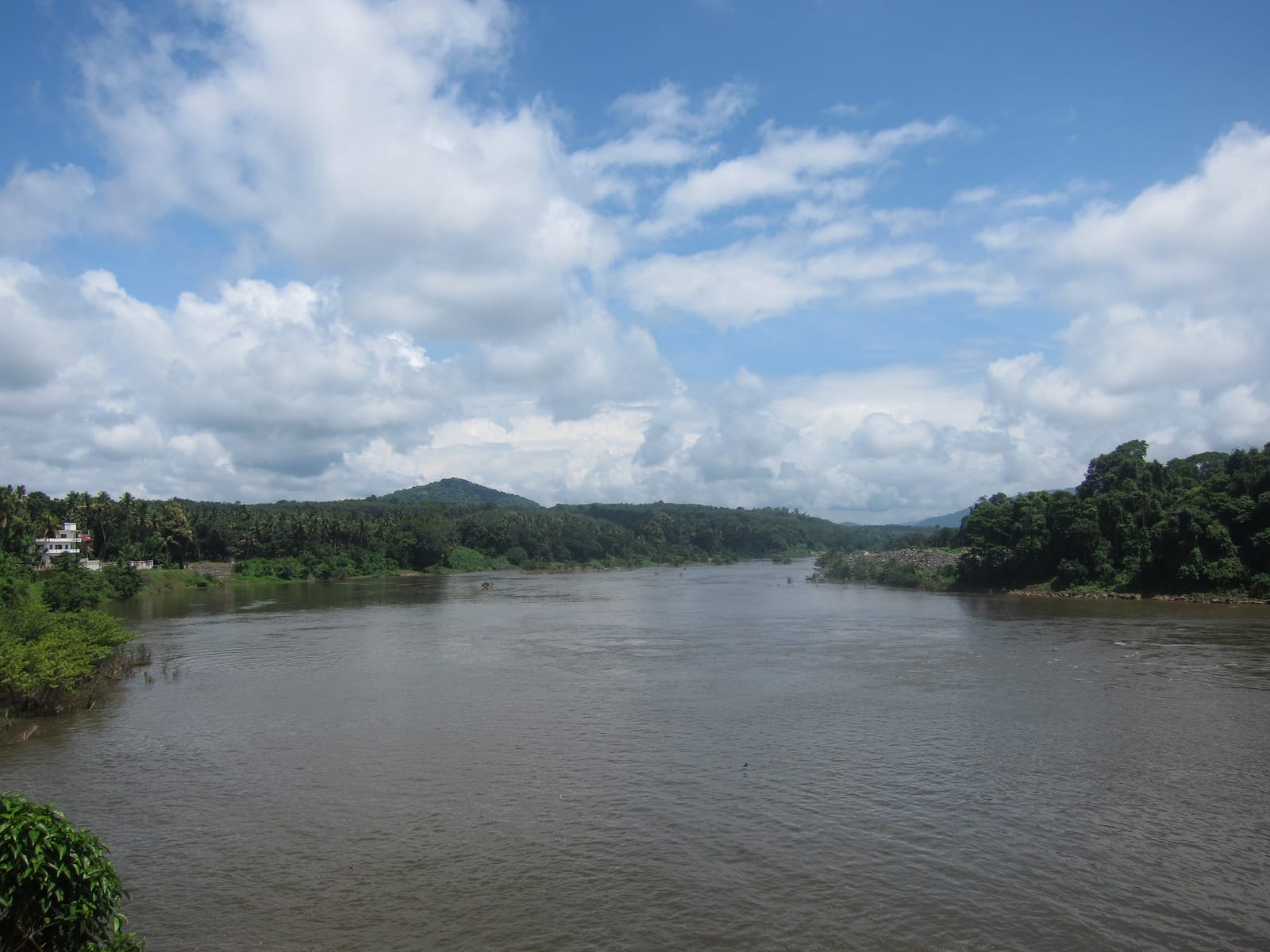
A reservoir and dam at the confluence of the Periyar’s tributaries near Kothamangalam, on the edge of the Thattekkad forests, with forest-and-reservoir trekking around the barrage and a DTPC boat jetty.
24.9 km · ~42 min by cab · straight lineWalking and driving times are real routed distances, except the few marked “straight line”, which are direct-line estimates and will read short. Fare figures are estimates from Kerala’s notified auto/taxi tariff and exclude waiting and night charges. Routing: © openrouteservice.org by HeiGIT | Map data © OpenStreetMap contributors
Nearby toilets, pharmacies, ATMs, seating and vets are community-mapped and may be incomplete or out of date. Map data © OpenStreetMap contributors | Walking times © openrouteservice.org by HeiGIT
Twenty to thirty minutes for the tower, or an hour or two for the whole of Kalady with the birthplace complex and the river ghat. There is no lift, so it is eight flights of a spiral stair in Kerala heat — go early, take water, and take the last flight slowly. The panels on the way up are the point, so it is not a climb to rush.
The Kanchi Kamakoti Peetham. It was begun under the guidance of Jagadguru Sri Chandrasekharendra Saraswathi Swamigal — the Paramacharya — consecrated by Jayendra Saraswathi Swamigal in 1978, and the stoopi was dedicated to the nation by Neelam Sanjeeva Reddy, President of India, on 12 May 1978.
Eight, according to the Kanchi Kamakoti Peetham's own description, and eight is the figure in general use. At least one published description calls it an eleven-storeyed octagonal shafted concrete structure on eight concrete pillars. We follow the builder — but it is a good illustration of how quickly a dimension becomes disputed, even on a monument from the 1970s.
The shrine at the base of the tower where Adi Shankara's padukas — his sandals — are enshrined. In Indian tradition padukas stand in for the teacher himself rather than serving as mere relics; Bharata rules Ayodhya from the foot of Rama's sandals in the Ramayana, and the guru lineages use the image the same way. The sandals say the seat is not vacant.
No, and the confusion is near-universal. This tower belongs to the Kanchi Kamakoti Peetham. The Adi Shankara Janma Bhoomi Kshetram, the birthplace temple complex a short walk away, belongs to the Sringeri Sharada Peetham. Both institutions descend from Shankara, both maintain sites at Kalady, and they differ — by more than a thousand years — on when he lived.
Eight storeys, and yes — climbing it is the point. The internal stair passes painted panels of Adi Shankara's life and his four principal disciples, and the top gives a view over the Periyar. It is a warm climb, so go early in the day.
It was conceived by Sri Chandrasekharendra Saraswathi Swamigal of the Kanchi Kamakoti Peetham, consecrated by his successor Sri Jayendra Saraswathi Swamigal in 1978, and dedicated to the nation by President Neelam Sanjiva Reddy on 12 May 1978.
No, and this is the most common mix-up at Kalady. This memorial tower is maintained by the Kanchi Kamakoti Peetham. The Adi Shankara Janma Bhoomi Kshetram, the birthplace temple complex nearby, is run by the Sringeri Sharada Peetham. Two separate sites, two separate institutions — most visitors see both.
Tradition holds that the boy Shankara, bathing in the Purna (Periyar), was seized by a crocodile and told his mother Aryamba it would not free him unless she consented to let him become a renunciant. She consented, the crocodile released him, and he left home as a monk. It is told as the turning point of his life.
It is popularly glossed as “kal-adi”, meaning footprint. By legend Shankara caused the river to change course so his ageing mother could reach it to bathe, and the new channel followed his footsteps.
A small charge is usually collected. Amounts are nominal and change, so confirm on the day.
Kalady is an easy day trip from Kochi and lies close to Cochin International Airport at Nedumbassery, which makes it practical as a first or last stop on a Kerala itinerary.
That is genuinely disputed. Traditional accounts give him a life of thirty-two years, but proposed dates for that life differ by several centuries between scholarly and traditional chronologies. Kalady's identification as his birthplace rests on tradition maintained by the Shankara monastic institutions.
November to February and early mornings are best for walking; avoid midday heat where possible.
Entry: A nominal ticket of around ₹5 per person to climb the tower. The Janma Bhoomi Kshetram birthplace complex nearby is free. Timings: Commonly given as roughly 7:00am–7:00pm, though other listings split the day into about 5:00am–1:00pm and 4:00–8:00pm. The two versions circulate side by side and we have not been able to reconcile them, so allow for a midday closure rather than counting on one. The Janma Bhoomi Kshetram is usually about 6:00am–12:00pm and 4:00–8:00pm. The rupee figure quoted is the Indian adult rate. Government monuments, museums and forest reserves in India often charge foreign visitors more, and we have not verified whether this site does.
Base yourself in Kalady or a nearby town in Ernakulam, then confirm the last-mile route locally before leaving. Walkable heritage areas are best done slowly; combine nearby streets, museums, markets and food stops. If the visit depends on forest, temple, boat, ferry, weather or seasonal access, check the official/local rule on the day before travel.
1 to 3 hours.
Nearby you can pair Periyar river (240 m), Sree Krishna Temple (1.4 km), Karthyayani Devi Temple (2.4 km), Malayattoor Church (8.8 km).
Watch traffic on narrow heritage streets. Keep valuables close in crowded markets.
Written about Adi Shankara Keerthi Sthambha Mandapam itself — its history, its legends and the arguments about them.
These guides explore Kalady and the surrounding area. Choose a visit that fits your interests, allowing separately for travel between stops.


Route-level itineraries and practical guides for the rest of Kerala.
Photographs: Prof Ranga Sai (CC BY-SA 4.0), Ms Sarah Welch (CC BY-SA 4.0), డా. గన్నవరపు నరసింహమూర్తి (CC0), Timothy A. Gonsalves (CC BY-SA 4.0), Navaneeth Krishnan S (CC BY-SA 4.0), Public domain (Public domain), This Photo was taken by Timothy A. Gonsalves. Feel free to use my photos, but please mention me as the author. I would much appreciate if you send me an email [email protected] or write on my talk page, for my information. Please contact me before commercial use. Please do not upload an edited image here without consulting me. I would like to make corrections only at my own source to ensure that the changes improve the image and are preserved.Otherwise you may upload an edited image with a new name. Please use one of the templates derivative or extract. (CC BY-SA 4.0). Wikimedia Commons.