What to expect
Highlights
- Temple visit at Karthyayani Devi Temple
- Kerala temple architecture and rituals
- Local food, shops and pilgrim services nearby
The Manickamangalam Devi temple north of Kalady, remembered as the shrine where Adi Shankara’s father Sivaguru served — the family connection, rather than the building, is why pilgrims come.
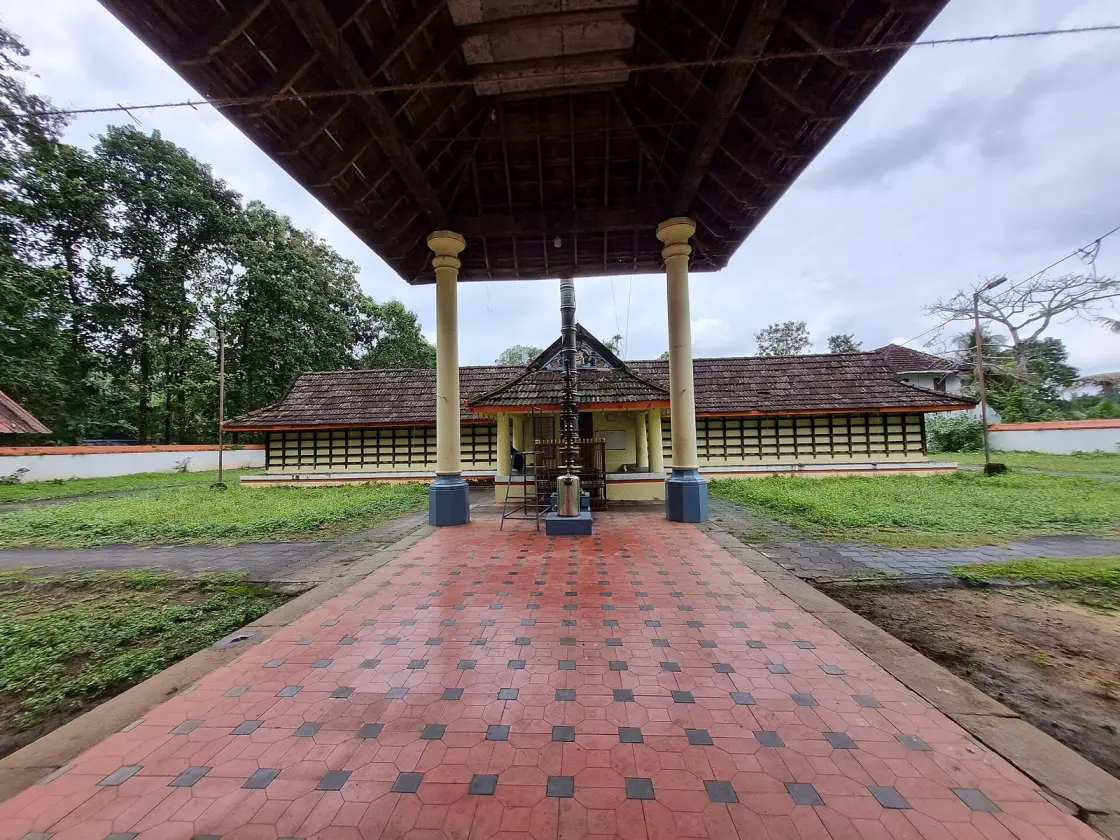
Check entry arrangements. Ask temple staff about visitor entry, dress requirements and access to the inner shrine before you travel, especially if you are visiting as a non-Hindu.
Dress respectfully and follow the institution’s admission and photography rules.
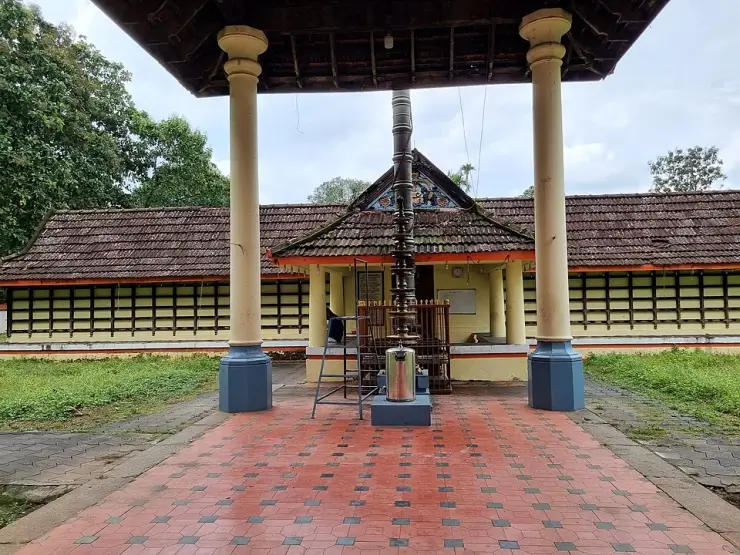
Two kilometres north of Kalady, in a village most visitors never hear of, is the temple where the Adi Shankara story actually begins. Manickamangalam's Sree Karthyayani Devi Temple is where his father Sivaguru served as priest — the family's own shrine before there was a family legend. It is a small east-facing temple with a round sanctum, one of Kerala's 108 Durga shrines, and it has no ticket desk, no guide and no signboard pointing to it from the memorial tower down the road.
Read the building before you read the story attached to it. The sanctum is circular and faces east, the presence is held to be swayambhu — self-manifested rather than installed — and Shiva and Sastha occupy the subsidiary shrines. Those three facts place Manickamangalam squarely inside the ordinary grammar of a Kerala Devi temple, which is the useful context for everything else here: this is a working parish shrine of a recognised type, not a memorial built around an anecdote.
You will not stumble on this. The Kalady complex is signposted from every direction; Manickamangalam is not signposted from the Kalady complex. It sits in its own village, past the post office, about two kilometres north — twenty minutes there and back in an autorickshaw, and effectively invisible to the coach circuit.
The sanctum is a vatta sreekovil — circular, east-facing. That matters more than it sounds: the round shrine is a distinctly Kerala form and rarer than the square plan, and it is the first thing an eye trained on North Indian temples notices here. The deity is Karthyayani in swayambhu sankalpam, regarded as self-manifested rather than installed by human hand, and there are subsidiary shrines to Shiva and Sastha in the same compound.
The administration explains why the temple feels the way it does. It belonged historically to Pazhoor Mana and is now run by the local NSS Karayogam rather than by a Devaswom board — a village institution, in other words, not a state one. That is why its timings are not published centrally, why there is no visitor infrastructure, and why the atmosphere is that of a working village temple rather than a pilgrimage stop.
It is counted among the 108 Durga temples of Kerala, which is the reason devotees come from well beyond Manickamangalam, and the annual festival concludes on Uthram nakshatra in the Malayalam month of Meenam — roughly March or April — with the arattu procession to water. That is the day this quiet compound is anything but quiet.
The story attached to this temple is the gentlest of the Kalady legends, and it belongs here rather than at the birthplace. Sivaguru, Shankara's father, was the priest, and one day he could not go himself. He sent his small son with a measure of milk to offer to the Devi.
The boy made the offering and waited. The milk in front of the goddess did not move — the level stayed exactly where it had been — and the child, who had expected the Devi to drink it, began to cry at having failed her. Taking pity on him, she drank the milk.
There is a larger legend attached to this family and this Devi, and it is the one that sets up everything else at Kalady. Sivaguru and Aryamba were married a long time without a child, which in a Nambudiri household was a serious matter of lineage as well as of grief. The tradition holds that they undertook a long and severe vow, and that the deity finally appeared to them — and offered not a gift but a choice. They could have a son who would live an ordinary span and be unremarkable, or a son who would be extraordinary and die young.
They chose the second. Shankara is traditionally held to have lived thirty-two years, in which he wrote the commentaries that reorganised Indian philosophy, founded monastic seats at the four corners of the subcontinent, and argued Advaita Vedanta into the shape it has held ever since.
Look at what that legend is doing. It makes a short life a price rather than a tragedy; it makes the parents complicit in both the brilliance and the loss; and it explains in advance why Aryamba would later fight so hard to stop him renouncing the world, and why she gave in only with a crocodile in the water. She had known the terms from the beginning. That is a considerable amount of narrative work for a village Devi temple two kilometres off the main circuit, and it is why this shrine, and not the birthplace, is where the Kalady story actually begins.
The milk story is told in more than one version and the differences are worth noticing, because they are the fingerprints of a story being retold rather than copied. In the account this page gives, the level of the milk did not move and the boy wept at having failed the goddess, and she drank it out of pity. In the fuller version told at the temple, Shankara is four years old, arrives late, finds the sanctum apparently empty, and weeps; the Devi appears as a mass of light, drains the cup to the last drop, and then fills it again. The refilling is the detail that matters devotionally — she takes the offering and returns it — and it is the detail most likely to be dropped when the story is summarised.
What the tradition does not claim is worth stating as plainly as what it does. It does not claim that the temple was founded for Shankara's family, or that anything at Manickamangalam was built to commemorate him. The claim is the reverse and it is more interesting: that this was already the local Devi temple, that his father served in it as priest, and that a household errand with a measure of milk is where the tradition places his first encounter with the divine. The temple is not a monument to a philosopher. It is the ordinary parish shrine that happened to be his father's workplace.
Set the Shankara connection aside for a moment and the temple still has a clear identity of its own: it is counted among the 108 Durga temples of Kerala. That set is the counterpart of the better-known 108 Shivalayas, and it belongs to the same Parasurama tradition — the founding narrative in which the axe-bearing avatar raised Kerala from the sea and studded it with shrines. Being one of the 108 is a place in a statewide network rather than a local distinction, and it is the reason Manickamangalam draws worshippers who have no particular interest in Advaita.
The deity is Karthyayani in swayambhu sankalpam — the self-manifested conception, meaning the presence is held to have arisen rather than been installed. The sreekovil is a vatta sreekovil, circular in plan, facing east; circular sanctums are one of the two classical Kerala forms and read quite differently from the rectangular plan you meet at, for instance, Thrikkariyoor. The upa devatas, the subsidiary deities, are Shiva and Sastha.
Custody has changed hands within living memory. The shrine was formerly managed by Pazhoor Mana and is now administered by the NSS Karayogam — a transfer from a Namboothiri illam to a community organisation, which is a very common twentieth-century trajectory for Kerala temples and usually goes unmentioned on the board at the gate.
The festival is the Meenam one, concluding on the Uthram nakshatra with the aarattu. The Pooram day is the centre of it, with Panchari Melam, Pandimelam, Thayambaka and Panjavadyam, and a procession of seven caparisoned elephants — a substantial event for a village temple and the day the place is at its fullest. Dates follow the Malayalam calendar and shift each year, so confirm locally.
The temple's significance rests on the tradition that Sivaguru and Aryamba, Adi Shankara's parents, worshipped here over a long period, and that Sivaguru served as its priest. In the devotional accounts it is described as Shankara's ishta devata shrine — the deity of personal devotion, as distinct from the family's kuladevata Krishna at Kalady itself.
Institutionally, the temple passed from Pazhoor Mana into the administration of the local NSS Karayogam, which is where it remains. That transition, from a Namboothiri illam's proprietary shrine to a community body, is a fairly typical twentieth-century Kerala story and accounts for the temple's low profile relative to the Kalady maths.
Its place among the 108 Durga temples of Kerala is a devotional classification rather than a historical one, but it is the classification that governs how devotees rank it, and it draws worshippers from a wide area for the Meenam festival.
Because it is one of the 108 Durga temples of Kerala in its own right, and not simply an annexe to the Shankara circuit at Kalady.
Because the circular sreekovil is one of the two classical Kerala sanctum forms and is worth seeing beside the rectangular plans elsewhere in the district.
Because the Meenam Pooram, with its melam and its seven caparisoned elephants, is a full-scale Kerala temple festival at village scale rather than tourist scale.
And because it is six kilometres from Cochin International Airport, which makes it one of the easiest genuinely local temples in Kerala to reach on a spare morning.
It is the piece of the Adi Shankara story that the crowds miss entirely, and it is twenty minutes from the place they are all standing.
The round sanctum is a good, plain example of a Kerala architectural form that visitors rarely get pointed at.
It is a living village temple with no visitor apparatus at all — no ticket, no guide, no shop — which is increasingly hard to find on a signposted route.
The milk legend is the most human of the Kalady stories, and this is the only place it belongs to.
The Meenam festival, ending on Uthram with arattu, is a full village occasion rather than a pilgrimage-circuit event.
Counted among Kerala's 108 Durga temples, so it carries real weight for devotees despite its size.
Road km to Ernakulam; ghat roads and traffic vary — allow extra.
Morning or early evening is usually best; festival days can be powerful but crowded.
Live forecast loads in your browser.
Sunset is in about 10 minutes.
Sun and moon are calculated for this location and shown in IST. Photography windows are the hour around sunrise and sunset; the sunset bearing is degrees clockwise from true north. Moon phase is accurate to about half a day.
Verified hotels, homestays, restaurants, experiences, sights, shops and rentals around Karthyayani Devi Temple — commission-free, with direct contact. Filter by what you need.
Worker-cooperative coffee house at Kolenchery Tower, Mattoor, between Kalady and Angamaly.
Multi-cuisine restaurant and bar inside Kadambari Regency at Marottichuvadu, Kalady.
Book with the place itself. India’s cyber-crime coordination centre warned in April 2025 that convincing copies of hotel and pilgrimage booking sites are being pushed through sponsored search and social ads, taking payment for rooms the property never hears about. Every listing here links to the business’s own contact details and its own Google or Bing profile — we take no commission and sit in nobody’s payment path. If a booking page reached you through an ad, check the address bar against the property’s own site before you pay. Fraud can be reported on cybercrime.gov.in or on 1930.
Find food, accommodation and activities across Kalady. Browse the guides for places to eat, stay and explore along your route.
Walking routes start at Karthyayani Devi Temple. Check the route and access before setting out, especially where a road, gate or waterway separates the stops.
6 more places around Kalady. Open a guide to plan the visit and onward journey.
A family boating and waterside recreation centre on the Kadambrayar near Kakkanad; boat availability, operating hours and water conditions should be checked directly.
A historic mosque and pilgrimage centre near the Vembanad backwater belt, known for the Kodikuthu festival and visited with ordinary mosque etiquette.
2.6 km · 4 min drive
Kerala’s longest river, and the reason Kalady stands where it does — the Adi Shankara traditions of the crocodile and of the river changing course both belong to this water. Ghats and quiet riverside walks beside the birthplace complex.
2.4 km · 3 min drive
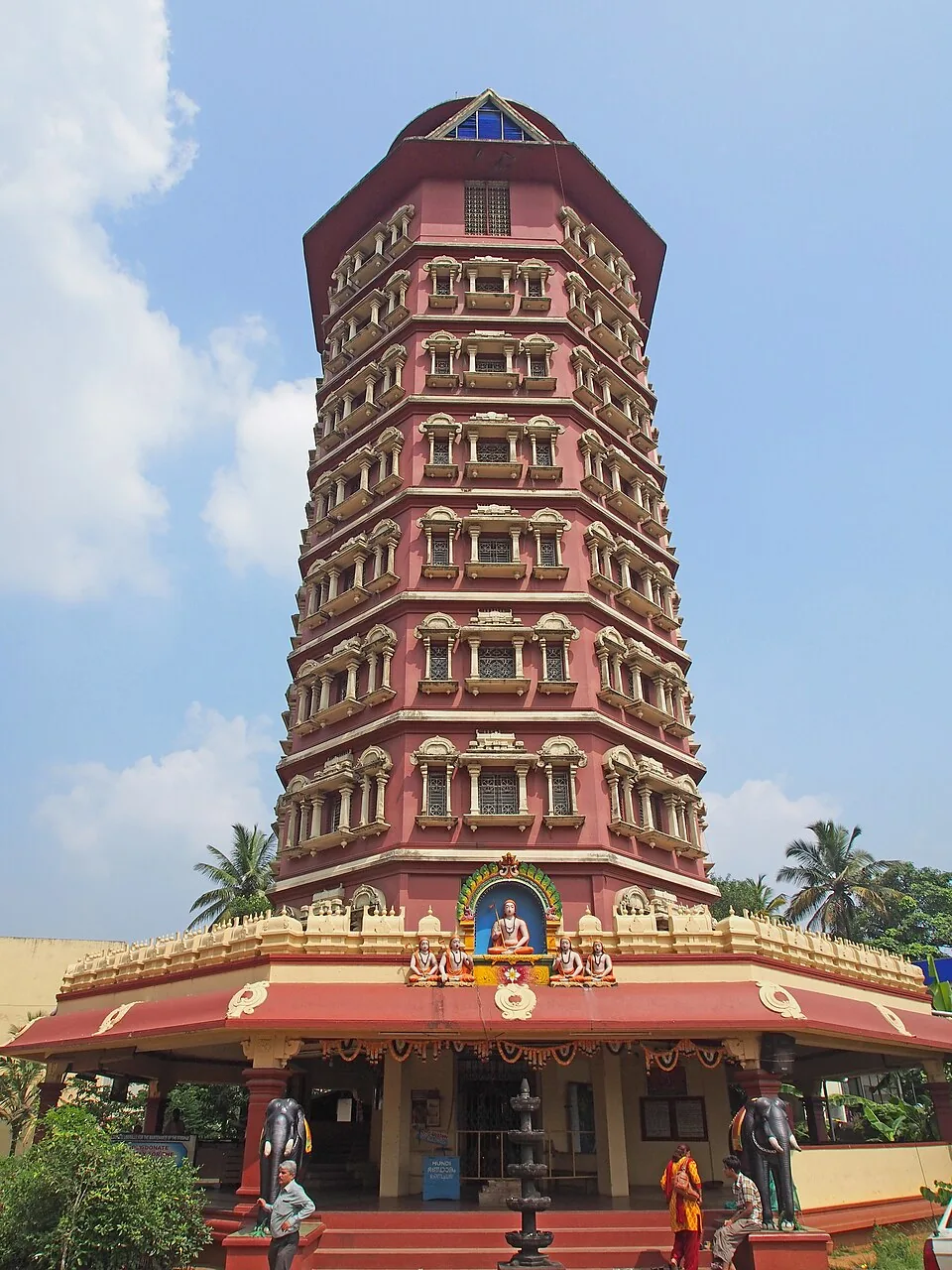
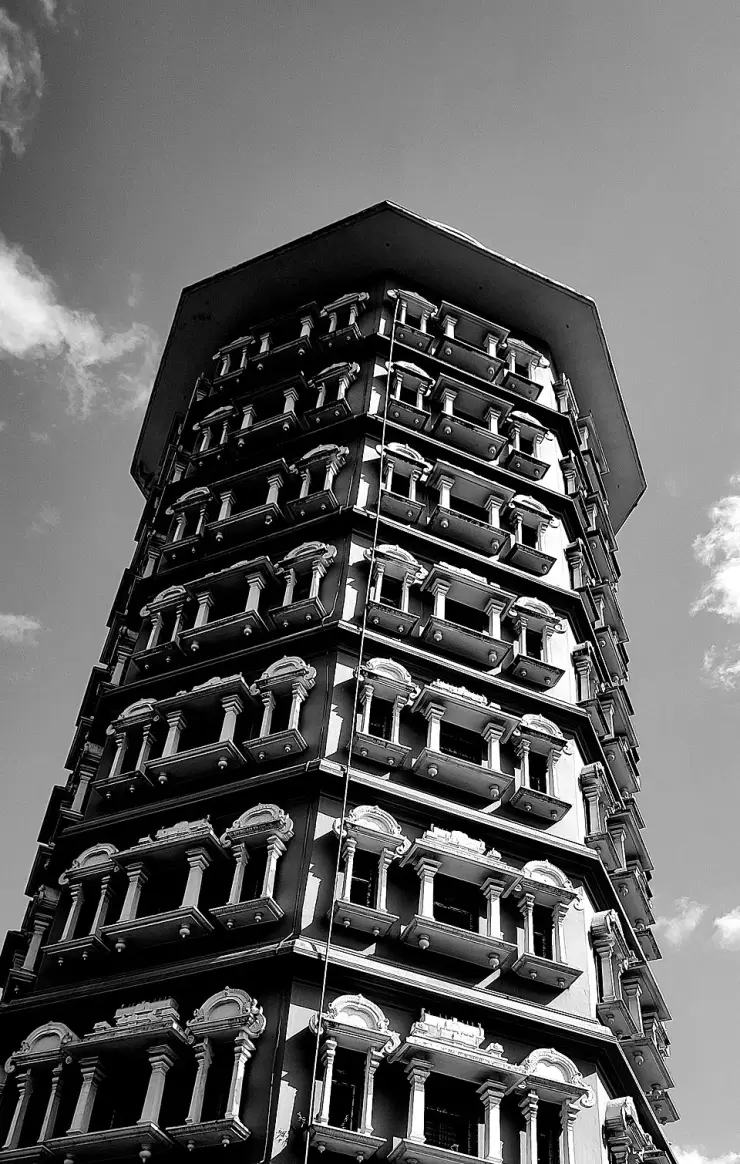
An eight-storey octagonal memorial tower to the philosopher Adi Shankaracharya at his birthplace, Kalady, on the Periyar river, dedicated in 1978 and run by the Kanchi Kamakoti Peetham.
7.6 km · 9 min drive
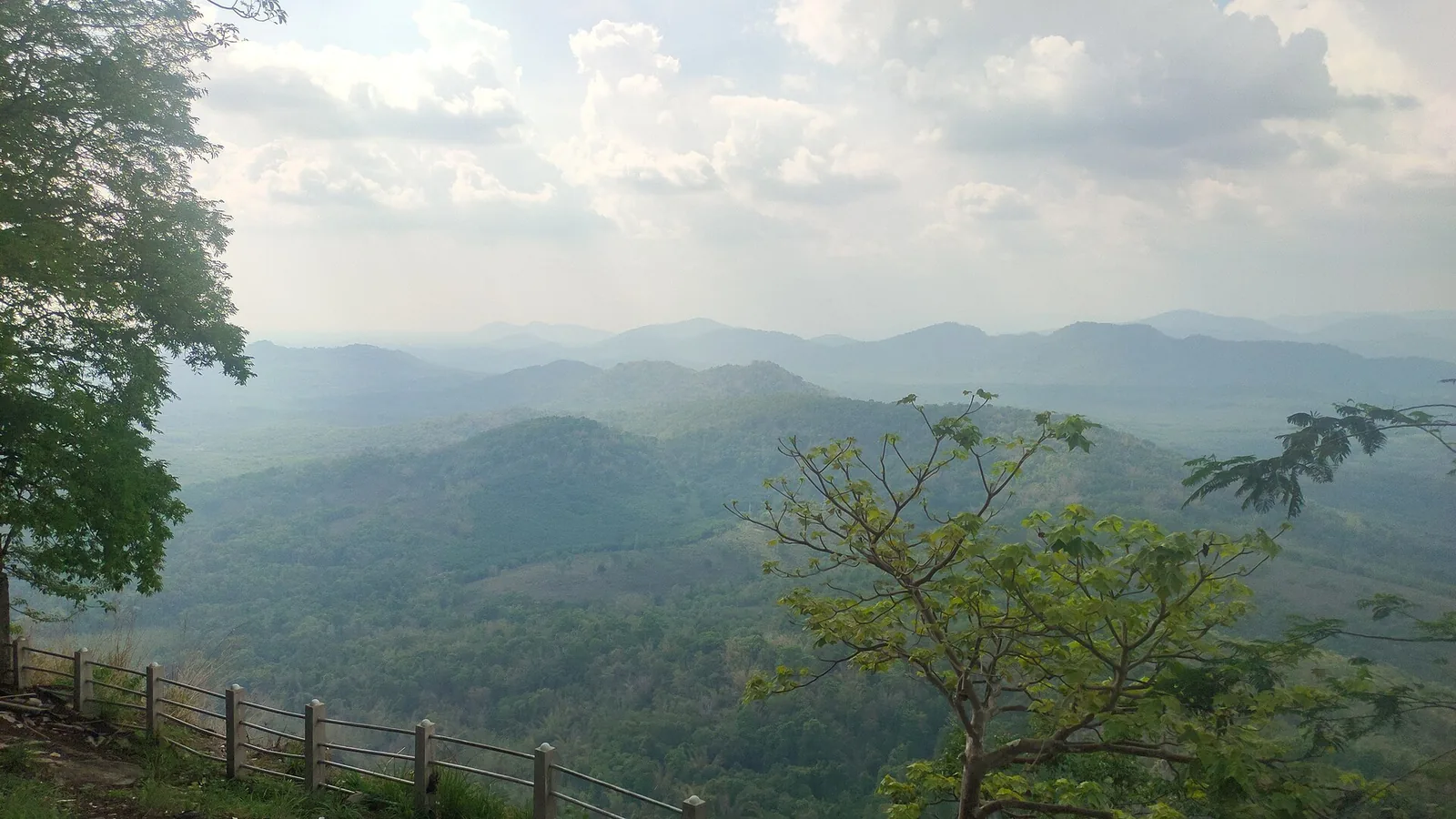
The St Thomas hilltop pilgrimage church near Kalady, a major Christian pilgrimage site drawing large Malayattoor Perunnal crowds.
1.6 km · 20 min walk
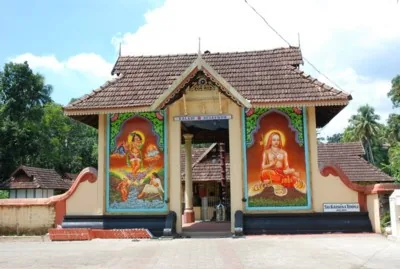
Adi Shankara’s family temple at Kalady, west of the Sringeri Math birthplace complex — the shrine at the centre of the story that gave the village its name.
Roampedia is commission-free — own or know a stay, eatery, guide or shop near Karthyayani Devi Temple? List it and it appears here once verified.
Add a nearby businessEntry: Free. Darshan carries no ticket; offerings and vazhipadu are booked and paid at the counter.
Dress code: Kerala temple dress applies: mundu or dhoti for men, with upper garments generally removed in the inner areas; saree, set-mundu or salwar for women. Footwear and leather are left outside.
Festivals: The annual festival ends on Uthram in Meenam (roughly March–April) with arattu. Dates follow the Malayalam calendar and shift each year.
Photography: No photography in the sanctum. Ask before photographing worshippers anywhere in the compound.
If you are travelling by bus or ferry, check the return service with the operator before setting out. Leave time to reach the stop or jetty after your visit.
Ask at the bus stand for the time of the last service back, not the next one. If you miss it, an auto or app cab is the fallback — agree the fare before you get in.
If you need step-free access, contact the site before travelling. Ask about a level entrance, steps along the route, the nearest drop-off point, seating and accessible toilets.
These services are listed within about 1.2 km of Karthyayani Devi Temple. Walking distances follow mapped routes; access and opening hours can change. Other services may be closer but are not included here.
Emergency numbers are verified against official government and state tourism sources. 112 works anywhere in India.
Adi Shankara’s family temple at Kalady, west of the Sringeri Math birthplace complex — the shrine at the centre of the story that gave the village its name.
1.6 km · 20 min walkAn eight-storey octagonal memorial tower to the philosopher Adi Shankaracharya at his birthplace, Kalady, on the Periyar river, dedicated in 1978 and run by the Kanchi Kamakoti Peetham.
2.4 km · 3 min driveKerala’s longest river, and the reason Kalady stands where it does — the Adi Shankara traditions of the crocodile and of the river changing course both belong to this water. Ghats and quiet riverside walks beside the birthplace complex.
2.6 km · 4 min driveThe St Thomas hilltop pilgrimage church near Kalady, a major Christian pilgrimage site drawing large Malayattoor Perunnal crowds.
7.6 km · 9 min drive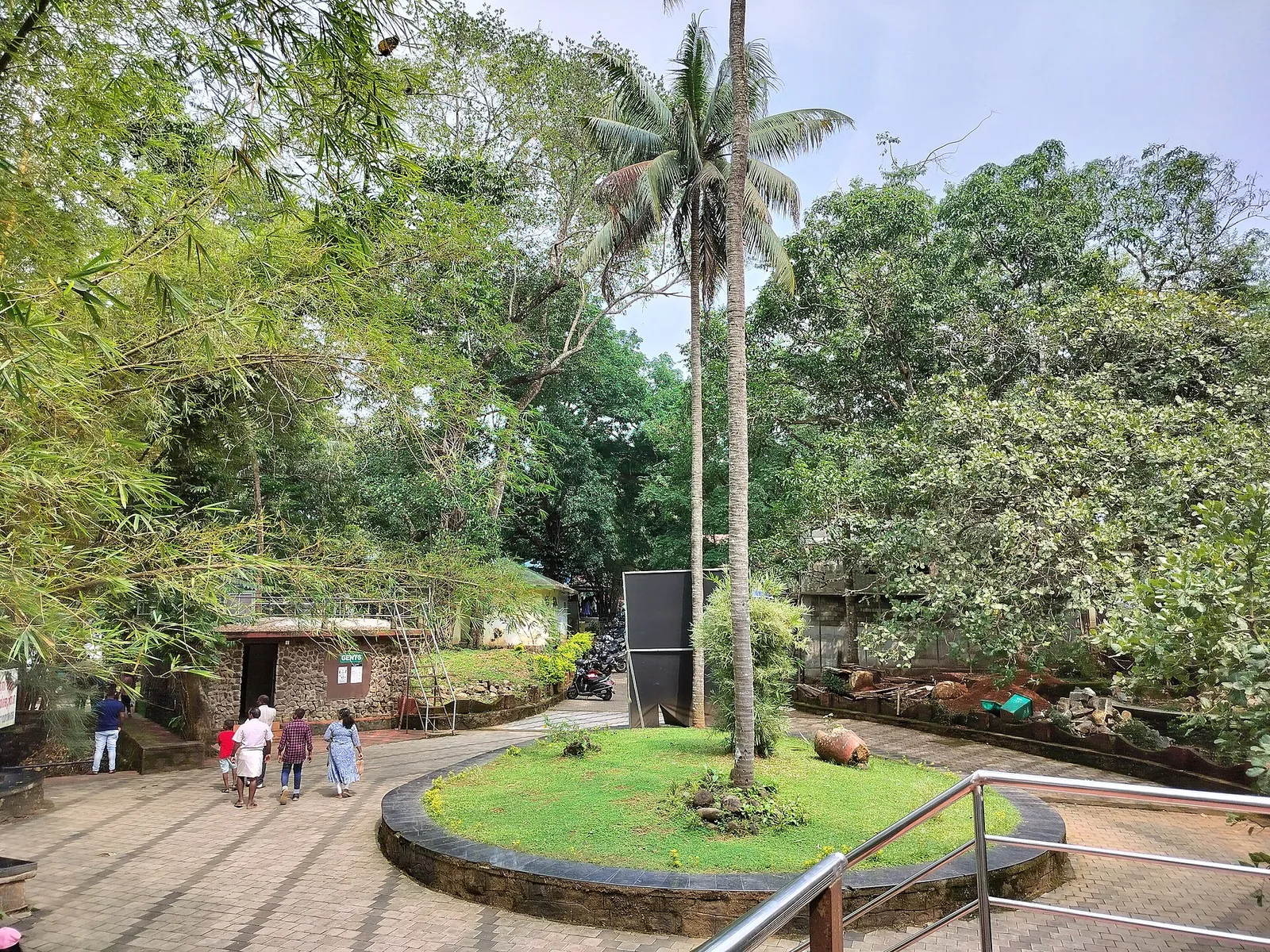
A riverside nature village on the Chalakudy river near Mattoor, with a bamboo forest walk and gentle river bathing spots, on the Athirappilly day-trip side.
11.7 km · ~19 min by cab · straight line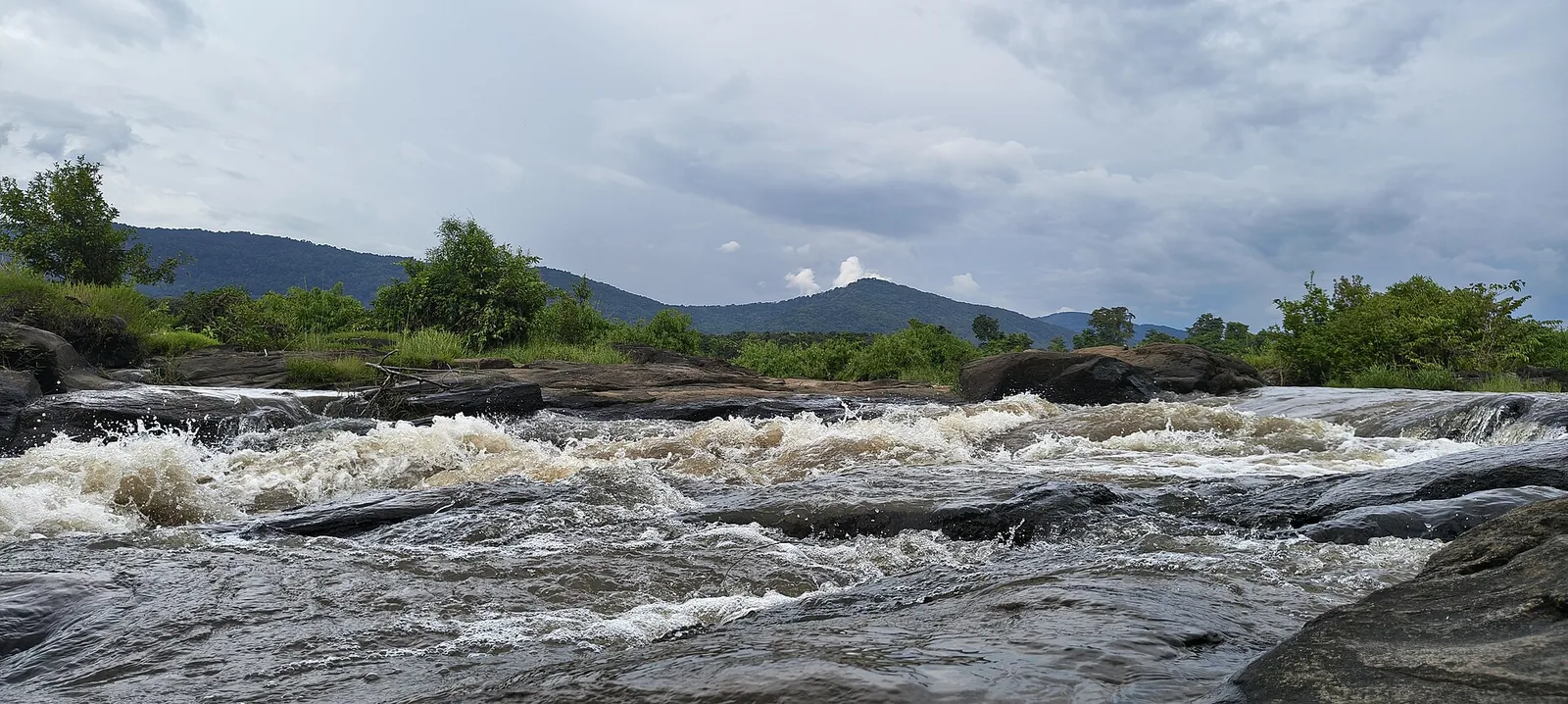
A rocky eco-tourism stretch of rapids and evergreen forest on the Periyar river near Perumbavoor in eastern Ernakulam, with riverside forest trekking along the falls.
16.4 km · ~27 min by cab · straight line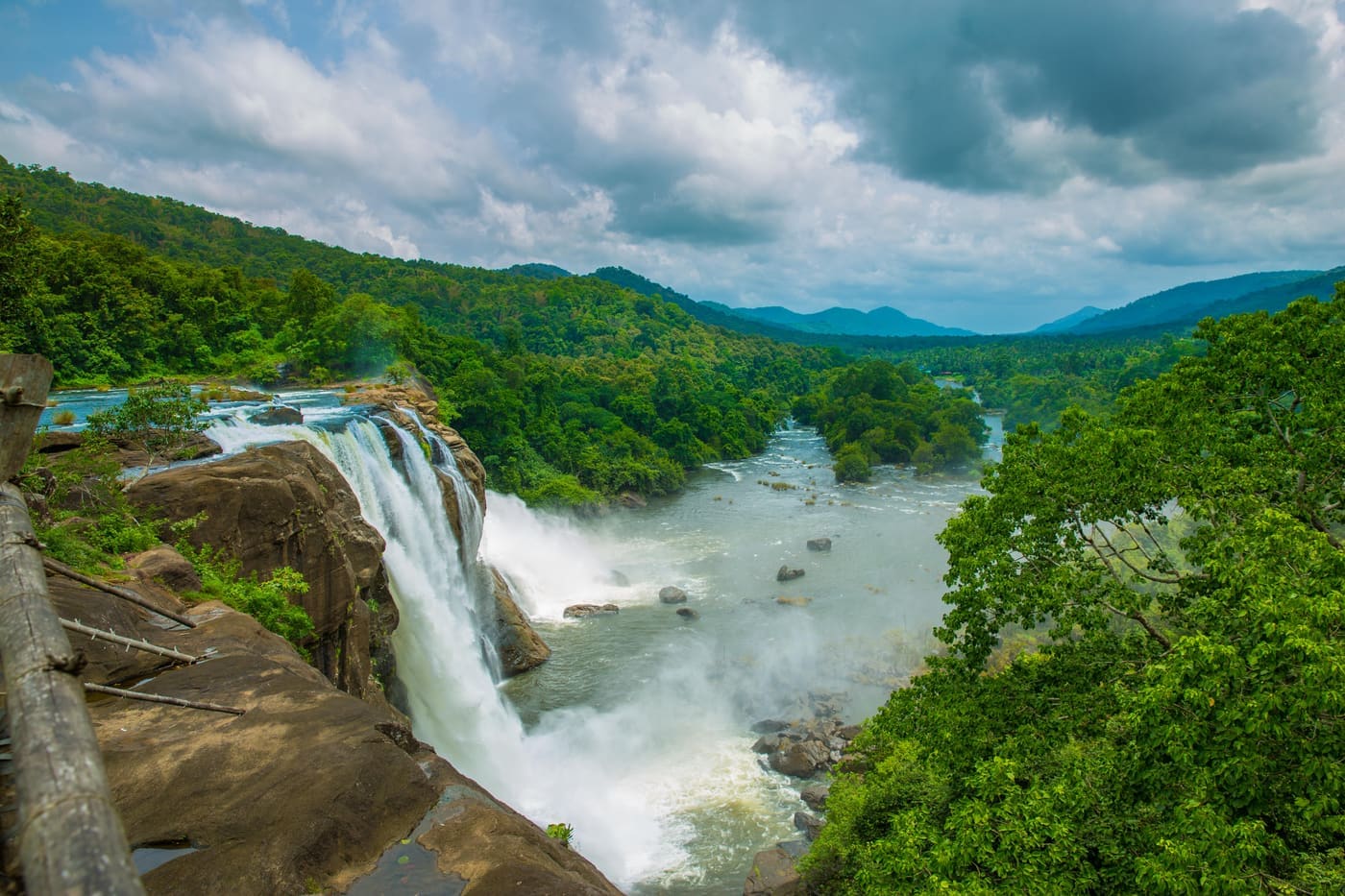
Major waterfall often visited from Kochi, on the Chalakudy river side.
17.8 km · ~30 min by cab · straight line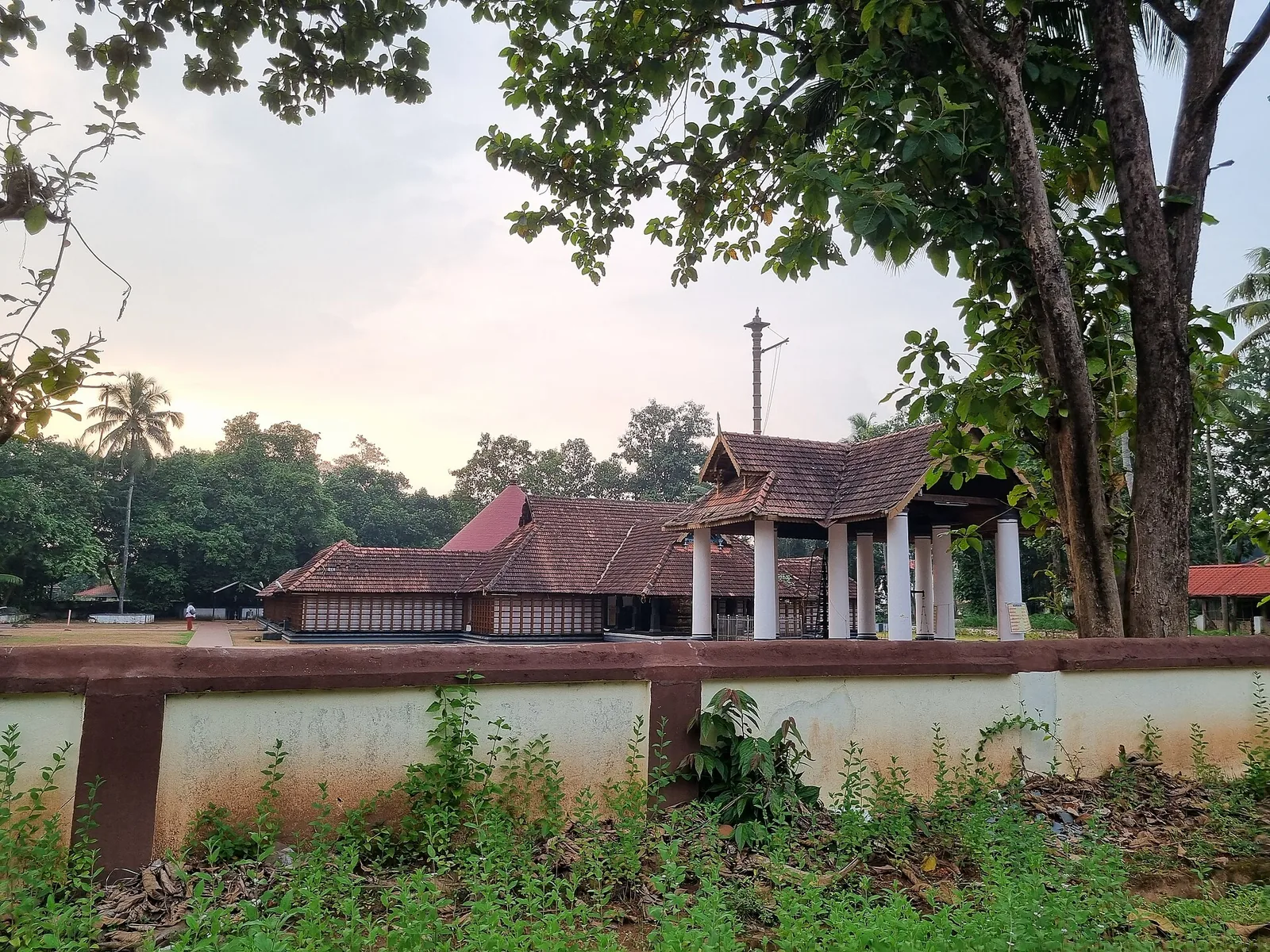
The only major temple to Vamana in Kerala, at Thrikkakara near Kakkanad — traditionally regarded as the origin place of the Onam festival.
20.6 km · ~34 min by cab · straight line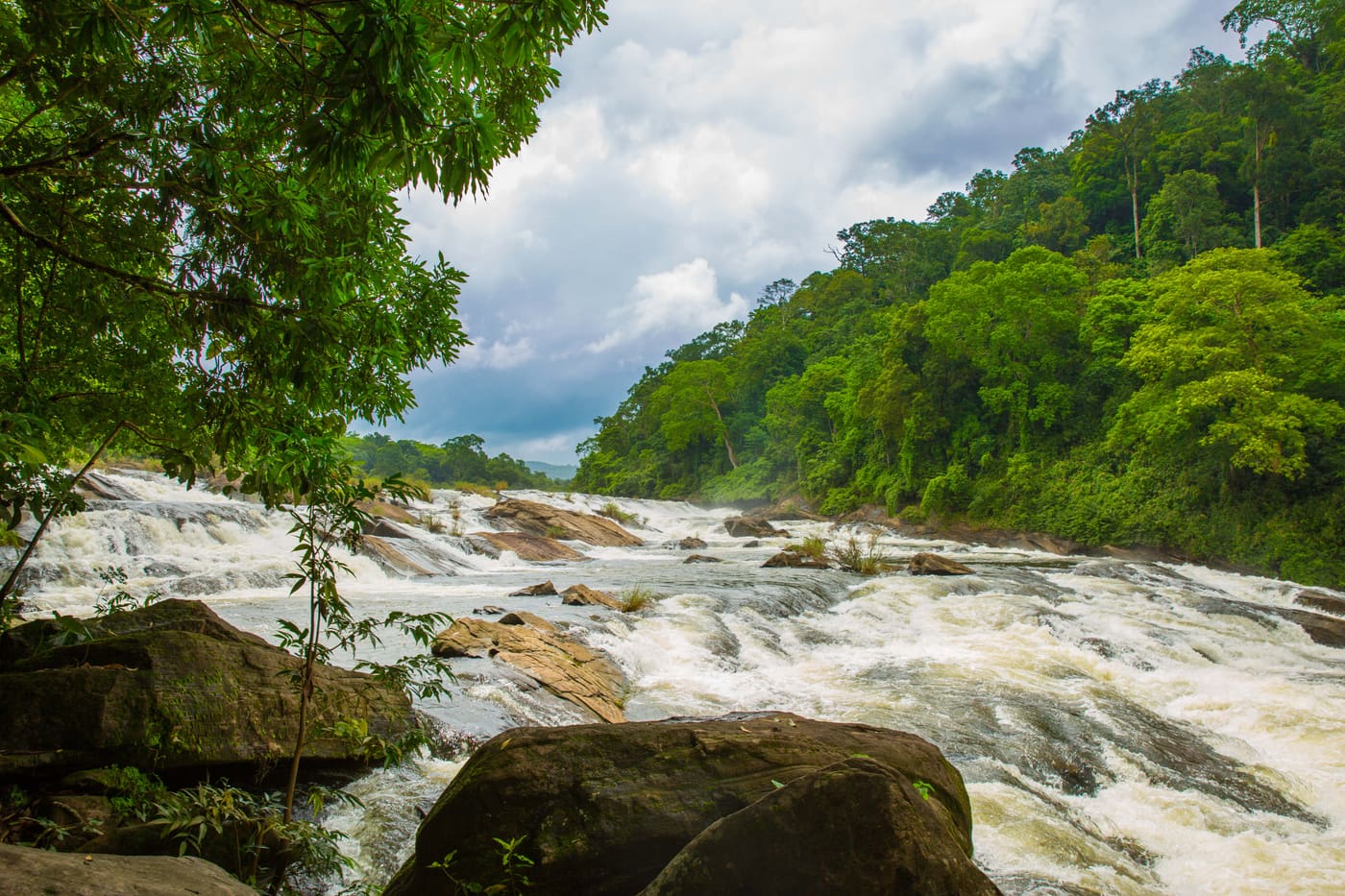
A forest waterfall on the Chalakudy river just above Athirappilly, on the Sholayar forest road — often visited on the same Kochi day trip.
20.8 km · ~35 min by cab · straight line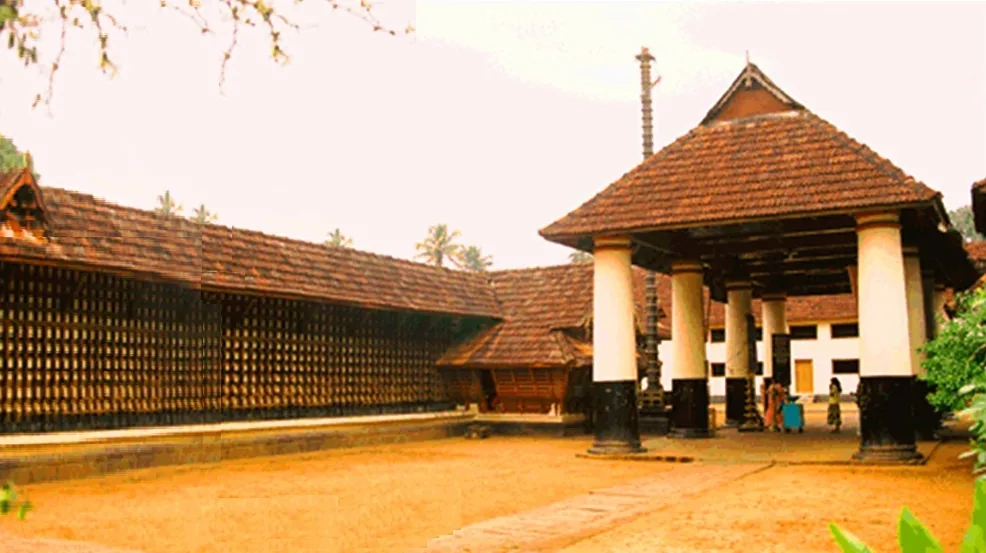
A historic Shiva temple at Kothamangalam near the Thattekkad forests, one of the important ancient temples of the old Kochi region.
21.1 km · ~35 min by cab · straight line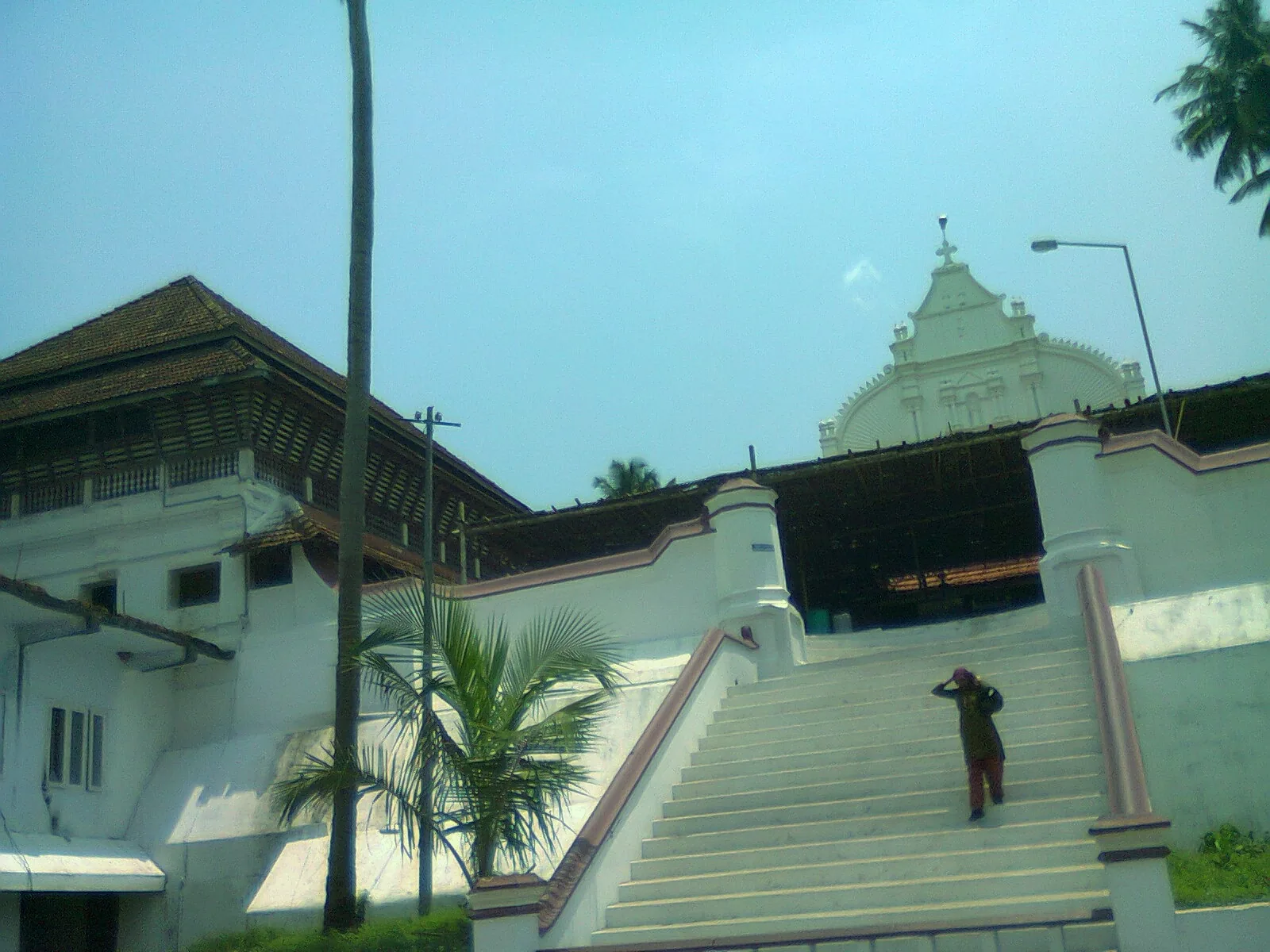
An ancient Orthodox church east of Kochi linked to the legend of the sorcerer-priest Kadamattathu Kathanar, drawing large crowds at its annual feast.
23.3 km · ~39 min by cab · straight line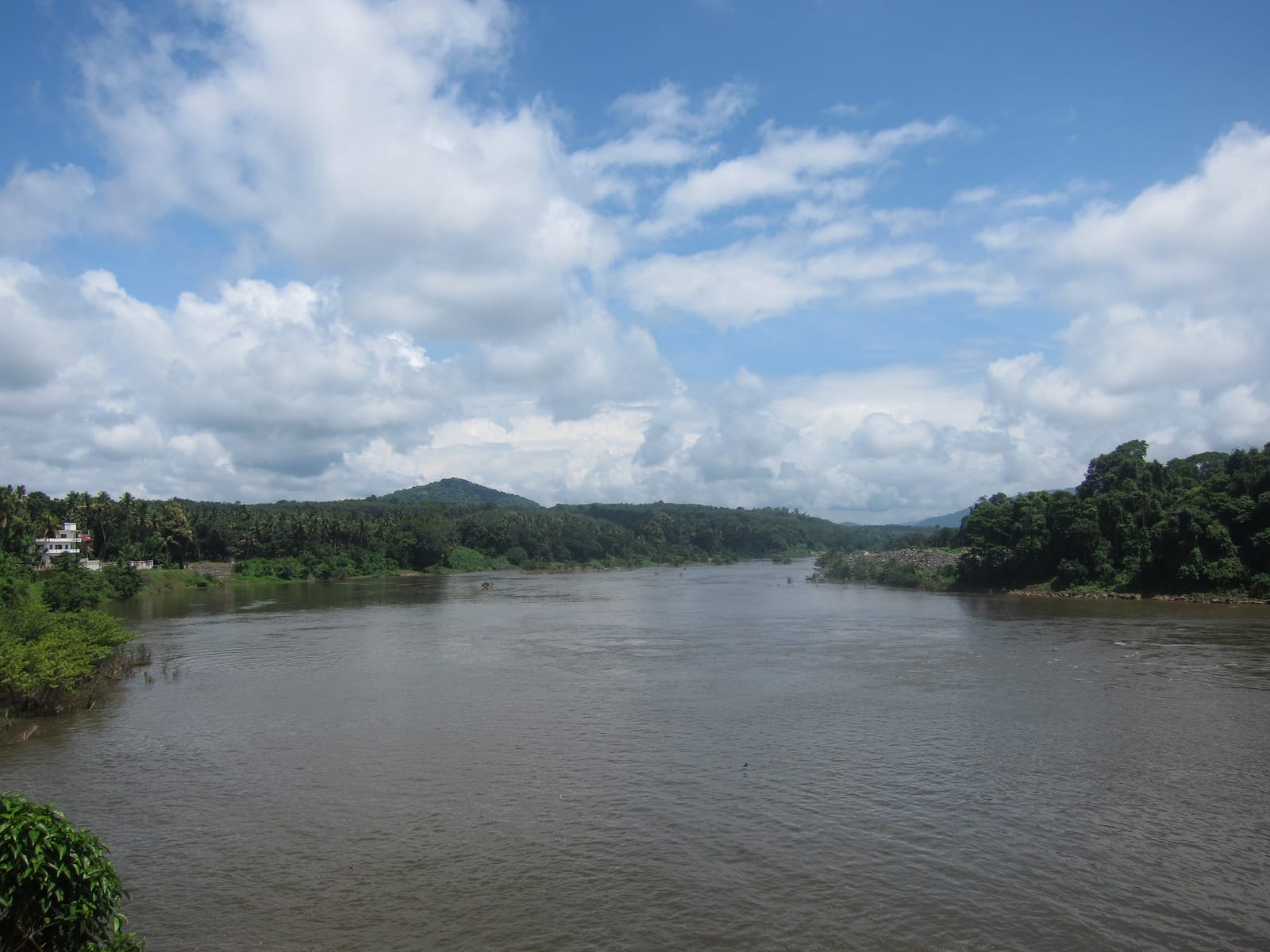
A reservoir and dam at the confluence of the Periyar’s tributaries near Kothamangalam, on the edge of the Thattekkad forests, with forest-and-reservoir trekking around the barrage and a DTPC boat jetty.
24.2 km · ~40 min by cab · straight lineWalking and driving times are real routed distances, except the few marked “straight line”, which are direct-line estimates and will read short. Fare figures are estimates from Kerala’s notified auto/taxi tariff and exclude waiting and night charges. Routing: © openrouteservice.org by HeiGIT | Map data © OpenStreetMap contributors
Nearby toilets, pharmacies, ATMs, seating and vets are community-mapped and may be incomplete or out of date. Map data © OpenStreetMap contributors | Walking times © openrouteservice.org by HeiGIT
It is counted among the 108 Durga temples of Kerala — the counterpart of the better-known 108 Shivalayas, and part of the same Parasurama tradition. That places it in a statewide network of shrines rather than making it a purely local temple, and it is why worshippers come who have no particular interest in Advaita.
The sreekovil is a vatta sreekovil — circular in plan, facing east — which is one of the two classical Kerala sanctum forms and reads very differently from a rectangular plan. The deity is Karthyayani in swayambhu sankalpam, the self-manifested conception, and the upa devatas are Shiva and Sastha.
In the Malayalam month of Meenam, concluding on the Uthram nakshatra with the aarattu. The Pooram day is the centre of it, with Panchari Melam, Pandimelam, Thayambaka and Panjavadyam, and a procession of seven caparisoned elephants. Dates follow the Malayalam calendar and shift each year, so confirm locally.
At Manickamangalam near the M.C. Road — about 4 km from Kalady Junction, 10 km from Angamaly railway station and 6 km from Cochin International Airport. The temple opens around 5:30am with Nirmalya Darsanam, the viewing of the unadorned deity, shortly after, followed by the morning abhishekam and offerings. Expect the standard long Kerala midday closure.
It was formerly managed by Pazhoor Mana and is now administered by the NSS Karayogam — a transfer from a Namboothiri illam to a community organisation, which is a common twentieth-century trajectory for Kerala temples and is rarely mentioned on site.
Not quite — it is at Manickamangalam, about two kilometres north of Kalady Junction, and it is a separate village rather than part of the Adi Shankara birthplace complex. Ask an autorickshaw for Manickamangalam by name; if you say Kalady you will be taken to the birthplace complex or the memorial tower instead.
His father, Sivaguru, is remembered as the priest here, and his parents are said to have worshipped at this temple over a long period — it is described in the devotional tradition as Shankara's ishta devata shrine. The famous local story is that the child Shankara, sent with an offering of milk, wept when the Devi appeared not to accept it, and that she drank it out of pity for him.
We have not verified this temple's policy and will not guess at it. Kerala temples differ, and this one is administered by a local community body rather than a Devaswom board, so its rules are set village-side and are not published. Ask before travelling if it matters, and expect the usual Kerala dress code either way.
Twenty to thirty minutes at the temple, and about twenty minutes there and back from Kalady by autorickshaw. It is a small village temple; the reason to come is the connection and the sanctum, not the scale.
The whole Kalady circuit is two kilometres south — the Sree Krishna Temple and Janma Bhoomi Kshetram, Aryamba's samadhi, the Periyar ghats and the Keerthi Sthambham memorial tower. There are subsidiary shrines to Shiva and Sastha in this temple's own compound. Cochin International Airport is about twelve kilometres away.
Morning or early evening is usually best; festival days can be powerful but crowded.
Entry: Free. Darshan carries no ticket; offerings and vazhipadu are booked and paid at the counter. Timings: Early-morning and evening pooja hours with a long midday closure, on the standard Kerala pattern. This is a village temple rather than a pilgrimage-circuit one, so hours are set locally and are not widely published.
Base yourself in Kalady or a nearby town in Ernakulam, then confirm the last-mile route locally before leaving. Check temple entry customs, dress rules and festival crowd conditions before arrival. If the visit depends on forest, temple, boat, ferry, weather or seasonal access, check the official/local rule on the day before travel.
45 minutes to 2 hours, longer during festival or queue periods.
Nearby you can pair Sree Krishna Temple (1.6 km), Adi Shankara Keerthi Sthambha Mandapam (2.4 km), Periyar river (2.6 km), Malayattoor Church (7.6 km).
Use official counters for offerings/tickets where applicable. Keep footwear and valuables secure in crowded areas.
Written about Karthyayani Devi Temple itself — its history, its legends and the arguments about them.
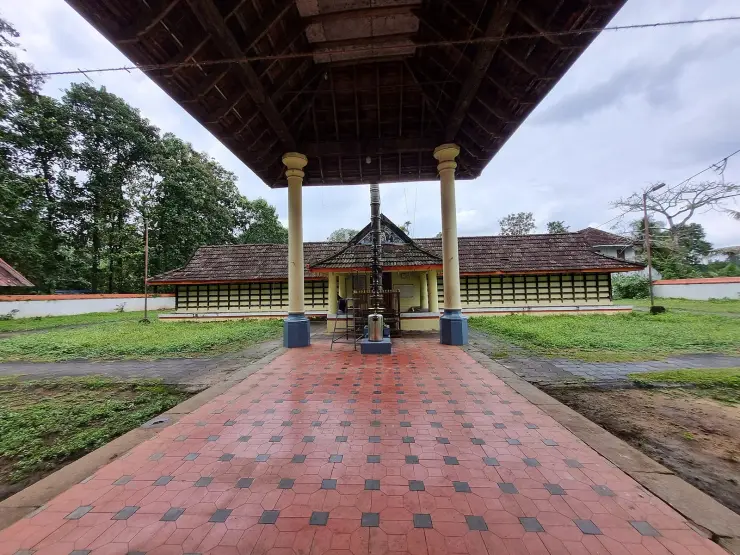

These guides explore Kalady and the surrounding area. Choose a visit that fits your interests, allowing separately for travel between stops.


Route-level itineraries and practical guides for the rest of Kerala.
Photographs: Ganesh Mohan T (CC BY-SA 4.0), Ranjithsiji (CC BY-SA 3.0), Prof Ranga Sai (CC BY-SA 4.0), Timothy A. Gonsalves (CC BY-SA 4.0). Wikimedia Commons.