What to expect
Highlights
- Temple visit at Sree Krishna Temple
- Kerala temple architecture and rituals
- Local food, shops and pilgrim services nearby
Adi Shankara’s family temple at Kalady, west of the Sringeri Math birthplace complex — the shrine at the centre of the story that gave the village its name.
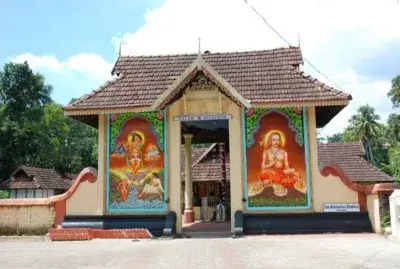
Check entry arrangements. Ask temple staff about visitor entry, dress requirements and access to the inner shrine before you travel, especially if you are visiting as a non-Hindu.
Dress respectfully and follow the institution’s admission and photography rules.
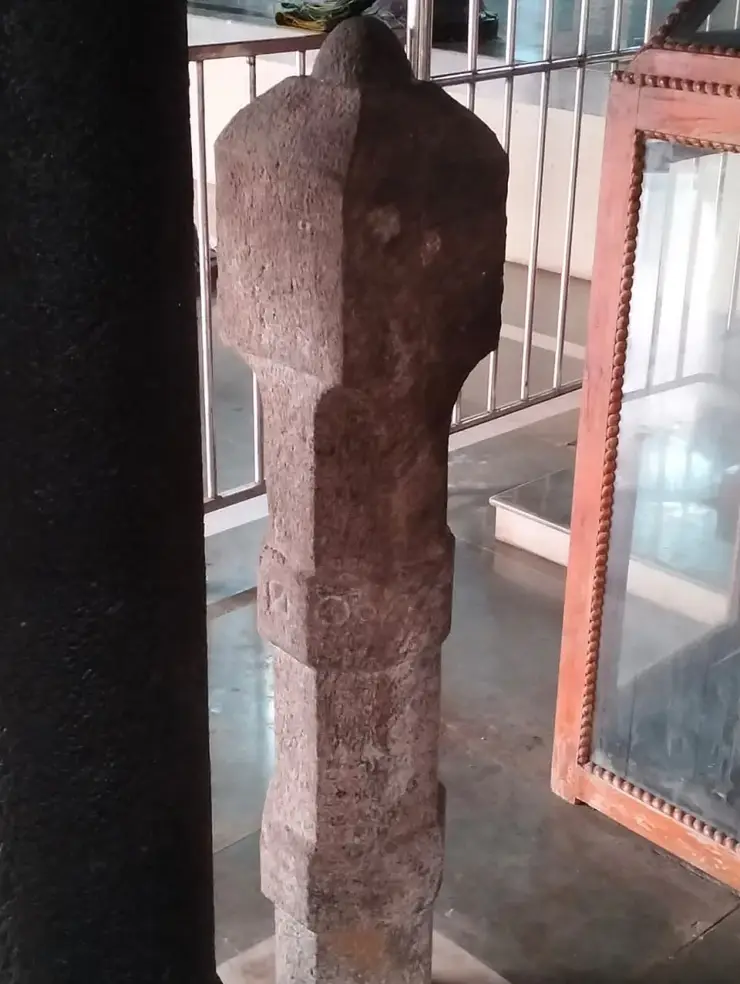
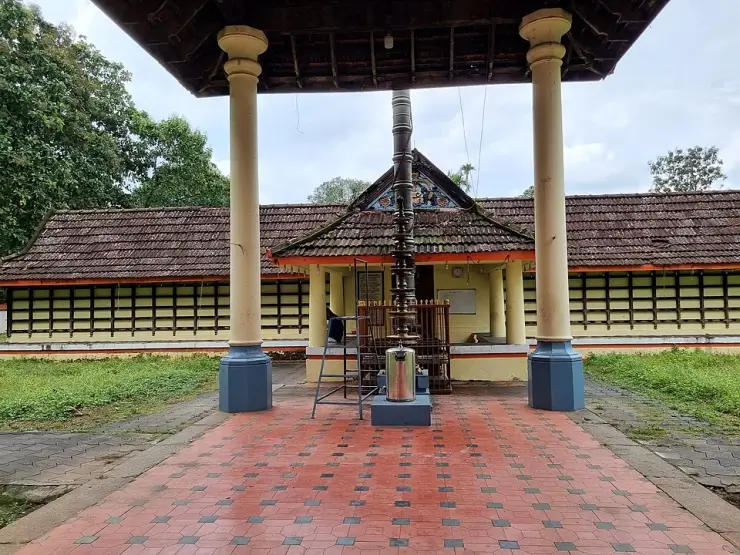
A village is named after a child's footprints, and this is the temple he prayed in. The Kalady Sree Krishna Temple stands just west of the Sringeri Math's birthplace complex, on the Periyar bank, and it is the family shrine of Adi Shankara — his kuladevata, the ancestral deity, named as such in a verse attributed to his own hand. It is not the largest thing at Kalady, and the memorial tower a kilometre west is far more visible. But every story this place tells starts here.
The temple is small, and if you arrive without knowing what it is you will walk through it in five minutes. It sits inside the wider birthplace complex maintained by the Sringeri Sharada Peetham, immediately west of the Janma Bhoomi Kshetram, with Aryamba's samadhi and the ghat where Shankara performed her last rites within the same compound. The whole of Kalady's meaning is packed into a few hundred metres of riverbank, and this is the corner of it that predates the institutions.
What makes it different from any other village Krishna temple in Kerala is the claim of relationship. Shankara's family worshipped here, and Krishna is named as his kuladevata in verse 243 of the Prabodha Sudhakaram, a work attributed to Shankara himself. Whatever one makes of the attribution — and the authorship of several works ascribed to Shankara is argued over — the tradition is old and internally consistent, and it is why pilgrims treat this shrine as the personal one.
The rhythm here is a Kerala temple rhythm: an early opening for the morning poojas, a long closure through the middle of the day, and an evening reopening until the night pooja. Kalady runs on pilgrim traffic, so mid-morning brings coach parties and the temple can be briefly crowded before emptying entirely at noon. Come early and you will often have it more or less to yourself.
Two large institutions share this village and they are not the same organisation. Sringeri Sharada Peetham holds the birthplace complex, including this temple; Kanchi Kamakoti Peetham built and runs the Keerthi Sthambham memorial tower a kilometre west. Their timings, their rules and their emphases differ, which surprises visitors who assume Kalady is one site with one management. It is a village with two maths in it.
The story that gives Kalady its name belongs to this temple. Aryamba, Shankara's widowed mother, walked some distance each day to bathe in the Periyar — then known as the Purna — and one day, growing old, she fainted on the way. Her son, still a child, prayed to Krishna here for her sake.
Krishna is said to have answered by telling the boy that the river would flow wherever his small feet marked. Shankara walked, the Purna changed its course to follow his footprints, and the water came to the family's door. The place was called Kalady after that — kaladi, the footprint.
It is a legend and we frame it as one: rivers in this delta do shift their channels, and a story that explains a real change in a watercourse through the piety of a local child is exactly the kind of story such landscapes generate. But the name is real, the village carries it, and the temple where the prayer is said to have been made is still standing.
There is a second, entirely factual thing about this site that almost nothing on the ground tells you, and it is genuinely surprising. Kalady’s identification as Adi Shankara’s birthplace is not an unbroken tradition running back twelve hundred years. The location was effectively lost. It was re-established only in the late nineteenth century, largely through the efforts of the Sringeri Math — one of the four monastic seats that claim descent from Shankara — and the temple complex marking the birthplace was consecrated in 1910.
So the ground is claimed to be ancient and the buildings are not. What you are standing in is an early-twentieth-century act of commemoration, built on a late-nineteenth-century identification, of an eighth-century event whose date the mathas themselves dispute across centuries. None of that is a scandal — a great many pilgrimage sites work exactly this way — but it is worth seeing the layers separately rather than as one seamless antiquity.
Read generously, it makes Kalady a double story. A philosopher was born in a village and the village was forgotten; then an institution he is said to have founded went looking for it a millennium later, made its argument for this spot, and built a landscape of memory on it. The second story is nearly as remarkable as the first, and it is the reason there is anything here to visit at all.
The legend has a second half that almost nobody tells, and it is the more interesting one. If the river changed course to reach the house, then it also ran over the ground the temple stood on. The Devaswom's own account says exactly that: the original temple was submerged in the new riverbed. Shankara is said to have reinstalled the deity at the site the temple occupies now — and the detail preserved about the reinstallation is oddly technical. It was done on the Thiruvonam star in the month of Tulam, during Dakshinayana, the southward half of the year, rather than in the Uttarayana period conventionally preferred for an installation. He is said to have marked the occasion by composing the Achyuta Ashtakam.
So the story a visitor is told as a miracle about a mother is also, read straight, an account of a temple losing its ground to a river and being rebuilt uphill out of season. Both readings are held here at once, and the practice reflects it: puja is still performed at the original site, down at the Kalady ghat, under or beside the water that took it.
One more thing the tradition insists on, and it is a claim rather than a proof. Krishna is Shankara's kuladevata — his family deity — and the tradition points to his own words for it: verse 243 of the Prabodha Sudhakaram, where he praises his Krishna, called Yadupathy, as the ancestral deity. If that attribution holds, this is not merely a temple near a famous birthplace. It is the shrine the philosopher's household actually used, named by the philosopher himself.
The one date that matters most at Kalady is a modern one, and it is missing from almost every account of the town: Kalady was lost, and then found again. Sri Sacchidananda Shivabhinava Narasimha Bharati, the thirty-third Jagadguru of the Sringeri Sharada Peetham and its head from 1879 to 1912, is credited with identifying Kalady as Adi Shankara's birthplace, determining the specific sites and consecrating temples there — one to Adi Shankara and one to Sharadamba. The consecration is dated to 21 February 1910; the centenary was kept on 23 May 2010. Everything a visitor now walks between at Kalady descends from that identification.
Which puts this temple in an unusual position. Kalady's marked sites are a little over a century old as marked sites. This temple is not: it is described as the only surviving structure from the time of Shankara, held under Kalady Devaswom in the trusteeship of two Namboothiri families with close associations to his life — the paternal Kappilly, also called Edanana, and the maternal Thalayattumpilly, also called Moothedam. Whatever weight you give the tradition, the custodial line is a family arrangement rather than an institutional one, and it is older than the pilgrimage town around it.
The temple calendar keeps the connection explicit. The Achyuta Ashtakam, the hymn attributed to Shankara at the reinstallation, is recited here as an offering to Kalady Appan. During the Sankara Jayanti season a Kanakadhara Yajnam is conducted with thirty-two Brahmins, one for each of the thirty-two years tradition allows him. On Akshaya Tritiya a golden-gooseberry abhisheka is performed on the Lakshmi-Narayana idol — a direct reference to the Kanakadhara story, in which the boy Shankara's hymn brought a shower of golden gooseberries to a household too poor to give him alms. The annual aarattu is held at the Kalady ghat on the river.
Kalady's importance is entirely derived from one biography. Adi Shankara — by the most widely cited tradition born here and dead at thirty-two, having reorganised Hindu philosophical thought around Advaita, non-duality, and founded monastic centres across India — is said to have grown up in this village on the Periyar. The dating of his life is itself disputed among scholars, with the eighth century the most commonly given range and other datings argued.
The site's modern shape is much newer than the story. Kalady was effectively rediscovered and redeveloped as a pilgrimage centre in the modern era, and the institutional presence here — the Sringeri Sharada Peetham's Janma Bhoomi Kshetram, with the Krishna temple and the Sharada shrine, and Aryamba's samadhi — is the result of that revival rather than of continuous medieval occupation.
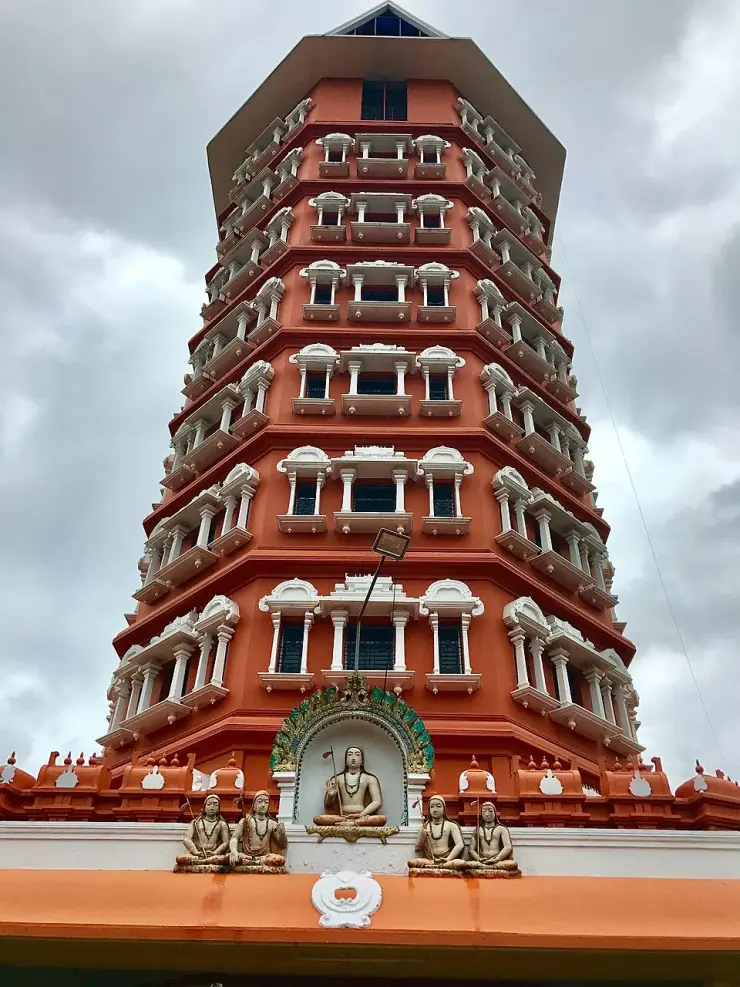
The Kanchi Kamakoti Peetham's Keerthi Sthambham, a kilometre west, was conceived under Sri Chandrasekharendra Saraswathi and dedicated to the nation by President Neelam Sanjeeva Reddy on 12 May 1978. Between the two institutions, Kalady acquired in the twentieth century the visitor infrastructure that its story had lacked for a thousand years.
It is the point the whole village exists to mark — the shrine of the family whose son's name is on everything else here.
The complex is unusually compact: family temple, birthplace, mother's samadhi and the river ghat are all inside a few hundred metres, so the story reads in one walk.
It is about ten kilometres from Cochin International Airport, which makes it the single best thing in Ernakulam district to do on a long layover — and almost nobody does it.
Early morning here, before the coaches, is one of the quieter religious spaces near Kochi.
Shankara Jayanthi in Vaisakha (April–May) turns the whole village out and is worth planning around if you want the atmosphere rather than the calm.
It pairs with the Periyar ghats a few minutes away and the Keerthi Sthambham a kilometre west into an easy half day.
Road km to Ernakulam; ghat roads and traffic vary — allow extra.
Morning or early evening is usually best; festival days can be powerful but crowded.
Live forecast loads in your browser.
Sunset is in about 9 minutes.
Sun and moon are calculated for this location and shown in IST. Photography windows are the hour around sunrise and sunset; the sunset bearing is degrees clockwise from true north. Moon phase is accurate to about half a day.
Verified hotels, homestays, restaurants, experiences, sights, shops and rentals around Sree Krishna Temple — commission-free, with direct contact. Filter by what you need.
Kerala's state Sanskrit university, built on the ground where Adi Shankara was born. Sree Sankaracharya University of Sanskrit, Kalady, Ernakulam District, Kerala 683574.
Book with the place itself. India’s cyber-crime coordination centre warned in April 2025 that convincing copies of hotel and pilgrimage booking sites are being pushed through sponsored search and social ads, taking payment for rooms the property never hears about. Every listing here links to the business’s own contact details and its own Google or Bing profile — we take no commission and sit in nobody’s payment path. If a booking page reached you through an ad, check the address bar against the property’s own site before you pay. Fraud can be reported on cybercrime.gov.in or on 1930.
Find food, accommodation and activities across Kalady. Browse the guides for places to eat, stay and explore along your route.
Walking routes start at Sree Krishna Temple. Check the route and access before setting out, especially where a road, gate or waterway separates the stops.
6 more places around Kalady. Open a guide to plan the visit and onward journey.
A family boating and waterside recreation centre on the Kadambrayar near Kakkanad; boat availability, operating hours and water conditions should be checked directly.
A historic mosque and pilgrimage centre near the Vembanad backwater belt, known for the Kodikuthu festival and visited with ordinary mosque etiquette.
1.5 km · 18 min walk
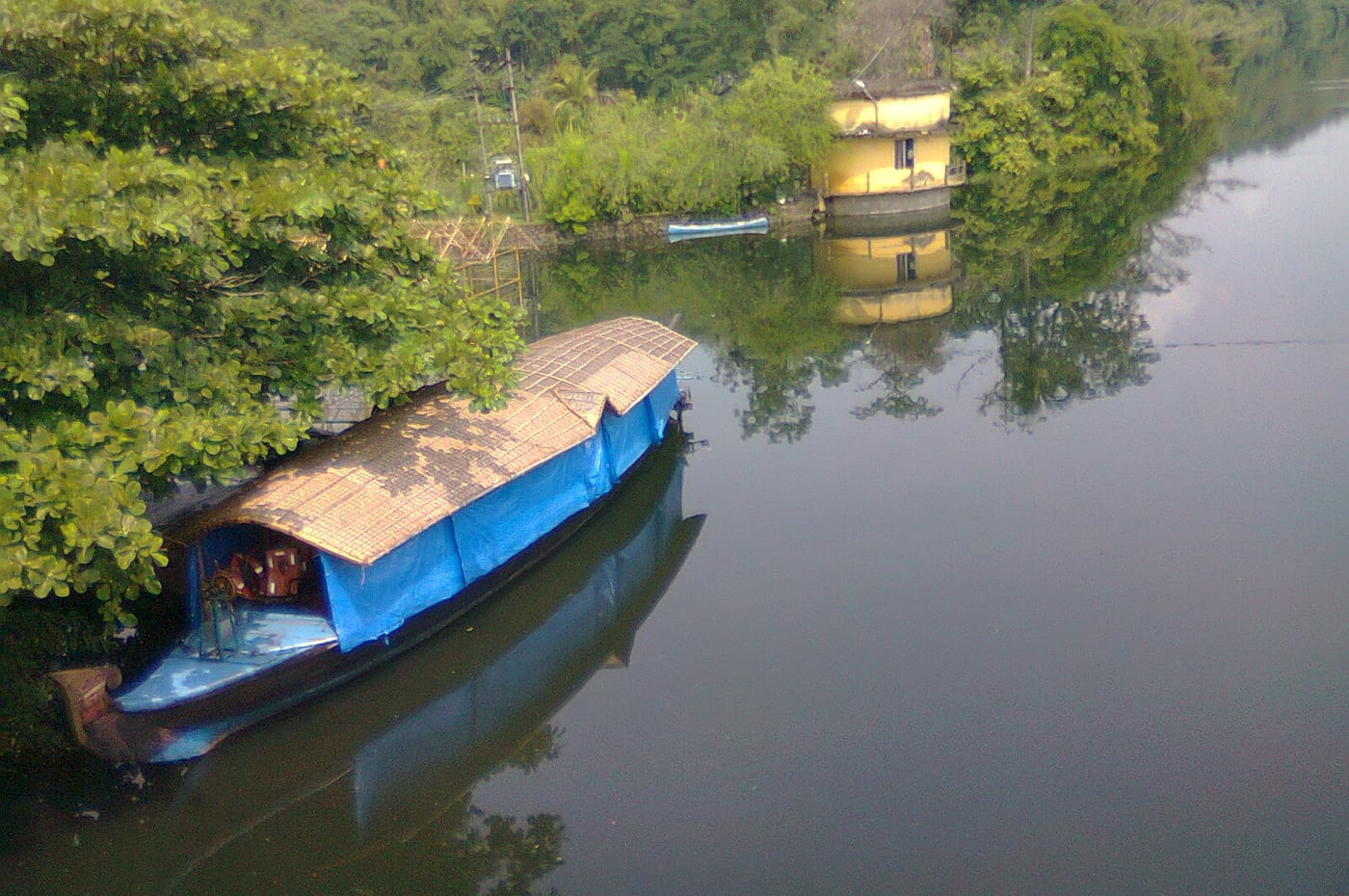
Kerala’s longest river, and the reason Kalady stands where it does — the Adi Shankara traditions of the crocodile and of the river changing course both belong to this water. Ghats and quiet riverside walks beside the birthplace complex.
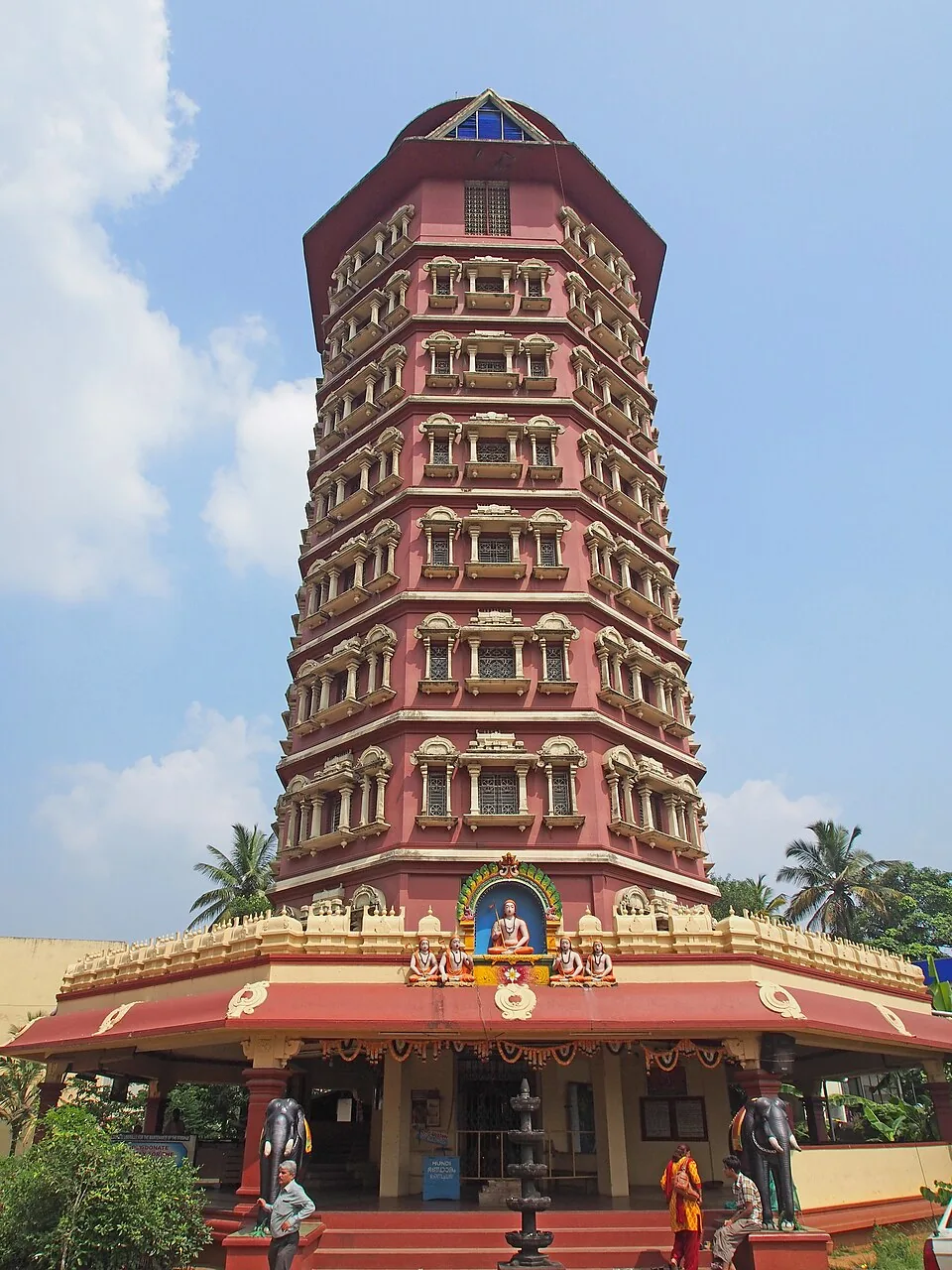
1.4 km · 17 min walk
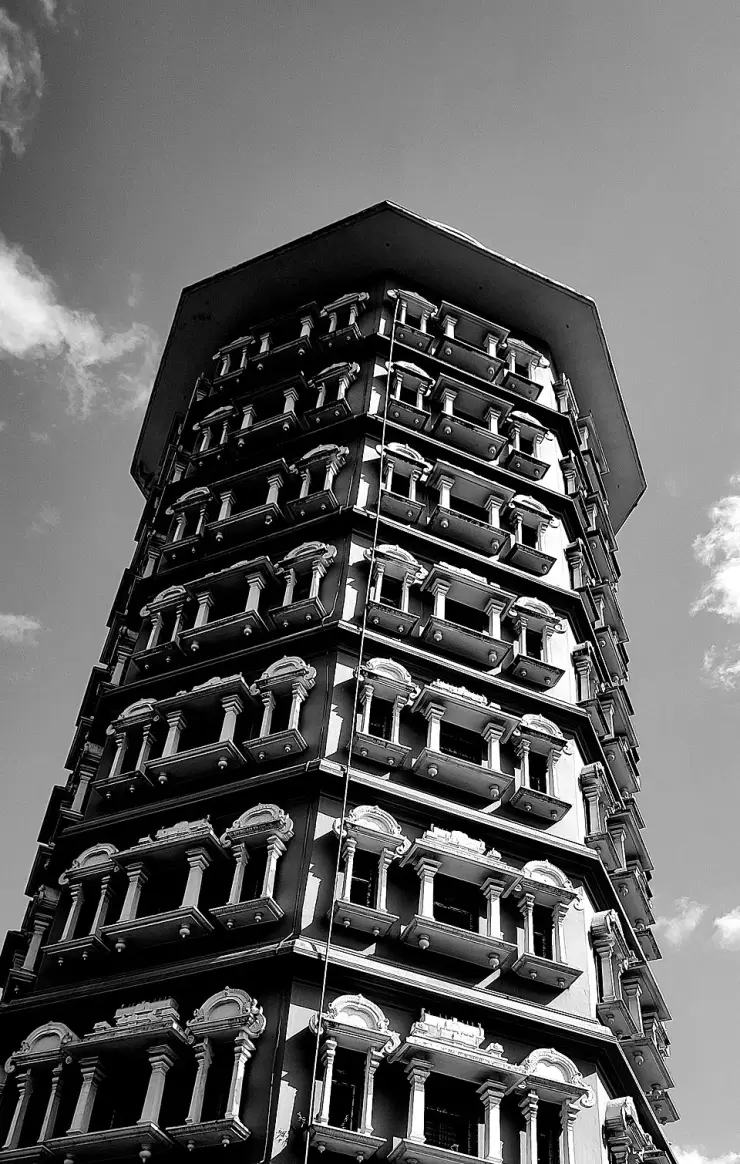
An eight-storey octagonal memorial tower to the philosopher Adi Shankaracharya at his birthplace, Kalady, on the Periyar river, dedicated in 1978 and run by the Kanchi Kamakoti Peetham.
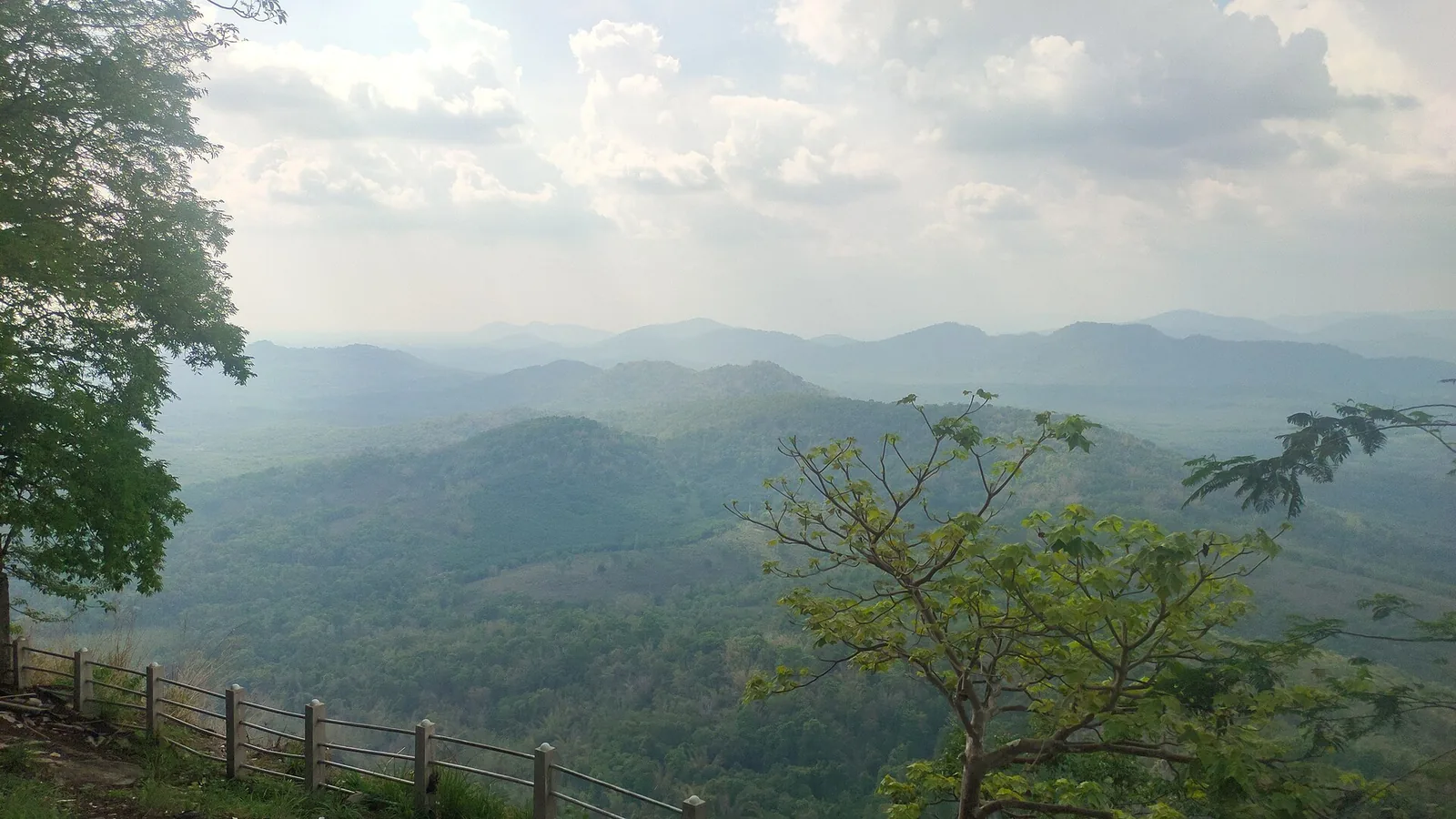
8.0 km · 9 min drive
The St Thomas hilltop pilgrimage church near Kalady, a major Christian pilgrimage site drawing large Malayattoor Perunnal crowds.
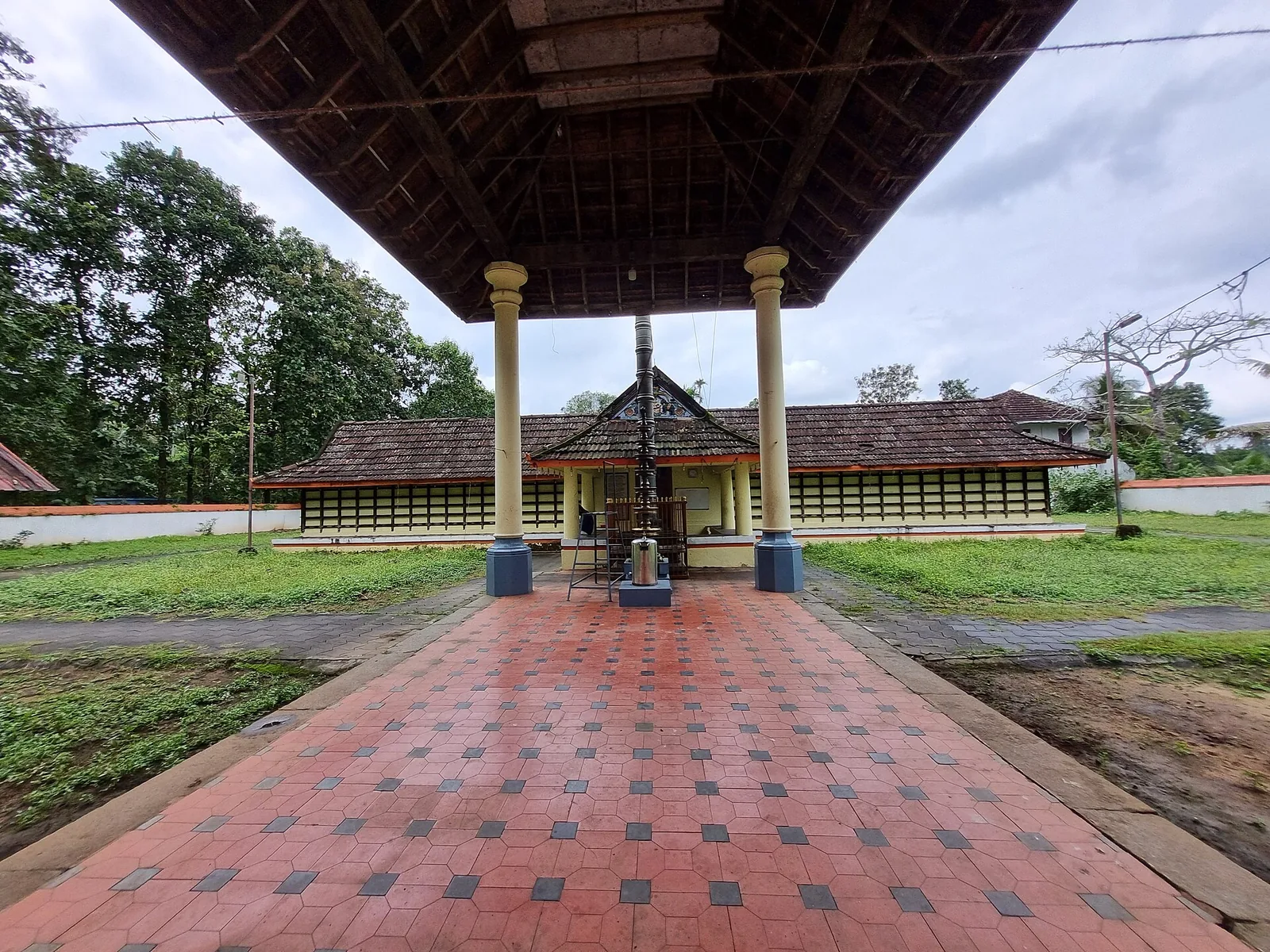
1.6 km · 20 min walk
The Manickamangalam Devi temple north of Kalady, remembered as the shrine where Adi Shankara’s father Sivaguru served — the family connection, rather than the building, is why pilgrims come.
Roampedia is commission-free — own or know a stay, eatery, guide or shop near Sree Krishna Temple? List it and it appears here once verified.
Add a nearby businessEntry: Free. Darshan at a Kerala temple of this kind carries no ticket; the charges are for offerings and vazhipadu booked at the counter, and those are per item.
Dress code: Kerala temple dress applies. Men are generally expected to remove upper garments in the inner areas and to wear a mundu or dhoti rather than shorts or trousers; women wear a saree, set-mundu or salwar. Leather is left outside with your footwear.
Festivals: Shankara Jayanthi, marking Adi Shankara's birth, is the principal occasion at Kalady and is observed across the complex rather than at one shrine.
Photography: Photography inside the sanctum is not permitted, and phone cameras are usually asked to be put away in the inner prakaram. The complex outside is generally fine.
If you are travelling by bus or ferry, check the return service with the operator before setting out. Leave time to reach the stop or jetty after your visit.
Ask at the bus stand for the time of the last service back, not the next one. If you miss it, an auto or app cab is the fallback — agree the fare before you get in.
If you need step-free access, contact the site before travelling. Ask about a level entrance, steps along the route, the nearest drop-off point, seating and accessible toilets.
Charge cap and free-transaction limits: Reserve Bank of India, in force since 1 May 2025.
These services are listed within about 1.2 km of Sree Krishna Temple. Walking distances follow mapped routes; access and opening hours can change. Other services may be closer but are not included here.
Emergency numbers are verified against official government and state tourism sources. 112 works anywhere in India.
An eight-storey octagonal memorial tower to the philosopher Adi Shankaracharya at his birthplace, Kalady, on the Periyar river, dedicated in 1978 and run by the Kanchi Kamakoti Peetham.
1.4 km · 17 min walkKerala’s longest river, and the reason Kalady stands where it does — the Adi Shankara traditions of the crocodile and of the river changing course both belong to this water. Ghats and quiet riverside walks beside the birthplace complex.
1.5 km · 18 min walkThe Manickamangalam Devi temple north of Kalady, remembered as the shrine where Adi Shankara’s father Sivaguru served — the family connection, rather than the building, is why pilgrims come.
1.6 km · 20 min walkThe St Thomas hilltop pilgrimage church near Kalady, a major Christian pilgrimage site drawing large Malayattoor Perunnal crowds.
8.0 km · 9 min drive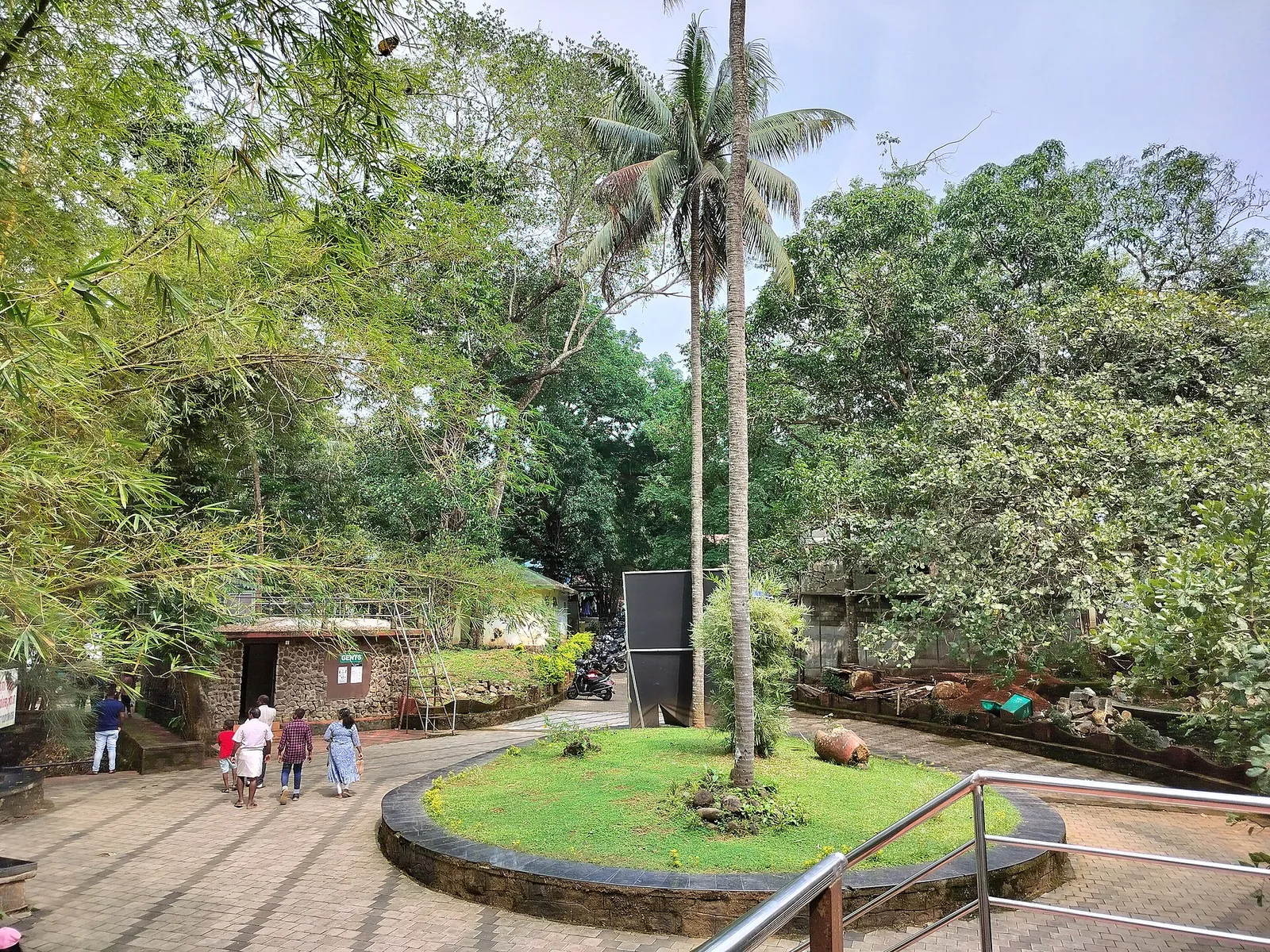
A riverside nature village on the Chalakudy river near Mattoor, with a bamboo forest walk and gentle river bathing spots, on the Athirappilly day-trip side.
13.2 km · ~22 min by cab · straight line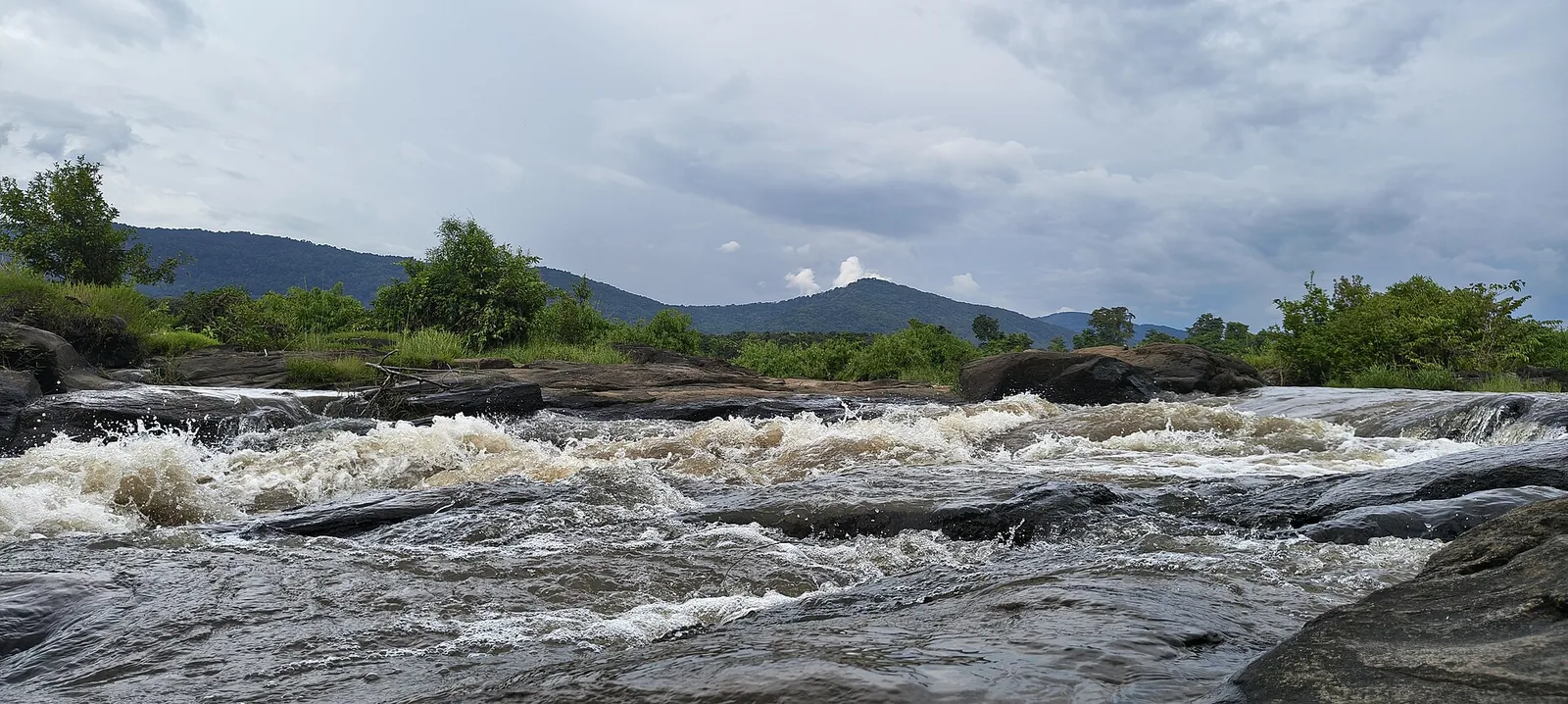
A rocky eco-tourism stretch of rapids and evergreen forest on the Periyar river near Perumbavoor in eastern Ernakulam, with riverside forest trekking along the falls.
16.4 km · ~27 min by cab · straight line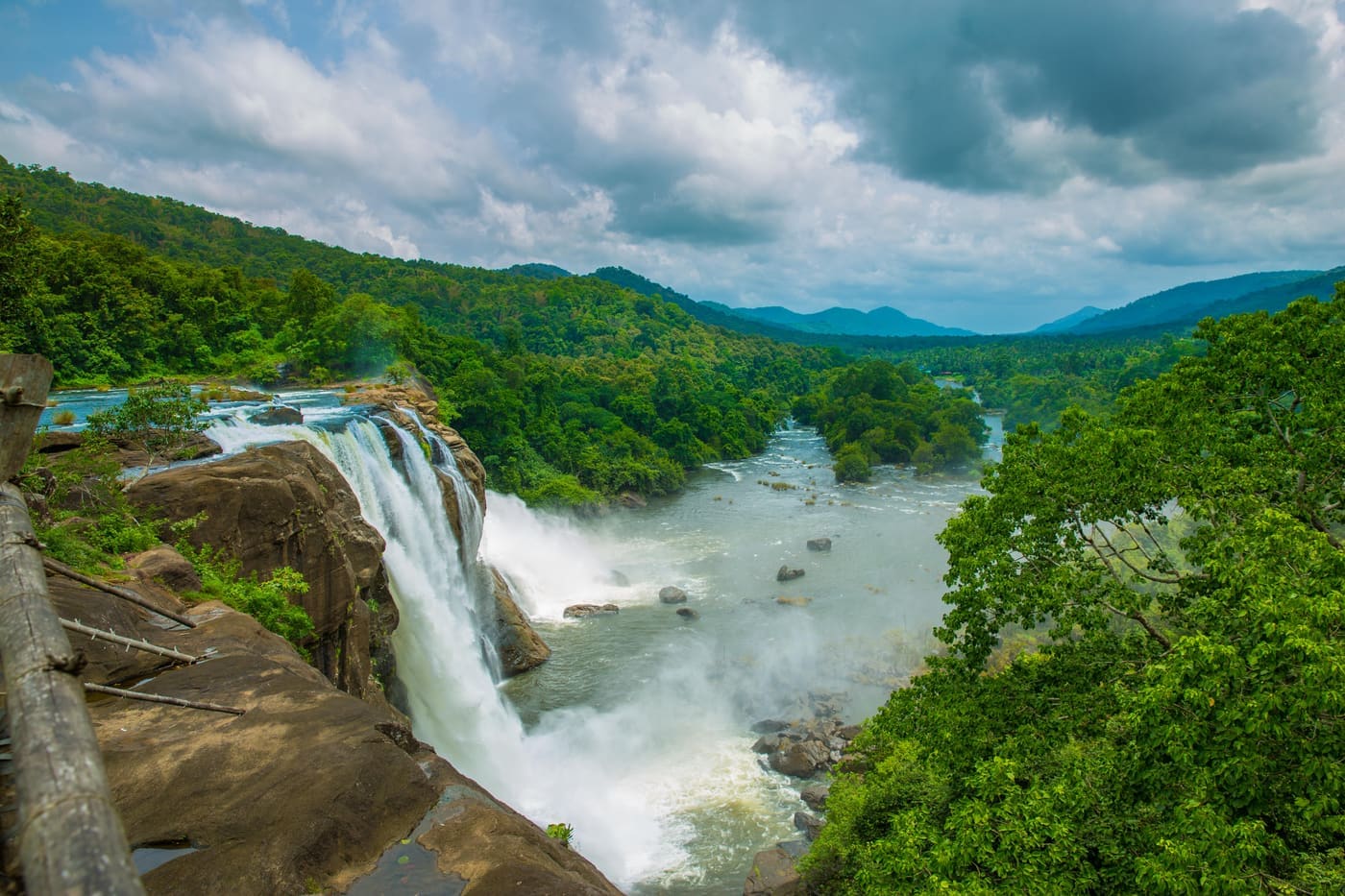
Major waterfall often visited from Kochi, on the Chalakudy river side.
18.7 km · ~31 min by cab · straight line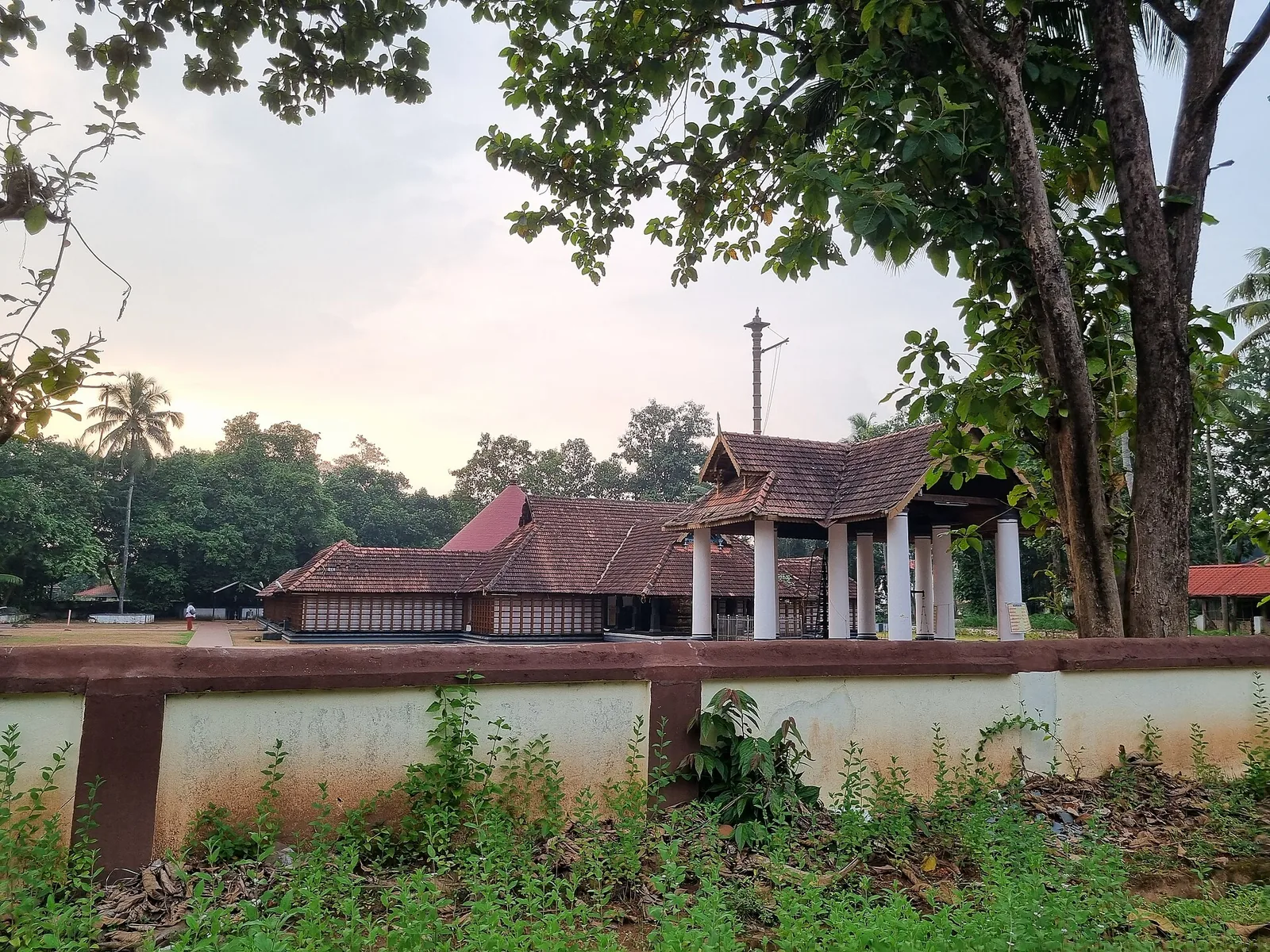
The only major temple to Vamana in Kerala, at Thrikkakara near Kakkanad — traditionally regarded as the origin place of the Onam festival.
19.4 km · ~32 min by cab · straight line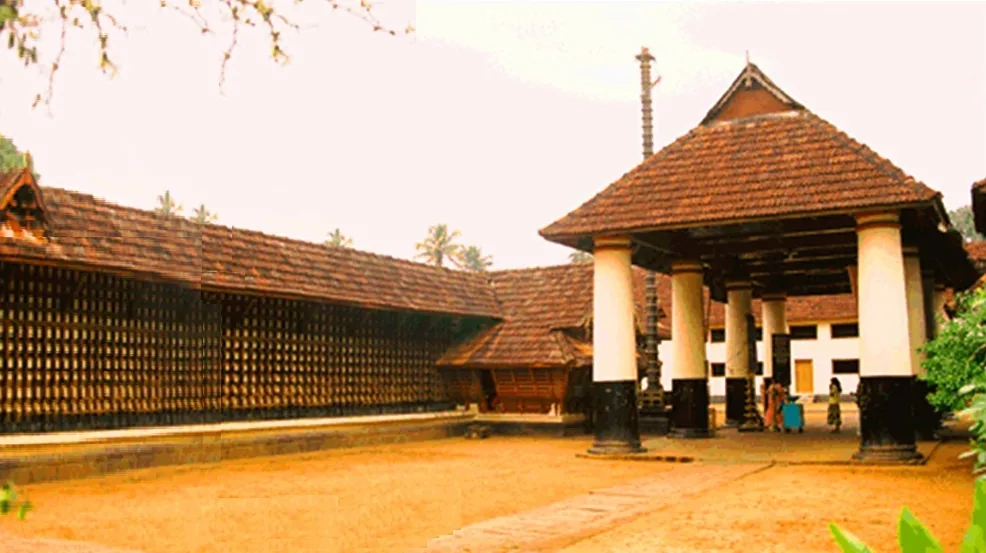
A historic Shiva temple at Kothamangalam near the Thattekkad forests, one of the important ancient temples of the old Kochi region.
20.4 km · ~34 min by cab · straight line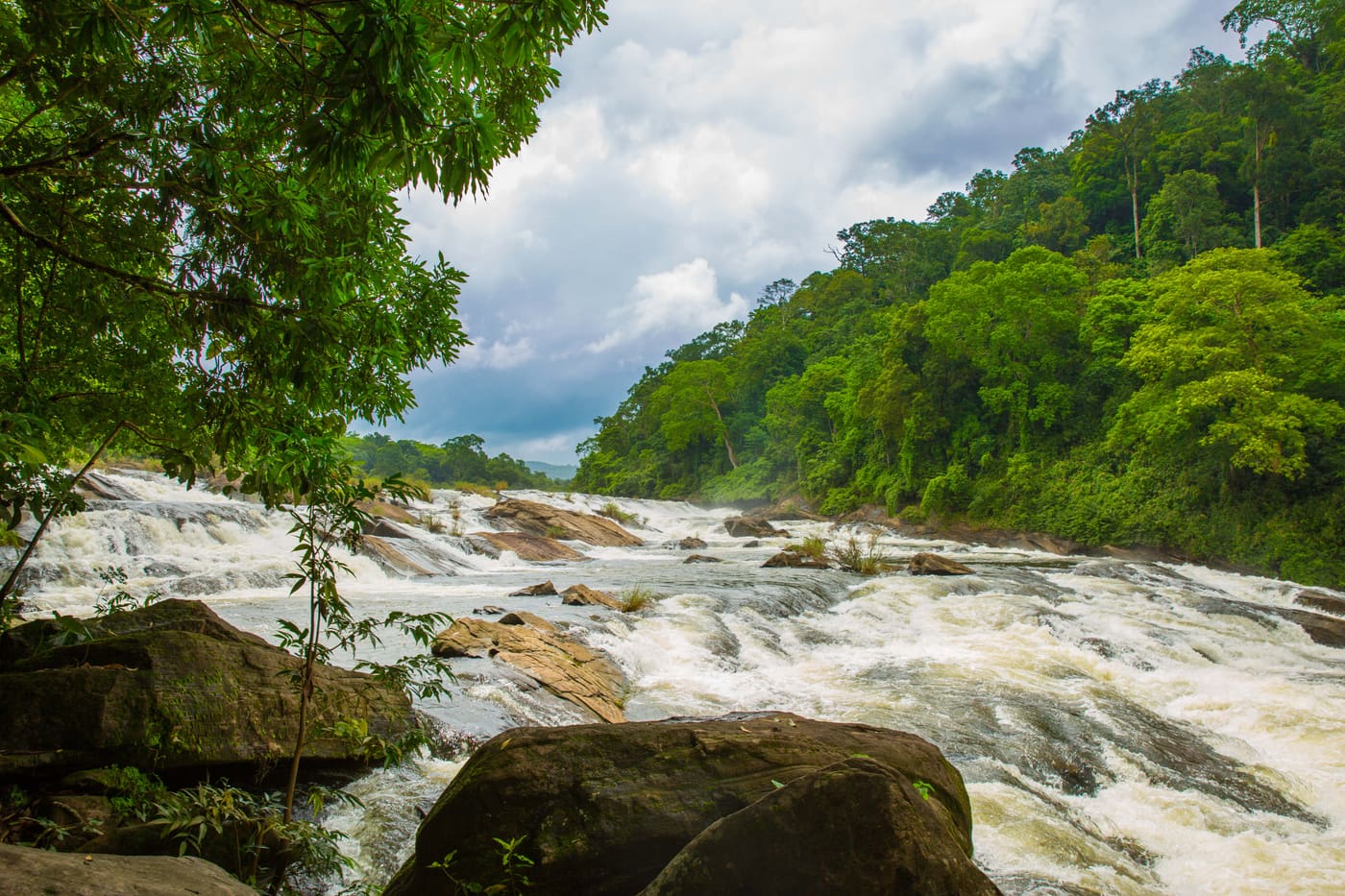
A forest waterfall on the Chalakudy river just above Athirappilly, on the Sholayar forest road — often visited on the same Kochi day trip.
21.8 km · ~36 min by cab · straight line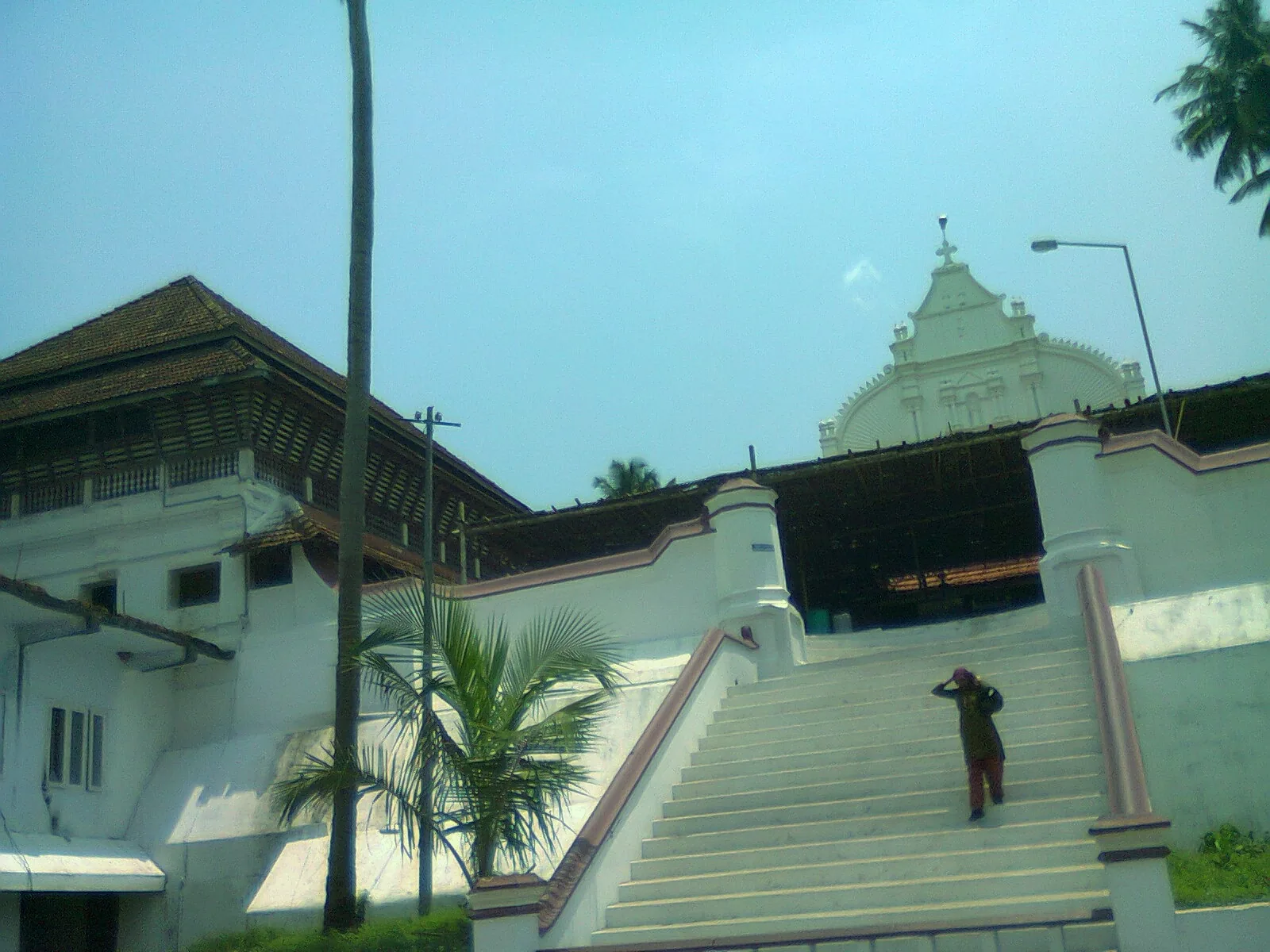
An ancient Orthodox church east of Kochi linked to the legend of the sorcerer-priest Kadamattathu Kathanar, drawing large crowds at its annual feast.
21.9 km · ~36 min by cab · straight line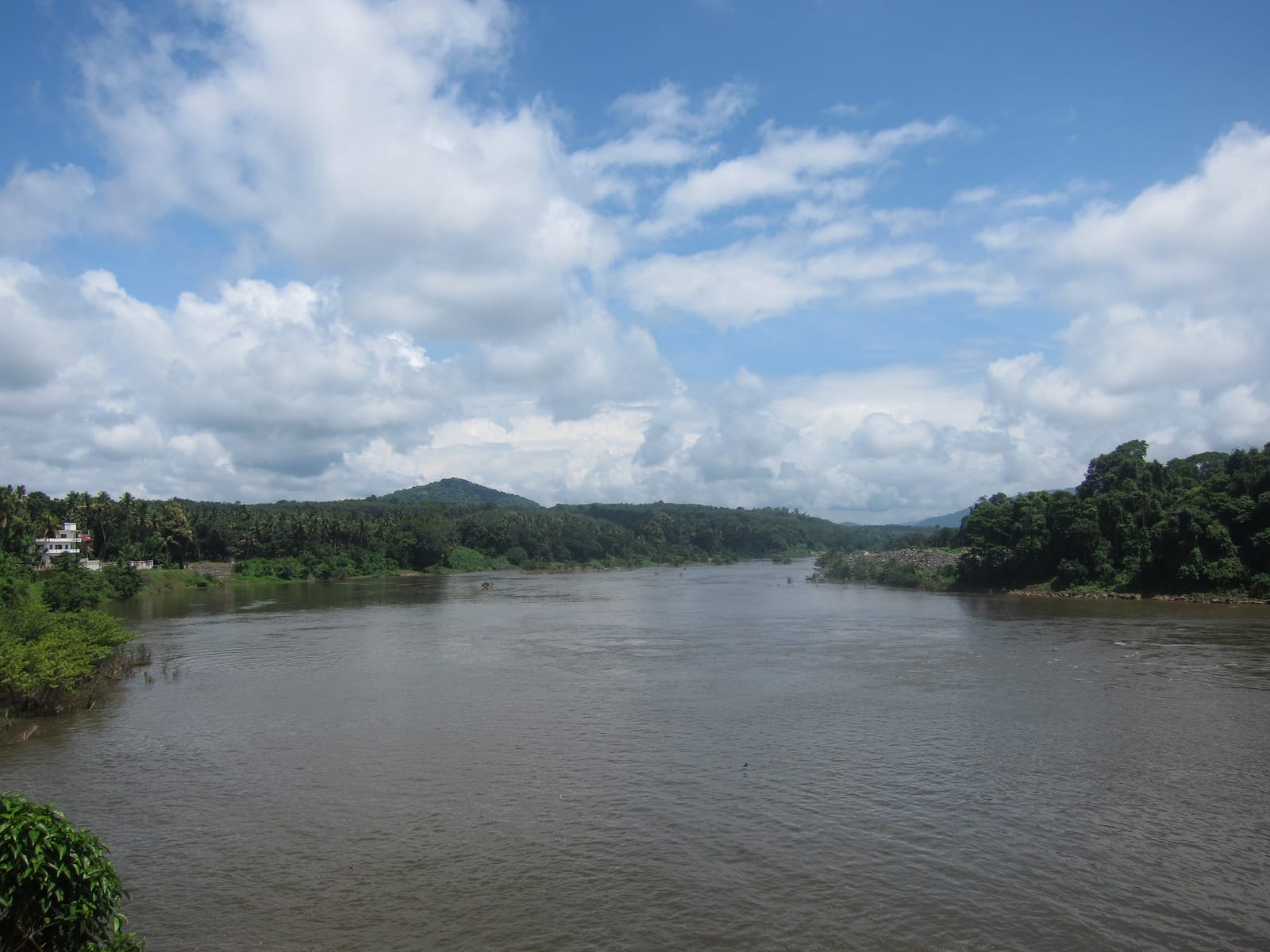
A reservoir and dam at the confluence of the Periyar’s tributaries near Kothamangalam, on the edge of the Thattekkad forests, with forest-and-reservoir trekking around the barrage and a DTPC boat jetty.
23.9 km · ~40 min by cab · straight lineWalking and driving times are real routed distances, except the few marked “straight line”, which are direct-line estimates and will read short. Fare figures are estimates from Kerala’s notified auto/taxi tariff and exclude waiting and night charges. Routing: © openrouteservice.org by HeiGIT | Map data © OpenStreetMap contributors
Nearby toilets, pharmacies, ATMs, seating and vets are community-mapped and may be incomplete or out of date. Map data © OpenStreetMap contributors | Walking times © openrouteservice.org by HeiGIT
That is the tradition and it is stated firmly: the Devaswom describes it as the only surviving structure from the time of Shankara. The tradition also holds that Krishna was his kuladevata, his family deity, and points to his own words for it — verse 243 of the Prabodha Sudhakaram, where he praises Krishna as Yadupathy, the ancestral deity. None of it is independently evidenced, which is true of everything about Shankara's life.
It went under the river. In the tradition, when the Purna changed course to reach Aryamba's door it also covered the ground the temple stood on, and Shankara reinstalled the deity where the temple stands now — on the Thiruvonam star in Tulam, during Dakshinayana rather than the customary Uttarayana, marking it with the Achyuta Ashtakam. Puja is still performed at the original site down at the Kalady ghat.
Kalady Devaswom, under the trusteeship of two Namboothiri families associated with Shankara's life — the paternal Kappilly, also called Edanana, and the maternal Thalayattumpilly, also called Moothedam. It is a family custodial line rather than an institutional one, and it predates the modern pilgrimage town.
In the early twentieth century. Sri Sacchidananda Shivabhinava Narasimha Bharati, the thirty-third Jagadguru of the Sringeri Sharada Peetham (head from 1879 to 1912), is credited with identifying Kalady as Adi Shankara's birthplace, fixing the specific sites and consecrating temples to Adi Shankara and Sharadamba there. The consecration is dated to 21 February 1910, and the centenary was kept on 23 May 2010.
It is inside the Adi Shankara birthplace complex on the east side of Kalady, immediately west of the Sringeri Math's Janma Bhoomi Kshetram. Aryamba's samadhi and the ghat where Shankara performed her funeral rites are in the same compound. It is a kilometre or so east of the Keerthi Sthambham memorial tower, which is run by a different math entirely.
We have not been able to verify this temple's own policy and we will not guess. Kerala temples vary a great deal — some admit visitors of any faith, some restrict the inner sanctum, and some admit only Hindus. Ask before you travel if it matters to you, and expect a dress code at the door in any case.
Kerala temple dress. Men are generally expected to wear a mundu or dhoti rather than shorts or trousers, and to remove upper garments in the inner areas; women wear a saree, set-mundu or salwar. Footwear and leather items are left outside. If in doubt, ask at the gate before entering rather than after.
From kaladi, footprint. The tradition is that the child Shankara prayed here to Krishna for his ageing mother, who had to walk a long way to bathe in the Periyar, and that Krishna answered by making the river flow along the line his small feet marked. The village took its name from those footprints. It is a legend, not a documented event — but the name is real and this is where the story is set.
Two to three hours covers the whole circuit properly: this temple, the Janma Bhoomi Kshetram, Aryamba's samadhi, the river ghat and the Keerthi Sthambham tower. About thirty to forty-five minutes of that is here. Watch the long midday closure, which regularly catches out day visitors driving out from Kochi.
As a standalone, it is about forty kilometres each way for a small temple — go if the Shankara story means something to you, or fold it into a day that also takes in Malayattoor. But if you are flying in or out of Cochin airport it is a different calculation entirely: it is ten kilometres away, and a long connection is more than enough time.
Morning or early evening is usually best; festival days can be powerful but crowded.
Entry: Free. Darshan at a Kerala temple of this kind carries no ticket; the charges are for offerings and vazhipadu booked at the counter, and those are per item. Timings: The usual Kerala pattern of an early-morning opening, a long midday closure and an evening reopening until night pooja. Kalady runs on pilgrim traffic and festival days shift everything, so treat any published time as approximate.
Base yourself in Kalady or a nearby town in Ernakulam, then confirm the last-mile route locally before leaving. Check temple entry customs, dress rules and festival crowd conditions before arrival. If the visit depends on forest, temple, boat, ferry, weather or seasonal access, check the official/local rule on the day before travel.
45 minutes to 2 hours, longer during festival or queue periods.
Nearby you can pair Adi Shankara Keerthi Sthambha Mandapam (1.4 km), Periyar river (1.5 km), Karthyayani Devi Temple (1.6 km), Malayattoor Church (8.0 km).
Use official counters for offerings/tickets where applicable. Keep footwear and valuables secure in crowded areas.
Written about Sree Krishna Temple itself — its history, its legends and the arguments about them.

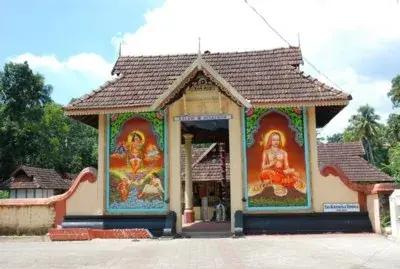
These guides explore Kalady and the surrounding area. Choose a visit that fits your interests, allowing separately for travel between stops.


Route-level itineraries and practical guides for the rest of Kerala.
Photographs: Srevalsan Nambudiri (Public domain), Prof Ranga Sai (CC BY-SA 4.0), Timothy A. Gonsalves (CC BY-SA 4.0), Geyo John (CC BY-SA 3.0), Kappilly srevalsan (CC0), డా. గన్నవరపు నరసింహమూర్తి (CC0), This Photo was taken by Timothy A. Gonsalves. Feel free to use my photos, but please mention me as the author. I would much appreciate if you send me an email [email protected] or write on my talk page, for my information. Please contact me before commercial use. Please do not upload an edited image here without consulting me. I would like to make corrections only at my own source to ensure that the changes improve the image and are preserved.Otherwise you may upload an edited image with a new name. Please use one of the templates derivative or extract. (CC BY-SA 4.0), mujeebcpy (CC BY-SA 4.0). Wikimedia Commons.