What to expect
Highlights
- Temple visit at Thrikkariyoor Temple
- Kerala temple architecture and rituals
- Local food, shops and pilgrim services nearby
A historic Shiva temple at Kothamangalam near the Thattekkad forests, one of the important ancient temples of the old Kochi region.
Check entry arrangements. Ask temple staff about visitor entry, dress requirements and access to the inner shrine before you travel, especially if you are visiting as a non-Hindu.
Dress respectfully and follow the institution’s admission and photography rules.
Everyone driving east from Kochi to the Thattekkad bird sanctuary passes Kothamangalam, and almost nobody stops. A few kilometres off that road, on a riverbank, is a Shiva temple that devotional tradition counts as the very last of the 108 Shivalayas consecrated by Parasurama — the end of the list, not an entry in the middle — and that local historical tradition holds to have been a seat of Chera power. It is a small temple with two very large claims, and they sit at quite different levels of evidence.
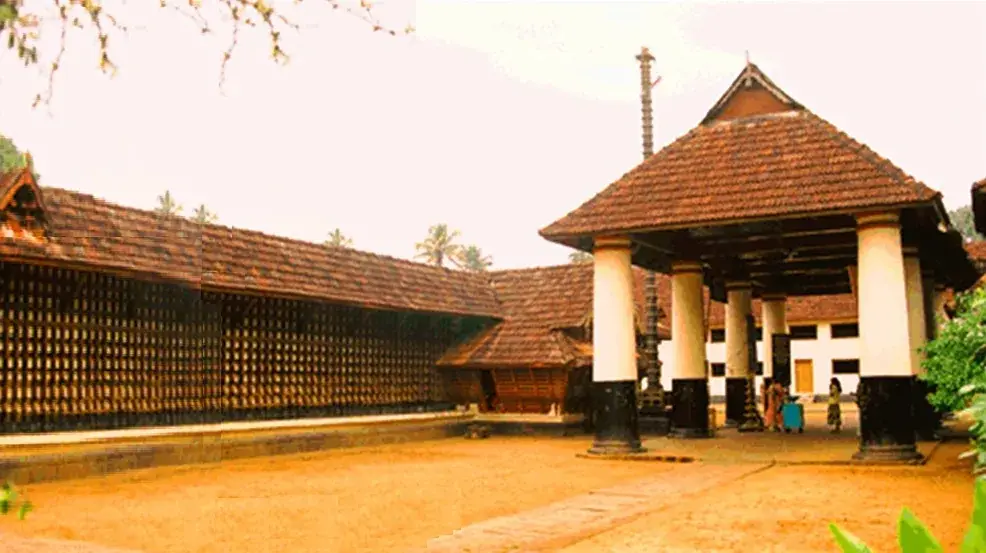
Physically it is unassuming: a compact Kerala temple by the water, with the usual arrangement of sanctum, prakaram and outer wall, and none of the scale of Ernakulam's marquee shrines. There is no interpretation panel, no guide and no shop. If you arrive without knowing what you are looking at, it will read as an ordinary village temple, which is exactly what most people driving past assume it is.
The relationship with the river is the reason the temple is where it is. Kerala temples of this age are sited on water for practical and ritual reasons alike — the arattu, the concluding procession of the annual festival, ends at the river — and walking down to the bank is a more useful five minutes here than another circuit of the prakaram.
Its rhythm is the standard Kerala one: an early opening for the morning poojas, a long closure across the middle of the day, and an evening reopening until the night pooja. That midday closure is the thing that catches out day visitors coming from Kochi, who tend to arrive at exactly the wrong hour after a slow drive through Perumbavoor.
The best way to use it is as a first stop rather than a destination. Thrikkariyoor, Bhoothathankettu and the Thattekkad bird sanctuary lie along the same road east, and a morning that begins here and ends at the water or the forest is a far better-shaped day than one that treats the temple as an afterthought on the way home.
The 108 Shivalayas belong to the Parasurama cycle, the founding myth of Kerala itself. Parasurama, the axe-wielding sixth avatar of Vishnu, is said to have won the land from the sea: granted a boon by Varuna, he threw his axe from Gokarna and was given all the ground it flew over, as far as Kanyakumari. The land he raised he gave to Brahmins, and across it he is said to have consecrated 108 temples to Shiva.
Thrikkariyoor's particular claim within that cycle is that it was the last of the 108 — the final consecration, closing the sequence. Devotees hold it as such and it is the temple's principal devotional distinction.
This is myth and we present it as myth. The Parasurama story is a foundation narrative rather than a chronicle, and the 108 lists vary between sources. What it tells you truthfully is how this temple has been ranked in Kerala's religious imagination for a very long time, which is its own kind of fact.
The temple also sits at the centre of a second story that is not about gods at all. A strong local belief in Kothamangalam holds that the festival at the Marthoman Cheriyapally — the Jacobite Syrian church in the town — does not commence until the para and the lantern from Thrikkariyoor temple have reached the church. The para is the traditional Kerala grain measure, a wooden vessel heaped with rice and decorated, long used as a temple offering; the lantern is exactly what it sounds like. A Hindu temple sends a measure of grain and a light across town, and a Syrian Christian feast waits for them before it begins. Nobody designed it as a gesture of harmony. It is simply how the town's year has been ordered for long enough that people state it as a fact rather than an achievement.
There is a third story, and it is the biggest one in this part of Ernakulam — but it is almost always told somewhere else. The bhoothams, the spirits or demons of Malayalam tradition, are said to have set out to dam the river overnight in order to flood the country upstream and submerge a Shiva temple. That temple is this one. Shiva broke them with a trick rather than a fight: he counterfeited the dawn, a cock crowed, and the bhoothams abandoned the half-built dam and fled the coming light. The boulders they dropped are still in the riverbed at Bhoothathankettu, whose name means the demons' dam, and the legend is told at the barrage, at Paniyeli Poru and along the whole rock-strewn reach. It is rarely told here, at the building it is actually about. Thrikkariyoor is the reason the story has a plot.
Notice one thing about it while you are standing here, because it is the kind of detail that tells you what a legend is made of. Bhoothathankettu is on the Periyar. This temple stands on the northern bank of the Kothayar, a tributary of the Muvattupuzha — a different river system, roughly eight kilometres away across the divide. Damming the Periyar would not, on any straightforward reading of the ground, put water over Thrikkariyoor. That is not a defect in the story. It is the signature of a story that is remembering a flood rather than describing an engineering scheme: the water came, the temple was threatened, and the account of why was assembled afterwards out of the most dramatic feature in the landscape, which is a field of enormous boulders in a riverbed. The documented candidate for that flood is the great Periyar deluge dated to 1341.
The second claim is historical rather than mythological, and it is genuinely argued: that Thrikkariyoor was a centre of the ancient Chera power, and by some accounts the capital of one of the Cheraman Perumals, the rulers of old Kerala. Eastern Ernakulam, on the route between the coast and the Ghat passes, is plausible ground for such a seat.
The evidence, though, is traditional and circumstantial rather than settled scholarship. We present it as a claim that is seriously made and not conclusively established, which is the honest position — and a more interesting one than either accepting it flatly or dismissing it.
The temple keeps an annual utsavam in the Malayalam month of Meenam, roughly March to April, on the familiar Kerala pattern: flag-hoisting, daily processions across several days, and a concluding arattu at the river. That is when the place is at its fullest and its most worth seeing.
The older records give the place other names — Karuvoor, Karaorai — and it is on those that the Chera argument largely rests, along with the river running past the temple towards the village of Karur in Kothamangalam. Kerala scholars including Prof. Joseph Mundassery and V. Kanakasabhai have been cited in support of the identification with an early Chera headquarters, and local accounts describe Brahmin settlement in this area from an early date and a decline following a Pandya attack around the eighth or ninth centuries.
The church at the other end of the para-and-lantern custom has its own dates. Marthoman Cheriyapally, Kothamangalam, is a Malankara Jacobite Syrian Orthodox church believed to have been established in 1455 by eighteen families, and it holds the tomb of Mar Baselios Yeldo. Its principal feast, the Kanni 20 Perunnal, falls at the start of October. The deity here is Thrikkariyurappan, and Maha Shivaratri is a principal observance alongside the Meenam utsavam.
The abandonment is the part of the history that explains the building. Accounts of the Pandyan attack hold that the population fled to neighbouring places and that Kothamangalam and its surroundings were left uninhabited for two centuries across the eighth and ninth centuries. That is the reason a site with claims this large has so little visible antiquity standing on it: whatever was here was left, and what you walk through now is the temple that came back afterwards and has been maintained since. It is a pattern that recurs across Kerala — the institution is old, the fabric is not, and the two get quietly conflated on signboards.
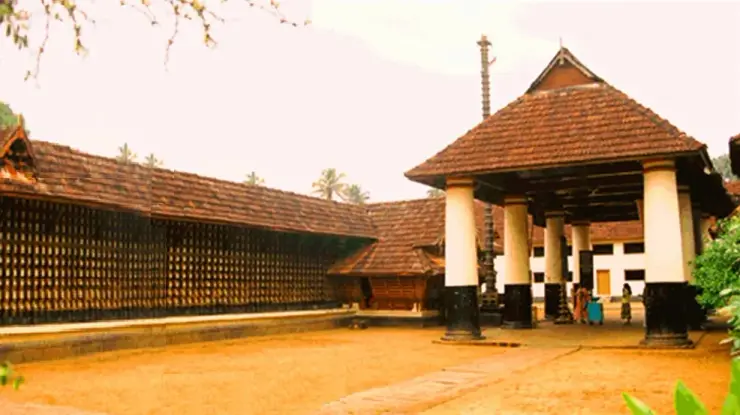
The temple is bigger than it first reads and rewards a slow circuit. The compound runs to about four acres. It faces east and carries towers on both the eastern and western sides. The sreekovil — the sanctum — is unusually a large rectangle rather than the square or circular plan most Kerala shrines use, and it rises in two floors under copper. In front of it stand the anakkottil, the elephant mandapam, and the balikkal mandapam, whose wooden carvings show the Ashtadikpalakas, the guardians of the eight directions, together with Brahma. The flagmast is teak sheathed in copper. There are southern and northern doorways with rest areas for devotees, a thidappalli in the south-west of the nalambalam where the naivedyam is cooked, and a large pond in front.
The murals are worth looking for rather than assuming. The sanctum carries frescoes and wooden sculpture, and the mural paintings were restored in 2013 — recent enough that what you see is in good condition and old enough that it is not a novelty. Photography is not permitted in the sanctum, so this is a thing to look at rather than to collect.
One geographical correction while we are here. This temple stands on the northern bank of the Kothayar, a tributary of the Muvattupuzha river, not on the Periyar. Bhoothathankettu, the Thattekkad sanctuary and Paniyeli Poru are all Periyar sites. Thrikkariyoor is the point on an eastern-Ernakulam day out where you leave one river system for another, which is easy to miss when everything is described simply as being on the way to Thattekkad.
It is the oldest thing on the Thattekkad road, and it is a twenty-minute detour from a drive most visitors already make.
Standing in what tradition calls the last of Parasurama's 108 Shivalayas is a different feeling from standing in a temple that is merely on the list.
The Chera capital claim is a real, unresolved historical argument, which makes the site more interesting than a settled answer would.
It is a working village temple with no visitor apparatus, which is increasingly rare on a route with any traffic at all.
The riverside setting is quiet and the Meenam festival, ending with arattu at the water, is a proper local occasion.
It pairs naturally with Bhoothathankettu and the Thattekkad bird sanctuary into a single eastern day out of Kochi.
Road km to Ernakulam; ghat roads and traffic vary — allow extra.
Morning or early evening is usually best; festival days can be powerful but crowded.
Live forecast loads in your browser.
Sun and moon are calculated for this location and shown in IST. Photography windows are the hour around sunrise and sunset; the sunset bearing is degrees clockwise from true north. Moon phase is accurate to about half a day.
These are official or public-sector eco offerings that match this place, town or forest destination. Confirm availability, permits, tariffs and reporting times with the official operator before travel.

Dam, forest and river landscape east of Kochi, listed by Kerala Tourism as an ecotourism destination and programme.
Official source →
Rocky Periyar river landscape and forest-edge destination that needs careful seasonal safety checks.
Official source →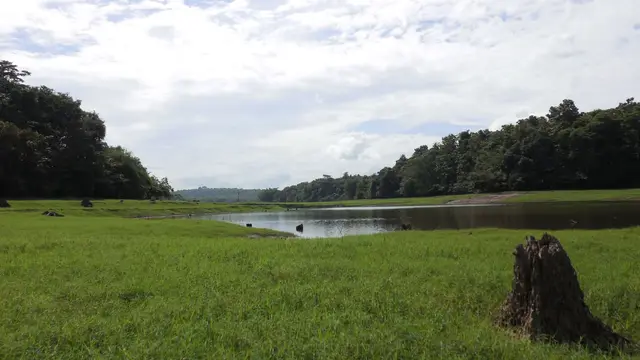
One of Kerala’s key birding landscapes on the Periyar river, east of Kochi.
Official source →Browse listed stays, food, activities, sights, shops and rentals around Thrikkariyoor Temple. Check each listing’s locality and contact the business directly for current arrangements.
A Palamattam stay in the Thattekkad area near Kothamangalam. Compare it as a base for a birding-focused trip rather than a Kochi city hotel. Ask about early breakfast, guide arrangements and transport to the intended birding site; a room booking does not establish sanctuary entry or an included guided walk.
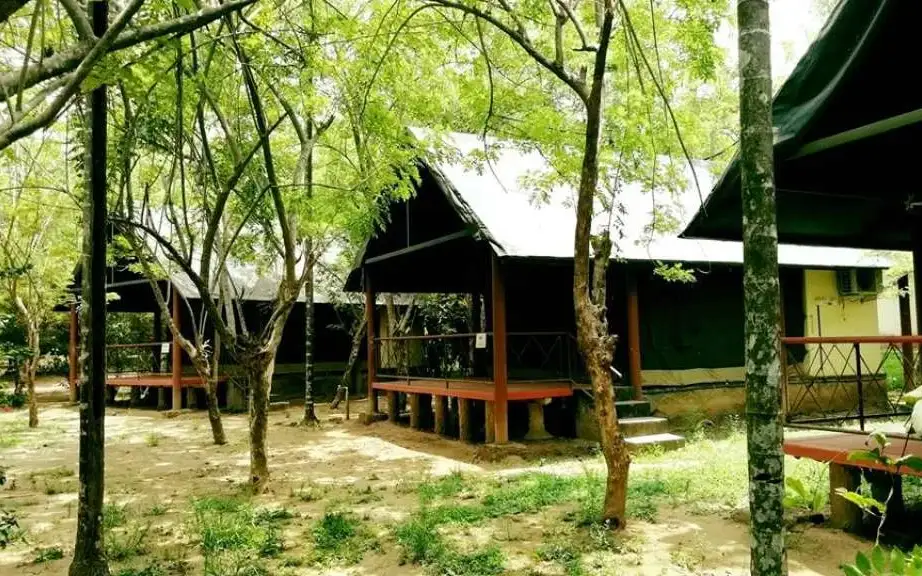
Tent-house accommodation at Palamattom, Thattekkad, with private bathrooms and balconies described for the tents. Choose it for the camp format, then check the exact tent position and current facilities. Birding, guides and sanctuary entry should be priced and arranged separately unless your quote explicitly includes them.
Book with the place itself. India’s cyber-crime coordination centre warned in April 2025 that convincing copies of hotel and pilgrimage booking sites are being pushed through sponsored search and social ads, taking payment for rooms the property never hears about. Use the contact and source details on each profile to confirm the exact business and booking channel. A directory entry or map pin alone does not establish an operator’s identity or current availability. Roampedia takes no commission and does not collect booking payments. If a booking page reached you through an ad, check the address bar against the property’s own site before you pay. Fraud can be reported on cybercrime.gov.in or on 1930.
8 more places around Thattekkad. Open a guide to plan the visit and onward journey.
A pedestrian suspension bridge across the Periyar near Kothamangalam, used for river and forest-edge views without treating the structure as an adventure ride.
A Bhagavathy shrine enclosed by a rare sacred grove near Perumbavoor, where worship etiquette and protection of the forest floor take precedence over recreation.
17.2 km · 27 min drive
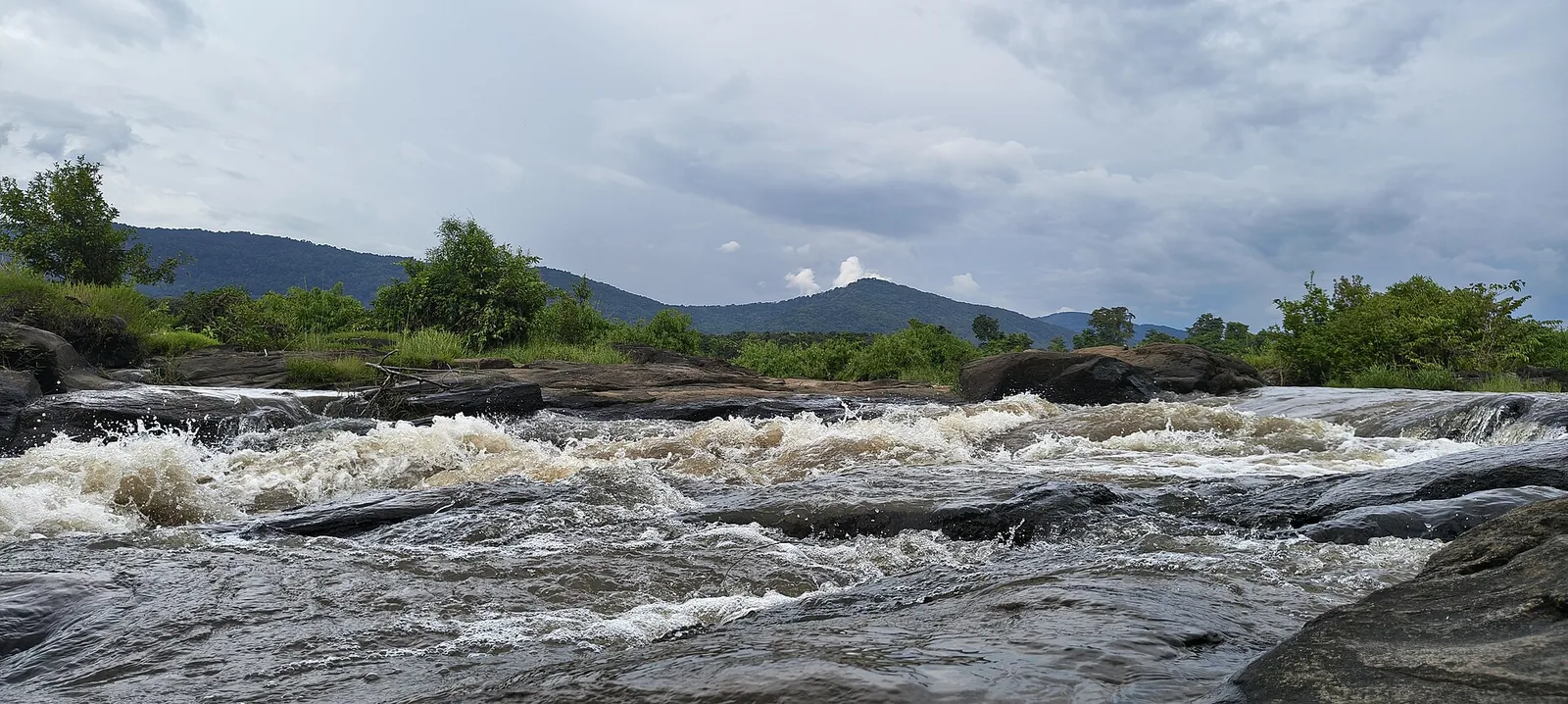
A rocky eco-tourism stretch of rapids and evergreen forest on the Periyar river near Perumbavoor in eastern Ernakulam, with riverside forest trekking along the falls.
14.1 km · 15 min drive
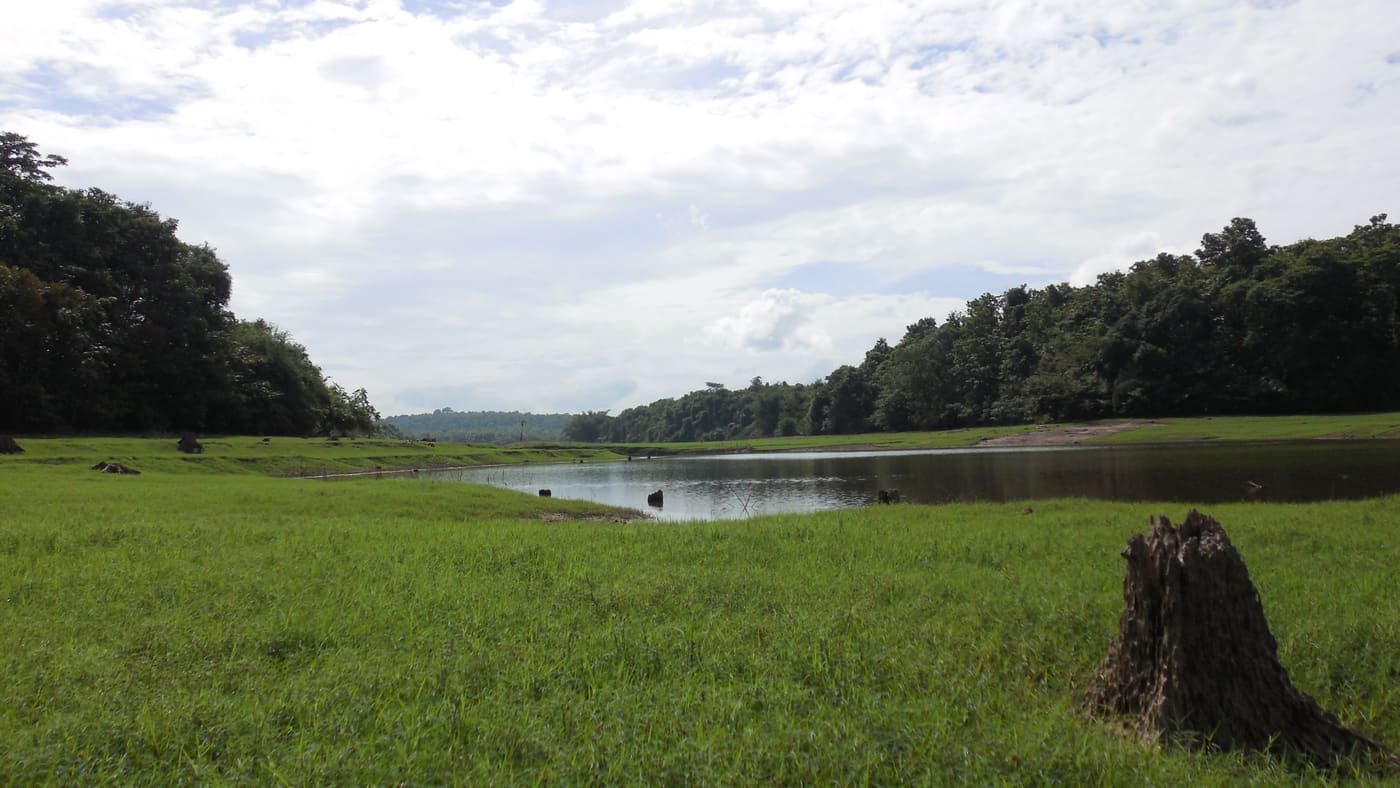
Important birding area east of Kochi near the Periyar river.
40.9 km · 69 min drive
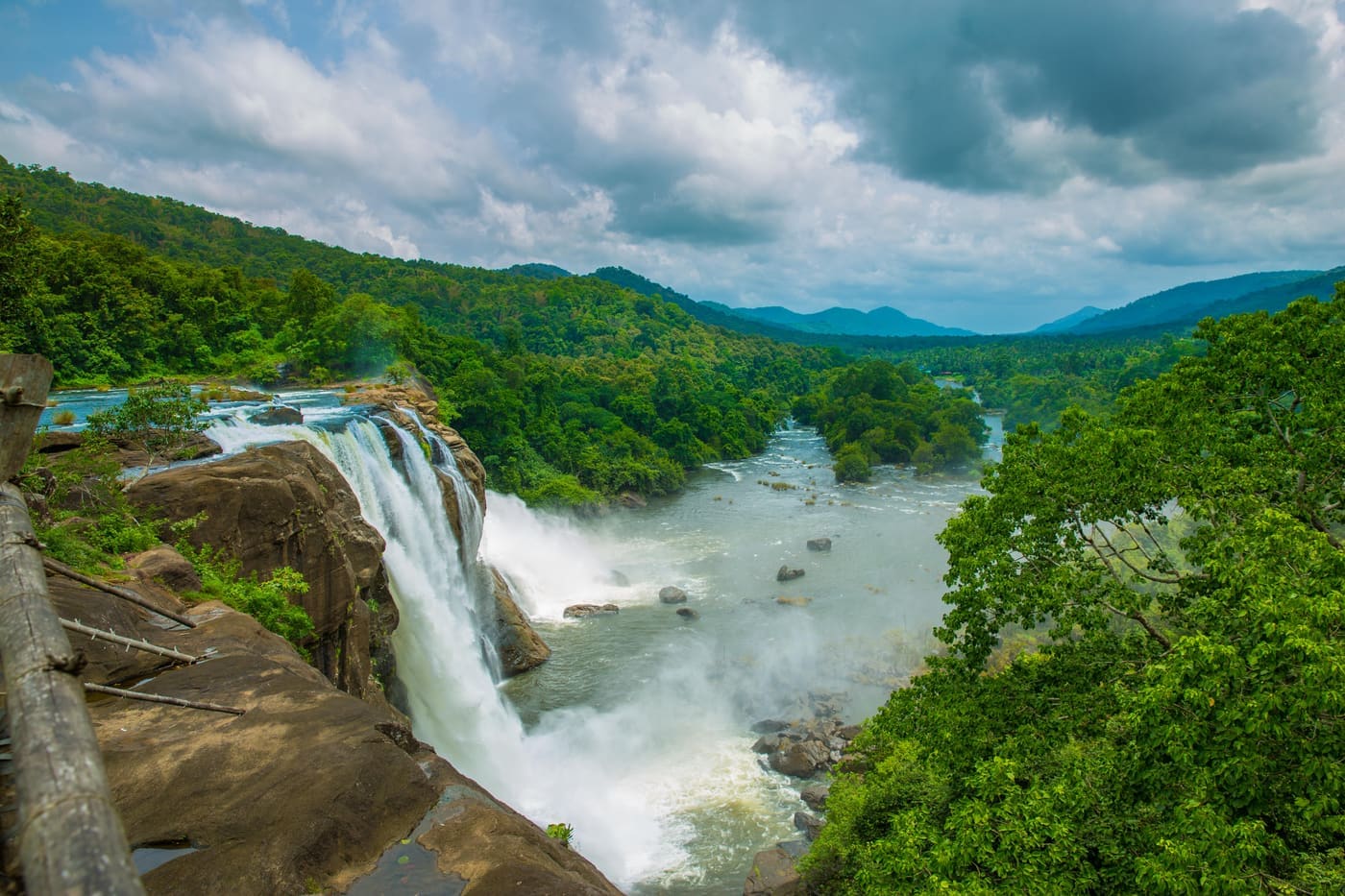
Major waterfall often visited from Kochi, on the Chalakudy river side.
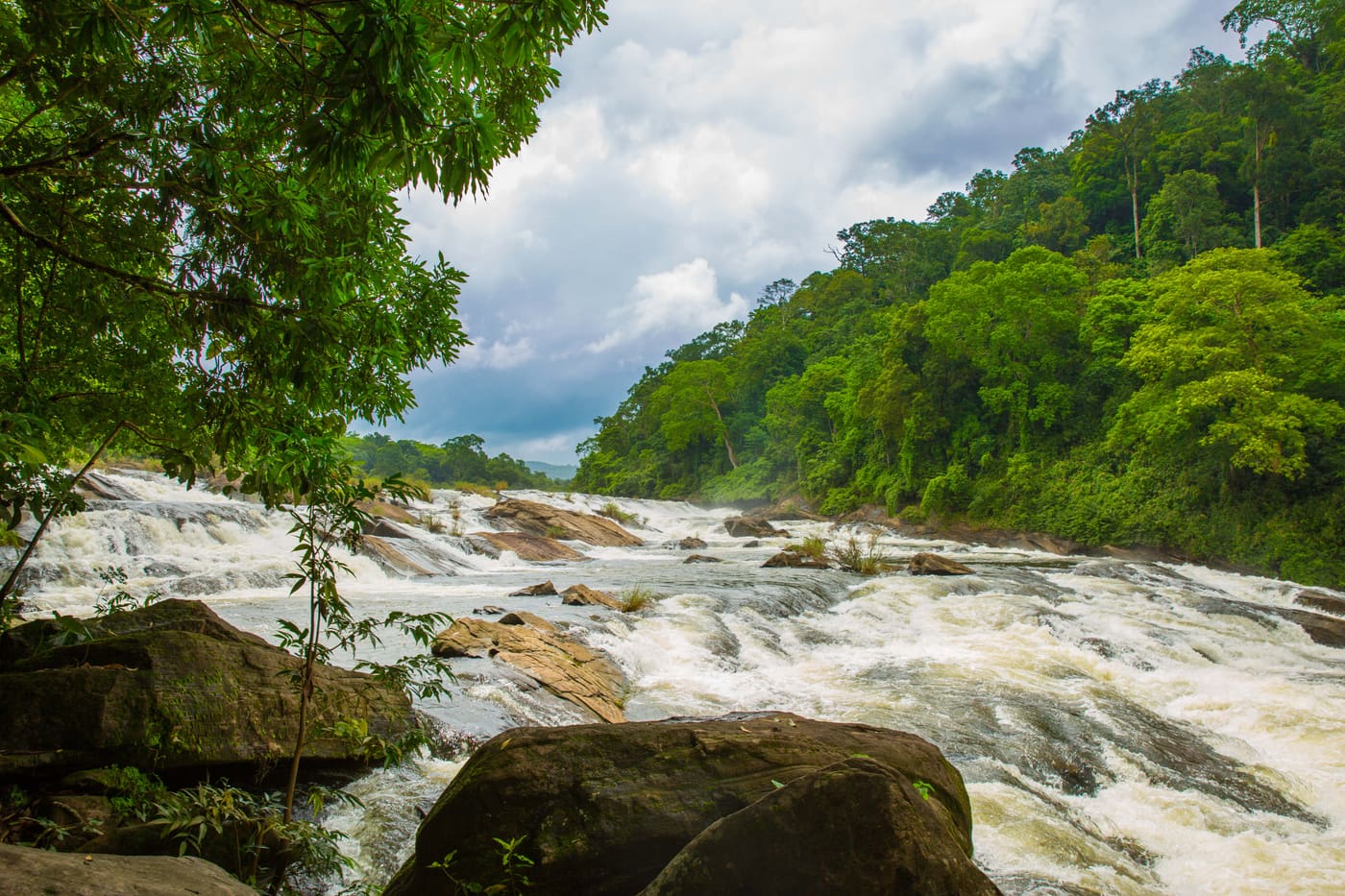
65.2 km · 75 min drive
A forest waterfall on the Chalakudy river just above Athirappilly, on the Sholayar forest road — often visited on the same Kochi day trip.
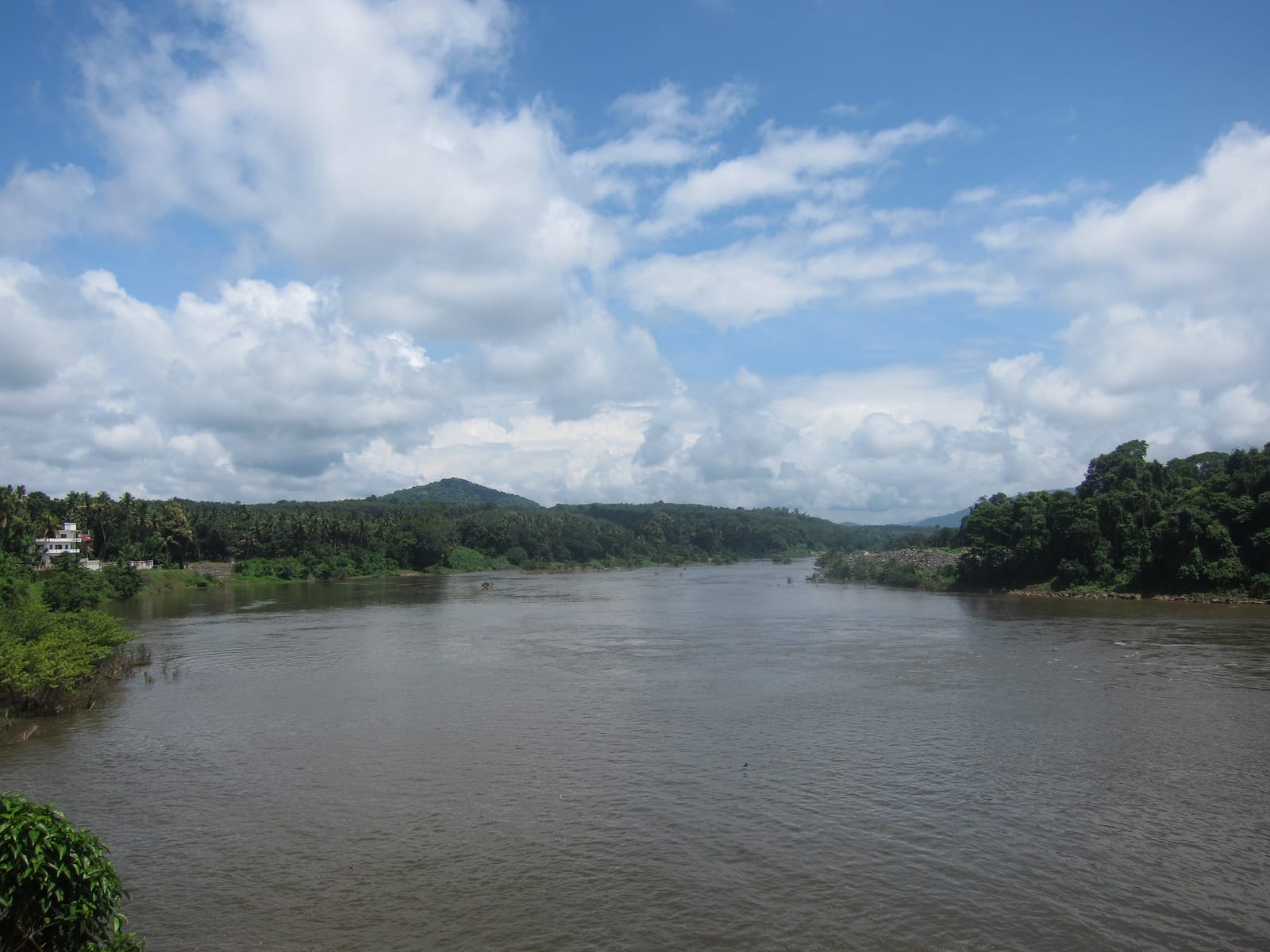
10.9 km · 12 min drive
A reservoir and dam at the confluence of the Periyar’s tributaries near Kothamangalam, on the edge of the Thattekkad forests, with forest-and-reservoir trekking around the barrage and a DTPC boat jetty.
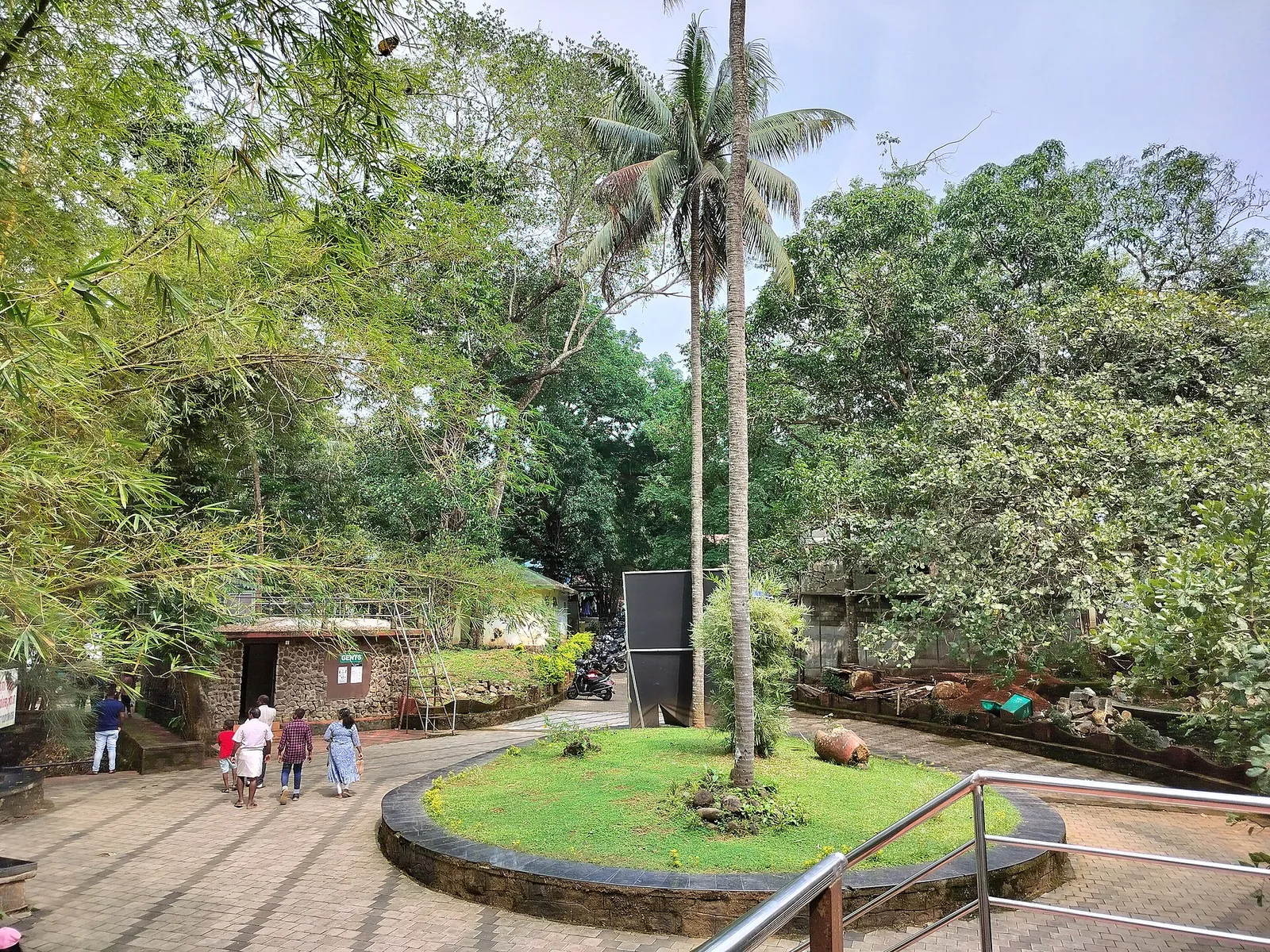
A riverside nature village on the Chalakudy river near Mattoor, with a bamboo forest walk and gentle river bathing spots, on the Athirappilly day-trip side.
Roampedia is commission-free — own or know a stay, eatery, guide or shop near Thrikkariyoor Temple? Submit public business details for review.
Add a nearby businessEntry: Free. Darshan carries no ticket; offerings and vazhipadu are booked at the counter and priced per item.
Dress code: Kerala temple dress: mundu or dhoti for men, with upper garments generally removed inside; saree, set-mundu or salwar for women. Footwear and leather are left outside.
Festivals: An annual utsavam in Meenam (roughly March–April), on the usual Kerala pattern of flag-hoisting, daily processions and a concluding arattu at the river.
Photography: No photography in the sanctum. Ask before photographing anyone at worship.
If you are travelling by bus or ferry, check the return service with the operator before setting out. Leave time to reach the stop or jetty after your visit.
Ask at the bus stand for the time of the last service back, not the next one. If you miss it, an auto or app cab is the fallback — agree the fare before you get in.
If you need step-free access, contact the site before travelling. Ask about a level entrance, steps along the route, the nearest drop-off point, seating and accessible toilets.
Charge cap and free-transaction limits: Reserve Bank of India, ATM FAQ updated 4 July 2025; checked 4 October 2026.
These services are listed within about 1.2 km of Thrikkariyoor Temple. Walking distances follow mapped routes; access and opening hours can change. Other services may be closer but are not included here.
Published emergency and visitor-assistance contacts. For an immediate emergency, call 112. Shared Kerala contact sources checked 4 October 2026; publication does not establish a tested live response.
A reservoir and dam at the confluence of the Periyar’s tributaries near Kothamangalam, on the edge of the Thattekkad forests, with forest-and-reservoir trekking around the barrage and a DTPC boat jetty.
10.9 km · 12 min driveImportant birding area east of Kochi near the Periyar river.
14.1 km · 15 min drive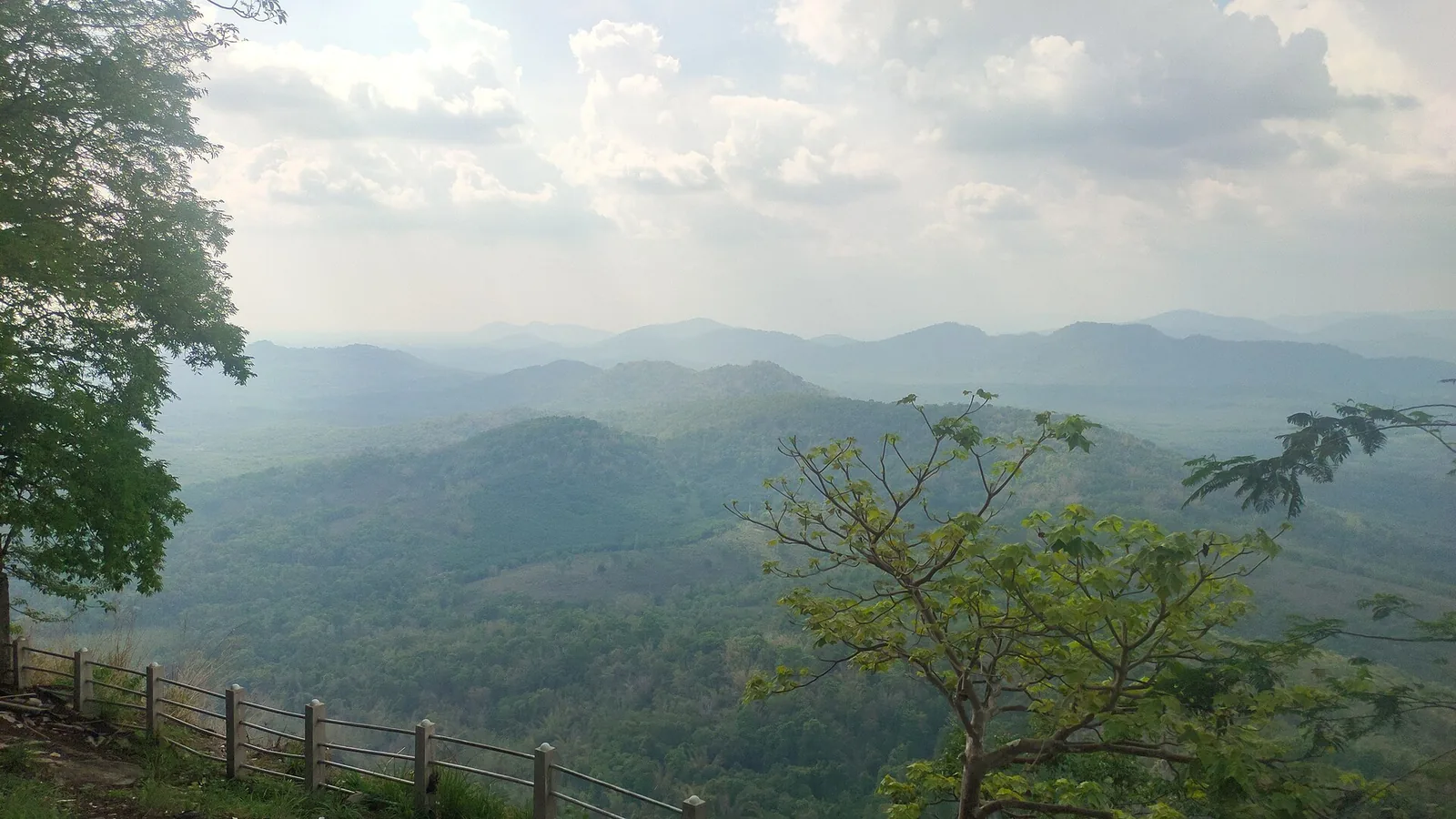
The St Thomas hilltop pilgrimage church near Kalady, a major Christian pilgrimage site drawing large Malayattoor Perunnal crowds.
16.1 km · straight lineA rocky eco-tourism stretch of rapids and evergreen forest on the Periyar river near Perumbavoor in eastern Ernakulam, with riverside forest trekking along the falls.
17.2 km · 27 min drive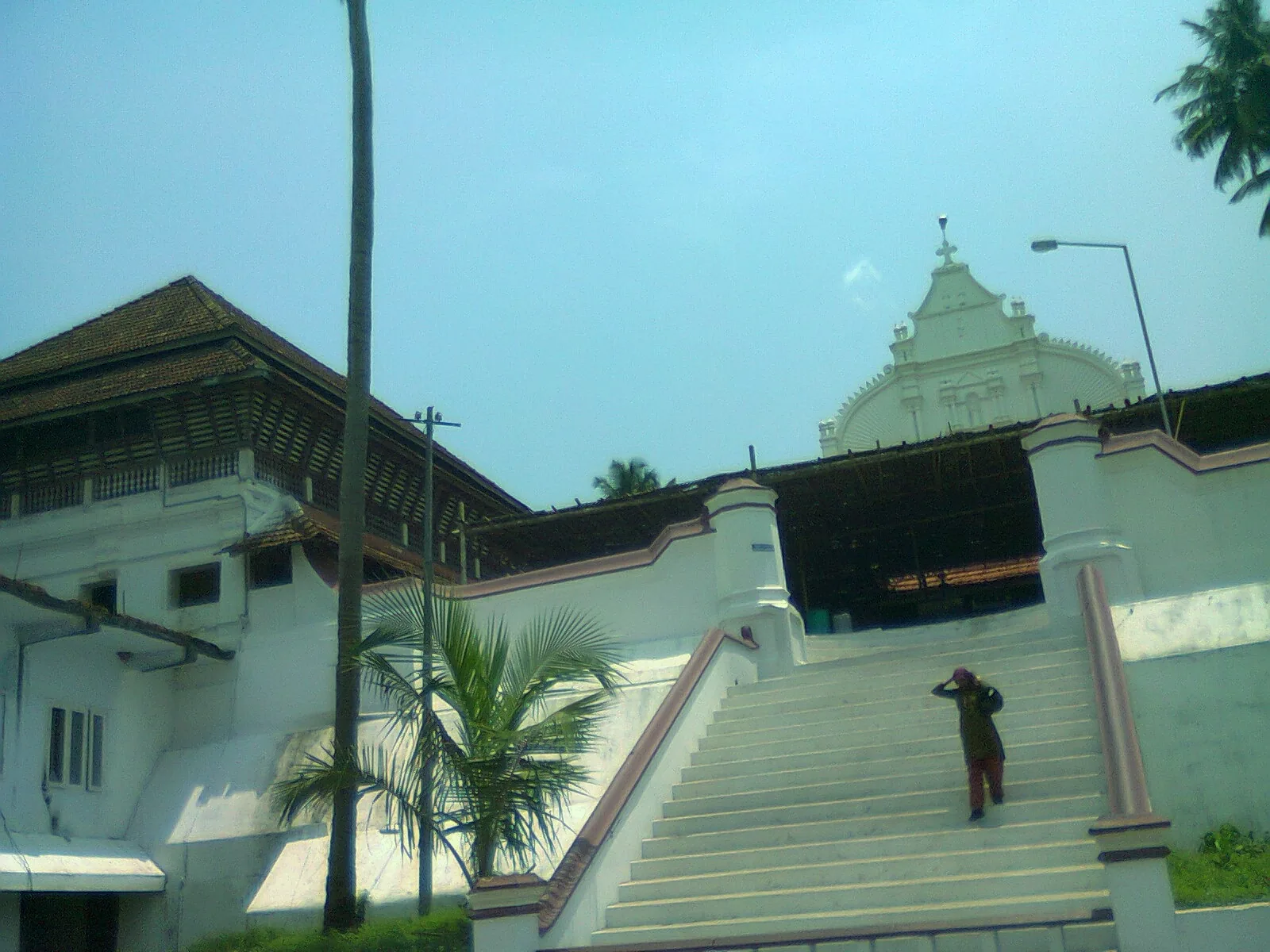
An ancient Orthodox church east of Kochi linked to the legend of the sorcerer-priest Kadamattathu Kathanar, drawing large crowds at its annual feast.
17.3 km · straight line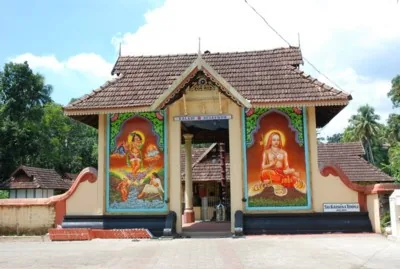
Adi Shankara’s family temple at Kalady, west of the Sringeri Math birthplace complex — the shrine at the centre of the story that gave the village its name.
20.4 km · straight line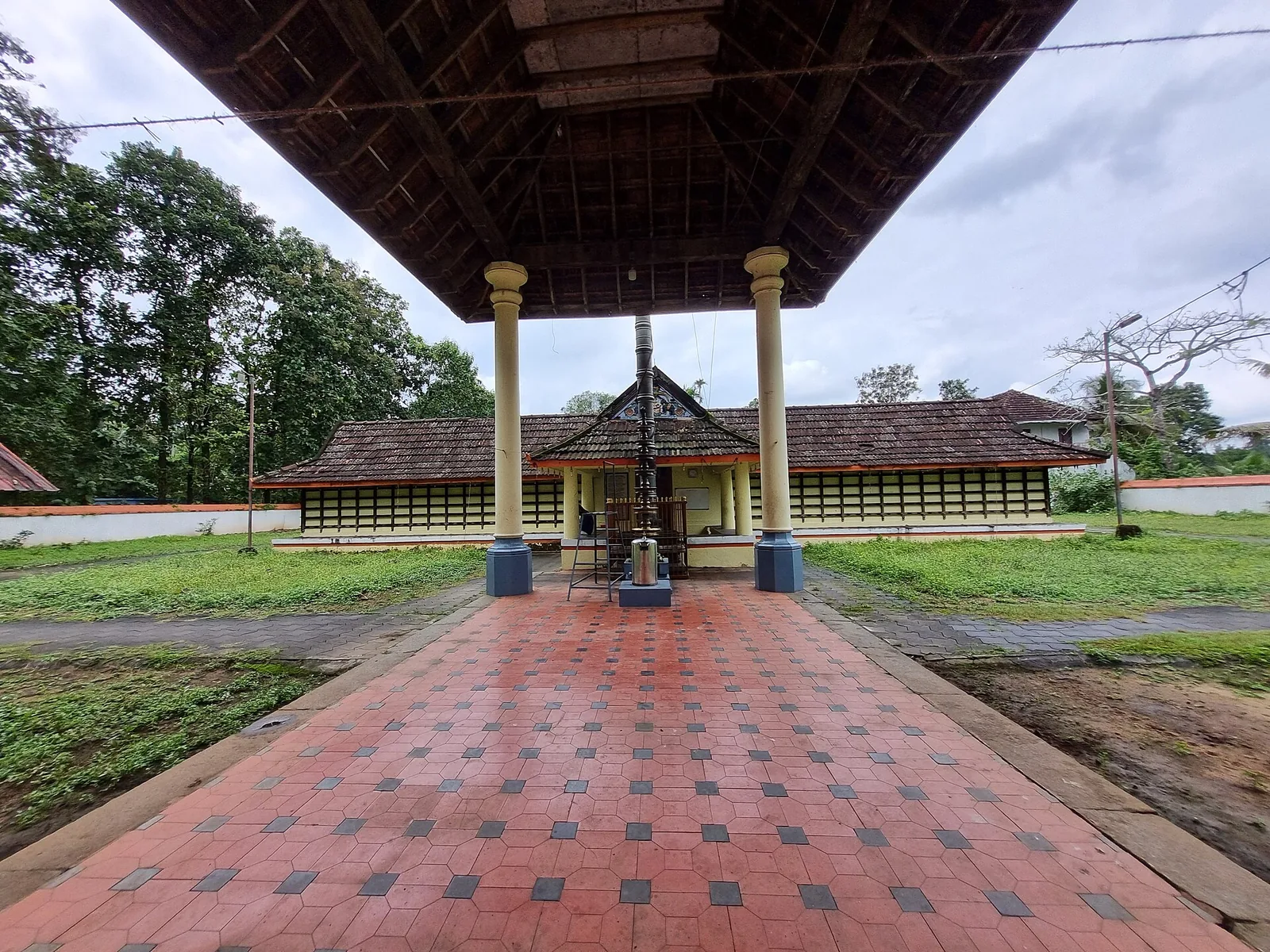
The Manickamangalam Devi temple north of Kalady, remembered as the shrine where Adi Shankara’s father Sivaguru served — the family connection, rather than the building, is why pilgrims come.
21.1 km · straight line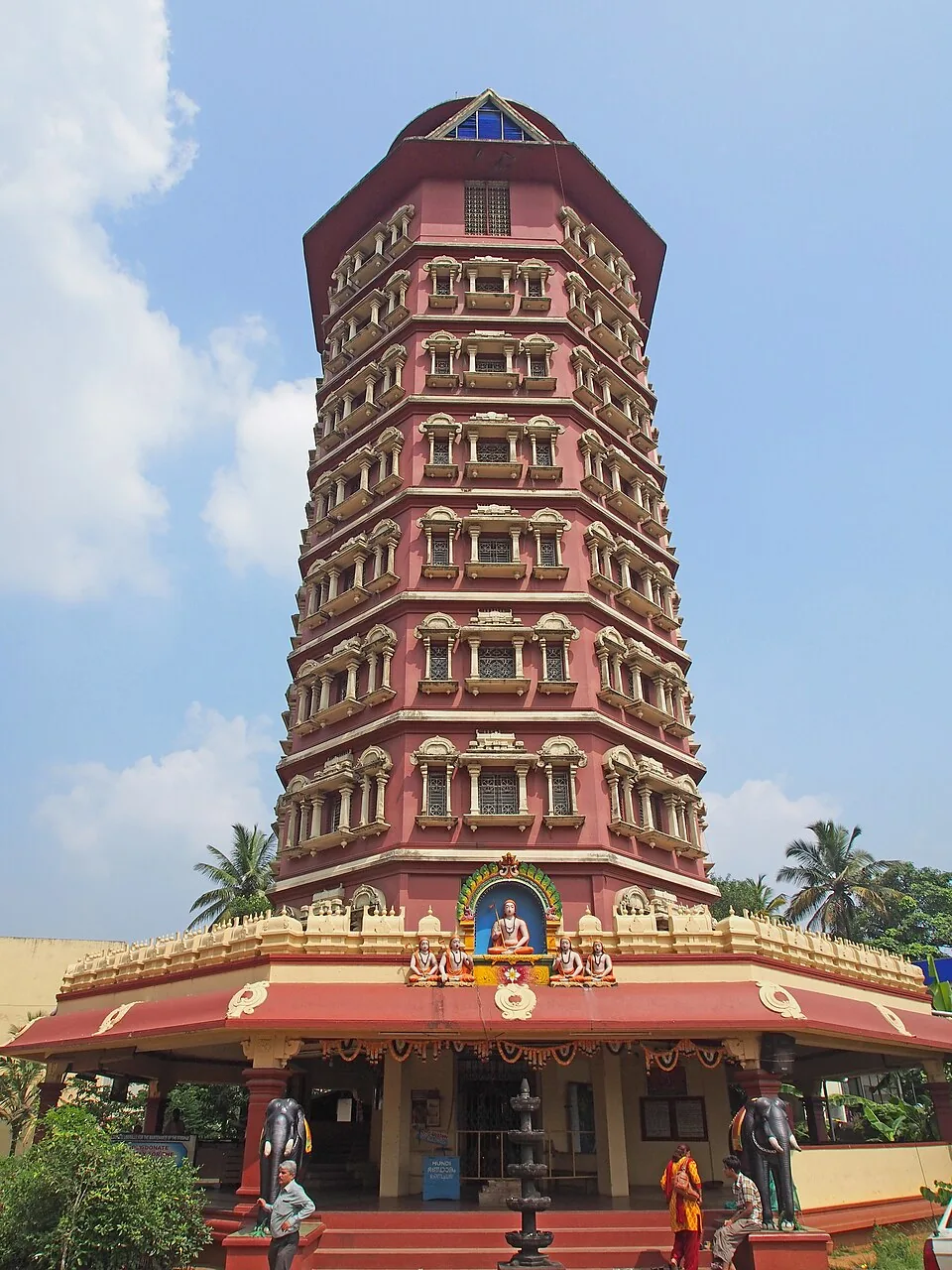
An eight-storey octagonal memorial tower to the philosopher Adi Shankaracharya at his birthplace, Kalady, on the Periyar river, dedicated in 1978 and run by the Kanchi Kamakoti Peetham.
21.3 km · straight line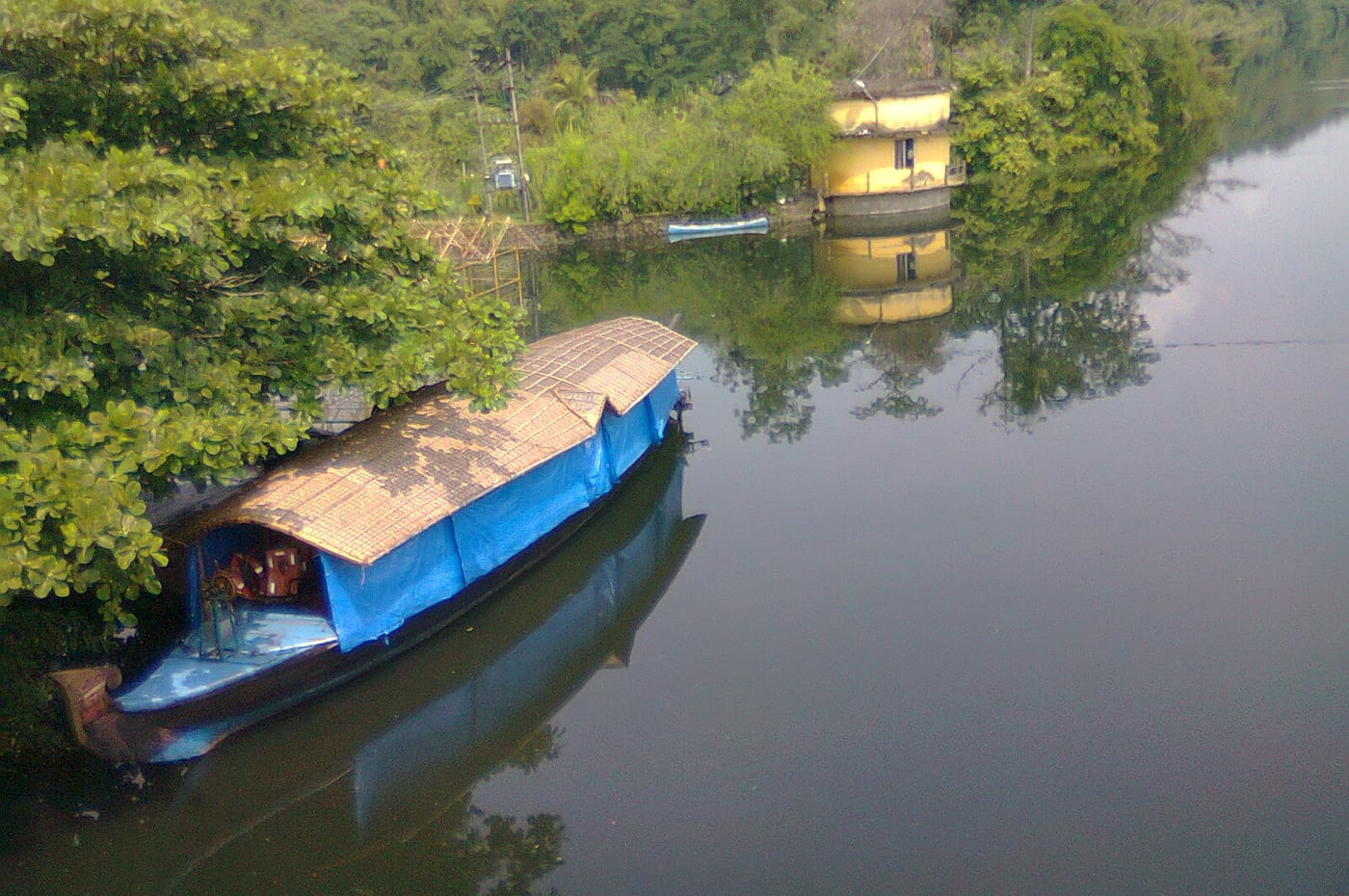
Kerala’s longest river, and the reason Kalady stands where it does — the Adi Shankara traditions of the crocodile and of the river changing course both belong to this water. Ghats and quiet riverside walks beside the birthplace complex.
21.5 km · straight line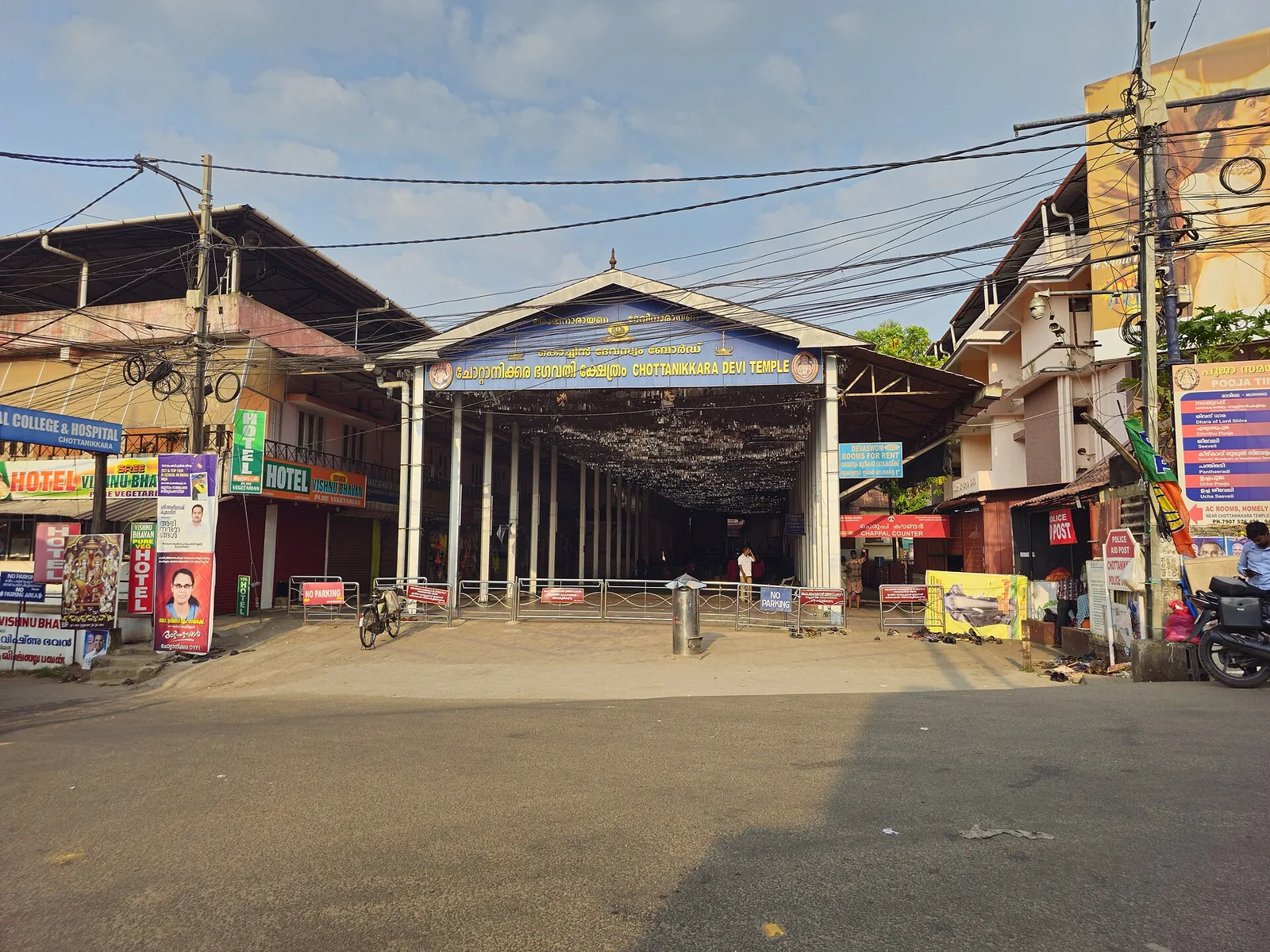
A major Bhagavathy (Devi) temple south-east of Kochi, famous for the dawn Nirmalya Darshanam and its Makam Thozhal festival.
29.5 km · straight lineMajor waterfall often visited from Kochi, on the Chalakudy river side.
40.9 km · 69 min driveA forest waterfall on the Chalakudy river just above Athirappilly, on the Sholayar forest road — often visited on the same Kochi day trip.
65.2 km · 75 min driveRoad and walking figures are route estimates, with travel times dependent on access, traffic and conditions. Figures marked “straight line” show direct separation and do not describe a road or walking route. Fare estimates use Kerala’s 26 April 2022 auto/taxi notification and exclude waiting, night and applicable one-way surcharges. Confirm the current meter or operator quote before travelling. Routing: © openrouteservice.org by HeiGIT | Map data © OpenStreetMap contributors
Nearby toilets, pharmacies, ATMs, seating and vets are community-mapped and may be incomplete or out of date. Map data © OpenStreetMap contributors | Walking times © openrouteservice.org by HeiGIT
It is claimed and it is not proven. Local historical tradition holds that this was a seat of ancient Chera power, and by some accounts the capital of one of the Cheraman Perumals. The case rests on tradition and circumstantial local evidence rather than on settled scholarship, so we present it as a claim rather than a fact — which is, if anything, the more interesting way to arrive.
A set of 108 Shiva temples that devotional tradition holds were consecrated across Kerala by Parasurama, the avatar credited in myth with raising the land from the sea. Thrikkariyoor's distinction within that tradition is that it is counted as the last of the 108 — the closing consecration. The lists vary between sources; this is devotional classification, not history.
We have not verified this temple's own policy and will not guess. Kerala temples vary — some admit visitors of any faith, some restrict the inner sanctum, some admit only Hindus. Ask before travelling if it matters to you, and expect a dress code at the gate regardless.
Kerala temple dress: a mundu or dhoti for men, with upper garments generally removed in the inner areas, and a saree, set-mundu or salwar for women. Footwear and leather items are left outside. Photography is not permitted in the sanctum.
The annual utsavam falls in the Malayalam month of Meenam, roughly March to April, and runs over several days on the usual pattern of flag-hoisting, daily processions and a concluding arattu at the river. Dates follow the Malayalam calendar and shift each year, so confirm locally.
Yes — it is a short detour off a road you are already on, and it is the only site of real antiquity along it. Go in the morning, before the long midday closure, and treat it as the first stop of the day rather than something to squeeze in on the way back, when it will be shut and you will be tired.
The Kothayar, a tributary of the Muvattupuzha, on its northern bank. That is worth knowing because the neighbouring sites on the same day out — Bhoothathankettu, Paniyeli Poru, the Thattekkad sanctuary — are all on the Periyar. Thrikkariyoor is where you cross from one river system to the other.
Yes. The bhootham legend told at Bhoothathankettu and along the Periyar rock fields — spirits damming the river overnight, Shiva faking the dawn with a cock's crow, the abandoned boulders still in the riverbed — has this temple as its target. It is the reason the story has a plot, and it is almost never told here. Note also that Bhoothathankettu is on the Periyar and Thrikkariyoor is on the Kothayar, about eight kilometres away across the divide: the tale is a memory of a flood rather than a description of a scheme.
The compound is about four acres and faces east, with towers on the eastern and western sides. The sreekovil is a large rectangle — unusual in Kerala, where square and circular sanctums dominate — rising in two copper-covered floors. On the balikkal mandapam, look for wooden carvings of the Ashtadikpalakas, the guardians of the eight directions, with Brahma. The flagmast is teak sheathed in copper, there is a large pond in front, and the sanctum's mural paintings were restored in 2013. Photography is not permitted in the sanctum.
Because the place was emptied. Accounts of the Pandyan attack hold that the population fled and that Kothamangalam and its surroundings stood uninhabited for two centuries across the eighth and ninth centuries. The institution is very old; the fabric you walk through is what came back afterwards and has been maintained since. Kerala temples are frequently older as institutions than as buildings, and signboards rarely make the distinction.
Morning or early evening is usually best; festival days can be powerful but crowded.
Entry: Free. Darshan carries no ticket; offerings and vazhipadu are booked at the counter and priced per item. Timings: The standard Kerala pattern — an early-morning opening for nirmalyam and the morning poojas, a long midday closure, and an evening reopening until the night pooja. Festival days change everything.
Base yourself in Thattekkad or a nearby town in Ernakulam, then confirm the last-mile route locally before leaving. Check temple entry customs, dress rules and festival crowd conditions before arrival. If the visit depends on forest, temple, boat, ferry, weather or seasonal access, check the official/local rule on the day before travel.
45 minutes to 2 hours, longer during festival or queue periods.
Nearby you can pair Bhoothathankettu Dam (10.9 km, route estimate), Thattekkad Bird Sanctuary (14.1 km, route estimate), Malayattoor Church (16.1 km, approximate straight-line separation), Paniyeli Poru (17.2 km, route estimate).
Use official counters for offerings/tickets where applicable. Keep footwear and valuables secure in crowded areas.
Written about Thrikkariyoor Temple itself — its history, its legends and the arguments about them.
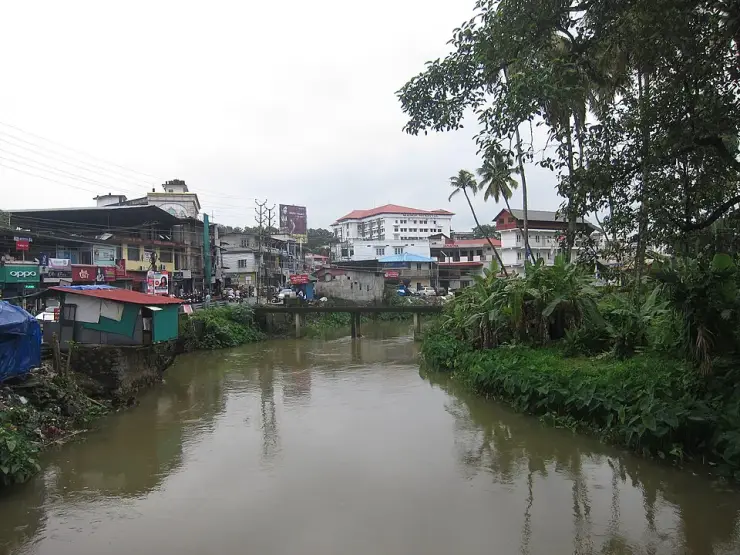
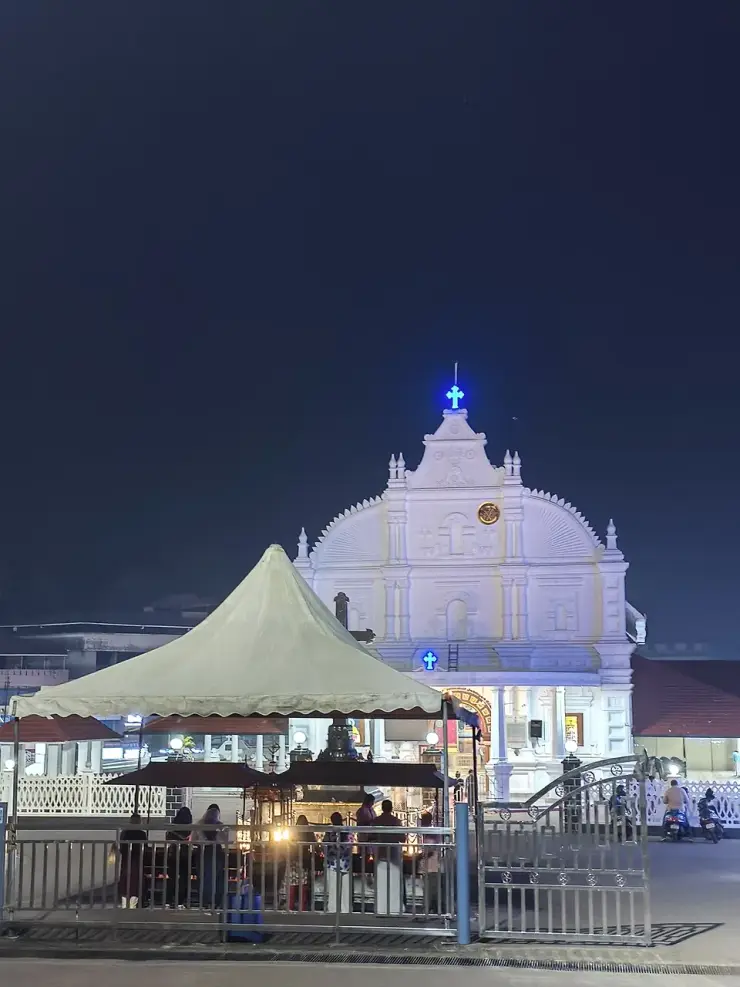
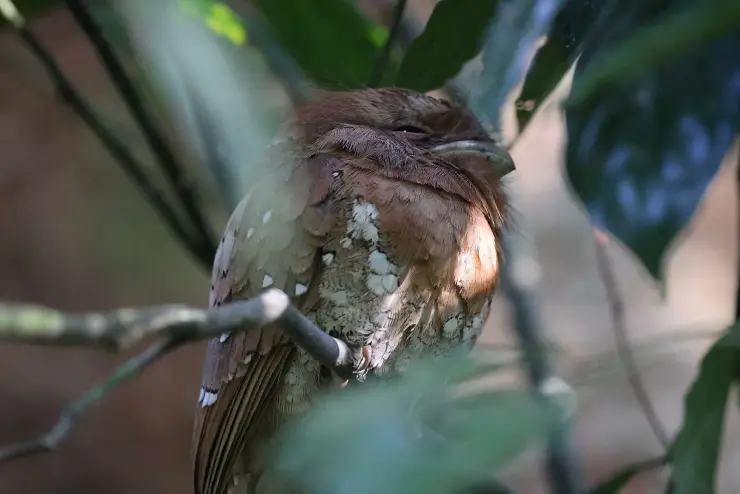
These guides explore Thattekkad and the surrounding area. Choose a visit that fits your interests, allowing separately for travel between stops.


Route-level itineraries and practical guides for the rest of Kerala.
Photographs: RajeshUnuppally at Malayalam Wikipedia (Public domain), Joshypj (CC BY-SA 3.0), Vinayaraj (CC BY-SA 4.0), CookBooc (CC BY-SA 4.0), Dil Shad Roshan (CC BY-SA 3.0). Wikimedia Commons.