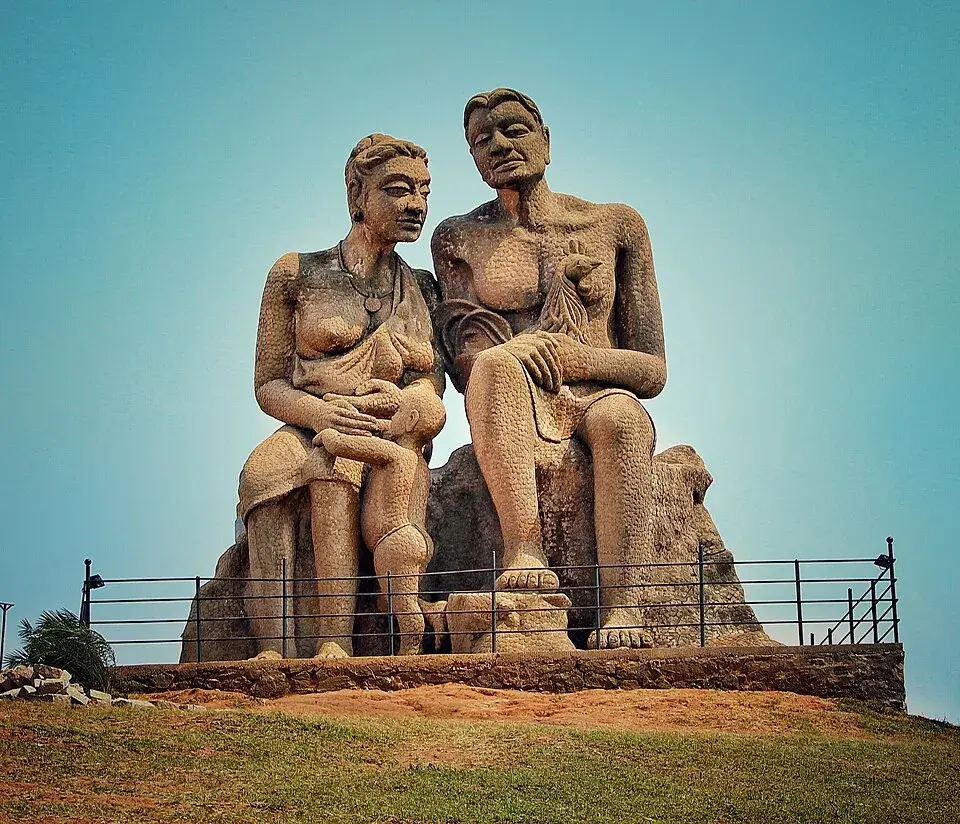
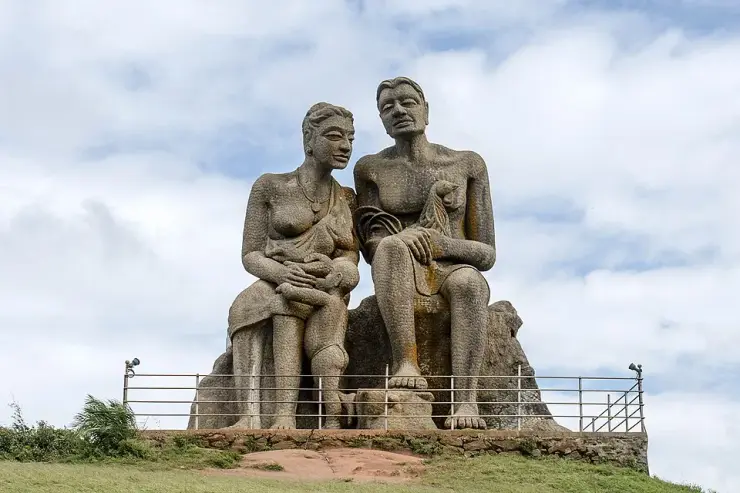
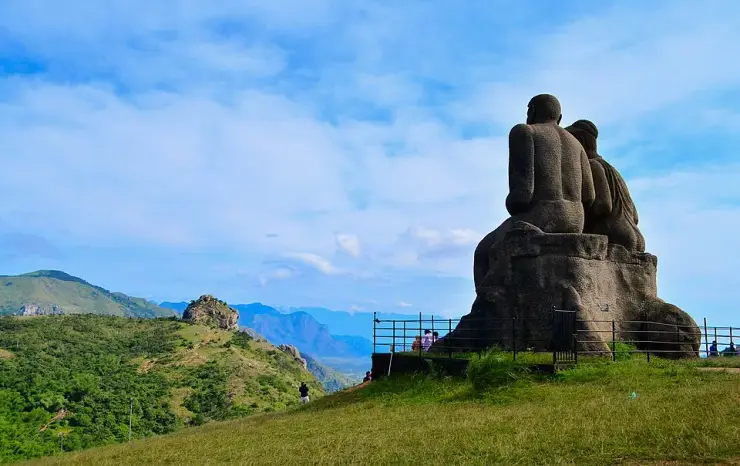
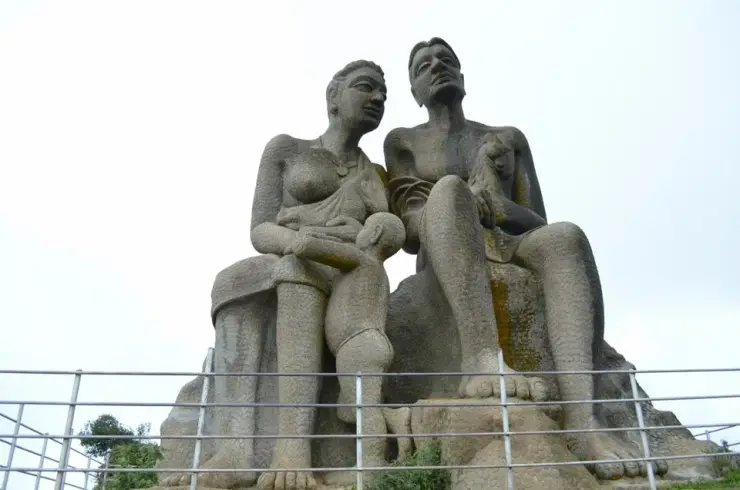
Three figures in scaled concrete on a bare grass mound, looking east over Tamil Nadu — a Kuravan with a bird held against his chest, a Kurathi beside him, and a child standing between her knees. Almost every page written about them, including the one belonging to the council that sells the ticket, calls this a twin statue. It has three figures, and Kerala Tourism is the only official body that says so. What they commemorate is thirty kilometres away: Kuravanmala and Kurathimala, the two granite hills the Idukki arch dam is wedged between, and which gave a whole district its name.
The story of Kuravan Kurathi statue
Begin with the count, because it is the one thing about this sculpture that can be settled by looking. The District Tourism Promotion Council of Idukki runs the compound the statue stands in, and on its own destination page it writes that “it is the twin statues of the Kuruvan and Kuruvatti couple that is the main attraction here at Ramakkalmedu.” Twin. Commercial travel pages have repeated that word for twenty years. Kerala Tourism's newsletter of March 2015 describes the same object differently: “On the open meadows of the mount stand two huge statues of a ‘kuravan’ and a ‘kurathi’ and their child (people with tribal background) looking down nonchalantly at the visitors.” We opened nine photographs of the group on Wikimedia Commons at full resolution, taken from four different angles by six different photographers across more than a decade, and in every single one there is a child: standing on the plinth between Kurathi's knees, head at her forearm, one knee bent, her hands folded across him. Kerala Tourism is right. The department that owns the gate has miscounted its own main attraction.
Once you are looking properly, the rest of the detail arrives. Kuravan sits on the right, one forearm across his raised knee, and in his other hand — folded in against his chest, easy to miss and invisible in most published photographs — is a bird. A fowl, wings tucked, head up. There is something coiled at his hip that reads as a basket or a rolled mat. Kurathi sits on the left with a pendant on a cord at her throat and an ornament at her ear. Both figures lean back against a sculpted boulder that is part of the same casting, and both are barefoot with the soles of their feet turned out towards you at the front of the plinth. And the whole thing — skin, cloth, the rock behind them, the base — is worked in an overlapping scaled texture, thousands of small facets, so that at any distance the group reads as one piece of stone rather than as figures placed on it. That texture is the reason to walk around it instead of photographing it from the path.
It was made by C. B. Jinan and put up in 2005. That sentence is repeated on every commercial travel page about Ramakkalmedu, and English Wikipedia carries it too — but English Wikipedia's only citation for it is one of those commercial pages, so on its own it is a single source wearing an encyclopaedia's clothes. The corroboration is in Malayalam and it is independent. Malayalam Wikipedia's article on രാമക്കൽമേട് carries a photograph of the group in its gallery captioned “കുറവനും കുറത്തിയും, ജിനന്റെ ശില്പം” — Kuravan and Kurathi, Jinan's sculpture. And on Wikimedia Commons, the photographer of one of the finest frames of it wrote his own description years ago as “A sculpture by Jinan @ Ramakkalmedu”. Three unconnected sources for the sculptor. The year 2005 still rests only on the commercial ones, and this page says so rather than borrowing their confidence.
What nobody publishes is how big it is. Forty feet is the figure in circulation and it is everywhere. DTPC Idukki, asked the same question by its own web page, answers only that the group “has the distinction of being the highest such statue in Kerala” — a superlative with no number attached. Kerala Tourism gives no height at all. Neither does Malayalam Wikipedia, which says only that the statues were “built a few years ago”. We are not going to convert a photograph into a measurement: what can honestly be said is that in the frames taken before the guard rail went up, adults stand at the level of Kuravan's ankle with the soles of his feet at about their head height, and that is consistent with a seated figure of that order. The number is left where it is, unattributed and uncertain.
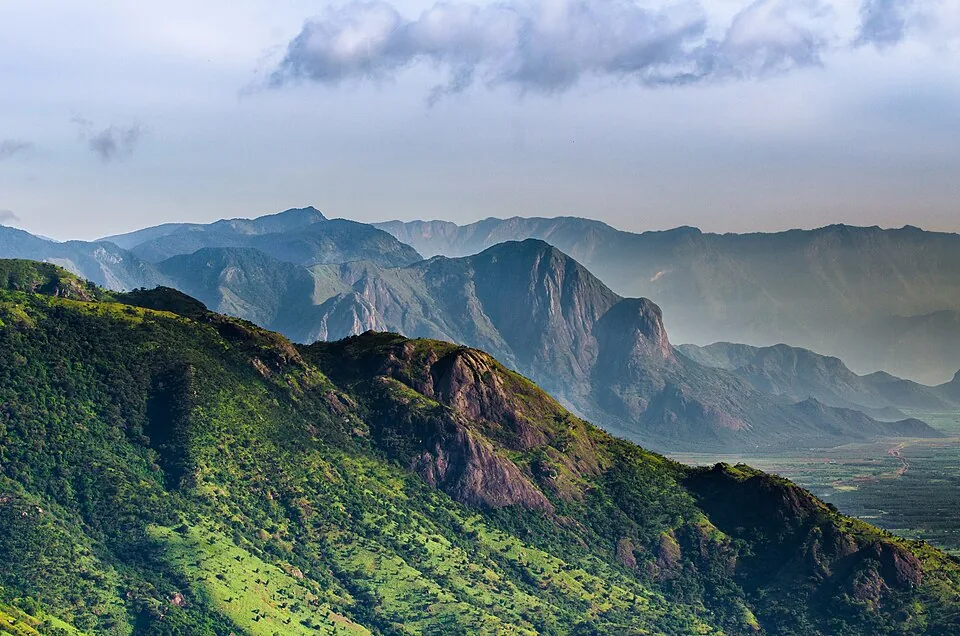
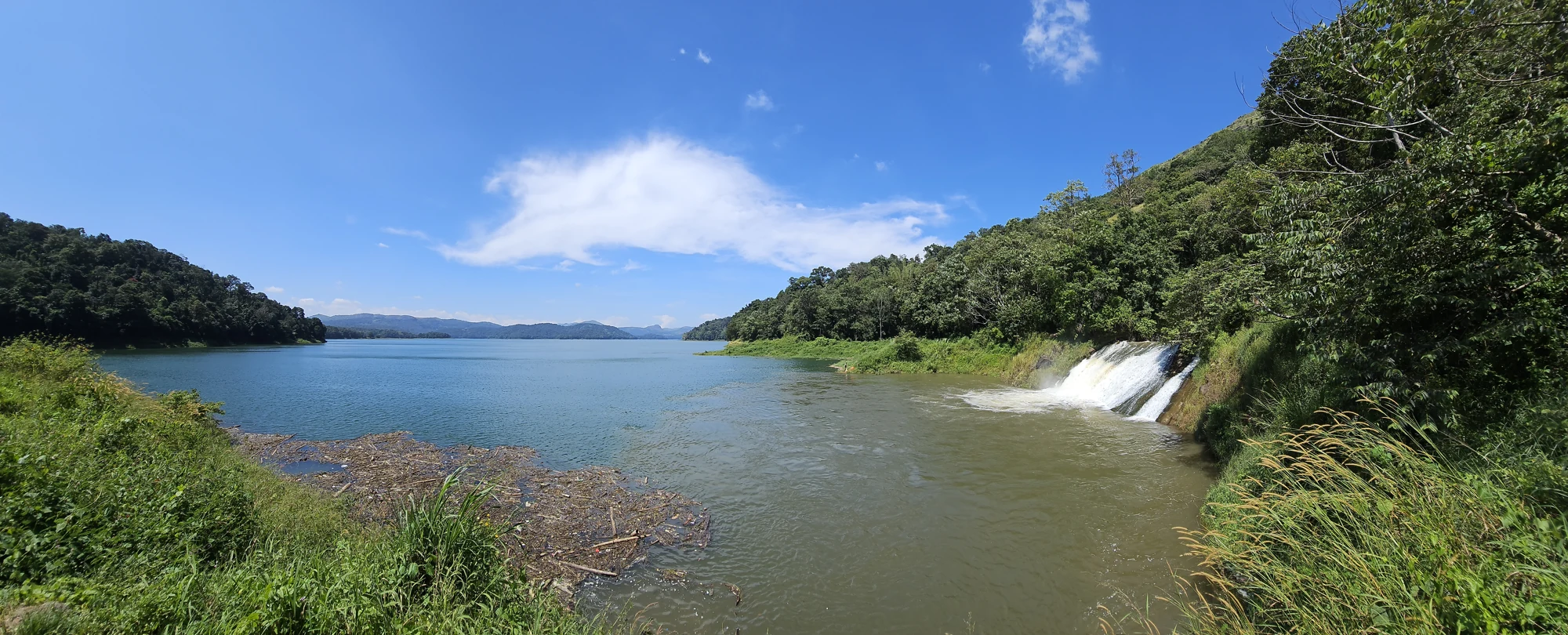
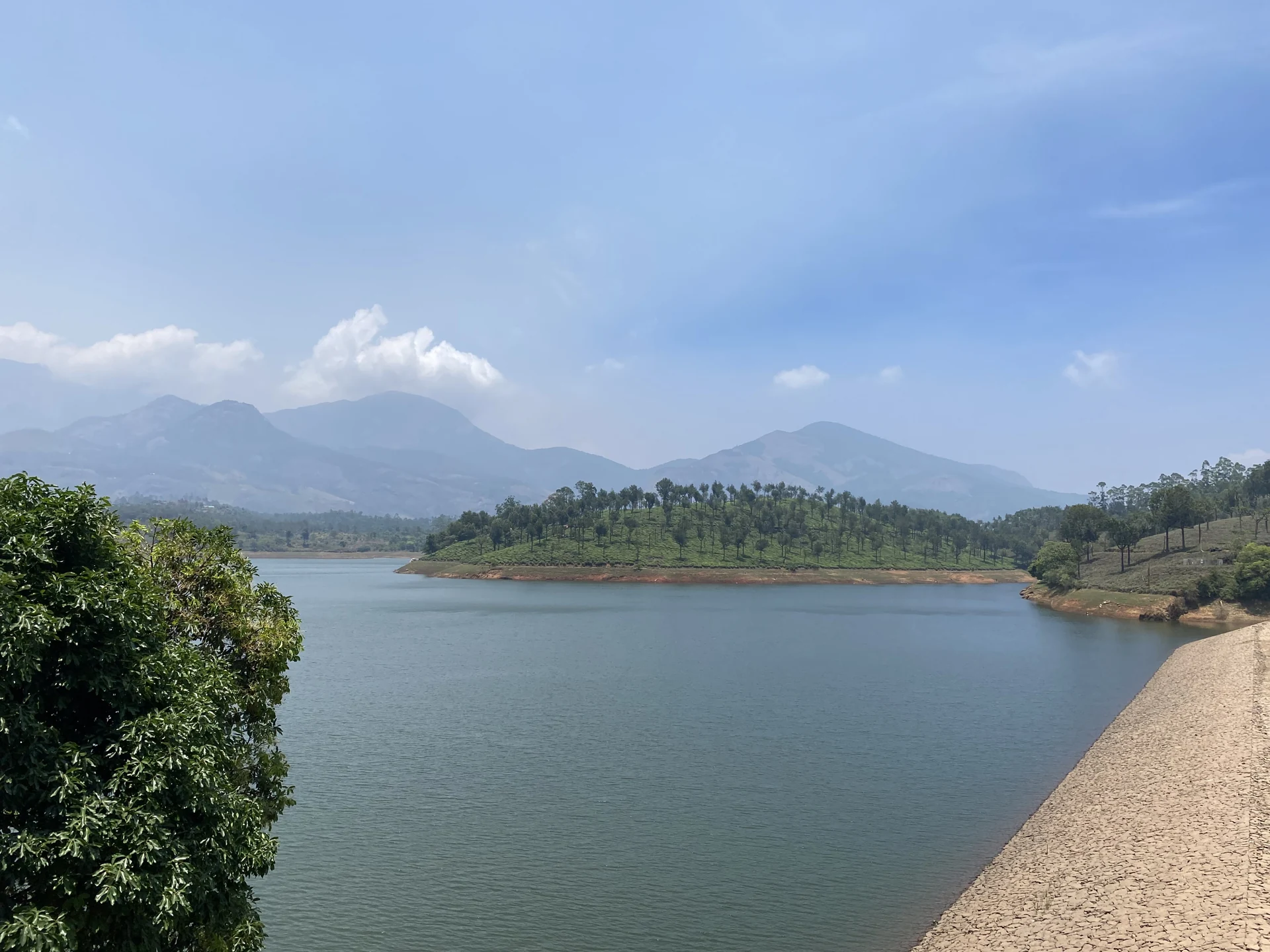
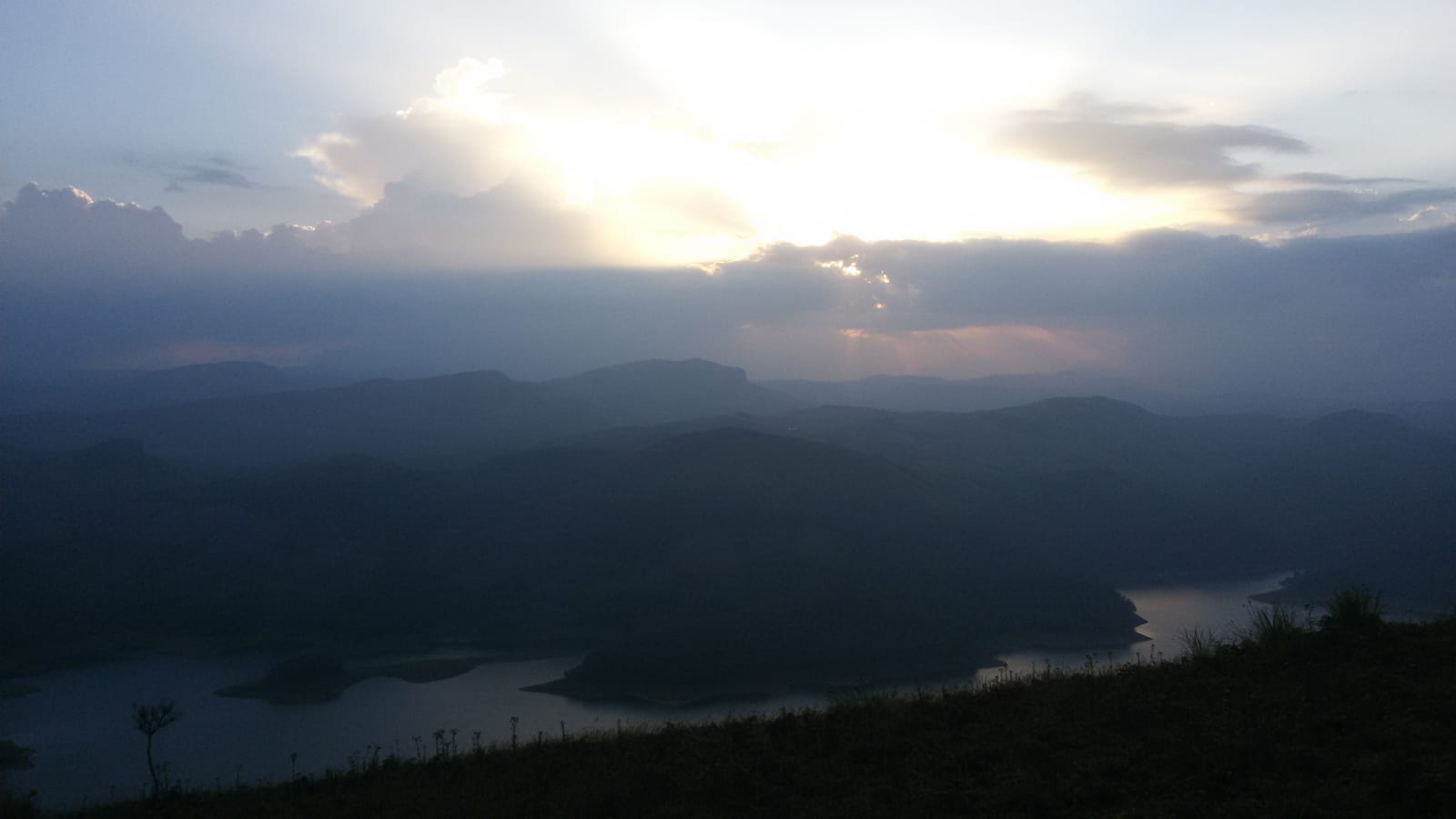
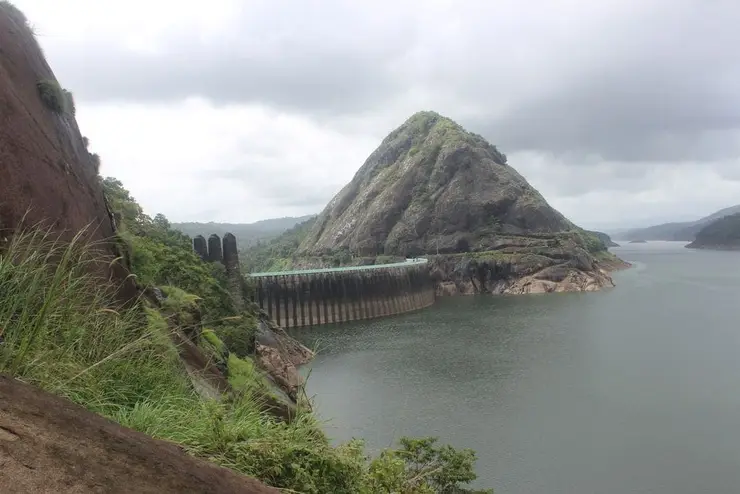
Now the thing the statue is actually about, which is not at Ramakkalmedu and never has been. Kuravan and Kurathi are the names of two granite hills thirty kilometres west of this mound in a straight line — forty-four by the road, about fifty minutes if the ghat is clear. Between them the Periyar runs through a gorge so narrow that Malayalam has a word for it, ഇടുക്ക്, idukku, the tight place, and that word is where the district of Idukki got its name. Wedged into that gorge is the Idukki arch dam. KSEB's own board at the site, headed “Salient Features of Idukki Dam”, gives the type as concrete double curvature parabolic thin arch, the river as the Periyar, the length at the top as 365.76 m and the height from deepest foundation as 169.16 m — printed beside its equivalent, 555.00 ft. It is one of the highest arch dams in Asia and the largest in India of its kind, and the statue on this ridge is a monument to the two hills that hold it up.
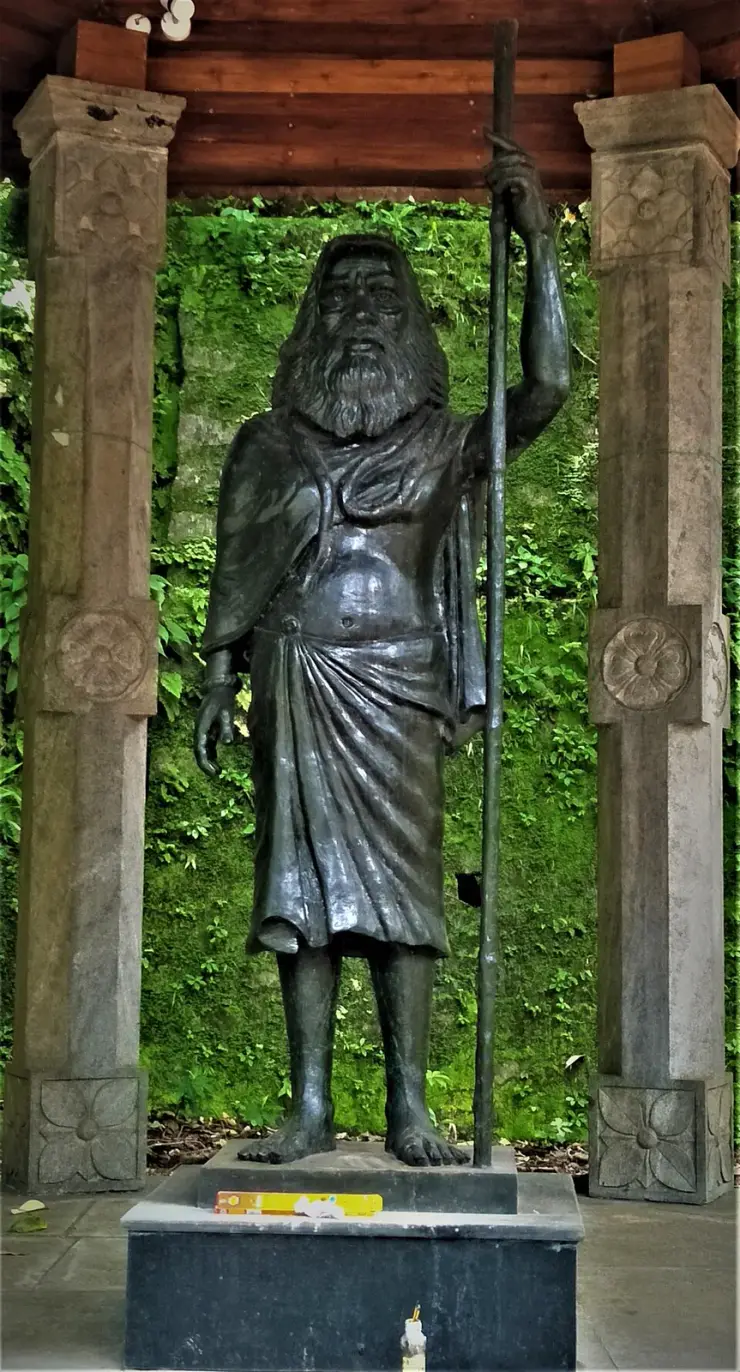
There is a person inside that story, and Kerala Tourism named him in its own newsletter in August 2020. Chemban Kolumban — Karuvellayan Chemban Kolumban in full — was the headman of the Oorali, and he lived at Narikkad in Chembacherry, about five kilometres from where the dam now stands. In 1932, according to Malayalam Wikipedia citing Manorama and Mathrubhumi, the superintendent of the Malankara Rubber Estate, W. J. John, went hunting in the Idukki forests and took Kolumban along as his guide. Somewhere on that walk Kolumban showed him the Periyar tearing through the gap between Kuravanmala and Kurathimala. John worked out that a dam there would give power and irrigation, studied it with his engineer brother, and submitted a report to the Travancore government. Everything that followed — the Canadian aid, the consultancy of Surveyor, Nenniger and Chenevert, the three dams at Idukki, Cheruthoni and Kulamavu, the commissioning by Indira Gandhi on 12 February 1976 — followed from that. Kerala Tourism quotes the Secretary of DTPC Idukki putting it in one sentence: “He was the one who showed the hills of Kuravan and Kurathi, thereby being instrumental in the setting up of the Idukki Dam.”
Kolumban did not see it finished. He died on 21 June 1970, aged 112, six years before the project was commissioned, and was cremated at Vellappara facing the two dams. He had been a guest of honour when the Canadian government took over the construction work and was honoured at the major ceremonies of the first phase. A statue of him went up beside the dam in 1976, by the sculptor Kunnuvila Murali; the same sculptor made the memorial at his samadhi at Vellappara, begun in 2015 and opened to the public in 2020 by the Kerala Department of Archaeology, a twelve-foot figure unveiled by two state ministers. The Kerala Forest Department's boat on the Idukki reservoir is called Kolumban. He is the reason there is a dam between those hills, and the sculpture on this ridge is, at one remove, about him too.
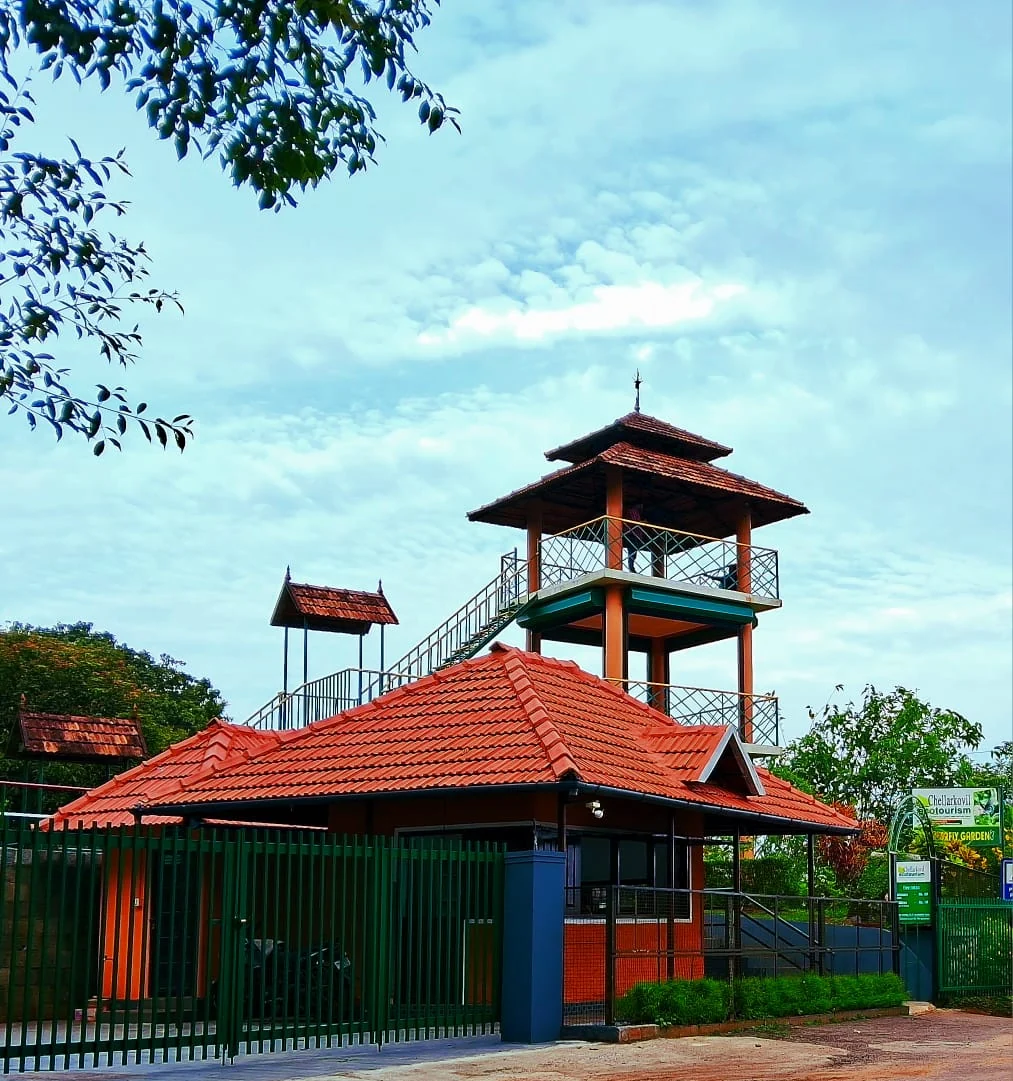
The mapped state boundary creates an awkward result: the statue’s returned address is Uthamapalayam, Theni, Tamil Nadu, and the line runs 83.9 metres west of the plinth. The viewpoint, hornbill tower and Ramakkal rock fall on the same side; Aamai Para is the only named feature shown on the Kerala side. Kerala Tourism and DTPC Idukki nevertheless administer and present the visitor destination as part of Idukki, so use the attraction pin rather than the map’s state label when planning the visit.
The administrative boundary is stranger than the destination label suggests. The mapped state line is also the eastern edge of Ramakkalmedu Ward 5 in Karunapuram grama panchayat, Udumbanchola taluk, Idukki. The statue stands eighty-four metres outside that ward, while the coordinate published by Wikidata and English Wikipedia, 9°47′59″N 77°14′14″E, sits 430 metres inside it and more than a kilometre from the visitor mound. For practical travel, follow the attraction pin and DTPC guidance rather than the ward name alone.
The encyclopaedias also disagree. English Wikipedia and Wikidata use one coordinate; Malayalam Wikipedia gives 9°48′41″N, 77°14′38″E, about 1.3 km away and on the Tamil Nadu side of the mapped state line despite labelling it Kerala. None of this changes the practical destination: Kerala Tourism, DTPC Idukki and the Government of Kerala’s tourism system all present Ramakkalmedu and its statue as an Idukki attraction. Follow the attraction pin rather than an encyclopaedia coordinate.
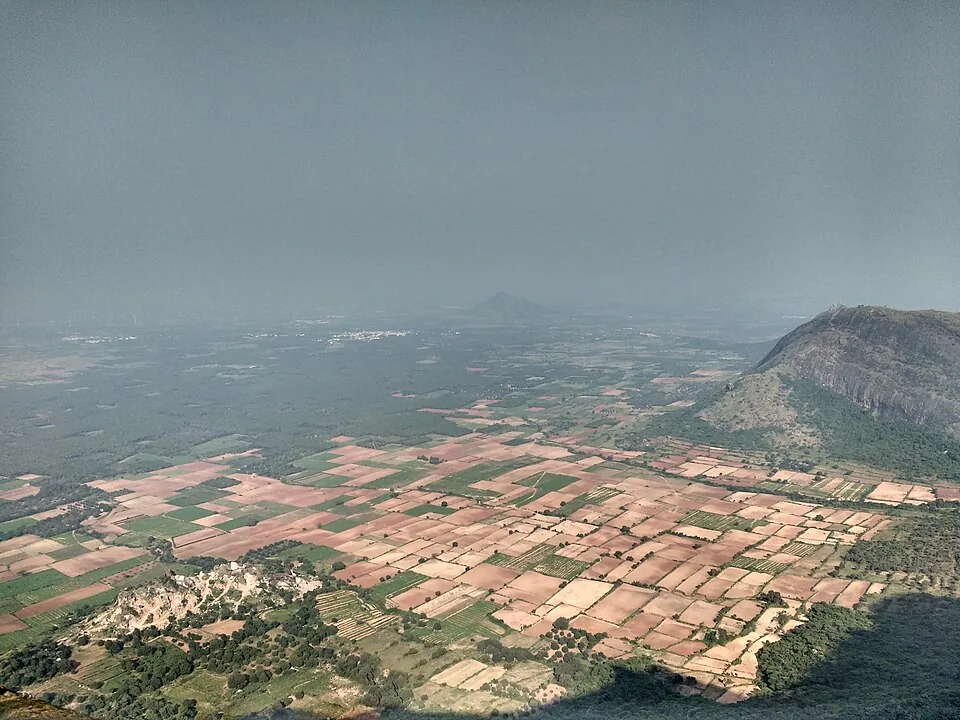
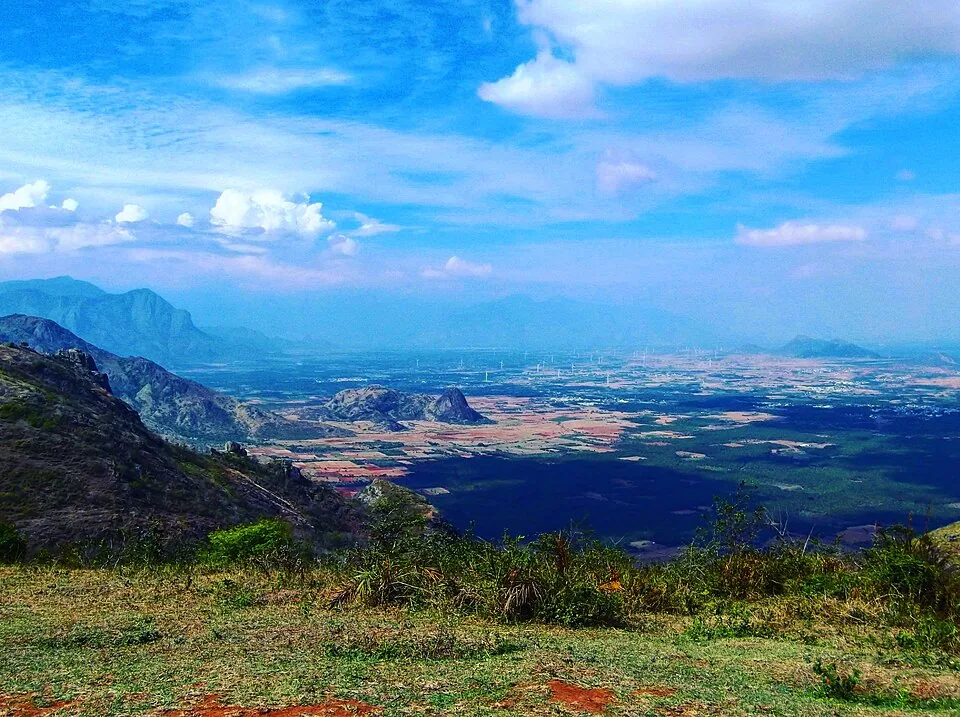
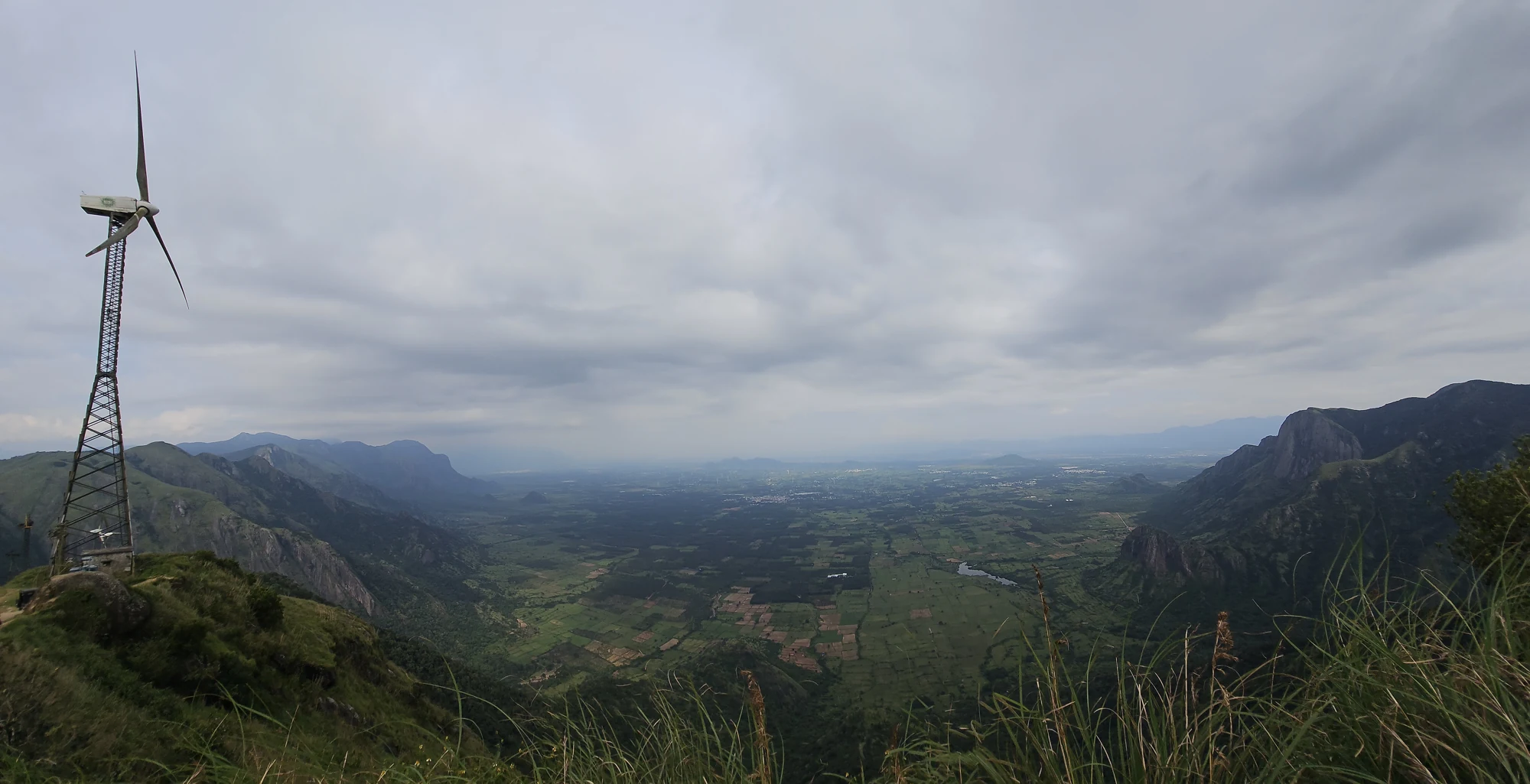
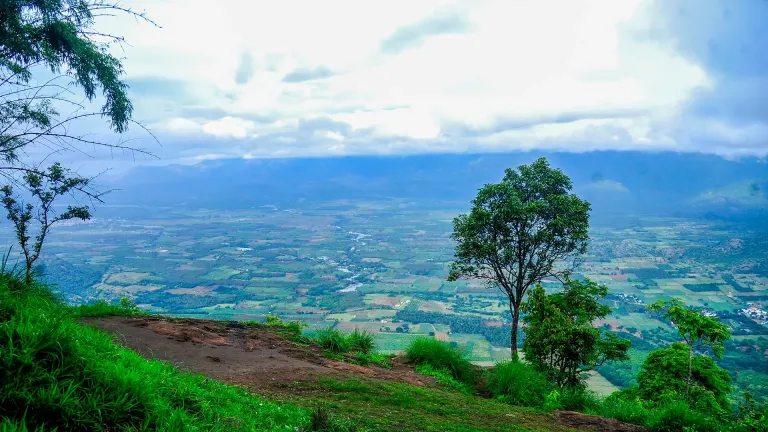
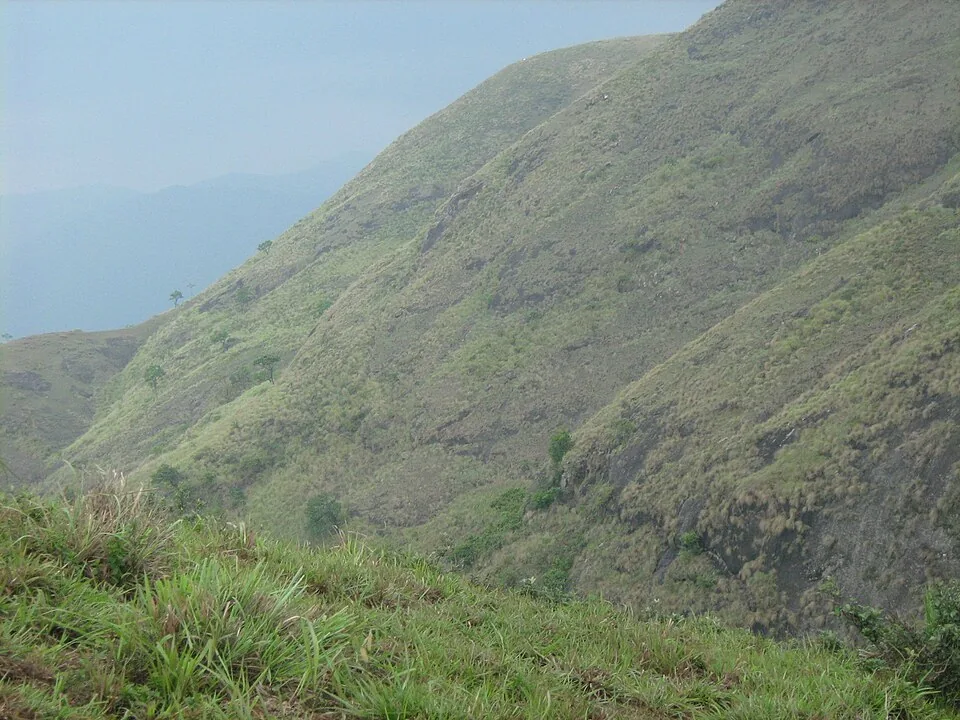
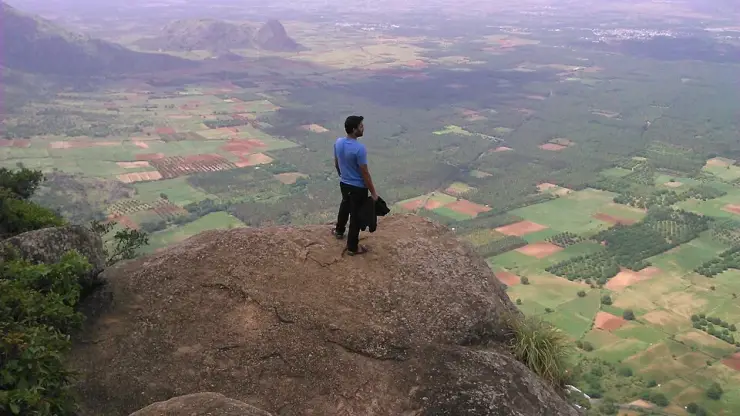
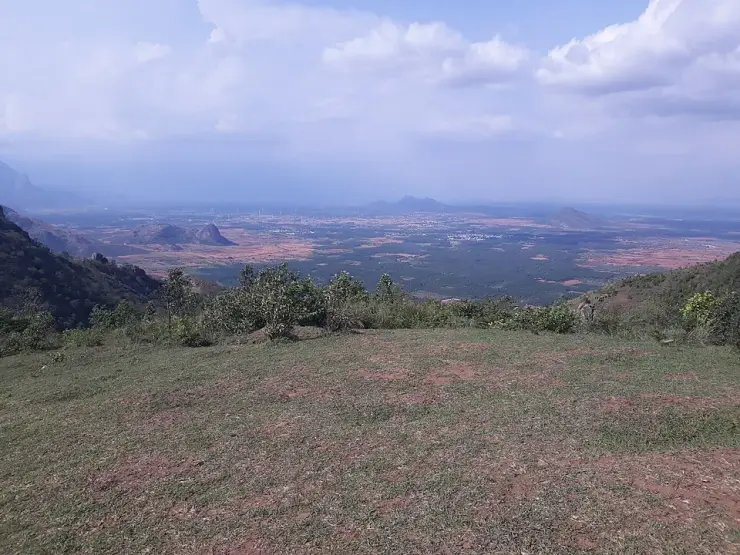
One last thing about the ridge as a working border, because it explains a practical inconvenience. The nearest railway station to this statue, measured in a straight line, is Bodinayakanur — twenty-five kilometres away, down in the plain you are looking at, in Tamil Nadu. By road it is fifty-nine kilometres and over an hour, because nothing crosses the ridge here and you have to go the long way round. DTPC publishes Kottayam, a hundred and nineteen kilometres by its reckoning and a hundred and forty-four by ours, as the railhead for this centre. Both statements are true at once. The view from the mound is of a plain you can see and cannot easily reach, and that is as good a summary of this border as any sentence on the page.
Legend & myth
The oldest layer is a marriage. Malayalam Wikipedia's article on കുറത്തി records the belief plainly: “ഒരിക്കൽ പാർവ്വതീ പരമേശ്വരന്മാർ കുറത്തിയായും കുറവനായും ജനനമെടുത്തു” — once, Parvati and Parameswara were born as Kurathi and Kuravan. That is the frame the whole thing sits in. Kurathi is not only a woman of the Kuravar in this telling; she is worshipped as a deity in her own right, alongside hill-gods such as Muthappan, Pottan and Gulikan, and she walks into Kerala's ritual theatre as a character — in Theyyam as Kurathi Amma, in Padayani, and in the Porattu Nadakam and Kurathiyattam folk plays, where Kuravan and Kurathi come to the Thrissur Pooram, are separated in the crush, and are looked for until they are found.
The story attached to the hills is the one that gives this statue its meaning, and Malayalam Wikipedia states it in a single sentence under the heading of place names: “കുറവൻ - കുറത്തി മലകളെ തമ്മിൽ ബന്ധിപ്പിച്ചു പണിത കമാന അണക്കെട്ടാണ് ഇടുക്കി ഡാം” — the Idukki Dam is the arch dam built joining the Kuravan and Kurathi hills. Two hills named for a man and a woman of the Kuravar, standing on either side of a gorge, with a wall built between them. It does not need much elaboration to see why somebody put a sculpture of the couple on a ridge thirty kilometres away and pointed them out over the plains. The article on Idukki district makes the same connection from the other direction: the largest arch dam in India is built in the ഇടുക്ക്, the narrow place, between the hills called Kuravan and Kurathi, and the district takes its name from that gap.
Popular retellings go further and turn the hills into the couple themselves — two lovers who came up into these mountains and were turned to stone where they stood, so that the dam is built between their bodies. That version circulates on travel pages and in conversation on the ridge, but it does not appear in Kerala Tourism's account or either Wikipedia article, and no cited Malayalam publication establishes it as a local ഐതിഹ്യം. Treat it as a story people tell, not as documented history.
There is a competing reading of who Kuravan and Kurathi were, and it is cast in concrete at the other end of Kerala. At Asramam in Kollam stands a different sculpture of the same pair, red-painted, standing rather than seated, made by Guru Prasad Ayyappan at a ten-day Kerala Lalithakala Akademi and State Tourism Department camp called അഷ്ടശില്പ in 2020. Its plaque does not tell a myth at all. It reads: “Kuravan and Kurathi are the representatives of the Blacks in India. In Sanga period Kuravan and Kurathi were poets and scholars and were very rich. But they were victimised to genocide by feudal rulers for land and Culture. The Kuravan and Kurathi Hills are the right example of the feudal cruelty… In this sense it is a historical Sculpture as well.” That is one sculptor's statement on his own plinth rather than a scholarly finding, and it is quoted here as that. But it is a reminder that the two figures on this ridge are read by some people as a memorial and not as decoration.
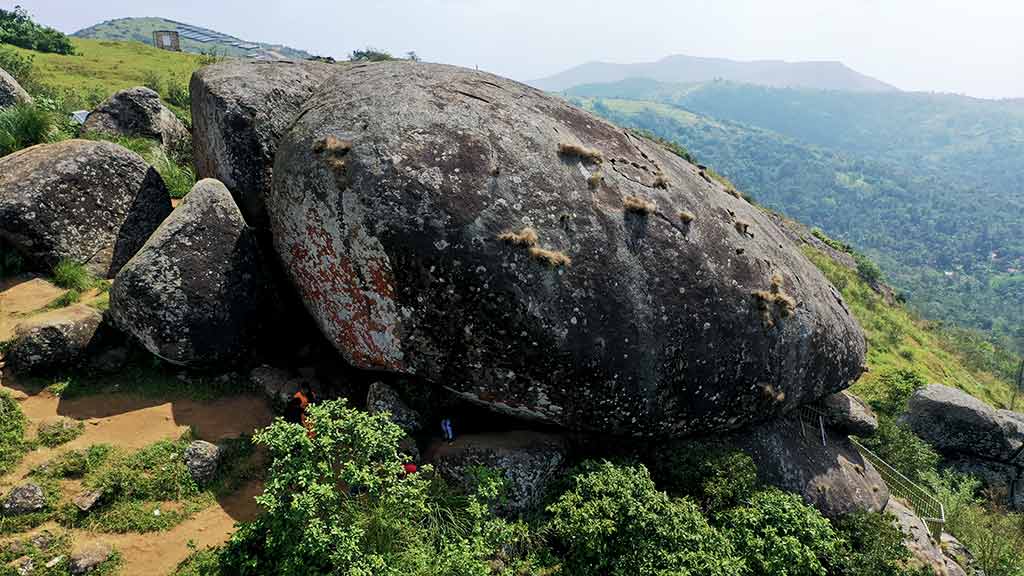
The ridge itself has legends, and they belong to the rock rather than to the statue. Sri Rama is said to have come down here searching for Sita and to have chosen Rameswaram for the causeway from this spot, and the place is named for the stone his feet touched; another story attaches to the ‘kallummel kallu’, the stone upon stone, which Bhimasena is said to have used to pound betel for Draupadi during the Pandavas' exile. Both are properly Ramakkal's rather than the statue's, and row 13 of this guide takes them up where they belong. They are noted here only so that nobody reads the sculpture as being about them: it is not. It is about two hills and a dam.
Before publishing any of this we searched in Malayalam, because an English-language blank measures search coverage rather than the world — കുറവനും കുറത്തിയും, കുറത്തി, ഐതിഹ്യം, രാമക്കൽമേട്, ഇടുക്കി അണക്കെട്ട് കുറവൻ. What came back was the Parvati–Parameswara birth, the Theyyam and folk-theatre traditions, the hills-and-dam place-name note, the Chemban Kolumban history and Malayalam Wikipedia's own caption naming Jinan as the sculptor. What did not come back was any temple, festival, offering or shrine associated with the statue itself, which is unsurprising for a public sculpture put up in 2005 and is reported here as the result of a search rather than as a claim about what the people on this ridge believe.