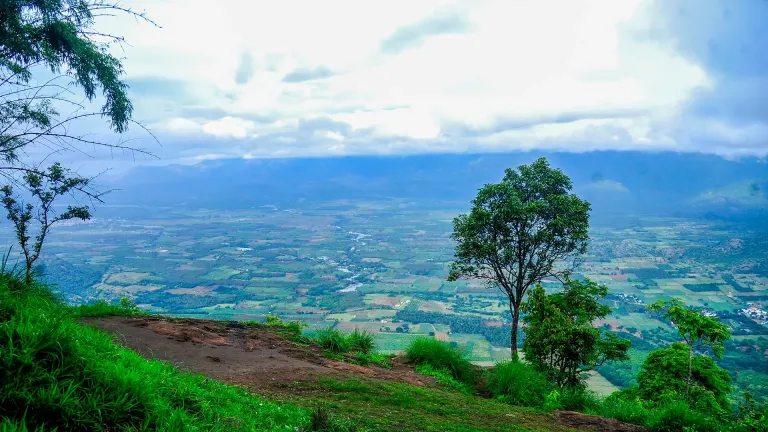
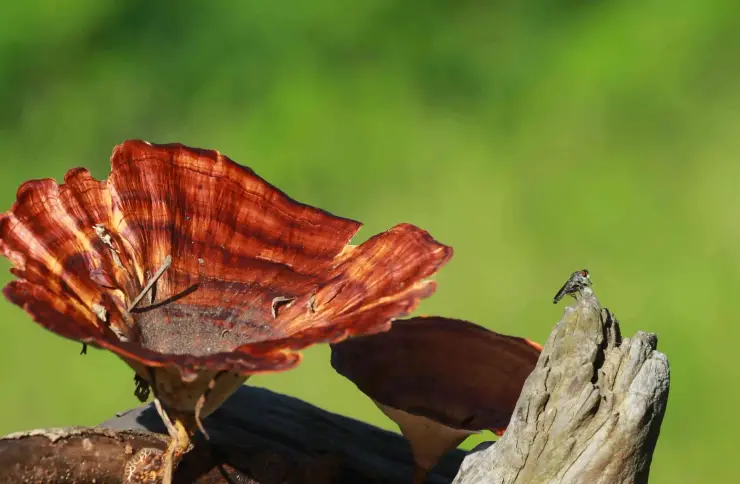
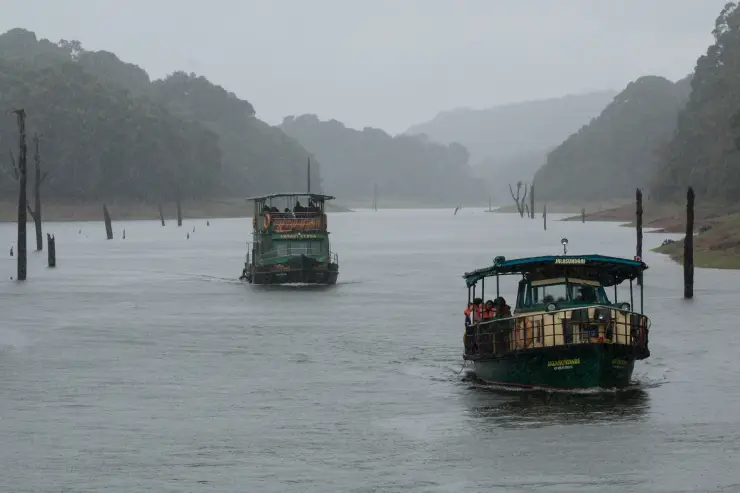
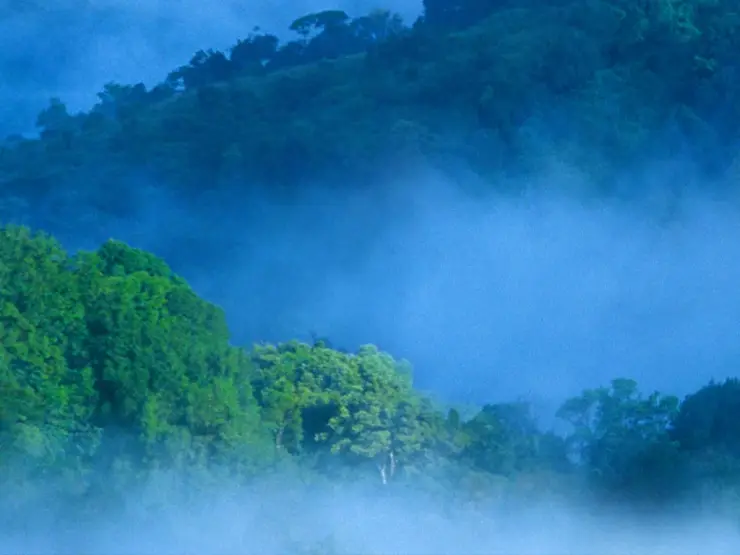
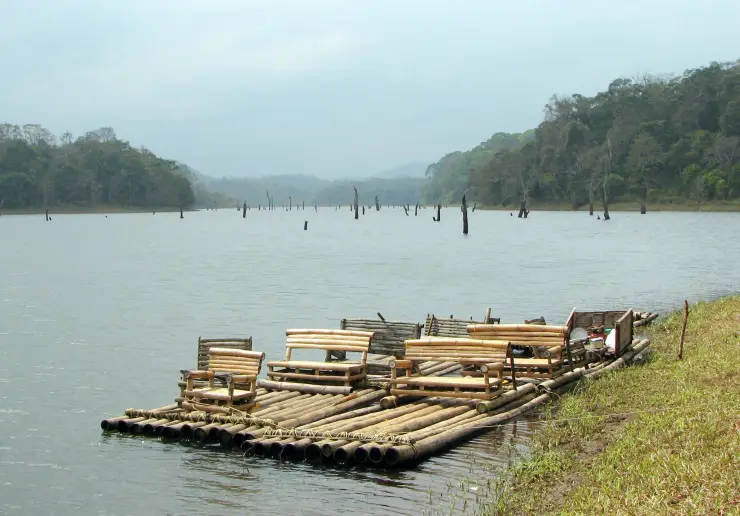
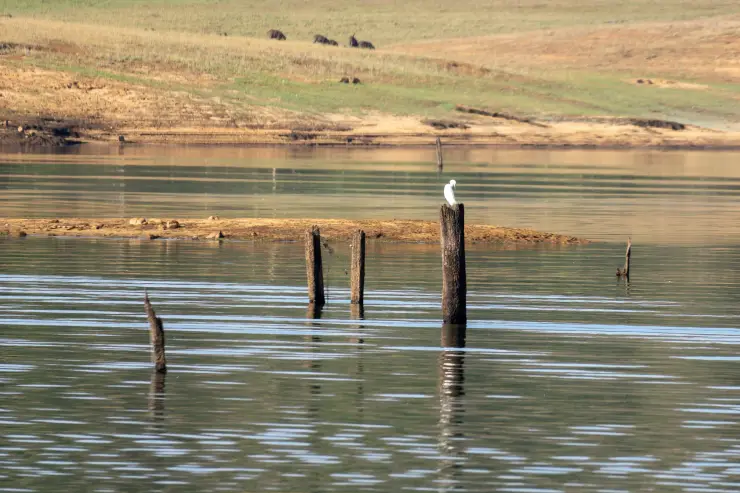
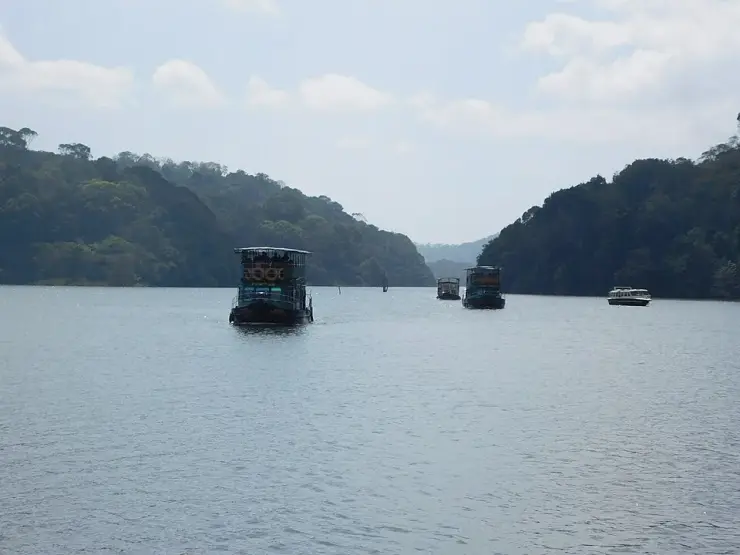
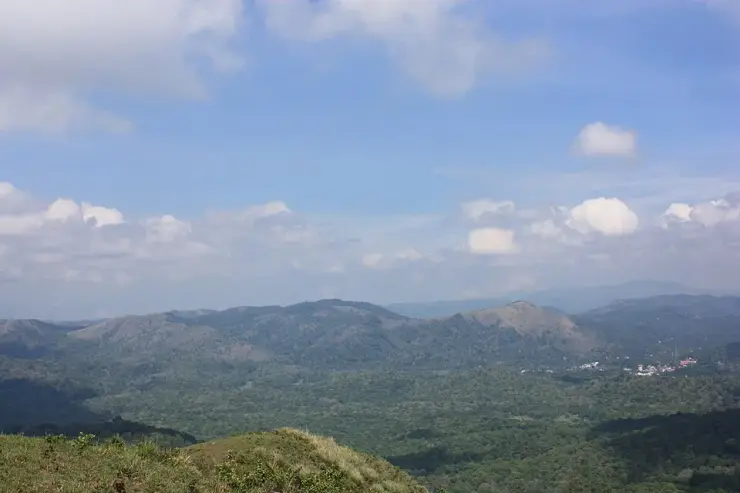
The first useful change on a Nature Walk is one of scale. A lake panorama gives way to a branch, a leaf and the broken end of a fallen tree. The guide can hold the group at one small patch long enough for a detail that initially looked like background to become the subject of the visit.
The story of Periyar Nature Walk
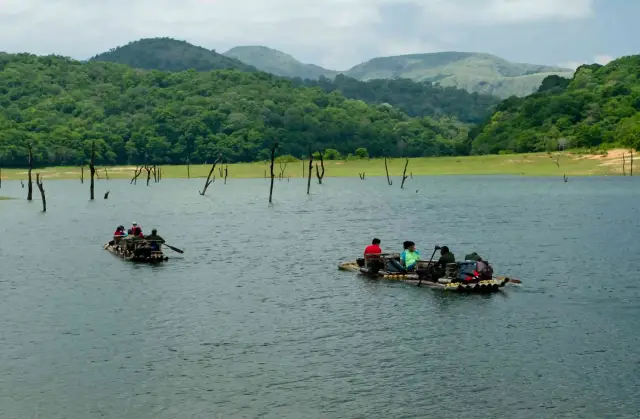
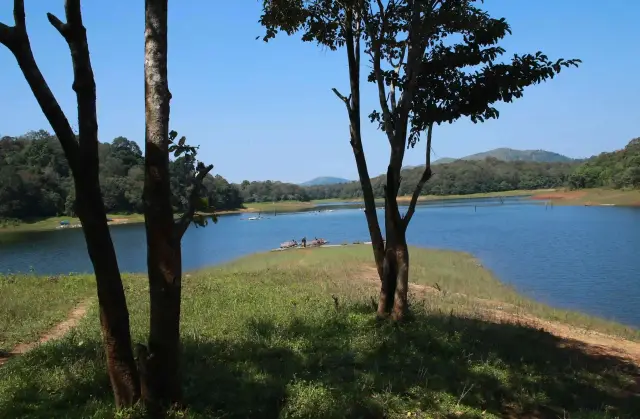
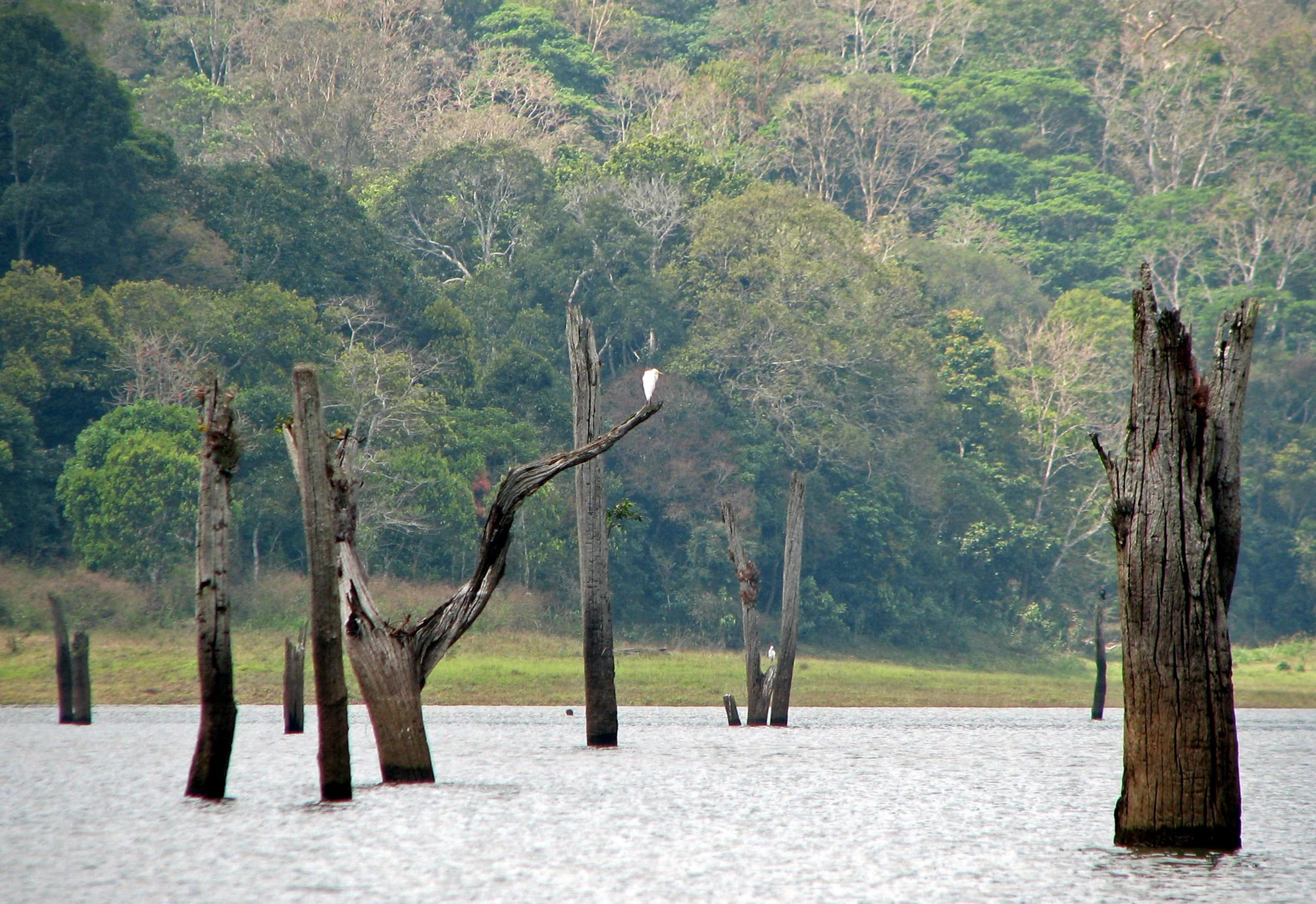
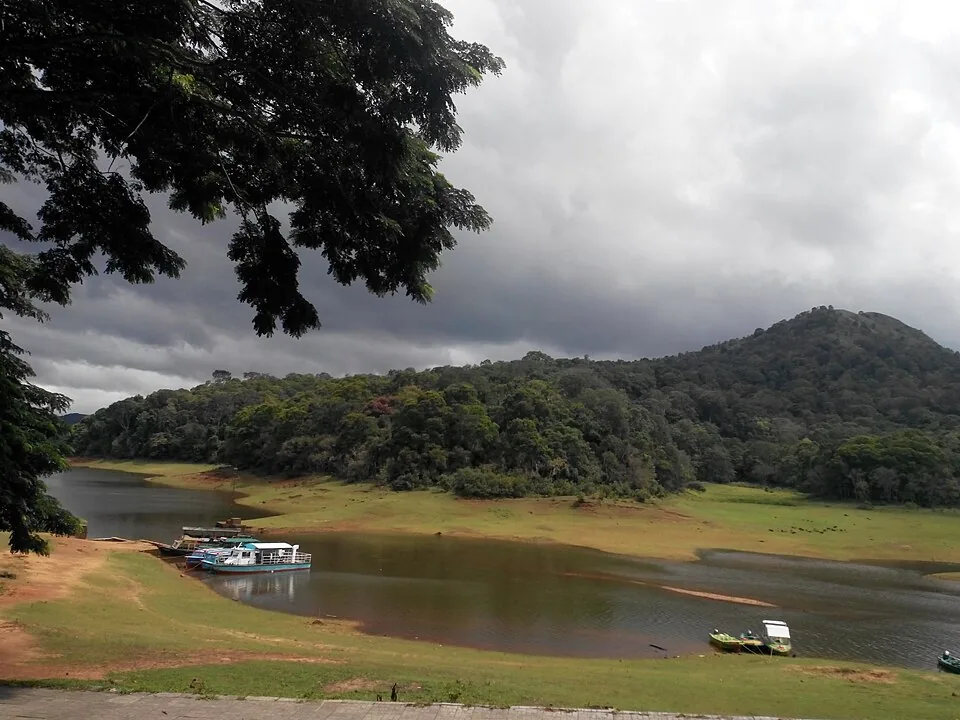
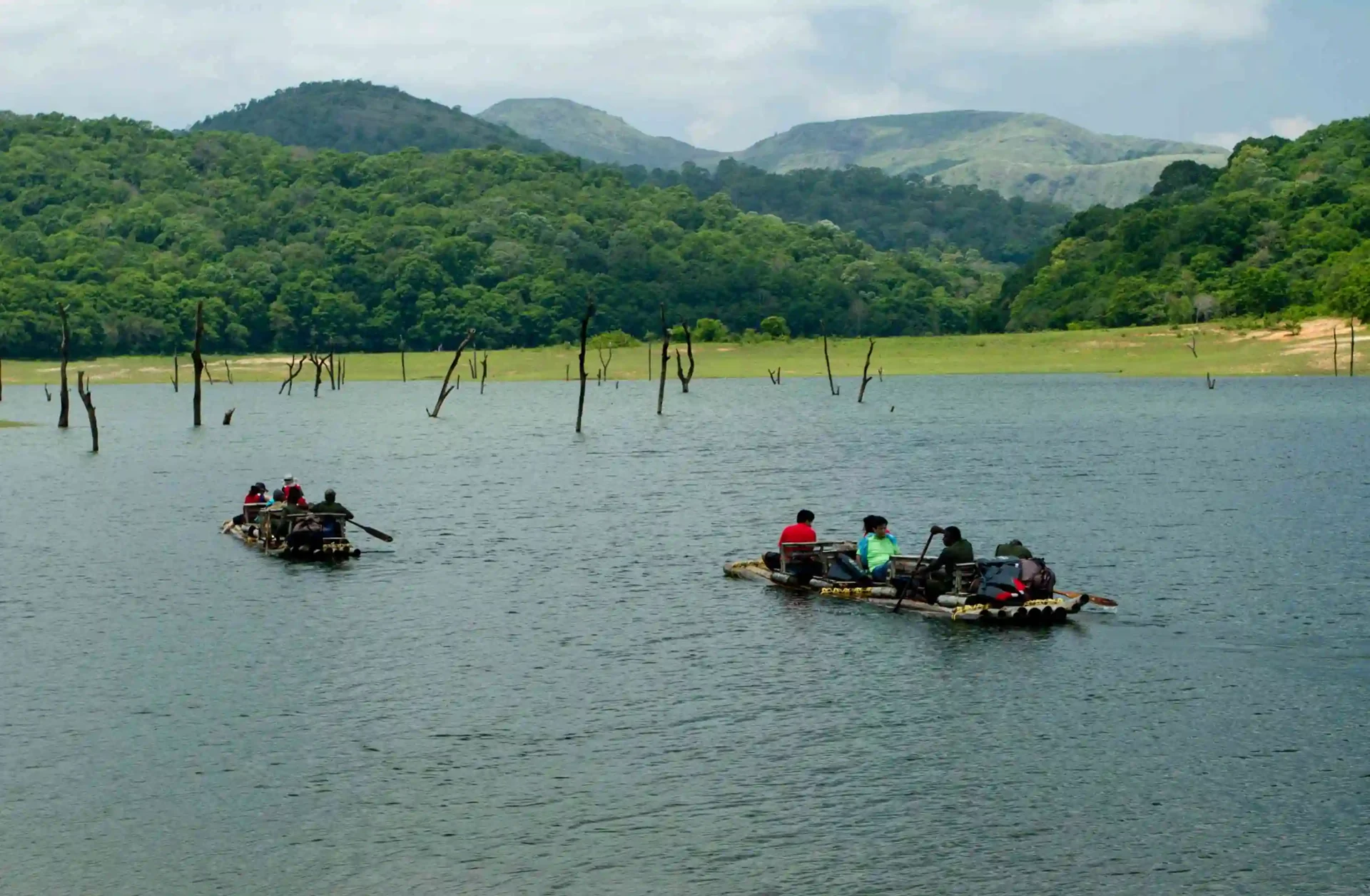
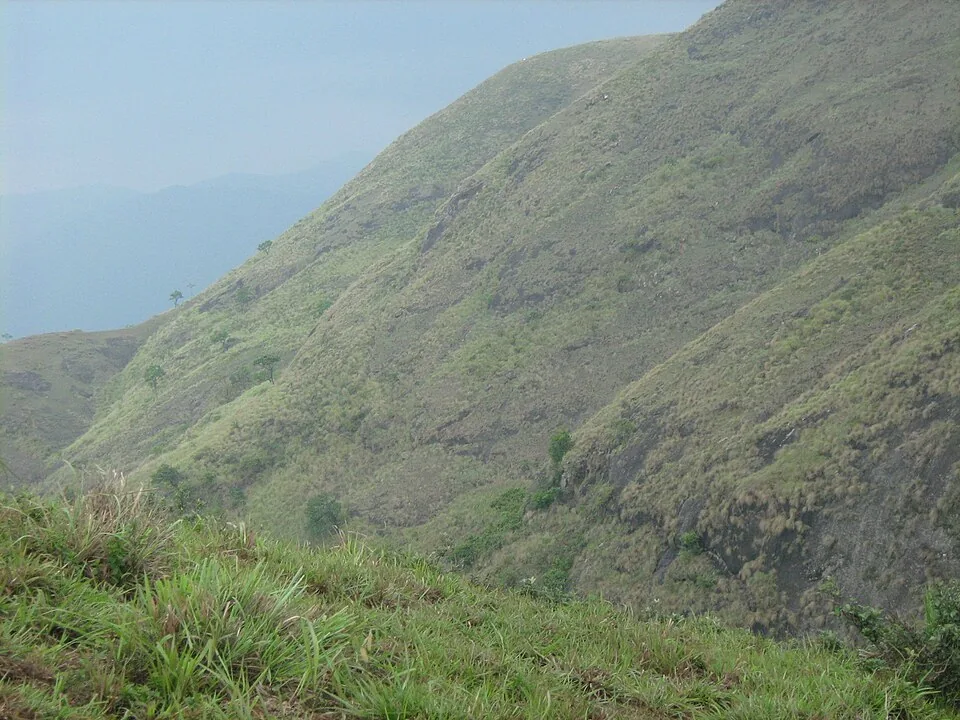
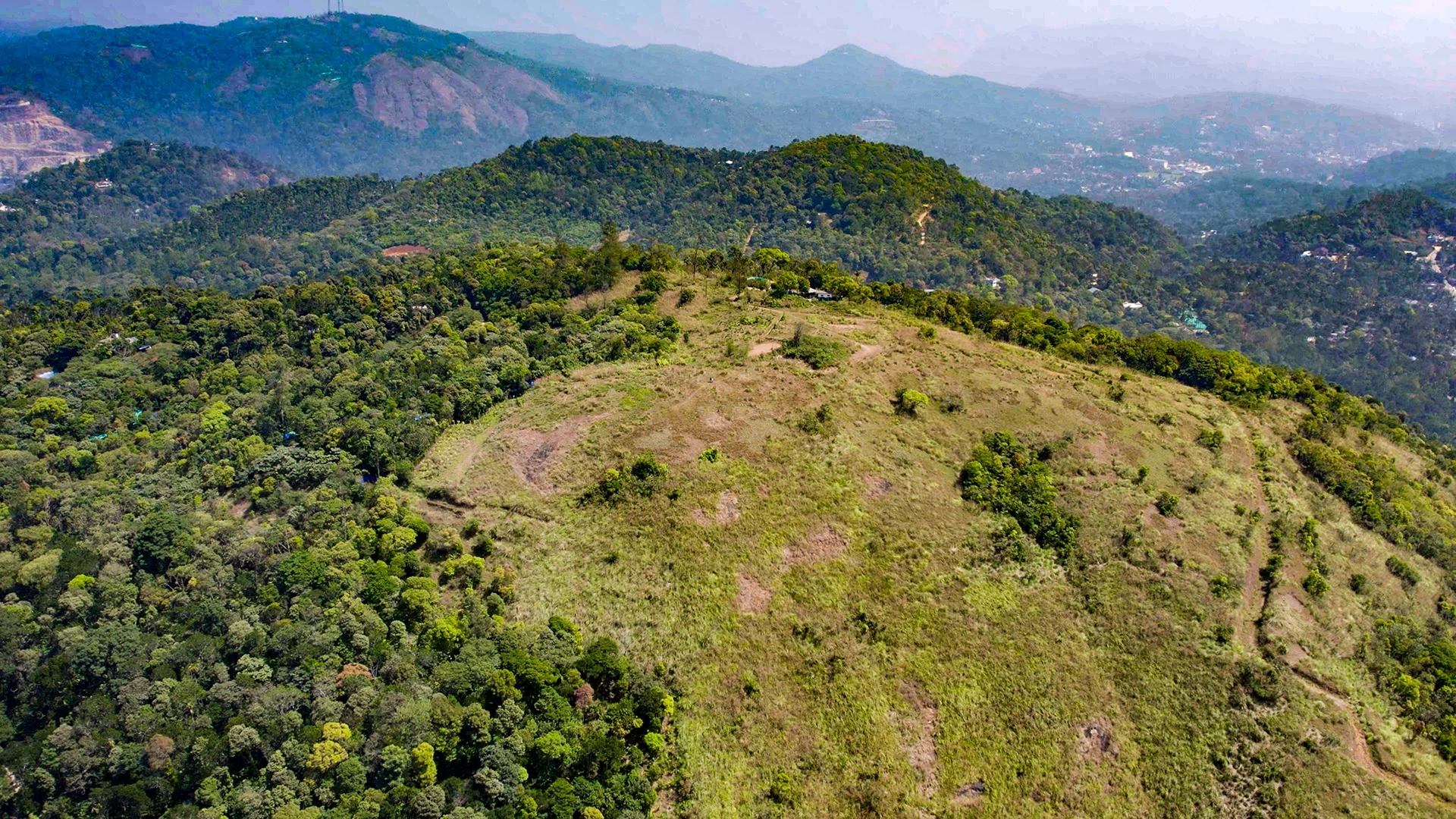
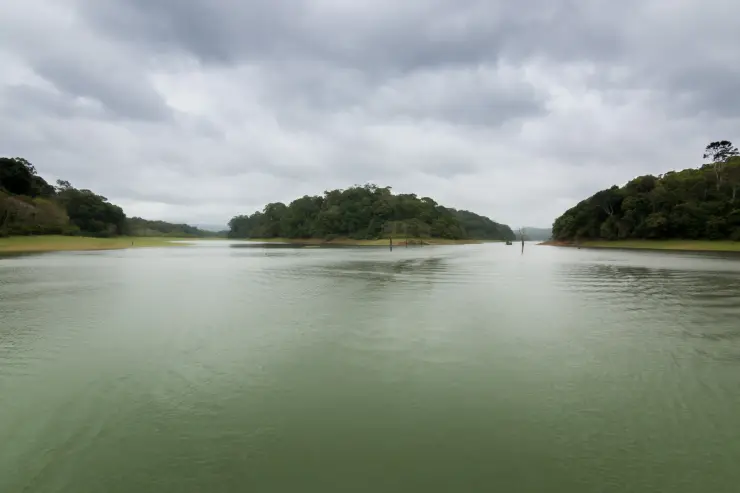
Periyar’s wooded hills and open lake margins offer different ways of looking. In the forest, trunks and foliage interrupt the view; a bird may be heard before it can be located. Near a grassy opening, the eye travels farther and a stationary animal can be difficult to distinguish from the shapes around it. The walk connects these experiences without turning them into a checklist of compulsory sightings.
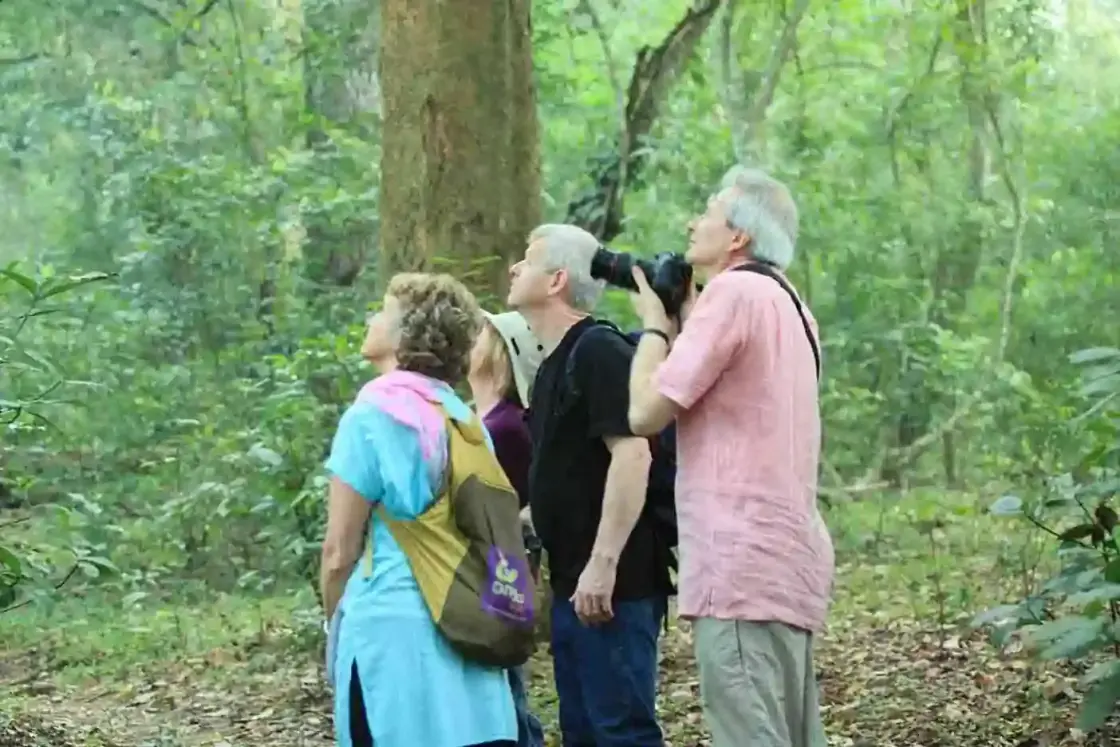
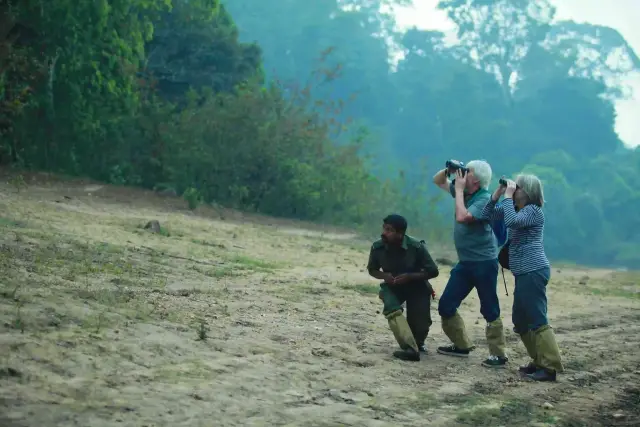
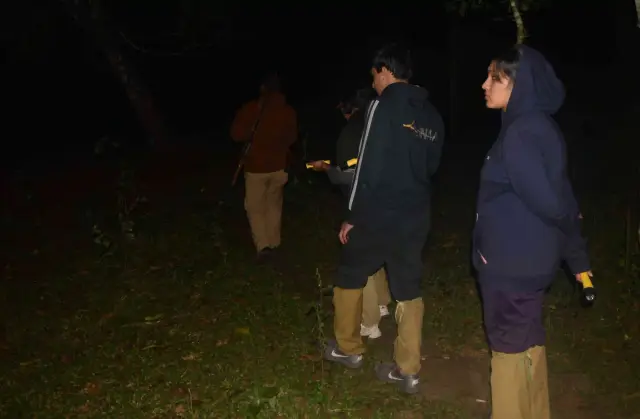
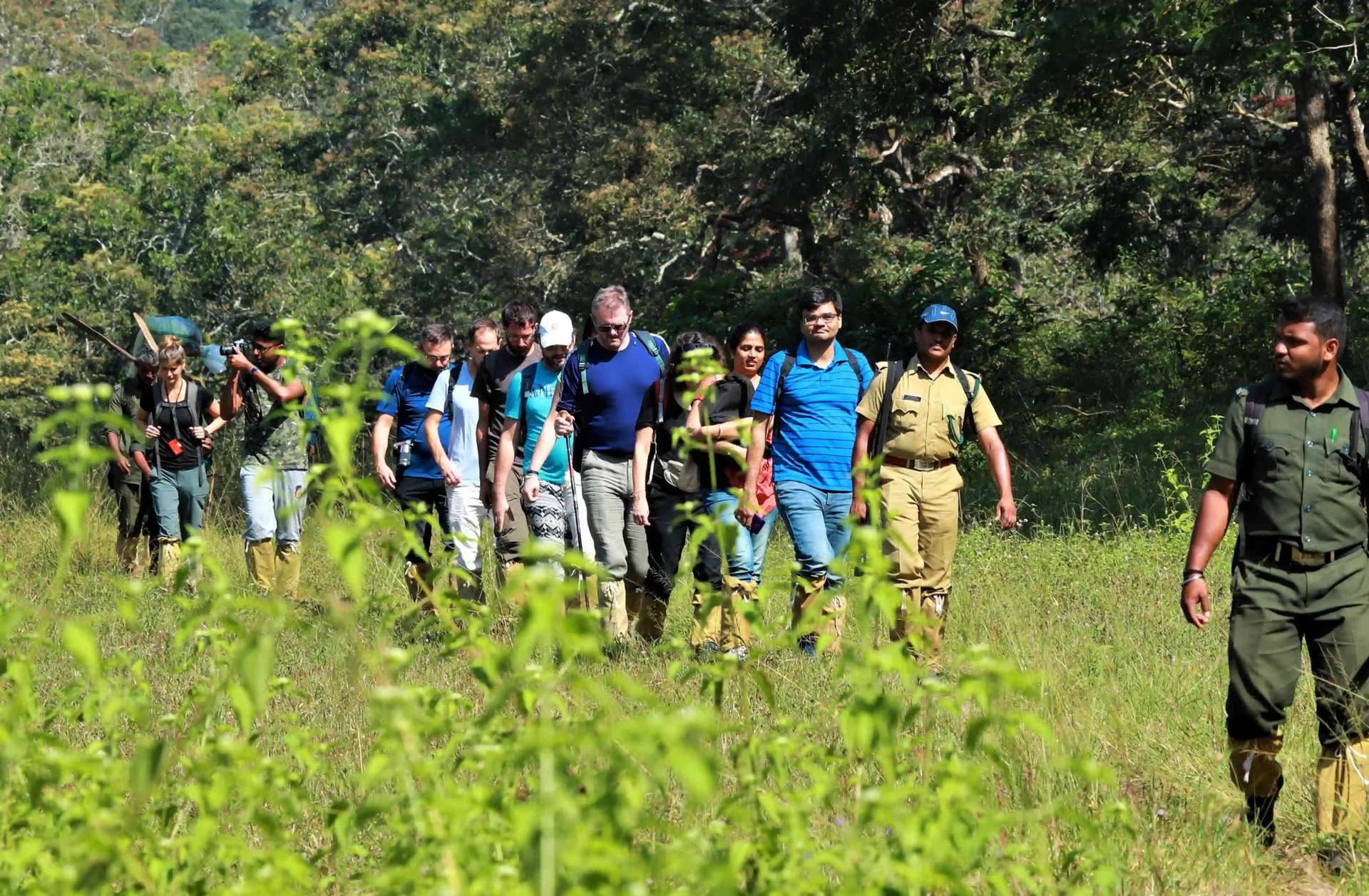
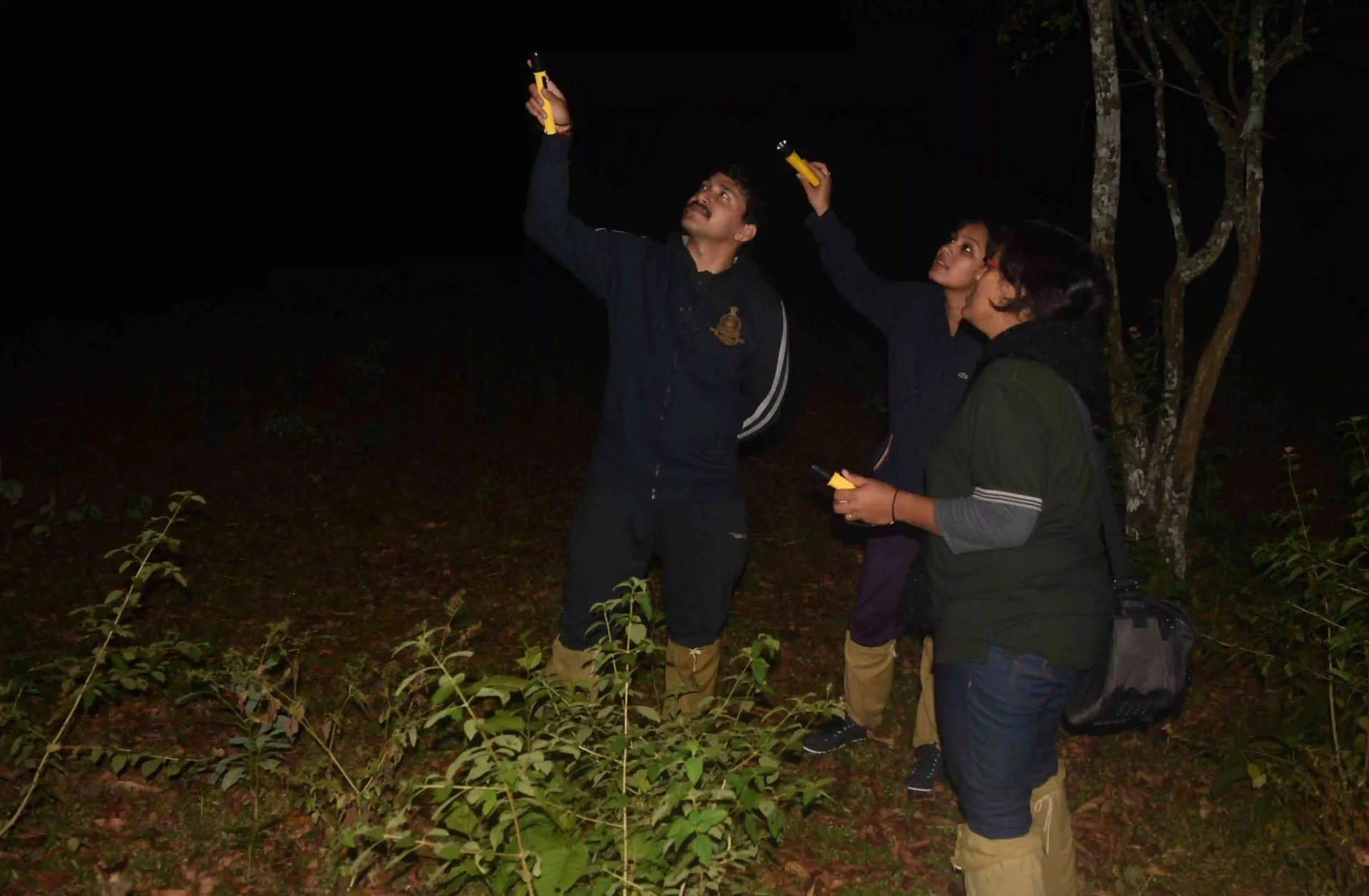
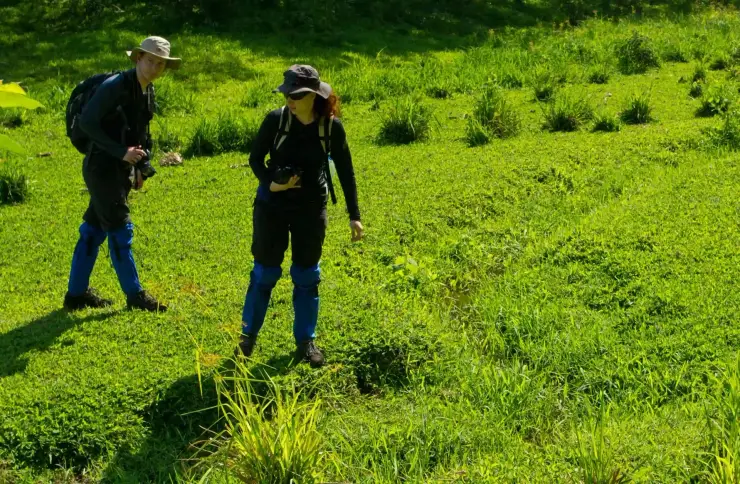
The reserve’s own Nature Walk photographs give a good indication of that range. Visitors look upward under tall trees, a pair of walkers pause in sunlit grass, and bracket fungi occupy pieces of dead wood. These are not interchangeable illustrations of a jungle. They show why an interpreted walk can remain absorbing at several distances, from a small fungus to an animal across an opening.
A fallen log is particularly rewarding because it resists the habit of judging forest only by the height of its living trees. The visible brackets are the fruiting structures of fungi; the wood is part of a continuing process of decay. A guide can use such a stop to explain how dead material remains involved in a living forest. Look without breaking a bracket or rolling the log to improve the photograph.
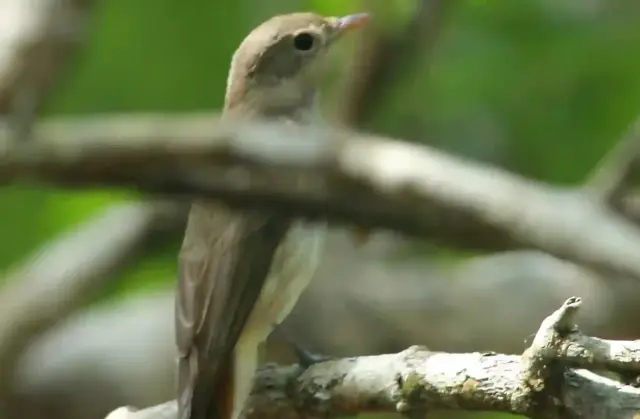
Canopy observation asks for another kind of patience. Looking up through overlapping leaves gives only fragments of a moving animal, and a call may continue after its maker has disappeared. Binoculars help when the guide has located the subject, but quickly passing them around can also interrupt an explanation. A small group can settle into the stop and let each person see without surrounding or pursuing the animal.
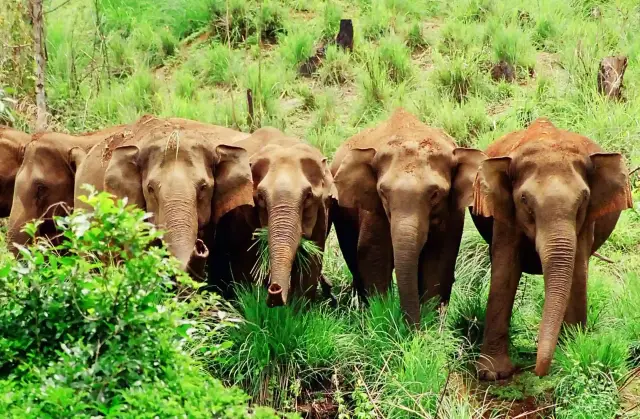
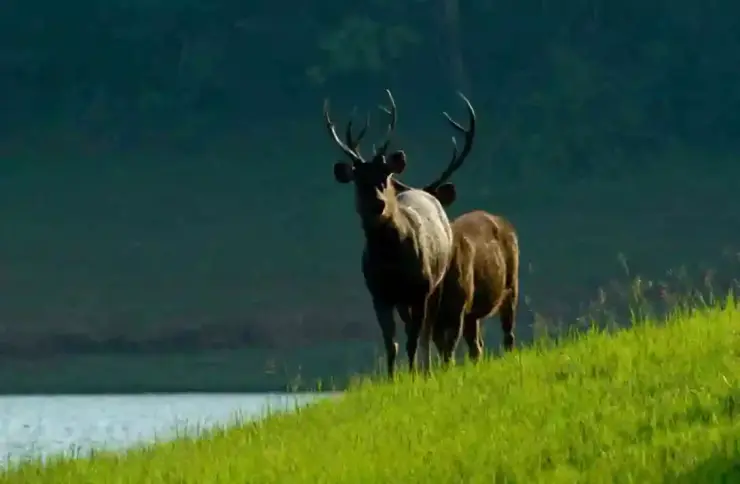
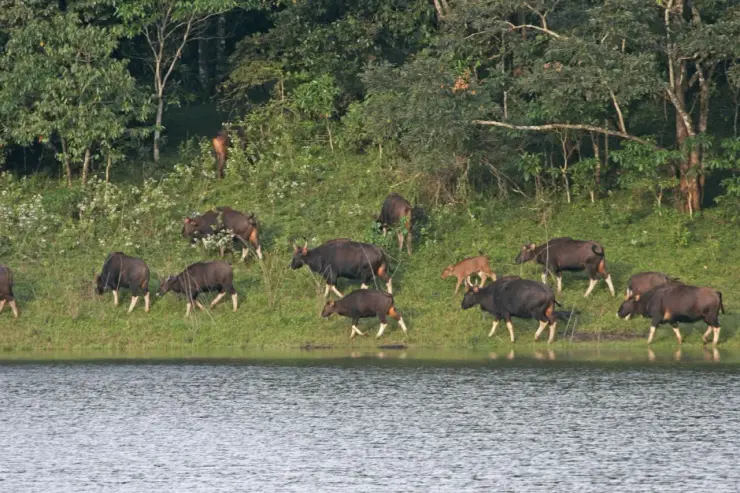
The lake-side grass in the programme photographs belongs to the reserve’s habitat mosaic. Sambar and elephants are among the animals pictured there, but the photographs record particular moments. A person booking a short walk is buying an accompanied route and interpretation, not the right to reproduce those moments. The wooded edge and the animal’s use of cover often explain more than a close portrait would.
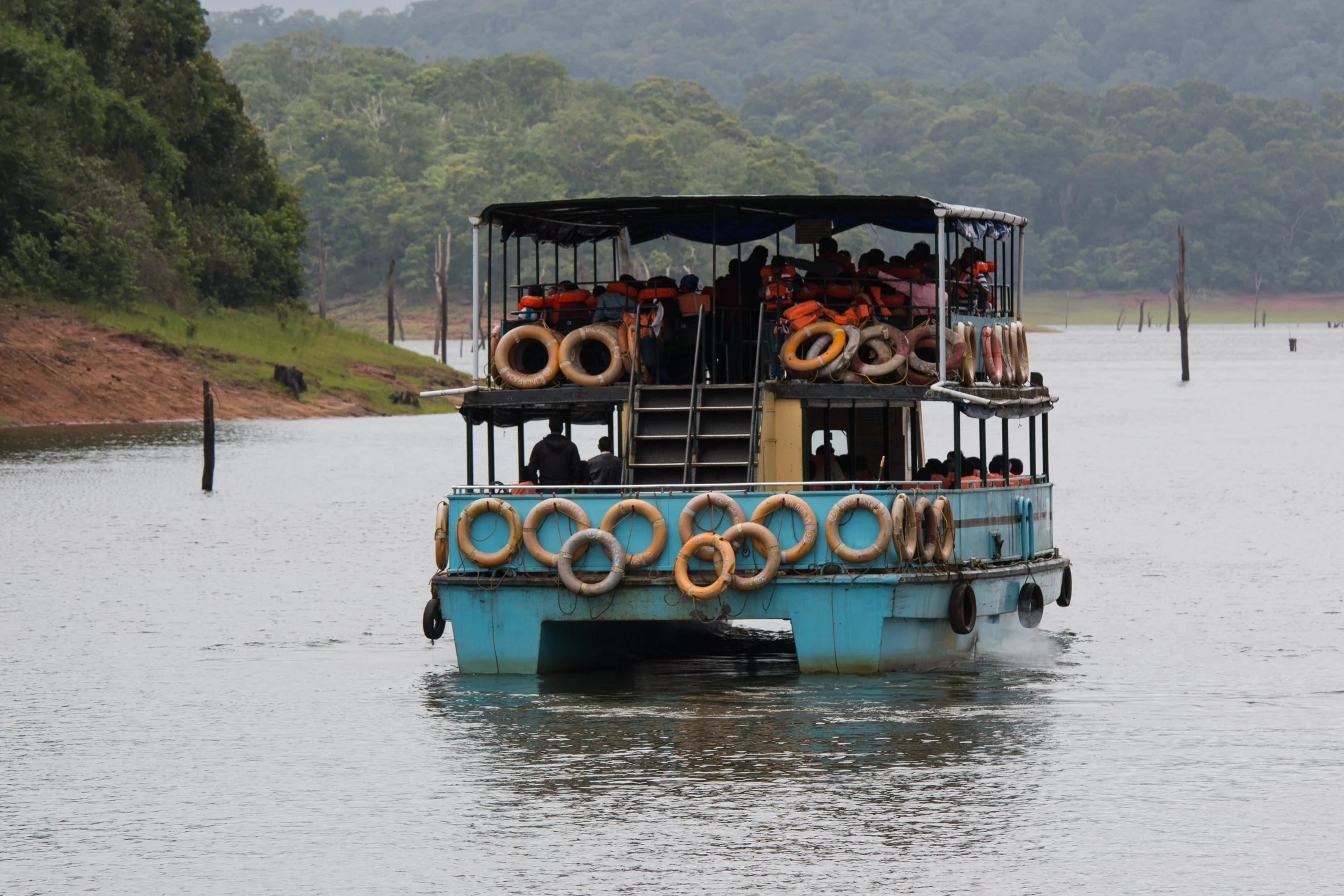
The maximum of six visitors on a trail makes the guide’s voice and hand signals easier to follow. It does not make the route private or remove the reserve’s controls. Other activities operate around Boat Landing, and the Nature Walk has its own assigned departure. Keep the distinction between a shared arrival area and the actual walking group clear.
The shorter duration gives Nature Walk its own place in a Thekkady stay. It can leave part of the day for Kumily or a separately booked lake activity, provided the transfers genuinely fit. Combining bookings should preserve time to return and report again; a forest route cannot be shortened on demand because a second ticket begins elsewhere.
Read the full history of Periyar Nature Walk 276 more words
History
The reserve describes Nature Walk as an interpretive programme connected with its sandal-protection work. That connection makes observation and stewardship part of the experience. It is more specific than treating any available forest path as a tourist trek: the activity belongs to an organised programme with guides, a defined group size and a reporting office.
Periyar’s conservation history extends beyond the modern booking catalogue. The reserve records a Lake Reserve in 1899, Nellikkampetty Game Sanctuary in 1934 and wildlife-sanctuary status in 1950, followed by tiger-reserve status in 1978. Those dates mark changes in protection and administration; they should not be confused with the launch date of Nature Walk.
The India Eco-Development Project reached Periyar in 1996, according to the reserve’s institutional timeline. Community participation became an important strand in its conservation-linked visitor programmes. Today the guide’s interpretation is one way a visitor encounters that relationship between local knowledge, livelihoods and protection.
The programme is therefore best understood through what happens on foot. Its historical setting explains why movement is accompanied and controlled, while the guide makes the particular forest visible. A visitor need not see a rare animal to take part meaningfully in that exchange.
Why visit
Choose this walk for an introduction to reading a living forest with a guide, especially if an all-day hike would dominate the trip.
The small trail group allows time to observe plants, fungi and canopy activity that can be hard to notice from a moving boat.
Starting at Boat Landing helps connect the forest with the lake landscape while keeping the two activities distinct.
The programme’s interpretive purpose rewards curiosity about ordinary forest detail as well as excitement about larger wildlife.