An overnight camp changes what it means to spend time in Periyar. The day is no longer organised around returning to a town restaurant after a short activity. Walking, meals and the camp’s boundaries become part of one accompanied forest journey, with the guides responsible for the continuity between them.
The story of Periyar Tiger Trail
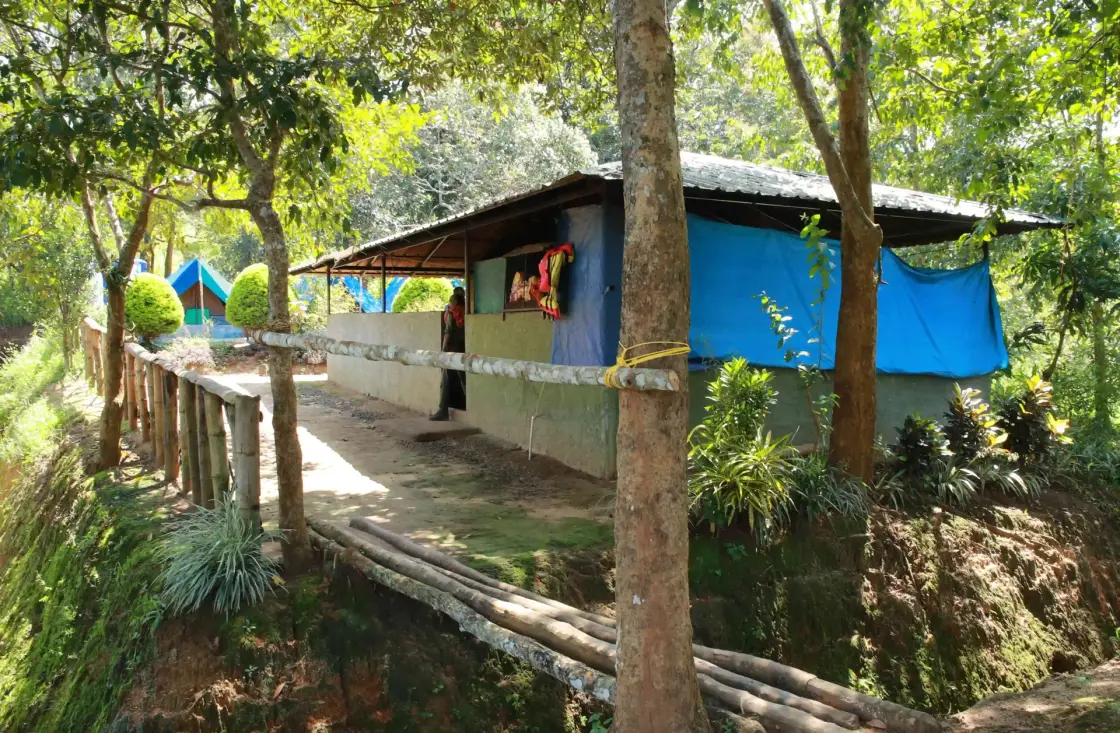
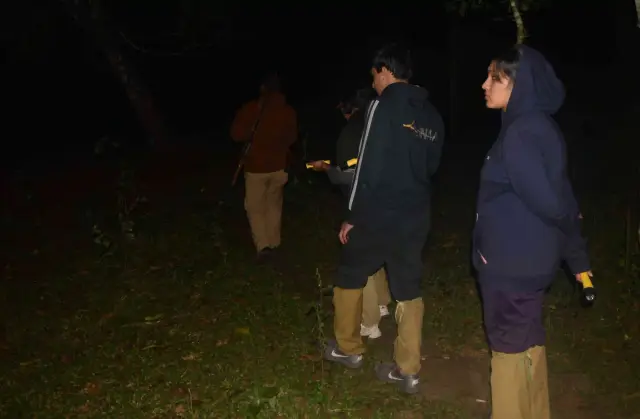
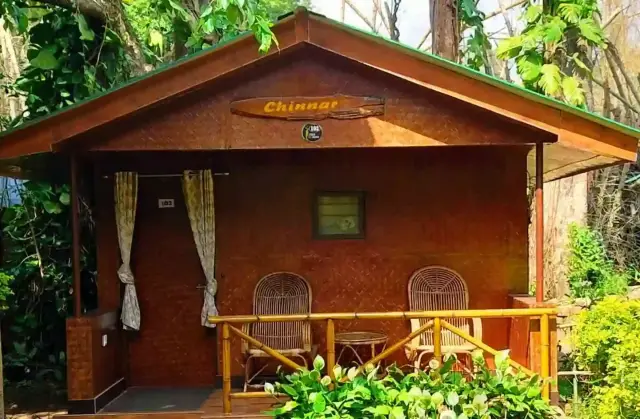
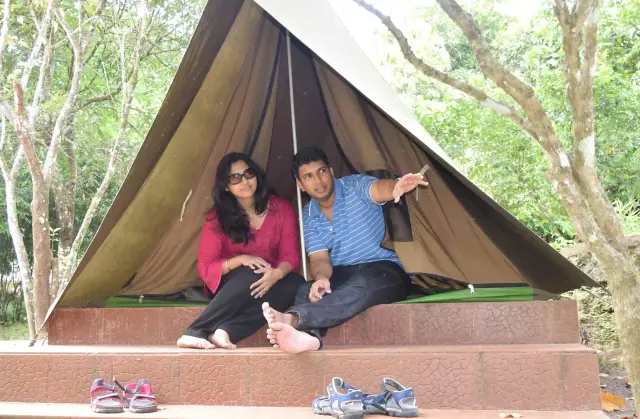
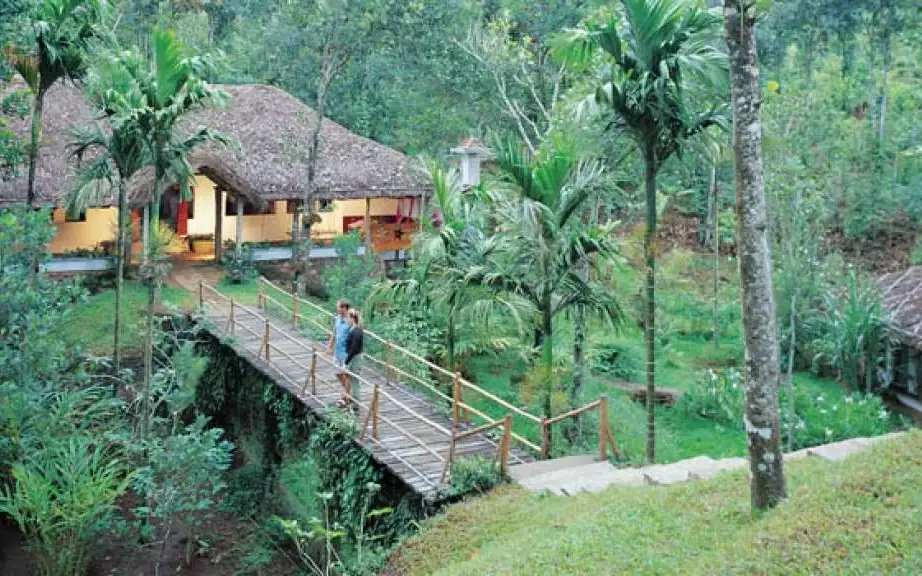
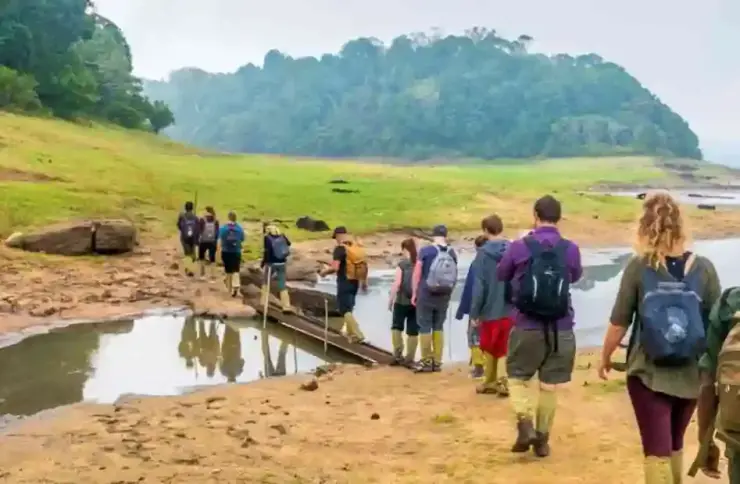
Tiger Trail combines movement with a place to stop. The forest route is led by the team; the camp is not an independently chosen clearing. In the reserve’s camp photograph, a covered working shelter, stored safety equipment and a wooden crossing sit among vegetation, with tents farther back. That is the practical setting of an organised programme, not a licence for visitors to pitch tents anywhere in the reserve.
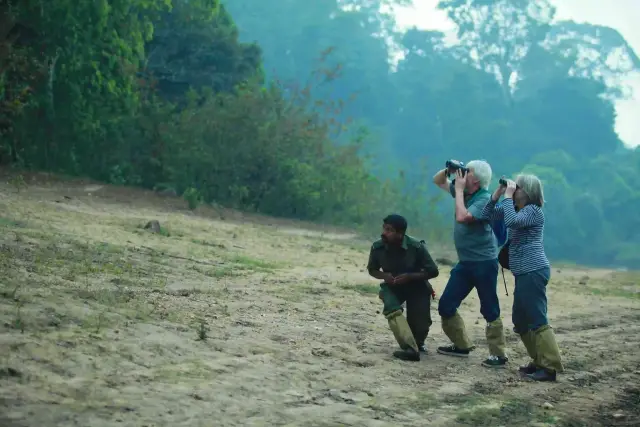
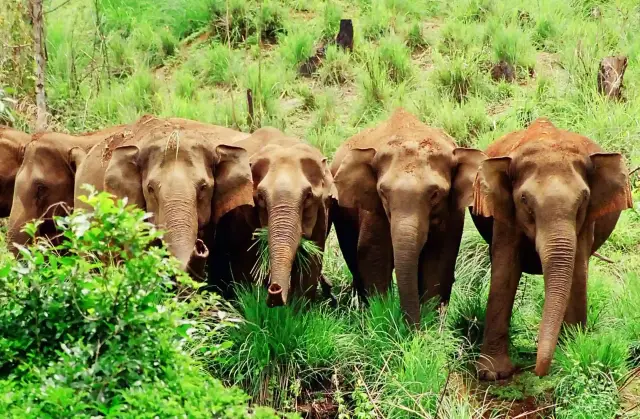
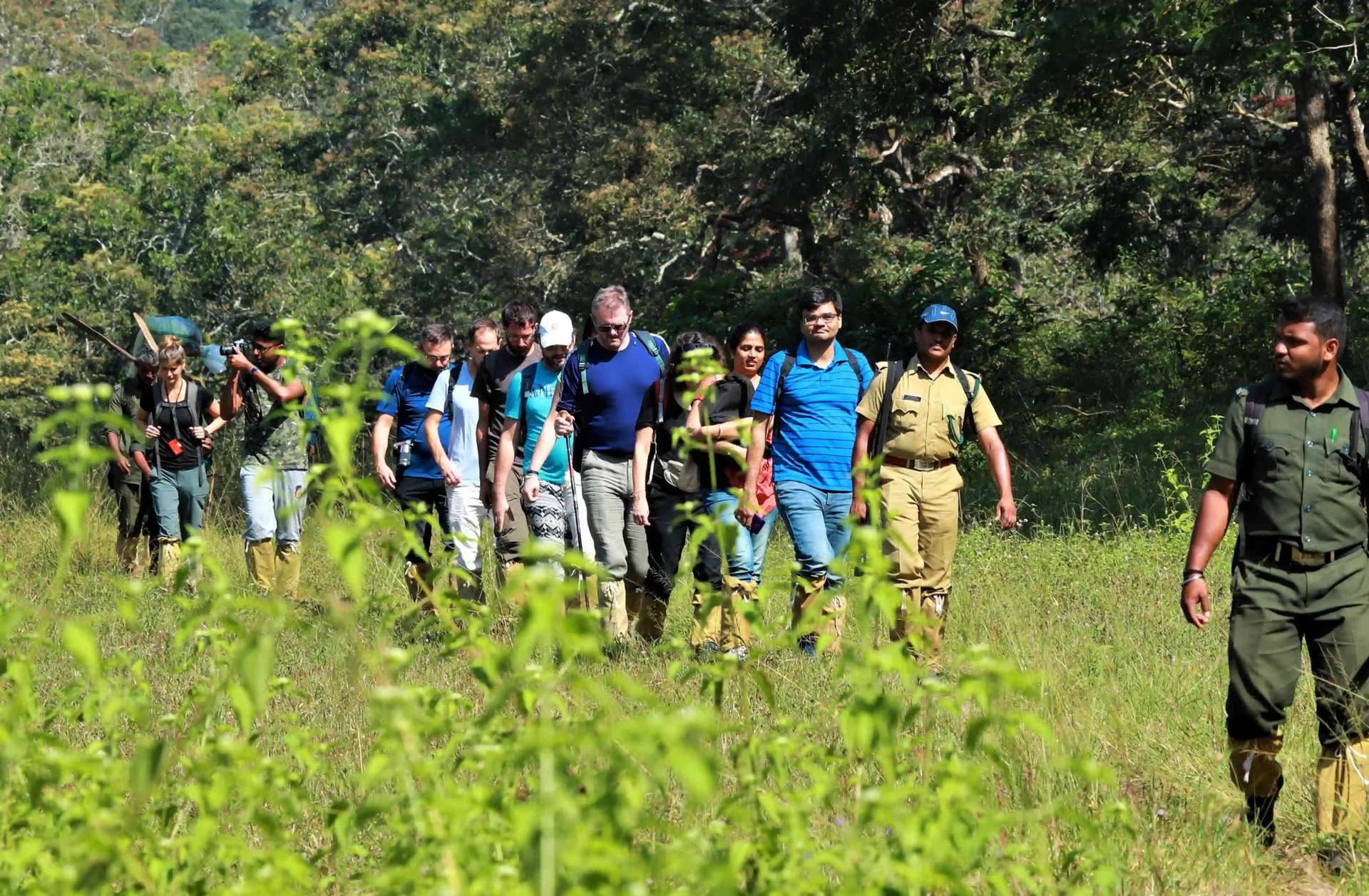
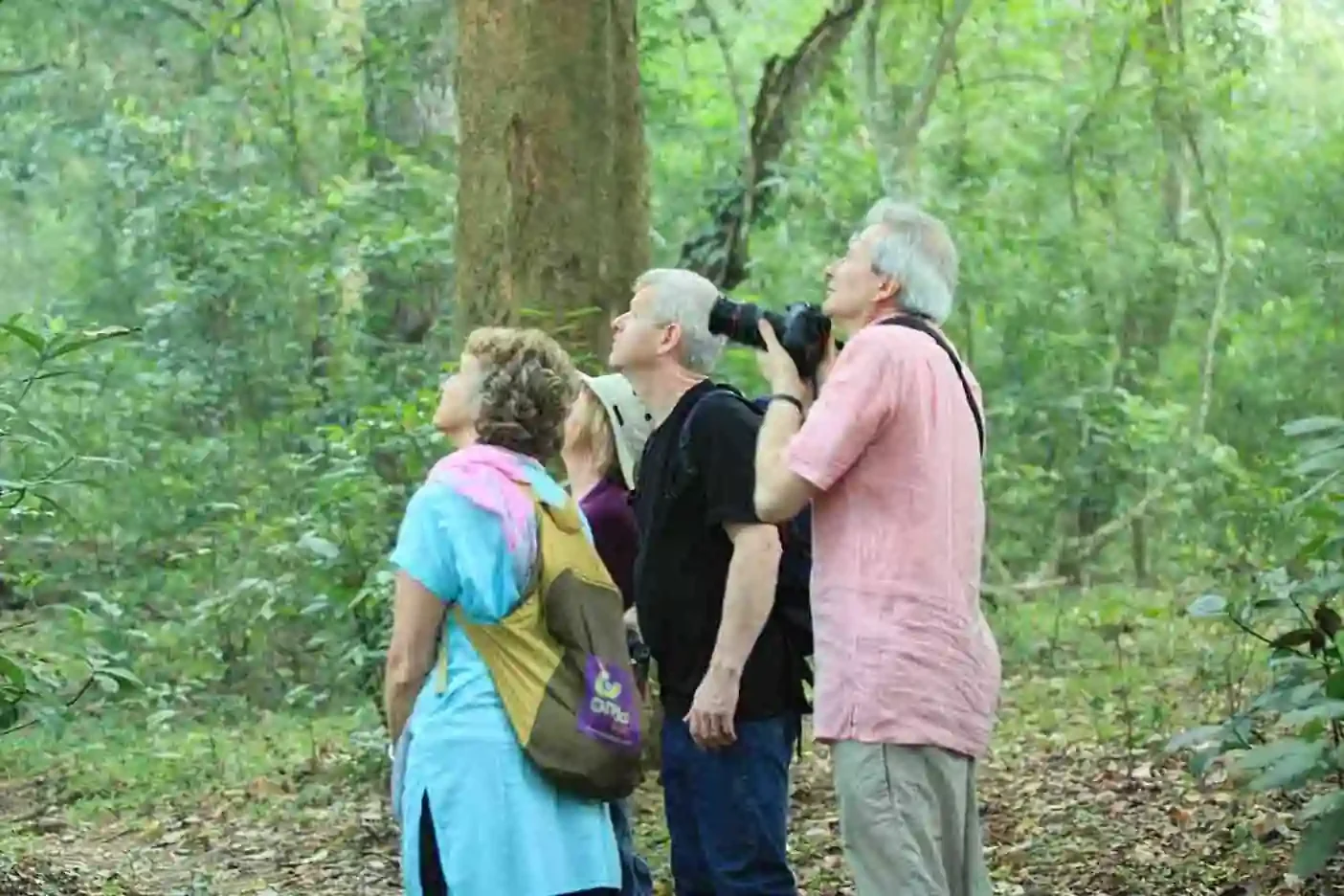
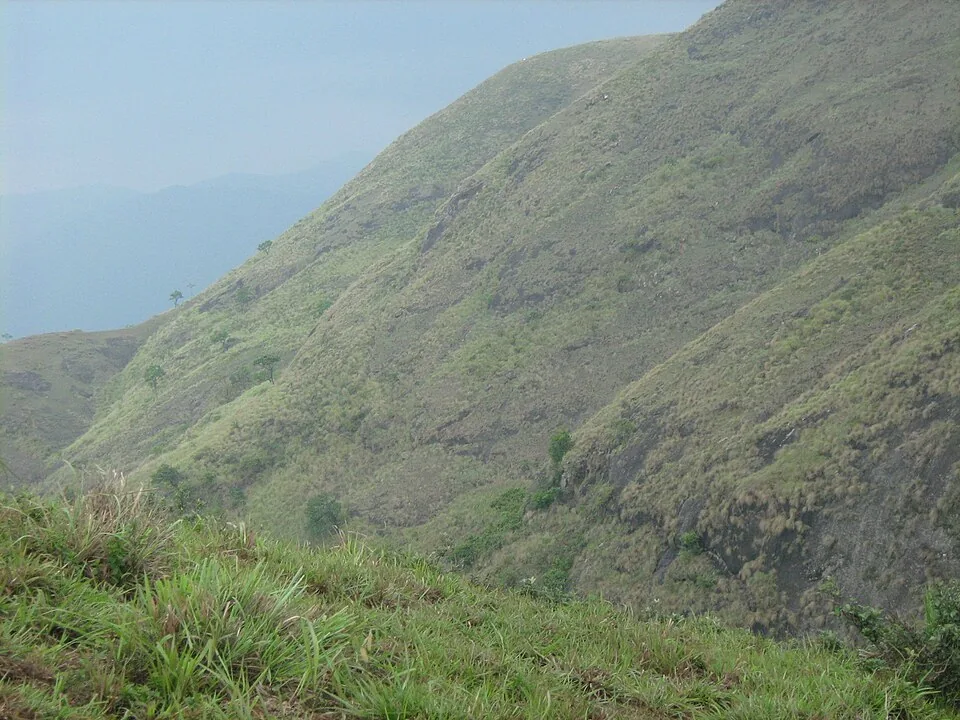
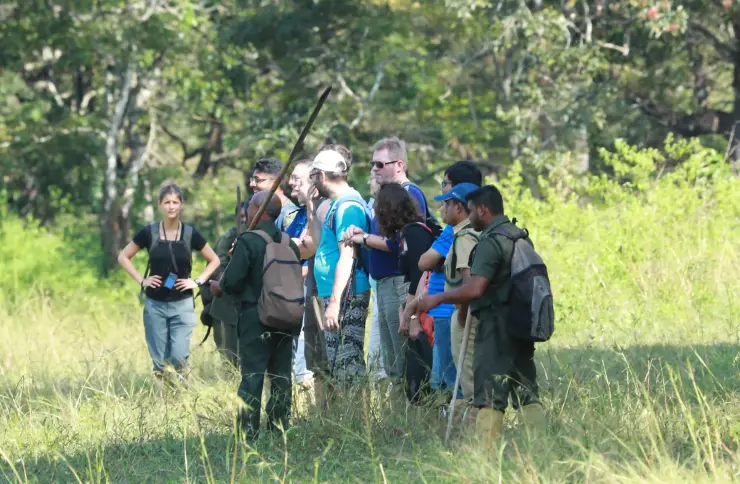
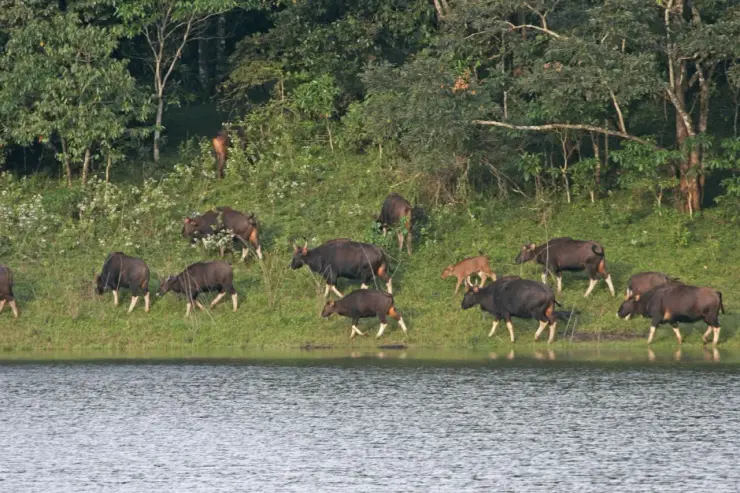
The longer rhythm is valuable because a forest does not reveal itself at a single speed. A group may pause in grass, wait while the guide interprets a sound or look across a stretch of water before moving again. The camp gives those pauses a different context from a walk that must finish before lunch in Kumily. Time is part of the experience even when no spectacular animal appears.
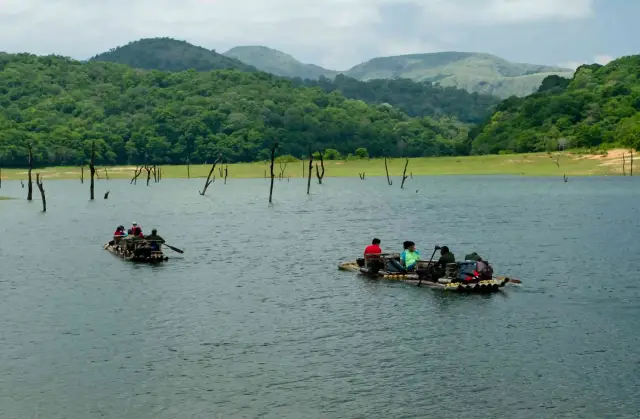
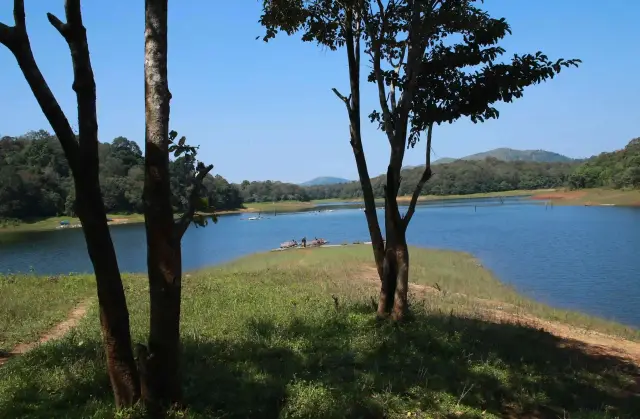
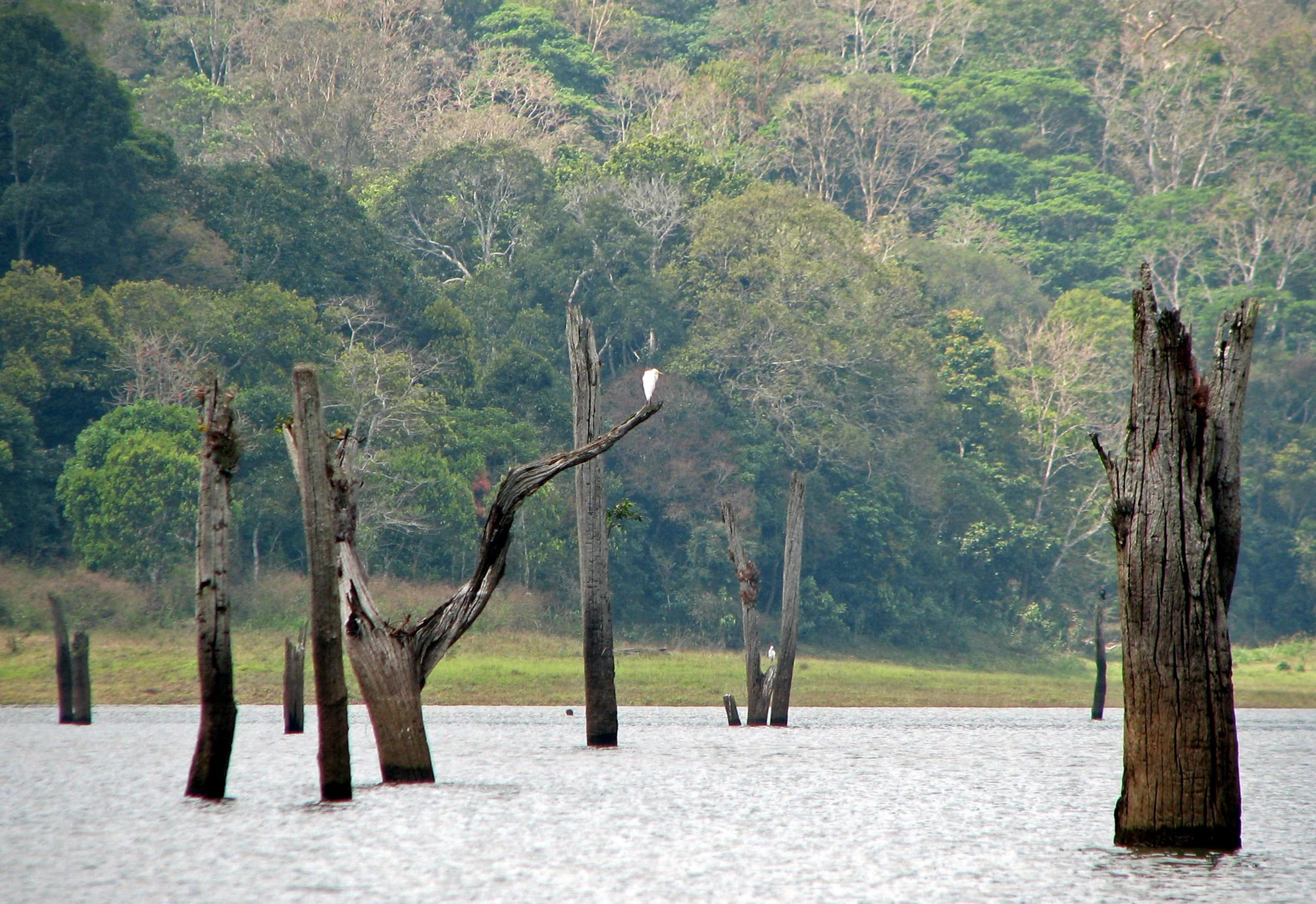
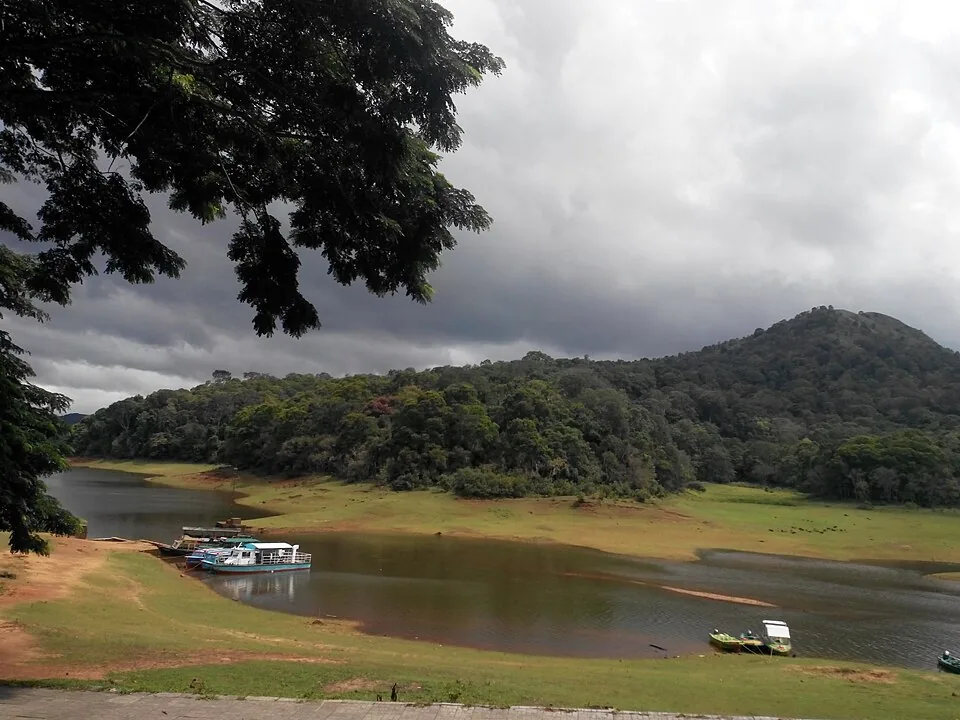
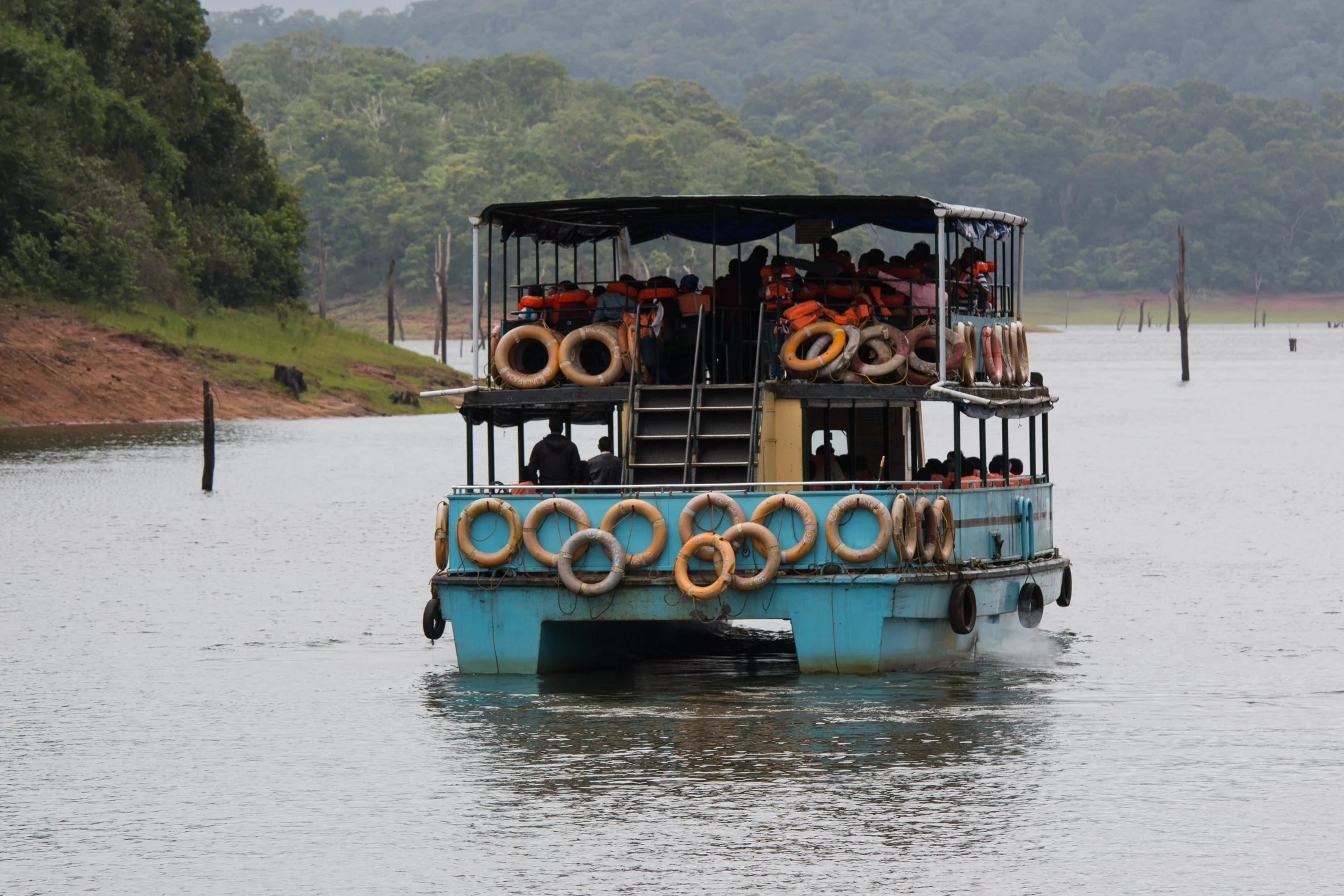
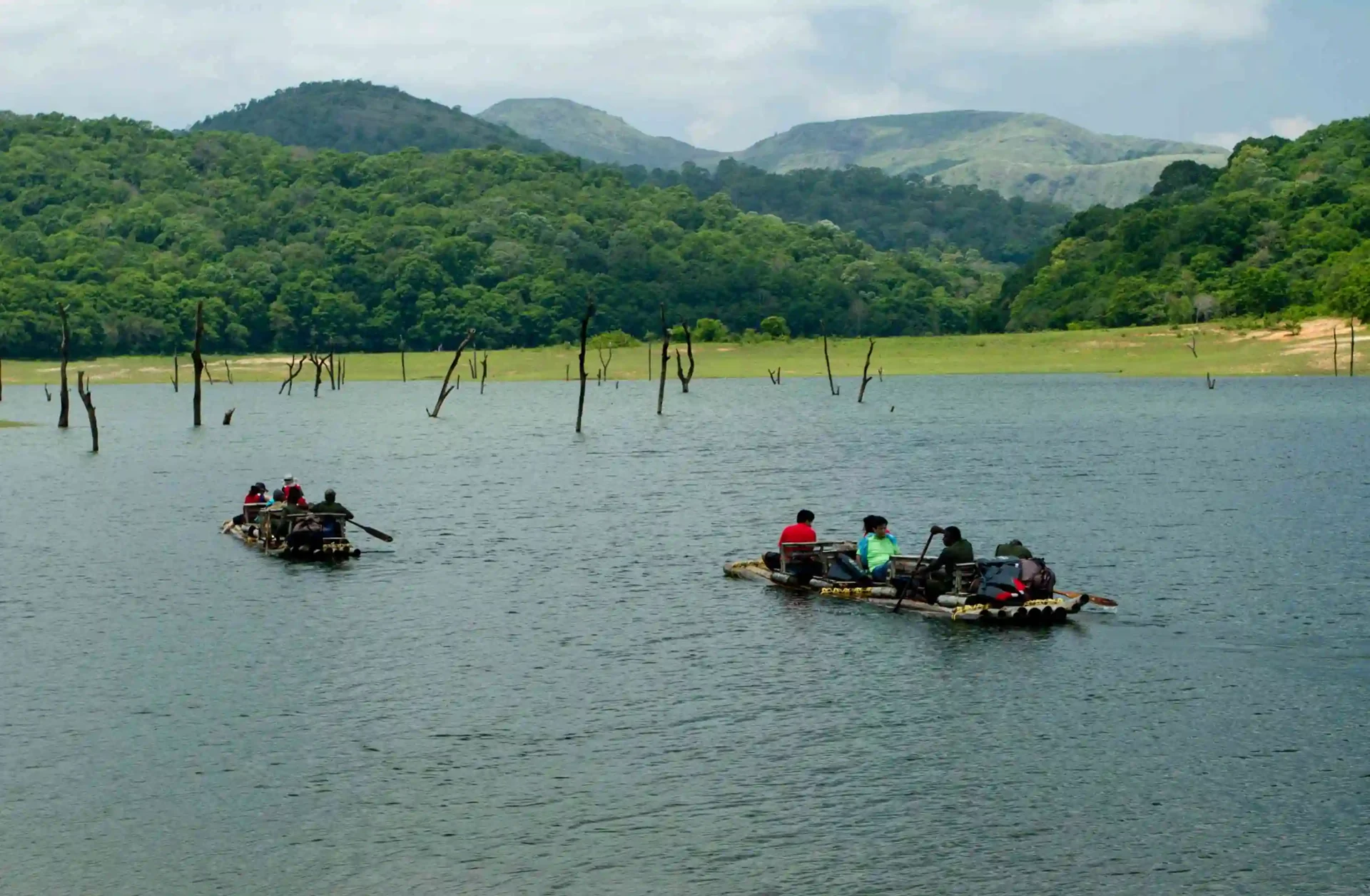
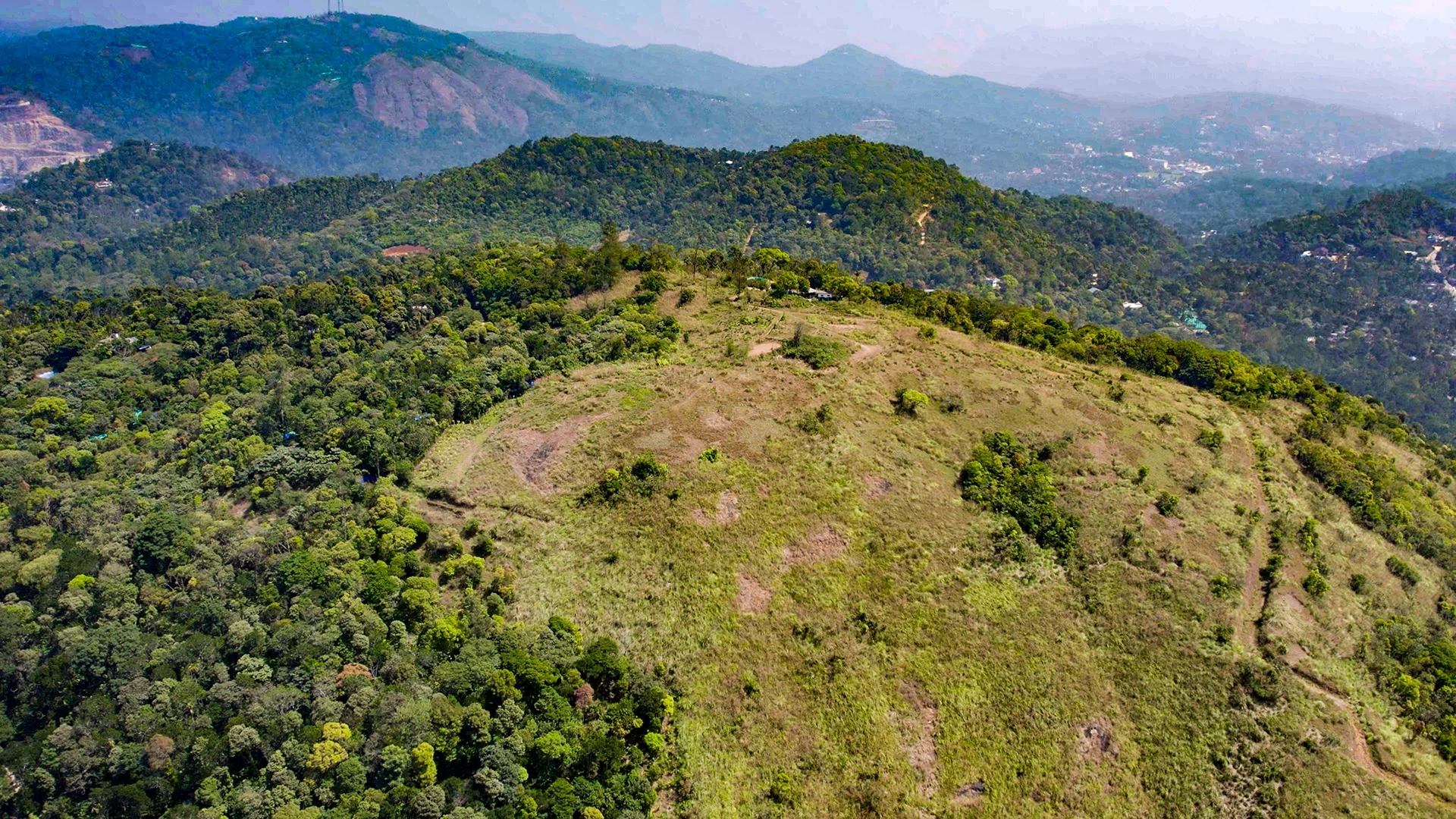
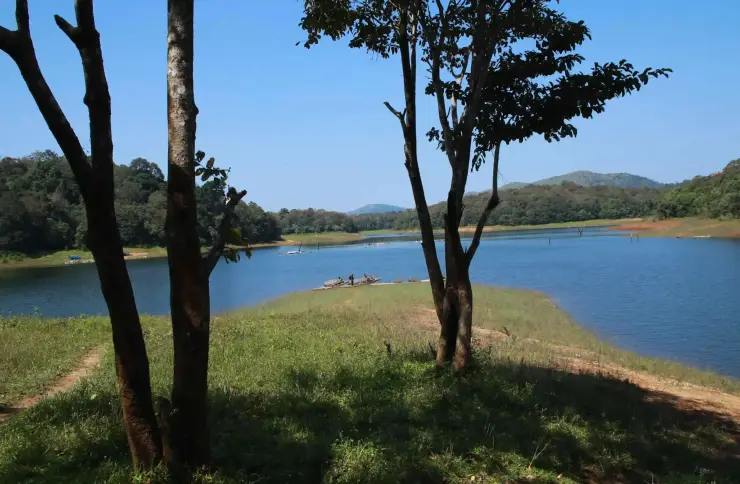
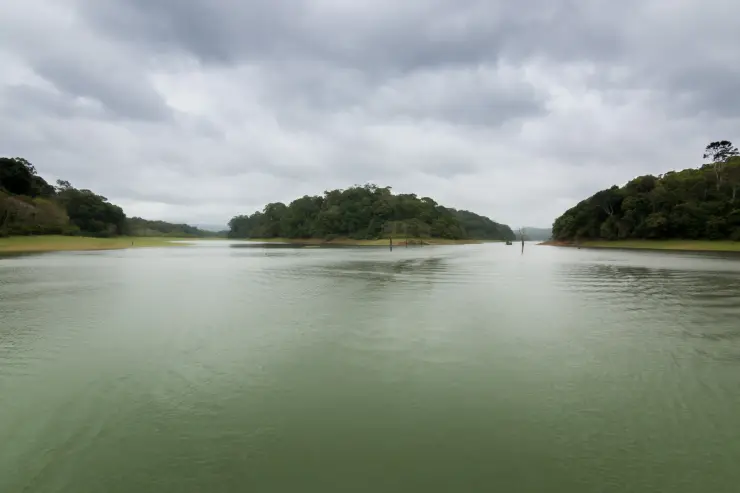
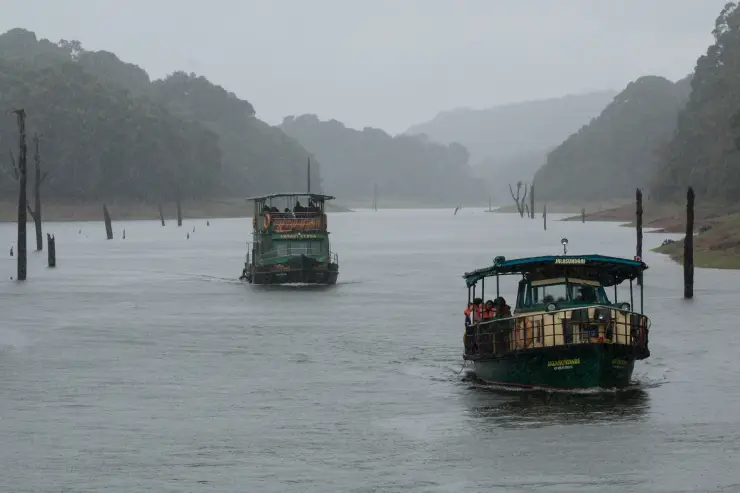
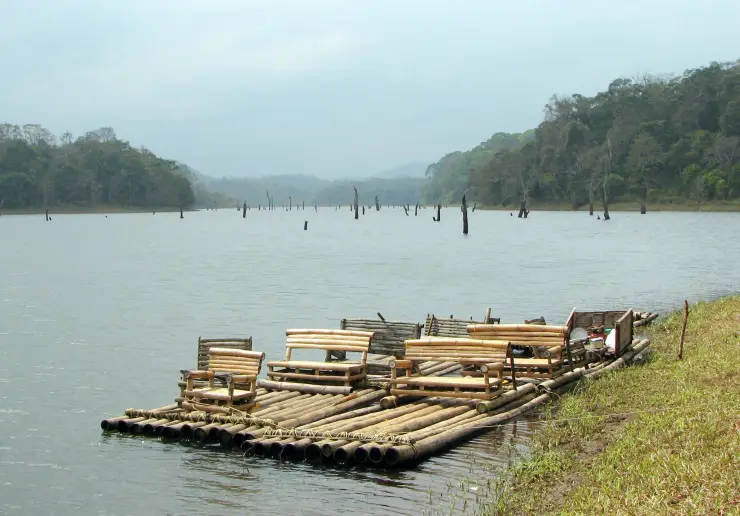
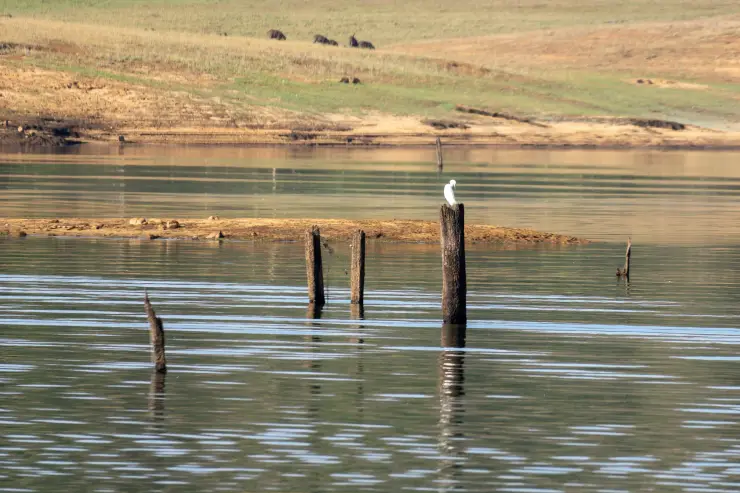
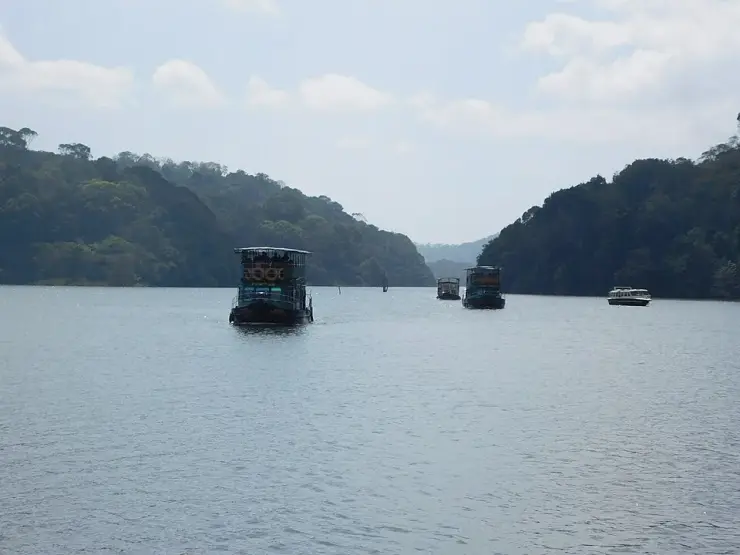
Periyar Lake adds another visual scale to the wooded route. A peninsula can make open water look like a sequence of smaller reaches, and standing trunks can remain legible when the far shore becomes a silhouette. These are features to observe from the permitted route or camp arrangement; a view of a shoreline does not establish a right to walk or paddle to it independently.
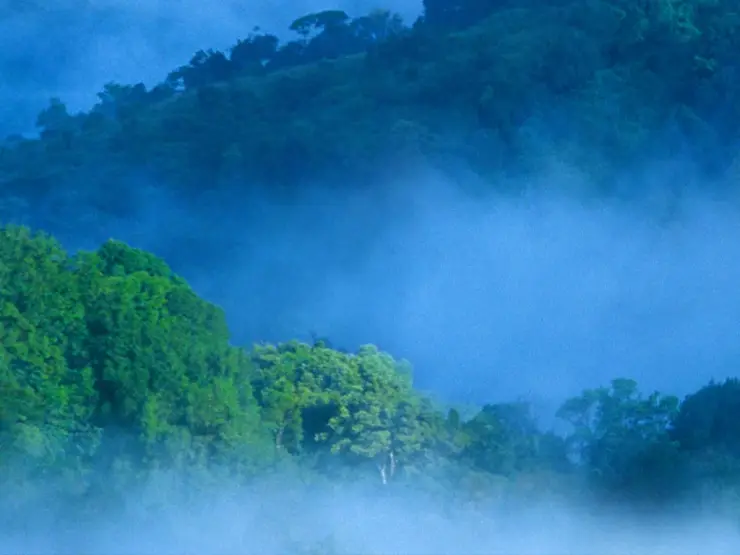
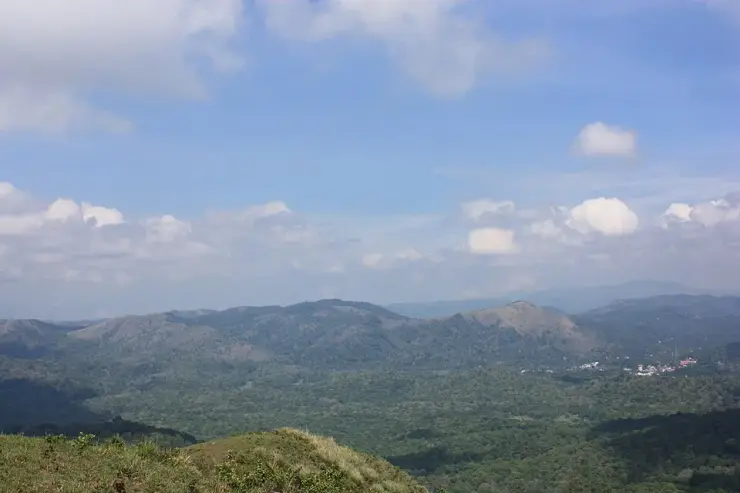
The evening light can draw attention away from individual animals towards the shape of the landscape. A low sun above wooded hills, the darker line of the shore and the remains of trunks in the water give the scene depth. Conditions vary, and the programme should be chosen for time in that setting rather than for one expected sunset photograph.
Footing and balance remain part of the journey between such stops. A narrow crossing, damp ground or an awkward change in level can feel different with a bag or after a day’s walking. Let the guide control crossings and spacing. Taking turns carefully is part of moving efficiently as a small group, not a distraction from the adventure.
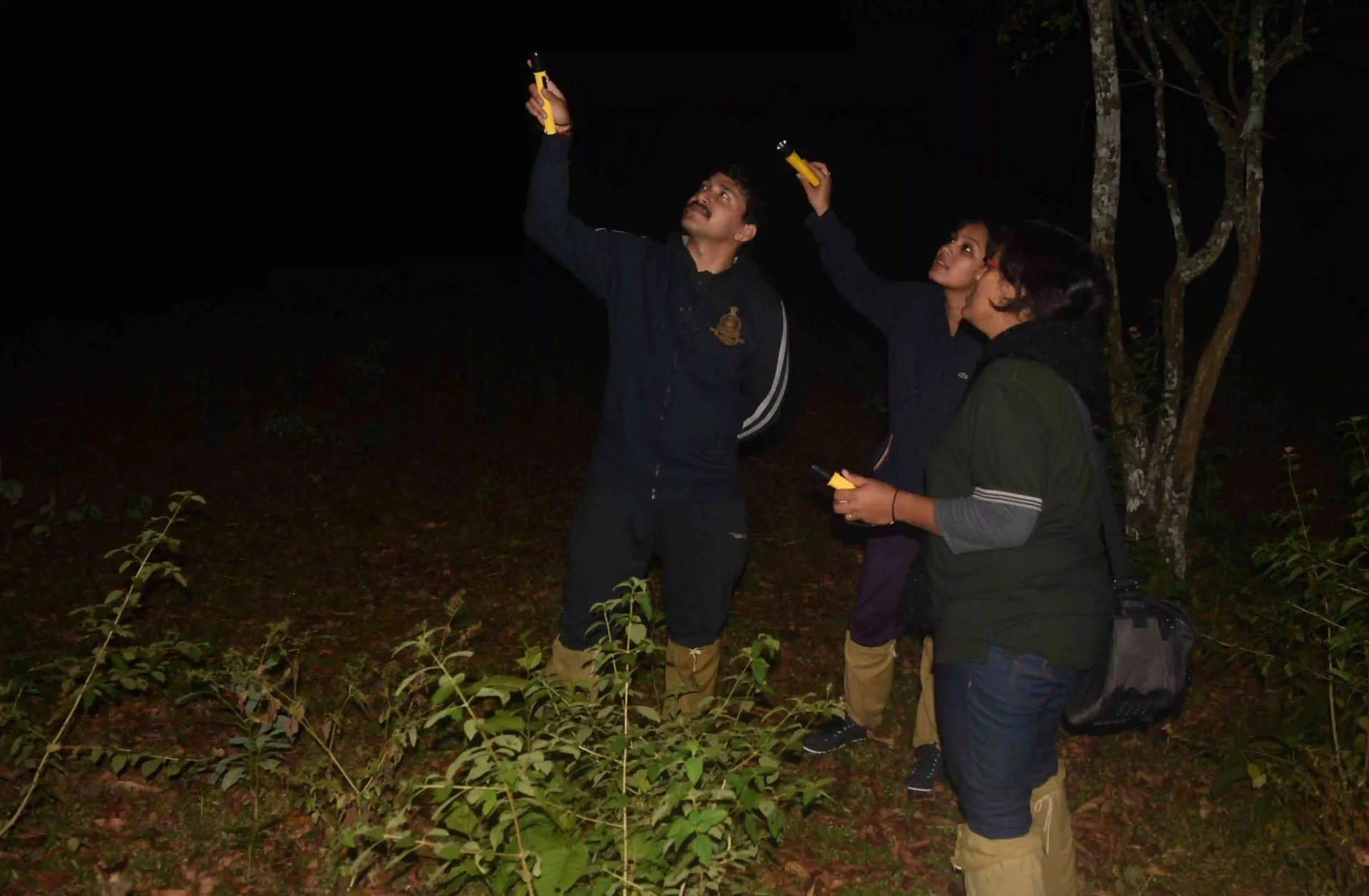
The public programme describes five guides and a forest official accompanying the visitors. That staffing reflects a combination of walking, interpretation, camp work and protection. It should not be read as a private entourage free to pursue whatever a visitor requests. The route and conditions remain the reserve’s decisions.
The camp’s most useful luxury is continuity. The forest remains the setting between activities, rather than becoming a place glimpsed from a vehicle and then left behind. Visitors who enjoy observation, basic routines and a guide-led pace are likely to value that continuity more than someone whose only measure of success is a photograph of a tiger.
Read the full history of Periyar Tiger Trail 296 more words
History
Tiger Trail has a documented relationship with Periyar’s conservation work. The national Tiger Task Force’s 2005 report describes an initiative in which people previously involved in poaching and illegal cinnamon-bark collection began working with park staff as guides and protectors. It is a historical account of a particular programme, not a claim about the background of every guide working today.
The report places a key agreement in 1997, when 22 former offenders accepted a role in protecting the park and asked for a regular source of income. Park managers worked with the group on a tourism service exploring Periyar’s forest. Guiding provided a way to use detailed knowledge of the landscape in a different relationship with conservation.
The Task Force described the group’s knowledge and information network as important to forest protection. It also recorded participants’ emphasis on the respect they had gained in their communities. That social change matters alongside the enforcement outcomes: the programme was about a more durable relationship with the forest, not merely turning an old skill into a tourist spectacle.
Today’s Ex Vayana reporting name preserves that connection, while the current reservation offers clearly defined one-night and two-night visitor products. A respectful visitor can understand the programme’s origins without assuming the identity or personal history of any individual pictured in a brochure or met on the trail.
Why visit
Choose Tiger Trail for an accompanied overnight forest experience with time for observation between the main walking stages.
The programme’s documented conservation history gives guiding and camp work a meaning beyond an ordinary trekking package.
A small group can experience Periyar’s forest and lake-edge landscape over more than one part of the day.
It suits travellers who value a basic guided camp and a flexible wildlife experience over a guaranteed sighting or hotel-style routine.