What to expect
Highlights
- Sea views and sunset at Thirumullavaram Beach
- Nearby seafood, cafes or beach walks where available
- Easy pairing with local stays and short day trips
A quiet, curved bay beach west of Kollam town, calmer than the city beach and good for a relaxed evening.
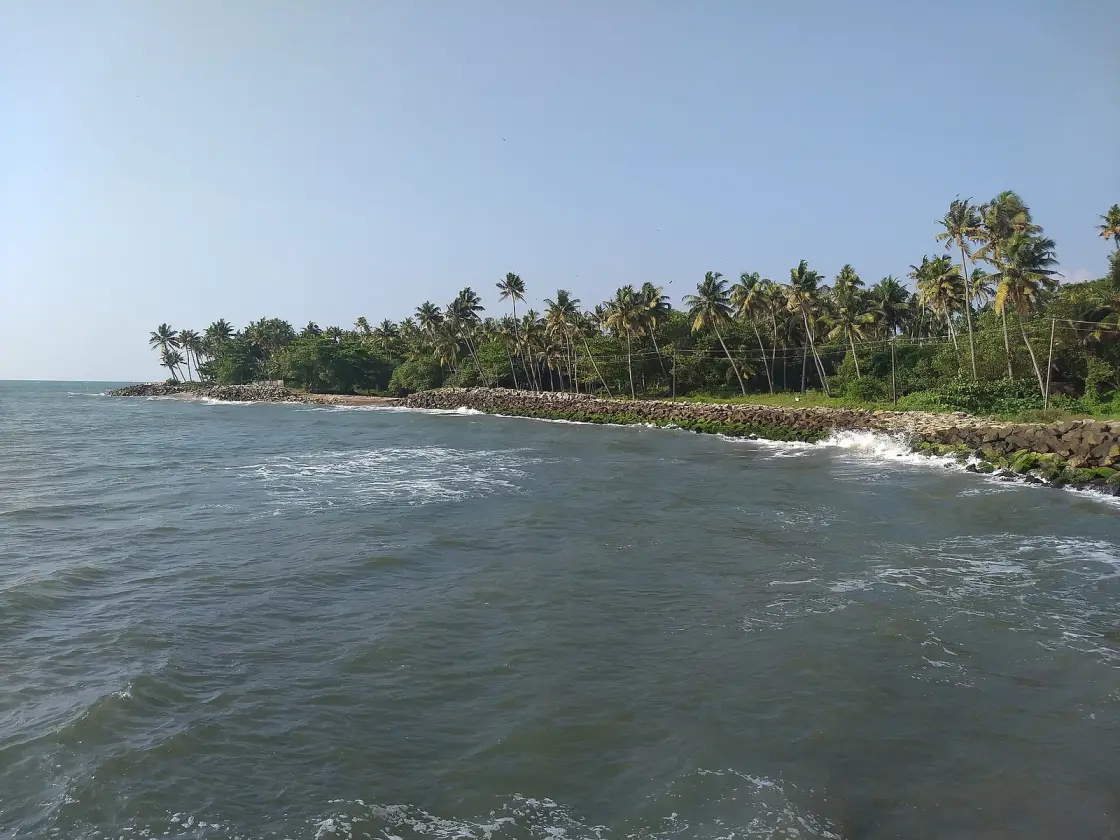
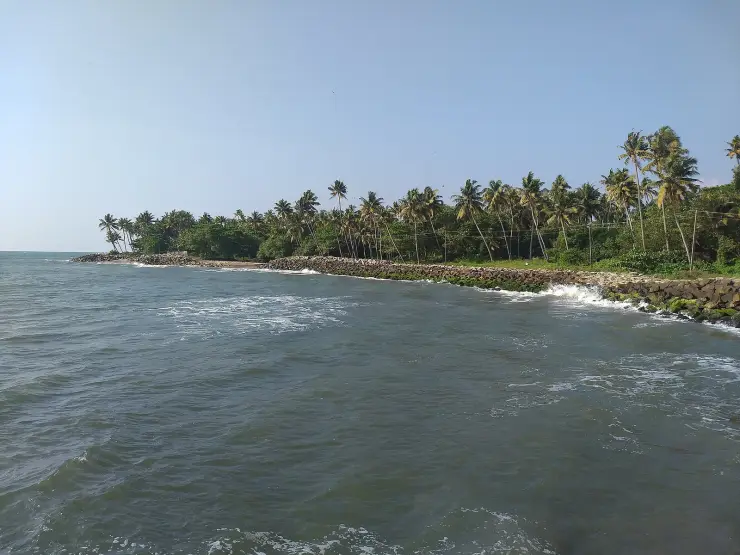
Just north of busy Kollam, coconut palms lean over a shore that is calm in a way the rest of this coast is not — and the photographs suggest the calm was built. Most of the frontage here is a granite revetment with a concrete groyne running out into the sea, and the sand is a pocket rather than a crescent. It is still the gentlest water in Kollam, still the sunset spot the town has used for generations, and once a year it is the ground for one of Kerala's largest ancestral rites.
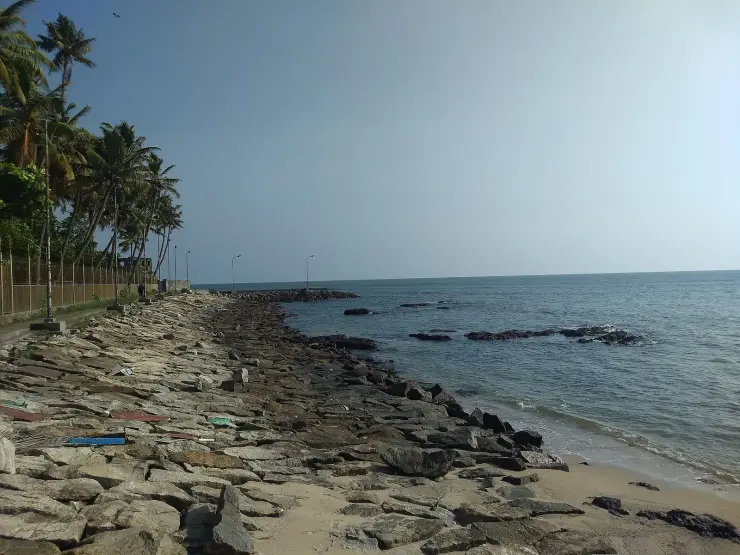
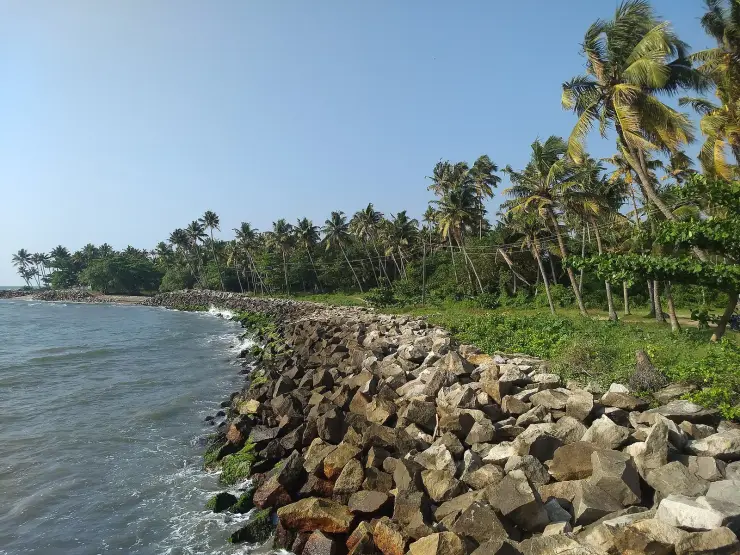
Thirumullavaram Beach lies roughly 6 km north of Kollam town, a calm curving bay that locals have treasured for generations as a picnic and sunset spot. Where Kerala’s open coast can pound and drag, this pocket of shoreline feels comparatively sheltered. Be clear about what you are coming to, though, because the copy written about this beach and the photographs taken of it do not match. Along most of the frontage the coconut groves stop at a wall of granite boulders, and the sea breaks directly onto that rock. There is sand — a pocket of it, and it is real — but the dominant surface is engineered stone, and a concrete groyne runs straight out into the water. It is the kind of place families spread a mat, children chase the surf’s edge and old friends sit talking until the light turns gold.
The beach’s signature curiosity is its offshore rock, known locally as Njarazhcha Para — literally the “Sunday Rock” — a low rocky outcrop that lies out in the water and becomes more visible at low tide. You will read everywhere — and you would have read it here — that the sea recedes by as much as half a kilometre. Treat that with suspicion: this is a microtidal coast with a spring range of roughly a metre, and a half-kilometre horizontal retreat would need a foreshore flatter than anything the photographs show. The photographs show a groyne extending into the sea; they do not establish that it is currently open or safe to walk on. When the tide returns the rock retreats once more into the waves. Timing a visit to the ebb tide is the classic Thirumullavaram experience.
Thirumullavaram has a reputation for comparatively calm water, and a 2018 CMFRI assessment is cited for its beach quality. Neither a past assessment nor calm-looking water establishes present swimming safety. Current lifeguard cover and sea conditions have not been verified here; plan the visit around the shore and sunset.
The coconut groves are as much a part of the atmosphere as the sea. They give the beach its “shady, quiet, silent place” character, so different from the wide-open glare of some Kerala shores, and they make it a favoured spot for a slow morning walk, an evening stroll or a shaded family lunch. Fishing catamarans and small boats often rest along the sand, a reminder that this is a working coast as well as a leisure one.
A few minutes inland — about 280 metres east of the shore, not on it — stands the old Thirumullavaram Sree Maha Vishnu Swami temple, which gives the place its name and lends it a quiet spiritual weight. It is a Vishnu temple, and although we described it for a long time as a Krishna shrine, no source we can find supports that. On certain days of the year the sand fills with pilgrims performing ancestral rites at the water’s edge, transforming the everyday picnic beach into a solemn ritual ground — a duality that few Kerala beaches carry so vividly.
Compared with the more developed and crowded Kollam Beach in town, Thirumullavaram feels softer and more local — less a promenade, more a neighbourhood shore. It pairs naturally with a wider Kollam itinerary: the vast Ashtamudi Lake and its backwater cruises, the historic port town and the temple itself are all close by, making the beach an easy, unhurried half-day escape from the city.
Every source calls Thirumullavaram naturally calm. Kerala Tourism sells it that way, the guidebooks repeat it, and this page said it too. Then you look at the photographs of the place — and every single one of them shows granite.
The record is consistent and it is dated. Arunvrparavur photographed a panorama here in September 2015; Ambadyanands walked the shore on 10 November 2018 and shot a set of frames over about four minutes. Two photographers, three years apart, document the same structures: a continuous riprap revetment of angular quarried boulders running the length of the frontage, surf breaking directly onto the rock, and a concrete groyne walkway striking out into the sea with a lamp post at its seaward end. The clincher is that Kerala Tourism’s own green welcome board at the entrance, photographed in 2015, is illustrated with a photograph of this beach — and that official photograph shows the revetment and the groyne rather than sand.
This matters because of what a groyne and a revetment are for. A groyne is built perpendicular to the shore to interrupt the longshore drift of sand and trap it on the updrift side; a revetment absorbs the wave energy that would otherwise cut the shoreline back. The direct, intended consequence of both is water that behaves more gently at the shore than it otherwise would. In other words, the exact quality this beach is famous for is the exact quality that coastal armouring is built to produce.
We want to be careful about how far that goes. We have not been able to find a record from the Kerala State Coastal Area Development Corporation, the Irrigation Department or anyone else naming this scheme, its date or its cost, so we cannot tell you that the calm was engineered — only that the photographs raise the question insistently and that nobody seems to have asked it. Take it as the most interesting unanswered question about this shore rather than as a finding.
One consequence is practical, and it changes the advice usually given. The claim that the sea here recedes half a kilometre at low tide is repeated everywhere, and it is very hard to reconcile with the coast it describes: Kerala is microtidal, with a spring tidal range of roughly a metre, and a horizontal retreat of five hundred metres would require a foreshore far flatter than any photograph of this beach shows. Some photographs show visitors on the groyne, a structure with no handrail. Those older images do not establish present access or safety. View the offshore rock from the shore rather than wading out or treating the groyne as an all-tide walking route.
It is worth adding the contrast, because it makes the point better than the physics does. Four kilometres away at Kollam Beach — the city shore, and a different page of ours — Onmanorama reported in October 2025 that the shoreline is caving in, that the water reaches over three metres deep barely two metres out where the sea has scoured pits in the sand, that drownings are frequent, and that a rope a kilometre and a half long has been strung as a warning line which people step over anyway. Two beaches, one district, one coast. One of them is armoured and calm. The other is not, and is dangerous. What counts as a beach on this coast turns out to be a decision somebody made, and paid for.
The beach takes on a deeply spiritual character during Karkidaka Vavu, the new-moon day of the Malayalam month of Karkidakam (roughly July–August), when Hindus across Kerala honour their departed ancestors. On this day thousands of devotees gather on the sand at dawn to perform Vavu Bali (Bali Tharpanam) — offering rice balls, sesame, tulsi and water at the sea’s edge in a rite believed to help departed souls find peace and moksha. Licensed priests lead the ceremony from pandals set up on the beach, and Thirumullavaram, alongside its Maha Vishnu temple, is one of the most important gathering points for the ritual in the Kollam region.
The beach draws its name from the Thirumullavaram Sree Maha Vishnu Swami temple, about 280 metres inland — a Vishnu shrine that gives the whole locality its identity, and one that we and others have wrongly described as a Krishna temple. In Kerala place-names the honorific “Thiru” marks a sacred, revered spot, and it is the temple that anchors the name to this stretch of coast.
Kollam — historically known as Quilon — has been a working port on India’s south-western coast since at least the ninth century, a hub of the spice trade with links reaching to China, Arabia and the Mediterranean. Medieval travellers such as Marco Polo and Ibn Battuta noted Quilon’s significance, and the town lends its name to the Malayalam Era (Kollam Era / Kollavarsham). Thirumullavaram sits on this same ancient, trade-soaked coastline just north of the old port.
For most of its modern life, however, Thirumullavaram has been known less for commerce than for leisure. Sheltered, shaded and calm, it became a traditional local picnic and outing spot — a place Kollam families and day-trippers have come to for sunsets, sea air and views of Sunday Rock at low tide, well before it appeared on wider tourist maps.
Its religious role is long-standing and continues to grow. The Karkidaka Vavu Bali observance draws thousands of devotees each year to perform ancestral offerings on the sand, with elaborate arrangements coordinated through the Thirumullavaram Maha Vishnu temple; in recent years authorities have added eco-friendly measures to manage the crowds and offerings. This annual gathering has cemented the beach’s reputation as one of the principal Vavu Bali venues in southern Kerala.
The temple itself is stranger than its billing, and worth the few minutes inland. Two major deities are enshrined here — Vishnu and Shiva, given equal reverence and facing in opposite directions — with Devi, Dharma Sastha, Murugan and Rakshas as sub-deities. Two reputable sources disagree about which god faces which way, so we are not going to state an orientation; but the doubling itself is visible in a single photograph of the entrance, where the board reads ഓം നാരായണായ നമഃ, a Vishnu mantra, while a banner on the compound wall advertises ശിവരാത്രി. The compound also holds a temple tank of fresh water a few hundred metres from the Arabian Sea — locally treated as miraculous, and hydrologically ordinary, since a lens of fresh rainwater floats on the saline groundwater inside a sand barrier. For a building whose antiquity is asserted everywhere, there is no inscription, no copper plate and no gazetteer entry to date it. The only firmly dated event in its whole record is 26 December 2004, when the Indian Ocean tsunami came over the wall and damaged the tank that had always held fresh water.
Recognition of the beach’s natural quality is more recent: the 2018 Central Marine Fisheries Research Institute assessment that named it among India’s best-kept beaches — and the strongest entry from Kerala — helped raise its profile from a purely local haunt to a destination worth seeking out on a Kollam itinerary.
A calm, curving bay that is gentler and less crowded than town beaches.
Views from the shore of Njarazhcha Para, the offshore “Sunday Rock”, when it is visible.
Shade almost to the water — though the groves stop at a granite revetment, not at sand, along most of the frontage.
One of Kerala’s top-rated, best-kept beaches (2018 CMFRI study).
A classic Kollam sunset spot with a quiet, local atmosphere.
Easy to combine with Ashtamudi Lake, backwater cruises and the temple.
Road km to Kollam; ghat roads and traffic vary — allow extra.
November to February for dry weather; avoid rough-sea days during monsoon warnings.
Live forecast loads in your browser.
Sun and moon are calculated for this location and shown in IST. Photography windows are the hour around sunrise and sunset; the sunset bearing is degrees clockwise from true north. Moon phase is accurate to about half a day.
Browse listed stays, food, activities, sights, shops and rentals around Thirumullavaram Beach. Check each listing’s locality and contact the business directly for current arrangements.
A family homestay reached by a short boat ride on Munroe Island in the Ashtamudi backwaters. Offers two AC rooms with home-cooked breakfasts.
Boutique hotel with 28 rooms and original artwork in the heart of Kollam, overlooking the city's Clock Tower.
A lakefront resort where all 20 rooms and suites face Ashtamudi Lake. Runs its own houseboat cruises and shoreside Ayurveda treatments.
A backwater resort where Ashtamudi Lake meets the Kallada River. Named after Colonel John Munroe, it offers canoe tours and houseboat cruises.
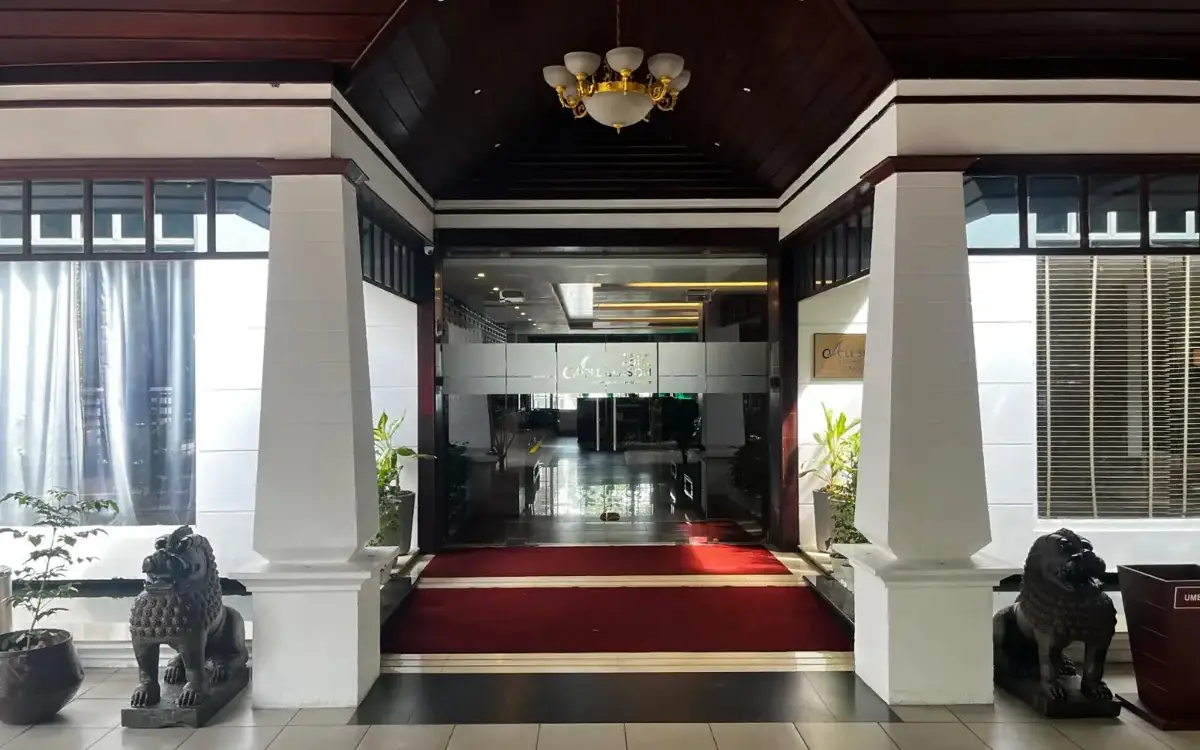
Hotel in Kollam town. Luxury beach hotel and convention centre · Kollam Beach, Hotel, Convention centre.
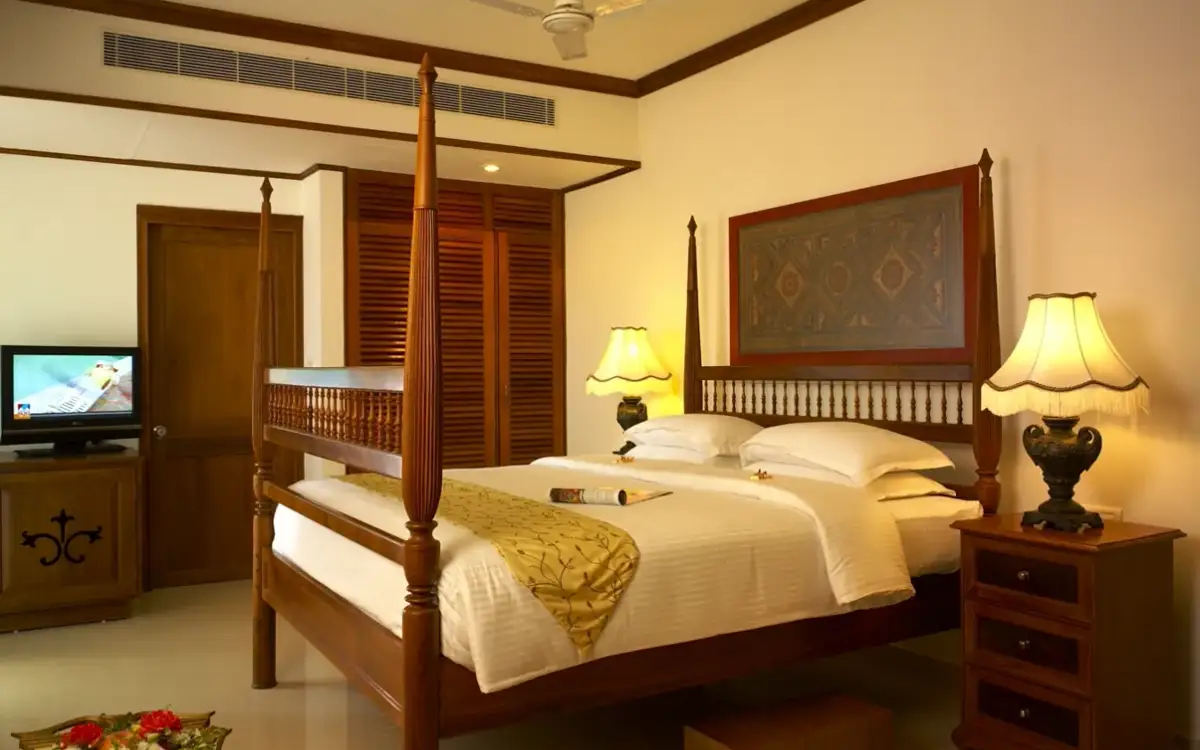
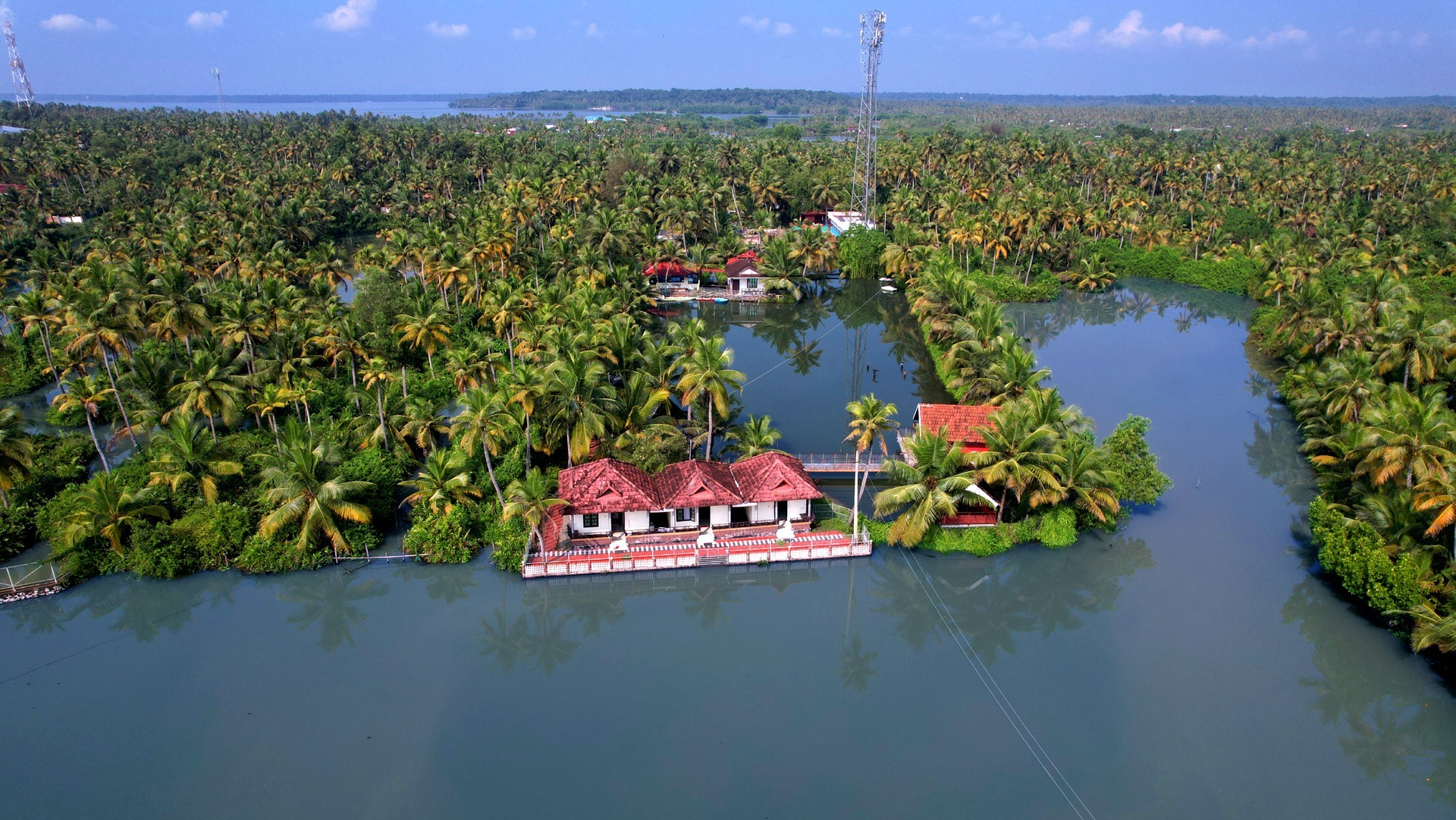
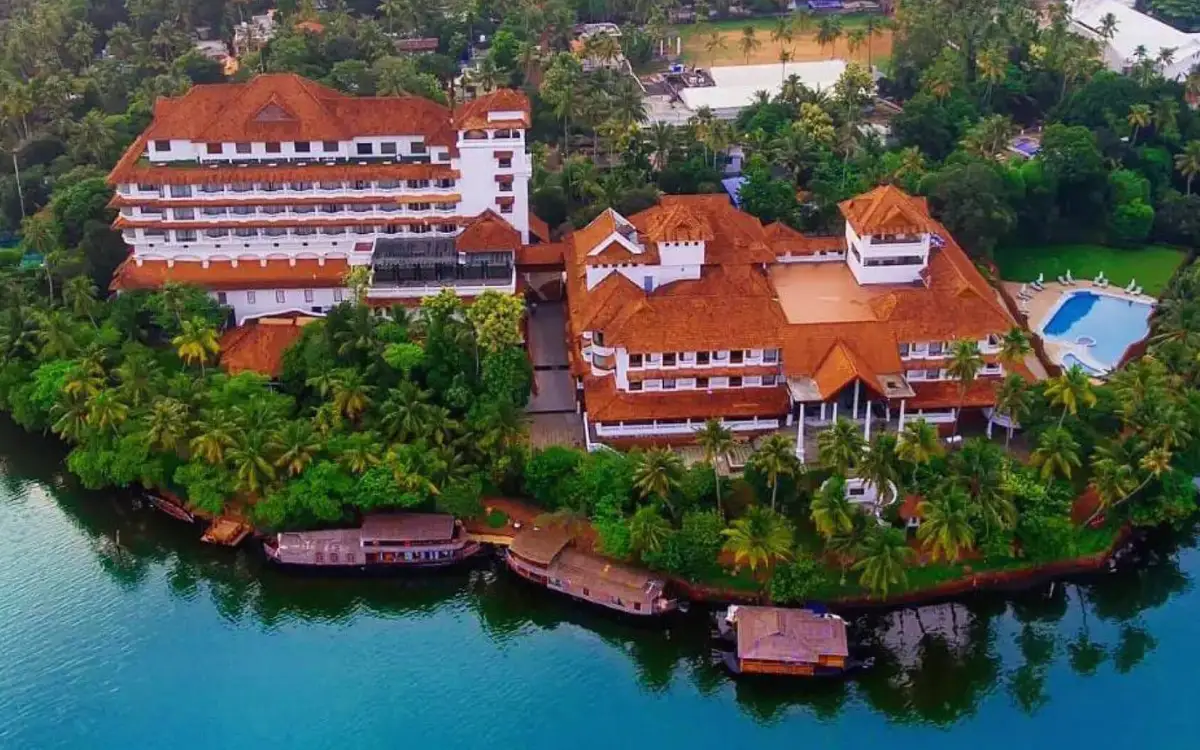
The Leela Ashtamudi is a lakefront heritage resort at Thevally Bridge, with several room types, houseboat categories and on-site dining. Its correct hotel entrance is at Thevally/Mathilil, separate from the Raviz corporate-office address previously displayed. Compare the named room or houseboat, lake view, meals, transfer, activity inclusions, total price and cancellation terms. The operator's aerial photograph shows the whole property, not a promise that every room has the same view.
Modern budget hotel at Aadichanalloor on the Kollam–Thiruvananthapuram highway side of Kollam district, south of the town. It offers clean, value air-conditioned rooms with a restaurant and parking, a low-cost highway base for travellers passing through greater Kollam.
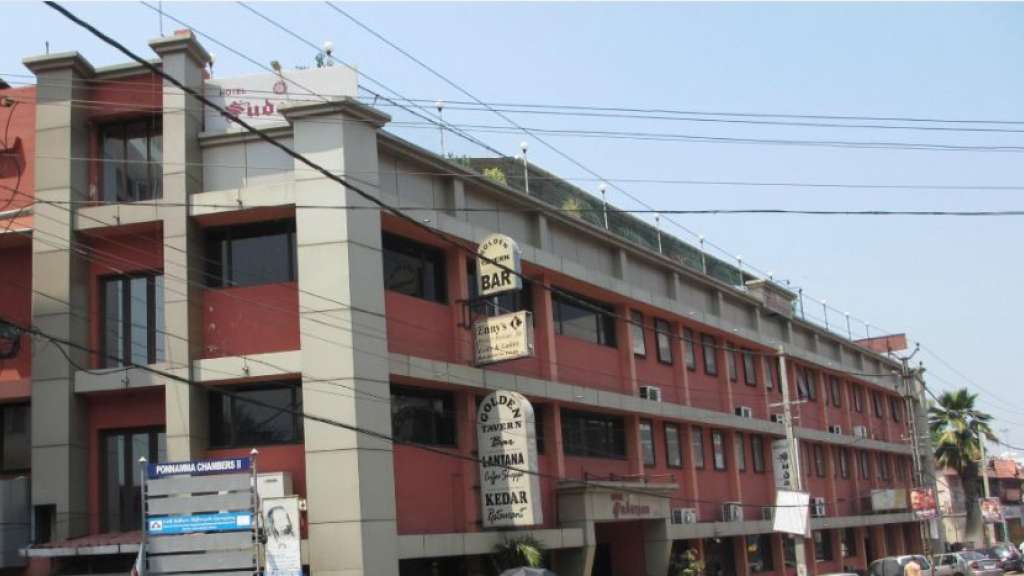
Long-running budget hotel at Parameswar Nagar in central Kollam, rated two-star class by travel directories. It offers value air-conditioned rooms with the Kedar multi-cuisine restaurant and Golden Tavern bar, a practical low-cost town-centre base for transit and business travellers.
Government-run KTDC Easy budget hotel in the Guest House compound at Ashramom, beside Ashtamudi Lake on the quiet edge of Kollam town. It offers simple, low-cost air-conditioned and non-air-conditioned rooms with a restaurant, run under the Kerala Tourism Development Corporation budget brand.
Long-running three-star-class hotel near the KSRTC bus station on Jetty Road in central Kollam, a short walk from the Ashtamudi backwater boat jetty. It offers 44 air-conditioned rooms, a multi-cuisine restaurant, bar, travel desk and boating assistance, a practical mid-range base for backwater and transit travellers.
Kerala Tourism-classified three-star hotel at Kottiyam on the Kollam–Thiruvananthapuram highway, in the southern part of Kollam district. It offers air-conditioned rooms, a multi-cuisine restaurant, bar, banquet hall and travel desk, a comfortable mid-range highway base a short drive south of Kollam town.
Kerala Tourism-classified three-star hotel on NH-47 directly opposite Kollam Railway Station, in the heart of Kollam town. It offers air-conditioned rooms, a multi-cuisine restaurant, bar, banquet and conference halls and 24-hour room service, a convenient mid-range base for rail and business travellers.
Fragrant Nature at Paravur is a lake-side resort outside central Kollam. Allow separate road journeys for Thangassery, city dining and onward rail travel.
D Fort Hotel is a Thangassery stay near the lighthouse neighbourhood. Check room and wellness packages separately from the lighthouse’s own visitor session.
A three-star resort set in a coconut palm forest on the banks of Ashtamudi Lake. Its 26 units include houseboats and floating cottages.
A budget backwater homestay on Munroe Island near Kalluvila Temple. Offers canoe and shikara trips, Ayurvedic massage, and Kerala home cooking.
Kollam houseboat operator with day cruises on Ashtamudi Lake and overnight boat options. Confirm the boarding point, route, boat and inclusions directly.
Ashtamudi resort with both floating and land-based accommodation. Compare the exact room category and booking eligibility; confirm dining and lake activities separately.
A central Kollam homestay near Sankers Hospital. Its own site publishes room choices and direct booking details.
An Asramam homestay for visitors who want a Kollam base away from the railway-station cluster. Ask about the current room and arrival route.
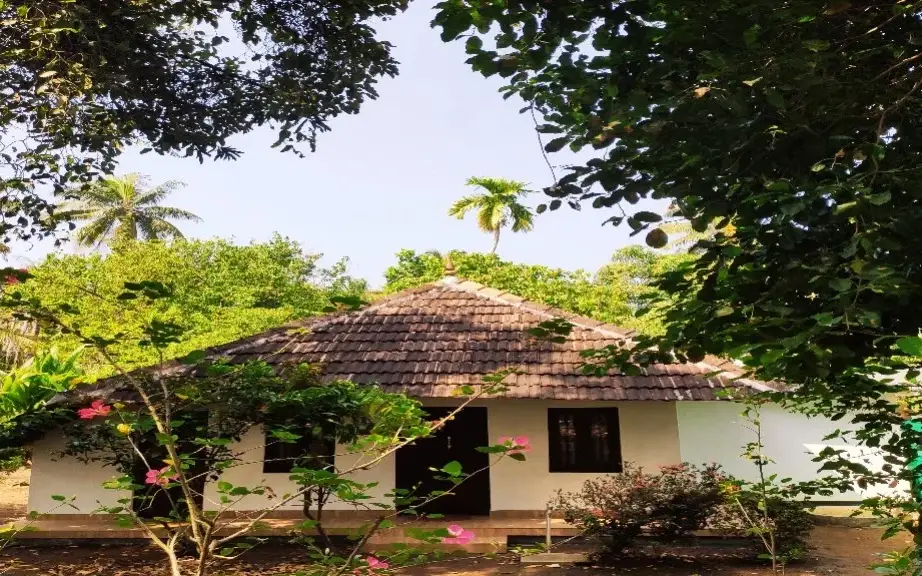
A restored ancestral home in Uliyakovil, Kollam. Ask the host how its room layout and access work for your group.
A Kureepuzha homestay beside Ashtamudi Lake. Ask the host about the room, meals, arrival route and any separately arranged boat trip.
Samiira is a small heritage-style resort at Sarayu Nagar in Asramam, beside Ashtamudi Lake. Its official site distinguishes two Heritage Cottages with separate living rooms from eight Lake Front Verandah Rooms with private verandahs. Choose the layout you need, then confirm the exact room, view, meal plan, transfer and total price. Kayaking and spa experiences are described by the property, but ask whether they operate and whether they are included in your booking. The property's own exterior photograph shows its veranda, not a guarantee of the room you will receive.
Book with the place itself. India’s cyber-crime coordination centre warned in April 2025 that convincing copies of hotel and pilgrimage booking sites are being pushed through sponsored search and social ads, taking payment for rooms the property never hears about. Use the contact and source details on each profile to confirm the exact business and booking channel. A directory entry or map pin alone does not establish an operator’s identity or current availability. Roampedia takes no commission and does not collect booking payments. If a booking page reached you through an ad, check the address bar against the property’s own site before you pay. Fraud can be reported on cybercrime.gov.in or on 1930.
Find food, accommodation and activities across Kollam town. Browse the guides for places to eat, stay and explore along your route.
13 more places around Kollam town. Open a guide to plan the visit and onward journey.
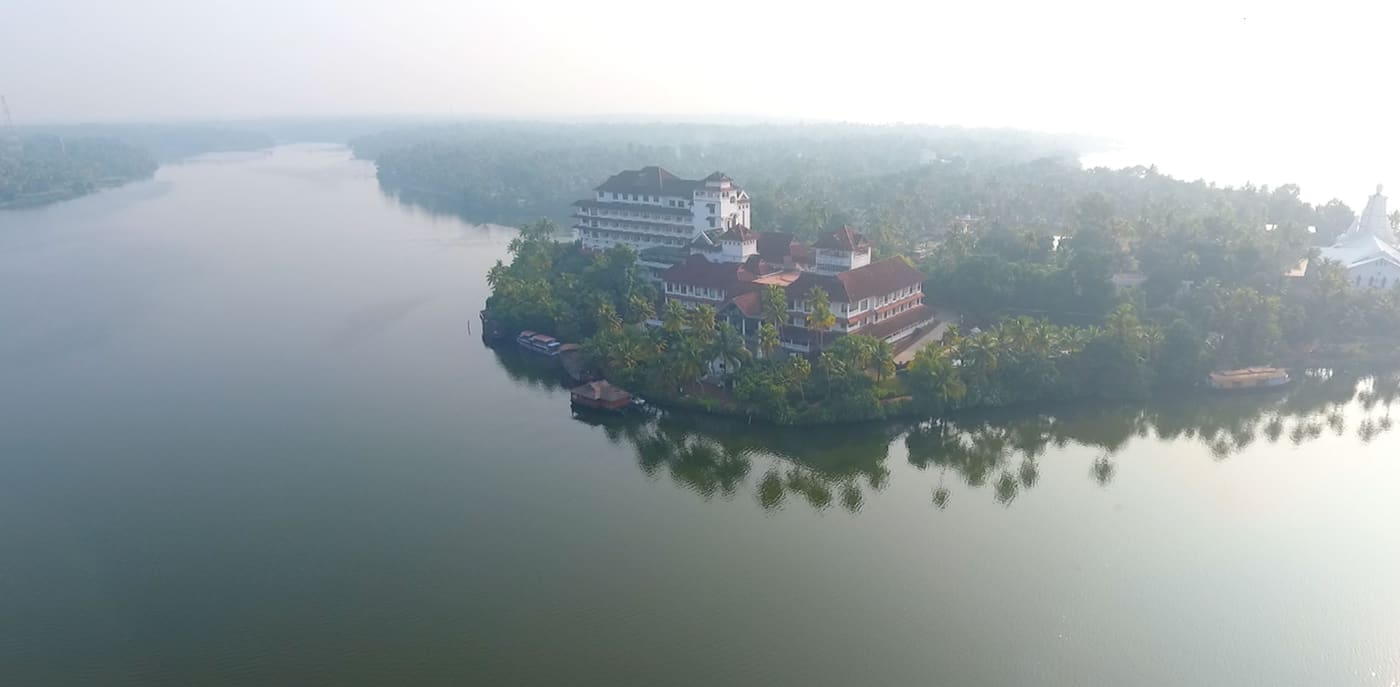
14.3 km · 19 min drive
Large palm-fringed backwater system and houseboat base around Kollam.
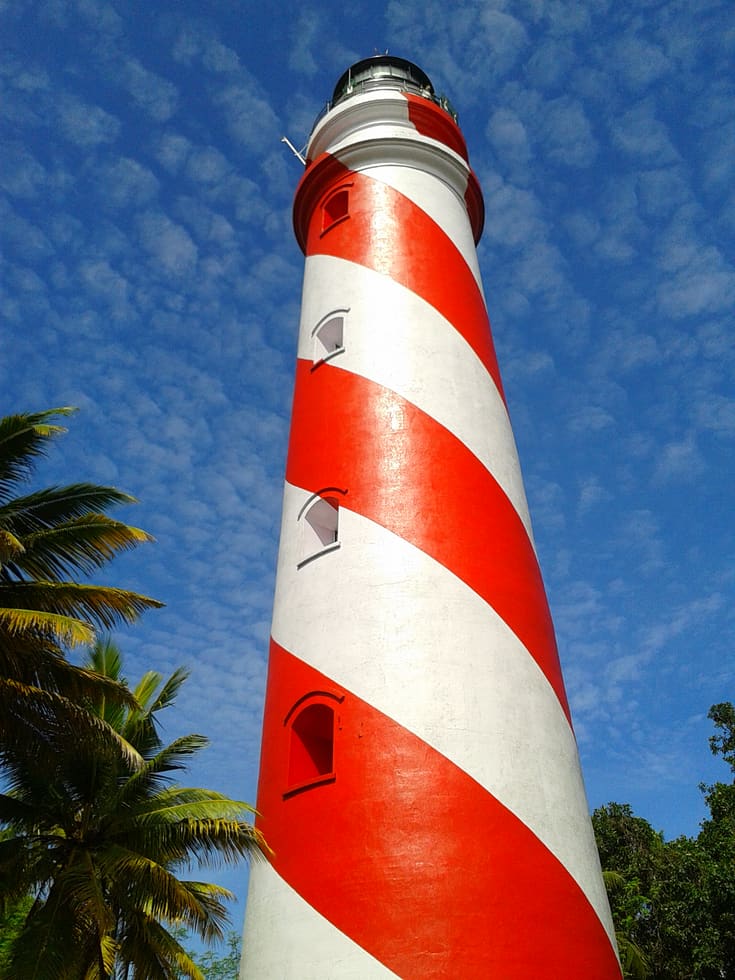
3.3 km · 5 min drive
Thangassery Lighthouse raises Kollam’s sea view above a historic coastal neighbourhood. The red-and-white tower is a working navigation landmark with a separate visitor session.
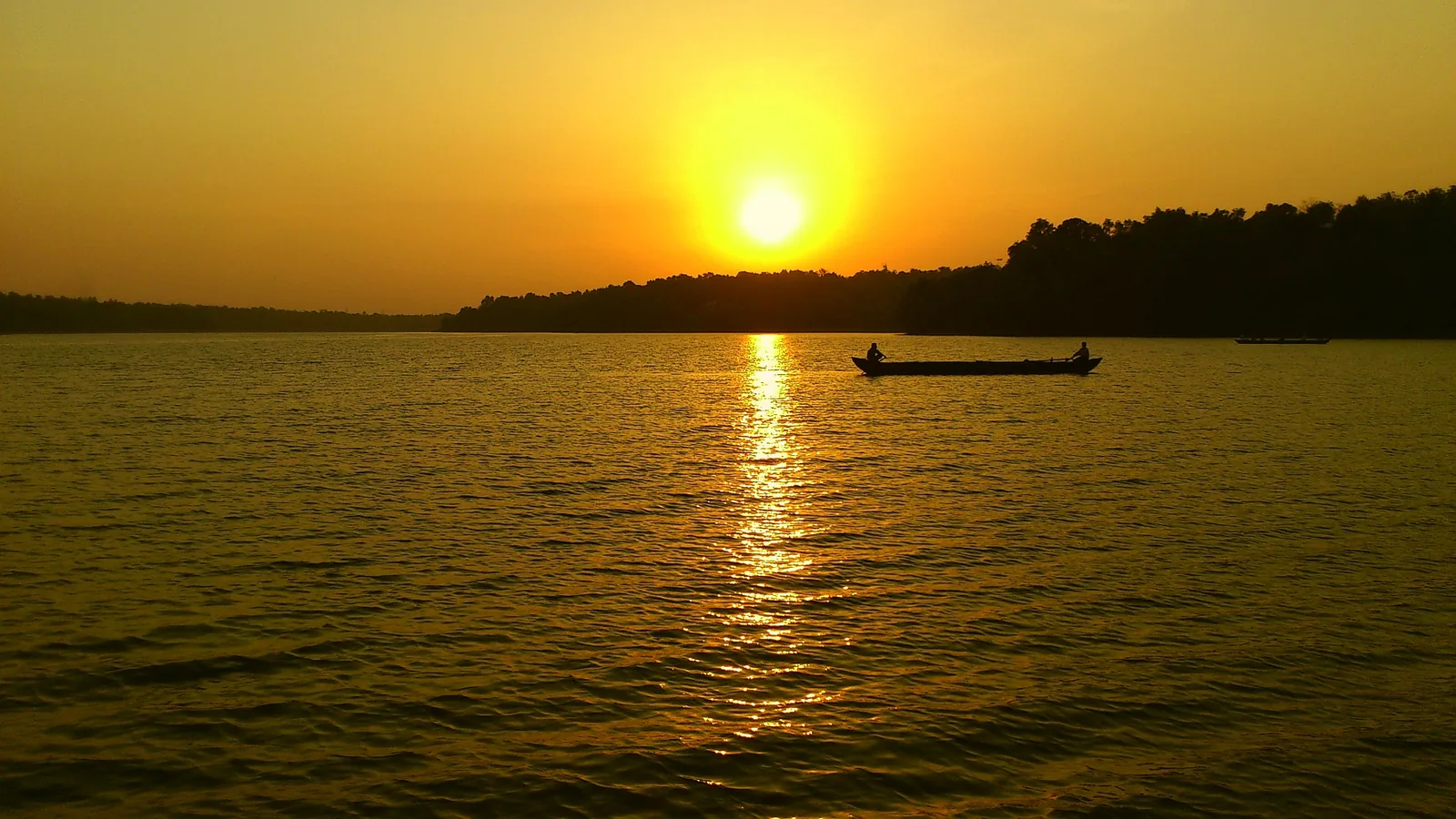
Kerala’s largest freshwater lake, a Ramsar wetland ringed by hills and a Sastha temple, north of Kollam.
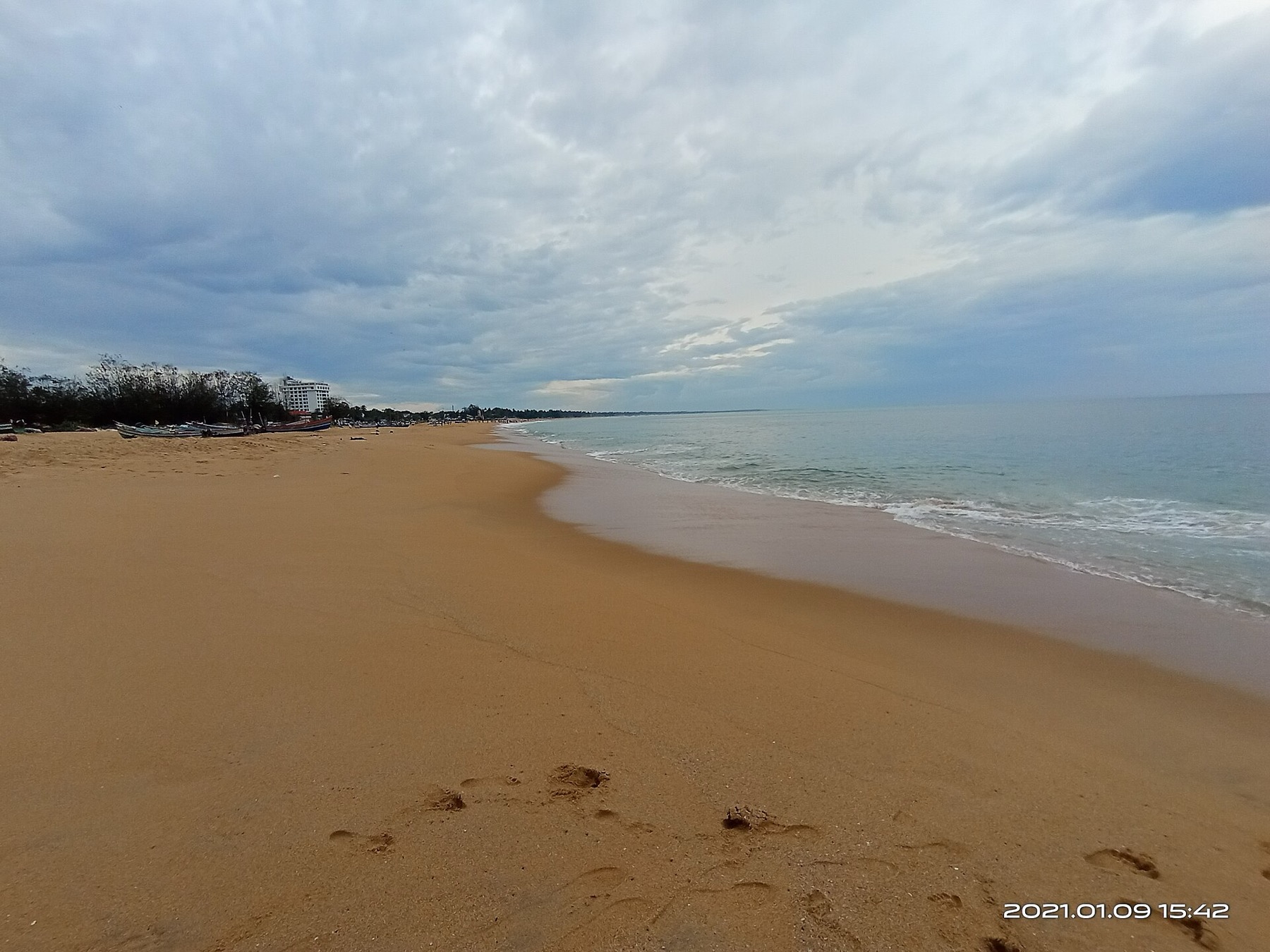
5.4 km · 6 min drive
The city’s Mahatma Gandhi beach and park on the Arabian Sea, a popular evening spot near Kollam town.
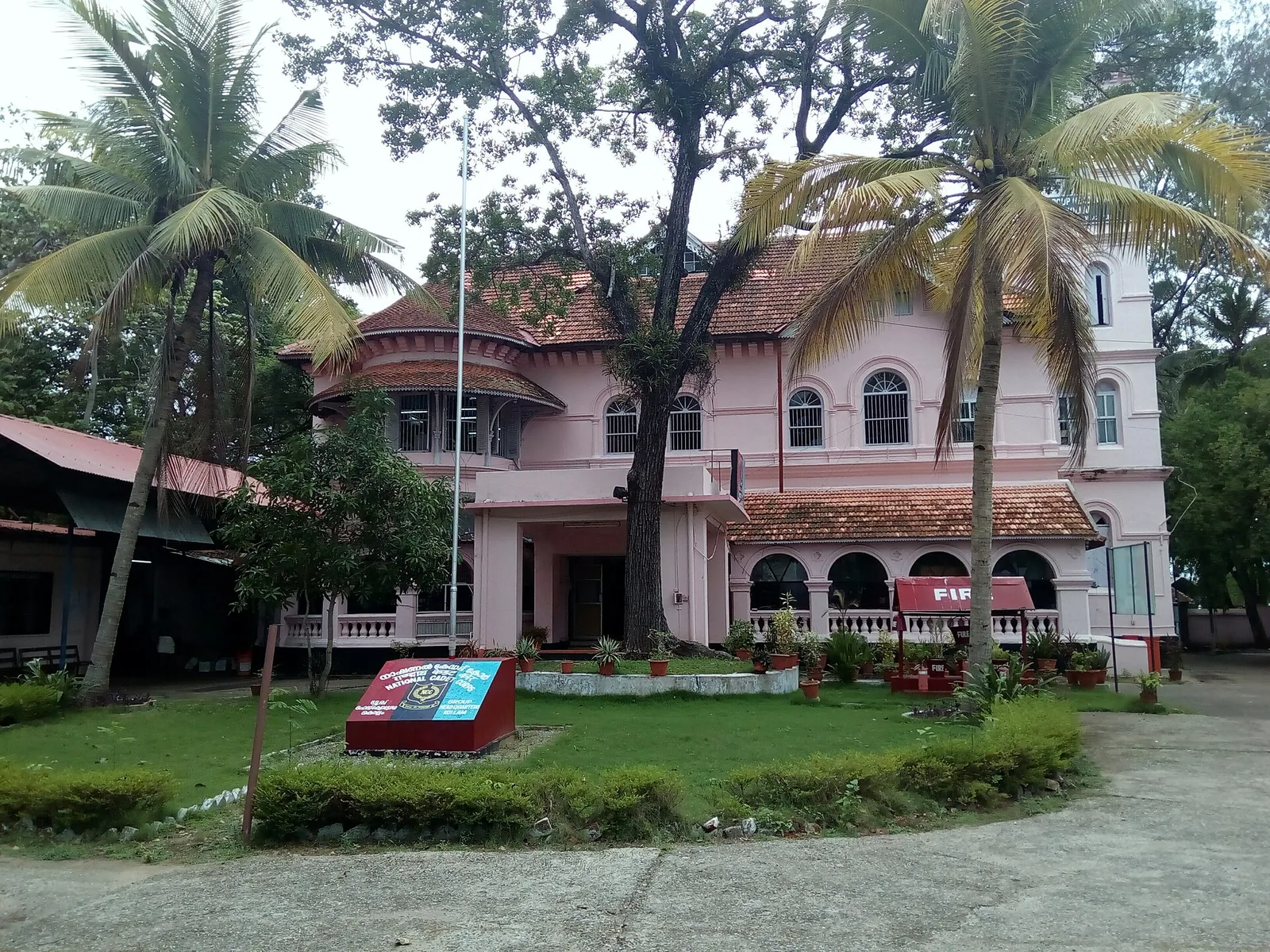
4.2 km · 5 min drive
A Travancore royal residence on the Ashtamudi shore in Kollam, built to be arrived at by boat and now a working NCC establishment — viewed from outside or from the water.
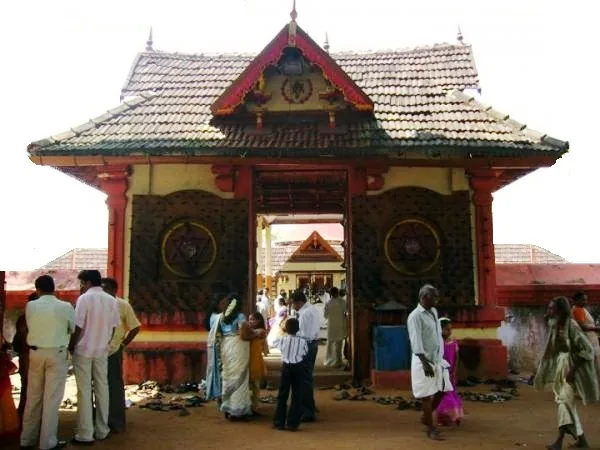
2.1 km · straight line
Anandavalleeswaram is an active Shiva temple in Kollam, with an Anandavally shrine and a ten-day annual festival in March or April. Ritual processions and cultural performances bring another dimension to the temple visit. Follow its worship session, admission and photography rules.
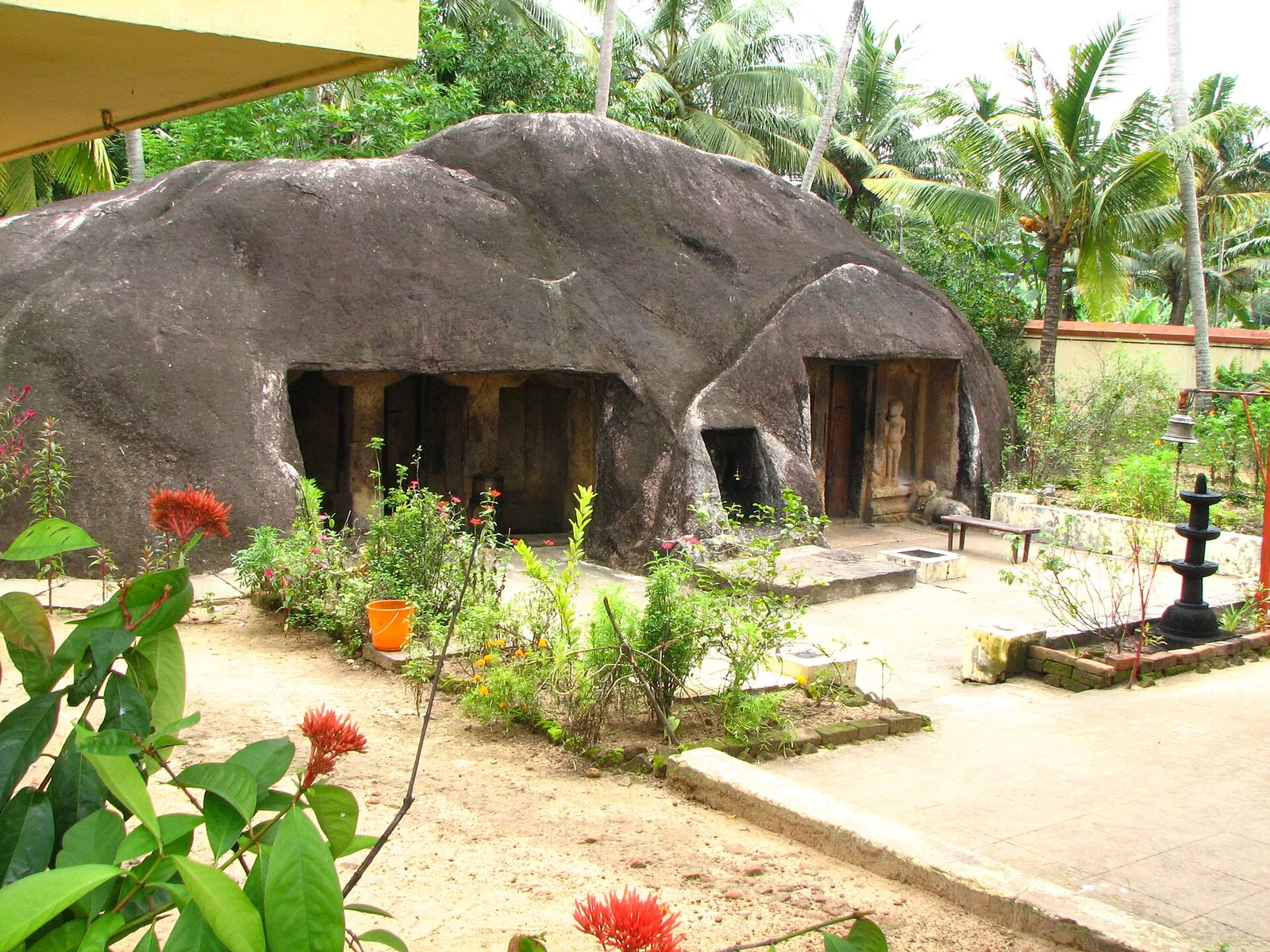
A monolithic rock-cut cave temple near Anchal/Kadakkal in south Kollam, carved with a Shiva shrine.
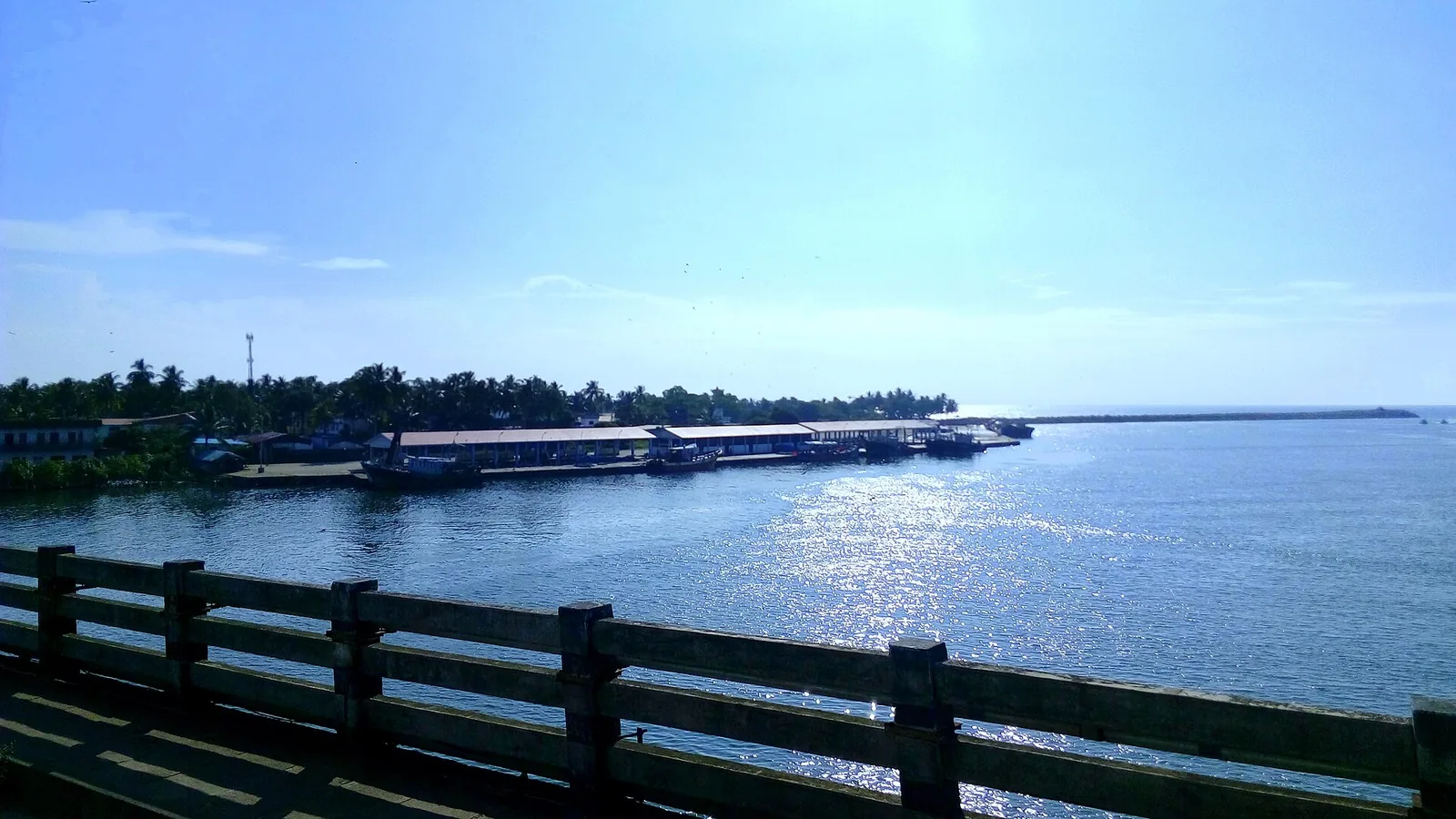
7.1 km · 10 min drive
By most accounts Kerala’s largest fishing harbour, at the mouth of Ashtamudi Lake about 9 km from Kollam town, and where Indian fishing was mechanised; two bridges cross the confluence and the early-morning auction is the sight to catch.
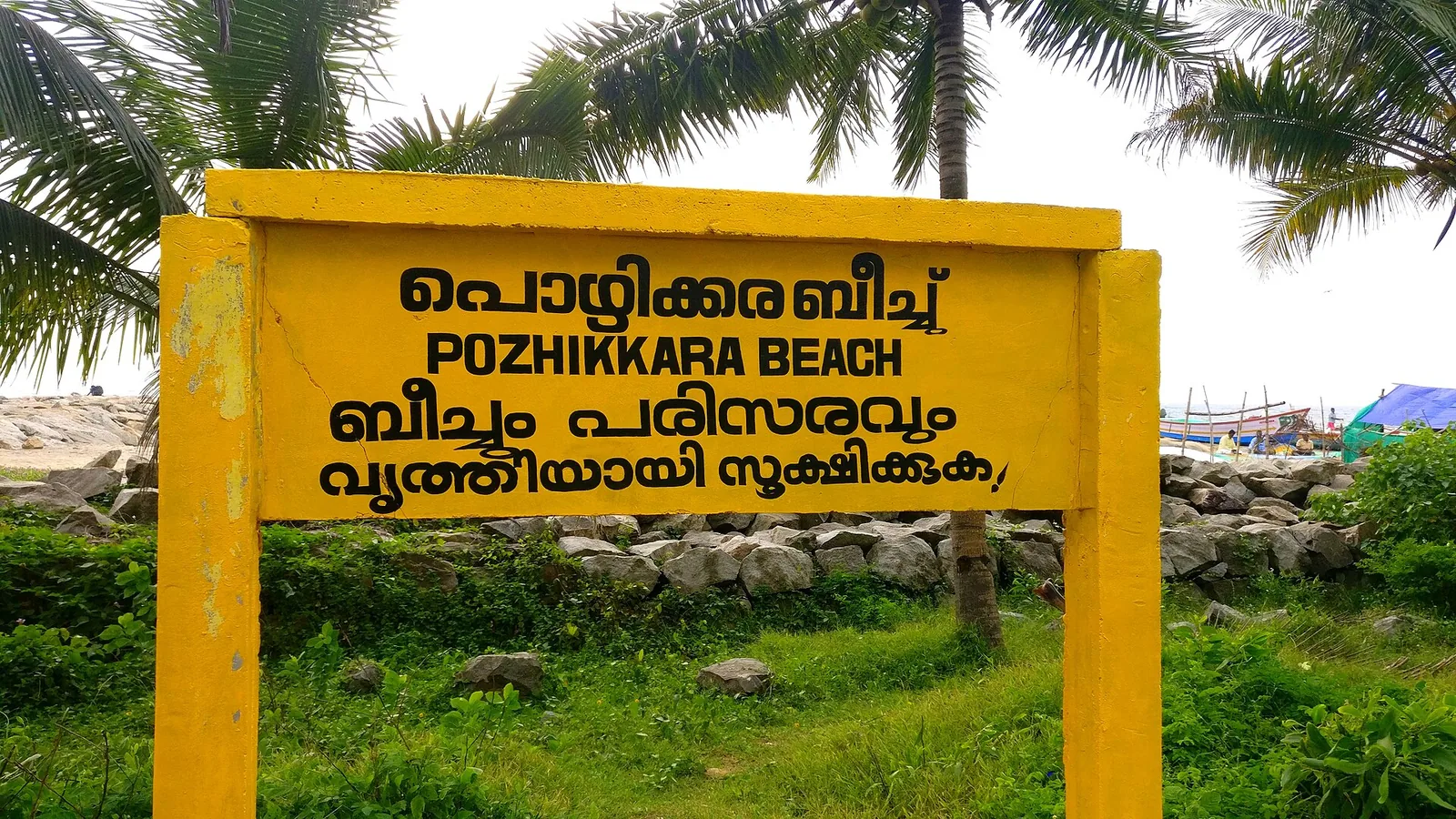
The estuary and beach at Paravur south-east of Kollam, where the Paravur backwaters meet the sea across a sandbar — a quiet spot known for its regulator bridge, the TS Canal and calm backwater-and-sea scenery.
3.5 km · straight line
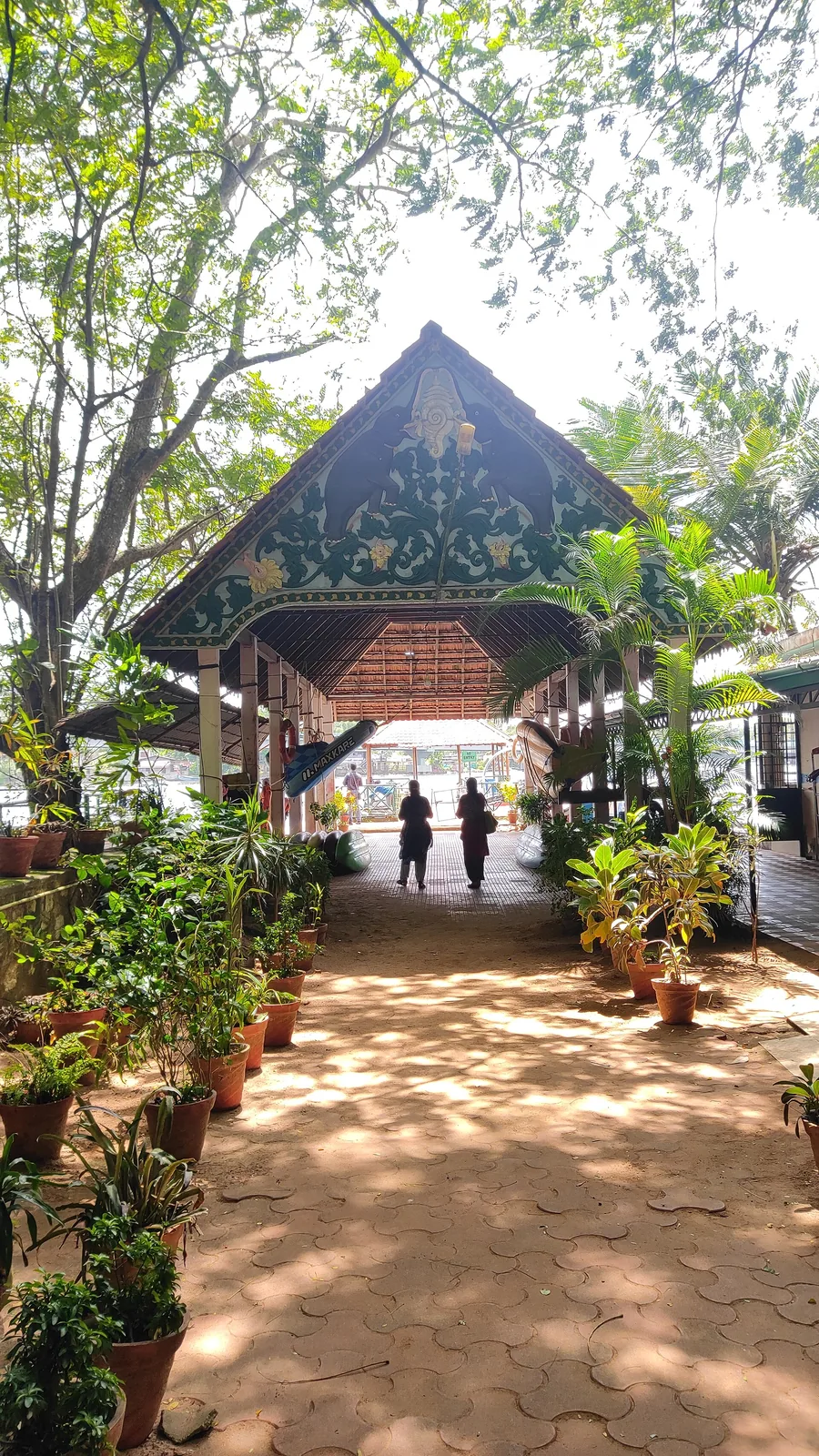
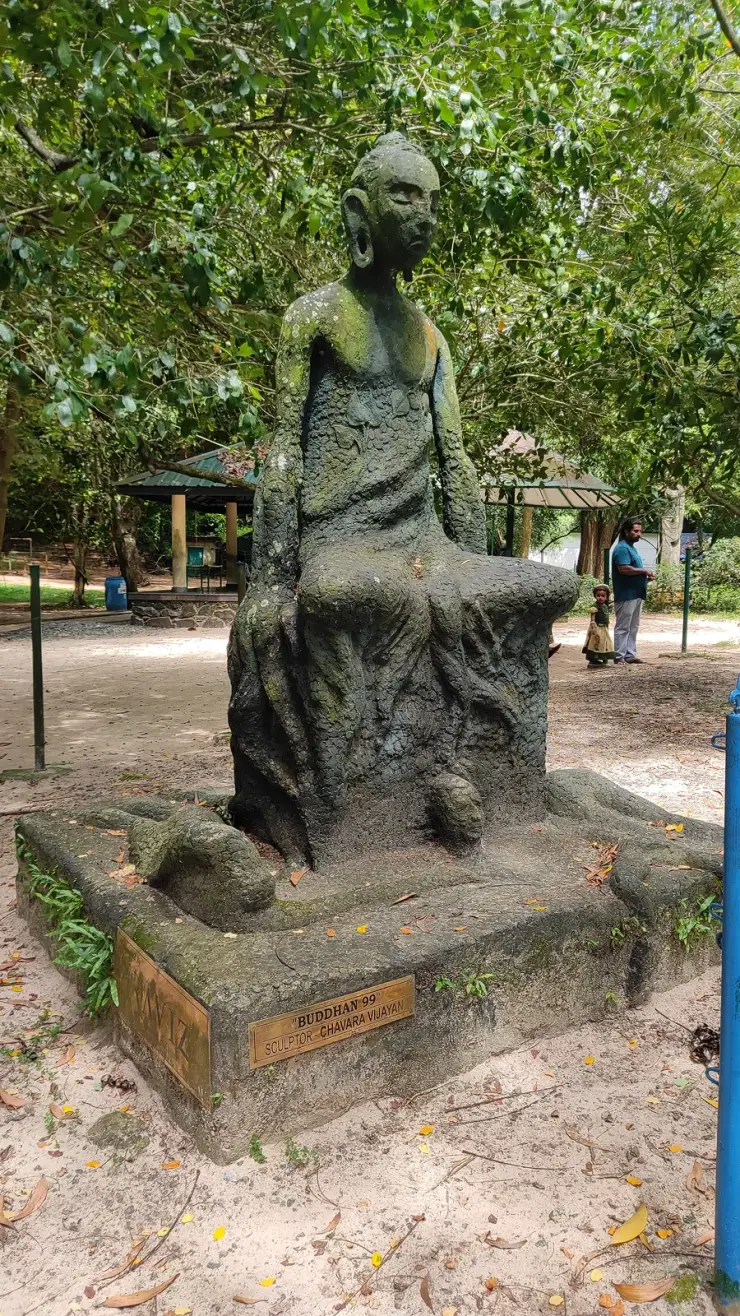
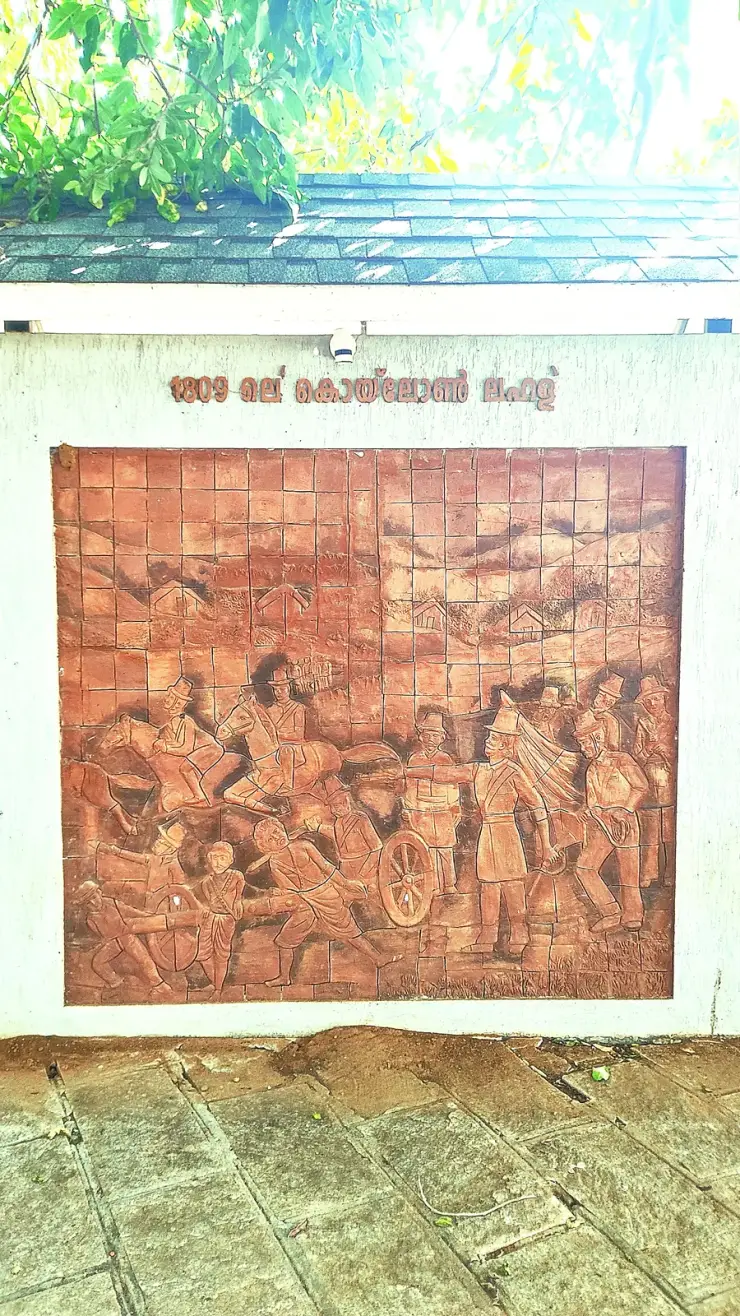
Forty-eight acres of municipal park on the Ashtamudi shore in the middle of Kollam, run by the DTPC — boating and kayaking off a painted jetty, ziplines and rope courses, a heritage walkway of terracotta reliefs, contemporary sculpture left behind by a 2012 festival, and a mangrove wetland with a state biodiversity heritage tag.
3.6 km · straight line
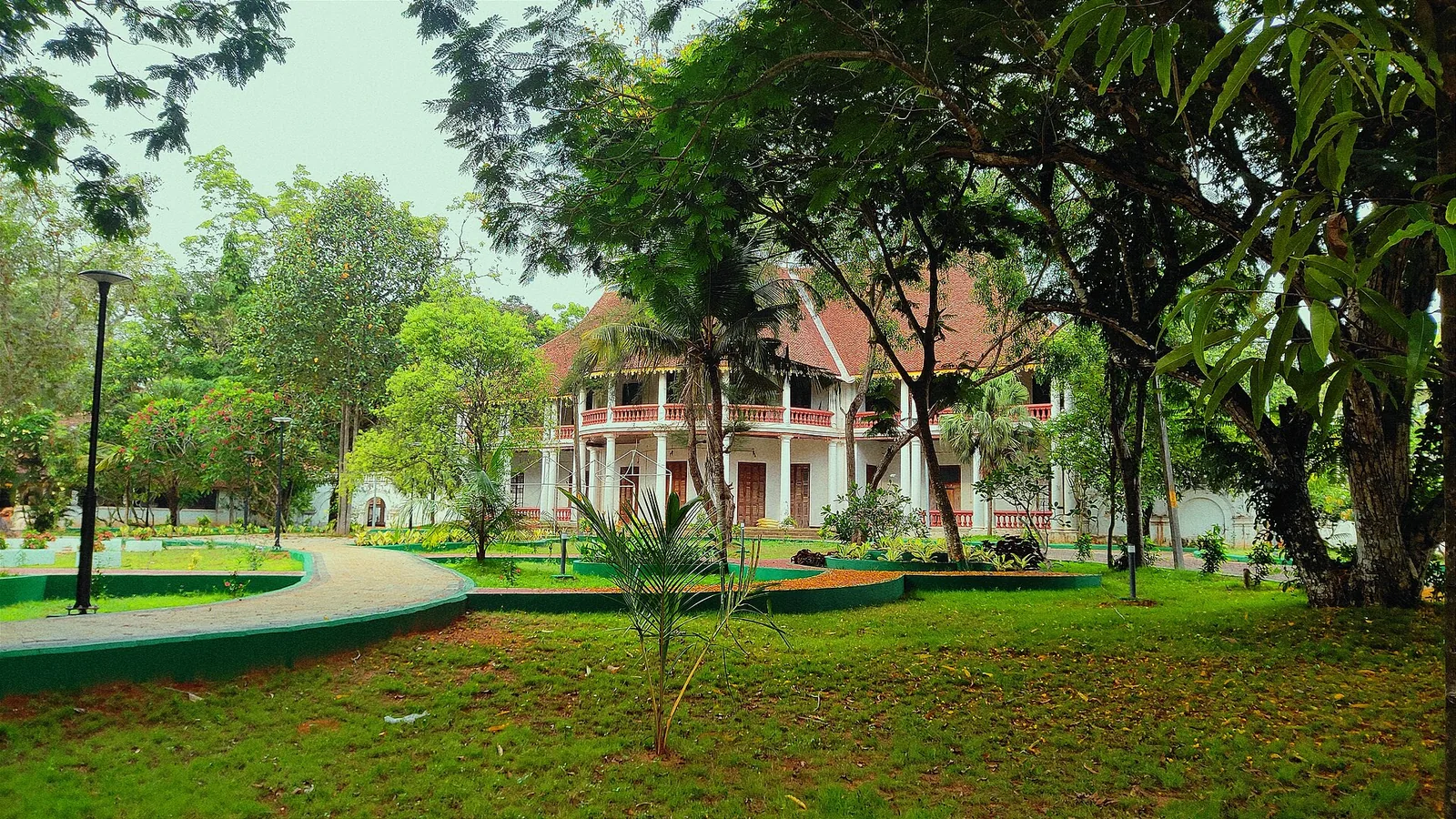
The former British Residency at Asramam survives as a government guest house beside Kollam’s backwater landscape. Its architecture is the attraction, with access governed by its working use.
4.5 km · straight line
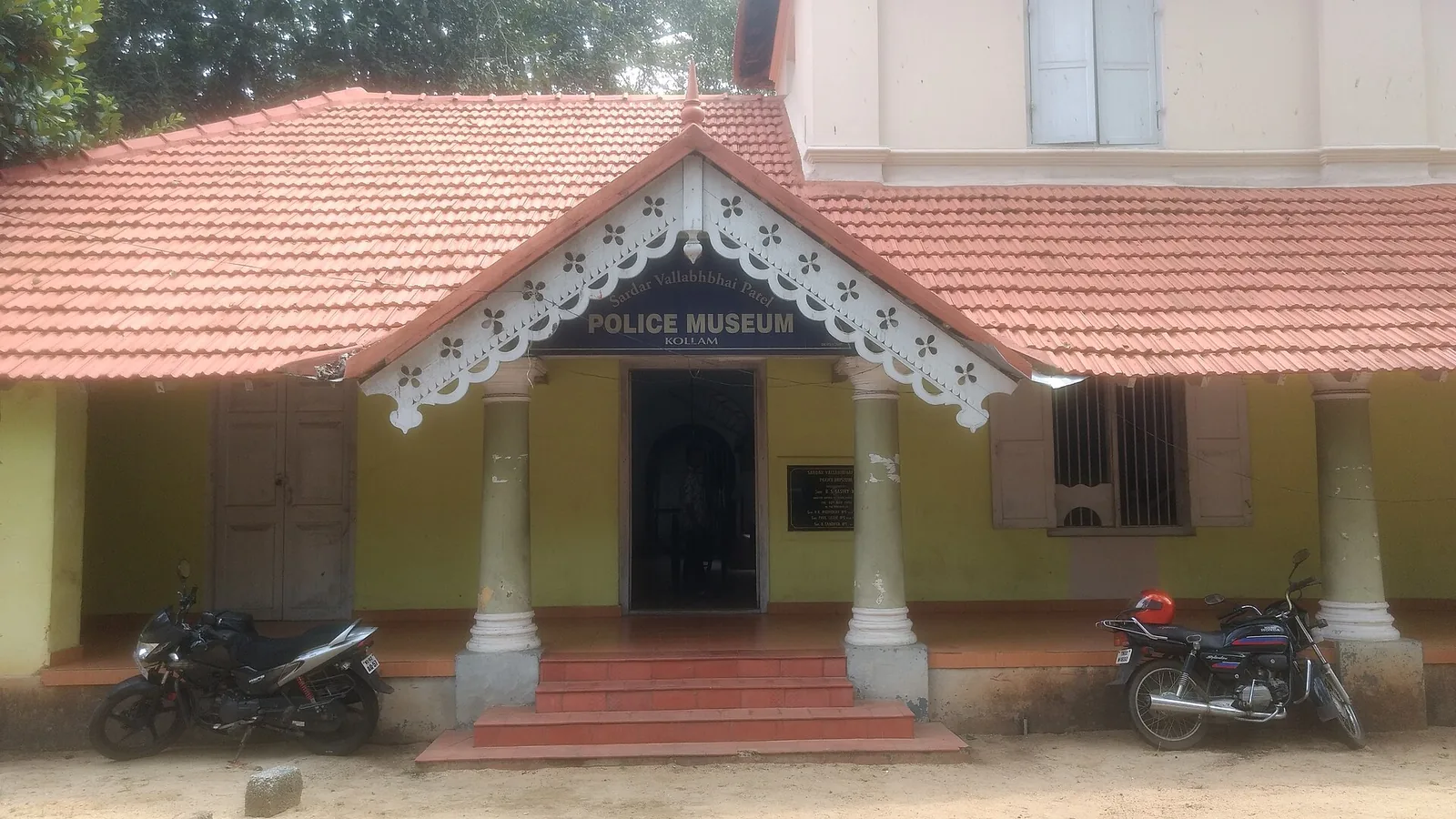
Kollam’s Sardar Vallabhbhai Patel Police Museum introduces the history of policing through arms, equipment and investigation displays. It offers an indoor history stop during a city outing. Check the museum’s session before choosing your day, and leave time to read the displays.
3.8 km · straight line
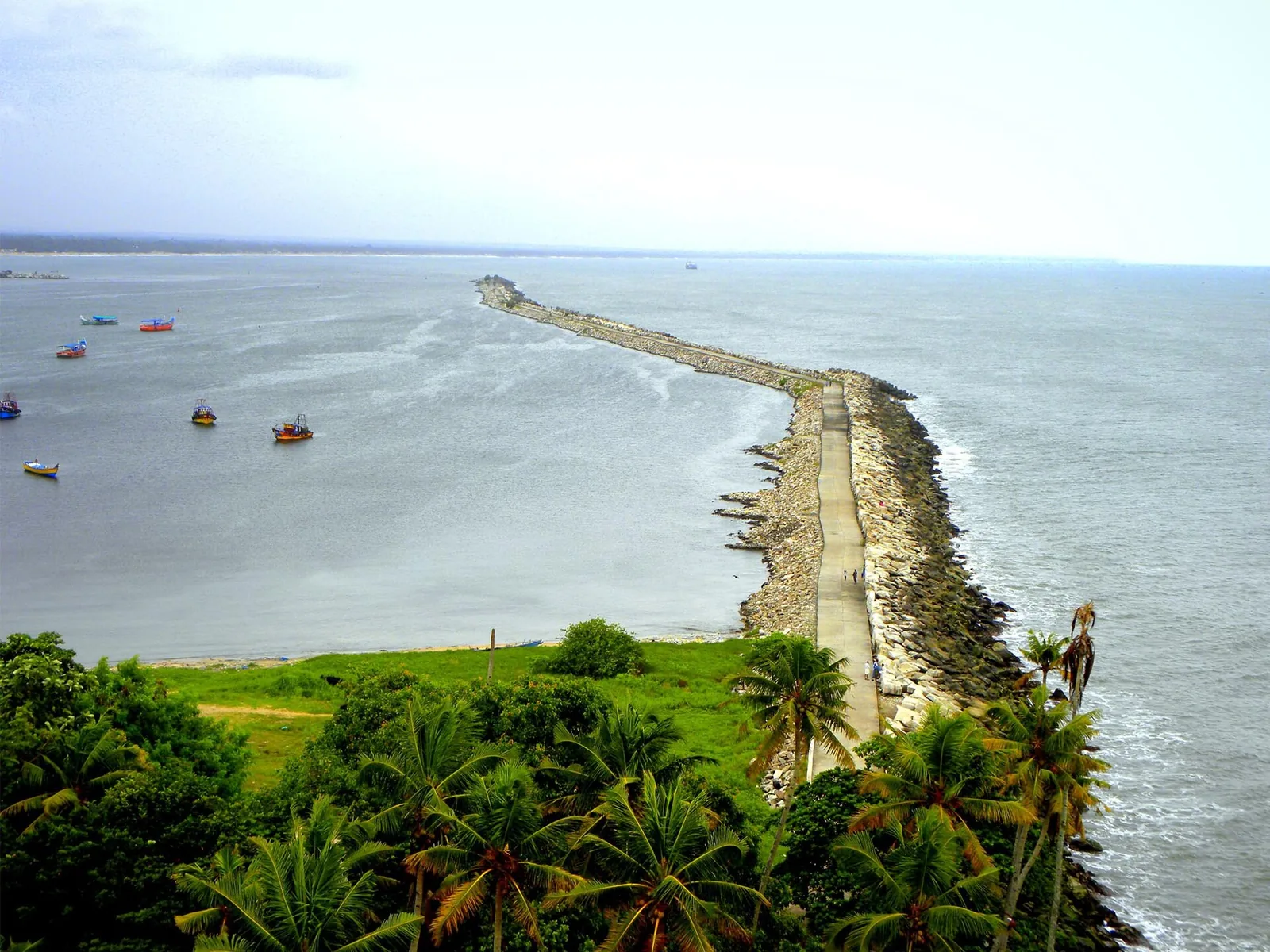
The working wharf and breakwater at Thangassery, conventionally founded in AD 825 — the event the Malayalam calendar counts from. A short cargo quay and a long public breakwater walk, above a seabed that has produced Tang and Song coins and Lower Palaeolithic tools.
Roampedia is commission-free — own or know a stay, eatery, guide or shop near Thirumullavaram Beach? Submit public business details for review.
Add a nearby businessEntry: No entry fee to the beach; any parking or small local charges are payable on site.
Dress code: This is a public Indian beach, so modest, comfortable clothing is advisable; if you swim, wear practical swimwear and be mindful of local sensibilities. Dress conservatively if you also visit the adjacent temple.
Festivals: Karkidaka Vavu (Vavu Bali) on the Karkidakam new-moon day (about July–August) is the beach’s biggest observance, when thousands gather at dawn to perform ancestral rites; expect large crowds and special arrangements that day (confirm the exact date locally).
Photography: Excellent for sunset and seascape photography, with the leaning coconut palms and, at low tide, the exposed rock as foregrounds. Be respectful and discreet when photographing worshippers, especially during Vavu Bali.
If you are travelling by bus or ferry, check the return service with the operator before setting out. Leave time to reach the stop or jetty after your visit.
Ask at the bus stand for the time of the last service back, not the next one. If you miss it, an auto or app cab is the fallback — agree the fare before you get in.
If you need step-free access, contact the site before travelling. Ask about a level entrance, steps along the route, the nearest drop-off point, seating and accessible toilets.
These services are listed within about 1.2 km of Thirumullavaram Beach. Walking distances follow mapped routes; access and opening hours can change. Other services may be closer but are not included here.
Published emergency and visitor-assistance contacts. For an immediate emergency, call 112. Shared Kerala contact sources checked 4 October 2026; publication does not establish a tested live response.
Anandavalleeswaram is an active Shiva temple in Kollam, with an Anandavally shrine and a ten-day annual festival in March or April. Ritual processions and cultural performances bring another dimension to the temple visit. Follow its worship session, admission and photography rules.
2.1 km · straight lineThangassery Lighthouse raises Kollam’s sea view above a historic coastal neighbourhood. The red-and-white tower is a working navigation landmark with a separate visitor session.
3.3 km · 5 min driveForty-eight acres of municipal park on the Ashtamudi shore in the middle of Kollam, run by the DTPC — boating and kayaking off a painted jetty, ziplines and rope courses, a heritage walkway of terracotta reliefs, contemporary sculpture left behind by a 2012 festival, and a mangrove wetland with a state biodiversity heritage tag.
3.5 km · straight lineThe former British Residency at Asramam survives as a government guest house beside Kollam’s backwater landscape. Its architecture is the attraction, with access governed by its working use.
3.6 km · straight lineThe working wharf and breakwater at Thangassery, conventionally founded in AD 825 — the event the Malayalam calendar counts from. A short cargo quay and a long public breakwater walk, above a seabed that has produced Tang and Song coins and Lower Palaeolithic tools.
3.8 km · straight lineA Travancore royal residence on the Ashtamudi shore in Kollam, built to be arrived at by boat and now a working NCC establishment — viewed from outside or from the water.
4.2 km · 5 min driveKollam’s Sardar Vallabhbhai Patel Police Museum introduces the history of policing through arms, equipment and investigation displays. It offers an indoor history stop during a city outing. Check the museum’s session before choosing your day, and leave time to read the displays.
4.5 km · straight lineThe city’s Mahatma Gandhi beach and park on the Arabian Sea, a popular evening spot near Kollam town.
5.4 km · 6 min driveBy most accounts Kerala’s largest fishing harbour, at the mouth of Ashtamudi Lake about 9 km from Kollam town, and where Indian fishing was mechanised; two bridges cross the confluence and the early-morning auction is the sight to catch.
7.1 km · 10 min drive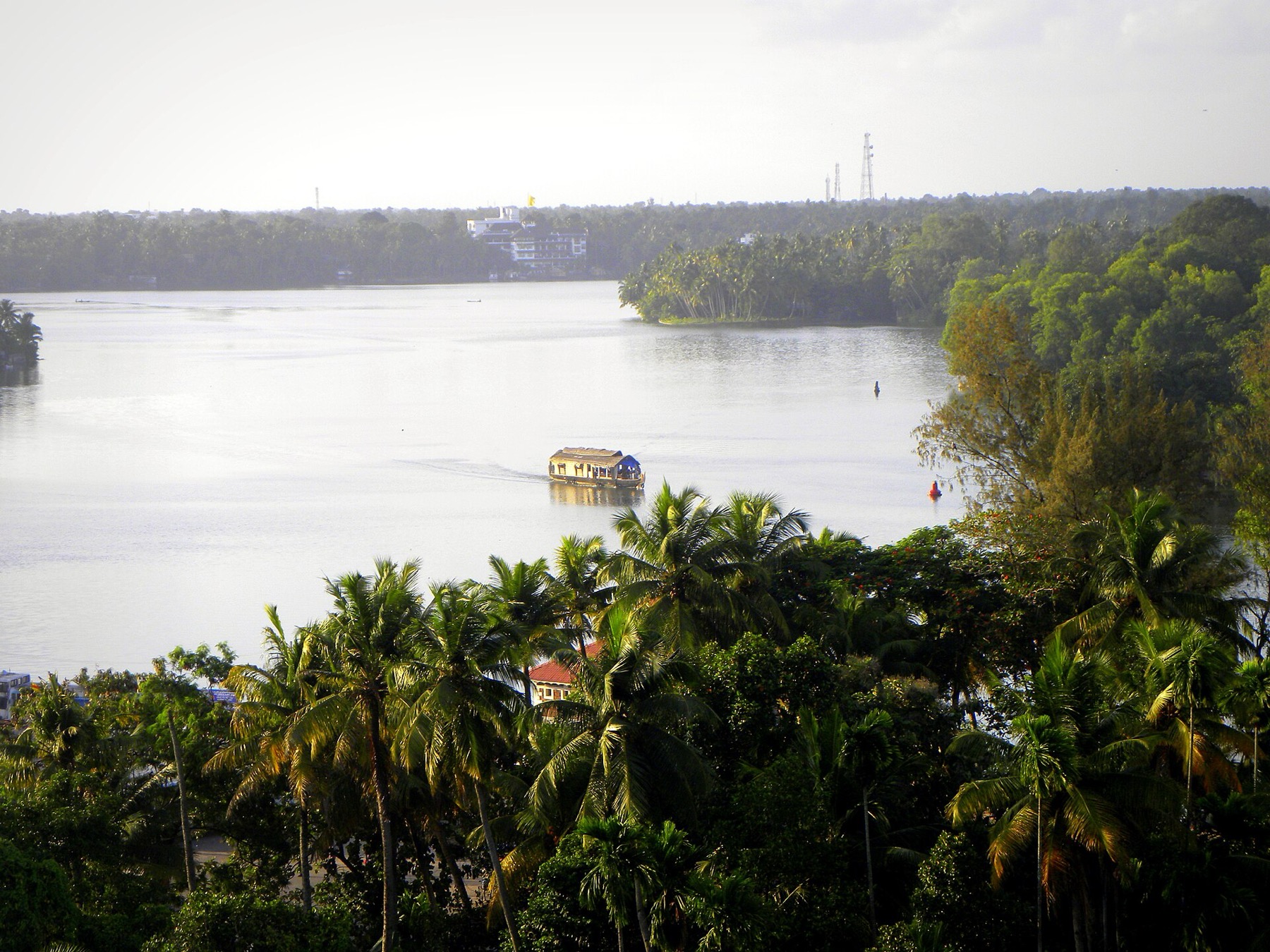
The open-water outlooks on the Munroe Island and Perumon side of Ashtamudi, where the lake widens out — the wide views the canal trips themselves do not give you.
9.5 km · straight line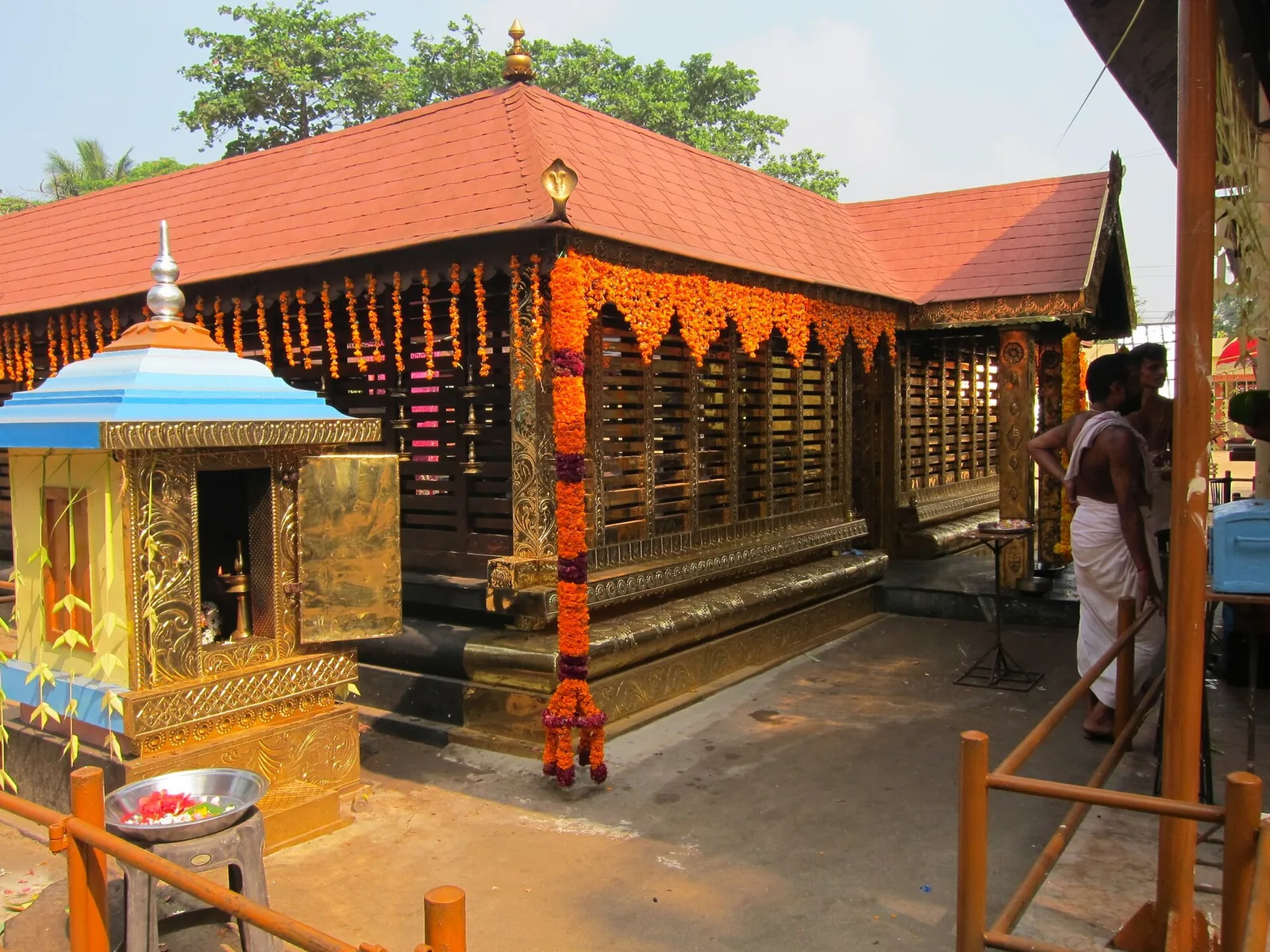
A Devi temple at Chavara north of Kollam, known across Kerala for Chamayavilakku — the two nights in Meenam when men and boys dress in saris and carry lamps in procession to the goddess, re-enacting the cowherd boys of its founding legend.
9.7 km · straight lineLarge palm-fringed backwater system and houseboat base around Kollam.
14.3 km · 19 min driveRoad and walking figures are route estimates, with travel times dependent on access, traffic and conditions. Figures marked “straight line” show direct separation and do not describe a road or walking route. Fare estimates use Kerala’s 26 April 2022 auto/taxi notification and exclude waiting, night and applicable one-way surcharges. Confirm the current meter or operator quote before travelling. Routing: © openrouteservice.org by HeiGIT | Map data © OpenStreetMap contributors
Nearby toilets, pharmacies, ATMs, seating and vets are community-mapped and may be incomplete or out of date. Map data © OpenStreetMap contributors | Walking times © openrouteservice.org by HeiGIT
It lies on the coast about 6 km north of Kollam (Quilon) town in Kollam district, Kerala — an easy short drive or bus ride from the city.
Do not plan to wade out to Njarazhcha Para. Older photographs show a concrete groyne, but they do not establish that it is currently open or safe to walk on. View the rock from the shore and follow posted access warnings; current lifeguard cover and sea conditions are not verified here.
This page cannot establish current swimming safety. Calm-looking water can still have hazardous currents, and current lifeguard cover has not been verified. Plan a shore visit, follow posted warnings and keep children away from the water and slippery rocks.
On the new-moon day of the Malayalam month Karkidakam (about July–August), thousands of Hindus gather on the beach at dawn to perform Vavu Bali — offering rice balls and water to honour departed ancestors, led by priests. It is one of the region’s major venues for the ritual (confirm the exact date locally each year).
A relaxed two to three hours is typical — enough for a walk, a picnic in the coconut shade and the sunset. Longer if you time it around low tide and add the nearby temple.
The Thirumullavaram Maha Vishnu temple is about 280 metres inland, a few minutes' walk, and Kollam town, the sprawling Ashtamudi Lake and its backwater houseboat and canoe cruises are all a short distance away, making an easy half-day out.
November to February for dry weather; avoid rough-sea days during monsoon warnings.
Entry: No entry fee to the beach; any parking or small local charges are payable on site. Timings: Open public beach, accessible through the day; daylight hours are safest and sunset is the highlight. There are no permanent lifeguards, so avoid the water after dark and in rough conditions.
Base yourself in Kollam town or a nearby town in Kollam, then confirm the last-mile route locally before leaving. Arrive before sunset if you want photos and a calmer walk; beach roads can slow down in the evening. If the visit depends on forest, temple, boat, ferry, weather or seasonal access, check the official/local rule on the day before travel.
1 to 3 hours, longer if staying for food or sunset.
Nearby you can pair Anandavalleeswaram Temple (2.1 km, approximate straight-line separation), Thangassery Lighthouse (3.3 km, route estimate), Asramam Adventure Park (3.5 km, approximate straight-line separation), British Residency, Asramam (3.6 km, approximate straight-line separation).
Do not swim during rough-sea warnings. Avoid isolated stretches after dark unless with a trusted local/operator.
Written about Thirumullavaram Beach itself — its history, its legends and the arguments about them.
These guides explore Kollam town and the surrounding area. Choose a visit that fits your interests, allowing separately for travel between stops.
Route-level itineraries and practical guides for the rest of Kerala.
Photographs: Ambadyanands (CC BY-SA 4.0), Arunsunilkollam (CC BY-SA 3.0), Arunvrparavur (CC BY-SA 3.0). Wikimedia Commons.