Nedumkayam rainforest trek

Nedumkayam rainforest trek is the familiar search name for a forest visit near Karulai, east of Nilambur in Malappuram. The Forest Department currently lists a sightseeing package here: tree-lined approaches, the historic iron bridge and the Karimpuzha riverside form the practical visitor setting. Admission is not a general permit to walk into the surrounding forest.

Nedumkayam rainforest trek, Nilambur
Practical guide

Plan Nedumkayam rainforest trek

Who's going?Tailor Nedumkayam rainforest trek to your trip
Typetrek
AreaNilambur
DistrictMalappuram
Best timeChoose a daylight visit when the forest…
Time neededAllow two to three hours for an…
Entry₹50
Places to visit5Listed businesses16

Older tourism descriptions also mention a longer walk to Mundakadav waterfalls. Treat that as a separate permission question, not an activity included automatically with the current sightseeing ticket. The ordinary visit already has a distinct combination of forest scenery and the remains of a working forestry settlement.

The story

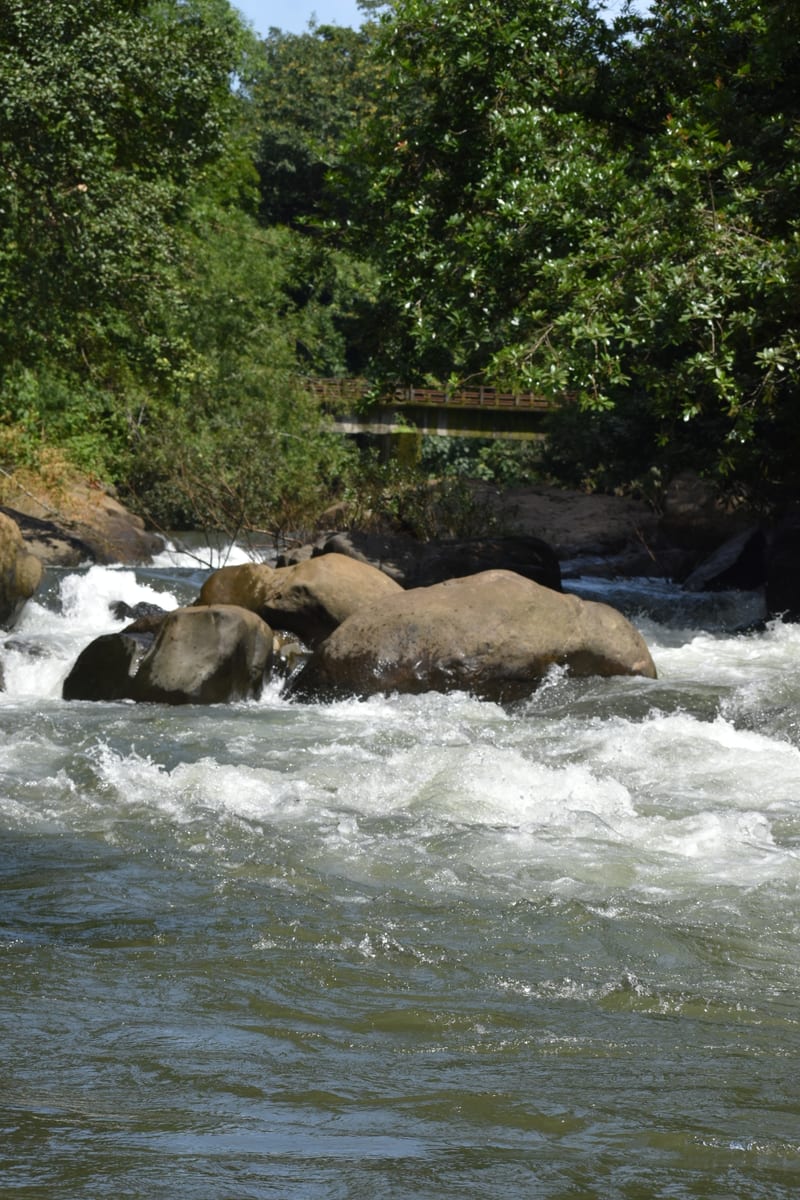
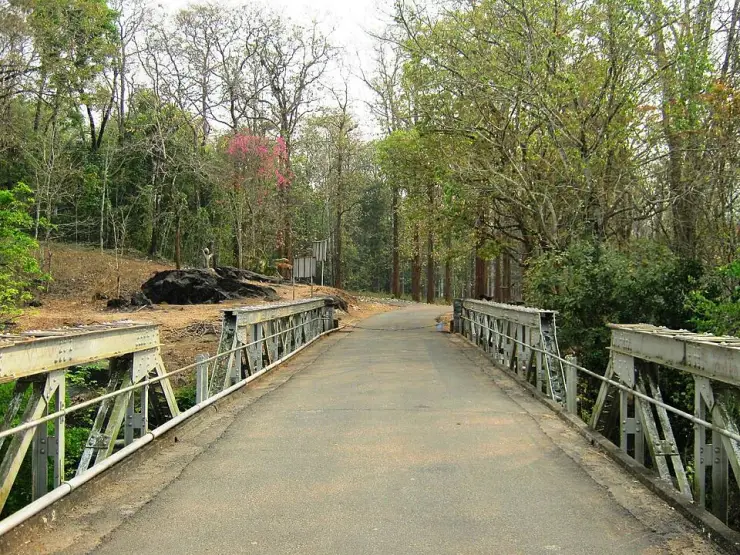
The bridge at Nedumkayam is a useful place to begin understanding the destination. Its metal sides frame a road continuing into trees; below, the river moves between rock and wooded banks. Transport, water and forest management meet in one small view.

The story of Nedumkayam rainforest trek

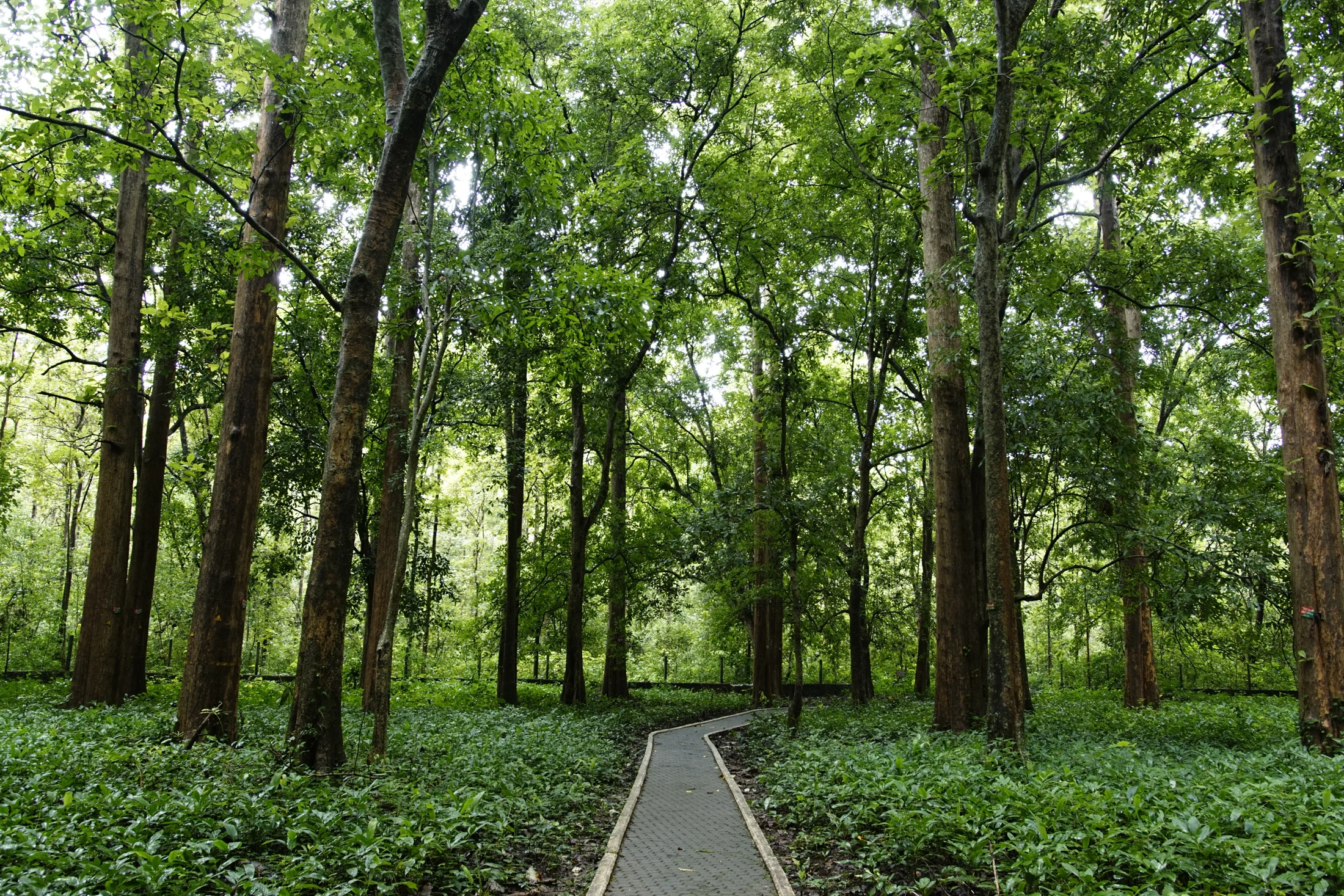
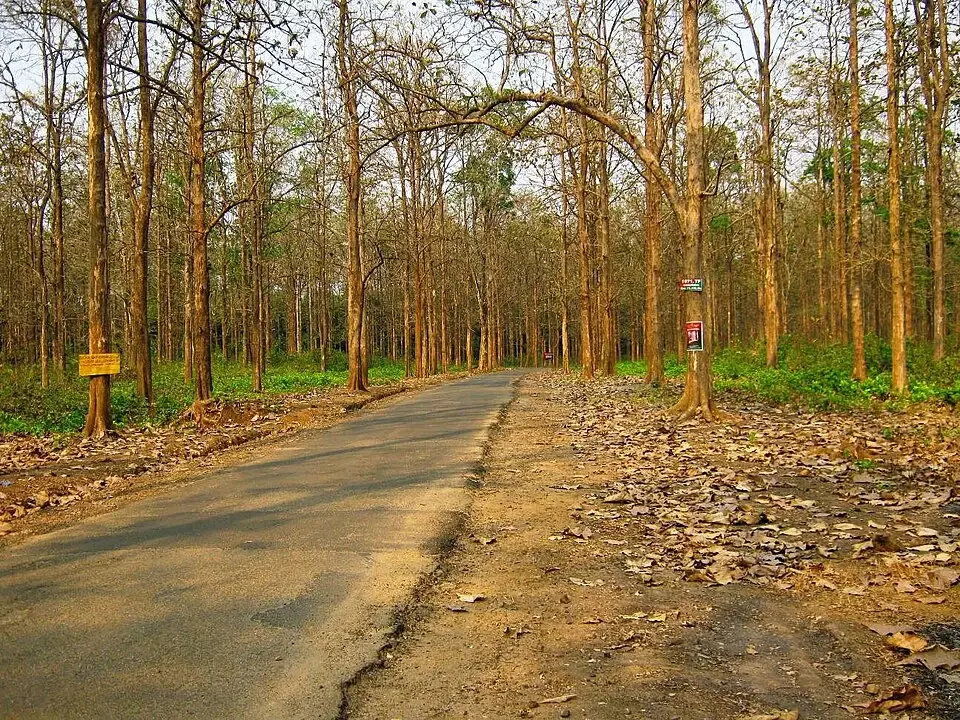
The road is part of the experience rather than a feature to edit out of it. Tall trunks stand close to the approach, with low vegetation and fallen leaves along the verge. In some stretches the view runs between relatively open stems; elsewhere bamboo and thicker growth interrupt it. These differences give a short visit more variety than the single label rainforest suggests.

The photographed dry-season approach is not uniformly dark or evergreen-looking. Sunlight reaches the road, many branches carry few leaves and the ground is brown with leaf litter. That scene belongs to Nedumkayam too. A traveller arriving outside the wettest season should not expect every frame to resemble dense, rain-soaked canopy.

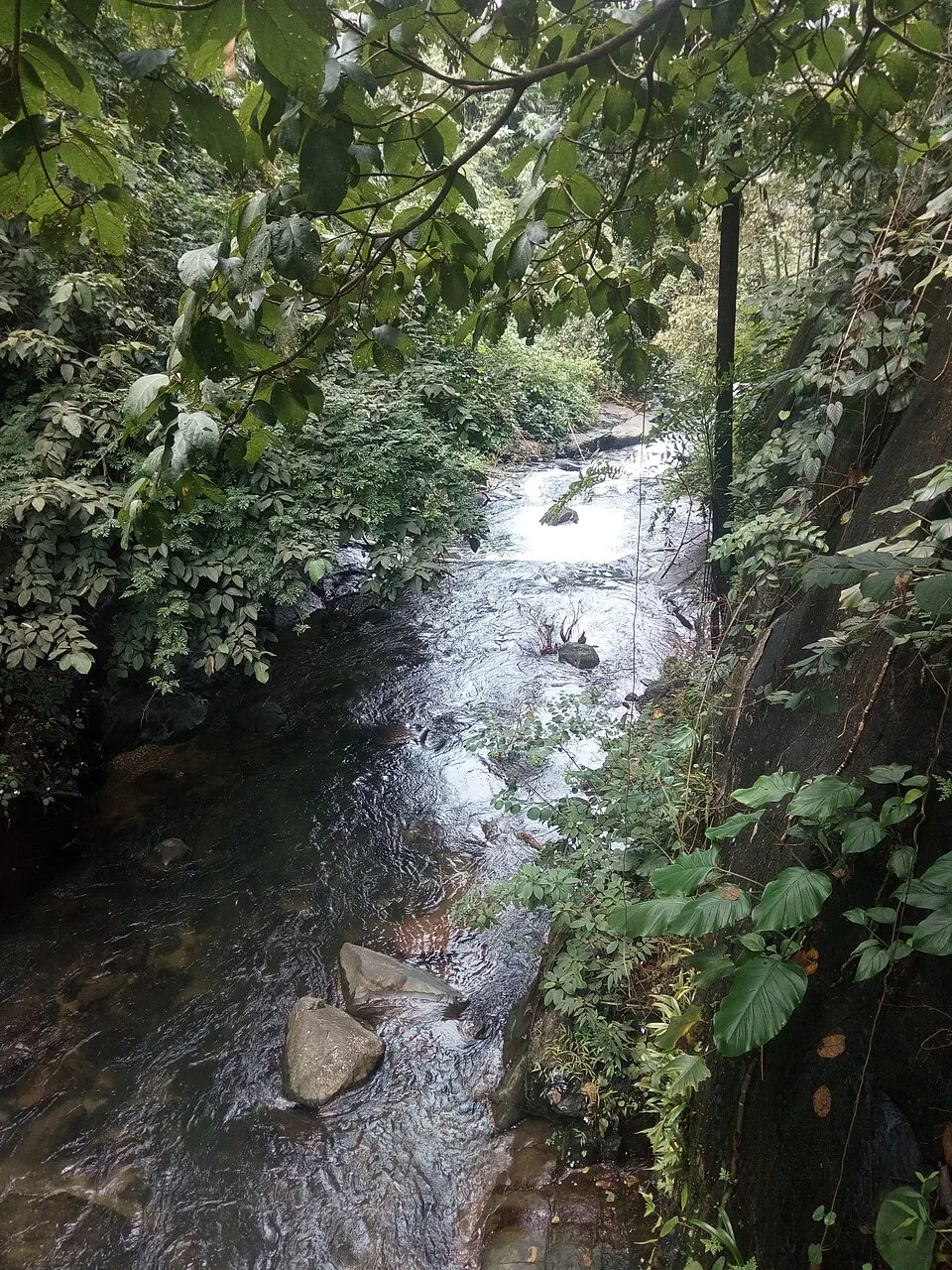
Karimpuzha is the river name attached to the bridge in the Forest Department’s destination inventories and the Karulai Village Office account. The wider drainage is connected with the Chaliyar system, which explains why that broader name appears in some destination summaries. At the visitor bridge, use the specific Karimpuzha name when asking about the river.

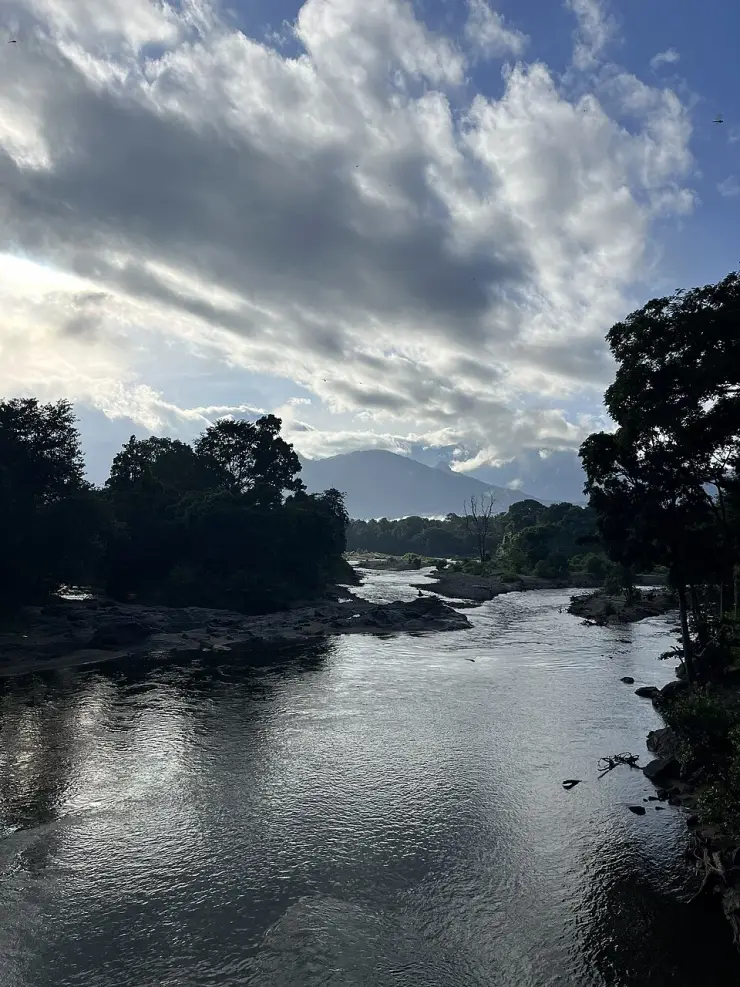
From an allowed viewing position, notice the river’s different surfaces. An open reflective reach can sit beside water broken by exposed rock, with the far bank in deep shade. Those contrasts make a strong photograph, but they do not reveal the depth or strength of the current. A beautiful pool is not evidence of a safe bathing place.

The forest has a history of organised work. The local Revenue Department account identifies an old teak plantation, a forest depot and a former elephant-training enclosure, alongside the rest house and Dawson’s burial place. These features belong to the development and use of the forest, not to a story of land without human presence.

Nedumkayam is also a living locality. The Karulai account describes a settlement beside the river. Residents and their daily routines should not become an unarranged attraction within somebody else’s forest itinerary. Ask before entering a residential lane or taking a person’s photograph, and keep a permitted sightseeing circuit distinct from an invited community encounter.

The Karimpuzha also carries a less visible part of the forest’s wildlife. A 2010 study by Fibin Baby and colleagues sampled this river at Nedumkayam and Maanchery, together with three other waterways in New Amarambalam Reserve Forest. Across the study area, the researchers recorded 43 freshwater fish species in 13 families. That total belongs to the wider survey, rather than to a single pool beneath the visitor bridge. Their account describes a network of cascades, riffles and pools: different water speeds and stream shapes within one connected drainage system. Seen from the bridge, the contrast between a smooth reach and broken water therefore has an ecological dimension as well as a visual one. The authors singled out the Maanchery reach for conservation attention. For a visitor at Nedumkayam, the study is a reminder that protecting the river involves stretches upstream and downstream of the place where people stop to look. Watching from the bank leaves those aquatic habitats undisturbed.

The bridge offers a useful starting point for reading Nedumkayam’s engineering. In the photograph, its metal framework runs across the river while the forest rises behind it. Look at the repeated members, the line of the crossing and the way the structure meets each bank from the public position permitted by staff. A bridge links two sides of a working landscape: it makes movement possible where a river would otherwise interrupt a road or path. That function helps explain why the crossing belongs in the same historical account as the rest house and depot.

Its recorded 1933 date also changes the way the visitor can look at the forest. The bridge is a surviving piece of a particular period of management, while the trees and river continue to change around it. It is possible to appreciate the structure as an object and also ask what work the crossing supported. The local heritage account supplies the forestry context; the visible girders supply the physical evidence of a designed crossing.

The name Dawson appears in the bridge and grave descriptions, while the village account also records the locally used form Dowson Sayyip. This is a connection between a named individual and the remembered forestry site. It gives a visitor a useful question for interpretation at the entrance: which permitted stops explain that history today? A grave, a rest house and a bridge are separate features, and understanding their relationship is more rewarding than assuming that one roadside building stands for the entire colonial history of Nilambur.

The Anapanthi adds a different kind of material memory. An enclosure built for elephant handling tells a story about how large animals were incorporated into forest work. The village office explicitly describes the former training activity as discontinued. Seen in that light, the feature belongs to the history of changing forestry practices. The useful subject is the enclosure and its former purpose, with present access directed by staff, rather than a timetable for an animal demonstration that the current account does not offer.

Small subjects can interrupt the scale of the trees and bridge. The Nedumkayam butterfly photograph in this gallery shows patterned wings folded beneath a leaf, with the insect occupying only a tiny part of the vegetation around it. Such a scene rewards slowing down along the permitted route and looking at the underside of leaves that can be seen without handling the plant. A photograph can preserve the wing pattern for later identification. There is no need to catch the insect, pull a branch towards the camera or claim that one species represents every season of the forest.

A forest visit can be organised around three different kinds of attention: the road explains approach and movement, the bridge introduces the river crossing, and the historical features explain the people and work associated with the place. Moving between those subjects makes a compact managed visit substantial even when a longer trail is unavailable. Ask the entrance staff which stops are accessible on the day, then spend time at each permitted feature instead of measuring the experience only by kilometres walked.

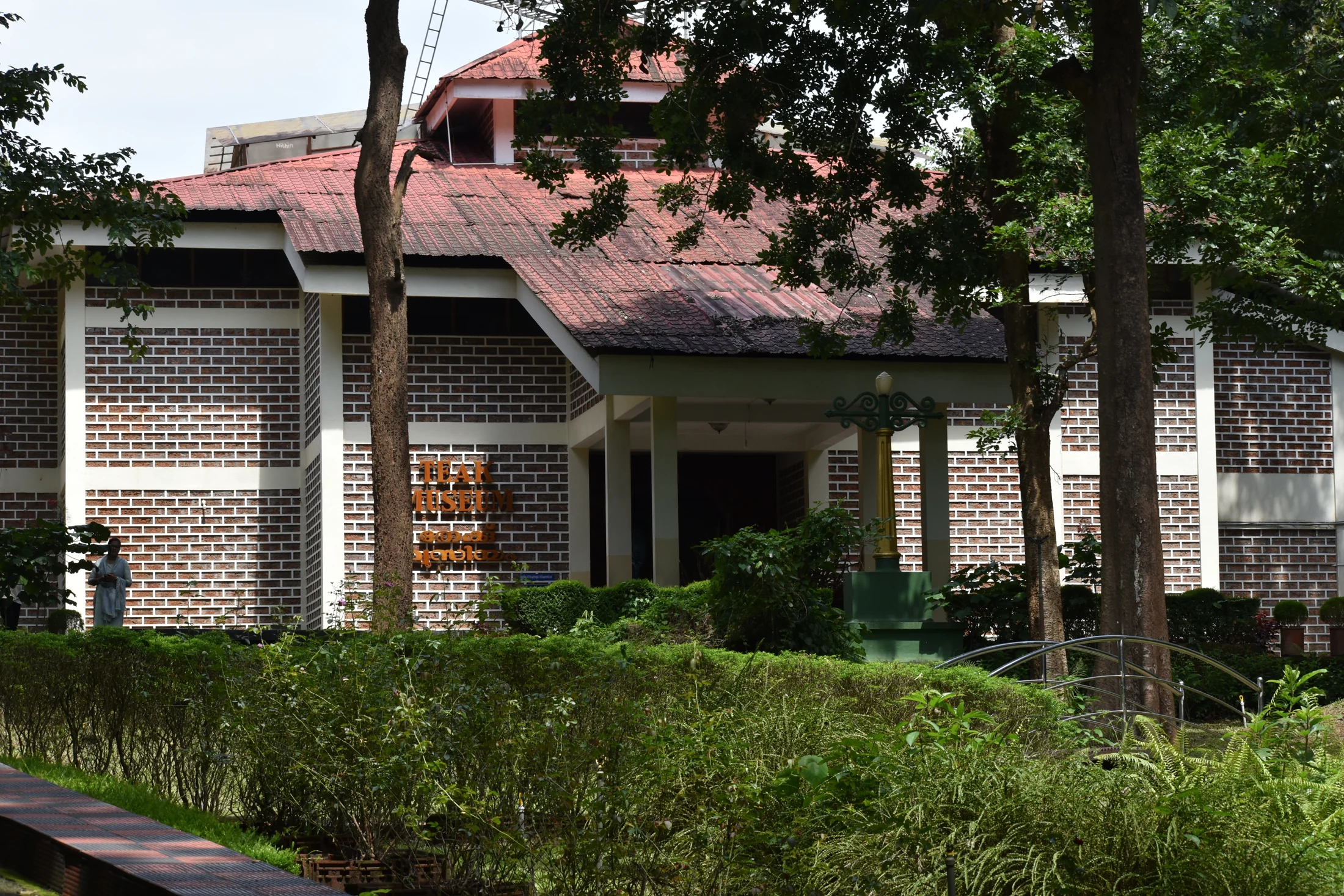
Nilambur’s teak story makes a useful second chapter if there is time elsewhere in the trip. Conolly’s Plot concerns a specific historic plantation; the Teak Museum interprets the tree and its uses; Nedumkayam combines woodland, river and forestry heritage in a different setting. Treat each as a separate stop with its own access and travel requirement. Their common association with teak gives a longer Nilambur stay a coherent theme, connecting cultivation, timber use and the forest landscape.
Read the full history of Nedumkayam rainforest trek 265 more words

History

The iron bridge is dated to 1933 in both the current Forest Department description and the Karulai Village Office account. Older departmental inventories identify it as the Dawson Girder Bridge and list Dawson’s grave among the local heritage features. This gives the structure a documented place in the forestry landscape, rather than leaving it as an anonymous colonial-looking object.

The same village account describes Nedumkayam as a former centre for training captured wild elephants. It says that activity ended years ago and identifies the surviving Anapanthi enclosure as a reminder. Visitors should therefore understand the kraal as a historic feature, not expect a scheduled elephant-training demonstration.

The rest house, plantation and depot add context to that history. Together with the bridge, they show how accommodation, timber and transport were organised around the forest. Their presence does not mean every building is open for interior visits; working or restricted premises remain subject to staff directions.

Nedumkayam and Conolly’s Plot should remain separate in a Nilambur itinerary. The Forest Department’s inventories list them as different destinations: the former with the Karimpuzha bridge and kraal, the latter with the historic teak plot nearer Nilambur. Do not transfer the famous oldest-plantation claim, its date or its acreage to every stand of teak seen at Nedumkayam.

Why visit

See a river-and-forest landscape with a documented bridge and forestry heritage in the same visitor circuit.

Observe seasonal differences between tall-tree approaches, bamboo and open clearings.

Choose a measured forest sightseeing outing from Nilambur without assuming a demanding waterfall trek is included.

Understand how timber, roads and elephant work shaped this particular forest settlement.

What to expect

Highlights

  • The Karimpuzha bridge and river view, with exposed rock, wooded banks and highland scenery beyond.
  • A forest approach where tall trunks, bamboo, clearings and seasonal fallen leaves create different scenes.
  • A forestry heritage setting associated with Dawson, a rest house, teak management and a former elephant kraal.
Getting there

How to visit

  • Approach from Nilambur through Karulai and report at the Forest Department access point before entering the visitor area.
  • Ask staff which parts of the bridge, riverside and heritage circuit are open that day, then stay within that circuit.
  • If the intention is a longer trek, obtain the specific permission and guiding arrangement before making it the purpose of the journey.

Distance by road

  • Kozhikode49 km
  • Coimbatore133 km
  • Kochi168 km
  • Mysuru192 km
  • Mangaluru277 km

Road km to Malappuram; ghat roads and traffic vary — allow extra.

Timing

Best time

Choose a daylight visit when the forest approach and riverside circuit are open. Rain changes the Karimpuzha and the colour of the woodland; drier periods can bring a conspicuous carpet of fallen leaves. River conditions matter more than a promise of year-round green scenery.

Weather in Nedumkayam rainforest trekSeasonal guide

Live forecast loads in your browser.

Today at Nedumkayam rainforest trek
Sunrise6:13 am
Sunset6:09 pm
Golden hour best light5:09 pm–6:09 pm
Blue hour after sunset6:09 pm–6:34 pm
Sun sets toward compass bearingW · 263°
Moon tonight🌑 New moon · 0%
Retreating monsoon. October and November still see spells of rain from the retreating monsoon, though it is usually lighter than mid-year. Conditions are generally good but worth checking.

Sun and moon are calculated for this location and shown in IST. Photography windows are the hour around sunrise and sunset; the sunset bearing is degrees clockwise from true north. Moon phase is accurate to about half a day.

Visitor notes

  • The current public product is sightseeing, with Monday listed as the weekly closure.
  • The map marks the mapped Nedumkayam visitor attraction beside the road and bridge area, not Mundakadav waterfall or an interior forest camp.
  • The riverside settlements are people’s homes. Public sightseeing access does not include a community visit or permission to photograph residents.
Safety

Good to know

  • Keep out of the river and off wet rocks unless staff explicitly authorise an activity at a designated place.
  • Do not follow side tracks into forest or approach wildlife on the access road.
  • Observe closures at the check post even if an older itinerary describes a longer route.
Official eco & forest programmes

Experiences around Nedumkayam rainforest trek

These are official or public-sector eco offerings that match this place, town or forest destination. Confirm availability, permits, tariffs and reporting times with the official operator before travel.

Nilambur Nedumkayam, Nedumkayam rainforest trek
trekwildlifeinterpretation

Nilambur Nedumkayam forest trail

Teak-country forest trail and river landscape in Nilambur, listed by Kerala Tourism as an ecotourism destination and programme.

Kerala Forest Department
Official source →
Stay · eat · do · rent · see · shop

Stays, food & things to do near Nedumkayam rainforest trek

Browse listed stays, food, activities, sights, shops and rentals around Nedumkayam rainforest trek. Check each listing’s locality and contact the business directly for current arrangements.

4 things to do near Nedumkayam rainforest trek

Rainforest eco-tourism trekking programme · Nilambur
Nedumkayam Rainforest Eco-Tourism Trek Nilambur

Kerala Forest Department eco-tourism trekking programme in the Nedumkayam rainforest about 15 km from Nilambur, inside the Nilgiri Biosphere Reserve of Malappuram district. Guided treks lead through dense teak and evergreen forest to the old elephant kraal, the colonial Dawson girder bridge and the Karimpuzha river, with a longer trek reaching Mundakadav waterfalls.

Directions Commission-freeView details
Waterfall · Nilambur
Adyanpara Waterfall DTPC Malappuram

Adyanpara is a forest waterfall reached by a guided jungle trek near Kurumbalangode village in the Nilambur teak country of Malappuram district. Kerala Tourism and DTPC Malappuram promote it as a trekking and adventure spot, with a forest trail through lush jungle leading to the cascade and its natural rock pools.

Directions Commission-freeView details
Museum and nature trail · Nilambur
Nilambur Teak Museum Kerala Tourism

Nilambur Teak Museum is the district forest-heritage anchor, connected with KFRI, teak history, nature trails, Conollys Plot and Nilambur forest routes. Nilambur Teak Museum, KFRI, Teak heritage.

Directions Commission-freeView details
Destination information · Nilambur
Nilambur DTPC Malappuram

DTPC Malappuram destination source for Nilambur, teak country and Adyanpara. Public destination information · DTPC Malappuram, Teak Museum, Adyanpara.

Directions Commission-freeView details

Book with the place itself. India’s cyber-crime coordination centre warned in April 2025 that convincing copies of hotel and pilgrimage booking sites are being pushed through sponsored search and social ads, taking payment for rooms the property never hears about. Use the contact and source details on each profile to confirm the exact business and booking channel. A directory entry or map pin alone does not establish an operator’s identity or current availability. Roampedia takes no commission and does not collect booking payments. If a booking page reached you through an ad, check the address bar against the property’s own site before you pay. Fraud can be reported on cybercrime.gov.in or on 1930.

Options

More ways to explore Nilambur

Nilambur is the rail, bus and accommodation base; Karulai is the approach village. The river visitor area lies farther along the forest road and should not be confused with Nilambur town or Conolly’s Plot.

Across the whole of Nilambur

Nearby guides

Top experiences around Nedumkayam rainforest trek

5 more places around Nilambur. Open a guide to plan the visit and onward journey.

M
Moolepadam Waterfalls
Place
waterfallMoolepadam Waterfalls

A seasonal inland Malappuram cascade whose final approach, water level and safe viewing ground should be checked locally before departure.

museumNilambur Teak Museum

9.8 km · straight line

A museum devoted to teak at KFRI’s Chandakkunnu campus, with an adjoining Bioresources Nature Park.

heritageConolly’s Plot

14.6 km · straight line

The preserved teak plantation and Forest Department ecotourism centre near Nilambur, associated with H. V. Conolly and Chathu Menon. Keep the historic plot, present visitor gardens and river crossing distinct.

waterfallAdyanpara Waterfalls

16.3 km · straight line

A forest waterfall near Nilambur (Kurumbalangode/Kalikavu side), with cascades over granite among evergreen jungle; slippery rocks, so keep well back in and after the monsoon.

waterfallKeralamkundu Waterfalls

18.5 km · straight line

A high forest waterfall on the Western Ghat edge near Karuvarakundu/Kalikavu, dropping into a clear pool — remote and scenic; slippery rocks demand care.

Roampedia is commission-free — own or know a stay, eatery, guide or shop near Nedumkayam rainforest trek? Submit public business details for review.

Add a nearby business
Trek facts

Nedumkayam rainforest trek — at a glance

OperatorKerala Forest & Wildlife Department
TimingsPublished visitor window: 9am–4pm; closed Mondays. Access remains subject to Forest Department restrictions.
Best timeChoose a daylight visit when the forest approach and riverside circuit are open. Rain changes the Karimpuzha and the colour of the woodland; drier periods can bring a conspicuous carpet of fallen leaves. River conditions matter more than a promise of year-round green scenery.
Entry price
Indian adult
₹50

Fees change without notice. Check the current rate at the counter.

Entry: The current Forest Department tariff is ₹50 for an Indian adult, ₹25 for an Indian child aged 5–12 or a student, and ₹300 for a foreign visitor. Vehicle entry is ₹50 for two- or three-wheelers, ₹95 for a four-wheeler and ₹350 for a heavy vehicle. Listed camera fees are ₹200 still and ₹300 video.

Booking: The current departmental record has online booking disabled. Confirm the local admission arrangement through the official ecotourism service; a longer forest trek requires its own permission.

Parking: The department publishes vehicle-entry categories. Use the place assigned by staff and keep the bridge and narrow forest road clear; admission for a vehicle does not permit unrestricted driving into forest tracks.

Getting here

How to reach Nedumkayam rainforest trek

  • ✈︎ By air Calicut International Airport is the wider regional air gateway for a Nilambur itinerary. Continue by road and leave the forest visit for a period that fits the daytime admission window.
  • 🚆︎ By train Nilambur Road is the local railway station named in the Forest Department destination inventory. The station and the forest visitor area require a road transfer through the local approach settlements.
  • 🚗︎ By road From Nilambur take the Karulai approach, then continue to the Forest Department access point for Nedumkayam. Karulai Village Office identifies the Cherupuzha check post on this final approach; follow staff directions beyond it.
  • 🚌︎ By bus Use Nilambur and Karulai as the public-transport references. Arrange the final forest-road transfer and return rather than assuming a bus will collect visitors beside the bridge.
Getting around

Getting around Nedumkayam rainforest trek

Follow the visitor circuit staff identify between the forest approach, bridge and heritage features. Do not convert a visible forest track into an independent trek.

Getting back

Keep the vehicle collection tied to the permitted visitor area and leave time to return through the check post before closing. Agree transport back to Karulai or Nilambur before beginning the visit.

Do

Things to do

  • Observe the Karimpuzha from an authorised dry viewing position.
  • Read the structure of the historic iron bridge without obstructing passage.
  • Compare the tall-tree approach with bamboo and open woodland clearings.
  • Ask staff about the surviving kraal and Dawson heritage within the current visitor circuit.
Facilities

On site

  • The Forest Department operates the listed sightseeing admission and vehicle-entry arrangement.
  • The bridge, historic kraal and Dawson-related heritage are described in departmental visitor inventories; current access to each feature is decided on site.
  • Plan meals and dependable comfort stops in Karulai or Nilambur before entering the forest section.
Stay safe

Safety

  • Stay out of the river and off wet exposed rocks.
  • Keep clear of wild animals and follow staff directions on the forest road.
  • Remain inside the permitted sightseeing area.
  • Respect residential privacy beside the river.
Getting around Nedumkayam rainforest trek
From the entrance
Nedumkayam Forest Department visitor area via Karulai and the Cherupuzha check post
Step-free access
The approach includes a road and bridge, but that does not establish a continuous accessible circuit to every riverside or heritage feature. Ask staff for a suitable short route and vehicle arrangement for anyone with limited mobility; avoid uneven riverbank ground.

Checked 6 September 2026 against source 1source 2. Conditions change and surfaces vary with weather — if step-free access is essential, confirm with the site before you travel.

Eat nearby

What to eat in Nilambur

Make Karulai or Nilambur the meal stop. The forest outing works best as a defined part of the day, with food arranged before entry or after the return through the check post.

Explore food in Nilambur →
01

Breakfast in Nilambur

Eat before taking the Karulai road so the daylight visitor window can be used for the forest circuit.

02

Kerala lunch in Karulai

A meal in the approach village can follow the return from Nedumkayam without extending the outing into a late forest-road journey.

03

Tea back in town

Use a settled stopping place on the onward route and keep the bridge and forest verges free of picnic litter.

Nearby

What’s near Nedumkayam rainforest trek

museumNilambur Teak Museum

A museum devoted to teak at KFRI’s Chandakkunnu campus, with an adjoining Bioresources Nature Park.

9.8 km · straight line
heritageConolly’s Plot

The preserved teak plantation and Forest Department ecotourism centre near Nilambur, associated with H. V. Conolly and Chathu Menon. Keep the historic plot, present visitor gardens and river crossing distinct.

14.6 km · straight line
waterfallAdyanpara Waterfalls

A forest waterfall near Nilambur (Kurumbalangode/Kalikavu side), with cascades over granite among evergreen jungle; slippery rocks, so keep well back in and after the monsoon.

16.3 km · straight line
waterfallKeralamkundu Waterfalls

A high forest waterfall on the Western Ghat edge near Karuvarakundu/Kalikavu, dropping into a clear pool — remote and scenic; slippery rocks demand care.

18.5 km · straight line
viewpointKodikuthimala

The “Ooty of Malappuram” — a breezy hill viewpoint about 11 km from Perinthalmanna, good for sunrise, sunset and paragliding views.

34.9 km · straight line
templeThirumandhamkunnu Temple

The Thirumandhamkunnu Bhagavathy (Durga) temple at Angadipuram — a major Devi pilgrimage and the paradevata shrine of the old Valluvanad rajas, famous for its Pooram festival.

37.7 km · straight line
viewpointKottakkunnu

A hill garden and cultural park in Malappuram town, with an art gallery, open-air theatre and amusement attractions — a popular family picnic spot.

38.8 km · straight line
heritageKottakkal Arya Vaidya Sala

The famous Ayurveda institution at Kottakkal, founded in 1902 by Vaidyaratnam P.S. Varier — hospital, medicine-making, herb gardens and the PSV Natyasangham Kathakali academy.

48.6 km · straight line
templeKadampuzha Devi Temple

A revered Devi temple near Vettichira with no idol — the goddess is worshipped in a natural rock fissure; devotees offer the poomoodal and muri-pooja. Founded by legend of Adi Shankara.

50.3 km · straight line
wildlifeKadalundi Bird Sanctuary

Estuary birding area shared around the Kozhikode/Malappuram coast.

58.3 km · straight line
wildlifeKadalundi Vallikkunnu Community Reserve

Kerala’s first community reserve, declared in 2007 over mangrove, mudflat and five islands at the Kadalundi river mouth.

58.3 km · straight line
templeThirunavaya Nava Mukunda Temple

An ancient Vishnu temple on the Bharathapuzha at Thirunavaya, near the historic Mamankam fair-ground and a major venue for ancestral (bali/shraddha) rites.

58.9 km · straight line

5 detailed place guides in Nilambur →

On the map

Where Nedumkayam rainforest trek is

Good to know

Nedumkayam rainforest trek — frequently asked

Is Nedumkayam currently a booked rainforest trek?

The Forest Department currently describes its public product as sightseeing. Longer walks into the forest, including the older Mundakadav waterfall route, need separate confirmation and permission.

Which river flows beneath the Nedumkayam bridge?

The specific local name is Karimpuzha, used in departmental inventories and the Karulai Village Office account. Chaliyar is the wider river-system reference found in some summaries.

Can I swim at Nedumkayam?

Do not treat sightseeing admission as permission to enter the river. Follow the current staff restrictions and remain off wet riverside rocks and undesignated bathing places.

When was the Nedumkayam iron bridge built?

The Forest Department and Karulai Village Office date the bridge to 1933. Departmental inventories also call it the Dawson Girder Bridge.

Are elephants trained for visitors at Nedumkayam?

The village account describes elephant training as a past activity and the kraal as a surviving reminder. It does not establish a present-day demonstration or an animal-contact programme.

Is Nedumkayam the same place as Conolly’s Plot?

No. They are separate Forest Department destinations in the Nilambur area. Nedumkayam is reached through Karulai and centres on the forest, Karimpuzha and associated heritage.

Can I book Nedumkayam online?

The current departmental record has online booking disabled. Use the official contact and the local admission arrangement rather than assuming an online payment page represents a confirmed visit.

Can I visit a tribal settlement with the sightseeing ticket?

A ticket does not amount to an invitation into residents’ homes or residential lanes. Any community encounter should be arranged respectfully through an appropriate local contact.

When is the best time to visit Nedumkayam rainforest trek?

Use an open daylight period with suitable river and road conditions. The weekly closure and any rain-related restrictions take precedence over a seasonal travel recommendation.

What are the entry fee and timings at Nedumkayam rainforest trek?

The visit information contains the current departmental admission categories, vehicle and camera charges, hours and weekly closure. Those charges cover the listed sightseeing product, not an unspecified interior trek.

How do I reach Nedumkayam rainforest trek?

Nedumkayam Forest Department visitor area via Karulai and the Cherupuzha check post

How much time do I need for Nedumkayam rainforest trek?

Allow two to three hours for an unhurried sightseeing visit as a planning estimate, plus the journey from Nilambur. A separately permitted longer trek needs its own duration and reporting arrangement.

What should I know before visiting Nedumkayam rainforest trek?

The current public product is sightseeing, with Monday listed as the weekly closure.

Should I choose the Teak Museum or Nedumkayam for a short Nilambur visit?

Choose according to the subject you want to understand. The museum is the focused stop for teak and its interpretation; Nedumkayam places the visitor in a forest settlement organised around a real river crossing and forestry infrastructure. Seeing both can connect an interpreted subject with a lived landscape, but they remain separate visits with separate access arrangements. If the time available only allows one, do not rush the Karulai road merely to add a forest photograph after the museum. Give Nedumkayam enough of the daylight window for its river, bridge and permitted heritage circuit, or reserve that part of the itinerary for another visit.

What else is near Nedumkayam rainforest trek?

Nearby you can pair Nilambur Teak Museum (9.8 km, approximate straight-line separation), Conolly’s Plot (14.6 km, approximate straight-line separation), Adyanpara Waterfalls (16.3 km, approximate straight-line separation), Keralamkundu Waterfalls (18.5 km, approximate straight-line separation).

Read before you go

Nedumkayam rainforest trek guides, stories & itineraries

Stories & history of Nedumkayam rainforest trek

Written about Nedumkayam rainforest trek itself — its history, its legends and the arguments about them.

Around Nilambur

These reads cover nearby destinations, each with its own arrival point and visit arrangements.

Kerala-wide guides & itineraries

Route-level itineraries and practical guides for the rest of Kerala.

See all 36 Malappuram guides & stories →

Image credits

Photographs: Jaseem Hamza (CC BY 3.0), Balakrishnan Valappil (CC BY-SA 2.0). Wikimedia Commons.