What to expect
Highlights
- The temple records the coconut-breaking offering as early as 1771.
- The swayambhu Ganapathy idol is small, about six inches tall.
- The temple was rebuilt in 2018 and 2019 and reconsecrated in July 2019.
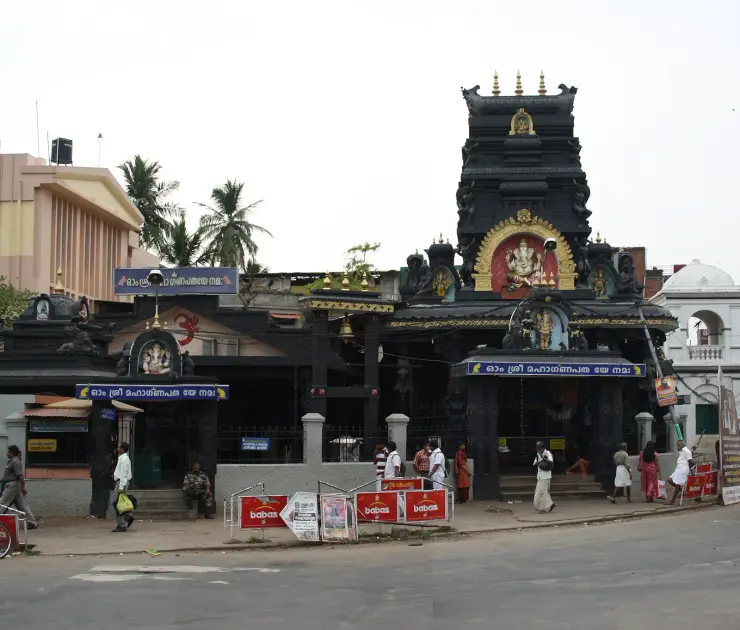
The Pazhavangadi Ganapathy Temple stands at East Fort in the old centre of Thiruvananthapuram, and most people know it first by its sound, because coconuts are broken on its stone through the day as offerings to Ganapathy, the remover of obstacles. Students come before examinations and families come before journeys, weddings and new businesses, so the temple is busy from the early morning opening.
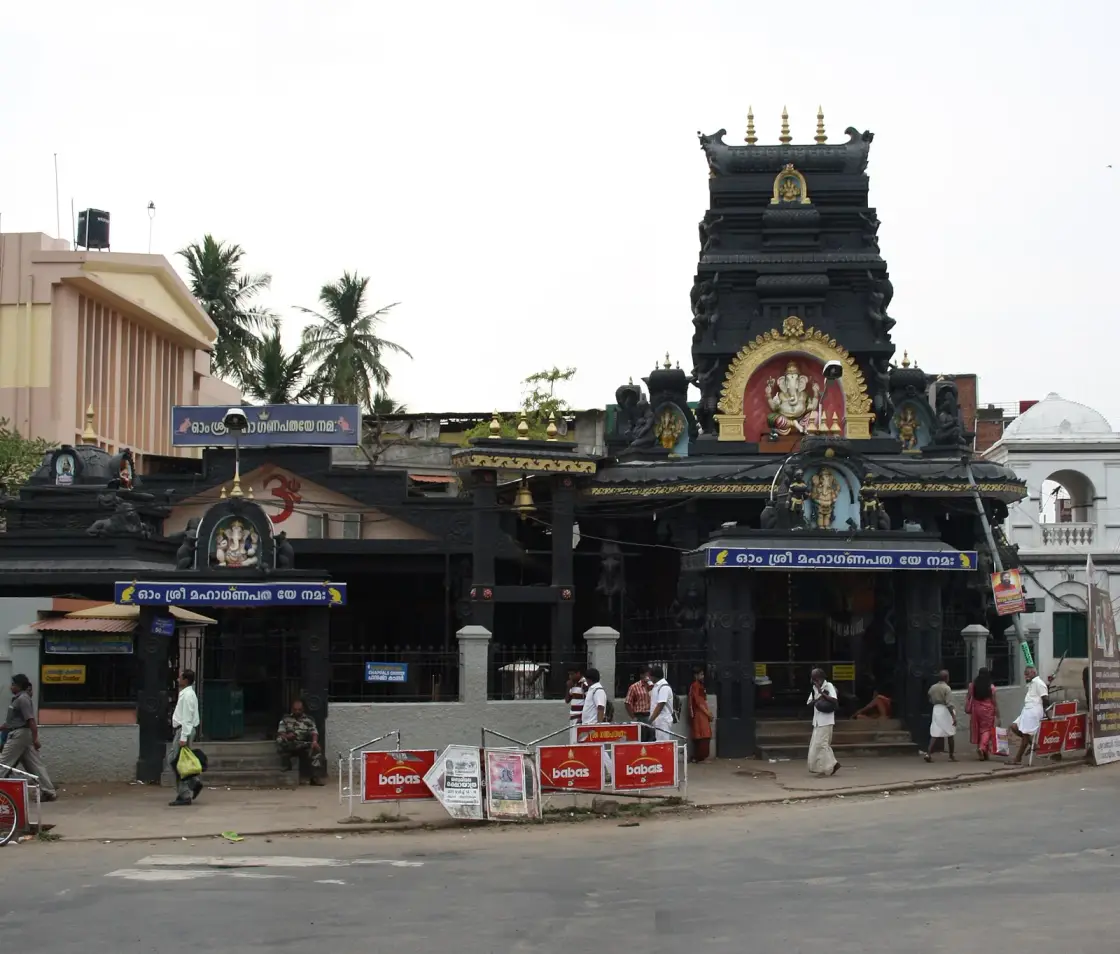
Entry rules. Temple staff set the rules on visitor entry, dress and access to the inner shrine, and these matter most for non-Hindu visitors.
Dress respectfully and follow the institution’s admission and photography rules.
What makes it unusual in Kerala is who runs it. Most temples here belong to a Devaswom board, a trust or a family, but this one is owned by the Madras Regiment of the Indian Army and managed by the Madras Regimental Centre. It sits a short walk from the Sree Padmanabhaswamy Temple and the Kuthiramalika Palace, so the three fit into one walk through the fort quarter.
A six-inch Ganapathy found by a soldier in a river, carried by Travancore's army to East Fort, and still kept by a regiment today.
The god of Pazhavangadi belonged to soldiers long before it had a temple. According to the Madras Regiment's heritage writers and the temple's own account, a soldier at Padmanabhapuram, the old capital of Venad, found a small Ganapathy idol in the Valliyoor river around 1750. The idol was only about six inches tall, so his comrades kept it in their barracks and worshipped it as their war god, and devotees still call it swayambhu, self-revealed rather than carved.
Those soldiers served a kingdom that was moving its centre, and their idol moved with it. King Marthanda Varma dedicated Travancore to Sree Padmanabhaswamy in 1750, and under Dharma Raja the capital and much of the army moved to Thiruvananthapuram, so the soldiers carried their Ganapathy north. At first it rested under a peepal tree in the grounds of an existing temple, and around 1765, with Dharma Raja's help, they built it a small shrine in the Magazine Area of the fort, the spot that came to be called Pazhavangadi.
The shrine soon had the custom that still defines it. A palace record of 1771 says 300 coconuts were broken there to keep rain away from a royal procession, which shows that the coconut was already its main offering within a few years of the shrine going up. The meaning comes from Ganapathy's role as the remover of obstacles, because the hard shell stands for the obstacle and breaking it clears the way to the kernel inside.
While the coconuts kept cracking, the army that kept the idol changed its name again and again, and the temple stayed with it each time. The force became the Nair Brigade in 1830, took over the cantonment barracks in Thiruvananthapuram when most British troops left Travancore in 1836, and became the Travancore State Forces in 1935, the same year it formed a committee for the temple's Thiruvathira festival. Meanwhile Maharaja Ayilyam Thirunal Rama Varma carried out the main renovations of the building between 1860 and 1880.
Independence brought the largest change, but the link still held. In 1951 the State Forces were merged into the Indian Army and later became part of the Madras Regiment, and in November 1956 the regiment formally took over the temple's administration. Today the Colonel of the Madras Regiment chairs the temple's board, which is made up mostly of army officers and junior commissioned officers with a few civilians.
The regiment was still at the idol's side when the temple was rebuilt in this century. A full reconstruction began in 2018 and ended in July 2019 with a twelve-day punaprathishta, the ritual reinstallation of the idol, and the Colonel of the Madras Regiment attended the rites. The full account of how a barracks idol became a regiment's temple is in our story The army's Ganapathy at East Fort, and from the temple the old city leads on to Attukal Bhagavathy Temple, Karikkakom Chamundi Temple, the Napier Museum and the rest of Thiruvananthapuram city.
The best-known story says the idol came to Thiruvananthapuram when the army marched north with the capital, and so many write-ups give a single founding date. The temple's own timeline separates the steps: the idol was found around 1750, the shrine at East Fort was built around 1765, and the main renovations came between 1860 and 1880.
The coconut offering carries its own meaning in the same tradition. Ganapathy removes obstacles, and devotees see the hard shell as the obstacle, so breaking it before a beginning is a prayer that the way ahead will be clear.
About 1750: a soldier found the Ganapathy idol in the Valliyoor river, and soldiers worshipped it in the Padmanabhapuram barracks (temple site; Colours of Glory).
About 1765: soldiers built a shrine in the Magazine Area of the fort at Thiruvananthapuram with Dharma Raja's help (temple site).
1771: a palace record notes 300 coconuts broken at the temple to keep rain from a royal procession (temple site).
1860 to 1880: Maharaja Ayilyam Thirunal Rama Varma carried out the main renovations (temple site).
1935: the Travancore State Forces formed a committee for the Thiruvathira festival (temple site).
November 1956: the Madras Regiment took over the temple's administration (Colours of Glory).
2018 to July 2019: full reconstruction, ending with a twelve-day punaprathishta (Colours of Glory; Kerala Kaumudi).
Hear the steady crack of coconuts broken on the stone as offerings to Ganapathy.
See one of the few temples in India run by the Indian Army, owned by the Madras Regiment.
Follow a story that runs from a soldier's river find in about 1750 to the regiment today.
Watch students and families mark exams, journeys and new ventures with a coconut.
Walk on to Sree Padmanabhaswamy Temple and Kuthiramalika Palace in the same fort quarter.
Visit on Vinayaka Chathurthi, the temple's main festival, held on 14 September in 2026.
Road km to Thiruvananthapuram; ghat roads and traffic vary — allow extra.
The temple opens with Nirmalya darshan at 4:30 am, Ganapathy Homam is at 5:45 am and Uccha pooja at 11 am (temple website, November 2026).
Live forecast loads in your browser.
Sunset is in about 2 hours.
Sun and moon are calculated for this location and shown in IST. Photography windows are the hour around sunrise and sunset; the sunset bearing is degrees clockwise from true north. Moon phase is accurate to about half a day.
Listed stays, food, activities, sights, shops and rentals around Pazhavangadi Ganapathy Temple, each with its locality and direct contact details.
Thiruvananthapuram International Airport serves the city and southern Kerala’s coast. Match your airline’s terminal to your pickup point when booking an airport-side stay or meeting a driver.
Mango Cabs lists an Edapazhanji office and advertises city taxis, airport transfers, outstation cabs and vehicle hire. If you are arriving at Thiruvananthapuram airport, give the operator your terminal, flight time, destination and luggage count before asking for a vehicle. For a Kovalam, Varkala or longer trip, request a written quote covering the exact route, tolls, parking, waiting time and return journey. The website lists vehicle categories, but the car and fare for your date need direct confirmation.
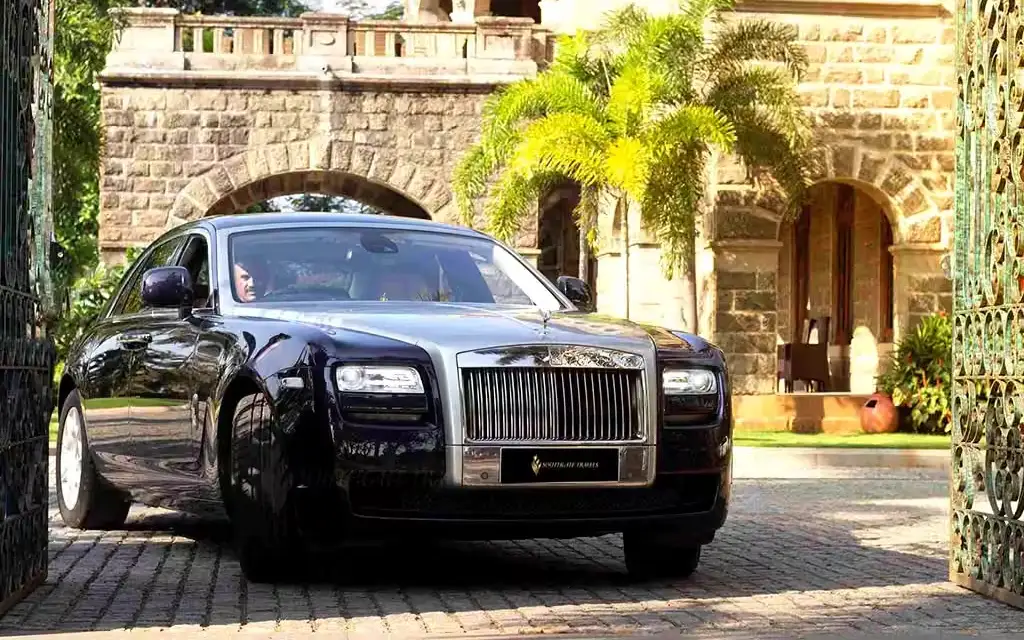
Southgate Travels operates from Vikas Lane in Kunnukuzhy and advertises chauffeured taxis, airport pickups, self-drive cars and vehicle hire for events. Its own gallery shows a Southgate-branded car; that image does not promise the same vehicle for every booking. For a city or airport transfer, give the operator the exact pickup point, flight or train time, destination and luggage count, then ask for the total fare and waiting allowance. Self-drive and event bookings need a different quote: confirm the named vehicle, documents, deposit, mileage limit and cancellation terms before paying.
Do on Eanchakkal Westfort Rd, J P Nagar, VKK Nagar, Pazhavangadi in Thiruvananthapuram City.
A NABH-accredited Ayurveda hospital on the Karamana River at Thiruvallam with Panchakarma, rehab and 3- to 46-day programmes.
A Kalaripayattu school at East Fort, Thiruvananthapuram, teaching the northern style since 1956, with a Kalarichikitsa clinic.
Book with the place itself. India’s cyber-crime coordination centre warned in April 2025 that convincing copies of hotel and pilgrimage booking sites are being pushed through sponsored search and social ads, taking payment for rooms the property never hears about. Each profile carries the business’s own contact details and its source. Roampedia takes no commission and does not collect booking payments. Booking pages reached through ads sometimes imitate a property’s own site. Fraud can be reported on cybercrime.gov.in or on 1930.
Find food, accommodation and activities across Thiruvananthapuram city. Browse the guides for places to eat, stay and explore along your route.
Walking routes start at Pazhavangadi Ganapathy Temple. A road, gate or waterway separates some of the stops.
23 more places around Thiruvananthapuram city. Open a guide to plan the visit and onward journey.
The ancestral palace compound associated with Raja Ravi Varma at Kilimanoor; visitor access concerns the working family estate and must be confirmed before travel.
3.5 km · straight line
A major coastal Muslim pilgrimage landmark south-west of the city centre, known for the Beemapally Uroos and the tombs honoured within the shrine complex.
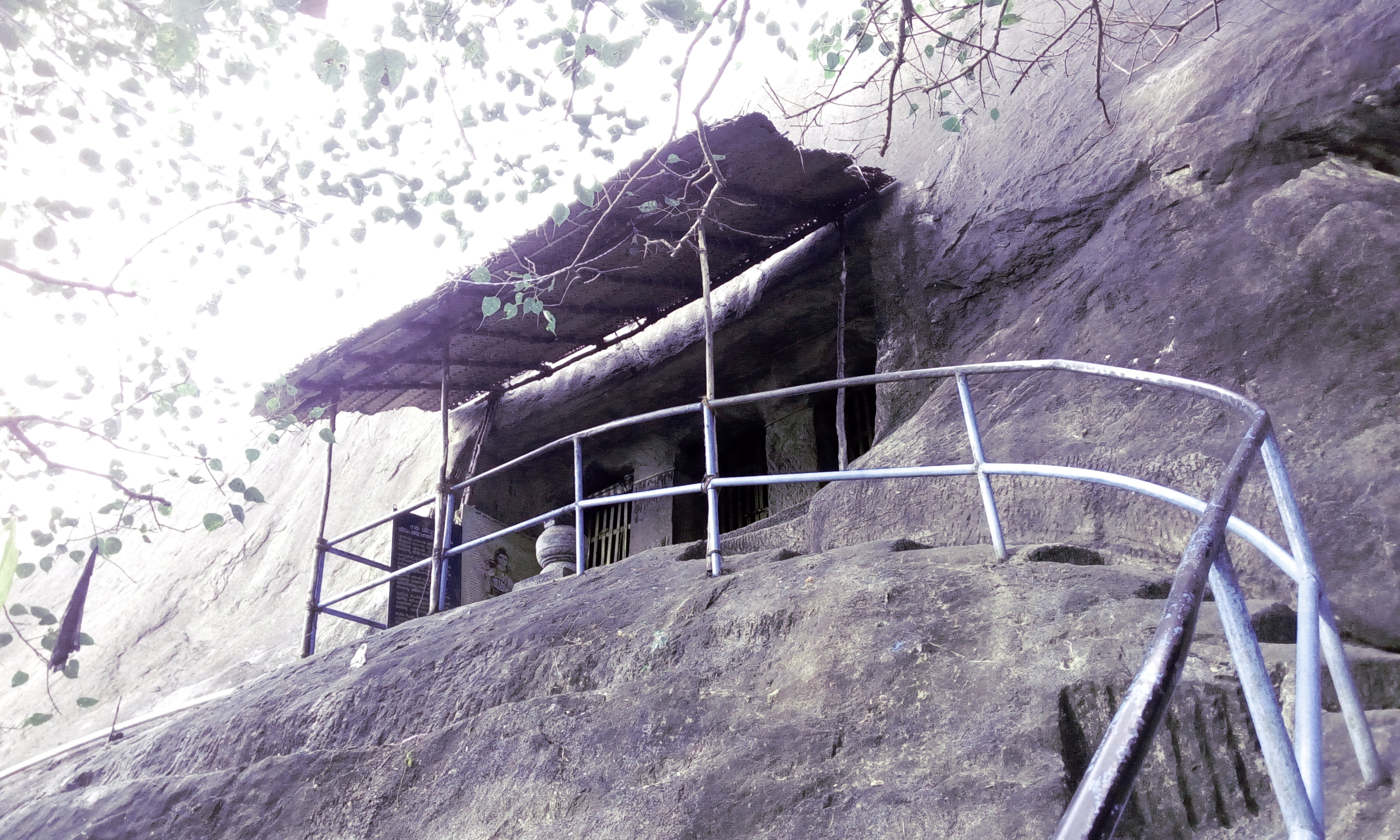
Madavoorpara combines a rock-cut Shiva shrine with a rocky hill landscape on Thiruvananthapuram’s northern edge. The temple and the climb offer different reasons to visit, and both deserve time.
660 m · straight line
Kerala’s capital and the old seat of Travancore, built around the Sree Padmanabhaswamy Temple.
660 m · 8 min walk
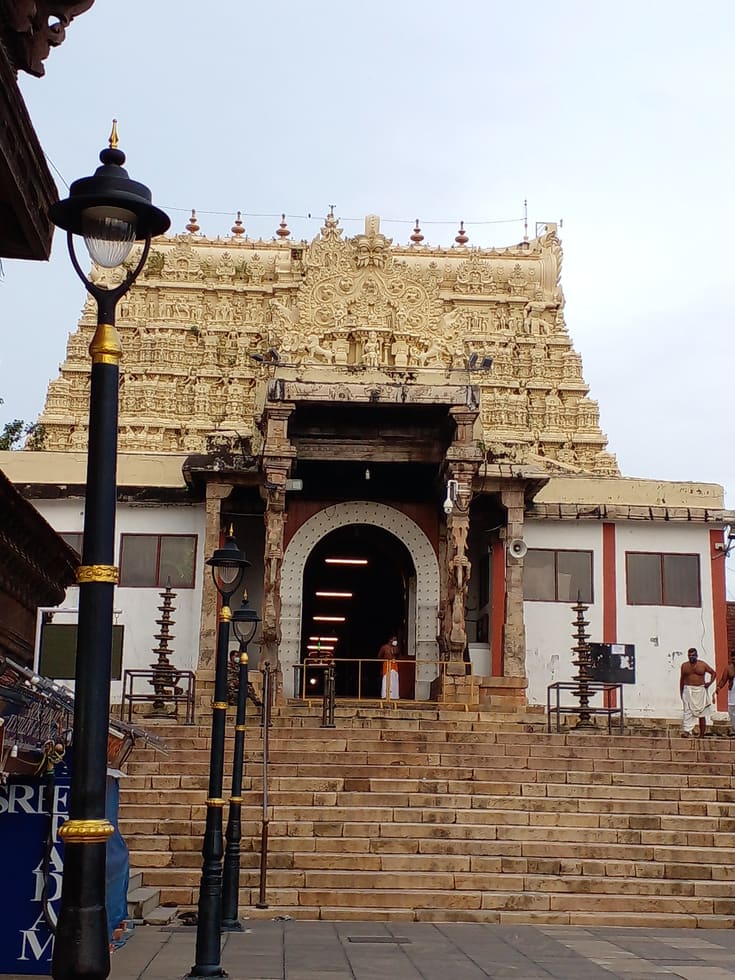
Major Vishnu temple and one of Kerala’s most important pilgrimage landmarks; strict entry and dress rules apply.
3.2 km · 6 min drive
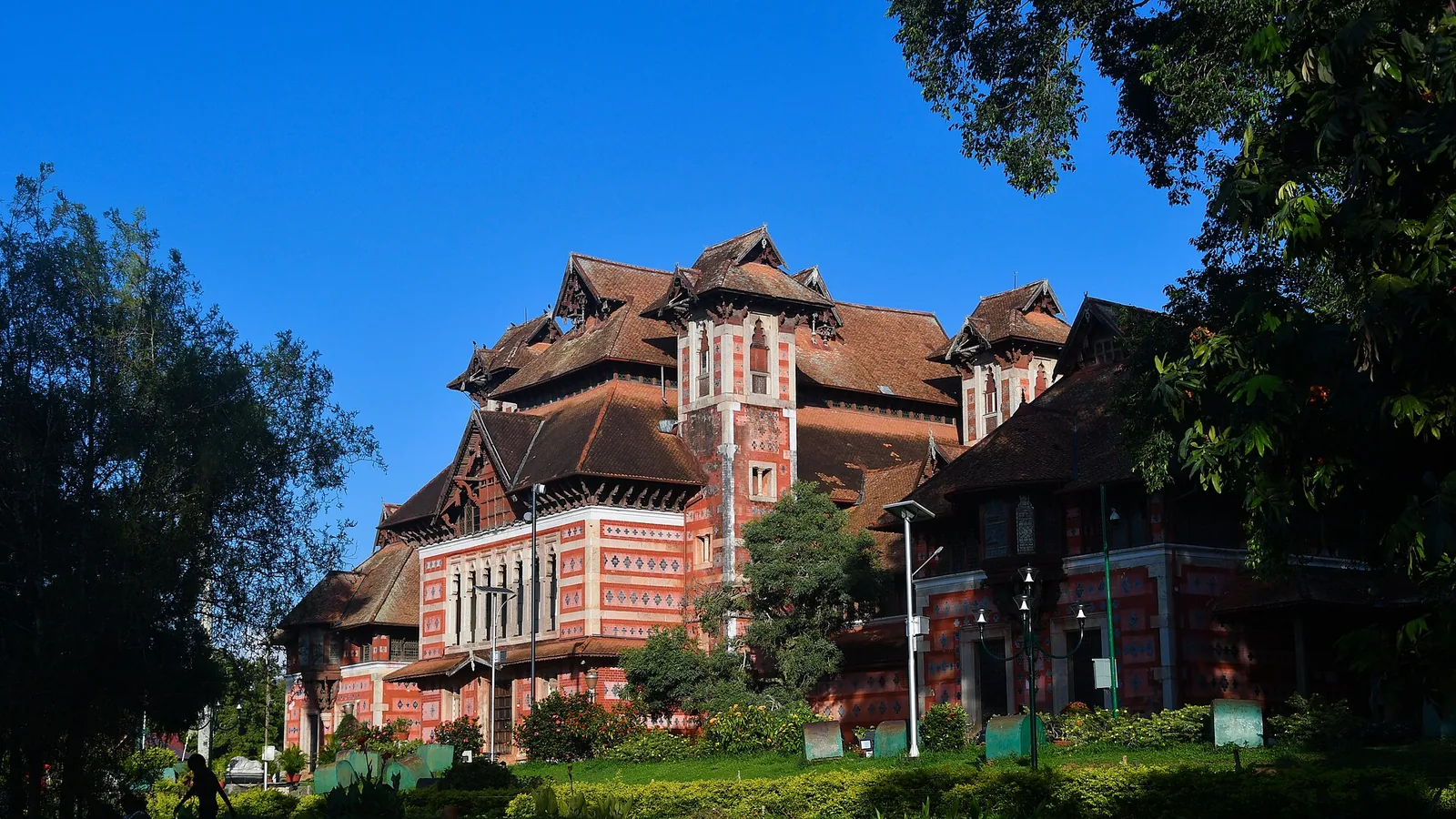
Robert Chisholm’s 1880 Indo-Saracenic museum in the Museum Park — a polychrome landmark holding Chola and Kerala bronzes, ivories and temple carts, with the Sree Chitra Art Gallery alongside it.
3.3 km · 6 min drive
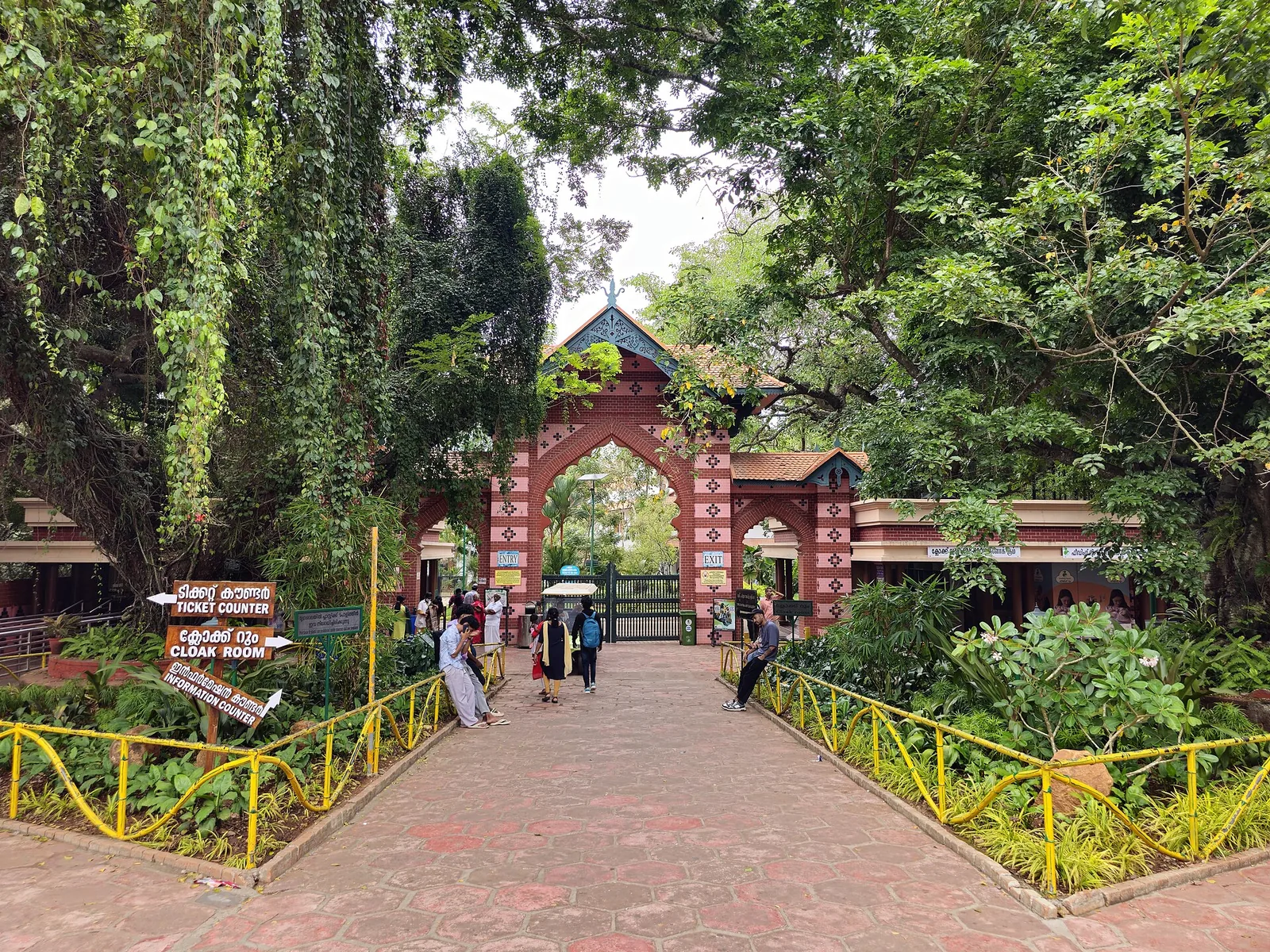
Old trees, winding paths and animal enclosures share the Museum Park at Thiruvananthapuram Zoo, also known as Trivandrum Zoo. Allow time for the garden as well as the collection, with the Napier Museum close by.
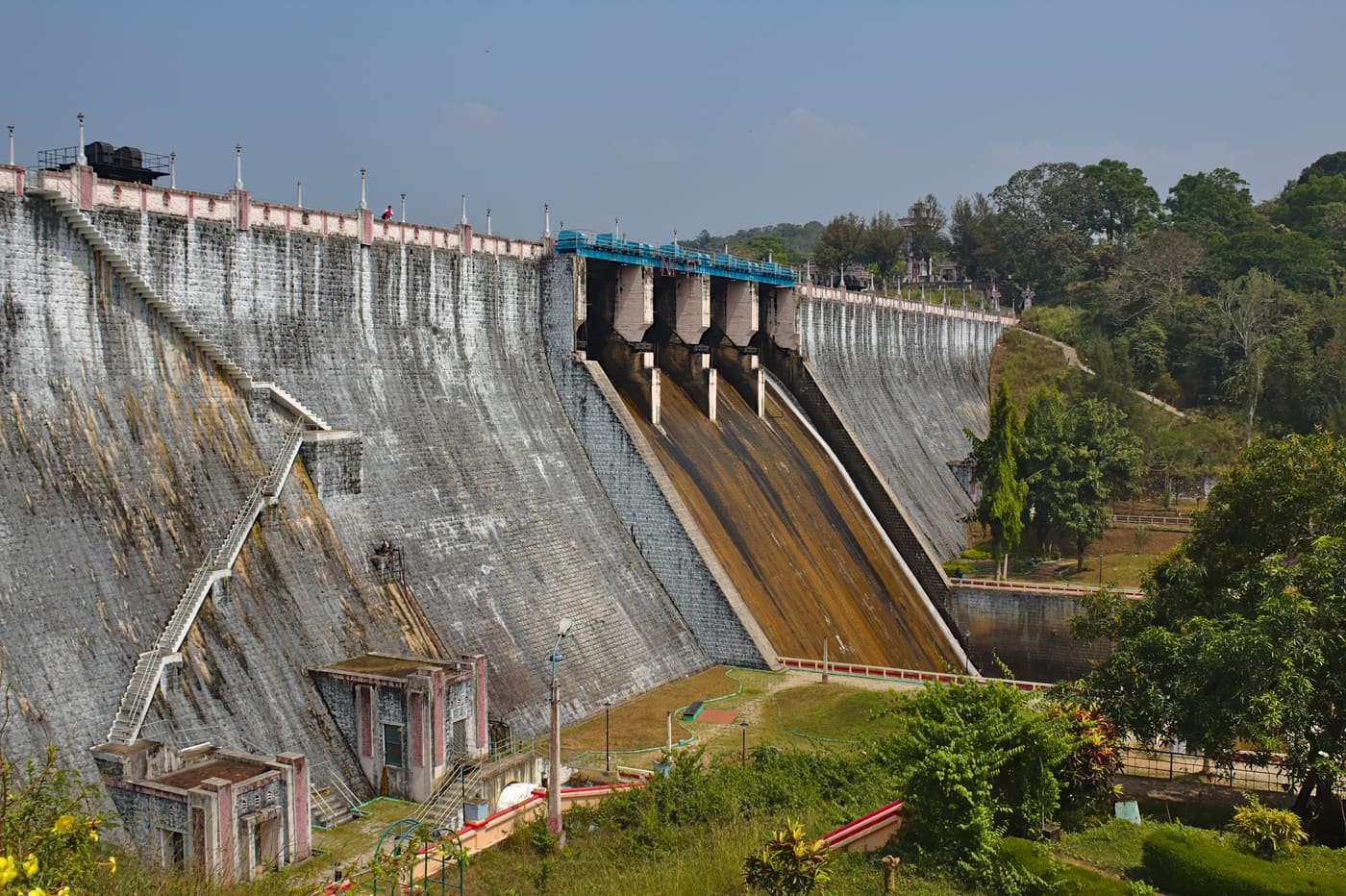
Guided forest trekking in the Neyyar Wildlife Sanctuary near the Agasthyamala foothills, south-east of Thiruvananthapuram.
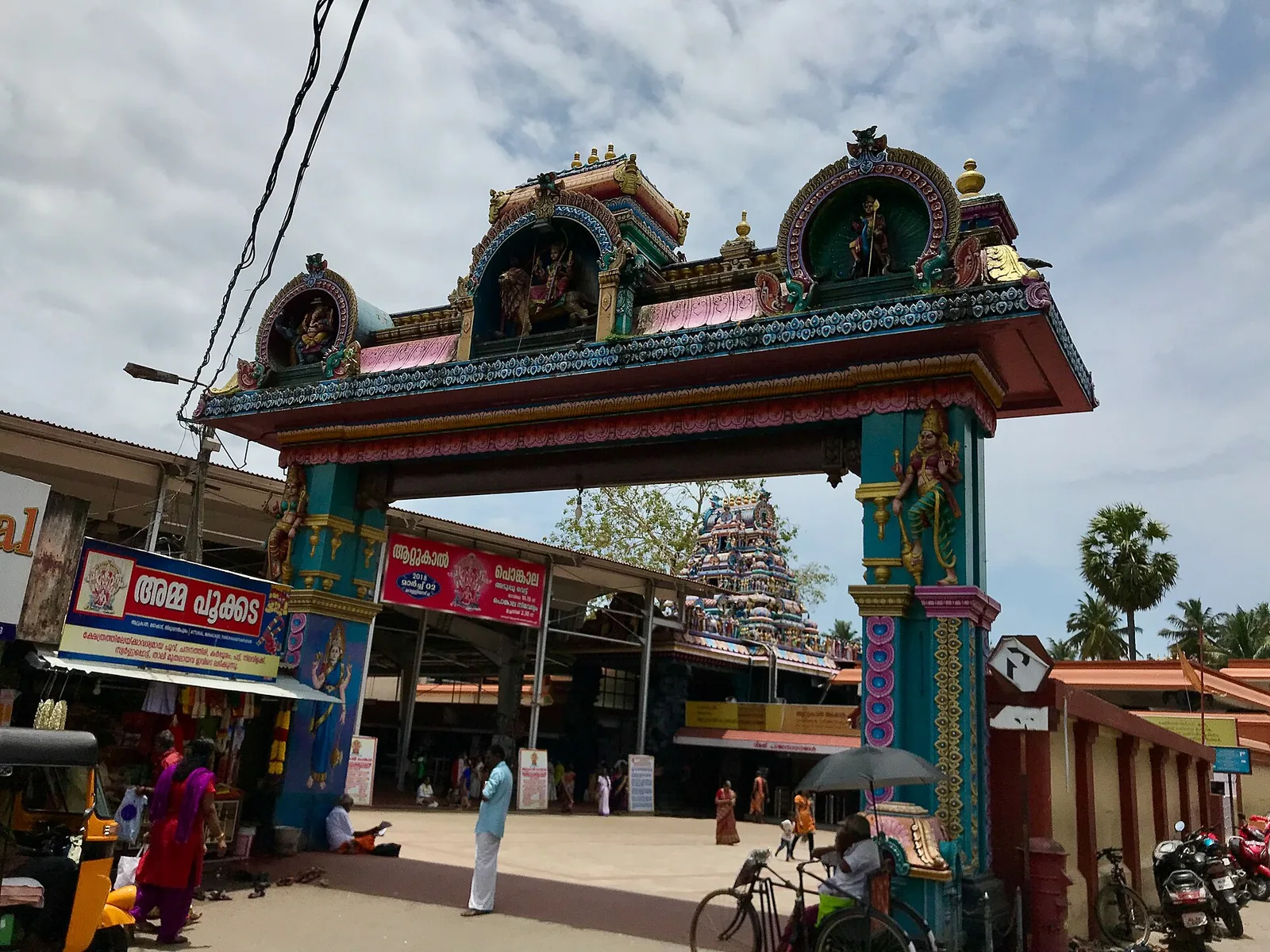
2.4 km · 4 min drive
Famous Devi temple in the city, home of the Attukal Pongala — recorded as the largest annual gathering of women.
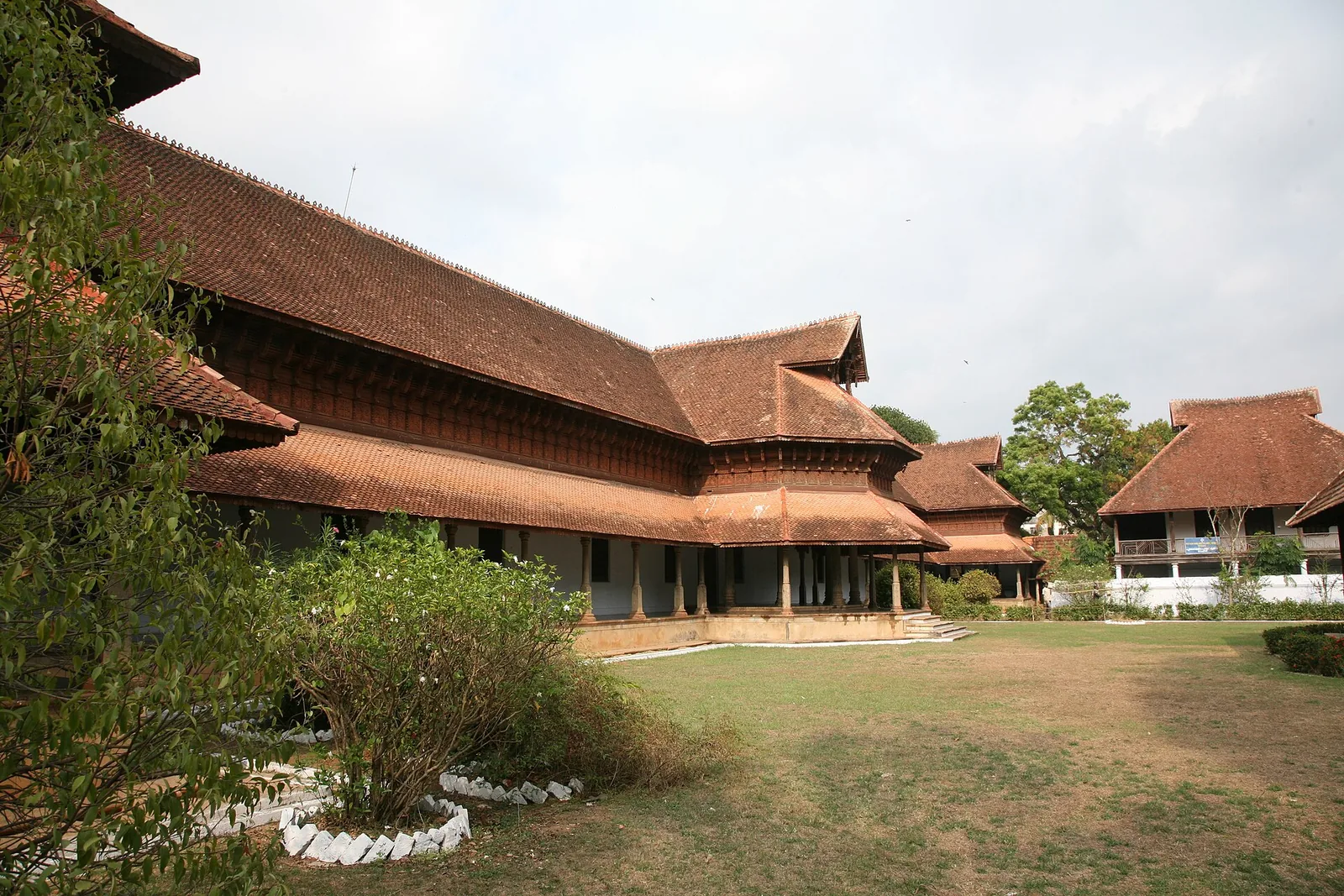
500 m · 6 min walk
A row of carved wooden horses gives Kuthiramalika its name. Beside Sree Padmanabhaswamy Temple, this Travancore palace museum brings timber craftsmanship and royal collections into one compact visit.
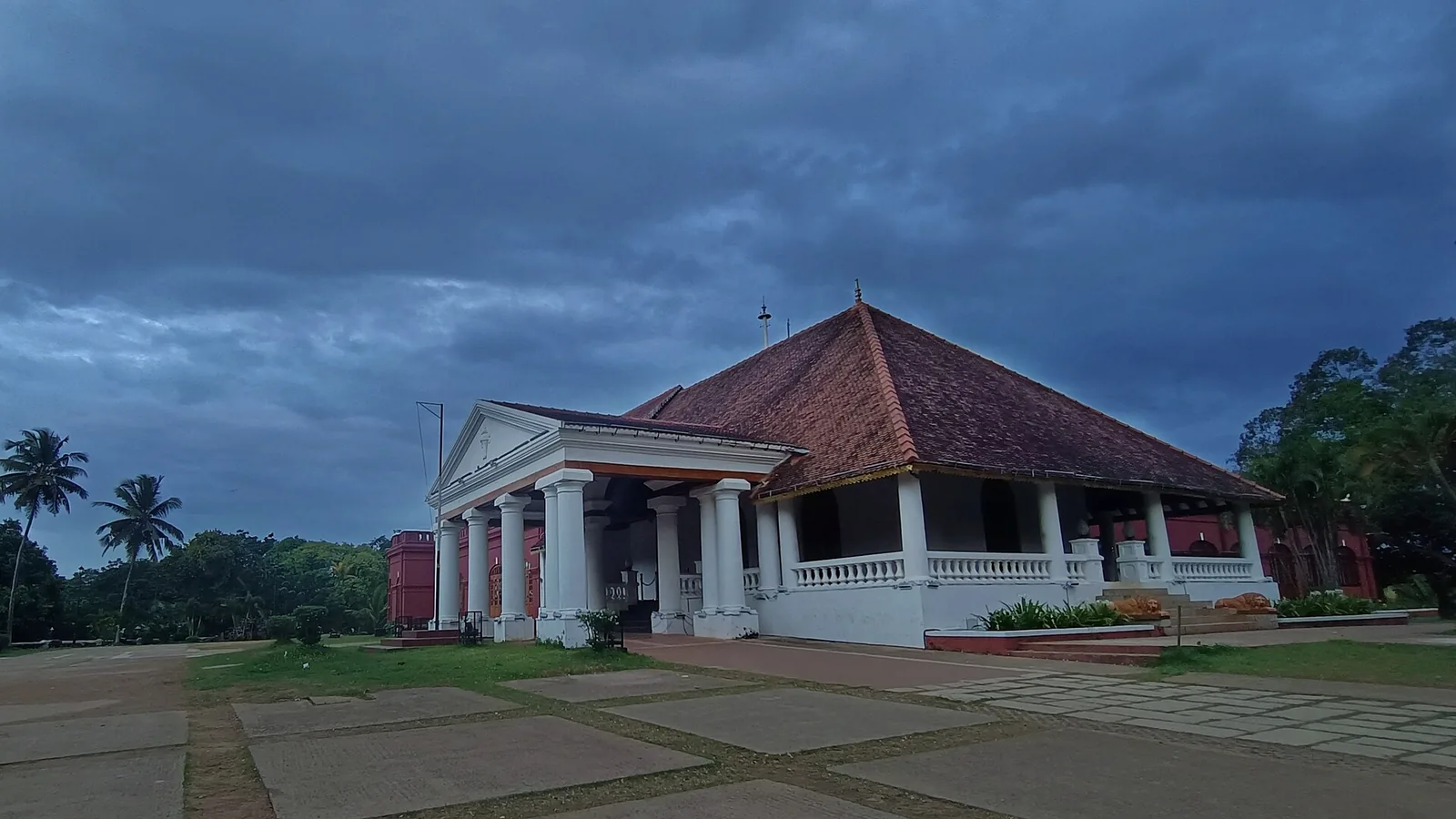
3.6 km · 6 min drive
Kanakakunnu puts a Travancore palace among gardens and cultural venues near Thiruvananthapuram’s Museum Park. Come for an evening walk or choose a date around a performance.
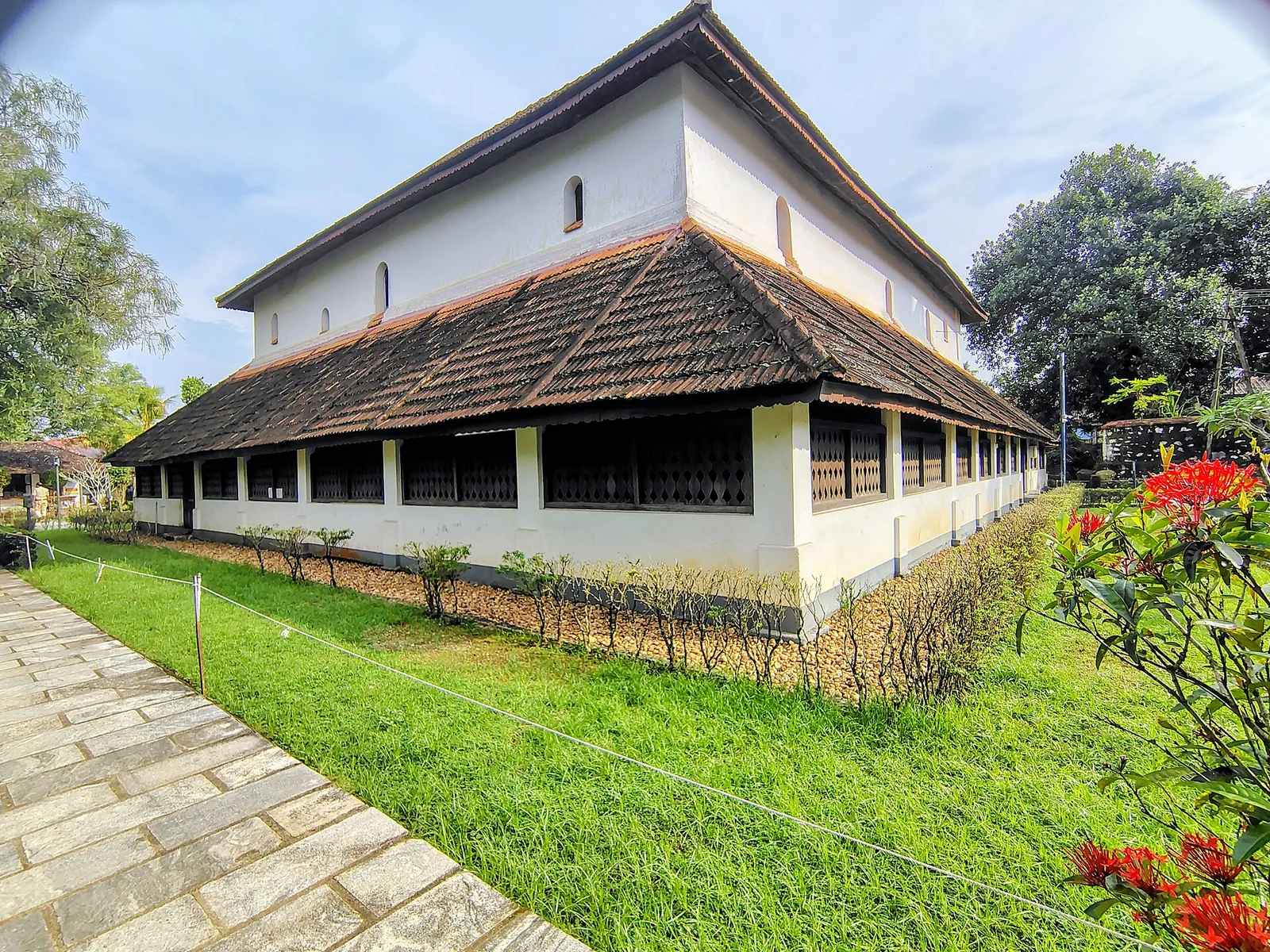
Koyikkal Palace at Nedumangad houses folklore and coin collections inside a traditional Kerala palace. Everyday objects, instruments and currency make this a more intimate museum stop than a grand royal gallery.
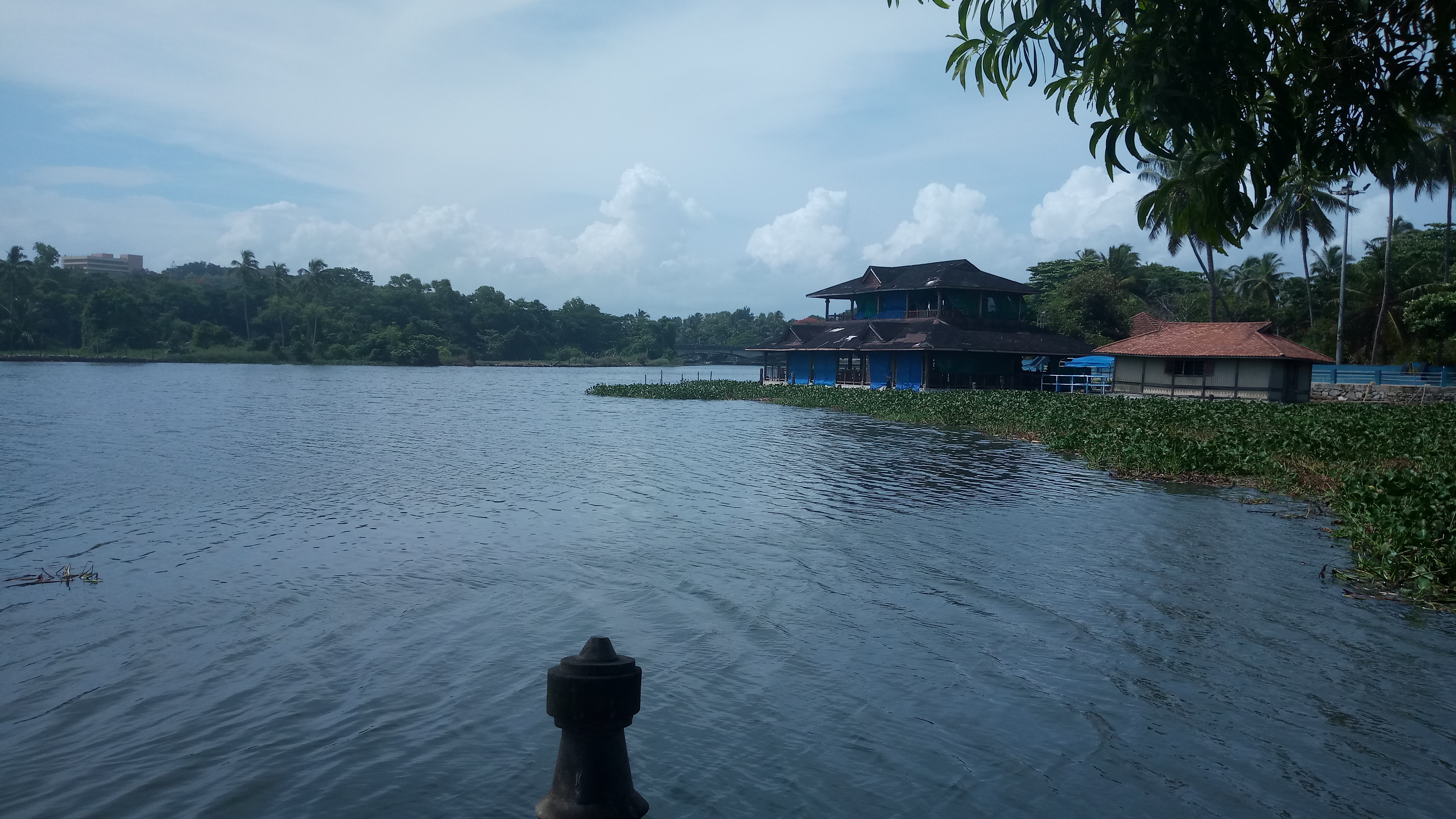
Veli Tourist Village brings lake views, gardens and boating to the coast near Thiruvananthapuram. It is a family outing at the meeting of Veli Lake and the Arabian Sea.
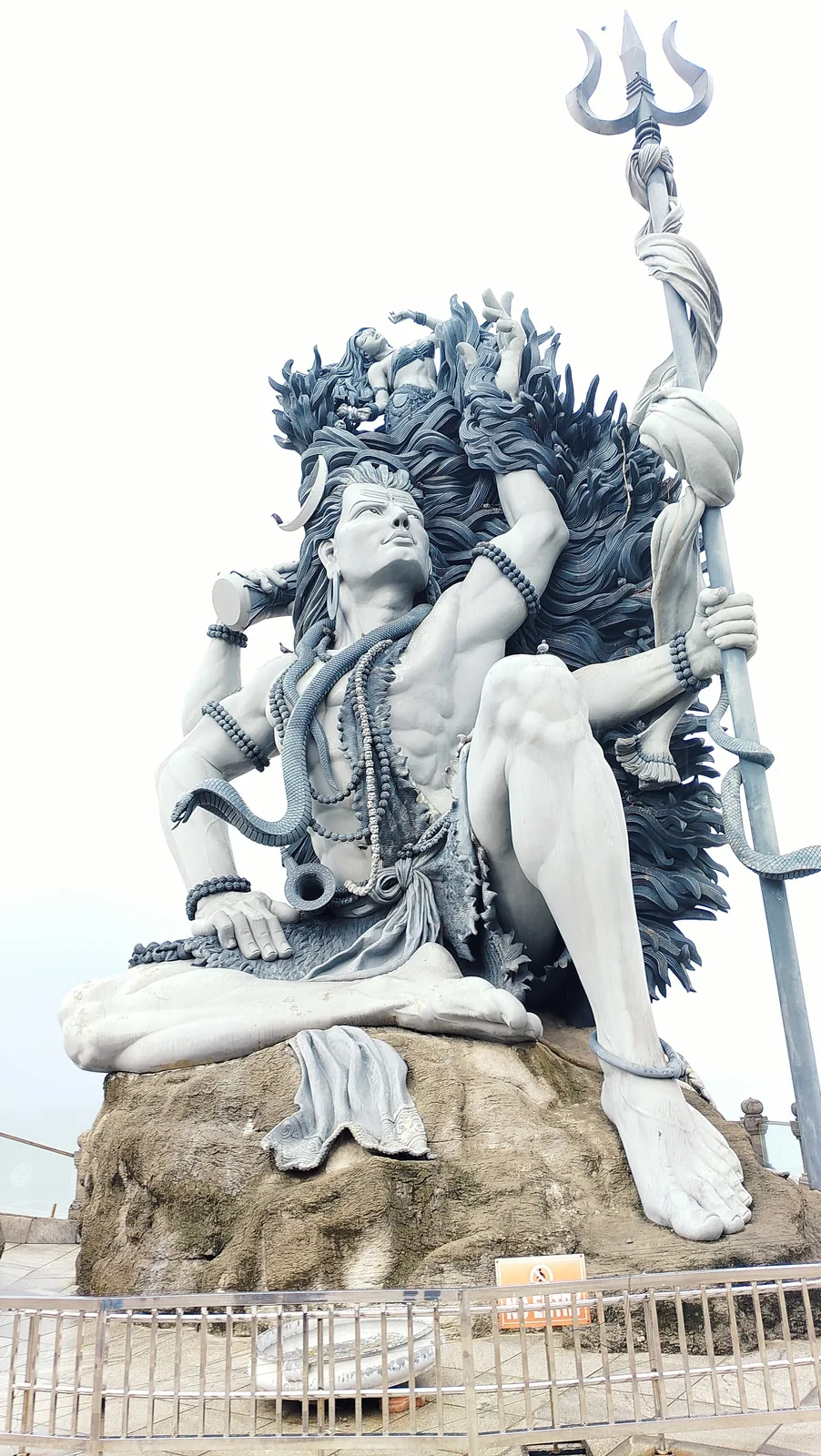
A clifftop seaside temple at Adimalathura near Vizhinjam, known for a giant Gangadhareswara (Shiva) sculpture.
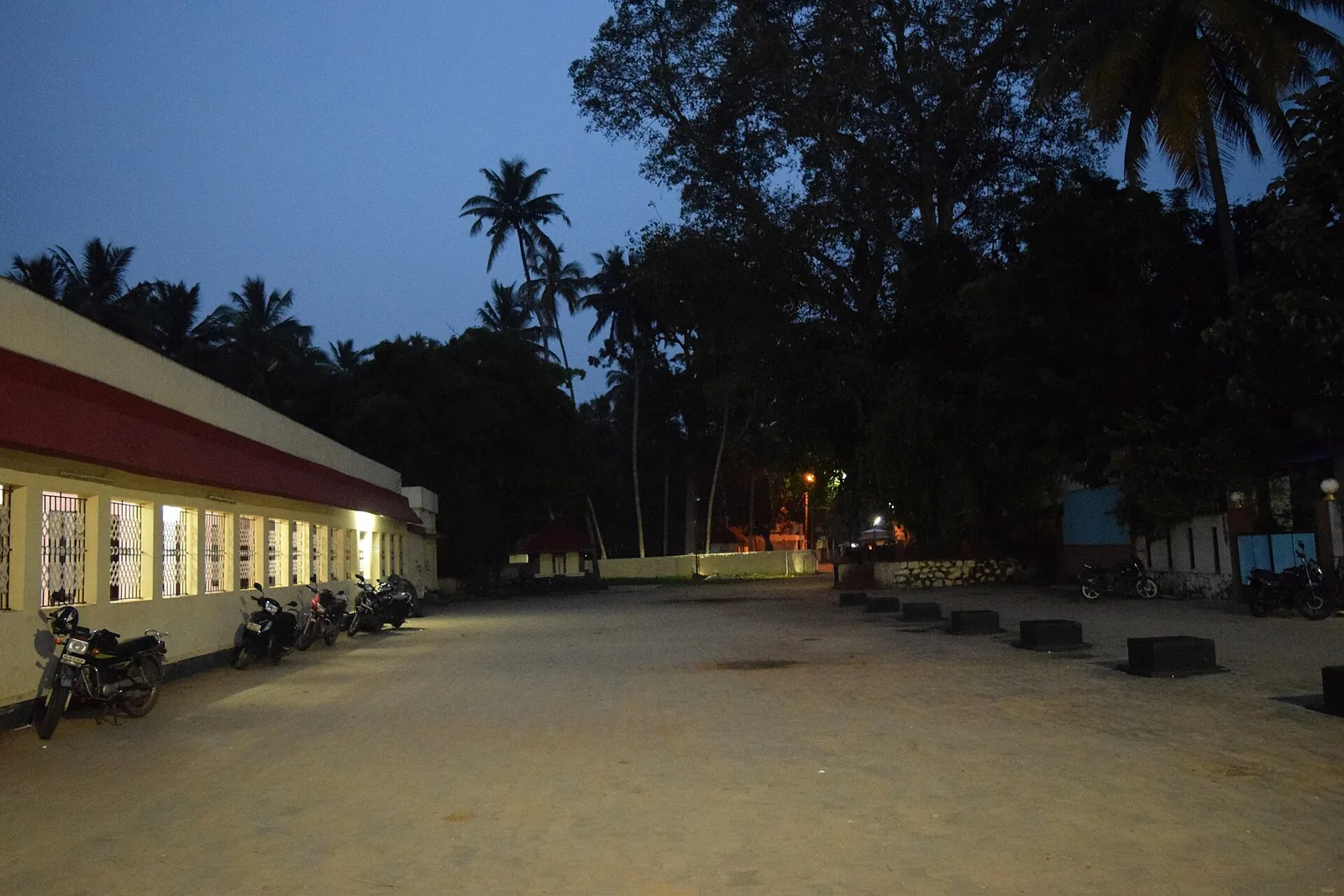
5.8 km · 7 min drive
An ancient temple on the Karamana river, the district’s main site for ancestral (bali) rituals and rare for its Parasurama deity.
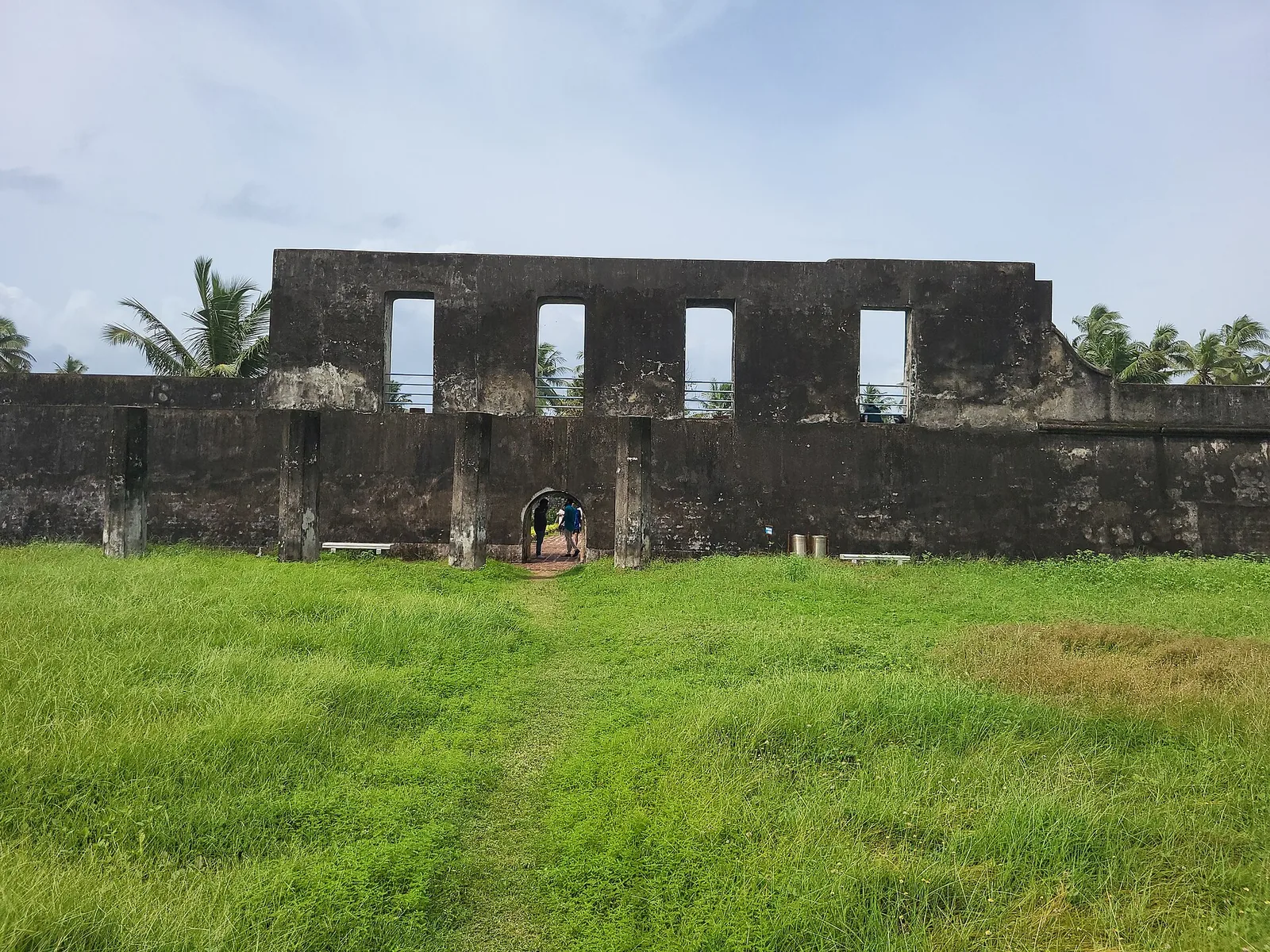
A 1690s English East India Company sea fort (Anjengo) on the coast north of the city, one of the earliest English settlements in Kerala.
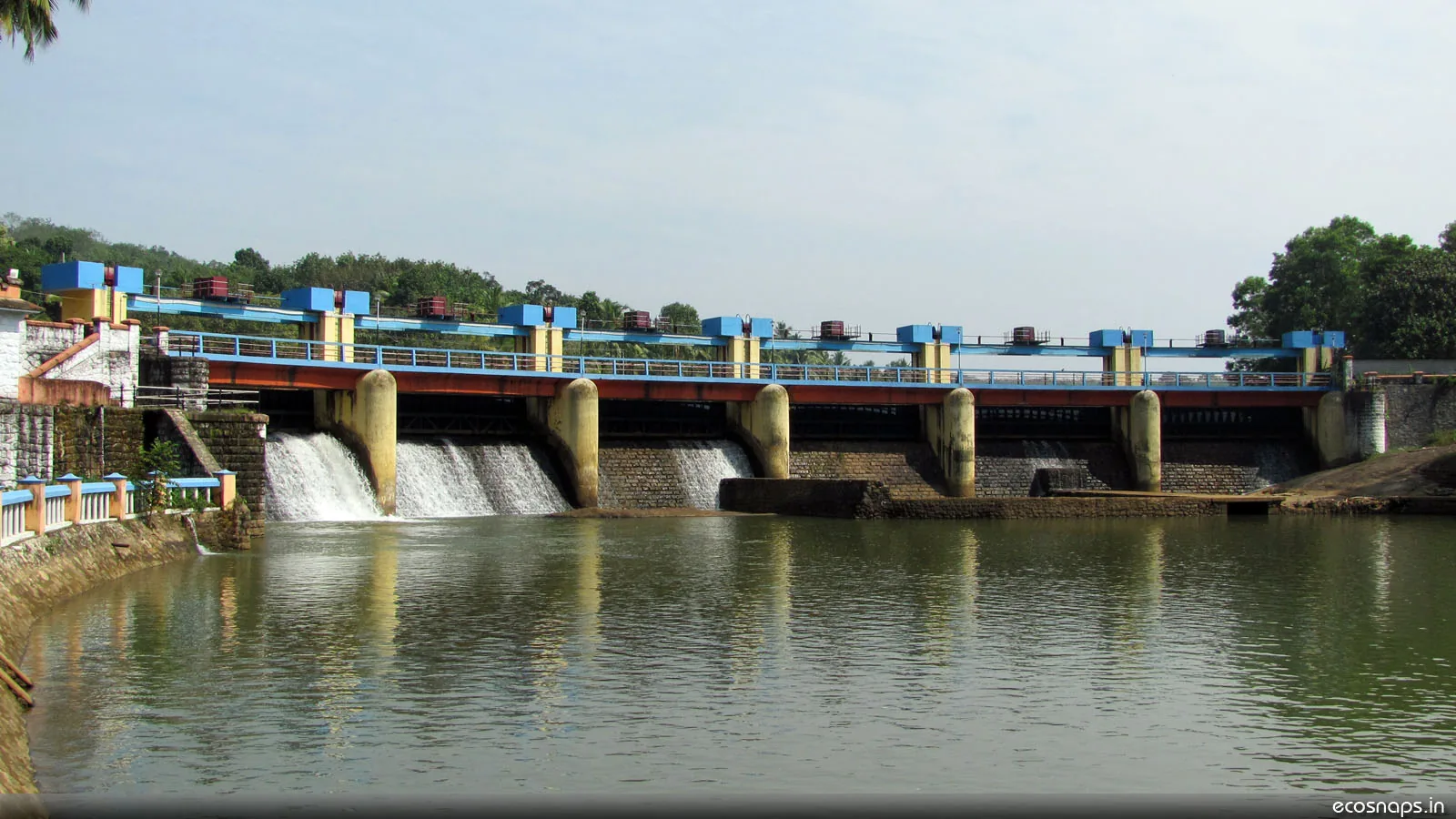
A reservoir, riverside temple and small park on the Karamana river north-east of the city, a popular local picnic spot.
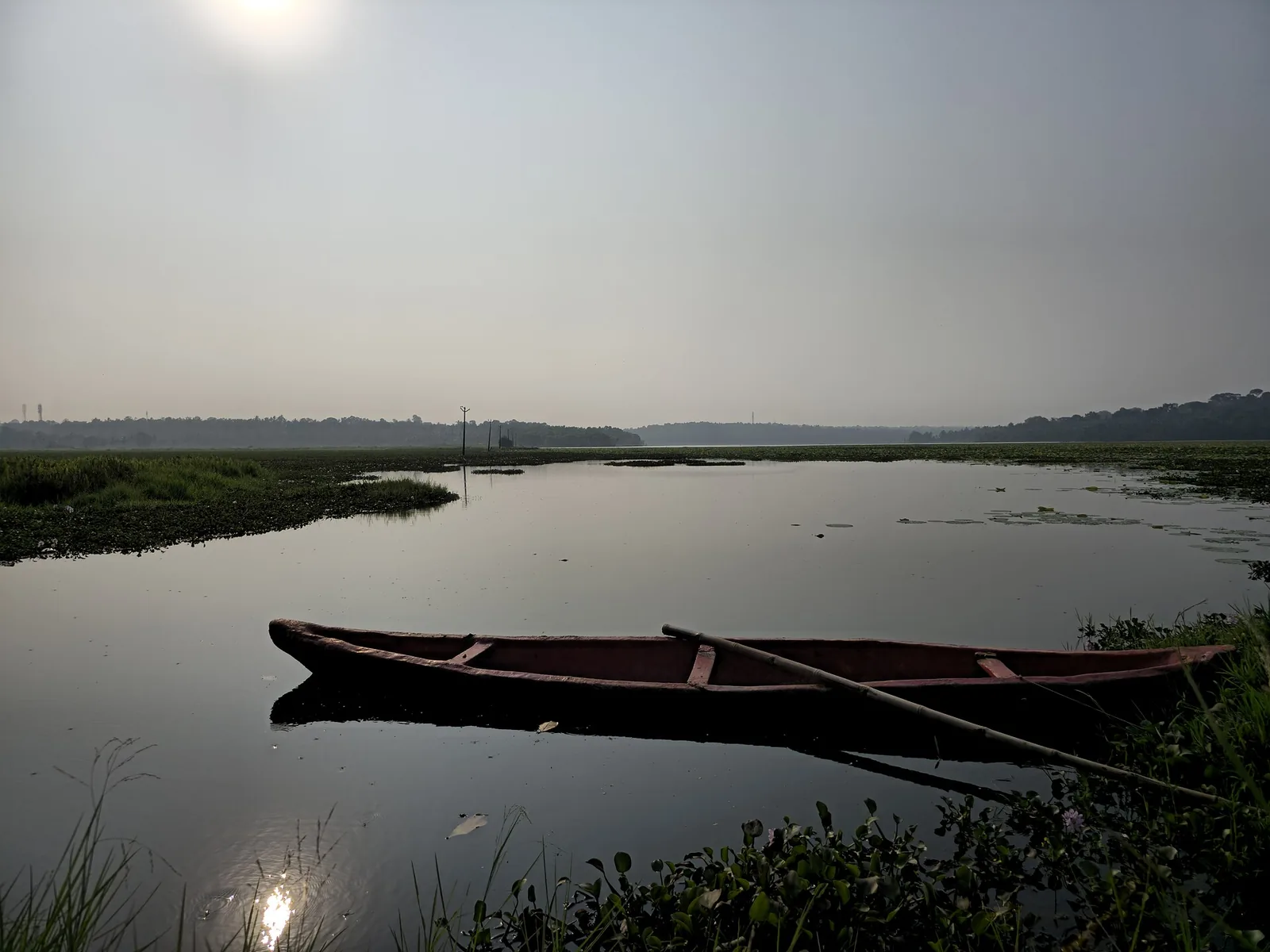
A freshwater lake in Thiruvananthapuram district, with the Punchakari–Vellayani wetlands nearby offering seasonal birdwatching.
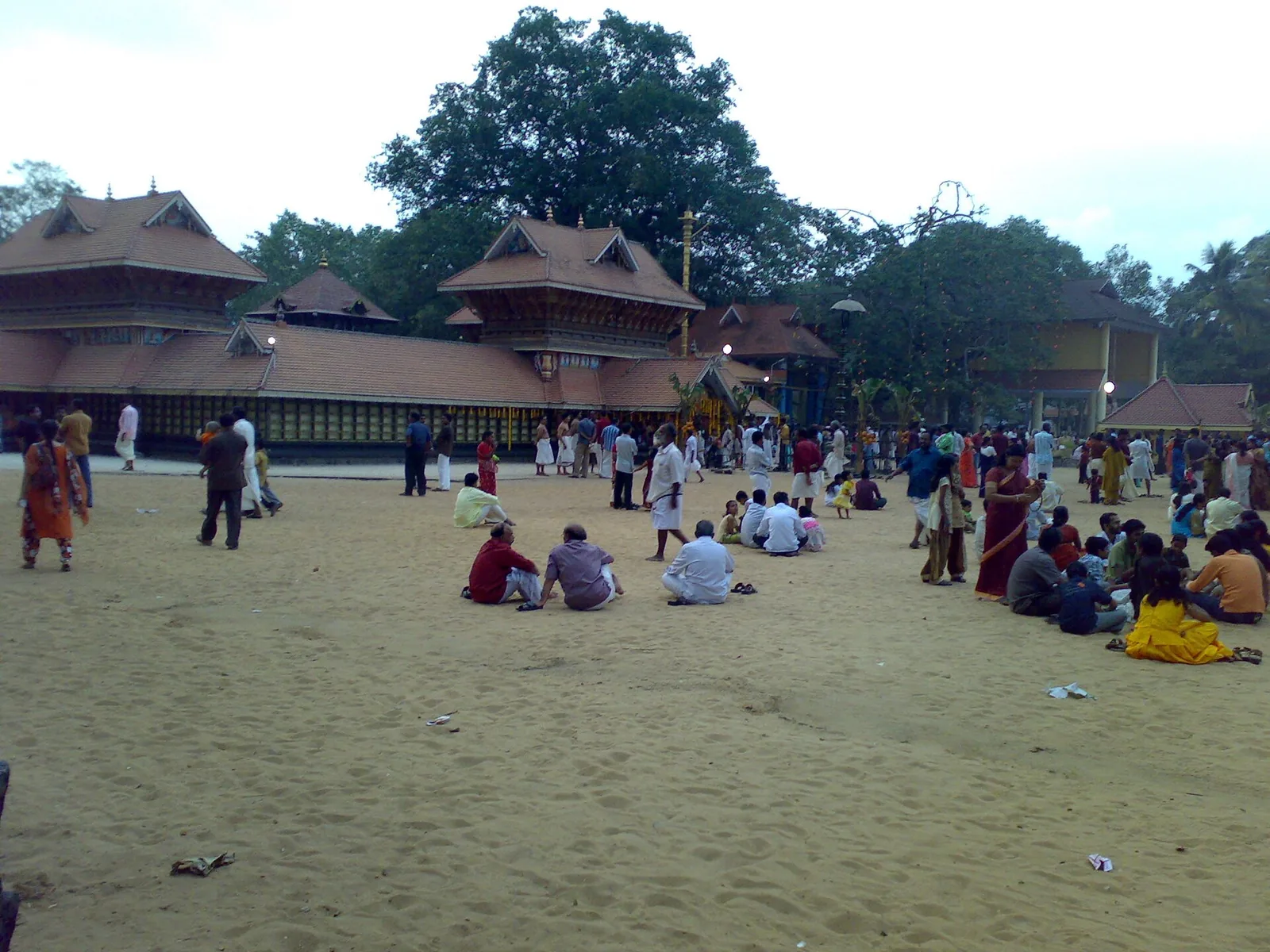
A renowned Devi temple at Chirayinkeezhu, famous for the Kaliyoot festival and the Sarkara jaggery legend.
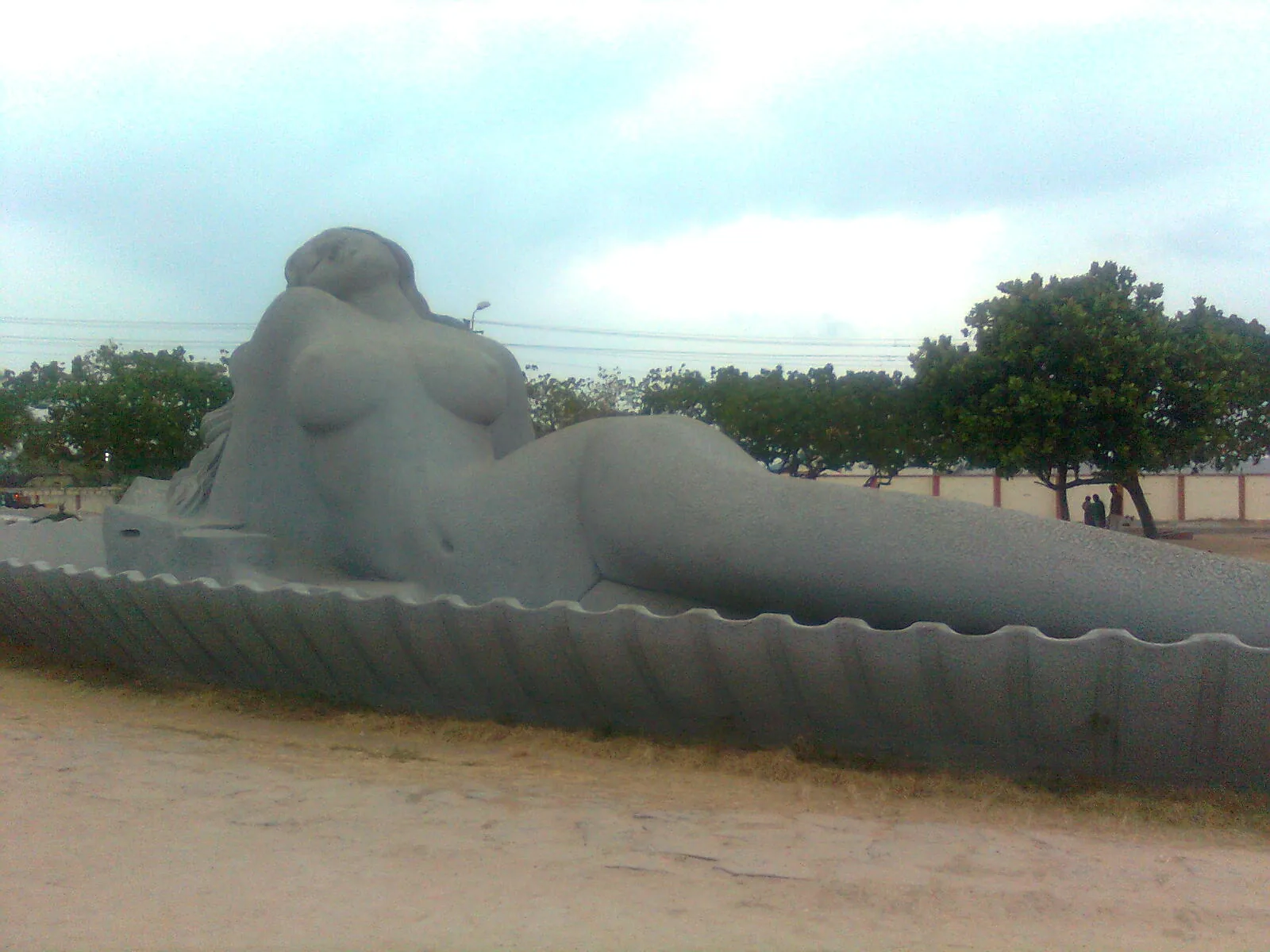
7.4 km · 10 min drive
Shanghumukham is Thiruvananthapuram’s evening shoreline: an open sea horizon, airport-side access and Kanayi Kunhiraman’s reclining mermaid sculpture. Come for a coastal walk and the changing light.
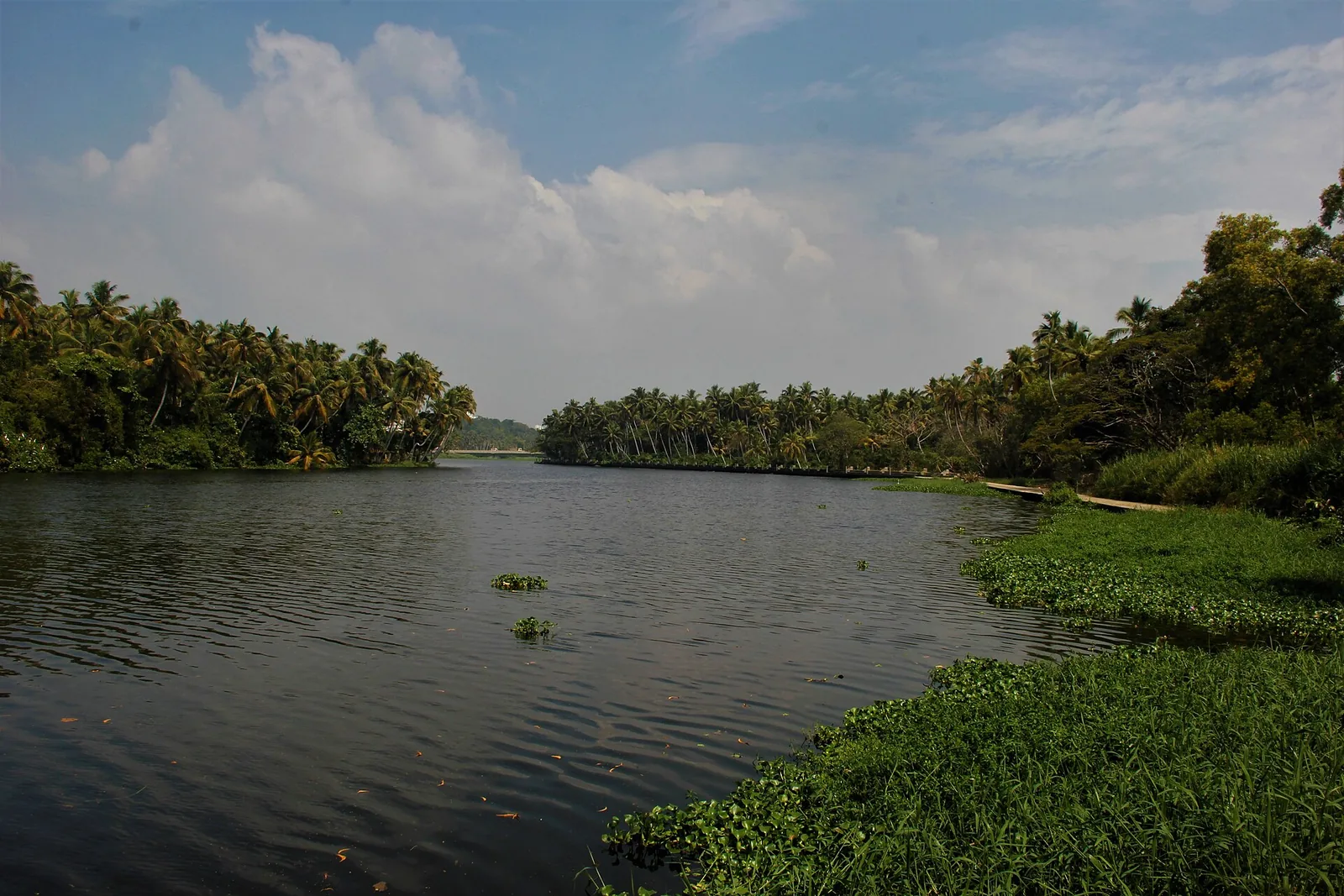
A calm backwater and boating spot near Veli with a lakeside tourist village and children’s park.
7.2 km · 11 min drive
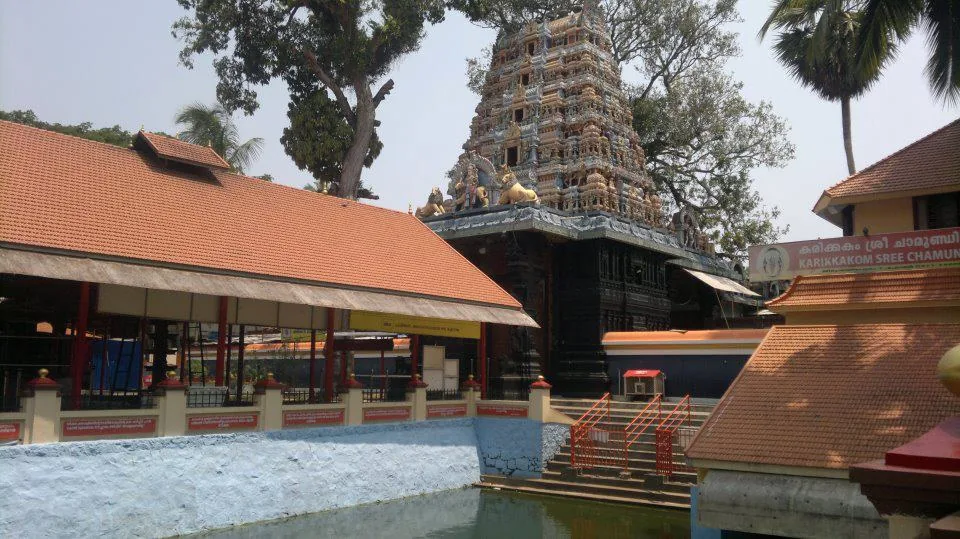
A well-known Chamundi Devi temple on the western edge of the city, busy during its festival season.
3.2 km · 6 min drive
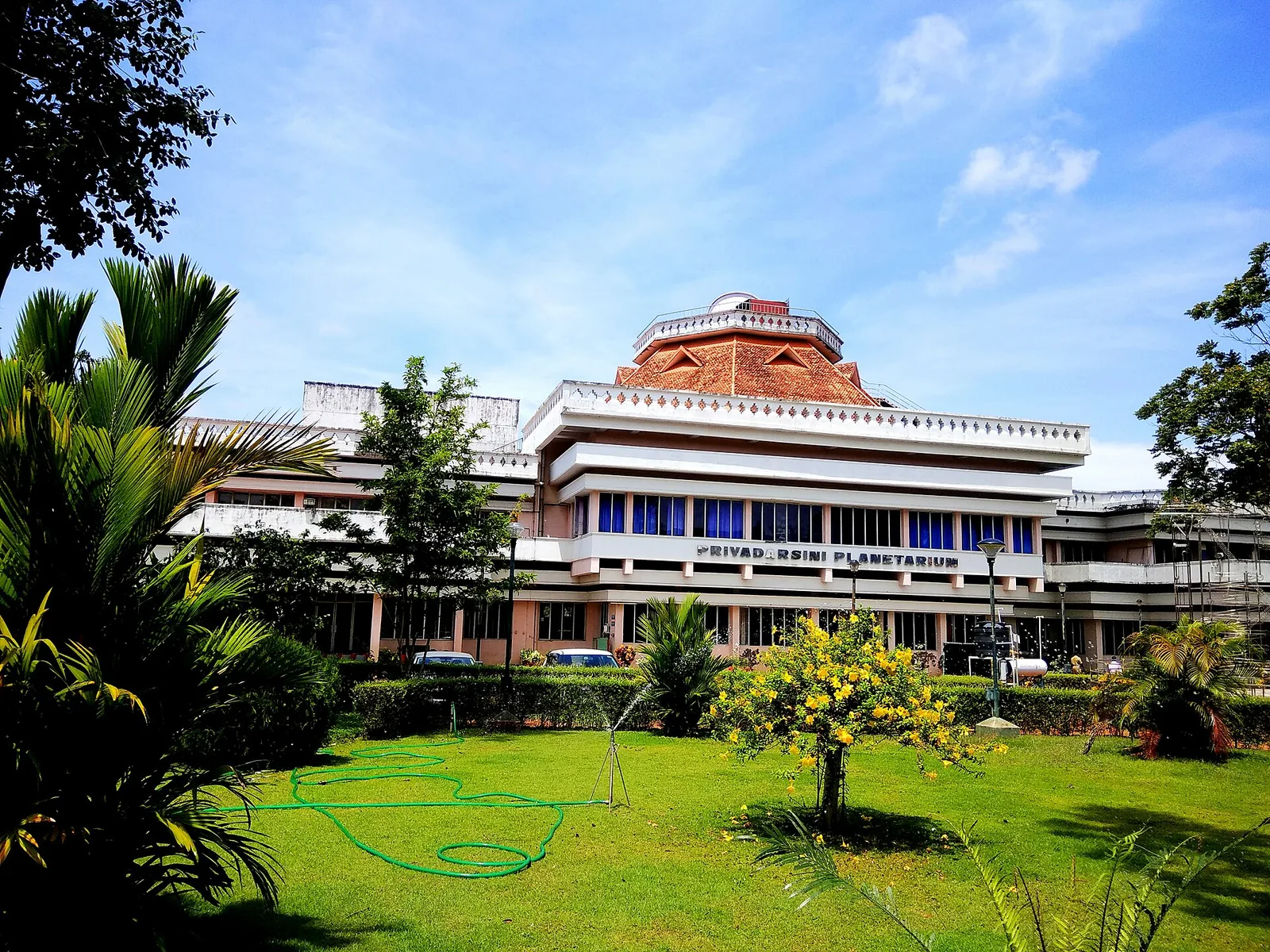
A hands-on science museum with the Priyadarshini Planetarium, popular with families and school groups.
Roampedia is commission-free — own or know a stay, eatery, guide or shop near Pazhavangadi Ganapathy Temple? Submit public business details for review.
Add a nearby businessA row of carved wooden horses gives Kuthiramalika its name. Beside Sree Padmanabhaswamy Temple, this Travancore palace museum brings timber craftsmanship and royal collections into one compact visit.
500 m · 6 min walkKerala’s capital and the old seat of Travancore, built around the Sree Padmanabhaswamy Temple.
660 m · straight lineMajor Vishnu temple and one of Kerala’s most important pilgrimage landmarks; strict entry and dress rules apply.
660 m · 8 min walkFamous Devi temple in the city, home of the Attukal Pongala — recorded as the largest annual gathering of women.
2.4 km · 4 min driveA hands-on science museum with the Priyadarshini Planetarium, popular with families and school groups.
3.2 km · 6 min driveRobert Chisholm’s 1880 Indo-Saracenic museum in the Museum Park — a polychrome landmark holding Chola and Kerala bronzes, ivories and temple carts, with the Sree Chitra Art Gallery alongside it.
3.2 km · 6 min driveOld trees, winding paths and animal enclosures share the Museum Park at Thiruvananthapuram Zoo, also known as Trivandrum Zoo. Allow time for the garden as well as the collection, with the Napier Museum close by.
3.3 km · 6 min driveA major coastal Muslim pilgrimage landmark south-west of the city centre, known for the Beemapally Uroos and the tombs honoured within the shrine complex.
3.5 km · straight lineKanakakunnu puts a Travancore palace among gardens and cultural venues near Thiruvananthapuram’s Museum Park. Come for an evening walk or choose a date around a performance.
3.6 km · 6 min driveAn ancient temple on the Karamana river, the district’s main site for ancestral (bali) rituals and rare for its Parasurama deity.
5.8 km · 7 min driveA well-known Chamundi Devi temple on the western edge of the city, busy during its festival season.
7.2 km · 11 min driveShanghumukham is Thiruvananthapuram’s evening shoreline: an open sea horizon, airport-side access and Kanayi Kunhiraman’s reclining mermaid sculpture. Come for a coastal walk and the changing light.
7.4 km · 10 min driveRoad and walking figures are route estimates, with travel times dependent on access, traffic and conditions. Figures marked “straight line” show direct separation and do not describe a road or walking route. Fare estimates use Kerala’s 26 April 2022 auto/taxi notification and exclude waiting, night and applicable one-way surcharges. Routing: © openrouteservice.org by HeiGIT | Map data © OpenStreetMap contributors
Nearby toilets, pharmacies, ATMs, seating and vets come from OpenStreetMap community mapping. Map data © OpenStreetMap contributors | Walking times © openrouteservice.org by HeiGIT
The Indian Army runs it. The Madras Regiment owns the temple, the Madras Regimental Centre manages it, and the Colonel of the Madras Regiment chairs its board.
The temple opens at 4:30 am and closes at 11:30 am, then opens again from 5 pm to 8:30 pm, according to the temple website in November 2026.
Ganapathy removes obstacles, and the hard shell stands for the obstacle. A palace record of 1771 already mentions 300 coconuts broken at the temple.
Travancore soldiers worshipped the idol in their barracks at Padmanabhapuram from about 1750 and kept it through every change of their force. The Madras Regiment took over in November 1956.
Soldiers built a small shrine at East Fort around 1765 with Dharma Raja's help. It was renovated between 1860 and 1880 and rebuilt between 2018 and 2019.
It is on Padmavilasam Road at East Fort in Thiruvananthapuram, a short walk from Sree Padmanabhaswamy Temple and Kuthiramalika Palace.
The temple opens with Nirmalya darshan at 4:30 am, Ganapathy Homam is at 5:45 am and Uccha pooja at 11 am (temple website, November 2026).
The temple is on Padmavilasam Road, Pazhavangadi, Thiruvananthapuram 695023, at East Fort. The temple opens at 4:30 am, closes at 11:30 am, reopens at 5 pm and closes at 8:30 pm (temple website, November 2026). The temple office is on 0471 246 1929.
Nearby you can pair Kuthiramalika Palace (500 m, route estimate), Thiruvananthapuram (660 m, approximate straight-line separation), Sree Padmanabhaswamy Temple (660 m, route estimate), Attukal Bhagavathy Temple (2.4 km, route estimate).
Written about Pazhavangadi Ganapathy Temple itself — its history, its legends and the arguments about them.
These guides explore Thiruvananthapuram city and the surrounding area. Choose a visit that fits your interests, allowing separately for travel between stops.


Route-level itineraries and practical guides for the rest of Kerala.