What to expect
Highlights
- Church visit at Chalakkudy Forane Church
- Pilgrimage, architecture or local Christian heritage
- Nearby town food and stays
St Mary’s Forane Church on Church Road, the Syro-Malabar forane that governs seventeen daughter parishes across the Chalakkudy countryside and keeps the ambu perunnal, the arrow feast the town observes across community lines. The present building was rebuilt in 1987; the belfry is 1913 and the bell 1887.
Check entry arrangements. Ask the church about visiting times around services and any dress or photography rules. During worship, keep voices low and follow staff directions.
Dress respectfully and follow the institution’s admission and photography rules.
St Mary’s Forane Church stands on Church Road in Thachudaparambu, a few hundred metres east of National Highway 544 in the middle of Chalakkudy town. Its full dedication is the Nativity of Our Lady, and the Diocese of Irinjalakuda registers it under that name; locally it is simply the Chalakkudy palli. It is a Syro-Malabar Catholic parish and a forane — a deanery — with seventeen daughter churches under it, and the diocese counts 2,068 families on its rolls. Three things bring people who are not parishioners: a Marian grotto modelled on Lourdes, opened in October 2000; a Perpetual Adoration Centre from October 2001; and the Holy Land, a walk-through Bible village blessed on 8 September 2006. The church itself is a 1987 rebuild in reinforced concrete. The oldest things on the site are a wooden altar, a bell cast in 1887 and the tower built to hang it in 1913.
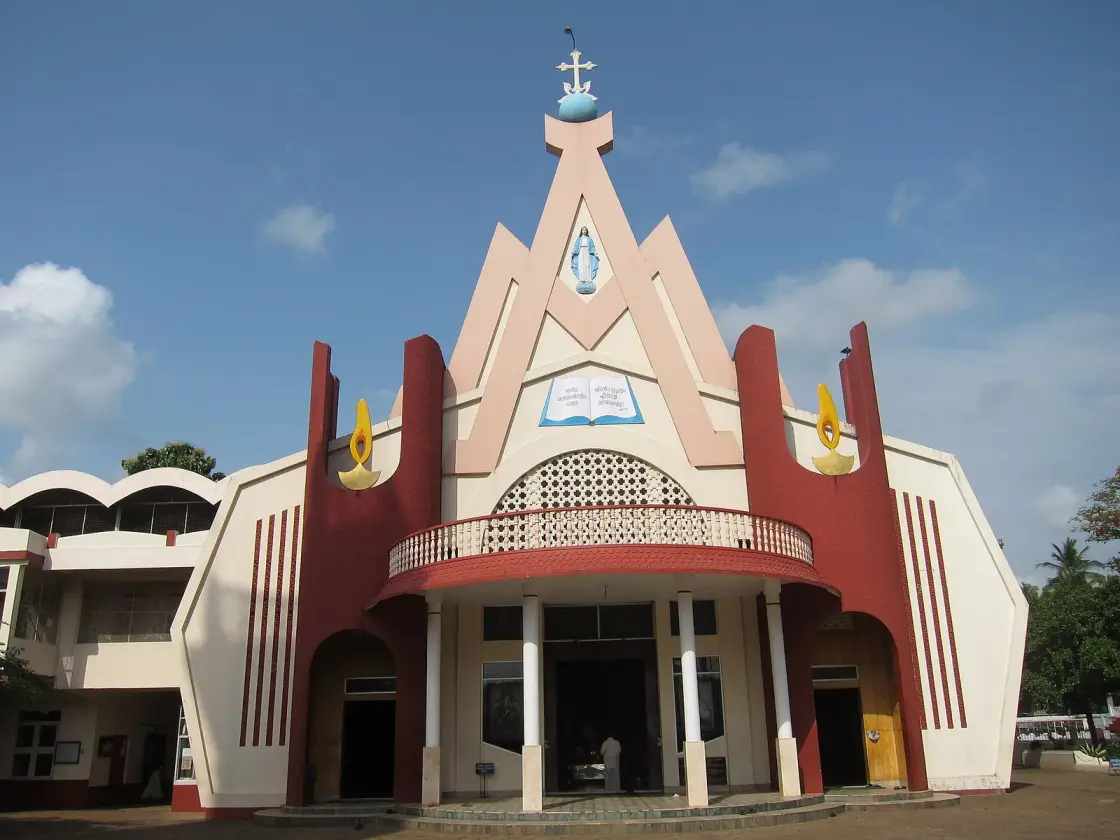
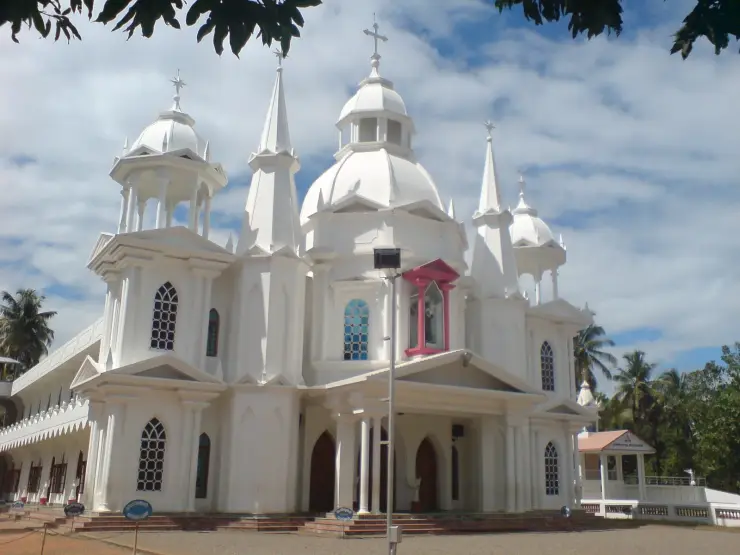
Arriving, you will not mistake it for an old building, and it is worth saying so plainly at the start. The church front is a piece of confident mid-century Kerala modernism: a steep white-and-pink gable folded into a zigzag, two flanking piers in oxblood red carrying gilt flame motifs, a Marian statue in a niche at the apex under a blue globe and a cross, and a curved first-floor balcony over the entrance with an open Malayalam Bible painted on a panel above it. The forecourt is swept laterite-red and wide enough to hold a crowd. To the left as you face the church is a small blue chapel in a fussy Gothic idiom, and behind it the church offices and school. This is what a well-funded Kerala congregation looked like when it rebuilt in 1987, and the church makes no secret of the date.
The tallest thing on the site is not the church. The belfry stands separately, a narrow seven-storey tower in white with dark red pilasters, each stage pierced by a pointed louvred opening, a roundel near the top and an open balustraded platform above that. Its own account puts the tower at 1913 under Rev. Fr Devassy Avaran, that its seven stages stand for the seven sacraments, and that a statue of the Virgin was placed on the summit in 1965 under Rev. Fr Antony Thekkiniyath. It also states that the bell inside it is older than the tower — cast in 1887, and cast in France — and that an inscription on it runs in Latin, Arabic and Malayalam. That last detail comes from the church’s own record and is printed here as it stands there.
The word forane is the one that explains the place, and it is not a decorative title. In the Syro-Malabar Church a forane is a deanery: a cluster of parishes grouped under one senior parish whose vicar, the forane vicar, has a defined role in coordinating them. St Mary’s is one of ten foranes in the Diocese of Irinjalakuda. Its own published table lists seventeen churches under it — St Antony’s at Perambra, St Joseph’s at Aloor, Our Lady of Grace at Aloor West, the Little Flower church at Potta, Our Lady of the Rosary at Karoor, Our Lady of Fatima at Vellanchira, Our Lady of Grace at Thuruthiparambu, Our Lady of Perpetual Help in West Chalakkudy, St Sebastian’s at Thachudaparambu, St Joseph’s in North Chalakkudy, St Antony’s at Kottatt, Our Lady of Perpetual Help at Koodapuzha, Our Lady of Lourdes at Elinjipra, St Francis Assisi at Bethlehem-Elinjipra, St Joseph’s at Mettipadam, St George at Pariyaram and St Mary’s at Thessery.
That list is a map of how Christian settlement moved out of the town and up the Chalakudy river towards the hills, and its dates can be checked against the daughters rather than the mother. Aloor is the clearest case. Malayalam Wikipedia records that the people of Aloor, who had until then belonged to the Chalakkudy church, secured land for a building in 1858, put up a prayer house, had it raised to a church by the Vicariate of Verapoly in 1868, and had it made a parish in 1872. West Chalakkudy — the Munjeli church — was set up in 1966 for people who had until then belonged to the forane. At Elinjipra a Capuchin friary was founded in 1962, a cross-chapel followed in 1963, and the parish was erected on 24 August 1998. Each of those dates is a small piece of documented evidence that the Chalakkudy parish already existed, and was already large enough to shed people.
The diocese above it is young. The Eparchy of Irinjalakuda was created on 22 June 1978 by Pope Paul VI, by the bull Trichurensis Eparchiae, out of territory taken from the then Diocese of Trichur; Mar James Pazhayattil was its first bishop and served until January 2010, when Mar Pauly Kannookadan succeeded him. Before 1978 Chalakkudy belonged to Trichur, and before the Latin-rite reorganisation of the nineteenth century the whole of this country was under the Vicariate Apostolic of Verapoly, which is the authority named in the Aloor record of 1868. The congregation is therefore much older than every ecclesiastical structure that has governed it, which is the ordinary condition of an old Kerala parish and is worth holding in mind.
Inside, the object the congregation cares most about is an altar it did not throw away. When the church was rebuilt in 1987 the original wooden altar — carved, and painted with scenes of the Virgin — was left in place and kept. It is known here as the Swayamvara Altar, and the church holds that the title was conferred from Rome; no document has been produced for that, and the claim stands as the church’s own. At the consecration of the rebuilt church, Cardinal Simon Lourdusamy declared the church a Marian Pilgrim Centre. That designation is why it styles itself a shrine, and the reason its website is at marianpilgrimcentre.com rather than at a church address.
Two additions after that turned a parish church into somewhere people travel to. In October 2000 a grotto to the Virgin was built in the grounds, modelled on Lourdes, a project of Rev. Fr Thomas Panjikaran; it is described as the largest in the diocese and reports rosary at seven in the evening, and a litany and novena every Saturday at six. In October 2001 a Perpetual Adoration Centre was opened, dedicated as a memorial of the silver jubilee of the diocese and of Mar James Pazhayattil’s consecration. Then came the Holy Land: three years of construction, blessed by Cardinal Varkey Vithayathil on 8 September 2006 — the church’s own titular feast — and inaugurated by Kodiyeri Balakrishnan, then Kerala’s Home and Tourism Minister.
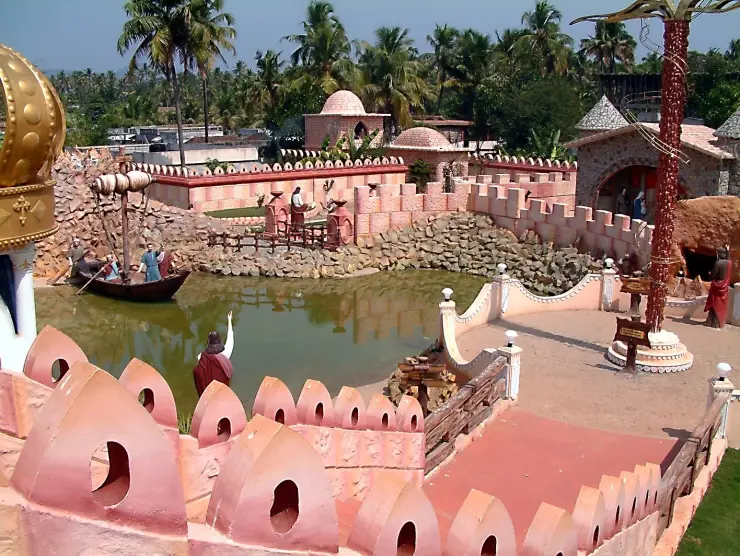
The Holy Land is the part visitors argue about and it deserves a straight description. It is a walk-through Bible village built in the church grounds: a pink crenellated gateway with the words HOLY LAND in raised letters and an angel holding a WELCOME sash above them; inside, an artificial pond standing for the Sea of Galilee with a wooden boat and life-size painted figures in it, rockwork, mock city walls, domed buildings, a stone house and a stretch of desert. The sequence begins with Moses raising the bronze serpent and runs through the nativity, the public ministry, the passion, the crucifixion, the resurrection and the ascension, ending with the crowning of the Virgin. There is a museum with relics. It is not heritage and does not pretend to be; it is a piece of devotional theming, built deliberately and well attended, and it is the single reason most non-parishioners come through the gate.
As a working institution it is large. The diocese lists 2,068 families. They are organised in about sixty numbered units grouped into ten zones, and the units take turns leading Sunday Mass and cleaning the church — the sort of detail that tells you more about a Kerala parish than any architectural note. Its St Mary’s LP School kept its 122nd anniversary in a February in the early 2020s, which puts the school’s founding around 1901. The bulletin, Snehadeepam, carries a Federal Bank account for donations, and one of its January 2026 items describes dialysis kits given out from the church to people who are not Catholics. Mass is at 6, 7.30 and 9.30 in the morning and 5 and 7 in the evening on Sundays, and at 6, 7.15, 5 and 7 on weekdays.
The year has a shape. The titular feast is the Nativity of Our Lady on 8 September, with a Eucharistic procession through the first eight days of the month. The ambu perunnal, the town’s big one, falls in late January and early February and is described below. In Lent the Way of the Cross is prayed inside the church at 5.30 and 6.50 in the morning, and — this is the detail worth having — at seven in the evening out in the Holy Land, on every day of the fast except Friday. That is the clearest answer to anyone who assumes the Bible village is a bolt-on for visitors. It is used liturgically, in the dark, for six weeks a year.
The church’s own account puts its founding in AD 600, and the Diocese of Irinjalakuda prints the same figure — 600 — in the Established Year field of its own register. That is a remarkable thing to find in an administrative database, and it needs handling rather than repeating. The fuller account runs like this: St Thomas landed at Kodungallur in AD 52; the Christian community at Chalakkudy received the faith directly from the apostle; that community built its first church in 600; the church stood on Palace Road, a few hundred metres from where it stands now; and around AD 1300 it was moved to the present site. No document is cited for any of it. What can be said is that the tradition is internally consistent, that it is old enough to have shaped how the church talks about itself, and that it is not evidence.
The most interesting sentence in that account is not the date. That account adds that the church was built in an area predominantly occupied by Brahmins, and that permission to build there is itself the proof of the communal harmony the town claims for itself. Whatever one makes of the seventh century, that is a claim about the present dressed as a claim about the past — the town’s self-description, reaching backwards for a founding charter. Malayalam Wikipedia’s flat statement that Chalakkudy has never had a communal disturbance works the same way, and the town page records it as the town’s account of itself rather than as fact. This page does the same with AD 600.
Set against it, the earliest evidence we could actually date is unglamorous and comes from a daughter. In 1858 the people of Aloor, who belonged to the Chalakkudy church, obtained land; in 1868 the Vicariate of Verapoly raised their prayer house to a church; in 1872 it became a parish. That is a documented mid-nineteenth-century record of a mother parish large enough to be shedding congregations, and it is the floor under everything else. Between 600 and 1858 the record here is tradition. A reader who wants a single honest sentence can have this one: the parish is certainly old, its own people date it to the seventh century, and nothing we have found can carry the date back past the middle of the nineteenth.
The altar carries the strangest story. The surviving wooden altar is called the Swayamvara Altar, a title said to be one rarely bestowed by the Holy Father, and anyone who prays at it in complete self-surrender is held to receive a particular blessing. Swayamvara is a Sanskrit word out of the epics — the ceremony at which a bride chooses her husband — and it is normally heard in Kerala in a Hindu register; Kollam’s Anandavalleeswaram temple worships Parvati as Swayamvara Parvathy, and Swayamvara Pushpanjali is an offering made about a marriage. To find the same word attached to a Catholic altar, as a name for total self-giving to God, is the single most interesting piece of religious language on this site. No document has been produced for the claim that Rome conferred the title; the name and the practice are real and are what people come to the altar for.
The town’s great feast is the ambu perunnal, and the name is the whole explanation. Ambu is the Malayalam for arrow, and in Kerala the arrow feast belongs to St Sebastian, the Roman soldier-martyr shot full of arrows and long invoked against plague and epidemic — which is why arrow feasts cluster across central Kerala in the weeks after Christmas, at Thazhekkad and Kanjoor and here. At Chalakkudy the church keeps St Sebastian’s day itself on 20 January, in the ordinary calendar of saints, and then holds the perunnal separately: in 2026 a nine-day novena began at five in the evening on 26 January with Mass, novena and litany, and the feast ran across 6, 7, 8 and 9 February. The bulletin does not call it a church feast. It calls it the deshiyotsavam of Chalakkudy — the town’s own festival.
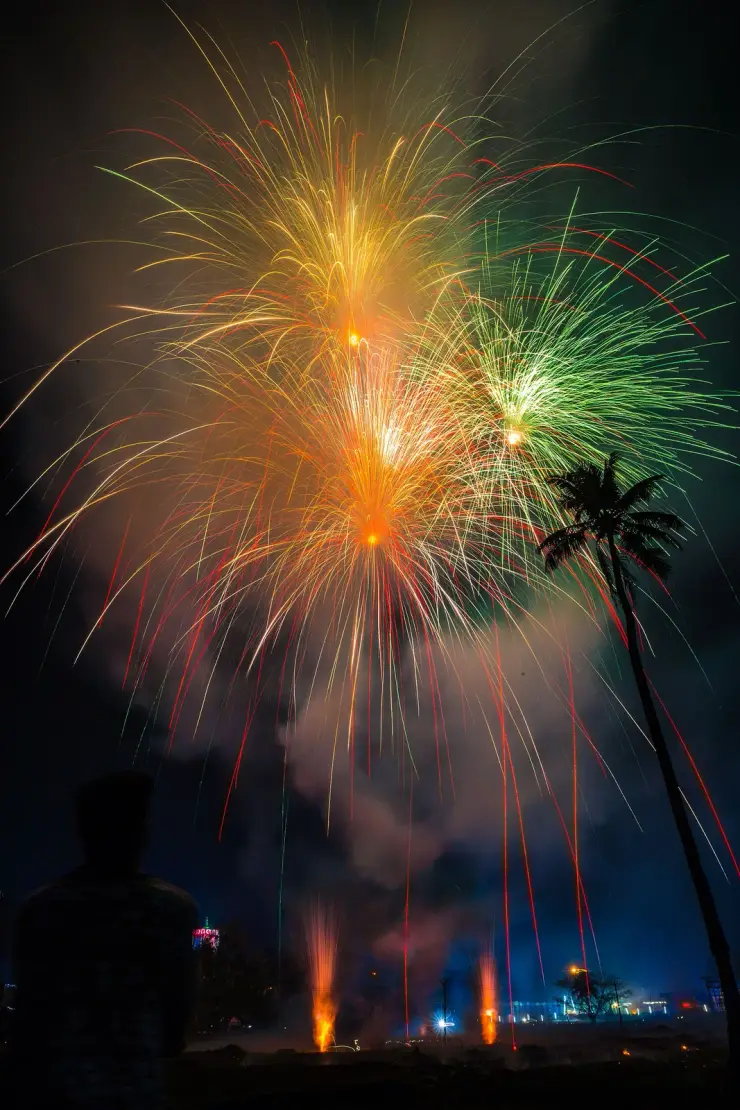
What that means on the ground is a fortnight in which the church stops belonging only to its parishioners. The building is sheathed from ground to cross in illuminated panels — wheels, rosettes and chevrons in red, green and gold, with the Virgin lit in her niche — and the forecourt fills. The fireworks are the reason people come from outside, and they are serious ones, fired late into the night over the coconut palms. The town hub already records that the ambu thirunal is kept across community lines, and that is the plain fact of it; what the hub does not say is that the arrow is Sebastian’s, that the feast is not held on his day, and that the church itself hands the festival to the town in the word it uses for it.
The grotto has produced its own body of belief in twenty-five years. The shrine holds that many miracles have happened there through the weeping prayer of the people and that they are still happening, without enumerating them. What can be said without a claim is that the pattern is the familiar one — a Lourdes replica, built at the turn of the millennium, becomes the place where people go with the things they cannot say in a pew, and the Saturday litany and the seven o’clock rosary form around that. The Perpetual Adoration Centre next to it works the same way and the same is said of it: people arrive with grief and leave with relief.
Two famous stories in this neighbourhood are not this church’s and I am refusing both by name. Sampaloor, at Ambazhakkad six kilometres west, held a sixteenth-century church, a seminary and a printing press founded by European missionaries, all destroyed in Tipu Sultan’s campaign of 1789; a fragment of the wrecked altar is kept beside the newer church, and Arnos Pathiri — the German Jesuit poet of Malayalam — began his work there. It is Ambazhakkad’s story. So is the Thazhekkad Sasanam, the inscribed stone in the churchyard at Thazhekkad near Kallettumkara, attached to a church tradition dates to 1018 and to the protection of a Kerala king, and now under the archaeology department. Both are close, both are older than anything standing at Chalakkudy, and neither belongs here.
The institutional line above this church is short and can be dated exactly. Until the nineteenth century the St Thomas Christians of this country came under the Vicariate Apostolic of Verapoly, which is the authority that raised Aloor’s prayer house to a church in 1868. The Syro-Malabar hierarchy that followed put Chalakkudy in the Diocese of Trichur. On 22 June 1978 Pope Paul VI created the Diocese of Irinjalakuda by the bull Trichurensis Eparchiae, out of Trichur’s territory, and Chalakkudy passed to it. Mar James Pazhayattil was consecrated as its first bishop and served until 18 January 2010; Mar Pauly Kannookadan has held the see since. Trichur has since been raised to an archdiocese, with Irinjalakuda as a suffragan eparchy under it.
The fabric of the site is datable in a way its foundation is not. The bell was cast in 1887. The belfry that holds it went up in 1913, under Rev. Fr Devassy Avaran, seven stages high for the seven sacraments and deliberately taller than the church. The statue of the Virgin on its summit was installed in 1965 under Rev. Fr Antony Thekkiniyath. The church itself was rebuilt in 1987 — counted here as the fourth remodelling — and it is that building, not any older one, that you photograph today. The wooden altar was kept through the rebuild. At the consecration of the new church Cardinal Simon Lourdusamy declared the place a Marian Pilgrim Centre.
Then three additions in seven years changed its standing outside its own boundaries. October 2000: the Marian grotto, built on the Lourdes model under Rev. Fr Thomas Panjikaran. October 2001: the Perpetual Adoration Centre, opened as a memorial of the silver jubilee of the diocese and of its first bishop’s consecration. September 2006: the Holy Land, after three years of building, blessed by Cardinal Varkey Vithayathil on 8 September — the church’s titular feast — and inaugurated by Kodiyeri Balakrishnan, who was Kerala’s Home and Tourism Minister in the government formed that May. A Malayalam Wikipedia editor photographed the Holy Land gateway on 13 March 2007, six months after the blessing, which independently confirms the date.
The forane’s daughters record its reach outward better than its own chronicle does. Aloor separated in stages between 1858 and 1872. The Munjeli church in West Chalakkudy was built in 1966 for people until then on the forane’s rolls. At Elinjipra the Capuchins founded the Bethlehem friary in 1962, a cross-chapel followed in 1963, and the parish itself was erected on 24 August 1998, with a minor seminary attached. Reading those dates in order gives you a century and a half of a town parish subdividing as the population moved east towards the forest road.
Counting the forane is where the sources stop agreeing, and the disagreement is worth printing. Its own published table lists seventeen churches under it. Its About page says sixteen. Malayalam Wikipedia says seventeen including the forane church itself, and its list differs from that table in two entries — it names a Kalvarikkunnu church and a North Chalakkudy church that the table pairs differently, and it has no Thessery. The church’s own table is the most recent and the most detailed of the three, and the count is not settled.
The Holy Land is a full walk-through Bible village with a boat on an artificial Sea of Galilee, and it is unusual enough to be worth the detour on its own.
The 1913 belfry — seven stages for the seven sacraments, taller than the church — is the oldest structure on the site and the best thing to look at.
The Lourdes-model grotto of October 2000 is quiet in a way the rest of the compound is not, especially at the seven o’clock rosary.
The ambu perunnal in late January and early February lights the whole church front and fills the forecourt, and the fireworks draw people from well outside the parish.
It is five minutes off National Highway 544 and works as a genuine stop on the Kochi–Thrissur run, or on the way to Athirappilly.
As a forane church it is the head of seventeen parishes, which makes it the single best place to understand how the Syro-Malabar Church is organised on the ground.
Road km to Thrissur; ghat roads and traffic vary — allow extra.
Morning or late afternoon for quieter visits and better light.
Live forecast loads in your browser.
Sun and moon are calculated for this location and shown in IST. Photography windows are the hour around sunrise and sunset; the sunset bearing is degrees clockwise from true north. Moon phase is accurate to about half a day.
Verified hotels, homestays, restaurants, experiences, sights, shops and rentals around Chalakkudy Forane Church — commission-free, with direct contact. Filter by what you need.
Kerala Tourism approved tour operator in the heart of Chalakudy town, near the KSRTC bus stand and the gateway to the Athirappilly and Vazhachal waterfalls. It is a Government of India recognised operator handling domestic and international holiday packages, ticketing and visa support with a direct office phone and email.
Chalakudy/Angamaly taxi operator with direct contact, address and Athirappilly transfer page. Chalakudy, Athirappilly taxi, Transfer.
Chalakkudy-to-Athirappilly transfer context for waterfall-route planning. Chalakudy / Athirappilly route, Kerala · Kerala, Taxi and tour transfer support.
Book with the place itself. India’s cyber-crime coordination centre warned in April 2025 that convincing copies of hotel and pilgrimage booking sites are being pushed through sponsored search and social ads, taking payment for rooms the property never hears about. Every listing here links to the business’s own contact details and its own Google or Bing profile — we take no commission and sit in nobody’s payment path. If a booking page reached you through an ad, check the address bar against the property’s own site before you pay. Fraud can be reported on cybercrime.gov.in or on 1930.
Find food, accommodation and activities across Chalakkudy. Browse the guides for places to eat, stay and explore along your route.
5 more places around Chalakkudy. Open a guide to plan the visit and onward journey.
A major Marian pilgrimage church at Koratty, widely known as Koratty Muthy, with ordinary visits requiring different planning from the October feast.
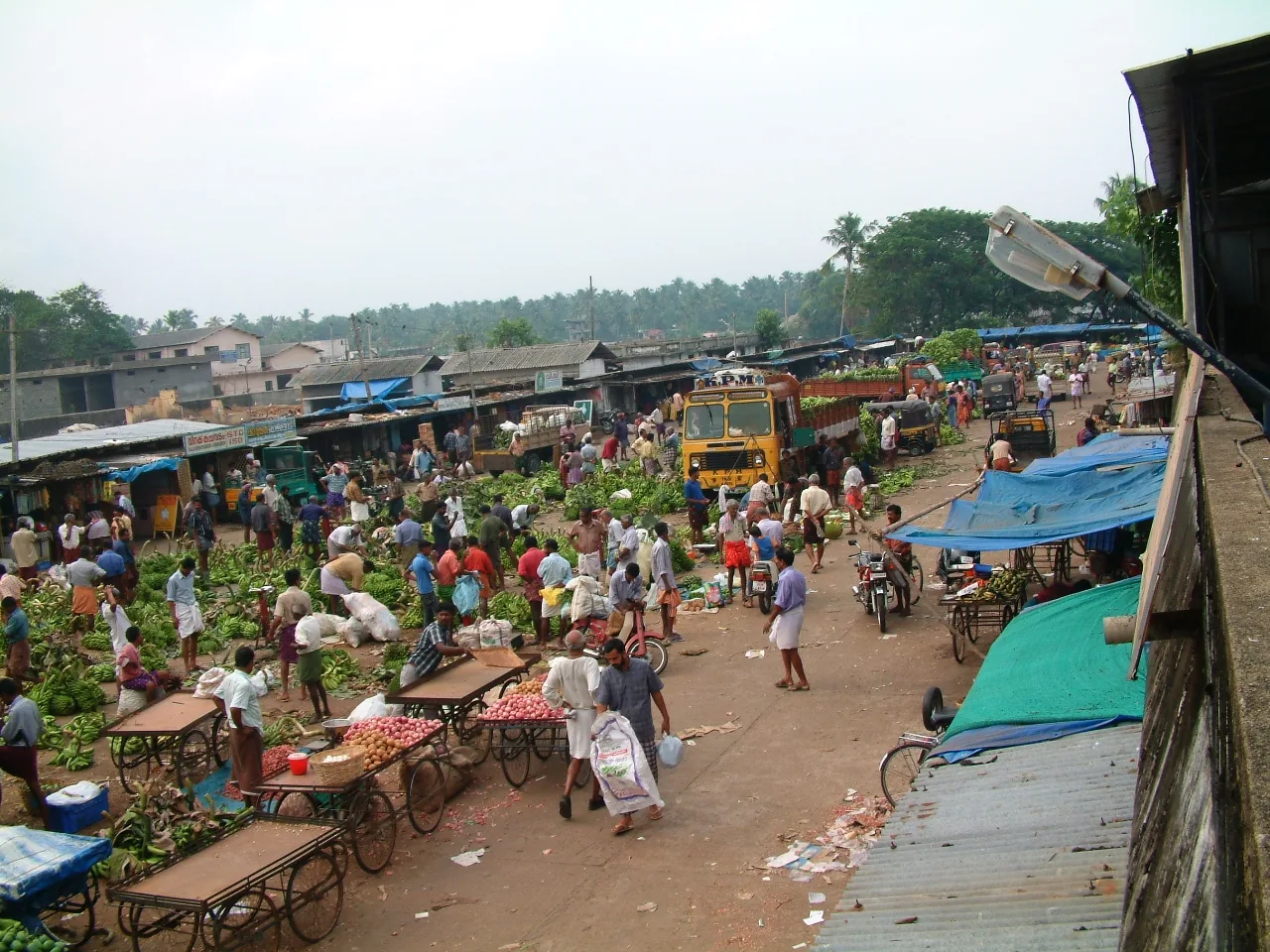
380 m · 5 min walk
The town’s wholesale produce yard on Market Road, the oldest continuously working institution in Chalakkudy — a Sakthan Thampuran-era pandikasala that still holds its traditional Tuesday and Friday markets and takes hill produce down State Highway 21.
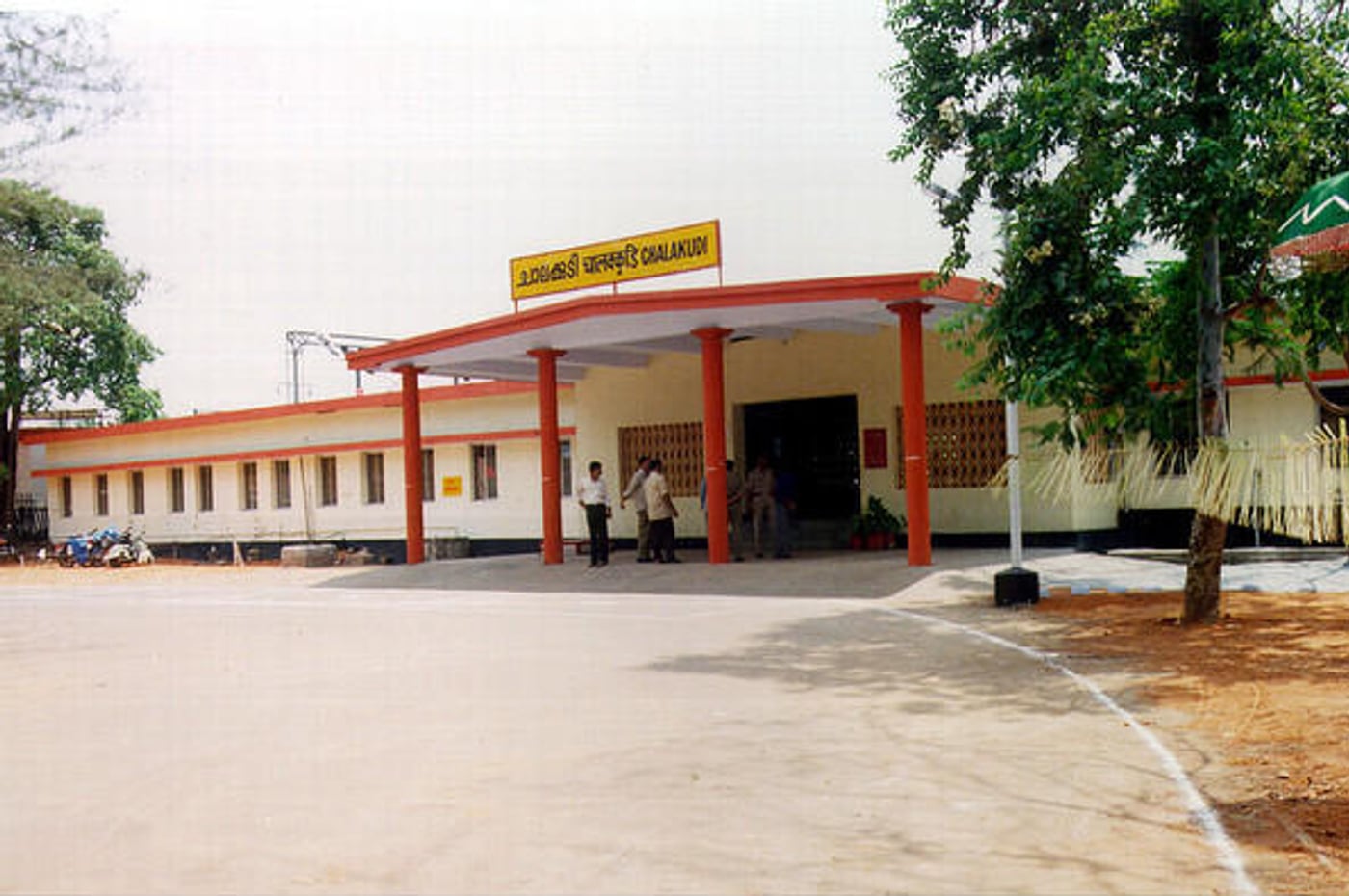
2.0 km · 25 min walk
Chalakudi station, code CKI, on the Shoranur–Cochin Harbour section — the railhead the Cochin State Forest Tramway was extended to reach, and the transfer point for Athirappilly. About 1.4 km west of the highway, which catches most visitors out.
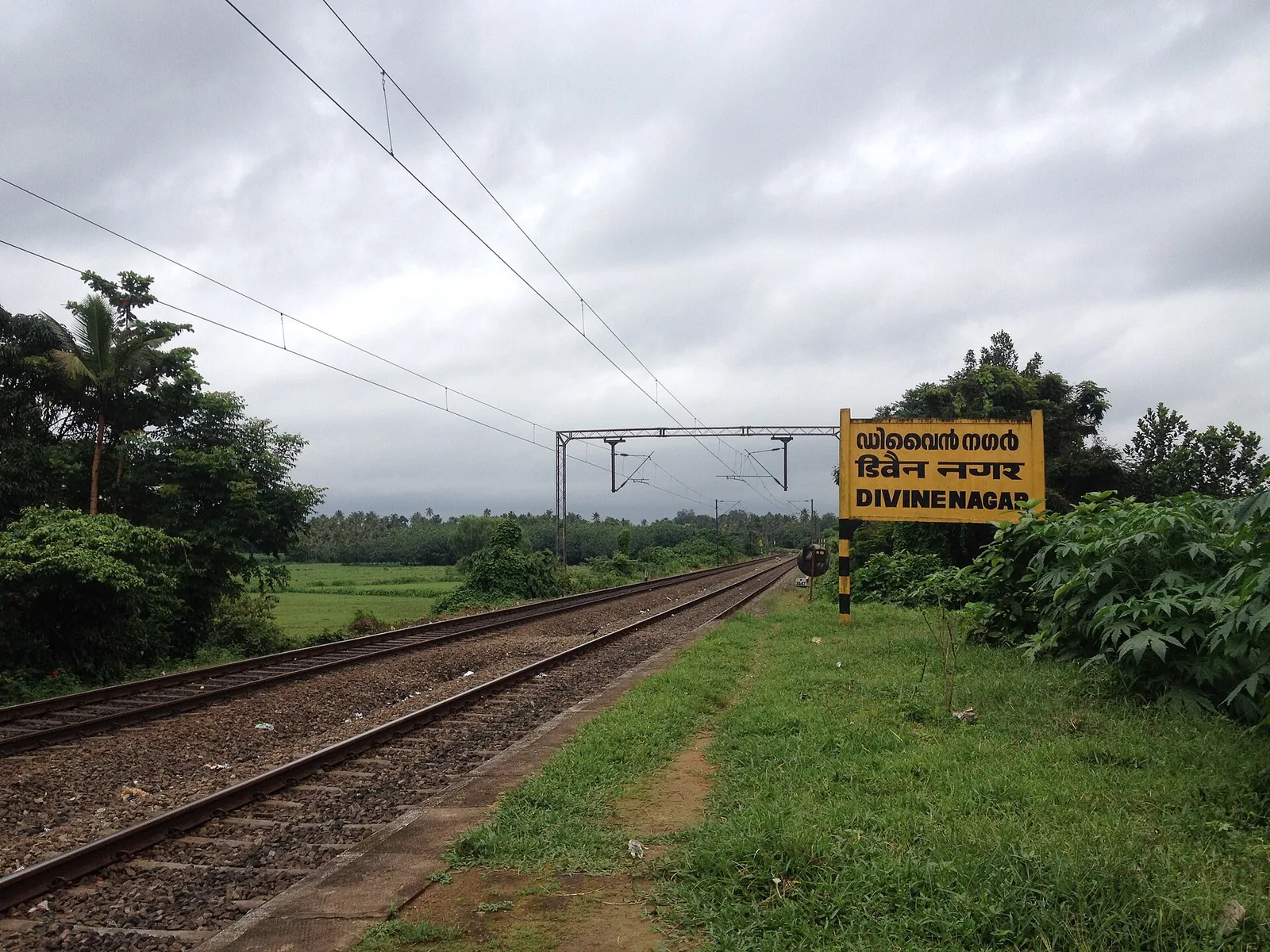
1.3 km · 17 min walk
The Vincentian Congregation’s residential retreat centre on NH 544 at Muringoor, which by its own account takes about five thousand people a week for a six-day retreat in seven languages and houses two thousand more in five charitable homes — on volume, the largest organised draw in Chalakkudy taluk after the falls. Indian Railways opened a halt called Divine Nagar for it in 1996.
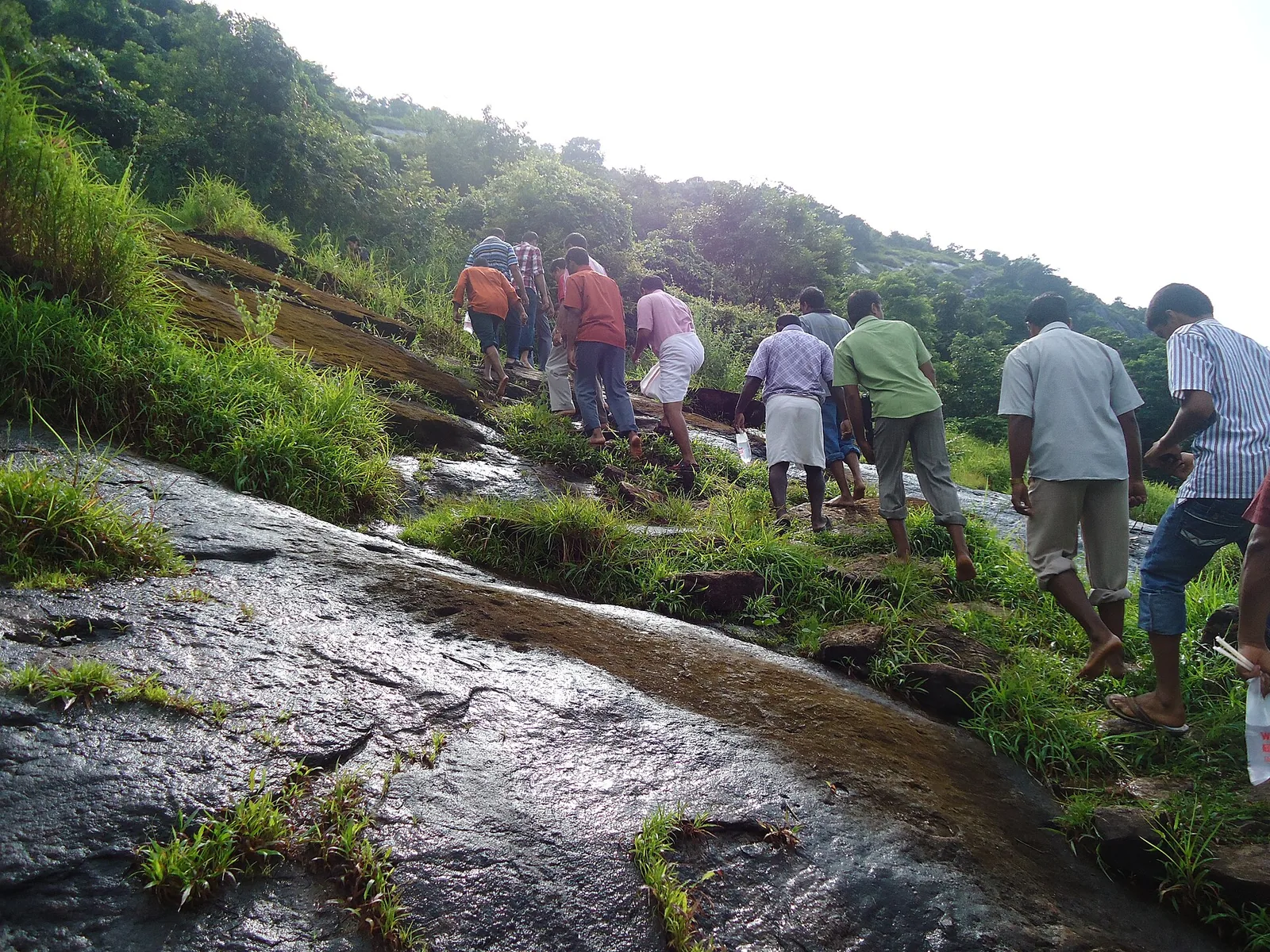
6.3 km · ~16 min by auto
A hill of crosses about 5 km north of Chalakkudy that local devotion ranks with Malayattoor — fourteen crosses up a kilometre of bare sheet rock to a hilltop shrine at about 310 m. The pilgrimage was begun in 1940 by the vicar of Perambra after a dream; April is its busiest month.
Roampedia is commission-free — own or know a stay, eatery, guide or shop near Chalakkudy Forane Church? List it and it appears here once verified.
Add a nearby businessEntry: No ticket. The church, the grotto and the Holy Land are all free to enter; offerings and candle stands are voluntary.
On Church Road in Thachudaparambu, in the middle of Chalakkudy town, a few hundred metres east of National Highway 544 — turn off near the town centre rather than at the bypass. Chalakkudy railway station (code CKI) is about 1.5 km away and autos wait outside it. Every KSRTC and private bus on the Kochi–Thrissur corridor stops in the town. Cochin International Airport at Nedumbassery is about 19 km south.
If you are travelling by bus or ferry, check the return service with the operator before setting out. Leave time to reach the stop or jetty after your visit.
Ask at the bus stand for the time of the last service back, not the next one. If you miss it, an auto or app cab is the fallback — agree the fare before you get in.
If you need step-free access, contact the site before travelling. Ask about a level entrance, steps along the route, the nearest drop-off point, seating and accessible toilets.
Charge cap and free-transaction limits: Reserve Bank of India, in force since 1 May 2025.
These services are listed within about 1.2 km of Chalakkudy Forane Church. Walking distances follow mapped routes; access and opening hours can change. Other services may be closer but are not included here.
Emergency numbers are verified against official government and state tourism sources. 112 works anywhere in India.
The town’s wholesale produce yard on Market Road, the oldest continuously working institution in Chalakkudy — a Sakthan Thampuran-era pandikasala that still holds its traditional Tuesday and Friday markets and takes hill produce down State Highway 21.
380 m · 5 min walk · straight lineThe Vincentian Congregation’s residential retreat centre on NH 544 at Muringoor, which by its own account takes about five thousand people a week for a six-day retreat in seven languages and houses two thousand more in five charitable homes — on volume, the largest organised draw in Chalakkudy taluk after the falls. Indian Railways opened a halt called Divine Nagar for it in 1996.
1.3 km · 17 min walk · straight lineChalakudi station, code CKI, on the Shoranur–Cochin Harbour section — the railhead the Cochin State Forest Tramway was extended to reach, and the transfer point for Athirappilly. About 1.4 km west of the highway, which catches most visitors out.
2.0 km · 25 min walk · straight lineA hill of crosses about 5 km north of Chalakkudy that local devotion ranks with Malayattoor — fourteen crosses up a kilometre of bare sheet rock to a hilltop shrine at about 310 m. The pilgrimage was begun in 1940 by the vicar of Perambra after a dream; April is its busiest month.
6.3 km · ~16 min by auto · straight line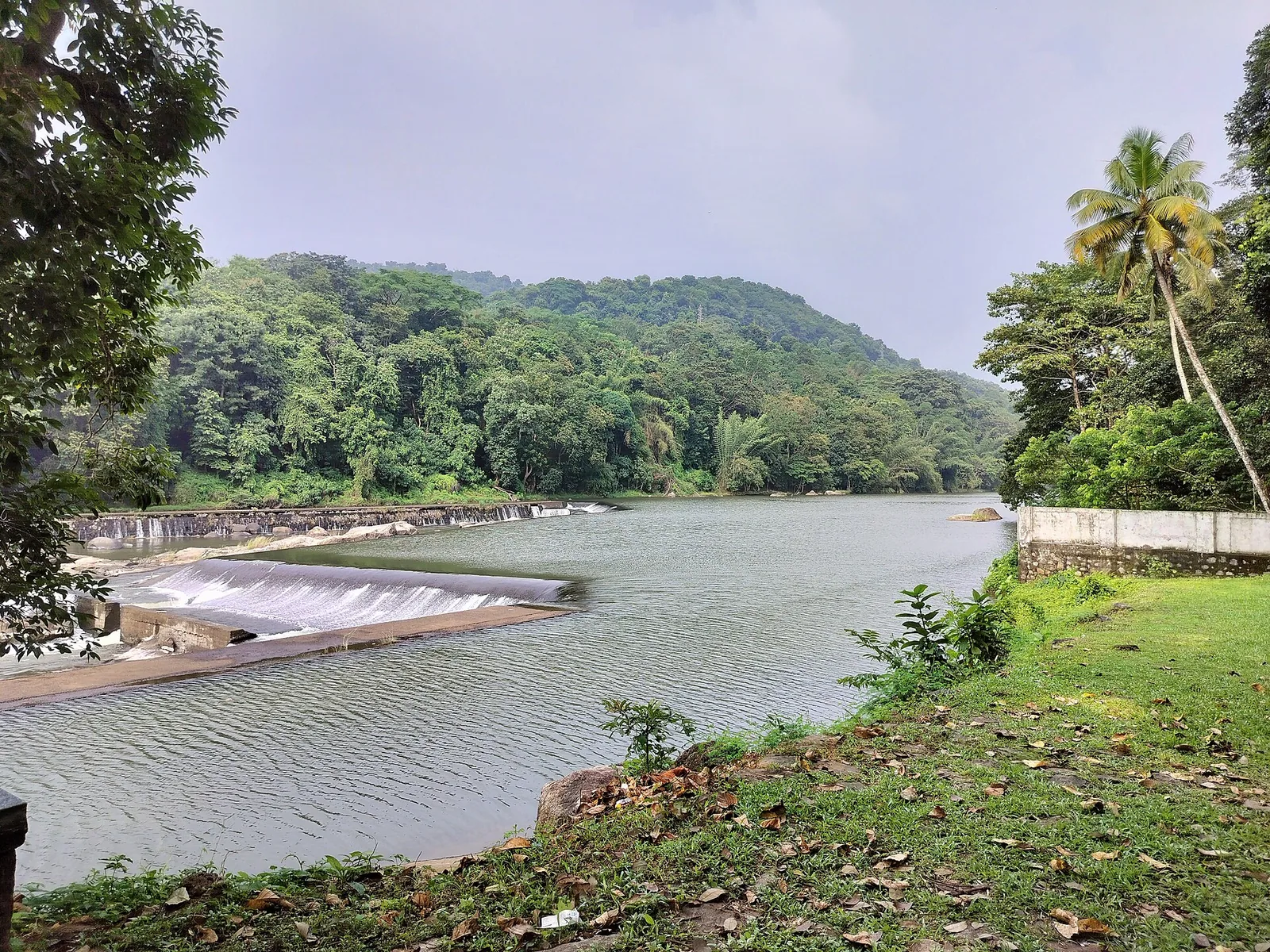
A check dam, hanging garden and butterfly garden on the Chalakudy river near Athirappilly, a popular picnic and day-trip stop.
12.3 km · ~20 min by cab · straight lineA longstanding Catholic pilgrimage church at Mapranam associated with the Holy Cross and annual feast observances.
15.1 km · ~25 min by cab · straight line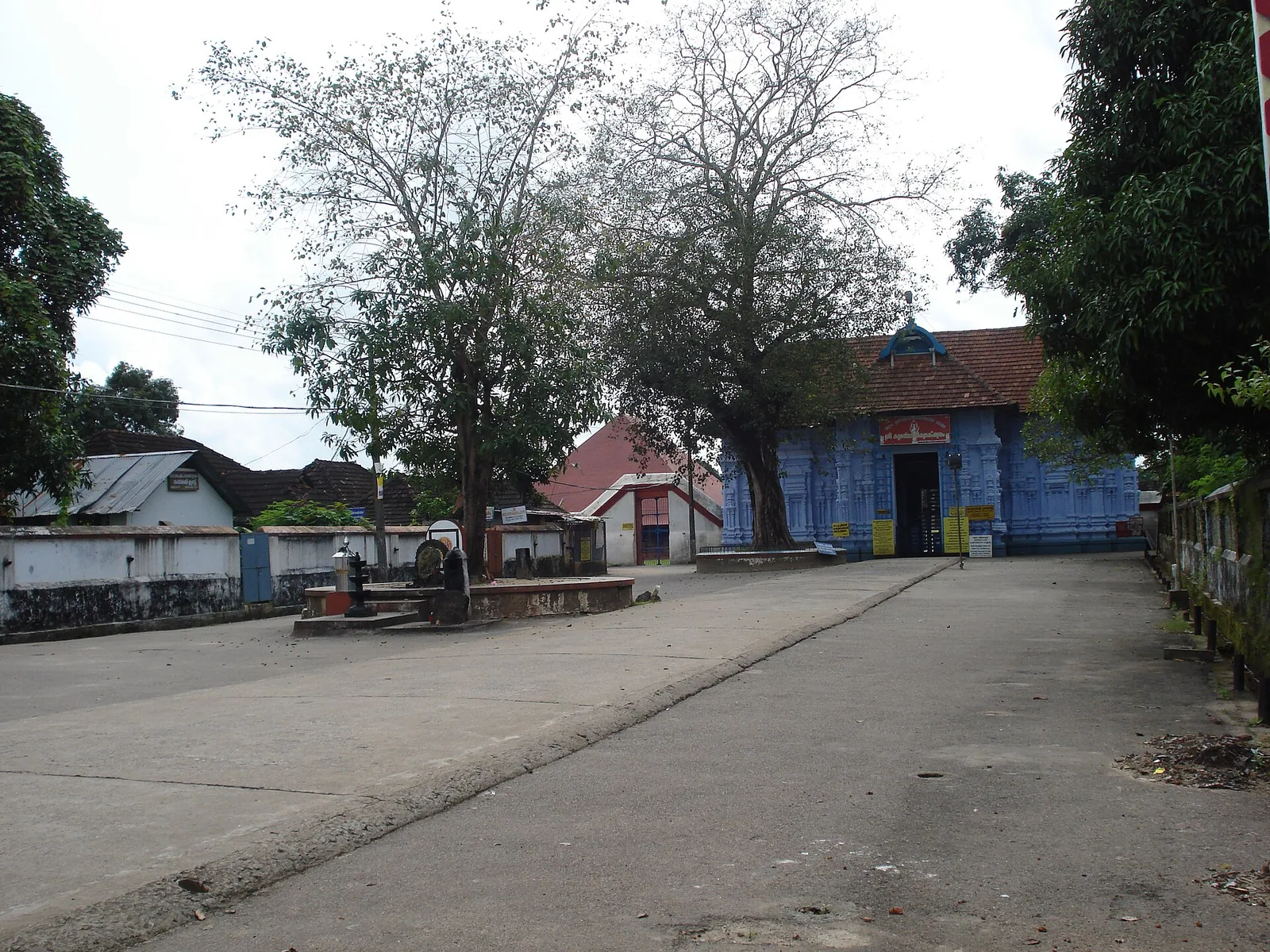
Rare temple at Irinjalakuda dedicated to Bharata, one of the Nalambalam (four-temple) Rama circuit shrines.
15.7 km · ~26 min by cab · straight line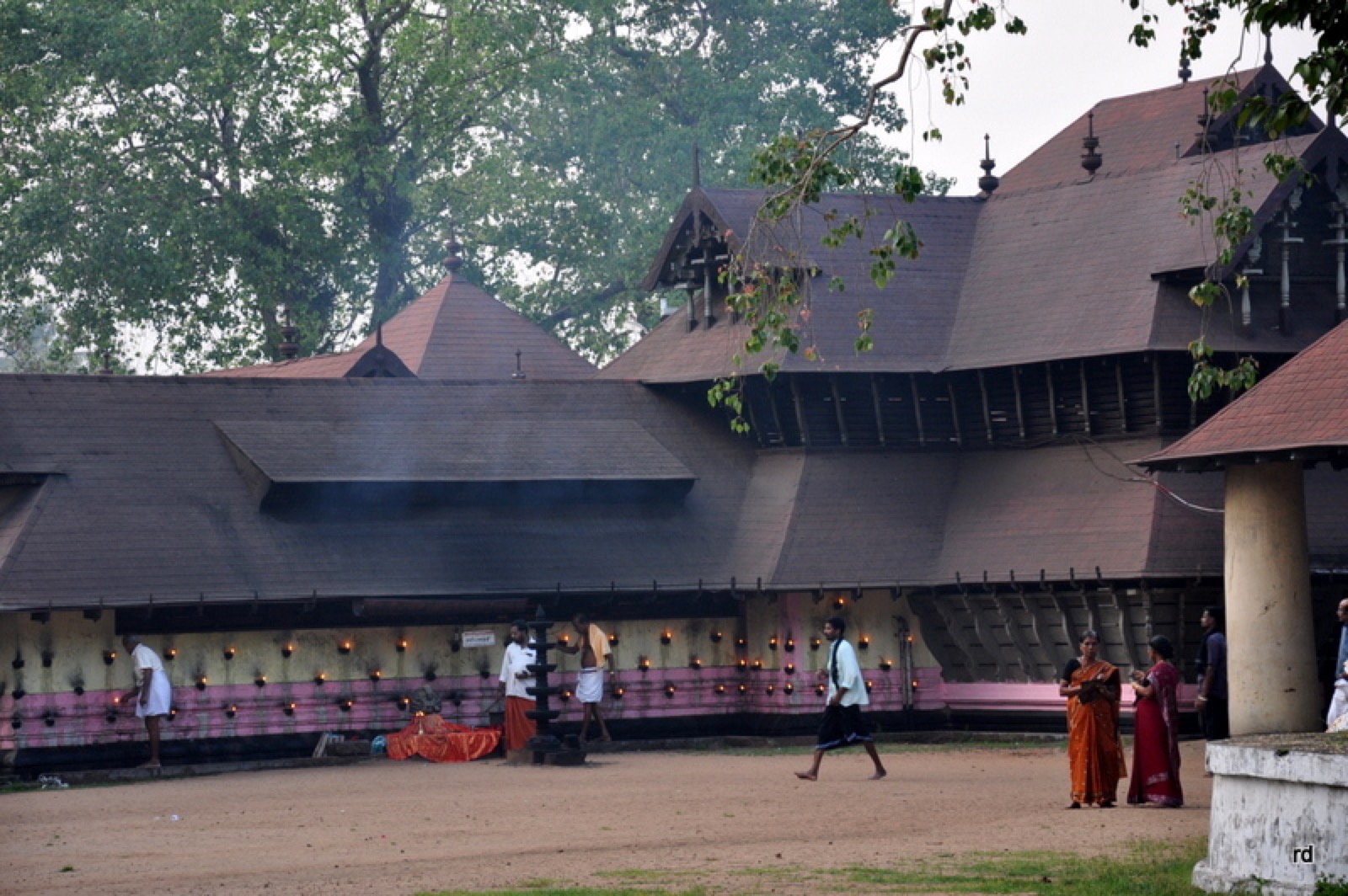
The Sree Kurumba (Bhagavathy) temple at Kodungallur, an ancient and powerful Devi shrine associated with the Bharani festival.
17.6 km · ~29 min by cab · straight line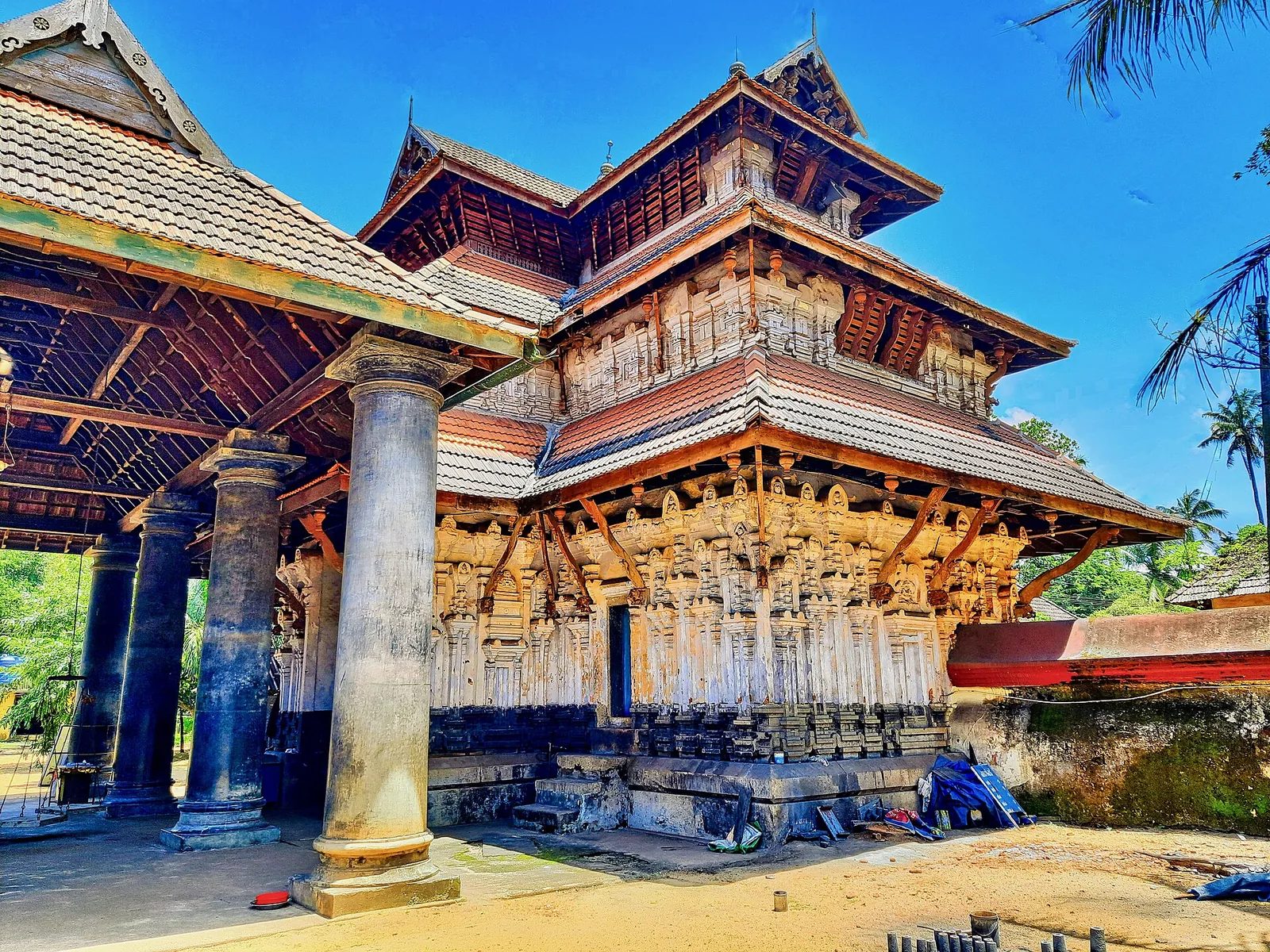
Ancient Shiva temple at Kodungallur linked with the old Chera capital of Mahodayapuram.
17.8 km · ~30 min by cab · straight line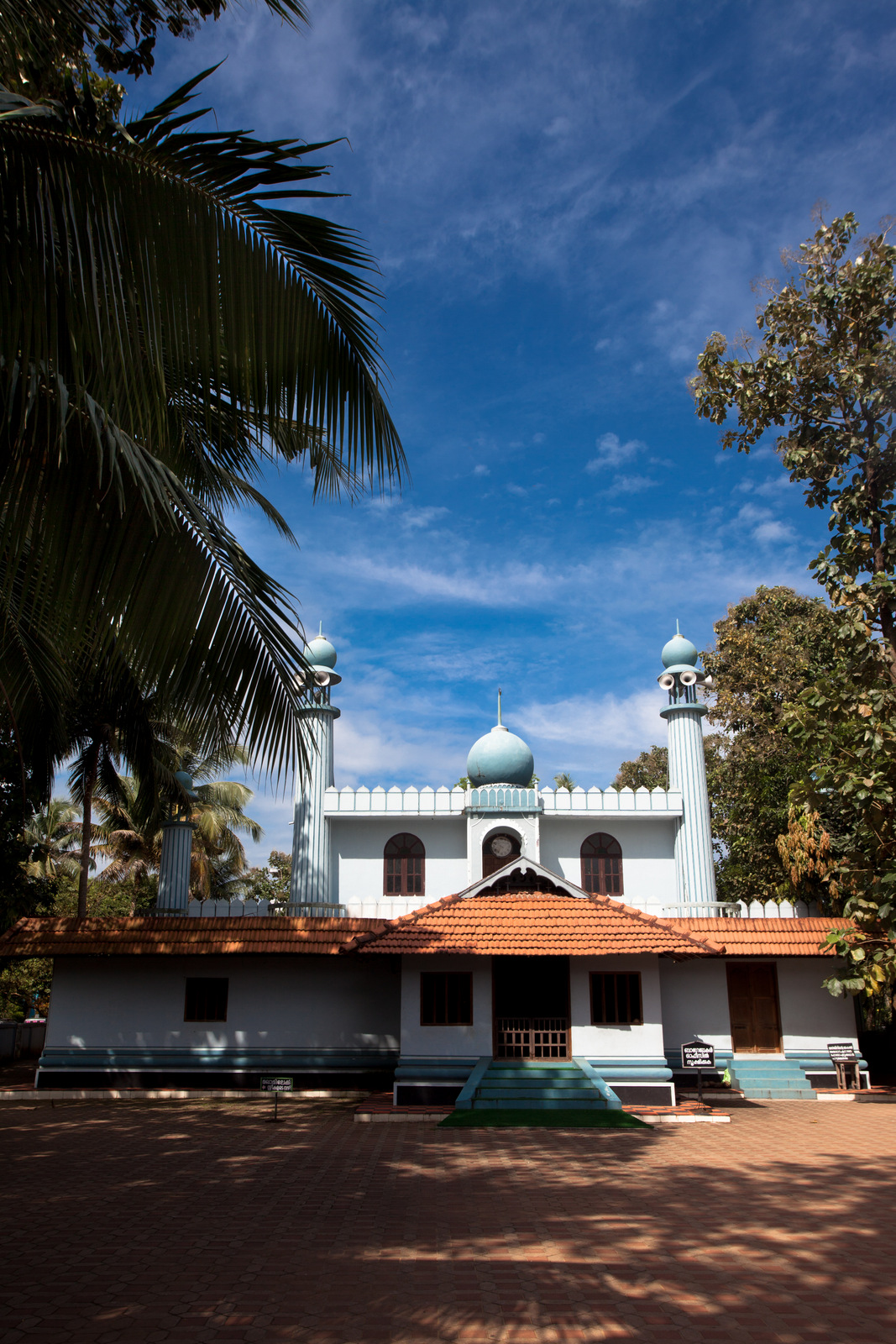
At Kodungallur, held by tradition to be the oldest mosque in the Indian subcontinent (7th century).
18.0 km · ~30 min by cab · straight line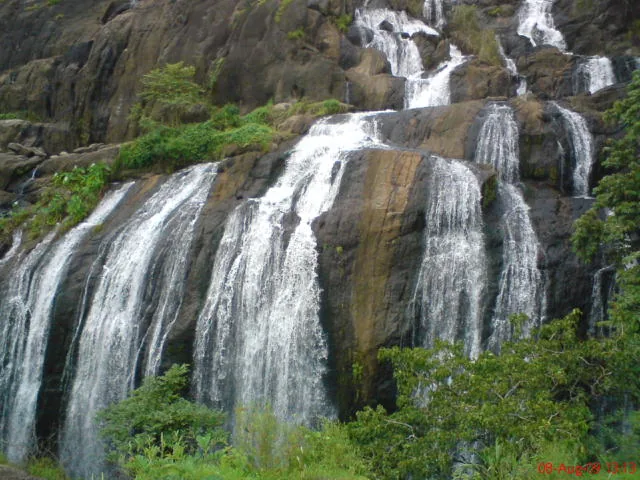
A forest waterfall and fish sanctuary near Marottichal in the hills east of Thrissur, reached by a short walk.
19.8 km · ~33 min by cab · straight line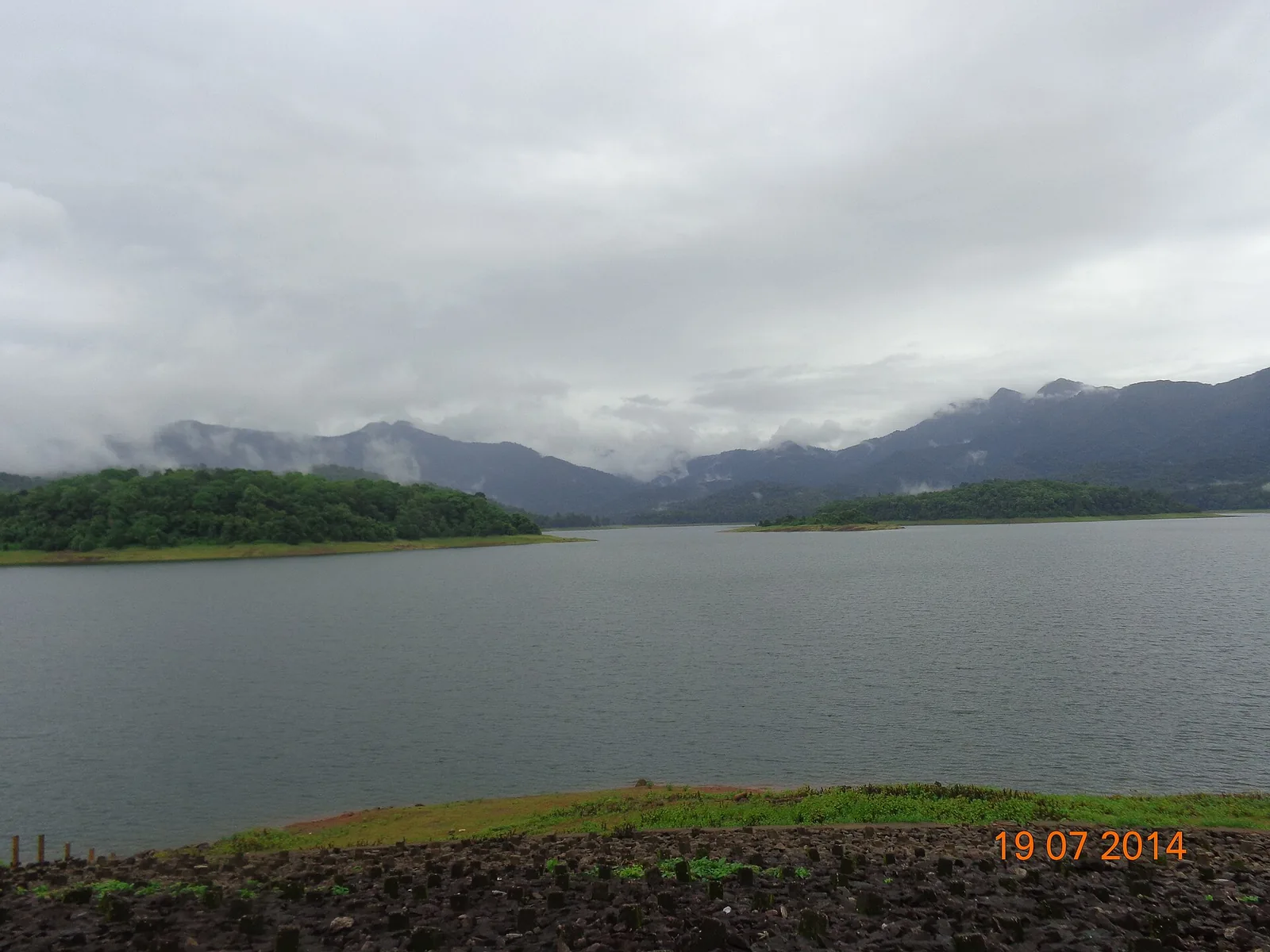
A reservoir and eco-tourism spot at the edge of the Chimmony Wildlife Sanctuary east of Thrissur, with boating and forest views.
20.1 km · ~33 min by cab · straight lineNearby toilets, pharmacies, ATMs, seating and vets are community-mapped and may be incomplete or out of date. Map data © OpenStreetMap contributors | Walking times © openrouteservice.org by HeiGIT
Its dedication is the Nativity of Our Lady, and the Diocese of Irinjalakuda registers it as Chalakudy, Nativity of Our Lady Forane Church. Everyone, including its own signage, calls it St Mary’s Forane Church, Chalakudy. We list it as Chalakkudy Forane Church to match how the other big Kerala churches are named on this site.
The church and the diocese both give AD 600 as the foundation year, with the church said to have moved to its present site around 1300. Neither cites a document. The earliest date we could verify is 1858, when the people of Aloor — until then part of this parish — got land for their own church. The building you see was rebuilt in 1987; the belfry is from 1913 and the bell from 1887.
A deanery — a group of parishes under one senior parish, whose vicar is the forane vicar. Chalakkudy is one of ten foranes in the Diocese of Irinjalakuda and its published table lists seventeen churches under it, from Perambra and Aloor down to Pariyaram and Thessery.
Late January into early February, not on St Sebastian’s liturgical day. In 2026 the nine-day novena began on 26 January at 5 pm and the feast itself ran on 6, 7, 8 and 9 February. The bulletin calls it the deshiyotsavam — the town’s festival — rather than a parish feast. Confirm the year’s dates with the church office before travelling for it.
It is a purpose-built walk-through Bible village in the church grounds, with a pond standing for the Sea of Galilee, life-size figures, mock city walls and a relics museum. It took three years to build and was blessed on 8 September 2006. It is devotional theming, not heritage, and the church is straightforward about that. It is also used liturgically — the Way of the Cross is prayed there at 7 pm on Lenten days other than Friday.
Yes. The compound and the Holy Land are open through the day and its own literature describes the ambu perunnal as kept by people of every community. Dress as you would for any Kerala place of worship, and stay at the back during Mass if one is running.
If you have forty-five minutes, yes — it is five minutes off the highway, parking is on the forecourt, and the belfry, the grotto and the Holy Land can be seen in that time. If you are timing a waterfall trip tightly, it is the first thing to drop.
Morning or late afternoon for quieter visits and better light.
Entry: No ticket. The church, the grotto and the Holy Land are all free to enter; offerings and candle stands are voluntary. Timings: The church is open through the day. Mass on Sundays at 6.00, 7.30 and 9.30 am and 5.00 and 7.00 pm; Monday to Saturday at 6.00 and 7.15 am and 5.00 and 7.00 pm. The parish says the Holy Land is open to the public throughout the day and is at its best in the evening once the lights are on. (Parish’s own published times — confirm on 0480 2701614 before making a trip for a particular Mass.).
Base yourself in Chalakkudy or a nearby town in Thrissur, then confirm the last-mile route locally before leaving. Check mass/prayer timings if visiting for worship; otherwise visit outside service rush. If the visit depends on forest, temple, boat, ferry, weather or seasonal access, check the official/local rule on the day before travel.
30 minutes to 1.5 hours.
Nearby you can pair Chalakudy Market (380 m), Muringoor Divine Retreat Centre (1.3 km), Chalakkudy railway station (2.0 km), Kanakamala Kurishumudi (6.3 km).
Expect crowds on feast days and Sundays. Use marked parking and official entry points.
Written about Chalakkudy Forane Church itself — its history, its legends and the arguments about them.
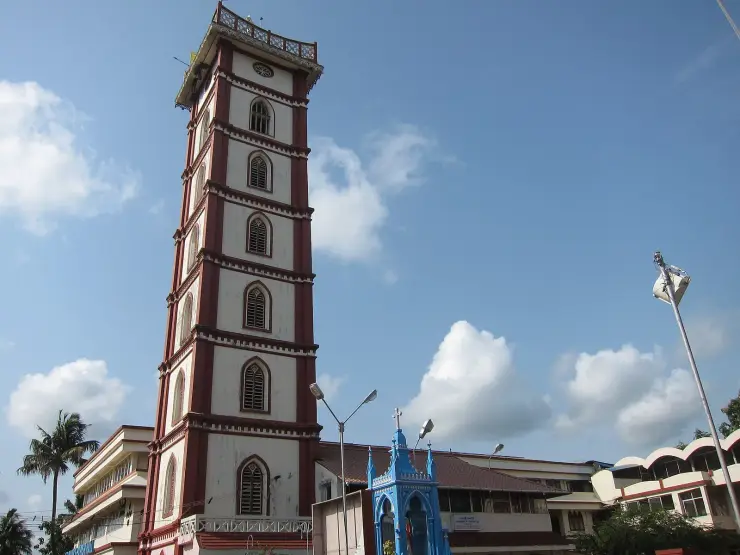
These guides explore Chalakkudy and the surrounding area. Choose a visit that fits your interests, allowing separately for travel between stops.


Route-level itineraries and practical guides for the rest of Kerala.
Photographs: കാക്കര (CC BY-SA 3.0), Challiyan at Malayalam Wikipedia (Public domain), Shijan Kaakkara (CC BY-SA 4.0), Anoopdesigns (CC BY-SA 3.0). Wikimedia Commons.