What to expect
Highlights
- Boat or canoe routes around Champakulam
- Village life, canals and lake/river scenery
- Good fit for homestays and local food stops
Kuttanad village on the Pamba known for the Champakulam Moolam snake-boat race and Kalloorkad St Mary’s Basilica.
A Kuttanad village where the Pamba splits in two, home to Kerala’s second-oldest boat race, a basilica with a pulpit carried on a sea-monster, and an obligation between a Hindu temple and a Christian family that is still discharged every year.
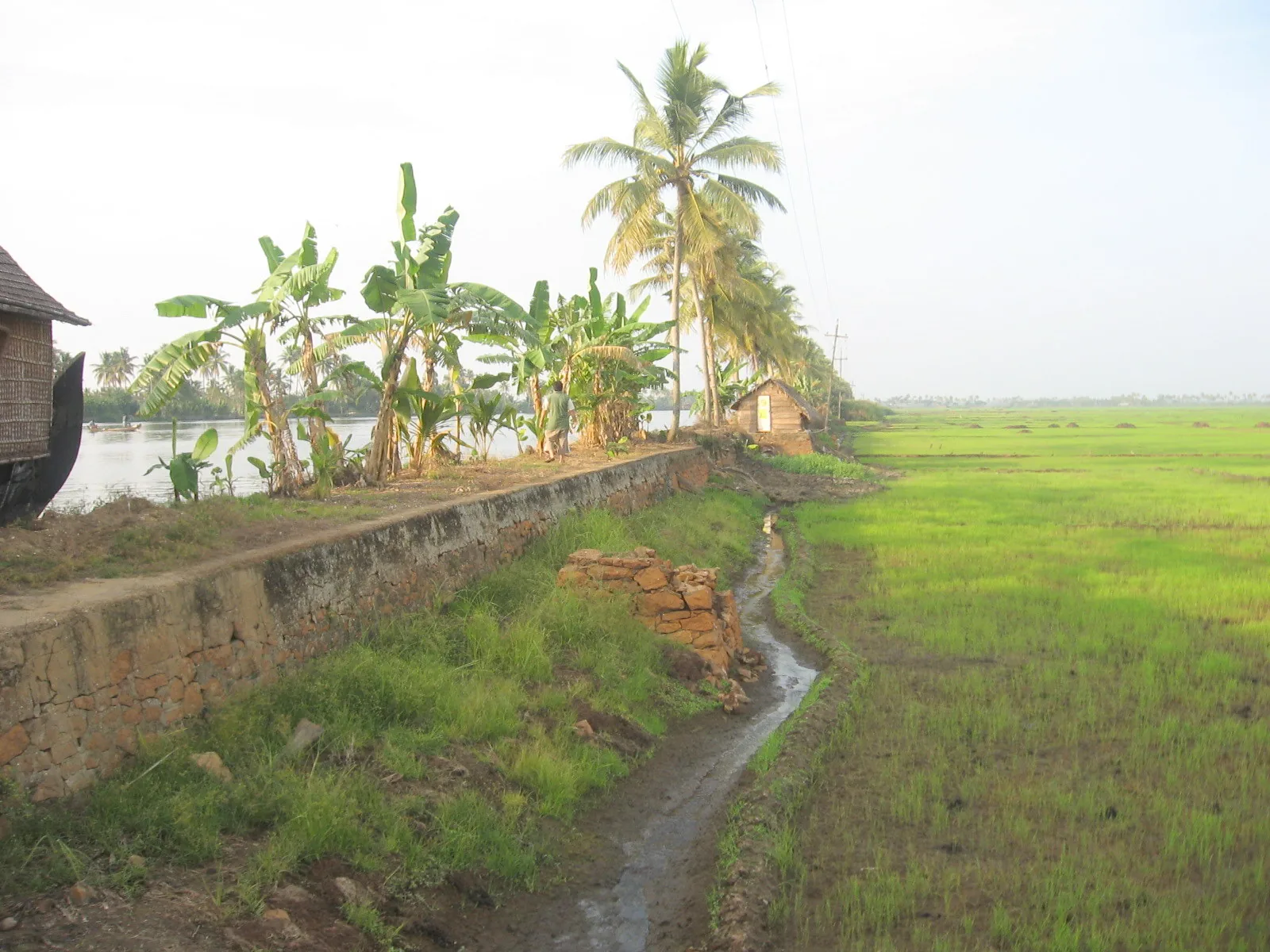
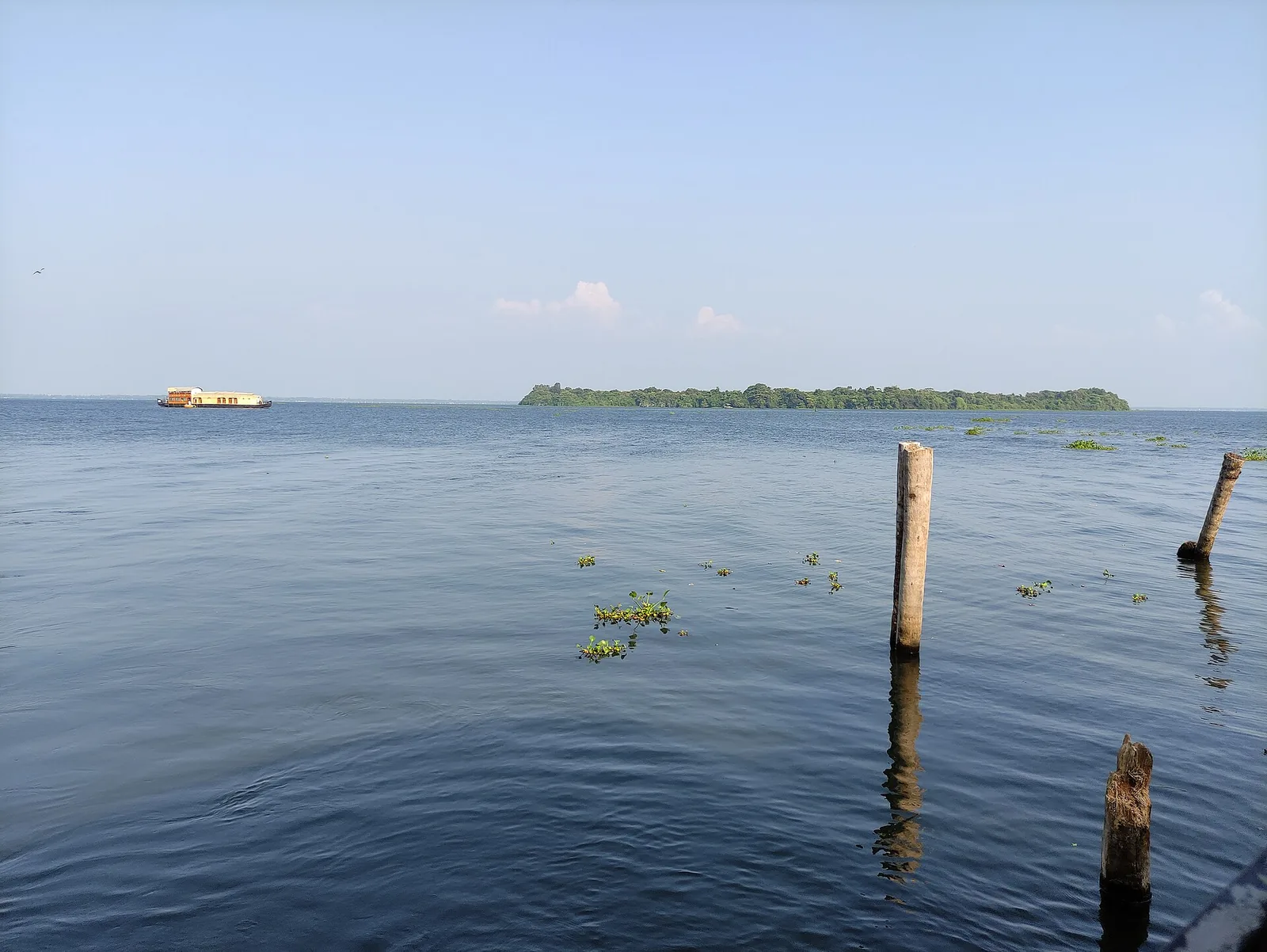
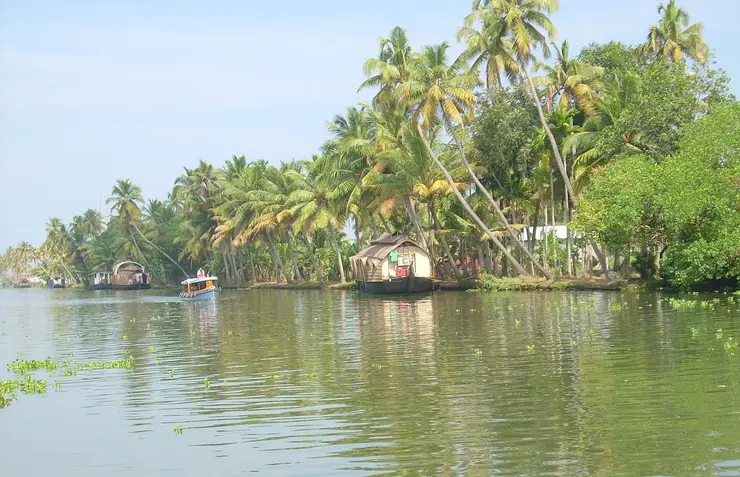
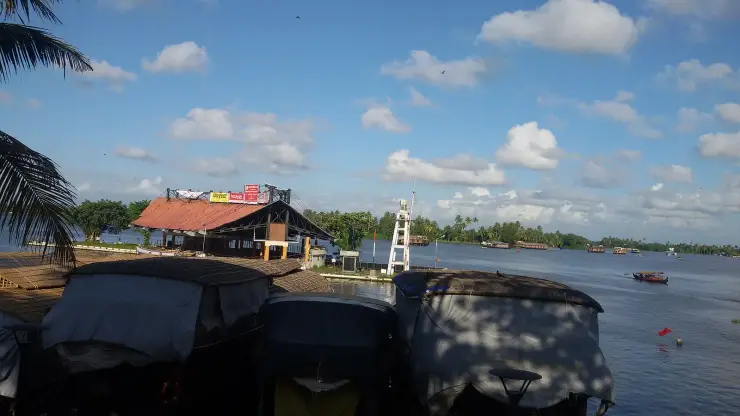
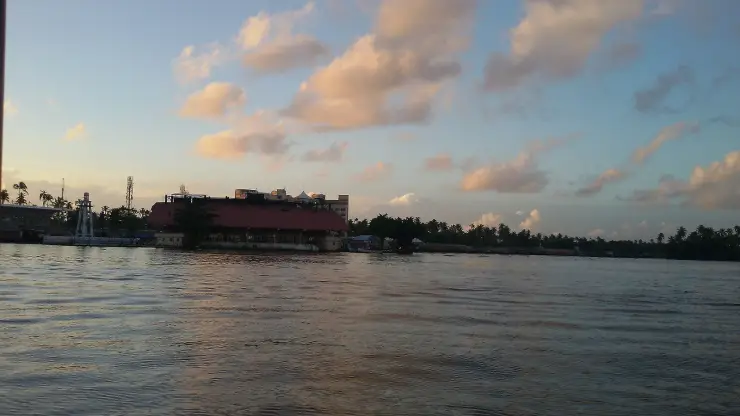
Champakulam sits in the middle of Kuttanad, at the point where the Pamba divides into two branches, about 16 km from Alappuzha by road and just as easily reached by water. It is flat, green and almost entirely made of edges — riverbank, bund, paddy, canal — and the road in crosses the river on the Champakulam bridge. Most visitors arrive as part of a backwater day, and many arrive by boat, which is the right way to come to a village whose whole reputation is waterborne.
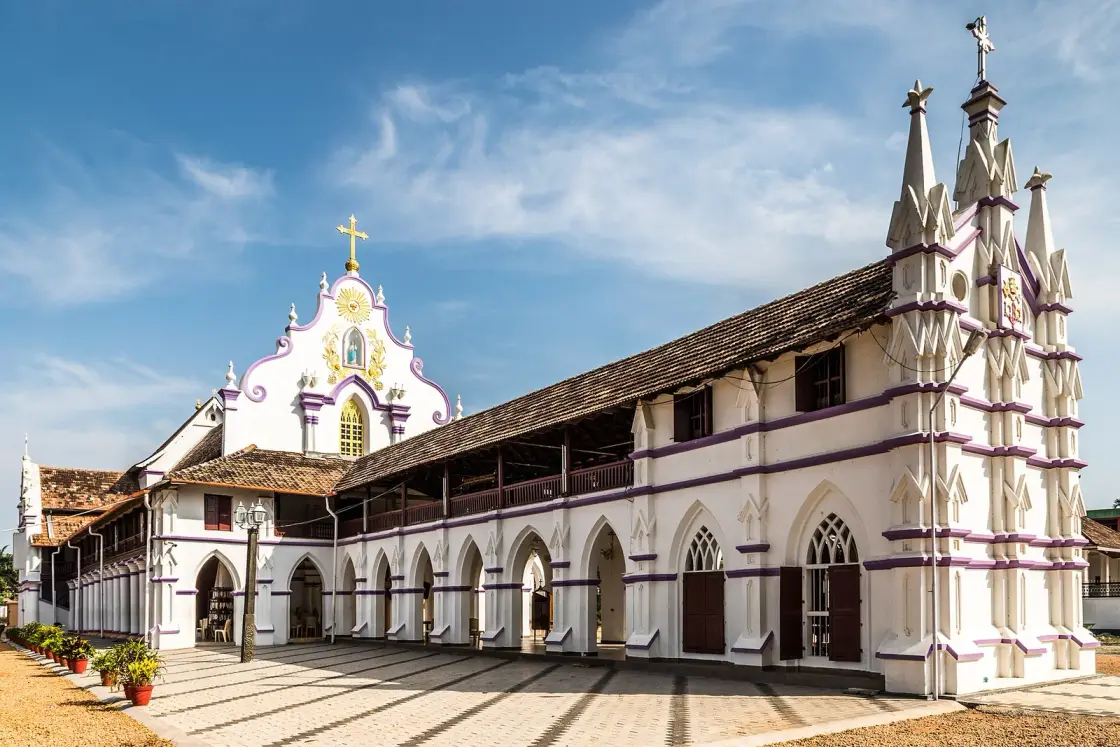
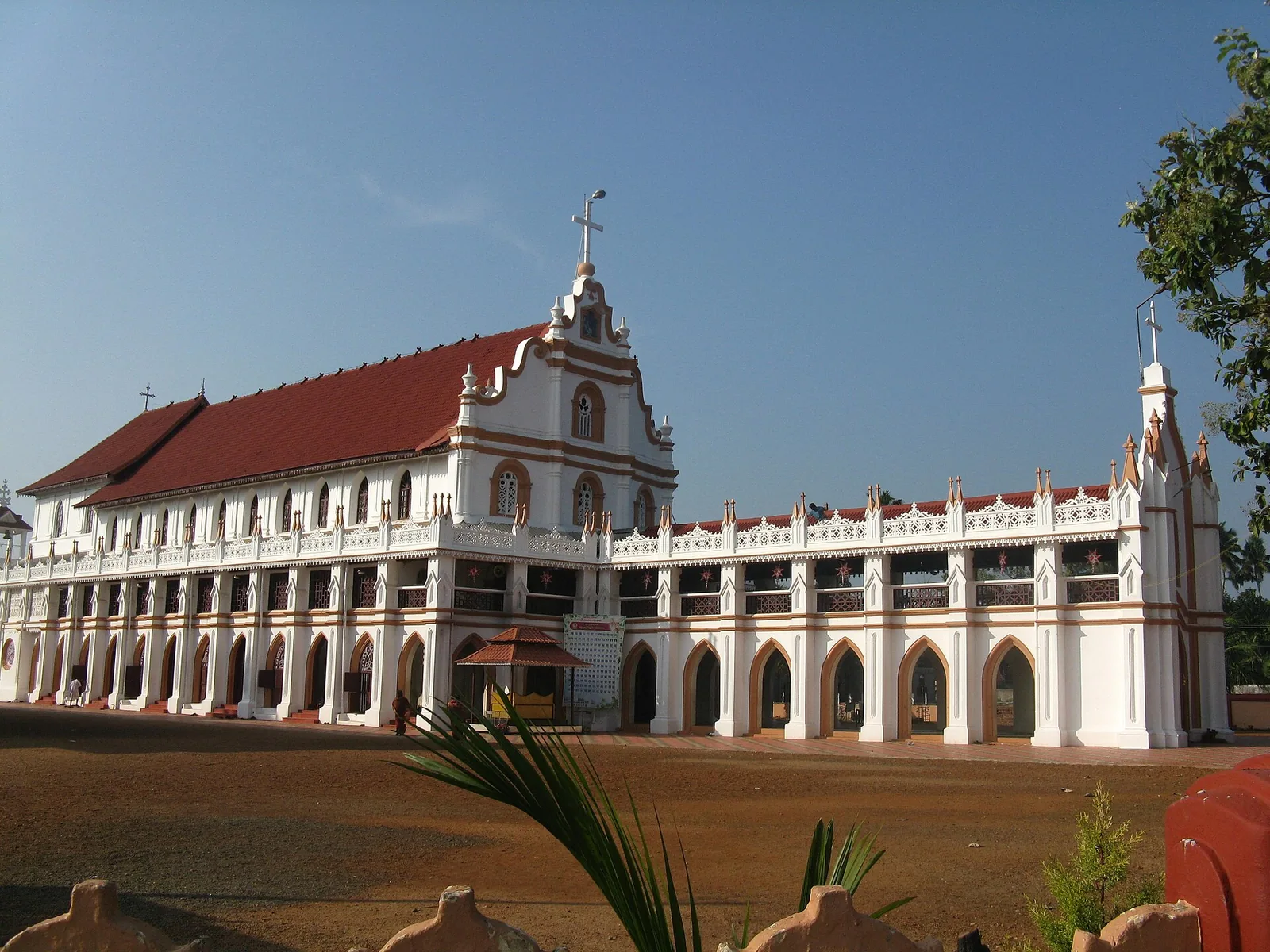
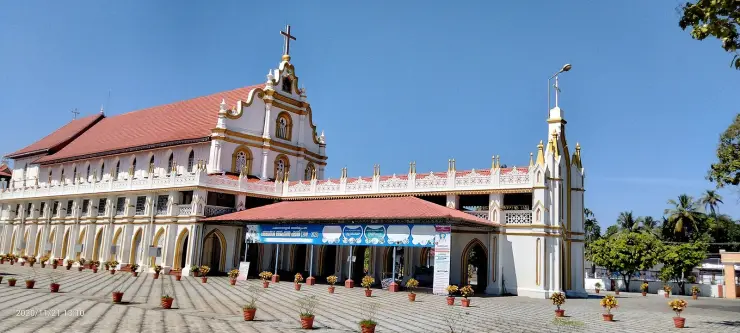
Above the bank stands Kalloorkad St Mary’s Basilica, the Champakulam Valia Palli, and it is a genuinely surprising building. From one end it is spiky Gothic Revival, a tiered white gable bristling with pinnacles under a gold sunburst. Walk to the other end and you are looking at something quite different — a curvilinear baroque gable with a scrolled cartouche, the kind of thing you would expect in Goa. Between the two runs a long open colonnade the full length of the flank, with a timber gallery above it under a tiled roof. It is not one church so much as several centuries of church stitched end to end.
Inside is where it stops being a pleasant village church. A barrel vault of coffered, painted timber runs over the sanctuary, and beneath it climbs a polychrome and gilt reredos two storeys high, packed with saints in rayed niches — the Virgin crowned in a stiff gold robe at the centre, the Sacred Heart above her, St Joseph and a pierced St Sebastian below — and flanked by two life-size painted archangels in Roman armour and plumed helmets, holding garlands. On the altar a gilt sunburst monstrance carries the words VENITE ADOREMUS. The nave ceiling above is painted pale blue with clouds: trumpeting angels, the Virgin rising in white with a ring of stars, putti, a gilt roundel, and the Last Supper laid out in a long panel.
And then there is the pulpit, which is the thing nobody warns you about. It is a hexagonal painted box high on the wall, its panels showing Christ teaching — and it is carried on a long, curving, banded stem that descends the wall, turns scaly, and ends in the open, fanged mouth of a makara, the sea-monster of Indian temple sculpture. A Catholic pulpit resting in the jaws of a makara, between painted pilasters of grapevines and flower-filled urns. There is nothing else quite like it on the Kerala coast, and almost nobody writes about it.
The other thing Champakulam is known for is the boat. This is a chundan vallam village — a place where the great snake boats are built, kept and raced — and it is home to the Nadubhagam Chundan. For eleven months of the year a boat over thirty metres long sits under a tin roof by the water with its prow rearing towards the rafters. For one day in Mithunam it does not.
The village itself is a study in how ordinary shared religion is here. Its Malayalam Wikipedia article lists the Champakulam Valiyapalli, the Kallampalli temple, the Madam Mahalakshmi temple, the Ganapathi Thevalakkadu temple and the Kondakkal palli in a single breath, and then says plainly that the Moolam race is a symbol of religious amity. That is not a tourist-board line. It is, as the next section explains, a description of a specific obligation that has to be discharged before anybody can row.
The story begins with a rejected idol. In 1545 the Chembakassery raja, Pooradam Thirunal Devanarayanan, had built his temple at Ambalappuzha and fixed the date for the installation when his priests examined the Krishna idol intended for it and pronounced it unfit. With the date immovable, the king sent his minister — Parayil Menon, in the Malayalam telling — to fetch a replacement: the Krishna of the Karinkulam Parthasarathy temple at Kurichi near Changanassery, held by the Kurichi Valiyamadam family, an image said to have been given by Krishna himself to Arjuna.
They took it home by water, as everything moved in Kuttanad, and night caught them on the river. There were robbers on these waterways. They needed somewhere safe to stop, and the obvious place — the Madathil temple — was judged not safe enough.
So they carried the god of the Chembakassery kings into a Christian house. The Malayalam is specific and gives the address: they set the Krishna idol down at the house of Itti Thomman of Koyikkari Mappilassery, at Champakulam. Itti Thomman was a loyal subject and a confidant of the raja. He and his household received the men and the image with honour, and pujas were offered to Krishna that night under a Catholic roof.
Next morning was Moolam, Krishna’s own birth asterism. The king came down himself with his retinue, and the villagers came with him in a flotilla of boats, and Itti Thomman travelled with them as the idol went on to Ambalappuzha for the consecration. The raja, the story says, was moved enough by the reception his Christian subjects had given a Hindu god that he ordered a water carnival at Champakulam every year on that day.
🔑 Here is the part that turns a legend into something you can still watch. The obligation did not lapse. Every year, before the boats race, a delegation from the Ambalappuzha Sree Krishna temple travels to the Mappilassery house at Champakulam carrying the temple’s own palpayasam — the milk payasam Ambalappuzha is famous for across India — and presents it to the karanavar, the head of the household. This is the Moolakazhcha. A nilavilakku, the Kerala brass lamp, is lit in that Christian house and prayers are said. Only then does the Champakulam boat carnival begin.
Read that again slowly, because the sequence matters. A Hindu temple brings its prasadam to a named Christian family, in their own house, among their crosses and their saints, and lights a lamp there — and the race, the thing the whole district turns out for, cannot legally or ritually start until it has been done. The family’s claim is that this has run unbroken for close to five hundred years. It is not a festival of tolerance staged for anybody. It is a debt, from a king to a household, that the temple still pays.
The house keeps a perpetual lamp of its own for it, the Vazhakoombu Vilakku, the banana-blossom lamp, burning in the prayer room among the Christian images — the crucifix, the Sacred Heart in its case, the statues of Joseph and the Virgin, and a brass oil lamp hanging among them.
It is worth noting what the flotilla in the story actually was. The villagers did not line the banks to watch the king pass; they went with him, on the water, in their own boats, escorting a god downstream to his installation. The race that grew out of that day is a re-enactment of an escort, not of a contest — which is part of why the ritual half of it has outlived every change in who organises the sporting half.
⚠ Two neighbouring legends get blended into this one constantly and should not be. The Aranmula Parthasarathy palliyodam story and the origin of the Nehru Trophy are different traditions belonging to different places; neither has anything to do with Itti Thomman.
The basilica claims a founding in AD 427, which would make it one of the oldest churches in India, and it is described as the mother church of almost all the Catholic Syrian churches of Alappuzha district. That date should be attributed rather than asserted: even Wikipedia hedges it as “believed to be established”, there is no contemporary evidence for it, and the building has been rebuilt many times over.
What the church does have is an object with a date on it. In the churchyard stands an open-air rock cross documented to AD 1151, described as one of the most ancient crosses in India with clear documentation of its antiquity. There are other inscribed stones around the church as well. If you want to stand next to something at Champakulam that is provably very old, it is the cross, not the walls — and a twelfth-century date is remarkable enough without help.
🛑 One claim you will meet locally and online needs correcting, because the true version is better. Champakulam is often called one of the seven churches founded by St Thomas. It is not on any version of that list: the Ezharappallikal are Kodungallur, Kollam, Niranam, Nilackal, Kokkamangalam, Kottakavu and Palayoor, with Thiruvithamcode as the half. What the parish itself actually says is that Champakulam was once under Niranam — and Niranam IS a St Thomas foundation. The claim is descent, not foundation. As it happens Alappuzha district does contain a genuine church from that list: Kokkamangalam, up by the Thanneermukkom bund.
The church has a long ecumenical record — friendly relations with the Puthenkoottukar and a part in eighteenth-century reunion efforts — and Ikkako Kathanar, one of the East Syriac Catholic martyrs, was born in this parish. Today it is a Forane church of the Syro-Malabar Archeparchy of Changanacherry with several parishes under it, around 6,500 Catholics in roughly 1,378 families, and it runs schools and St Joseph’s Mission Hospital.
On 27 November 2016 it was declared a Minor Basilica — the title granted by Pope Francis, the declaration performed by Mar Joseph Perumthottam, Metropolitan Archbishop of Changanacherry. It was the first basilica in that archdiocese, the fourth in the Syro-Malabar Church, the ninth in Kerala and the twenty-third in India. ⚠ Pope Francis has never visited India; accounts describing him performing the ceremony here are wrong.
The race has its own, much shorter, institutional history. The legend is 1545, but the Champakulam Moolam Vallam Kali became a formal competition only in 1927, when the Diwan of Travancore inaugurated it as such. In 1952 Chithira Thirunal, by then Rajpramukh of Travancore-Cochin, came to watch and instituted the Rajpramukhan Trophy for the winning chundan, and it has been rowed for since. So the ritual is old and the regatta is modern, and the two are regularly collapsed into “held every year since 1545”, which is not what the record supports.
The boats themselves rest on a third lineage. The chundan vallam design is credited to Kodupunna Venkida Narayanan Achari, master carpenter to the Raja of Chembakassery — the same royal house as the race legend — with the first design usually dated to about 1614. The Achari family were vassals of the raja who specialised in boat construction, and the rekhachithram, the drawings, are spoken of as hereditary family property. Champakulam has a working riverside yard and is the home of the Nadubhagam Chundan; Sabu, a builder there in recent years, is the son of the carpenter Narayana Achari who built the old Nadubhagam. A boat is cut from anjili, Artocarpus hirsutus, and takes six to eight months.
The Moolakazhcha — a Hindu temple delegation must honour a Christian household before the boat race can start, and still does.
A pulpit carried on the fanged head of a makara: Kerala temple sculpture holding up a Catholic preaching box.
A two-storey polychrome reredos under a coffered barrel vault, flanked by life-size painted archangels.
A painted nave ceiling of clouds, trumpeting angels, the Assumption and the Last Supper.
An open-air rock cross documented to AD 1151 — the oldest firmly dated thing on the site.
The Champakulam Moolam Vallam Kali on the Pamba in Mithunam, and the Nadubhagam Chundan in its shed the rest of the year.
A working chundan-building yard on a hereditary design credited to the Chembakassery raja’s master carpenter.
Road km to Alappuzha; ghat roads and traffic vary — allow extra.
October to March is best for comfortable boat trips; monsoon is greener but weather can disrupt plans.
Live forecast loads in your browser.
Check the official alert before you travel. Kerala’s beaches, waterfalls and trekking routes close at short notice during heavy rain, and district alert levels change day to day. We do not publish an alert level of our own — read it from the state authority: Kerala State Disaster Management Authority, or the district control room on 1077.
Sun and moon are calculated for this location and shown in IST. Photography windows are the hour around sunrise and sunset; the sunset bearing is degrees clockwise from true north. Moon phase is accurate to about half a day.
Verified hotels, homestays, restaurants, experiences, sights, shops and rentals around Champakulam — commission-free, with direct contact. Filter by what you need.
Kuttanad Restaurant is a meal-stop option on the Alappuzha–Changanassery road. Check its location when planning a drive through the backwater villages.
Book with the place itself. India’s cyber-crime coordination centre warned in April 2025 that convincing copies of hotel and pilgrimage booking sites are being pushed through sponsored search and social ads, taking payment for rooms the property never hears about. Every listing here links to the business’s own contact details and its own Google or Bing profile — we take no commission and sit in nobody’s payment path. If a booking page reached you through an ad, check the address bar against the property’s own site before you pay. Fraud can be reported on cybercrime.gov.in or on 1930.
Find food, accommodation and activities across Kuttanad. Browse the guides for places to eat, stay and explore along your route.
5 more places around Kuttanad. Open a guide to plan the visit and onward journey.
The Kainakary birthplace memorial of Saint Kuriakose Elias Chavara, approached through the backwater landscape and maintained as a Christian pilgrimage site.
5.2 km · ~13 min by auto
Low-lying paddy and canal region known as Kerala’s rice bowl.
8.3 km · ~14 min by cab
St George Forane Church at Edathua in Kuttanad, known for its large annual pilgrimage feast.
7.2 km · ~18 min by auto
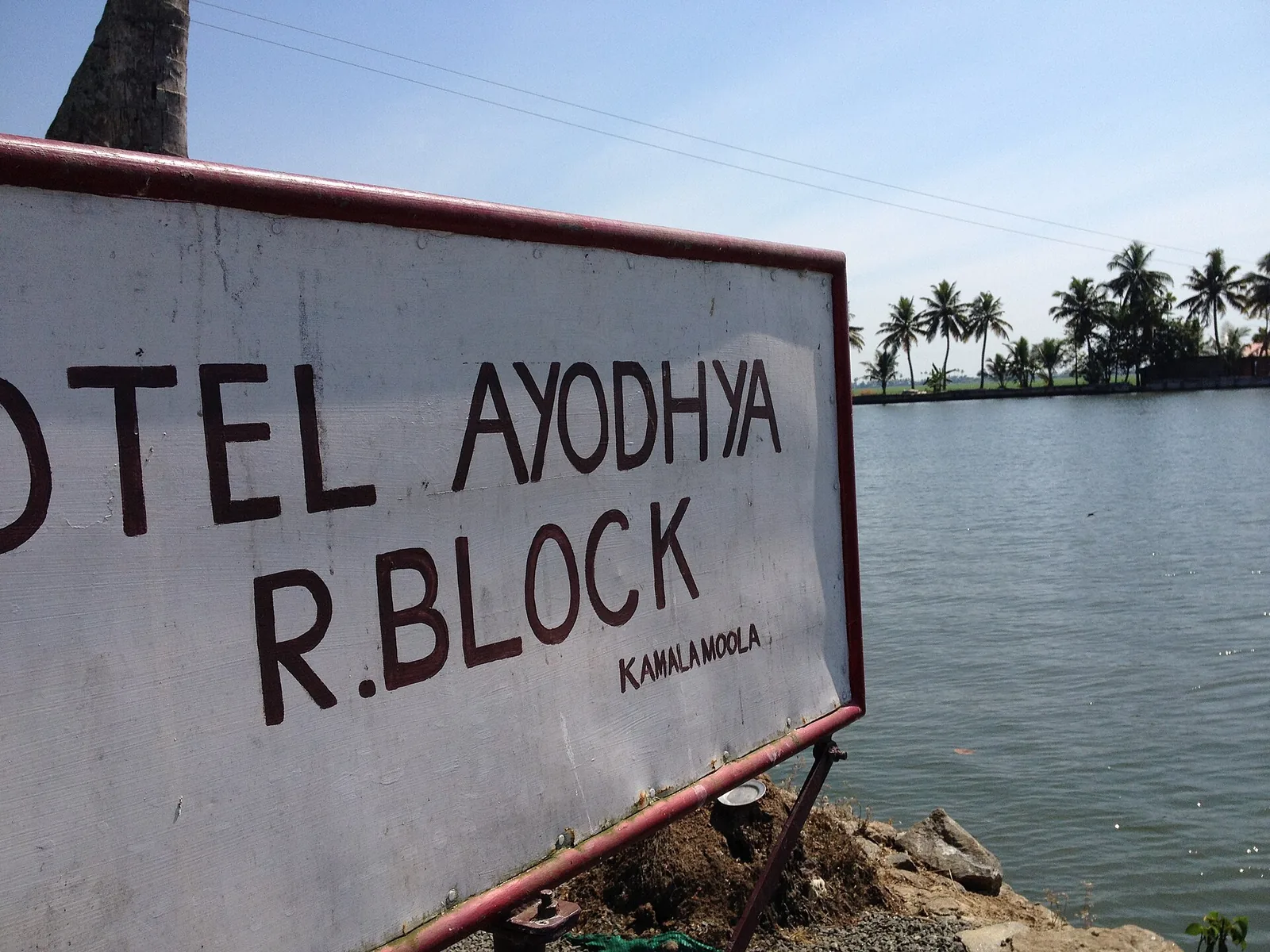
Iconic below-sea-level reclaimed farmland at Kainakary, ringed by bunds with the canal water sitting higher than the paddy fields.
Roampedia is commission-free — own or know a stay, eatery, guide or shop near Champakulam? List it and it appears here once verified.
Add a nearby businessEntry: Free for the village and basilica. A church notice photographed in 2012 listed a ₹25 camera charge; ask at the church for the current photography rule. Boat and canoe rides are privately priced.
Dress code: An active place of worship: shoulders and knees covered, quiet during services. The same applies at the village's temples.
Festivals: Champakulam Moolam Vallam Kali on Moolam day in Mithunam (late June / early July), preceded by the Moolakazhcha at the Mappilassery house — a delegation from the Ambalappuzha Sree Krishna temple brings palpayasam and lights a nilavilakku there before the race can begin. Basilica feasts: Mother Mary, concluding the Sunday after 15 October; St Joseph, 19 March.
Photography: Photography is generally fine in and around the basilica, and the interior is the reason to bring a camera — the reredos, the barrel vault, the painted nave ceiling and the makara pulpit. Be discreet during services and do not photograph worshippers at prayer. See the note under entry fee about the 2012 camera-fee board.
If you are travelling by bus or ferry, check the return service with the operator before setting out. Leave time to reach the stop or jetty after your visit.
Ask at the bus stand for the time of the last service back, not the next one. If you miss it, an auto or app cab is the fallback — agree the fare before you get in.
If you need step-free access, contact the site before travelling. Ask about a level entrance, steps along the route, the nearest drop-off point, seating and accessible toilets.
These services are listed within about 1.2 km of Champakulam. Walking distances follow mapped routes; access and opening hours can change. Other services may be closer but are not included here.
Emergency numbers are verified against official government and state tourism sources. 112 works anywhere in India.
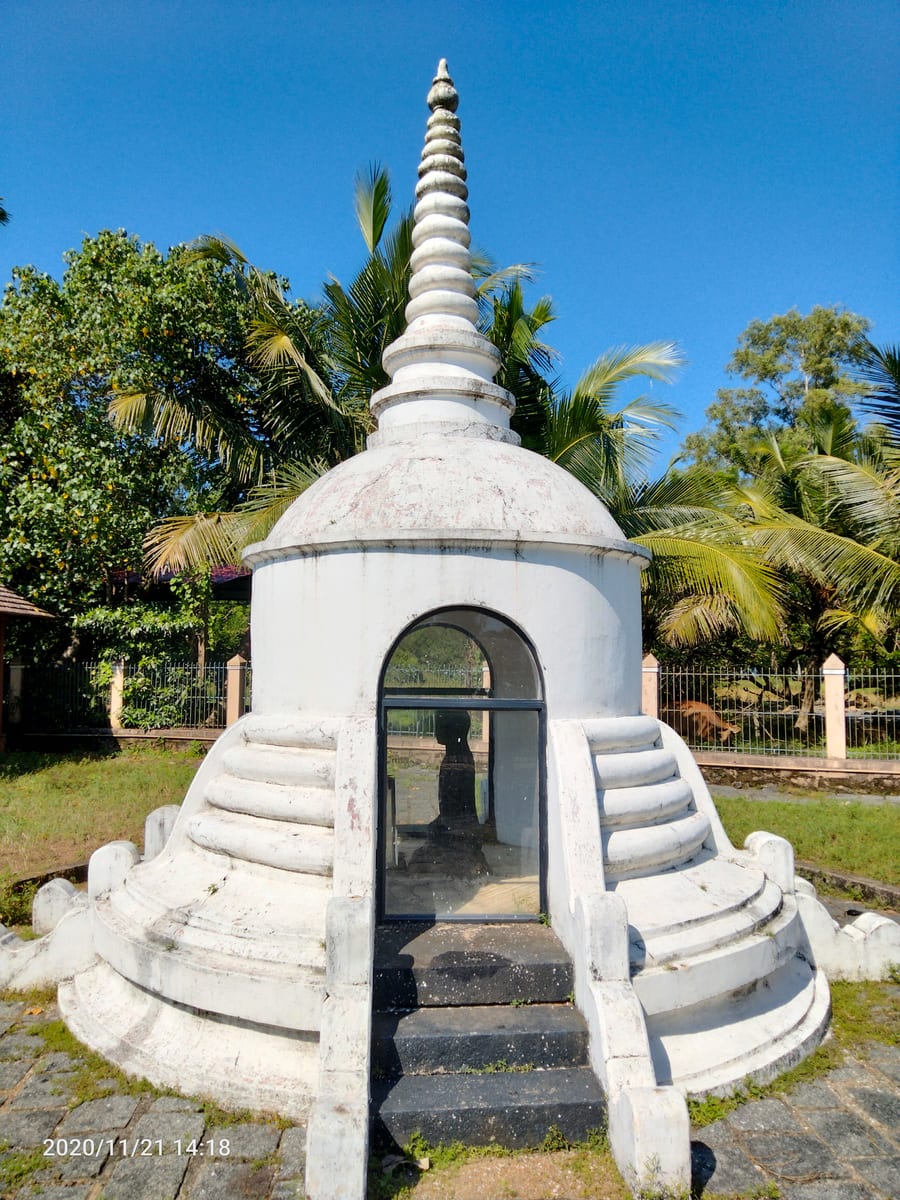
Ancient black-granite Buddha statue at Karumadi near Ambalappuzha, a relic of Kerala’s Buddhist past.
4.2 km · ~10 min by auto · straight lineLow-lying paddy and canal region known as Kerala’s rice bowl.
5.2 km · ~13 min by auto · straight line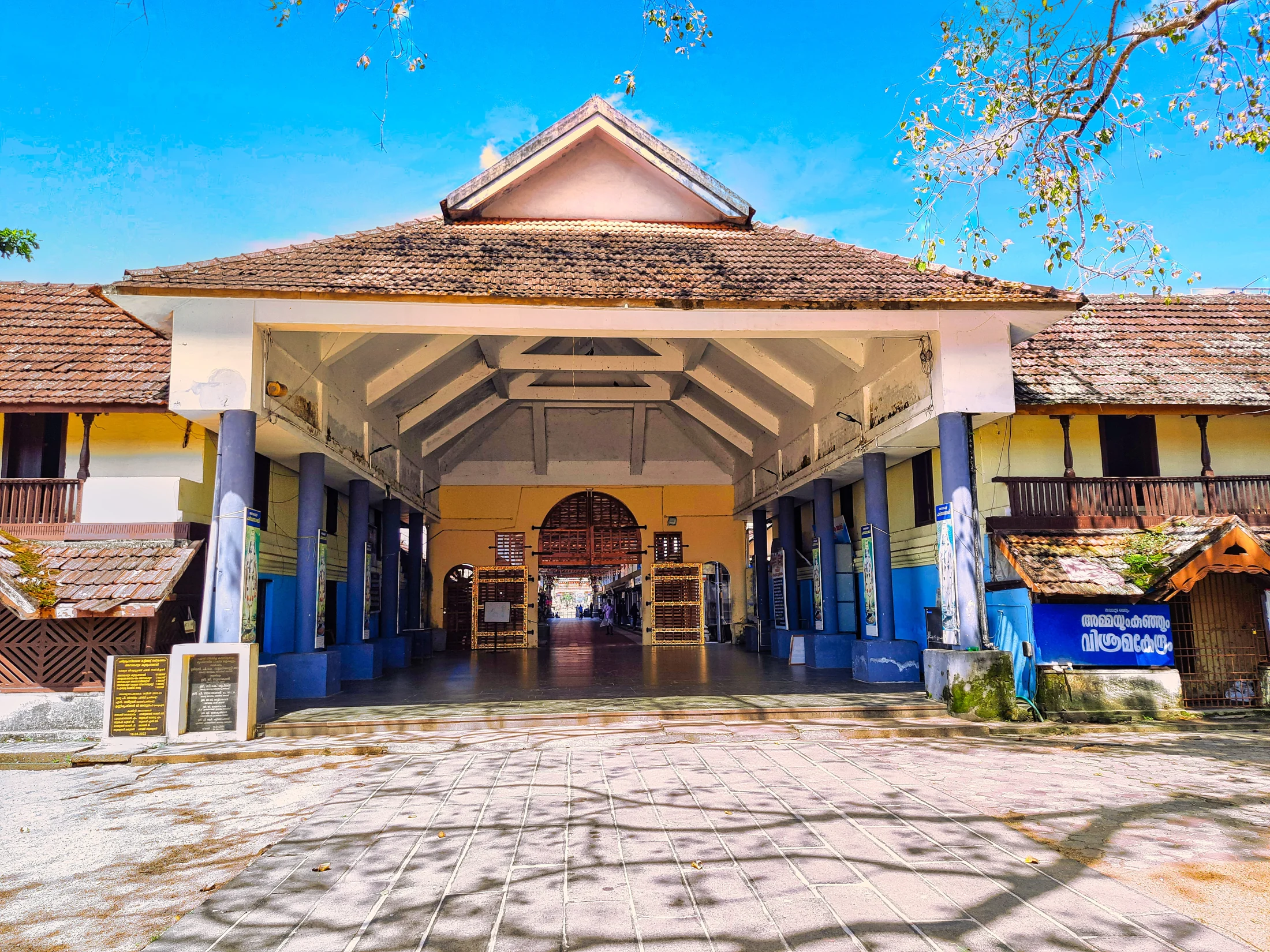
Ambalappuzha Sree Krishna Temple is an active temple in Ambalappuzha town, south of Alappuzha, administered by the Travancore Devaswom Board. Krishna is worshipped here as Parthasarathy, Arjuna’s charioteer. The temple combines a broad tank, tiled courtyards and painted ritual spaces with two enduring cultural associations: Palpayasam offered to the deity, and Kunchan Nambiar’s creation of Thullal. A visit works best when darshan, the permitted exterior spaces and any offering collection are planned around the temple’s morning or evening opening.
5.4 km · ~14 min by auto · straight lineIconic below-sea-level reclaimed farmland at Kainakary, ringed by bunds with the canal water sitting higher than the paddy fields.
7.2 km · ~18 min by auto · straight lineSt George Forane Church at Edathua in Kuttanad, known for its large annual pilgrimage feast.
8.3 km · ~14 min by cab · straight line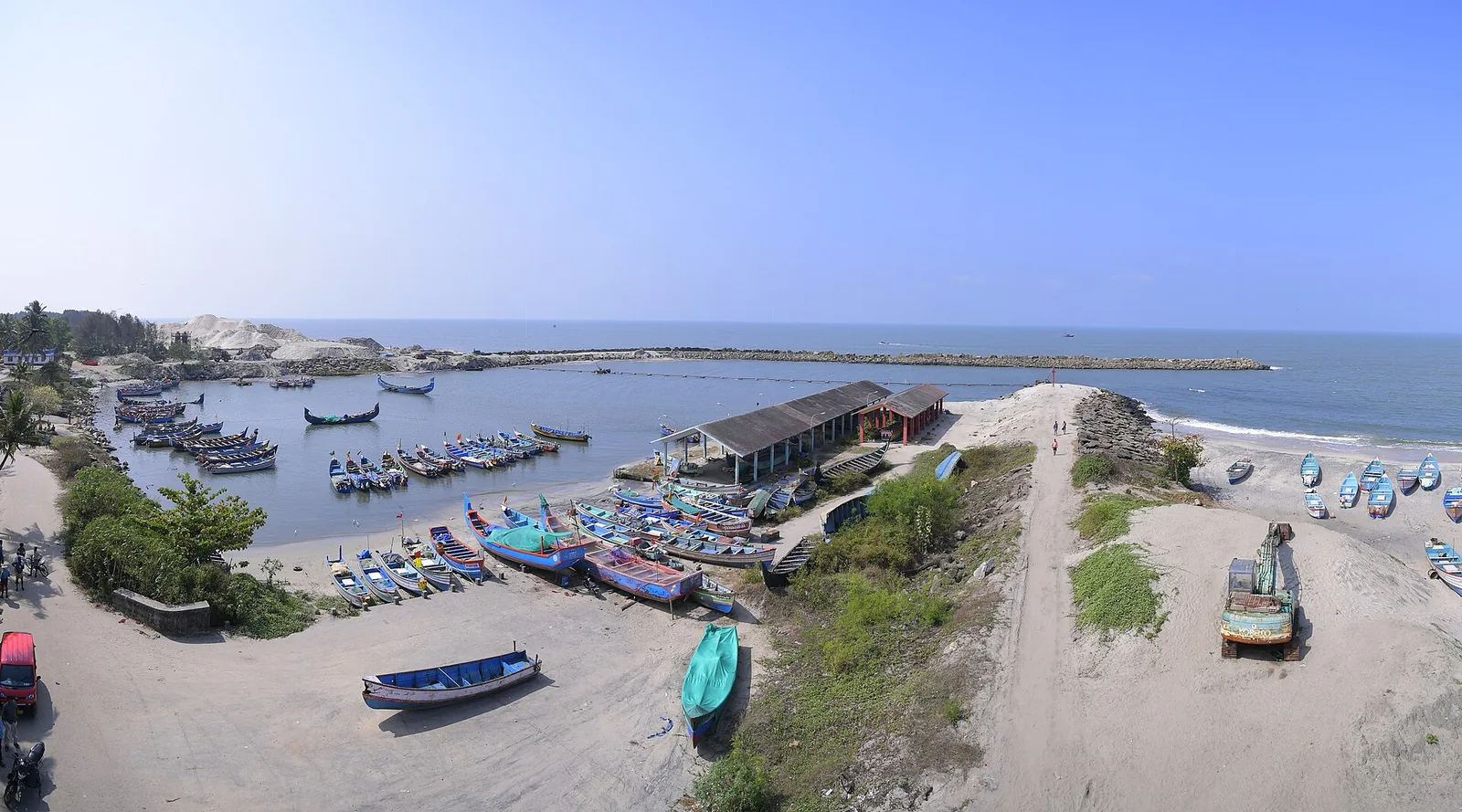
Working fishing harbour and 1955 flood spillway where the Thottappally leading channel meets the sea, south of Ambalappuzha — a painted fleet, two breakwaters and heaps of titanium-bearing black sand, rather than a quiet beach.
10.8 km · ~18 min by cab · straight line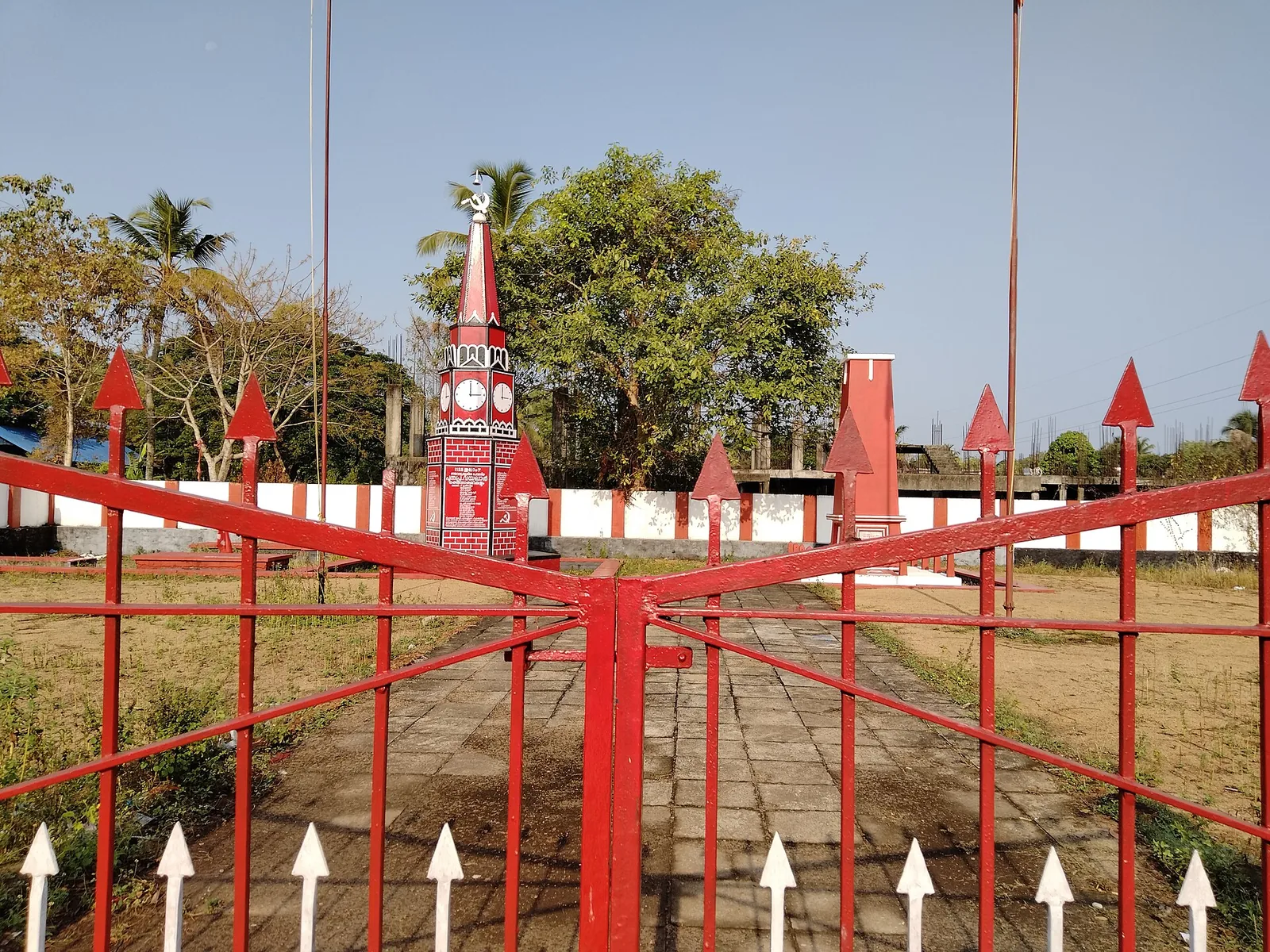
Martyrs’ memorial (Rakthasakshi Mandapam) to the 1946 Punnapra–Vayalar uprising, on the coastal belt north of Punnapra on the Alappuzha side.
11.1 km · ~18 min by cab · straight line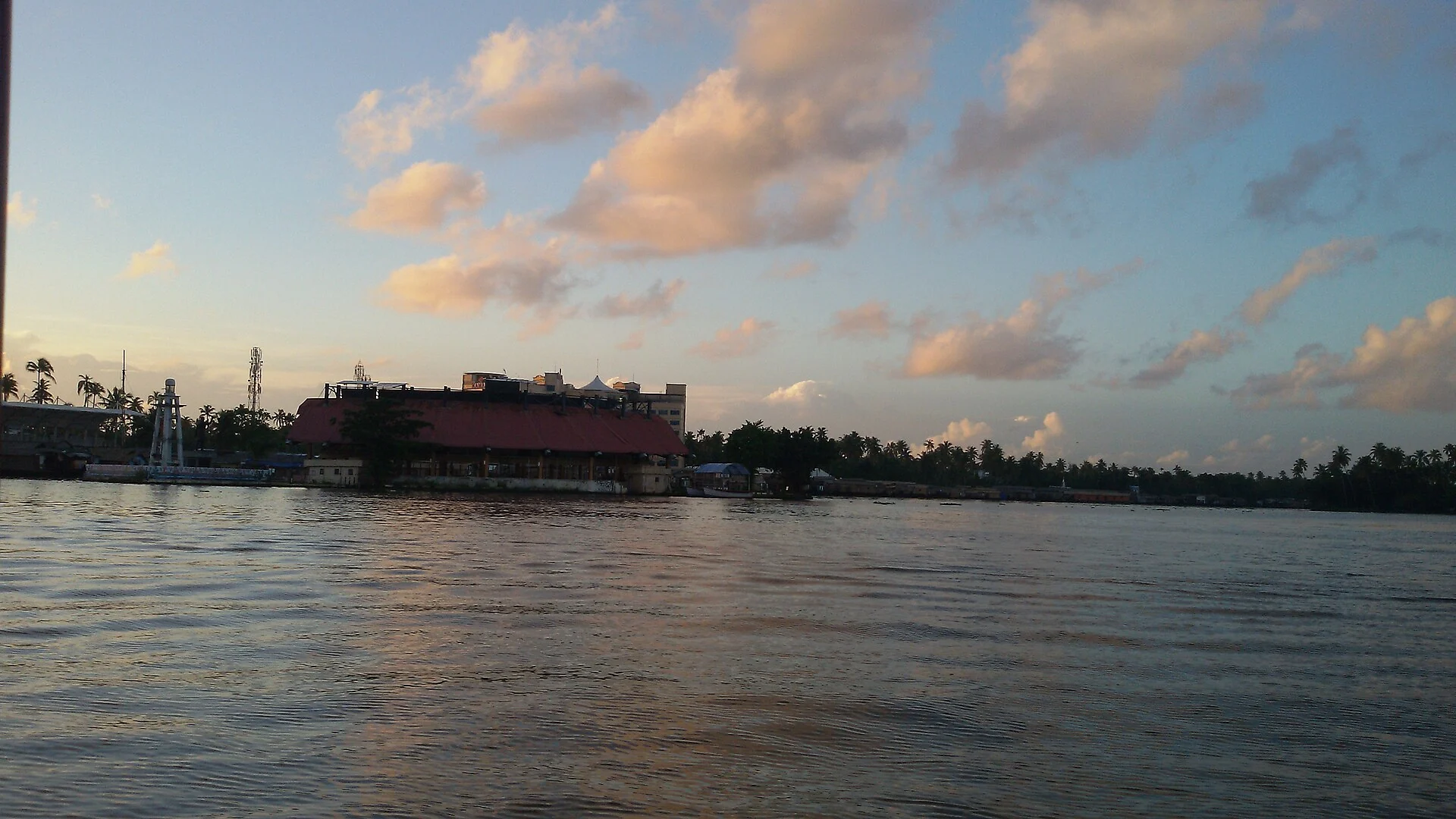
Finishing-point lake of the Nehru Trophy Boat Race and the main houseboat cruising water off Alappuzha.
12.1 km · ~20 min by cab · straight line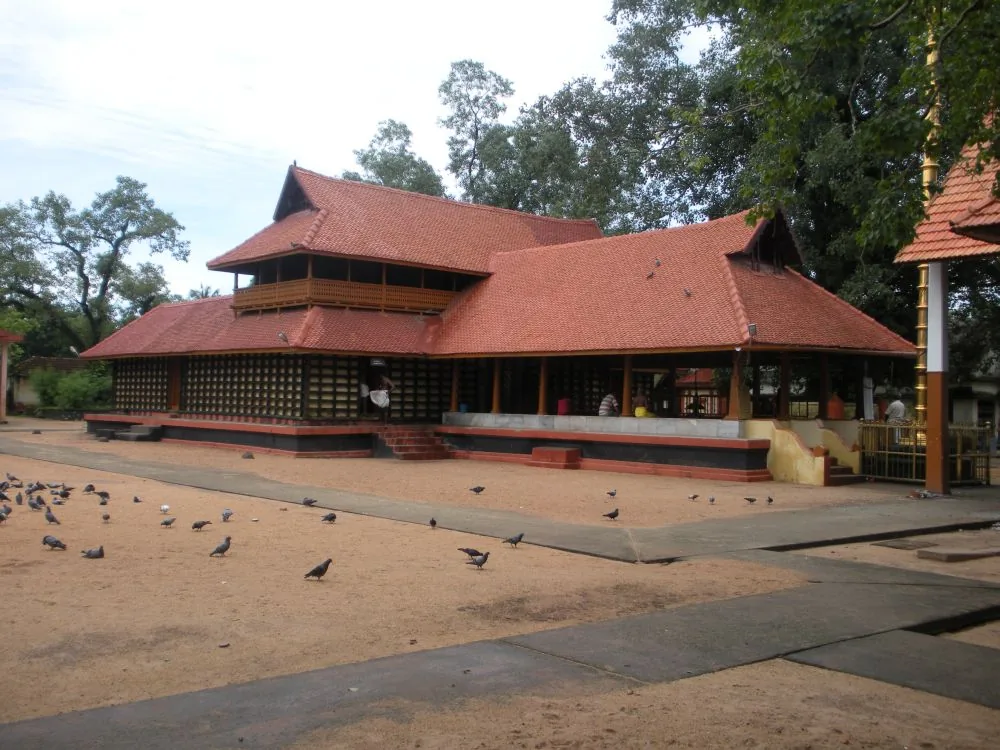
Central Alappuzha town temple (Mullakkal Rajarajeswari) famous for the annual Mullackal Chirappu festival.
12.4 km · ~21 min by cab · straight line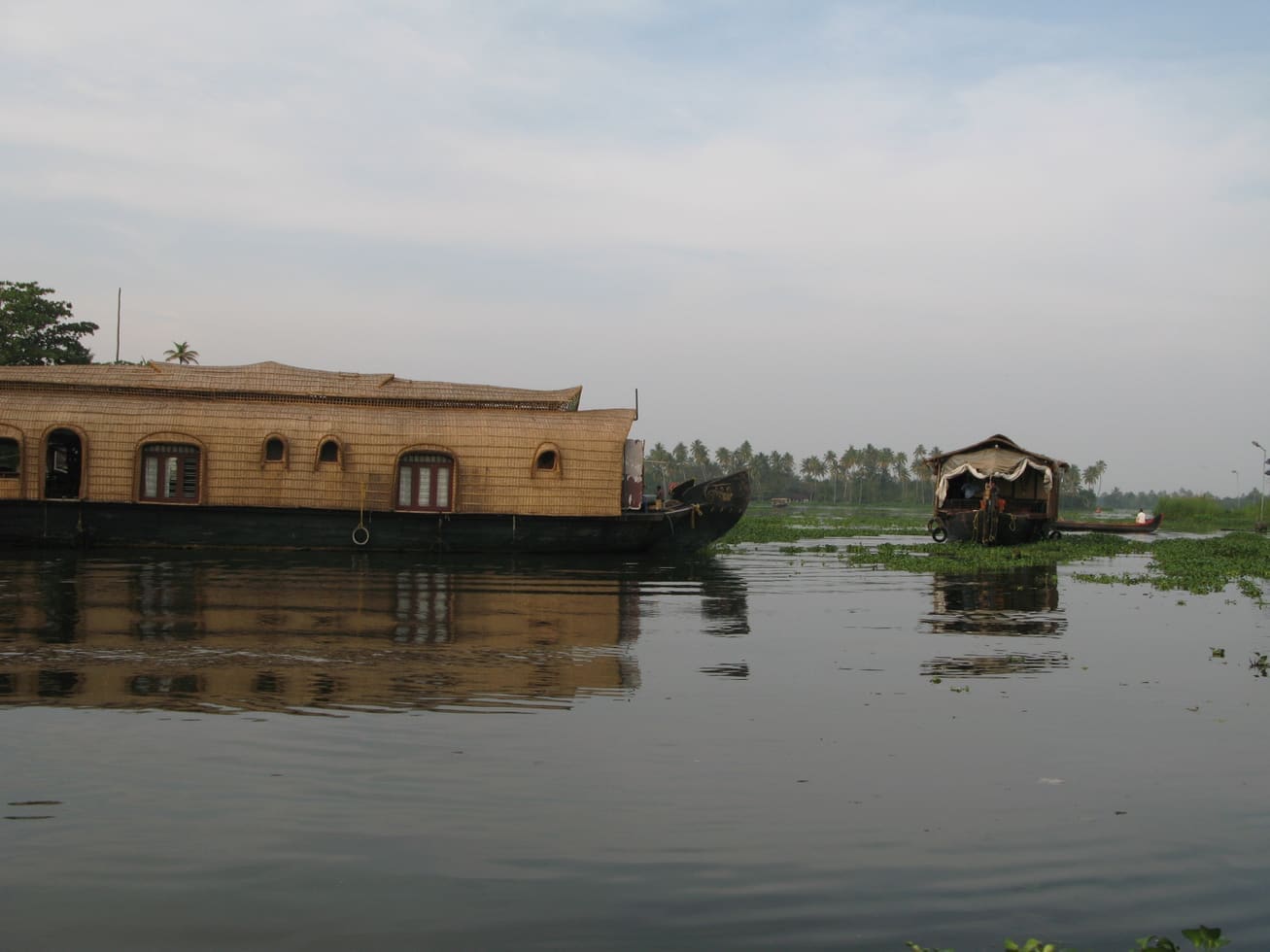
Backwater and houseboat hub with canals, beach, lighthouse and Finishing Point jetty.
12.8 km · ~21 min by cab · straight line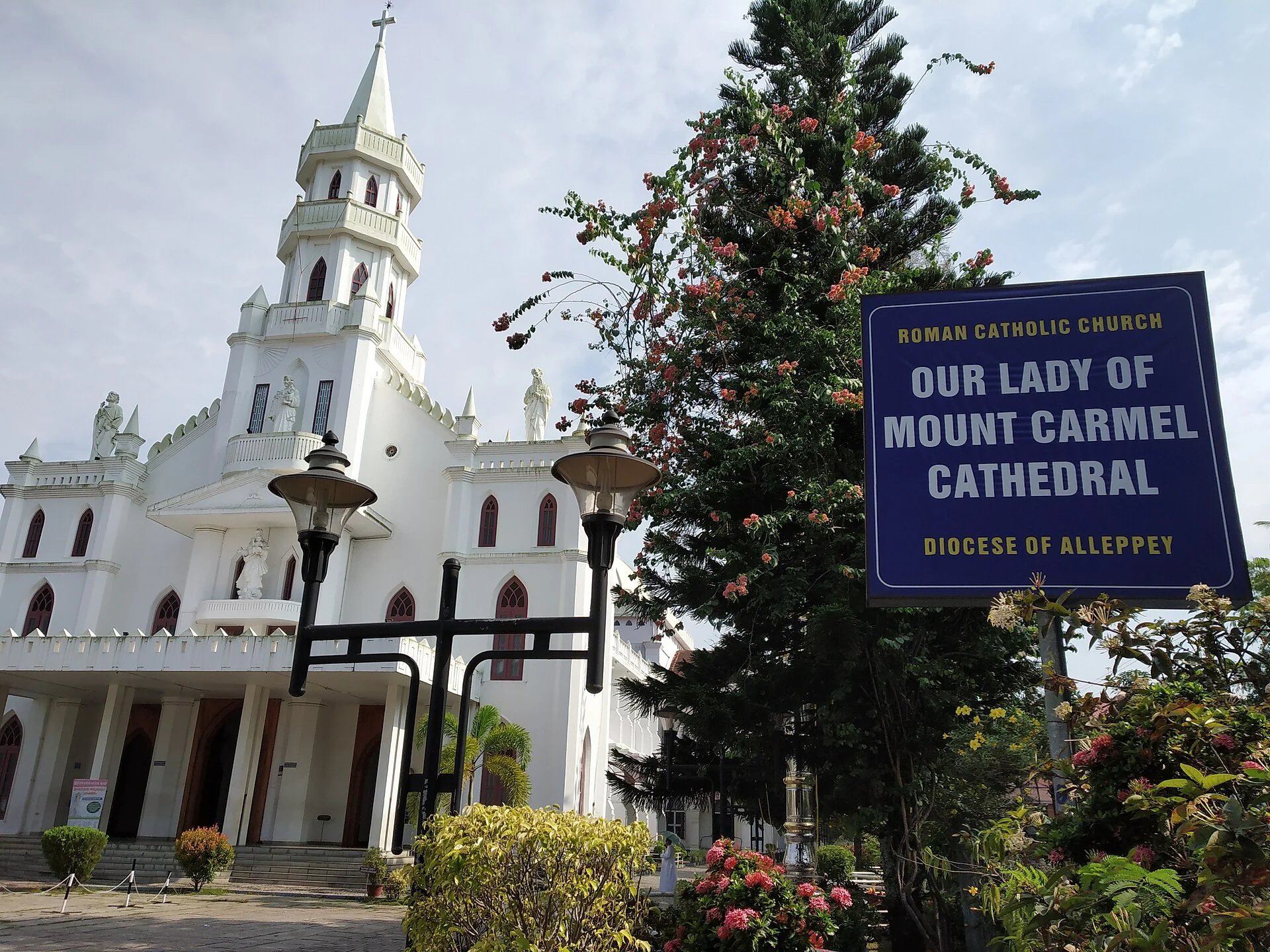
Landmark 19th-century cathedral of the Alappuzha diocese near the town centre.
13.3 km · ~22 min by cab · straight line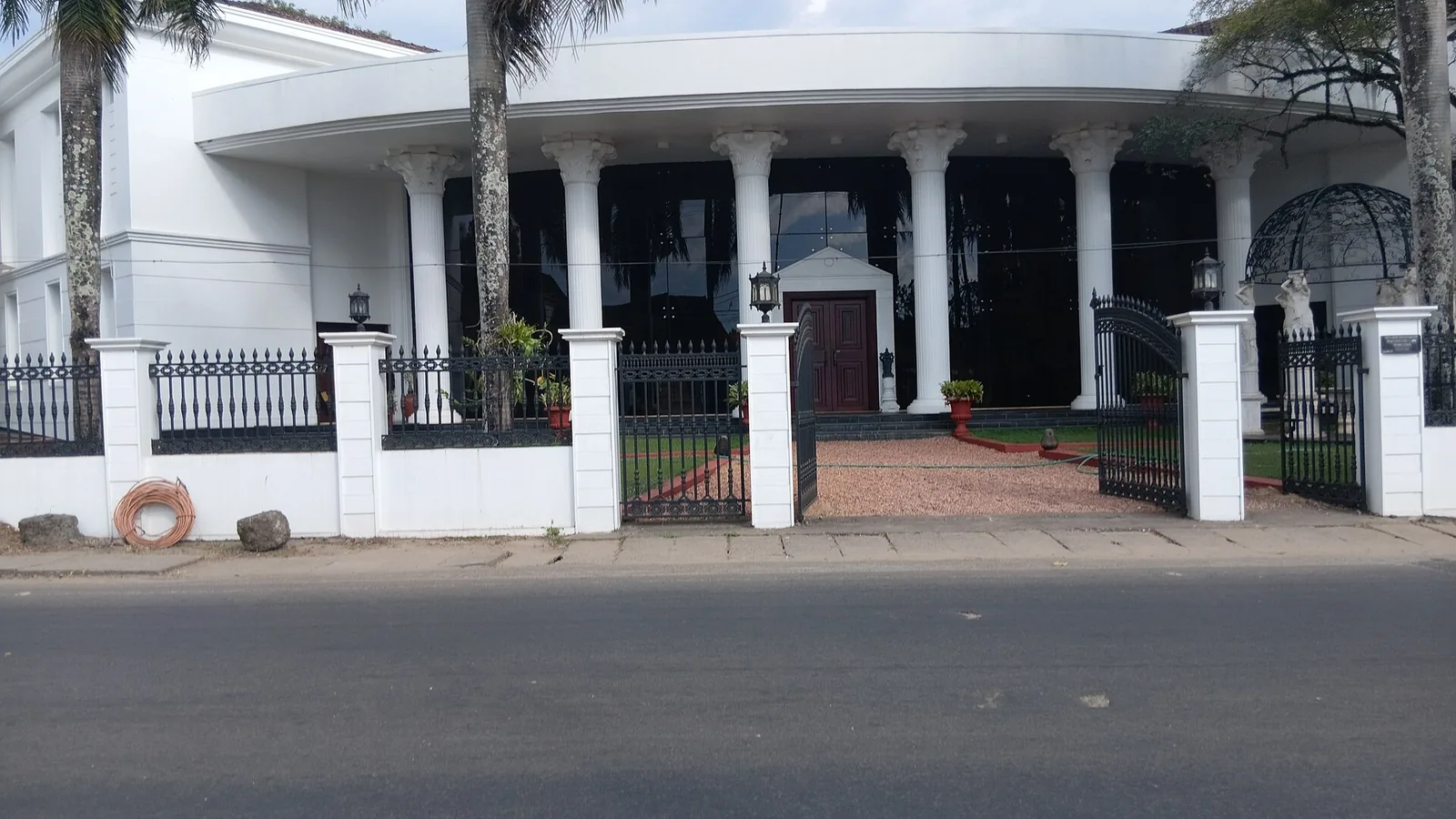
Private memorial museum in Thathampally with a large collection of paintings, ivory, crystal and antiques.
13.6 km · ~23 min by cab · straight lineNearby toilets, pharmacies, ATMs, seating and vets are community-mapped and may be incomplete or out of date. Map data © OpenStreetMap contributors | Walking times © openrouteservice.org by HeiGIT
It is the ceremony that has to happen before the Champakulam boat race can begin. A delegation from the Ambalappuzha Sree Krishna temple comes to the Mappilassery house at Champakulam — a Christian household — with the temple’s palpayasam, presents it to the head of the family, and a nilavilakku is lit and prayers said there. Only then does the race start. The family’s claim is that it has run unbroken since 1545.
Because of a night in 1545. A Krishna idol being carried by water to the new temple at Ambalappuzha was caught by nightfall on the Pamba, and rather than risk robbers the party sheltered — on the raja’s instruction — at the house of Itti Thomman of Koyikkari Mappilassery, a Christian and a confidant of the king. Pujas were offered to Krishna in that house overnight. The raja ordered an annual water carnival in memory of the reception his Christian subjects had given a Hindu god.
It is disputed and we would rather say so than pick a side. Kerala Tourism’s own event page headlines it as the oldest and then softens to “one of the most iconic and oldest” in its body text; Champakulam’s own Wikipedia article ranks it second, after Aranmula, and Aranmula makes the same claim for itself. What is not disputed is the 1545 origin legend and the surviving Moolakazhcha.
On Moolam day in the Malayalam month of Mithunam, which falls in late June or early July — Moolam is Krishna’s birth asterism. The date shifts every year with the Malayalam calendar (2025’s race was on 9 July), so confirm the current year’s date with DTPC Alappuzha rather than relying on any date printed in advance.
No, and the true version is more interesting. The seven and a half churches of St Thomas are Kodungallur, Kollam, Niranam, Nilackal, Kokkamangalam, Kottakavu and Palayoor, with Thiruvithamcode as the half — Champakulam is on no version of the list. What the parish claims is that it was once under Niranam, which is a St Thomas foundation. That is descent, not foundation. Alappuzha does have a church from the real list: Kokkamangalam.
The traditional founding date is AD 427, but it is attributed rather than evidenced and the building has been rebuilt repeatedly. The oldest firmly dated thing on the site is the open-air rock cross in the churchyard, documented to AD 1151. It was declared a Minor Basilica on 27 November 2016.
Yes. It is open daily for prayer and has no entry charge. A church notice photographed in 2012 listed a ₹25 camera fee and asked visitors to respect the sanctity of the premises; ask at the church for the current photography rule.
October to March is best for comfortable boat trips; monsoon is greener but weather can disrupt plans.
Entry: Free for the village and basilica. A church notice photographed in 2012 listed a ₹25 camera charge; ask at the church for the current photography rule. Boat and canoe rides are privately priced. Timings: The village is open access at any hour. Kalloorkad St Mary's Basilica is open daily for prayer; Holy Qurbana is listed as 6.00, 7.30 and 9.30 in the morning and 4.00 in the afternoon on Sundays, and 6.00 and 7.00 in the morning on other days, with an additional 6.30 and 4.00 on Wednesdays. Mass times change, so check with the parish.
Base yourself in Kuttanad or a nearby town in Alappuzha, then confirm the last-mile route locally before leaving. Plan boat timings first, then arrange road transfer around the departure point. If the visit depends on forest, temple, boat, ferry, weather or seasonal access, check the official/local rule on the day before travel.
2 hours to a full day; overnight if using a houseboat area.
Nearby you can pair Karumadikuttan (4.2 km), Kuttanad (5.2 km), Ambalappuzha Sree Krishna Temple (5.4 km), R Block Kuttanad (7.2 km).
Use operators with life jackets and clear weather judgement. Avoid overloaded boats.
Written about Champakulam itself — its history, its legends and the arguments about them.


These guides explore Kuttanad and the surrounding area. Choose a visit that fits your interests, allowing separately for travel between stops.

Route-level itineraries and practical guides for the rest of Kerala.
Photographs: T M Cyriac (CC BY-SA 4.0), Bibindas21 (CC BY-SA 4.0). Wikimedia Commons.


