Cherai Beach

Cherai Beach is Kochi's most practical beach day trip, set on the Vypin island coast with the Arabian Sea on one side and backwater/village roads nearby. It is easier from the airport and mainland than many south Kerala beaches.

Cherai Beach, Cherai and Vypin
Practical guide

Plan Cherai Beach

Who's going?Tailor Cherai Beach to your trip
Typebeach
Nearest baseCherai and Vypin
Best timeNovember to February is the best beach season
Time needed2 to 4 hours
EntryFree
Nearest town/baseCherai and Vypin
DistrictErnakulam
Place typebeach
Time needed2 to 4 hours; overnight if using a beach stay.

Cherai Beach is Kochi's most practical beach day trip, set on the Vypin island coast with the Arabian Sea on one side and backwater/village roads nearby. It is easier from the airport and mainland than many south Kerala beaches.

Plan it by micro-location: beach road, Munambam side, Kuzhuppilly/Puthuvype side and resort pockets feel different. Correct inventory needs exact address, beach access, parking and food clarity.

The story

On the northern shoulder of Vypin Island, a slender ten-kilometre ribbon of golden sand holds the Arabian Sea on one side and the Kerala backwaters on the other — close enough that you can stand in one spot and catch both in a single frame. Locals call Cherai the “Princess of the Arabian Sea,” and on a calm evening, with fishing boats drifting home and dolphins sometimes breaking the surface offshore, the nickname feels earned.

The story of Cherai Beach

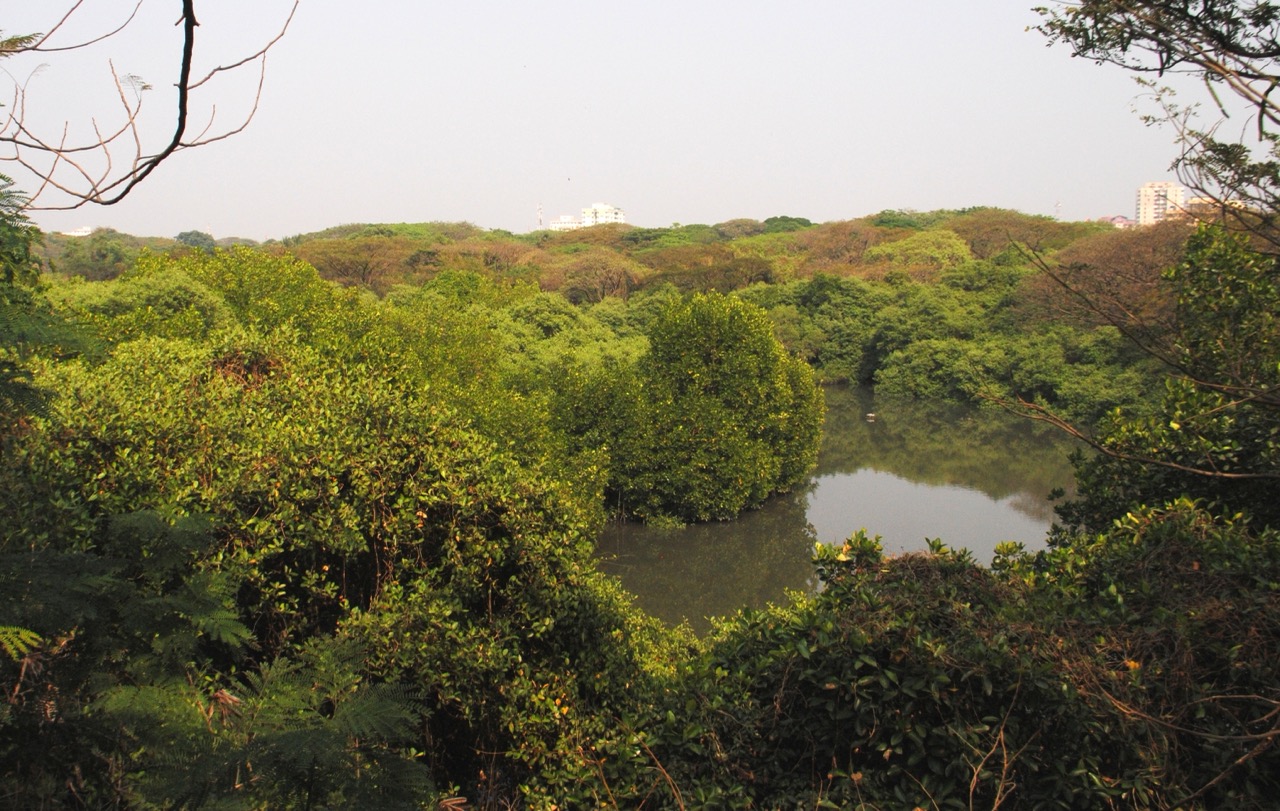
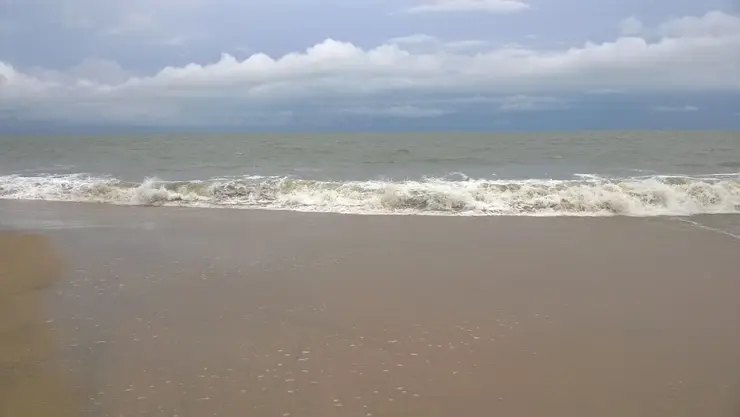
Cherai is not one thing but two seas of water pressed together with a thin band of land between them. To the west the open Arabian Sea rolls in over pale golden sand; to the east lie the still, glassy backwaters fed by the Periyar. This is the beach’s signature and the reason photographers keep coming: it is one of the very few places in Kerala where you can see the surf and the backwater in the same glance, separated only by a narrow road and a screen of coconut palms.

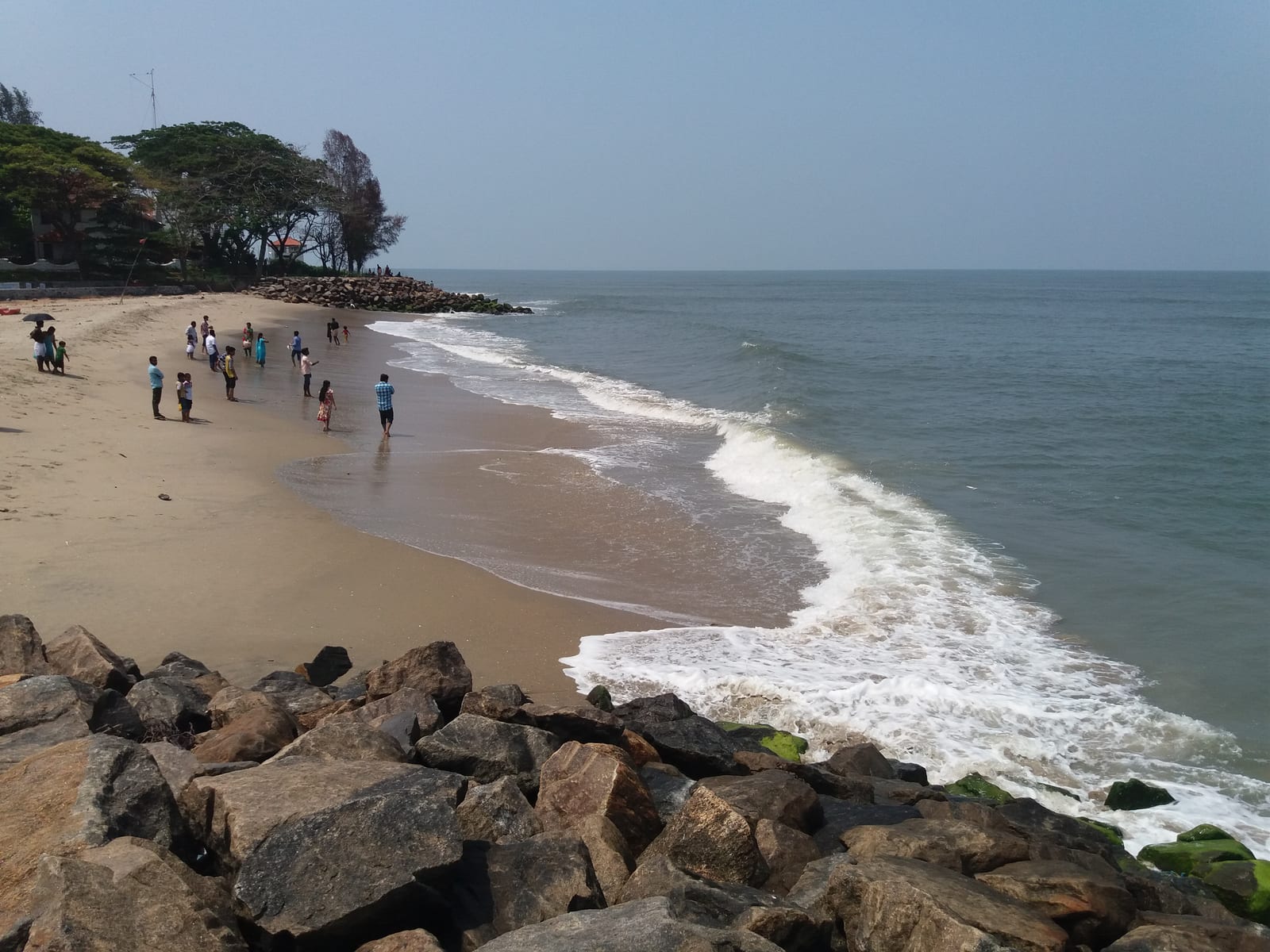
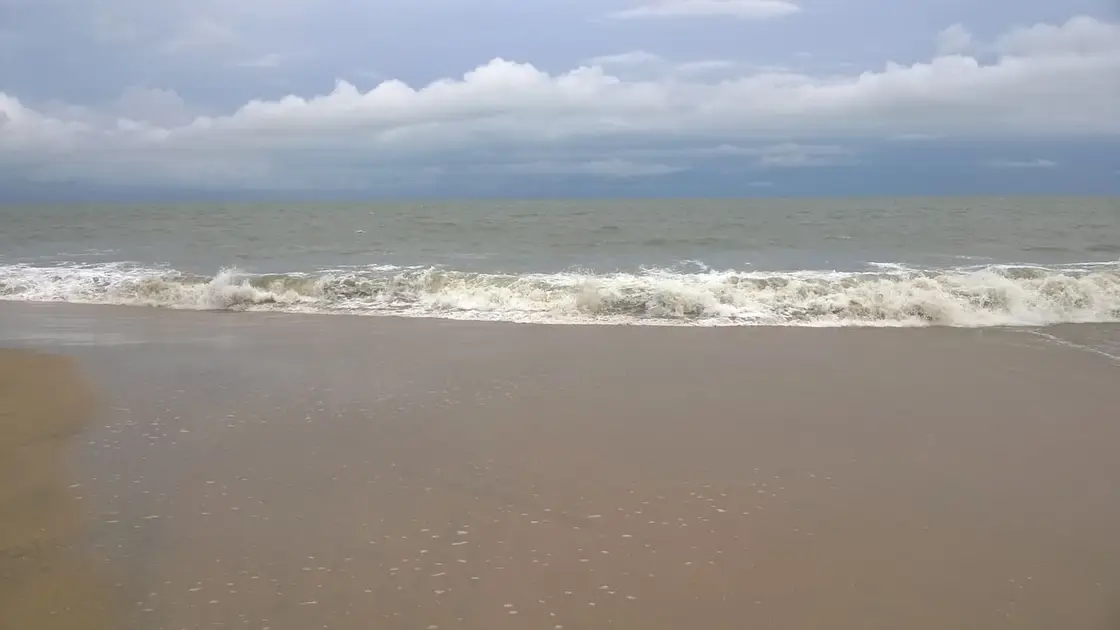
The sand itself is the draw. Cherai runs for roughly ten kilometres, the longest continuous beach around Kochi, and the shelf drops away gently, so the tide stays low and the waves stay soft. That makes it one of the rare Kerala beaches where wading and swimming feel unthreatening rather than a gamble against the undertow. Families spread out along the shore, children chase the shallow foam, and there is room enough that even a busy weekend never feels truly crowded.

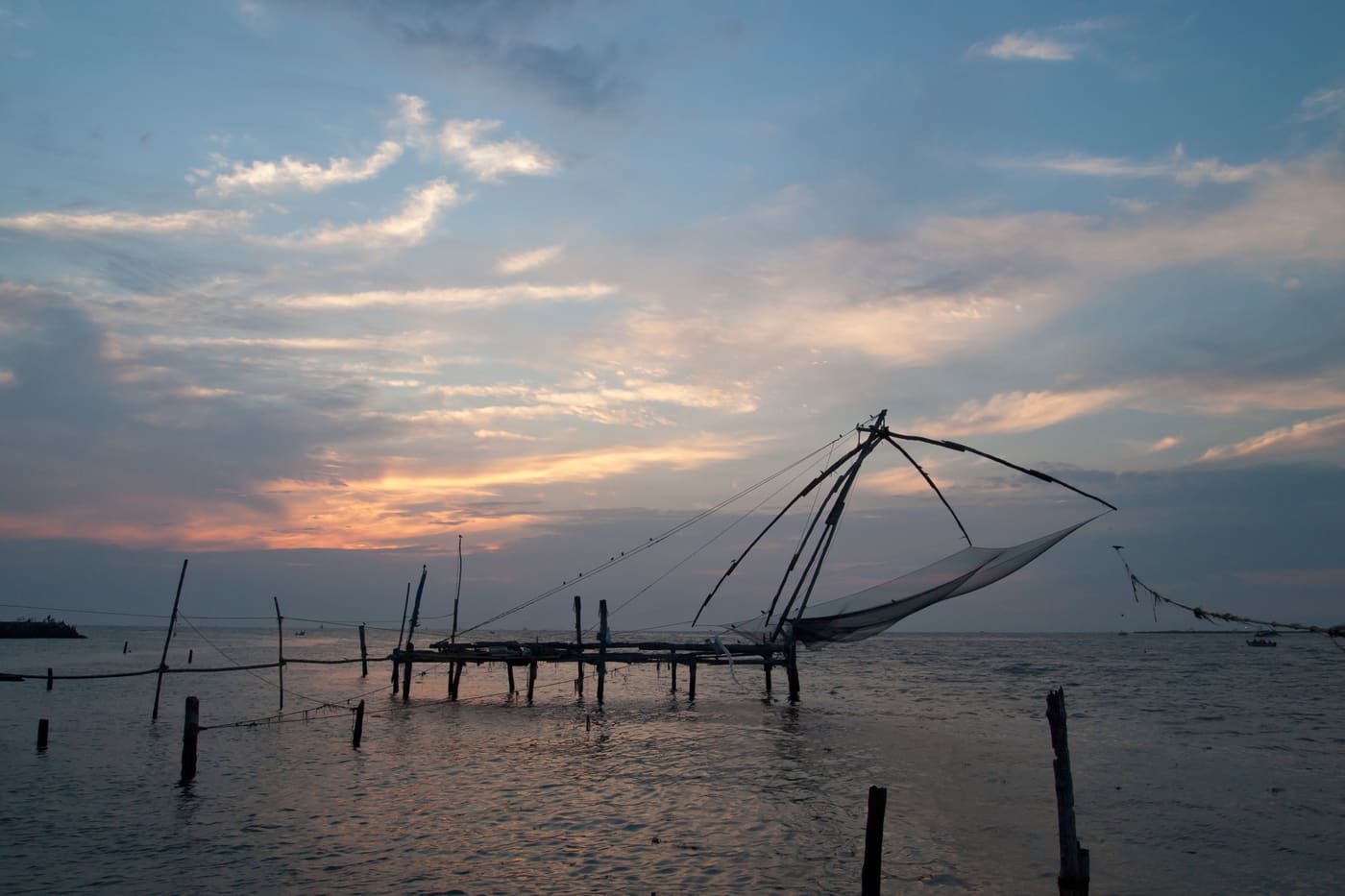
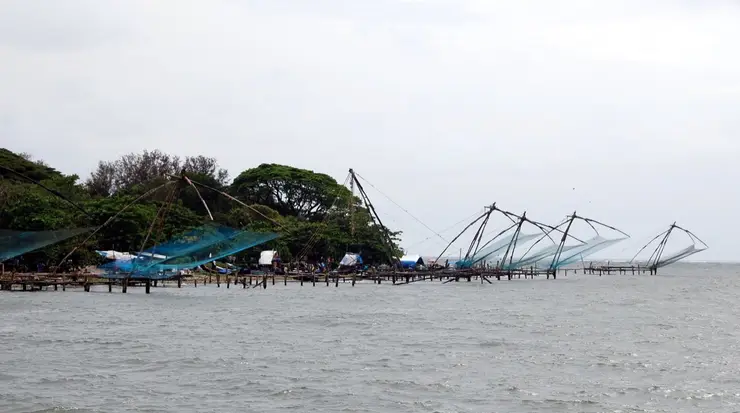
On the backwater side, the old wooden Chinese fishing nets still tilt over the water on their cantilevered frames, dipping and rising in the slow rhythm they have kept for centuries. Introduced to the Kochi coast in the days of Chinese and Arab trade, these “cheena vala” are worked by teams of fishermen who lower the great square nets and haul them up dripping with the morning’s catch. Watching a net rise against the light is one of the quiet pleasures of a Cherai visit, and many travellers buy fish straight off the boats.

Then there are the dolphins. Cherai has a reputation, unusual for Kerala, as a beach where dolphins are spotted near the shoreline — most often in the early morning, when a pod will sometimes arc through the calmer offshore water. Sightings are never guaranteed and depend entirely on the sea’s mood that day, but the possibility gives the dawn walk a particular expectancy, and patient early risers are the ones most often rewarded.

Hunger is easily answered. Behind the sand, small shacks and beachside stalls turn out fresh seafood — prawns, squid, karimeen and the day’s catch fried or curried in coconut and Kerala spice — while coconut groves and paddy fields lying below sea level frame the whole strip in green. It is unhurried food, eaten with sand underfoot and the smell of the sea in the air, and it is a large part of why people linger from noon into the evening rather than treating Cherai as a quick stop.

And it is the evening that everyone waits for. As the sun sinks into the Arabian Sea, the whole western sky and the wet sand catch fire in orange and rose, the returning fishing boats become silhouettes, and the crowd falls quiet along the water’s edge. Sunset at Cherai is the day’s set-piece — the moment the Princess of the Arabian Sea looks most like her name — and it is worth timing a visit to be standing on the sand when it comes.

Legend & myth

There is a lost city under this coast, and Cherai is the nearest beach to where people think it is. That is the legend worth arriving with, because it turns a pleasant ten kilometres of sand into the edge of one of the great archaeological arguments in India.

The city is Muziris. For the Romans it was the richest port in the East — the place their pepper came from, named in the Periplus of the Erythraean Sea and drawn on the Peutinger Table with a temple of Augustus beside it. Pliny complained about the fortune in gold that drained out of Rome to pay for what it sold. Then, at some point, it stopped being anywhere. No ruin, no harbour wall, no agreed location; a port that had shipped the spice of an empire simply left the map, and for centuries it was known only from other people's books.

The tradition on this coast says a flood did it. In 1341 a catastrophic surge came down the Periyar, so the story goes, dumping silt at the shore in a single convulsion — choking Muziris out of existence, throwing up the sandbar that became Vypin Island, and tearing open the estuary that became Kochi harbour. The island you are standing on is held to be the debris of that night. Its own calendar, the Puthuvype era — the Era of the New Deposit — begins in 1341 and has been counted from it ever since. Cherai's sand is, in the local telling, a city's grave and an island's birth certificate at once.

Modern archaeology neither confirms nor dismisses it. No direct account of the 1341 flood survives; the single-night version is reasoned backwards from that calendar and from the fact that the harbour is demonstrably young. Silting can take a century as easily as an evening. And the search for the city itself has finally produced a serious candidate: excavations at Pattanam, a short way inland from this coast, have turned up Roman amphora sherds, beads and wharf timbers, and are now the leading contender for Muziris — though the identification is argued over rather than settled, which is why the whole heritage circuit around here is named after the place instead of built on top of it.

Two smaller claims come with the beach and both are worth holding loosely. Cherai is marketed as the Princess of the Arabian Sea, which is affection rather than a title anyone conferred. And its length is given as ten kilometres in some sources and fifteen in others, with no reconciliation offered — the honest answer is that a sandbar shifts, and that the pleasant part you will actually walk is a good deal shorter than either figure.

And there is a harder thing to hold alongside the birth story, because the two are the same process running in opposite directions. This sand is new land, thrown up by a river in the fourteenth century. It is also land the sea is taking back. A 2018 study by the National Centre for Earth Science Studies found that about 60 per cent of Kerala's 590-kilometre coastline is under erosion, and Vypin — a low sandbar between an ocean and a lagoon — sits squarely in the vulnerable category. The state's response has been largely structural: seawalls, groynes, tetrapods, geotubes. Researchers quoted in the reporting argue that hard constructions of that kind have in places worsened erosion by interrupting the movement of sand along the shore, and press for restoring coastal vegetation and mangrove as a bio-shield instead. We report that because it is the published finding; where the balance lies at any particular stretch is a technical question and not one a travel page should pretend to settle.

Read the full history of Cherai Beach 701 more words

History

Cherai’s story begins with a catastrophe. Vypin Island, the strip of land the beach sits on, is not ancient ground but relatively young: it is widely held to have been formed around 1341 CE,when a massive flood of the Periyar River — remembered as the “Great Flood of 1341” — swept enormous volumes of silt and sediment down from the Western Ghats and reshaped the coastline near present-day Kochi. Much of what is known comes from geological study and archaeological excavation rather than surviving written accounts, so dates and detail are read cautiously by historians.

That same flood is tied to one of the great vanishings of Indian history. The siltation is believed to have choked and destroyed the fabled ancient port of Muziris, a hub of Roman, Arab and Mediterranean trade that once lay along this coast, while the churning of the sea and river simultaneously opened a deep natural harbour at Kochi. As Muziris silted over, traders drifted south to the new harbour, and Kochi rose to become the region’s great port — with Vypin Island, and Cherai on its northern edge, emerging as fresh land from the wreckage of the old geography.

The measurements are worth pinning down because they vary. Cherai is generally given as around ten kilometres of beach, the longest continuous stretch near Kochi, though fifteen appears in some sources. It lies about 25 km from central Kochi and roughly 20 km from Cochin International Airport, on the northern side of Vypin, and the strip that most visitors actually walk is far shorter than either headline figure. The features that make it unusual are consistent across sources: an exceptionally gentle shelf, so low tides and soft waves and genuinely comfortable swimming; the backwater lying immediately behind the sand, so that surf and lagoon appear in one frame; and frequent dolphin sightings, most often early in the morning.

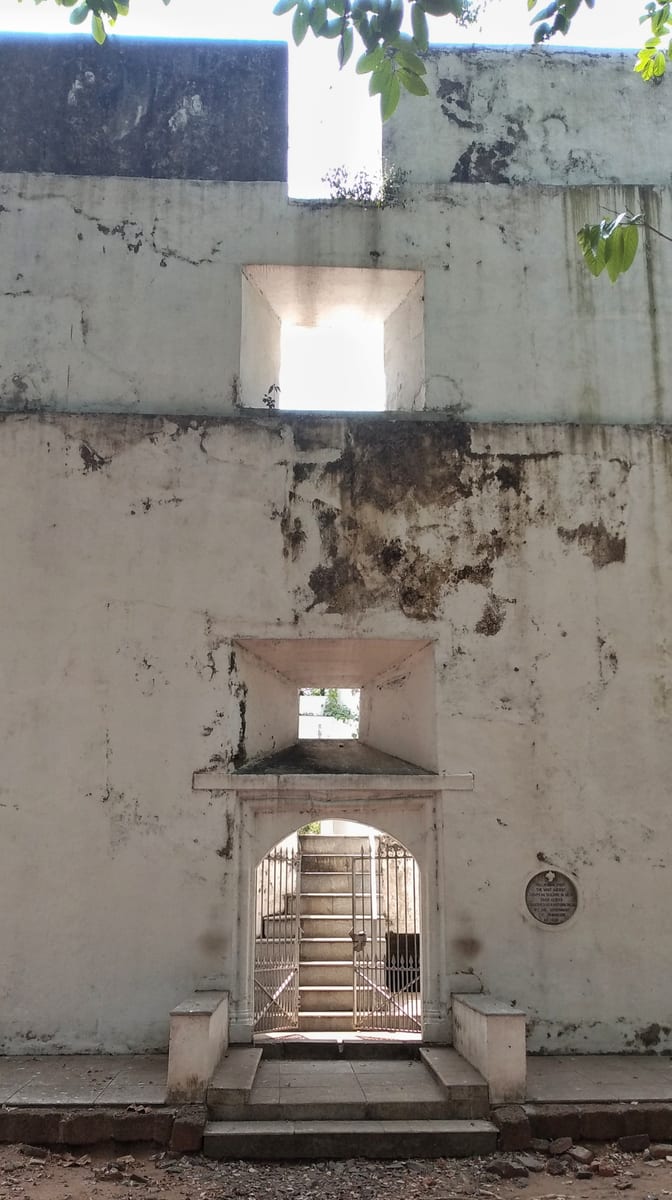
Through the centuries that followed, Cherai and Vypin remained a coast of fishermen and coconut palms, and they were drawn into Kerala’s long colonial encounter. At Pallipuram, at the island’s northern tip near Cherai, the Portuguese built a fort in the early sixteenth century — often cited as among the oldest surviving European monuments in India — later passing to the Dutch and then the British as European powers contested the spice coast. The beach’s hinterland thus carries the layered marks of Portuguese, Dutch and British presence.

For most of its history Cherai was simply a working fishing village on the Pallipuram panchayat, its economy built on the sea, the backwater nets and the paddy and coconut lands behind the shore. Tourism came comparatively late. Only in recent decades did Cherai’s combination of a long, safe, swimmable beach and the rare sea-meets-backwater setting turn it into one of the most visited beaches in Kerala, drawing both Indian and foreign travellers and bringing resorts, homestays and water-sports operators to what had been a quiet coast.

As with much of low-lying Vypin, the shoreline’s relationship with the sea is an active one. Stretches of the coast have been managed with sea-defence works to hold back erosion and protect the road and settlements that run close behind the sand — a reminder that this is young, accreted land still negotiating with the water that made it. Visitors should treat specifics of any seawall or shore-protection works, like other on-the-ground detail, as best confirmed locally.

Why visit

See the Arabian Sea and the Kerala backwaters in a single frame — one of the very few places where the two meet with only a thin band of land between them.

Swim and wade in relative safety on a long, gently shelving beach where the tide stays low and the waves stay soft, unusual for the Kerala coast.

Watch for dolphins offshore in the early morning, at one of the few Kerala beaches with a genuine reputation for near-shore sightings.

Catch a legendary Arabian Sea sunset, with returning fishing boats turning to silhouettes against a sky of orange and rose.

Watch the old cantilevered Chinese fishing nets at work on the backwater side and buy fresh fish straight from the boats.

Feast on just-caught seafood at beachside shacks, framed by coconut groves and below-sea-level paddy fields.
What to expect

Highlights

  • Long Vypin coast beach, sunset walks and backwater-side village roads.
  • Good pairing with Fort Kochi ferries, Munambam harbour and airport-side itineraries.
  • Priority inventory for beach stays, seafood restaurants, taxis, rentals and family services.
Getting there

How to visit

  • Base in Cherai/Vypin for beach time, or visit as a day trip from Fort Kochi, Ernakulam or the airport side.
  • Go morning or late afternoon; midday can be hot and glare-heavy.
  • Confirm swimming condition, lifeguard advice and return transport before staying for sunset.

Distance by road

  • Kozhikode175 km
  • Coimbatore190 km
  • Thiruvananthapuram206 km
  • Madurai278 km
  • Mysuru348 km

Road km to Ernakulam; ghat roads and traffic vary — allow extra.

Timing

Best time

November to February is the best beach season. Monsoon brings rougher seas and changing beach conditions.

Weather in Cherai BeachSeasonal guide

Live forecast loads in your browser.

Today at Cherai Beach
Sunrise6:16 am
Sunset6:42 pm
Golden hour best light5:42 pm–6:42 pm
Blue hour after sunset6:42 pm–7:07 pm
Sun sets toward compass bearingWNW · 283°
Moon tonight🌒 Waxing crescent · 43%
South-west monsoon. June to September is monsoon season: the sea gets rough, swimming is often unsafe and boat services can be suspended. Follow lifeguard and local warnings, and expect changeable conditions.

Check the official alert before you travel. Kerala’s beaches, waterfalls and trekking routes close at short notice during heavy rain, and district alert levels change day to day. We do not publish an alert level of our own — read it from the state authority: Kerala State Disaster Management Authority, or the district control room on 1077.

Sun and moon are calculated for this location and shown in IST. Photography windows are the hour around sunrise and sunset; the sunset bearing is degrees clockwise from true north. Moon phase is accurate to about half a day.

Visitor notes

  • Some properties use Cherai broadly while sitting inland or farther along Vypin.
  • Weekend traffic and parking can slow the trip.
  • Seafood and resort listings should be verified for actual beach access.
Safety

Good to know

  • Follow sea warnings and avoid rough-water swimming.
  • Do not use isolated stretches after dark without known transport.
  • Avoid unsafe water activities and horse/vehicle activity without clear local approval.
Stay · eat · do · rent · see · shop

Stays, food & things to do near Cherai Beach

Verified hotels, homestays, restaurants, experiences, sights, shops and rentals around Cherai Beach — commission-free, with direct contact. Filter by what you need.

1 place to eat near Cherai Beach

Cherai Beach Resorts Restaurant — Beach resort restaurant in Cherai and Vypin
Verified
Beach resort restaurant · Cherai and Vypin
Cherai Beach Resorts Restaurant
2.1 km · 25 min walk ~₹30–50 by auto

Restaurant at Cherai Beach Resorts for Vypin Island and Cherai beach visitors. Contact direct / check current rules · cherai-and-vypin, eat, Beach resort restaurant.

Directions Commission-freeView details

Book with the place itself. India’s cyber-crime coordination centre warned in April 2025 that convincing copies of hotel and pilgrimage booking sites are being pushed through sponsored search and social ads, taking payment for rooms the property never hears about. Every listing here links to the business’s own contact details and its own Google or Bing profile — we take no commission and sit in nobody’s payment path. If a booking page reached you through an ad, check the address bar against the property’s own site before you pay. Fraud can be reported on cybercrime.gov.in or on 1930.

Roampedia is commission-free — own or know a stay, eatery, guide or shop near Cherai Beach? List it and it appears here once verified.

Add a nearby business
Before you go

Cherai Beach — at a glance

TimingsOpen beach, accessible through the day; sunrise and sunset are the highlights (indicative — confirm locally)
Best timeNovember to February for cool, clear weather; early morning for dolphins and quiet, late afternoon for the sunset (indicative — confirm locally)

Entry: Free to enter (indicative — confirm locally); nominal charges may apply for parking or specific activities

Photography: Free to shoot; the sea-meets-backwater views, Chinese fishing nets and sunsets are the standout frames — bring a zoom for offshore dolphins

Getting here

How to reach Cherai Beach

  • ✈︎ By air Cochin International Airport is roughly 20–25 km away (indicative — confirm locally).
  • 🚆︎ By train The nearest major railheads are Ernakulam Town and Ernakulam Junction on the mainland (indicative — confirm locally).
  • 🚗︎ By road Around 25 km from central Kochi, crossing the Goshree bridges onto Vypin Island and then heading north to Cherai (indicative — confirm locally).
  • 🚌︎ By bus Buses run to Cherai and across Vypin; alternatively take a ferry from Fort Kochi or Ernakulam to Vypin and continue by bus or auto-rickshaw (indicative — confirm locally).
Getting back

Work out your return before you settle in for the sunset. Services on this coast thin out sharply in the evening, and Cherai Beach is easier to reach than to leave. We do not publish departure times: there is no official live feed we are permitted to republish, and a wrong time here would strand you. Check the operator directly on the day.

Ask at the jetty or stand for the time of the last service back, not the next one. If you miss it, an auto or app cab is the fallback — agree the fare before you get in.

Do

Things to do

  • Watch for dolphins offshore at dawn or late afternoon
  • Wade in the shallow surf and relax on the long golden sand
  • See the Chinese fishing nets and backwaters across the shore road
  • Stay for the sunset over the Arabian Sea
  • Visit the 1503 Pallipuram Fort at the island’s northern tip
  • Climb or view the Vypin (Puthuvype) Lighthouse, the tallest in Kerala

The sea is shallow and relatively calm but conditions change with tide and season — swim only in shallow water, follow lifeguards and no-swimming signs, and plan to be on the sand for the sunset.

Getting around Cherai Beach

We have not assessed physical access at this place yet. Across India, step-free routes, handrails and accessible toilets are the exception rather than the rule, and pavements are often interrupted — if step-free access matters to you, contact the site or a local operator before committing to the trip.

Practical things near Cherai Beach
What the cash actually costs
  • Withdrawing from a bank that is not your own is free for a set number of times a month, then costs up to ₹23 plus GST — about ₹27 a withdrawal. This is not one of the RBI’s six metro centres, so the allowance here is the higher one: at least five free other-bank withdrawals a month, and at least five at your own bank.
  • That free allowance belongs to Indian bank accounts. On a card issued abroad your own bank’s international withdrawal and exchange charges apply instead. If the machine offers to bill you in your home currency, choose rupees — the conversion rate on that offer is set by the machine, not by your bank.
  • Given a choice, use an ATM inside or attached to a branch: it sits in view of staff and cameras, and there is someone to ask if the machine keeps your card. A machine standing alone on a tourist street is the one to be wary of. Banks are listed here alongside the ATMs, but the map data does not record which ATMs sit inside a branch — check when you get there.

Charge cap and free-transaction limits: Reserve Bank of India, in force since 1 May 2025.

Mapped within about 1.2 km of Cherai Beach, with real walking routes rather than straight-line distances. Community-mapped data: opening hours are shown only where they are recorded, and this is not a complete list — something unmapped may well be closer. Please confirm on the ground.

Nearby

What’s near Cherai Beach

heritagePallipuram Fort 3.4 km · 4 min drive
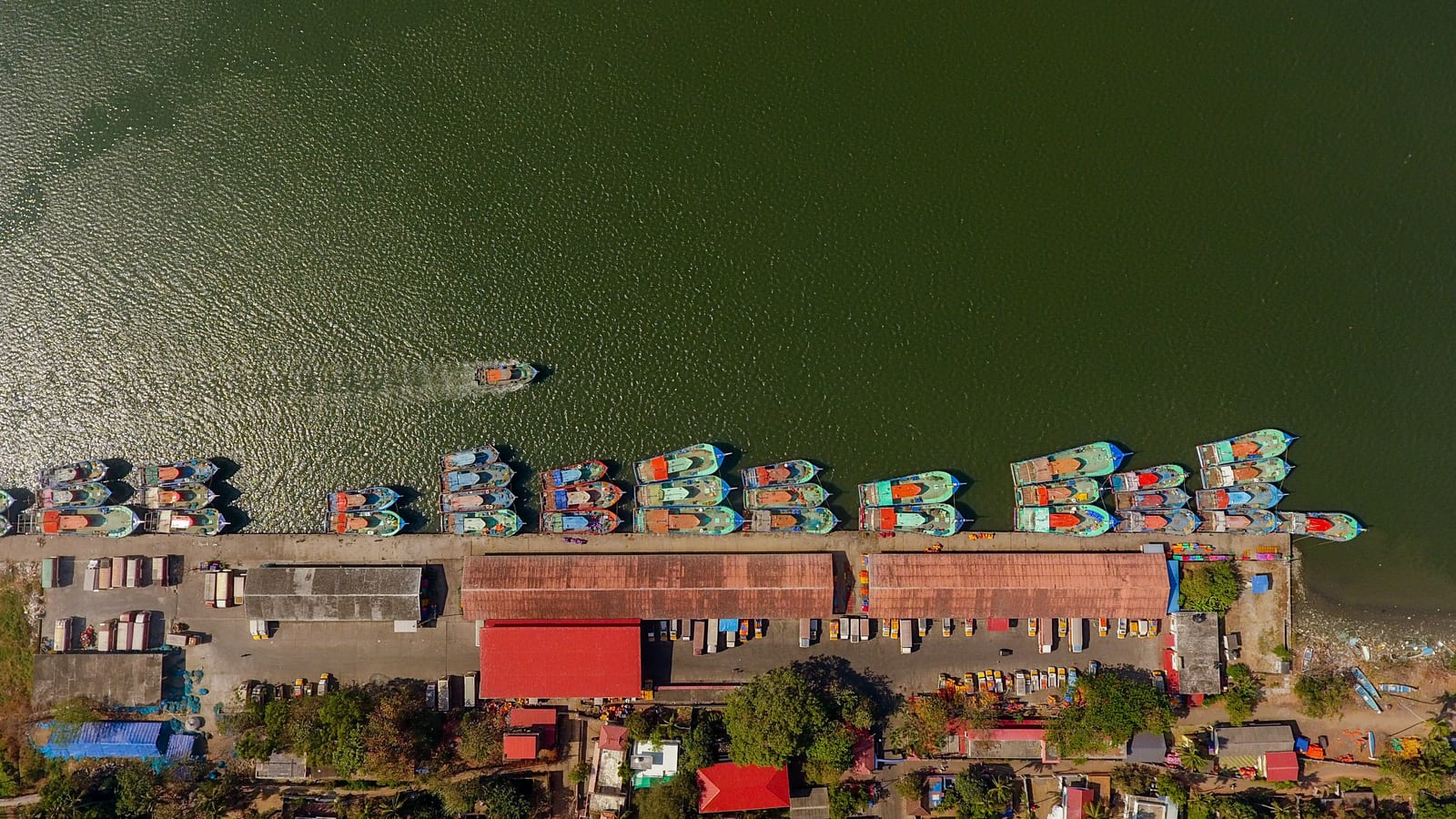
heritageMunambam harbour 4.7 km · 5 min drive
beachMunambam Beach 5.9 km · 6 min drive
beachPuthuvype Beach 17.7 km · 20 min drive
templeThrikkakara Vamana Temple 19.2 km · ~32 min by cab
wildlifeMangalavanam Bird Sanctuary 19.3 km · ~32 min by cab
heritageBolgatty Palace 19.5 km · ~32 min by cab
heritageChinese Fishing Nets 20.2 km · ~34 min by cab
beachFort Kochi Beach 20.3 km · ~34 min by cab
heritageAspinwall House 20.3 km · ~34 min by cab
heritageFort Kochi 20.4 km · ~34 min by cab
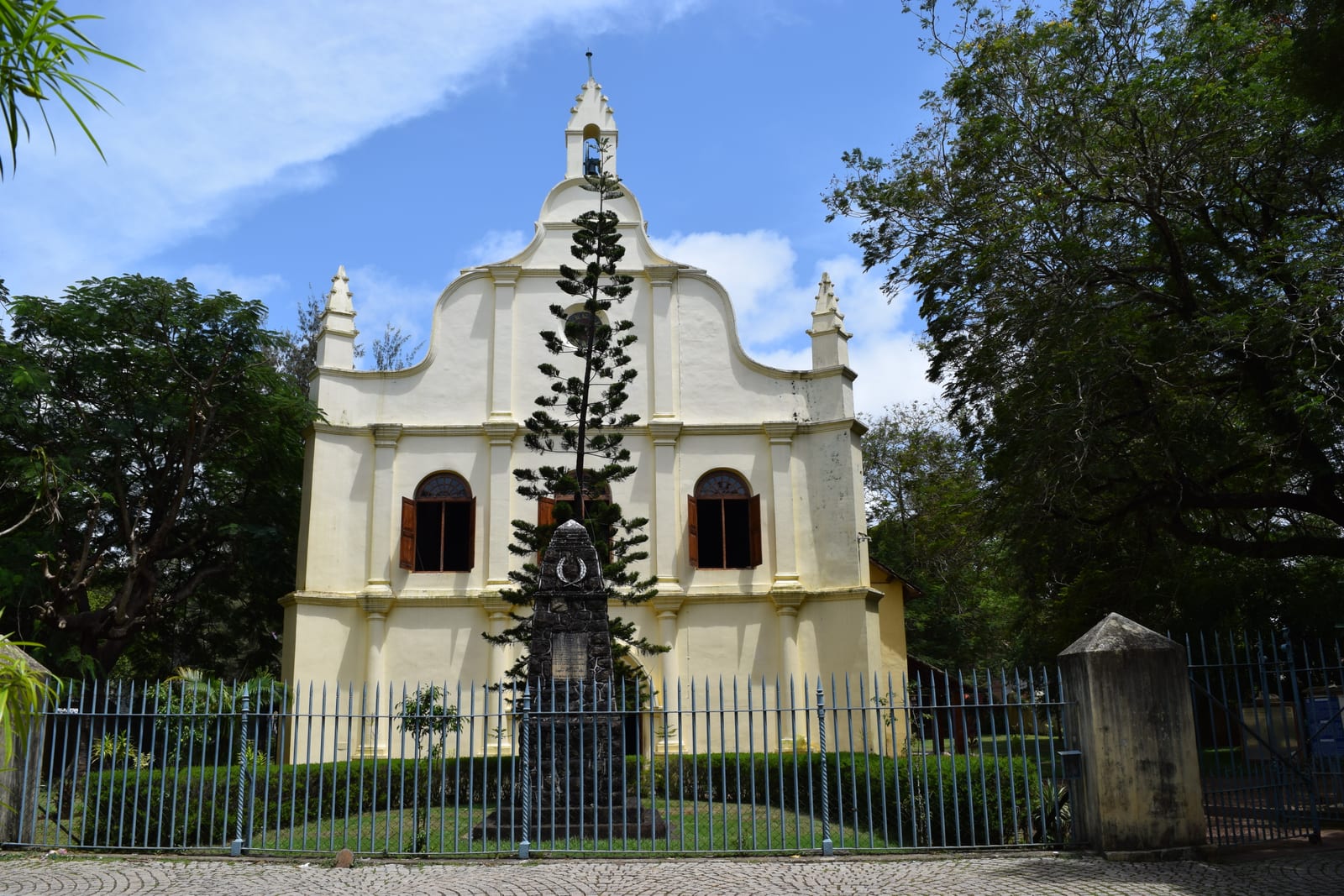
churchSt. Francis Church 20.4 km · ~34 min by cab

All 5 places to visit in Cherai and Vypin →

Walking and driving times are real routed distances, not straight lines. Fare figures are estimates from Kerala’s notified auto/taxi tariff and exclude waiting and night charges. Routing: © openrouteservice.org by HeiGIT | Map data © OpenStreetMap contributors

Nearby toilets, pharmacies, ATMs, seating and vets are community-mapped and may be incomplete or out of date. Map data © OpenStreetMap contributors | Walking times © openrouteservice.org by HeiGIT

On the map

Where Cherai Beach is

Good to know

Cherai Beach — frequently asked

How long is Cherai Beach, and how far is it from Kochi?

Around ten kilometres, the longest continuous beach near Kochi, though some sources say fifteen and neither figure reconciles with the other — a sandbar shifts, and the stretch most visitors actually walk is shorter than either. It is about 25 km from central Kochi and roughly 20 km from Cochin International Airport, on the northern side of Vypin island.

Is the beach eroding?

Vypin is a low sandbar between an ocean and a lagoon, and a 2018 study by the National Centre for Earth Science Studies found roughly 60 per cent of Kerala's 590 km coastline to be under erosion. Kerala's response has been largely structural — seawalls, groynes, tetrapods, geotubes. Researchers quoted in the reporting argue that hard structures have in places worsened erosion by interrupting the along-shore movement of sand, and favour restoring coastal vegetation and mangrove instead. Where the balance lies on any given stretch is a technical question we are not placed to settle.

Why is Cherai Beach called the “Princess of the Arabian Sea”?

It is a nickname for Cherai, reflecting its reputation as one of the prettiest beaches around Kochi — a long golden shore backed by coconut groves, with the Arabian Sea on one side and the tranquil backwaters on the other.

Can you actually see dolphins at Cherai Beach?

Sometimes. Cherai is one of the few Kerala beaches known for occasional dolphin sightings near the shore, most often in the early morning. Sightings are never guaranteed and depend on the sea that day, so dawn is your best chance.

Is Cherai Beach safe for swimming?

It is considered one of the safer Kerala beaches for wading and swimming because the shelf is gentle, the tide is mostly low and the waves are soft. Even so, conditions change, so watch the water, stay within your depth and heed any local warnings (indicative — confirm locally).

What makes Cherai different from other beaches near Kochi?

Its setting. Cherai is one of the very few places where you can see the open sea and the backwaters in a single frame, and at around ten kilometres it is the longest beach around Kochi — combining a safe swimming shore, Chinese fishing nets and famous sunsets in one spot.

When is the best time to visit Cherai Beach?

The cooler, drier months from roughly October to March are generally the most comfortable for the beach, and late afternoon into sunset is the loveliest time of day. The monsoon months bring heavy rain and rougher seas (indicative — confirm locally).

What is there to do near Cherai Beach?

Beyond the beach itself, you can visit the historic Pallipuram Fort at the northern tip of Vypin — one of the oldest surviving European forts in India — and the nearby Munambam fishing harbour, and take backwater or boat trips along the Periyar-fed waters (indicative — confirm locally).

What are the entry fee and timings at Cherai Beach?

Entry: Free to enter (indicative — confirm locally); nominal charges may apply for parking or specific activities. Timings: Open beach, accessible through the day; sunrise and sunset are the highlights (indicative — confirm locally). Fees and timings are indicative — confirm on site before you travel.

How do I reach Cherai Beach?

Base in Cherai/Vypin for beach time, or visit as a day trip from Fort Kochi, Ernakulam or the airport side. Go morning or late afternoon; midday can be hot and glare-heavy. Confirm swimming condition, lifeguard advice and return transport before staying for sunset.

How much time do I need for Cherai Beach?

2 to 4 hours; overnight if using a beach stay.

What else is near Cherai Beach?

Nearby you can pair Pallipuram Fort (3.2 km), Munambam harbour (4.6 km), Munambam Beach (4.6 km), Puthuvype Beach (16.3 km).

What should I know before visiting Cherai Beach?

Follow sea warnings and avoid rough-water swimming. Do not use isolated stretches after dark without known transport. Avoid unsafe water activities and horse/vehicle activity without clear local approval.

Image credits