What to expect
Highlights
- Boat or canoe routes around Sasthamcotta Lake
- Village life, canals and lake/river scenery
- Good fit for homestays and local food stops
Kerala’s largest freshwater lake, a Ramsar wetland ringed by hills and a Sastha temple, north of Kollam.
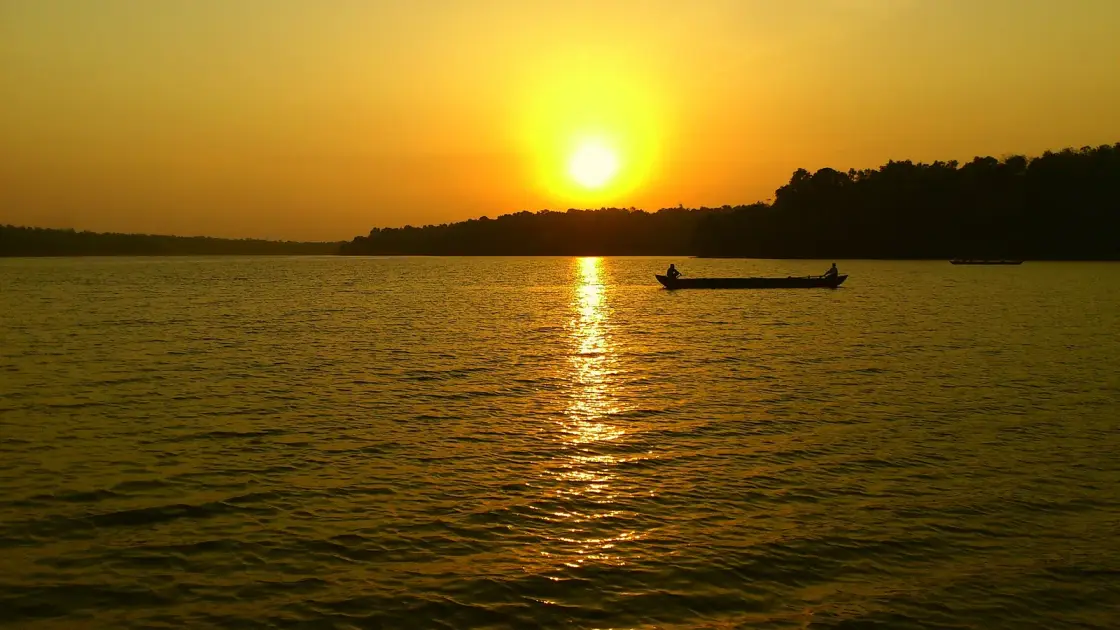
Cradled by low green hills about 25–29 km inland from Kollam town, Sasthamcotta Lake is the largest freshwater lake in Kerala and one of the state’s three Ramsar wetlands — a shimmering, spring-fed sheet that quietly slakes the thirst of half a million people while a temple full of holy monkeys keeps watch from its bank.
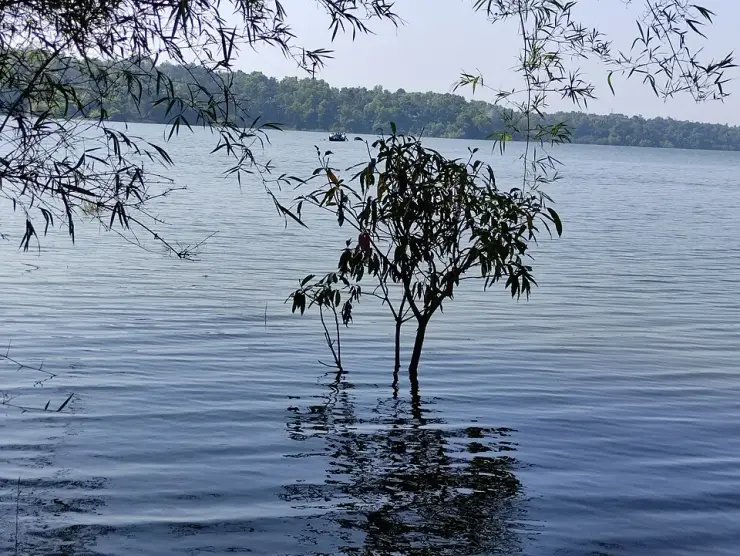
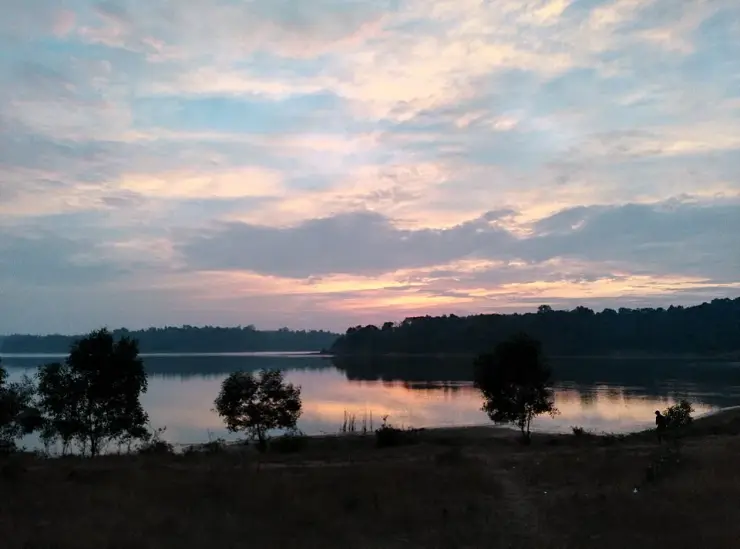
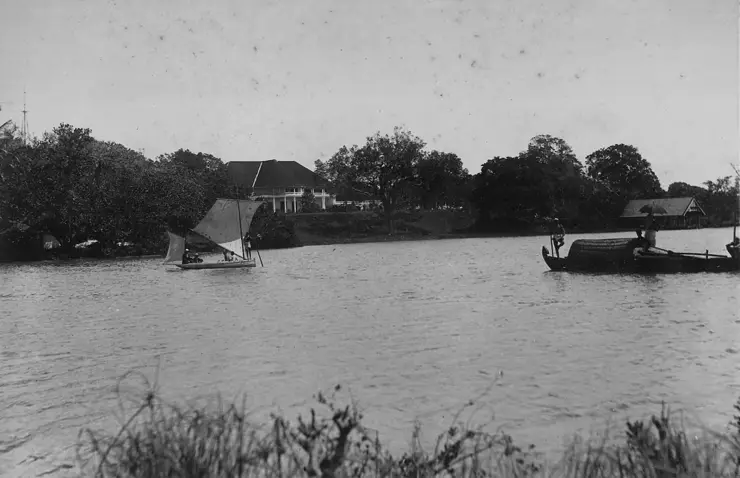
Most of Kerala’s famous waters are backwaters — brackish lagoons where the sea and the rivers meet. Sasthamcotta is the great exception. It is pure freshwater, holding no common salts and supporting almost no floating plants, which gives its surface an unusually clear, glassy stillness. Ringed on nearly every side by steep little hills that fall into narrow valleys, and closed off to the south by a long earthen embankment (about 1.5 km) that holds the lake back from the paddy fields, the lake feels less like a Kerala backwater and more like a hill tarn that wandered down to the coastal plain.
Its surface spreads across roughly 373 hectares (about 920 acres), and it is deep by Kerala standards — an average of around 6.5 m and a maximum of about 15 m in places. That depth and volume are why it matters far beyond tourism: Sasthamcotta is the principal source of drinking water for the Kollam (Quilon) region, meeting the everyday needs of roughly half a million people. To sit on its bank is to look out over the supply of an entire city.
The lake takes its name from the shrine on its shoulder — the Sasthamcotta Sree Dharma Sastha Temple, an ancient Sastha (Ayyappa) temple that the lake wraps around on three sides. The place-name literally binds the deity to the lake, and the two have been thought of as a single sacred landscape for centuries. Pilgrims to the temple and day-trippers to the lake arrive in the same stream, so the shore mixes the hush of a protected wetland with the bustle of a working shrine.
The lake’s most-repeated wonder is its cleanliness, and the explanation attached to it is wrong. Guides, tourism notes and the official Ramsar information sheet all credit a larva called ‘cavaborus’ with eating the bacteria in it. No such creature exists; the word is a long-lived misspelling of Chaoborus, the phantom midge, whose larvae are predators of zooplankton rather than bacteria feeders. What is genuinely unusual here is duller and more interesting: it is soft, nearly free of common salts, low in nutrients and almost without rooted plants, in a basin fed by rain and groundwater rather than by a river carrying a catchment’s worth of silt and sewage. The clarity is a consequence of the lake’s hydrology, not of an insect.
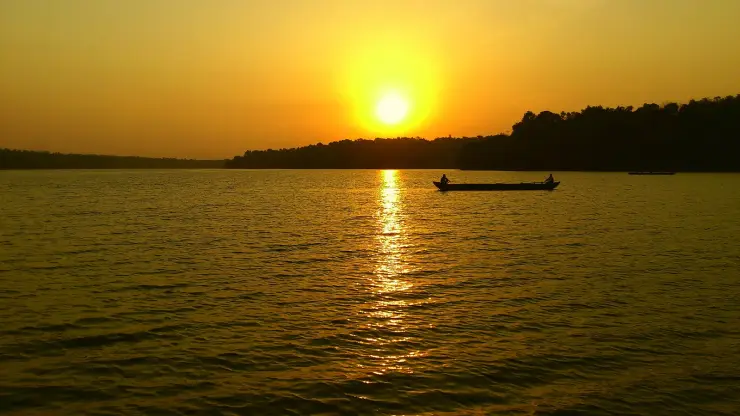
It is also a living wetland, not just a reservoir. The lake and its wooded hills shelter freshwater fish (commonly cited at around 27 species), together with butterflies, dragonflies, wetland birds and shoreline greenery — the sort of quiet biodiversity that earned it international recognition. Small country boats and pedalos ply the near shore, and a lakeside walk under the trees, with the temple bell drifting across the surface, is the classic Sasthamcotta afternoon.
And then there are the monkeys. Resident troops live around the temple and along the bank, sometimes in large numbers, and are regarded by devotees as holy — a detail that turns an ordinary lakeside stroll into a slightly mischievous one. They are as much a part of the Sasthamcotta experience as the lake itself, and visitors are wise to guard their bags, snacks and spectacles accordingly.
Temple tradition tells that Lord Rama, returning to Ayodhya after defeating Ravana, halted here and performed rituals by the lake. As he left, he is said to have deputed Neelan — the chief architect of his vanara (monkey) army — to remain and serve at the spot. The troops of monkeys that live around the temple today are, by this legend, descendants of Neelan, which is why they are treated as sacred. It is a story told as devotional legend rather than history — offered here as the temple’s own tradition, not as verified fact.
The Ramsar sheet is worth reading in full, because it disagrees with itself more than once. Item 7 says the lake supplies drinking water to half a million people; item 15, a few lines later, says nearly ten million — in a district whose entire population at the 2011 census was 2,635,375. Item 7 also notes, of a lake at nine degrees north and 33 m above sea level, that it does not get frozen in winter. Item 16 declares the lake totally devoid of any flora; item 18 credits it with 21 species of herrings and sardines of the family Clupeidae, a marine and estuarine group, against the 27 freshwater fish species claimed two pages earlier. None of this makes the designation wrong. It does mean the sheet is a 2002 compilation rather than a survey, and that numbers taken from it should be dated as such.
One more correction, and it is the one that matters at the shore. Every source calls this Kerala’s largest freshwater lake, and that is true — Vembanad is many times larger but brackish and open to the sea, which is exactly the distinction being drawn. What is not true is that the figure attached to it is current. 373 hectares is the area entered on the Ramsar sheet in 2002. Tourism copy still prints it, or 375, as though nothing had happened since. By December 2016 the press was reporting the lake drying; by May 2018 it was reported that nearly half of its 3.73 sq km had become dry, cracked ground, with the level falling at roughly 50 cm a year, and Wetlands International South Asia had warned that at prevailing extraction the system could dry out within a decade. When a brochure gives you 373 hectares, it is quoting a measurement older than most of the people reading it.
The purity story also has a date on which it publicly failed. In May 2018 the Kerala Water Authority stopped drawing drinking water from Sasthamkotta after complaints of discolouration, its assistant executive engineer reporting that the depleted water showed symptoms of the presence of iron bacteria in large quantities — water that stained faintly red and threw a precipitate on boiling. Supply to Kollam Corporation and neighbouring panchayats was switched to alternate-day pumping from the Kallada Irrigation Project canal, which could deliver under 15 million litres a day against a demand of 37.5. The lake celebrated worldwide for a bacteria-eating larva was taken out of service because of bacteria.
The monkeys themselves are better documented than the legend that explains them. Around sixty live at the Sree Dharma Sastha temple on the bank and are fed fruit in the morning and temple rice in the afternoon, with a full meal on plantain leaves on festival days, paid for out of a ten-lakh-rupee fixed deposit — five lakh given by a local working abroad, five from the temple committee. A second troop of roughly a hundred, made up of animals that left or were driven out of the temple group, lives around the market and is a genuine nuisance: crops eaten, kitchens raided, tanks broken, washing stolen. In 1999 residents went to court and the district court ordered 102 monkeys relocated to Kaanayar forest. The population recovered. Sacred and problematic are not alternatives here; they are the same animals.
Geologically the lake sits on ancient rock — Archaean formations laced with charnockite, biotite gneiss and dolerite — and is fed largely by springs and rainfall rather than by a major river, which is part of why it stays fresh and sweet rather than turning brackish like the coastal backwaters. That closed, spring-fed character made it, over generations, the natural bowl of the Kollam region.
On 19 August 2002 Sasthamcotta was designated a Ramsar site, a Wetland of International Importance, carrying Ramsar reference number 1212. It was recognised in the same period as two of Kerala’s other great wetlands, Ashtamudi and the Vembanad-Kol system, formally placing this quiet inland lake alongside the state’s most celebrated waters on a global conservation list.
The designation reflects the lake’s twin value: it is both an ecologically distinctive freshwater wetland and a critical drinking-water source, piped to serve roughly half a million people in and around Kollam. Few Ramsar sites anywhere carry so direct a role in a city’s daily survival, which is exactly what makes its protection so urgent.
The mechanism of the decline is hydrological rather than dramatic, and it happens mostly out of sight. Sasthamcotta has no river flowing into it and none flowing out. It is filled by direct rainfall — the area averages around 2,350–2,400 mm a year — by surface run-off from a catchment of roughly 12.7 sq km, and by subsurface recharge from the laterite hillocks around it and the floodplain to its south. It empties by evaporation, by groundwater seepage and by pumping for the drinking-water scheme; there is no spillway. Those hillocks work as the lake’s reservoir, holding the monsoon and releasing it slowly. Quarrying them for construction material, and mining sand and clay from the low ground beside the Kallada, lowered the surrounding bed levels, steepened the hydraulic gradient and turned recharge into drainage. The lake began leaking outwards into the pits dug beside it.
The paper trail on this is long and almost entirely unenforced. CWRDM announced a protection plan in 1998; another project was sanctioned in 2000, further declarations followed in 2005 and 2006, and a 2010 expert committee catalogued the threats in detail — soil erosion measured at 50 tonnes per hectare per year as early as 1996, hillock mining, tapioca and plantation encroachment on the slopes, sewage, filling of the shallows, weed infestation. The Kerala High Court ordered sand mining stopped in 1998 and again in 2000; a 2007 public-interest litigation produced a further ban; in 2009 the Lokayukta directed the district collector and police superintendent to enforce the earlier verdicts. A district-level ban followed in July 2015. Researchers writing in 2015 recorded that the mining had continued through all of it.
That protection is now genuinely tested. In recent decades the lake has faced a documented fall in its level and shrinkage of its margins — reports indicate that a stretch of the lakebed (commonly cited at around 46 acres) has dried out, attributed to sand mining, water abstraction and a lowering water table. Encroachment along the banks, conversion of catchment vegetation to plantations, and untreated sewage and plastic reaching the lake have all been flagged by researchers and conservation bodies as pressures on its quality and extent.
Because of all this, Sasthamcotta has been the subject of repeated restoration and management proposals — de-silting, catchment protection, pollution control and community-led clean-ups among them. Visitors should come understanding that this is first and foremost a protected drinking-water source and an internationally recognised wetland under stress, and behave accordingly: the lake’s beauty and its fragility are the same thing.
Stand on the bank of the single largest freshwater lake in Kerala — a rare sweet-water expanse ringed by hills, quite unlike the state’s brackish backwaters.
Tick off one of Kerala’s three Ramsar wetlands of international importance, a genuine conservation landmark that most visitors to the coast never reach.
Visit the ancient Sasthamcotta Sree Dharma Sastha Temple on the lake’s edge, wrapped on three sides by the lake — named in some versions of Kerala’s five old Sastha shrines, alongside Sabarimala, Achankovil, Aryankavu and Kulathupuzha. ⚠ Stated that way deliberately: no two published lists of the five agree, and only Kulathupuzha, Aryankavu and Achankovil appear in every one of them.
Meet the temple’s famous resident monkeys, regarded by devotees as holy and woven into the Rama–Neelan legend of the place.
Take a gentle boat ride or pedalo on a surface that is genuinely, unusually clear — and know why: rain and groundwater, not a river, and not the bacteria-eating larva the signs credit.
Enjoy an unhurried, uncrowded lakeside walk under shady trees with birds, butterflies and dragonflies — a quiet, local counterpoint to the busier Ashtamudi and Kollam beach circuit nearby.
Road km to Kollam; ghat roads and traffic vary — allow extra.
October to March is best for comfortable boat trips; monsoon is greener but weather can disrupt plans.
Live forecast loads in your browser.
Sun and moon are calculated for this location and shown in IST. Photography windows are the hour around sunrise and sunset; the sunset bearing is degrees clockwise from true north. Moon phase is accurate to about half a day.
Browse listed stays, food, activities, sights, shops and rentals around Sasthamcotta Lake. Check each listing’s locality and contact the business directly for current arrangements.
A family homestay reached by a short boat ride on Munroe Island in the Ashtamudi backwaters. Offers two AC rooms with home-cooked breakfasts.
Boutique hotel with 28 rooms and original artwork in the heart of Kollam, overlooking the city's Clock Tower.
A lakefront resort where all 20 rooms and suites face Ashtamudi Lake. Runs its own houseboat cruises and shoreside Ayurveda treatments.
A backwater resort where Ashtamudi Lake meets the Kallada River. Named after Colonel John Munroe, it offers canoe tours and houseboat cruises.
Hotel in Kollam town. Luxury beach hotel and convention centre · Kollam Beach, Hotel, Convention centre.
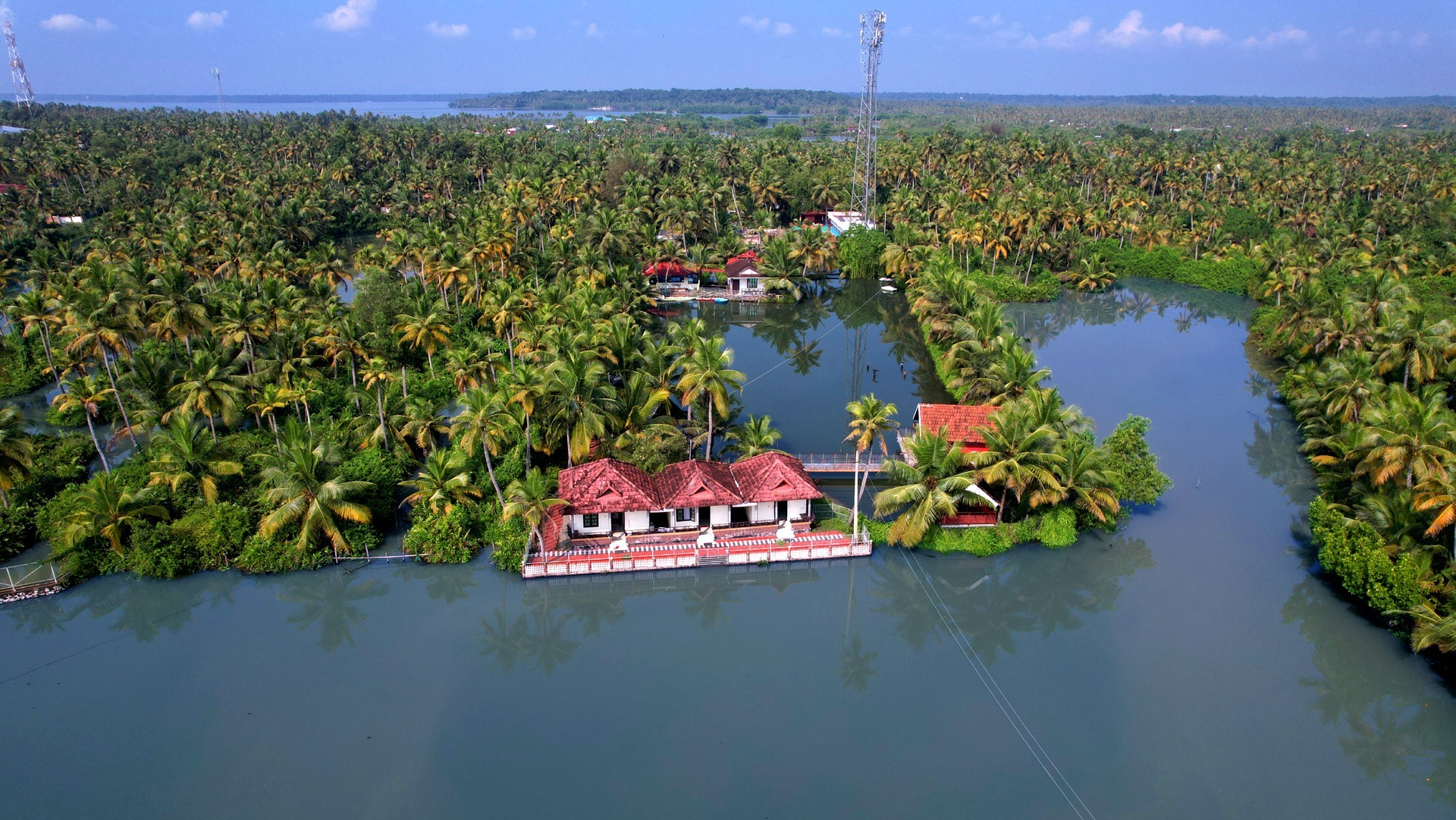
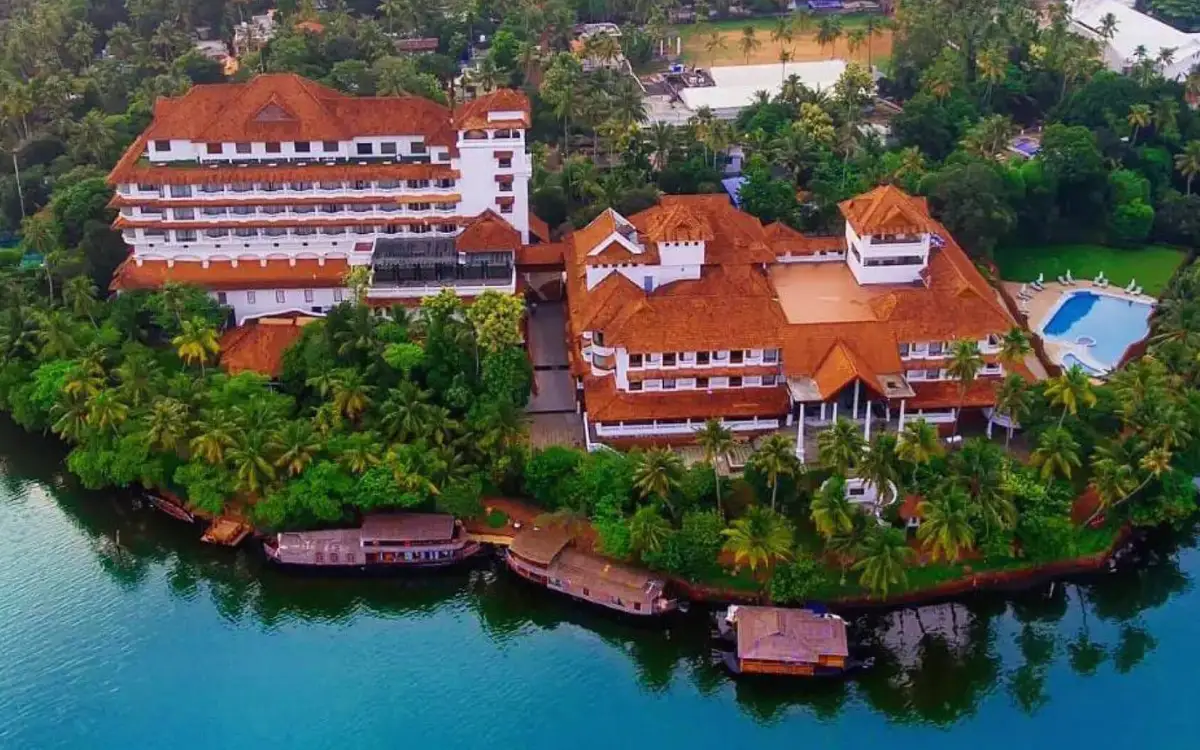
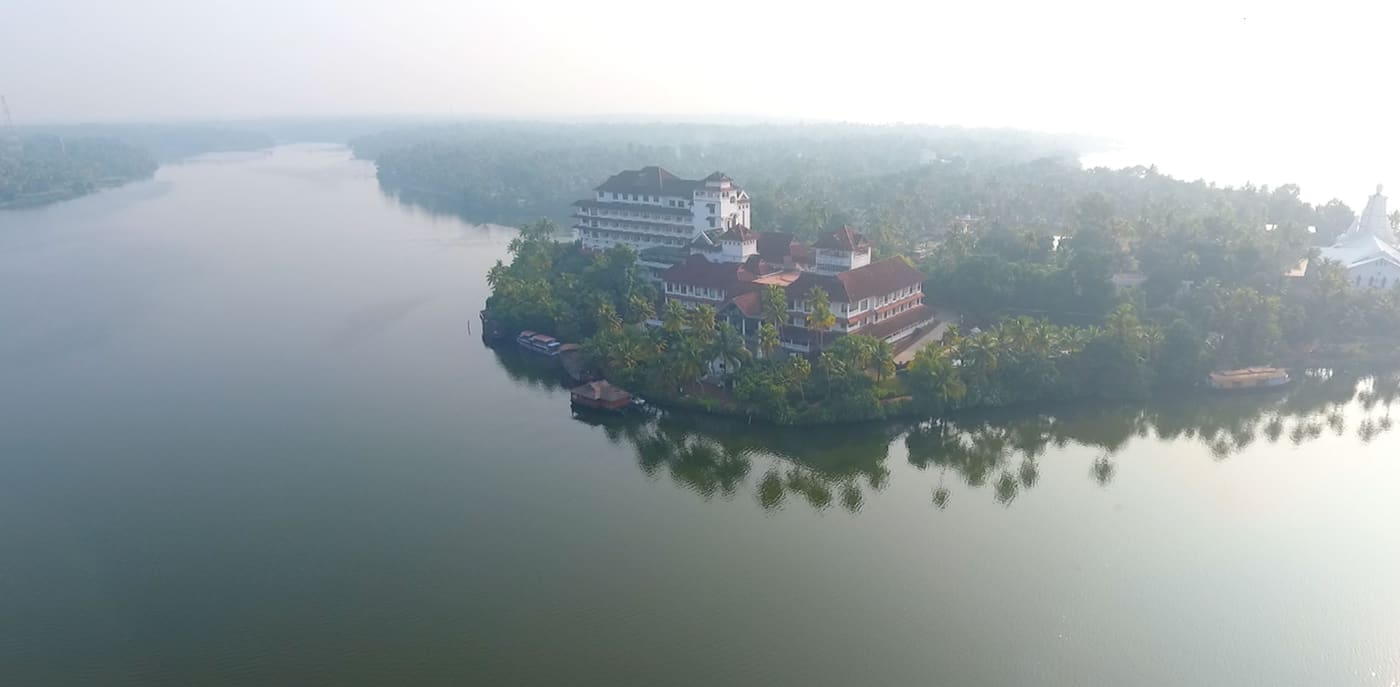
The Leela Ashtamudi is a lakefront heritage resort at Thevally Bridge, with several room types, houseboat categories and on-site dining. Its correct hotel entrance is at Thevally/Mathilil, separate from the Raviz corporate-office address previously displayed. Compare the named room or houseboat, lake view, meals, transfer, activity inclusions, total price and cancellation terms. The operator's aerial photograph shows the whole property, not a promise that every room has the same view.
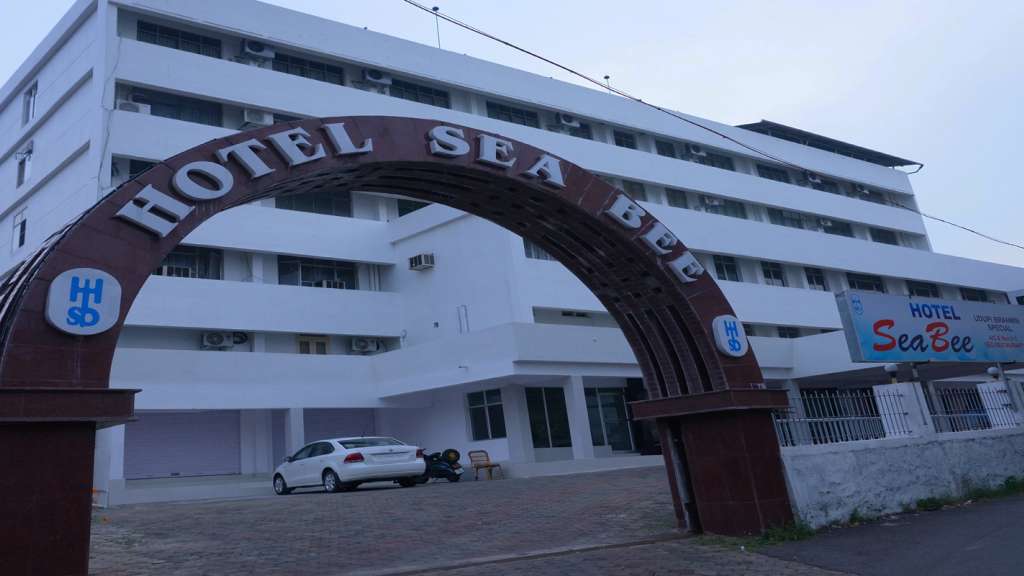
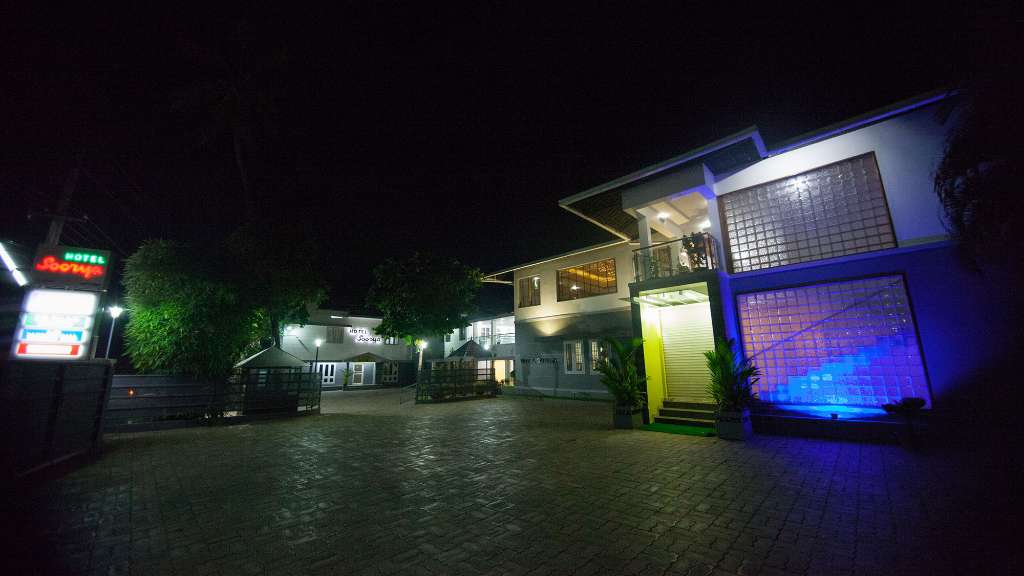
Modern budget hotel at Aadichanalloor on the Kollam–Thiruvananthapuram highway side of Kollam district, south of the town. It offers clean, value air-conditioned rooms with a restaurant and parking, a low-cost highway base for travellers passing through greater Kollam.
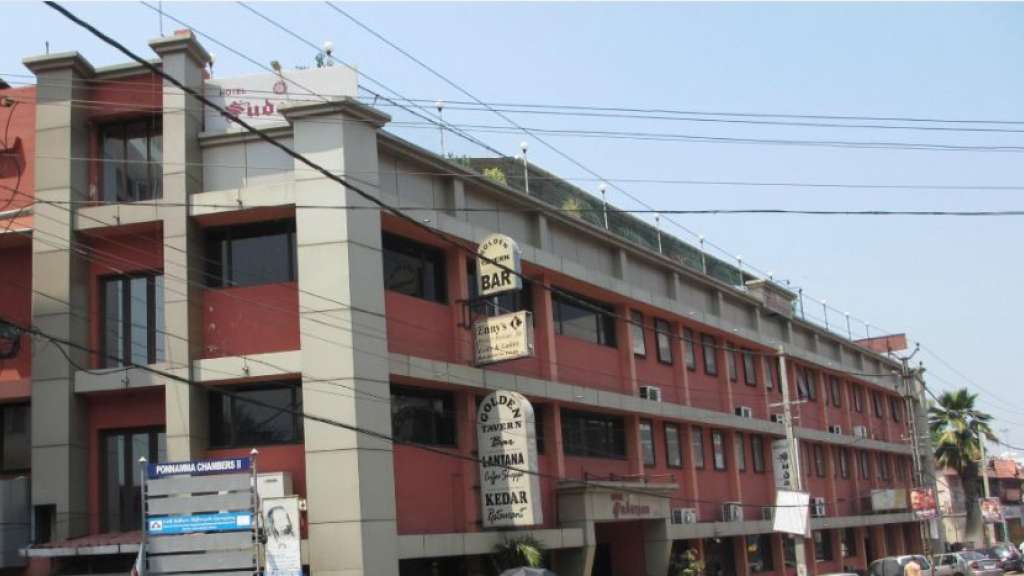
Long-running budget hotel at Parameswar Nagar in central Kollam, rated two-star class by travel directories. It offers value air-conditioned rooms with the Kedar multi-cuisine restaurant and Golden Tavern bar, a practical low-cost town-centre base for transit and business travellers.
Government-run KTDC Easy budget hotel in the Guest House compound at Ashramom, beside Ashtamudi Lake on the quiet edge of Kollam town. It offers simple, low-cost air-conditioned and non-air-conditioned rooms with a restaurant, run under the Kerala Tourism Development Corporation budget brand.
Long-running three-star-class hotel near the KSRTC bus station on Jetty Road in central Kollam, a short walk from the Ashtamudi backwater boat jetty. It offers 44 air-conditioned rooms, a multi-cuisine restaurant, bar, travel desk and boating assistance, a practical mid-range base for backwater and transit travellers.
Kerala Tourism-classified three-star hotel at Kottiyam on the Kollam–Thiruvananthapuram highway, in the southern part of Kollam district. It offers air-conditioned rooms, a multi-cuisine restaurant, bar, banquet hall and travel desk, a comfortable mid-range highway base a short drive south of Kollam town.
Kerala Tourism-classified three-star hotel on NH-47 directly opposite Kollam Railway Station, in the heart of Kollam town. It offers air-conditioned rooms, a multi-cuisine restaurant, bar, banquet and conference halls and 24-hour room service, a convenient mid-range base for rail and business travellers.
Fragrant Nature at Paravur is a lake-side resort outside central Kollam. Allow separate road journeys for Thangassery, city dining and onward rail travel.
D Fort Hotel is a Thangassery stay near the lighthouse neighbourhood. Check room and wellness packages separately from the lighthouse’s own visitor session.
A three-star resort set in a coconut palm forest on the banks of Ashtamudi Lake. Its 26 units include houseboats and floating cottages.
A budget backwater homestay on Munroe Island near Kalluvila Temple. Offers canoe and shikara trips, Ayurvedic massage, and Kerala home cooking.
Kollam houseboat operator with day cruises on Ashtamudi Lake and overnight boat options. Confirm the boarding point, route, boat and inclusions directly.
Ashtamudi resort with both floating and land-based accommodation. Compare the exact room category and booking eligibility; confirm dining and lake activities separately.
A central Kollam homestay near Sankers Hospital. Its own site publishes room choices and direct booking details.
An Asramam homestay for visitors who want a Kollam base away from the railway-station cluster. Ask about the current room and arrival route.
A restored ancestral home in Uliyakovil, Kollam. Ask the host how its room layout and access work for your group.
A Kureepuzha homestay beside Ashtamudi Lake. Ask the host about the room, meals, arrival route and any separately arranged boat trip.
Samiira is a small heritage-style resort at Sarayu Nagar in Asramam, beside Ashtamudi Lake. Its official site distinguishes two Heritage Cottages with separate living rooms from eight Lake Front Verandah Rooms with private verandahs. Choose the layout you need, then confirm the exact room, view, meal plan, transfer and total price. Kayaking and spa experiences are described by the property, but ask whether they operate and whether they are included in your booking. The property's own exterior photograph shows its veranda, not a guarantee of the room you will receive.
Book with the place itself. India’s cyber-crime coordination centre warned in April 2025 that convincing copies of hotel and pilgrimage booking sites are being pushed through sponsored search and social ads, taking payment for rooms the property never hears about. Use the contact and source details on each profile to confirm the exact business and booking channel. A directory entry or map pin alone does not establish an operator’s identity or current availability. Roampedia takes no commission and does not collect booking payments. If a booking page reached you through an ad, check the address bar against the property’s own site before you pay. Fraud can be reported on cybercrime.gov.in or on 1930.
Find food, accommodation and activities across Kollam town. Browse the guides for places to eat, stay and explore along your route.
13 more places around Kollam town. Open a guide to plan the visit and onward journey.
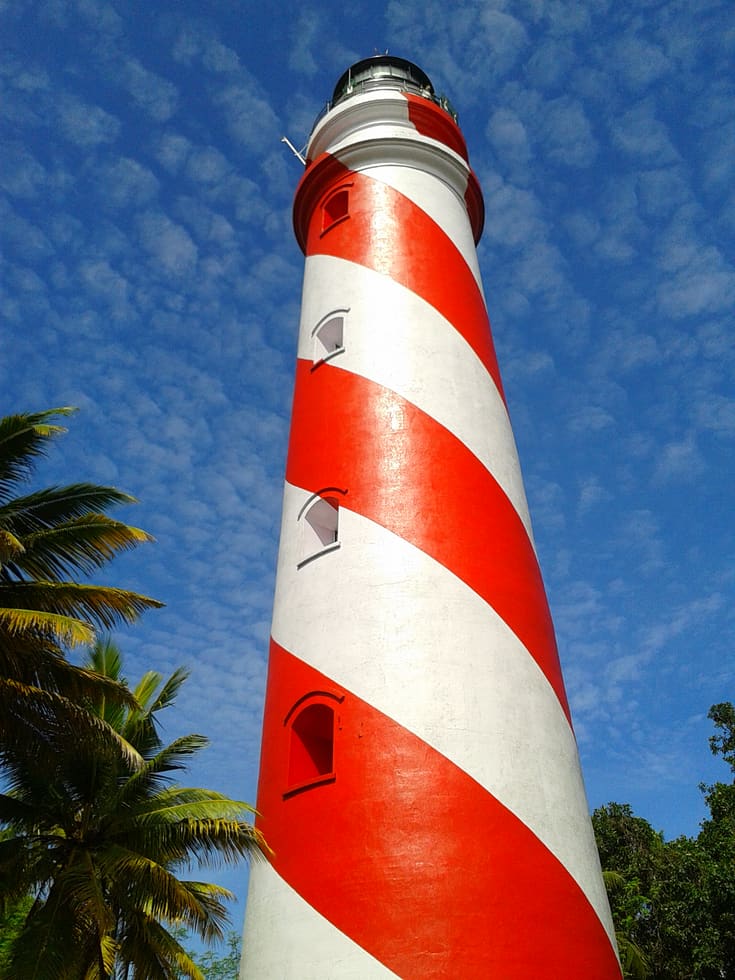
Thangassery Lighthouse raises Kollam’s sea view above a historic coastal neighbourhood. The red-and-white tower is a working navigation landmark with a separate visitor session.
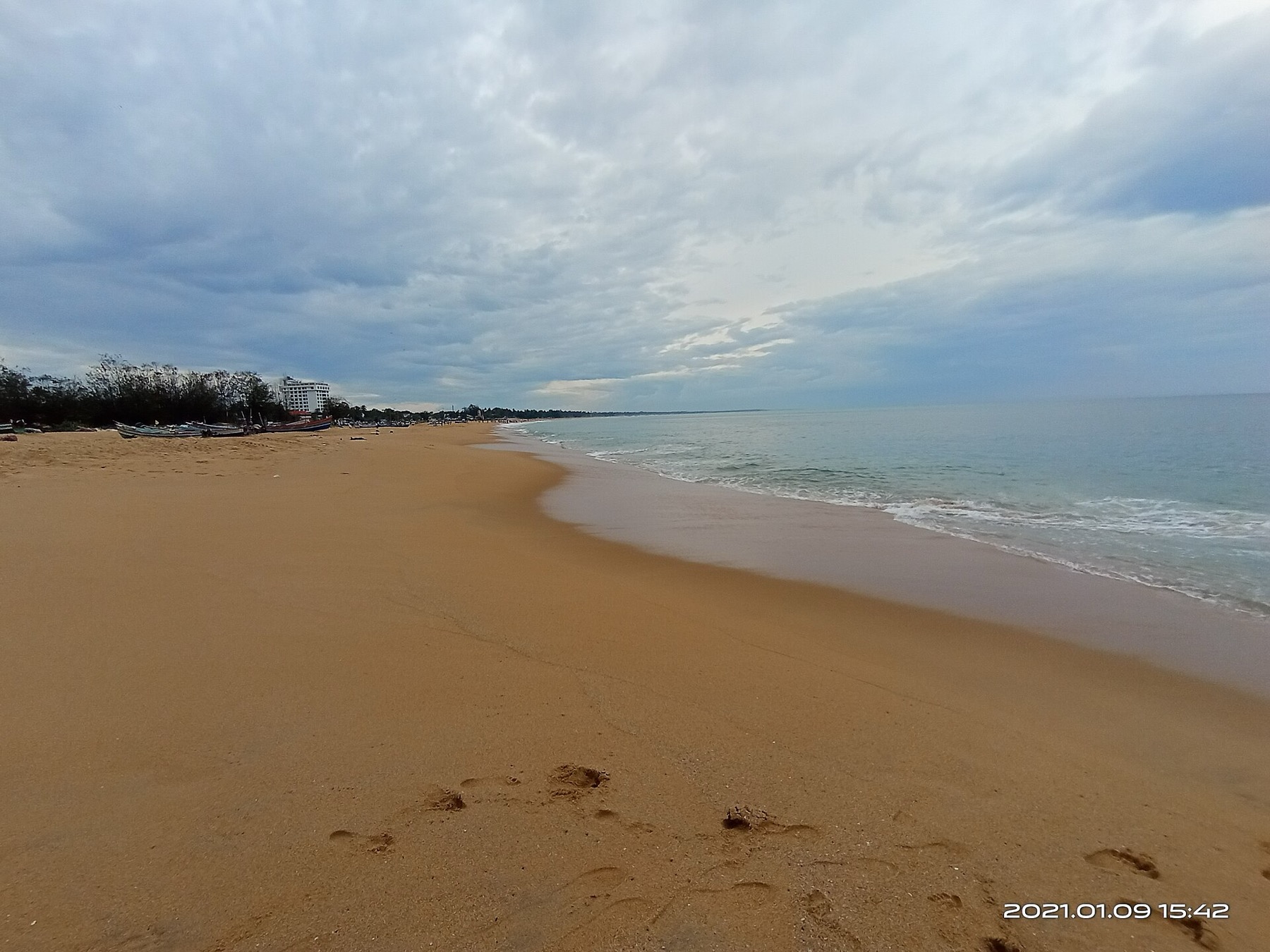
The city’s Mahatma Gandhi beach and park on the Arabian Sea, a popular evening spot near Kollam town.
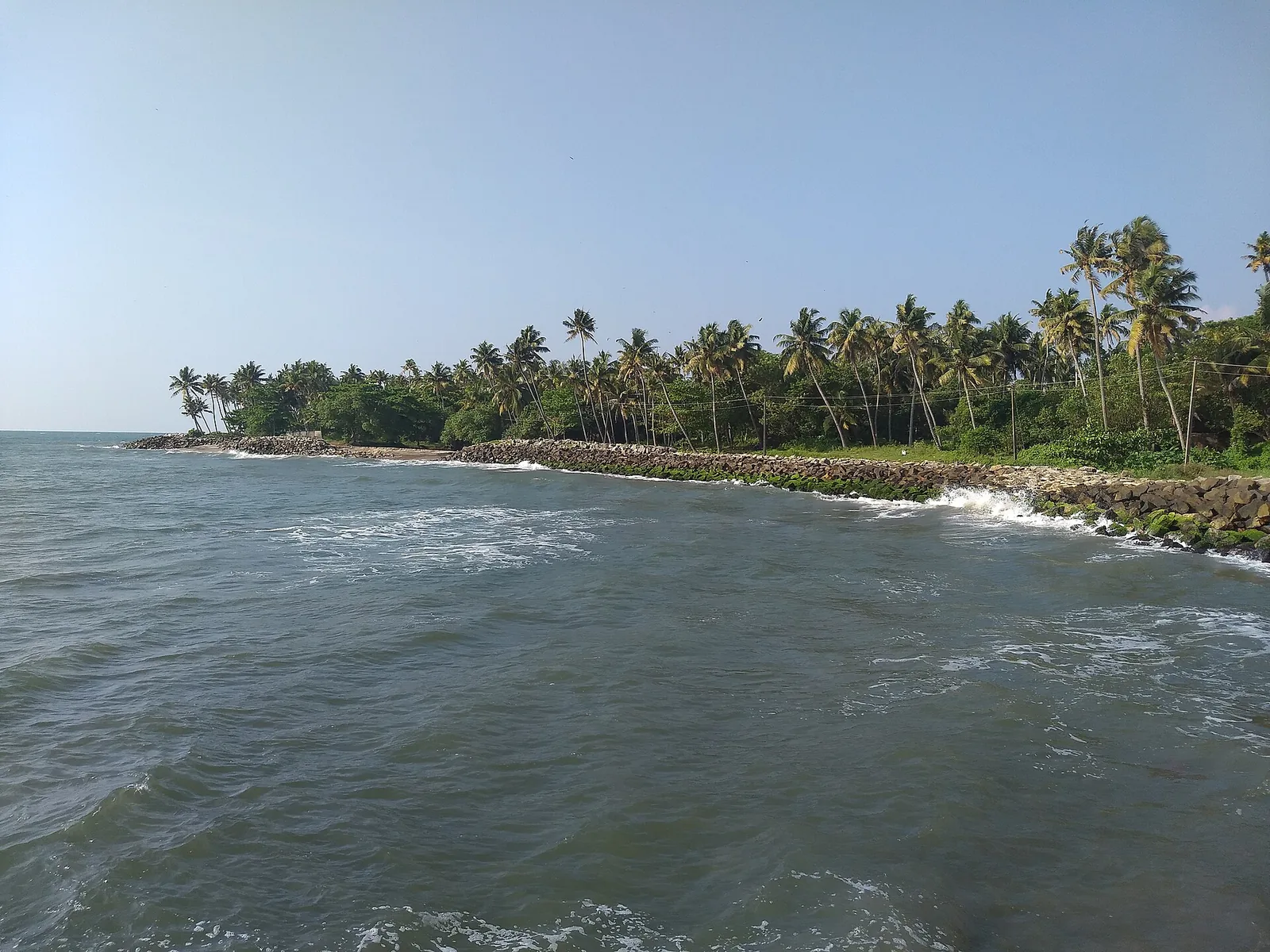
A quiet, curved bay beach west of Kollam town, calmer than the city beach and good for a relaxed evening.
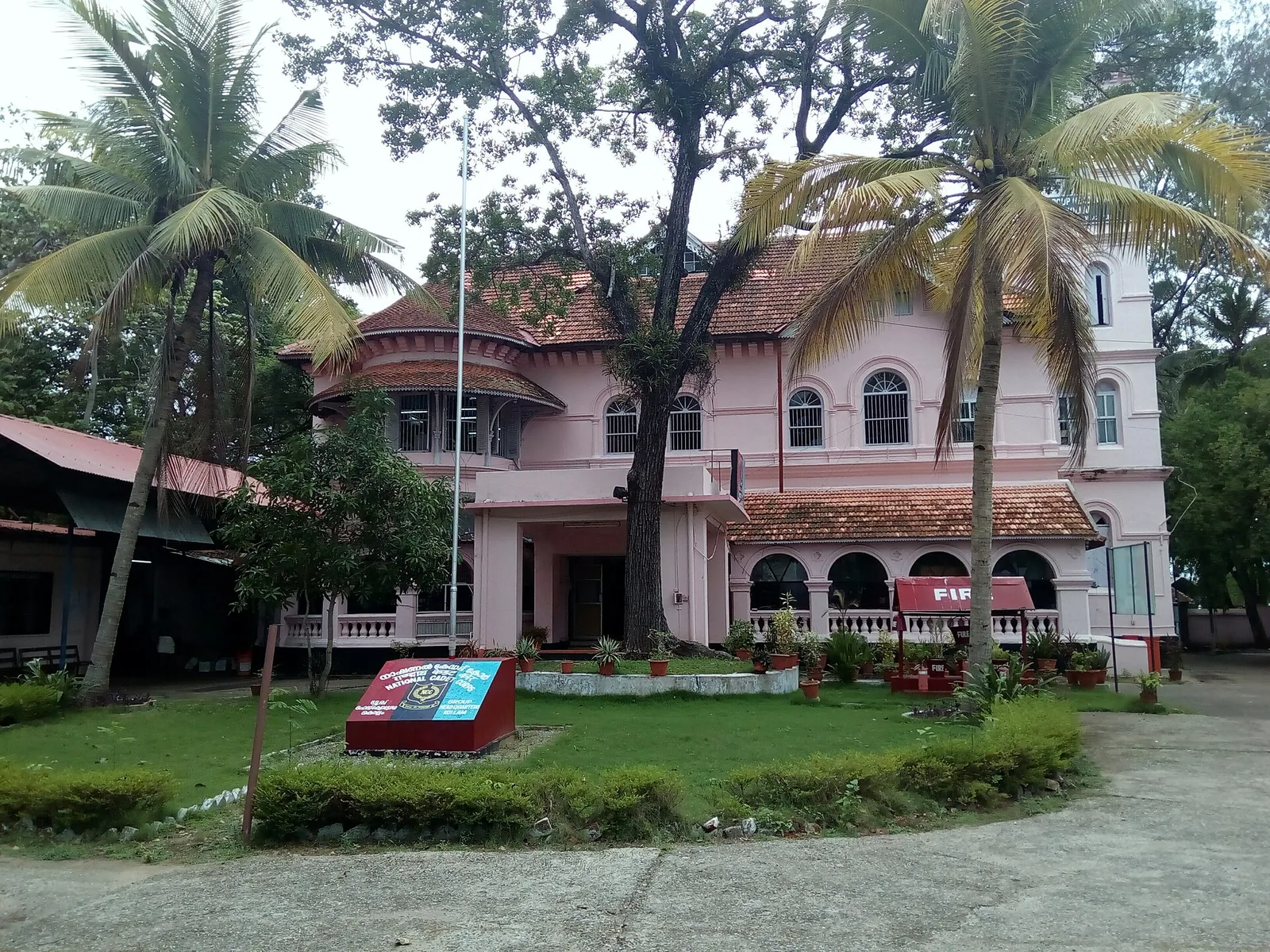
30.9 km · 28 min drive
A Travancore royal residence on the Ashtamudi shore in Kollam, built to be arrived at by boat and now a working NCC establishment — viewed from outside or from the water.
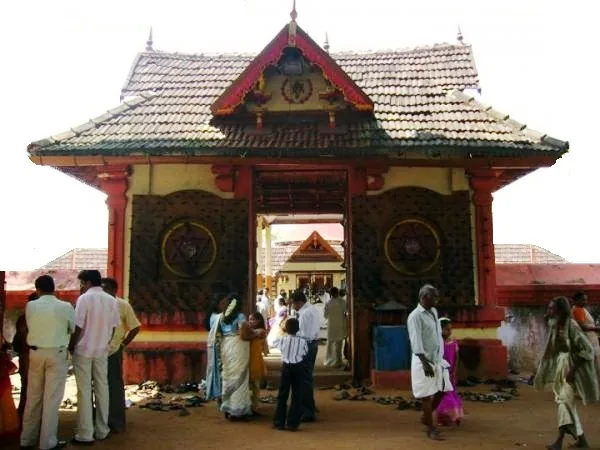
Anandavalleeswaram is an active Shiva temple in Kollam, with an Anandavally shrine and a ten-day annual festival in March or April. Ritual processions and cultural performances bring another dimension to the temple visit. Follow its worship session, admission and photography rules.
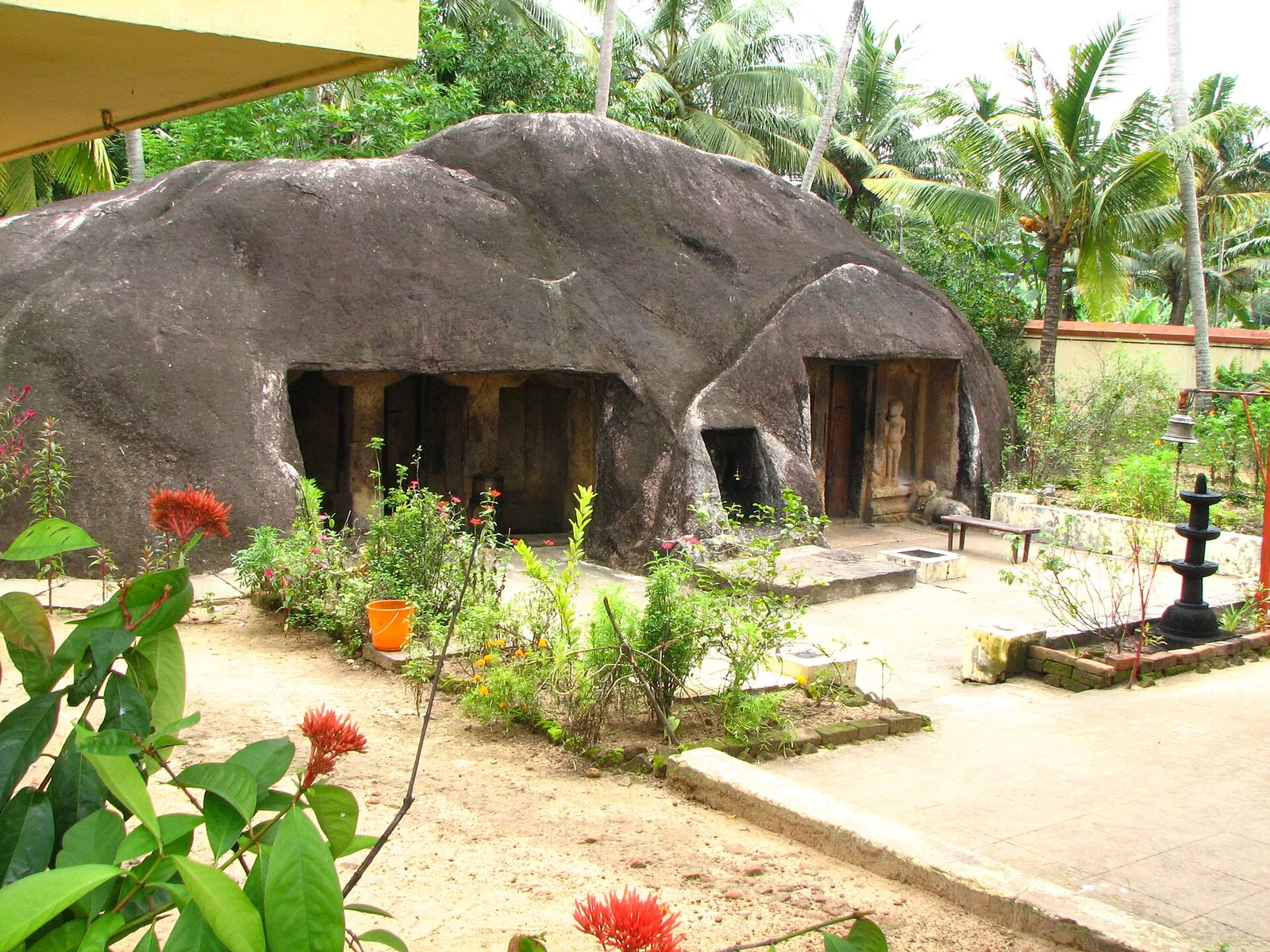
A monolithic rock-cut cave temple near Anchal/Kadakkal in south Kollam, carved with a Shiva shrine.
22.2 km · 22 min drive
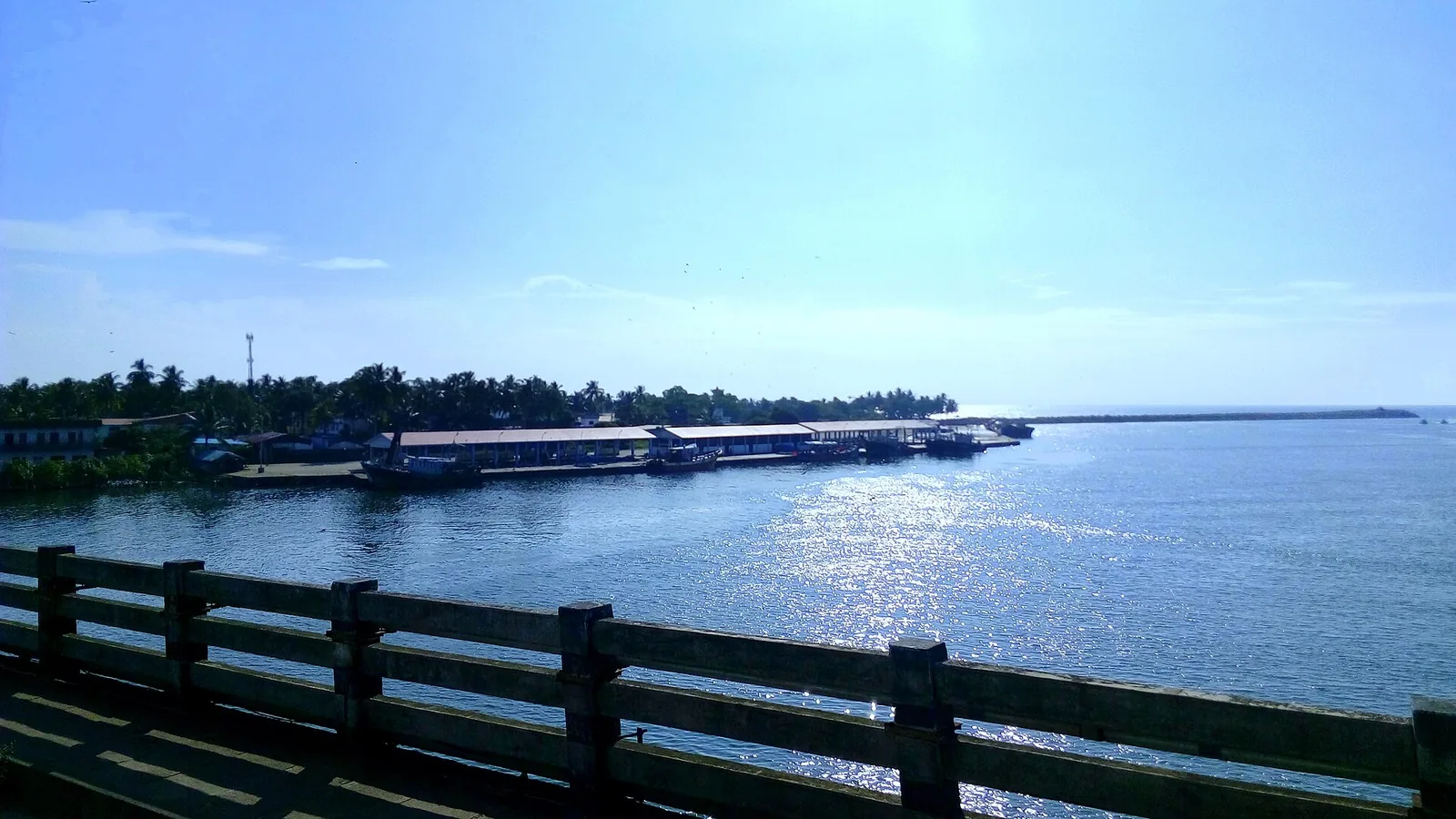
By most accounts Kerala’s largest fishing harbour, at the mouth of Ashtamudi Lake about 9 km from Kollam town, and where Indian fishing was mechanised; two bridges cross the confluence and the early-morning auction is the sight to catch.
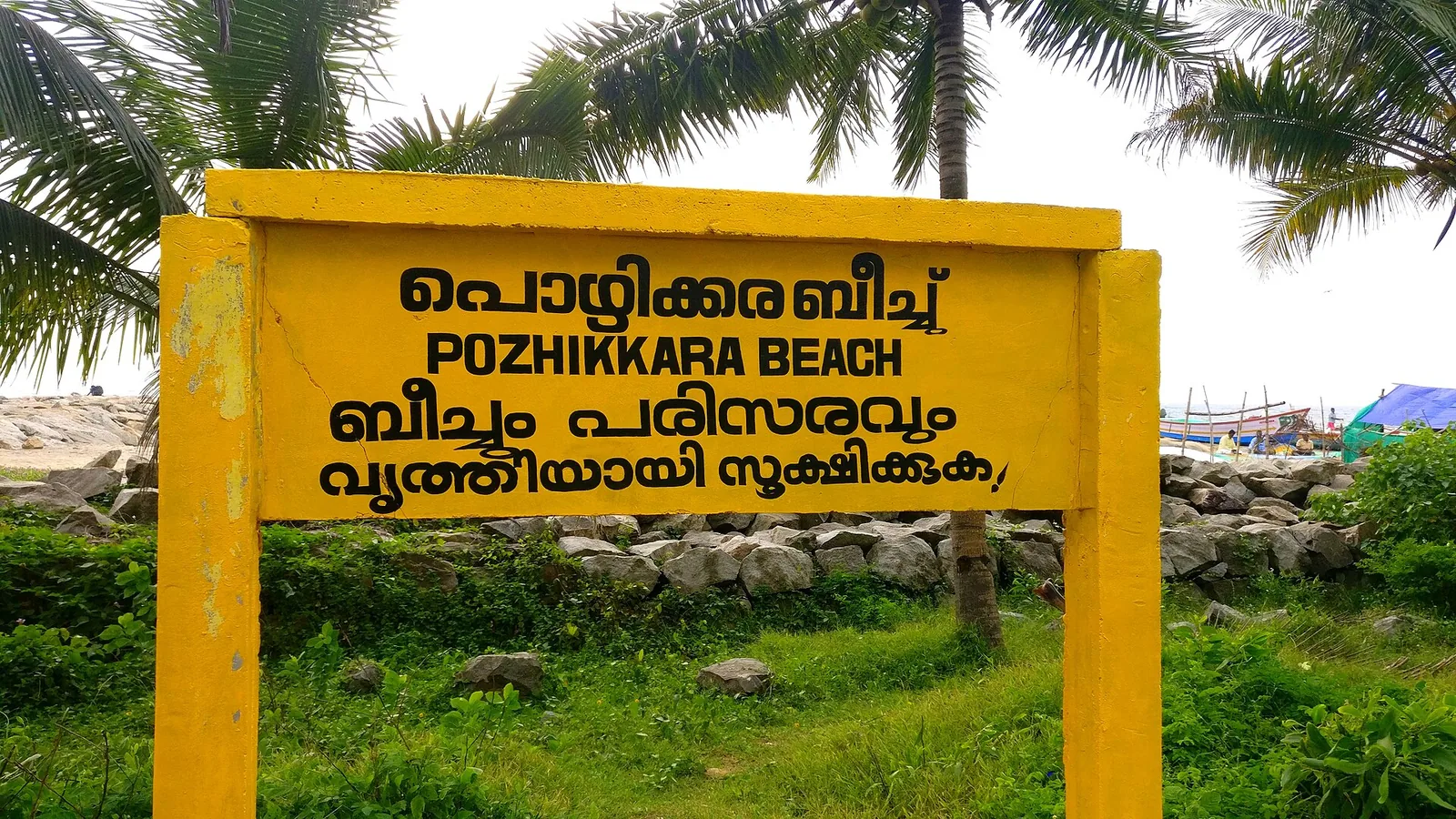
The estuary and beach at Paravur south-east of Kollam, where the Paravur backwaters meet the sea across a sandbar — a quiet spot known for its regulator bridge, the TS Canal and calm backwater-and-sea scenery.
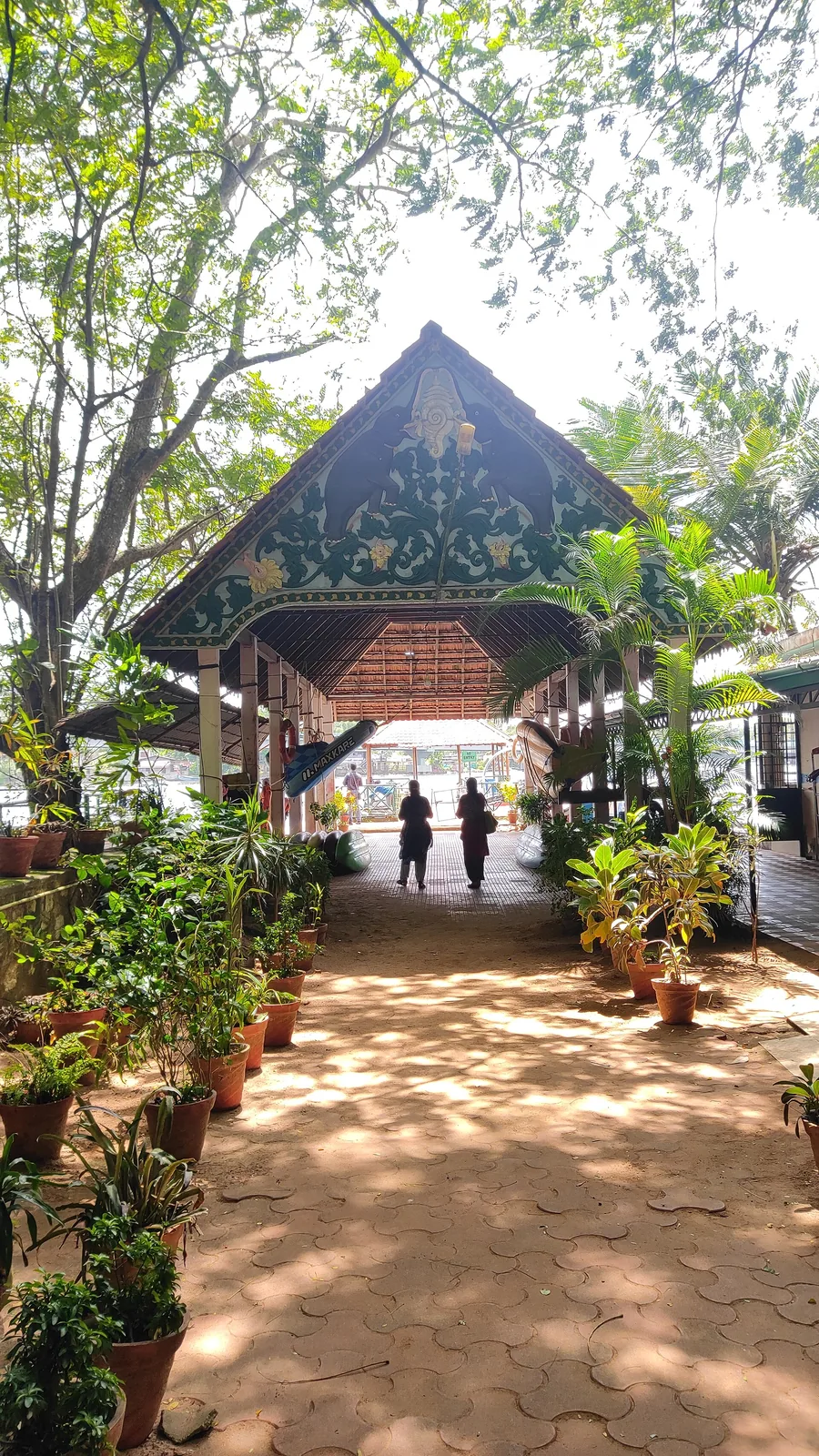
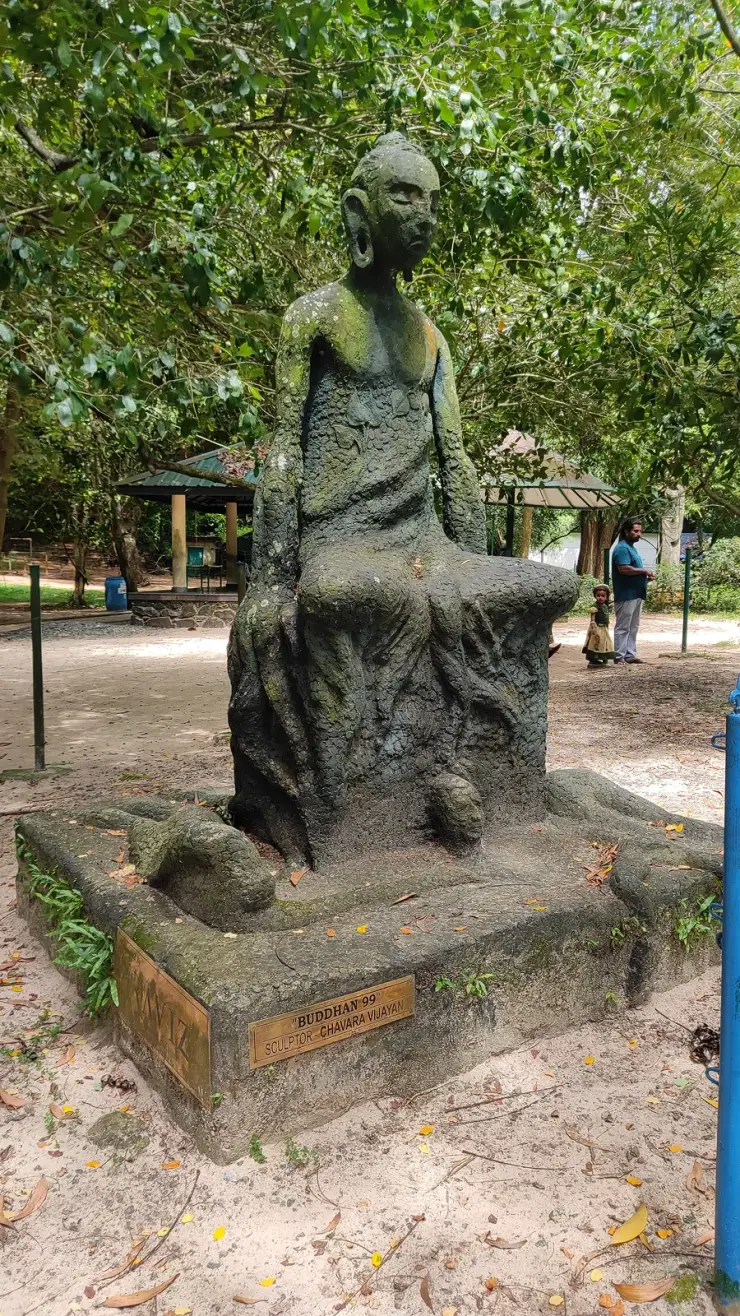
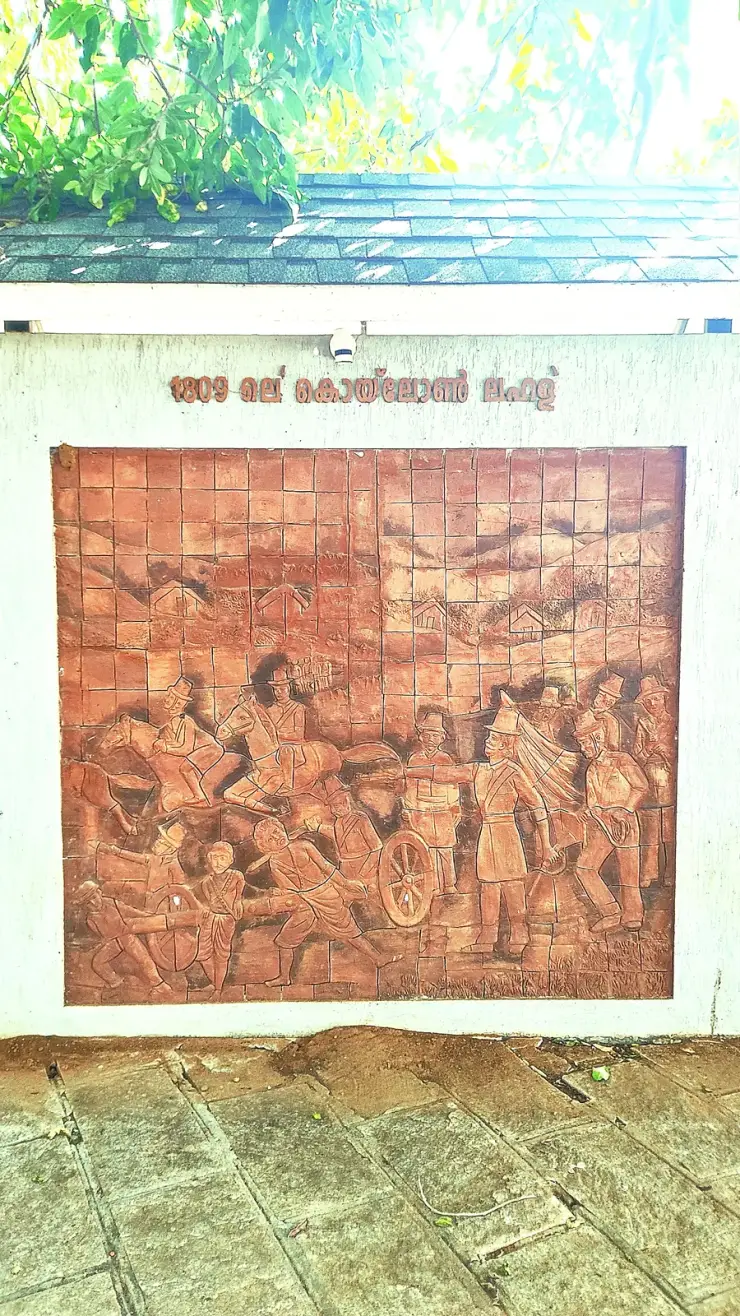
Forty-eight acres of municipal park on the Ashtamudi shore in the middle of Kollam, run by the DTPC — boating and kayaking off a painted jetty, ziplines and rope courses, a heritage walkway of terracotta reliefs, contemporary sculpture left behind by a 2012 festival, and a mangrove wetland with a state biodiversity heritage tag.
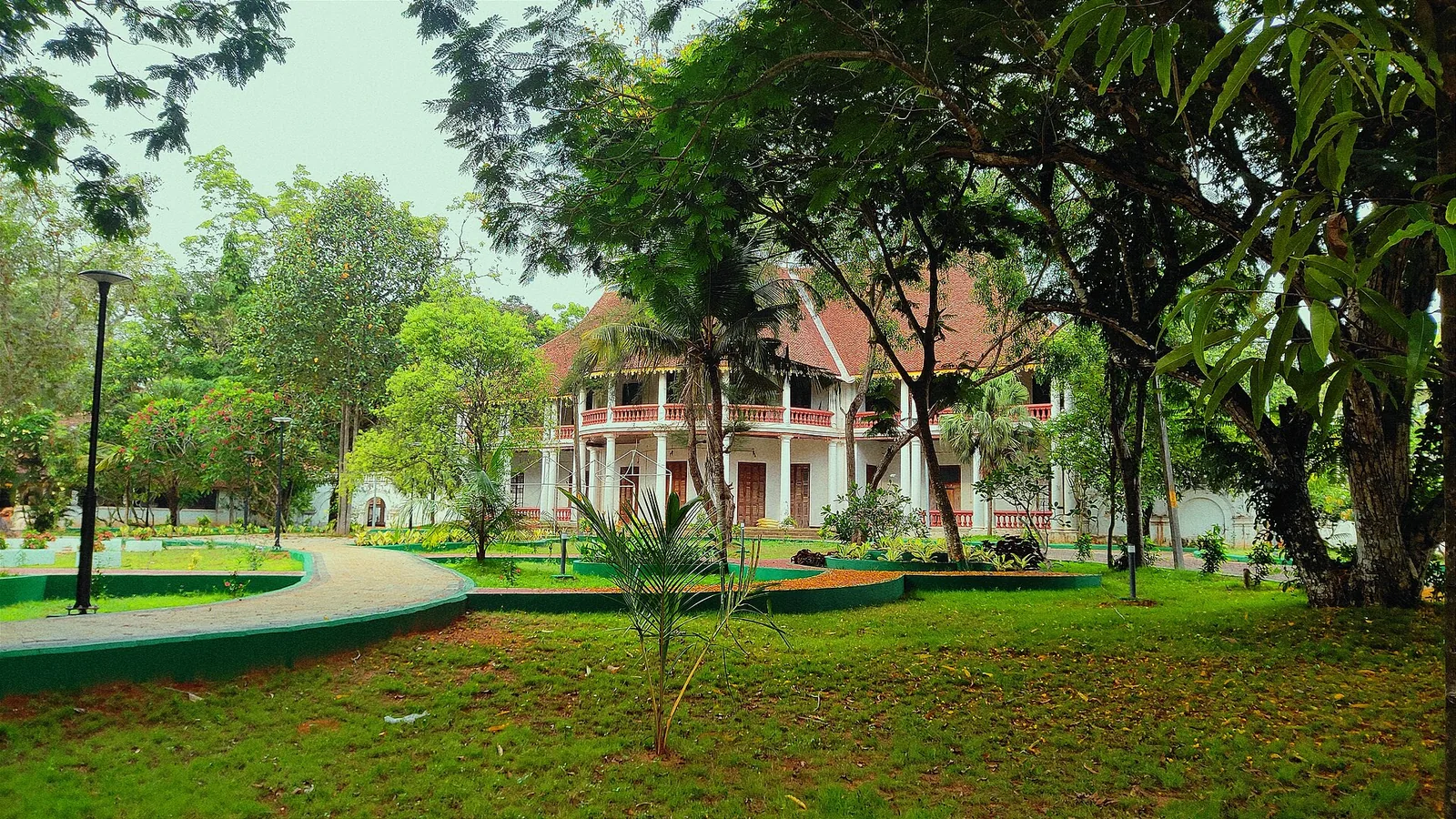
16.3 km · straight line
The former British Residency at Asramam survives as a government guest house beside Kollam’s backwater landscape. Its architecture is the attraction, with access governed by its working use.
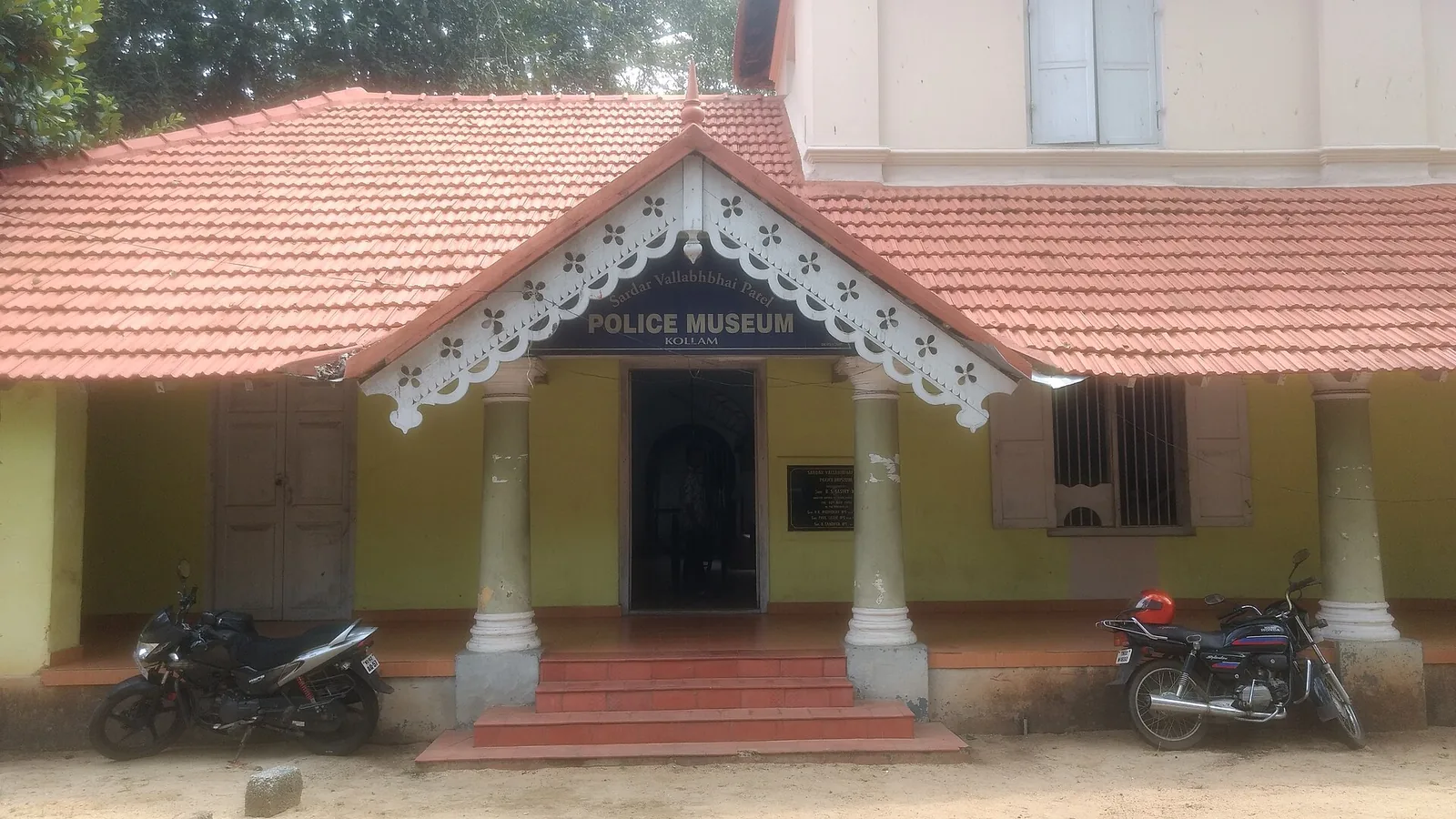
Kollam’s Sardar Vallabhbhai Patel Police Museum introduces the history of policing through arms, equipment and investigation displays. It offers an indoor history stop during a city outing. Check the museum’s session before choosing your day, and leave time to read the displays.
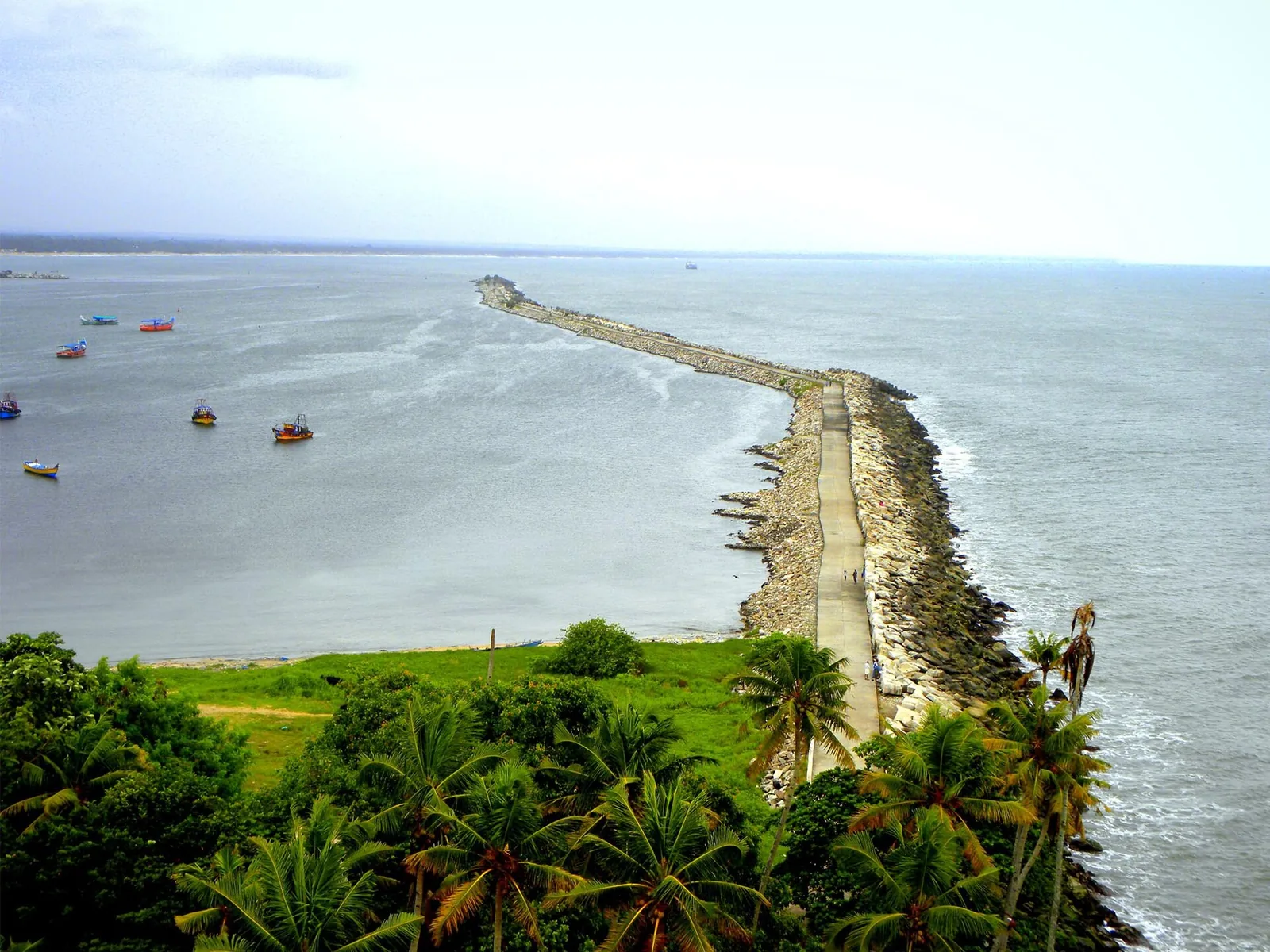
The working wharf and breakwater at Thangassery, conventionally founded in AD 825 — the event the Malayalam calendar counts from. A short cargo quay and a long public breakwater walk, above a seabed that has produced Tang and Song coins and Lower Palaeolithic tools.
Roampedia is commission-free — own or know a stay, eatery, guide or shop near Sasthamcotta Lake? Submit public business details for review.
Add a nearby businessEntry: There is generally no entry fee to visit the lakeside or the temple. Boat and pedalo rides carry a small charge, usually priced per ride or per person.
Photography: Free to use for personal photography around the lake; the shoreline, hills and the water-wrapped temple all photograph beautifully in soft morning or late-afternoon light. Be discreet and respectful around the temple and worshippers, follow any posted restrictions on photography inside shrine areas, and keep phones and cameras firmly in hand around the monkeys.
If you are travelling by bus or ferry, check the return service with the operator before setting out. Leave time to reach the stop or jetty after your visit.
Ask at the bus stand for the time of the last service back, not the next one. If you miss it, an auto or app cab is the fallback — agree the fare before you get in.
If you need step-free access, contact the site before travelling. Ask about a level entrance, steps along the route, the nearest drop-off point, seating and accessible toilets.
Published emergency and visitor-assistance contacts. For an immediate emergency, call 112. Shared Kerala contact sources checked 4 October 2026; publication does not establish a tested live response.
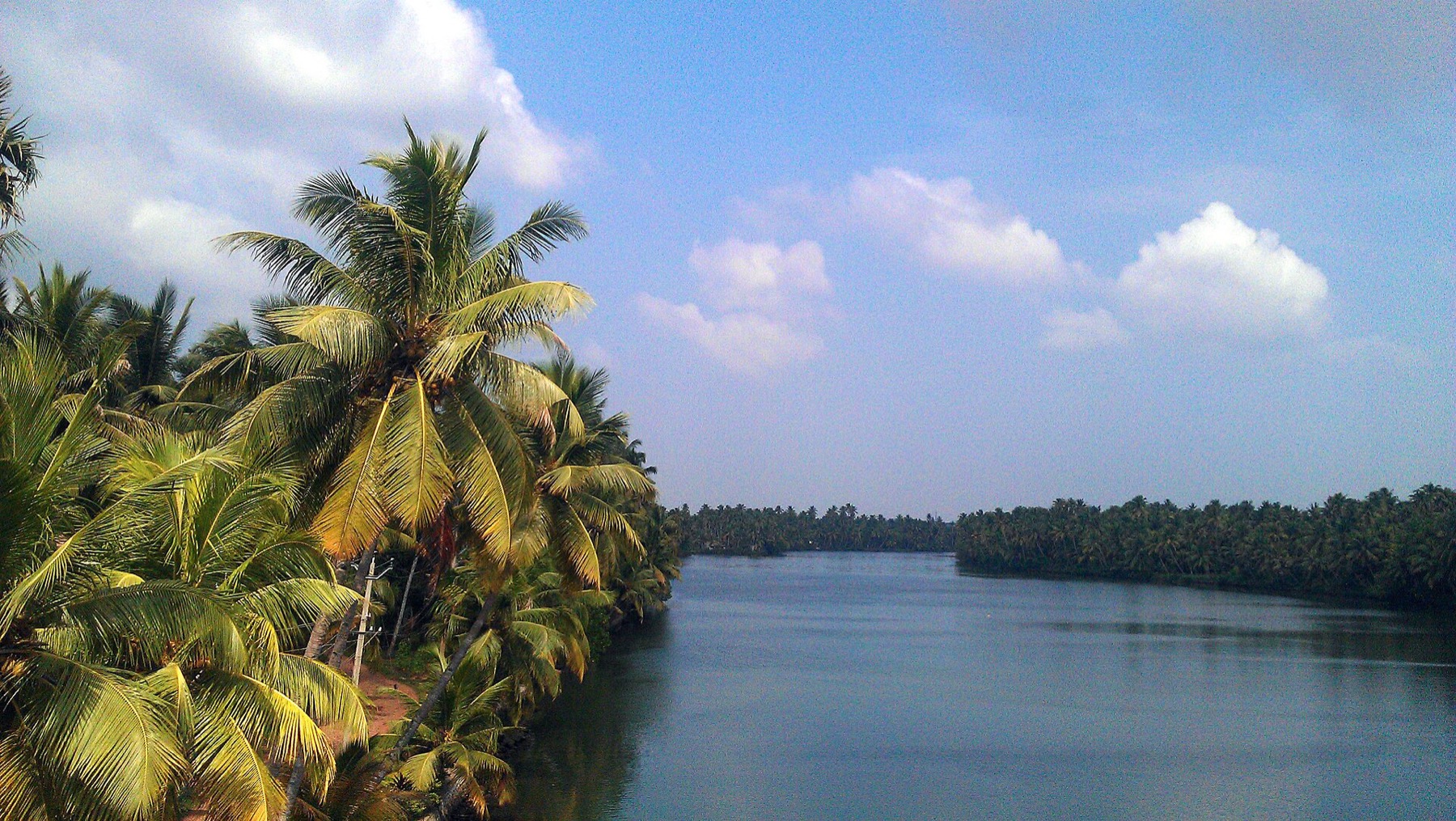
The river that rises in the Western Ghats behind Thenmala, is impounded at the Parappar dam, and reaches the sea through Ashtamudi past Munroe Island — the thread that connects the east of this district to the west.
4.6 km · straight line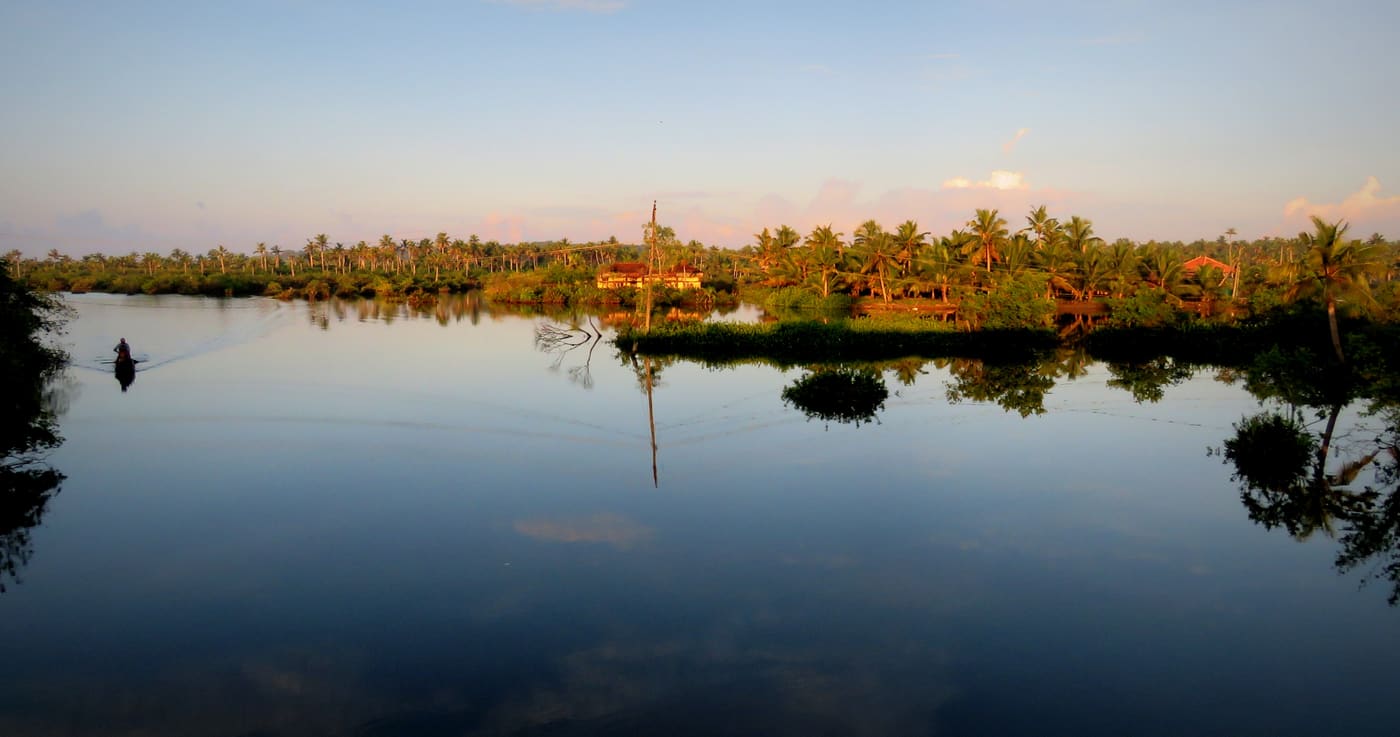
Canal village island known for canoe trips, coir work and slow backwater life.
5.2 km · straight line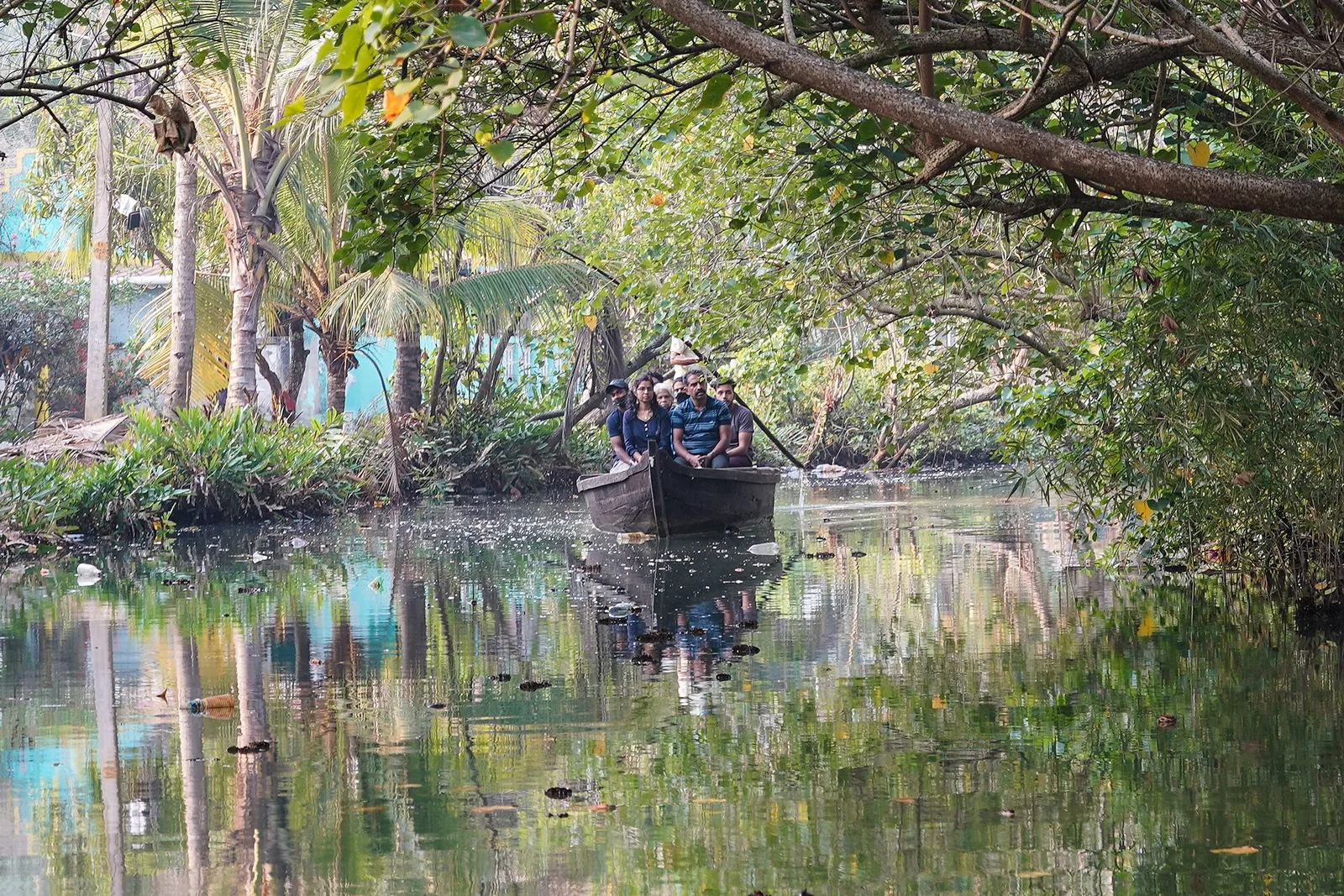
The narrow inland canal network threading Munroe Island, navigable only by small country canoe — the reason the island is visited at all, and a different waterway entirely from the open Ashtamudi lake.
5.2 km · straight line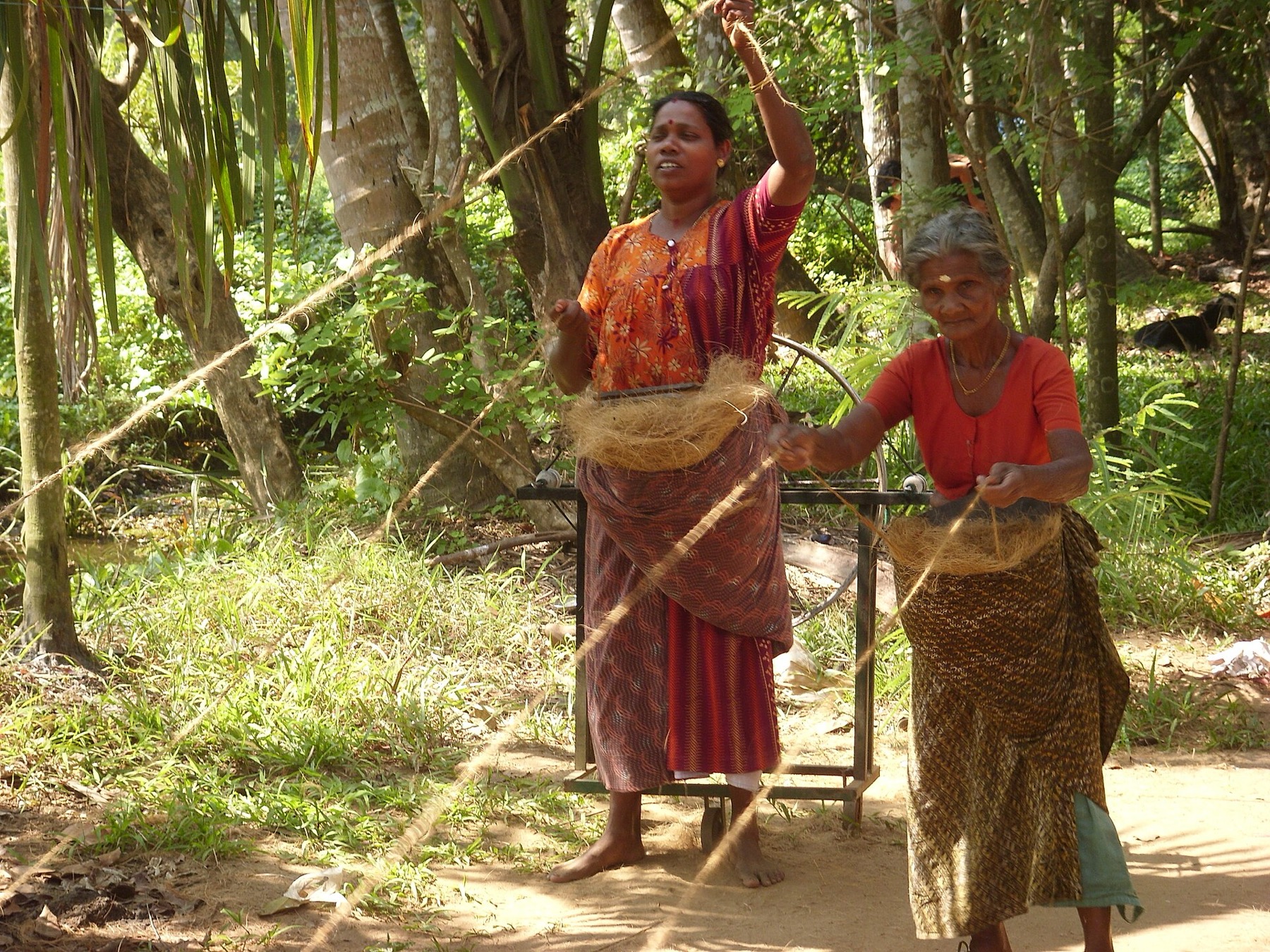
The coir-working settlements of Munroe Island, where coconut husk is retted in the backwater and spun into yarn — a working craft economy on the canal banks rather than a demonstration laid on for visitors.
6.8 km · straight line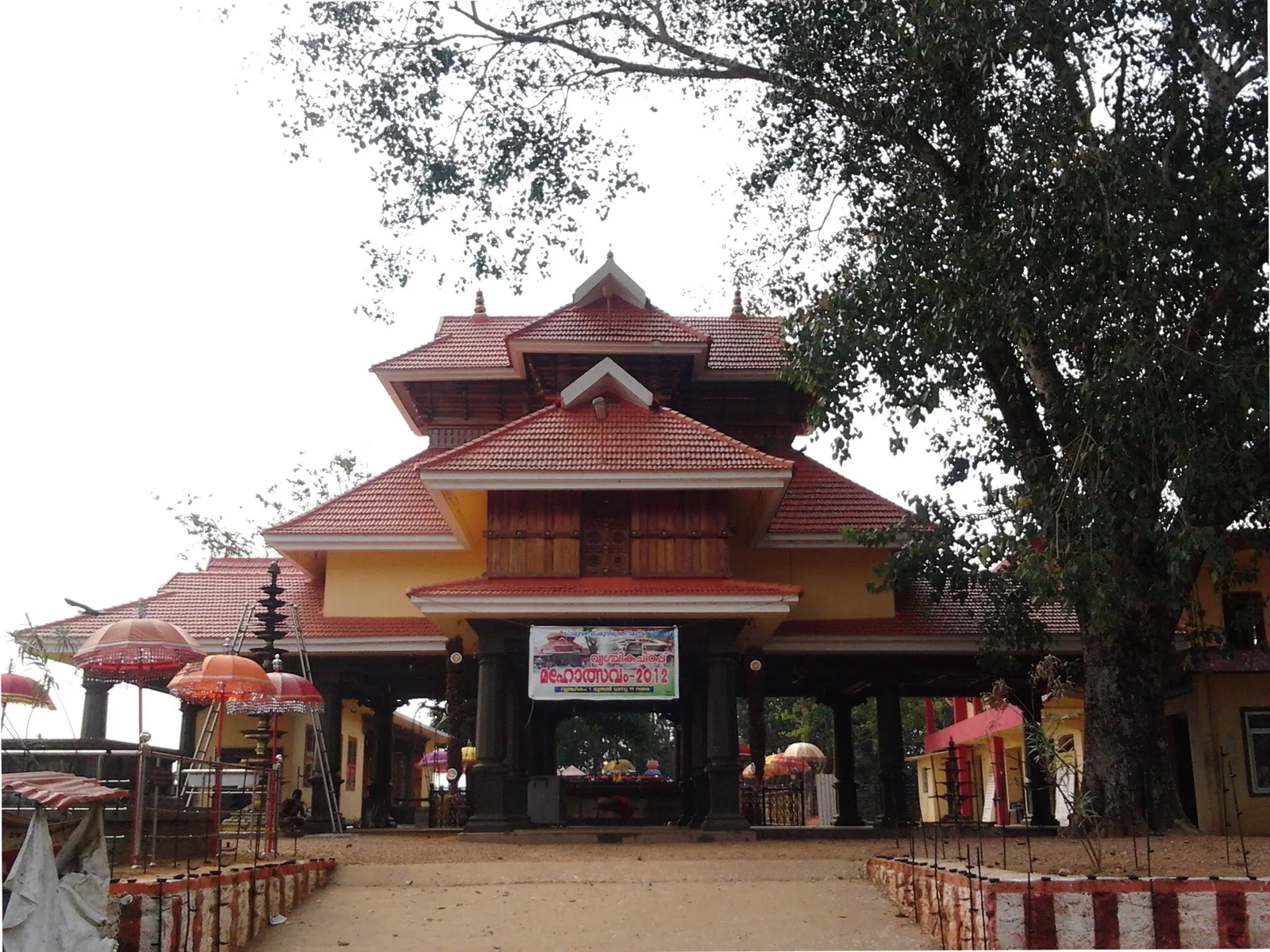
A temple with no idol and no sanctum — an open pillared mandapam over a raised platform, worshipped by sankalpam. The presiding figure is Mala Appooppan, the grandfather of the hill, conceived in the form of Duryodhana; the priest is the Oorali rather than a Brahmin, and toddy is the traditional offering.
7.8 km · straight line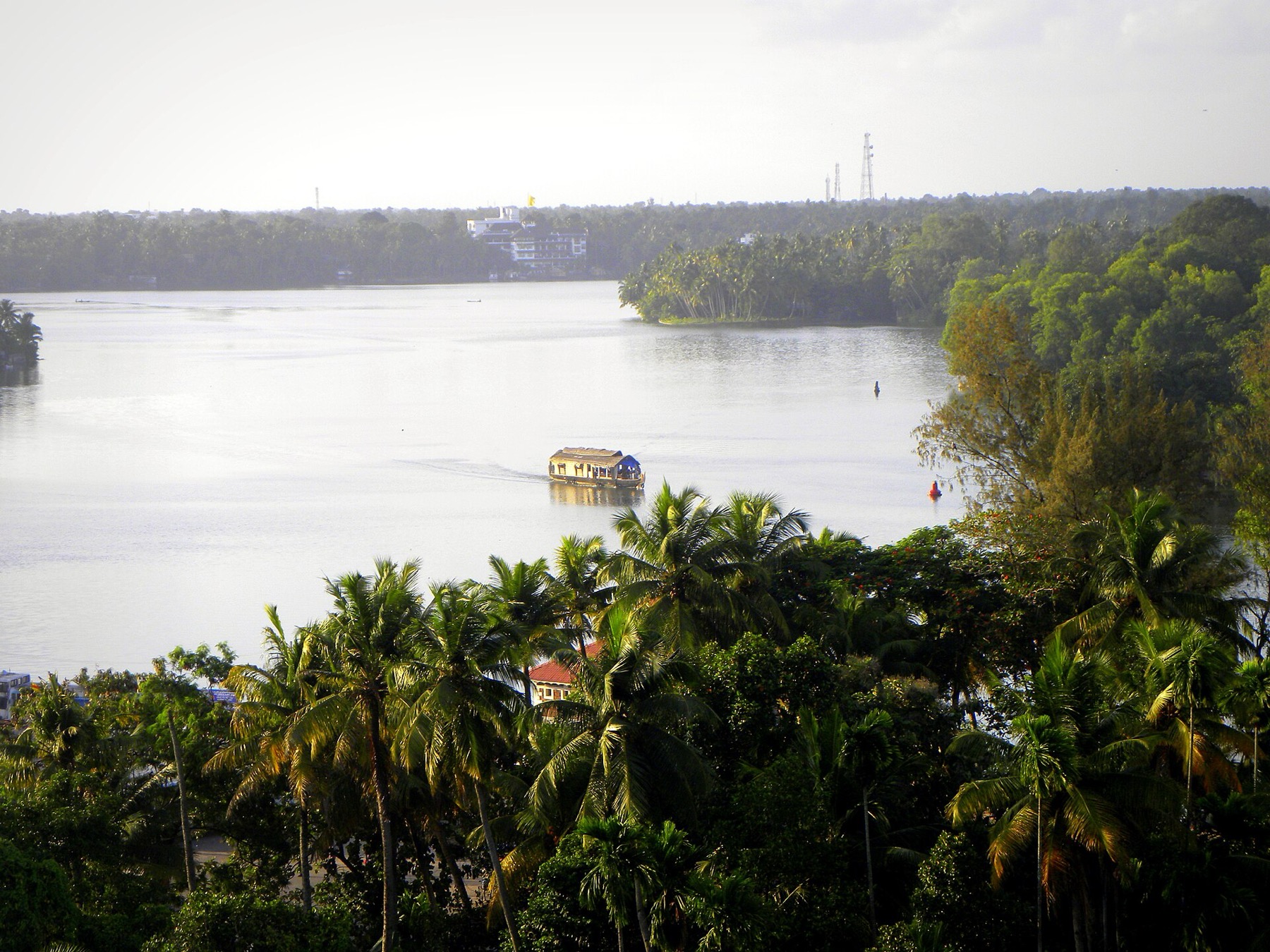
The open-water outlooks on the Munroe Island and Perumon side of Ashtamudi, where the lake widens out — the wide views the canal trips themselves do not give you.
9.3 km · straight line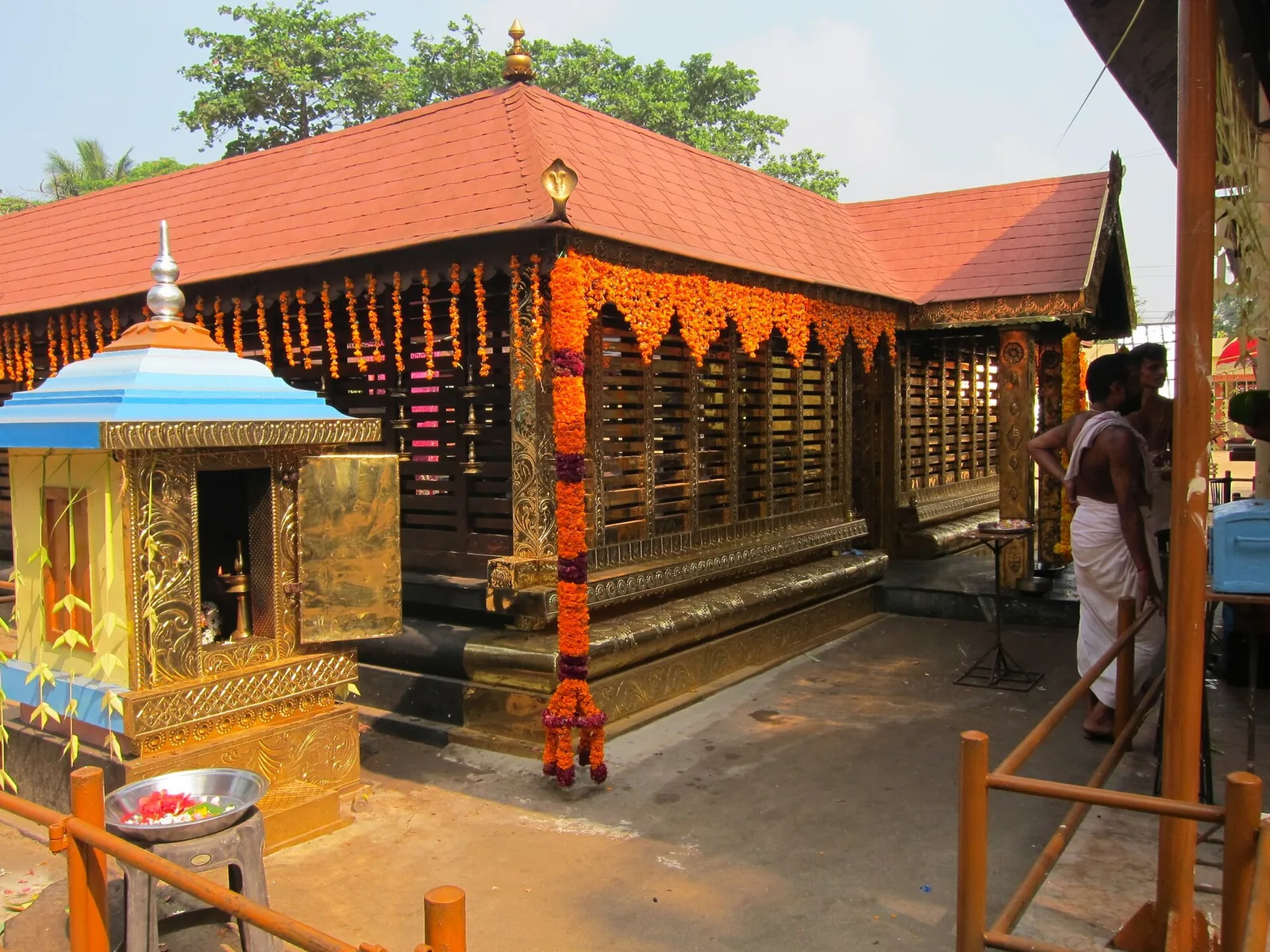
A Devi temple at Chavara north of Kollam, known across Kerala for Chamayavilakku — the two nights in Meenam when men and boys dress in saris and carry lamps in procession to the goddess, re-enacting the cowherd boys of its founding legend.
12.8 km · straight line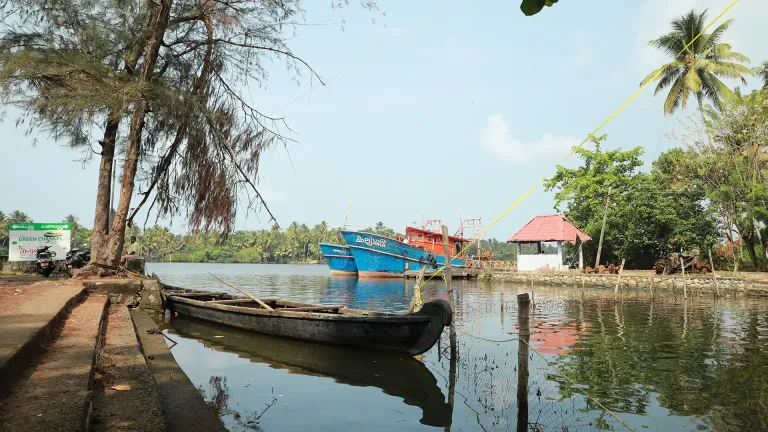
The boatyard village on Kayamkulam Kayal where the first Kerala houseboat was designed in 1991 — hulls of anjili wood drawn together with coir on an open bank, three kilometres west of Karunagappally. ⚠ Kerala Tourism places it on Ashtamudi Lake and calls it the birthplace of India’s houseboats; it is on Kayamkulam, and Srinagar’s date from the 1880s. These are private working yards, not a ticketed site — ask before you walk in.
14.6 km · straight line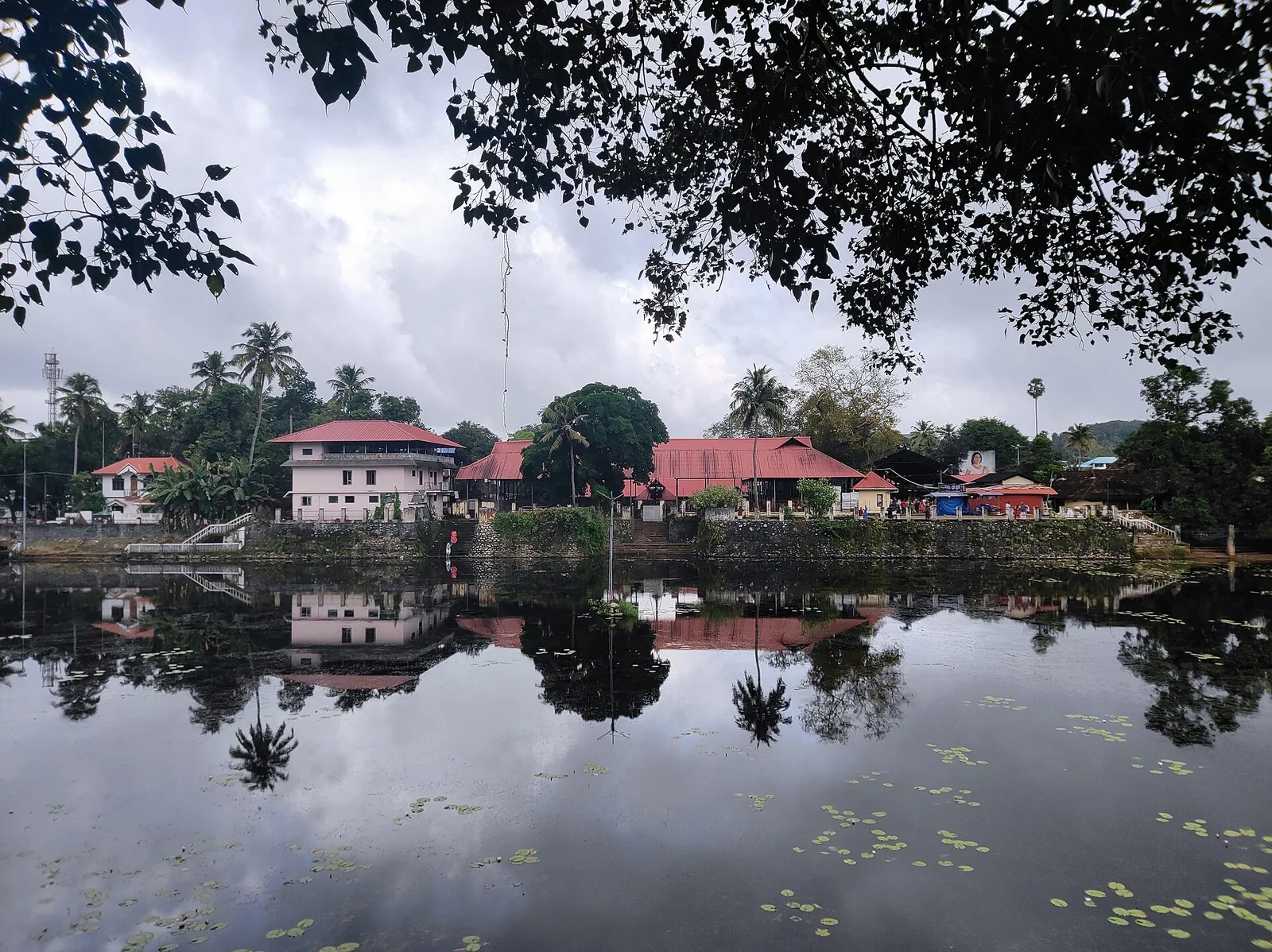
A large temple beside its own tank at Kottarakkara, where the central deity is Shiva but the sub-shrine to his son gives the place its name and its fame; the offering is unniyappam. The Kottarakkara Thampuran credited with Ramanattam, the immediate ancestor of Kathakali, is memorialised in the same town.
15.1 km · straight lineThe former British Residency at Asramam survives as a government guest house beside Kollam’s backwater landscape. Its architecture is the attraction, with access governed by its working use.
16.3 km · straight lineBy most accounts Kerala’s largest fishing harbour, at the mouth of Ashtamudi Lake about 9 km from Kollam town, and where Indian fishing was mechanised; two bridges cross the confluence and the early-morning auction is the sight to catch.
22.2 km · 22 min driveA Travancore royal residence on the Ashtamudi shore in Kollam, built to be arrived at by boat and now a working NCC establishment — viewed from outside or from the water.
30.9 km · 28 min driveRoad and walking figures are route estimates, with travel times dependent on access, traffic and conditions. Figures marked “straight line” show direct separation and do not describe a road or walking route. Fare estimates use Kerala’s 26 April 2022 auto/taxi notification and exclude waiting, night and applicable one-way surcharges. Confirm the current meter or operator quote before travelling. Routing: © openrouteservice.org by HeiGIT | Map data © OpenStreetMap contributors
Yes — Sasthamcotta is widely described as the largest freshwater lake in Kerala, spreading across roughly 373 hectares (about 920 acres). Unlike the state’s better-known backwaters, which are brackish lagoons open to the sea, Sasthamcotta holds pure, sweet freshwater fed mainly by springs and rain.
The water is soft, nearly free of common salts, low in nutrients and almost without rooted plants, in a basin fed by rain and groundwater rather than by a silt-carrying river — that is the real reason it runs clear. The famous explanation, repeated by guides and printed on the official Ramsar sheet, credits a larva called ‘cavaborus’ with eating the bacteria. No such creature exists: the word is a misspelling of Chaoborus, the phantom midge, and its larvae prey on zooplankton, not bacteria.
It is the Sasthamcotta Sree Dharma Sastha Temple, an ancient Ayyappa/Sastha shrine that gives the place its name and is surrounded by the lake on three sides. It is counted in some versions of Kerala’s five old Sastha temples — with Sabarimala, Achankovil, Aryankavu and Kulathupuzha — and is famous for the troops of monkeys that live around it, believed by devotees to be holy. ⚠ “Some versions” is exact: no two published lists of the Pancha Sastha agree. The Travancore Devaswom Board’s own circuit runs Pandalam, Kulathupuzha, Aryankavu, Achankovil and Erumeli, and other devotional lists name Kanthamala. Only Kulathupuzha, Aryankavu and Achankovil are in all of them, so treat the count of five as a convention rather than a fixed roll.
Yes on both counts. Sasthamcotta was designated a Ramsar Wetland of International Importance on 19 August 2002 and is a critical drinking-water source for the Kollam region. It is open to visitors for boating, temple darshan and lakeside walks, but it should be treated with care as a protected water supply — carry your litter out and avoid polluting the water.
Sadly, yes. In recent decades it has faced a falling water level and shrinkage of its margins — reports cite that a portion of the lakebed (commonly given as around 46 acres) has dried out, linked to sand mining, water abstraction and a lowering water table, along with sewage, plastic and bank encroachment. Restoration and clean-up efforts have been proposed and undertaken.
The lake lies roughly 25–29 km from Kollam (Quilon) town by road, an easy day trip. It has its own small Sasthamkotta railway station, and the nearest major railhead is Kollam Junction. The closest airport is Trivandrum (Thiruvananthapuram) International, around 90–100 km away.
October to March is best for comfortable boat trips; monsoon is greener but weather can disrupt plans.
Entry: There is generally no entry fee to visit the lakeside or the temple. Boat and pedalo rides carry a small charge, usually priced per ride or per person. Timings: The lakeside and its shore are open through daylight hours, and boating typically operates during the day (morning to evening). The Sasthamcotta Sree Dharma Sastha Temple generally follows morning and evening darshan windows, closing in the midday interval as most Kerala temples do.
Base yourself in Kollam town or a nearby town in Kollam, then confirm the last-mile route locally before leaving. Plan boat timings first, then arrange road transfer around the departure point. If the visit depends on forest, temple, boat, ferry, weather or seasonal access, check the official/local rule on the day before travel.
2 hours to a full day; overnight if using a houseboat area.
Nearby you can pair Kallada river (4.6 km, approximate straight-line separation), Munroe Island (5.2 km, approximate straight-line separation), Munroe canals (5.2 km, approximate straight-line separation), Coir villages (6.8 km, approximate straight-line separation).
Use operators with life jackets and clear weather judgement. Avoid overloaded boats.
Written about Sasthamcotta Lake itself — its history, its legends and the arguments about them.
These guides explore Kollam town and the surrounding area. Choose a visit that fits your interests, allowing separately for travel between stops.
Route-level itineraries and practical guides for the rest of Kerala.
Photographs: Arunelectra (CC BY-SA 3.0), Mayachempakam (CC BY-SA 4.0), Vis M (CC BY-SA 4.0), Rueben roy (CC BY-SA 4.0). Wikimedia Commons.