Thangassery Lighthouse

Thangassery Lighthouse is Kollam town's coastal heritage marker, set in the old Tangasseri quarter with colonial-era layers, sea views and easy access from Ashtamudi/Kollam stays. It is a compact stop, but a strong page because it connects lighthouse views, beach time and Kollam's port history.

Thangassery Lighthouse, Kollam town
Practical guide

Plan Thangassery Lighthouse

Who's going?Tailor Thangassery Lighthouse to your trip
Typeheritage
Nearest baseKollam town
DistrictKollam
Best timeLate afternoon is best for coast light…
Time needed45 minutes to 2 hours
EntryVaries — see below
Places to visit9Listed businesses48

Plan it around current lighthouse visitor hours and weather. The surrounding neighbourhood is better handled as a short city-coast loop with Kollam Beach, Ashtamudi Lake and local food rather than a standalone long excursion.

The story

On a low, wind-scoured cape where the Arabian Sea gnaws at Kollam’s western edge, a tall red-and-white striped tower rises above coconut palms and the crumbling stone of a forgotten European enclave. This is Thangassery — Tangasseri on older maps — one of the most atmospheric heritage corners on the entire Kerala coast, where a British-built lighthouse of 1902 keeps watch over the ruins of a Portuguese fort, Dutch graves, an ancient spice port, and a breakwater lashed by surf. Climb the tower and the whole story of Kollam’s trading past unspools below you.

The story of Thangassery Lighthouse

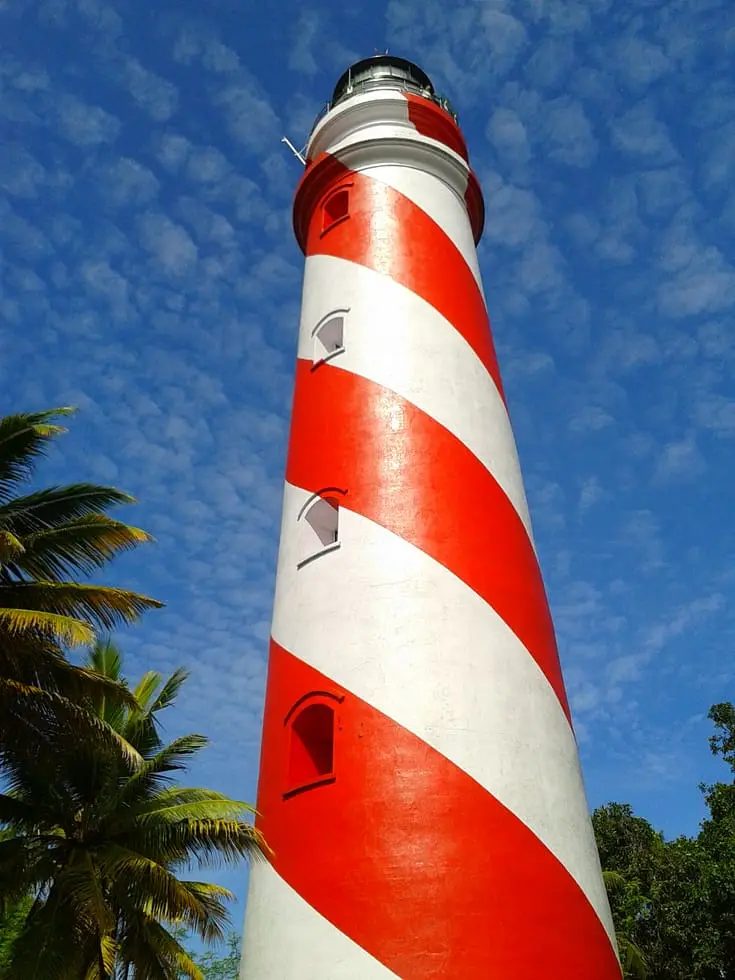
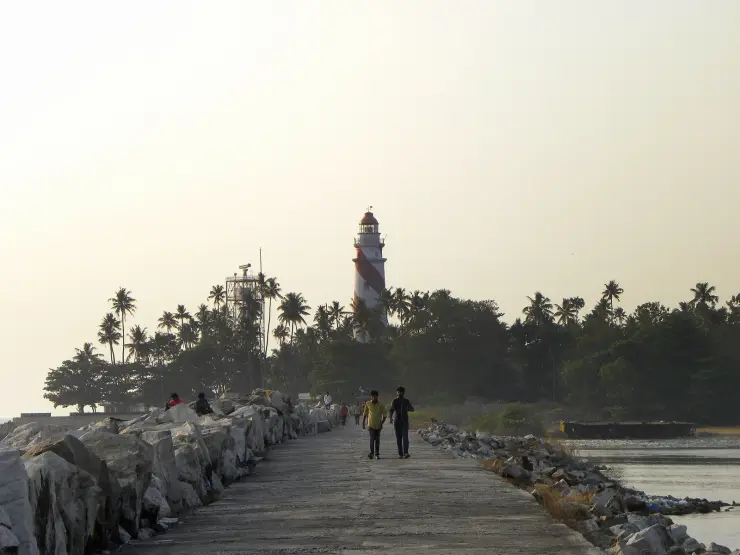
Thangassery is not a single monument but a layered coastal landscape, and the lighthouse is its exclamation mark. The tower stands 35 metres tall — the figure in the Directorate General of Lighthouses and Lightships' own Master Ledger for the Cochin district, which describes it as a circular brick-masonry tower, plastered on the outside in December 2002, in red and white spiral stripes. It is one of the most recognisable lights on the Kerala coast, though not the tallest: that is Puthuvype at Vypin, 46 metres. If you have read 41 metres or 144 feet elsewhere — including on this page until recently — that is the ledger's other number, the elevation from base to vane, 43 metres, with the light beam itself at 38. From the seafront it reads almost cartoonishly cheerful; up close it is a serious piece of colonial engineering, its whitewash streaked by decades of salt spray and monsoon.

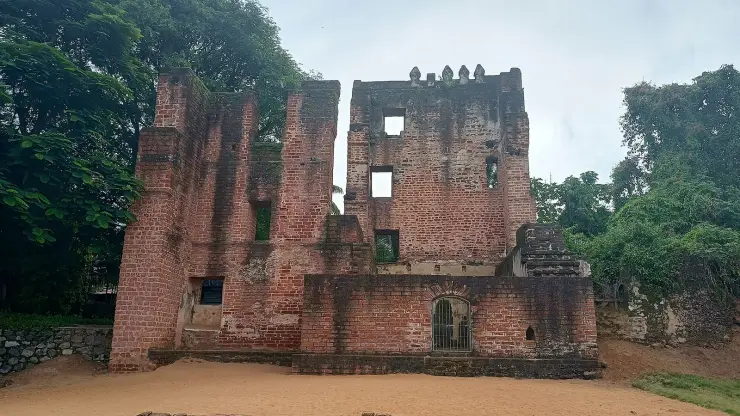
The magic of the place is the compression of history into a short walk. Within a few hundred metres of the tower you can trace the outline of a Portuguese-built fort begun in the early sixteenth century, wander a walled cemetery of moss-dark Portuguese and Dutch tombstones, glimpse the eighteenth-century churches of the old European quarter, and stand at the edge of the ancient port of Quilon that once drew Arab dhows and Chinese junks across the ocean for pepper. Few Kerala sites braid so many empires into one cape.

Climbing the lighthouse is the headline experience, and it earns its ticket. A tight internal spiral staircase winds up through the tower to a gallery balcony, where the reward is a sweeping panorama — the Arabian Sea running silver to the horizon on one side, the tiled roofs and church spires of Kollam town on the other, the breakwater arms and fishing boats below, and on a clear evening the sun dropping straight into the water. It is an unhurried, breezy, deeply satisfying view that most visitors remember longer than any museum.

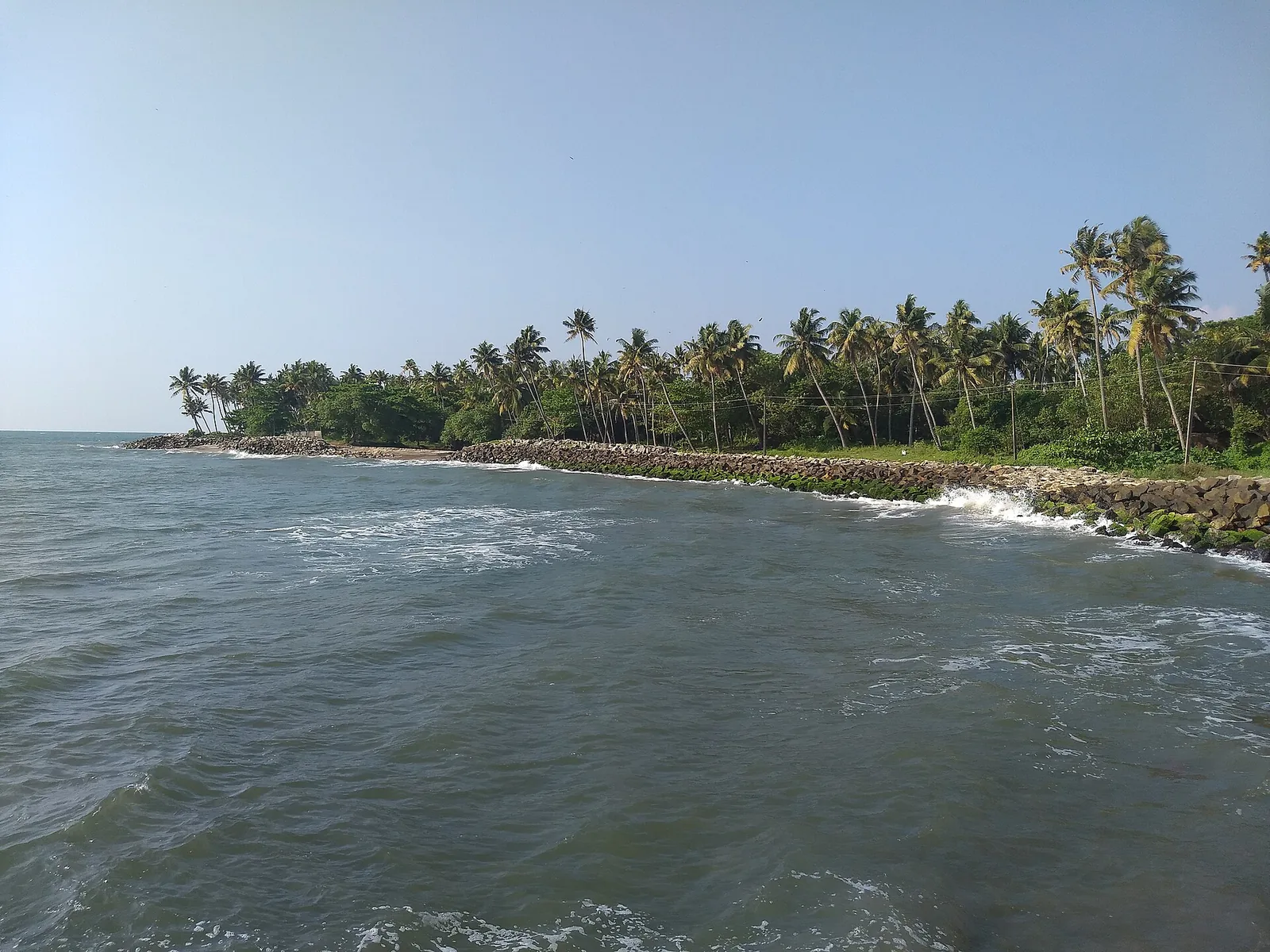
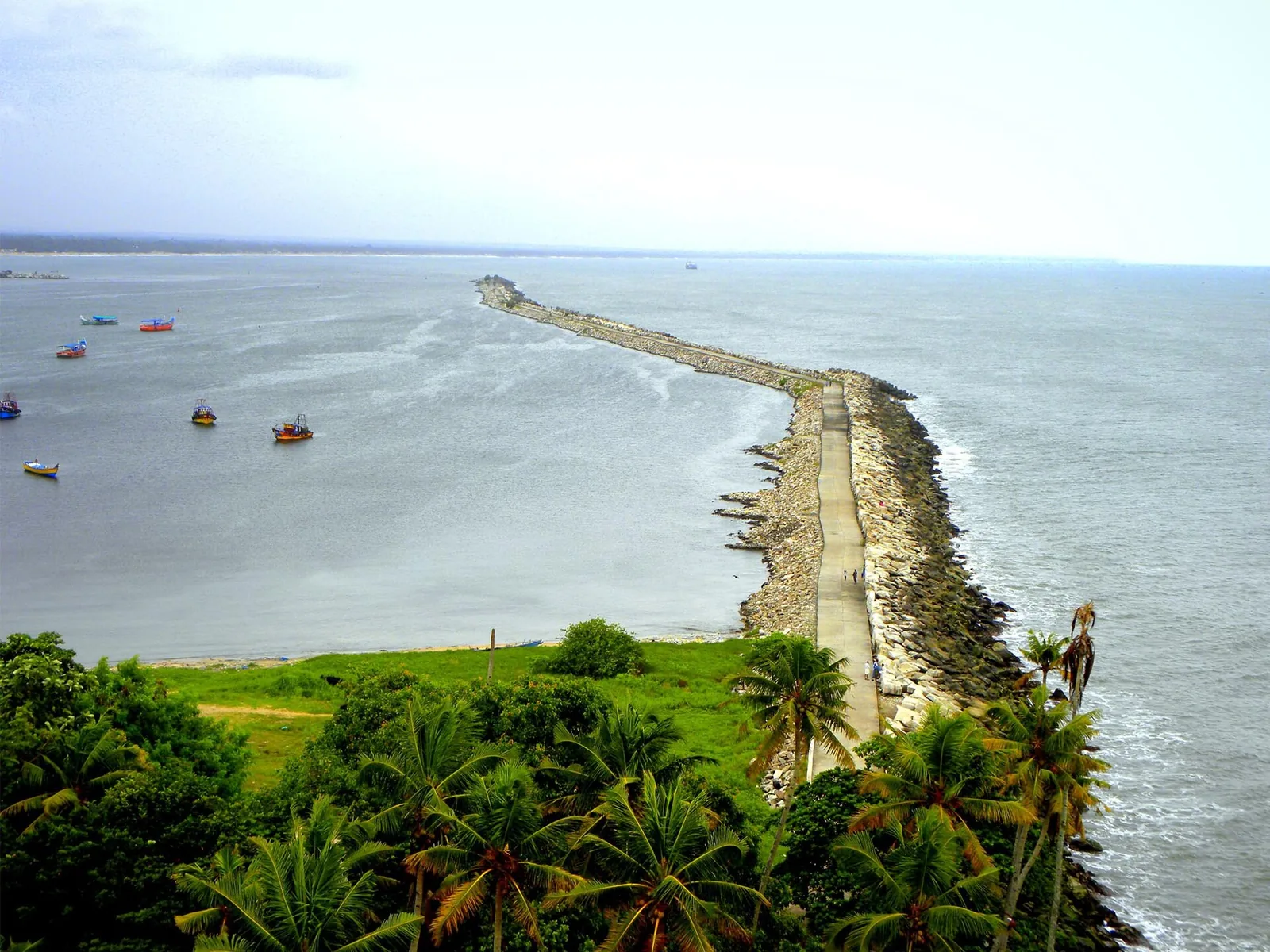
Around the base, the cape has the melancholy beauty of a place the sea keeps trying to reclaim. The Thangassery breakwater and its scatter of tetrapods hold back the surf; the shoreline here is rocky and dramatic rather than a soft resort beach, with fishermen mending nets and the occasional group of local families out for the sea breeze. The light itself still works as a genuine aid to navigation — this is a living lighthouse, not a museum piece, and its beam still sweeps far out over the shipping lanes at night.

The wider neighbourhood carries a distinct identity within Kollam. Thangassery grew up as a European enclave and long retained an Anglo-Indian and Latin Catholic character, its lanes lined with old bungalows, churches, and the surnames of a mixed colonial past. Kollam is also the beating heart of Kerala’s cashew country, and a visit here folds naturally into the flavour of the region — cashew factories, backwater edges of the great Ashtamudi Lake nearby, and the salt tang of a working coast.

Put together — the climbable striped tower, the fort ruins, the colonial graves, the ancient port, and the raw seafront — Thangassery is best understood as a heritage cape rather than a single attraction. Come in the golden light of late afternoon, give yourself time to wander as well as climb, and the place delivers something rare in Kerala: a coastline where you can physically read four centuries of Indian Ocean history in an hour.

Legend & myth

Start with the stripes, because almost every description of this tower gets them wrong. Guidebooks, tourism copy and news reports call them diagonal bands, and a diagonal band is a different thing entirely: a series of separate slanting stripes, each beginning and ending. What the Directorate General of Lighthouses and Lightships records in its own Master Ledger for the Cochin district is a colour scheme of "Red and White Spiral strips" — singular, continuous, wound round the tower like the pole outside an old barber's shop. You can settle it yourself from any photograph taken from far enough back: follow one red stripe with your eye and watch it disappear round the far side of the tower rather than stopping at an edge. It is a small thing, but it is the sort of small thing that shows how much travel writing about this cape has been copied rather than looked at.

The second and larger misconception is the date. Everything published about this lighthouse dates it to 1902, and the light genuinely was commissioned on 1 March 1902 — the ledger and the DGLL's own station page agree on the day. But the masonry you photograph is not, for the most part, the masonry of 1902. The DGLL records that several cracks developed in the tower in 1930, and that in 1940 it was strengthened by jacketing masonry in specially made bricks, under the supervision of Mr A. N. Seal, Engineer-in-Chief. The outside was then plastered in December 2002. So the thing standing on the cape is really three towers in one: an Edwardian shaft, a wartime skin wrapped around it, and a coat of plaster younger than most of the people photographing it.

What it is built of is genuinely unsettled, and we are not going to pretend otherwise. The DGLL calls it a circular brick masonry tower and describes a brick masonry murette with a wooden lining inside. Wikipedia and the pages that follow it describe a masonry tower founded on reinforced concrete, which would be an unusually early use of the material for a 1902 colonial light. We have not found a document that settles which is right, and the two claims are not quite compatible, so both are recorded here and neither is stated as fact. The 1940 jacketing muddies it further: whatever the tower was founded on in 1902, a second masonry shell was built around it thirty-eight years later, and no published account we can find says how far down that shell goes or what it stands on. A visitor cannot check any of this from outside, which is precisely why the claim travels so easily.

Finally, two things the tower is assumed to do that it does not. The first is that its beam sweeps the town. It does not, and the ledger says why: the lantern carries thirty-two panes in two tiers, of which only twenty-four are glass — the remaining eight are mild-steel blank sheets fitted on the land side. The light has been deliberately blinded towards Kollam, as working lights usually are, because a beam of 127,950 candelas visible twenty-six nautical miles out to sea is of no use to anyone inland and a considerable nuisance to everyone living under it. The second is the climb. Almost every write-up still describes the ascent as a long spiral stair and nothing else, which shapes the advice given to older visitors and families; but the ledger lists a passenger lift of 408 kg, five persons, installed on 3 December 2016. It is a working lighthouse and the lift is not guaranteed to be running on the day you arrive, so ask at the ticket counter rather than assuming either way.

Read the full history of Thangassery Lighthouse 815 more words

History

Kollam — Quilon to European traders, Kollam or Coulão in various tongues — has one of the best-documented port records on India’s south-western coast, running from the ninth century onward. Long before Europeans arrived, it was a celebrated node of the Indian Ocean spice trade, drawing Arab, Persian and Chinese merchants in search of pepper and other Malabar produce; Chinese fleets and Arab dhows are recorded calling here in the medieval centuries, and the port’s antiquity even anchors a traditional Malayalam era. Thangassery is the seaward tip of that ancient trading world.

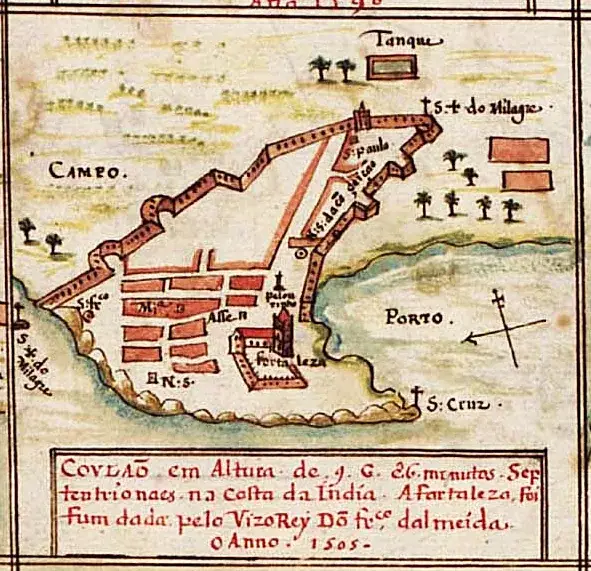
The Portuguese arrived in the sixteenth century and, seeking to control the pepper trade, built a fortified trading base on this cape — the fort christened St Thomas, generally dated to around 1519 (indicative — confirm locally). In its early form it is described as having several towers and bastions with its entrance facing the sea, and under the Portuguese the surrounding settlement became a significant centre for the export of pepper, the black gold that first pulled Europe to Malabar.

Control then passed with the tides of empire. The Dutch East India Company took the fort in 1658, and after the Portuguese briefly clawed back ground it was recaptured by the Dutch around 1661, who used Thangassery as a warehouse hub gathering goods from along the coast. In 1795 the Dutch ceded Thangassery to the British, and the cape became a small British enclave — a status that shaped its churches, cemeteries and Anglo-Indian community, and that would later give it its lighthouse.

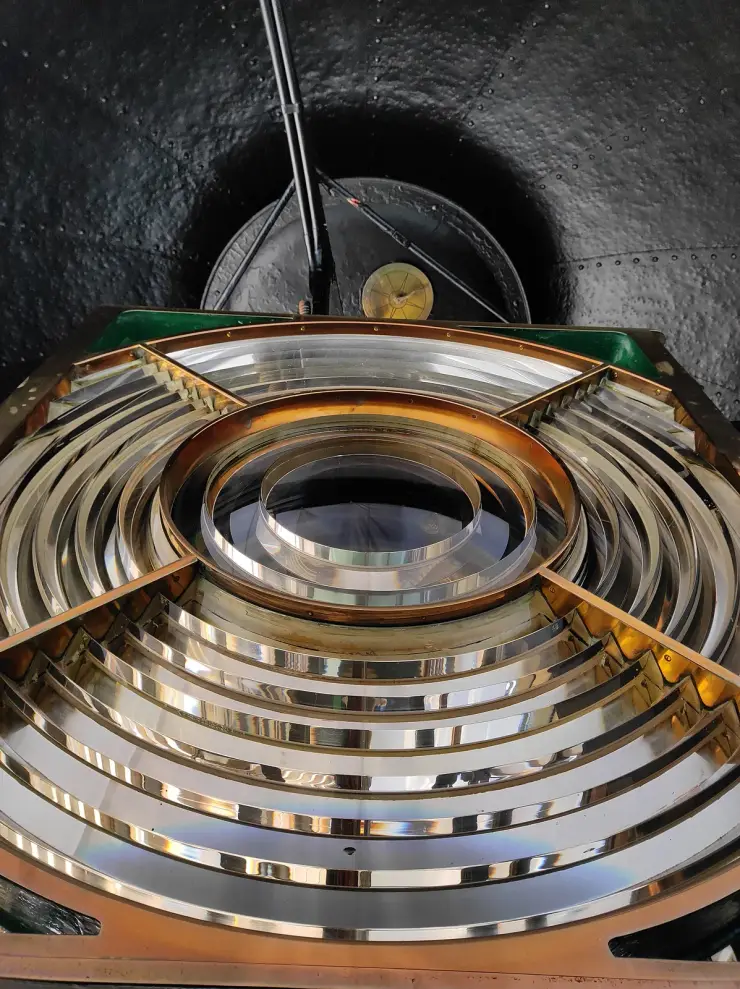
The lighthouse itself is a British-era addition, commissioned to make this busy but hazardous stretch of coast safer for shipping. The DGLL's records are precise about the moment it began: a petroleum vapour light with a 55 mm burner, inside a second-order revolving optic supplied by Chance Brothers of Birmingham, commissioned on 1 March 1902. It replaced an earlier and simpler light on the same cape. Its official name on the register is Tangasseri Point Lighthouse, it carries the number F-0712, and its character — a group of three flashes every fifteen seconds, timed 0.2 + 2.8 + 0.2 + 2.8 + 0.2 + 8.8 — has been the signature by which navigators tell it from every other light on this coast ever since.

The century that followed was not a smooth march into modernity. Cracks appeared in the tower in 1930 and it was jacketed in 1940 in specially made bricks under Mr A. N. Seal, Engineer-in-Chief. In 1962 the petroleum vapour burner was replaced by a 230 V, 5 kW incandescent lamp — and in 1967 the station reverted to petroleum vapour, a lighthouse being quietly un-modernised. Only on 15 May 1994 did it move to the metal halide lamp it still uses, now a cluster of three at 150 W. Meanwhile the fort it overlooks was left to decay — today St Thomas Fort survives only as fragmentary ramparts and stonework, and the adjacent Portuguese and Dutch cemeteries, with their weathered European tombstones, stand as the most poignant surviving witnesses to the empires that passed through this small cape.

Why visit

You can actually climb it. Unlike many working lighthouses, Thangassery opens its tower to visitors (during limited hours — see logistics), and the spiral climb to the gallery balcony delivers one of the finest coastal panoramas in southern Kerala: open Arabian Sea, Kollam town, the breakwater and the fishing fleet, all in one sweep.

It is a genuine four-empire heritage site. Within a short walk you move between an ancient Indian Ocean spice port, a Portuguese fort, Dutch graves, and a British lighthouse — a density of layered history that very few coastal spots in Kerala can match, and all of it walkable in an afternoon.

The tower is a photographer’s gift. The bold red-and-white spiral stripes — one continuous helix, not the diagonal bands most descriptions claim — against a blue sky or a burning sunset make Thangassery one of the most photogenic landmarks on the coast, whether shot from the beach, the breakwater, or the balcony looking back down.

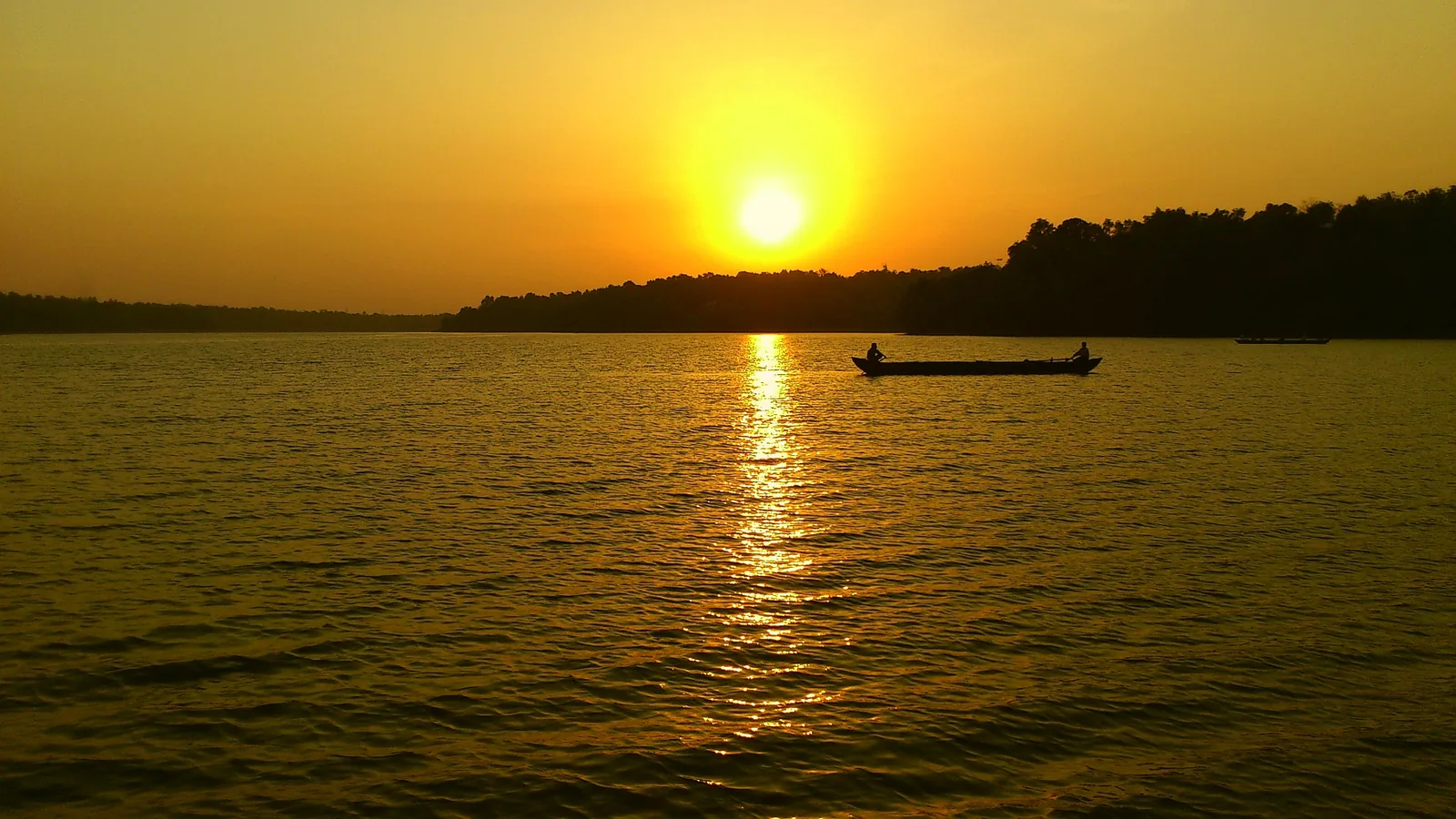
The seafront is raw and real. This is a working coast of rock, surf, breakwater tetrapods and fishing boats rather than a manicured resort beach — atmospheric, breezy, and free, and especially beautiful in the golden hour when the sun sets straight into the sea.

It pairs perfectly with Kollam’s other draws. The lighthouse sits within easy reach of the fort ruins, the old colonial churches and cemetery, the ancient port, and — a little further out — Ashtamudi Lake, the backwaters, and Kerala’s famous cashew country, making it an easy, rewarding half-day in Kollam.

It rewards the curious traveller. Thangassery is not overrun with tour buses; it retains a lived-in, slightly faded, deeply characterful sense of place — an Anglo-Indian and Latin Catholic enclave where history is still legible in the lanes, surnames and stones.

What to expect

Highlights

  • Coastal lighthouse and old Tangasseri heritage quarter in Kollam town.
  • Good pairing with Kollam Beach, Ashtamudi Lake and town food stops.
  • What there is locally: city hotels, autos/taxis, guides and family restaurants.
Getting there

How to visit

  • Base in Kollam town or an Ashtamudi lake stay and visit by auto/taxi.
  • Check current lighthouse entry/timing before planning around the climb or viewpoint.
  • Combine with Kollam Beach and Thangassery harbour/coastal heritage stops in one short loop.

Distance by road

  • Thiruvananthapuram66 km
  • Kochi139 km
  • Madurai262 km
  • Kozhikode312 km
  • Coimbatore321 km

Road km to Kollam; ghat roads and traffic vary — allow extra.

Timing

Best time

Late afternoon is best for coast light and cooler weather; avoid rough-sea or storm-warning periods.

Weather in Thangassery LighthouseSeasonal guide

Live forecast loads in your browser.

Today at Thangassery Lighthouse
Sunrise6:16 am
Sunset6:35 pm
Golden hour best light5:35 pm–6:35 pm
Blue hour after sunset6:35 pm–7:00 pm
Sun sets toward compass bearingW · 280°
Moon tonight🌔 Waxing gibbous · 99%
South-west monsoon. June to September is the south-west monsoon in Kerala. Expect heavy showers, mostly in bursts rather than all day — carry rain cover, allow extra time for getting around, and note that ferries and open-air sites are the first things affected.

Sun and moon are calculated for this location and shown in IST. Photography windows are the hour around sunrise and sunset; the sunset bearing is degrees clockwise from true north. Moon phase is accurate to about half a day.

Visitor notes

  • Lighthouse access can be restricted by maintenance, weather or staffing.
  • Carry minimal bags if planning to climb.
  • Use local transport if parking is difficult near the coast.
Safety

Good to know

  • Follow lighthouse and coastal safety barriers.
  • Do not enter rough-sea edges or harbour work zones.
  • Take care on stairs and exposed viewing areas.
Stay · eat · do · rent · see · shop

Stays, food & things to do near Thangassery Lighthouse

Verified hotels, homestays, restaurants, experiences, sights, shops and rentals around Thangassery Lighthouse — commission-free, with direct contact. Filter by what you need.

6 things to do near Thangassery Lighthouse

Sarovaram Ayurvedic Backwater Health Center Kollam — Ayurveda centre (Kerala Tourism classified) in Kollam town
Verified
Ayurveda centre (Kerala Tourism classified) · Kollam town
Sarovaram Ayurvedic Backwater Health Center Kollam
9.3 km · ~15 min by cab

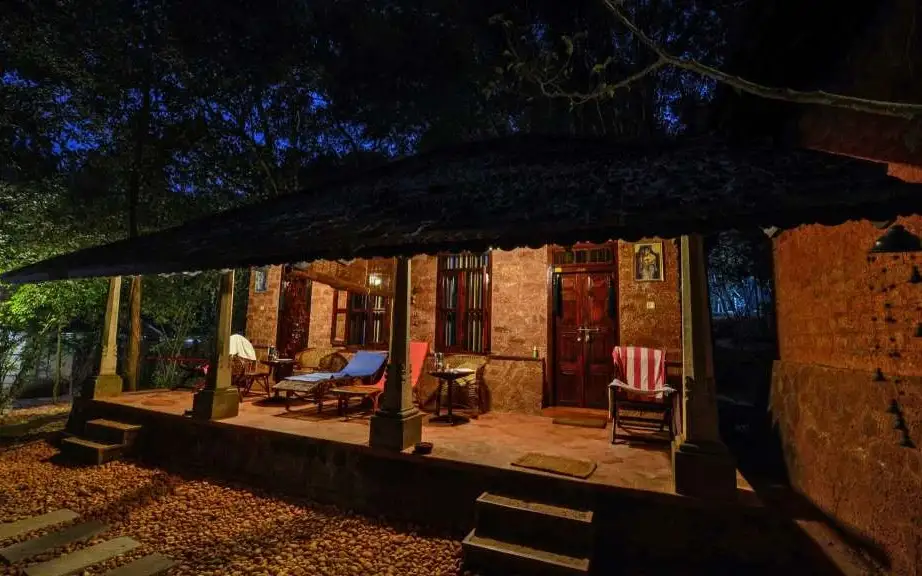
Kerala Tourism-classified Ayurveda centre on the banks of Ashtamudi Lake at Ashtamudi, on the backwater edge of Kollam. It runs residential Ayurveda and Panchakarma programmes in rustic laterite cottages beside the water, focused on treatment stays rather than casual spa visits.

Directions Commission-freeView details
Favourite Kerala Ayurveda and Spa Kollam — Ayurveda and spa (Kerala Tourism Green Leaf) in Kollam town
Verified
Ayurveda and spa (Kerala Tourism Green Leaf) · Kollam town
Favourite Kerala Ayurveda and Spa Kollam
3.2 km · ~8 min by auto

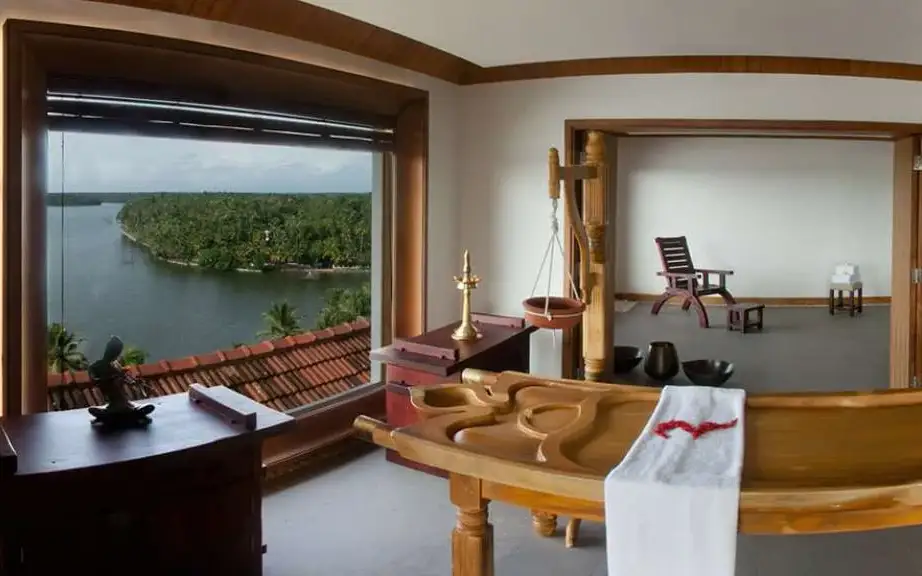
Kerala Tourism Green Leaf-classified Ayurveda and spa centre at The Leela Ashtamudi (Raviz), Thevally, overlooking Ashtamudi Lake in Kollam. Its therapy rooms offer classical Kerala Ayurveda treatments and rejuvenation packages with backwater views, run to the Green Leaf standard rather than as a generic hotel spa.

Directions Commission-freeView details
All Season Ayurvedic Resort Kollam — Ayurveda resort (Kerala Tourism Ayur Diamond) in Kollam town
Verified
Ayurveda resort (Kerala Tourism Ayur Diamond) · Kollam town
All Season Ayurvedic Resort Kollam
10 m · 1 min walk

Kerala Tourism Ayur Diamond-classified Ayurveda resort at Thangassery near the Kollam lighthouse, on the seafront edge of Kollam town. It offers doctor-supervised classical Ayurveda and Panchakarma treatments alongside resort rooms, run by the D-Fort group as a dedicated wellness retreat.

Directions Commission-freeView details
Kollam Taxi Services — Taxi service in Kollam town
Verified
Taxi service · Kollam town
Kollam Taxi Services
3.9 km · ~10 min by auto

Direct-source Kollam taxi provider for local, airport and district transfers. Contact direct · Taxi, Kollam transfers, Airport transfer.

Directions Commission-freeView details
DTPC Kollam Ashtamudi Backwater Cruises — Backwater cruise in Kollam town
Verified
Backwater cruise · Kollam town
DTPC Kollam Ashtamudi Backwater Cruises
2.5 km · 31 min walk

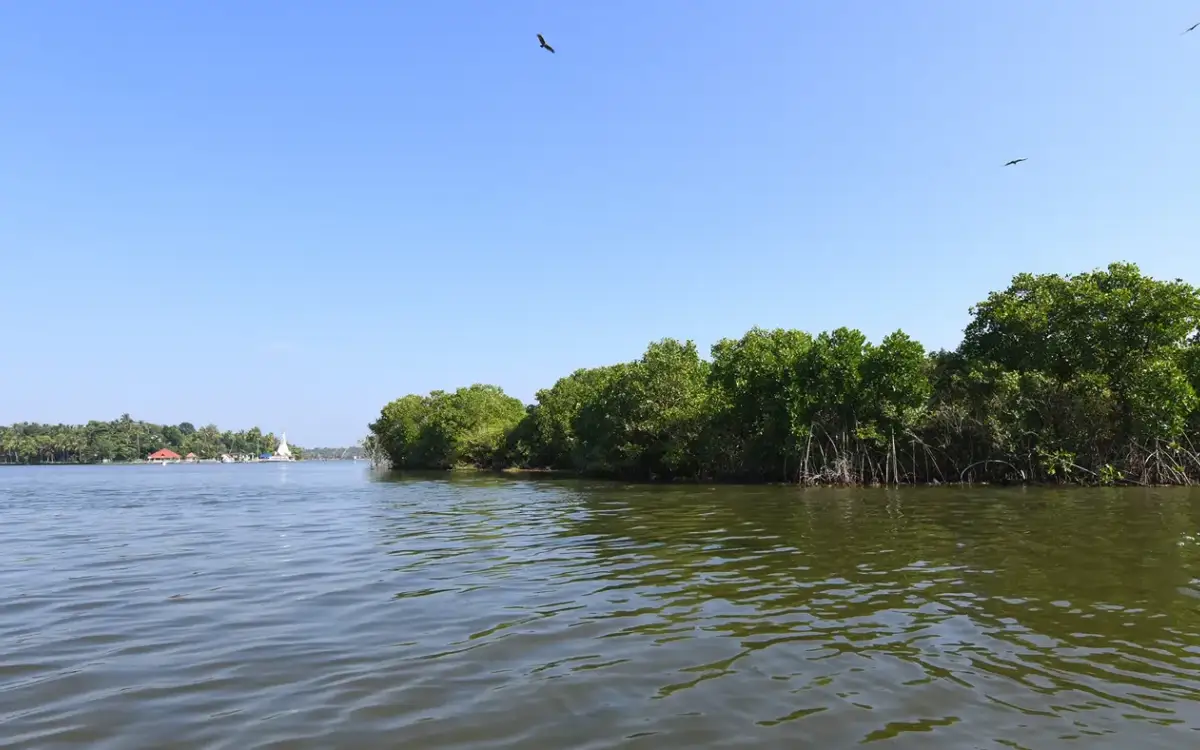
Official tourism-source Ashtamudi houseboat and backwater cruise planning through DTPC Kollam. Check DTPC tariffs · Ashtamudi, DTPC Kollam, Houseboats.

Directions Commission-freeView details
S
Sambranikodi DTPC Boating
Things to do
Verified
Backwater boating · Kollam town
Sambranikodi DTPC Boating
5.5 km · ~14 min by auto

DTPC Kollam online-ticketing source for Sambranikodi boating in the Ashtamudi backwaters. Book via DTPC · Sambranikodi, Ashtamudi, DTPC Kollam.

Directions Commission-freeView details

Book with the place itself. India’s cyber-crime coordination centre warned in April 2025 that convincing copies of hotel and pilgrimage booking sites are being pushed through sponsored search and social ads, taking payment for rooms the property never hears about. Every listing here links to the business’s own contact details and its own Google or Bing profile — we take no commission and sit in nobody’s payment path. If a booking page reached you through an ad, check the address bar against the property’s own site before you pay. Fraud can be reported on cybercrime.gov.in or on 1930.

Ranked

The best of Kollam town, ranked

Thangassery Lighthouse sits in Kollam town, and these rank everything verified across the town rather than this one spot — built from the same listings shown above, ordered by the strength of the source evidence behind each entry rather than by anyone's star score. Every card shows how many places are really on it. Nobody pays to appear.

Nearest to Thangassery Lighthouse, on foot

Ordered by a real routed walk from Thangassery Lighthouse itself — the walking network, not a line on a map, which understates a real walk by about half again. A different question, and a different answer, from the town-wide lists below.

Across the whole of Kollam town

Ranked guides

Top experiences around Kollam town

3 more Kollam town experiences worth building a day around, each with a full guide, how to reach it and what sits next to it. Thangassery Lighthouse is left off — you are already on it — and so is anything already shown in the nearby list further down, so nothing here repeats.

backwaterSasthamcotta Lake

Kerala’s largest freshwater lake, a Ramsar wetland ringed by hills and a Sastha temple, north of Kollam.
caveKottukal Cave Temple

A monolithic rock-cut cave temple near Anchal/Kadakkal in south Kollam, carved with a Shiva shrine.
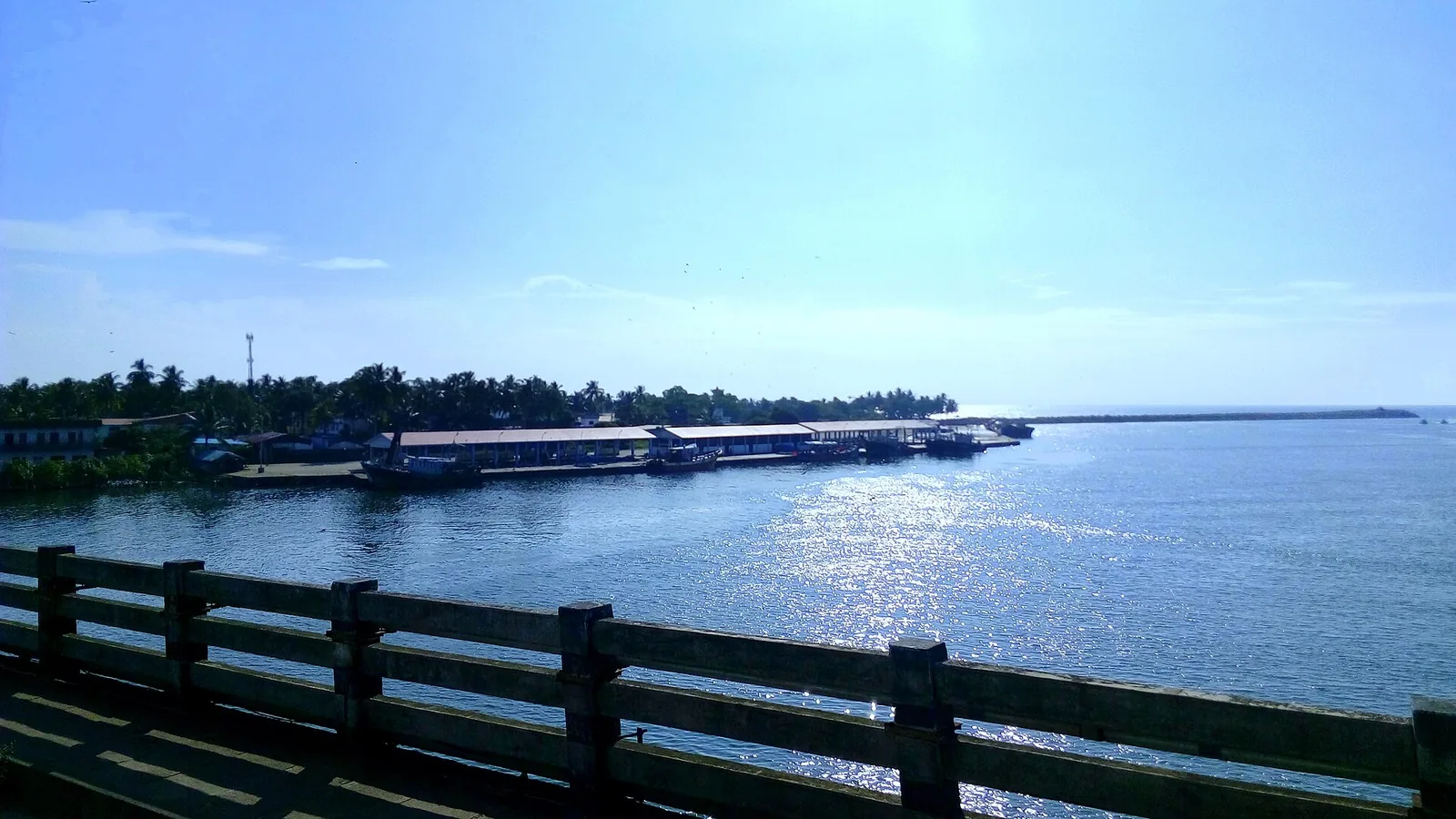
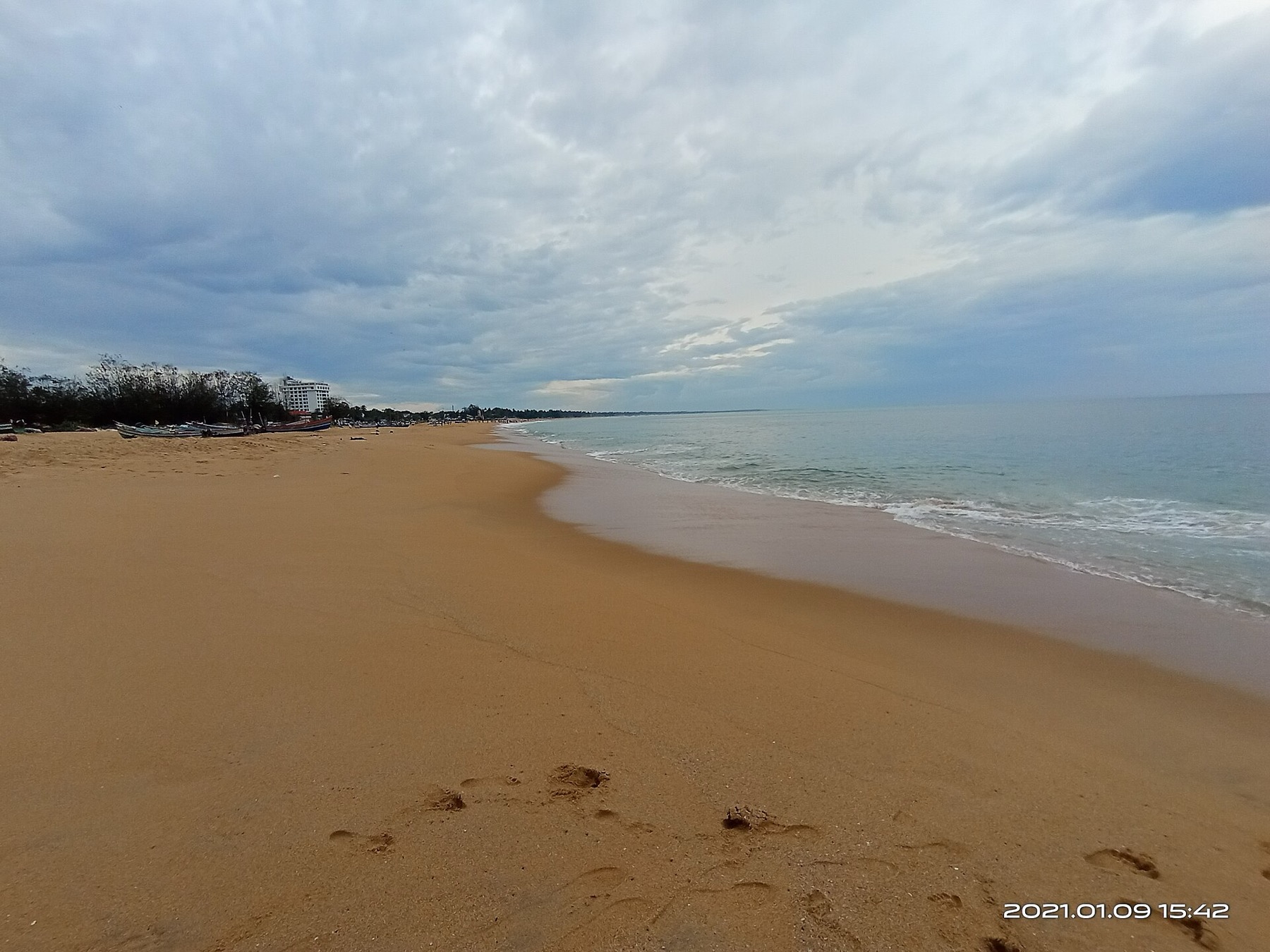
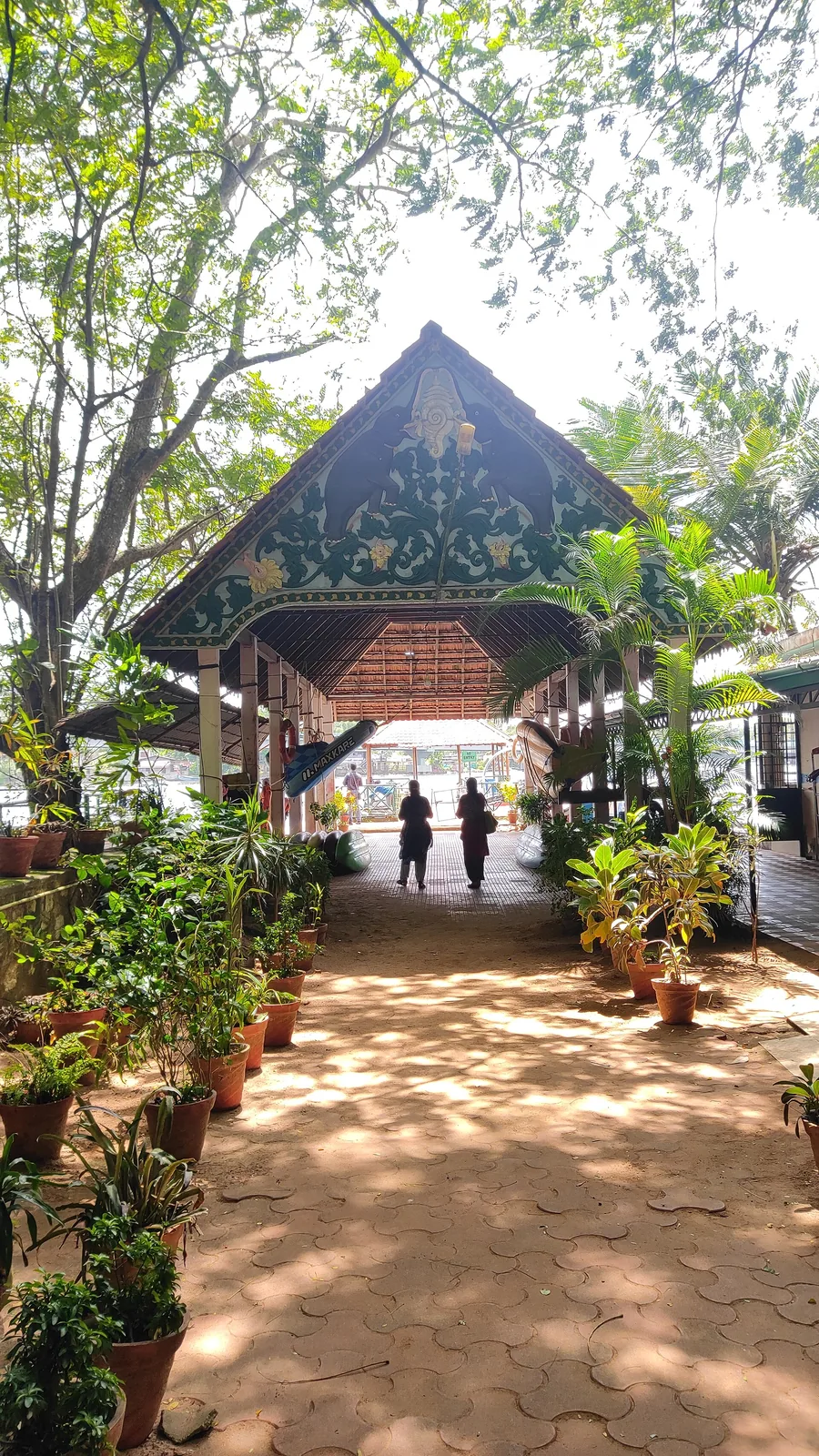
beachParavur Pozhikkara

The estuary and beach at Paravur south-east of Kollam, where the Paravur backwaters meet the sea across a sandbar — a quiet spot known for its regulator bridge, the TS Canal and calm backwater-and-sea scenery.
Roampedia is commission-free — own or know a stay, eatery, guide or shop near Thangassery Lighthouse? List it and it appears here once verified.

Add a nearby business
Before you go

Thangassery Lighthouse — at a glance

TimingsOpen to visitors for climbing during limited hours, typically in the afternoon into early evening (often broadly around mid-afternoon to sunset), and commonly closed one day a week — frequently Mondays (indicative — confirm locally, as lighthouse hours are set by the authorities and change seasonally). The cape, fort ruins and seafront around the tower can be visited more freely.
Best timeOctober to March is the most comfortable window, with clearer skies and pleasant sea breeze; late afternoon to sunset is the best time of day for light, views and photographs. The monsoon (roughly June to September) brings spectacular surf against the breakwater but heavy rain and a slippery, exposed cape (indicative — confirm locally).

Entry: A small ticket to climb the lighthouse (a nominal per-person charge), usually with an additional camera fee to carry a still or video camera up the tower. Wandering the surrounding cape, fort ruins, cemeteries and seafront is generally free (indicative amounts — confirm at the gate).

Dress code: No formal dress code for the lighthouse or cape. Wear light, breathable clothing and comfortable non-slip shoes for the spiral climb; a hat, sunglasses and sunscreen help on the exposed, breezy seafront. Dress modestly if you also step into the nearby churches.

Festivals: Thangassery has a strong Latin Catholic character, and the local churches (such as the area’s parish and cathedral churches in Kollam) observe Christian feast days and parish festivals through the year; the lighthouse itself is not a religious site and has no festival of its own (indicative — confirm dates locally).

Photography: Hugely photogenic — the striped tower against sea and sky, sunset over the Arabian Sea, and the gallery-balcony panorama are the highlights. Note that carrying a camera up the lighthouse usually incurs an extra fee, and photography rules inside the tower can vary, so check at the ticket point (indicative — confirm locally).

Getting here

How to reach Thangassery Lighthouse

  • ✈︎ By air The nearest major airport is Trivandrum International Airport (Thiruvananthapuram), roughly 65 to 75 kilometres to the south, from where taxis and trains connect to Kollam (indicative distance — confirm locally); Cochin International Airport is a further option to the north.
  • 🚆︎ By train Kollam Junction is the nearest major railway station, only a few kilometres from Thangassery and well connected across Kerala and beyond; take an autorickshaw or taxi from the station to the lighthouse (indicative — confirm locally).
  • 🚗︎ By road Thangassery lies on the coast just west of Kollam town, off the main road network linking Kollam to Thiruvananthapuram and Alappuzha; drive or take a taxi to the lighthouse and fort area at Thangassery, Kollam (indicative — confirm locally).
  • 🚌︎ By bus Reach Kollam by KSRTC or private bus to the main Kollam bus stand, then take a local bus towards the Thangassery/port area or an autorickshaw for the final few kilometres to the lighthouse (indicative — confirm locally).
Getting back

Work out your return before you settle in for the sunset. Public transport here thins out sharply in the evening, and Thangassery Lighthouse is easier to reach than to leave. We do not publish departure times: there is no official live feed we are permitted to republish, and a wrong time here would strand you. Check the operator directly on the day.

Ask at the bus stand for the time of the last service back, not the next one. If you miss it, an auto or app cab is the fallback — agree the fare before you get in.

Do

Things to do

  • Climb the lighthouse to the gallery balcony for a 360-degree panorama of the Arabian Sea, Kollam town, the breakwater and the fishing fleet.
  • Explore the ruins of St Thomas Fort — the fragmentary Portuguese-built, later Dutch and British, coastal fort beside the tower.
  • Wander the old Portuguese and Dutch cemeteries and read the weathered European tombstones, among the most atmospheric relics on the cape.
  • Walk out along the Thangassery breakwater and rocky seafront to watch the surf, the tetrapods and local fishermen at work.
  • Time your visit for sunset and watch the sun drop straight into the Arabian Sea from the shore or the tower balcony.
  • Visit the nearby colonial-era churches and soak up the Anglo-Indian, Latin Catholic character of the old European enclave.
  • Fold in Kollam’s wider draws — Ashtamudi Lake and the backwaters, the ancient port, and the region’s famous cashew country.
Getting around Thangassery Lighthouse

We have not assessed physical access at this place yet. Across India, step-free routes, handrails and accessible toilets are the exception rather than the rule, and pavements are often interrupted — if step-free access matters to you, contact the site or a local operator before committing to the trip.

Practical things near Thangassery Lighthouse
Bus stopsBus station 711 m · 9 min walkMapped Dec 2015DirectionsTaxi & auto standsvaddy taxi stand 1.1 km · 13 min walkMapped May 2021DirectionsPharmacyPharmacy 706 m · 8 min walkMapped Dec 2020DirectionsHospitalSamad IVF Hospital 772 m · 9 min walkMapped Jul 2020DirectionsClinicvarghese koshy clinic 1.6 km · 19 min walkMapped May 2021DirectionsBankState Bank of India 602 m · 7 min walkMapped Sept 2024DirectionsWater & snacksRajus supermarket 1.2 km · 15 min walkMapped May 2021DirectionsGroceries & bakeryBakery 553 m · 7 min walkMapped Aug 2026DirectionsPost officeciivil lines post office 1.7 km · 20 min walkMapped May 2021DirectionsSomewhere to prayInfantjesuschurch Place of worship1.3 km · 15 min walkMapped May 2022DirectionsPark or gardenThangassery Groyne Park1.7 km · 21 min walkMapped Jun 2026DirectionsPublic art & memorialsPiyatha Public artwork1.1 km · 13 min walkMapped May 2020Directions
What the cash actually costs
  • Withdrawing from a bank that is not your own is free for a set number of times a month, then costs up to ₹23 plus GST — about ₹27 a withdrawal. This is not one of the RBI’s six metro centres, so the allowance here is the higher one: at least five free other-bank withdrawals a month, and at least five at your own bank.
  • That free allowance belongs to Indian bank accounts. On a card issued abroad your own bank’s international withdrawal and exchange charges apply instead. If the machine offers to bill you in your home currency, choose rupees — the conversion rate on that offer is set by the machine, not by your bank.
  • Given a choice, use an ATM inside or attached to a branch: it sits in view of staff and cameras, and there is someone to ask if the machine keeps your card. A machine standing alone on a tourist street is the one to be wary of. Banks are listed here alongside the ATMs, but the map data does not record which ATMs sit inside a branch — check when you get there.

Charge cap and free-transaction limits: Reserve Bank of India, in force since 1 May 2025.

Mapped within about 1.2 km of Thangassery Lighthouse, with real walking routes rather than straight-line distances. Community-mapped data: opening hours are shown only where they are recorded, and this is not a complete list — something unmapped may well be closer. Please confirm on the ground.

If you need help at Thangassery Lighthouse
112All emergencies (police · fire · medical)The single number to call in any emergency (ERSS).

Emergency numbers are verified against official government and state tourism sources. 112 works anywhere in India.

Nearby

What’s near Thangassery Lighthouse

templeAnandavalleeswaram Temple 1.6 km · 20 min walk · straight line
heritagePort of Kollam 1.9 km · 24 min walk · straight line
activityAsramam Adventure Park 2.8 km · ~7 min by auto · straight line
beachKollam Beach 2.9 km · 4 min drive
heritageBritish Residency, Asramam 3.0 km · ~7 min by auto · straight line
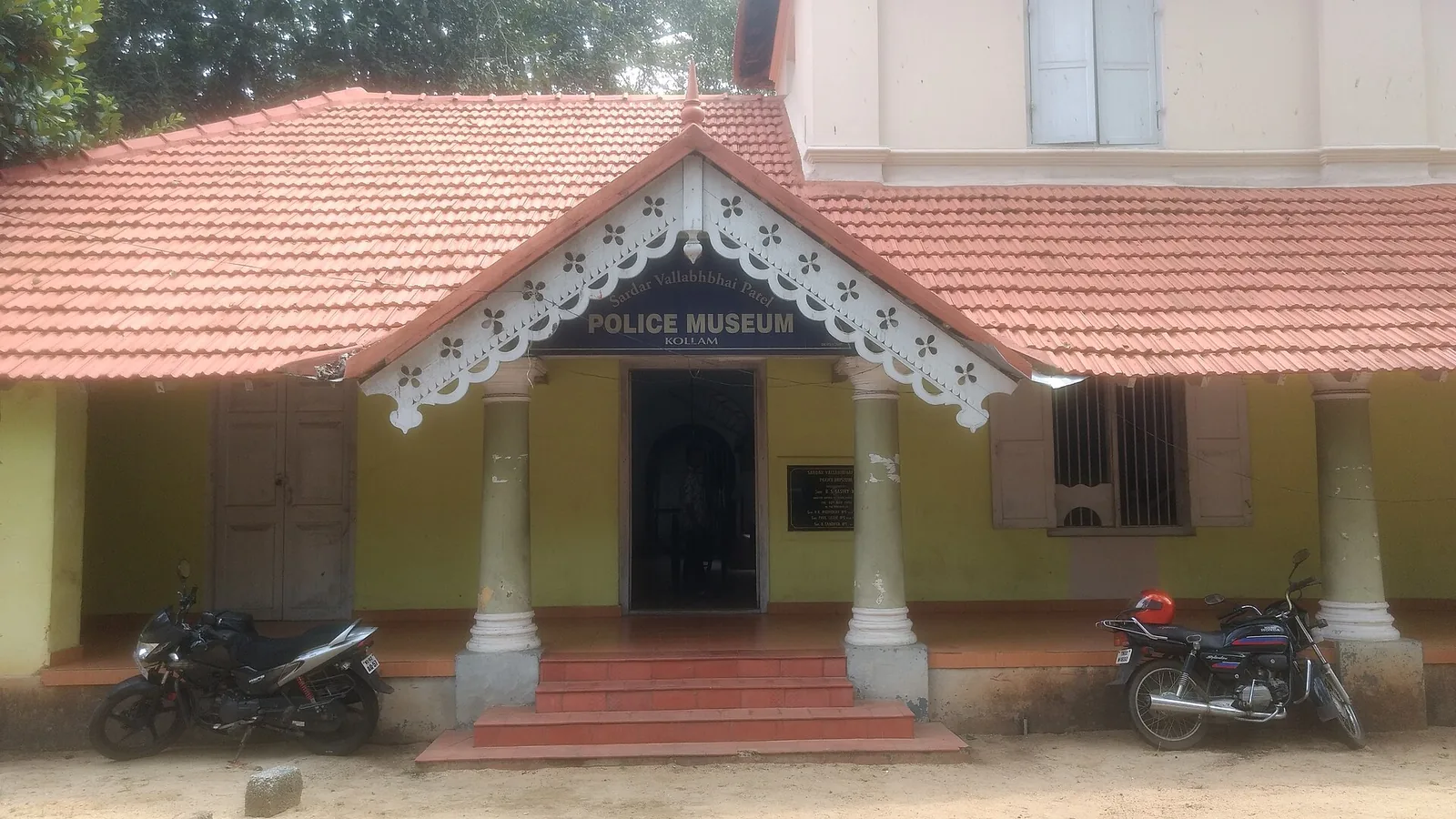
museumSardar Vallabhbhai Patel Police Museum 3.1 km · ~8 min by auto · straight line
heritageThevally Palace 3.4 km · 5 min drive
backwaterNeendakara 8.4 km · 12 min drive
viewpointAshtamudi backwater viewpoints 9.9 km · ~16 min by cab · straight line
templeKottankulangara Devi Temple 11.5 km · ~19 min by cab · straight line
backwaterAshtamudi Lake 15.7 km · 20 min drive

All 9 places to visit in Kollam town →

Walking and driving times are real routed distances, except the few marked “straight line”, which are direct-line estimates and will read short. Fare figures are estimates from Kerala’s notified auto/taxi tariff and exclude waiting and night charges. Routing: © openrouteservice.org by HeiGIT | Map data © OpenStreetMap contributors

Nearby toilets, pharmacies, ATMs, seating and vets are community-mapped and may be incomplete or out of date. Map data © OpenStreetMap contributors | Walking times © openrouteservice.org by HeiGIT

On the map

Where Thangassery Lighthouse is

Good to know

Thangassery Lighthouse — frequently asked

Can you climb the Thangassery Lighthouse, and is it worth it?

Yes — the tower is open to visitors during limited hours and a tight internal spiral staircase leads up to a gallery balcony with sweeping views over the Arabian Sea, Kollam town and the breakwater. There is also a lift: the DGLL's own ledger records a 408 kg, five-person elevator installed on 3 December 2016, which most write-ups still do not mention. It is a working lighthouse, so the lift may or may not be in service on the day, and it is worth asking at the ticket counter rather than assuming. Opening times are limited and can change, so confirm locally before you go (indicative — confirm locally).

How tall is the lighthouse and how old is it?

35 metres. That is the tower height recorded in the DGLL's Master Ledger for the Cochin district, which also gives 43 metres base-to-vane and 38 metres to the light beam. The widely printed 41 metres and 144 feet are versions of those upper figures, not of the tower, and it is not Kerala's tallest light — Puthuvype at Vypin is 46 metres. It is a British-era structure put into service in 1902, replacing an earlier simple light on the same cape, and its optic is a revolving second-order lens by Chance Brothers with a range of 26 nautical miles.

What else is there to see at Thangassery besides the lighthouse?

Within a short walk you can see the ruins of St Thomas Fort (Portuguese, later Dutch and British), the old Portuguese and Dutch cemeteries with their European tombstones, eighteenth-century colonial-era churches, the Thangassery breakwater and rocky seafront, and the setting of the ancient port of Quilon. It is best treated as a heritage cape to wander, not just a single tower.

Is there an entry fee?

Wandering the cape, fort ruins and seafront is generally free. Climbing the lighthouse itself carries a small ticket, and there is typically an additional charge to carry a still or video camera up the tower (indicative amounts — confirm at the gate, as fees change).

When is the best time to visit?

Late afternoon into sunset is ideal — the light is beautiful on the striped tower, the sea breeze is pleasant, and you can watch the sun drop into the Arabian Sea. Season-wise the drier, cooler months from roughly October to March are most comfortable; the monsoon (broadly June to September) brings dramatic surf but heavy rain and a rougher, wetter cape (indicative — confirm locally).

How do I get to Thangassery from Kollam town?

Thangassery is a coastal suburb of Kollam, only a few kilometres from the town centre and Kollam Junction railway station. Autorickshaws and taxis reach it easily; some local buses run towards the Thangassery/port area, after which the lighthouse and fort are a short walk. It is an easy add-on to any Kollam itinerary.

When is the best time to visit Thangassery Lighthouse?

Late afternoon is best for coast light and cooler weather; avoid rough-sea or storm-warning periods.

What are the entry fee and timings at Thangassery Lighthouse?

Entry: A small ticket to climb the lighthouse (a nominal per-person charge), usually with an additional camera fee to carry a still or video camera up the tower. Wandering the surrounding cape, fort ruins, cemeteries and seafront is generally free (indicative amounts — confirm at the gate).. Timings: Open to visitors for climbing during limited hours, typically in the afternoon into early evening (often broadly around mid-afternoon to sunset), and commonly closed one day a week — frequently Mondays (indicative — confirm locally, as lighthouse hours are set by the authorities and change seasonally). The cape, fort ruins and seafront around the tower can be visited more freely.. Fees and timings are indicative — confirm on site before you travel.

How do I reach Thangassery Lighthouse?

Base in Kollam town or an Ashtamudi lake stay and visit by auto/taxi. Check current lighthouse entry/timing before planning around the climb or viewpoint. Combine with Kollam Beach and Thangassery harbour/coastal heritage stops in one short loop.

How much time do I need for Thangassery Lighthouse?

45 minutes to 2 hours; half day with Kollam Beach and Ashtamudi.

What else is near Thangassery Lighthouse?

Nearby you can pair Anandavalleeswaram Temple (1.6 km), Port of Kollam (1.9 km), Asramam Adventure Park (2.8 km), Kollam Beach (2.9 km).

What should I know before visiting Thangassery Lighthouse?

Follow lighthouse and coastal safety barriers. Do not enter rough-sea edges or harbour work zones. Take care on stairs and exposed viewing areas.

Read before you go

Thangassery Lighthouse guides, stories & itineraries

Stories & history of Thangassery Lighthouse

Written about Thangassery Lighthouse itself — its history, its legends and the arguments about them.
Around Kollam town

Thangassery Lighthouse sits in Kollam town, so these cover the streets, buildings and surroundings around it.

Kerala-wide guides & itineraries

Route-level itineraries and practical guides for the rest of Kerala.

See all 129 Kollam guides & stories →

Image credits
  • Thangassery Lighthouse:ANOOP R · CC BY-SA 4.0