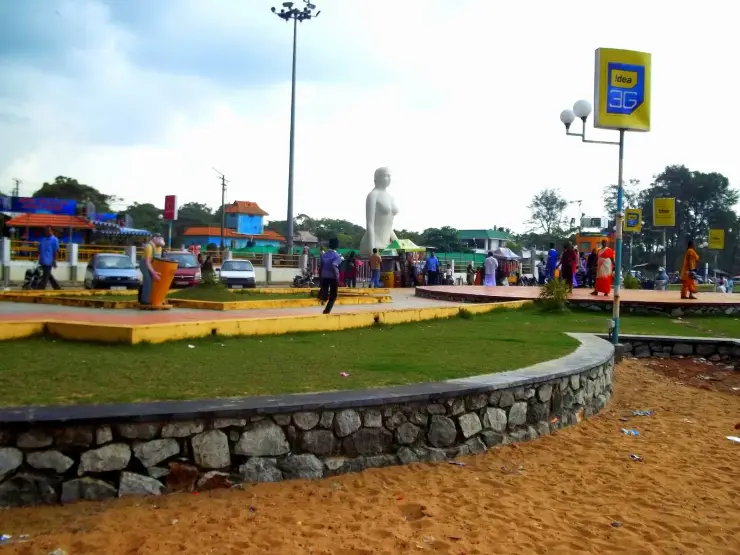
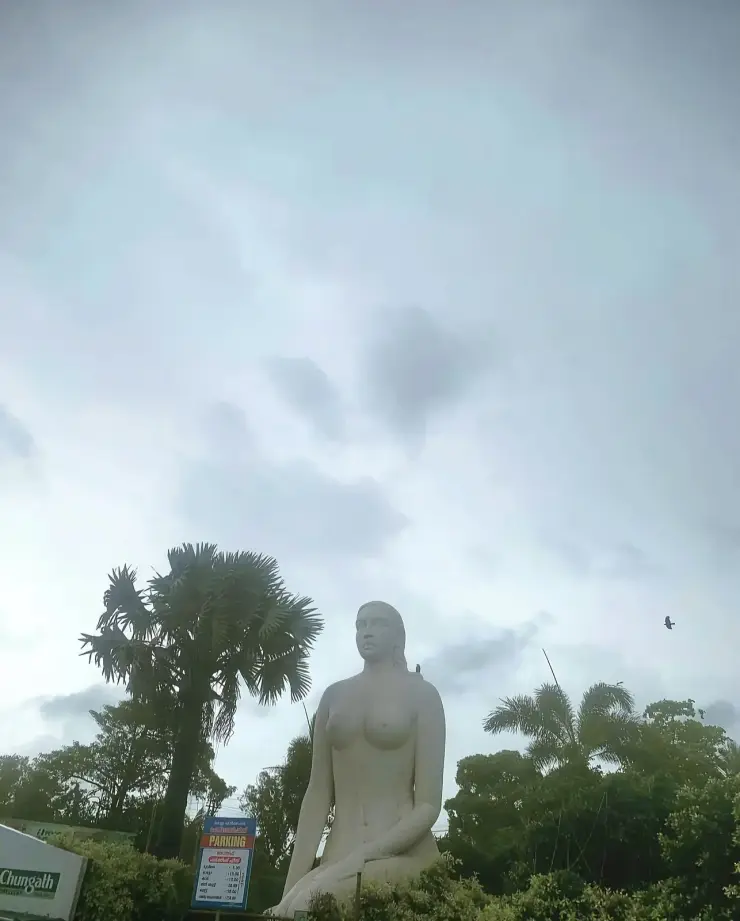
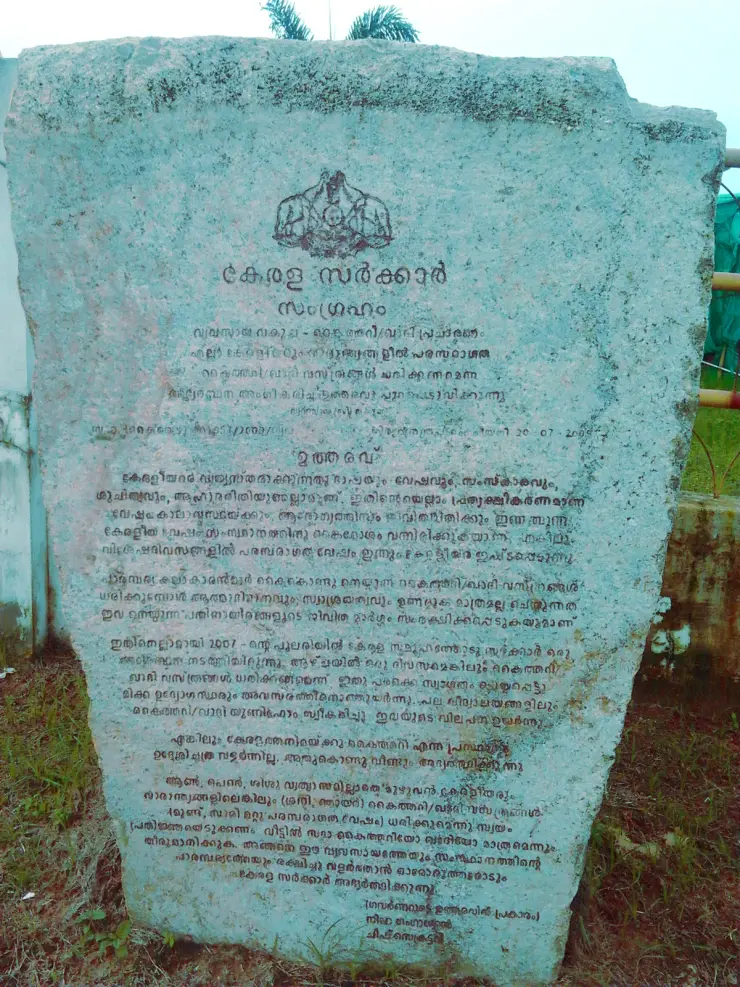
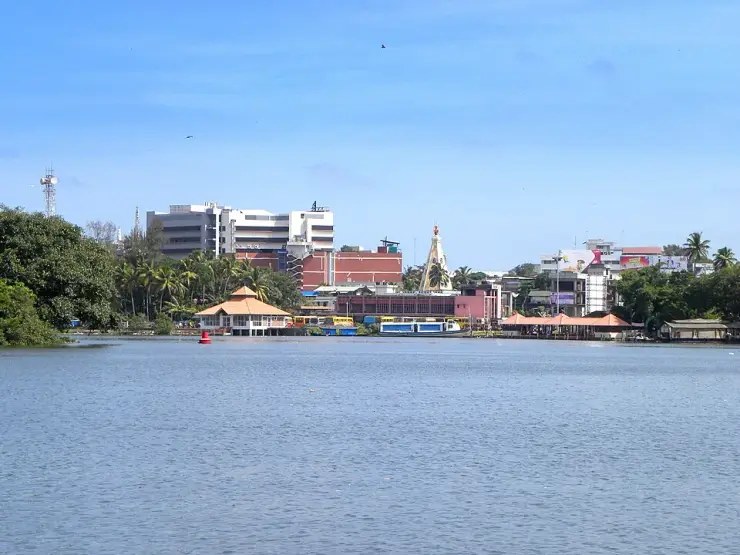
Kollam is a working city of about 350,000 people wedged onto a strip between Ashtamudi Lake and the Arabian Sea, and it is the only town in Kerala that gave the state its calendar. Kollavarsham — the Kollam era — is conventionally counted from AD 825 and is still the reckoning by which temples publish festival dates and by which Malayalis give their birth stars. The town is also where India shells its cashew: something near six hundred processing factories in the district, a workforce of roughly three lakh that is about ninety-five per cent women, and the head offices of both the national export council and the state corporation standing a short walk apart at Mundakkal. Between the two sits Chinnakada — a roundabout, a white clock tower, five city roads and a highway — which is where the town actually happens.
Start at Chinnakada, because everything in Kollam is described by its distance from it. It is a roundabout where five city roads and a national highway meet, with a white-and-gold clock tower standing on the island in the middle of it — a plain square shaft with a clock face, an arched opening at the base and a little pillared belvedere on top, dedicated to the memory of the freedom worker K. Parameswara Pillai. Around it are shopfronts, a Mathrubhumi board, textile and jewellery chains, three private bus stands, the municipal building, the head post office, the taluk hospital and the LIC building. It is not picturesque and it does not try to be. It is the commercial centre of a city that has been a commercial centre for twelve hundred years.
The junction was congested enough that the Kollam Municipal Corporation built an underpass beside the tower, designed by NATPAC under the Kerala Sustainable Urban Development Project with Asian Development Bank support and opened at the end of May 2015. The headroom over the underpass was raised from five metres to 5.5 metres during design specifically so that modern container lorries could pass — a small detail that tells you what this junction is for. The roads that meet here run to Thiruvananthapuram, Alappuzha, Sengottai, Asramam, the beach, downtown and the city bus stand.
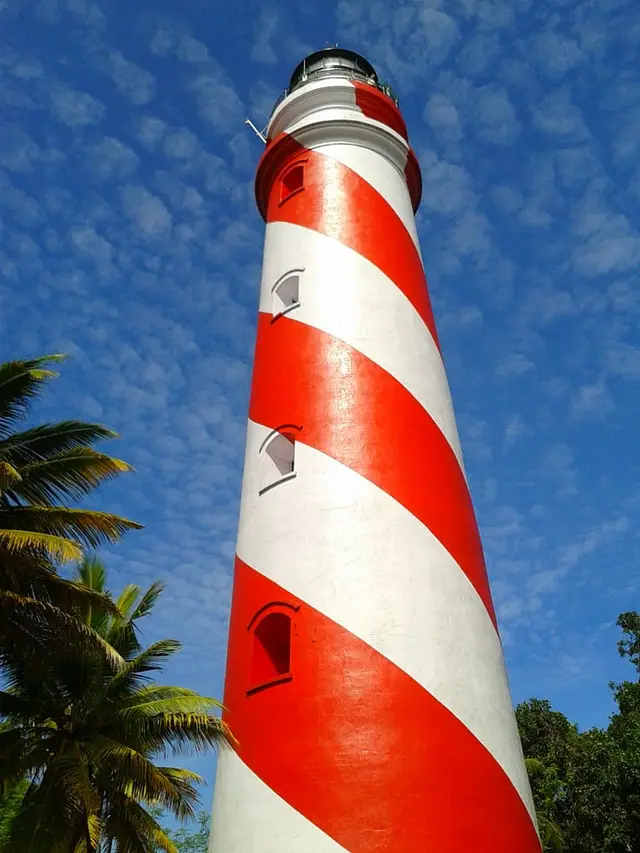
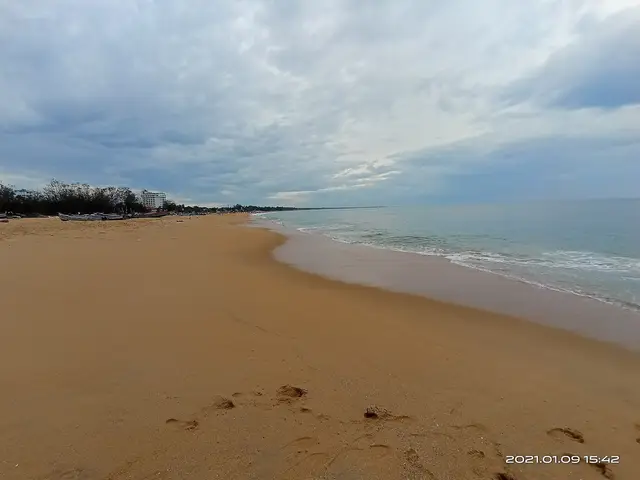
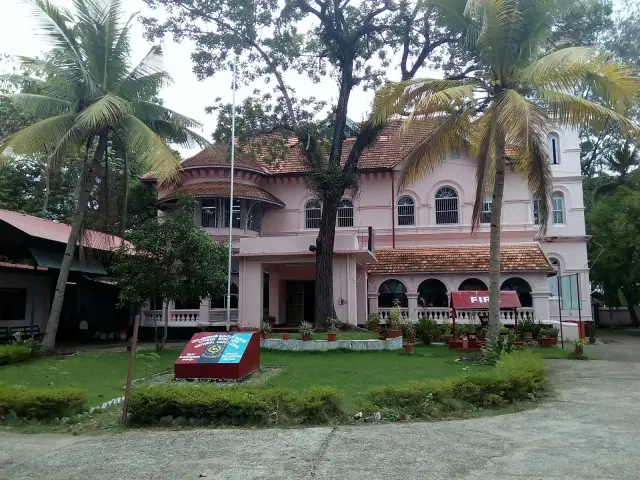
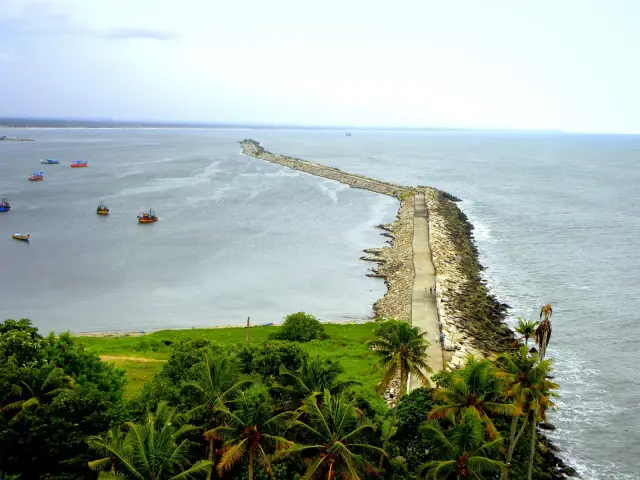
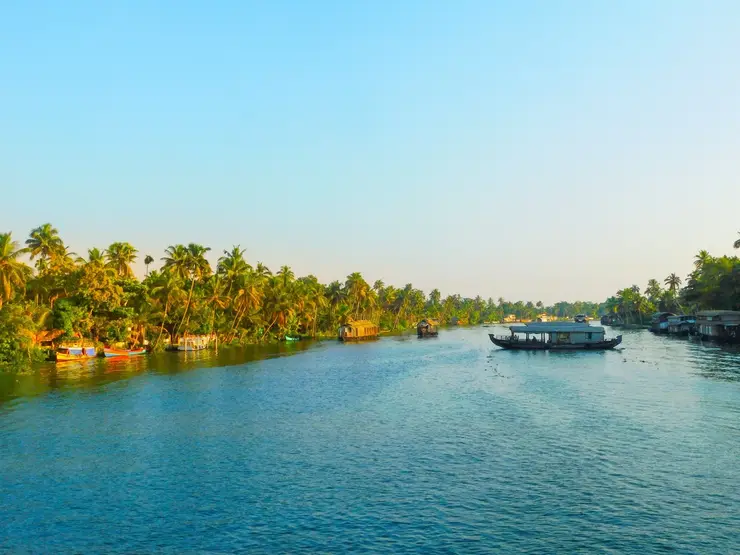
The town’s shape is easy to hold in your head. The sea is on the west, Ashtamudi on the east and north, and the built city occupies the ground between them — which is why Kollam feels narrow and why every arrival is either along the coast or across water. Kollam Junction station sits about 800 metres east of Chinnakada and is one of the busiest on the Thiruvananthapuram–Ernakulam line. Asramam, the big open green with the Residency and the parks, is a couple of kilometres north-west. Thangassery, the old European cape with the striped lighthouse, is about three and a half kilometres west. All three have their own records here; the town is the thing that joins them.
The industry you cannot see from the road is the one the town is known for. Kollam processes cashew — not grows it — and it does so at a scale that has earned the district the label of cashew capital, used by Kerala’s own government and by the Union government, which has designated the district a cashew industrial centre. Estimates put around six hundred processing factories in Kollam district. The Kerala State Cashew Development Corporation, formed in 1969 to guarantee workers days of work and a wage, runs thirty factories statewide of which twenty-four are in Kollam, from a headquarters at Mundakkal called Cashew House. CAPEX — the Kerala State Cashew Workers Apex Industrial Co-operative Society — runs ten, nine of them here. And the Cashew Export Promotion Council of India, set up by the central government in 1955, works from Cashew Bhavan at Mundakkal West, a glass-fronted block with a laboratory and technical division behind the gate.
The workforce is the part of this story that deserves the space. Something like three lakh people work in the cashew sector in Kollam district — around a tenth of the district’s whole population — and roughly ninety-five per cent of them are women. The work is manual: raw nuts, the tottandi, are roasted and then shelled, peeled, graded and packed largely by hand, and the reason that survives against mechanisation is quality. Machine-shelled kernels break more and grade lower; Kerala’s hand-processed kernel commands a better price, which is the whole economic argument for a labour-intensive industry in a high-wage state. It is also the reason the industry is so exposed, because the wage is the cost.
That exposure came due in 2015–16. Kerala grows far less cashew than it once did — rubber took the land, clearing plantations got expensive, and towns spread — so the raw nut comes from Idukki, Kannur, Wayanad, Kasaragod and Palakkad, from Goa, and above all from Ivory Coast, Ghana, Benin, Nigeria, Tanzania and Mozambique. When African countries began shelling their own nuts, and Vietnam and Brazil took the mechanised trade, the supply into Kollam thinned. Government factories closed for months. Private factories closed too, and the two sides gave flatly opposite reasons: the unions said owners were manufacturing a crisis while opening mechanised plants in Andhra Pradesh, Karnataka and Tamil Nadu where wages are lower, and the owners said the raised state minimum wage was what made the business unviable. Both are on the record and we print both. State intervention reopened the public factories from May 2016, and all the corporation’s units were working again by September; then on 8 November 2016 the withdrawal of the 500- and 1,000-rupee notes made it hard to pay the wages at all. A public–private Kerala Cashew Board has since been decided on.
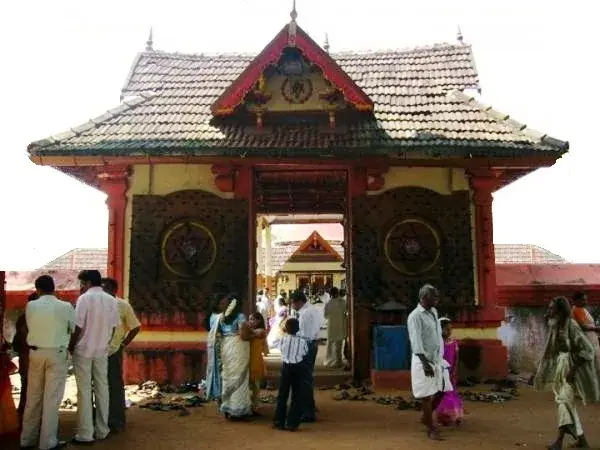
The town’s own festival is Kollam Pooram, and it is bigger than most visitors expect. It falls on the day after Vishu, in the Malayalam month of Medam — 15 April in most years, occasionally the 16th — and closes the ten-day Vishu Maholsavam of the Asramam Sree Krishna Swamy Temple. Processions from temples across the city converge on Asramam Maidan from nine in the morning; at noon the elephants are bathed and fed in the ana neerattu and anayoottu; and towards evening thirty elephants form up in two facing lines of fifteen, one ranged for the Thamarakkulam Sri Mahaganapathy temple and one for Puthiyakavu Bhagavathy, for the kudamattom — the exchange of tiered ceremonial parasols — to panchari melam, ending with the lowering of the flag and fireworks. The parasols and the effigies are made in the weeks beforehand by teams of local volunteers, the work carried on inside particular families across generations.
And one date in this town is remembered by the town’s own calendar rather than by the Gregorian one. On 2 September 1938 — 17 Chingam 1114 in the Kollam era — a procession walked from Polayathode to Chinnakada and gathered on the Peeranki Maidan, the old artillery parade ground in the Kollam cantonment, to hear speeches in the Travancore agitation. Kumpalathu Sanku Pillai and C. Keshavan led it; M. G. Koshi, P. G. Varghese and K. Sukumaran of Kerala Kaumudi spoke. Police fired on the crowd while attempting arrests. About six people were killed and only four were ever identified — Asramam Lakshmanan, Kollur Veelamoithen Kunju, Ayathil Balakrishna Pillai and Kurippuzha Kochukunju — and the remaining bodies were not released to their families. Kerala calls it the Chingam 17 revolt. A town that gave the state a calendar ended up being remembered by it.
As a place to spend time, Kollam is a base rather than a sight, and it is an unusually good one. You can be on the lake in ten minutes, at the lighthouse in ten and on the beach in five; the railway station puts Varkala, Thiruvananthapuram and Alappuzha within an easy morning; and the town itself gives you an hour or two of clock tower, market streets, the Chamakkada market beside Chinnakada, and the seafront at Kochupilamoodu. What it does not give you is a heritage quarter arranged for visitors. The history here is documentary rather than architectural — it is in a calendar, in five copper plates kept two districts away, and in the smell of roasting cashew off a factory wall.
Legend & myth
The myth of Kollam is not a story about a god. It is a calendar, and the argument about where it came from is one of the longest-running disagreements in Kerala’s own historiography. Kollavarsham — the Kollam era, the Malayalam era — is conventionally counted from AD 825, and it is not ceremonial. Kerala uses it now: temple festival calendars, ancestral rites, agricultural reckoning, birth stars. It is a sidereal solar calendar with twelve months named for the zodiacal signs — Chingam, Kanni, Thulam, Vrischikam, Dhanu, Makaram, Kumbham, Meenam, Medam, Idavam, Mithunam, Karkidakam — each running from one sankranti, the sun’s entry into a sign, to the next, so months vary between about twenty-eight and thirty-two days depending on where the sun is. To convert roughly, add 825.
Even the epoch is not agreed to the day. Malayalam Wikipedia’s article on the calendar gives 25 August 825; its article on the town gives 15 August 825. Those are the same year and different days, we cannot reconcile them from the sources in front of us, and rather than average two dates nobody wrote we print both and say they disagree. What is not in doubt is the year, and what is genuinely documented is later: the earliest surviving record that actually uses the era is a decree of Sri Vallavan Goda, king of Venad, of about 973 CE — Kollam era 149.
Then the why, which is where the accounts multiply. One says the era is named for the founding of Kollam under a ruler given as Udayamarthanda Varma, who is said to have convened an assembly of scholars to settle the reckoning. A second, argued by the German scholar Hermann Gundert, holds that it commemorates the consecration of a new Shiva temple at the port, on the grounds that the origin is strictly local and religious rather than dynastic — and other writers accept a temple but move it, putting the shrine at Kandiyoor near Mavelikkara instead. A third says the era marks the transfer of the Venad capital to Kollam. A fourth is astronomical rather than local: that traders at Kollam harmonised their reckoning with the Saptarshi era, whose tenth cycle fell in 825, and that the new count is that adjustment. A fifth attaches it to Adi Shankara, who is held to have disappeared in 820, and makes the era a memorial. A sixth, from recent scholarship, ties it to the foundation of the Kollam merchant town by Maruvan Sapir Iso and the trading guilds around Anjuvannam. Our page for the port sets out a seventh and eighth — the two Christian founding traditions, and the version in which the era starts from a rebuilding after a fire — and we do not repeat those here.
What is established, then, is narrow and worth stating plainly: the era is counted from 825, it was in documented use by 973, and every explanation of why is tradition or inference. None rests on a charter. We are not going to pick, and we would gently discourage anyone else from doing so either.
The third-millennium claim is a separate thing and should not be folded in. The Malayalam calendar is sometimes described as divided into thousand-year cycles counted from 1176 BCE, which makes 825 the start of a third millennium rather than the start of anything. That is a statement about Parashurama and about cyclical reckoning, not a statement about this town, and we mention it only to keep it out of the founding argument.
There is also a disagreement about when the year begins, and it is not a small one for a calendar in daily use. Southern Kerala opens the year on the first of Chingam, which is Kerala’s new year and, since 1961, the state’s Farmers’ Day. For the north the sources in front of us do not agree: English Wikipedia’s calendar article presents Medam 1 — Vishu — as the traditional Malayali new year, Malayalam Wikipedia’s calendar article says northern Kerala begins the year in Medam while the south begins it in Chingam, and the older scholarly convention we have seen elsewhere puts the Malabar year-start in Kanni. Three answers, two of them from Wikipedia’s own two languages. We print the disagreement rather than resolving it, and we note that all three are consistent with the same underlying fact: this is a regional calendar that was never centrally administered, so it did not have to agree with itself.
The strangest thing in the whole record is the rival era, and it is a rival that names the same town for the opposite reason. After the Cholas took the port, a reckoning came into use called Kollam azhintha aandu — counted from 1097 CE, and meaning, in plain words, the year Kollam was destroyed. One town, two eras: one counting from the year it was made and one from the year it was unmade, and both named after it. That is a fact about how thoroughly this harbour dominated the region’s sense of time, and it is not a story anybody tells about Kollam.
The name itself has four competing derivations and no winner. One takes Kollam from koyilakam, a compound of kovilakam, a royal house, and illam, a home — the royal residence. One takes it from a Sanskrit word kolam meaning pepper, which is what this coast sold. One derives it from a Chinese word rendered koylan, a marketplace. One takes it from kolu, the royal presence or audience. Each is plausible, each is repeated in print, and none is demonstrated. There is a further complication worth naming rather than hiding: some traditions hold the era to be older than the town’s name, which would make the town named after the era rather than the other way round. We do not think that can be settled either.
Chinnakada has the same problem in miniature, and here Wikipedia hedges against itself in a single paragraph. One derivation makes Chinnakada a worn-down China-Kada, the China bazaar, on the strength of the Chinese coins and ceramics recovered near the port. The other says chinna kada is simply small market in Tamil, spoken by the large Tamil population of Kollam — and that reading is supported by the fact that the neighbouring quarter is Valiakada, big market in Malayalam, with Kadappakada, Payikkada, Pullikada and Chamakkada around them. A pair of markets called small and big is a more ordinary explanation than a lost Chinese quarter, and the coins prove Chinese trade without proving the etymology. Take the China bazaar, as Wikipedia itself says, with a pinch of salt.
One last thing this town says about itself, which is not history at all but is quoted everywhere here: കൊല്ലം കണ്ടവന് ഇല്ലം വേണ്ട — one who has seen Kollam wants no home. It is attached in the local telling to the town’s prosperity in the era of Velu Thampi Dalawa. It is a proverb, not evidence, and it is worth hearing on a street corner in Chinnakada, where nothing about the traffic suggests it.
And one refusal. You will read that Kollam traded with the Phoenicians and the Romans in the early centuries of the Common Era; Malayalam Wikipedia’s own article on the town still says something close to it. We have taken that apart at length on our Ashtamudi Lake page — Phoenicia as a maritime power was gone by the end of the fourth century BCE, no Phoenician or Roman source names Kollam, and no scholar we could trace places any of the Periplus ports here. A town with a documented thousand years does not need a fictional extra one, and we will not print it.
More about Kollam town
History
Kollam was the seat of Venad, and it was Venad’s importance rather than the town’s scenery that made the harbour matter. In the ninth century the country here lay under the Chera Perumals of Mahodayapuram, and the ruler at Kollam appears in the record as a chieftain under that overlordship — which is exactly the arrangement the town’s most famous document describes.
That document is the Tarisappalli copper plates, and it is worth being specific about what survives, because the plates themselves are the point. They were issued in about 849 CE, in the fifth regnal year of the Chera ruler Sthanu Ravi Kulasekhara, by Ayyan Adikal Thiruvadikal, chieftain of Venad, in the presence of the prince Vijayaraga, and they grant land, tenants, tax exemptions, trading rights and seventy-two aristocratic privileges to Maruvan Sapir Iso, who is described as the founder of the Kollam merchant town and the builder of the Tarisa church there. The grant is granular in a way that makes ninth-century Kollam suddenly visible: it hands over four families of Ilavar, one of Vannar washermen, one of Tachar carpenters, four of Vellalar, unnamed tenants and people for salt-making, and it names two merchant corporations, Anjuvannam and Manigramam, as tenants under karanmai tenure. Five plates survive, incomplete, split between the Malankara Orthodox church at Kottayam and the Mar Thoma church at Thiruvalla, and they carry text in Old Malayalam or Middle Tamil in the vattezhuthu script with Grantha characters. Until 2013 the surviving plates were generally read as two separate grants; M. R. Raghava Varier and Kesavan Veluthat have argued that they are one document whose plates had been ordered wrongly, which closes gaps that had puzzled earlier readers.
The witnesses are why this is one of the most quoted documents in Indian history. Twenty-six signatures have been identified — about eleven in Arabic in the Kufic hand, ten in Middle Persian in cursive Pahlavi and five in Judeo-Persian in square Hebrew script. Arabs, Persians and Jews were not calling at Kollam seasonally in the ninth century; they were resident, and resident with standing enough to witness a royal grant in their own languages. Our port page draws the same conclusion from the same plates; what this record adds is the physical fact of them — five sheets of copper, in two churches, two districts inland from the harbour they describe.
The travellers came afterwards and are unusually thick on the ground. The Persian merchant Sulaiman, writing about 851, reported Kollam as the Indian port the great Chinese ships called at. Marco Polo, in Kublai Khan’s service, reached the town he called Coilum in the 1270s or 1290s and wrote down its pepper, its indigo and its brazil-wood. Abu’l-Fida, a generation later, called it the southern port of the pepper country. Ibn Battuta, in the fourteenth century, named Kollam among the finest of the five Indian ports he saw across twenty-four years of travel. The detail of the Chinese trade — the sailing directions, the coins, the archaeology — belongs to our port record and is not repeated here.
One consequence of that traffic is easy to miss and is a genuine first. On 9 August 1329, by the bull Romanus Pontifex, Pope John XXII at Avignon erected Quilon as a diocese — the first Catholic diocese anywhere in the Indies — and on 21 August appointed the Dominican friar Jordanus Catalani as its first bishop. Jordanus was killed in about 1336 and the see then stood vacant until the Portuguese arrived in 1498; the modern diocese dates from its re-erection as a vicariate apostolic on 15 March 1853 and its elevation to a diocese on 1 September 1886. Its cathedral, the Infant Jesus, stands at Thangassery, which has its own record here. So the 1329 claim is true and the continuity is not, and both halves are worth carrying.
The modern town is an industrial one. Cashew processing arrived in the twentieth century — the Anglo-Indian Rod Victoria is credited locally as the industry’s originator — and the tree itself is a Portuguese import from Brazil, which is why the Malayalam kashumavu descends from the Brazilian acaju and the Portuguese caju. The institutions followed: the Cashew Export Promotion Council of India in 1955, the Kerala State Cashew Development Corporation in 1969, CAPEX after it, all headquartered here. Kollam city recorded 349,033 people at the 2011 census at about 5,400 to the square kilometre; in May 2015 the state decided to merge Thrikkadavoor panchayat into the corporation, taking its area to about 73.03 square kilometres.
Why visit
It is the only town in India whose name is a calendar still in daily use.
Chinnakada gives you the working heart of a twelve-hundred-year-old trading city in ten minutes on foot.
The cashew industry is visible if you know where to look — Cashew House and Cashew Bhavan at Mundakkal, and factory walls you can smell before you see.
Kollam Pooram on the day after Vishu puts thirty caparisoned elephants and the kudamattom on Asramam Maidan.
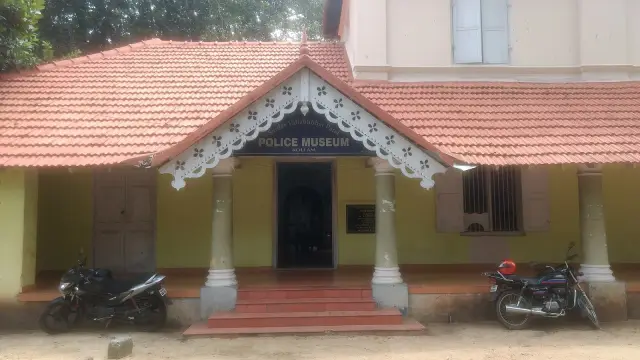
Lake, sea, lighthouse, palace, Residency and museum are all inside four kilometres of the same roundabout.
It is the least touristed of Kerala’s three backwater bases and the cheapest to sleep in.