What to expect
Highlights
- Temple visit at Aryankavu
- Kerala temple architecture and rituals
- Local food, shops and pilgrim services nearby
The Sastha temple on the old Kollam–Sengottai road and rail route into Tamil Nadu, where Ayyappa is worshipped married to Pushkaladevi rather than celibate — with a forest village, a railway pass and the Palaruvi road around it.
Check entry arrangements. Ask temple staff about visitor entry, dress requirements and access to the inner shrine before you travel, especially if you are visiting as a non-Hindu.
Dress respectfully and follow the institution’s admission and photography rules.
A Sastha temple in a forest village on the old road and rail route into Tamil Nadu, where Ayyappa is worshipped not as the celibate ascetic of Sabarimala but as a young god with a wife — and where his wedding is re-enacted every year by a community from another state.
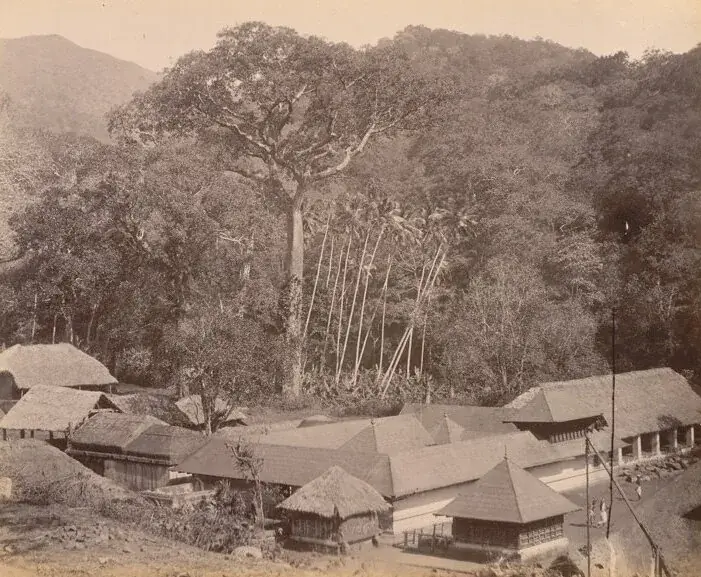
Aryankavu sits high on the Kollam–Sengottai road near the Tamil Nadu border, in forest country beyond Thenmala, and the shrine is the reason the village is known. It is counted among the most important Ayyappa temples in Kerala, and it is markedly different from the one everybody has heard of.
The difference is theological and immediately visible. At Sabarimala, Ayyappa is Naishtika Brahmachari — the eternal celibate. At Aryankavu he is depicted as a youthful deity seated on an elephant, accompanied by his consort Pushkaladevi and by Shiva. Same god, different aspect, and the entire character of the place follows from it.
The architecture reflects where it stands. This is a border shrine, and it blends Kerala and Tamil traditions rather than belonging cleanly to either — murals of Hindu deities inside, and an eighteen-step entrance echoing Sabarimala's. It sits about eleven metres below road level, which is why you look down into it rather than up at it. As for the name: the usual explanation offered locally is Aryan for Sastha and kavu for sacred grove. Kavu for sacred grove is solid Malayalam; the Aryan-for-Sastha half is stated flatly everywhere and cannot be sourced above blog level. Treat it as the local reading rather than a settled etymology.
The split you can stand in front of is the ritual one. During the festival, Kerala rites are followed inside and Tamil rites outside, and the daily puja practice follows Tamil rather than Kerala custom. Cross the threshold and the ritual grammar changes.
The Thiru Kalyanam is what to plan around if you can. It is the annual festival celebrating the divine marriage of Ayyappa and Pushkaladevi, and it is conducted following the traditions of the Sourashtra community — a community originally from Gujarat, long settled in the Tamil country, whose people regard Pushkaladevi as their own and come here to marry their goddess to this god each year. A Kerala shrine, a Tamil-Kerala architectural hybrid, and a Gujarati-origin community's marriage rite: this is a genuinely unusual convergence.
The village is also the natural base for Palaruvi waterfalls a few kilometres away, and the two are the obvious pairing on this side of the district. Come during the Sabarimala pilgrimage season and the whole route feels different — this is a pilgrim road as much as a tourist one, and the traffic reflects it.
One thing to correct before you plan anything around a train. Aryankavu is widely said to have its own station on the Kollam–Sengottai line. It has two, with nearly the same name, and neither is useful. Aryankavu (code AYV) is about 400 metres from the village at kilometre 79; New Aryankavu (AYVN) is at kilometre 75, three kilometres away, and is not in Aryankavu at all — it stands in Palaruvi, a separate village and electoral ward. At most a handful of trains call at either, some of them around midnight, and the aggregator sites conflate the two stations so thoroughly that they list the same train at the same minute at both. English Wikipedia's article on Aryankavu station prints New Aryankavu's coordinates, so a map link from it lands you 3.4 km away at the wrong station. Come by road.
And it is emptier than almost anywhere else in Kerala. Aryankavu grama panchayat covers 198.84 square kilometres and had 10,144 residents at the 2011 Census — about 51 people per square kilometre, against a state average near 860. Almost all of that area is forest, plantation and ghat.
There are in fact two Aryankavus in the records, and it is worth knowing which one you are being told about. The grama panchayat is the 198.84 square kilometres above. The revenue village of the same name is a different unit and a smaller one: 15,738.70 hectares, which is 157.39 square kilometres, with 8,432 residents at the same census — those figures come from the Kerala land revenue department's own village office page. Both are correct. They are simply not measuring the same thing.
The panchayat's reach is the part that surprises people. Aryankavu grama panchayat contains Achankovil — the Sastha temple about fifty kilometres away by road, deep in the forest, which Kerala Tourism's own page files under the address "Achankovil, Aryankavu Panchayat, Kollam District". Two of the shrines on the Sastha circuit share one panchayat and most of a day's driving between them. On the administrative unit, the taluk is Punalur, which was itself carved out of Pathanapuram, and you will see this village filed under either.
Everything at Aryankavu that looks like a border is older than the border. The line itself is seventy years old, to the day.
The Kerala–Tamil Nadu boundary here did not exist before 1 November 1956. Section 4 of the States Reorganisation Act, 1956 transferred Shencottah taluk out of Travancore–Cochin and into Madras State, where it was attached to Tirunelveli district. Read the statute's own wording and the surprise is in it: the taluk it moved was Shencottah taluk OF QUILON DISTRICT. Sengottai — today the archetypal Tamil town on the other side of the pass — was administratively part of Kollam district until the appointed day. Aryankavu was not a frontier village. It was a village in the middle of its own district, on an internal road.
The railway through the gap was built as an internal Travancore line. The Kollam–Sengottai metre-gauge line was the first railway in the kingdom of Travancore: surveyed from 1888, built from 1900, first goods train 1902, passenger service inaugurated in 1904 by Moolam Thirunal Rama Varma with a twenty-one-gun salute. (Sources disagree over whether that was 1 June or 1 July; we will say 1904 and stop.) Nothing about it was designed to cross a state line, because there was no state line to cross.
The tunnel makes the point unanswerable. The Aryankavu tunnel was begun in 1901 and finished in 1903 — fifty-three years before the border existed — and the boundary now sits 672 metres in from the Kerala portal, so roughly three-quarters of it is in Kerala and the rest in Tamil Nadu. The Travancore royal conch is carved on both portals, on both sides of an interstate boundary, because when they were cut both portals were Travancore's.
Two live errors fall out of that. First: the tunnel is routinely called the longest railway tunnel in Kerala, and it is not entirely in Kerala. Second: its length is not settled even within one encyclopedia. Wikipedia's article on the tunnel gives 891.70 m; Wikipedia's own list of rail tunnels in Kerala, and its article on the line, give 680 m — a 212-metre discrepancy. The 680 is suspiciously close to the 672 m Kerala portion, which suggests somebody mistook the Kerala side for the whole. We publish the disagreement rather than choosing.
So the right description of this place is not where two states meet. It is one place with a line drawn through it in 1956 — which is why the seams are still visible in the two-language station boards, in the Kerala rites inside and the Tamil rites outside, and in the fact that most of the pilgrims here come up the ghat from Madurai.
A second thing we assert and should not. Our pages have called Aryankavu one of the five most important Ayyappa temples in Kerala, the Pancha Sastha. The trouble is that no two lists of the five agree. The Travancore Devaswom Board's own pilgrimage circuit runs Pandalam, Kulathupuzha, Aryankavu, Achankovil and Erumeli. Devotional accounts give Kulathupuzha, Aryankavu, Achankovil, Sabarimala and Kanthamala. Other lists differ again. Only three names appear in every version — Kulathupuzha, Aryankavu and Achankovil — and Aryankavu is in all of them. That is the honest formulation, and it is a stronger claim than a contested number: whichever five you are told, this one is always among them.
The origin tradition here credits Parashurama, the axe-wielding sage who in Kerala's foundational legend raised the whole coast out of the sea, with consecrating it. The shrine is described as dating back more than a thousand years. Both are tradition rather than documented record, and the Parashurama attribution in particular is one that Kerala applies to a great many of its oldest temples — it is a statement about status and antiquity rather than a datable event.
The Pushkaladevi story is the one that makes this place distinctive, and it is worth stating carefully. In the tradition told here, Dharmasastha married Pushkala at Aryankavu, and the annual Thiru Kalyanam commemorates that union. The connection to the Sourashtra community is what makes it live: they hold Pushkaladevi as theirs, and the wedding is celebrated according to their customs.
This creates a real tension with the Sabarimala understanding that is worth naming rather than smoothing over. Ayyappa there is the eternal celibate, and his celibacy is central to the whole practice around that shrine. Here he has a consort and an annual wedding. These are not contradictions to be resolved but different aspects of the same deity worshipped at different places — which is entirely normal in Hindu practice and routinely confuses visitors who have only encountered one of them.
One caution: because Aryankavu is on the Sabarimala route and shares the eighteen steps, it is sometimes described as a subsidiary of Sabarimala or as a stop on that pilgrimage. It is its own shrine with its own deity-aspect and its own festival, and it long predates its role as a waypoint.
The Aryankavu Sastha shrine stands in a hill village on the Kollam–Sengottai route in eastern Kollam district, close to the Tamil Nadu border, and is counted among the most important Ayyappa temples in Kerala.
Kavu is sacred grove, which is solid Malayalam. The first half is the local reading rather than a settled etymology: usually given as Aryan for Sastha, and sometimes as a derivation from the deity's own title here, Thiru Aryan, which would make the village named after the god rather than the other way round. Neither is sourced above encyclopaedia and blog level, and we assert neither. Tradition credits the consecration to Parashurama and dates the shrine to over a thousand years, both as tradition rather than documented record.
The deity is depicted as a youthful Ayyappa seated on an elephant with his consort Pushkaladevi and with Shiva — an aspect distinct from the celibate Ayyappa of Sabarimala.
The architecture blends Kerala and Tamil traditions, reflecting its position on the border route, and includes murals and an eighteen-step entrance echoing Sabarimala.
The annual Thiru Kalyanam festival commemorates the marriage of Dharmasastha and Pushkala and is celebrated following the customs of the Sourashtra community, who regard Pushkaladevi as their own. Secondary sources describe it as a ten- or eleven-day festival built around the tenth of the Malayalam month of Dhanu, which falls in December, with Sourashtra rites from Madurai and a ceremonial wedding in the Kalyana Mandapam. We give that date as reported rather than as established: unlike the married form of the deity, which is stated on the Kerala government's own Sabarimala domain, the day of Dhanu appears only in devotional and secondary listings.
It is managed by the Travancore Devaswom Board, and that can now be said from the Board's own domain rather than from an aggregator: a 2017 e-tender published by the Board is headed for the kuthaka at Kulathuppuzha, Achankovil and Aryankavu. It is worth stating because the aggregator listings for it are unreliable — one of the larger ones files it under Pathanamthitta district, which is wrong, and a mapping service returns a different Dharmasastha temple of the same name at Kottarakkara, forty-eight kilometres west.
It is on every version of the Sastha circuit anyone publishes — no two lists of the five agree, and Aryankavu is in all of them — and it shows you an aspect of the god that Sabarimala does not: married rather than celibate.
The Thiru Kalyanam wedding festival, conducted by the Sourashtra community, is one of the more unusual convergences of communities and traditions at any shrine in the state.
The architecture is a genuine Kerala–Tamil hybrid rather than one tradition with borrowings, which is what a border shrine should look like and rarely does so clearly.
It is the natural base for Palaruvi waterfalls a few kilometres away, and the pairing makes a coherent day on this side of the district.
It costs nothing, sits in forest country beyond Thenmala, and is quiet outside the pilgrimage season.
Road km to Kollam; ghat roads and traffic vary — allow extra.
Morning or early evening is usually best; festival days can be powerful but crowded.
Live forecast loads in your browser.
Sun and moon are calculated for this location and shown in IST. Photography windows are the hour around sunrise and sunset; the sunset bearing is degrees clockwise from true north. Moon phase is accurate to about half a day.
These are official or public-sector eco offerings that match this place, town or forest destination. Confirm availability, permits, tariffs and reporting times with the official operator before travel.

Billed as India’s first planned ecotourism destination — the operator’s own phrase, not an award — with adventure activities, nature trails, an elevated walkway and riverine paths.
Official source →Swiss-cottage style tented camping near the Thenmala forest setting, listed by Kerala Tourism’s ecotourism programme page.
Official source →Tented stay along the Kallada River near Parappar Dam, positioned as a forest-edge camping option.
Official source →Simple official tourist-home accommodation at Thenmala for travellers using the ecotourism zones.
Official source →Dormitory accommodation at Thenmala, useful for budget groups and activity-focused travellers.
Official source →
Guided trekking and boating access into the Shendurney forest landscape from the Thenmala Deep Woods zone.
Official source →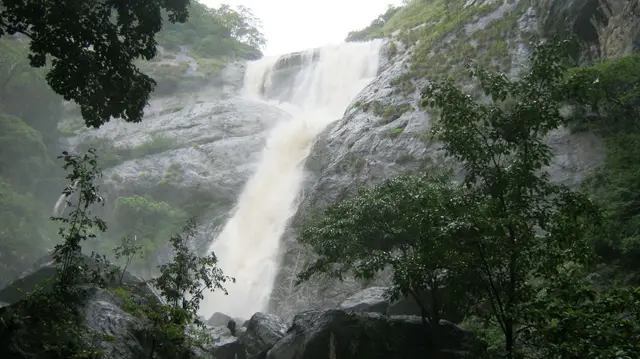
Forest waterfall visit near Aryankavu/Thenmala, listed by Kerala Tourism among ecotourism programmes.
Official source →Birding-focused forest landscape listed by Kerala Tourism as an ecotourism destination and programme.
Official source →Verified hotels, homestays, restaurants, experiences, sights, shops and rentals around Aryankavu — commission-free, with direct contact. Filter by what you need.

Thenmala Ecoresort is an accommodation option at Ottakkal. Check the approach, room package and onward journeys to the ecotourism zones or Palaruvi before booking.
Book with the place itself. India’s cyber-crime coordination centre warned in April 2025 that convincing copies of hotel and pilgrimage booking sites are being pushed through sponsored search and social ads, taking payment for rooms the property never hears about. Every listing here links to the business’s own contact details and its own Google or Bing profile — we take no commission and sit in nobody’s payment path. If a booking page reached you through an ad, check the address bar against the property’s own site before you pay. Fraud can be reported on cybercrime.gov.in or on 1930.
Find food, accommodation and activities across Thenmala. Browse the guides for places to eat, stay and explore along your route.
10 more places around Thenmala. Open a guide to plan the visit and onward journey.
20.6 km · ~34 min by cab
A community-linked forest and wetland visitor area near Madathara, used for guided birding and nature walks rather than an unrestricted independent forest excursion.
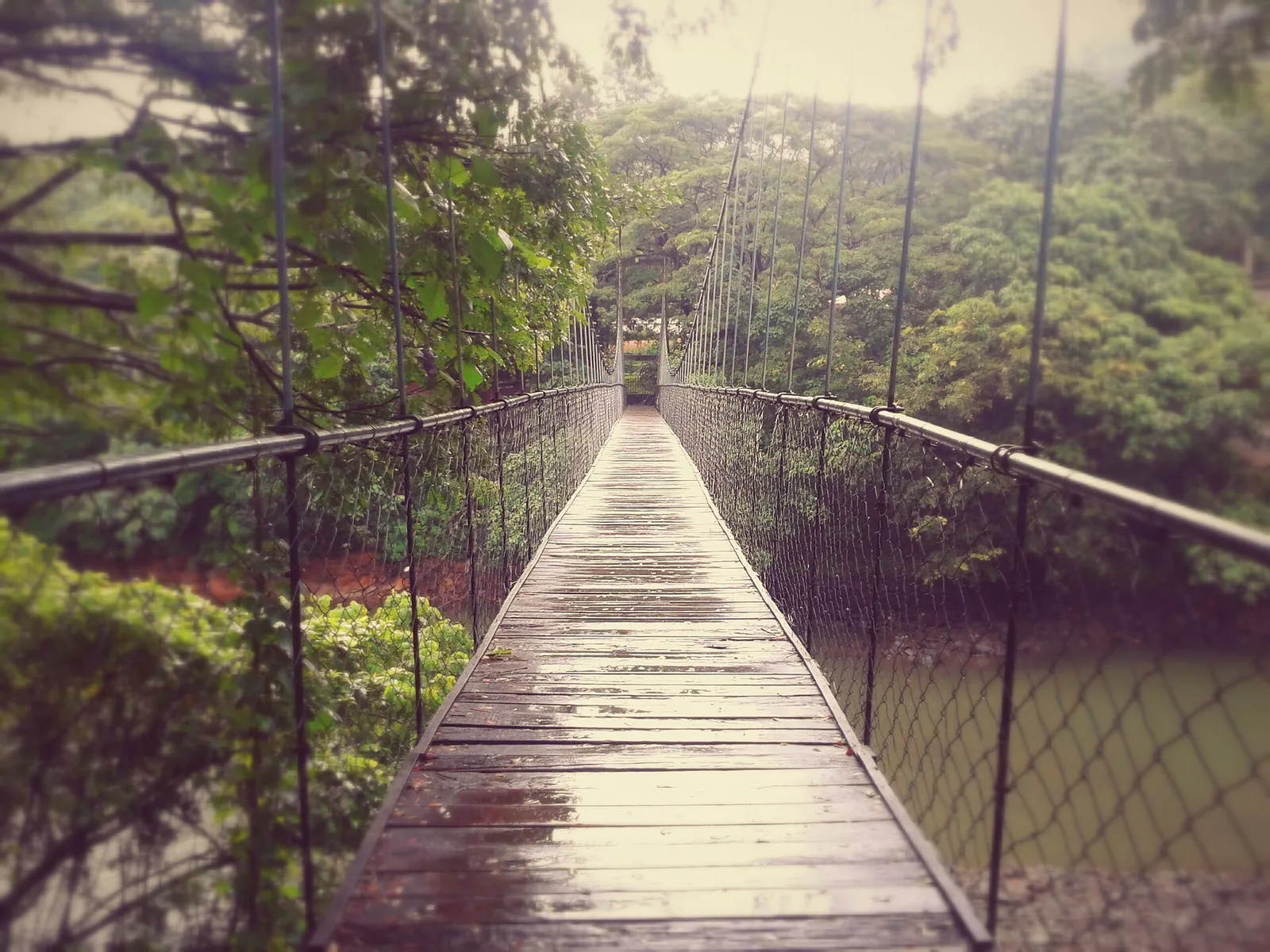
15.5 km · 19 min drive
Eco-tourism area with forest walks, dam views and adventure activities.
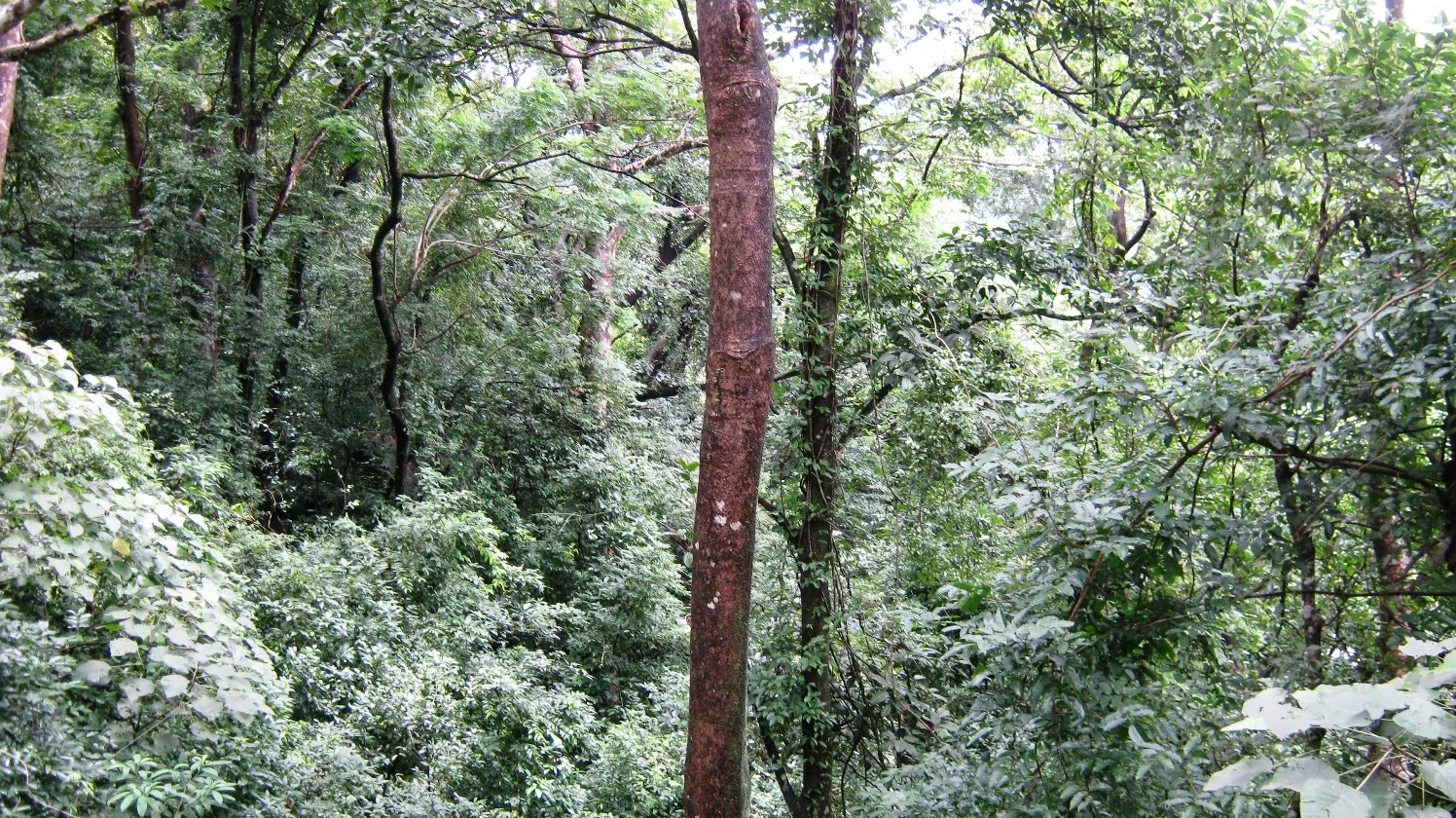
10.1 km · ~17 min by cab
Twenty Forest Department programmes in the Shendurney Wildlife Sanctuary — walks of one to six hours, a dawn birding trail, boat and vehicle safaris and four camps — booked at the wildlife office at Thenmala. Rates are per group and include 18% GST.
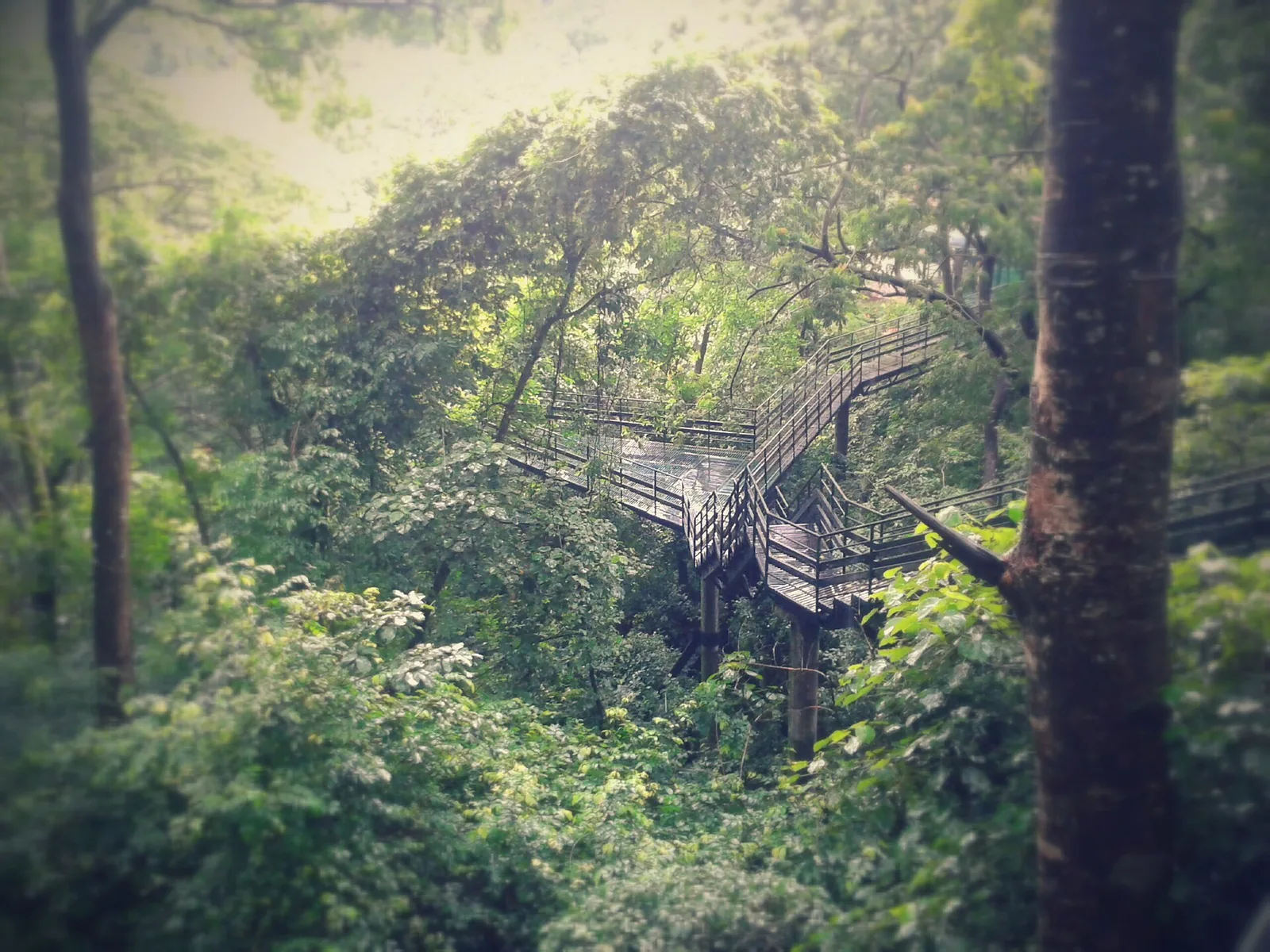
13.9 km · 15 min drive
Guided trekking trails at Thenmala, billed as India’s first planned eco-tourism destination, through the Shendurney forests and dam catchment in Kollam.
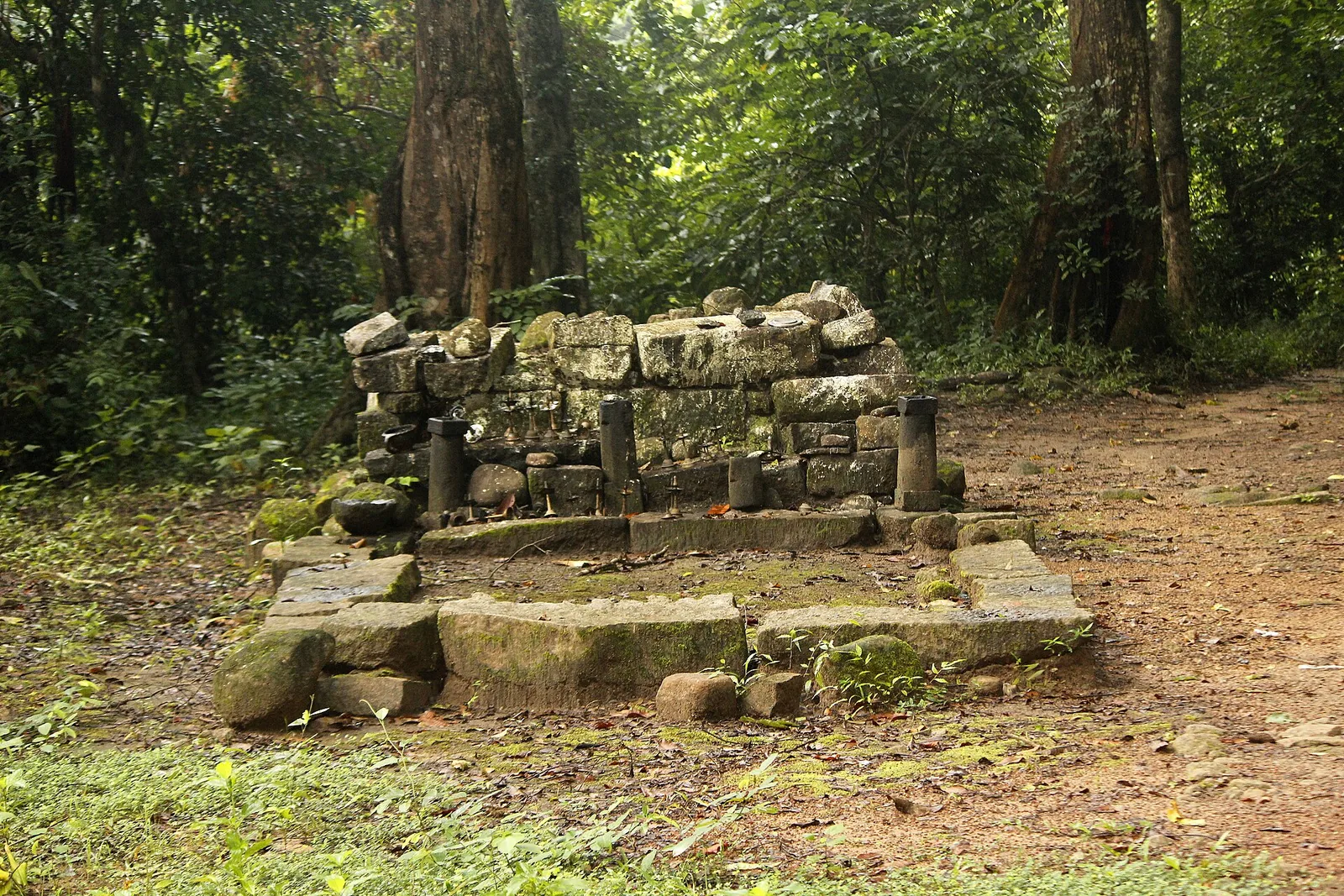
10.7 km · 21 min drive
A valley settlement inside Shenduruney Wildlife Sanctuary, reached by 11–15 km of forest road from Aryankavu, with a ticketed Forest Department viewpoint, a departmental safari and guided walks beyond the village.
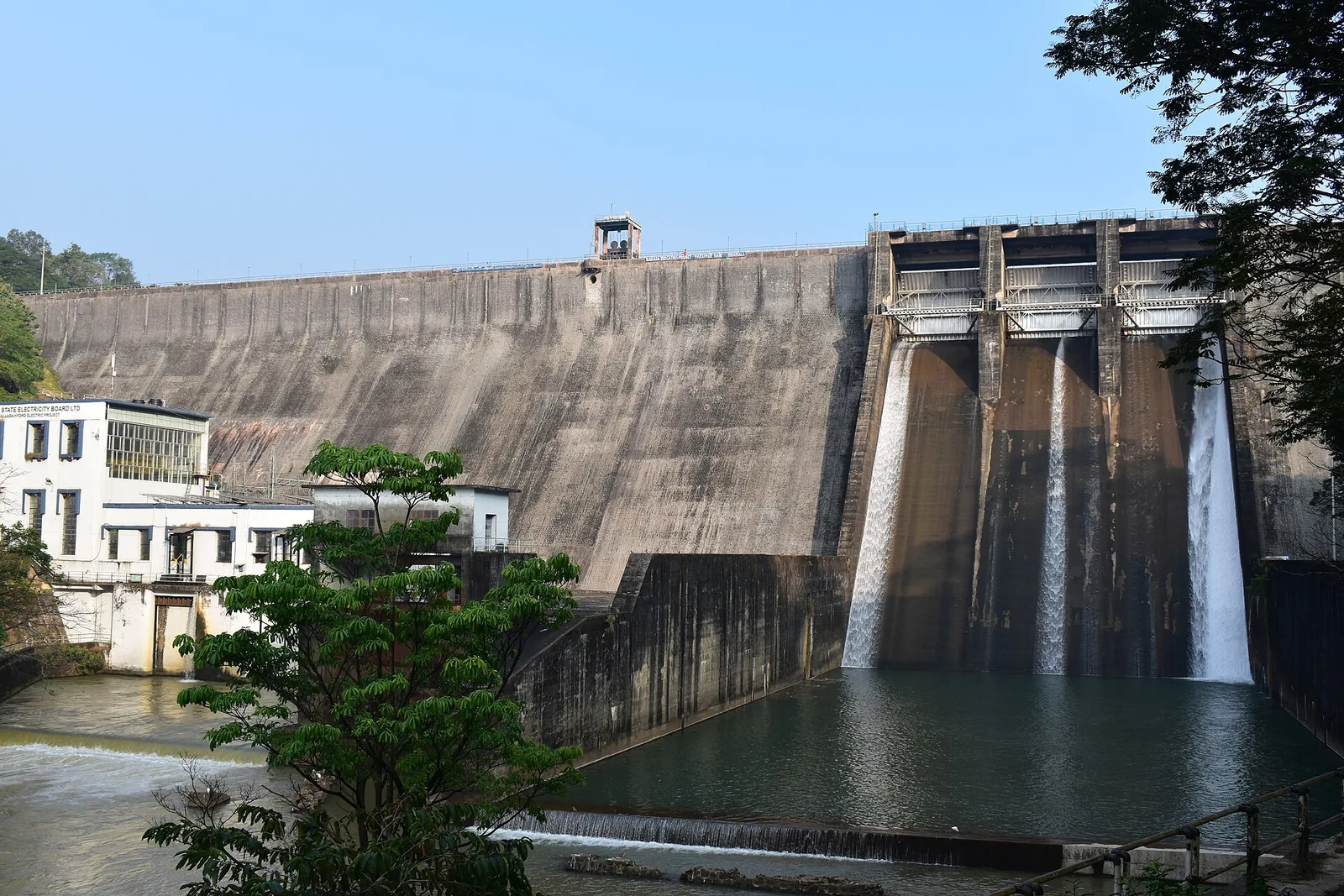
15.7 km · 20 min drive
The Parappar dam across the Kallada river at Thenmala, built for irrigation — the reservoir behind it is the water the eco-tourism area is built around, and the catchment upstream is Shendurney sanctuary.
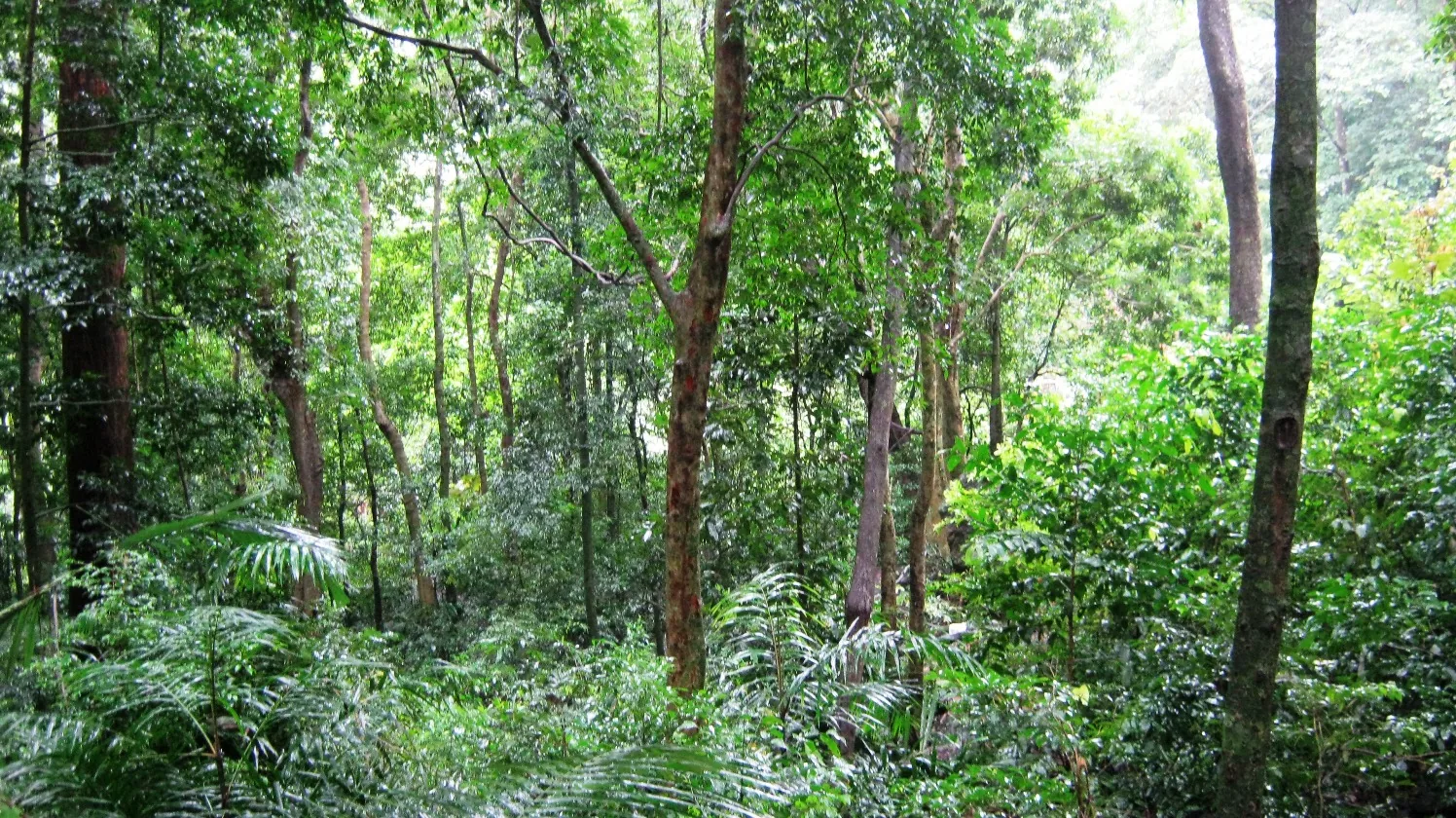
10.1 km · ~17 min by cab
A protected evergreen forest in the Agasthyamalai Biosphere Reserve east of Thenmala, named for the Chenkurinji tree and centred on the Parappar reservoir.
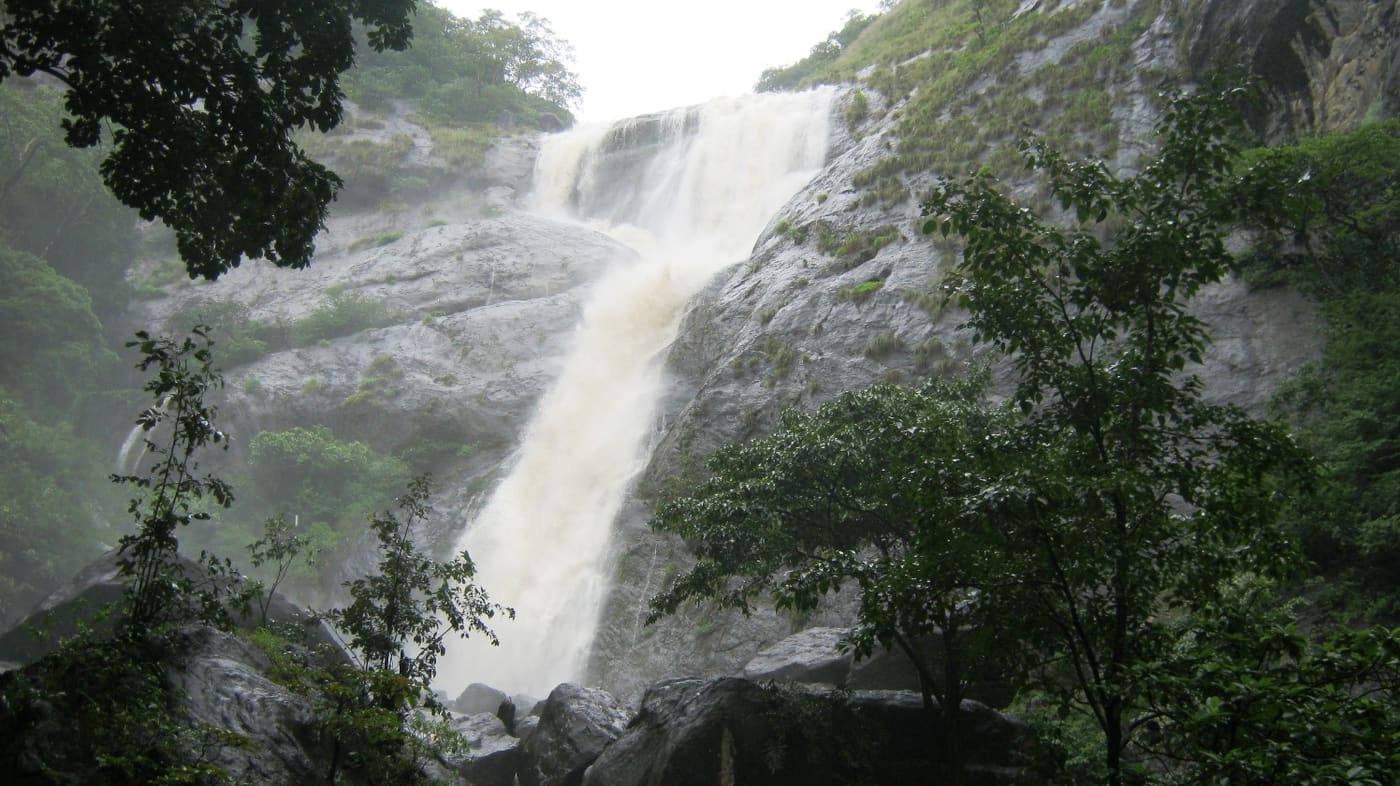
4.1 km · ~10 min by auto
Tall forest waterfall near the Aryankavu side of the Western Ghats, reached by forest shuttle from the highway.
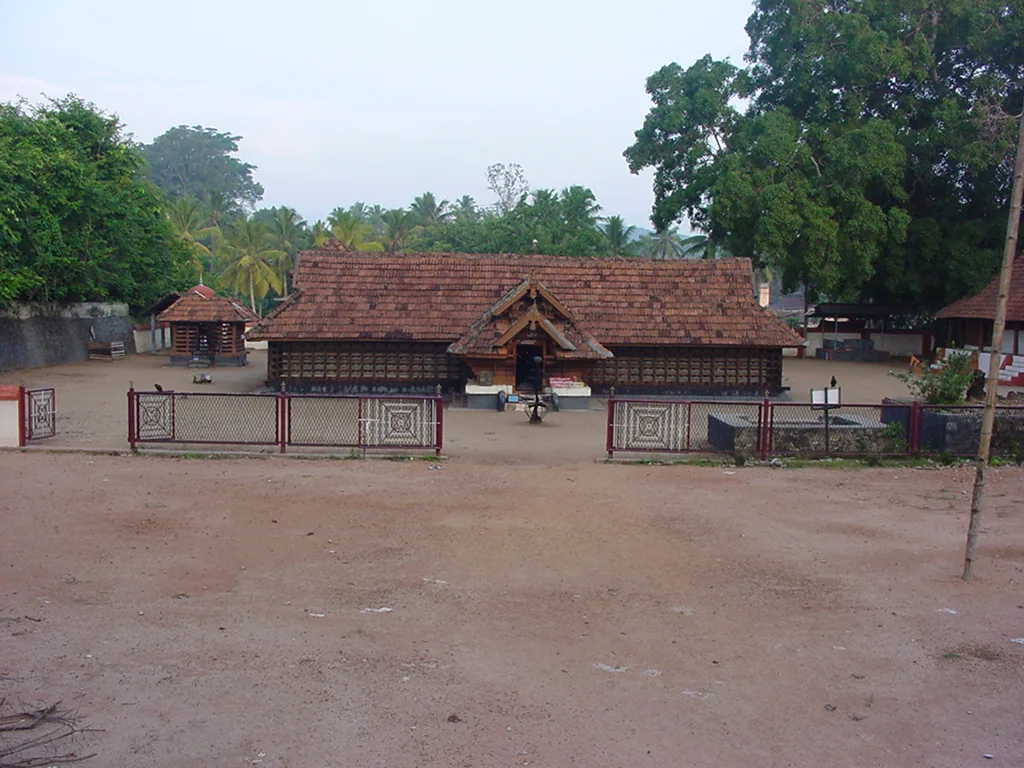
13.2 km · ~22 min by cab
The Sastha temple on the Kollam–Shencottai road where the god is Bala Sastha, the child, and the river alongside is full of protected fish the devotees call Thirumakkal — the sacred children of the lord. Feeding them puffed rice, meenoottu, is the temple’s characteristic offering and fishing is prohibited outright; one of the two species present, Hypselobarbus thomassi, is critically endangered and endemic to the Western Ghats. Named in every published version of the Pancha Sastha. Three 15th-century sculptures from here are in the Napier Museum, Thiruvananthapuram.
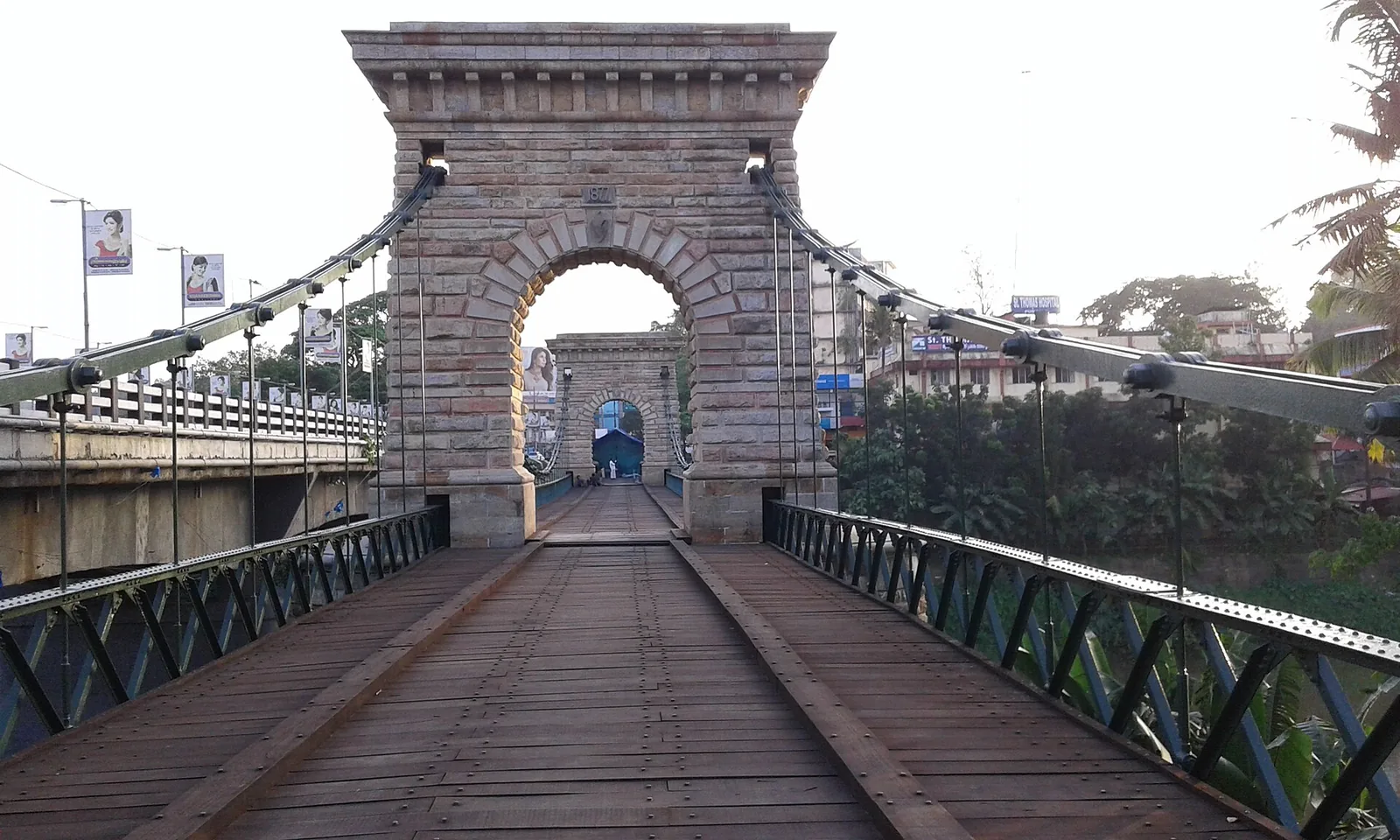
33.4 km · 35 min drive
A rare 1877 Travancore-government suspension bridge over the Kallada river at Punalur, in east Kollam on the way to the ghats.
Roampedia is commission-free — own or know a stay, eatery, guide or shop near Aryankavu? List it and it appears here once verified.
Add a nearby businessEntry: Free. The Sastha temple takes no entry charge; specific offerings are priced separately.
Dress code: Conservative dress is expected at the temple. Kerala temple convention often means a mundu and no upper garment for men, and a saree or salwar for women. Confirm at the entrance.
If you are travelling by bus or ferry, check the return service with the operator before setting out. Leave time to reach the stop or jetty after your visit.
Ask at the bus stand for the time of the last service back, not the next one. If you miss it, an auto or app cab is the fallback — agree the fare before you get in.
If you need step-free access, contact the site before travelling. Ask about a level entrance, steps along the route, the nearest drop-off point, seating and accessible toilets.
These services are listed within about 1.2 km of Aryankavu. Walking distances follow mapped routes; access and opening hours can change. Other services may be closer but are not included here.
Emergency numbers are verified against official government and state tourism sources. 112 works anywhere in India.
Tall forest waterfall near the Aryankavu side of the Western Ghats, reached by forest shuttle from the highway.
4.1 km · ~10 min by auto · straight lineTwenty Forest Department programmes in the Shendurney Wildlife Sanctuary — walks of one to six hours, a dawn birding trail, boat and vehicle safaris and four camps — booked at the wildlife office at Thenmala. Rates are per group and include 18% GST.
10.1 km · ~17 min by cab · straight lineA protected evergreen forest in the Agasthyamalai Biosphere Reserve east of Thenmala, named for the Chenkurinji tree and centred on the Parappar reservoir.
10.1 km · ~17 min by cab · straight lineA valley settlement inside Shenduruney Wildlife Sanctuary, reached by 11–15 km of forest road from Aryankavu, with a ticketed Forest Department viewpoint, a departmental safari and guided walks beyond the village.
10.7 km · 21 min driveThe Sastha temple on the Kollam–Shencottai road where the god is Bala Sastha, the child, and the river alongside is full of protected fish the devotees call Thirumakkal — the sacred children of the lord. Feeding them puffed rice, meenoottu, is the temple’s characteristic offering and fishing is prohibited outright; one of the two species present, Hypselobarbus thomassi, is critically endangered and endemic to the Western Ghats. Named in every published version of the Pancha Sastha. Three 15th-century sculptures from here are in the Napier Museum, Thiruvananthapuram.
13.2 km · ~22 min by cab · straight line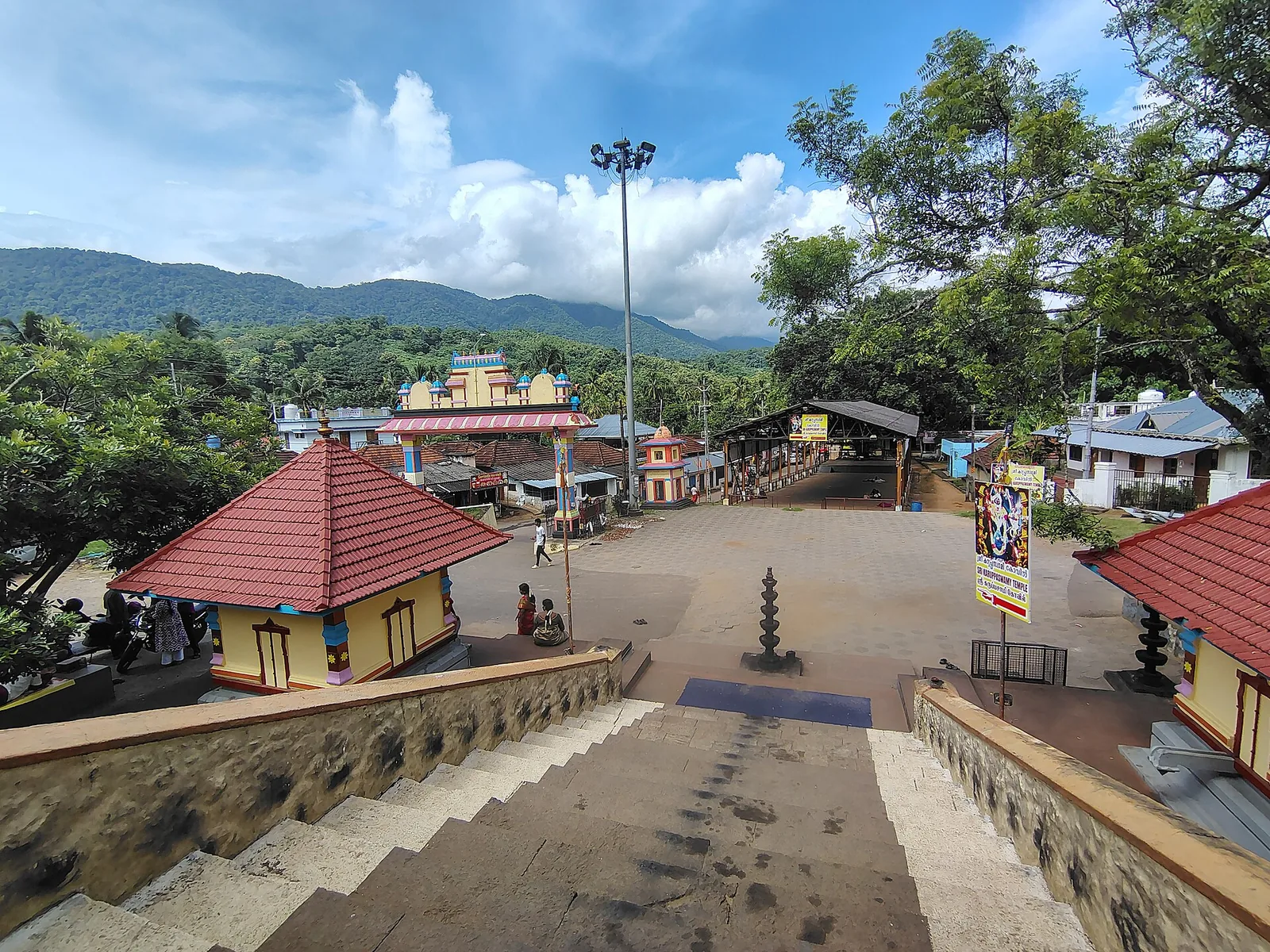
A forest Sastha temple on the Achankovil river where Ayyappa presides as a married householder with two consorts, Poorna and Pushkala — and where the deity is Maha Vaidya, the great physician: the bell may be rung at any hour for a snakebite and the shrine opens at night. ⚠ No timings are published by anyone. 🛑 It has no eighteen holy steps; that is Sabarimala’s.
13.2 km · ~22 min by cab · straight lineGuided trekking trails at Thenmala, billed as India’s first planned eco-tourism destination, through the Shendurney forests and dam catchment in Kollam.
13.9 km · 15 min driveEco-tourism area with forest walks, dam views and adventure activities.
15.5 km · 19 min driveThe Parappar dam across the Kallada river at Thenmala, built for irrigation — the reservoir behind it is the water the eco-tourism area is built around, and the catchment upstream is Shendurney sanctuary.
15.7 km · 20 min driveA community-linked forest and wetland visitor area near Madathara, used for guided birding and nature walks rather than an unrestricted independent forest excursion.
20.6 km · ~34 min by cab · straight lineA rare 1877 Travancore-government suspension bridge over the Kallada river at Punalur, in east Kollam on the way to the ghats.
33.4 km · 35 min drive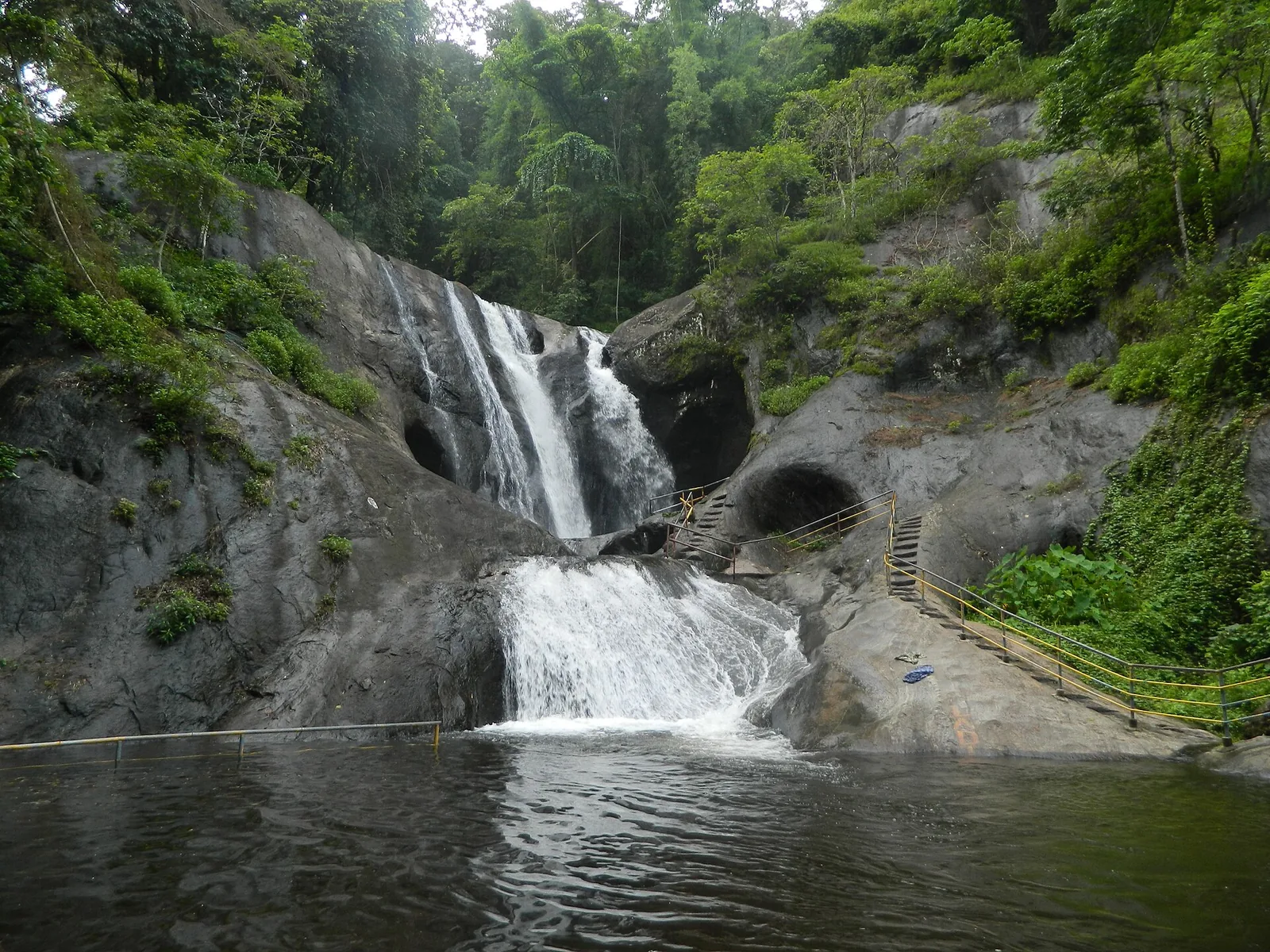
A two-tier waterfall on the Achankovil river, with steps cut into the rock beside the cascade, run by a village forest-protection committee under the Achenkovil Forest Division. Published heights range from 70 ft to 250 ft and none is a measurement.
67.0 km · 88 min driveWalking and driving times are real routed distances, except the few marked “straight line”, which are direct-line estimates and will read short. Fare figures are estimates from Kerala’s notified auto/taxi tariff and exclude waiting and night charges. Routing: © openrouteservice.org by HeiGIT | Map data © OpenStreetMap contributors
Nearby toilets, pharmacies, ATMs, seating and vets are community-mapped and may be incomplete or out of date. Map data © OpenStreetMap contributors | Walking times © openrouteservice.org by HeiGIT
The deity's aspect. At Sabarimala Ayyappa is the eternal celibate, and that celibacy is central to the practice there. At Aryankavu he is a youthful god seated on an elephant with his consort Pushkaladevi, and his marriage is celebrated annually. Same god, different aspect — normal in Hindu practice, and a common source of confusion.
The annual festival commemorating the divine marriage of Dharmasastha and Pushkala, said in tradition to have taken place here. It is conducted following the customs of the Sourashtra community, originally from Gujarat and long settled in the Tamil country, who hold Pushkaladevi as their own.
Tradition dates it to over a thousand years and credits its consecration to Parashurama. Both are tradition rather than documented record — the Parashurama attribution is one Kerala applies to many of its oldest temples, and is a statement about antiquity and status rather than a datable event.
Kavu means sacred grove, and that half is solid. The first half is the local reading rather than a settled etymology: usually glossed as Aryan for Sastha, giving "the sacred grove of Sastha", and sometimes derived instead from the deity's title here, Thiru Aryan — which would mean the village is named after the god rather than the god after the place. Neither is sourced above encyclopaedia and blog level.
Kerala temples commonly restrict entry to Hindus and rules are set locally. Check at the entrance rather than assuming, dress conservatively with legs covered, and expect photography inside to be prohibited.
Come by road: Aryankavu is on NH 744, about 22 km from Tenkasi and 36 km from Punalur, and buses towards Sengottai from Kollam and Punalur stop here. Palaruvi waterfalls is a few kilometres away and is the obvious pairing, with Thenmala about 10 km west. The road continues into Tamil Nadu over the ghat on the celebrated S-bend hairpin descent.
Neither, realistically. There are two stations with almost the same name on the Kollam–Sengottai line — Aryankavu (AYV) about 400 m from the village at km 79, and New Aryankavu (AYVN) at km 75, three kilometres away in Palaruvi village. Only a handful of trains call at either and some at hours no visitor wants. Note that English Wikipedia's Aryankavu station page prints New Aryankavu's coordinates, so map links from it lead to the wrong station.
It dates from 1 November 1956. Section 4 of the States Reorganisation Act, 1956 moved Shencottah taluk out of Quilon — that is, Kollam — district and out of Travancore–Cochin into Madras State. Until then Sengottai, on the far side of the pass, was part of Kollam district, and Aryankavu was not a border village at all.
It is usually called that, at 891.70 m, but two things complicate it. The state boundary sits 672 m in from the Kerala portal, so roughly a quarter of it is in Tamil Nadu. And Wikipedia's own list of Kerala rail tunnels gives its length as 680 m rather than 891.70 — a 200-metre discrepancy nobody has resolved. The tunnel was dug in 1901–03, fifty-three years before there was a border in it, and the Travancore conch is carved on both portals.
It is in every list — which is the honest way to put it, because no two lists of the five agree. The Travancore Devaswom Board's own circuit is Pandalam, Kulathupuzha, Aryankavu, Achankovil and Erumeli; devotional accounts give Kulathupuzha, Aryankavu, Achankovil, Sabarimala and Kanthamala. Only Kulathupuzha, Aryankavu and Achankovil appear in all of them.
Reports say women aged 10 to 50 are not admitted, as at Sabarimala — but sources differ over whether that applies to the whole compound or only the sanctum, and the same sources describe unmarried women attending the Thiru Kalyanam to pray for marriage. We could not find a current Travancore Devaswom Board notice settling it, and the legal position on such restrictions has been litigated in Kerala since 2018. Ask at the entrance rather than assuming either way.
We do not publish any, deliberately. We could not find a Travancore Devaswom Board publication of Aryankavu's timings, and the '6 am to 11 pm' that aggregator sites copy from each other is a two-session schedule mangled into one range. Nobody should plan on it.
No — it is about 12 km outside it. Shendurney was constituted by government order of 25 August 1984 around the Shendurney river valley, with its eastern boundary on the state line and its northern boundary running from Thenmala. You reach the sanctuary through the forest office at Thenmala, not from Aryankavu.
Aryankavu grama panchayat covers 198.84 sq km and had 10,144 residents at the 2011 Census — about 51 people per square kilometre, against a Kerala average near 860. Almost all of that area is forest, plantation and ghat. Note that there are two units with this name: the revenue village is smaller, at 15,738.70 hectares (157.39 sq km) and 8,432 residents at the same census, per the Kerala land revenue department's own village office page. (OpenStreetMap tags the village with a population of 16,660; that figure is unsourced and contradicts both.)
Aryankavu grama panchayat, in Punalur taluk — which was carved out of Pathanapuram, so you will see the village filed under either, and both are defensible. The panchayat is unusually large and reaches a long way: it also contains Achankovil, the forest Sastha temple about 50 km away by road, which Kerala Tourism addresses as "Achankovil, Aryankavu Panchayat, Kollam District".
The Travancore Devaswom Board. That is confirmable on the Board's own domain — a 2017 e-tender of theirs is headed for the kuthaka at Kulathuppuzha, Achankovil and Aryankavu — which matters here because the aggregator listings are unreliable: one of the bigger temple directories files this shrine under Pathanamthitta district rather than Kollam, and a mapping service returns a different Dharmasastha temple of the same name at Kottarakkara, 48 km west.
Secondary and devotional sources put it around the tenth of Dhanu, in December, running ten or eleven days. We report that as their figure rather than as an established one: the married form of the deity is stated on the Kerala government's own Sabarimala site, but the date is not, and no Travancore Devaswom Board publication of it turned up. Festival dates follow the Malayalam calendar — confirm locally before travelling for it.
A teak plantation raised in 1891 in the forest near Palaruvi by T. F. Bourdillon, Conservator of Forests of Travancore from 1891 to 1908 — described as the world's first teak plantation grown from stumps rather than seedlings, a technique that later became standard across the tropics. It stands in reserve forest, and we could find no confirmation that it is open, signposted or reachable without permission: ask the Thenmala forest office before planning to look for it.
A community originally from Gujarat, long settled in the Tamil country, traditionally associated with silk weaving. They regard Pushkaladevi as their own, and the Thiru Kalyanam here is conducted following their customs — which makes this temple a meeting point of Gujarati-origin, Tamil and Kerala traditions in one rite.
Yes, the temple has an eighteen-step entrance echoing Sabarimala's, and it sits on the same pilgrimage route. But it is its own temple with its own aspect of the deity and its own festival, and it long predates any role as a waypoint — it is not a subsidiary of Sabarimala, though it is sometimes described as one.
November to February is the most comfortable. The Thiru Kalyanam is the festival to plan around if you can, and the Sabarimala pilgrimage season brings very large numbers through this route — the village feels entirely different then. Festival dates follow the Malayalam calendar; confirm locally.
It is a genuine Kerala–Tamil hybrid rather than one tradition with decorative borrowings, which is what a border temple ought to look like and rarely does so clearly. There are murals of Hindu deities inside, and the eighteen-step entrance.
Morning or early evening is usually best; festival days can be powerful but crowded.
Entry: Free. The Sastha temple takes no entry charge; specific offerings are priced separately.
Base yourself in Thenmala or a nearby town in Kollam, then confirm the last-mile route locally before leaving. Check temple entry customs, dress rules and festival crowd conditions before arrival. If the visit depends on forest, temple, boat, ferry, weather or seasonal access, check the official/local rule on the day before travel.
45 minutes to 2 hours, longer during festival or queue periods.
Nearby you can pair Palaruvi Waterfalls (4.1 km), Shendurney trek (10.1 km), Shendurney Wildlife Sanctuary (10.1 km), Rosemala trek (10.7 km).
Use official counters for offerings/tickets where applicable. Keep footwear and valuables secure in crowded areas.
Written about Aryankavu itself — its history, its legends and the arguments about them.
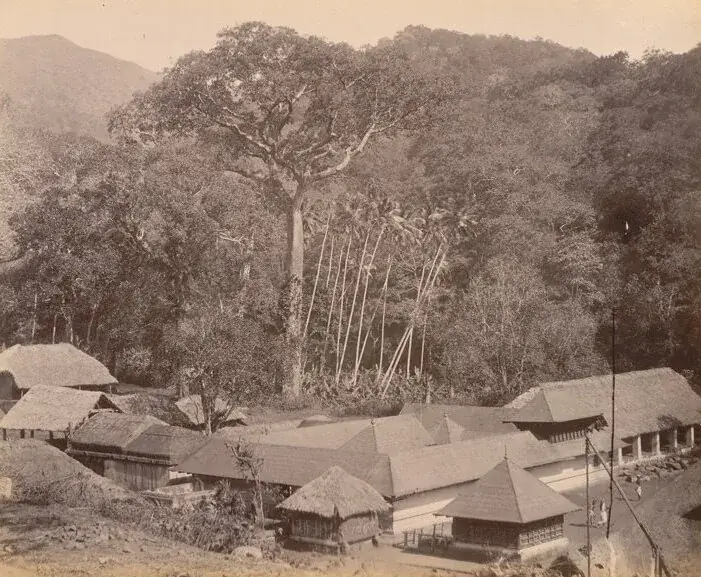
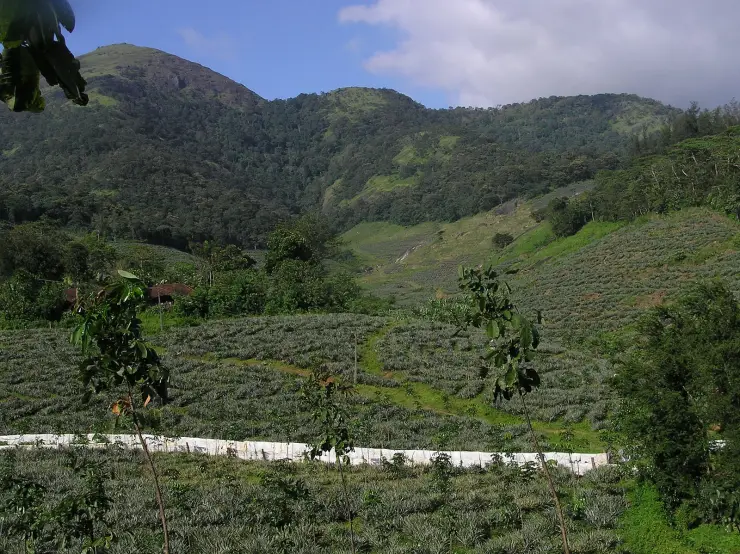
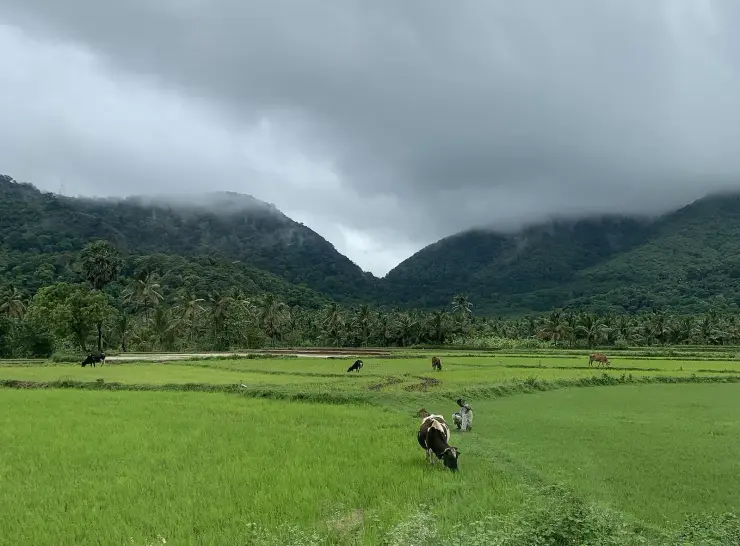
These guides explore Thenmala and the surrounding area. Choose a visit that fits your interests, allowing separately for travel between stops.


Route-level itineraries and practical guides for the rest of Kerala.
Photographs: Zacharias D'Cruz, c.1900 (British Library) (Public domain), Chinchu.C (CC BY-SA 4.0), Anand Osuri (CC BY-SA 4.0), Planemad (CC0), Vimalnair9744 (CC BY-SA 4.0), Haravinth rajan (CC BY-SA 4.0), Jaseem Hamza (CC BY 3.0). Wikimedia Commons.