Malayalapuzha Devi Temple

Malayalapuzha Devi Temple is a Bhadrakali shrine in Malayalappuzha, near Kumbazha in Pathanamthitta district. Its layered tiled entrance, rectangular sanctum and distinctive composite sacred image give it an identity beyond the general category of a Kerala Devi temple. Devotees know the goddess as a protective mother as well as Bhadrakali’s fierce form. The annual eleven-day festival begins with Thiruvathira in the Malayalam month of Kumbham. An ordinary darshan visit and the crowded festival are different experiences, both centred on active worship.

Malayalapuzha Devi Temple, Malayalappuzha
Practical guide

Plan Malayalapuzha Devi Temple

Who's going?Tailor Malayalapuzha Devi Temple to your trip
Before you go to Malayalapuzha Devi Temple

Check entry arrangements. Ask temple staff about visitor entry, dress requirements and access to the inner shrine before you travel, especially if you are visiting as a non-Hindu.

Dress respectfully and follow the institution’s admission and photography rules.

Typetemple
AreaMalayalappuzha
DistrictPathanamthitta
Best timeChoose the visit according to its purpose
Time neededAllow roughly 45–90 minutes for arrival,…
Places to visit6Listed businesses18
The story

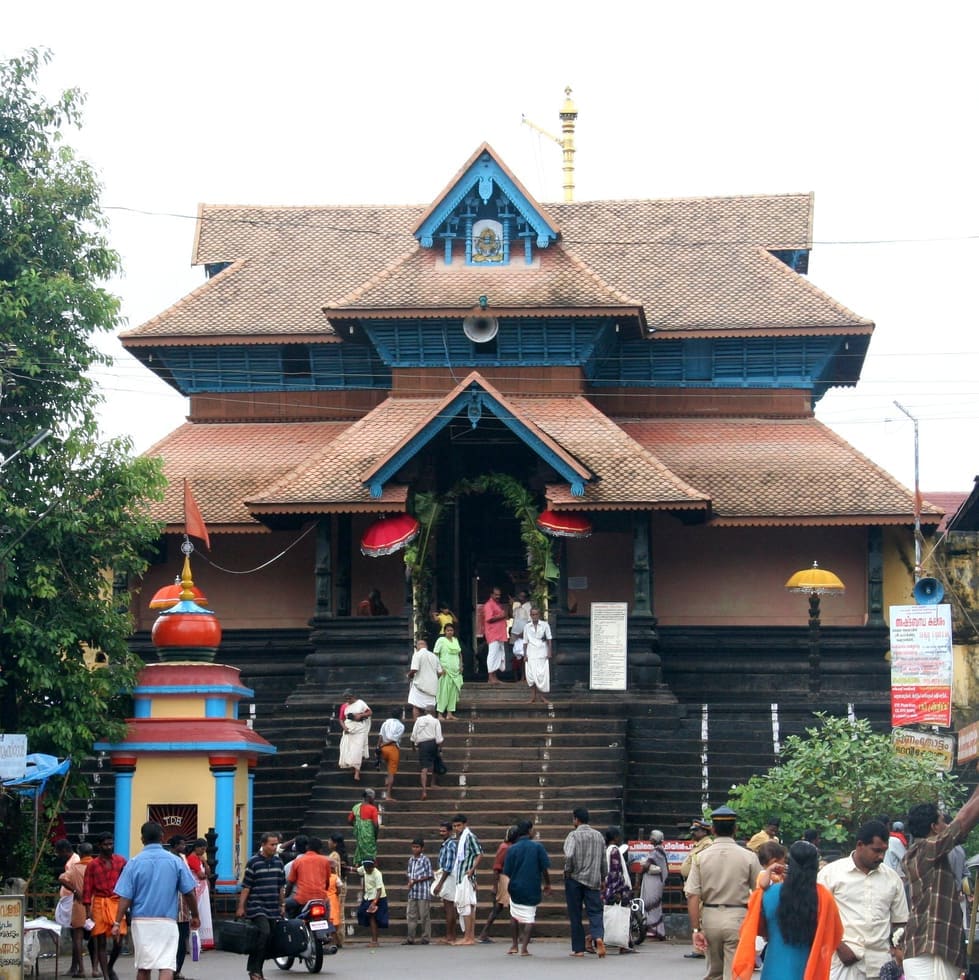
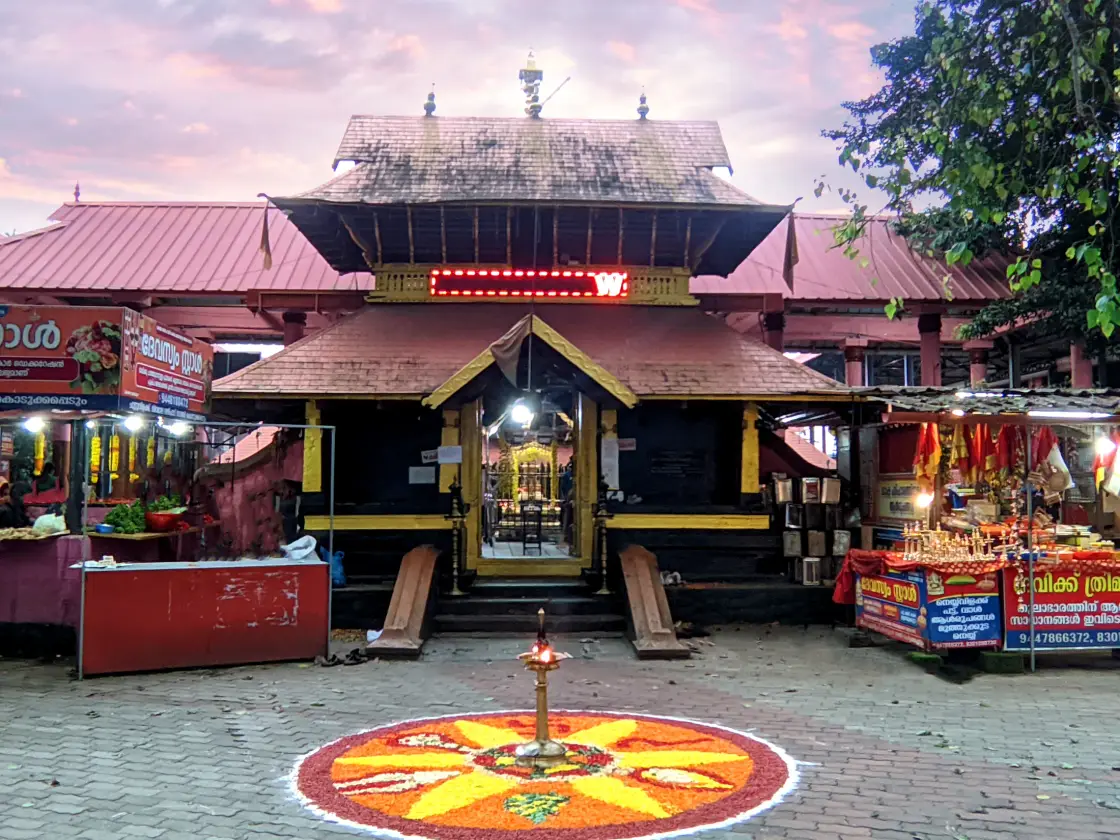
At Malayalapuzha, the tiled roofs step down towards a compact entrance passage. The dark doorway, roof edges and ritual activity beyond it establish a clear threshold between the roadside approach and the worship space. The temple’s stories are carried through that architecture, its sacred image and an annual festival with a definite sequence.

The story of Malayalapuzha Devi Temple

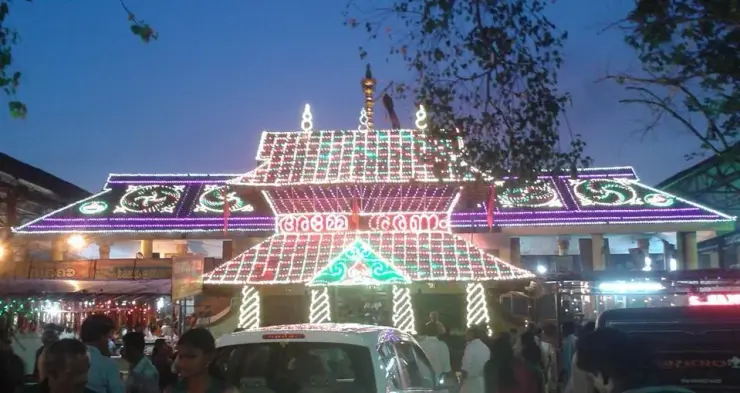
The entrance is a useful place to begin looking. Several roof planes overlap, with a higher central section behind a lower projecting roof. The doorway sits beneath this layered form. A visitor standing outside can appreciate the changing scale without needing to turn an active passage into a photography position.

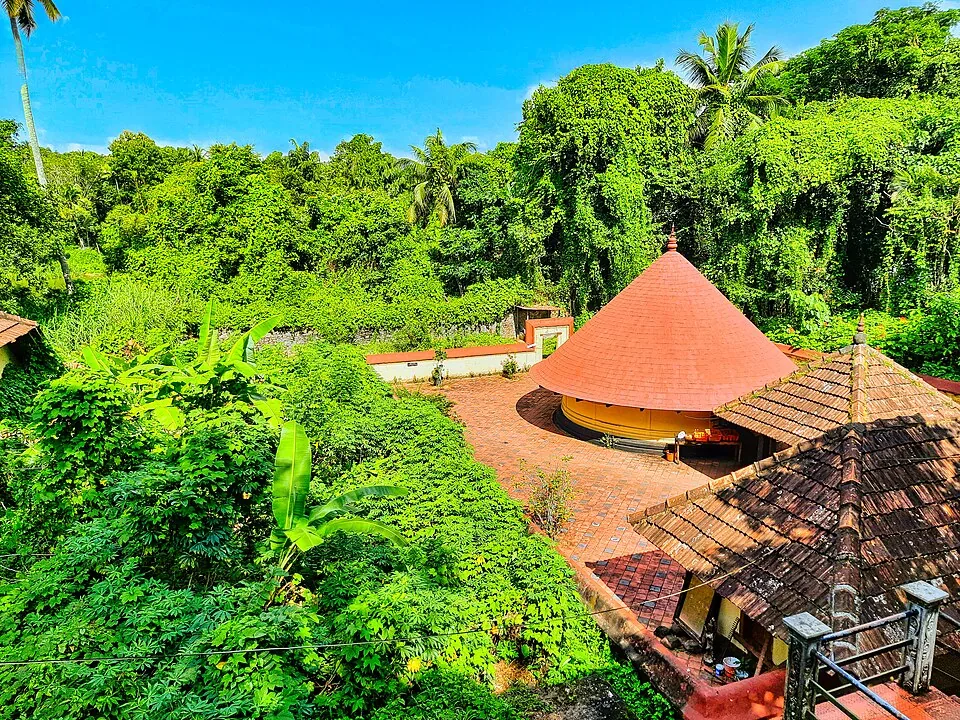
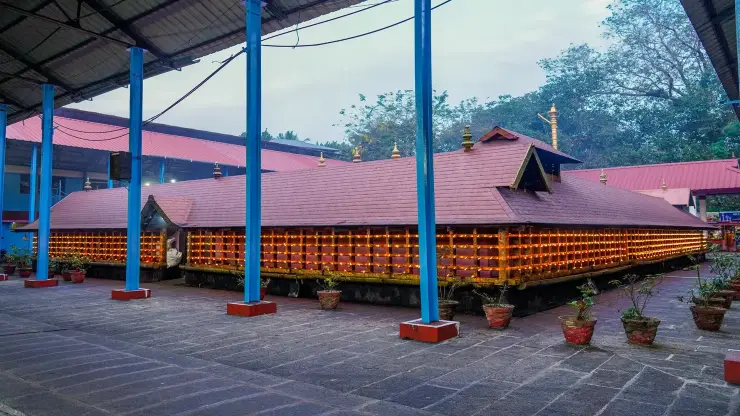
The government account describes a rectangular sanctum with a mukhamandapam, or entrance porch, as well as a namaskara mandapa, chuttambalam and balikkalpura. These names refer to parts of the worship arrangement, not separate attractions to be checked off. They explain how the temple contains and organises ritual movement.

The principal deity is Bhadrakali. The same account describes her fierce warrior form alongside devotees’ understanding of a benevolent mother. These are devotional aspects of the deity, not contradictory identities or evidence that the temple is dedicated to two unrelated goddesses.

A particularly distinctive feature is the sacred image’s composite construction, identified as Kadu Sarkara Yogam. The government description lists organic and mineral ingredients rather than treating the image as a single carved stone. That material tradition deserves its own explanation, but it does not grant visitors permission to inspect or photograph the image at close range.

The foundation story follows a Brahmin returning from Kollur with a saligramam. In Kerala Tourism’s festival account, the goddess accompanies him and chooses to remain at a place associated with the Thombil household. A later movement brings the deity to the present location. Dreams, divine choice and the immovable sacred object belong to the story’s religious meaning.

That narrative explains attachment to place through worship. It should not be converted into an exact archaeological date. The separate belief in a very ancient origin likewise belongs in the tradition section unless supported by a dated inscription or construction record. The present temple can be described through its visible form without claiming every part is the same age.

Another local sacred tradition concerns a self-manifested Sivalinga beneath a flowering Konna tree. The government account describes the tree’s shelter and a belief that the linga grows. These are shrine-specific traditions, to be understood respectfully as beliefs rather than botanical or measurable physical findings.

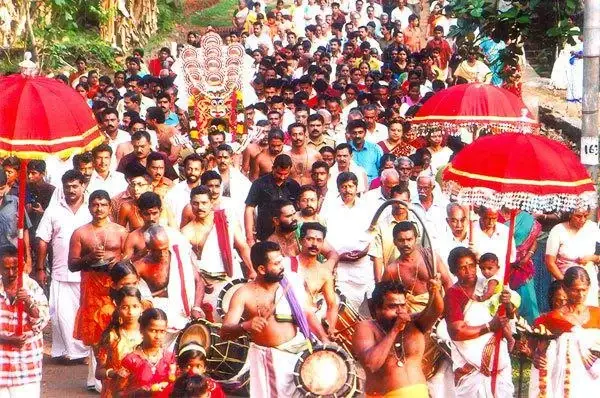
The annual festival gives the temple a different public rhythm. It begins with flag hoisting on Thiruvathira in Kumbham and extends over eleven days. The tourism festival account describes a procession from Kottaram at the opening, Pallivetta on the ninth day and Aarattu with the concluding procession and flag lowering.

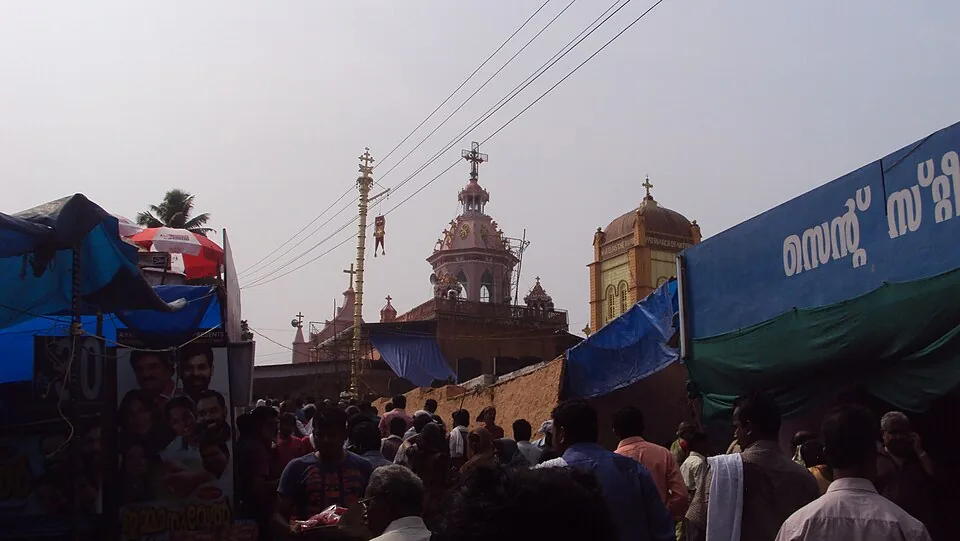
Music and performance accompany the festival’s ritual sequence. The published account names Kathakali, Pancharimelam and other cultural programmes, while photographs show the changing scale of the crowd and illuminated entrance. A current programme is necessary to know which events occur on a chosen day; the historical description explains the form of the celebration.

For an ordinary visitor, these layers make the temple more legible. The entrance is not simply an attractive roofline, the image is not an interchangeable stone idol, and the festival is not one undifferentiated busy day. Architecture, material tradition and ritual sequence each offer a distinct way to understand Malayalapuzha.

The shrine’s offerings have their own vocabulary. The government description names Thoniyari Payasam, a sweet-rice offering; Ney Vilakku, the lighting of a ghee lamp; and Nirapara, an offering filling a traditional measuring vessel. These are devotional acts with a specific purpose, rather than food or objects to purchase as ordinary souvenirs. A first-time visitor who wishes to make an offering should ask the temple counter how it is received and where to wait, while leaving the ritual arrangement to the shrine.

The same description connects the sacred image with Prana Prathishta, the consecration understood by worshippers as giving the image a living divine presence. That belief explains why material description and devotional behaviour belong together here. Learning that the figure was made through a composite technique does not reduce it to a craft exhibit. For devotees it is the consecrated deity; for a respectful visitor, that makes the shrine’s rules about approach, touch and photography part of understanding the place.

The composite image brings together materials that visitors might otherwise associate with very different settings. The Kerala government account lists wood, clay, herbal ingredients, dairy products, jaggery, turmeric and sandalwood, alongside metals and binding substances. The list describes a material tradition; it is not a recipe for visitors to reproduce. Its interest lies in the joining of these components into one consecrated form. The shrine's artistic identity therefore extends beyond the roof and entrance that can be seen most readily from outside.

The image's devotional meaning is also expressed through the names used for the goddess. The festival inventory calls her Idathattil Bhagwathi as well as describing the Bhadrakali tradition. A visitor encountering that name in a festival announcement should read it within the Malayalapuzha context. It is another expression of this shrine's identity, rather than a reason to look for a second temple with an unrelated entrance. The local name connects everyday worship with the longer story told during the annual celebration.

The festival's processions give the foundation tradition a visible geography. The opening movement from Kottaram to the temple recalls the relationship between the household setting in the story and the present shrine. At the close, the inventory describes the Jeevatha procession, ritual bathing, return and lowering of the flag. These movements are meaningful parts of worship, not simply intervals between stage performances. If attending, choose a place indicated for spectators and let the procession's route remain available to participants.

Annadanam and the cultural programme add other forms of gathering to those ritual movements. The festival inventory records shared food alongside music, dance and Kathakali. Someone interested in performance should obtain the announced programme for the particular day, while someone coming for darshan should allow for the different movement of the festival crowd. The two purposes can share one visit without being identical. Giving each its own time makes it easier to appreciate both the active shrine and the community celebration around it.
Read the full history of Malayalapuzha Devi Temple 157 more words

History

The temple’s foundation is told through a sacred narrative connecting Kollur, a Brahmin pilgrim, a saligramam and the Thombil household. Kerala Tourism publishes this explicitly within a legend/history/myth account.

The government temple description presents the shrine’s claimed age of more than 3,000 years as belief. No exact construction date is assigned here.

The Travancore Devaswom Board’s administrative listing places Malayalapuzha within its temple administration. That current relationship should be distinguished from the shrine’s foundation tradition.

The annual festival is documented as an eleven-day Kumbham celebration beginning on Thiruvathira and ending with Aarattu and associated concluding rites. Dates in the Gregorian calendar change each year.

Why visit

Encounter a specific Bhadrakali shrine with its own composite-image tradition.

Read the layered entrance roofs and documented arrangement of ritual structures.

Understand a local foundation narrative while keeping sacred tradition separate from dated history.

Attend a chosen part of the Kumbham festival when the current temple programme and crowd arrangements suit the visit.

What to expect

Highlights

  • The entrance presents several overlapping tiled roofs rather than one uninterrupted façade. Its central passage gives a direct sense of the temple’s inward orientation.
  • The government temple account identifies the principal image with the composite technique called Kadu Sarkara Yogam, distinguishing it from an ordinary stone image.
  • The rectangular sanctum, entrance porch, chuttambalam and smaller ritual structures form the temple’s documented architectural arrangement.
  • The annual festival follows an eleven-day sequence from flag hoisting to Aarattu, with Pallivetta described on the ninth day.
  • The shrine’s foundation narrative connects Kollur, a travelling Brahmin and the Thombil household. It is a sacred tradition, not a dated construction record.
Getting there

How to visit

  • Set Malayalapuzha Devi Temple as the destination, including Pathanamthitta district. Malayalappuzha is an alternative spelling of the same locality and shrine.
  • Approach through the Kumbazha side and agree a drop-off that leaves the temple entrance and local bus stop clear.
  • Follow the temple’s current entrance, dress and photography directions. The exterior photographs on this page do not establish permission to photograph the sanctum.
  • Begin with darshan if that is the purpose of the visit, then observe the exterior roofs and approach without blocking people moving in and out.
  • Arrange offerings through the authorised temple counter. A named offering in a historical account does not establish its present price or availability.
  • For the annual festival, use the temple’s current programme to choose a specific event and establish the return pickup outside the crowd route.

Distance by road

  • Thiruvananthapuram103 km
  • Kochi119 km
  • Madurai243 km
  • Coimbatore287 km
  • Kozhikode311 km

Road km to Pathanamthitta; ghat roads and traffic vary — allow extra.

Timing

Best time

Choose the visit according to its purpose. A regular worship period allows a more focused darshan and exterior observation; the Kumbham festival brings processions and larger crowds. The government account identifies Tuesdays and Fridays as busy devotional days. Use the temple’s current notice for that day’s opening and ritual schedule.

Weather in Malayalapuzha Devi TempleSeasonal guide

Live forecast loads in your browser.

Today at Malayalapuzha Devi Temple
Sunrise6:11 am
Sunset6:08 pm
Golden hour best light5:08 pm–6:08 pm
Blue hour after sunset6:08 pm–6:33 pm
Sun sets toward compass bearingW · 263°
Moon tonight🌒 Waxing crescent · 1%

Sun and moon are calculated for this location and shown in IST. Photography windows are the hour around sunrise and sunset; the sunset bearing is degrees clockwise from true north. Moon phase is accurate to about half a day.

Visitor notes

  • The temple is administered by the Travancore Devaswom Board. Offerings and access directions should come from the temple’s authorised arrangements.
  • The frequently repeated claim that the shrine is more than 3,000 years old is presented as belief in the government account; it is not a verified construction date.
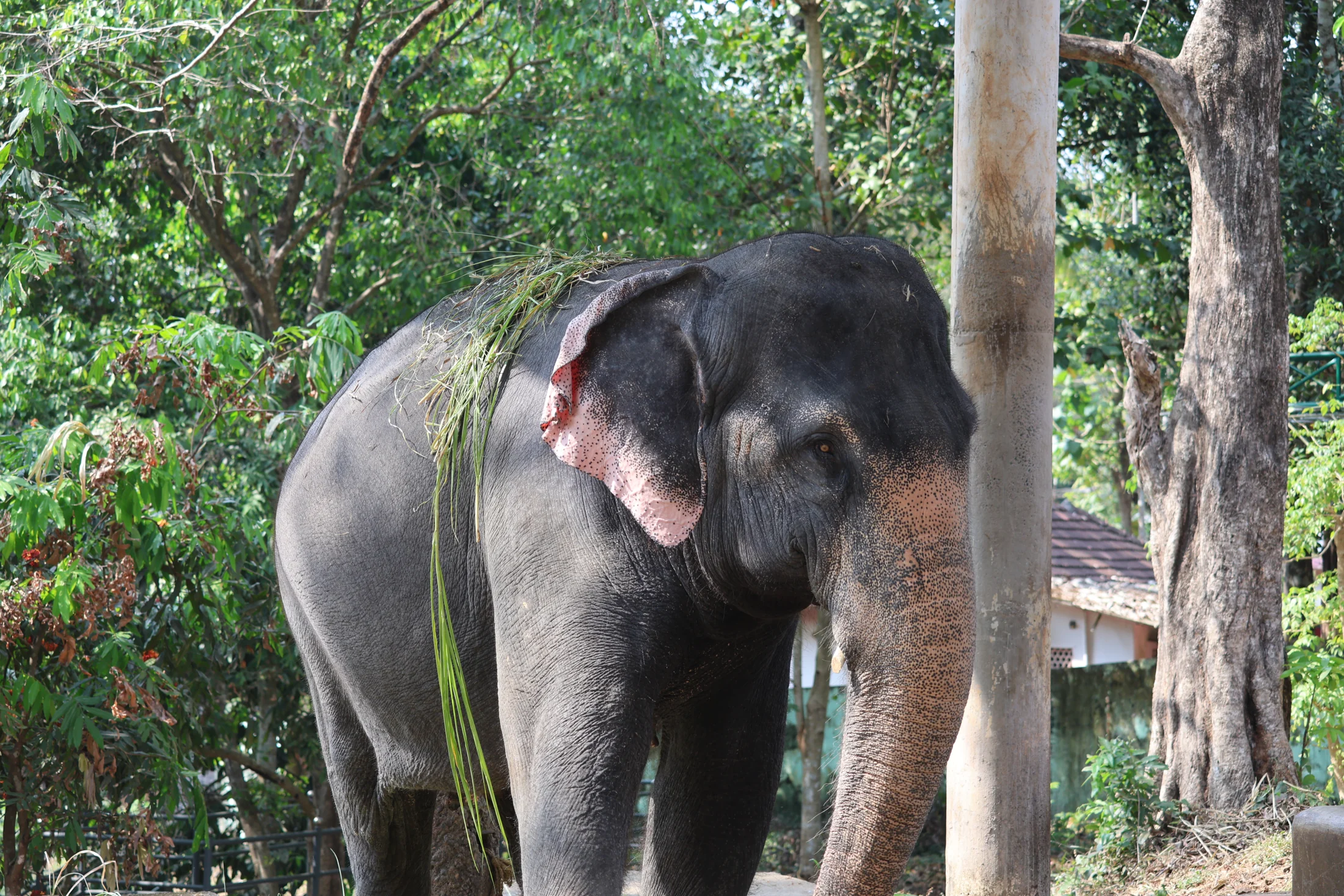
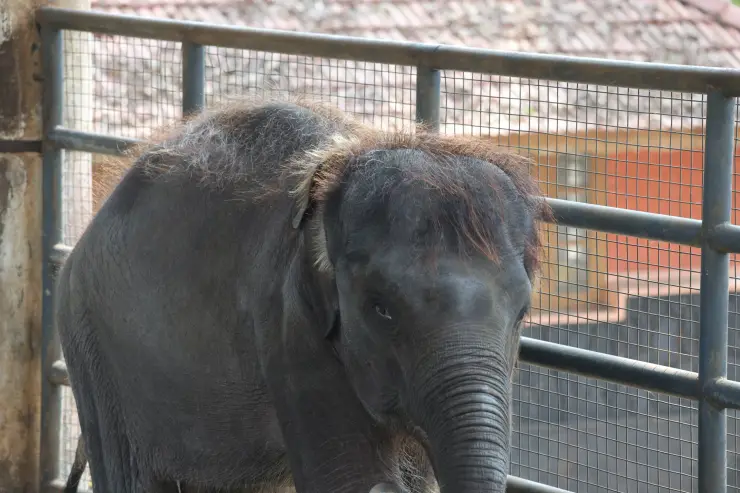
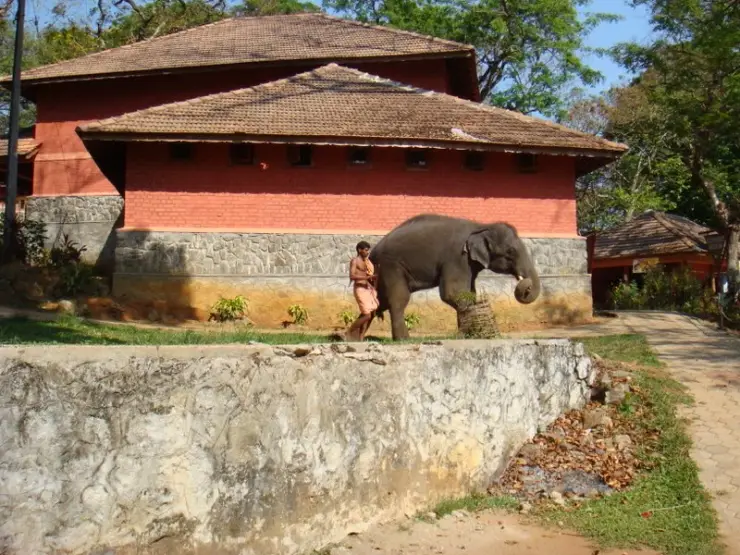
  • Photographs of decorated elephants, processions or festival lighting record particular celebrations. They do not describe the daily appearance or promise a scheduled animal display.
Safety

Good to know

  • Leave the central entrance and procession passages open, particularly when pausing for an exterior photograph.
  • During crowded worship periods, agree a meeting place outside the moving queue and follow staff directions.
  • Keep away from elephants and their working space during any authorised festival procession.
  • Do not enter a closed ritual area or approach a sacred image for photography.
Official eco & forest programmes

Experiences around Malayalapuzha Devi Temple

These are official or public-sector eco offerings that match this place, town or forest destination. Confirm availability, permits, tariffs and reporting times with the official operator before travel.

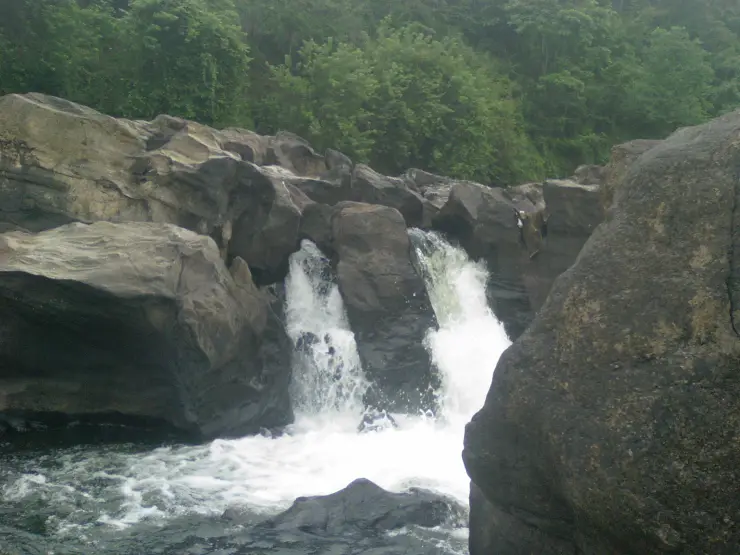
Perunthenaruvi Waterfalls, Malayalapuzha Devi Temple
waterfall

Perunthenaruvi Waterfalls forest visit

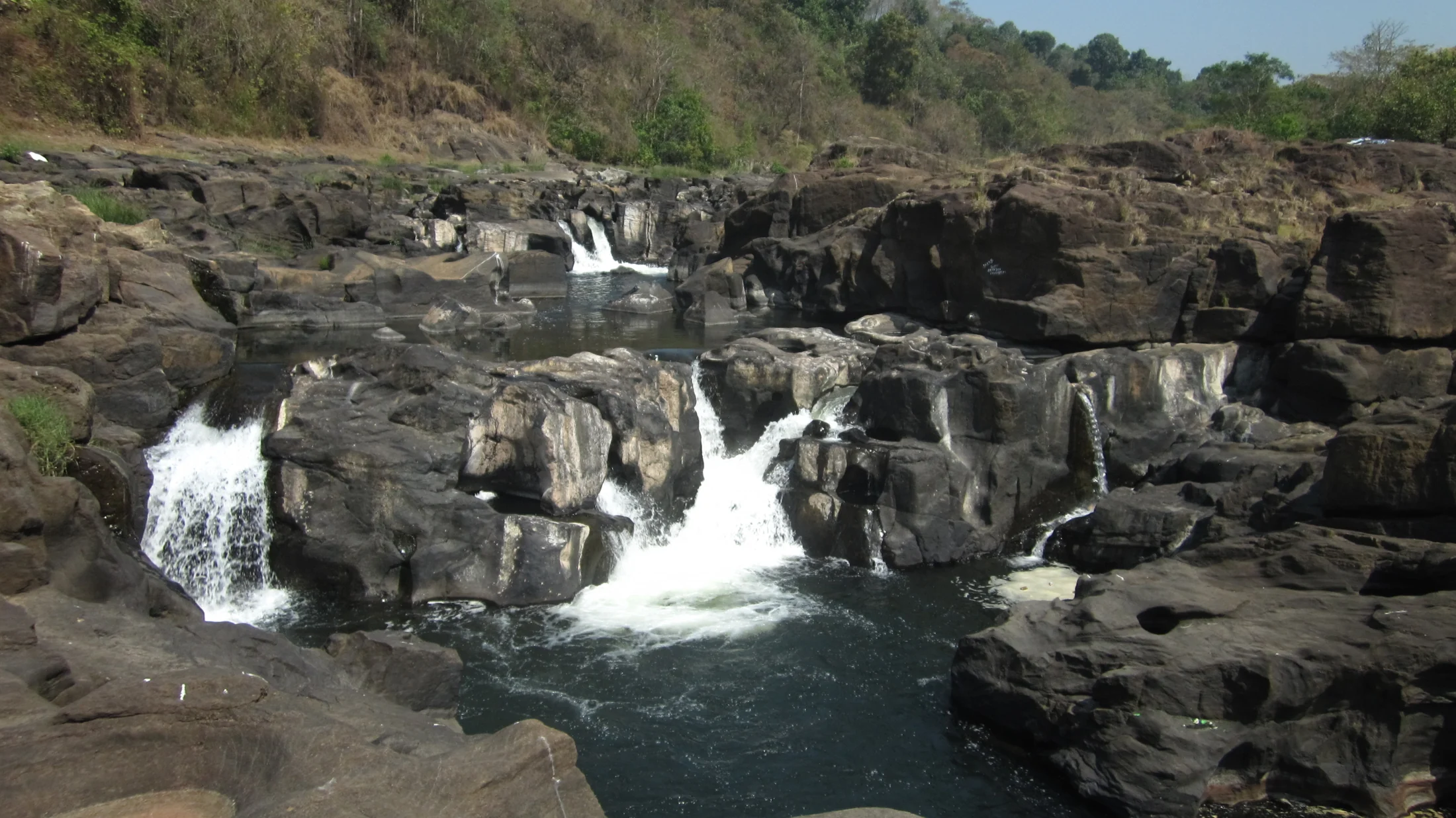
Rocky waterfall and river landscape on the Pamba tributary system, listed among Kerala ecotourism destinations.

Kerala Forest Department / local tourism authorities
Official source →
Stay · eat · do · rent · see · shop

Stays, food & things to do near Malayalapuzha Devi Temple

Browse listed stays, food, activities, sights, shops and rentals around Malayalapuzha Devi Temple. Check each listing’s locality and contact the business directly for current arrangements.

1 place to eat near Malayalapuzha Devi Temple

Hotel restaurant · Pathanamthitta town
Hotel Hills Park Restaurant Pathanamthitta

Restaurant at Kerala Tourism-listed Hotel Hills Park in Pathanamthitta. Hotel restaurant.

Directions Commission-freeView details

Book with the place itself. India’s cyber-crime coordination centre warned in April 2025 that convincing copies of hotel and pilgrimage booking sites are being pushed through sponsored search and social ads, taking payment for rooms the property never hears about. Use the contact and source details on each profile to confirm the exact business and booking channel. A directory entry or map pin alone does not establish an operator’s identity or current availability. Roampedia takes no commission and does not collect booking payments. If a booking page reached you through an ad, check the address bar against the property’s own site before you pay. Fraud can be reported on cybercrime.gov.in or on 1930.

Nearby guides

Top experiences around Malayalapuzha Devi Temple

4 separate places to consider after Malayalapuzha Devi Temple. Open each guide before deciding: their access, hours and return arrangements are independent.

wildlifeKonni Elephant Camp

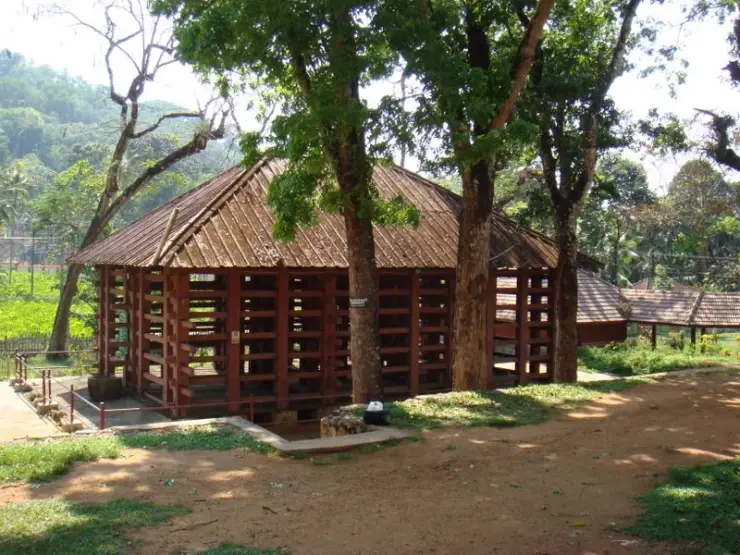
Konni’s Anathavalam combines a historic timber kraal, elephant-care areas and a museum within the Forest Department’s ecotourism campus.

churchManjinikkara Church

A hilltop Jacobite Syrian pilgrim centre (dayara) near Pathanamthitta, the resting place of Patriarch Ignatius Elias III; its annual perunnal draws large crowds.

trekKonni Adavi trek

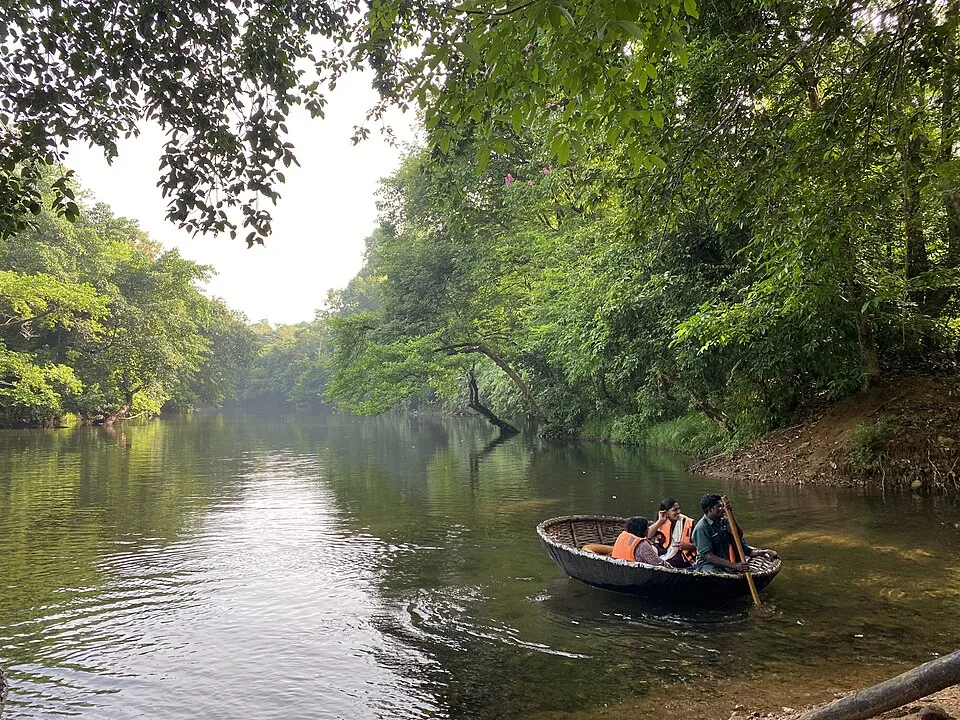
Adavi is a managed Kallar-river ecotourism stop, not a long independent trek: the official product is a short or long staff-run coracle ride through a forested 5 km reach, with separate tree-hut stays and an Adavi–Gavi bus tour.

waterfallPerunthenaruvi Waterfalls

Perunthenaruvi is the broad rocky waterfall landscape in the Pamba basin near Ranni. The nearby KSEB weir and small hydel project are separate infrastructure, not the visitor waterfall entrance.

Roampedia is commission-free — own or know a stay, eatery, guide or shop near Malayalapuzha Devi Temple? Submit public business details for review.

Add a nearby business
Before you go

Malayalapuzha Devi Temple — at a glance

TimingsDTPC Pathanamthitta lists daily 05:00–13:00 and 17:00–20:00. Special rituals and festival arrangements follow the temple’s current notice.

Parking: Use the locally directed parking arrangement and keep the temple bus stop and entrance clear. A published dedicated parking capacity is not established.

Getting here

How to reach Malayalapuzha Devi Temple

  • ✈︎ By air DTPC lists Thiruvananthapuram International Airport about 114 km away. Compare the onward road arrangement when choosing flights; this is a published planning distance, not a journey-time promise.
  • 🚆︎ By train DTPC lists Chengannur railway station about 34 km away. Arrange the onward road connection to Malayalapuzha Devi Temple.
  • 🚗︎ By road Approach Malayalappuzha through the Kumbazha side. Kerala Tourism’s festival access sheet places Kumbazha about 5 km from the temple.
  • 🚌︎ By bus The festival access sheet identifies Temple Bus Stop about 75 metres from the shrine. Confirm the relevant local service and return timetable for the day.
Getting back

Agree a pickup outside the temple entrance and any procession route. During the festival, allow the local traffic arrangement to determine where a vehicle can wait.

Do

Things to do

  • Offer prayers within the temple’s current access rules.
  • Observe the layered tiled entrance from outside the moving passage.
  • Learn the distinction between the composite sacred image and ordinary stone sculpture.
  • Read the local foundation narrative as sacred tradition.
  • Choose a specific announced festival event rather than expecting the whole eleven-day sequence on one visit.
Facilities

On site

  • Authorised temple counters handle offerings and ritual arrangements.
  • Festival annadanam is described in the tourism account; do not assume a daily visitor meal service from that festival description.
  • Use Pathanamthitta or Kumbazha for the wider meal and onward transport plan.
Getting around Malayalapuzha Devi Temple
From the entrance
Malayalapuzha Temple Road, northeast approach
Step-free access
Steps are visible at the principal entrance. A continuous step-free route, accessible toilet and wheelchair provision have not been verified. Establish the specific entrance and assistance arrangements directly with the temple before organising a visit that depends on them.

Checked 7 September 2026 against source 1source 2. Conditions change and surfaces vary with weather — if step-free access is essential, confirm with the site before you travel.

Practical things near Malayalapuzha Devi Temple
What the cash actually costs
  • For savings accounts covered by the RBI allowance, other-bank ATM transactions are free up to a monthly limit; after that, a transaction may cost up to ₹23 plus applicable taxes. This is not one of the RBI’s six metro centres, so the allowance here is the higher one: at least five free other-bank transactions (cash and noncash combined) a month.
  • Own-bank ATMs provide at least five free cash transactions a month and free noncash transactions. Basic Savings Bank Deposit Accounts follow separate rules. On a card issued abroad your own bank’s international withdrawal and exchange charges apply instead. If the machine offers to bill you in your home currency, choose rupees — the conversion rate on that offer is set by the machine, not by your bank.
  • Choose a well-lit ATM, preferably at a bank branch. Shield your PIN, avoid help from strangers and use your bank’s support number if a withdrawal fails or the machine retains your card.

Charge cap and free-transaction limits: Reserve Bank of India, ATM FAQ updated 4 July 2025; checked 4 October 2026.

These services are listed within about 1.2 km of Malayalapuzha Devi Temple. Walking distances follow mapped routes; access and opening hours can change. Other services may be closer but are not included here.

Eat nearby

What to eat in Pathanamthitta town

Plan a meal in Malayalappuzha, Kumbazha or Pathanamthitta around the temple visit. Offerings and festival annadanam have their own religious arrangements and should not be treated as a guaranteed restaurant substitute.

Explore food in Pathanamthitta town →
01

A meal on the Kumbazha route

An established restaurant on the onward road avoids returning through the crowded temple approach.

02

Temple offerings

Arrange an offering through the authorised counter and follow its collection instructions rather than assuming immediate distribution.

03

Festival annadanam

Participate only under the temple’s current announced arrangement; the historical festival account does not establish daily service.

Nearby

What’s near Malayalapuzha Devi Temple

C
Chuttippara
Place
trekChuttippara

The prominent rock hill above Pathanamthitta, reached by a steep local climb with broad town and highland views; heat, wet rock and exposed edges shape the visit.

wildlifeKonni Elephant Camp

Konni’s Anathavalam combines a historic timber kraal, elephant-care areas and a museum within the Forest Department’s ecotourism campus.

churchManjinikkara Church

A hilltop Jacobite Syrian pilgrim centre (dayara) near Pathanamthitta, the resting place of Patriarch Ignatius Elias III; its annual perunnal draws large crowds.

trekKonni Adavi trek

Adavi is a managed Kallar-river ecotourism stop, not a long independent trek: the official product is a short or long staff-run coracle ride through a forested 5 km reach, with separate tree-hut stays and an Adavi–Gavi bus tour.

waterfallPerunthenaruvi Waterfalls

Perunthenaruvi is the broad rocky waterfall landscape in the Pamba basin near Ranni. The nearby KSEB weir and small hydel project are separate infrastructure, not the visitor waterfall entrance.

heritageMaramon Convention

The site of Asia’s largest Christian convention, held for about eight days each February on the vast Pamba river sand-bed beside the Kozhencherry bridge; organised by the Mar Thoma church since 1895, the tent seats well over a hundred thousand.

heritageAranmula

Temple town on the Pamba, known for the Parthasarathy Temple, the Uthrattathi snake-boat race and the famous Aranmula Kannadi metal mirror.

C
Charalkunnu
Place
viewpointCharalkunnu

A breezy ridge and retreat landscape above the Pamba country near Kozhencherry, suited to a short viewpoint visit rather than being presented as a developed hill station.

heritagePandalam Palace

Pandalam Palace refers to a group of family buildings and worship spaces by the Achankovil river. The visitor anchor is the Valiyakoikkal-side approach, not a promise of admission to every residence or sacred room.

townErumely

The Kottayam-border town where the traditional Sabarimala pilgrimage begins, with the Vavar mosque standing beside the Sastha temple.

heritageNilackal

The Nilackal sacred landscape on the Pathanamthitta–Pamba road: Mahadeva Temple, the separate St Thomas Ecumenical Centre and the pilgrimage setting; Nilakkal is an alternative spelling.

templeKaviyoor Mahadeva Temple

An ancient hilltop Shiva temple near Thiruvalla, with fine woodwork; the nearby Trikkakkudi rock-cut cave temple, carved from a single rock, dates to about the 8th century.

6 detailed place guides in Pathanamthitta town →

Nearby toilets, pharmacies, ATMs, seating and vets are community-mapped and may be incomplete or out of date. Map data © OpenStreetMap contributors | Walking times © openrouteservice.org by HeiGIT

On the map

Where Malayalapuzha Devi Temple is

Good to know

Malayalapuzha Devi Temple — frequently asked

Are Malayalapuzha and Malayalappuzha Devi Temple the same shrine?

Yes. The spellings refer to the Bhadrakali temple in Malayalappuzha, near Kumbazha in Pathanamthitta district.

Who is the presiding deity?

Bhadrakali is the principal deity. Devotees also understand the goddess as a protective and benevolent mother.

What is unusual about the sacred image?

The government temple account identifies its construction as Kadu Sarkara Yogam, a composite technique using several materials rather than one carved stone.

When is the annual Malayalapuzha festival?

It begins on Thiruvathira in the Malayalam month of Kumbham, generally February–March, and lasts eleven days. Use the current temple notice for exact dates and events.

Is the temple proved to be 3,000 years old?

The government description presents that age as a belief. It is not used here as a verified construction date.

Which station serves a temple visit?

DTPC Pathanamthitta lists Chengannur railway station about 34 km away, with the final journey by road.

Can I photograph the deity?

Exterior photographs do not establish permission inside the temple. Follow the current photography restrictions and do not photograph the sanctum without explicit authorisation.

Is the entrance step-free?

The photographed principal entrance has steps. A continuous alternative step-free route is not verified; establish the exact drop-off and permitted access with the temple for anyone who needs assistance.

Read before you go

Malayalapuzha Devi Temple guides, stories & itineraries

Stories & history of Malayalapuzha Devi Temple

Written about Malayalapuzha Devi Temple itself — its history, its legends and the arguments about them.

Around Pathanamthitta town

These reads cover nearby destinations, each with its own arrival point and visit arrangements.

Kerala-wide guides & itineraries

Route-level itineraries and practical guides for the rest of Kerala.

See all 33 Pathanamthitta guides & stories →

Image credits

Photographs: Prasanthajantha (CC BY-SA 4.0), Kerala Tourism (Official owner source; no Creative Commons licence asserted), Prajaneeshp (CC BY-SA 3.0), Gannu03 (CC BY-SA 4.0), Eldhorajan92 (CC BY-SA 4.0), Vinayaraj (CC BY-SA 4.0), Noble Mathew (Noblevmy) (CC BY-SA 3.0), Sudhirn (CC BY 3.0), DTPC Pathanamthitta (Official owner source; no Creative Commons licence asserted), Akhilan (CC BY-SA 4.0), Sailesh (CC BY-SA 3.0), Ms Sarah Welch (CC0), DTPC Pathanamthitta / Official owner source; no Creative Commons licence asserted, Kerala Tourism / Official owner source; no Creative Commons licence asserted, Anoopan at Malayalam Wikipedia / CC BY-SA 3.0, Original uploaded by Anoopan . / CC BY-SA 3.0, Suresh Babunair / CC BY 3.0, Prajaneeshp / CC BY-SA 3.0, Sujithnairv ( talk ) / CC BY 3.0, Gannu03 / CC BY-SA 4.0, Riverside Retreat Thiruvalla (Official source photograph; credit retained), Hotel Yamuna Adoor (Official source photograph; credit retained), 24 Inn Residency (Official website image), Four One Taxi (Official website image), Sujithnairv ( talk ) (CC BY 3.0). Wikimedia Commons.