Nilackal

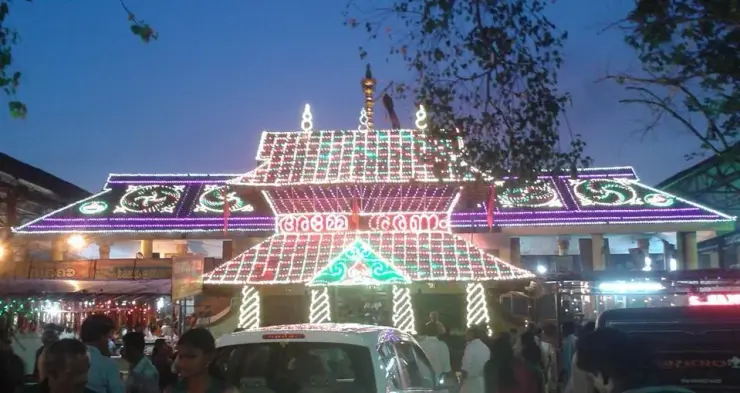
Nilackal, also written Nilakkal, is a forest-side pilgrimage locality in eastern Pathanamthitta. Its Mahadeva Temple is a halting place for Sabarimala pilgrims, while the separate St Thomas Ecumenical Centre preserves Christian traditions associated with Chayal. The locality is also known for the large base camp used on the journey towards Pamba.

Nilackal, Sabarimala and Pamba
Practical guide

Plan Nilackal

Who's going?Tailor Nilackal to your trip
Typeheritage
AreaSabarimala and Pamba
DistrictPathanamthitta
Best timeUse daylight for a first visit to the…
Time neededAllow one to two hours for a focused…
Places to visit4Listed businesses6

This guide focuses on Nilackal’s sacred places and their setting. The temple, church and base-camp transport area have different entrances and purposes. Use the named Nilackal arrival base to orient the road journey, then identify the actual place of worship you intend to visit; arriving at the parking grounds is not the same as reaching either shrine.

The story

Nilackal is often remembered as a pause on the way somewhere else. Its Shiva-topped gateway and ecumenical church deserve to be understood in their own right, alongside the transport role that makes the name familiar to Sabarimala pilgrims.

The story of Nilackal

The road setting is central to Nilackal. Kerala Tourism places the locality on the Pamba–Pathanamthitta route, near Plappally, and identifies the old Shiva temple, Farming Corporation estate and Christian ecumenical centre. These are separate features of a wider place. A visitor arriving for one should not assume the others occupy the same compound.

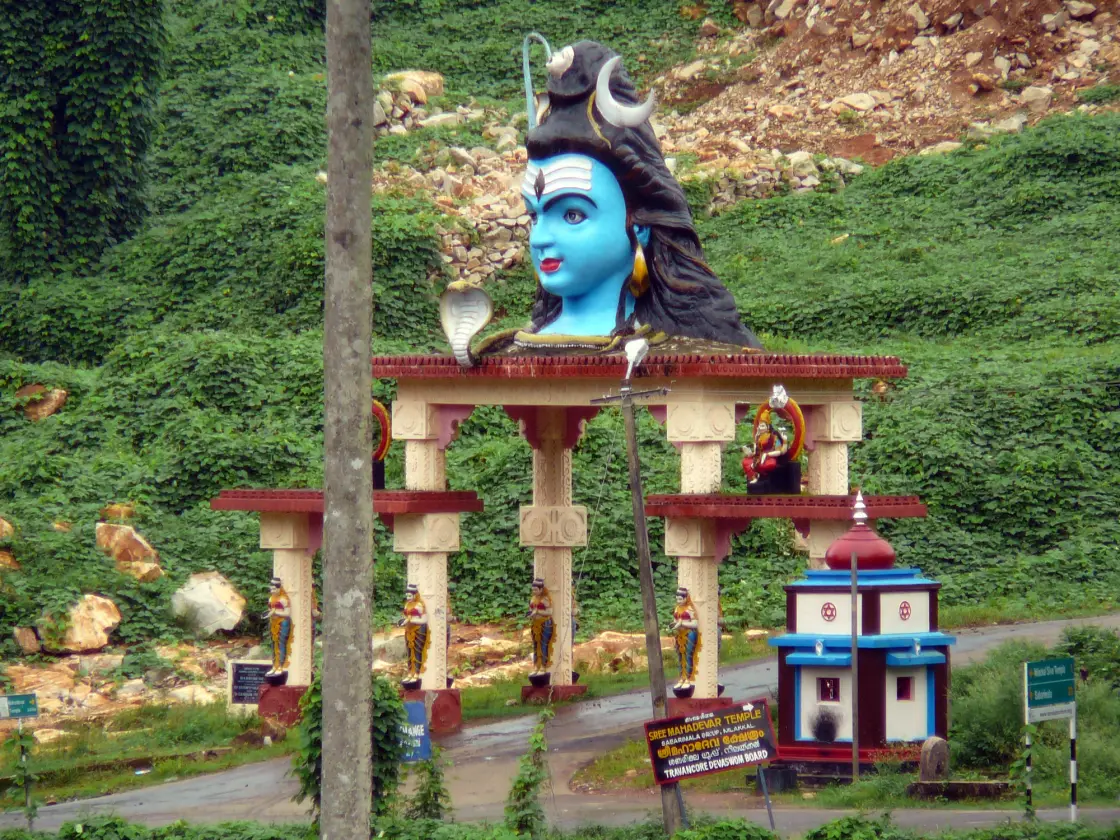
At Mahadeva Temple, the entrance arch makes the dedication visible before the shrine itself is reached. A large blue Shiva head rises above the opening, with a crescent in the hair and a cobra beside the neck. Smaller painted figures occupy the supports. In the wider view, the arch sits against a thickly vegetated slope, giving the approach a strong contrast between sculpted colour and surrounding green.

The government Sabarimala portal identifies the temple as an idathavalam, or halting place for pilgrims. That description gives the stop a ritual purpose as well as a practical one. A devotee may pause for worship here before continuing towards Pamba; the temple is not simply a decorative entrance to the parking grounds.

The same official account describes Shiva in the sacred understanding of the temple as both fierce and auspicious. It connects his blessing with Ayyappa’s protection against evil. This is the temple’s religious tradition, not a dated account of an event in the locality’s civil history. Keeping that distinction preserves the meaning of the belief without inventing an archaeological chronology.

Kannimoola Ganapathi and Nandi are the subsidiary deities named by the government portal. Its account also records a daily sequence of Usha pooja, Ucha pooja and evening Deeparadhana. Maha Shivaratri and the annual Thiruvutsavam belong to the temple’s festival life. These details describe this shrine more closely than a generic list of Kerala temple customs.

The Christian association with Nilackal uses another remembered name, Chayal. Kerala Tourism’s account of the seven-and-a-half-churches tradition relates the place to Ramban Pattu and the mission of St Thomas. The apostle’s stay and foundation of a community belong to sacred tradition. The present church should not be described as a surviving first-century building.

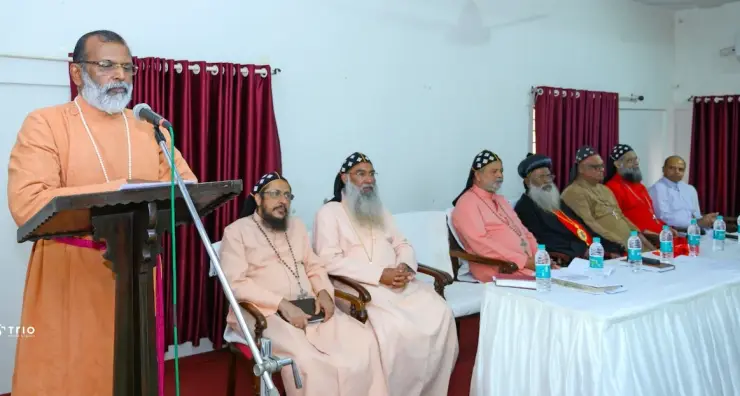
The modern ecumenical church has a different, documented timescale. The Thomasine Research Center records its consecration on 8 April 1984. A 2023 report from the CSI Madhya Kerala Diocese describes the Nilakkal Ecumenical Trust as a confederation of Episcopal churches, with representatives participating in its committee. The institution’s shared character is therefore part of its present identity, not merely a label applied to an old legend.

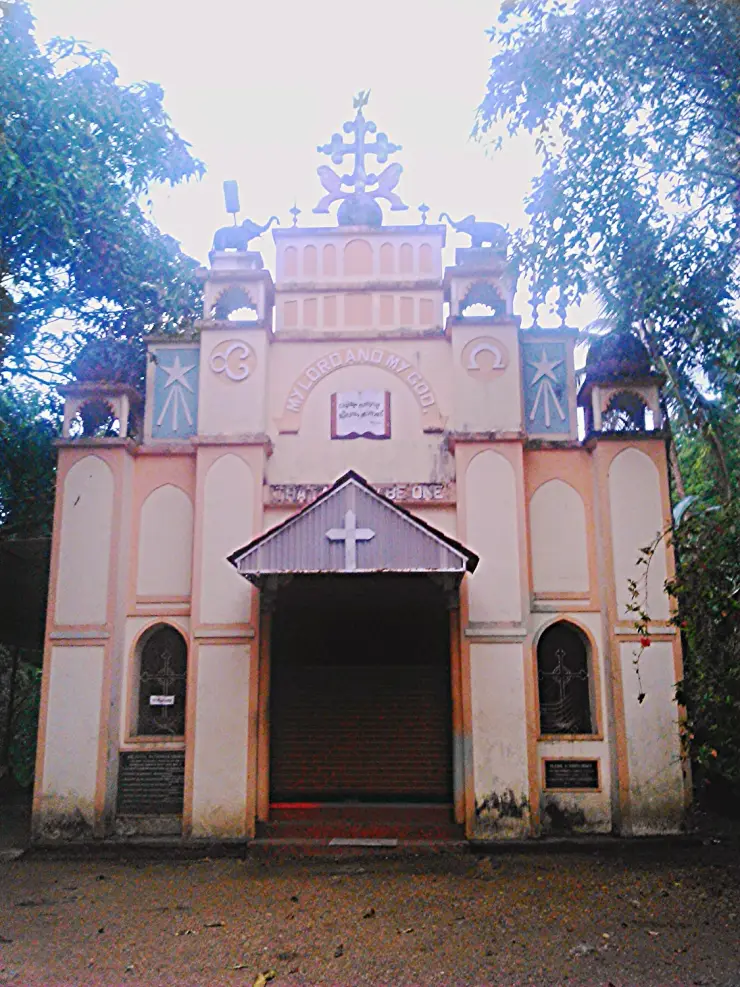
The ecumenical church front is compact and richly framed. Cream recessed panels sit within ochre outlines, with small towers rising on either side. A projecting porch roof carries a white cross above the doorway, and a larger arched inscription identifies the St Thomas Ecumenical Church. Trees closely surround the building, making its warm-coloured facade stand out from the greenery. The front has a different visual character from Mahadeva Temple’s blue Shiva gateway, another useful distinction when matching an arrival photograph to the intended place of worship.

The church’s name matters when arranging a visit. Nilackal appears in the names of other churches and diocesan institutions, including places outside this immediate locality. Use St Thomas Church and Ecumenical Centre, Nilackal, with its Angamoozhy postal context, rather than selecting the first building returned by a broad church-name search. The centre is also distinct from the Mahadeva Temple and its administration.

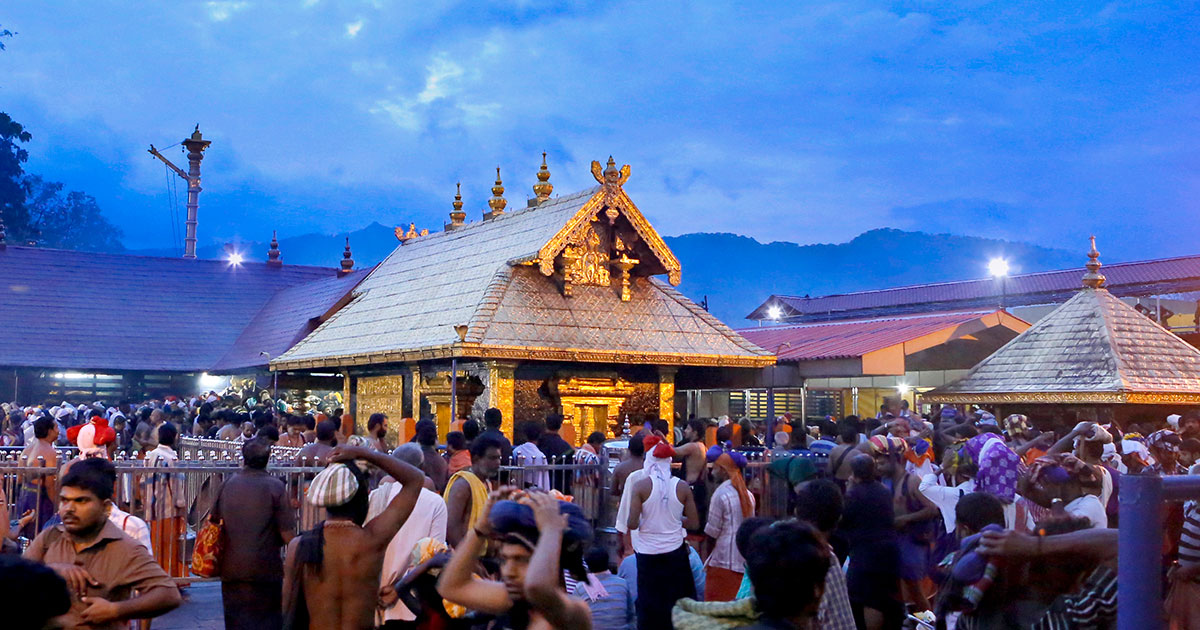
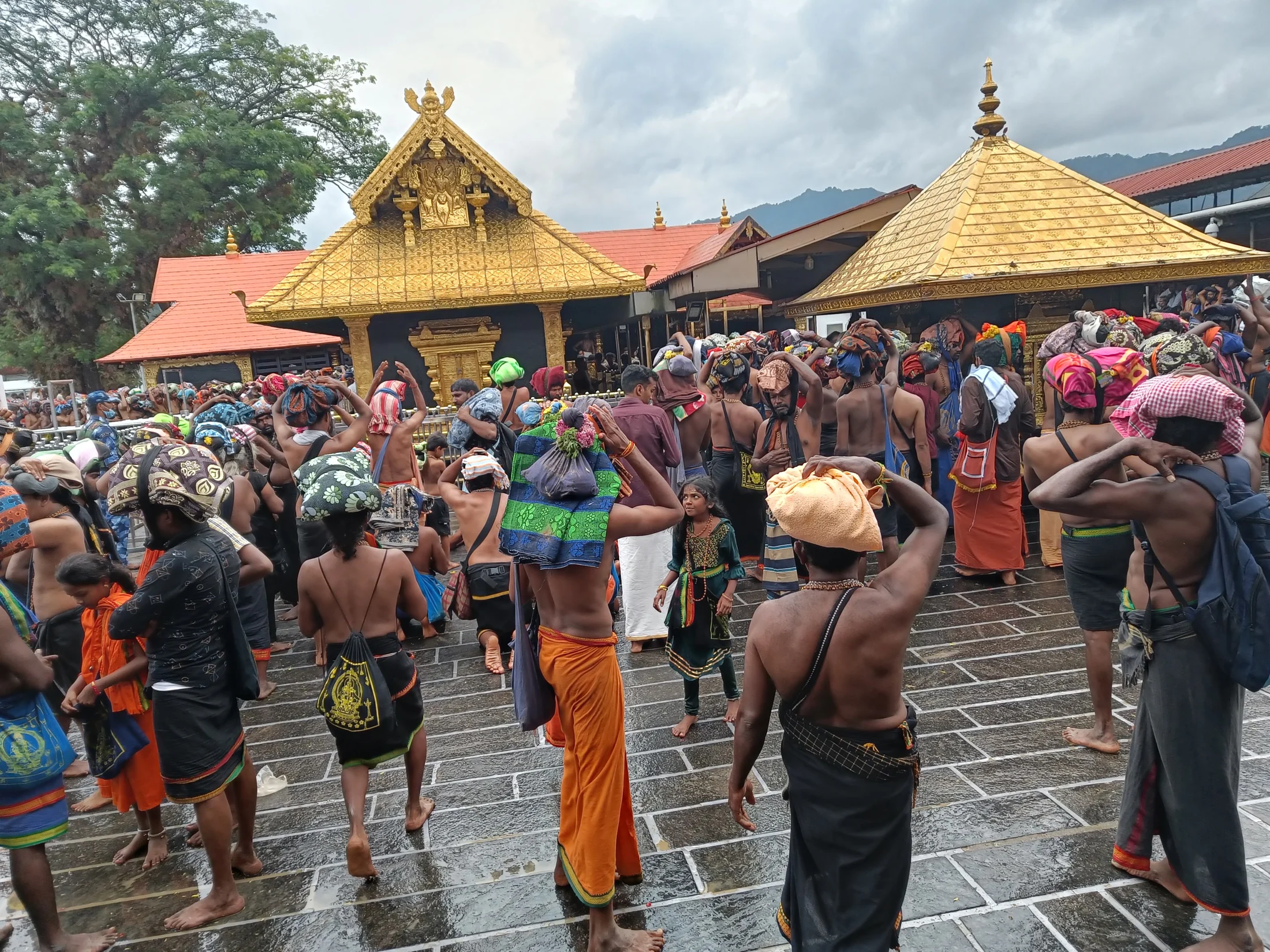
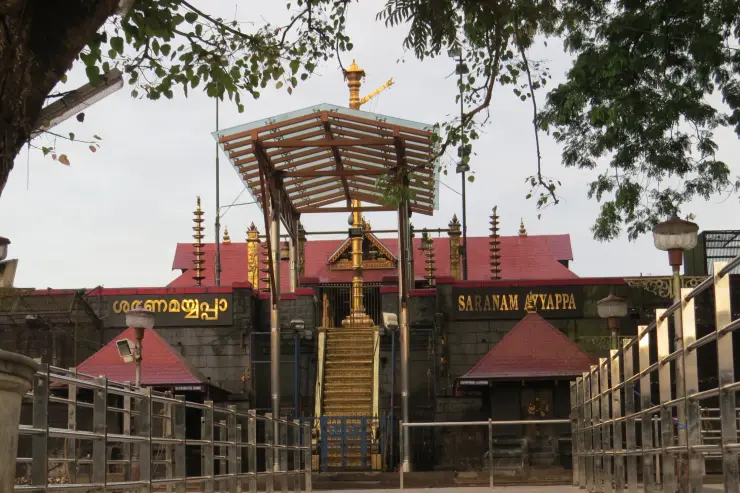
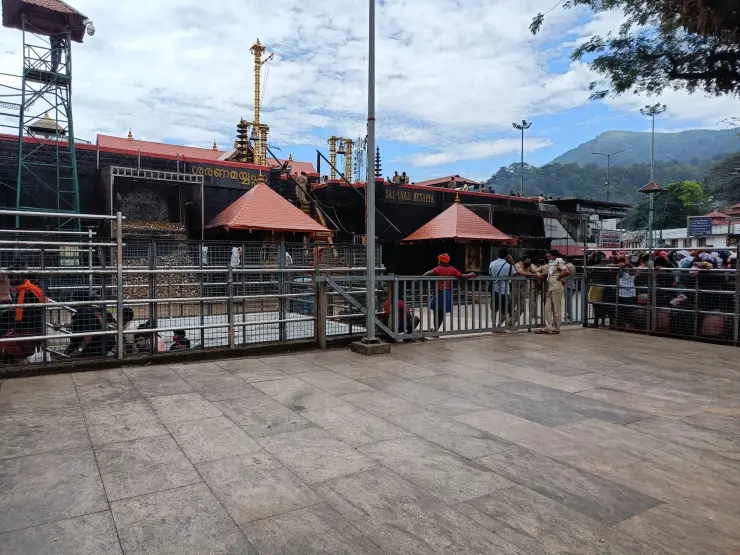
Pilgrimage brings a second scale to the landscape. The official Sabarimala facilities information describes Nilackal’s parking, drinking-water, sanitation and medical arrangements. Their scale belongs to an organised seasonal movement of people. A quiet-day photograph of trees and an entrance arch cannot convey the same conditions as a busy pilgrimage arrival.

That movement also makes the forest edge a practical responsibility. A photographed junglefowl at Nilackal stands among leaves and discarded packaging, a small but direct reminder that waste does not stay separate from wildlife. The observation supports careful use of the managed facilities; it does not turn the base camp into an open wildlife trail or promise a sighting during a shrine visit.

A thoughtful Nilackal visit keeps these layers clear. Worship at Mahadeva Temple has its own rhythm; the ecumenical church carries its own Christian history and tradition; the base camp organises onward travel. Understanding each makes the locality more legible than reducing it either to a parking stop or to one undifferentiated sacred site.

Nilackal’s modern base-camp role grew out of a very specific transport problem. The Sabarimala master plan, using traffic surveys from the 2005–06 pilgrimage seasons, examined the road between Plappally, Chalakkayam and Pampa. It found that the road carried more than arriving pilgrims: vehicles also returned empty while looking for parking, and buses made their own positioning journeys. The number of movements therefore exceeded the number of journeys a pilgrim might imagine making. Nilackal offered a place to organise that movement before it reached Pampa’s more constrained river-side space.

The planning response was a transfer system. Private vehicles could wait at Nilackal while chain-service buses carried groups onward to Pampa and back. In transport terms, the important change was to combine many small vehicle loads into larger ones. For the visitor, the consequence is a journey with separate stages: reaching the camp, finding the correct onward service, completing the pilgrimage and returning to the right parked vehicle. The current traffic order governs the actual journey, but the historical reasoning explains why the transfer exists.

The same master plan describes the land as a former Farming Corporation plantation. Its account of the proposed base station refers to rubber trees, sloping ground and vehicles parking between the trees. This is a different origin from a purpose-built urban bus terminal laid out on a bare level site. The report argued that retaining trees would preserve shade and ground cover, while suitable surfacing should allow water to enter the soil. Those concerns connect the camp’s practical design with the wooded landscape visible around Nilackal.

Tree cover and drainage were treated together. Clearing a slope could remove shade from waiting vehicles while leaving the ground more exposed to erosion and mud. The planners therefore discussed the position of vehicle lanes, tree spacing and ground treatment as linked choices. This historical account is useful when looking at Nilackal’s scale: a parking area in the high-rainfall forest fringe needs more than enough space to fit vehicles. It also needs a way for people, rainwater, buses and emergency services to move through it.

A further recommendation concerned the bus area itself. The master plan warned that placing the chain-service vehicles at the far end of a congested parking ground could prevent them from leaving when they were needed. It proposed keeping that operation nearer the entry and separating it from the movements of parked private vehicles. That is why the bus loading area, a taxi drop-off and a private vehicle’s waiting place should be treated as different locations when agreeing a meeting point at Nilackal.

The local temple visit works on a much smaller scale than this transport system. Someone coming to Mahadeva Temple for worship may need only its accepted approach and return pickup, while a group continuing to Sabarimala can be away from its vehicle for much longer. Tell a hired driver which visit is intended before entering the camp traffic. The temple’s identity as an idathavalam gives it a place in the pilgrimage sequence; it does not turn a short temple call into the full onward journey.

The ecumenical centre introduces another reason to be precise about the destination. Its shared Christian institution belongs to Nilackal’s religious landscape, while camp signs and seasonal crowd arrangements primarily serve the Sabarimala journey. A visitor researching the church should keep the full St Thomas Ecumenical Centre name with the address and arrange its entrance directly. A pilgrim heading to Pamba should follow the active camp directions. Both can use the wider Nilackal locality without expecting the same service, queue or final drop-off.

A group returning to a large parking area needs a more useful reference than “near the bus”. Record the allocated plot or row, the vehicle registration and a fixed meeting point before separating. For someone travelling with limited mobility, ask how the particular drop-off connects to the next stage, including the distance across the parking ground and boarding assistance. Nilackal’s challenge can be the transfer between facilities as much as the entrance to a shrine; these details belong in the transport arrangement made before arrival.

The forest-edge setting also explains the emphasis on waste collection. The Forest Department’s June 2025 Aranyam account describes waste from Nilakkal and Pampa being collected and sorted, with eco-guards working along the approach corridors. Food scraps and their packaging affect the same ground used by wildlife beyond the developed areas. Use the designated collection system and retain anything that cannot be deposited properly. Leaving food beside a tree is not a benign alternative to using the camp’s waste facilities.

Nilackal is therefore worth understanding through three different kinds of continuity. Mahadeva Temple carries a ritual stop within the Ayyappa pilgrimage; the Chayal tradition and modern ecumenical church carry another religious memory; the plantation and transport plans explain the development of the present arrival landscape. A visit becomes clearer when those strands remain distinct. The blue Shiva gateway, a church service and a row of waiting buses are parts of the same locality, each with its own history and reason for being there.
Read the full history of Nilackal 137 more words

History

Nilackal Mahadeva Temple’s role as a Sabarimala halting place and its administration by the Travancore Devaswom Board are recorded by the government Sabarimala portal. An exact foundation date for the present shrine is not established by those sources.

The association of Chayal with St Thomas is part of the apostolic tradition related through Ramban Pattu. It should be read separately from the age of the church building visited today.

The Thomasine Research Center dates the consecration of the modern St Thomas Ecumenical Church to 8 April 1984. CSI’s 2023 trust report documents continuing cooperation among Episcopal churches.

Why visit

Understand Mahadeva Temple as a place of worship on the Sabarimala route.

Read the visible imagery of its entrance gateway.

Learn how the Chayal tradition differs from the modern ecumenical institution.

Place Nilackal’s transport role within the wider pilgrimage landscape.

What to expect

Highlights

  • Recognise the Shiva-topped entrance arch of Nilackal Mahadeva Temple and its place on the Sabarimala pilgrimage route.
  • Understand the distinction between the Chayal apostolic tradition and the modern St Thomas Ecumenical Church.
  • See how a forest-side locality serves both places of worship and the practical movement of pilgrims towards Pamba.
Getting there

How to visit

  • Approach on the Pathanamthitta–Pamba road through the Plappally side. Tell the driver whether the destination is Mahadeva Temple, the ecumenical church or the base camp; the broad locality name is not enough for the final drop-off.
  • At Mahadeva Temple, follow the temple’s own entry and photography directions. The government portal describes morning, noon and dusk worship, but does not provide a verified clock-time visitor schedule.
  • Arrange the ecumenical-centre visit separately and respect any service in progress. If continuing to Sabarimala, use the current authorised parking, bus and booking arrangements for that pilgrimage rather than treating a Nilackal stop as admission to the hill shrine.

Distance by road

  • Thiruvananthapuram103 km
  • Kochi119 km
  • Madurai243 km
  • Coimbatore287 km
  • Kozhikode311 km

Road km to Pathanamthitta; ghat roads and traffic vary — allow extra.

Timing

Best time

Use daylight for a first visit to the locality and match a worship visit to the relevant shrine’s arrangements. Sabarimala pilgrimage periods can change road movement, parking and crowd levels considerably. Maha Shivaratri is specifically associated with Mahadeva Temple; its date and programme should come from the temple’s current notice.

Weather in NilackalSeasonal guide

Live forecast loads in your browser.

Today at Nilackal
Sunrise6:10 am
Sunset6:07 pm
Golden hour best light5:07 pm–6:07 pm
Blue hour after sunset6:07 pm–6:32 pm
Sun sets toward compass bearingW · 263°
Moon tonight🌑 New moon · 0%

Sun and moon are calculated for this location and shown in IST. Photography windows are the hour around sunrise and sunset; the sunset bearing is degrees clockwise from true north. Moon phase is accurate to about half a day.

Visitor notes

  • Nilackal and Nilakkal are spelling variants of the same locality. They do not indicate two neighbouring towns.
  • Mahadeva Temple is administered by the Travancore Devaswom Board. The St Thomas Church and Ecumenical Centre has a separate inter-church trust.
  • Current temple visitor hours, church service times and any specific admission charges are not established here. The Sabarimala calendar and virtual queue apply to the onward pilgrimage, not automatically to every place in Nilackal.
Safety

Good to know

  • Keep the marked access and emergency lanes clear around the base camp. Ask the duty staff for the appropriate waiting area instead of gathering at a bus turning point.
  • Use designated food and waste facilities. District orders have prohibited cooking beside parked vehicles and on the approach roads; a parking plot should not be treated as a cooking or camping pitch.
  • Stay on permitted roads and shrine grounds. Accounts of old Chayal remains in surrounding forest are not directions for an independent ruins walk.
Stay · eat · do · rent · see · shop

Stays, food & things to do near Nilackal

Browse listed stays, food, activities, sights, shops and rentals around Nilackal. Check each listing’s locality and contact the business directly for current arrangements.

3 things to do near Nilackal

Visitor information · Sabarimala and Pamba
SabarimalaOnline Virtual Q and Annadanam

Travancore Devaswom Board online source for Virtual-Q, pooja/accommodation booking and annadanam information.

Directions Commission-freeView details
Visitor information · Sabarimala and Pamba
Sabarimala Official Contact Directory

Official Sabarimala contact directory for Pamba, Sannidhanam and Travancore Devaswom Board office checks.

Directions Commission-freeView details
Pilgrimage service · Sabarimala and Pamba
Sabarimala Official Virtual Q and Contact

Sabarimala official portals are the required first check for Virtual-Q, pooja/accommodation booking links, helplines, opening windows and Pamba/Sannidhanam contacts. Sabarimala and Pamba, Pathanamthitta, Kerala · Use official portals · Sabarimala, Virtual Q, TDB.

Directions Commission-freeView details

Book with the place itself. India’s cyber-crime coordination centre warned in April 2025 that convincing copies of hotel and pilgrimage booking sites are being pushed through sponsored search and social ads, taking payment for rooms the property never hears about. Use the contact and source details on each profile to confirm the exact business and booking channel. A directory entry or map pin alone does not establish an operator’s identity or current availability. Roampedia takes no commission and does not collect booking payments. If a booking page reached you through an ad, check the address bar against the property’s own site before you pay. Fraud can be reported on cybercrime.gov.in or on 1930.

Nearby guides

Top experiences around Nilackal

4 separate places to consider after Nilackal. Open each guide before deciding: their access, hours and return arrangements are independent.

templeSabarimala

Sabarimala Sree Dharma Sastha Temple is the Ayyappa hill shrine in Pathanamthitta district, reached on foot from the Pamba pilgrimage base under the season’s access arrangements. Sannidhanam is the temple precinct on the hill; Pamba is the road-to-foot transfer area; Nilackal is the principal vehicle holding and bus-transfer base. The temple opens for specified periods, including the Mandala–Makaravilakku season and monthly poojas. Plan from the official opening calendar and Virtual Q instructions before arranging transport, accommodation or the ascent.

damMoozhiyar Dam

A gravity dam at Seethathodu near the Kakki reservoir that stores the tail water of the Sabarigiri hydro-electric project and diverts it to the Kakkad power station — a scenic reservoir stop on the forest road toward Gavi.

waterfallPerunthenaruvi Waterfalls

Perunthenaruvi is the broad rocky waterfall landscape in the Pamba basin near Ranni. The nearby KSEB weir and small hydel project are separate infrastructure, not the visitor waterfall entrance.

trekGavi trekking

The KFDC full-day forest programme: a trained-guide plantation walk, lunch, lake boating and controlled visits to Sabarimala and Valley viewpoints. Gavi is managed ecotourism inside the Periyar Tiger Reserve landscape, not an independent trailhead.

Roampedia is commission-free — own or know a stay, eatery, guide or shop near Nilackal? Submit public business details for review.

Add a nearby business
Before you go

Nilackal — at a glance

Photography: The Shiva-topped gateway can be photographed from an accepted public position without entering worship space. Ask before photographing inside either shrine, and keep cameras out of the way of worshippers and the transport queues.

Parking: Follow the allocated Nilackal parking arrangement and retain the plot or row identifier. Keep emergency access clear. For a separate church visit, establish its own accepted parking rather than assuming a base-camp space is within walking distance of the entrance.

Getting here

How to reach Nilackal

  • ✈︎ By air Cochin and Thiruvananthapuram airports serve different road approaches to the wider pilgrimage region. Arrange the full road transfer and final Nilackal destination before arrival rather than relying on a single straight-line distance.
  • 🚆︎ By train Chengannur and Kottayam are rail gateways identified in official Sabarimala travel information. Continue by the appropriate road or bus connection to Nilackal, with sufficient room for seasonal traffic and transfers.
  • 🚗︎ By road Approach through the Pathanamthitta–Pamba corridor and the Plappally side, following current police directions at Nilackal. Give the driver the name of the shrine or base-camp area, not just the wider Sabarimala destination.
  • 🚌︎ By bus Use current KSRTC or official pilgrimage information for services to Nilackal and the authorised onward connection towards Pamba. Confirm where to board for the return; a bus arriving at the base camp does not automatically serve the ecumenical-centre entrance.
Getting back

Record the parking area and vehicle location before leaving it, particularly in a group. Agree whether the return is after a local shrine visit or after the longer Sabarimala pilgrimage; these are very different pickup plans.

Do

Things to do

  • Visit Mahadeva Temple according to its entry and worship arrangements.
  • Look closely at the Shiva imagery and smaller painted figures on the entrance arch.
  • Arrange a separate visit to St Thomas Church and Ecumenical Centre.
  • Read the Chayal tradition alongside the modern church’s ecumenical history.
  • Use the local stop to organise the next pilgrimage stage at the appropriate information point.
Facilities

On site

  • The government’s Sabarimala facilities page describes drinking water, toilets, bathing facilities, food provision and medical support at Nilackal. Their working locations and seasonal availability should be obtained from the active camp information point.
  • The temple and ecumenical centre are places of worship with their own administration. A camp service listing does not establish a facility inside either compound.
  • Use the official pilgrimage help arrangements for an onward Sabarimala journey, especially when coordinating a group or requiring assistance.
Getting around Nilackal
From the entrance
Nilackal parking and Temple Road area, a named orientation base; temple and ecumenical-centre entrances are separate
Step-free access
The size of the base camp and distance between destinations can matter as much as entrance steps. Ask for a suitable drop-off and the actual route to the intended shrine. Wheelchair access, assisted boarding and an accessible toilet should be checked for the specific facility being used.

Checked 7 September 2026 against source 1source 2. Conditions change and surfaces vary with weather — if step-free access is essential, confirm with the site before you travel.

Practical things near Nilackal

These services are listed within about 1.2 km of Nilackal. Walking distances follow mapped routes; access and opening hours can change. Other services may be closer but are not included here.

Eat nearby

What to eat in Sabarimala and Pamba

For a pilgrimage visit, use designated meal facilities or authorised food counters. The government facilities page identifies an annadana mandapam at Nilackal; ask the active camp staff about its current service.

Explore food in Sabarimala and Pamba →
01

Annadanam

Use the designated meal hall and its serving arrangements. The facilities page’s listing should not be treated as a year-round, round-the-clock promise.

02

A vegetarian meal

Choose an authorised counter serving the pilgrimage area and use the displayed menu or price list for the actual order.

03

A meal before the forest road

For a local heritage visit outside the main season, arrange a substantial meal at the road base or your stay before the final approach.

Nearby

What’s near Nilackal

templeSabarimala

Sabarimala Sree Dharma Sastha Temple is the Ayyappa hill shrine in Pathanamthitta district, reached on foot from the Pamba pilgrimage base under the season’s access arrangements. Sannidhanam is the temple precinct on the hill; Pamba is the road-to-foot transfer area; Nilackal is the principal vehicle holding and bus-transfer base. The temple opens for specified periods, including the Mandala–Makaravilakku season and monthly poojas. Plan from the official opening calendar and Virtual Q instructions before arranging transport, accommodation or the ascent.

damMoozhiyar Dam

A gravity dam at Seethathodu near the Kakki reservoir that stores the tail water of the Sabarigiri hydro-electric project and diverts it to the Kakkad power station — a scenic reservoir stop on the forest road toward Gavi.

waterfallPerunthenaruvi Waterfalls

Perunthenaruvi is the broad rocky waterfall landscape in the Pamba basin near Ranni. The nearby KSEB weir and small hydel project are separate infrastructure, not the visitor waterfall entrance.

trekGavi trekking

The KFDC full-day forest programme: a trained-guide plantation walk, lunch, lake boating and controlled visits to Sabarimala and Valley viewpoints. Gavi is managed ecotourism inside the Periyar Tiger Reserve landscape, not an independent trailhead.

trekKonni Adavi trek

Adavi is a managed Kallar-river ecotourism stop, not a long independent trek: the official product is a short or long staff-run coracle ride through a forested 5 km reach, with separate tree-hut stays and an Adavi–Gavi bus tour.

townErumely

The Kottayam-border town where the traditional Sabarimala pilgrimage begins, with the Vavar mosque standing beside the Sastha temple.

templeMalayalapuzha Devi Temple

Malayalapuzha, also written Malayalappuzha, is the Bhadrakali temple near Kumbazha in Pathanamthitta district, administered by the Travancore Devaswom Board.

wildlifeKonni Elephant Camp

Konni’s Anathavalam combines a historic timber kraal, elephant-care areas and a museum within the Forest Department’s ecotourism campus.

C
Chuttippara
Place
trekChuttippara

The prominent rock hill above Pathanamthitta, reached by a steep local climb with broad town and highland views; heat, wet rock and exposed edges shape the visit.

churchManjinikkara Church

A hilltop Jacobite Syrian pilgrim centre (dayara) near Pathanamthitta, the resting place of Patriarch Ignatius Elias III; its annual perunnal draws large crowds.

C
Charalkunnu
Place
viewpointCharalkunnu

A breezy ridge and retreat landscape above the Pamba country near Kozhencherry, suited to a short viewpoint visit rather than being presented as a developed hill station.

heritageMaramon Convention

The site of Asia’s largest Christian convention, held for about eight days each February on the vast Pamba river sand-bed beside the Kozhencherry bridge; organised by the Mar Thoma church since 1895, the tent seats well over a hundred thousand.

4 detailed place guides in Sabarimala and Pamba →

Nearby toilets, pharmacies, ATMs, seating and vets are community-mapped and may be incomplete or out of date. Map data © OpenStreetMap contributors | Walking times © openrouteservice.org by HeiGIT

On the map

Where Nilackal is

Good to know

Nilackal — frequently asked

Are Nilackal and Nilakkal different places?

They are alternative spellings of the same locality in eastern Pathanamthitta. Use the specific temple, church or base-camp destination to distinguish the final arrival.

Is Nilackal Mahadeva Temple the Sabarimala shrine?

No. Mahadeva Temple is dedicated to Shiva and serves as a halting place on the pilgrimage route. The onward journey to Pamba and Sabarimala has separate transport and access arrangements.

Who administers Nilackal Mahadeva Temple?

The government Sabarimala portal identifies the Travancore Devaswom Board as its administrator. The board lists a Nilackal Devaswom office within its Sabarimala group.

Which festivals belong to Nilackal Mahadeva Temple?

The official account names Maha Shivaratri and the annual Thiruvutsavam. Use the temple’s current announcement for dates and the detailed programme.

Is the Nilackal church a first-century building?

No such claim is made here. The St Thomas association belongs to the Chayal tradition; the modern ecumenical church was consecrated in 1984 according to the Thomasine Research Center.

Can I visit the temple and church in one stop?

They are separate destinations within the wider Nilackal setting. Arrange their actual entrances and visiting times rather than assuming both are beside the base-camp parking area.

Can I drive from Nilackal to Pamba?

Follow the current pilgrimage traffic arrangement. Nilackal functions as a parking and transfer base, and restrictions or authorised bus arrangements can determine the onward journey. Do not infer permission from an older road itinerary.

Does Nilackal have wheelchair access throughout?

A continuous accessible route across the parking grounds and both places of worship is not verified. Ask about the specific drop-off, surface, entrance steps and available assistance for the destination you intend to visit.

Do the Mahadeva Temple and St Thomas Ecumenical Church have the same administration?

No. The government Sabarimala portal identifies Travancore Devaswom Board administration for Mahadeva Temple. The ecumenical church is associated with its inter-church trust. Use the institution you intend to visit when arranging worship, a group call or entrance assistance; a base-camp transport enquiry covers a different service.

When is the best time to visit Nilackal?

Use daylight for a first visit to the locality and match a worship visit to the relevant shrine’s arrangements. Sabarimala pilgrimage periods can change road movement, parking and crowd levels considerably. Maha Shivaratri is specifically associated with Mahadeva Temple; its date and programme should come from the temple’s current notice.

How do I reach Nilackal?

Approach on the Pathanamthitta–Pamba road through the Plappally side. Tell the driver whether the destination is Mahadeva Temple, the ecumenical church or the base camp; the broad locality name is not enough for the final drop-off. At Mahadeva Temple, follow the temple’s own entry and photography directions. The government portal describes morning, noon and dusk worship, but does not provide a verified clock-time visitor schedule. Arrange the ecumenical-centre visit separately and respect any service in progress. If continuing to Sabarimala, use the current authorised parking, bus and booking arrangements for that pilgrimage rather than treating a Nilackal stop as admission to the hill shrine.

How much time do I need for Nilackal?

Allow one to two hours for a focused Nilackal visit as a planning estimate, with separate transfers if visiting both the temple and ecumenical centre. Base-camp queues and the onward Sabarimala journey are additional and can dominate the day during pilgrimage periods.

What else is near Nilackal?

Nearby you can pair Sabarimala, Moozhiyar Dam, Perunthenaruvi Waterfalls, Gavi trekking.

What should I know before visiting Nilackal?

Keep the marked access and emergency lanes clear around the base camp. Ask the duty staff for the appropriate waiting area instead of gathering at a bus turning point. Use designated food and waste facilities. District orders have prohibited cooking beside parked vehicles and on the approach roads; a parking plot should not be treated as a cooking or camping pitch. Stay on permitted roads and shrine grounds. Accounts of old Chayal remains in surrounding forest are not directions for an independent ruins walk.

Read before you go

Nilackal guides, stories & itineraries

Stories & history of Nilackal

Written about Nilackal itself — its history, its legends and the arguments about them.

Around Sabarimala and Pamba

These reads cover nearby destinations, each with its own arrival point and visit arrangements.

Kerala-wide guides & itineraries

Route-level itineraries and practical guides for the rest of Kerala.

See all 33 Pathanamthitta guides & stories →