What to expect
Highlights
- Use Kovalam as a local base
- Food, transport and stays are easier here than at isolated attractions
- Good starting point for nearby day trips
The fishing harbour and old port town immediately south of Kovalam — once the capital of the Ay dynasty, now the site of India’s first deepwater container transhipment terminal.
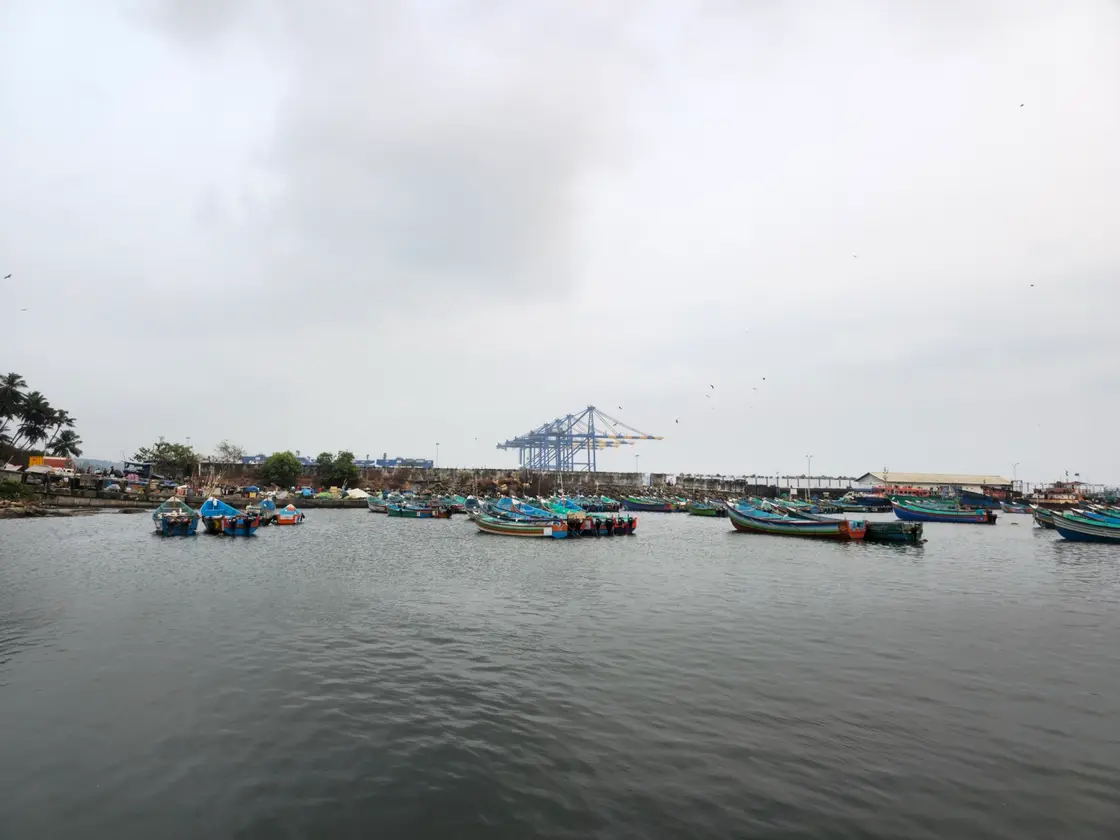
Three kilometres south of Kovalam’s sunloungers, the road drops into a working fishing harbour where the morning begins with an auction shouted across a quay. Vizhinjam has been a port for well over a thousand years — capital of the Ay kings, prize in three dynasties’ wars — and it is now the site of India’s first deepwater container transhipment terminal. Almost nobody staying up the road walks down to see it.
The harbour is the thing. Come between about six and eight in the morning and the quay is a crush of ice, plastic crates, motorbikes, lorries and shouting. Boats come alongside and the catch goes up onto the concrete in bright heaps — seer, tuna, sardine, squid, whatever the night produced — and is auctioned in a fast, compressed patter that is impossible to follow and easy to watch. Within an hour it is on lorries heading for Thiruvananthapuram, and within two the quay is being hosed down.
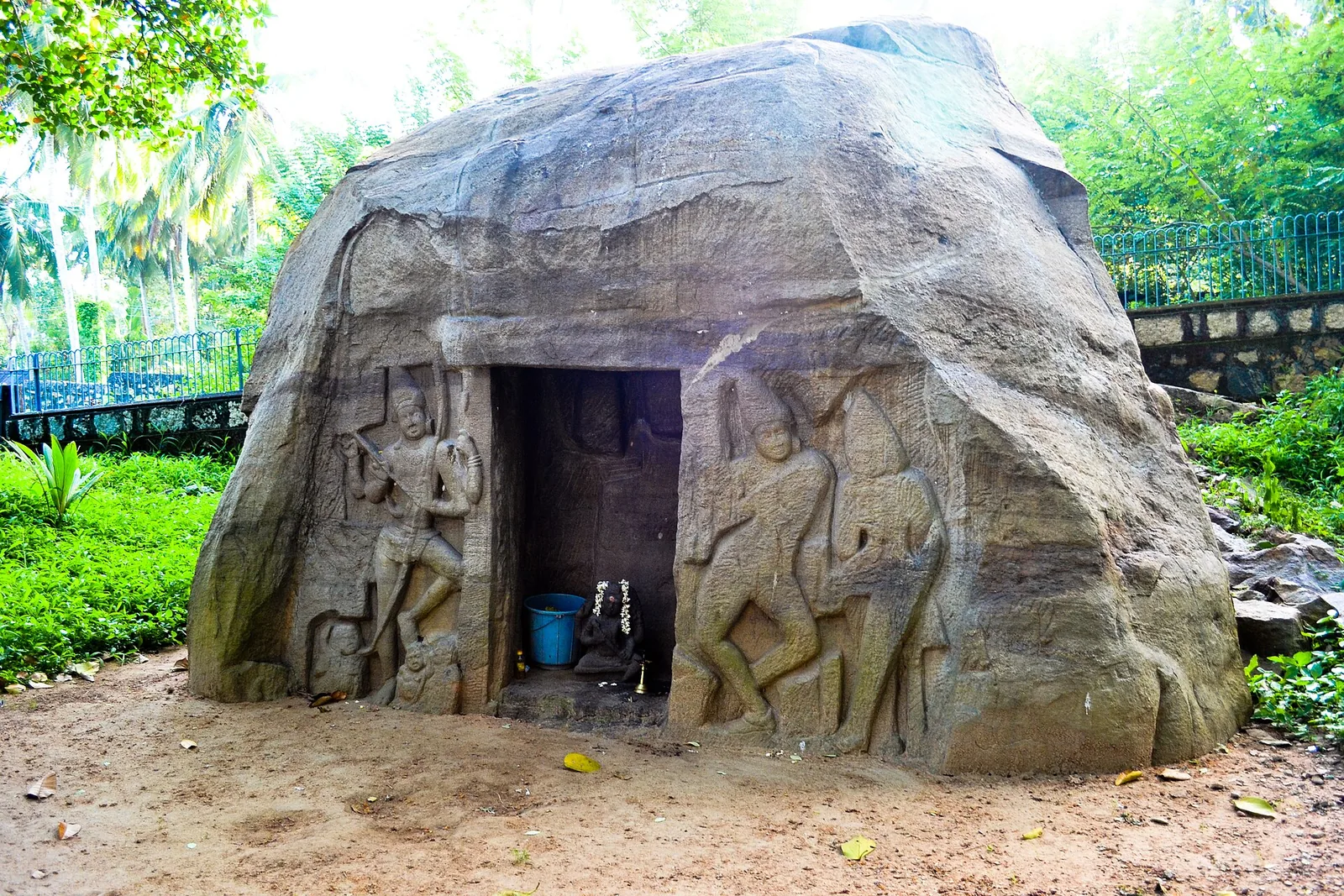
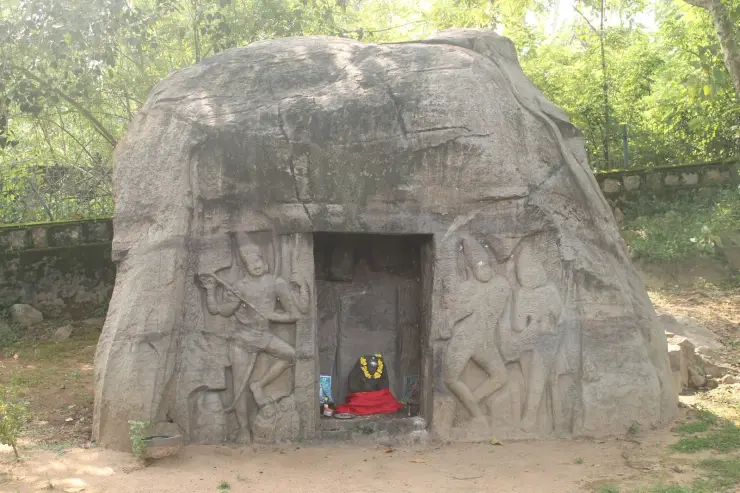
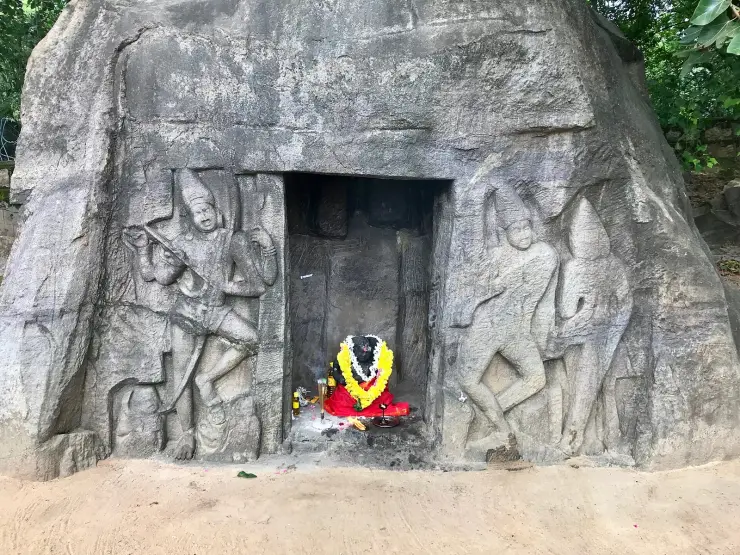
Behind the harbour the old town climbs a low rise, and on that rise sits the reason Vizhinjam matters to anyone interested in history: a small rock-cut cave shrine, cut into a single boulder, holding carved reliefs usually dated to around the eighth century. It is modest — you could walk past it — and it is one of the oldest surviving pieces of built religion in this part of Kerala, a survival from the Ay dynasty that ruled this coast from here.
That dynasty is the key to the place. Vizhinjam, appearing in old inscriptions and in Tamil literature under names including Vilinam, was the Ays’ port and at times their capital, and its harbour made it worth taking. The Cholas and the Pandyas fought over it; the Venad rulers held it later. For a modern visitor it takes a moment of adjustment to stand on a quay full of ice boxes and register that this was, for centuries, one of the most fought-over anchorages on the Malabar and Travancore coast.
What made it worth fighting for is also what is remaking it now. Vizhinjam has something almost no other point on India’s west coast has: deep water very close inshore, and a position only a short distance off the main east–west shipping lane. That combination is why the Vizhinjam International Seaport was built here — a deepwater transhipment terminal designed to take the largest container ships, the first of its kind in the country. Its breakwater is visible from the old harbour, running out into the sea to the south.
The project is not uncontested, and a page that pretended otherwise would be dishonest. The construction drew sustained protest from parts of the local fishing community over shoreline change, erosion and the effect on livelihoods, and the arguments about coastal impact and about compensation have been serious and public. The port is now operating; the disagreements about what it has cost the coast have not gone away. Both things are true and a visitor standing on the old quay is looking at both at once.
For all that, the visit itself is simple and short. An hour will cover the auction, the walk up to the cave temple and a look out at the breakwater. Do it early, do it on foot, and treat the quay as somebody’s workplace, because that is what it is.
Local tradition connects the rock-cut shrine on the rise to the sage-and-king stories that cluster along this coast, and the reliefs carved into the boulder are popularly read as Shiva with Parvati and as a dancing form of the god. These identifications are traditional and widely repeated locally; the dating and the iconography are matters for art historians rather than settled fact, and different accounts read the carvings differently.
The port itself has acquired a modern folklore of its own — stories about the depth of the water just off the point, and about how the sea here never silts the way it does elsewhere on the coast. The unusual bathymetry is real and is precisely why the terminal was built here. The stories are the way a fishing town has always explained its own luck. The figures behind the folklore: about 24 metres of natural depth, and roughly 10 nautical miles from the east–west shipping channel, which is close enough that a ship calling here is barely deviating from its route.
The claim you will hear most often about the new port is that it is India's first transhipment terminal. It is not, and the distinction is worth getting right because the other one is also in Kerala. That title belongs to the International Container Transshipment Terminal at Vallarpadam, in Kochi, which opened on 11 February 2011. What Vizhinjam is first at is being a deepwater transhipment port — one whose natural draft can take the largest container ships without the constant dredging that constrains Vallarpadam. Two different claims, fifteen years and about 200 km apart, and they get collapsed into one sentence constantly.
The relationship between the two has since become a good deal less abstract. Vizhinjam did not simply add capacity to Kerala; a large share of the transhipment business it now handles is business that used to move through Vallarpadam, whose transhipment volumes roughly halved in 2025-26. For a state that spent two decades arguing that it needed a transhipment port so that Indian cargo would stop being handled in Colombo, the first visible effect was a transfer between two Kerala terminals rather than a repatriation from Sri Lanka. That is not an argument against the port. It is a caution against the simplest version of the story.
A smaller confusion, but one that catches people looking at maps and shipping data: there are two Vizhinjam ports. The old fishing harbour is a minor port under the Kerala Maritime Board with the code IN VZJ, and its wharves have drafts of four and five metres. The deepwater terminal to the south is a separate entity with the code IN TRV. If a figure seems impossibly small for a container port, you are probably reading the fishing harbour's.
The last thing worth unpicking is the town's own antiquity, which is usually stated with more confidence than the evidence supports. That Vizhinjam was the Ay port and at times their seat is well founded, and the name turns up in inscriptions and in Tamil sources as Vilinam. But the specific dates attached to the rock-cut shrine — most often the eighth century — are an art-historical estimate from the style of the carving rather than anything the monument says about itself. It carries no dated inscription. Treat the century as a considered scholarly judgement, which is what it is, and not as a record.
Vizhinjam was the port, and for periods the capital, of the Ay dynasty, one of the oldest ruling lines of the far south, whose territory covered much of what is now southern Kerala and the adjoining Tamil country. The harbour is referred to in early inscriptions and in Tamil literature, and the town’s importance rests on that anchorage rather than on any inland resource.
Its position made it a target. Vizhinjam was attacked and contested repeatedly during the long rivalry between the Cholas, the Pandyas and the Chera–Ay powers, with the port changing hands more than once; it later fell within the orbit of the Venad rulers who became the Travancore royal house. The rock-cut cave temple on the rise above the harbour, generally dated to about the eighth century, survives from the Ay period.
Through the colonial centuries and after Independence the port’s strategic significance faded and Vizhinjam settled into being what it looks like today: a dense, busy fishing town with one of the more important landing centres on the Thiruvananthapuram coast, overshadowed commercially by Kochi to the north.
The modern chapter began in the 2010s with the decision to build a deepwater container transhipment terminal here, taking advantage of the natural depth close inshore and the proximity to the international shipping lane. Construction ran through sustained local protest over coastal erosion and fishing livelihoods, and the port has since entered operation as India’s first deepwater transhipment terminal — a change in scale for the town that has no precedent in its long history as a harbour.
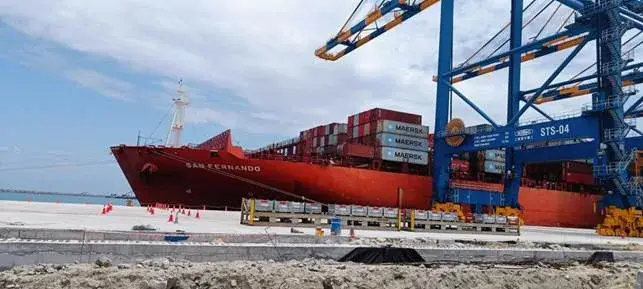
The dates of that chapter are worth having, because the project ran far longer than most visitors assume. Adani Ports signed a 40-year concession to design, build, finance and operate the terminal, and construction began on 5 December 2015. The protest phase peaked from August 2022, intensifying that November, led by the Roman Catholic Archdiocese of Trivandrum on behalf of Catholic fishing families, and was called off on 6 December 2022 after talks with the state government. The first cargo vessel, the Zhen-Hua 15, arrived on 12 October 2023; the first container ship, the San Fernando, docked on 11 July 2024; and the port was inaugurated by the Prime Minister on 2 May 2025. Phase one is built for about a million TEU a year, with roughly 6.2 million more planned in later phases, and the breakwater — the wall you can see from the old quay — runs about 3,180 m now and is designed to reach 4.5 km.
The morning fish auction on the quay is the most vivid twenty minutes on this stretch of coast, and it is three kilometres from Kovalam’s beaches.
The eighth-century rock-cut cave shrine above the harbour is one of the oldest surviving built structures in southern Kerala, and it takes ten minutes to see.
It is a rare chance to stand in a place where an ancient port, a working artisanal fishery and a brand-new deepwater container terminal are all visible from the same spot.
The history is genuinely first-rank — this was the Ay capital and a harbour that the Cholas and Pandyas fought over — and almost none of the visitors staying up the road know it.
It offers an honest, unpolished counterweight to Kovalam: a working town rather than a resort, reached in ten minutes by autorickshaw.
Road km to Thiruvananthapuram; ghat roads and traffic vary — allow extra.
October to March is the easiest Kerala travel season; mornings and late afternoons are generally better for walking.
Live forecast loads in your browser.
Sun and moon are calculated for this location and shown in IST. Photography windows are the hour around sunrise and sunset; the sunset bearing is degrees clockwise from true north. Moon phase is accurate to about half a day.
Verified hotels, homestays, restaurants, experiences, sights, shops and rentals around Vizhinjam — commission-free, with direct contact. Filter by what you need.
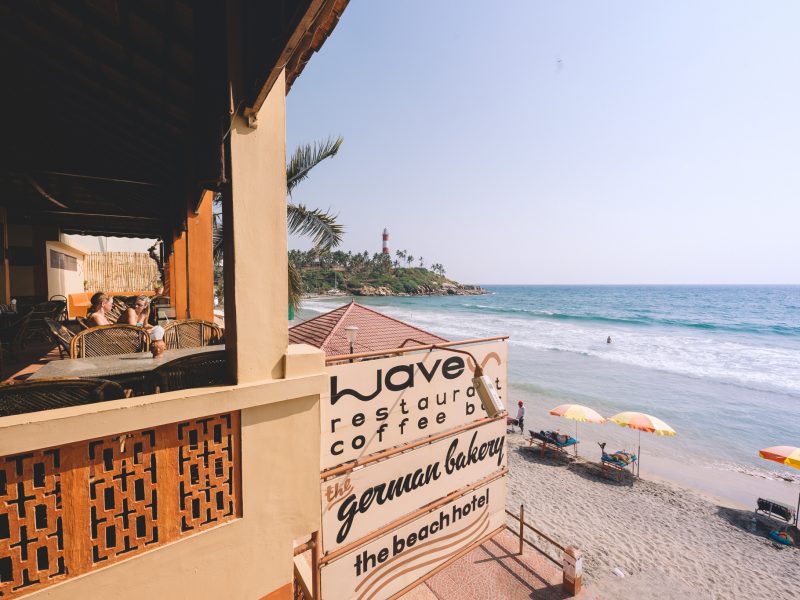
The German Bakery & Waves at Lighthouse Beach offers baked goods and Western and Asian dishes. It suits a promenade meal stop; compare seafood prices before ordering.
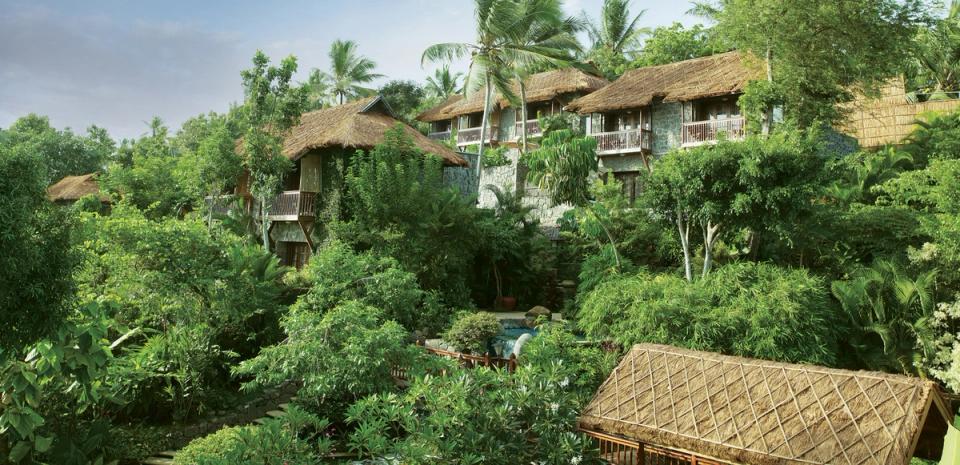
Bait is a dining venue at Taj Green Cove with seafood and regional dishes. Reserve with the hotel and check access if you are not staying there.

Fusion Restaurant & Coffee Bar brings East–West dishes, coffee and cocktails to the Lighthouse Beach dining scene. A meal here is separate from the tower visitor session.
Restaurant (seafood, regional) on Vizhinjam Harbour Road in Kovalam.
Restaurant (seafood, italian, chinese, indian, regional, arabian) on Pachalloor in Kovalam.
Book with the place itself. India’s cyber-crime coordination centre warned in April 2025 that convincing copies of hotel and pilgrimage booking sites are being pushed through sponsored search and social ads, taking payment for rooms the property never hears about. Every listing here links to the business’s own contact details and its own Google or Bing profile — we take no commission and sit in nobody’s payment path. If a booking page reached you through an ad, check the address bar against the property’s own site before you pay. Fraud can be reported on cybercrime.gov.in or on 1930.
Find food, accommodation and activities across Kovalam. Browse the guides for places to eat, stay and explore along your route.
Walking routes start at Vizhinjam. Check the route and access before setting out, especially where a road, gate or waterway separates the stops.
5 more places around Kovalam. Open a guide to plan the visit and onward journey.
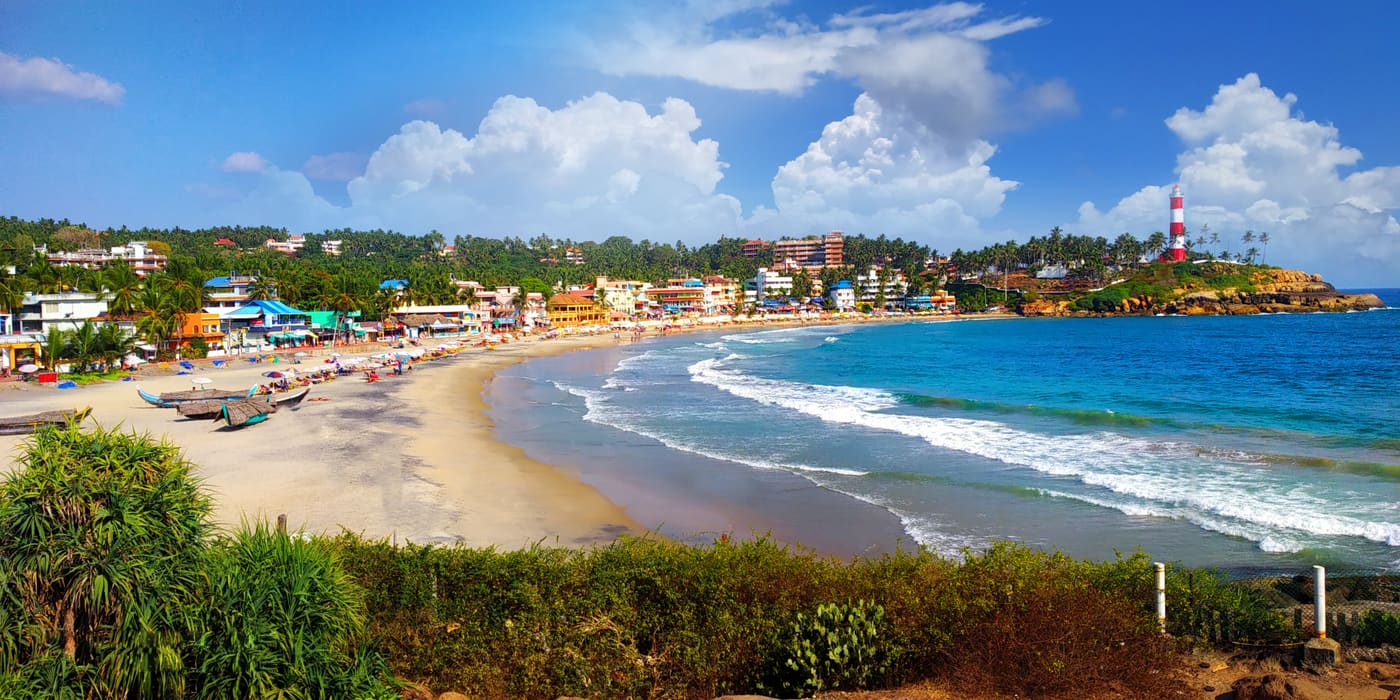
2.2 km · 27 min walk
Kerala’s classic beach resort area, known for Lighthouse Beach, Hawa Beach and sunset viewpoints.
70 m · 1 min walk
A small rock-cut shrine at Vizhinjam offers a close encounter with early carving near Kovalam’s coast. It is a compact archaeological stop, with the interest in the stonework rather than a long cave walk.
2.3 km · 28 min walk
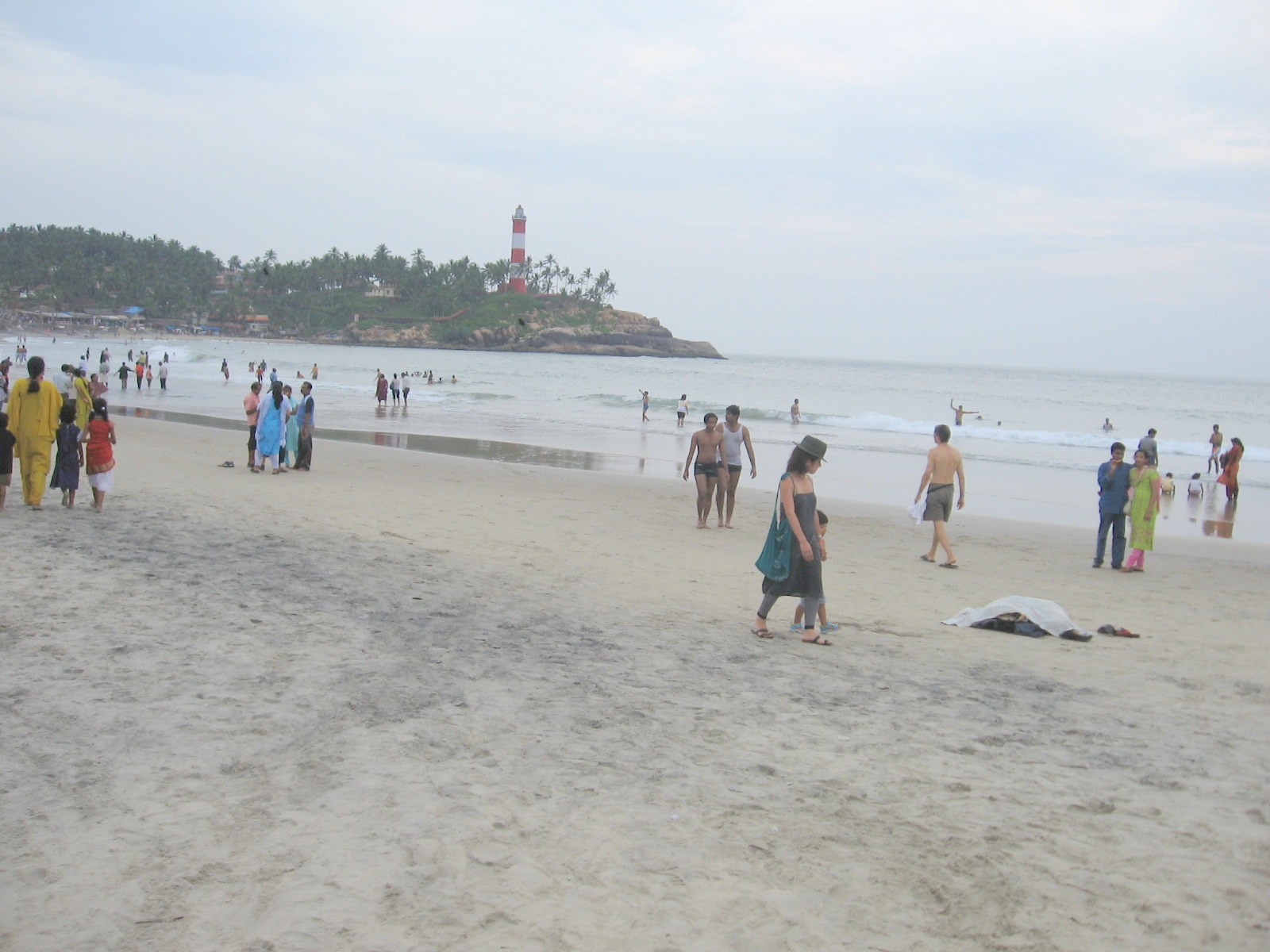
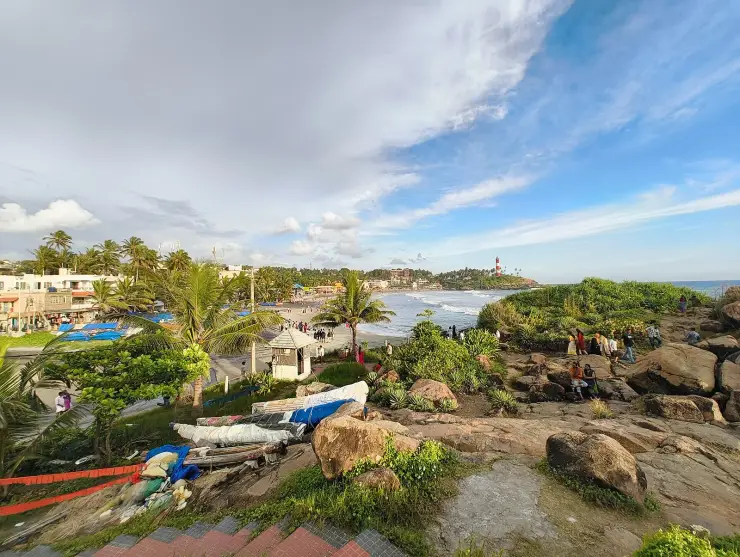
Kovalam’s southern cove brings the striped Vizhinjam lighthouse, a busy promenade and a long seaside evening into one view. Lighthouse Beach suits visitors who want cafés and coastal scenery close together.
2.9 km · 7 min drive
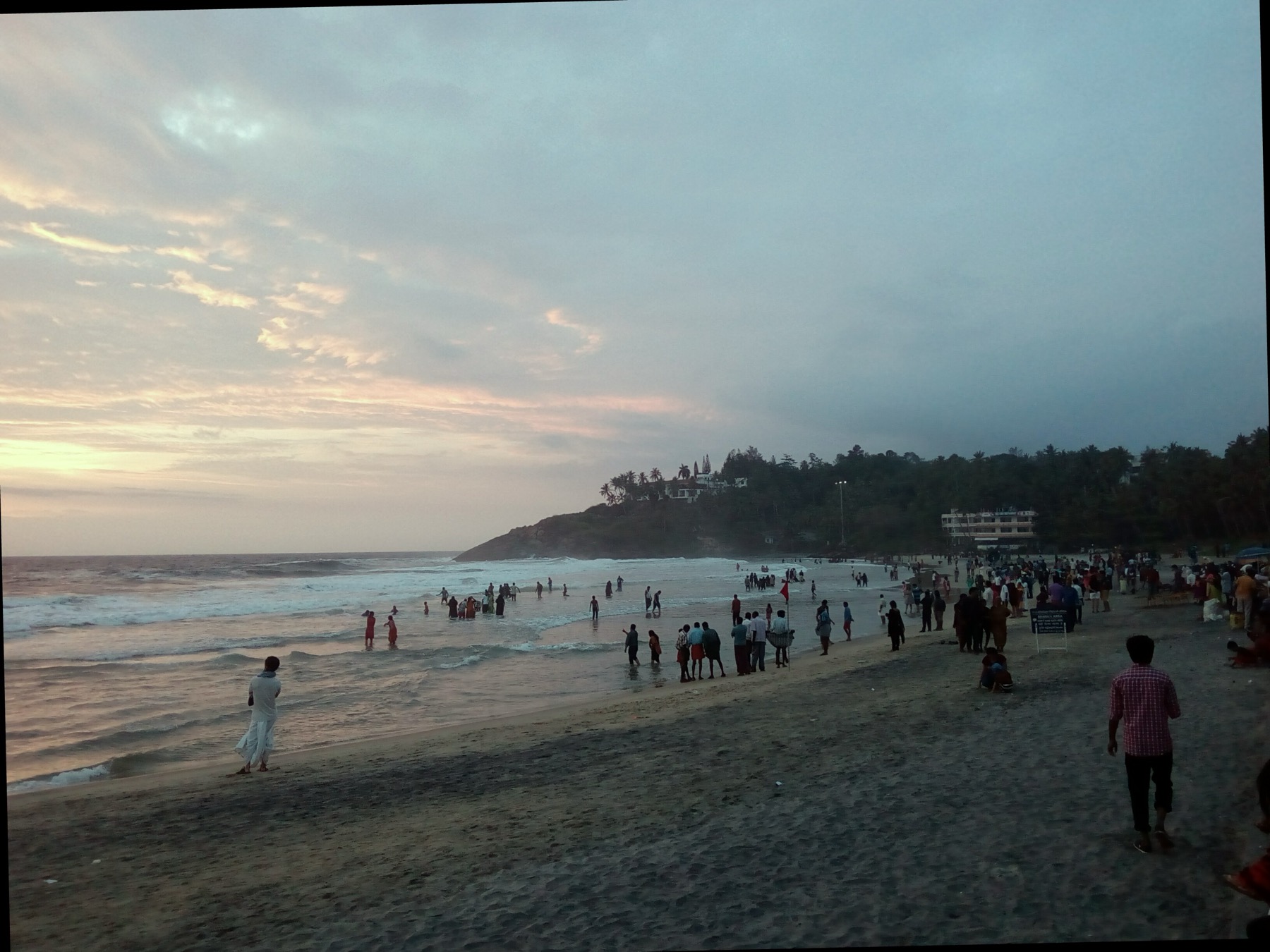
Hawa, also called Eve’s Beach, is Kovalam’s middle cove. Its short sweep of sand and fishing activity offer a different atmosphere from the longer promenade at Lighthouse Beach.
3.4 km · 9 min drive
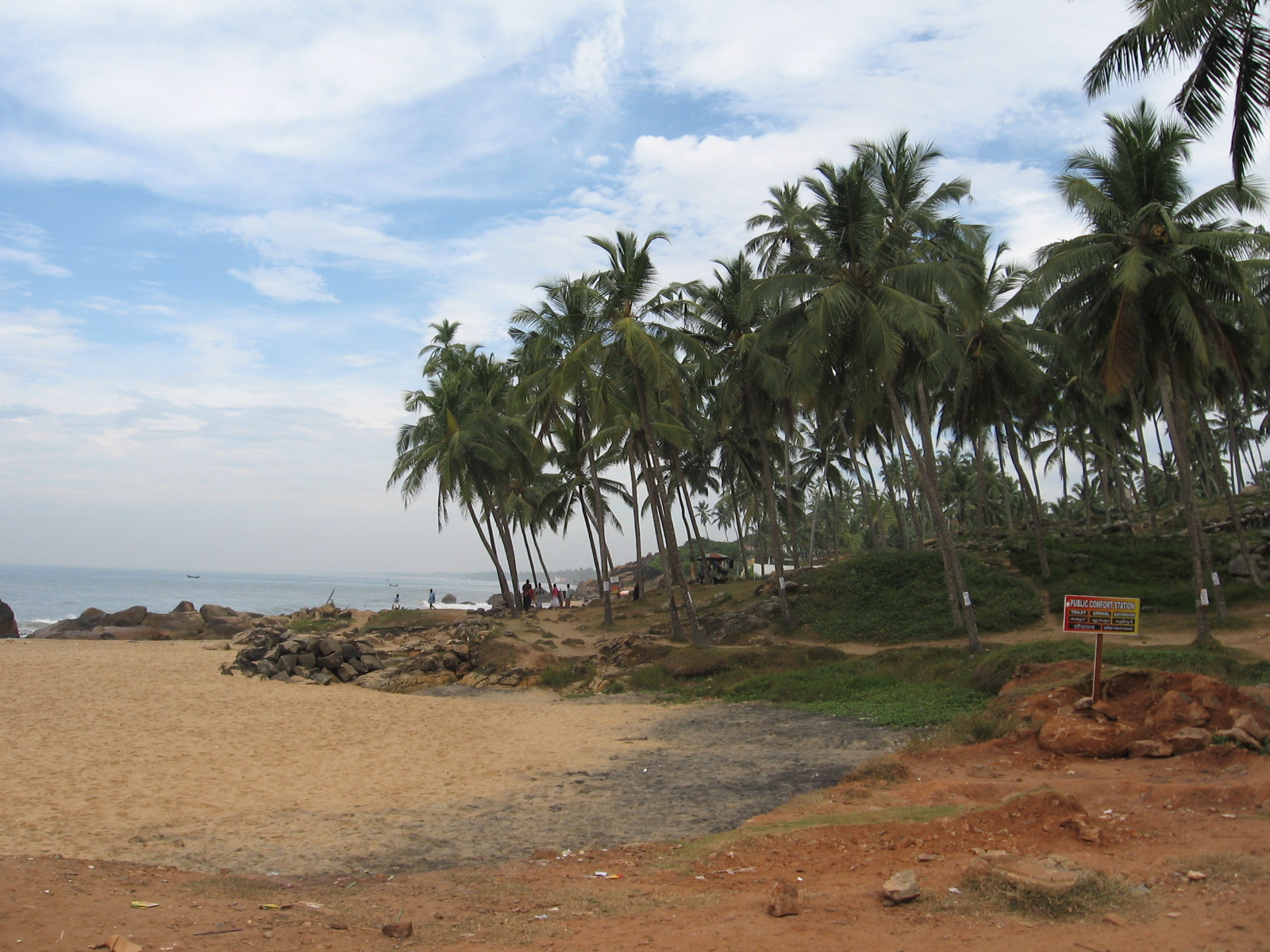
Samudra is the northern Kovalam shore, separated from the busier coves by rocky headlands. Choose it for a quieter sea view and a slower coastal walk.
Roampedia is commission-free — own or know a stay, eatery, guide or shop near Vizhinjam? List it and it appears here once verified.
Add a nearby businessEntry: Free to walk the harbour and the town. The marine aquarium charges a small ticket.
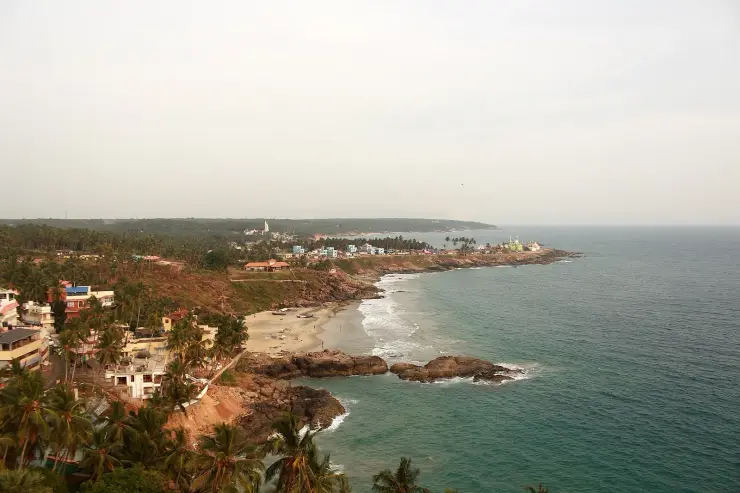
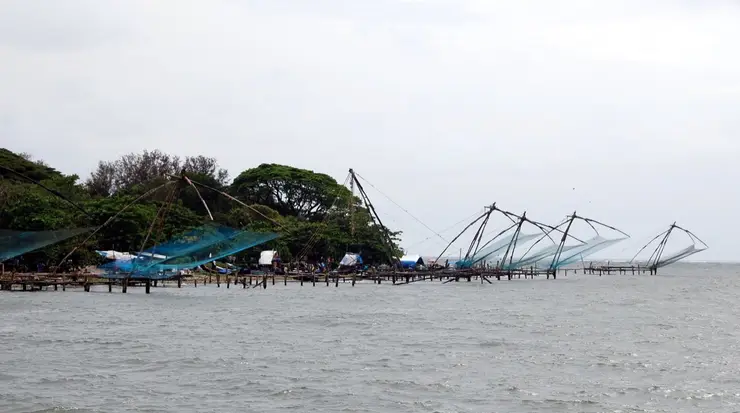
Photography: The wooden fishing fleet, the auction on the quay and the great breakwater of the new transhipment terminal on the southern horizon. Ask before photographing people at the auction.
If you are travelling by bus or ferry, check the return service with the operator before setting out. Leave time to reach the stop or jetty after your visit.
Ask at the bus stand for the time of the last service back, not the next one. If you miss it, an auto or app cab is the fallback — agree the fare before you get in.
If you need step-free access, contact the site before travelling. Ask about a level entrance, steps along the route, the nearest drop-off point, seating and accessible toilets.
Charge cap and free-transaction limits: Reserve Bank of India, in force since 1 May 2025.
These services are listed within about 1.2 km of Vizhinjam. Walking distances follow mapped routes; access and opening hours can change. Other services may be closer but are not included here.
Emergency numbers are verified against official government and state tourism sources. 112 works anywhere in India.
A small rock-cut shrine at Vizhinjam offers a close encounter with early carving near Kovalam’s coast. It is a compact archaeological stop, with the interest in the stonework rather than a long cave walk.
70 m · 1 min walk · straight lineKerala’s classic beach resort area, known for Lighthouse Beach, Hawa Beach and sunset viewpoints.
2.2 km · 27 min walkKovalam’s southern cove brings the striped Vizhinjam lighthouse, a busy promenade and a long seaside evening into one view. Lighthouse Beach suits visitors who want cafés and coastal scenery close together.
2.3 km · 28 min walkHawa, also called Eve’s Beach, is Kovalam’s middle cove. Its short sweep of sand and fishing activity offer a different atmosphere from the longer promenade at Lighthouse Beach.
2.9 km · 7 min driveSamudra is the northern Kovalam shore, separated from the busier coves by rocky headlands. Choose it for a quieter sea view and a slower coastal walk.
3.4 km · 9 min drive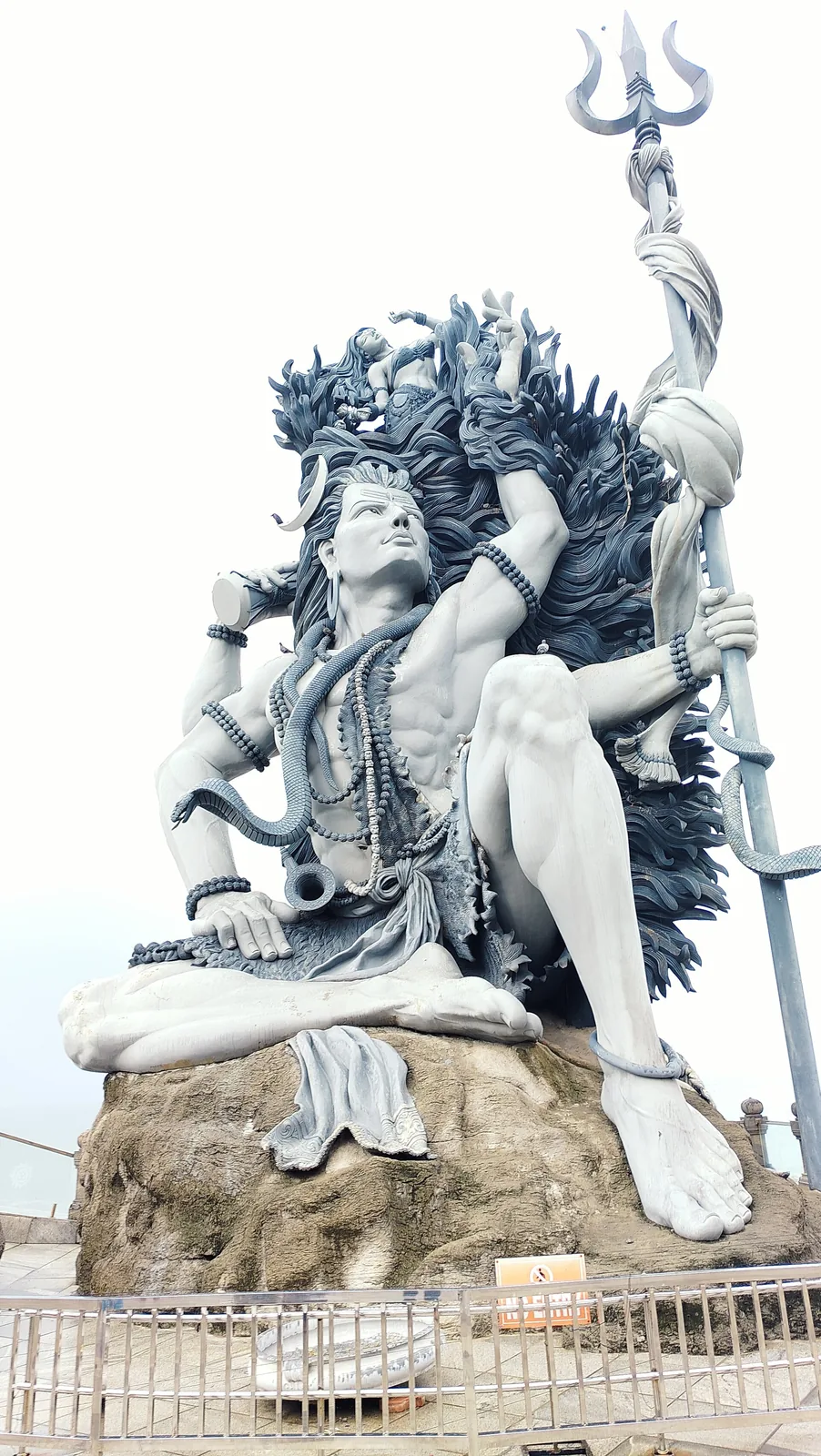
A clifftop seaside temple at Adimalathura near Vizhinjam, known for a giant Gangadhareswara (Shiva) sculpture.
3.5 km · ~9 min by auto · straight line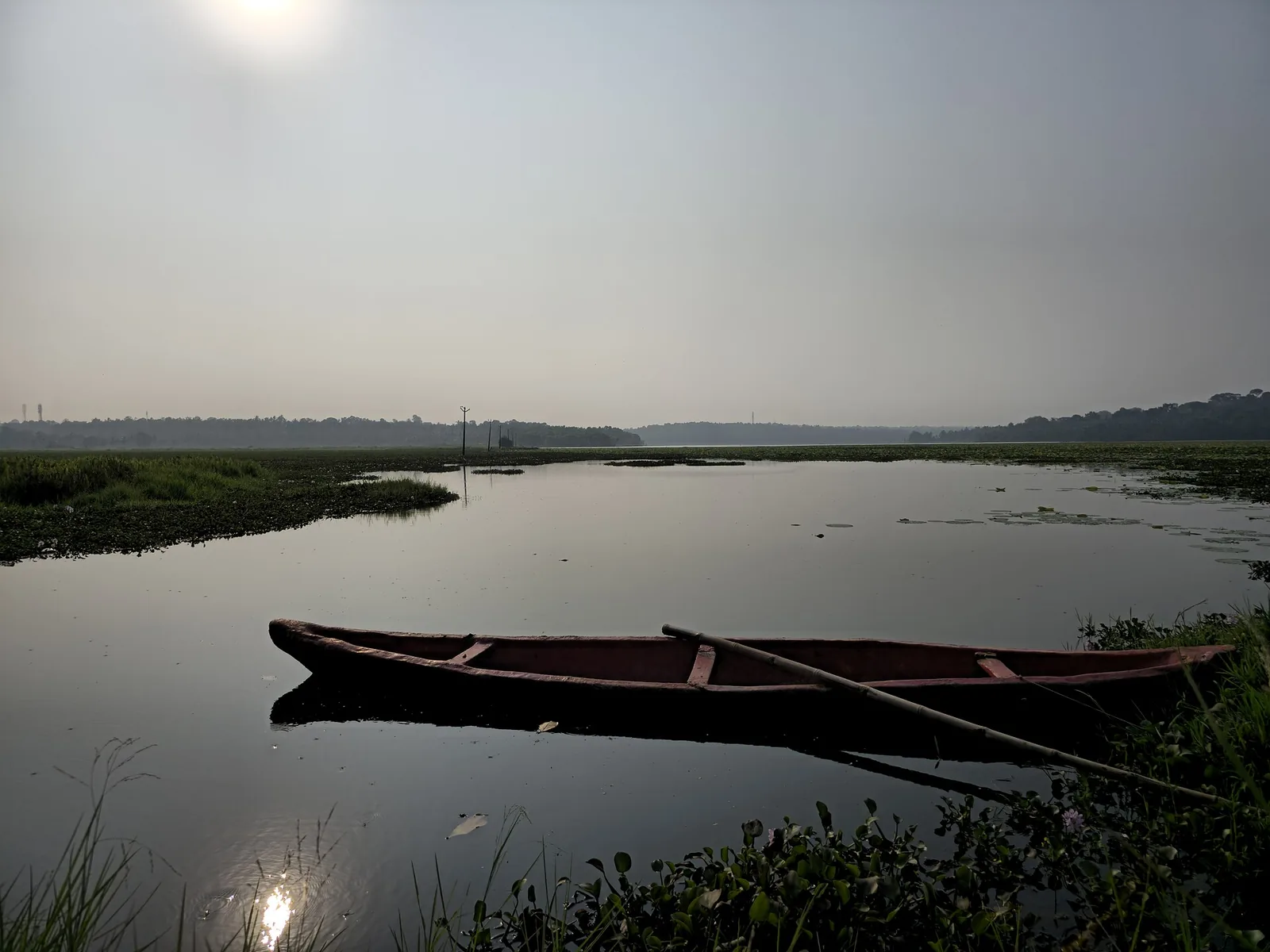
Kerala’s second largest freshwater lake and the district’s only one, near Kovalam, ringed by paddy and popular for sunrise and birdlife.
5.7 km · ~14 min by auto · straight line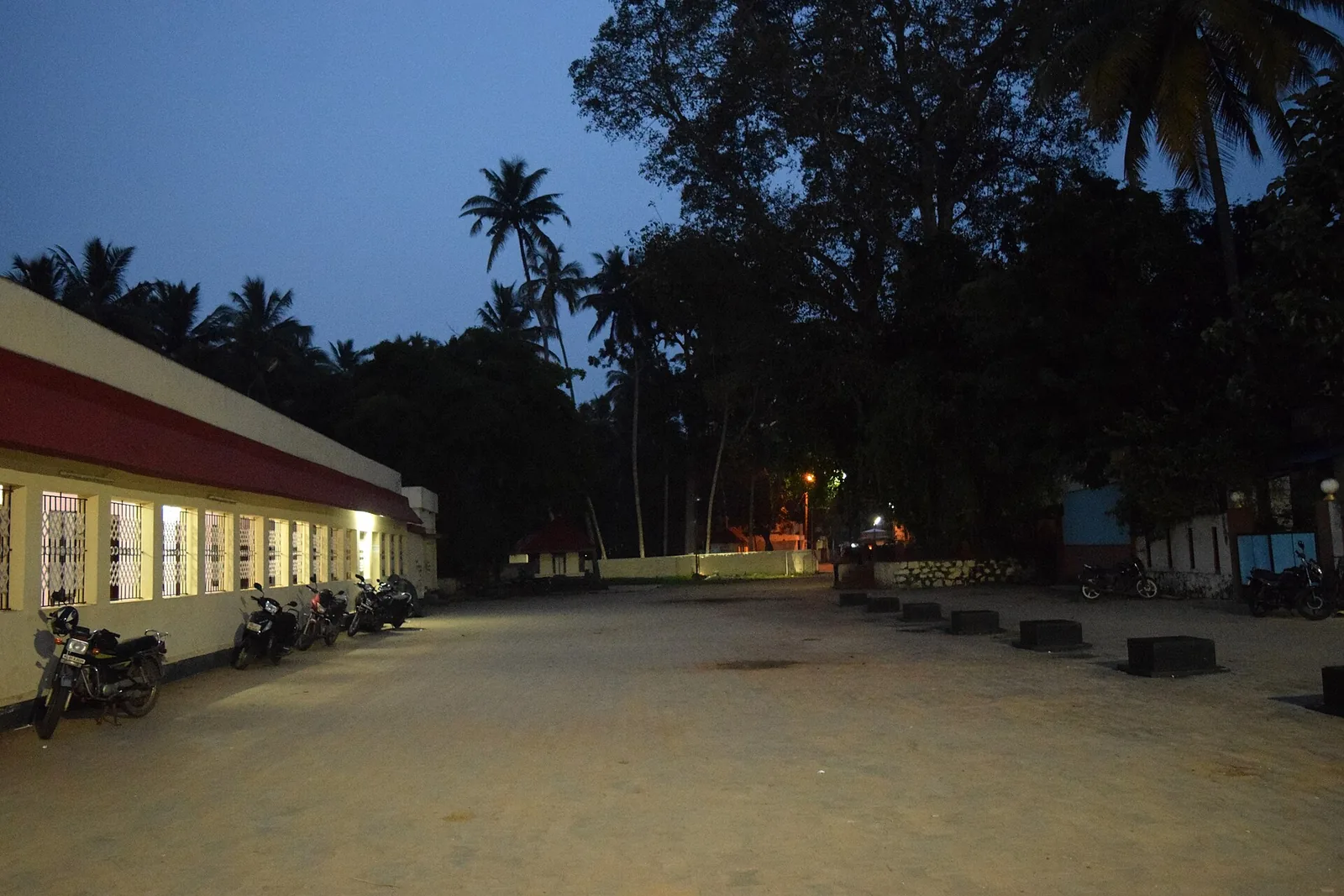
An ancient temple on the Karamana river, the district’s main site for ancestral (bali) rituals and rare for its Parasurama deity.
7.7 km · ~19 min by auto · straight lineA major coastal Muslim pilgrimage landmark south-west of the city centre, known for the Beemapally Uroos and the tombs honoured within the shrine complex.
10.4 km · ~17 min by cab · straight line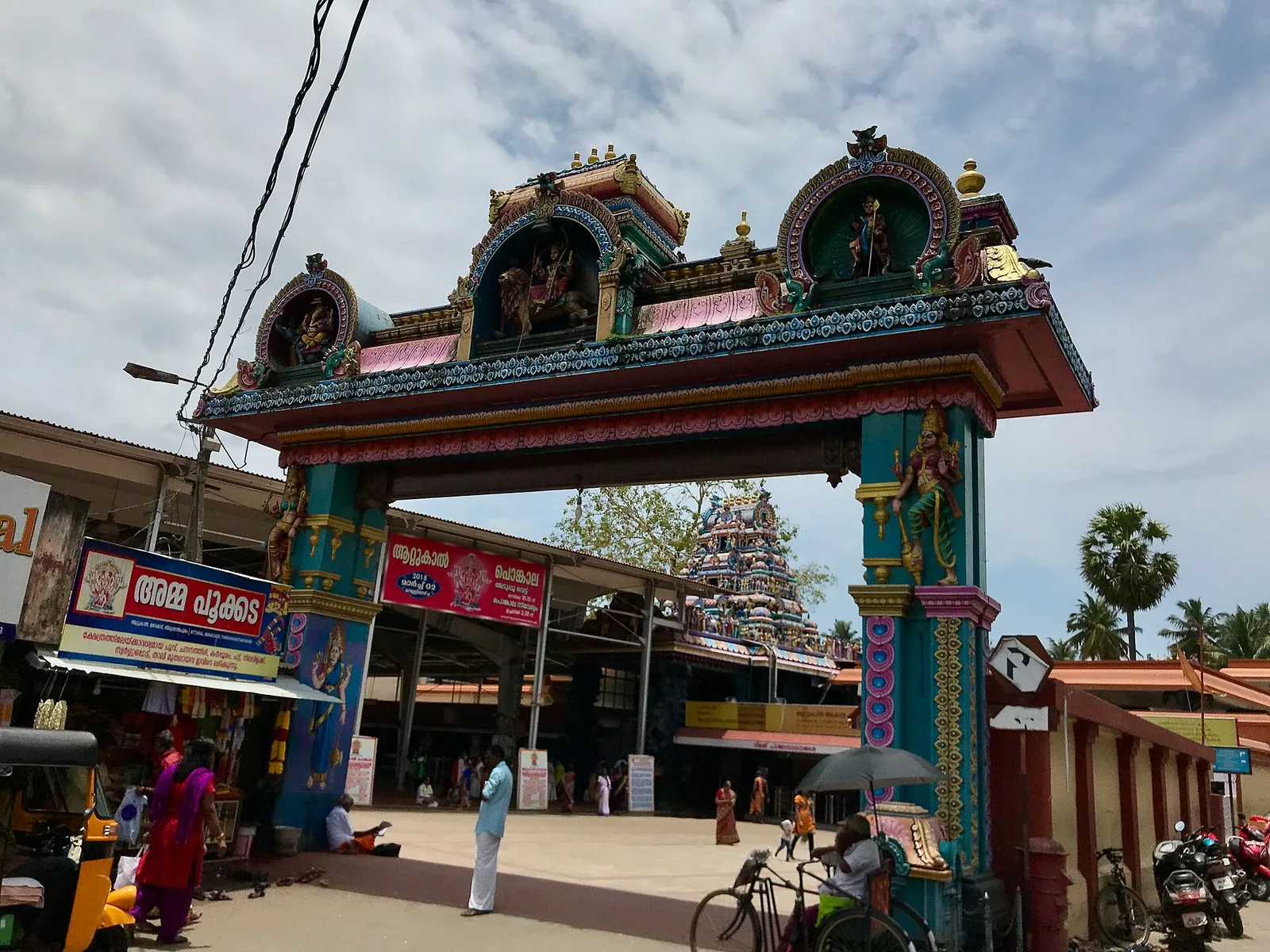
Famous Devi temple in the city, home of the Attukal Pongala — recorded as the largest annual gathering of women.
10.6 km · ~18 min by cab · straight line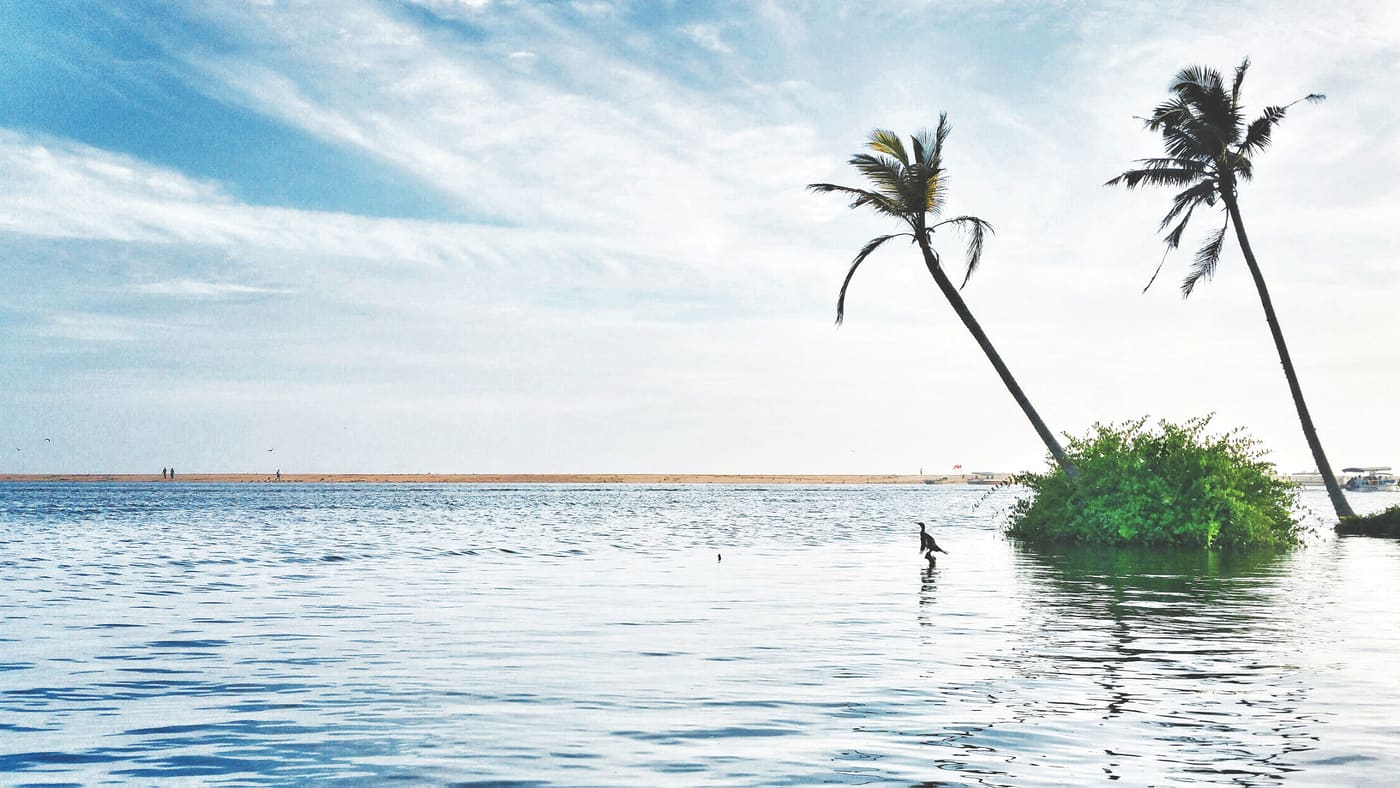
Backwater, estuary and beach landscape south of Kovalam.
11.3 km · ~19 min by cab · straight linePoovar’s backwater routes follow the Neyyar estuary past mangrove and a sandbar backed by the Arabian Sea. A small-boat trip is the clearest way to see how river and coast fit together.
11.9 km · ~20 min by cab · straight lineWalking and driving times are real routed distances, except the few marked “straight line”, which are direct-line estimates and will read short. Fare figures are estimates from Kerala’s notified auto/taxi tariff and exclude waiting and night charges. Routing: © openrouteservice.org by HeiGIT | Map data © OpenStreetMap contributors
Nearby toilets, pharmacies, ATMs, seating and vets are community-mapped and may be incomplete or out of date. Map data © OpenStreetMap contributors | Walking times © openrouteservice.org by HeiGIT
Three things, all within a short walk: the fishing harbour and its morning auction; the small eighth-century rock-cut cave temple on the rise above it; and the view south to the breakwater of the Vizhinjam International Seaport. There is also a marine aquarium beside the harbour. An hour or two covers it comfortably.
Early morning, between roughly six and eight, when the boats are in and the auction is running. Later in the day the quay is quiet and hosed down, and the visit loses most of its point.
They are in the same place but they are not the same thing. Vizhinjam is an old fishing town and harbour with more than a thousand years of history. The Vizhinjam International Seaport is the new deepwater container transhipment terminal built just to the south — India's first — whose breakwater you can see from the old harbour.
Yes, and it would be misleading to say otherwise. The construction drew sustained protest from parts of the local fishing community over coastal erosion, shoreline change and the effect on livelihoods, and the disputes over impact and compensation were prolonged and public. The terminal is now in operation; the arguments about its coastal effects continue.
It is about 3 km south on the coast road — a few minutes by autorickshaw, which run constantly between the two, or a walk of roughly forty minutes. Buses from Thiruvananthapuram also terminate at the Vizhinjam depot in the middle of town.
No. This is an active fishing harbour and, immediately south, an active port zone. There is boat traffic, gear in the water and no swimming provision. Use the flagged, supervised beach at Kovalam instead.
Not quite, and the distinction matters because the other one is also in Kerala. India's first transhipment terminal was the International Container Transshipment Terminal at Vallarpadam in Kochi, opened on 11 February 2011. Vizhinjam is India's first deepwater transhipment port — the first whose natural draft, about 24 m, can take the largest container ships without constant dredging. The two claims are routinely collapsed into one.
Two things almost no other point on India's west coast has together: roughly 24 m of natural depth very close inshore, so the largest ships can come alongside without a dredged approach channel, and a position about 10 nautical miles off the main east–west shipping lane, so calling here is barely a deviation. The same deep water is why the Ay kings, the Cholas and the Pandyas all wanted the anchorage.
Not from inside — it is a secure operating terminal with no public access or visitor facility. What you can see, and it is worth the ten minutes, is the breakwater running out to sea south of the old fishing harbour, best viewed from the quay or from the rise by the cave temple. The contrast between hand-hauled catamarans in the foreground and a container terminal behind them is the reason to come.
Opposition over shoreline change, erosion and lost livelihoods built through construction and peaked from August 2022, intensifying that November, led by the Roman Catholic Archdiocese of Trivandrum on behalf of Catholic fishing families. The protests were called off on 6 December 2022 following talks with the state government. The terminal is now operating, and disagreement about its effects on the coast has not ended with the protests.
October to March is the easiest Kerala travel season; mornings and late afternoons are generally better for walking.
Entry: Free to walk the harbour and the town. The marine aquarium charges a small ticket. Timings: The harbour and the town are open at all times; the fish landing is busiest in the early morning. The rock-cut cave temple and the marine aquarium keep their own hours — see their own pages and confirm locally.
Base yourself in Kovalam or a nearby town in Thiruvananthapuram, then confirm the last-mile route locally before leaving. Use the town as the base itself; plan nearby attractions in short loops rather than moving accommodation every night. If the visit depends on forest, temple, boat, ferry, weather or seasonal access, check the official/local rule on the day before travel.
Half day to 2 days, depending on nearby attractions.
Nearby you can pair Vizhinjam Rock-Cut Cave Temple (70 m), Kovalam (2.2 km), Lighthouse Beach (2.3 km), Hawa Beach (2.9 km).
Keep valuables light in busy town areas. Use registered taxis, autos or known operators for late returns.
Written about Vizhinjam itself — its history, its legends and the arguments about them.
These guides explore Kovalam and the surrounding area. Choose a visit that fits your interests, allowing separately for travel between stops.
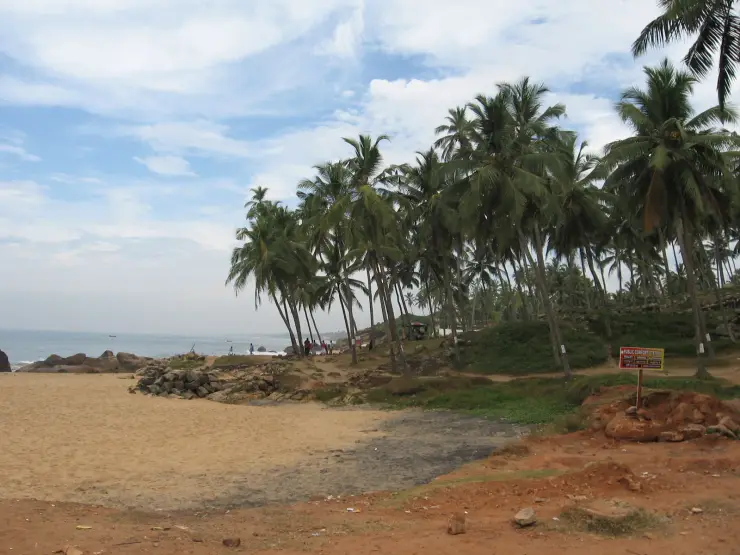
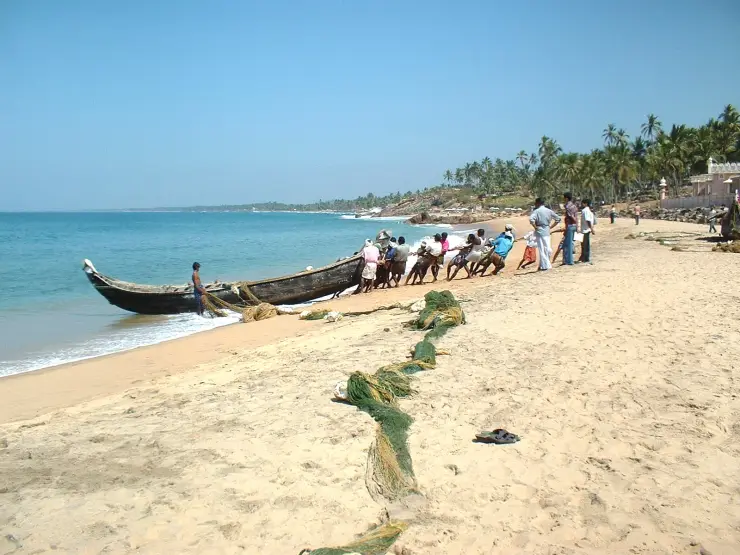
Written about Kovalam as a whole rather than about Vizhinjam — its history, its streets, and how to spend a day in it.
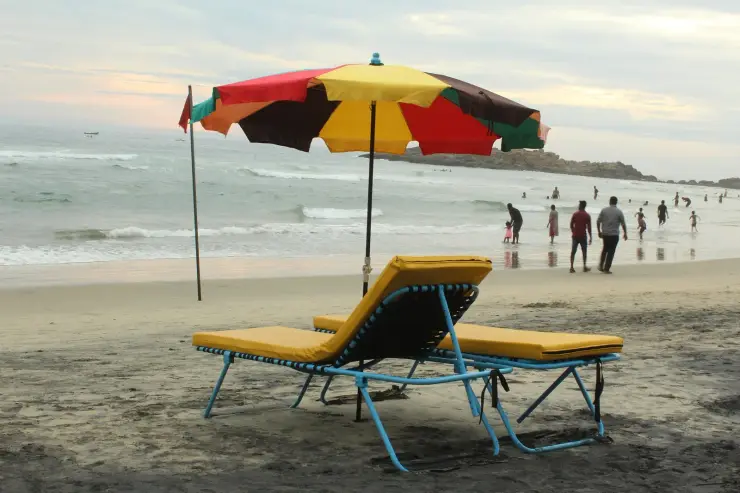
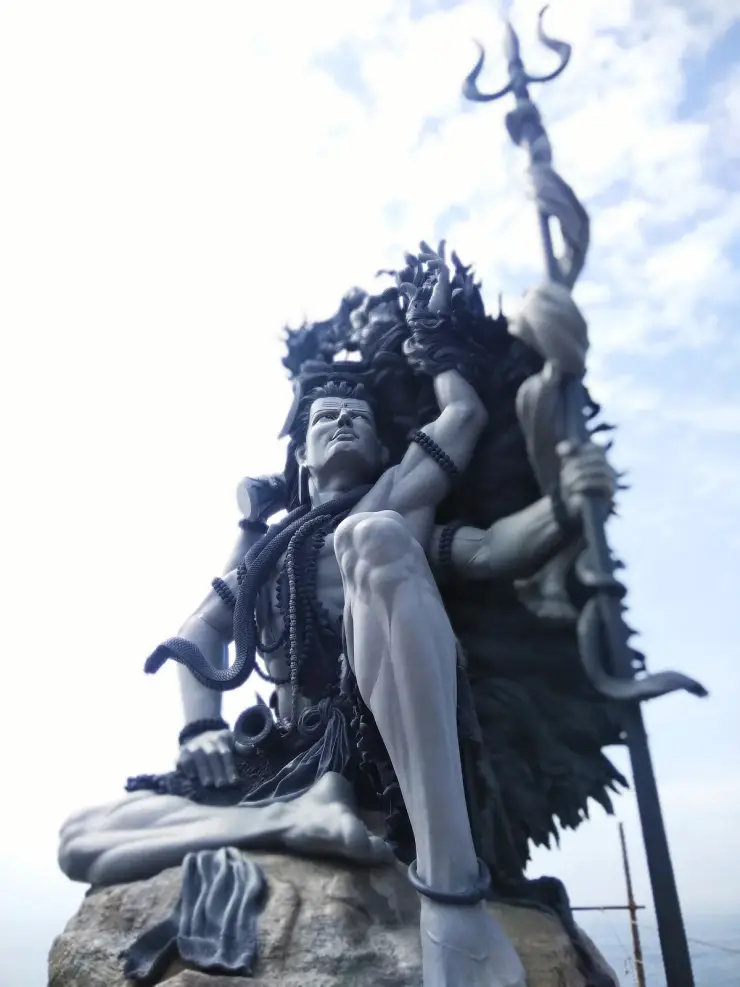
Route-level itineraries and practical guides for the rest of Kerala.
Photographs: Gannu03 (CC BY-SA 4.0), Dr Ajay Balachandran (CC BY-SA 4.0), Akhilan (CC BY-SA 3.0), Ministry of Ports, Shipping and Waterways, Government of India (GODL-India). Wikimedia Commons.


