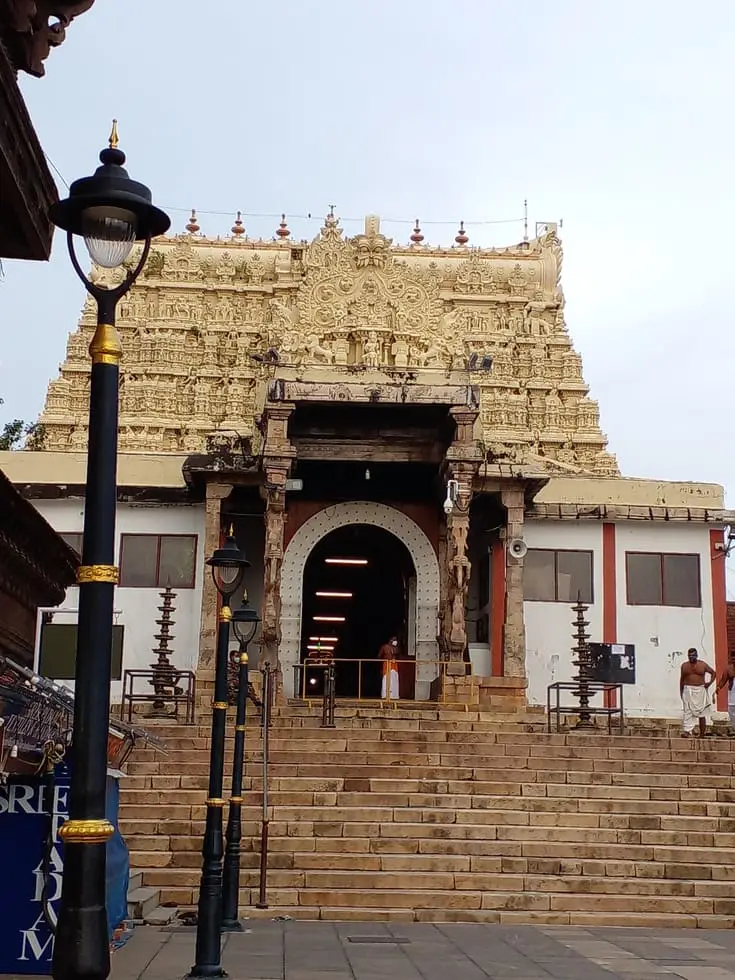
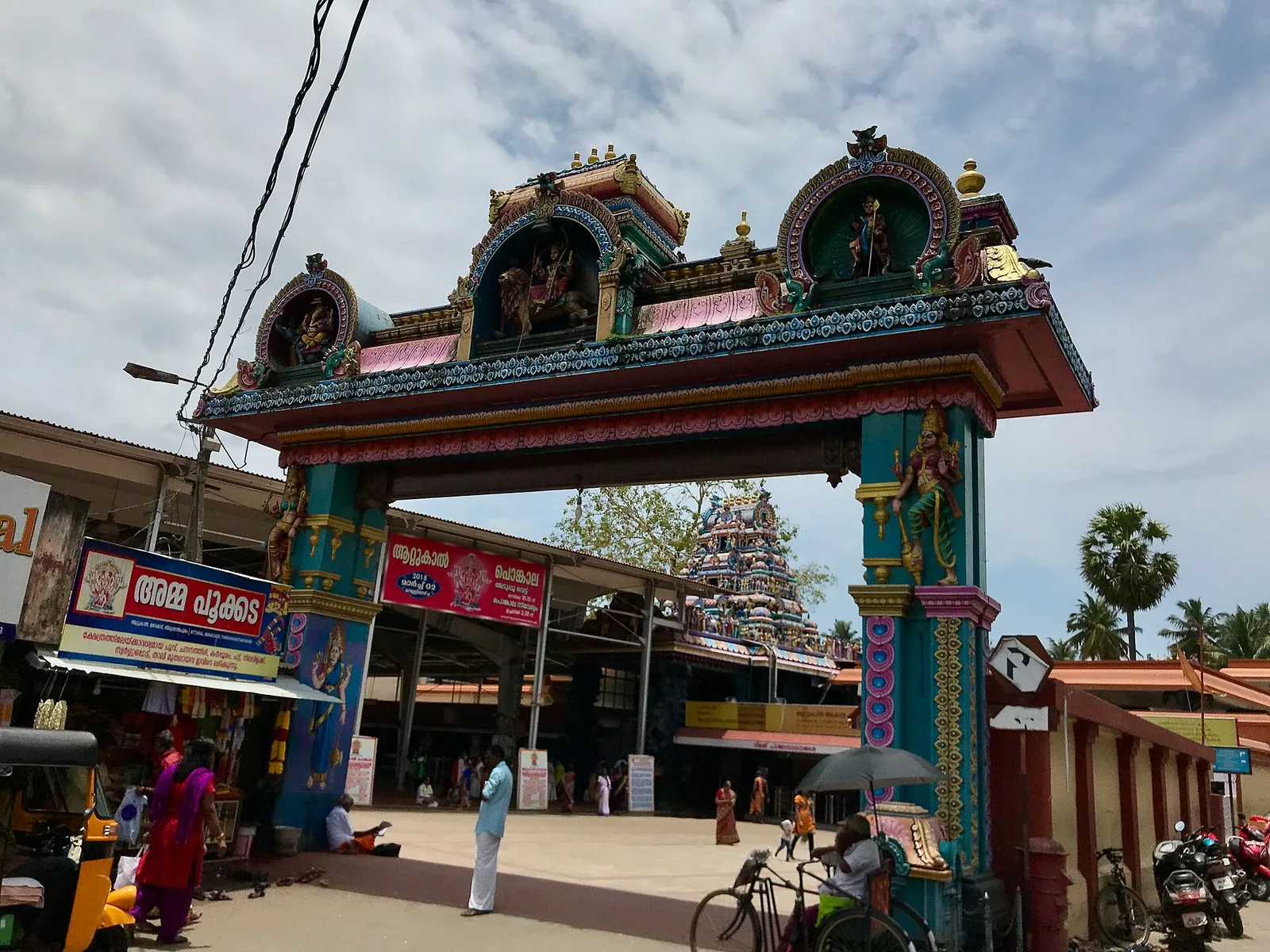
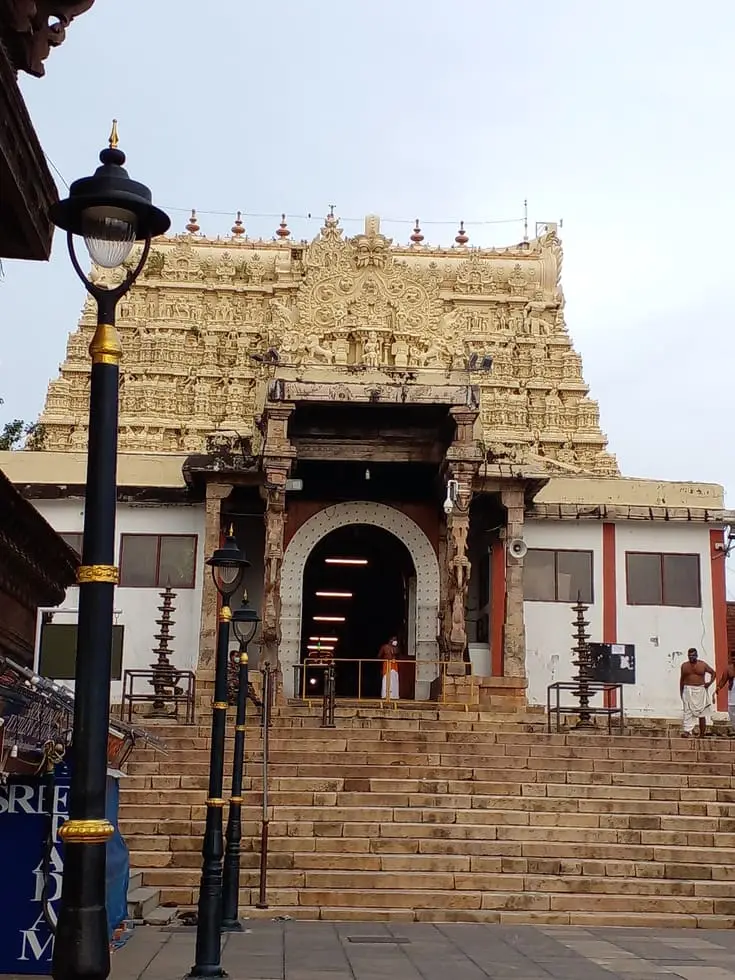
Behind a 100-foot, seven-tier gopuram in the heart of old Thiruvananthapuram lies a god who sleeps — and, beneath him, one of the largest concentrations of treasure ever documented at a place of worship. Sree Padmanabhaswamy is Kerala’s most storied shrine: a temple so entwined with kings, serpents and sealed vaults that a visit feels less like sightseeing than like stepping into a living legend.
The story of Sree Padmanabhaswamy Temple
The presiding deity is Anantha Padmanabha — Lord Vishnu in yogic sleep (Anantha Shayanam), reclining on the thousand-hooded cosmic serpent Adi Shesha, his right hand resting over a Shiva lingam so that Vishnu and Shiva are worshipped in a single form. The idol is not carved from one block but built up from 12,008 saligrama stones said to have been brought from the Gandaki river in Nepal, coated in a special ayurvedic plaster.
The god is so vast that no single doorway can hold him. Devotees glimpse him through three separate doors: the first frames his serene face and the lotus rising from his navel bearing Brahma; the second, the ritual idols of gold and silver; the third, his feet. To take him in, you literally have to move — a piece of temple theatre that has awed pilgrims for centuries.
The temple is a masterpiece of Dravidian craft married to Kerala style: a corridor of 365-and-a-quarter granite pillars, and the celebrated Ottakkal Mandapam, a ceremonial platform hewn from a single enormous stone and set in place in 1731. Padmanabhaswamy is also counted among the 108 Divya Desams, the holiest Vishnu shrines sung by the Tamil Alvar saints as far back as the 7th–8th centuries.
Legend & myth
Temple legend tells of the sage Divakara Muni, who longed for a vision of Vishnu. The Lord is said to have appeared as a mischievous little boy who defiled the sage’s worship and then fled into the forest — before revealing himself as a reclining form so immense that it stretched for miles, from Thiruvallam to Trippadapuram. The sage begged him to shrink to a size the human eye could bear, and the god obliged, settling into the shape worshipped here today — which is why devotees still see him in three glimpses rather than one.
The temple’s greatest modern mystery is Vault B. Of six underground chambers (A to F), five were opened in 2011 under Supreme Court supervision and found to hold an almost unimaginable hoard — gold thrones, jewelled crowns, sacks of coins and precious stones, long kept as the Travancore rulers’ emergency reserve. Vault B, however, has stayed sealed. Its door carries the carved image of a serpent, which temple tradition reads as a warning against opening it, and a belief persists that misfortune would follow anyone who forced it.
That belief deserves to be stated precisely, because the popular version of it is wrong in a specific and checkable way. The story as usually told is that Vault B has never been opened in recorded history. It has. Gopal Subramaniam, the amicus curiae appointed by the Supreme Court, and Vinod Rai, the former Comptroller and Auditor General who led the audit, both told the court that the chamber had been opened once in 1990 and twice in 2002. No disaster followed. The vault is unopened now, by decision; it is not a door that has stood untouched since antiquity.
So there are two separate things here and they get welded together. One is a genuine religious objection: the Travancore family and the temple hold that opening the chamber would be a violation, and that objection is sincere and is what has actually kept the vault shut. The other is the curse — the serpent on the door, the wrath that follows the intruder — which is folklore, and which the documented openings of 1990 and 2002 do not support. We are not in the business of telling anyone their tradition is false. We are in the business of not repeating "never opened in history" as though it were a fact, when the court record says otherwise.
The second thing worth being careful about is the money, and here we have been as loose as everybody else. The figures in universal circulation — around one lakh crore rupees, or roughly twenty-two billion dollars — are media estimates. They are not an official valuation, because no official valuation of the whole treasure has been published. What the Supreme Court process produced was an inventory: a detailed enumeration of what the chambers hold, including Gopal Subramanium's very long report describing bags of gold coins from Roman, medieval, Napoleonic and British periods. Counting objects and pricing them are different exercises, and the second has not been completed and released.
There is a good reason for that, beyond the obvious sensitivities. Almost nothing in those vaults has a meaningful market price. A gold throne, a jewelled crown, a ceremonial figure of contested antiquity — these are not commodities with a spot rate. Valuing them by melt weight would be crude and misleading; valuing them as antiquities means pricing objects that will never be sold and could not lawfully be. Any single number attached to this hoard is therefore a construction rather than a measurement, and the tidy round figures that circulate should be read that way.
Which makes “the richest temple in the world” a claim we should not have stated flatly, and have now qualified. It may well be true and it is entirely plausible; but it rests on setting one unvalued collection against other institutions’ unvalued or undisclosed holdings, and nobody has done that arithmetic in a way anyone could check. The defensible statement needs no league table at all: the 2011 opening revealed one of the largest concentrations of accumulated treasure ever documented at a place of worship, and it was documented under judicial supervision — which is rarer, and more interesting, than the ranking.
Read the full history of Sree Padmanabhaswamy Temple 620 more words
History
The shrine is ancient — praised in Alvar hymns over a thousand years old — but its modern character was set in 1750, when King Marthanda Varma performed the Thrippadidanam: he formally surrendered the entire kingdom of Travancore to Padmanabhaswamy and ruled thereafter merely as Padmanabhadasa, "servant of Padmanabha". Every Travancore king after him governed in the god’s name, a dedication that still shapes how the temple is run.
For most of its history the temple’s wealth was a matter of whispered legend. That changed on 27 June 2011, when the opening of the vaults revealed a hoard that turned a quiet Kerala shrine into international news overnight. The figures attached to it — around one lakh crore rupees, or some twenty-two billion dollars — are media estimates rather than an official valuation; what the court process actually produced was a detailed inventory, and no full valuation has been published. On any reckoning it is one of the richest temple treasuries known, but the flat claim that it is the richest in the world is not something anyone has demonstrated.
What followed was a decade of litigation about who should control it. In 2011 the Kerala High Court ruled against the Travancore royal family, directing that the state take over the temple’s administration. The family appealed. On 13 July 2020 a Supreme Court bench of Justices U. U. Lalit and Indu Malhotra overturned that ruling and upheld the family’s rights as shebaits — the hereditary servants and managers of the deity — restoring their role in running the temple.
The 2020 judgment is frequently misreported as having settled the Vault B question. It did not: the court said nothing about opening the chamber. The vault remained shut before the verdict and remained shut after it, and the question of whether it should ever be opened is still unresolved rather than decided.
The wealth, it is worth remembering, is not a windfall. It accumulated because Travancore’s rulers governed as Padmanabhadasa and treated the treasury as the god’s rather than their own — offerings, war reserves and royal donations placed with the deity across centuries. The 2011 inventory did not discover a hoard so much as finally count one whose existence had never been secret in Thiruvananthapuram.
Why visit
Few places pack so much into one visit: a genuinely awe-inspiring deity you must walk to see in three parts, some of the finest granite carving in South India, and the frisson of standing above the most famous sealed vault on earth.
The three-doorway darshan is not a queue-management device but the theology made physical — a god too large to be taken in at once, who has to be assembled in the mind from three separate looks. There is nothing else quite like it in Indian temple practice.
Come at dawn for the Nirmalya Darshan, when the god is seen still dressed in the previous night’s flowers, before the day’s first abhishekam. It is the most atmospheric hour and the one regulars choose.
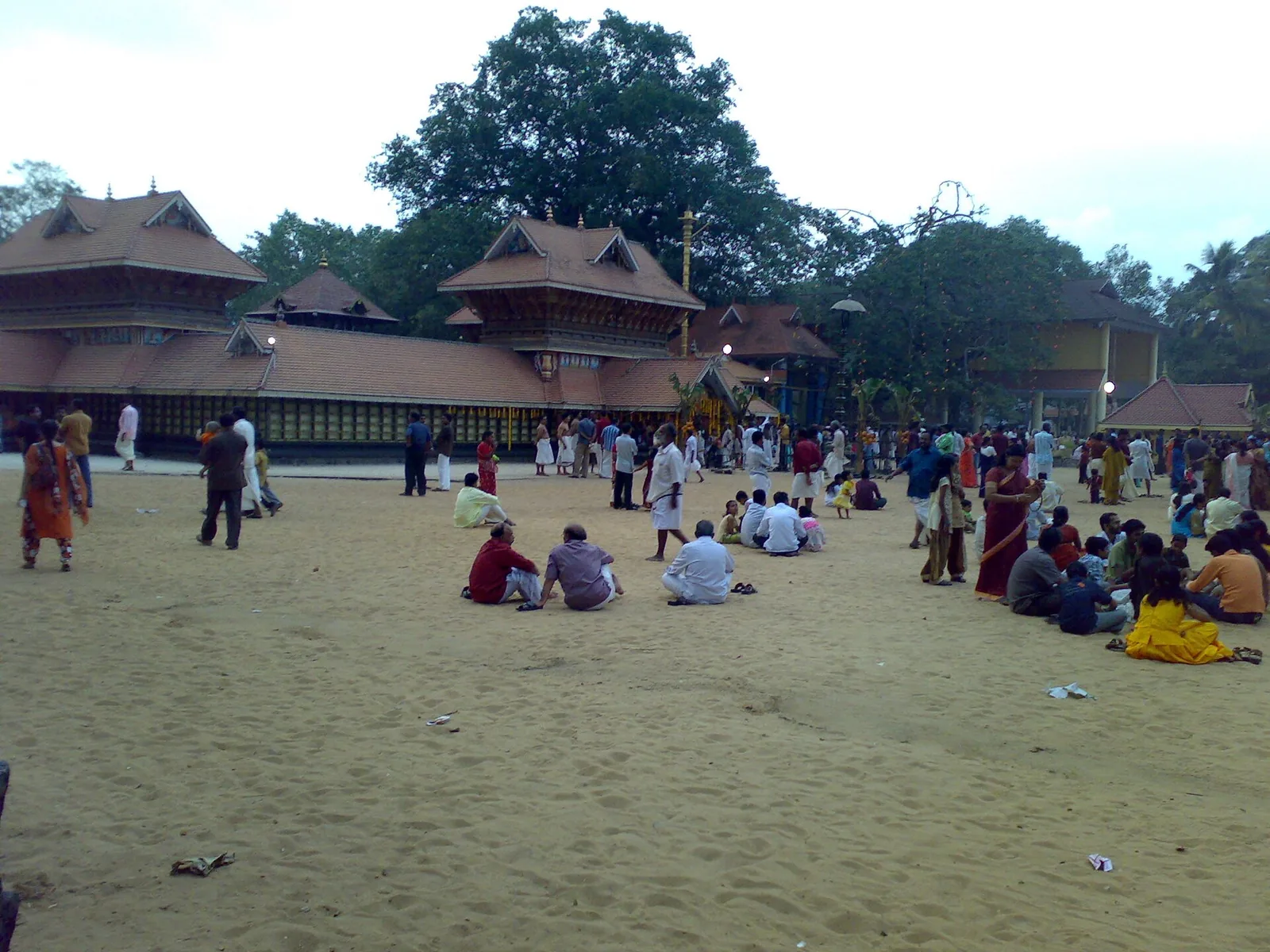
During Painkuni and Alpashy the Arattu procession leaves the temple and goes down to the sea at Shanghumukham, with the reigning head of the Travancore family walking behind the deity — one of the very few occasions on which the old relationship between the family and the god is visible in the street.
The 365-and-a-quarter pillar corridor and the Ottakkal Mandapam, a ceremonial platform cut from one enormous stone and set in place in 1731, are worth slowing down for even in a crowd that is not slowing down.
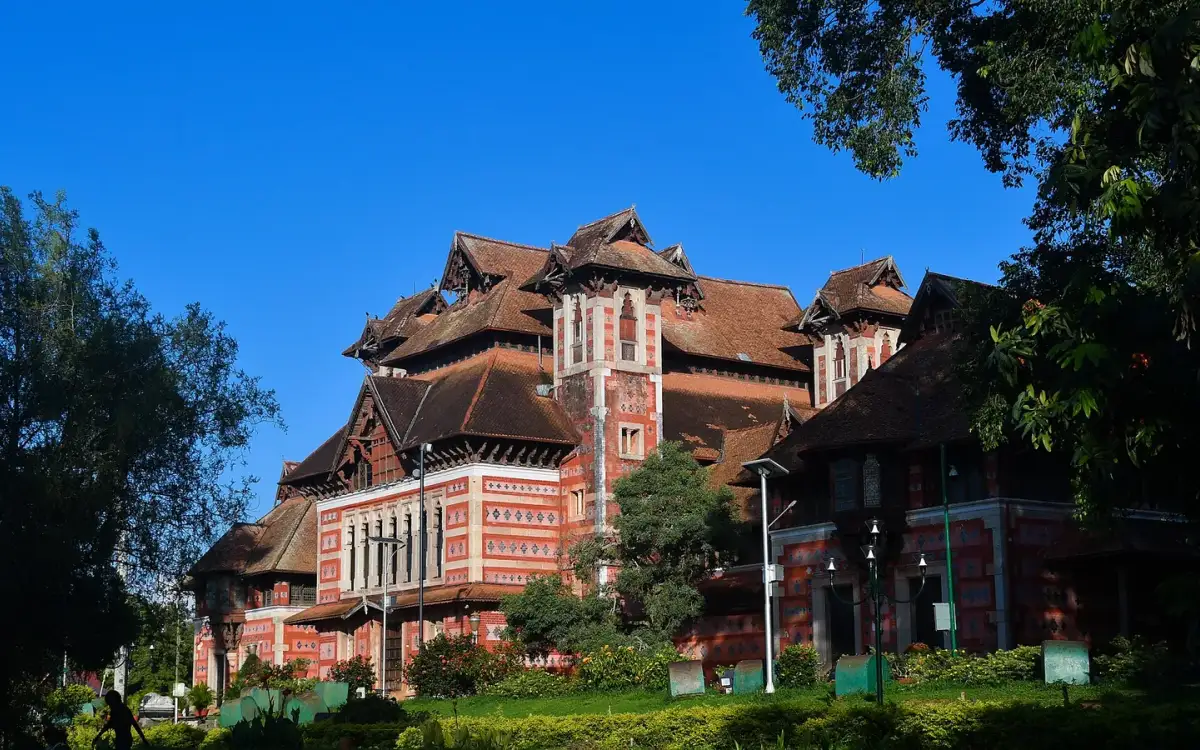
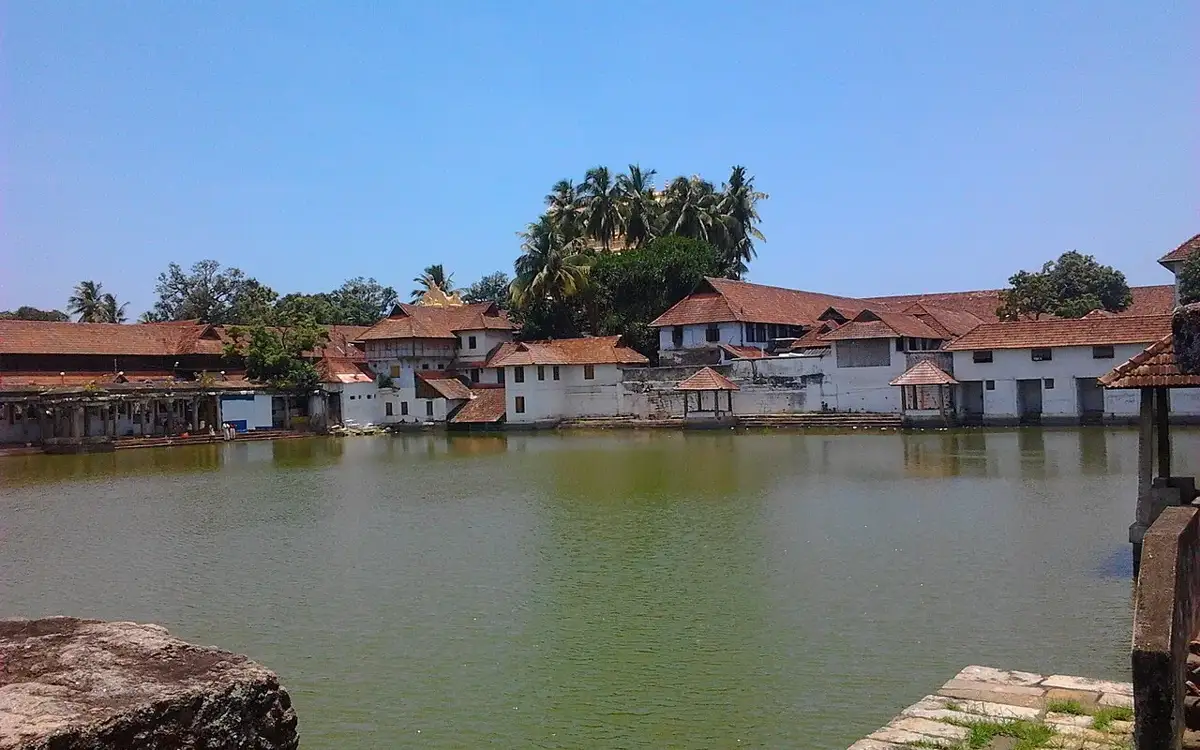
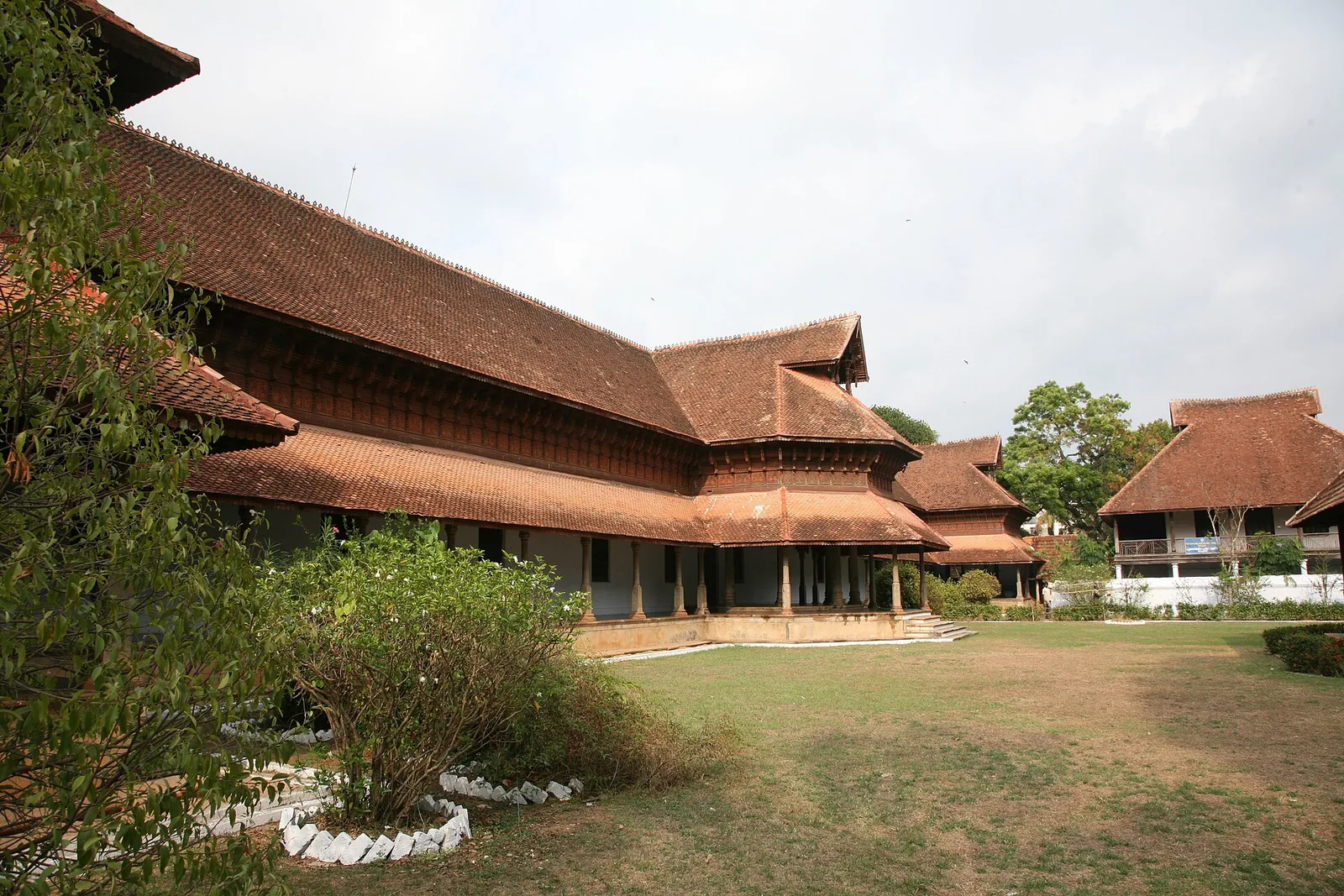
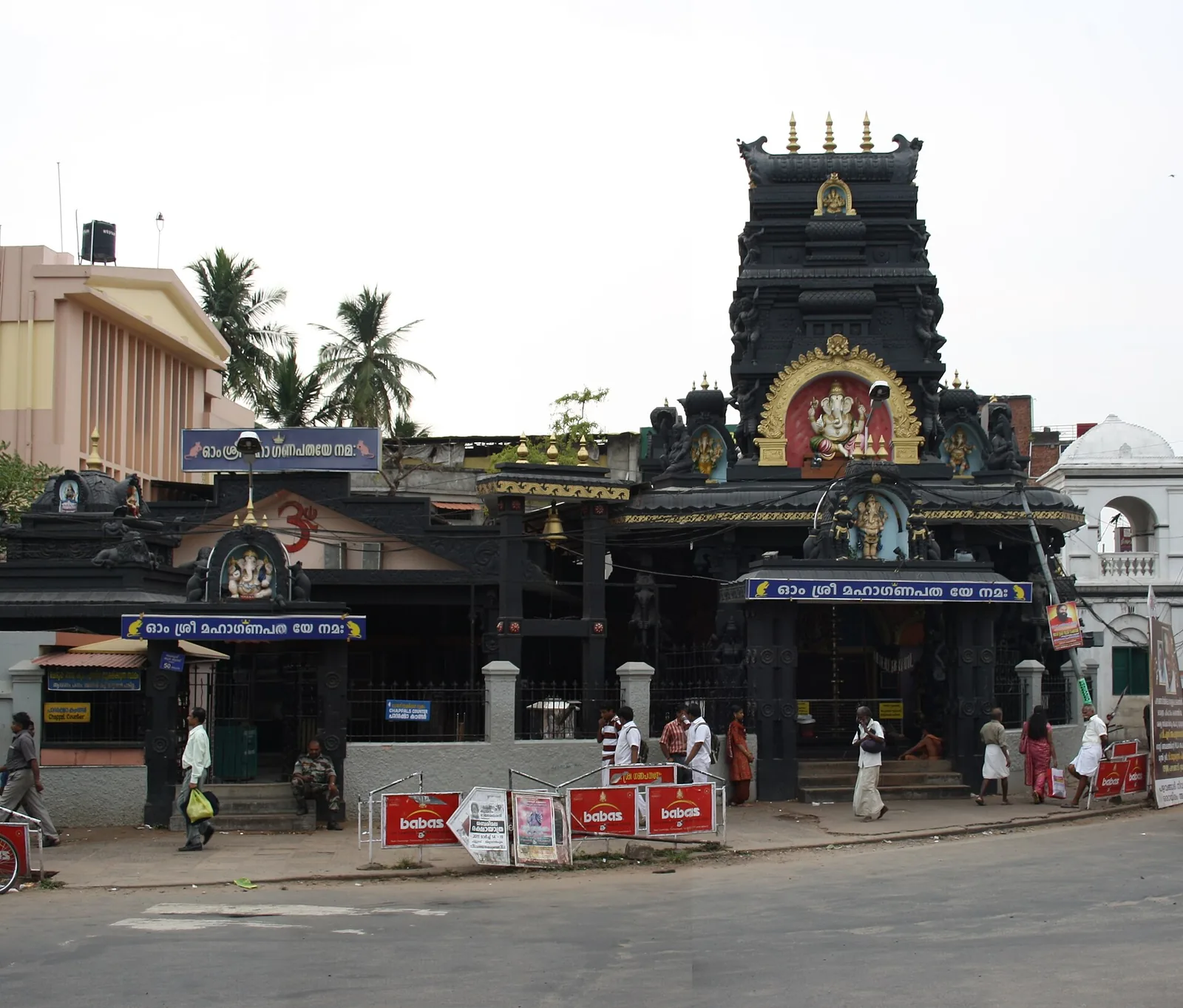
And it anchors the whole East Fort quarter — Kuthiramalika next door, the Pazhavangadi Ganapathy temple minutes away, the tank and the fort walls around it. This is where the city begins.