Highlights
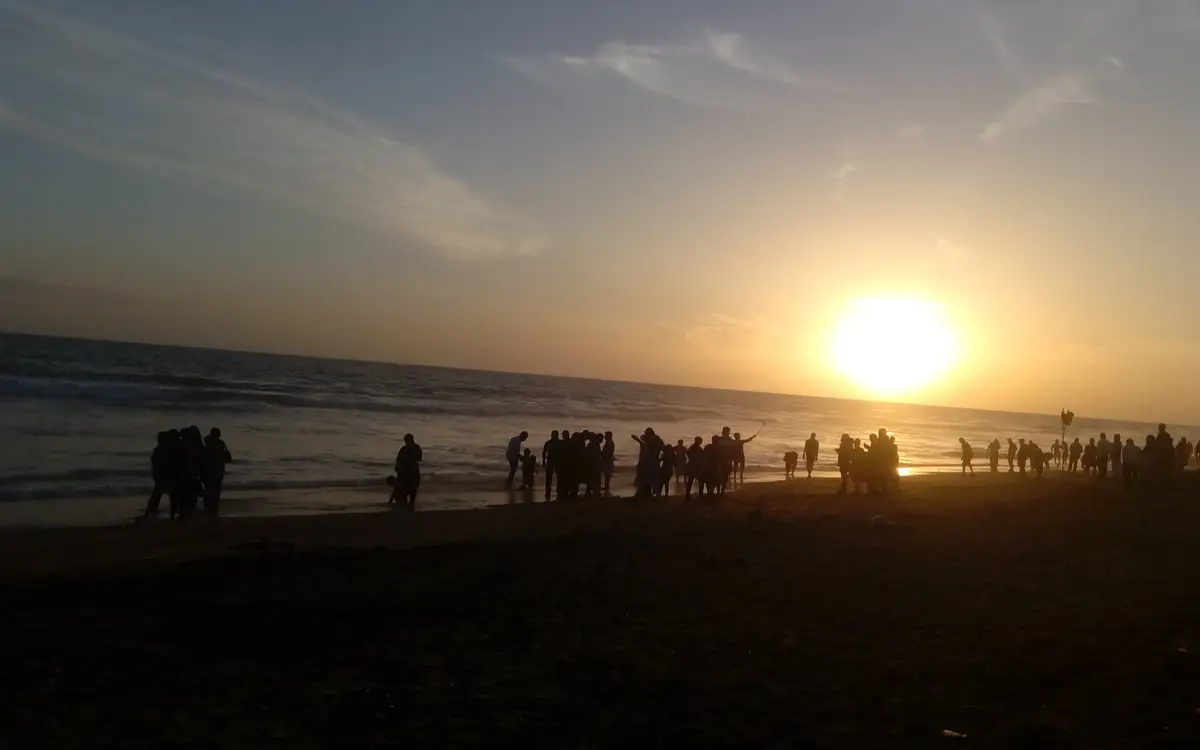
- Sea views and sunset at Shanghumukham Beach
- Nearby seafood, cafes or beach walks where available
- Easy pairing with local stays and short day trips
The city’s main beach by the airport, known for sunsets, the Sagarakanyaka mermaid — the world’s largest merperson sculpture — and the Arattu Mandapam of the Sree Padmanabhaswamy temple.
Shanghumukham Beach belongs under Thiruvananthapuram city, one of the practical travel bases in Thiruvananthapuram district. Use Thiruvananthapuram city for stays, food, local transport and operators, then plan this place as a focused stop rather than an isolated pin.
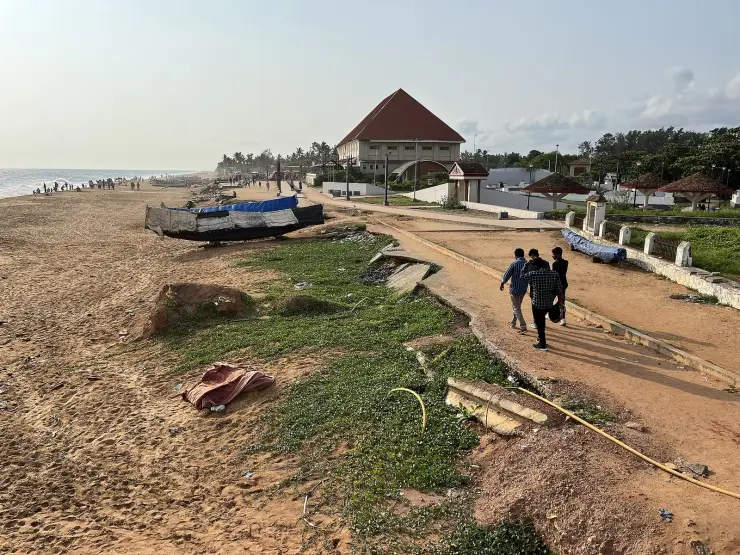
The city’s own beach lies at the end of the runway. Planes come in low over the sand at Shanghumukham, the sun goes down into the Arabian Sea in front of it, and half of Thiruvananthapuram seems to be there to watch both — along with a colossal reclining mermaid who has been broken and rebuilt more than once.
Shanghumukham is not a resort beach and does not pretend to be. It is the municipal shoreline of a state capital: a long stretch of grey-gold sand with a road behind it, food stalls along the road, and an evening crowd that arrives from about five o'clock and does not thin until well after dark. Families, couples, joggers, ice-cream sellers, groups of teenagers — this is the city's living room, and its energy is the reason to come.
The name comes from the conch. Shankhu means conch shell and mukham means face or mouth, and the beach takes its name from the Shanghumukham Devi temple set back from the shore, which remains an active local shrine. It is worth knowing that the temple and the beach are two different places about six hundred metres apart — a distinction that trips up map applications regularly.
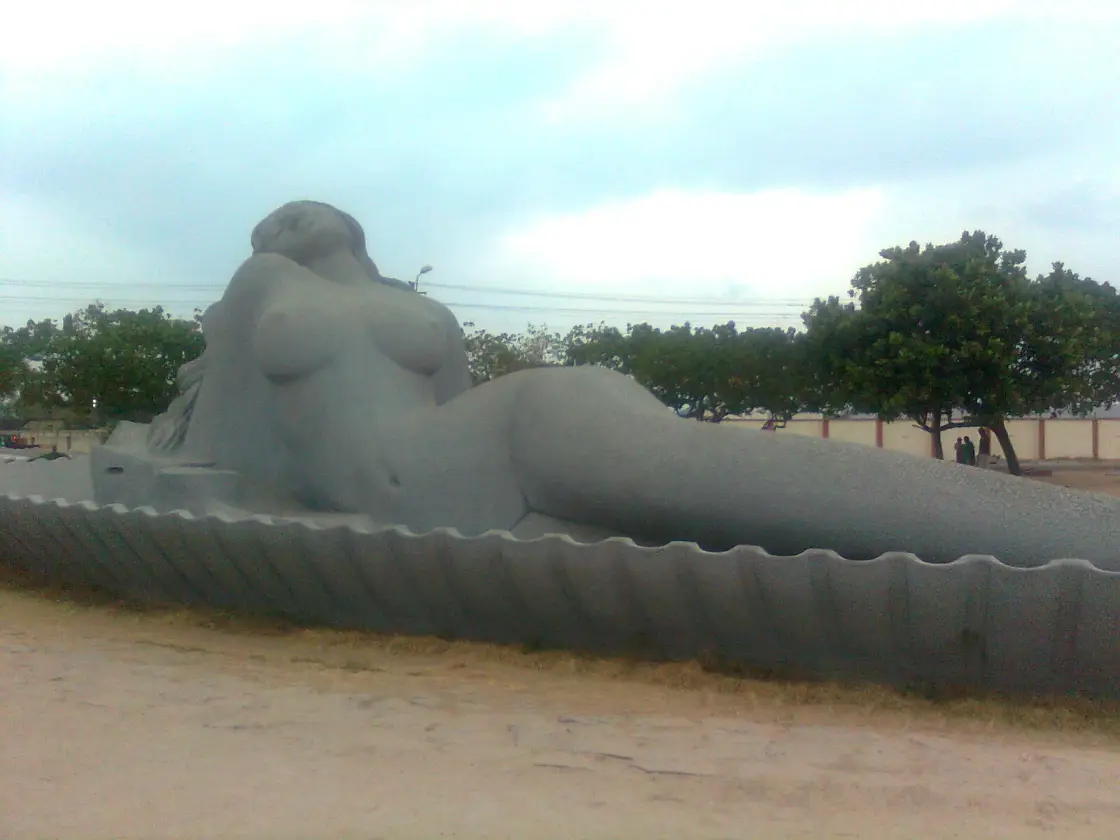
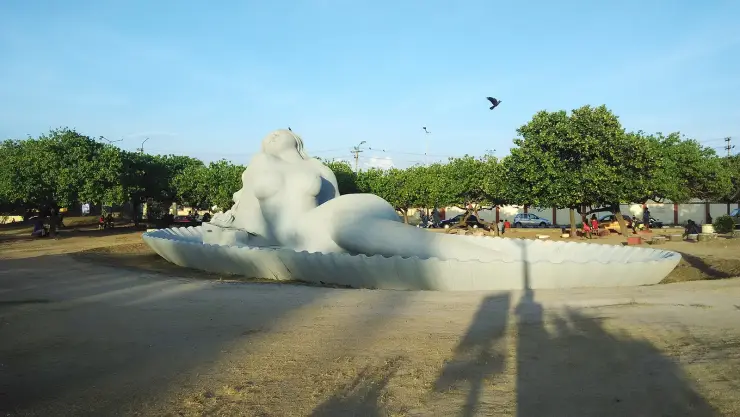
The landmark everyone comes to photograph is the Sagarakanyaka — also called the Jalakanyaka or Matsya Kanyaka — an enormous reclining mermaid in concrete, about 87 feet long, by Kanayi Kunhiraman, who also made the Yakshi at Malampuzha in 1969 and the Conch at Veli in 1986. Guinness World Records recognised it in October 2022 as the largest merperson sculpture in the world. It is a striking, unapologetically modernist piece of public art lying directly on a public beach, and the city has a genuine affection for it.
The single strangest thing about this beach is not on the beach at all. Twice a year Thiruvananthapuram International Airport shuts its runway and stops all flights so that a religious procession can walk across it. The Arattu of the Sree Padmanabhaswamy temple ends here: the images of Padmanabhaswamy, Narasimha and Krishna are carried roughly three miles from the East Fort, through the fort area and across the airport, to the sea at Shanghumukham for a ritual bath, with the head of the Travancore royal family walking at the front, sword in hand, among caparisoned elephants and columns of police. At the most recent Painkuni Arattu, on 2 April 2026, flights were suspended from 16:45 to 21:00 for it.
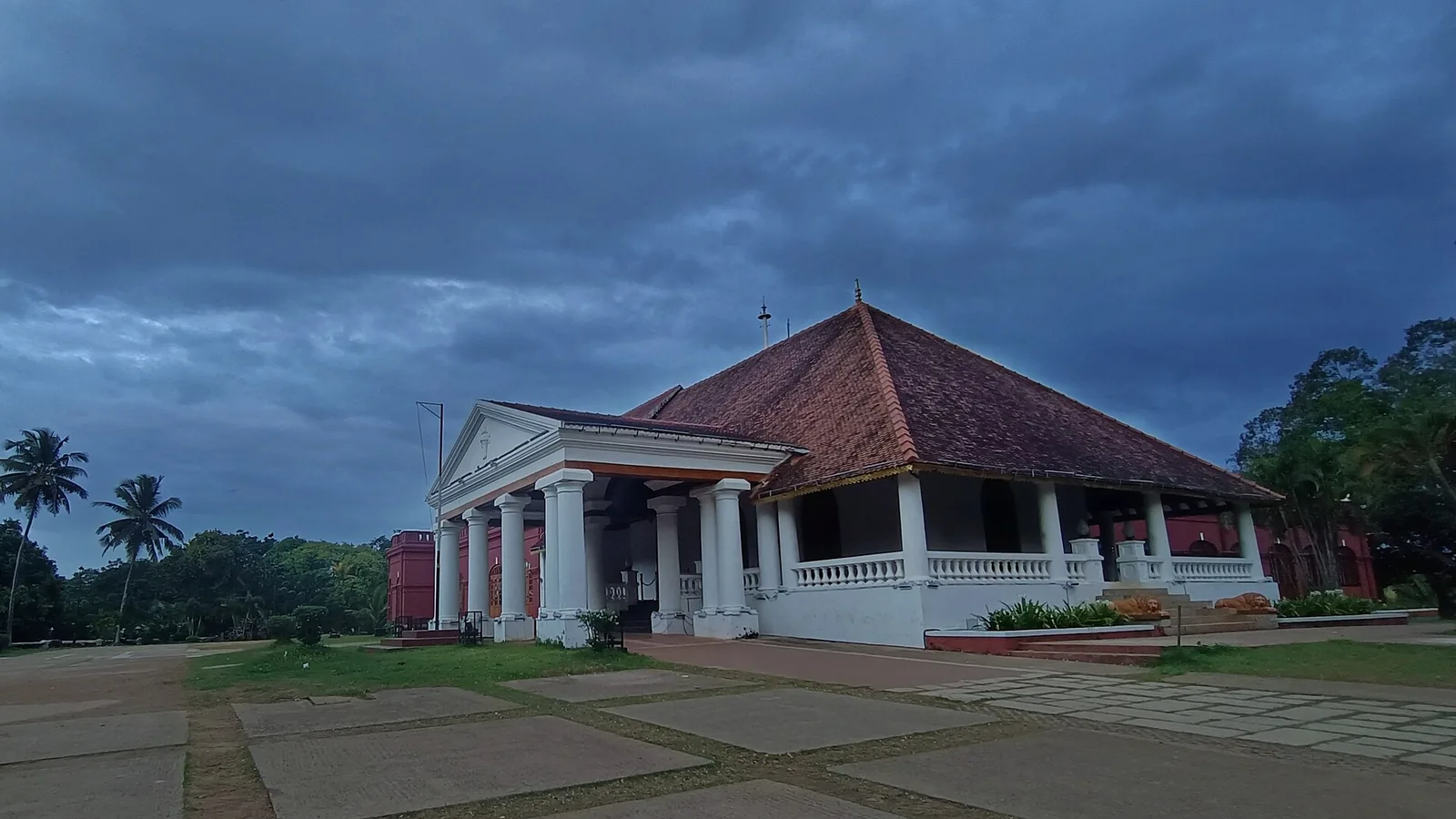
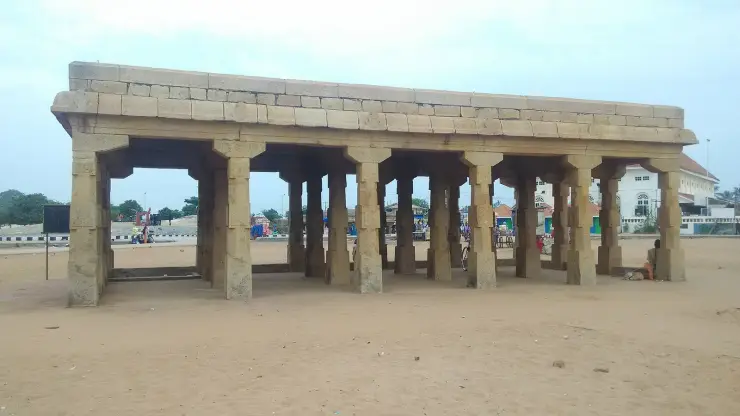
That is why the stone pavilion standing on the sand — the Arattu Mandapam, a plain colonnade of granite piers open to the sea on every side — is here. It is not a viewing shelter. It is the destination of the procession, and for most of the year it stands empty on a public beach with families sitting in its shade.
It has also had a hard life. The Kerala coast here is eroding, and Shanghumukham has been repeatedly damaged by sea surge — the promenade, the approach road and the sculpture itself have all suffered, with the mermaid damaged and subsequently restored. Sections of the seafront have been rebuilt more than once. If you find part of the promenade fenced off or under reconstruction, that is the normal state of affairs rather than an unlucky visit, and it is worth checking the current position locally.
The airport is the beach's other distinguishing feature. Trivandrum International's runway ends immediately behind the shoreline, so aircraft on approach pass low overhead — close enough to be genuinely startling the first time. For plane-watchers it is one of the better spots in India; for everyone else it is a peculiar and rather wonderful piece of urban geography.
As for the sea: this is a beach for walking and watching, not swimming. The water off Shanghumukham has a strong undertow and there is no reliable lifeguard provision. The evening crowd stays on the sand and at the water's edge, and that is the right approach.
The two things a visitor notices at Shanghumukham — aircraft passing low overhead, and a beach that feels oddly ceremonial for a municipal shoreline — are usually filed as unrelated curiosities. They are the same fact. This sand is the arattukadavu of Sree Padmanabhaswamy: the point on the sea where the deity of the city is brought for its ritual bath at the close of the Painkuni festival in Meenam (March–April) and the Alpashy festival in Thulam (October–November). The procession runs about three miles from the East Fort and its route crosses the airport. So twice a year the runway closes and the flights stop — from 16:45 to 21:00 on 2 April 2026, for the most recent Painkuni Arattu.
The order of events is the part worth holding on to. The airport opened in 1932; the procession is very much older, and the runway was laid across a route that already existed. What happens now is not a religious event being permitted to inconvenience an airport. It is an airport that was built across a processional way and has, for more than ninety years, been shut twice a year to let it through. Every account of the low-flying planes at Shanghumukham treats the aviation as the fixed thing and the crowd as the visitor attraction; the procession was here first.
The mermaid's dimensions are misreported almost everywhere, and the error has a traceable cause. The Sagarakanyaka is about 87 feet long and 25 feet high — roughly 26.5 metres by 7.6 — and she is commonly described instead as ‘35 metres’, which is the height figure of 35 feet that appears in one widely copied dimension pair, promoted to metres and swapped onto the length. She is very large. She is not 35 metres of anything. In October 2022 Guinness World Records recognised her as the largest merperson sculpture in the world, which is the claim worth making and the one almost nobody makes. On the completion year the sources genuinely differ, giving either 1990 or 1992; we have not found a document that settles it.
Two things about how she came to exist are worth carrying. She was commissioned by the Government of Kerala, and Kanayi Kunhiraman took no fee for the work. And she was nearly stopped: a District Collector moved to halt construction, and it was the intervention of the Chief Minister, K. Karunakaran, that allowed it to be finished. The largest sculpture of its kind anywhere was built for nothing by its sculptor and survived an administrative attempt to cancel it, which is a better origin story than the one on the information board. Kunhiraman also made the Yakshi at Malampuzha (1969) and the Conch at Veli (1986), putting three of his major works within an afternoon of each other — and, contrary to a date that circulates, he is alive.
One practical confusion is worth heading off, because mapping software gets it wrong regularly. Shanghumukham the beach and the Shanghumukham Devi temple are two places about six hundred metres apart, and a search for the name will land you at either. The temple is set back from the shore and is an active local shrine; the beach is the open sand at the end of the runway. Neither is the Arattu Mandapam, which is a third thing again — the granite pavilion standing on the sand itself, belonging to the Padmanabhaswamy temple rather than to the Devi shrine. Three named features within a few hundred metres, sharing one place-name between them.
The erosion here has a number attached to it, and the number is the story. Shoreline reduction at Shanghumukham has been measured at about 4.73 metres a year. That is not a beach with an occasional bad season; that is a coastline retreating at roughly the width of a room every twelve months. The stretch of broken concrete slabs lying in the sand at the northern end is the old airport approach road, which the sea took. Restoration and sea-wall work continue, and finding part of the promenade fenced off is the normal state of this beach rather than bad luck.
The beach takes its name from the Shanghumukham Devi temple behind it — shankhu, a conch, and mukham, a face or mouth — and the shrine long predates the beach's life as a public promenade.
Shanghumukham's modern character was set by two twentieth-century developments: the growth of Thiruvananthapuram as the capital of Travancore and then of Kerala, which made this the city's nearest beach, and the construction of the airport immediately behind the shoreline, whose runway now ends at the coast.
The Jalakanyaka or mermaid sculpture was created by Kanayi Kunhiraman, one of Kerala's most significant modern sculptors, whose monumental public works — including the Yakshi at Malampuzha — form a distinctive body of large-scale figurative art in the state's public spaces.
The beach’s older and more formal role is as the arattukadavu of the Sree Padmanabhaswamy temple — the appointed place on the sea for the deity’s ritual bath. The stone Arattu Mandapam on the sand exists for that purpose, and the two annual processions, at the close of the Painkuni festival in March–April and the Alpashy festival in October–November, bring the images of Padmanabhaswamy, Narasimha and Krishna about three miles from the East Fort to the water, led by the head of the Travancore royal family carrying the royal sword. The airport, opened in 1932, was built across that route; it closes its runway and suspends flights for several hours to let the procession pass, as it did from 16:45 to 21:00 on 2 April 2026.
The Sagarakanyaka was built in concrete for the Government of Kerala by Kanayi Kunhiraman, who took no remuneration for it; sources give the completion year as either 1990 or 1992. It measures about 87 feet long and 25 feet high, and in October 2022 Guinness World Records recognised it as the largest merperson sculpture in the world. Construction was nearly halted by a District Collector and was allowed to proceed after the intervention of Chief Minister K. Karunakaran. The same sculptor's Yakshi at Malampuzha dates from 1969 and his Conch at Veli from 1986. The mermaid has been damaged by sea surge and restored.
In recent years the defining fact about the beach has been coastal erosion, and it has been quantified: shoreline reduction here has been measured at around 4.73 metres a year. Repeated sea surge has damaged the promenade, the approach road — whose broken slabs still lie in the sand — and the sculpture, prompting restoration work and shoreline protection, and stretches of the seafront have been rebuilt more than once.
It is the city's own beach and the best place to see Thiruvananthapuram at leisure — an enormous, cheerful evening crowd that has nothing to do with tourism.
The Sagarakanyaka mermaid by Kanayi Kunhiraman is recognised by Guinness World Records as the largest merperson sculpture in the world.
Aircraft on final approach to Trivandrum International pass low directly overhead, which is a genuinely memorable thing to experience from a beach.
The sunset over open sea, with the whole city out to watch it, is a nightly event rather than a scenic attraction.
It is minutes from the airport and from the city centre, so it works as a first or last evening in Kerala with no planning at all.
It is the arattukadavu of Sree Padmanabhaswamy — twice a year the airport shuts its runway so the deity can be carried across it to the sea, which is not a thing that happens at other beaches.
Road km to Thiruvananthapuram; ghat roads and traffic vary — allow extra.
November to February for dry weather; avoid rough-sea days during monsoon warnings.
Live forecast loads in your browser.
Check the official alert before you travel. Kerala’s beaches, waterfalls and trekking routes close at short notice during heavy rain, and district alert levels change day to day. We do not publish an alert level of our own — read it from the state authority: Kerala State Disaster Management Authority, or the district control room on 1077.
Sun and moon are calculated for this location and shown in IST. Photography windows are the hour around sunrise and sunset; the sunset bearing is degrees clockwise from true north. Moon phase is accurate to about half a day.
Photographs: Navaneeth Krishnan S (CC BY-SA 4.0), Nandukrishna_t_ajith (CC BY-SA 3.0), Shantham11 (CC BY-SA 4.0). Wikimedia Commons.
Verified hotels, homestays, restaurants, experiences, sights, shops and rentals around Shanghumukham Beach — commission-free, with direct contact. Filter by what you need.

Official temple and district-government sources identify the East Fort temple as one of Thiruvananthapuram's defining sacred landmarks.

Official Kerala Tourism record for a central Thiruvananthapuram palace venue near Napier Museum and Trivandrum Zoo.

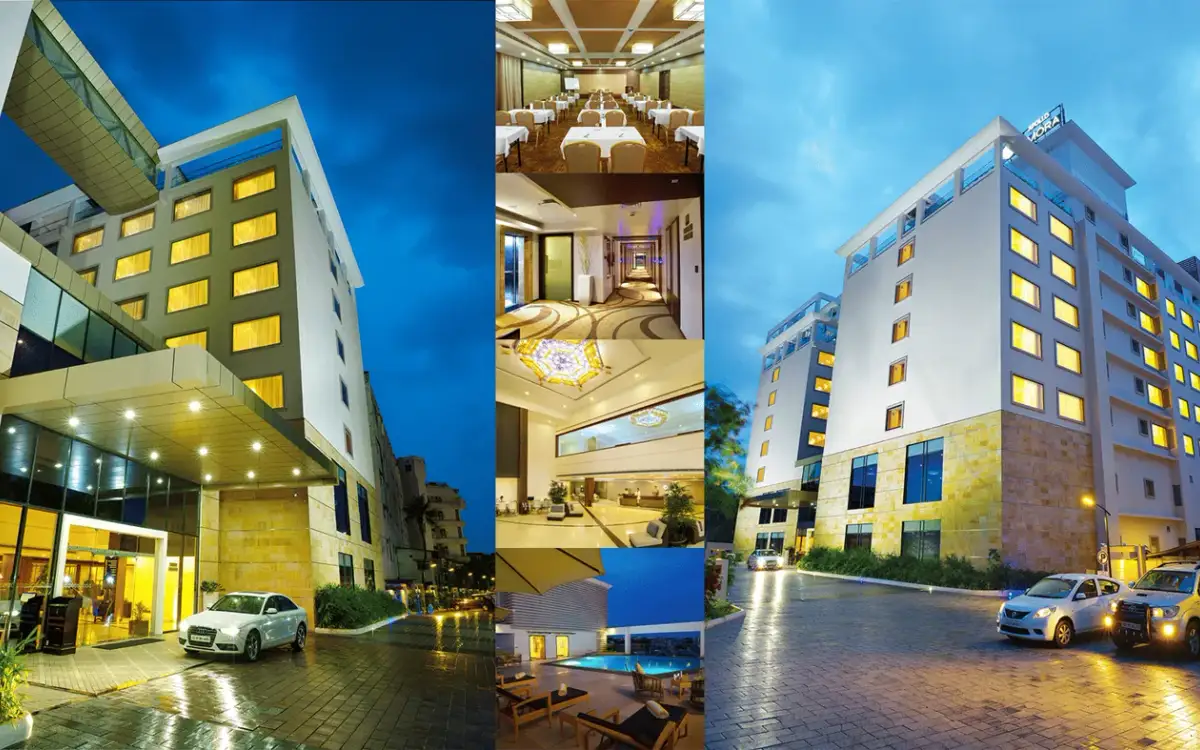
Official Hilton page lists central Thiruvananthapuram hotel contacts, restaurant, pool, fitness centre, shuttle and proximity to major attractions.

Official Hyatt page lists CV Raman Pillai Road/Thycaud address, direct phone, rooms, dining and events facilities.

Official Villa Maya page lists the Vallakkadavu/Airport Road address, reservation email and direct phone numbers.

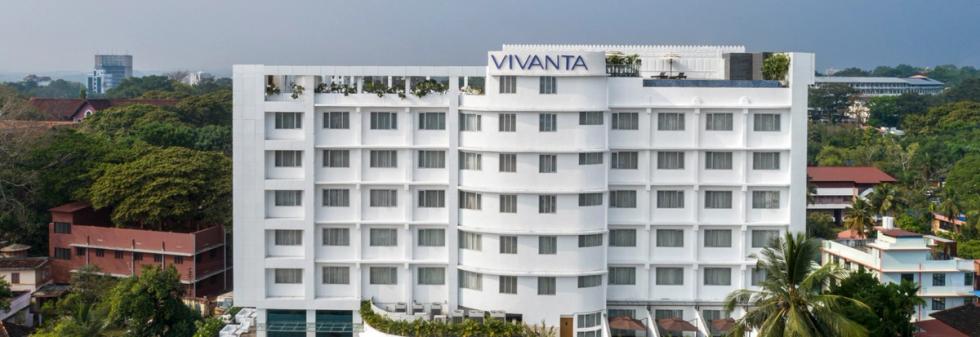
Official Vivanta page lists Extra Police Road/Palayam address, phone and booking email. 5-star luxury city hotel · hotel, Vivanta, Palayam.
Official airport hub for TRV arrivals, departures, terminal information and onward city transfers. Shanghumughom, Vallakkadavu P.O., Thiruvananthapuram, Kerala 695008, India · airport, transport hub, TRV.

Trivandrum taxi, airport-transfer and rental operator with direct address, phone and email evidence.

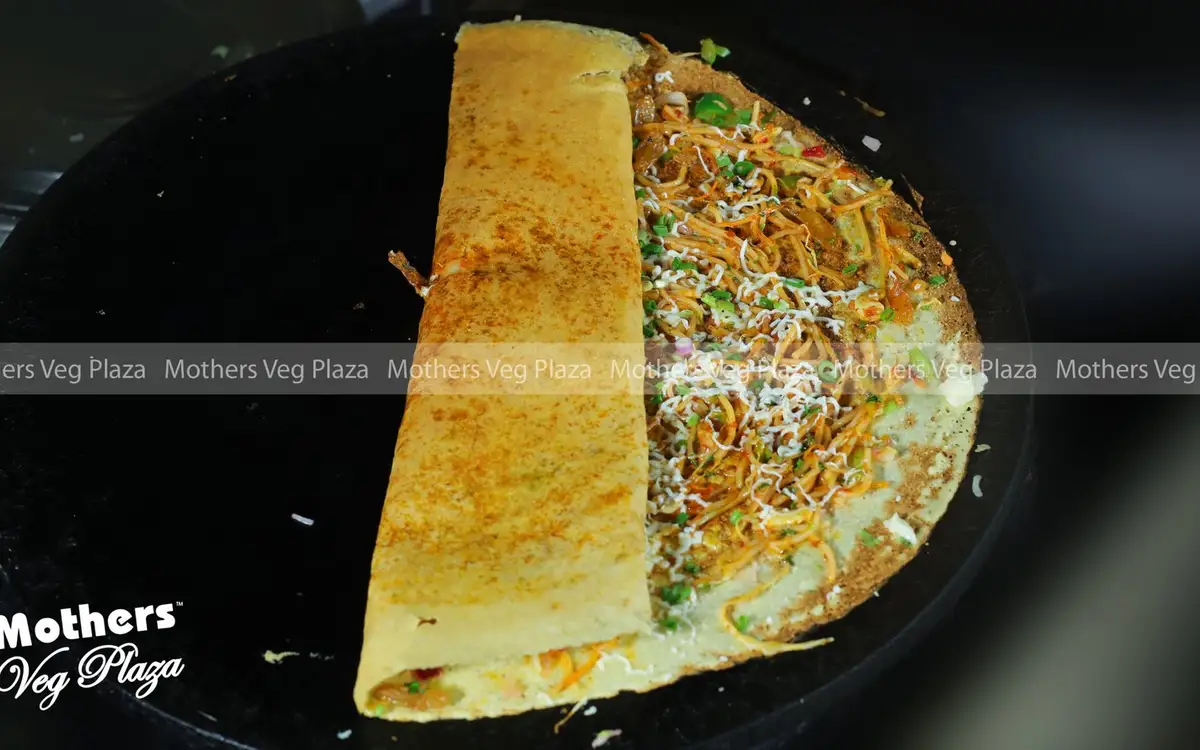
Official Mothers Veg Plaza site and social profile provide contact details for the vegetarian restaurant at Bakery Junction/Palayam.
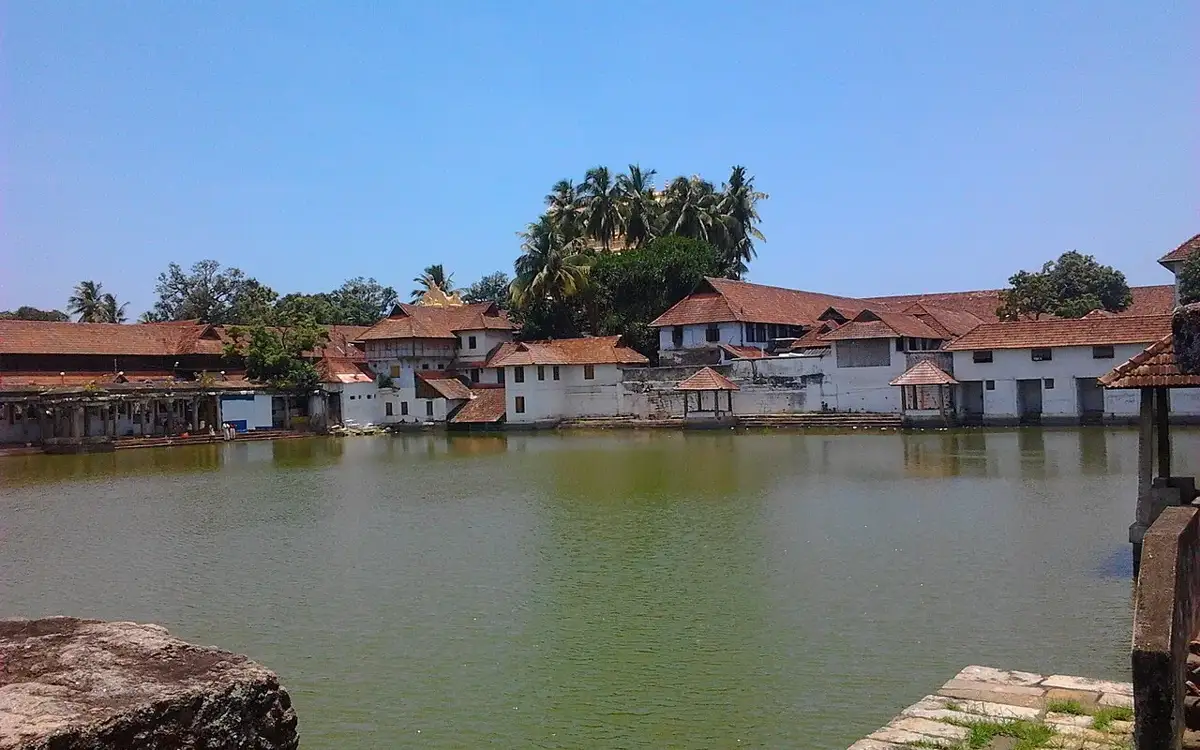
The temple tank beside Sree Padmanabhaswamy at East Fort — a ritual bathing tank in active use, not a park pond. Conduct and dress expectations apply this close to the temple.

The palace and grounds on the museum-compound hill, used for festivals, fairs and evening walks. The gardens are the everyday reason to come; events decide the rest.
The capital’s own evening beach, minutes from the airport, with Kanayi Kunhiraman’s 26.5-metre Jala Kanyaka mermaid sculpture at one end. An open Arabian Sea shore — treat it as a sunset walk, not a swimming beach.

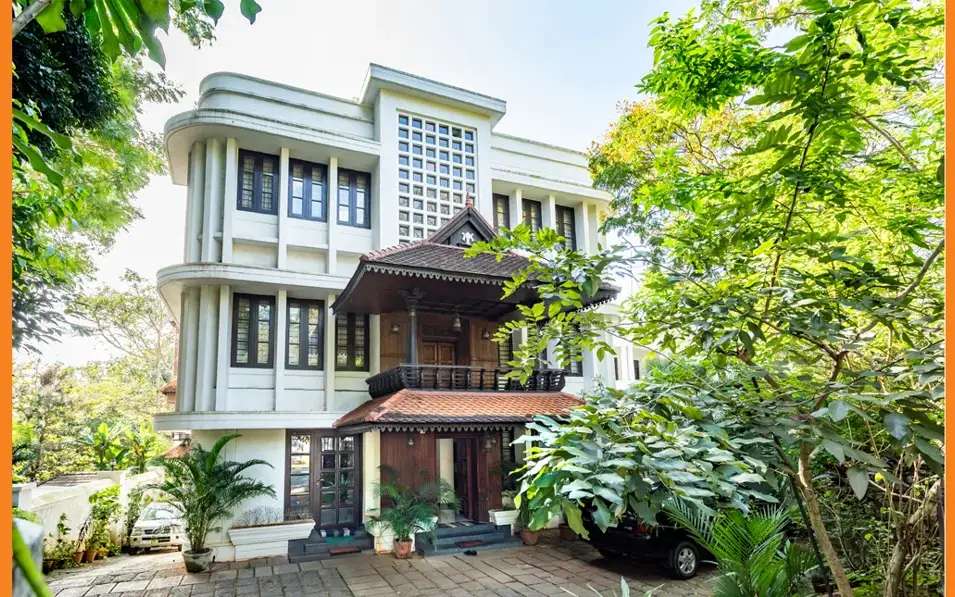
Kerala Tourism-approved family homestay in a quiet garden setting at Peroorkada, Ambalamukku, in the northern part of Thiruvananthapuram city. The resident hosts offer air-conditioned guest rooms and traditional home-cooked Kerala meals in a homely, green atmosphere, a personal alternative to a city hotel.

Government-run KTDC budget city hotel at Thampanoor in central Thiruvananthapuram, directly opposite the Central Railway Station and beside the KSRTC bus terminal. It offers around 88 air-conditioned rooms with a restaurant, coffee shop, beer and wine parlour and conference halls, giving travellers a dependable low-cost base run by the Kerala Tourism Development Corporation.
Long-established three-star city hotel on M.G. Road directly opposite the Government Secretariat in central Thiruvananthapuram. It offers 50 centrally air-conditioned rooms, three restaurants, a wine parlour and two banquet halls, making it a well-located mid-range base for business and leisure travellers in the capital.

Kerala Tourism-classified three-star business hotel on Aristo Road at Thampanoor in central Thiruvananthapuram, about half a kilometre from the Central Railway and KSRTC bus stations. It runs around 45 air-conditioned rooms and suites with a multi-cuisine restaurant and bar, giving city travellers a comfortable mid-range base rather than a budget lodge or a luxury hotel.
Official Kerala Tourism and Museums & Zoo sources for the historic Napier Museum in the city museum compound.
Official KTDC and Kerala Tourism records list Mascot Hotel in Thiruvananthapuram with reservation phones, email and manager contacts.
Official Zam Zam contact page lists the Palayam branch opposite MLA Hostel with phone, WhatsApp, email and menu links.
Restaurant (regional) on Kuttikad Lane in Thiruvananthapuram City.
A government-run KTDC hotel opposite Central Railway Station in Thampanoor. A long-standing budget city stay with 88 rooms.
Trivandrum bakery with 24+ years of heritage that also runs Atelier by Ambrosia, a European fine-dining restaurant.
Restaurant (regional, north indian) on Venpalavattom, Near Lulu Mall in Thiruvananthapuram City. Regional, North Indian, AC.
See on S.Roerich Road, University P.O, in Thiruvananthapuram City.
Book with the place itself. India’s cyber-crime coordination centre warned in April 2025 that convincing copies of hotel and pilgrimage booking sites are being pushed through sponsored search and social ads, taking payment for rooms the property never hears about. Every listing here links to the business’s own contact details and its own Google or Bing profile — we take no commission and sit in nobody’s payment path. If a booking page reached you through an ad, check the address bar against the property’s own site before you pay. Fraud can be reported on cybercrime.gov.in or on 1930.
Shanghumukham Beach sits in Thiruvananthapuram city, and these rank everything verified across the town rather than this one spot — built from the same listings shown above, ordered by the strength of the source evidence behind each entry rather than by anyone's star score. Every card shows how many places are really on it. Nobody pays to appear.
7 more Thiruvananthapuram city experiences worth building a day around, each with a full guide, how to reach it and what sits next to it. Shanghumukham Beach is left off — you are already on it — and so is anything already shown in the nearby list further down, so nothing here repeats.

Guided forest trekking in the Neyyar Wildlife Sanctuary near the Agasthyamala foothills, south-east of Thiruvananthapuram.
A traditional nalukettu palace at Nedumangad housing a folklore museum and a numismatics (coins) museum.
A clifftop seaside temple at Adimalathura near Vizhinjam, known for a giant Gangadhareswara (Shiva) sculpture.
A 1690s English East India Company sea fort (Anjengo) on the coast north of the city, one of the earliest English settlements in Kerala.
A reservoir, riverside temple and small park on the Karamana river north-east of the city, a popular local picnic spot.
Kerala’s second largest freshwater lake and the district’s only one, near Kovalam, ringed by paddy and popular for sunrise and birdlife.
A renowned Devi temple at Chirayinkeezhu, famous for the Kaliyoot festival and the Sarkara jaggery legend.
Roampedia is commission-free — own or know a stay, eatery, guide or shop near Shanghumukham Beach? List it and it appears here once verified.
Add a nearby businessEntry: Free (public beach).
About 8 km west of the city beside the airport; reachable by auto-rickshaw or city bus.
Work out your return before you settle in for the sunset. Public transport here thins out sharply in the evening, and Shanghumukham Beach is easier to reach than to leave. We do not publish departure times: there is no official live feed we are permitted to republish, and a wrong time here would strand you. Check the operator directly on the day.
Ask at the bus stand for the time of the last service back, not the next one. If you miss it, an auto or app cab is the fallback — agree the fare before you get in.
We have not assessed physical access at this place yet. Across India, step-free routes, handrails and accessible toilets are the exception rather than the rule, and pavements are often interrupted — if step-free access matters to you, contact the site or a local operator before committing to the trip.
Charge cap and free-transaction limits: Reserve Bank of India, in force since 1 May 2025.
Mapped within about 1.2 km of Shanghumukham Beach, with real walking routes rather than straight-line distances. Community-mapped data: opening hours are shown only where they are recorded, and this is not a complete list — something unmapped may well be closer. Please confirm on the ground.
Emergency numbers are verified against official government and state tourism sources. 112 works anywhere in India.


Walking and driving times are real routed distances, except the few marked “straight line”, which are direct-line estimates and will read short. Fare figures are estimates from Kerala’s notified auto/taxi tariff and exclude waiting and night charges. Routing: © openrouteservice.org by HeiGIT | Map data © OpenStreetMap contributors
Nearby toilets, pharmacies, ATMs, seating and vets are community-mapped and may be incomplete or out of date. Map data © OpenStreetMap contributors | Walking times © openrouteservice.org by HeiGIT
Conch-face or conch-mouth, from shankhu (conch shell) and mukham (face or mouth). The beach is named after the Shanghumukham Devi temple set back from the shore, which is an active local shrine and a separate place from the beach itself, about six hundred metres inland.
The Sagarakanyaka, also called the Jalakanyaka or Matsya Kanyaka — an enormous reclining mermaid in concrete by Kanayi Kunhiraman, who also made the Yakshi at Malampuzha (1969) and the Conch at Veli (1986). She is about 87 feet long and 25 feet high, and in October 2022 Guinness World Records recognised her as the largest merperson sculpture in the world. Sources give her completion year as either 1990 or 1992. She has been damaged by sea surge and restored.
Because the runway was built across the route. Shanghumukham is the arattukadavu of the Sree Padmanabhaswamy temple — the appointed sea-bathing place for the deity — and the Arattu procession has walked from the East Fort to this shore for far longer than the airport, which opened in 1932, has existed. Twice a year, at the close of the Painkuni festival in March–April and the Alpashy festival in October–November, Thiruvananthapuram International suspends flights for several hours and the procession crosses the runway on foot. For the Painkuni Arattu on 2 April 2026 the suspension ran from 16:45 to 21:00.
The Arattu Mandapam: a plain granite colonnade open to the sea on all sides, belonging to the Sree Padmanabhaswamy temple. It is the destination of the twice-yearly Arattu procession and the point at which the deities are taken to the water. For the rest of the year it stands empty on the beach and people sit in its shade, which is how most visitors encounter it — usually without being told what it is for.
Measurably. Shoreline reduction here has been put at around 4.73 metres a year, and the broken concrete slabs lying in the sand at the northern end are the remains of the old airport approach road, which the sea took. Promenade sections, the road and the sculpture have all been damaged by surge and repaired. Finding part of the seafront fenced off or under reconstruction is the normal condition of this beach.
No, and mapping applications confuse them regularly. The Shanghumukham Devi temple sits about six hundred metres inland from the sand and is an active local shrine; the beach is the open shoreline at the end of the runway. The Arattu Mandapam on the sand is a third feature again, and belongs to the Padmanabhaswamy temple rather than to the Devi shrine.
Yes — the runway of Trivandrum International Airport ends immediately behind the shoreline, so aircraft on final approach pass low directly over the sand. It is one of the better plane-watching beaches in India and it takes most first-time visitors by surprise.
Treat it as a beach for walking and watching rather than swimming. There is a strong undertow and no reliable lifeguard provision, and the evening crowd sensibly stays on the sand and at the water's edge (indicative — confirm conditions locally).
Coastal erosion. This stretch has been repeatedly damaged by sea surge, and the promenade, the approach road and the sculpture have all needed restoration, with shoreline protection work ongoing. Finding a section under reconstruction is normal rather than unlucky — check the current position locally.
Late afternoon into the evening, from about five o'clock, which is when the city arrives and when the sunset happens. The middle of the day is hot, shadeless and largely empty.
November to February for dry weather; avoid rough-sea days during monsoon warnings.
Entry: Free (public beach).. Timings: Indicative, confirm locally: open beach, best at sunset; there is no lifeguard cover.. Fees and timings are indicative — confirm on site before you travel.
Base yourself in Thiruvananthapuram city or a nearby town in Thiruvananthapuram, then confirm the last-mile route locally before leaving. Arrive before sunset if you want photos and a calmer walk; beach roads can slow down in the evening. If the visit depends on forest, temple, boat, ferry, weather or seasonal access, check the official/local rule on the day before travel.
1 to 3 hours, longer if staying for food or sunset.
Nearby you can pair Veli Tourist Village (4.0 km), Karikkakom Chamundi Temple (6.1 km), Kuthiramalika Palace (7.1 km), Sree Padmanabhaswamy Temple (7.3 km).
Do not swim during rough-sea warnings. Avoid isolated stretches after dark unless with a trusted local/operator.
Written about Shanghumukham Beach itself — its history, its legends and the arguments about them.
Shanghumukham Beach sits in Thiruvananthapuram city, so these cover the streets, buildings and surroundings around it.
Route-level itineraries and practical guides for the rest of Kerala.