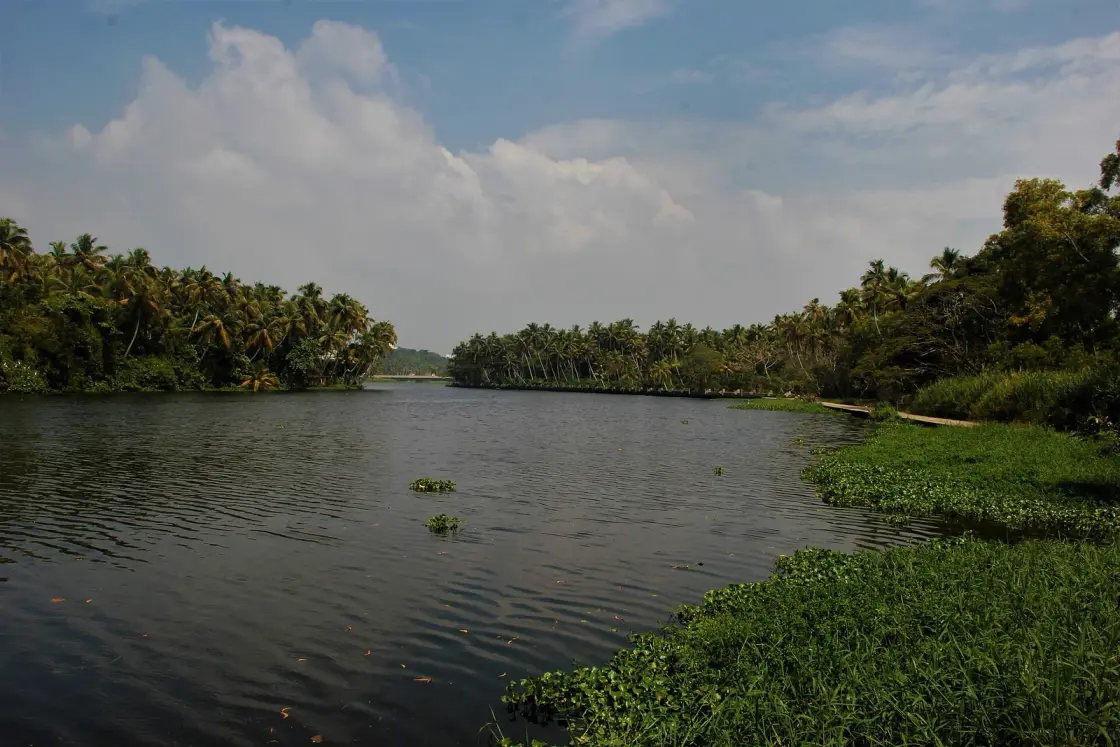
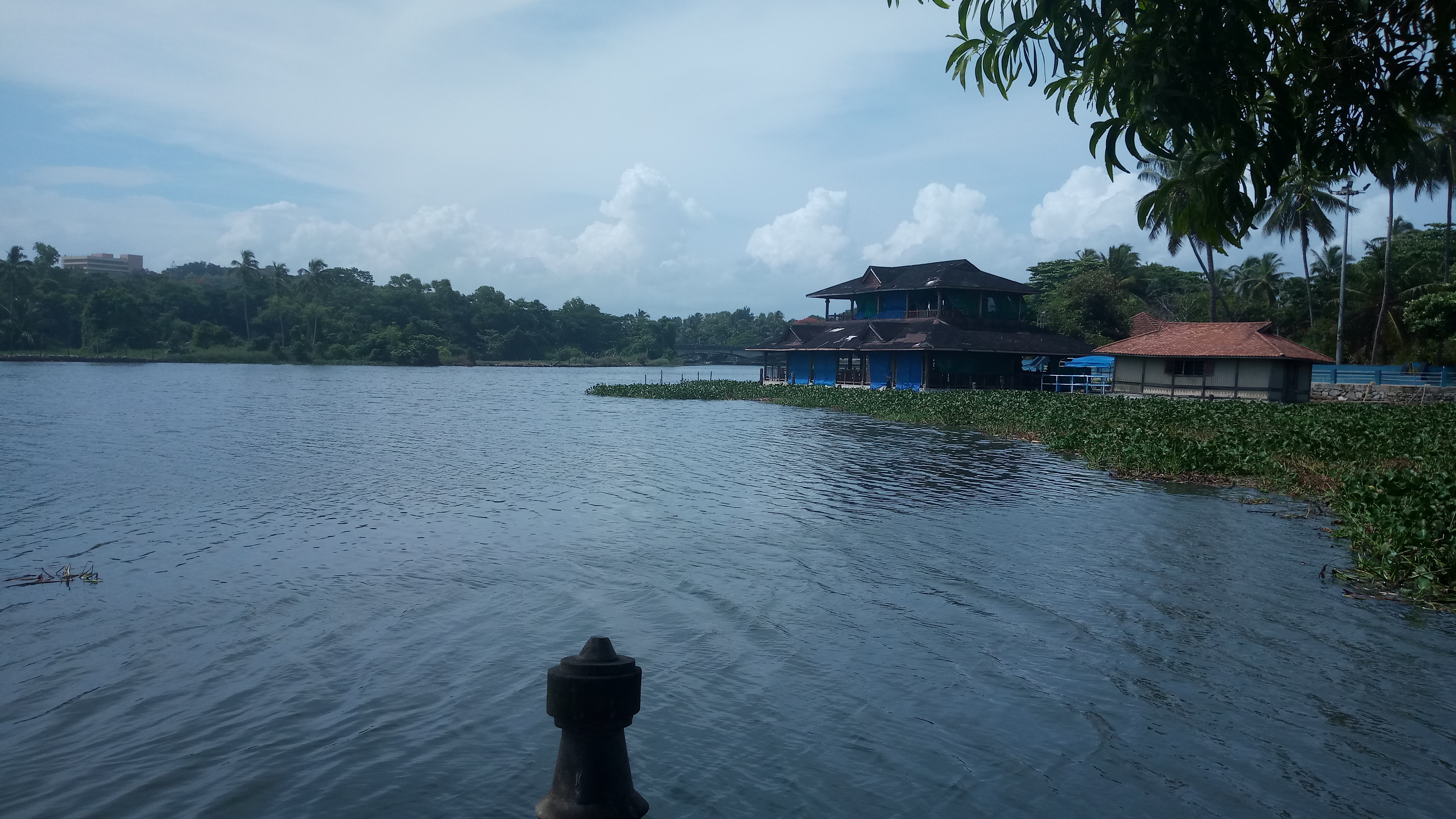
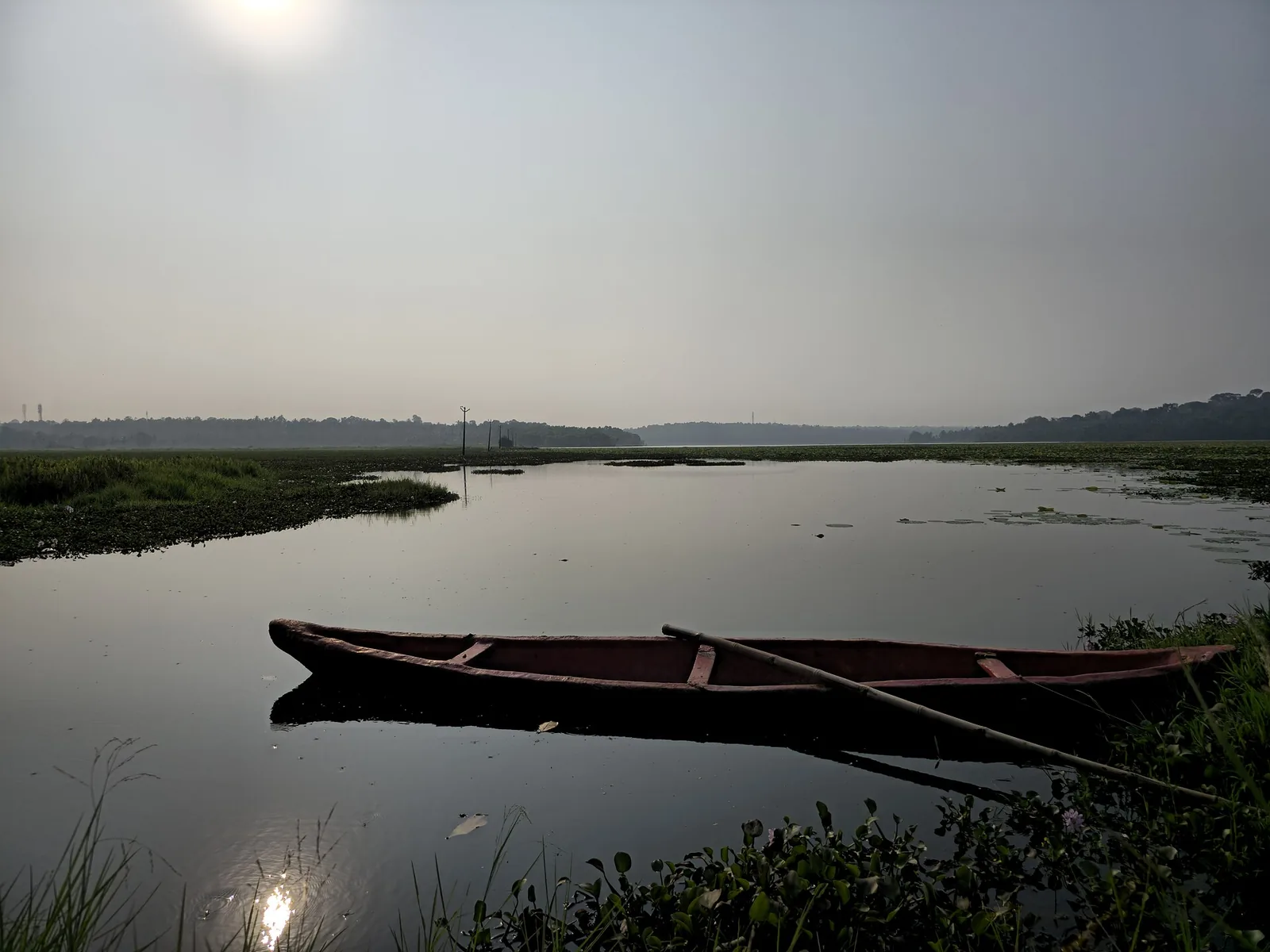
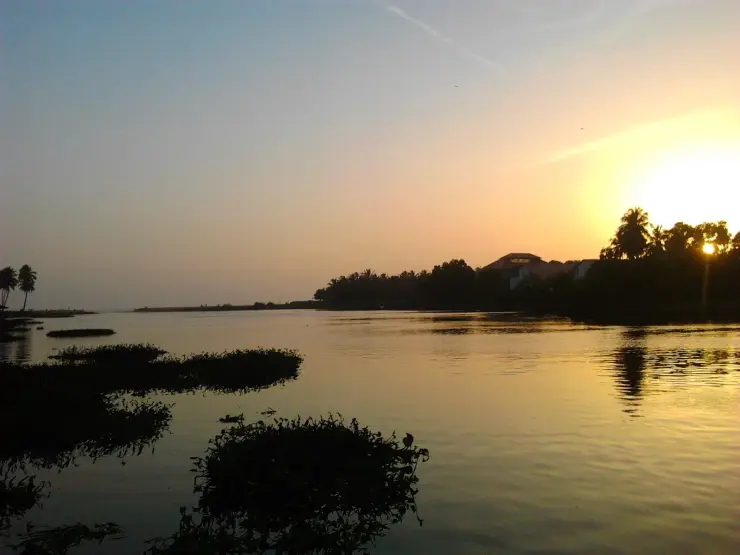
A city lake at the head of a queen's canal, where a glass bridge now lights the water each evening.
The story of Akkulam Lake
The canal that gives the lake its place in history was dug under Rani Gowri Parvathi Bayi, who ruled Travancore from 1815 to 1829. People called it Parvathy Puthanar, because "puthanar" means "the new river", and it joined the backwaters near the capital so that boats could leave Vallakadavu, the king's landing place, and travel north to Kadinamkulam and on towards Varkala and Kochi.
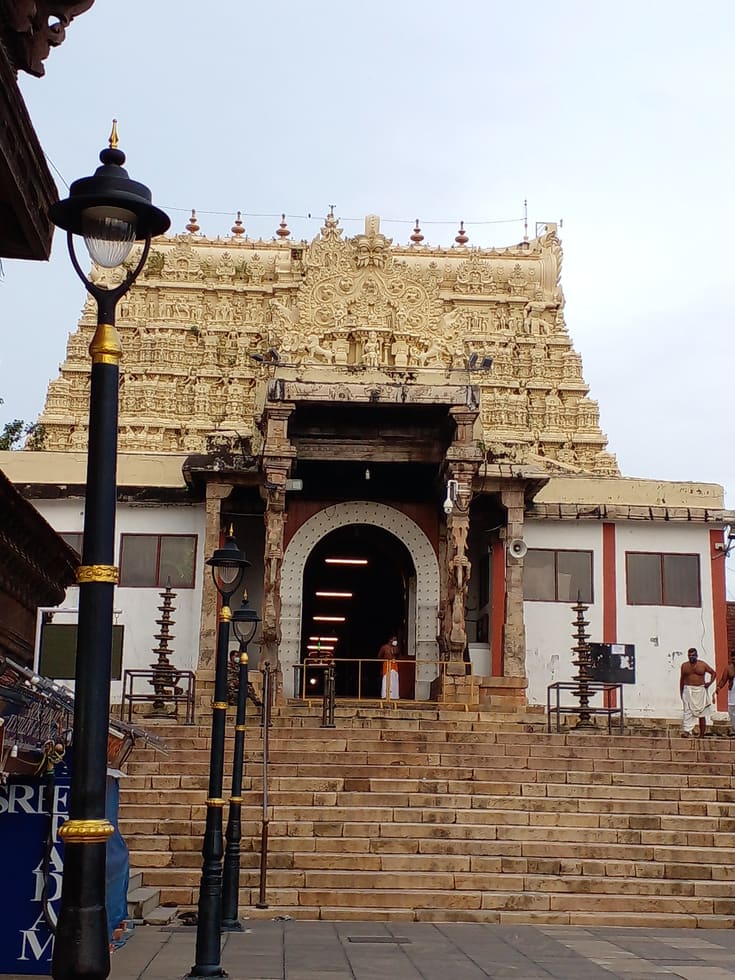
Because the canal was wide enough for kettuvallams, the big cargo boats, it became a busy trade route, carrying merchants' goods and flowers for the Padmanabhaswamy Temple. That life ended when roads and railways arrived and goods moved faster on land, so the canal was left without boats, and silt, water hyacinth and encroachments slowly closed it. By 2021 the Irrigation Department reported that most of it could no longer carry a boat.
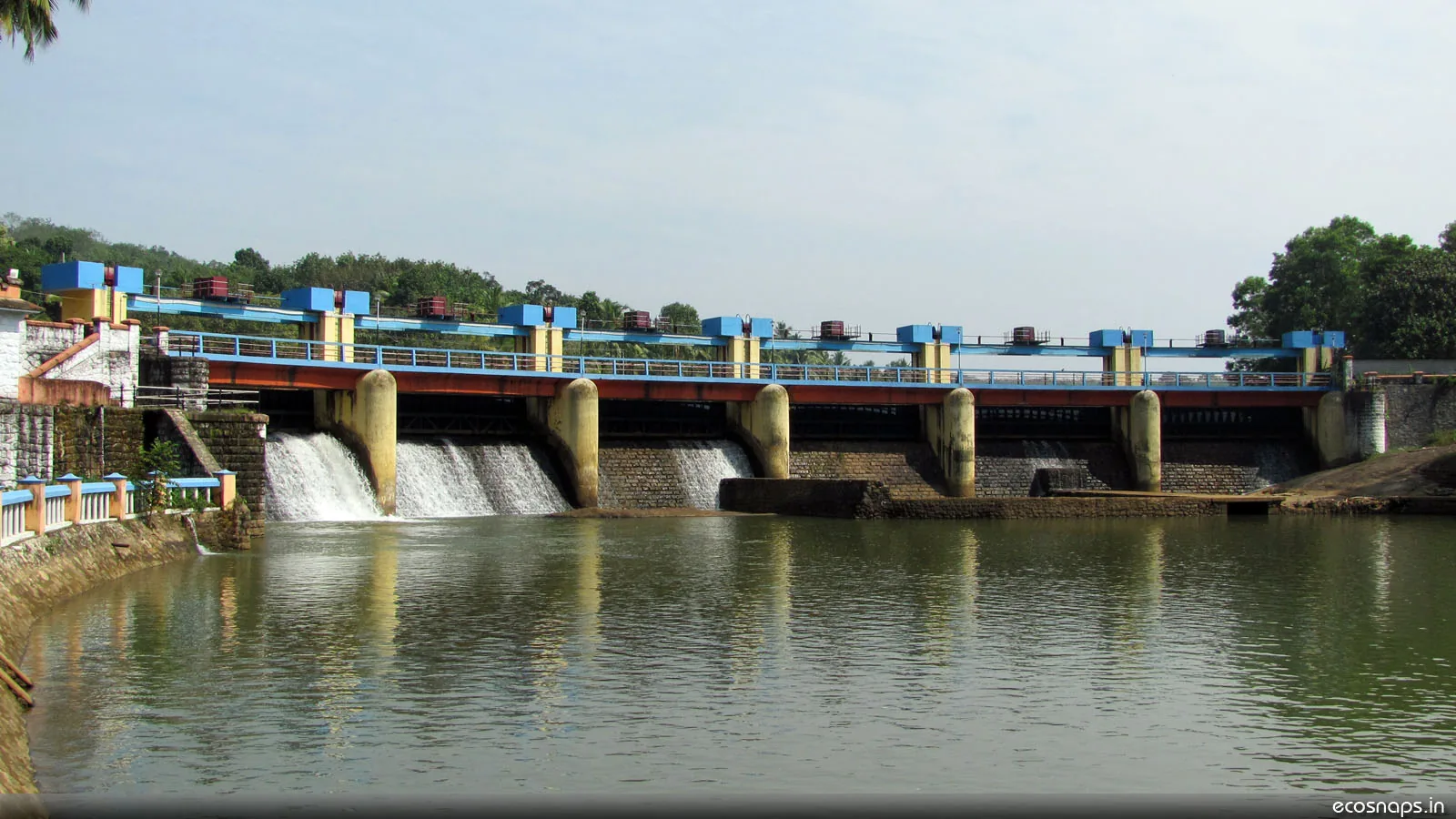
As the canal fell quiet, the lake took on a heavier job, because the city's storm channels began to empty into it. The main one, the Amayizhanjan Thodu, runs 5.40 km from Kannanmoola and brings in water from Thampanoor and East Fort, and from Akkulam that water flows west through Veli Lake to the sea beside the Veli Tourist Village. The lake therefore gathered the city's waste too, and a 2026 study found more than 99 per cent of the metals it traced locked in the lake bed, a finding told in full in our story Akkulam Lake pollution: 99% in the sediment.
That is why the state set out to bring the waterway back. Kerala Waterways and Infrastructures Limited, or KWIL, was formed in 2018 to restore the West Coast Canal, and in 2019 it cleared silt and hyacinth from the Akkulam stretch, deepened it to 1.5 metres and ran a six-seat boat 6 km from Akkulam to Vallakadavu. That short trial proved the old royal route could carry boats again.
The trial led to a far bigger day on 26 February 2026, when Chief Minister Pinarayi Vijayan opened the Akkulam–Chettuva Waterway, the 280 km first phase of the 616 km route to Bekal. Akkulam Lake became its southern head, and on the same day boats passed again through the Travancore tunnels at Varkala, whose history is told in our Varkala tunnel story. The whole life of the canal, from the queen to the reopening, is in our story Akkulam Lake and the queen's canal.
In November 2026 a former government secretary, Biju Prabhakar, said the lake can only recover if its whole drainage basin is protected, so the families crossing the glass bridge each evening are walking over a story that is still being written.
Legend & myth
The canal's age is often given wrongly. A 2019 news report said it was created in the 18th century, but the Irrigation Department records that it was dug during the reign of Rani Gowri Parvathi Bayi, between 1815 and 1829, and that is why it carries her name.
The second mix-up is about where the lake meets the sea. The sea mouth is not at Akkulam but at Veli, where the water from Akkulam flows out to the Arabian Sea after passing through Veli Lake.